

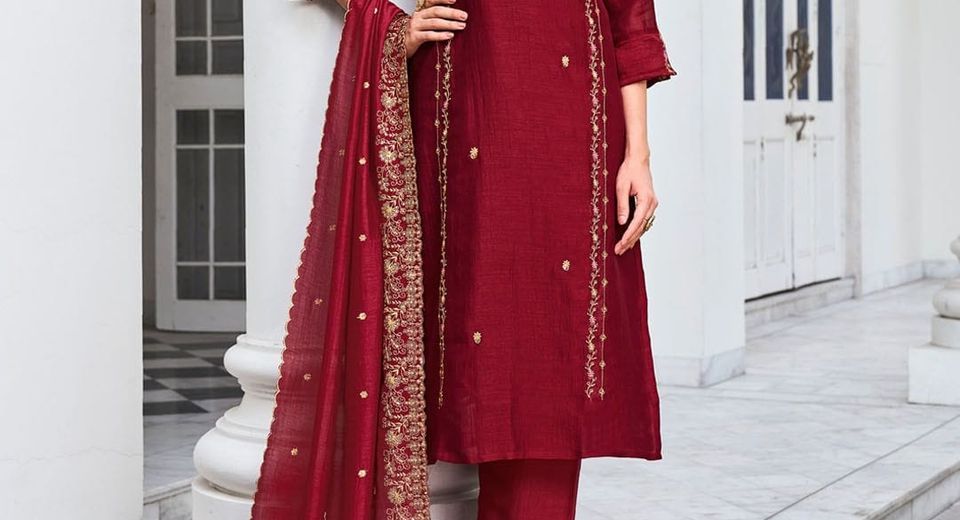
Gujarati Salwar Suit Styles for Navratri Celebrations bring together the colour, sparkle and movement associated with Garba without requiring a lehenga or chaniya choli. The most successful outfit balances three practical needs: enough room for dancing, secure styling for a dupatta and fabric that remains comfortable through several hours of festivities. A well-chosen salwar suit can borrow Gujarati details such as mirror-work accents, bright colour blocking, bandhani-inspired prints and oxidised jewellery while retaining the easy fit of a kurta set.
Navratri dressing also changes according to the event. A community Garba night demands different clothing from a family puja, office celebration or dinner after the dance. Understanding the difference helps you choose between a palazzo set, an Anarkali, a straight kurta set or a more dramatic gown-style silhouette. The sections below explain how to make each choice with specific fabrics, proportions and styling combinations.
What makes a salwar suit feel Gujarati during Navratri?
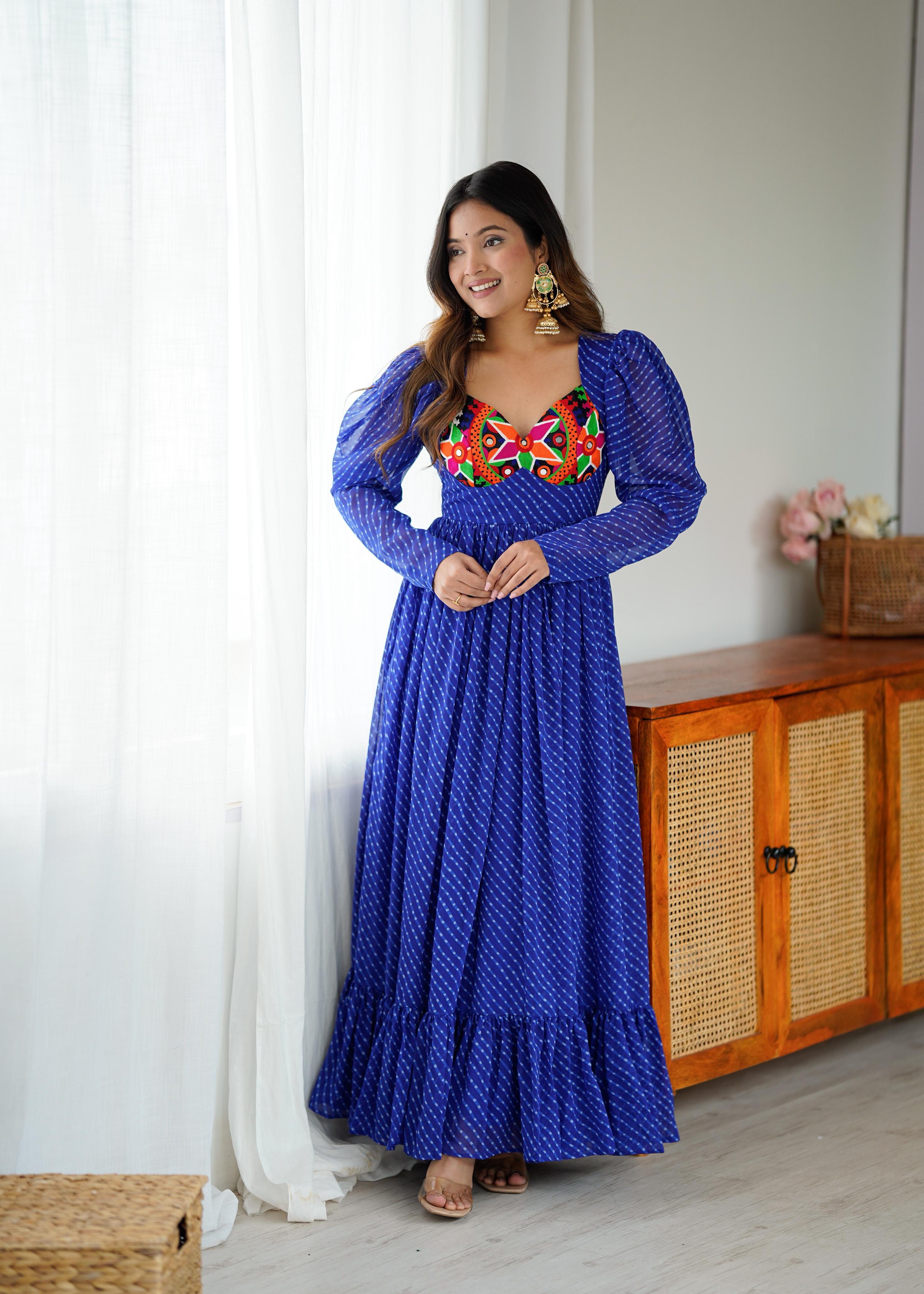
A Gujarati-inspired salwar suit usually combines vivid colour, rhythmic surface detail and a silhouette that suggests movement. Mirror work, gota-style borders, colourful embroidery, tassels, bandhani-like dots, leheriya-inspired stripes and contrasting dupattas can create that visual language even when the garment isn't a traditional chaniya choli.
Gujarati festive clothing often uses contrast confidently. A mustard kurta with a red or green dupatta, a maroon base with antique gold embroidery, or a blue outfit with multicoloured accents can look more celebratory than a single muted shade. Small reflective elements are especially effective under Garba lighting, but excessive heavy embellishment can make a suit uncomfortable during dancing.
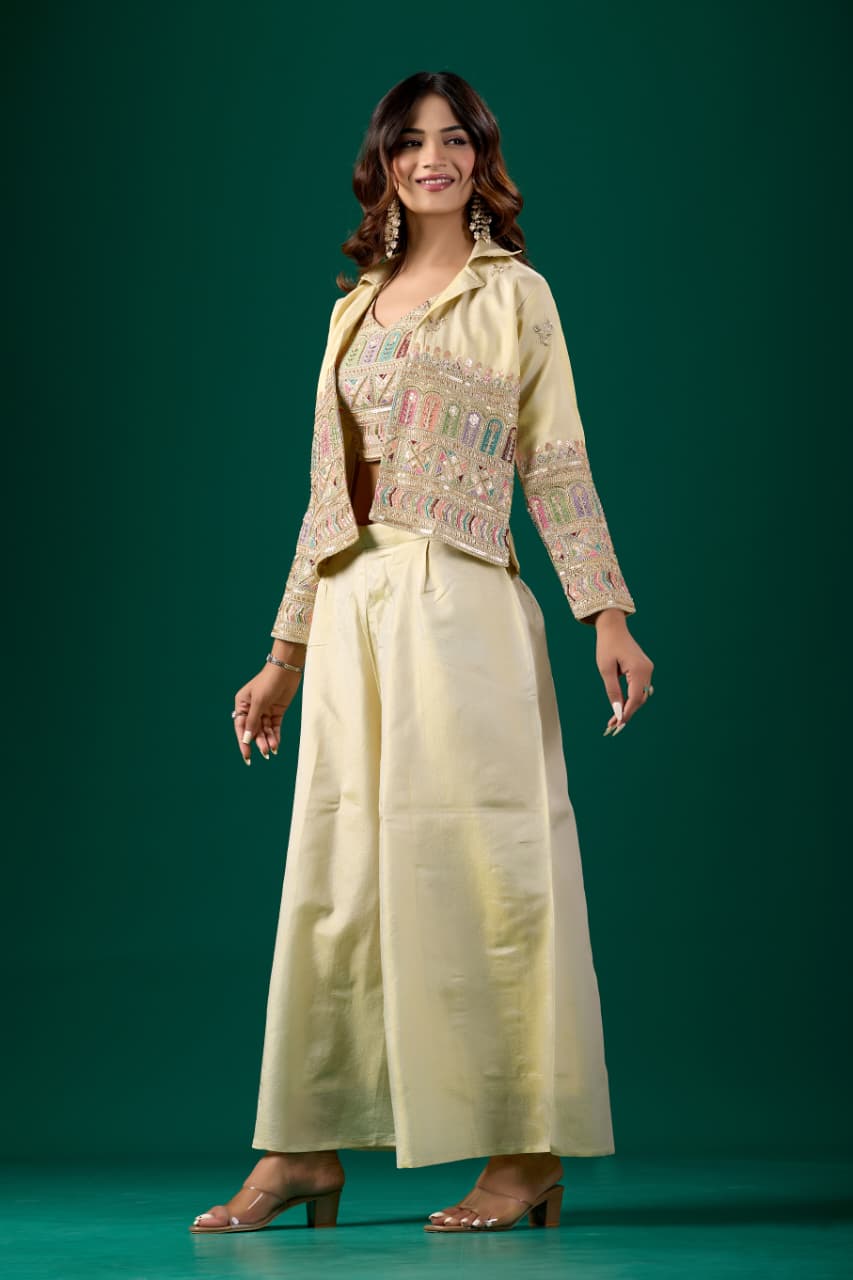
The cut matters as much as the decoration. A straight kurta with palazzo pants gives the cleanest movement, while an Anarkali creates a fuller twirl. A short kurta with a palazzo or sharara gives a contemporary interpretation of the layered volume associated with Gujarati festive dressing. A crop top and jacket combination can work for a younger, fusion-focused look when the jacket isn't too restrictive around the shoulders.
How is a Gujarati Garba outfit different from a regular festive suit?
A Gujarati Garba outfit gives greater priority to movement, colour contrast and visible embellishment than a conventional dinner suit. Garba involves repeated circular steps, hand movements and frequent turning, so a flexible hem, secure neckline and manageable dupatta are more useful than a rigid, heavily structured garment.
Traditional Gujarati references can be added selectively. One embroidered mirror-work accessory, a bandhani dupatta, colourful bangles or jhumkas may establish the theme without making the outfit look costume-like. The goal is a coordinated festive outfit that feels connected to Gujarat while still suiting your own wardrobe and comfort level.
Which silhouette works best for Garba and Dandiya?
A palazzo suit or a lightly flared Anarkali usually works best for Garba because both silhouettes allow the legs and hips to move freely. The ideal hem should clear the floor by approximately 2 to 4 centimetres when you're wearing your chosen footwear, and the trouser waist should sit securely without digging in.
Palazzo and sharara sets
Palazzo pants offer generous width from the hip downward, making them practical for side steps and quick turns. A shorter kurta, crop top or structured jacket allows the wide trouser shape to remain visible. The Mauve Crunchy Silk Embroidered Kurti Palazzo Set for Women demonstrates how a polished palazzo proportion can feel festive without the bulk of multiple underskirts.
Sharara trousers create a more pronounced flare below the knee and can resemble the volume of a traditional festive skirt while keeping the comfort of separates. Choose a sharara with a smooth inner finish when you expect to dance for two or more hours. Dense gathers, stiff lining or scratchy sequins around the knee can become irritating during repeated movement.
Anarkali and straight-cut suits
Anarkali suits create graceful movement through their flare, but the flare should remain light enough to avoid tangling with your feet. Ladies Dress Anarkali Salwar Suits can be an useful starting point when you want a longer, more traditional silhouette for a family Navratri gathering or a temple visit.
Straight-cut suits are easier to sit in and often better for office events, puja ceremonies and smaller venues. A straight kurta paired with cigarette pants or a moderately wide palazzo looks neat without sacrificing comfort. The Mustard Yellow Jacquard Kurta Set with Embroidery & Dupatta offers a structured festive direction, while the Pastel Blue Embroidered Chanderi Kurta Set with Dupatta suits a lighter daytime interpretation.
Gowns and crop-top combinations
A gown-style outfit works best for a formal Navratri party where standing, dining and photographs matter more than extended Garba dancing. The Blue Printed Georgette Designer Gown for Women Festive provides the drama of an one-piece silhouette, but a gown should be tested for stride length and hem clearance before you wear it to a crowded dance floor.
A crop top and jacket palazzo set creates a contemporary Gujarati-inspired look when the jacket has comfortable armholes and the crop top stays in place during movement. Women's Embroidered Crop Top & Jacket Palazzo Set | Varnavi can illustrate this modern layered approach. A camisole or longer inner layer can provide additional coverage if the event involves active dancing or outdoor seating.
Which fabrics are comfortable for a full Navratri night?
Chanderi, georgette, viscose blends and lighter silk-look fabrics can all work for Navratri, but comfort depends on lining, embroidery placement and weather as much as the fibre name. Breathable construction, a non-irritating inner layer and enough ease at the armhole are essential when the outfit may be worn for four to six hours.
Chanderi has a crisp, airy appearance that suits daytime puja and early-evening celebrations. The Mustard Viscose Chanderi Kurta Set with Sequence Embroidery combines a festive surface with a fabric direction that can feel lighter than heavily layered brocade. Chanderi may crease more visibly than a fluid synthetic blend, so fold the dupatta carefully and avoid overpacking it in a small bag.
Georgette drapes fluidly and photographs well under lights, but georgette outfits often need a lining for opacity and shape. Check whether the lining ends at the knee or continues to the hem, because a short lining can make a flared skirt or gown cling while walking. Viscose fabrics generally offer a soft hand feel, although the final comfort depends on weave density and the garment's lining.
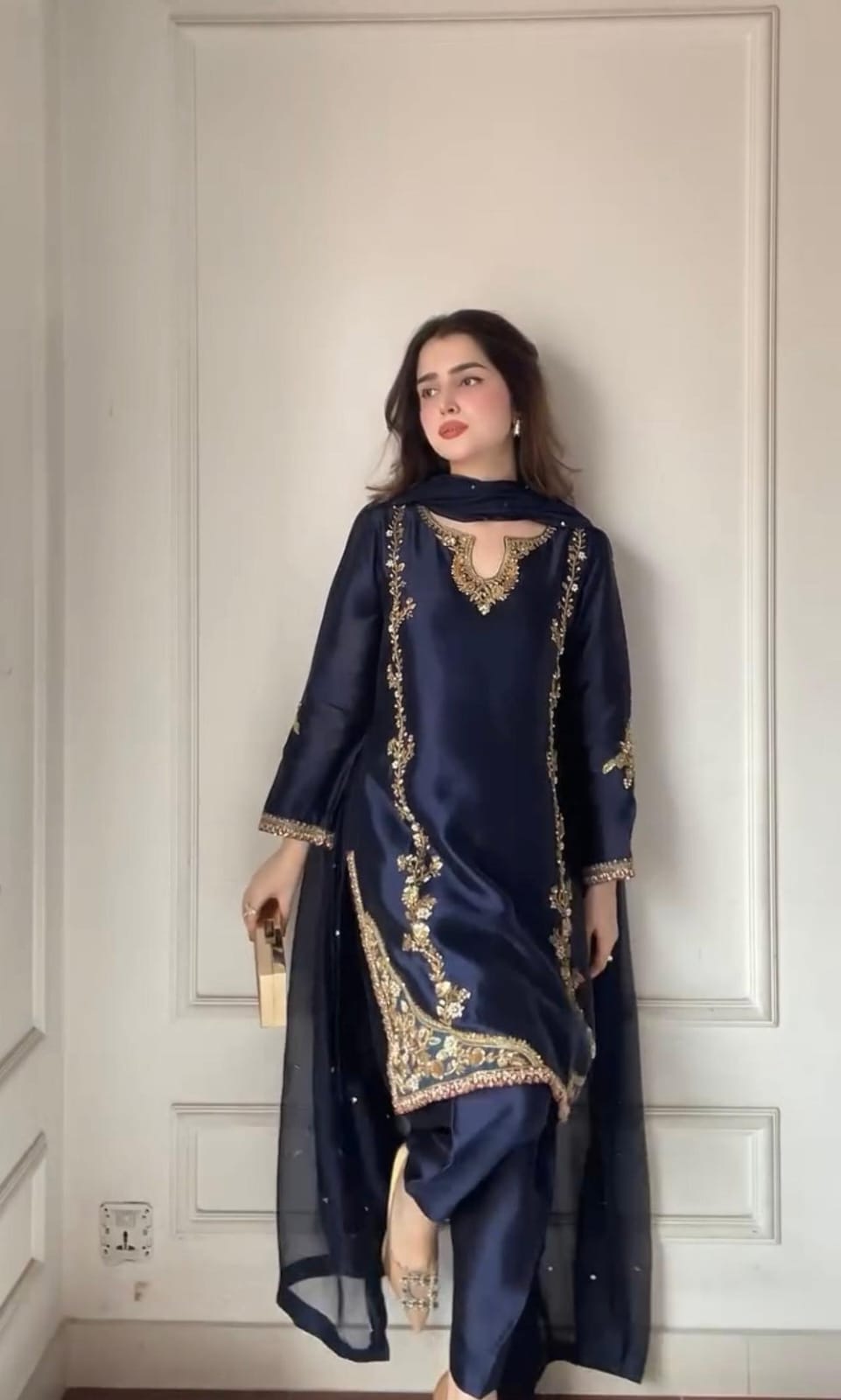
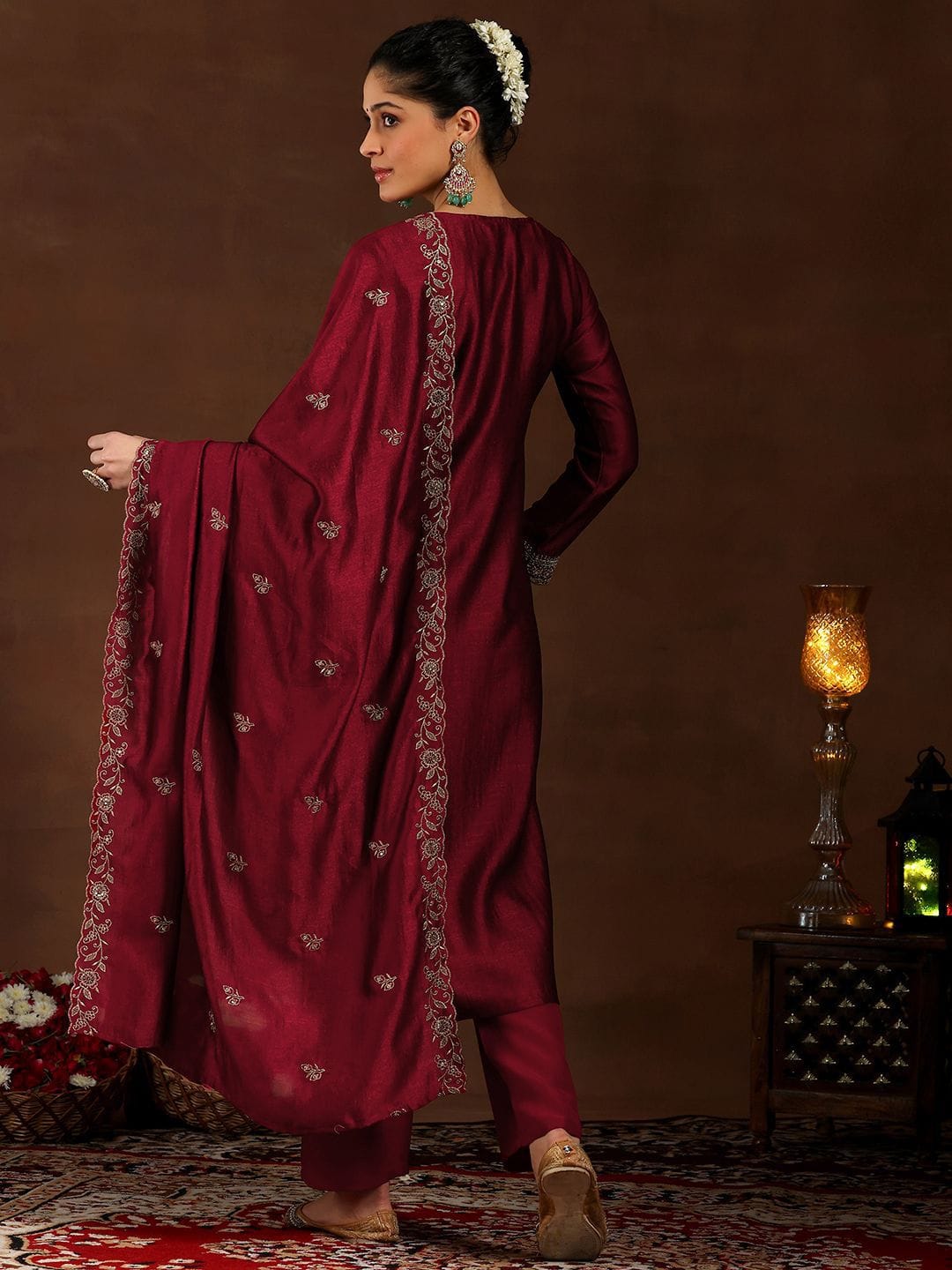
Vichitra silk has a smooth, dressy appearance and works well for a more formal family celebration. The Elegant Beige Vichitra Silk Embroidered Kurta Set for Women brings a restrained base for brighter jewellery or a colourful dupatta. The Maroon Vichitra Silk Kurta Set with Elegant Embroidery Work creates a richer evening effect, especially with antique gold accessories.
Jacquard can add texture without requiring all-over sequins, while crunchy silk-look fabrics hold shape and create a sharper silhouette. Avoid choosing a fabric solely because it looks festive on a product image. Rub the inside of the sleeve against your wrist, inspect the reverse of the embroidery and check whether the garment has enough ventilation before committing to a long dance event.
How should you choose colour for nine Navratri nights?
Choose Navratri colours according to the event's dress code, your existing wardrobe and the lighting where you'll celebrate rather than following a colour list mechanically. Nine-night colour traditions vary by region, family, organiser and calendar, so the most reliable choice is the colour requested by your Garba group or venue.
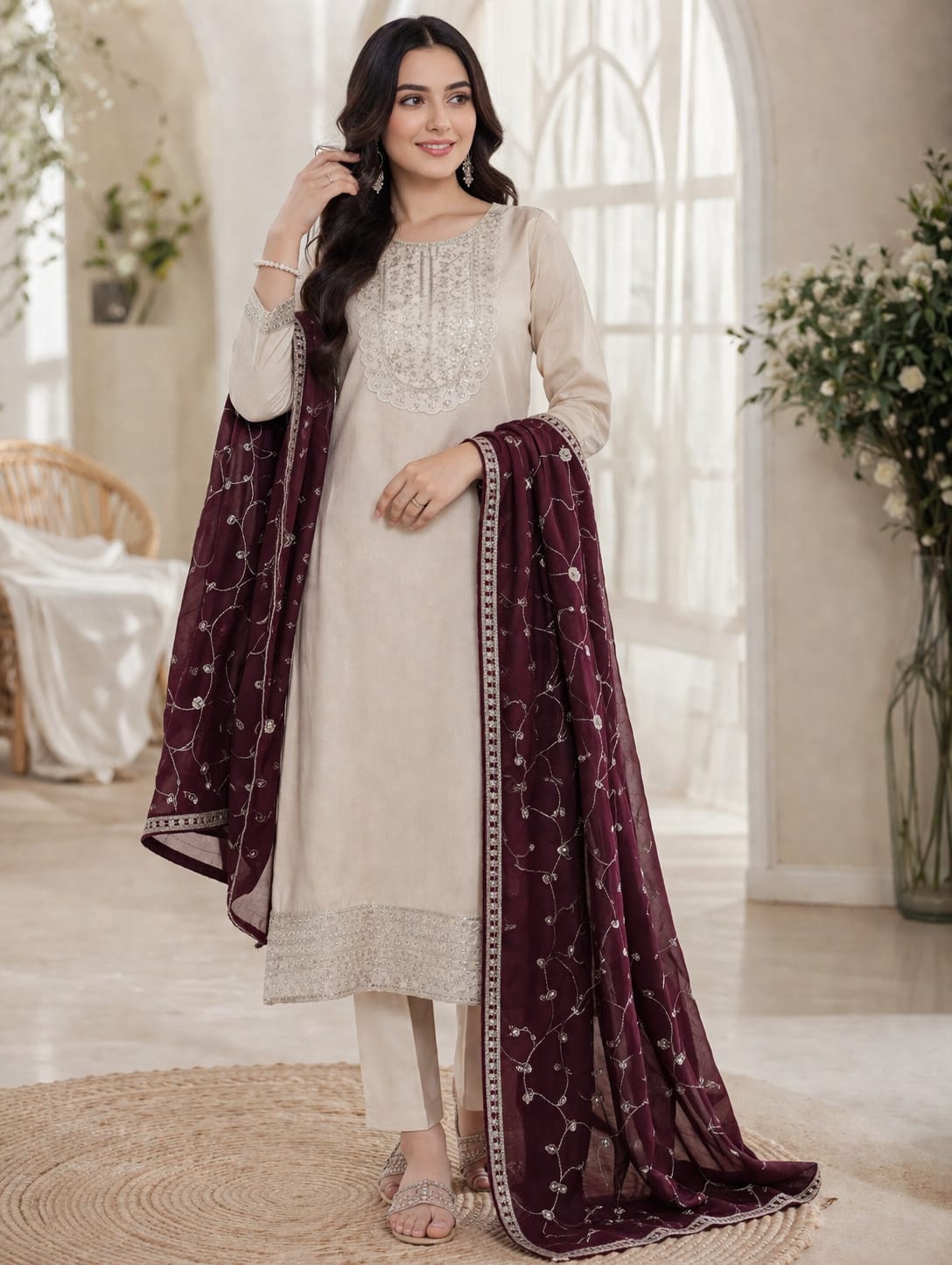
Mustard yellow, maroon, royal blue, red, fuchsia, emerald and orange photograph strongly under warm festival lights. Pastel blue, beige, ivory and blush can look elegant at daytime puja or a quieter family gathering, especially when paired with colourful earrings or a bright dupatta. A neutral base also allows Gujarati-inspired accessories to become the focus.
Colour blocking is a simple way to create a Gujarati festive impression. Pair a mustard kurta with a red, green or magenta dupatta; combine a maroon suit with antique gold and orange accents; or add a multicoloured bandhani-style scarf to a blue base. Keep one colour dominant and repeat the secondary colour in at least two accessories so the outfit appears intentional.
Collections such as Dress Materials can help when you want to customise colour combinations or arrange a suit around a favourite dupatta. Salwar Suits with 30% Off and Salwar Suits Flat 40% Off may be useful for building a multi-night wardrobe, but discount percentage should not replace checking measurements, lining and delivery timing.
How can you style the dupatta for safe, comfortable dancing?
A pinned shoulder drape or a lightweight cross-body drape is safer for Garba than a loose front drape. Pin the dupatta at the shoulder and secure one side near the waist, leaving enough ease for arm movement without allowing the fabric to trail near your feet.
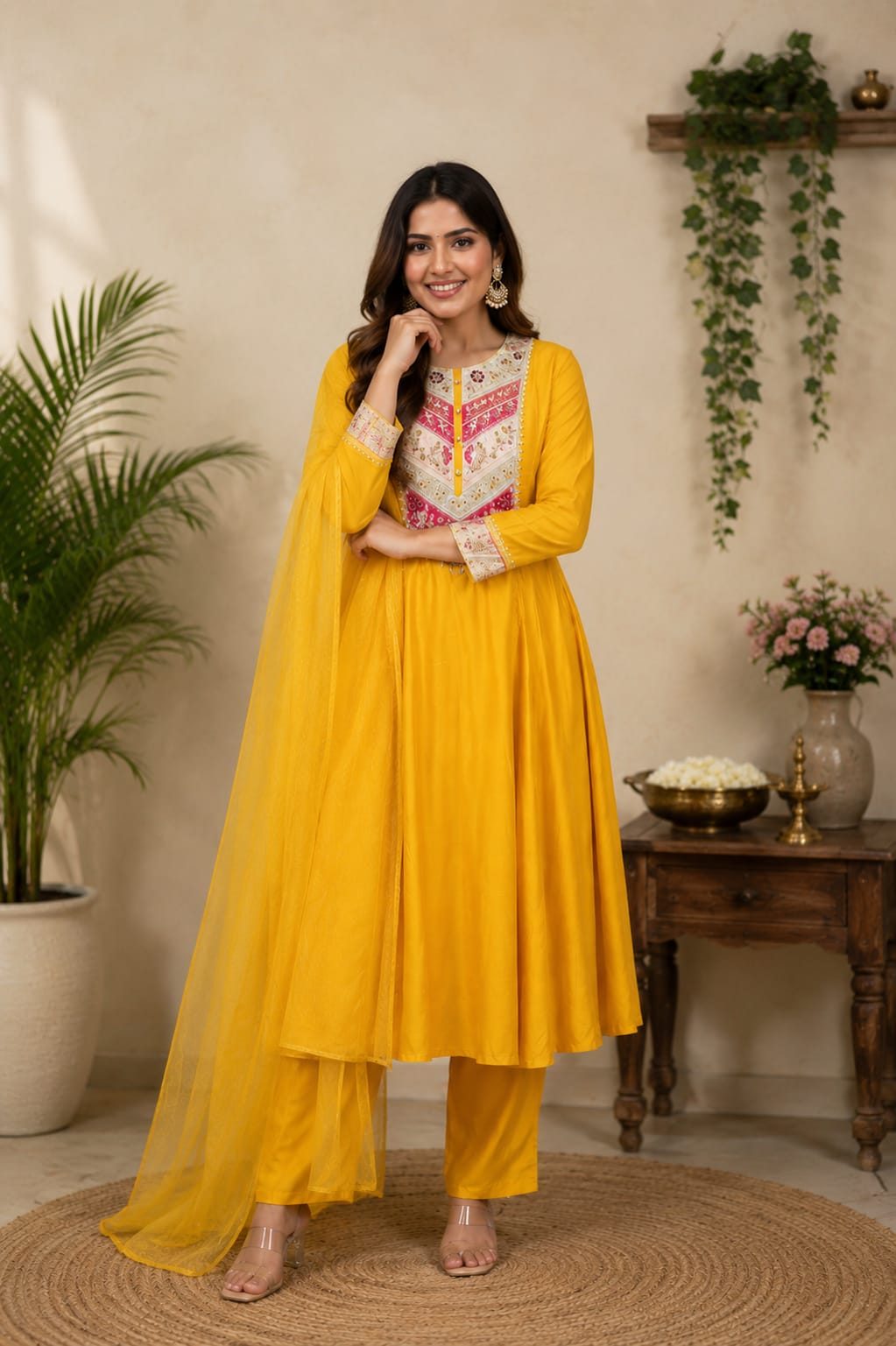
For a traditional-looking arrangement, place the dupatta over one shoulder and bring the opposite end across the front, then secure it discreetly at the waist. A narrower dupatta is easier to control than a very wide, heavily embellished one. If the dupatta has dense zari, mirror work or large tassels, keep the embellishment away from the dominant hand used for Dandiya sticks.
Use small safety pins with protective caps and attach them to the garment seam or lining rather than directly through delicate embroidery. Test the drape by raising both arms, turning once and sitting down. A dupatta that stays secure through those three movements is more likely to remain practical during Garba.
Which accessories complete Gujarati Salwar Suit Styles for Navratri Celebrations?
Oxidised silver jhumkas, colourful bangles, a layered necklace and a small bindi create a recognisable Gujarati festive mood without requiring heavy bridal jewellery. Choose accessories according to the embroidery density of the suit: mirror work and sequins need simpler jewellery, while a plain kurta can support brighter earrings and stacked bangles.
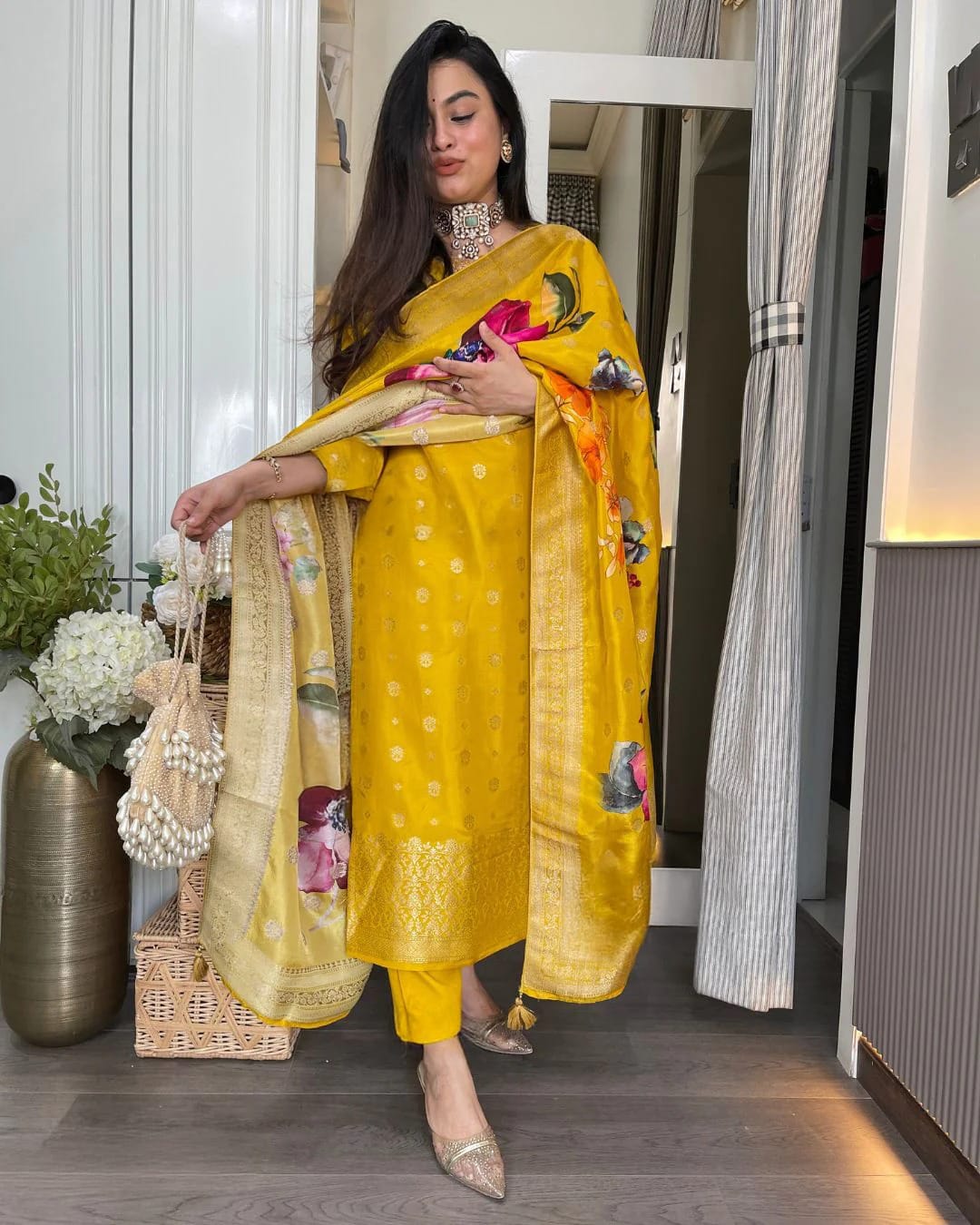
Jhumka weight matters during dancing. Earrings under approximately 15 to 20 grams per pair are generally easier to wear for several hours than oversized statement pieces, although personal comfort varies. Add silicone backs or secure screw backs when the earrings will be worn outdoors or in a crowded venue.
Footwear should have a cushioned sole, a secure strap and a heel no higher than you can comfortably walk in for two hours. Wedge sandals, flat juttis and low block heels are usually more practical than slippery high heels. Break in new footwear at home with the same socks or foot liners you expect to wear at Navratri.
Keep the handbag small and hands-free. A compact sling bag or wristlet can hold a phone, identification, tissues, safety pins and a small amount of cash without interfering with Dandiya sticks. Hair should be secured away from the face with a low braid, bun or half-up style if the venue is warm and crowded.
How do you plan a practical Navratri salwar-suit wardrobe?
Plan three outfit levels: a breathable daytime suit, a movement-friendly Garba set and a more formal evening look. This approach prevents one heavily embellished outfit from carrying every event and lets you adapt to weather, venue and dress code.
- Daytime puja: Choose Chanderi, cotton-rich blends or a lightly embroidered straight suit in pastel blue, beige, ivory or a soft regional colour. Keep jewellery comfortable and the dupatta simple.
- Active Garba night: Choose a palazzo, sharara or light Anarkali with secure styling, a breathable lining and flat or low-heel footwear. Strong colours and controlled sparkle work well under outdoor lights.
- Formal celebration: Choose Vichitra silk, jacquard or a gown-style silhouette with refined embroidery. Use a pinned dupatta and reduce the number of accessories if the neckline or sleeves already carry detail.
The Red Dress Materials Under 2000 collection can be considered when you want to coordinate a red outfit or commission a tailored set within a defined budget. Tailoring time matters during Navratri, so allow at least 7 to 14 days for measurements, alterations and a final movement test if the suit is being stitched.
Take accurate measurements at the bust, waist, hip, shoulder and full garment length while wearing the undergarments intended for the outfit. Add practical ease rather than ordering a smaller size for a sharper appearance. A kurta that's tight at the upper arm or hip will restrict Garba movement regardless of how attractive the embroidery looks.
What should you check before buying a Navratri salwar suit?
Check the measurement chart, lining, closure, fabric composition, embellishment security and dispatch estimate before buying a Navratri salwar suit. Product photographs can't show whether sequins scratch, whether a trouser waistband rolls or whether a dupatta is heavy enough to slip.
- Movement: Raise your arms, sit, walk quickly and turn before the final alteration.
- Hem: Confirm that the hem won't catch under your footwear or drag outdoors.
- Embroidery: Inspect the reverse side for loose threads, rough backing and exposed knots.
- Dupatta: Measure its length and decide where pins will be placed before the event.
- Weather: Select lighter layers for humid outdoor Garba and warmer lining for late-night open venues.
- Timing: Order early enough to allow delivery, steaming and at least one trial wear.
Steam embellished garments from the reverse side or place a cotton cloth between the iron and the fabric. Store a dry suit on a broad hanger, keep metallic embellishment away from moisture and air the garment before folding it. Gentle care preserves the finish through multiple Navratri seasons and makes a carefully chosen salwar suit more useful than an one-night purchase.
Questions About Choosing a Gujarati Navratri Salwar Suit
Which salwar suit is best for Garba dancing?
A palazzo suit, light sharara set or moderately flared Anarkali is usually best for Garba because each silhouette allows leg movement. Choose a secure waistband, a hem that clears the floor and a pinned dupatta instead of a loose trailing drape.
What should I wear for a Gujarati-themed Navratri event if I do not own a chaniya choli?
Wear a bright salwar suit with a contrasting dupatta, mirror-work or colourful embroidery, oxidised jewellery and comfortable footwear. A mustard, maroon, blue or red suit can look Gujarati-inspired without copying the full chaniya choli silhouette.
Is Chanderi comfortable for Navratri celebrations?
Chanderi can be comfortable for Navratri because it is generally light and has an airy appearance, particularly for daytime events. Check the lining and sequence placement because a rough inner finish can become uncomfortable during several hours of movement.
How do I stop my dupatta from slipping while playing Dandiya?
Pin the dupatta at the shoulder and secure the opposite side near the waist, leaving enough room to raise both arms. Test the arrangement by turning, sitting and lifting your hands before leaving for the event.
Which footwear is suitable with a Navratri salwar suit?
Flat juttis, cushioned sandals and low block heels with secure straps are suitable for most Navratri salwar suits. Break in the footwear beforehand and avoid slippery soles or a heel height that prevents comfortable walking and dancing.
How early should I buy a salwar suit for Navratri?
Buy a ready-to-wear suit at least 7 to 10 days before the event so you have time for delivery, steaming and minor alterations. Allow 14 days or more for a made-to-measure outfit because fittings and stitching can require additional time.





