Gujarati Panetar and Gharchola are not the same wedding saree, even though both are strongly associated with Gujarati bridal dressing and often appear in red. Panetar usually represents the bride's maternal family through a white or ivory ground with red details, while Gharchola is recognised by a checked grid, Bandhani-style dots and zari ornamentation. The two sarees can be worn during different parts of a wedding, so understanding the distinction makes choosing, gifting and styling much easier.
The confusion is understandable because family customs vary across Gujarat, and contemporary bridal wardrobes sometimes combine Panetar colours with Gharchola checks. Colour alone can't identify either saree. The more reliable clues are the textile layout, the gifting relationship, the ritual moment and the visual language of the weave, dyeing or print.
Gujarati Panetar and Gharchola: What Is the Difference?
A Panetar is generally a white, cream or ivory Gujarati bridal saree with red borders, red motifs or red patterned sections, whereas a Gharchola is a red or richly coloured checked saree decorated with zari and repeated motifs.
The word Panetar is linked with the idea of a new cloth and is traditionally connected with the bride's maternal uncle, or mama. In many Gujarati families, the maternal side presents the Panetar as part of the bride's wedding trousseau. The light ground symbolises freshness and auspicious beginnings, while red introduces fertility, celebration and marital prosperity.
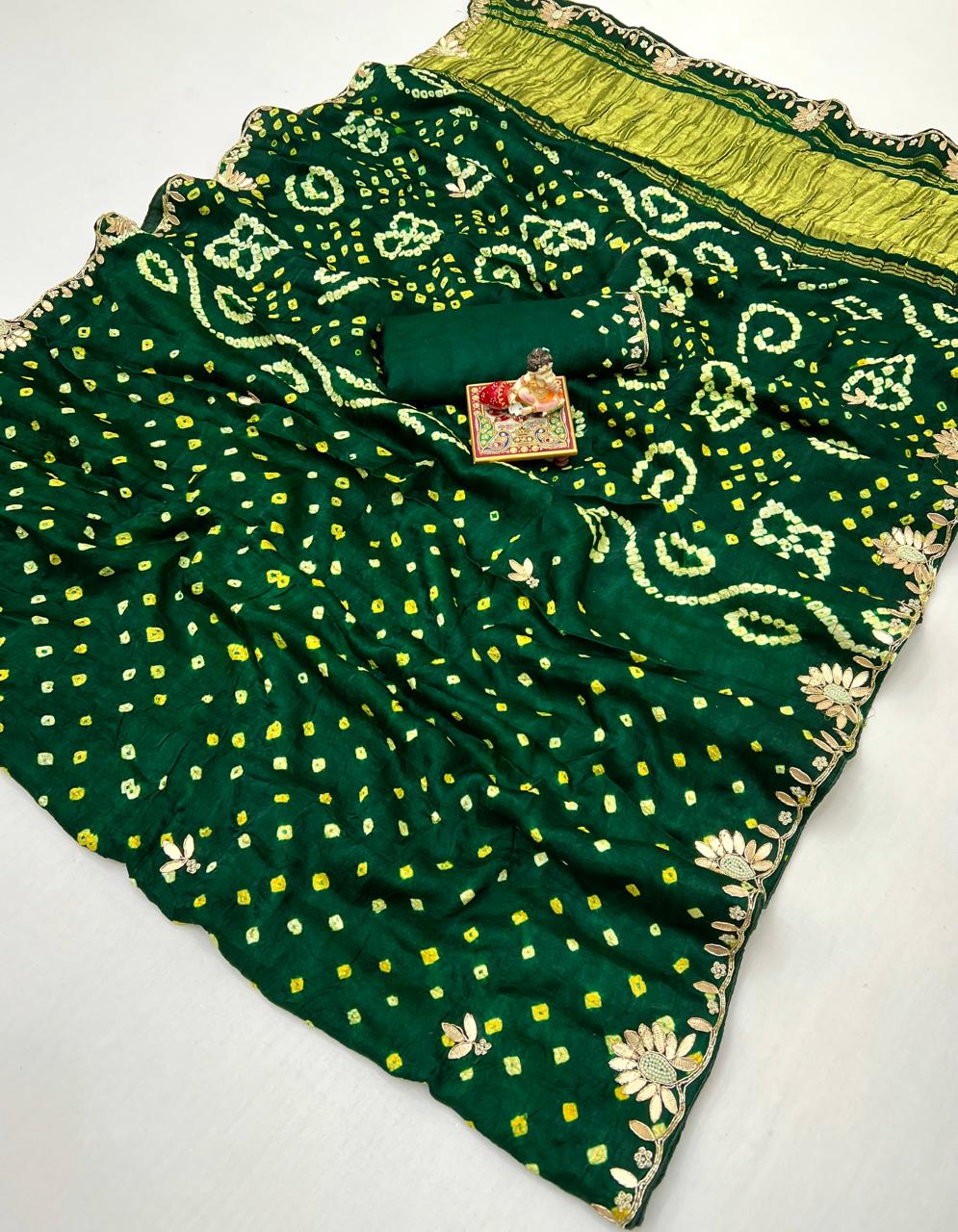
Gharchola has a more structured surface identity. The name is commonly associated with a house-like or window-like grid, created through intersecting lines that divide the saree into squares. Bandhani dots, floral butis, peacocks, elephants and zari details may occupy those squares. Gharchola is traditionally associated with the groom's family and is often gifted to the bride by her in-laws, although exact customs differ between communities.
Panetar therefore tells a story about the bride's maternal home, while Gharchola often marks her welcome into the groom's family. A modern saree may borrow elements from both traditions, but a classic Panetar isn't simply a plain Gharchola without checks, and a Gharchola isn't merely any red Gujarati bridal saree.
Gujarati Panetar and Gharchola: Why Might a Bride Wear Both?
Gujarati brides may wear both sarees because Panetar and Gharchola represent different family relationships and ceremonial exchanges.
In a traditional wedding sequence, the bride may receive or wear the Panetar during a maternal-family ritual and later change into Gharchola for a ceremony involving the groom's family. The exact order depends on whether the family follows a Gujarati Hindu, Jain, Vaishnav or regional custom, and many households adapt the sequence to suit the wedding schedule.
Some brides wear Panetar for the wedding pheras because its white-and-red palette photographs clearly and carries a strong maternal blessing. Other brides reserve Gharchola for the reception, vidaai or a post-wedding ritual because the heavier red-and-gold appearance feels more formal. There is no single national rule that determines which saree must be worn at every Gujarati wedding.
Wedding planners and families should confirm the ritual plan before buying. A saree intended for the pheras may need to be comfortable for several hours of sitting, walking and performing ceremonies. A saree intended for a short family presentation can support denser zari, a heavier border or a more elaborate pallu.
Gujarati Panetar and Gharchola: How Can You Identify a Panetar?
A traditional Panetar can usually be identified by its predominantly light ground, red border or red ornamentation and strong association with the bride's maternal family.
Gujarati Panetar and Gharchola: Colour and Layout
Classic Panetar uses white, off-white, cream or very pale beige as the main field, balanced with vermilion, crimson or deep red. Red may appear in the border, pallu, woven motifs or patterned sections. Gold zari can appear alongside red, but the light ground remains visually important.
Contemporary Panetar-inspired sarees may use pastel pink, blush, peach or muted coral instead of a strict white-and-red combination. Such pieces can be attractive for engagement ceremonies, family pujas and daytime wedding functions, but a buyer should describe them as Panetar-inspired unless the textile and family tradition support the classic designation.
Gujarati Panetar and Gharchola: Fabric and Motifs
Panetar doesn't refer to one mandatory fibre or one single production technique. Silk, cotton, tissue, georgette and blended textiles can carry Panetar colours, although the traditional identity depends more on Gujarati bridal symbolism and design placement than on a generic silk label.
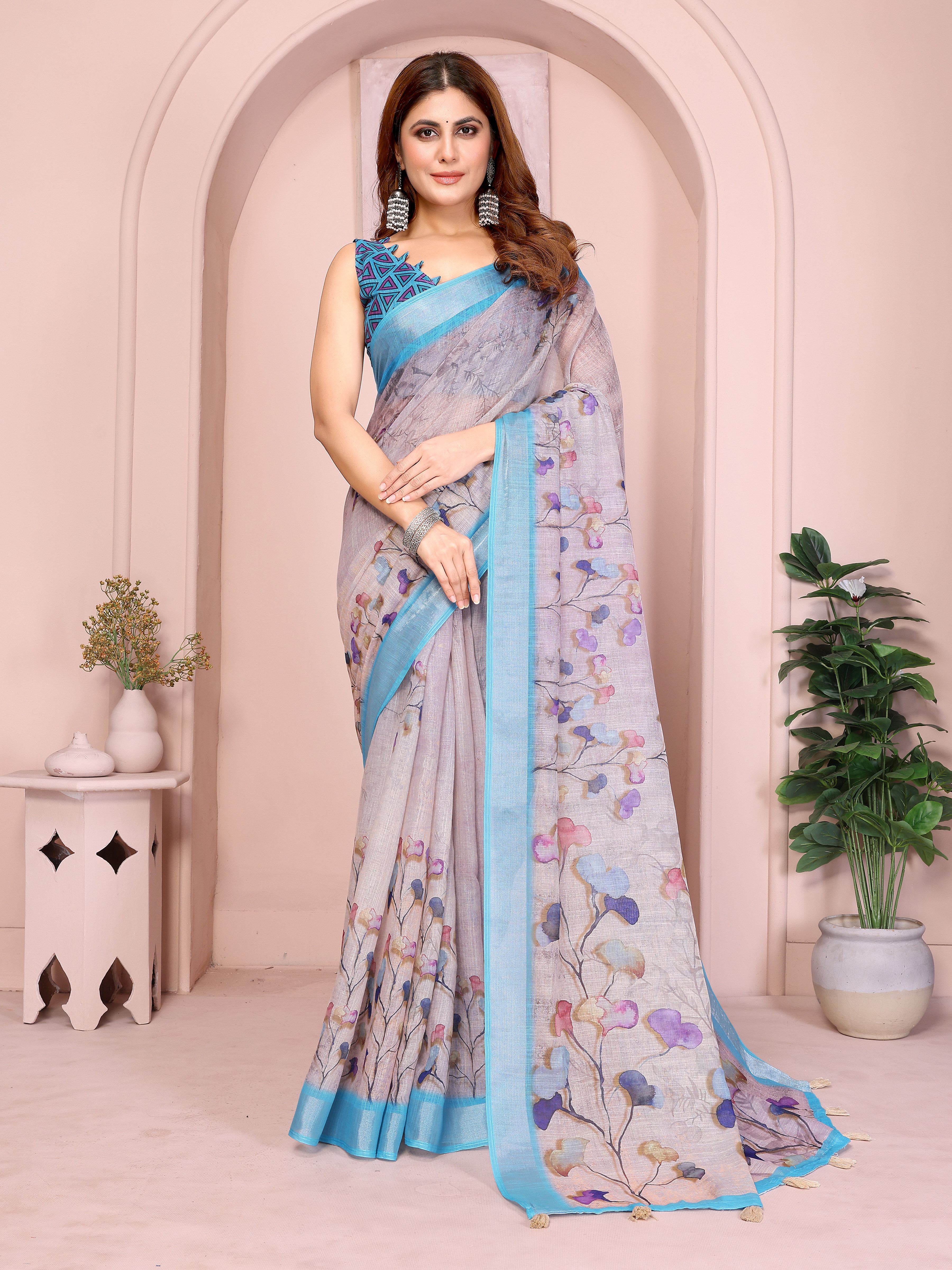
Pastel Linen Cotton Floral Print Saree with Designer Blouse and Peach Linen Cotton Floral Print Saree with Blouse for Women use soft bases and floral surface interest, making them useful visual references for a contemporary daytime wedding wardrobe. Floral printing alone doesn't make a saree a Panetar.
Pastel Floral Tissue Handloom Cotton Saree with Zari Weaves offers another useful comparison because zari can add ceremony without turning every light saree into a traditional Panetar. The Panetar label should be supported by the red-and-light palette, Gujarati bridal context and intended ritual use.
Gujarati Panetar and Gharchola: What Makes a Gharchola Recognisable?
A Gharchola is most recognisable through its repeated square or window-like checks, often combined with Bandhani dots, zari lines and auspicious motifs on a red base.
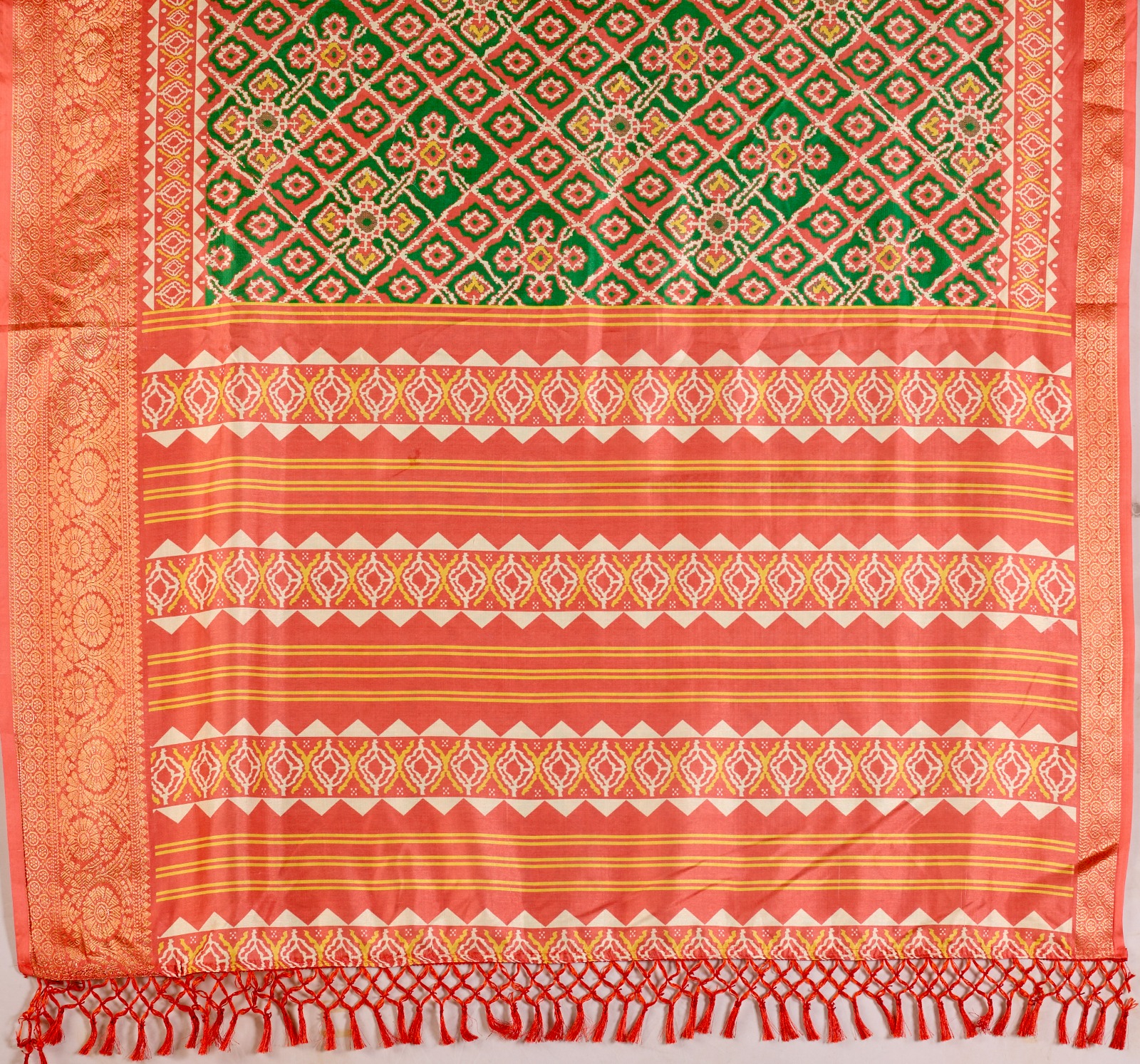
The checked arrangement isn't merely decorative. The grid gives the saree a distinctive architectural rhythm and creates spaces for small motifs. Depending on the version, each square may contain a dot cluster, flower, paisley, geometric mark, peacock or other auspicious figure. Gold zari frequently outlines the checks or strengthens the border and pallu.
Traditional Gharchola may be created through resist-dyeing methods associated with Bandhani, weaving, printing or combinations of techniques. A genuine buying decision should therefore see the product description rather than assume that every checked red saree is hand-tied Bandhani. Terms such as printed checks, Bandhani-inspired and woven zari grid draw different construction methods and price points.
Red remains the most familiar Gharchola colour because it carries bridal and auspicious associations. Maroon, magenta, rust, orange-red and deep pink versions are also seen in contemporary wardrobes. Gold zari can make the saree look especially rich under indoor lighting, but zari adds weight and may require gentler storage.
Gujarati Panetar and Gharchola: Which Saree Should You Choose?
Choose Panetar for a lighter, maternal-family bridal statement and choose Gharchola when the checked Gujarati bridal identity or in-law gifting tradition is central to the ceremony.
For a traditional wedding, begin with the family's custom rather than with colour trends. Ask which side of the family is presenting the saree, which ritual requires it and whether the bride is expected to wear a specific style. This simple conversation prevents an expensive mismatch between the saree and the ceremony.
For a daytime function, a lighter Panetar palette can work well with a breathable cotton-silk, tissue or linen-cotton base. Mint Green Floral Linen Cotton Saree with Pink Border Style and Peach Floral Linen Cotton Saree with Beautiful Blue Border show how soft colours and contrasting borders can create a festive regional wardrobe without imitating a formal Gharchola grid.
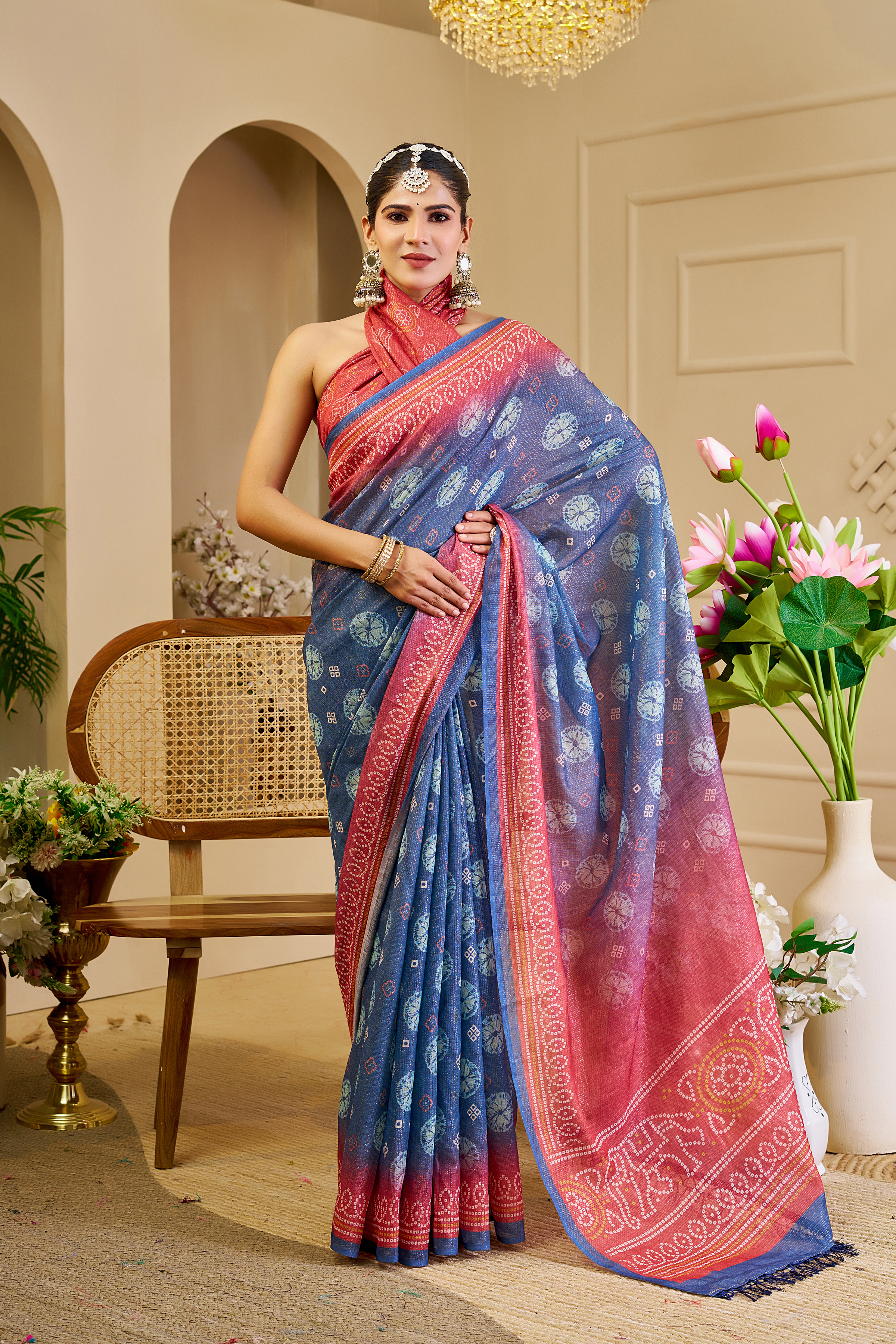
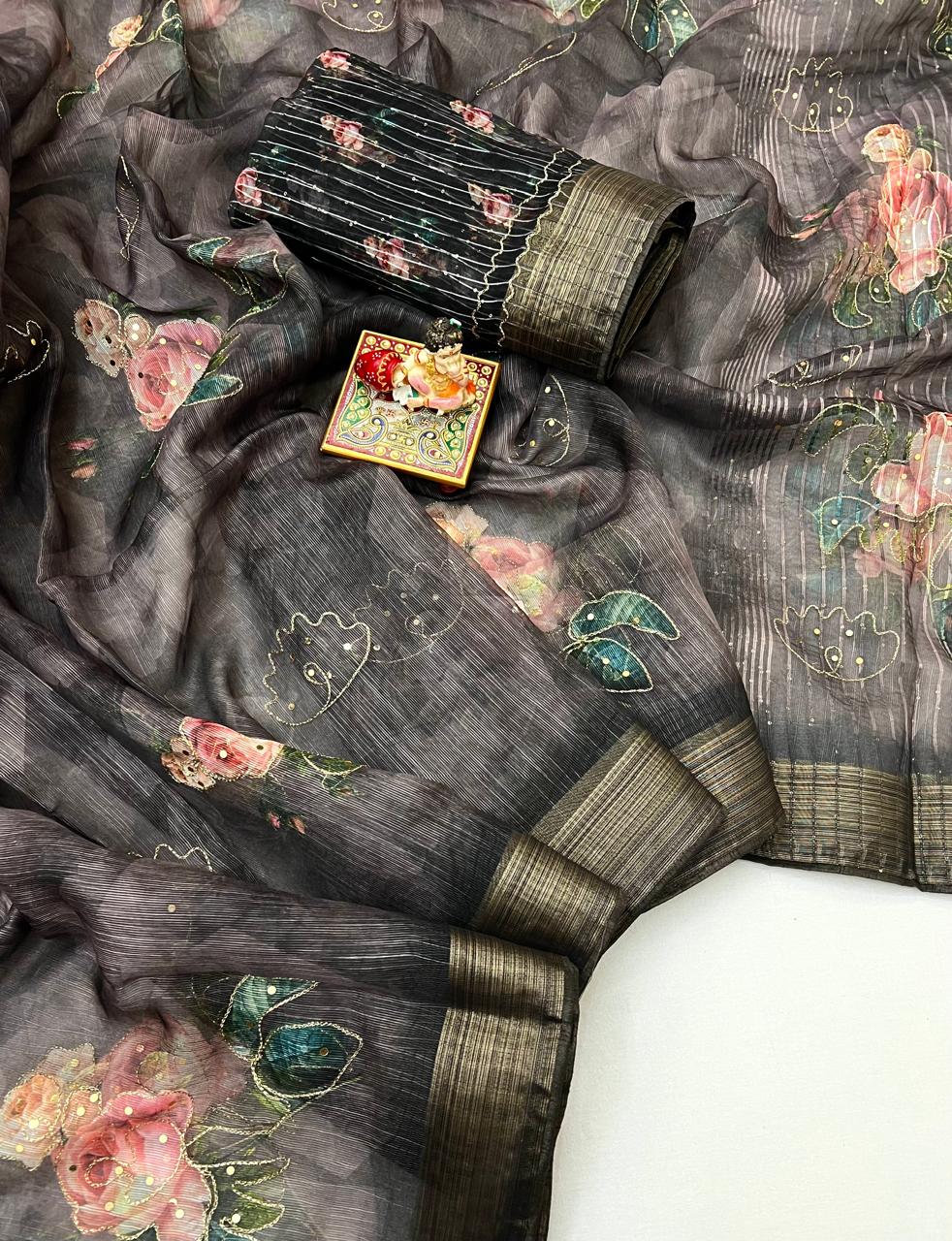
For an evening wedding or reception, consider the visual weight of the pallu, zari and border. Elegant Charcoal Garden Organza Cotton Silk Saree has a darker, dressier mood, while Grey Blue Floral Linen Cotton Saree with Floral Blue Border uses border contrast to create definition. Neither is a traditional Gharchola, but both illustrate an useful styling principle: a strong border can anchor a saree when the body is understated.
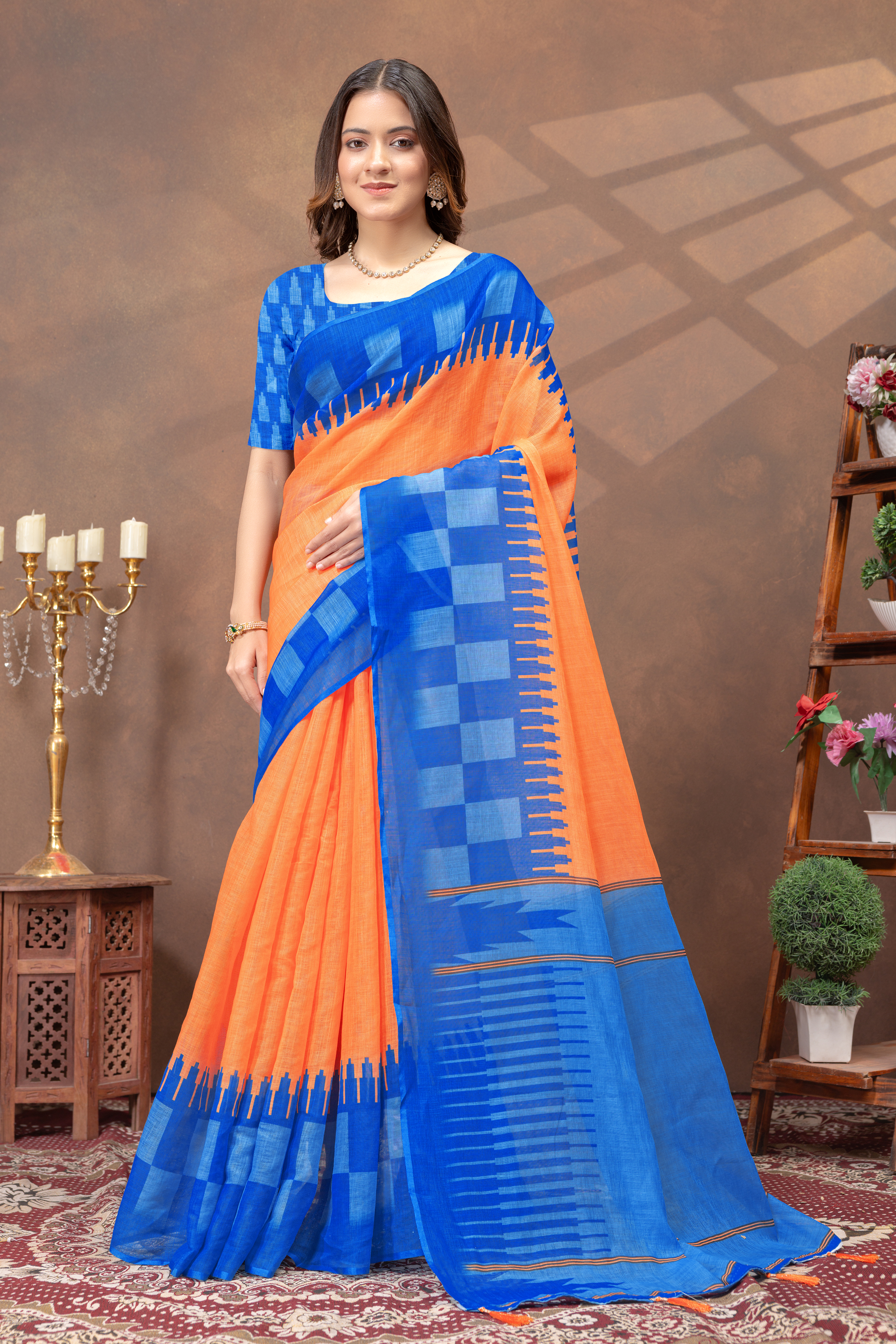
Peach Floral Linen Cotton Saree with Statement Blue Border brings another example of how a contrasting pallu or border can become the visual focus of a guest outfit. A border-led design can be festive without competing with a bride's highly symbolic red-and-gold Gharchola.
Budget also affects the decision. A saree described as handwoven, hand-dyed or heavily zari-worked will generally cost more than a printed polyester or blended imitation. Wedding Sarees Collection Under 4000 can help shoppers set a realistic ceiling, while Silk Sarees Under 3000 With Discount may suit guests seeking a festive silk appearance without a bridal-level investment. Price should not be treated as proof of authenticity.
Gujarati Panetar and Gharchola: How Should You Style Them?
Panetar styling usually works best with controlled red accents, while Gharchola styling benefits from simpler accessories that allow the checked and zari surface to remain visible.
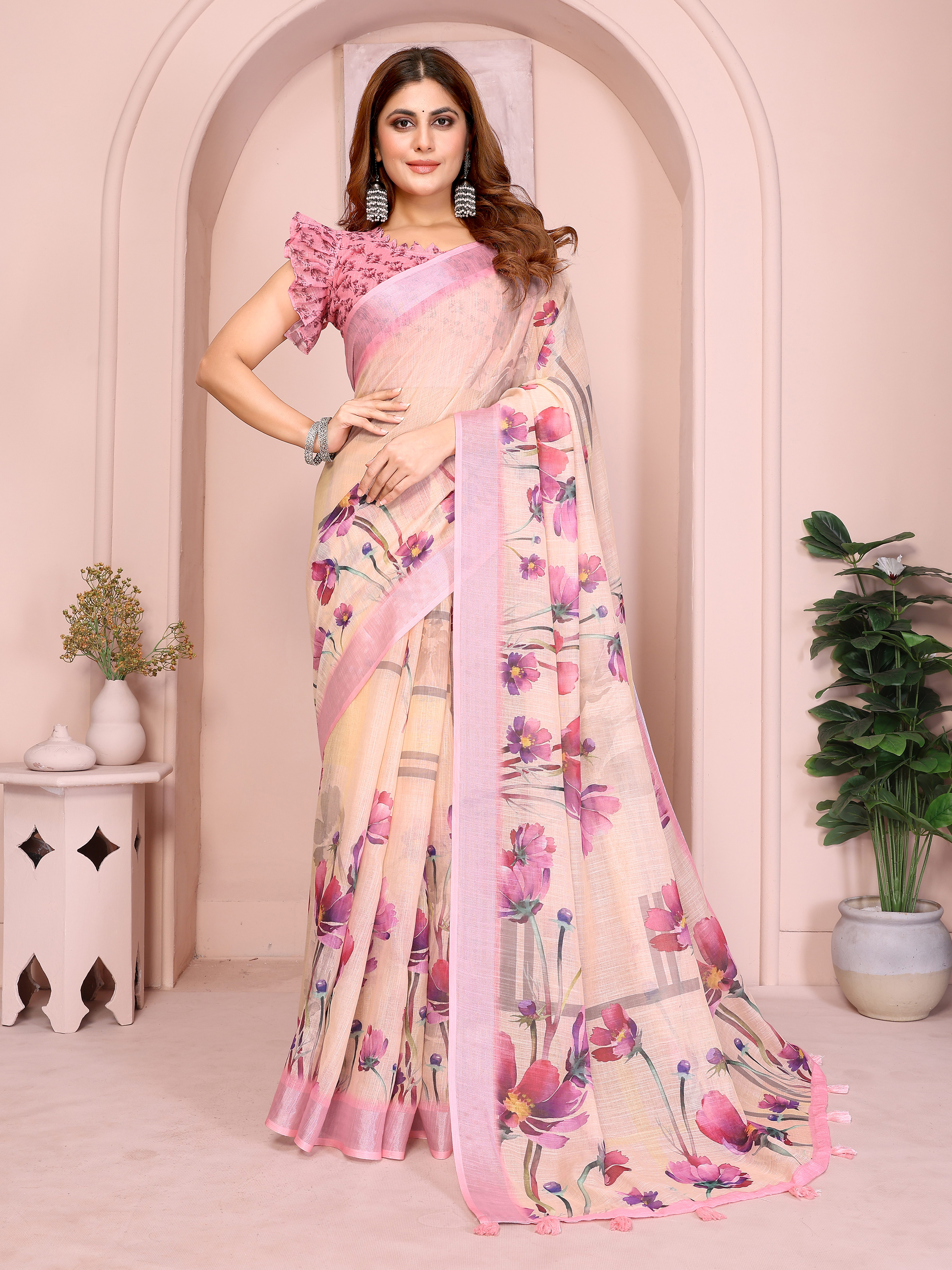
For Panetar, pair a red, vermilion or deep wine blouse with traditional gold jewellery if the saree has red borders. A green, mustard or antique-gold accent can work for a less literal interpretation, but avoid adding too many competing colours when the saree already contains red motifs. A low bun with gajra, neatly pressed pleats and a small red bindi preserve the ceremonial character.
For Gharchola, a blouse matching the dominant red or the zari tone creates a cohesive bridal silhouette. Temple-style earrings, a nath, layered necklaces or a kamarbandh can suit a formal wedding, but the blouse should not introduce a large print that fights with the square grid. If the saree is heavily embellished, choose one dominant jewellery area instead of wearing every bridal accessory at once.
A red blouse isn't compulsory for every Panetar-inspired saree. A blouse that matches the border, such as muted rose, ivory, antique gold or dusty coral, can look more balanced when the saree has a pastel ground. The blouse neckline and sleeve length should also suit the ceremony: higher necklines and elbow-length sleeves often feel more traditional, while a structured sleeveless or short-sleeved blouse may suit a reception.
Guests should avoid copying the bride's full ritual styling when wearing a contemporary Gujarati-inspired saree. A single statement earring, a slim bangle stack and a small potli can communicate festive dressing without replicating bridal jewellery or a ceremonial head covering.
Gujarati Panetar and Gharchola: How Should You Buy and Care for Them?
Buy Panetar or Gharchola by checking the construction, dimensions, colour description, blouse details and care instructions rather than relying only on the product title.
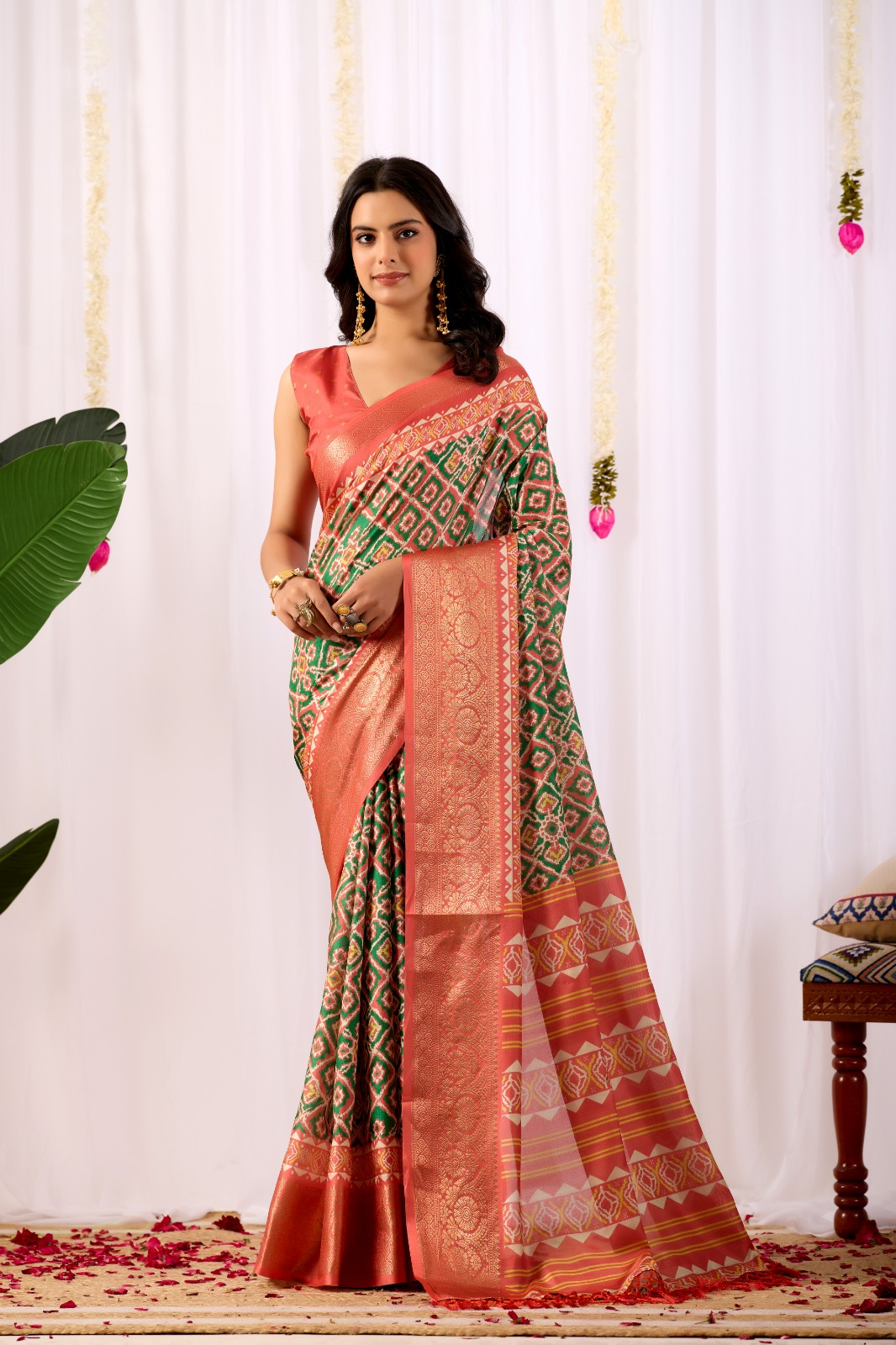
Ask whether the checks are woven, printed or created with Bandhani resist-dyeing. Ask whether zari is metallic, zari-like or embroidered. These details affect appearance, durability, weight and price. Check the saree length, commonly around 5.3 to 5.5 metres, and confirm whether an attached blouse piece is included. A bride who plans a long Gujarati pallu or a more elaborate drape may need to account for fabric consumed in pleating.
Inspect colour contrast in daylight when possible. Ivory, cream and pale pink can appear similar in online photographs, while red may shift from vermilion to wine under warm lighting. Product photographs should be treated as indicative rather than as a guarantee of exact screen colour.
Store silk, zari and Bandhani-style sarees folded in a clean cotton or muslin cloth. Refold stored sarees every few months so that permanent creases don't form along the same lines. Keep sarees away from direct sunlight, damp cupboards, perfume, makeup and rough jewellery that can catch threads.
Dry-cleaning is generally safer for silk, zari and heavily decorated Gharchola sarees, while care instructions for cotton or linen-cotton sarees may permit gentle hand washing. Never scrub zari borders, wring a saree aggressively or iron directly over metallic work. Place a thin cotton cloth between the iron and the saree, and use the lowest suitable heat setting.
Gujarati Panetar and Gharchola: Common Questions for Wedding Shoppers
Gujarati Panetar and Gharchola carry different colours, layouts and family meanings, so shoppers should treat them as related but distinct traditions.
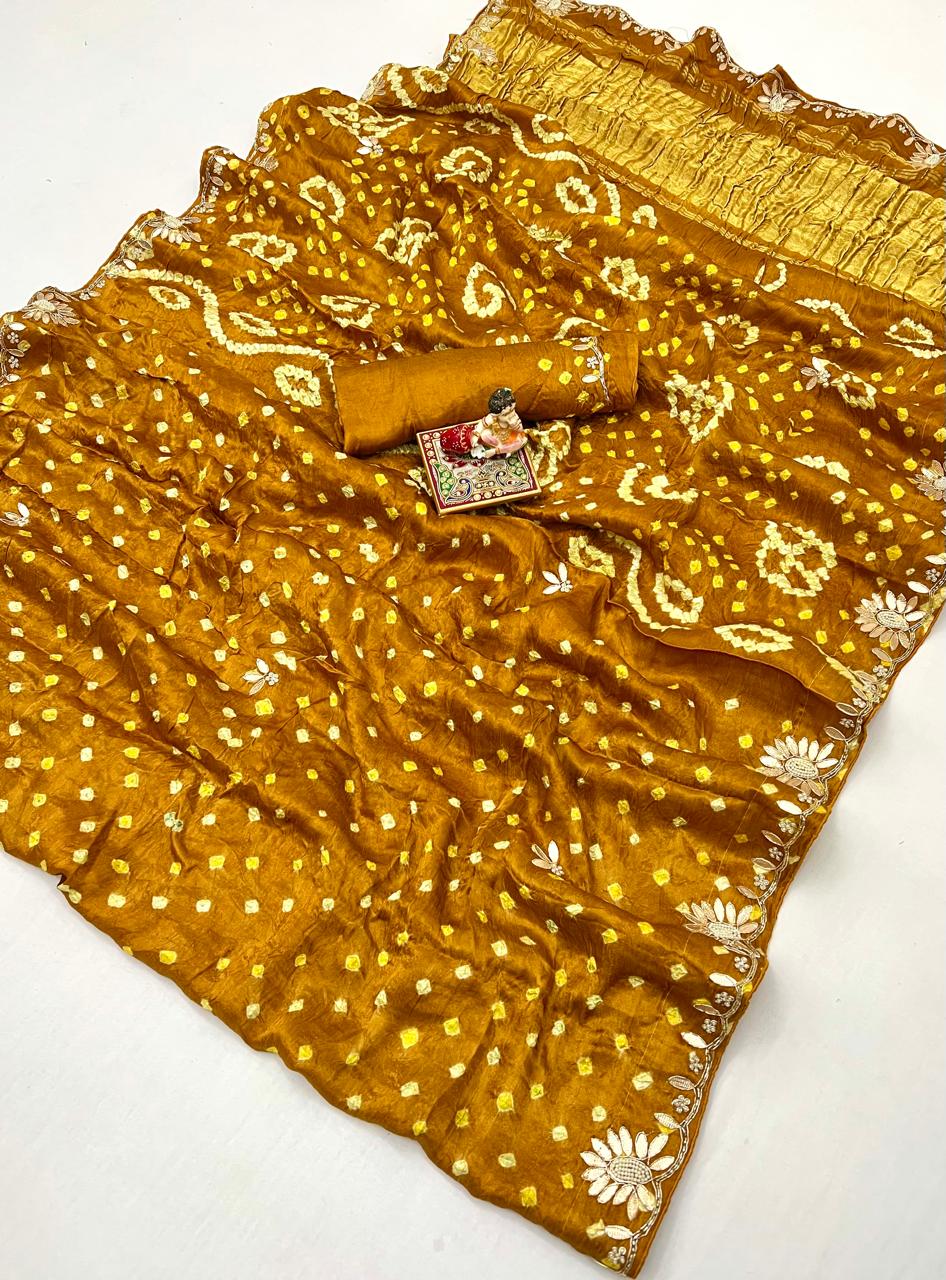
An useful final check is simple: look for the light ground and red symbolism of Panetar, then look for the square grid, repeated dots and zari identity of Gharchola. If a saree combines both, describe it as a contemporary fusion or Panetar-Gharchola-inspired design unless the seller or family tradition gives it a more specific name.
Questions About Gujarati Panetar and Gharchola Wedding Sarees
Is a Panetar saree always white and red?
A traditional Panetar usually has a white, ivory or cream ground with red details, but contemporary Panetar-inspired sarees may use blush, peach or other pale shades. The red-and-light relationship and Gujarati bridal context matter more than one exact colour code.
Is every red Gujarati wedding saree a Gharchola?
No. A Gharchola is usually identified by a repeated checked or window-like grid, often combined with Bandhani dots, zari and auspicious motifs. A plain red Banarasi silk saree or red Kanjeevaram can be bridal without being Gharchola.
Who traditionally gifts the Panetar and Gharchola?
The Panetar is traditionally associated with the bride's maternal family, especially the maternal uncle. Gharchola is commonly associated with the groom's family or in-laws, although the exact gifting custom varies among Gujarati communities and households.
Can a bride wear Panetar and Gharchola at the same wedding?
Yes. Many brides wear both because the two sarees can correspond to different rituals and family blessings. The order and ceremony depend on the family's regional and religious customs.
How can I tell whether a Gharchola is woven or printed?
Read the construction details and inspect the reverse side if possible. Woven checks are formed within the textile, while printed checks sit on the surface; Bandhani versions show resist-dyed dot patterns rather than a simple printed repeat.
Which saree is easier to wear for a long wedding ceremony?
A lighter Panetar in cotton-silk, tissue or linen-cotton may be easier to manage for several hours, provided the fabric holds pleats well. A heavily zari-worked Gharchola can be more formal but may feel heavier, so test the drape, blouse fit and pallu weight before the wedding day.