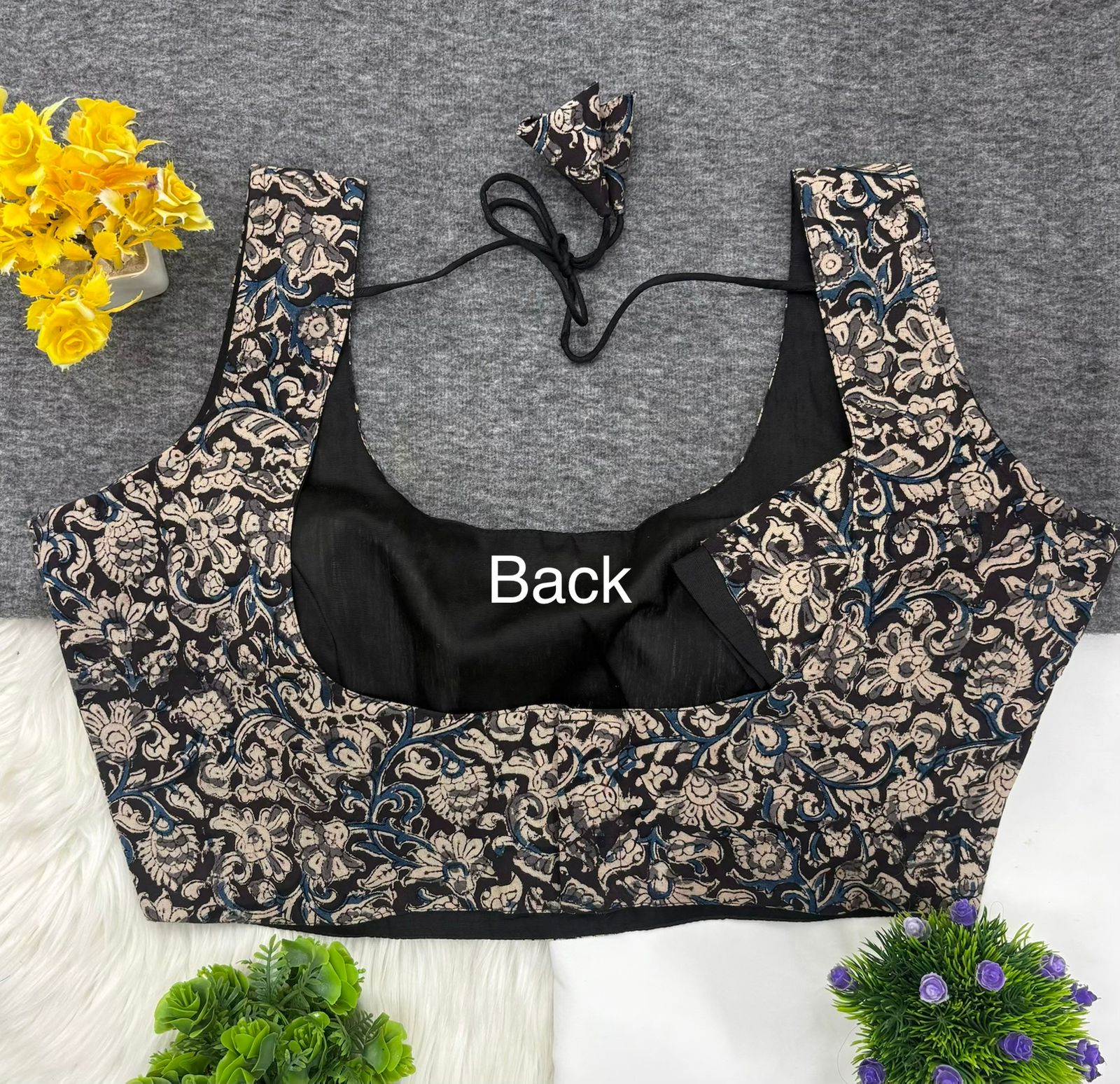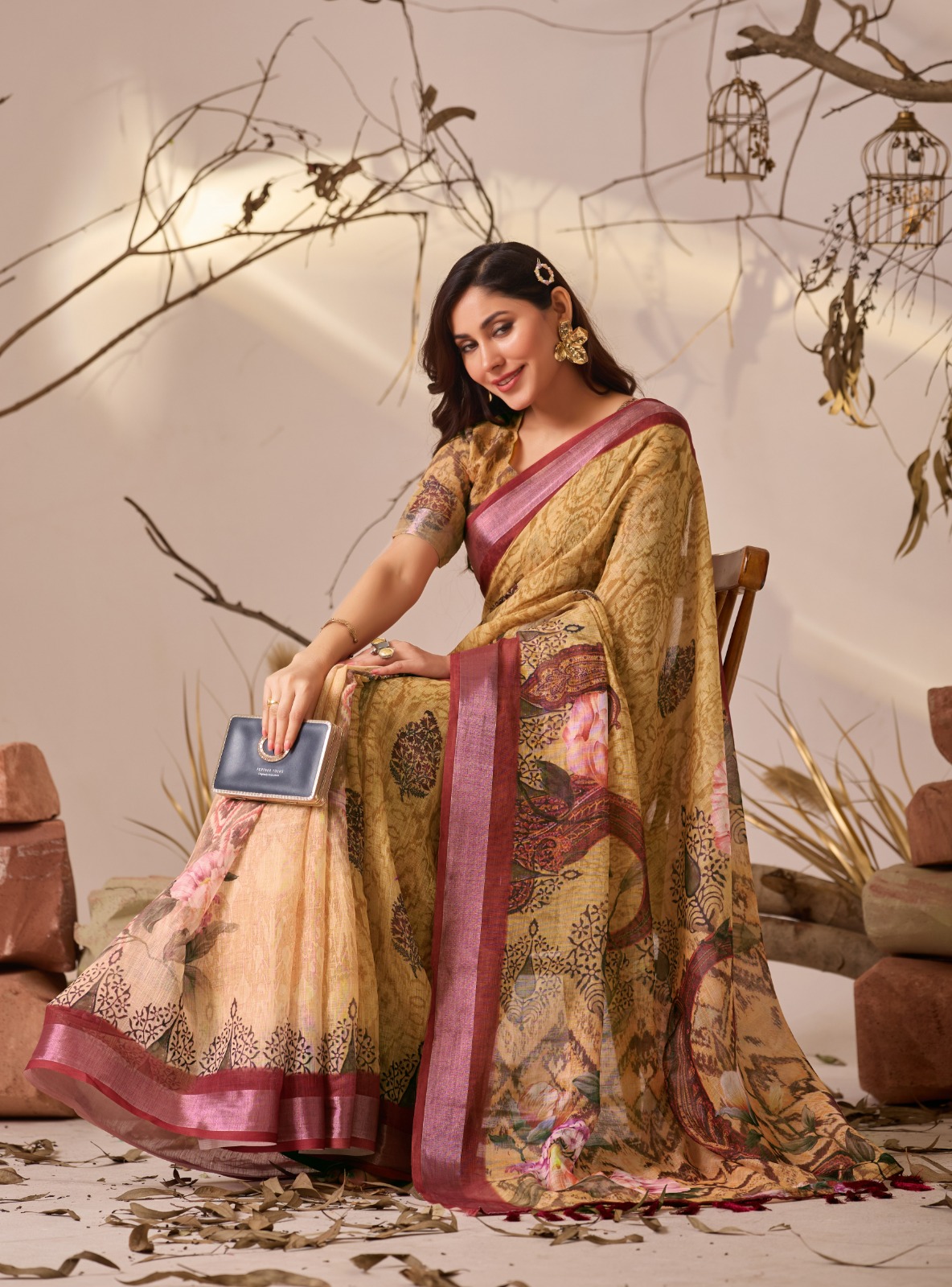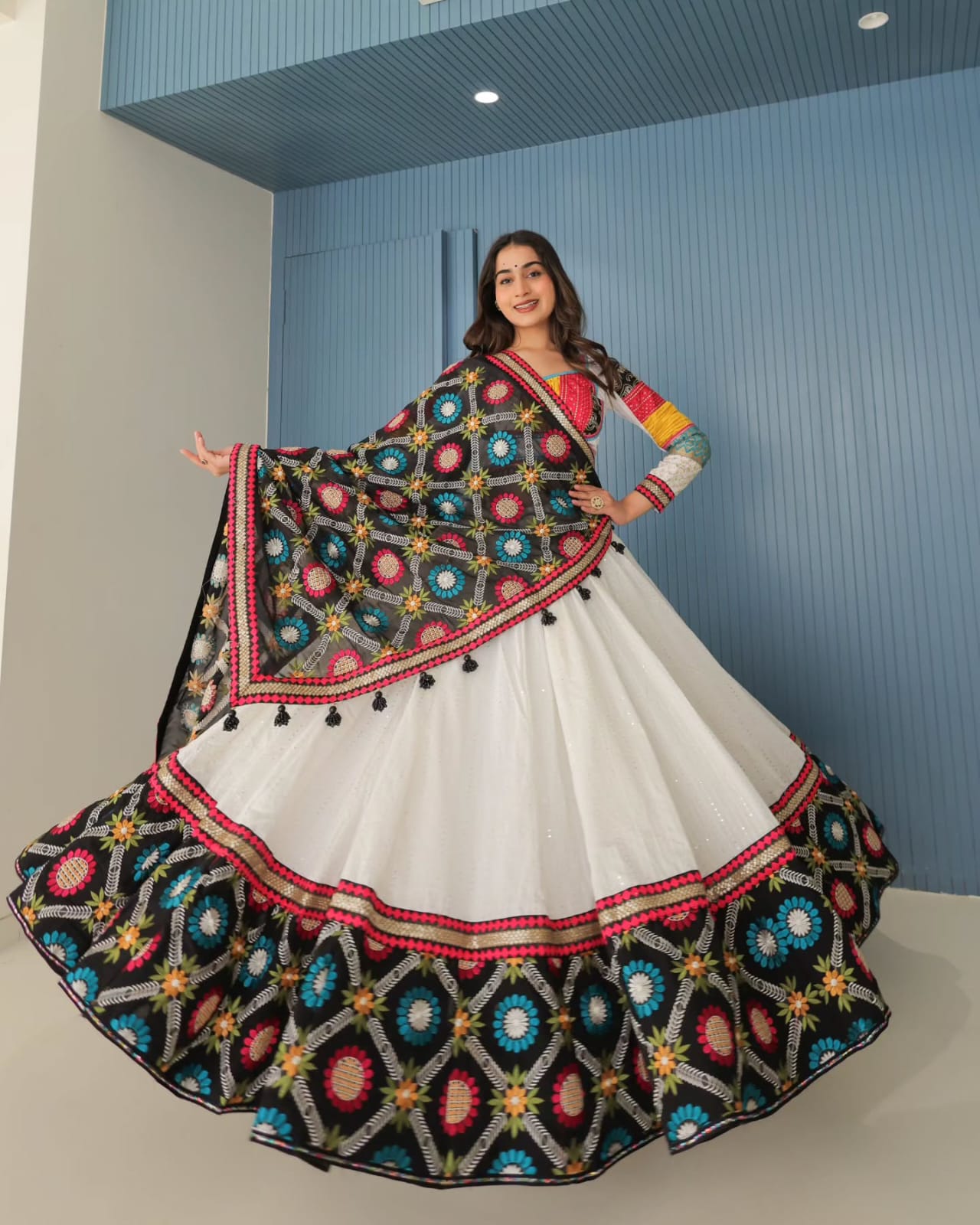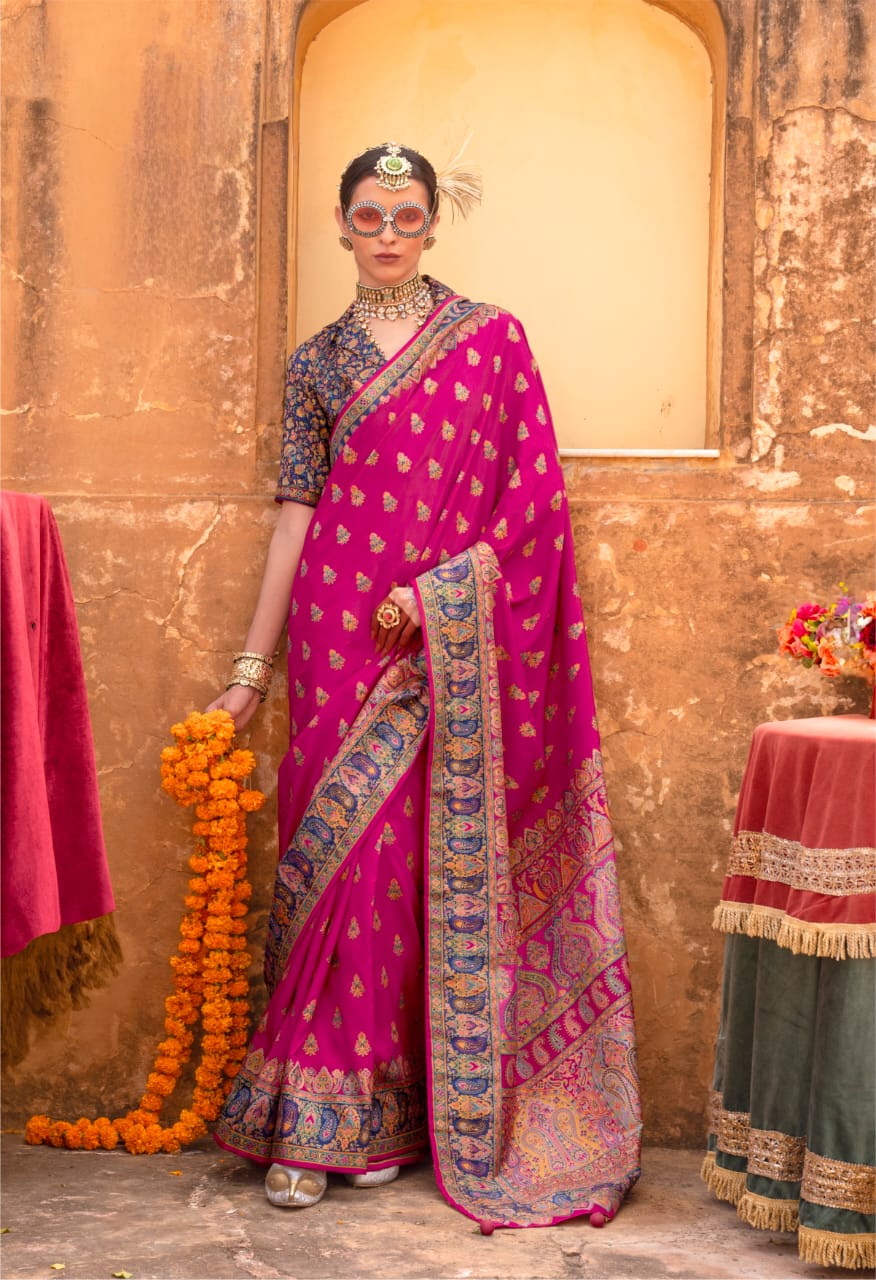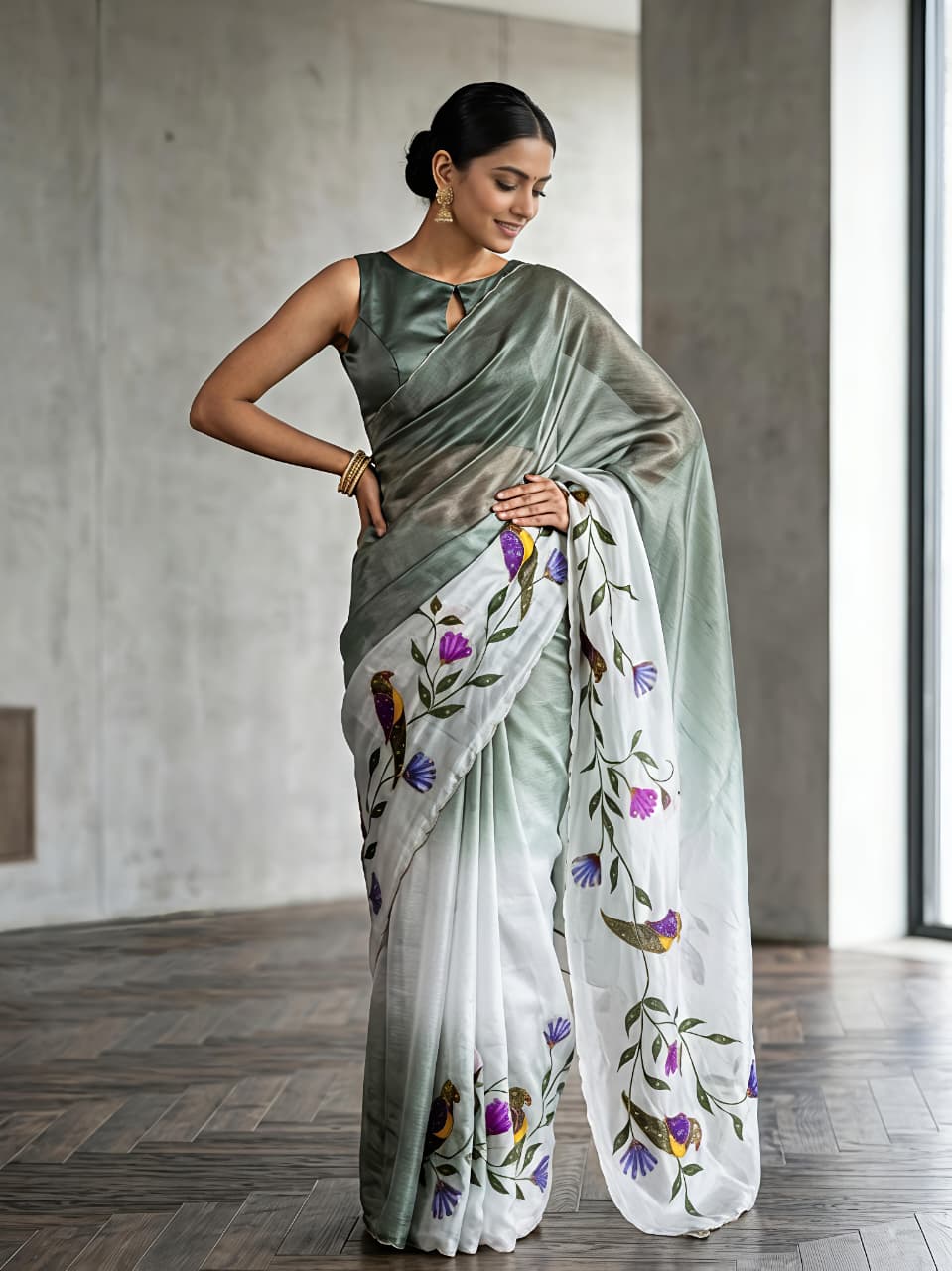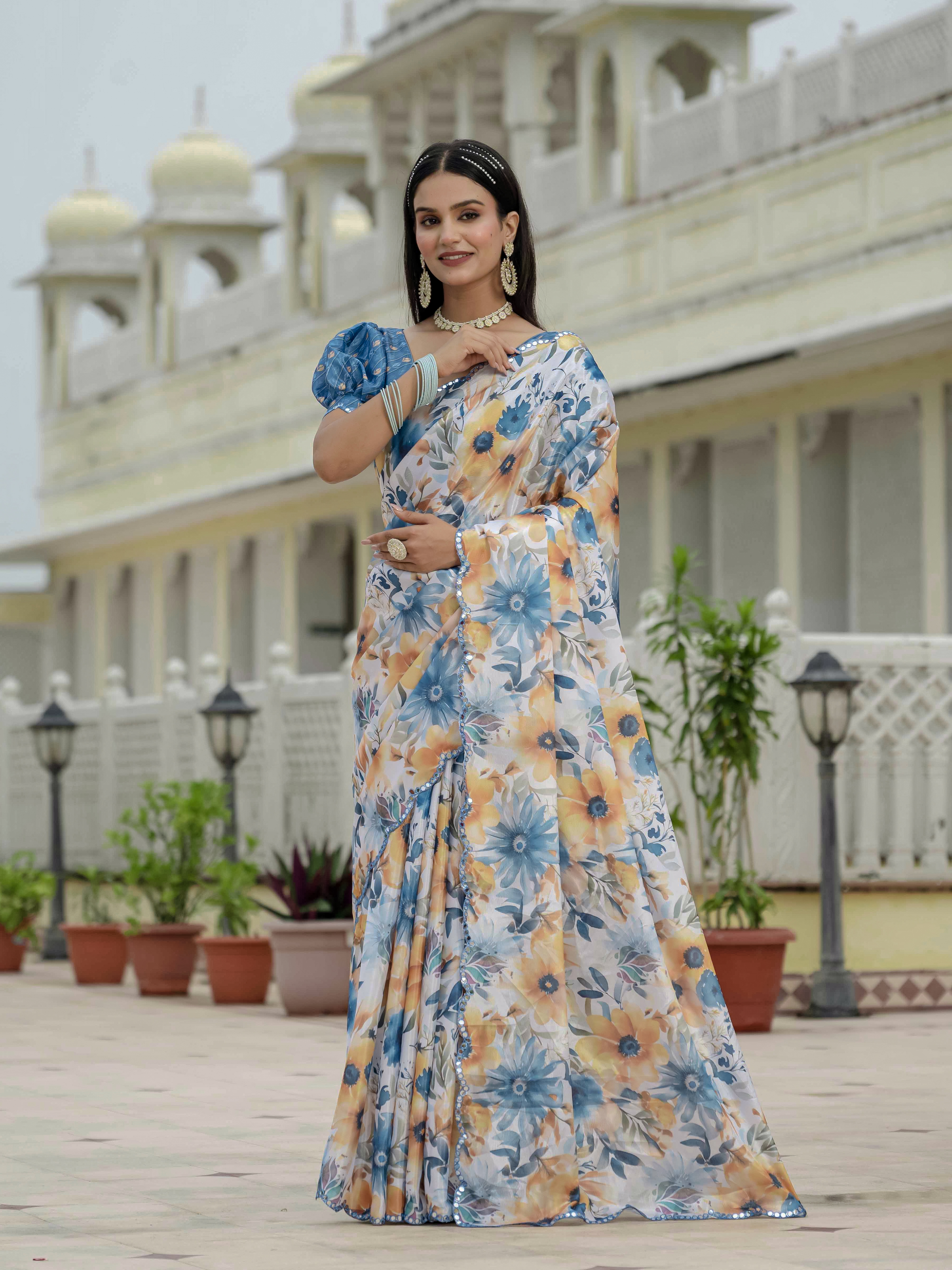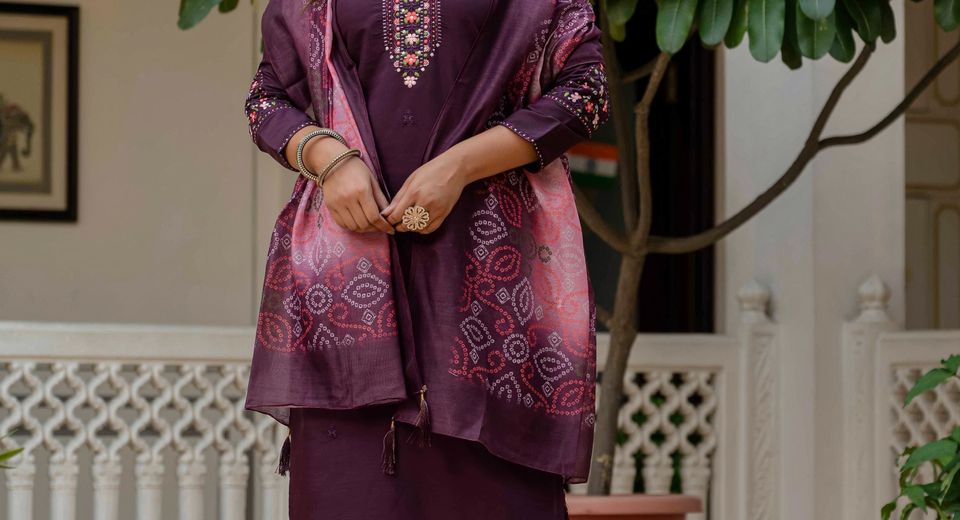
Gujarati Festive Suits with Bandhani and Mirror Work bring together two details that make Indian occasion dressing visually memorable: resist-dyed pattern and reflective hand embellishment. The combination suits Navratri gatherings, Diwali visits, wedding functions, family pujas and festive dinners because it offers colour and movement without requiring the structure of a lehenga.
A good salwar suit also solves a practical problem. The kurta provides coverage, the salwar or palazzo allows easy movement, and the dupatta adds ceremonial polish. The most successful outfit depends less on maximum decoration than on balancing fabric weight, silhouette, motif scale and the number of accessories worn with it.
What makes Gujarati Festive Suits with Bandhani and Mirror Work distinctive?
Gujarati Festive Suits with Bandhani and Mirror Work are distinctive because Bandhani creates a dotted, rhythmic surface while mirror work adds small points of light and texture. The two techniques create contrast: one is formed through colour and pattern, while the other is formed through reflective embellishment.
Bandhani, also called bandhej, is produced by tightly tying small sections of fabric before dyeing. The tied portions resist the dye and create dots, rings, waves or clustered motifs when the fabric is opened. Traditional Bandhani may use patterns such as leheriya-inspired stripes, shikari dots, ekdali single dots or tritikoni arrangements. The density and regularity of the dots can vary considerably.
Mirror work, commonly associated with Gujarati and Rajasthani embroidery traditions, uses small reflective pieces secured with thread. Contemporary garments may use glass mirrors, acrylic mirrors or machine-finished shisha-style embellishments. Glass mirrors have a more artisanal irregularity and can feel heavier, while acrylic mirrors are lighter and more uniform for ready-to-wear clothing.
Bandhani and mirror work don't always have to appear across the entire garment. A Bandhani-inspired body with mirror-work borders, a plain kurta with an embroidered neckline, or a printed dupatta with small reflective accents can create a more wearable result than dense decoration from shoulder to hem.
How should you choose the fabric for a festive salwar suit?
Choose the fabric according to the duration of wear, the weather, the amount of embellishment and the movement required. A lightweight fabric works well for long celebrations, while a slightly structured fabric gives a sharper silhouette for dinners and formal visits.
Silk blends and RomanSilk
RomanSilk and silk-blend fabrics offer a smooth surface that carries saturated colour and formal embellishment effectively. A garment such as Wine RomanSilk Bandhani Charm Embroidered Salwar suite demonstrates why a deep wine tone can feel festive without relying only on bright red. RomanSilk generally falls more fluidly than heavy brocade, but the fabric still has a dressier appearance than everyday cotton.
Silk-look fabrics can feel warm in crowded indoor settings, so they're better suited to evening functions, winter celebrations or shorter periods of outdoor wear. Check whether the lining adds weight before choosing a heavily embroidered style.
Georgette and chiffon
Georgette and chiffon are useful when the outfit needs a soft drape and a lighter dupatta. Georgette has a slightly grainy surface and more body than chiffon, while chiffon is airy and fluid. Both fabrics can suit party wear, but chiffon requires careful handling around jewellery, rough walls and sharp accessories.
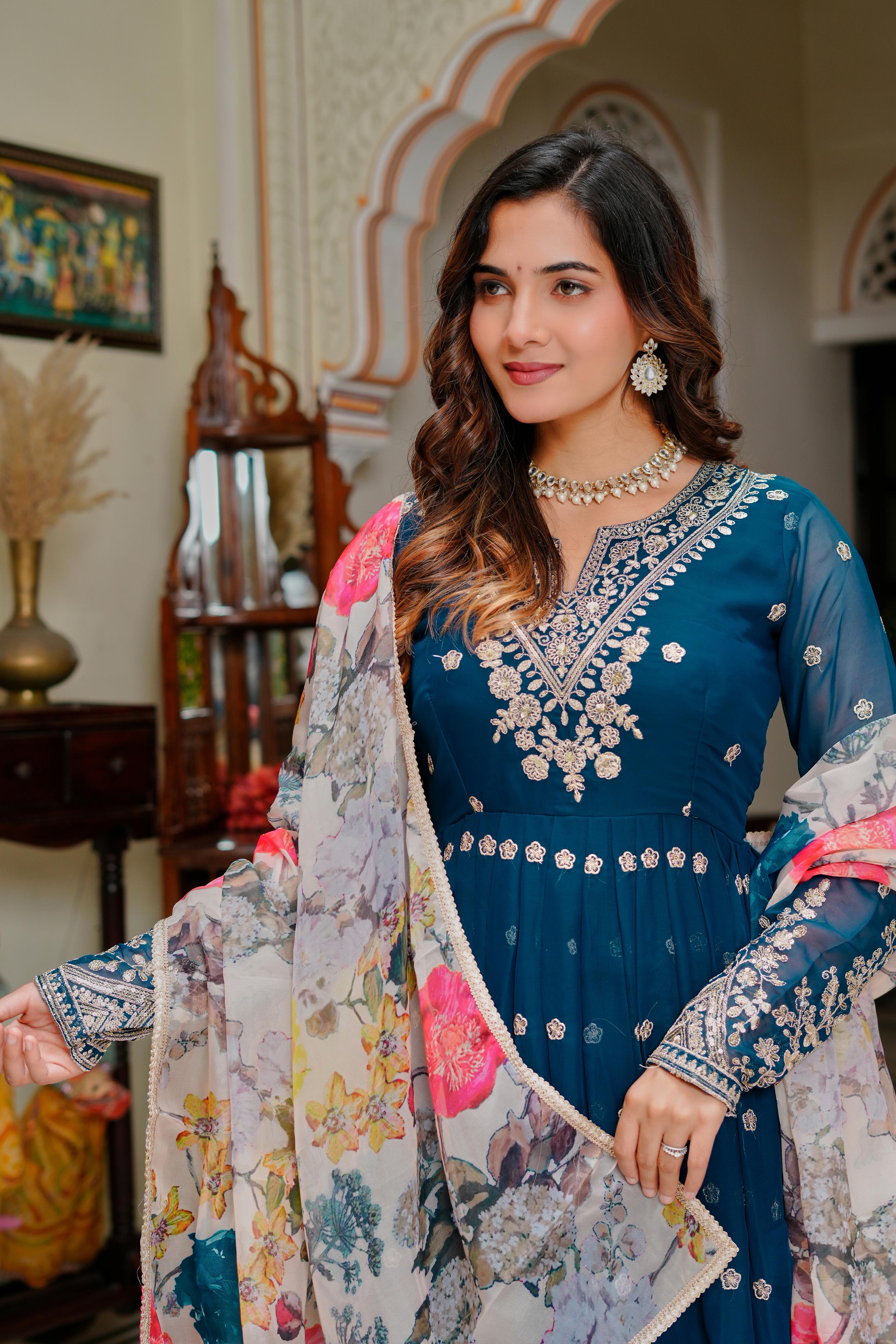
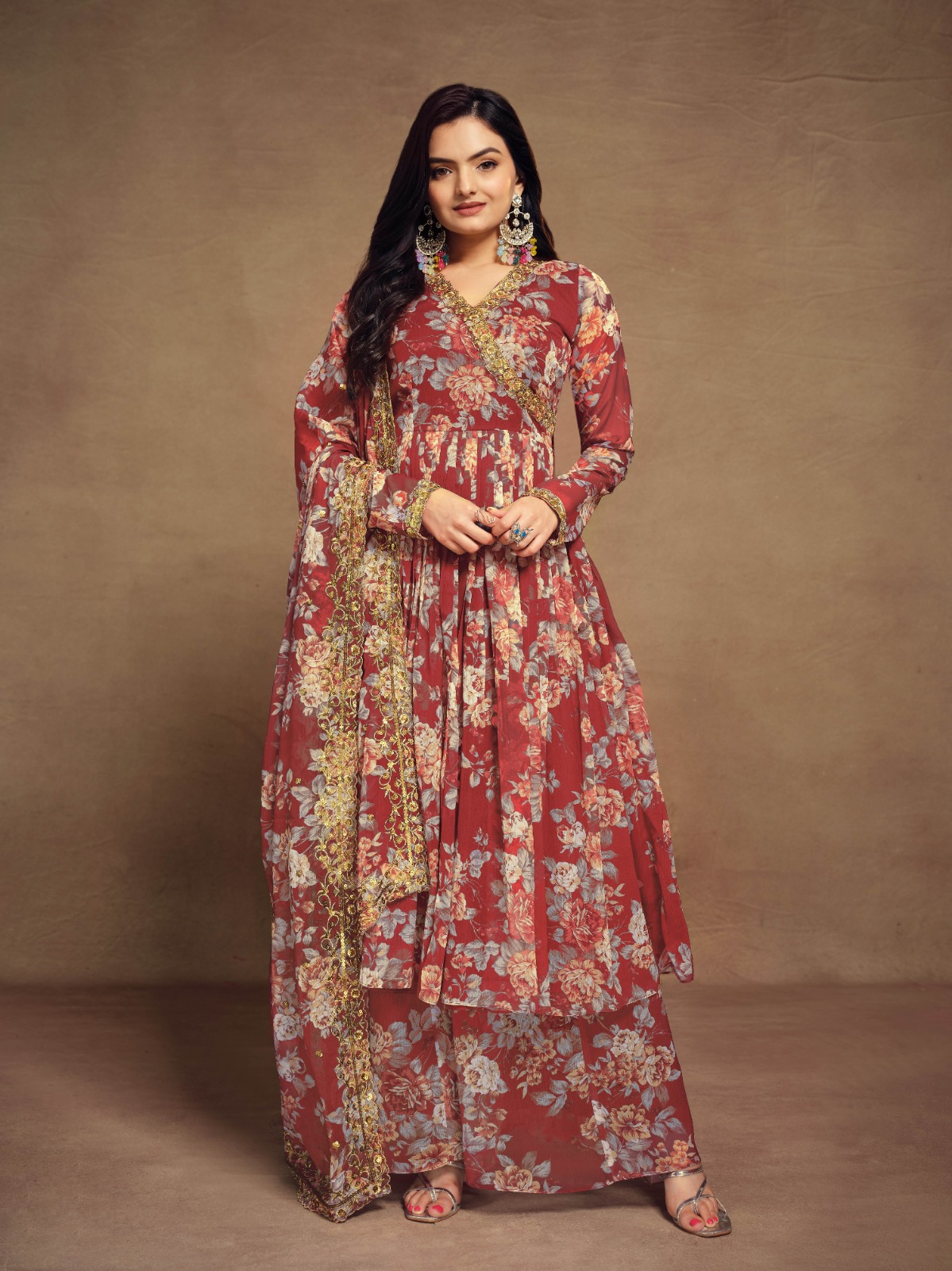
Blue Printed Georgette Designer Gown for Women Festive and BLUE Georgette Designer Gown Set with Dupatta Women show how georgette can support a flowing, occasion-focused silhouette. These gowns are not time-honoured Bandhani salwar suits, but they help illustrate an useful styling choice: when the outfit already has volume and print, keep the jewellery more controlled.
Chanderi and cotton
Chanderi gives a light, slightly crisp hand and a subtle sheen that works well for daytime pujas and family celebrations. White Chanderi Blossom Salwar Suit is an example of how a pale base can make floral detail appear fresh rather than overly formal. Cotton salwar suits remain practical for warm-weather festive dressing, especially when the event involves standing, walking or dancing.
Cotton isn't automatically less festive. Zari embroidery, a contrasting dupatta, mirror accents or a carefully finished neckline can give cotton enough occasion presence. Cotton also tends to breathe better than synthetic fabric, although printed cotton may crease more visibly during a long event.
Which silhouette works best for different festive settings?
The best silhouette depends on movement, body proportion and the visual weight of the print or embroidery. A straight suit looks composed and versatile, an Anarkali creates flare and drama, and a palazzo set gives a modern, spacious line around the legs.
Straight-cut salwar suits
A straight kurta with tapered trousers or a conventional salwar is a dependable choice for pujas, office celebrations and family lunches. The vertical line lengthens the appearance of the body, while a side slit allows comfortable walking. A straight suit also gives the dupatta room to become the main decorative feature.
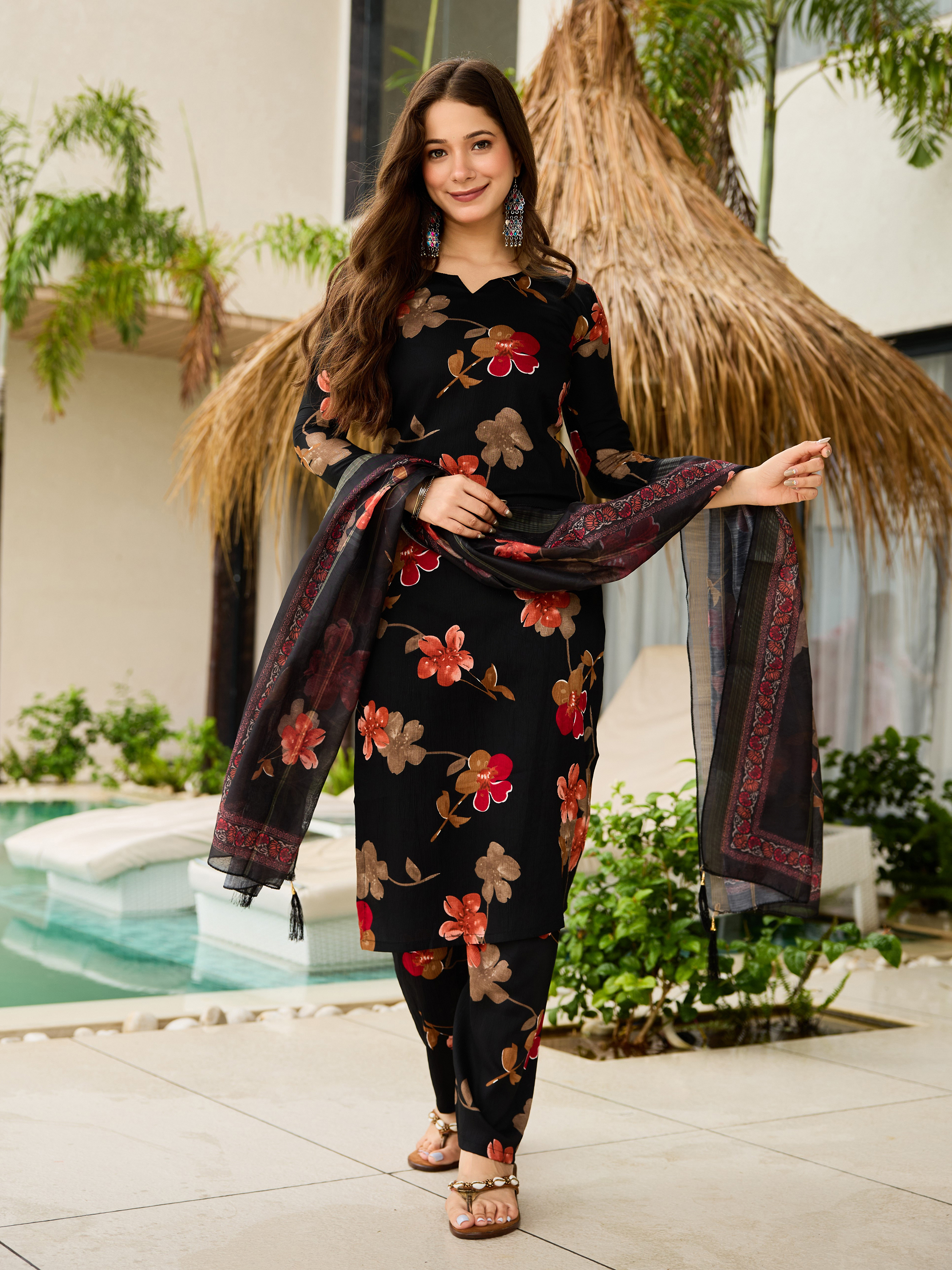
Midnight Black Blossom Salwar Suit shows why a dark base can be effective for an evening function. Black, navy, wine and deep emerald absorb visual intensity, so a small amount of zari or mirror work can appear more defined. Pair a dark suit with one bright accent rather than several competing colours.
Anarkali suits
An Anarkali is a strong choice when the celebration calls for movement and a more ceremonial outline. The flare should fall smoothly from the empire line or waist without pulling across the bust. A heavily embellished hem can look attractive, but it needs enough clearance from the floor to prevent repeated contact with footwear.
Cream Printed Anarkali Gown with Ethnic Motif Design illustrates the value of an ethnic motif on a softer base. Cream, ivory and beige work particularly well with antique gold, muted mirror accents and coloured bangles because they provide contrast without making the outfit appear visually crowded.
Palazzo and kurti sets
A palazzo suit suits gatherings where ease of movement matters. The wide trouser balances a shorter or straight kurta, but a very wide palazzo can overwhelm a petite frame if the kurta also has a broad flare. A shorter kurta with a defined shoulder and a controlled dupatta usually creates better proportion.
Shop Floral Digital Printed Chiffon Kurti Palazzo Set with zari embroidery and Floral Digital Printed Chiffon Kurti Palazzo Set with Zari Embroidery demonstrate how floral print, palazzo volume and zari can share one outfit. Choose either prominent earrings or a statement necklace with such a set; wearing both can obscure the neckline and make the upper half appear heavy.
How can you coordinate Bandhani, mirror work and colour?
Coordinate the outfit by selecting one dominant colour, one supporting colour and one metallic finish. A three-part colour plan prevents Bandhani dots, embroidered motifs, jewellery and footwear from competing for attention.
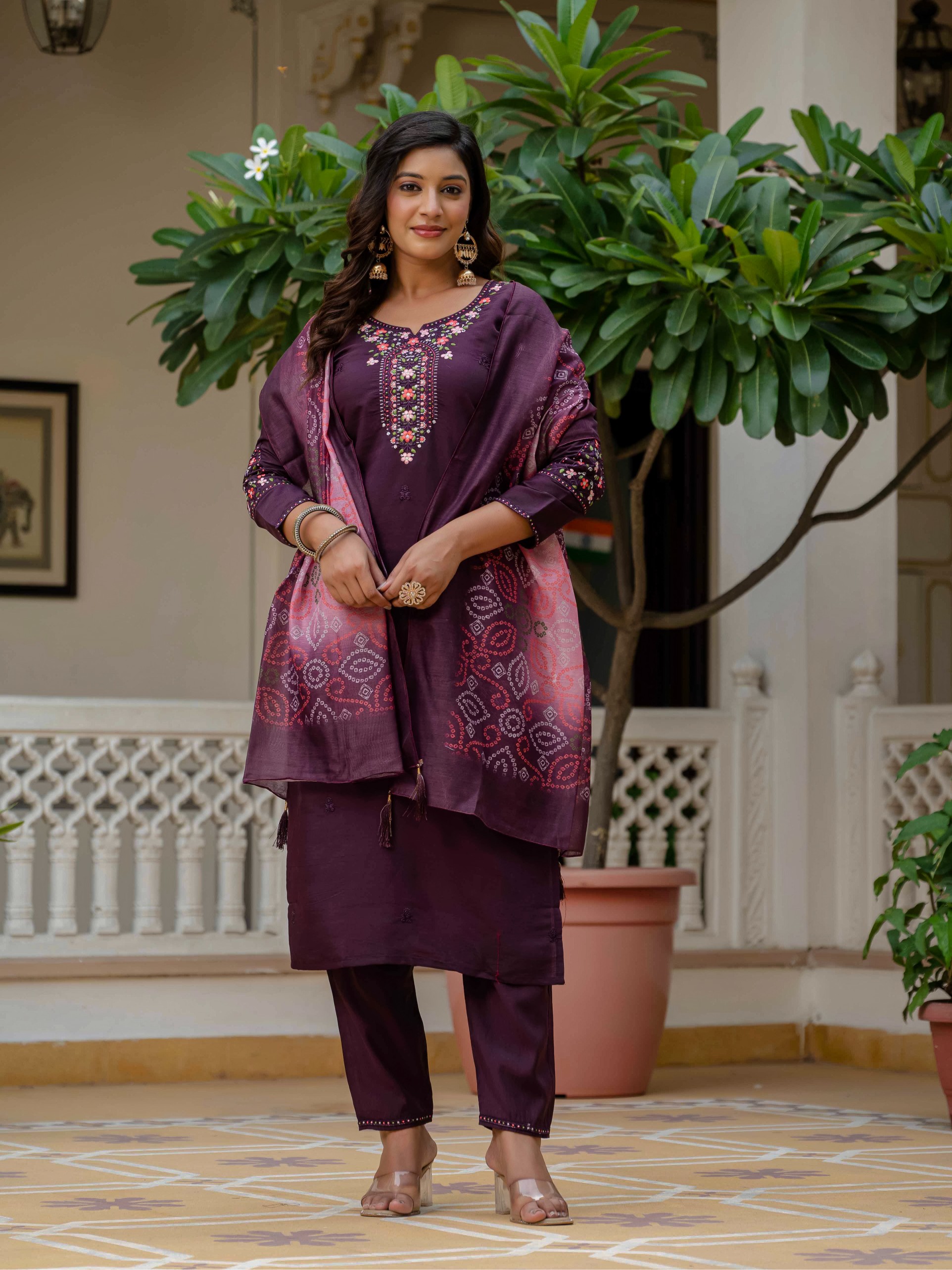
Classic Bandhani often uses strong combinations such as red and yellow, fuchsia and green, orange and pink, or royal blue and red. Contemporary festive dressing can soften those combinations with ivory, blush, wine, navy or muted gold. A wine suit with antique gold mirrors feels more subdued than a scarlet suit with bright silver accents.
Match the metallic finish to the overall mood rather than automatically choosing yellow gold. Antique gold complements earthy reds, mustard, rust and cream. Silver or oxidised metal works with cobalt, black, purple and cooler pinks. Mixed metals can work when the mirror work already combines warm and cool thread, but the mix should be repeated in at least one accessory.
Use mirror work strategically around the neckline, sleeve border, yoke or dupatta edge. Mirrors near the face catch light and make earrings more noticeable, while mirrors at the hem give movement as the wearer walks. A heavily decorated neckline usually needs a simpler necklace, whereas a plain neckline can support a choker or layered chain.
What should you look for in a readymade festive salwar suit?
Inspect the size chart, garment measurements, lining, seam allowance, closure and dupatta dimensions before buying a readymade festive suit. A visually beautiful outfit becomes uncomfortable when the armhole is tight, the trouser rise is short or the dupatta is too narrow to drape securely.
Measure the bust at the fullest point, the waist without pulling the tape, and the shoulder from one shoulder bone to the other. Compare those measurements with the garment chart rather than relying only on a usual small, medium or large label. For an Anarkali, also check the length from the highest shoulder point to the hem and the flare circumference.
Examine where the embellishment sits. Mirror work near a side seam can rub against the arm, while rough zari or sequins at the waist can become uncomfortable under a dupatta. Secure stitching around mirrors matters because loose edges can catch on bags and bangles.
A ready-to-wear suit with a dupatta is convenient for festive dressing because the colour relationship has already been planned. Even so, check whether the dupatta is printed, embroidered, plain or bordered, and whether its length allows the drape you prefer. A narrow dupatta may work over one shoulder but may not provide a full front drape.
For formal salwar suits, look for clean finishing at the neckline, even embroidery density and a lining that's not visibly shorter than the outer layer. For party wear suits, prioritise movement and secure closures if dancing or travelling is part of the evening. For a daytime event, breathable cotton, Chanderi or light georgette may be more comfortable than a dense synthetic fabric.
How should you style a Gujarati festive suit?
Style a Gujarati festive suit by building the look around the dupatta and neckline first, then adding jewellery and footwear in measured layers. The dupatta determines where colour and texture appear around the face and shoulders.
A front-pinned dupatta creates a neat, formal line and works well for pujas or meals. A single-shoulder drape shows more of the kurta and allows mirror-work borders to remain visible. A Gujarati-inspired front drape can be arranged diagonally across the torso, but pin the fabric at the shoulder and waist so the folds remain secure during movement.
Choose jewellery according to the density of the garment. Jhumkas or medium chandbalis are sufficient when the neckline, sleeves and dupatta already contain mirror work. A plain kurta can carry a longer necklace, bangles and a maang tikka, provided the earrings are reduced. Oxidised silver creates a craft-led look, while kundan, pearl or gold-toned pieces create a more formal finish.
Footwear should provide stable support for the event. Embroidered juttis suit a heritage daytime outfit, while low block heels can work with an Anarkali or gown. Avoid a heel that catches the hem, especially when the outfit has a broad flare. A small potli or compact shoulder bag is more practical than a large tote with delicate chiffon or mirror work.
Hair and makeup can remain balanced rather than elaborate. A low bun, braid or half-up style keeps the neckline visible and prevents hair from catching on earrings. A berry lip with a wine suit, a warm terracotta lip with rust or mustard, and a rose-toned lip with pink or blue create clear colour relationships without matching every garment detail exactly.
How should you care for Bandhani, zari and mirror work?
Care for Bandhani and mirror-work garments by following the garment label first, storing them dry and preventing friction against rough surfaces. Professional dry cleaning is the safer option for embellished silk-look fabrics, zari and garments with attached mirrors.
don't soak a richly dyed Bandhani garment for long periods because excess moisture and agitation can encourage colour bleeding. Avoid rubbing a visible mark directly over tied-dot patterns or printed areas. If a care label permits gentle washing, use cold water, a mild detergent and minimal twisting, then dry the garment in shade away from direct sun.
Store the suit on a padded hanger only when the fabric and embellishment are not heavy enough to stretch the shoulders. Fold heavily decorated garments with soft, acid-free tissue or clean cotton between embellished sections. Place mirrors face-to-face only when protected by tissue, because direct pressure can scratch or loosen them.
Keep zari away from perfume, hair spray, body oil and damp storage conditions. Allow the garment to air completely after wearing before folding it. For travel, use a breathable garment bag rather than sealing a slightly damp outfit in plastic.
Gujarati Festive Suits with Bandhani and Mirror Work reward thoughtful styling: the craft remains visible, yet the wearer can sit, walk, greet guests and enjoy the celebration comfortably. Choosing the right fabric and silhouette usually makes a greater difference than adding another layer of decoration.
Where can different festive suit styles fit into a wardrobe?
A small festive wardrobe can cover several occasions when it includes one dark suit, one light daytime set, one flowing silhouette and one strongly heritage colour combination. That approach brings more useful variety than owning several garments with the same cut and level of embellishment.
Ladies Dress Anarkali Salwar Suits is a relevant place to compare flared silhouettes for weddings, religious gatherings and formal family events. Dress Materials can suit shoppers who prefer to customise sleeve length, trouser width or dupatta fabric through a local tailor. Salwar Suits with 30% Off and Salwar Suits Flat 40% Off can be useful for comparing price context, but discount percentage should never replace checking fabric composition and finishing.
Red Dress Materials Under 2000 may appeal to shoppers building a traditional red-and-yellow festive look on a controlled budget. A red dress material can also be adapted into a simpler straight suit or a more elaborate Anarkali, depending on the tailoring and border selected. These options show why a festive wardrobe should be planned around repeatable colours, usable silhouettes and the wearer's actual calendar.
Questions Shoppers Ask About Gujarati Bandhani Festive Suits
Are Bandhani suits suitable for Navratri celebrations?
Yes, Bandhani suits are suitable for Navratri because their dotted patterns and bright colour combinations reflect Gujarati textile traditions while allowing easier movement than a heavy lehenga. Choose breathable cotton, georgette or a light silk blend if the event includes dancing or several hours of standing.
What dupatta goes with a Gujarati Bandhani salwar suit?
A contrasting dupatta with Bandhani dots, mirror-work borders, zari edging or a solid colour from the kurta can all work with a Gujarati salwar suit. Select a lightweight dupatta when the kurta is embellished, and use a more decorative dupatta when the kurta has a simple neckline.
Can cotton salwar suits look festive?
Cotton salwar suits can look festive when they include strong colour, a polished print, zari embroidery, a decorative border or mirror accents. Cotton is especially practical for daytime pujas and warm-weather celebrations because it generally allows more airflow than dense synthetic fabrics.
How do I choose a ready-made salwar suit size online?
Choose a ready-made salwar suit size by comparing your bust, waist, shoulder and garment-length measurements with the seller's size chart. Check the fabric, lining and alteration allowance as well, because embellished seams and fitted armholes may offer less flexibility than plain cotton styles.
How should mirror-work salwar suits be washed?
Mirror-work salwar suits should be cared for according to the label, with professional dry cleaning preferred for silk-look fabrics, zari and dense embellishment. Avoid soaking, hard brushing and direct heat, and store the garment folded with soft tissue separating decorated areas.
What jewellery works with a Gujarati festive suit?
Jhumkas, chandbalis, oxidised silver pieces, colourful bangles and restrained kundan jewellery all work with a Gujarati festive suit. Match the jewellery intensity to the embroidery: a heavily embellished neckline usually needs earrings and bangles rather than a large necklace as well.