

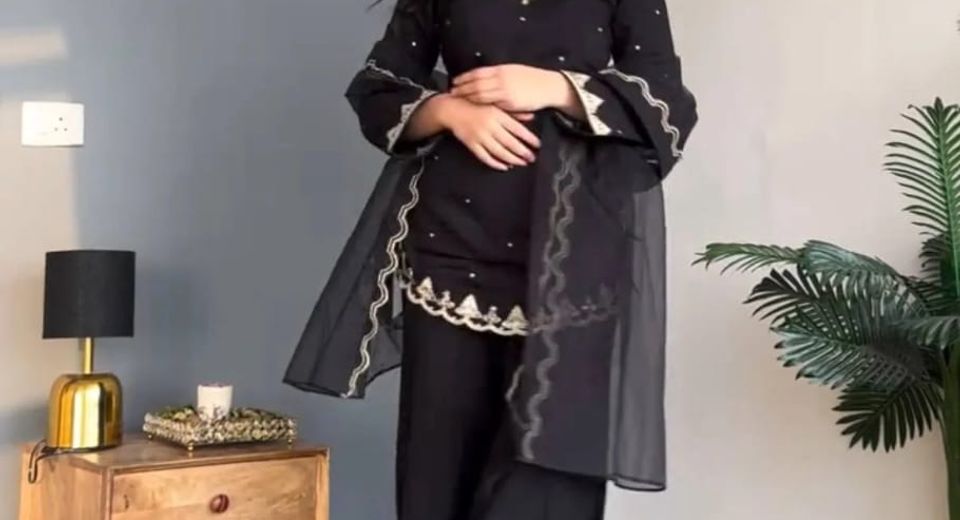
Gujarati Embroidered Suits for Navratri Festive Wear need to do more than look colourful in photographs: they must stay comfortable through clapping, spinning, walking and several hours of Garba. The most reliable choice combines a breathable or lightweight fabric, secure sleeve and neckline construction, a manageable dupatta and embroidery that catches light without becoming heavy. Colour, cut and styling can then bring in Gujarati festive character without making the outfit difficult to wear.
What makes Gujarati Embroidered Suits for Navratri Festive Wear suitable for Garba?
Gujarati-inspired Navratri suits work well for Garba when they combine lively colour, surface embroidery and enough room through the hips, knees and arms for repeated movement. Garba clothing traditionally celebrates strong colour contrast, ornament and rhythm, while a salwar suit offers more coverage and easier movement than a heavily layered lehenga.
Gujarati embroidery isn't one single technique. Mirror work, commonly called abhla bharat, uses small reflective pieces; ari work creates chain-like stitches with a hooked needle; and regional styles such as pakko, mutwa and rabari embroidery use distinctive stitches, layouts and thread effects. A contemporary embroidered kurta set may interpret these ideas through sequins, thread motifs, zari accents or geometric borders rather than reproduce one traditional community style exactly.
Look for visual details that connect with Navratri without assuming that every glittering garment is classic Gujarati craft. Repeated diamonds, dots, flowers, stylised peacocks, mirror-like sequins and contrast borders create a festive vocabulary. A mustard or maroon base can appear richly Gujarati when paired with gold embroidery, while white, pastel blue or beige can create a quieter daytime interpretation.
How should you choose fabric for nine nights of Navratri?
Choose fabric according to venue, weather, duration and movement: lightweight viscose, Chanderi blends and breathable cotton-rich materials suit long dance sessions better than thick, stiff or heavily layered cloth. Navratri often falls during a warm or humid period in many Indian cities, so a fabric that allows some airflow can make a greater difference than a small change in embroidery.
Chanderi and viscose options
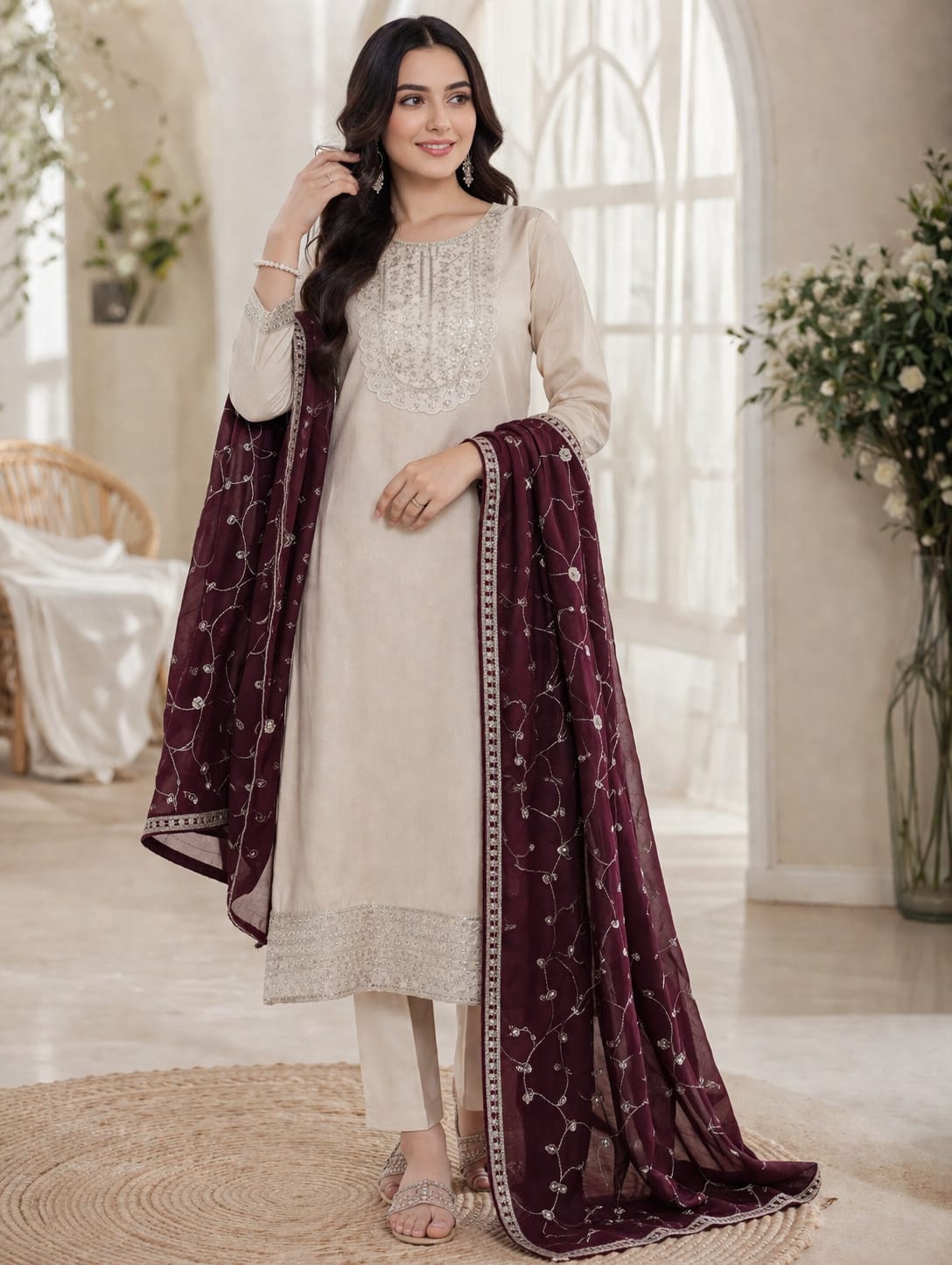
Chanderi has a light, slightly crisp hand and a dressy surface, making it useful when you want festive polish without a bulky garment. Viscose generally drapes softly and can feel smoother against the skin, although the exact comfort depends on the weave, lining and garment construction. The Mustard Viscose Chanderi Kurta Set with Sequence Embroidery gives a warm Navratri colour with a surface that catches artificial light, while the Maroon Viscose Chanderi Silk Embroidered Kurta Set for Women gives a deeper evening palette.
A Chanderi kurta can feel airy, but embroidery and lining add weight. Check whether the lining extends through the full body, whether the sleeves have a separate lining and whether the dupatta carries dense embellishment. A lightly embroidered dupatta is usually easier to manage during Garba than a very broad, heavily decorated one.
Vichitra silk and jacquard options
Vichitra silk usually provides a smoother, more structured drape and a subtle sheen, so it suits evening celebrations and photographs. The fabric can feel warmer than a lighter Chanderi or viscose construction when worn with a full lining. The Elegant Beige Vichitra Silk Embroidered Kurta Set for Women is an useful example of a neutral base that lets gold or multicoloured styling accessories provide contrast.
Jacquard fabric contains a woven pattern rather than relying only on printed or embroidered decoration. Woven texture can make a simple kurta look festive, but a dense jacquard may feel less flexible during prolonged dancing. The Mustard Yellow Jacquard Kurta Set with Embroidery & Dupatta suits a more polished Navratri look, especially when the venue is air-conditioned or the celebration is shorter.
Which colours work best for Gujarati Navratri suits?
Strong jewel tones, warm yellows, red, maroon, green, pink, orange and royal blue work especially well for Navratri because they remain visible under evening lights and complement festive jewellery. Colour choice should also account for the event timing, your skin-tone preferences, venue lighting and whether you'll repeat the suit across multiple nights.
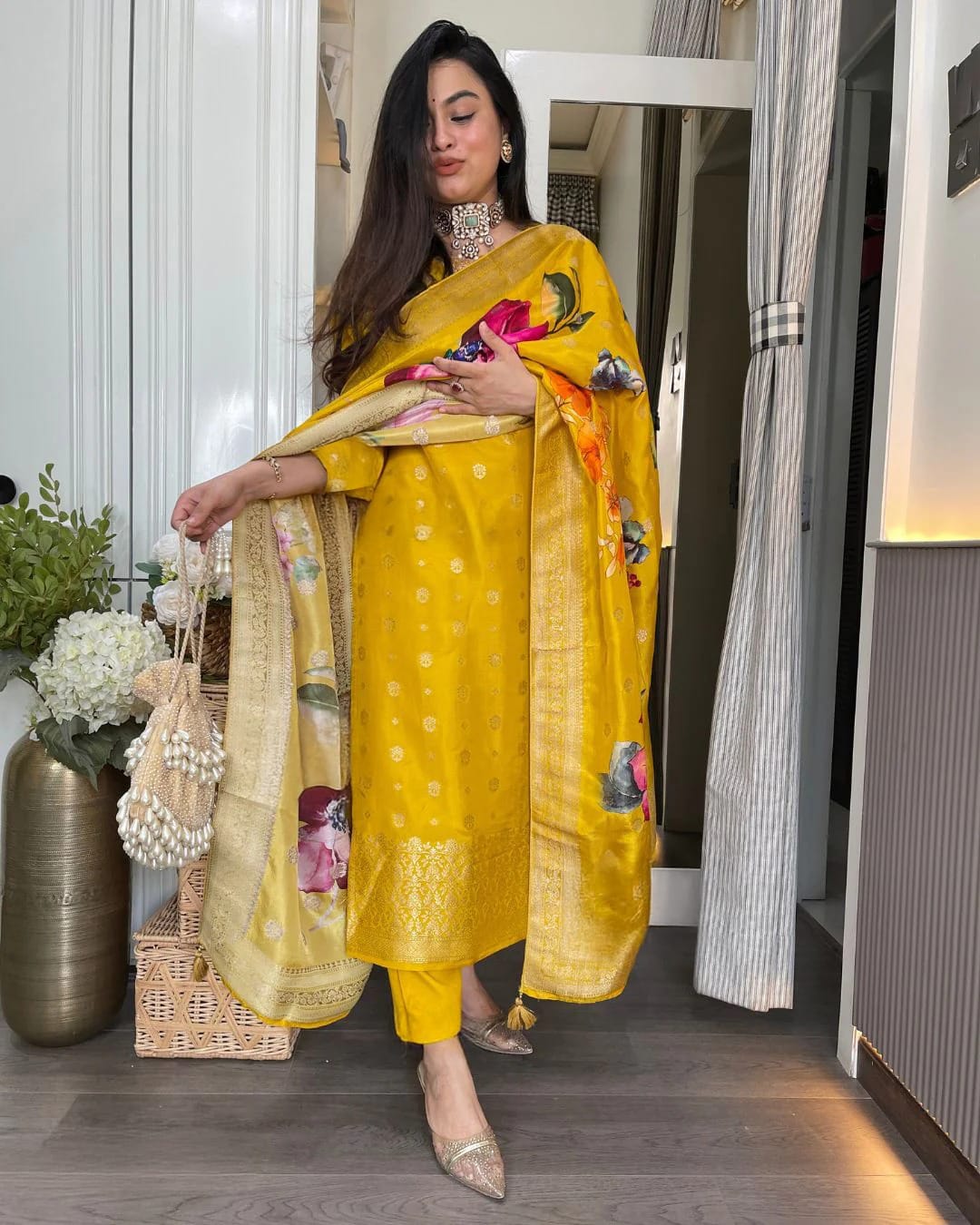
Many families associate each Navratri day with a colour, although the exact colour calendar varies by year and region. Treat those calendars as a styling prompt rather than a strict rule. A mustard suit can be paired with green or pink accessories; a maroon suit can take gold, antique-finish or emerald accents; and a white suit can become festive through a bright bandhani-style dupatta, colourful earrings or mirror-detail footwear.
The Mustard Yellow Jacquard Kurta Set with Embroidery & Dupatta can anchor a time-honoured-looking yellow outfit without requiring multiple layers. For a darker evening choice, the Maroon Vichitra Silk Kurta Set with Elegant Embroidery Work creates depth and can be accessorised with gold-toned jhumkas. The Pastel Blue Embroidered Chanderi Kurta Set with Dupatta brings a softer alternative for daytime puja, family gatherings or a less saturated colour plan.
Use contrast deliberately. Gold embroidery on mustard creates warmth, silver or white embellishment on pastel blue feels cooler, and multicoloured bangles can connect a neutral beige kurta to the visual energy of Garba. Matching every accessory to the exact kurta colour often makes the outfit look flatter than using two or three considered accent colours.
Which salwar suit silhouette allows the most movement?
A straight or gently flared kurta with comfortable trousers, salwar bottoms or palazzos usually gives the most dependable movement for Garba. The best silhouette leaves room at the seat and thigh, keeps the hem clear of the feet and avoids a dupatta that can catch on bangles or other dancers.
Straight kurtas and coordinated sets
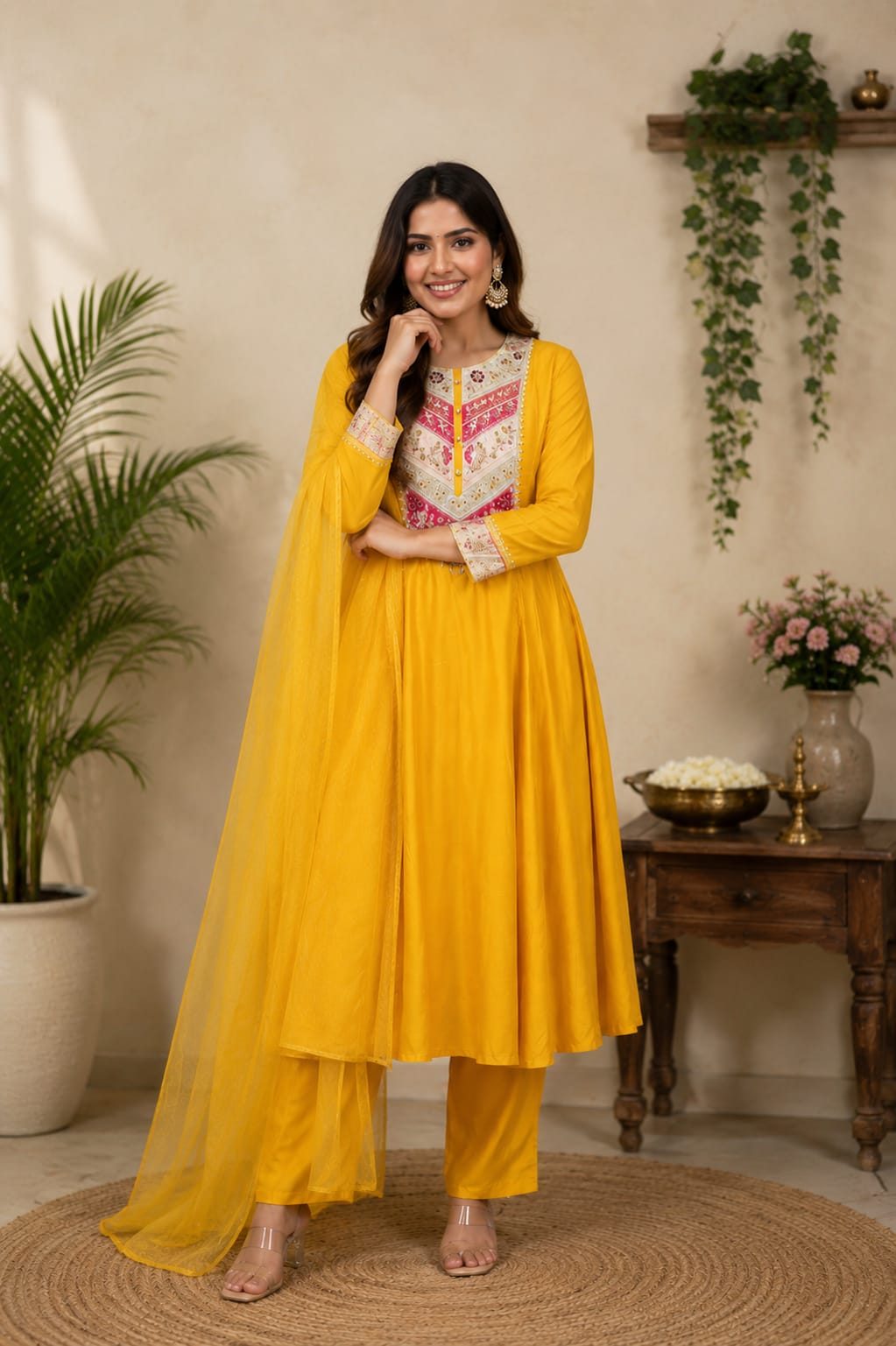
A straight kurta with matching trousers is easy to style and generally creates fewer loose layers while dancing. Choose side slits that don't open excessively during movement, and check that the trouser waistband stays flat when you raise your arms. A co-ordinated set can also be practical when you plan to attend more than one Navratri event because the kurta, bottoms and dupatta can be restyled separately.
The Modern Taupe Vichitra Silk Embroidered Co-Ord Set for Women demonstrates how a restrained colour can work for a contemporary festive wardrobe. Taupe may need stronger accessories to look sufficiently celebratory, so add coloured glass bangles, an embroidered potli or a bright dupatta rather than relying only on metallic jewellery.
Flared kurtas and Anarkali shapes
A moderate Anarkali flare creates visual movement, but an extremely wide hem can become inconvenient in a crowded Garba circle. The Ladies Dress Anarkali Salwar Suits collection is relevant when you want a fuller festive silhouette, but check the number of panels, hem circumference and total garment length before choosing it for active dancing.
Palazzo trousers provide airflow and a dramatic line, while narrow cigarette pants reduce fabric around the feet. Neither shape is automatically better: palazzos need a secure waistband and sufficient hem clearance, whereas narrow trousers need enough stretch or ease for bending and stepping. Try three movements before committing to a suit: raise both arms, sit briefly and take a wide side step.
How can embroidery look festive without becoming uncomfortable?
Choose embroidery concentrated on the yoke, neckline, cuffs or border when you expect long hours of dancing, because concentrated decoration usually weighs less than a fully embellished front and back. Sequins, zari and metallic thread reflect light attractively, but they can scratch skin, snag dupattas or feel warm under direct contact.
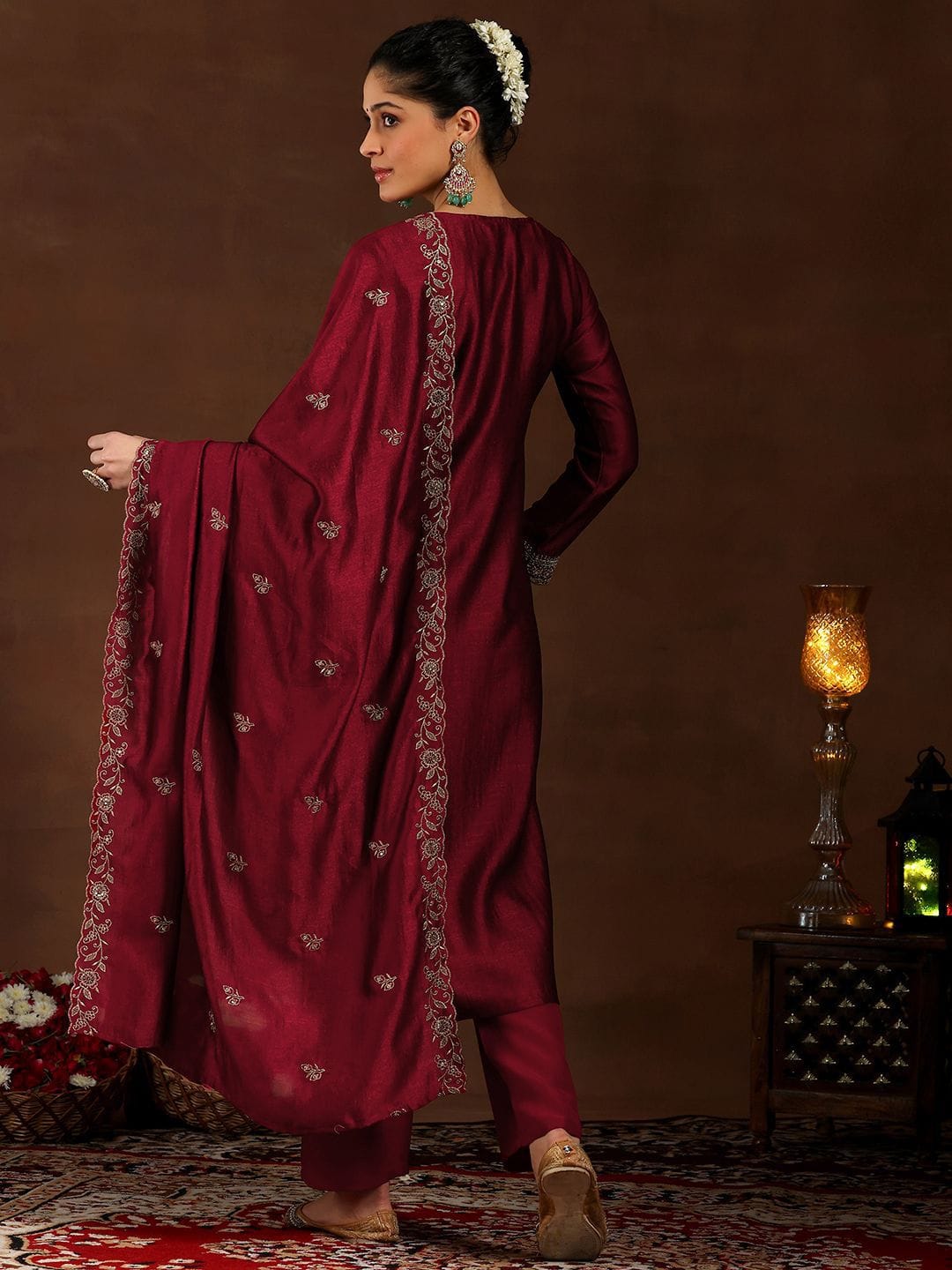
Run your fingertips over the inside of the kurta before wearing it. Rough knots, exposed sequin edges and stiff backing near the underarm can cause irritation after several hours. A soft camisole or smooth inner layer can help, but an uncomfortable lining should not be dismissed as something an undershirt will always solve.
Embroidery scale changes the visual effect. Small repeated motifs create a refined surface and are easier to accessorise; large motifs produce a stronger statement and may need simpler jewellery. A garment described as sequence embroidery may use reflective elements across selected panels rather than traditional mirror work, so inspect the motif placement and care instructions instead of assuming a particular craft technique.
Keep the jewellery plan compatible with the embroidery. Jhumkas, a short necklace, stacked bangles and a small bindi can create a recognisable festive look without adding weight to every area. If the neckline already has dense work, skip a heavy necklace and use earrings plus bangles. If the kurta is relatively plain, a mirror-work belt, colourful dupatta or embroidered footwear can introduce Gujarati-inspired detail.
What should you check before buying a Navratri kurta set online?
Check measurements, fabric composition, lining, garment length, trouser construction, dupatta dimensions and care instructions before buying an embroidered Navratri suit online. Product photography can show colour and motif placement, but written measurements determine whether the set will work for movement.
- Measure the body and compare the chart: Record bust, waist, hip, shoulder and preferred kurta length while wearing the undergarments you'll use with the suit. Do not select a size from a previous brand automatically.
- Confirm ease for dancing: A close-fitting bust or armhole can restrict clapping and turns. Look for enough room to lift both arms and bend without pulling across the back.
- Inspect the bottom: Confirm whether the set includes trousers, palazzos, pants or another bottom, and check the waistband, rise and approximate length. A beautiful kurta isn't useful if the bottom is too long for your footwear.
- Assess the dupatta: Note whether the dupatta is sheer, lined, embellished, broad or narrow. A lighter dupatta with secure corner pins is safer for active Garba than a heavy piece that repeatedly slips.
- Read care directions: Embroidered garments commonly need gentle hand washing or dry cleaning, low-pressure ironing from the reverse and separate storage. Follow the garment's label rather than applying a general wash rule.
- Plan delivery time: Order at least 10 to 14 days before the first event when possible. That buffer allows for alterations, a trial movement session and a replacement plan if the fit is unsuitable.
Budget planning also becomes easier when you separate the main outfit from accessories. Collections such as Dress Materials can suit shoppers who already use a trusted tailor, while Salwar Suits with 30% Off and Salwar Suits Flat 40% Off may help compare complete sets at different price points. A lower listed price should not outweigh fabric comfort, accurate measurements or the cost of alterations.
How should you style a Gujarati embroidered suit for different Navratri events?
Style the same suit differently for puja, family visits and Garba by changing the dupatta drape, jewellery, footwear and makeup rather than buying a separate outfit for every event. A neat shoulder drape suits a seated puja, while a shorter, secured drape is more practical for dancing.
For a daytime puja, pair a pastel or neutral suit with small earrings, flat juttis and restrained makeup. The White Embroidered Viscose Jacquard Kurta Set for Women can take a bright dupatta or colourful bangles if you want festive definition without a saturated base. For an evening Garba, add oxidised silver or gold-toned jewellery, a braid or low bun and footwear that remains secure during repeated steps.
For a family dinner, the Maroon Viscose Chanderi Silk Embroidered Kurta Set for Women can be worn with a sleek dupatta drape and low heels if the venue allows them. For a modern styling direction, the Modern Taupe Vichitra Silk Embroidered Co-Ord Set for Women can be separated into pieces and worn with contrasting accessories on another night.
Pin the dupatta at one shoulder and, if needed, lightly secure the opposite side near the waist. Avoid placing a sharp brooch where it can press into the neck or catch another dancer's clothing. Test the complete outfit at home for 10 minutes, including footwear, before the festival begins.
How do you care for embroidered Navratri suits after wearing them?
Air an embroidered suit in shade after each wear, remove surface dust gently and store it only when completely dry. Sweat, perfume and moisture left against zari, sequins or dyed fabric can cause odour, tarnish or colour transfer during storage.
don't twist a wet embroidered kurta or rub embellishment aggressively. If the care label permits hand washing, use cool water and a mild detergent, wash the garment inside out for a short period and press out water between clean towels. Dry the suit flat or on a broad hanger according to its construction, away from direct sunlight.
Use a pressing cloth and low heat on the reverse side when ironing is permitted. Never place a hot iron directly on sequins, zari or metallic embroidery. Fold heavy embroidered pieces with tissue or a clean cotton layer between decorated surfaces, and keep them in a breathable garment bag rather than sealed plastic.
Gujarati Embroidered Suits for Navratri Festive Wear become more useful when treated as repeatable wardrobe pieces rather than single-night costumes. A well-fitting Chanderi set can serve at family lunches, a Vichitra silk suit can work for evening celebrations, and a simple embroidered kurta can be refreshed with a different dupatta, jewellery palette and footwear the following season.
Practical Questions About Gujarati Navratri Embroidered Suits
Which fabric is most comfortable for a Navratri Garba suit?
Lightweight viscose, Chanderi blends and breathable cotton-rich fabrics are generally comfortable for long Garba sessions. Vichitra silk and dense jacquard can look more structured and festive, but they may feel warmer or less flexible when heavily lined.
Can I wear an Anarkali suit for Garba?
Yes, a moderately flared Anarkali can work for Garba if the hem is clear of your feet and the flare does not become difficult in a crowded circle. Test the full outfit by walking, bending and taking wide side steps before the event.
What colours are suitable for Gujarati Navratri outfits?
Mustard, yellow, red, maroon, green, pink, orange, royal blue, white and pastel shades can all work for Navratri. Choose a colour-calendar shade if your family follows one, or select a colour that works with your jewellery and the venue lighting.
How can I stop my dupatta from slipping while dancing?
Use a lightweight dupatta, place one secure pin at the shoulder and add a discreet second pin near the waist if needed. Test the pins with your complete blouse or kurta neckline so they do not scratch your skin or pull the embroidery.
What should I check when buying an embroidered Navratri suit online?
Check the measurement chart, fabric composition, lining, kurta length, trouser dimensions, dupatta size, embroidery placement and care instructions. Leave 10 to 14 days for delivery, alterations and a complete movement trial whenever possible.
How should embroidered Gujarati-style suits be washed?
Follow the garment label because embroidery, sequins, zari and fabric blends require different treatment. Common precautions include gentle handling, avoiding direct ironing on embellishment, drying away from harsh sunlight and storing the completely dry garment in a breathable cover.





