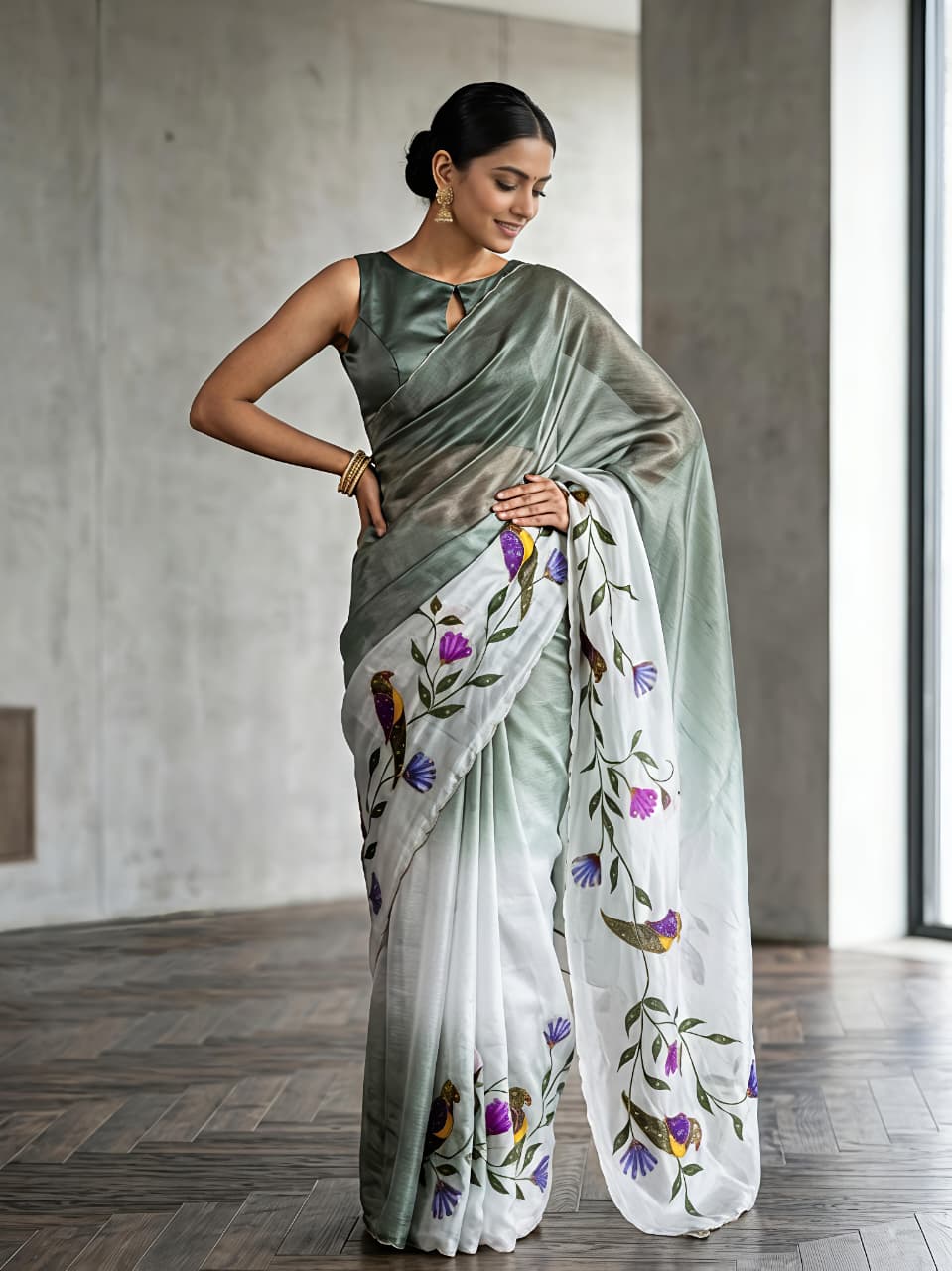
Garo Traditional Fashion Inspiration for Women begins with the textile traditions of the Garo, or A'chik, communities of Meghalaya. Traditional clothing is connected to handweaving, local identity, community celebrations and the practical needs of life in the hills. The most recognisable women's garments include the Dakmanda, a wrapped low garment, and the Daksari, a cloth worn around the upper body. Their appeal comes from proportion, colour, woven motifs and arrangement rather than heavy ornament alone.
Contemporary ethnic clothing can borrow the discipline of Garo colour and pattern without presenting a commercial saree or lehenga as an authentic Garo garment. That distinction matters. A thoughtful wardrobe can acknowledge Meghalaya's textile heritage, choose related silhouettes and highlight geometric design while giving traditional Garo clothing its own cultural place.
Garo Traditional Fashion Inspiration for Women and Traditional Dress
Traditional Garo women's clothing commonly includes the Dakmanda as a lower wrap and the Daksari as an upper-body cloth, with a blouse or fitted top used according to the community, region and occasion. The exact arrangement can vary among Garo groups and between everyday, ceremonial and performance contexts.
The Dakmanda is generally worn around the waist and lower body, where the woven surface remains visible as the wearer moves. The Daksari may be draped across the torso or shoulder, creating a compact, layered appearance. Additional cloths or accessories may be used for particular ceremonies. Names, methods of draping and decorative details are not necessarily identical across all Garo villages, so a single standard Garo costume can't represent every community.
Garo clothing has traditionally been made on a loom within or near the household, and weaving knowledge has passed through generations. Cotton has been especially important because it's breathable, durable and suitable for Meghalaya's humid climate. Handwoven cloth may show small irregularities in line, tension or colour. Those variations are evidence of making by hand, not defects to be corrected.
How does Garo Traditional Fashion Inspiration for Women use a Dakmanda?
A Dakmanda is styled by wrapping the cloth securely around the waist and arranging the visible front area so that its woven bands or motifs remain balanced. The wrap should allow walking, sitting and dancing without constant adjustment.
For a modern interpretation, a wide handloom skirt or a straight cotton wrap can echo the visual role of the Dakmanda. Keep the upper layer relatively clean so the patterned lower garment remains legible. A tucked-in blouse, a short kurti or a fitted cotton top can provide structure, while a narrow belt should be used carefully because a broad metallic belt can overpower the textile surface.
Garo Traditional Fashion Inspiration for Women Through Motifs and Colour
Garo-inspired styling is most convincing when it uses restrained geometric rhythm, strong contrast and a clear relationship between border and body. Repeating stripes, checks, stepped forms and angular bands are more closely aligned with the visual language of many woven textiles than random floral decoration.
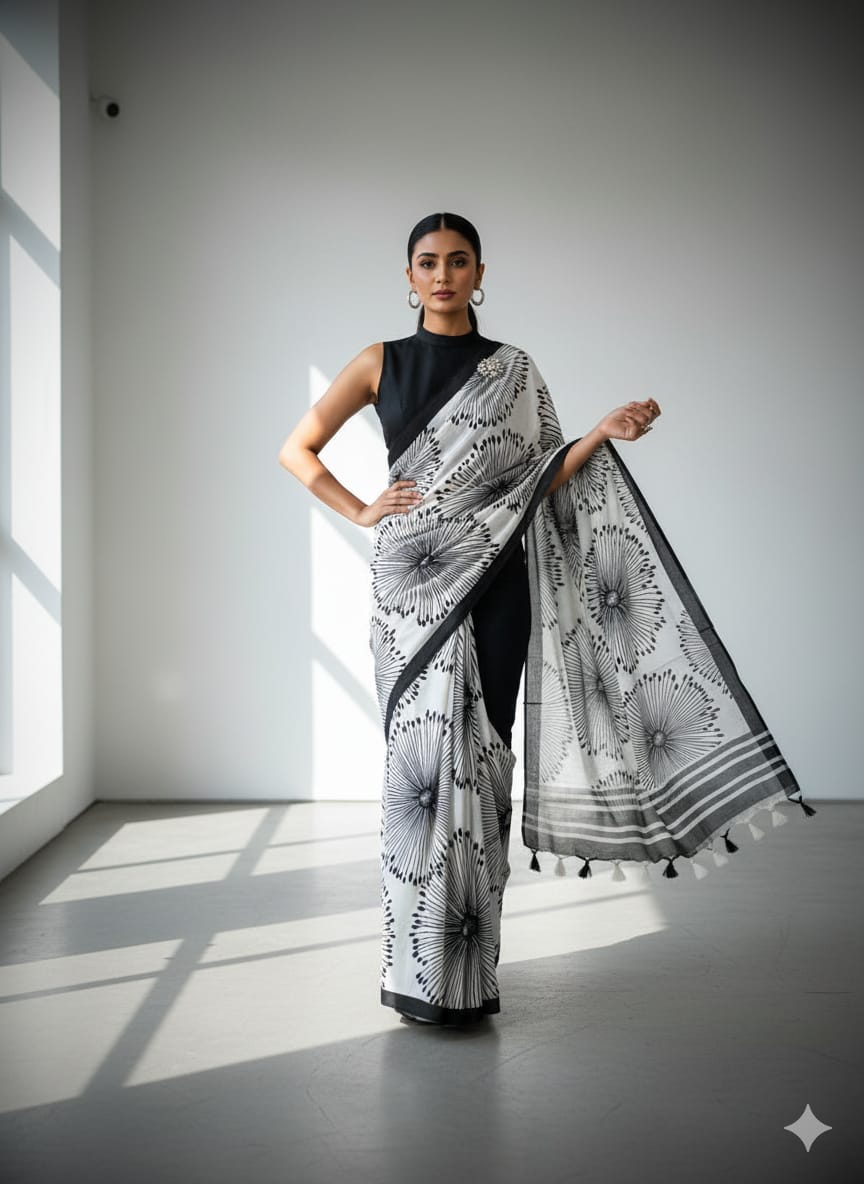
Red, black, white, yellow and deep blue frequently appear in discussions of northeastern Indian textiles, but colour meanings and combinations can differ by community, garment and context. Red may bring energy and ceremonial intensity; black can provide a grounding field; white can sharpen a border; yellow or ochre can add warmth. These associations are styling observations, not fixed rules that apply to every Garo textile.
Scale changes the effect of a motif. A narrow repeated border looks precise and wearable on a blouse sleeve or dupatta edge. A large geometric panel becomes a statement when placed on a skirt, saree pallu or shawl. Combining several unrelated patterns can make an outfit resemble generic tribal styling, so one dominant motif and one supporting accent usually work better.
Why do borders matter in Garo Traditional Fashion Inspiration for Women?
Borders matter because they frame the body and make a wrapped textile read clearly from a distance. A border can define the hem, stabilise a shoulder drape and direct attention towards the movement of the garment.
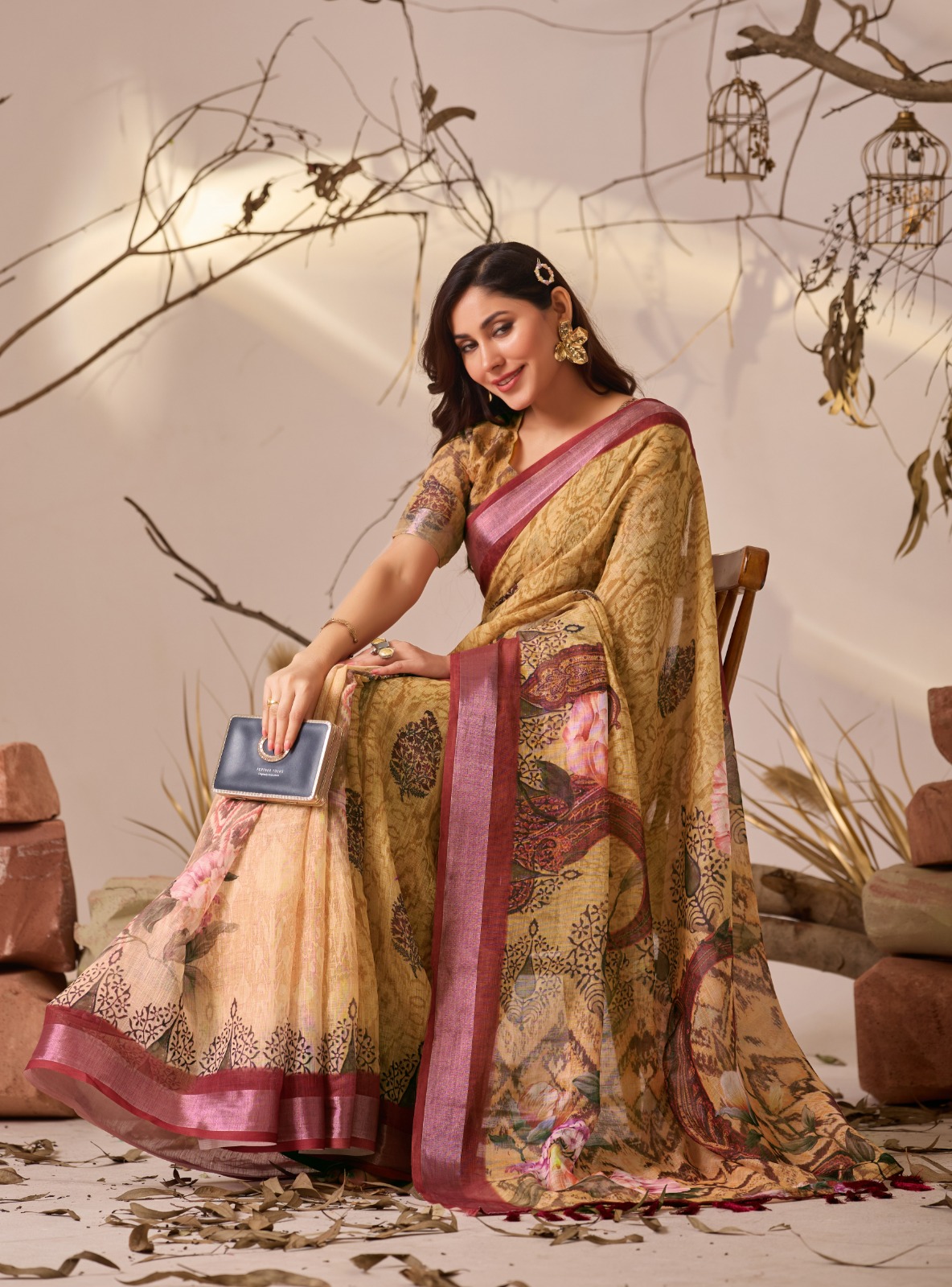
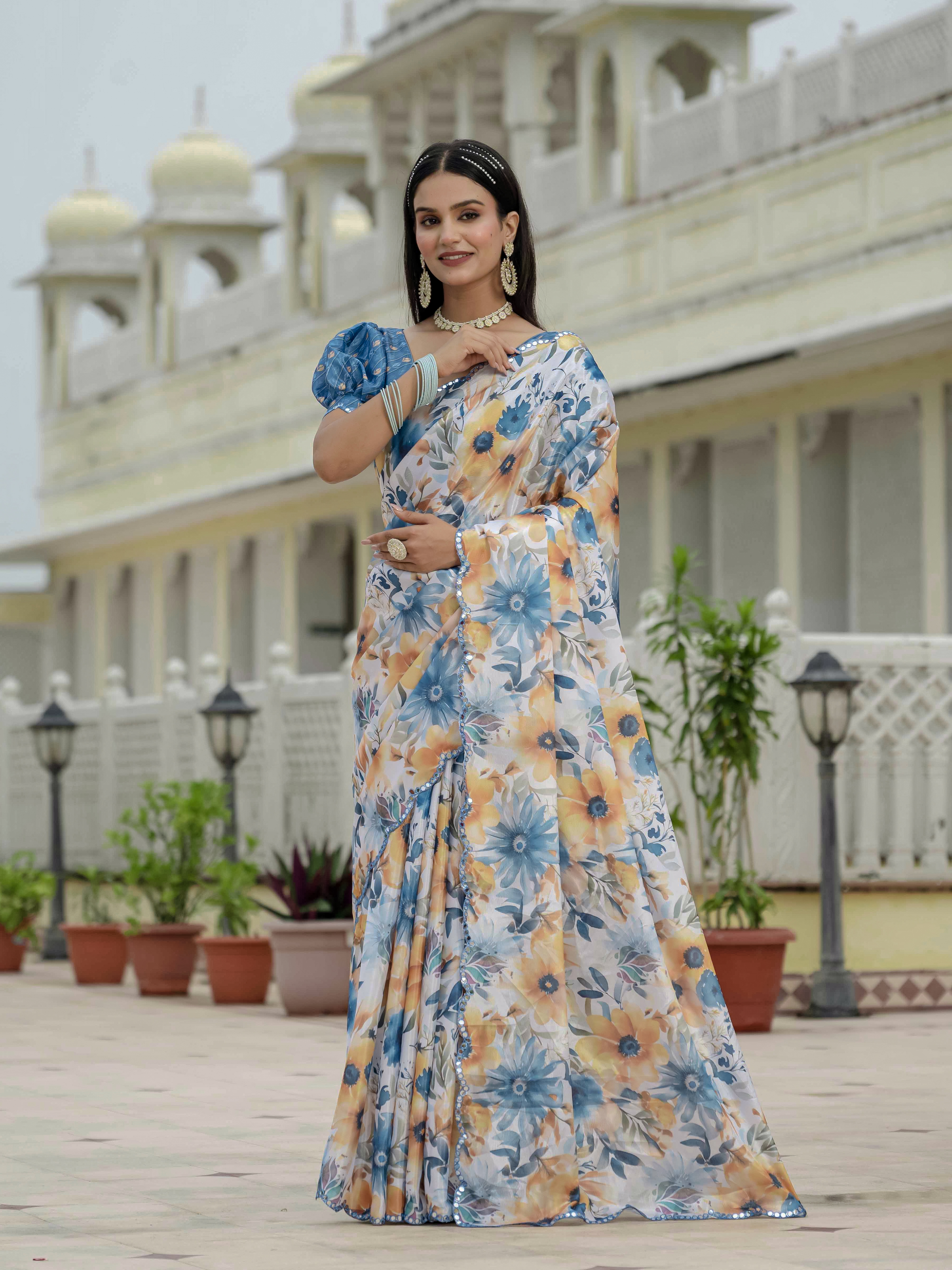
A saree with a strong linear border can therefore create a Garo-inspired visual effect even when the saree isn't Garo-made. Multicolour Floral Linen Cotton Saree with Blue Border Look demonstrates how a defined blue edge can organise a colourful base. Its floral surface isn't a traditional Garo motif, but the relationship between a busy body and a disciplined border is useful for studying proportion.
Garo Traditional Fashion Inspiration for Women in Contemporary Ethnic Wear
Women can translate Garo textile ideas into contemporary dressing by borrowing structure, contrast and woven-looking borders rather than copying sacred, ceremonial or community-specific details without context.
A practical starting point is the silhouette. Choose a straight kurti with a firm hem, a wrap skirt, a high-waisted long skirt, a cropped blouse with a substantial border or a saree with a graphic pallu. These shapes leave enough surface area for stripes and geometric panels to be seen. Very heavily gathered garments can hide the pattern and make the textile appear visually noisy.
For a two-piece outfit, pair a plain black, ivory or deep red top with a patterned lower garment. For a saree, let the border remain visible rather than repeatedly folding it into a narrow strip. For a dupatta, place a woven-looking edge over one shoulder and keep the opposite side close to the body. These choices make the textile the focus without requiring excessive jewellery.
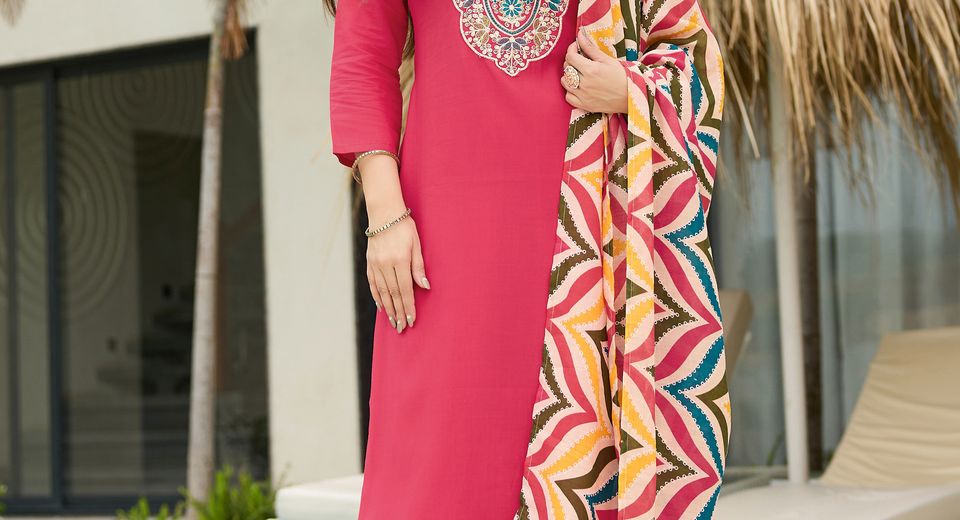
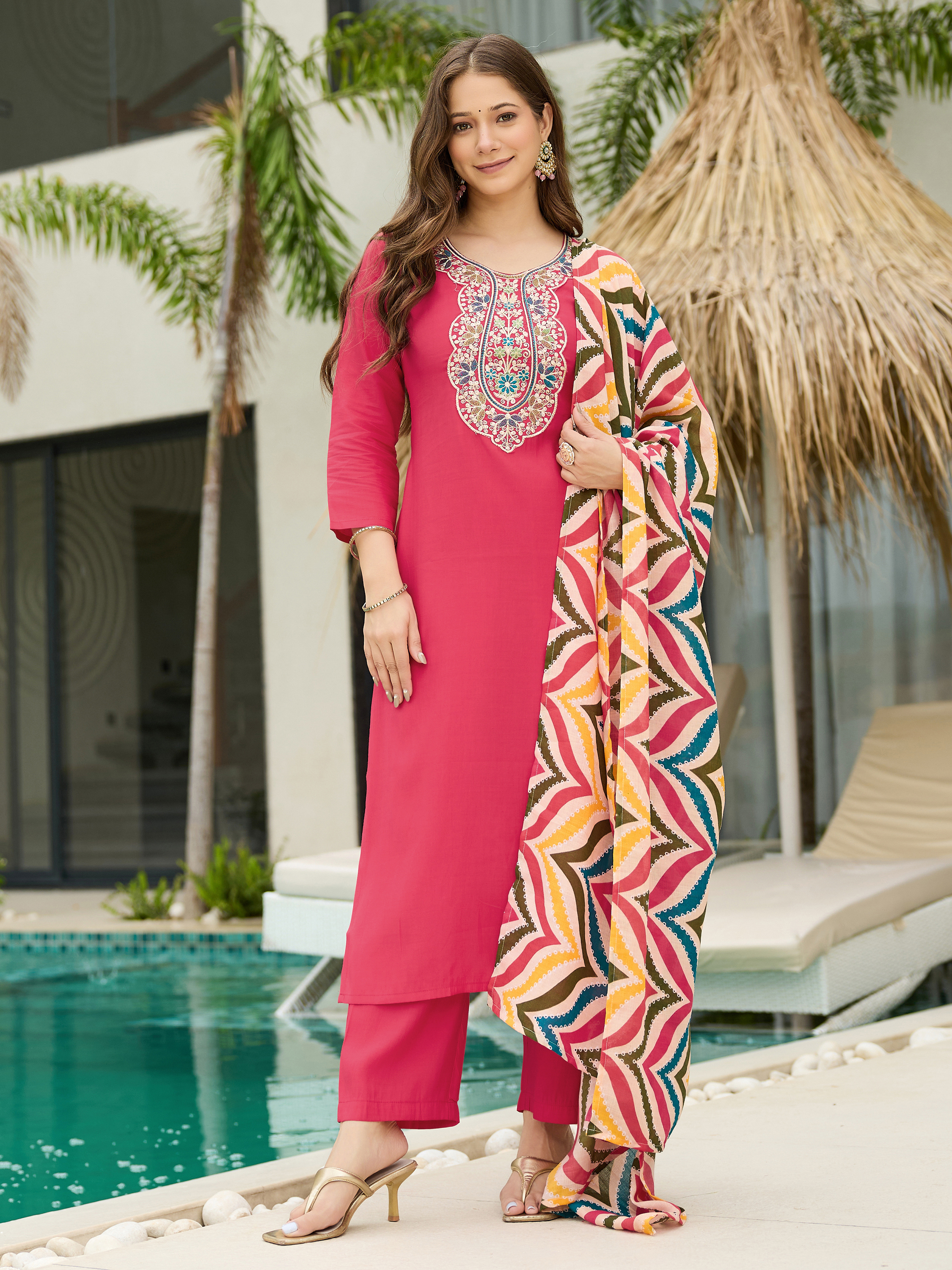
Gajri Embroidered Kurti Pant Dupatta Set Women offers a useful example of a three-piece structure: the kurti establishes the base, the pants keep the outfit practical and the dupatta supplies movement. To bring the look closer to a Garo-inspired palette, choose a dark solid dupatta border, geometric earrings or a woven belt instead of adding multiple unrelated prints.
Can Garo Traditional Fashion Inspiration for Women include a saree?
A saree can create a Garo-inspired outfit when its border, blouse and accessories are coordinated around a restrained geometric or handloom-like composition. A saree should not be labelled authentic Garo attire unless its provenance and design are genuinely Garo.
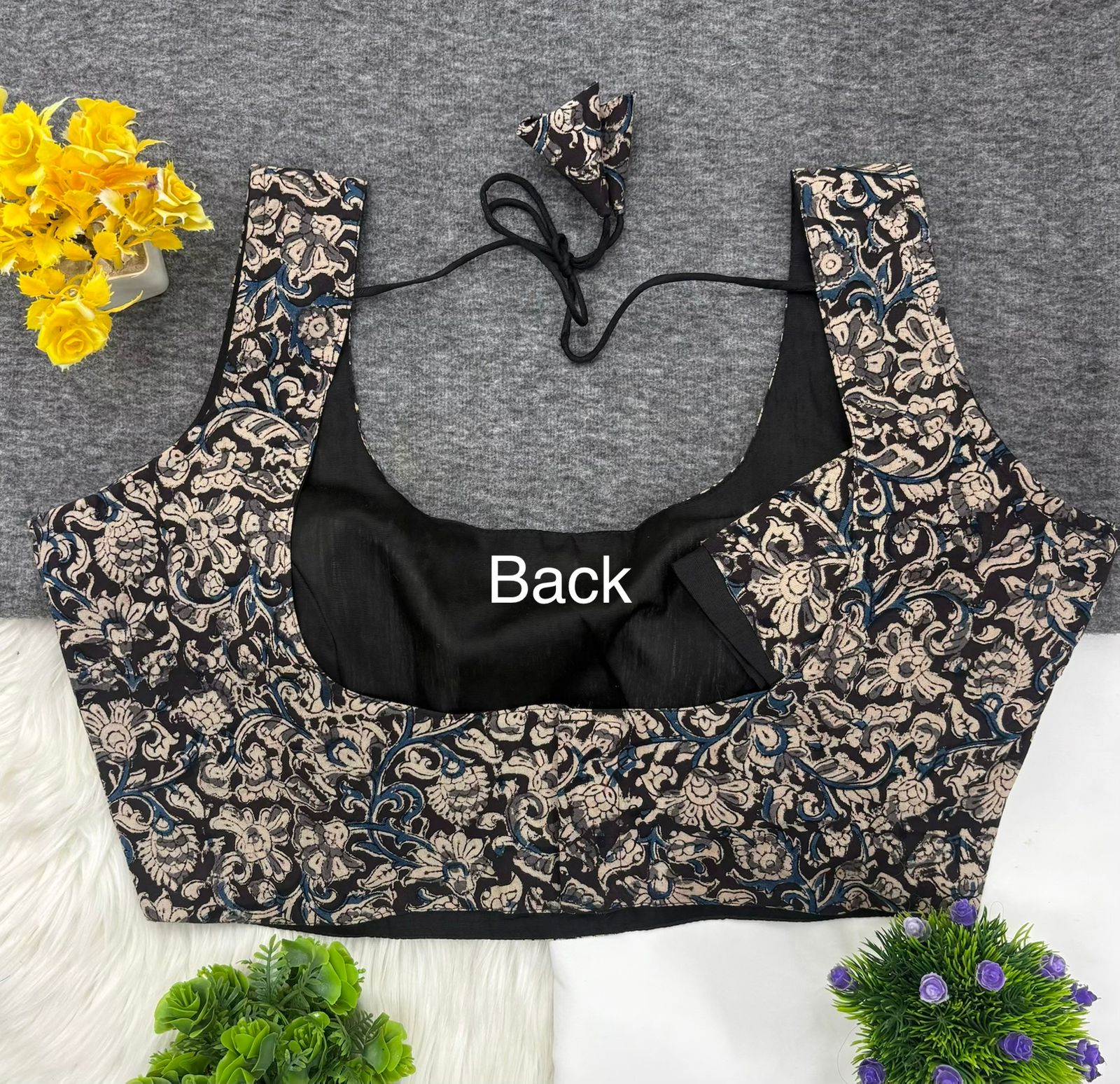
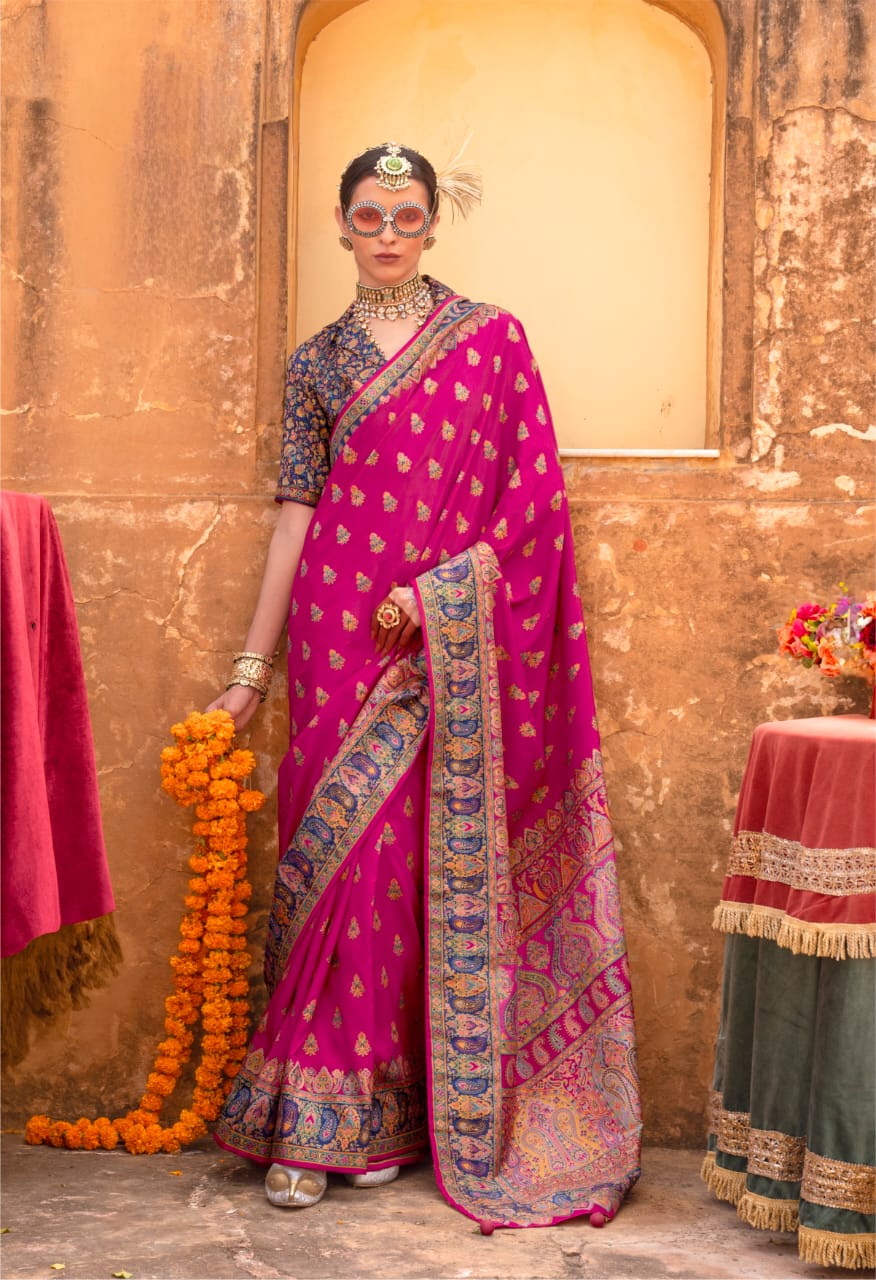
Teal Floral Printed Linen Cotton Saree With Matching Blouse shows how a matching blouse can produce a continuous colour field. Teal isn't a substitute for a traditional Garo palette, but the coordinated blouse makes the outfit cleaner and leaves room for a contrasting red, black or ochre accessory. Maroon Mal Cotton Ethnic Saree With Blouse from VARNAVI can be used as another styling study because its maroon base provides the depth needed for a lighter woven border, silver jewellery or a cream blouse accent.
When selecting a saree for this approach, look for cotton, linen cotton, matka silk or another fabric with enough body to hold a border. Very slippery satin can collapse the structure of a drape. A medium-width border of approximately 5 to 10 centimetres is usually visible in photographs without dominating the complete outfit.
Garo Traditional Fashion Inspiration for Women for Festive Dressing
A Garo-inspired festive look works best with one patterned hero garment, breathable fabric and accessories that reinforce the textile rather than compete with it.
For a daytime cultural programme or community event, cotton or linen cotton is practical because it handles warmth and movement. Multicolour Floral Linen Cotton Saree with Blue Border Look can be paired with a plain blue blouse, oxidised silver studs and a compact fabric potli. Keep the makeup fresh and the hairstyle secure so the outfit remains appropriate for sitting, walking and participating in the event.
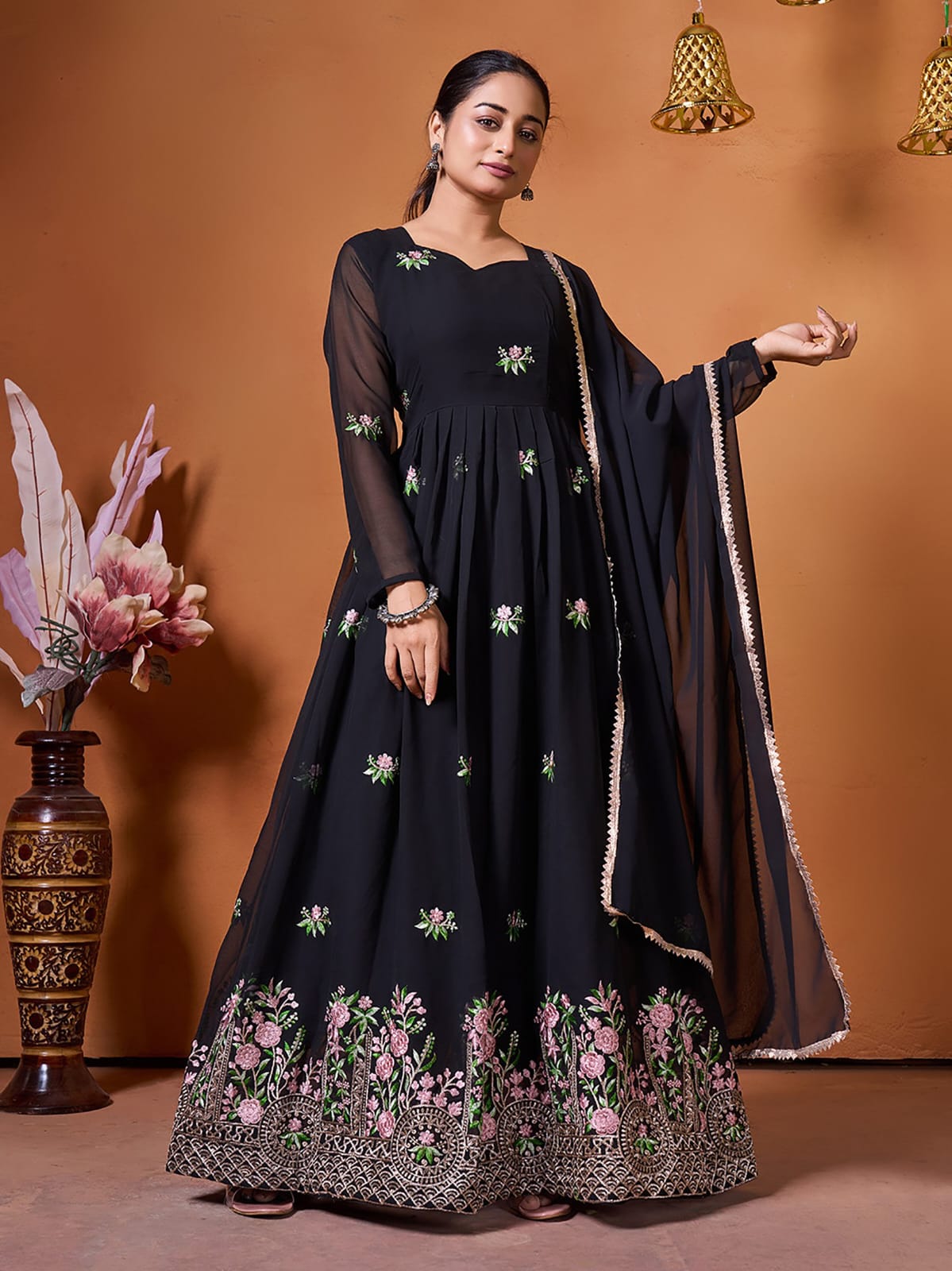
For an evening celebration, deeper colours and a more sculpted silhouette can add formality. A plain blouse with a graphic skirt, a structured dupatta or a bordered saree gives similar visual clarity to a wrapped textile. Blue Printed Georgette Designer Gown for Women Festive and BLUE Georgette Designer Gown Set with Dupatta Women are examples of contemporary occasion silhouettes. Neither is traditional Garo clothing, but their dupatta placement and blue tonal range can be studied when planning a contemporary, textile-led outfit.
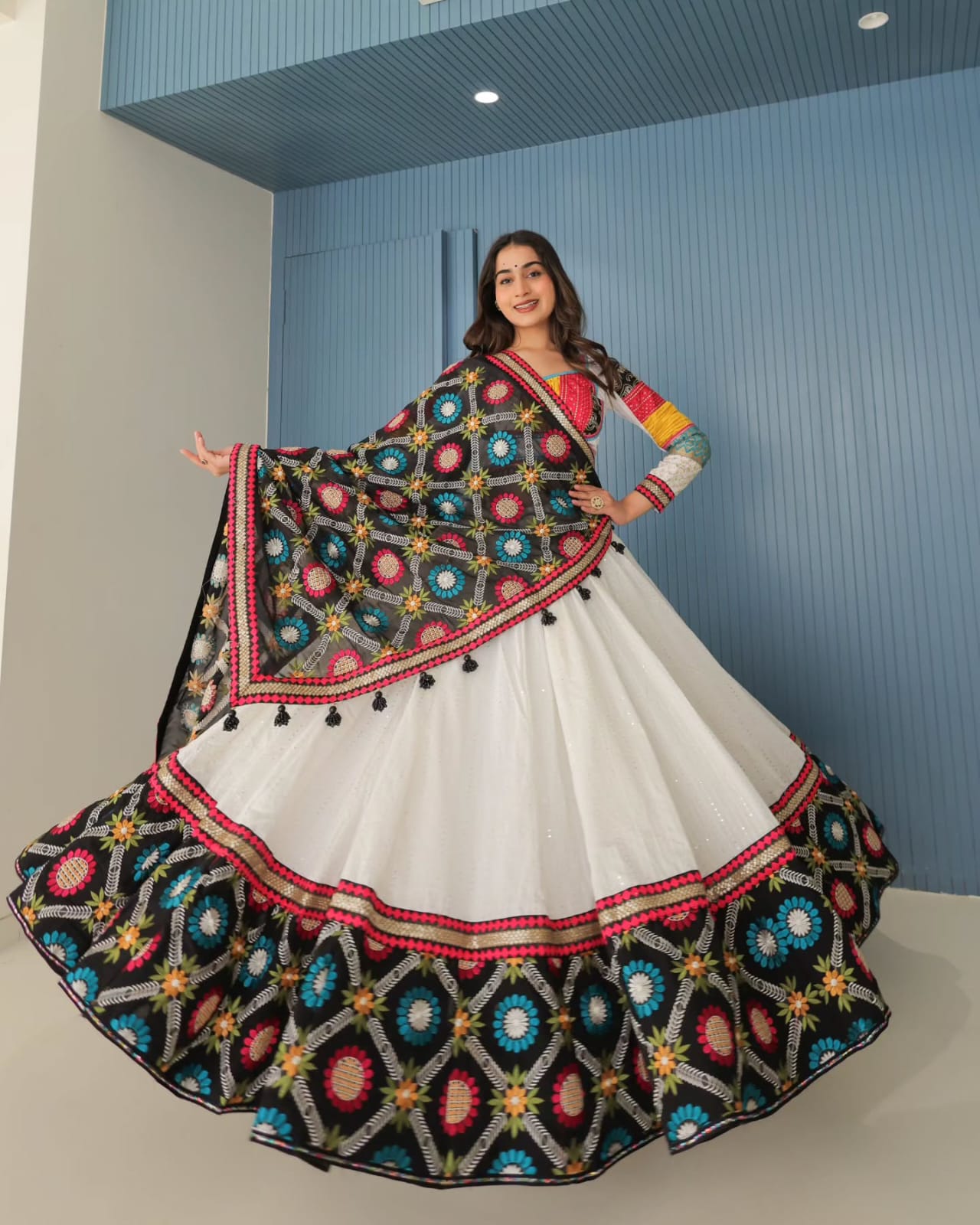
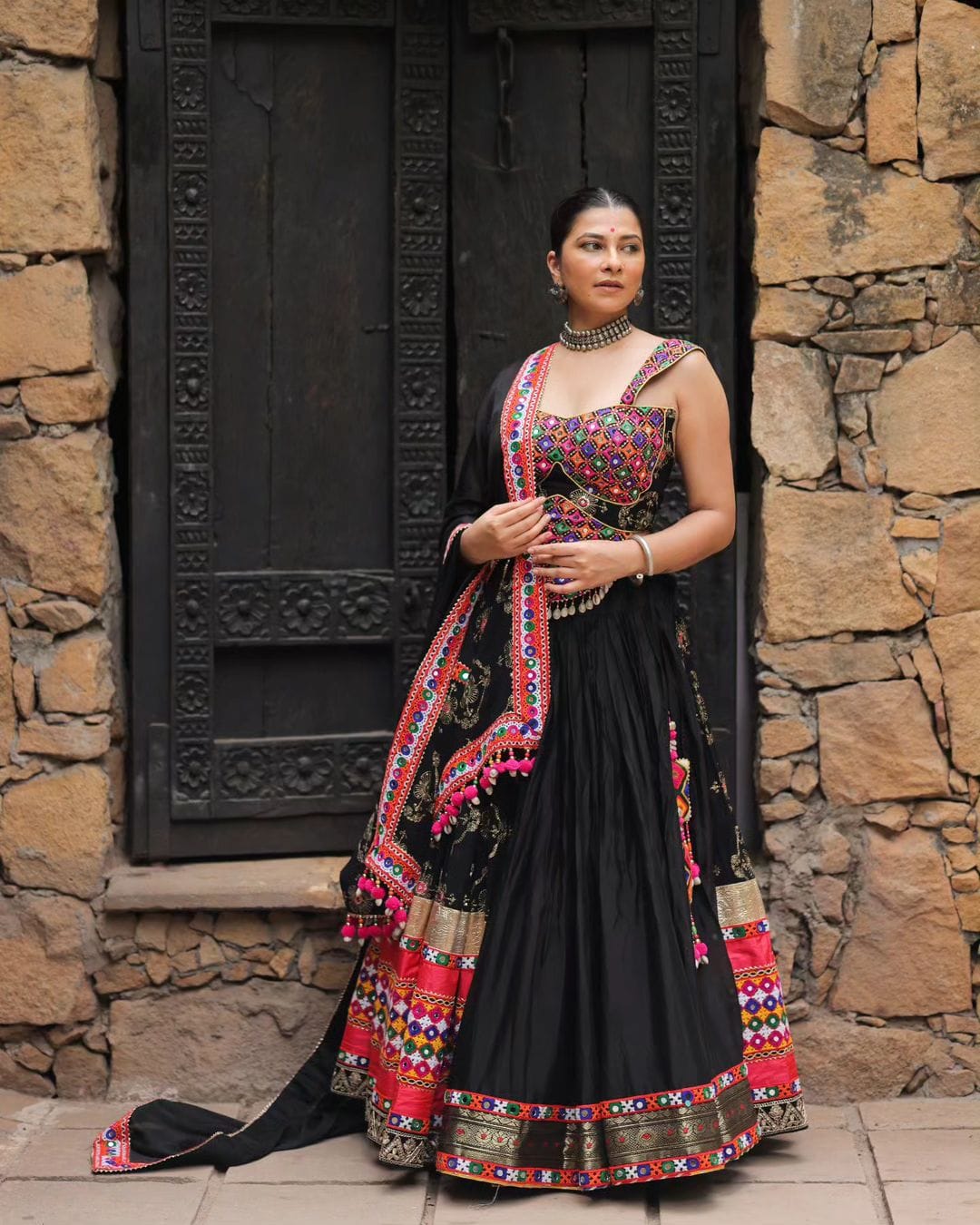
A lehenga can also work if its embellishment is edited. Designer Black Garba Lehenga Choli for Festive Season demonstrates the strength of a dark base with a celebratory surface. To make that styling less generic and more informed by Garo textile principles, choose accessories with linear forms, avoid stacking several heavily decorated pieces and add one narrow red or white accent rather than a full set of contrasting colours.
Garo Traditional Fashion Inspiration for Women and Fabric Choices
Cotton and linen cotton are generally the most comfortable choices for Garo-inspired dressing in warm, humid weather, while georgette and silk blends suit evening events when movement and drape are priorities.
Handloom cotton has enough structure to show stripes, checks and borders. Linen cotton gives a slightly crisp fall and works well for sarees, skirts and relaxed shirts. Mal cotton is light and breathable, although its softer surface may need careful pleating. Georgette gives fluid movement but can make a geometric border less sharply defined, particularly when the cloth is very thin.
Banarasi silk, Kanjeevaram and Chanderi are big Indian textile traditions, but they should not be presented as Garo textiles. Naming the fabric accurately protects the identity of each weaving tradition. A Banarasi silk saree can be styled with a Garo-inspired colour contrast, but it remains Banarasi silk. A Chanderi dupatta can repeat the lightness of a Daksari, but it remains Chanderi.
Rajwadi Mor Premium Printed Georgette Saree illustrates how a fluid georgette saree can provide movement for an evening look. The print should be balanced with a plain blouse and limited jewellery if the goal is a textile-led outfit. Printed georgette is less suited to reproducing the firm, graphic appearance of a handwoven geometric border, but it can still support the broader principles of contrast and controlled styling.
How should Garo-inspired garments be cared for?
Garo-inspired cotton garments should be washed gently, dried in shade and stored folded away from prolonged humidity. These steps reduce colour fading, fibre stress and distortion along the border.
Check the care label before washing linen cotton, georgette, embroidery or zari. Use cold water for colour-sensitive cotton, a mild detergent and minimal rubbing. Do not wring a saree or dupatta aggressively because twisting can stretch the weave and damage the edge. Roll embellished garments in clean cotton muslin for storage, and refold long-term stored textiles every few months to prevent permanent crease lines.
Garo Traditional Fashion Inspiration for Women and Respectful Styling
Respectful Garo-inspired styling identifies the difference between appreciation, adaptation and authentic traditional dress. A commercial outfit may draw on geometric borders, wrap silhouettes or colour contrasts while remaining a contemporary interpretation.
Avoid describing every northeastern textile as tribal, exotic or interchangeable. Garo, Khasi, Jaintia, Naga, Mizo and other communities have distinct histories, clothing practices and design vocabularies. Avoid placing a ceremonial accessory into a costume simply because it looks visually striking. When an event has a cultural dress code, follow guidance from organisers or members of the relevant community.
Provenance also matters. Ask whether a cloth is handwoven, where it was made, which fibre it uses and whether the motif has a recognised local meaning. Paying a fair price for artisan work and crediting the community behind a textile are more meaningful forms of appreciation than attaching a vague ethnic label to a mass-produced print.
The strongest Garo-inspired outfit is therefore specific and modest in its claims. It can use a cotton wrap, a red-and-black palette, a carefully placed border and handmade accessories, while clearly describing itself as inspired by Garo textile aesthetics rather than authentic Garo ceremonial clothing.
Questions About Garo Traditional Fashion Inspiration for Women
What is the traditional dress of Garo women?
The Dakmanda is a traditional lower wrap associated with Garo women's clothing, while the Daksari is commonly used as an upper-body cloth. Draping details, fabrics and accessories can vary between Garo communities and occasions.
How can I style a Garo-inspired outfit without copying ceremonial clothing?
Use broad ideas such as geometric borders, cotton textures, controlled contrast and wrap-inspired silhouettes. Describe the result as Garo-inspired unless the garment is genuinely made within the Garo textile tradition and its provenance is known.
Which colours work well for Garo-inspired ethnic wear?
Red, black, white, yellow, ochre and deep blue create a strong starting palette for Garo-inspired styling. Colour meanings are not universal, so combinations should be chosen with attention to the specific textile and context.
Can I wear a saree for a Garo-inspired look?
Yes, a saree can support a Garo-inspired look when the border, blouse and accessories create a restrained, graphic composition. A commercial saree should not be described as authentic Garo attire without reliable information about its origin.
Which fabrics are suitable for Garo-inspired clothing in humid weather?
Cotton and linen cotton are practical choices because they are breathable and can hold visible borders. Georgette suits fluid evening outfits, but thin georgette usually shows geometric motifs less sharply than structured cotton.
How should I care for a handwoven or Garo-inspired textile?
Wash care should follow the fibre and embellishment requirements, but cold water, mild detergent, shade drying and gentle handling are generally safer than hot washing or strong wringing. Store dry textiles folded in breathable cotton rather than sealed in damp plastic.