

Garo Dakmanda and the Importance of Correct Regional Naming begin with a simple fact: a garment name can carry the history of a community, not merely describe a silhouette. Dakmanda belongs to the clothing traditions of the Garo people of Meghalaya and adjoining areas, where dress, weaving, social identity and ceremonial life have developed together. Using the name accurately helps readers, buyers, designers and retailers recognise that the garment comes from a specific cultural context rather than treating every Northeastern textile as an interchangeable "tribal" style.
The practical value of correct naming is equally important. A shopper who knows whether a piece is an authentic Dakmanda, a contemporary interpretation or only a garment inspired by Garo motifs can ask better questions about fabric, construction, provenance and use. Accurate language also prevents one community's textile vocabulary from being absorbed into a vague catalogue of ethnic fashion.
What does Garo Dakmanda refer to?
Garo Dakmanda refers to a traditional lower garment associated with Garo women, especially within the clothing culture of Meghalaya and the Garo Hills. Dakmanda is commonly described as a woven wrap or skirt-like garment worn around the lower body, often with a blouse, shawl or other coordinated element depending on locality, occasion and personal styling.
The Garo people are also known as A'chik in many contemporary contexts, and the community includes several local groups with distinct customs and textile preferences. That diversity means Dakmanda should not be reduced to one fixed cut, colour combination or decorative formula. Older handwoven examples and modern versions may differ in width, finishing, fibre, motif placement and method of wearing.
Traditional Garo clothing is often recognised through structured geometric ornament, strong contrast, handwoven surfaces and a relationship between garment and community identity. Those features can appear in new textiles, but visual resemblance alone doesn't prove that a garment is a Dakmanda. The name should be supported by its cultural reference, construction or clearly stated design inspiration.
Is Dakmanda the same as every Garo garment?
Dakmanda isn't a universal name for every garment worn by Garo people. Dakmanda identifies a particular garment tradition, while Garo dress also includes upper-body garments, wraps, adornments and regional variations that may have separate names or functions.
Terminology can vary according to the speaker's language, community, spelling preference and transliteration from local languages into English. A responsible description can therefore say "a contemporary garment inspired by Garo Dakmanda" when the design borrows selected features without claiming to be a traditional handwoven piece. That wording is more useful than presenting a fashion set as an exact historical equivalent.
Garo Dakmanda and the Importance of Correct Regional Naming
Garo Dakmanda and the Importance of Correct Regional Naming matter because names connect textiles to living communities, places and systems of knowledge. A regional term tells a reader where to look for context: Meghalaya, the Garo Hills, Garo weaving practices and the social occasions in which the garment may be worn.
Correct naming also improves search and documentation. A description that says "Northeast tribal skirt" is broad enough to hide several unrelated traditions. A description that identifies Garo Dakmanda gives researchers, customers and community members a precise starting point. Retailers can then add useful qualifiers such as "handwoven," "printed interpretation," "cotton," "silk blend," "contemporary set" or "inspired by," instead of allowing a generic label to do all the work.
Regional naming has an ethical dimension because many Indian textile traditions have been separated from their makers when they enter mass fashion. The original community may disappear from the product story while its motifs remain commercially visible. Naming Garo Dakmanda carefully doesn't solve every problem of representation, but it keeps the cultural source present in the conversation.
What should a responsible product description say?
A responsible product description should identify the regional reference, distinguish traditional construction from contemporary adaptation, and avoid claiming authenticity without evidence.
- Regional reference: State that the design relates to Garo or A'chik clothing traditions of Meghalaya when that connection is established.
- Construction: Explain whether the garment is handwoven, machine-woven, printed, embroidered or assembled from a contemporary fabric.
- Material: Name cotton, silk, polyester, georgette or a blend rather than relying on the word "traditional."
- Use: Mention whether the garment is intended for a cultural event, festive styling, everyday wear or fashion interpretation.
- Scope of the claim: Use "inspired by" for an updated design that doesn't reproduce the traditional garment accurately.
How does Garo textile identity differ from a generic Northeast label?
Garo textile identity differs from a generic Northeast label through its specific community history, vocabulary, motifs, techniques and geographic associations. "Northeast India" covers eight states and many distinct communities, so the phrase can't substitute for a Garo, Mizo, Naga, Khasi, Manipuri, Bodo or other regional identification.
Geography matters because neighbouring communities can share materials or visual preferences while maintaining different names and ceremonial meanings. A striped textile from Meghalaya should not automatically be called Garo, and a geometric pattern should not automatically be treated as Dakmanda. Design elements travel, collaborations occur and contemporary designers reinterpret older forms, but those changes make careful attribution more necessary, not less.
Colour provides another warning. Black, red, white, yellow and green can be prominent in many Indian textile traditions, yet colour alone can't authenticate a regional garment. The same principle applies to motifs such as diamonds, stripes, checks or stylised plants. Motif, weave structure, garment format, oral history and maker information need to be considered together.
For comparison, a Banarasi silk saree, a Kanjeevaram saree and a Chanderi saree are not interchangeable simply because all are Indian occasion textiles. Banarasi silk points to a weaving tradition associated with Varanasi, Kanjeevaram identifies a South Indian silk tradition associated with Kanchipuram, and Chanderi refers to a distinct lightweight textile tradition from Madhya Pradesh. Garo Dakmanda deserves the same precision.
How can current wardrobes style a Dakmanda-inspired garment?
A Dakmanda-inspired garment can be styled respectfully when the wearer preserves the regional name, acknowledges the Garo reference and avoids presenting a fashion adaptation as ceremonial Garo dress.
For a contemporary wardrobe, a woven or patterned lower garment can be paired with a plain blouse, short kurti or restrained shirt so the textile remains the visual focus. Silver-toned jewellery, a handloom stole and simple footwear can support the look without turning cultural clothing into costume. A wearer attending a Garo community event should follow guidance from hosts or community members, because everyday fashion styling and ceremonial dress don't carry the same expectations.
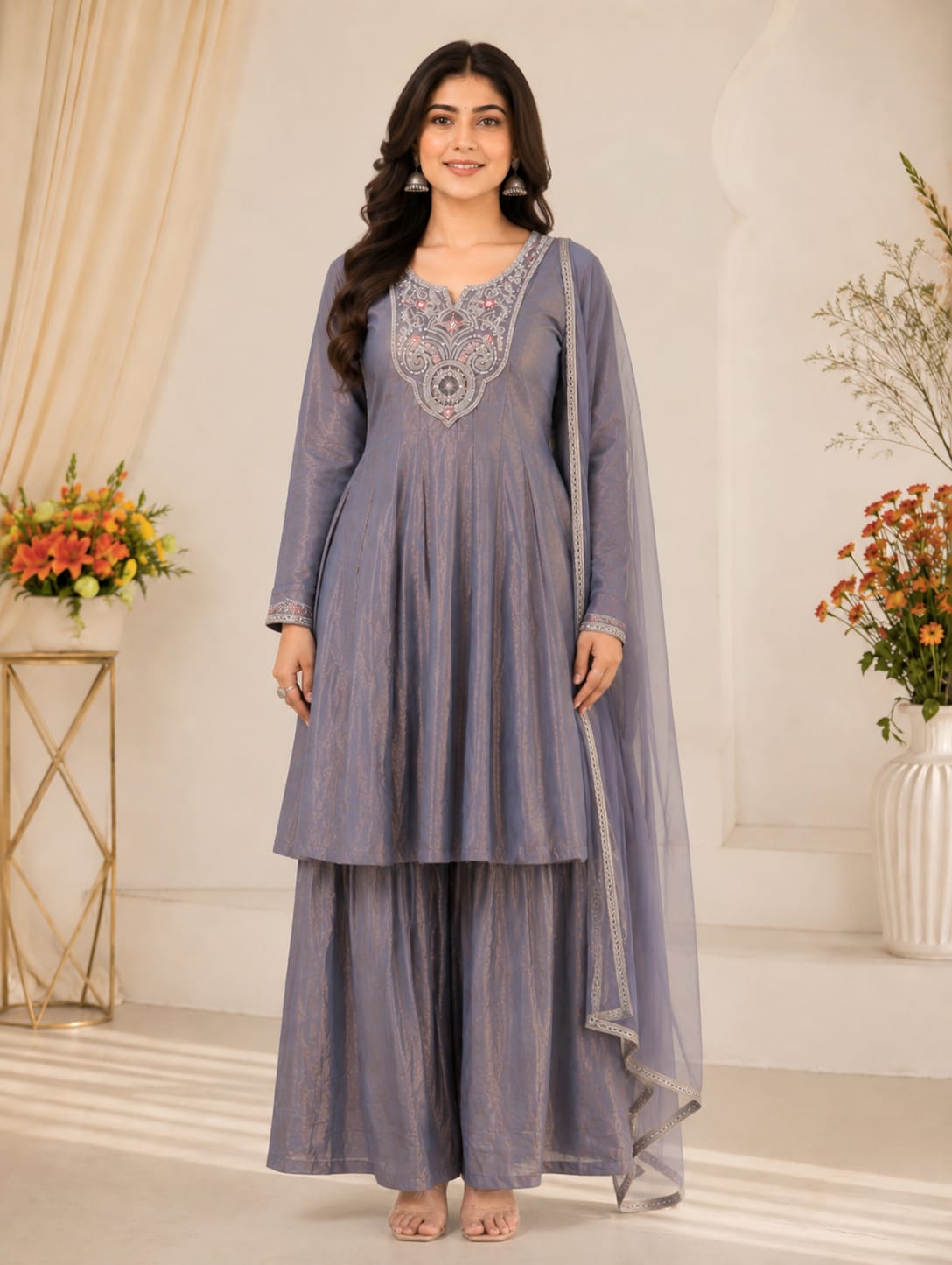
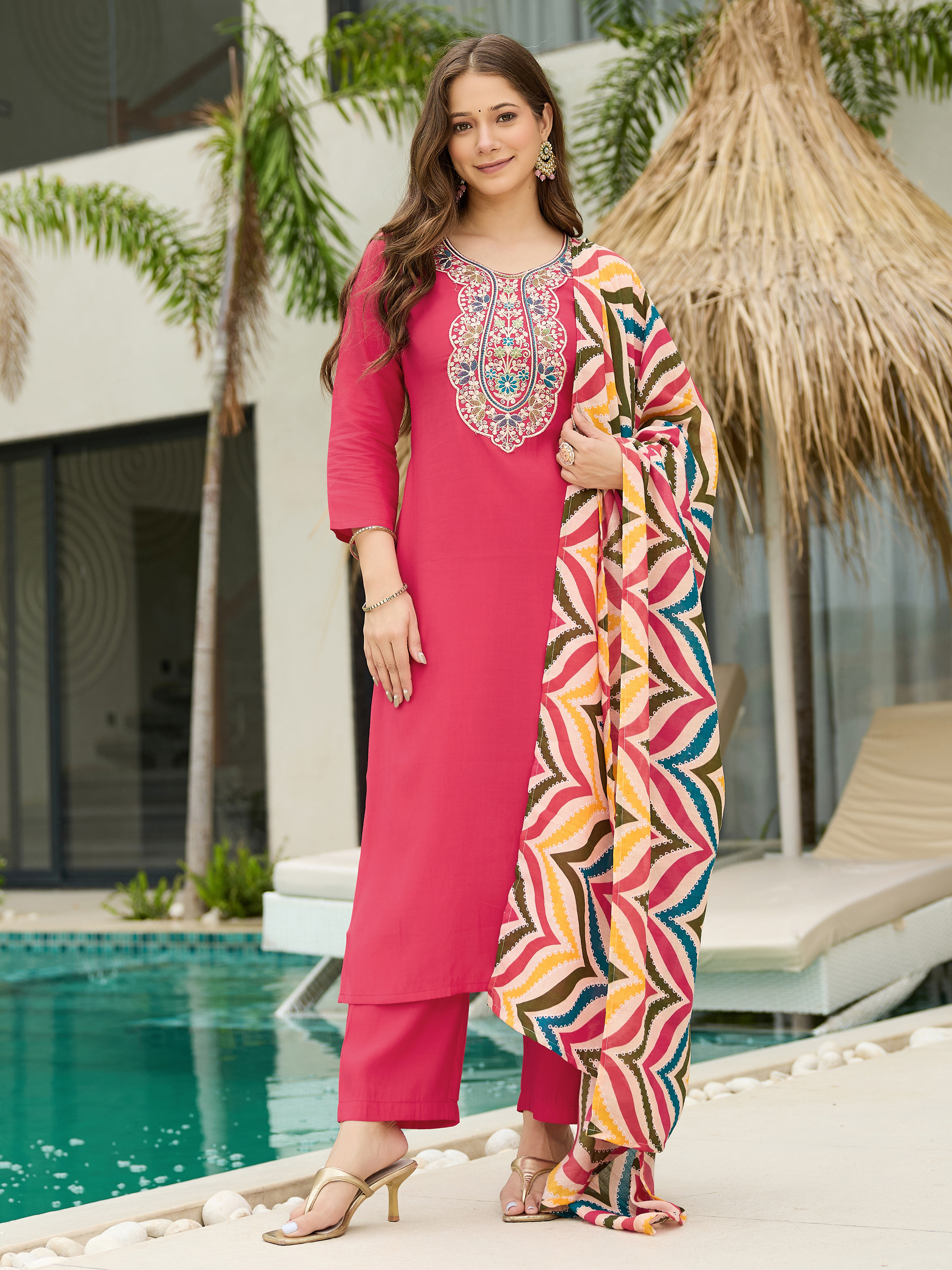
Silhouette comparisons can help shoppers understand styling without erasing regional identity. Grey Fandy Silk Sarara Set with Embroidery and Dupatta demonstrates how a coordinated lower garment and dupatta can create movement through layered volume, although a sharara isn't a Dakmanda. Gajri Embroidered Kurti Pant Dupatta Set Women offers another example of a current three-piece structure that can be styled with a regional textile accent while remaining clearly a kurti set.
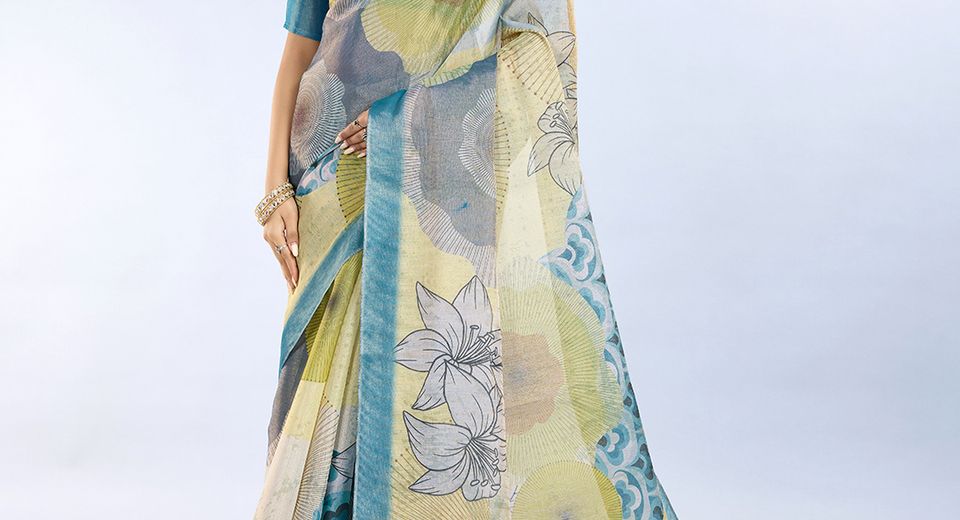
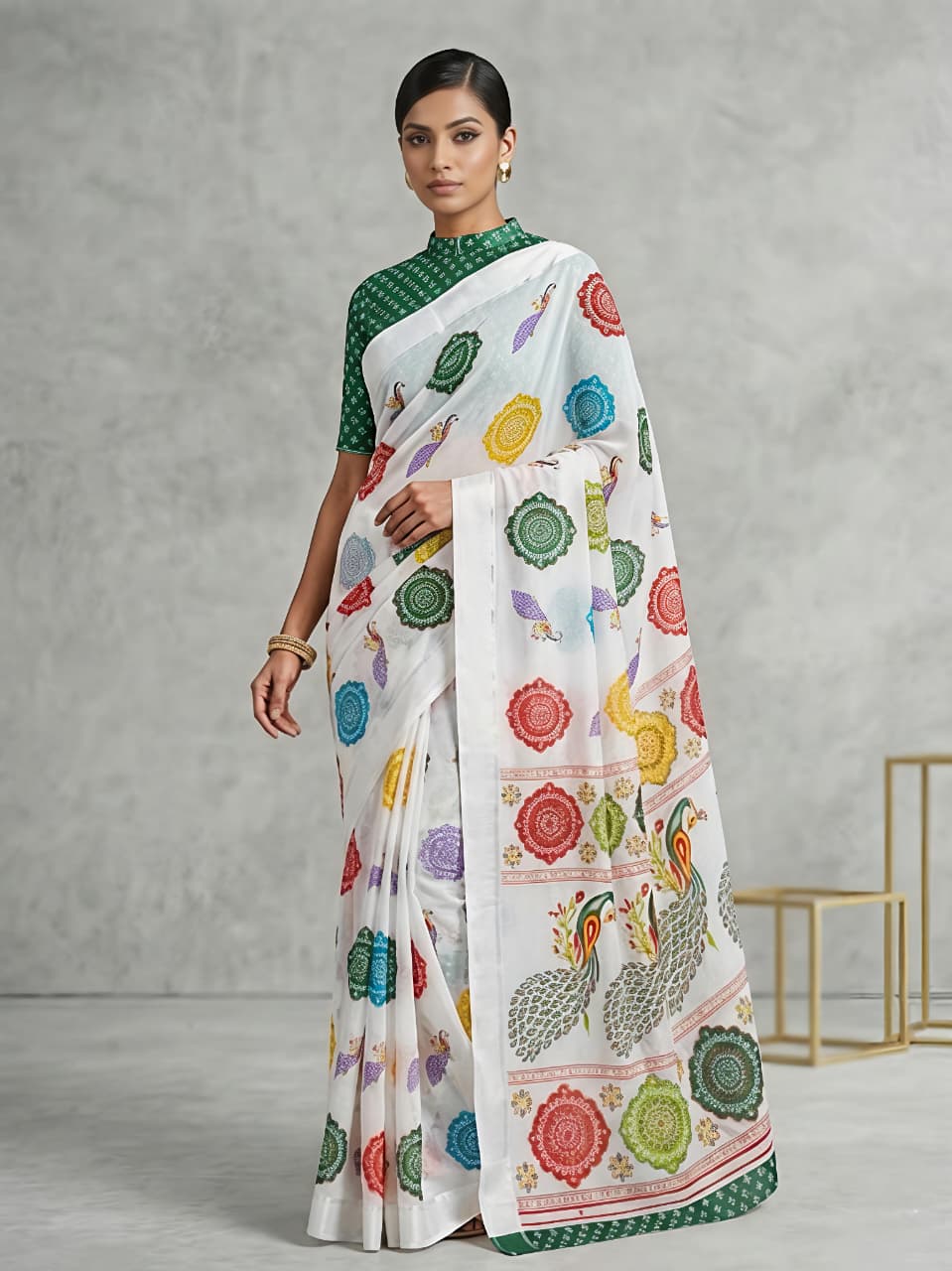
A saree can also serve as a reference point for proportion rather than as a substitute for Dakmanda. Rajwadi Style White Georgette Saree with Peacock Border and Rajwadi Mor Premium Printed Georgette Saree show how border scale and drape influence the visual balance of an outfit. Neither garment should be renamed Dakmanda simply because a shopper wants a Northeastern-inspired look.
Which styling choices avoid cultural flattening?
The most respectful styling choices keep the garment's regional name visible and avoid mixing unrelated cultural symbols into a costume-like ensemble.
- Use the term Garo Dakmanda or Dakmanda when the garment genuinely relates to that tradition.
- Describe a printed or commercially produced version as an interpretation rather than claiming that it's an heirloom or community-made original.
- Pair a regional textile with neutral accessories instead of combining several unrelated "tribal" motifs.
- Avoid imitating ceremonial jewellery, body markings or ritual styling without understanding their significance.
- Credit the Garo or A'chik reference in captions, product notes and editorial writing.
What should shoppers check before buying a regional textile?
Shoppers should check the fibre, production method, dimensions, design source and wording of the product description before buying a regional textile. Those details reveal whether the item is a traditional garment, a contemporary adaptation or simply a product using regional-looking decoration.
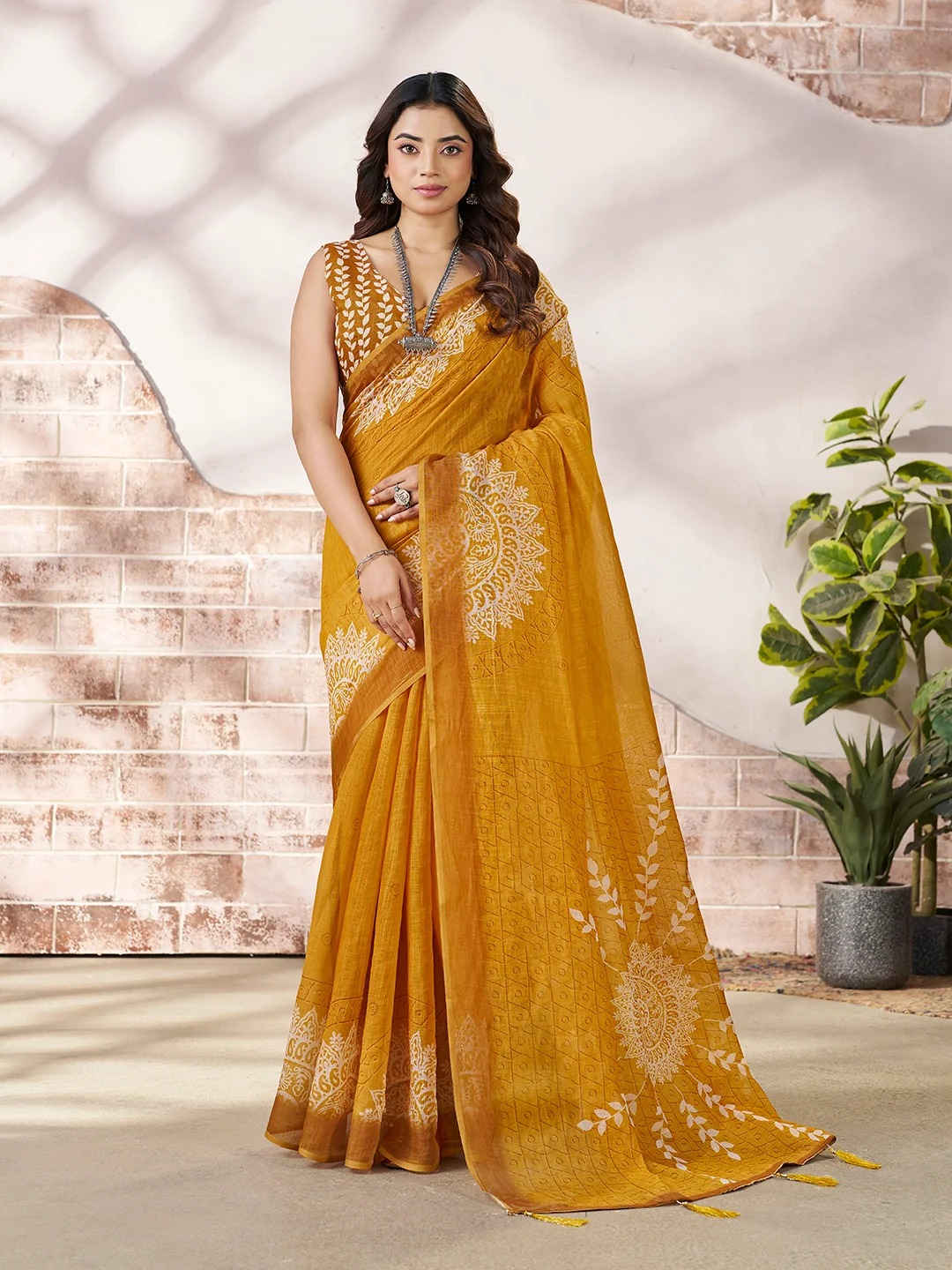
Ask whether the fabric is handwoven or powerloom-produced, whether the motif is woven or printed, and whether the seller can identify the maker or region. Ask for measurements because a traditional wrap and a stitched skirt don't offer the same wearing experience. A Dakmanda-inspired piece may require a separate blouse, fastening, underskirt or method of securing the wrap.
Material labels also affect care and price. Cotton generally tolerates more frequent use than delicate silk, but dyed handwoven cotton can still require cold-water washing and shade drying. Georgette, polyester and blended fabrics may look suitable for a regional interpretation while having completely different drape and maintenance requirements. A price can't establish authenticity, so a higher cost should be supported by information about fibre, labour, weaving and provenance.
Colourfastness deserves attention when a textile uses strong red, black or indigo tones. Request care instructions before washing a dark handloom textile with pale garments. Fold woven pieces along existing creases, store them away from direct sunlight and refold them every few months to reduce permanent stress along one line.
Other garments can illustrate why precise specifications matter. Buy Teal Floral Abstract Erode Cotton Saree with Tassel Pallu and Teal Erode Cotton Abstract Saree with Geometric Stripe Arts clearly signal Erode cotton and contemporary abstract design in their names. Those descriptions help a buyer distinguish regional textile association, fibre expectation and visual treatment without incorrectly assigning either saree to Garo clothing.
How can writers and retailers use regional names responsibly?
Writers and retailers can use regional names responsibly by separating cultural attribution from visual description and by stating the limits of their knowledge. A short note identifying Meghalaya, the Garo people or A'chik terminology is more informative than placing a garment under a broad "ethnic" label.
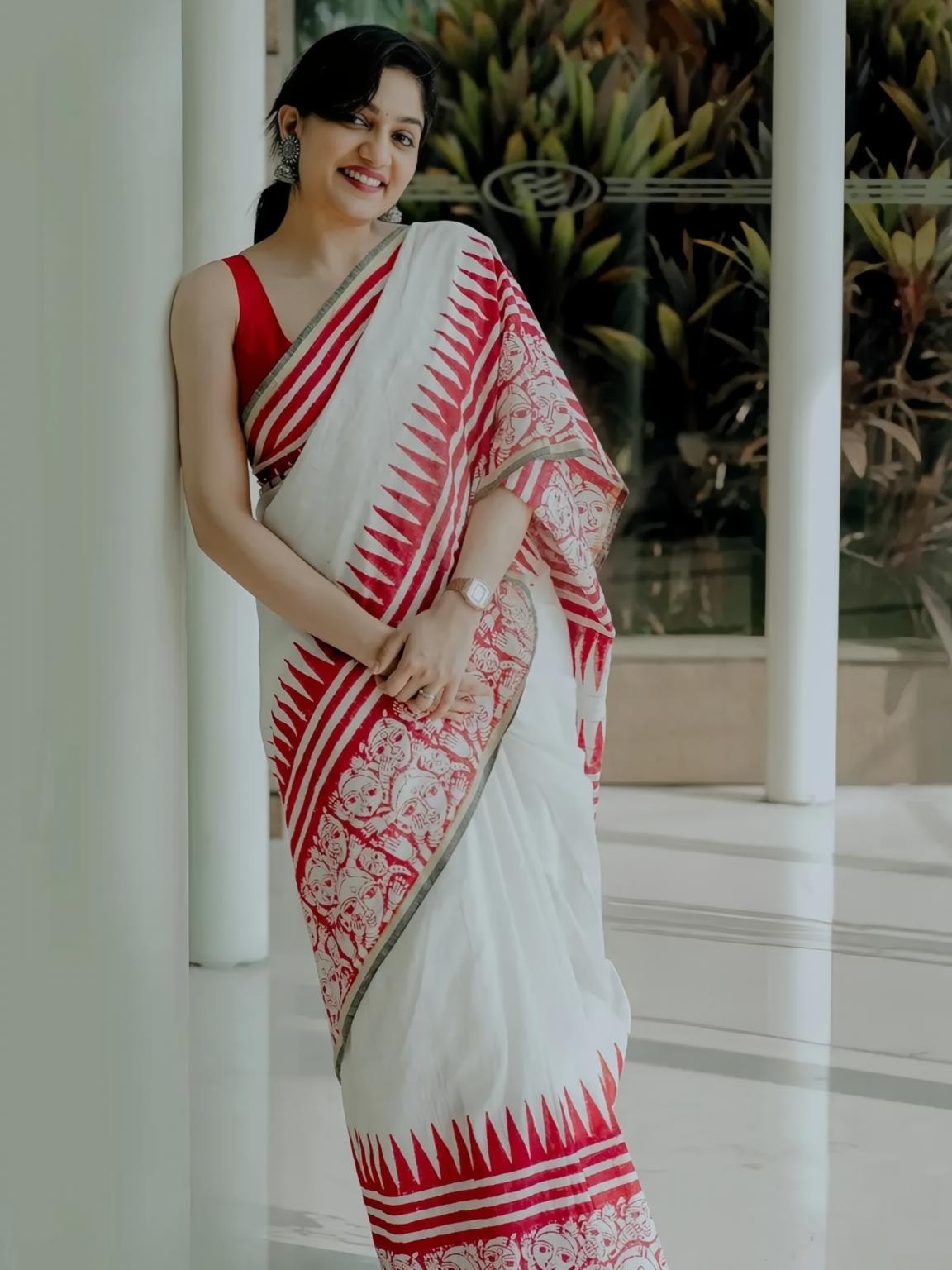
Product photography should also avoid implying ceremonial authenticity through styling alone. A model wearing a contemporary printed skirt with generic jewellery doesn't demonstrate that the garment is traditional Dakmanda. Captions should identify what is known, such as fabric, technique, design inspiration and intended use, while leaving unverified historical claims out.
Names of unrelated products should remain accurate as well. Orange Thread Embroidered Ethnic Suit Set can be discussed as an embroidered ethnic suit without being relabelled as Garo clothing, and White Rajwadi Mor Saree with Teal Peacock Border should retain its saree identity even when its colour palette complements a Northeastern-inspired styling story. Accurate naming allows visual comparison without cultural substitution.
Retailers can improve trust by publishing a short provenance note, naming the region of inspiration, explaining whether the design is handwoven or printed, and crediting collaborators where appropriate. Community consultation is especially valuable when a design uses a specific name, motif system or ceremonial reference. Consultation can't guarantee universal agreement, but it can reduce careless claims and create a more accountable process.
Why does accurate naming matter beyond one garment?
Accurate naming matters beyond one garment because textile vocabulary shapes what future buyers, archives and designers remember about Indian dress. When regional names remain attached to their communities, the public can distinguish a Garo garment from a generic "tribal" fashion category and can seek deeper information from appropriate sources.
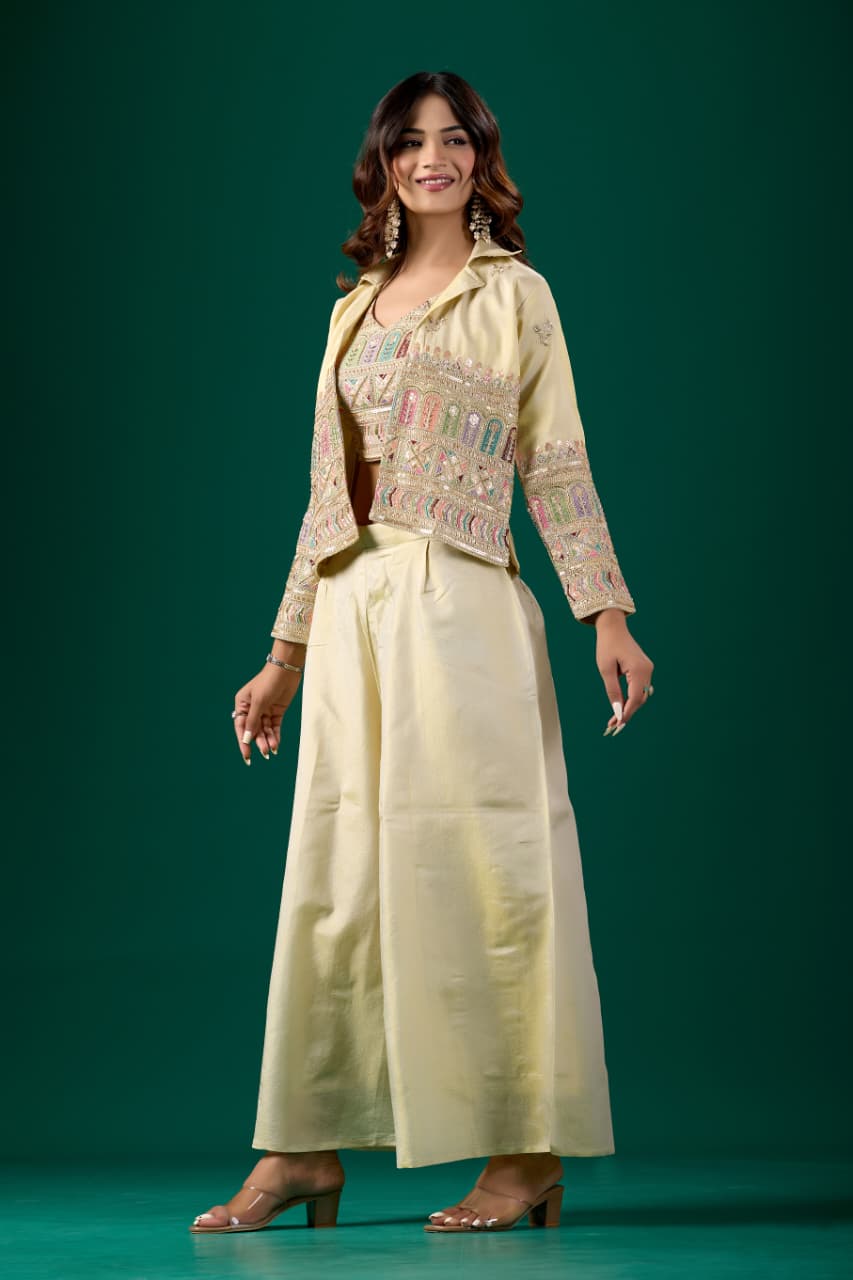
Correct language also makes room for change. Garo designers, weavers and younger wearers can reinterpret Dakmanda without being forced to choose between a frozen idea of tradition and complete commercial anonymity. A contemporary garment may be new, machine-made or adapted for urban wardrobes while still acknowledging the Garo reference honestly.
The most useful question isn't whether a garment looks sufficiently exotic to receive a regional label. The useful questions are who made it, which tradition it references, what construction it uses, where the name comes from and whether the description gives the community proper recognition. Those questions turn regional naming from a marketing detail into a practical form of textile literacy.
Common Questions About Garo Dakmanda and Regional Textile Names
What is Garo Dakmanda?
Garo Dakmanda is a traditional lower garment associated with Garo women and the clothing culture of Meghalaya and the Garo Hills. Forms can vary by locality, materials, construction and occasion, so one fixed colour or silhouette does not define every Dakmanda.
Is Dakmanda the same as a generic tribal skirt?
No. Dakmanda is a specific garment term connected with Garo clothing traditions, while "tribal skirt" is a broad commercial label that can combine unrelated communities and styles. A contemporary version should be described as Garo Dakmanda-inspired when it borrows features without reproducing a traditional garment.
Why is correct regional naming important in Indian ethnic wear?
Correct regional naming keeps a garment connected to its community, place and textile vocabulary. Precise names also help shoppers distinguish handwoven traditions from printed or machine-made adaptations and make cultural descriptions easier to research and verify.
How can I tell whether a Dakmanda-inspired garment is traditional?
Check the garment format, fibre, weave or print method, dimensions, maker information and provenance statement. A seller should distinguish a handwoven community-made garment from a contemporary fashion piece using Garo-inspired motifs rather than relying only on the word "traditional."
Can I wear a Dakmanda-inspired outfit for a festive event?
Yes, a Dakmanda-inspired outfit can work for a festive event when its description remains accurate and its styling does not imitate ceremonial dress without context. For a Garo community event, follow guidance from hosts or community members because everyday styling and ceremonial clothing may have different expectations.
Is every geometric textile from Meghalaya a Garo textile?
No. Meghalaya contains several communities with distinct textile traditions, and geometric decoration appears across many Indian weaving cultures. Regional attribution should consider the garment name, community reference, construction, motif tradition and maker information rather than pattern shape alone.




