

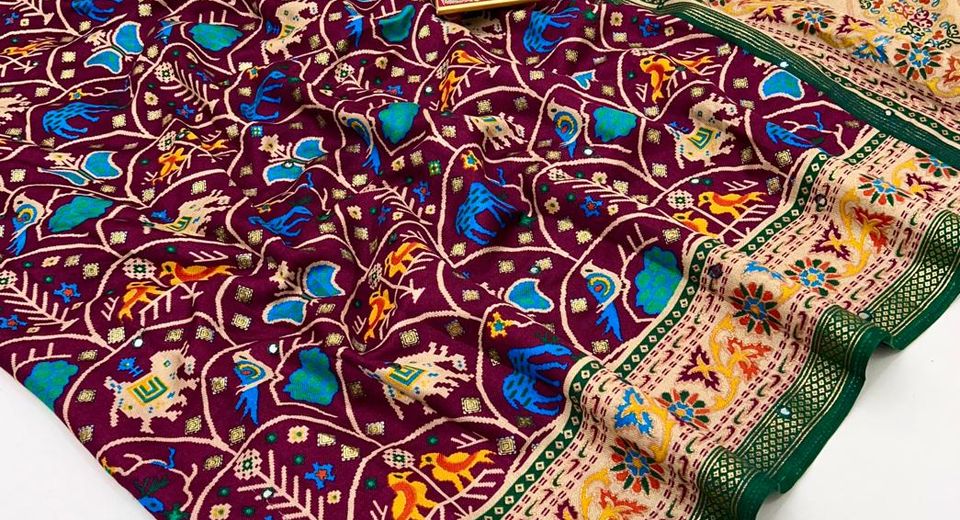
Garhwali Saree Styling Ideas can help create a festive outfit that feels rooted in Uttarakhand without treating every Himalayan tradition as interchangeable. A contemporary saree can carry Pahadi character through a red-and-yellow palette inspired by Pichora, a pallu arranged over the head, silver-toned jewellery, a practical blouse and sturdy footwear. The most convincing look comes from understanding which elements are traditional, which are adaptations and which are personal styling choices.
Garhwal and Kumaon have distinct cultural histories, even though both go to Uttarakhand. Pichora, for example, is strongly associated with Kumaoni formal dressing, while Garhwali communities have their own textiles, ornaments and festival customs. Using Pichora-inspired colours with a saree is therefore a modern regional interpretation rather than a claim that one outfit represents every Garhwali woman. That distinction makes the styling more profound and useful for weddings, temple visits, family celebrations and local festivals.
Garhwali Saree Styling Ideas: What makes a saree look traditionally Pahadi?
A saree looks traditionally Pahadi when its colour story, head covering, jewellery and practical details reference Uttarakhand dress customs without forcing a costume-like imitation. The saree itself may be a current choice, while the visual language comes from vermilion red, turmeric yellow, deep green, handloom textures, silver ornaments and a neatly controlled pallu.
Traditional Uttarakhand clothing varies by district, community, age and ceremony. Garhwali festive wardrobes may include ghagra, choli, angdi, woollen layers and regionally specific jewellery, while Kumaoni ceremonial dressing is often recognised through the Pichora. A saree styling approach can respectfully borrow visual cues rather than announcing that one drape is the definitive Garhwali style.
Choose one strong regional reference and keep the rest restrained. A red saree with a yellow blouse, a green saree with a red border, or a neutral handloom saree with red-and-yellow accessories usually looks more convincing than combining every possible Pahadi symbol at once. Handloom cotton, soft silk, Banarasi silk and pashmina silk can all work, provided the weight suits the weather and movement required during the celebration.
Garhwali Saree Styling Ideas for choosing colours and fabrics
Red, yellow, green, maroon and warm metallic accents create the clearest Pahadi-inspired festive palette. Red can suggest celebration and bridal warmth, yellow can echo turmeric and Pichora styling, green can connect the outfit to mountain landscapes, and maroon can provide a mature alternative to bright vermilion.
Garhwali Saree Styling Ideas for a vivid daytime festival
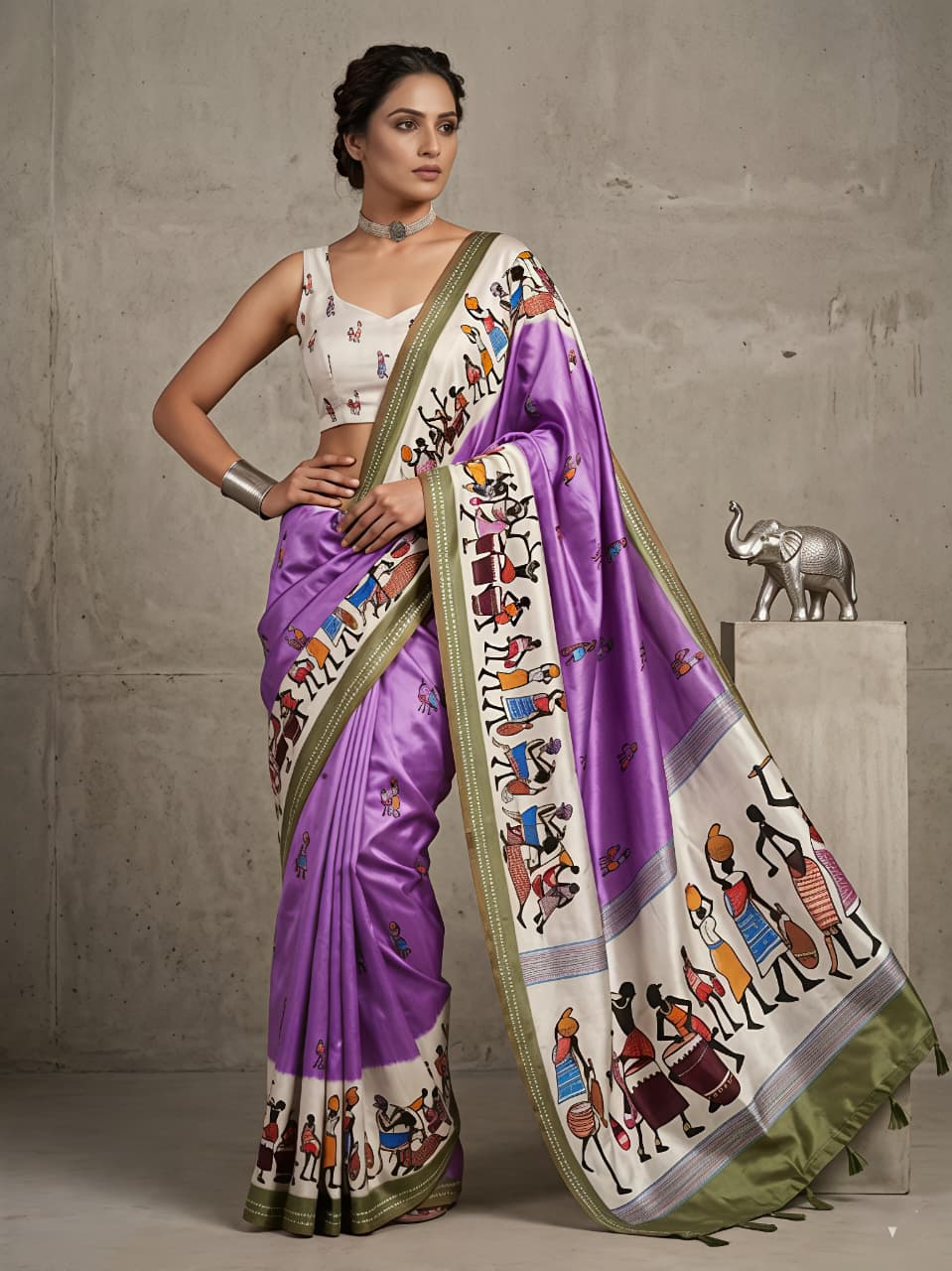
A bright saree with a contrasting blouse is the strongest choice for daytime ceremonies, outdoor gatherings and Haldi ceremony photography. Designer Red Patola Print Pashmina Silk Festive Saree can be paired with a mustard-yellow blouse, a small red bindi and gold-and-silver mixed jewellery. Keep the blouse neckline moderate and add a yellow or saffron-edged pallu over one shoulder for a clear festive contrast.
Traditional Teal Banarasi Saree for Festive Wear offers a cooler alternative when red feels too expected. A marigold blouse, red glass bangles and a narrow red ribbon or trim in the braid can introduce Pahadi colour references without overpowering the Banarasi silk. Banarasi silk already contains visual richness through its weave and zari, so additional embroidery should remain limited.
Garhwali Saree Styling Ideas for an evening celebration
Deep maroon, wine and bottle green provide a more formal evening palette while retaining traditional depth. Maroon Banarasi Soft Silk Saree with Golden Zari Border works with an antique-gold blouse, a red bindi and a silver nose ring for a layered regional look. Traditional Bottle Green Patola Border Silk Saree can be styled with a red blouse and a warm gold waist belt when the venue calls for a sharper silhouette.
Wine Patola Style Soft Pashmina Silk Party Wear Saree is useful for a winter evening because the pashmina-silk texture looks substantial and pairs naturally with a shawl. Select a shawl in rust, cream or muted mustard rather than an identical wine shade, so the saree remains visible. A lined blouse and closed-toe footwear will also make the outfit more comfortable outdoors.
Garhwali Saree Styling Ideas for a secure Pahadi drape
A Pahadi-inspired festive saree is best draped securely with moderate pleats and a pallu that can be brought over the head without disturbing the waist. The standard Nivi drape is the most practical base because it's familiar, stable and easy to adjust for walking, sitting and dancing.
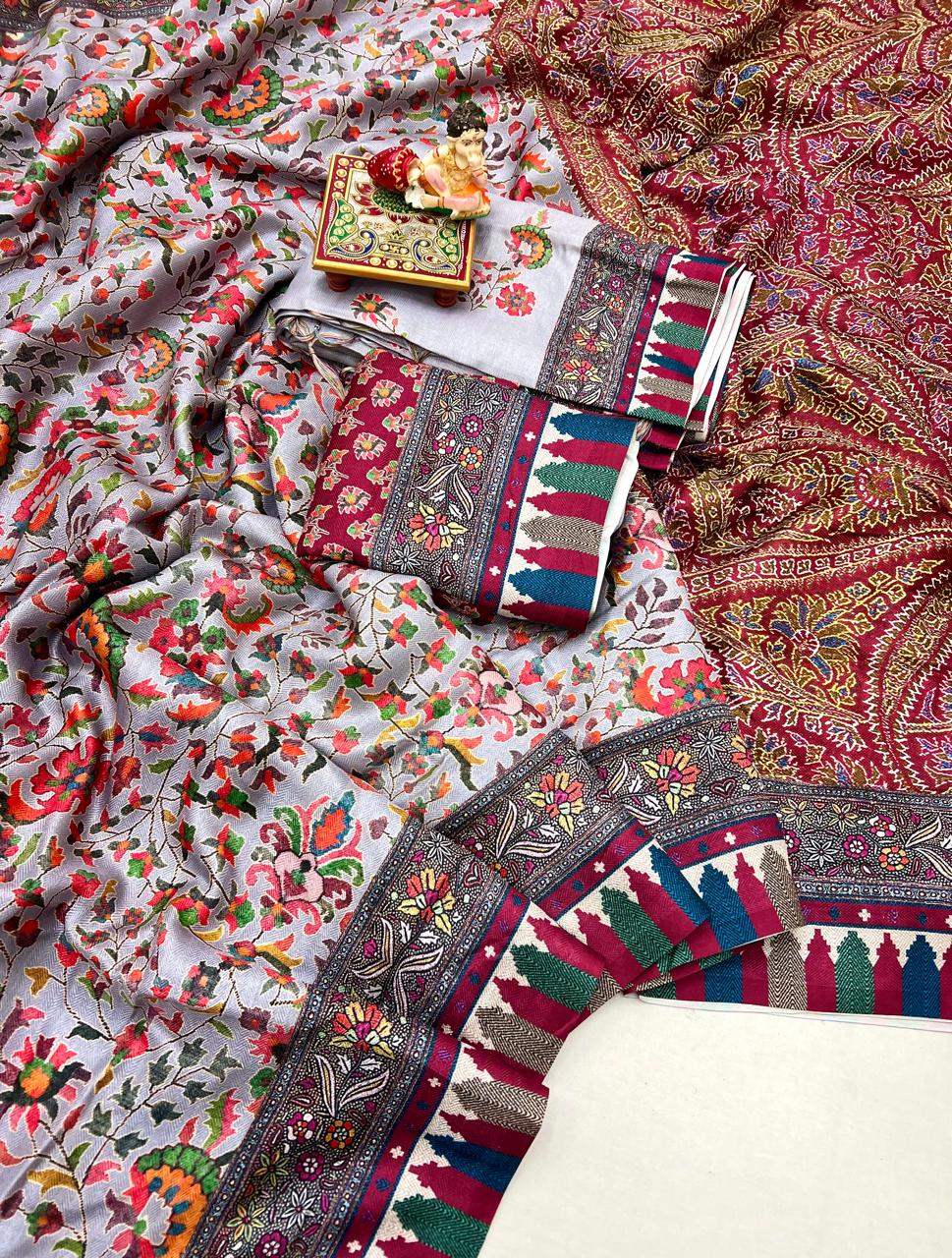
Start with a well-fitted petticoat or saree shapewear that matches the saree rather than the skin. Tuck the saree firmly at the natural waist, make five to seven front pleats of equal width and secure the pleats with a discreet safety pin before arranging the pallu. A pallu measuring approximately 2.2 to 2.5 metres usually gives enough coverage for a shoulder drape and a light head covering.
For a temple visit or family ritual, bring the pallu from the left shoulder across the upper back and place its front edge over the head. Pin the fabric near the crown and at the shoulder so that it doesn't slip during pranam or while moving through a crowd. Leave the face unobstructed and avoid excessive fabric around the neck, particularly when the saree is made from Banarasi silk or soft pashmina silk.
A seedha-pallu variation can create a more formal ceremonial finish, but the extra front width needs careful pinning. This arrangement displays a woven border clearly and works especially well with Maroon Banarasi Soft Silk Saree with Golden Zari Border. A shorter pallu is safer for outdoor celebrations, where loose fabric can catch on chairs, railings or uneven ground.
Garhwali Saree Styling Ideas for blouses and jewellery
A high-coverage blouse, controlled jewellery and one deliberate head or hair detail complete a convincing Pahadi-inspired saree outfit. The blouse should support the saree's colour contrast while avoiding heavy embellishment that competes with regional ornaments.
Garhwali Saree Styling Ideas for blouse combinations
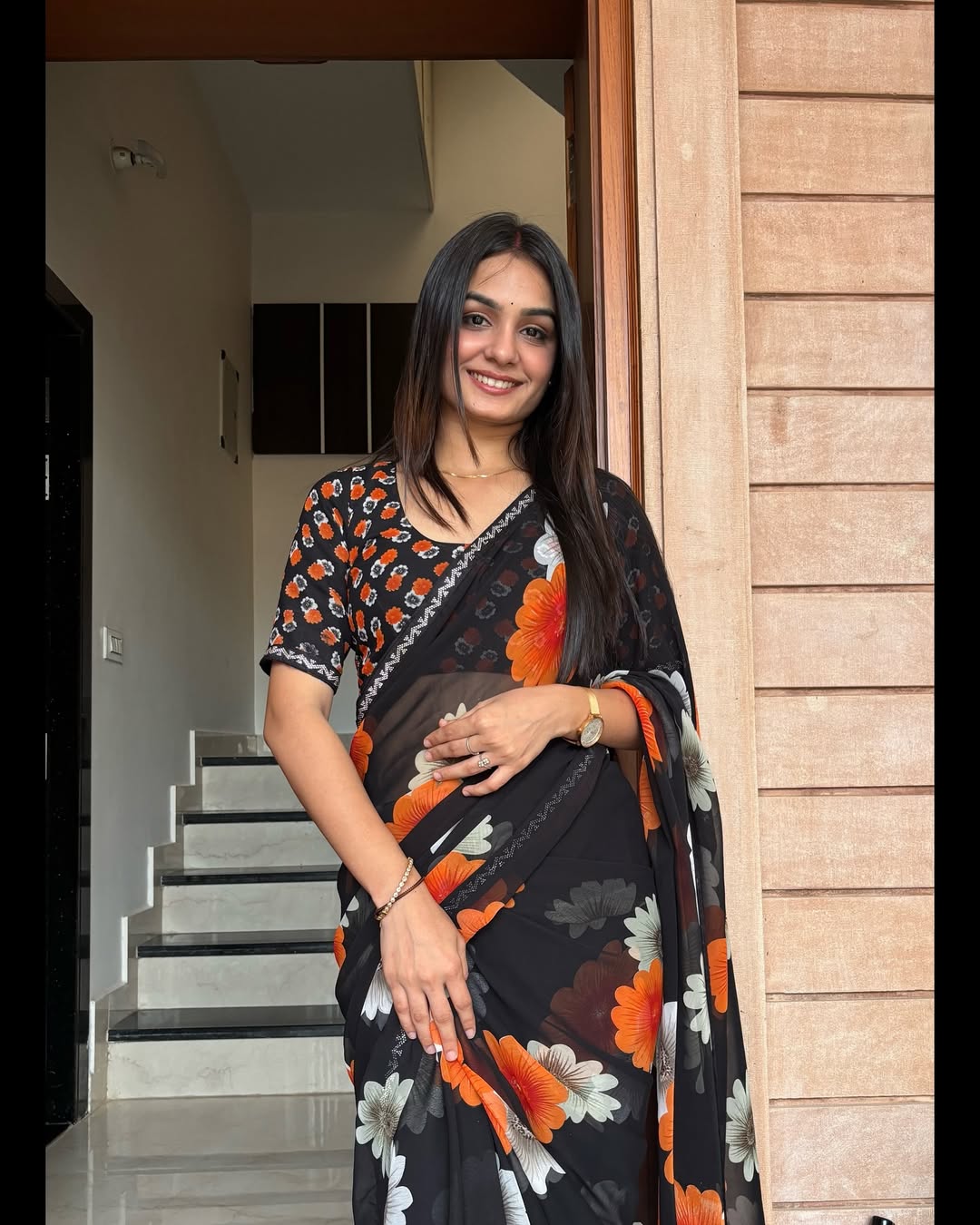
Pair a red saree with mustard, turmeric yellow, antique gold or deep green. Pair a green saree with red, maroon or cream. Pair a teal saree with rust, yellow or muted pink. A plain blouse in one of these colours often looks more composed than a heavily embroidered blouse because the saree border and jewellery remain legible.
For a traditional impression, consider three-quarter sleeves, a close round neckline or a modest square neckline. Cotton-silk, raw silk and lined brocade provide enough structure for a pallu placed over the head. A blouse with a back tie should be checked before the event because the tie can press uncomfortably when the pallu is pinned near the shoulder.
Garhwali Saree Styling Ideas for jewellery and hair
Silver-toned jewellery, a large nose ring, earrings, a necklace and red or green glass bangles can establish a strong Uttarakhand reference. Traditional ornaments differ across Garhwal and Kumaon, so use authentic regional jewellery where possible and describe a contemporary combination as Pahadi-inspired rather than universally Garhwali.
A nath should be proportionate to the rest of the outfit and secured with its chain before you leave home. Silver jhumkas, a hansuli-style collar necklace or layered beads can work with a plain blouse. Avoid wearing a large nath, oversized necklace, waist belt and elaborate maang tikka together unless the saree and venue are exceptionally simple.
A centre-parted braid, low bun or braid decorated with red flowers keeps the head covering stable. A small red bindi and vermilion-toned lipstick provide stronger cultural colour cues than a full set of glitter makeup. For a winter festival, a neatly wrapped woollen shawl in cream, rust or charcoal is more practical than a delicate sheer stole.
Garhwali Saree Styling Ideas for cold weather and outdoor movement
Layering the blouse, choosing a manageable saree weight and wearing secure shoes make a Pahadi festive saree comfortable in changing mountain weather. Uttarakhand evenings can become cold quickly, while stone paths, temple steps and outdoor courtyards demand better stability than ordinary indoor functions.
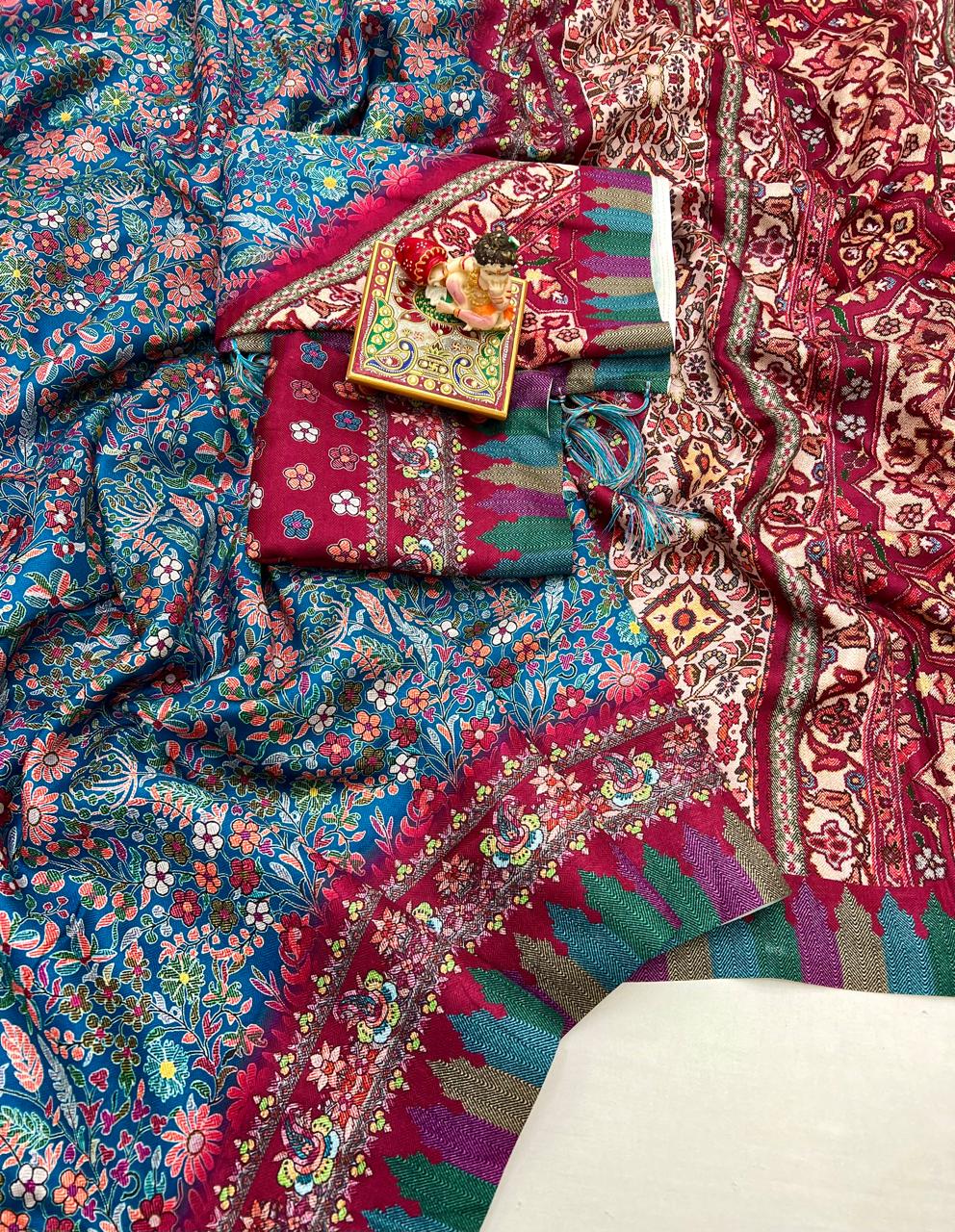
For mild weather, Red Floral Linen Cotton Saree with Beautiful Printed Border gives a lighter option for daytime gatherings. Wear it with a full-sleeve cotton blouse, a narrow belt hidden under the pallu and flat juttis with a textured sole. Linen cotton creases more readily than silk, so steam the saree, fold the pleats neatly and pin them before travelling.
Grey Tissue Handloom Saree With Floral Design - Varnavi can serve as a softer neutral base for a red blouse, yellow shawl and silver jewellery. Tissue fabric catches light, so keep the accessories matte or lightly polished rather than adding excessive sequins. A neutral saree is particularly useful when the head covering, jewellery or floral hair detail is intended to be the main regional reference.
Wear thermal camisoles, a warm petticoat and a short fitted jacket under or over the saree when temperatures are low. A long open cardigan can catch on the pleats, whereas a cropped wool jacket or tailored shawl stays closer to the body. Test the complete combination at home for at least 15 minutes, including stairs and sitting on the floor, before the event.
Garhwali Saree Styling Ideas for a culturally considerate outfit
A culturally considerate look uses accurate language, avoids mixing unrelated regional symbols and gives priority to real garments and ornaments over decorative stereotypes. Calling an outfit "Garhwali-inspired" is more accurate than presenting a contemporary saree combination as a definitive traditional uniform.
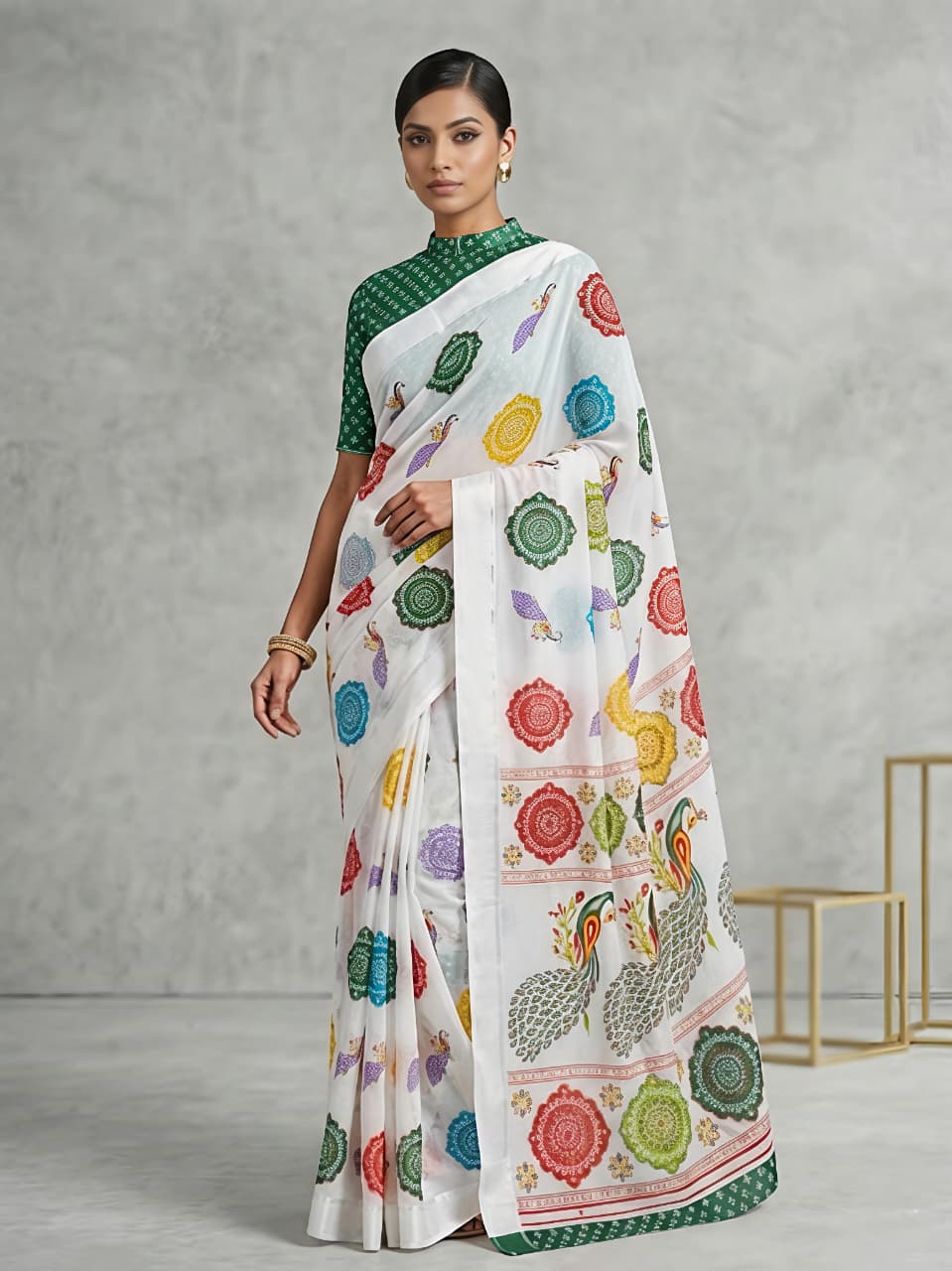
don't combine a Kumaoni Pichora, a Garhwali nath, Bengali draping and South Indian temple jewellery while describing the result as one precise regional style. Each element can be beautiful, but the combination represents a pan-Indian festive interpretation. If the event has a community-specific dress expectation, ask a family member or local wearer which colours, ornaments and head coverings are appropriate.
Use motifs and colours with context. Red and yellow can suggest Pichora-inspired styling, but colour alone doesn't reproduce a Pichora's construction, symbolism or ceremonial role. A handloom saree with a restrained border, regional jewellery and a head-covering pallu can communicate respect more effectively than a mass of unrelated decorative details.
Budget also affects styling choices. The collections Sarees from Rs 1000 to Rs 1500 and Sarees Under 20% Off can help when a new saree is needed for a single festival, while Sarees Under 10% Off, Sarees Flat 60% Off and Sarees Flat 50% Off offer other price points to compare. Check fabric composition, saree length, blouse-piece availability and return conditions before choosing a discounted garment.
Garhwali Saree Styling Ideas: A practical checklist before the festival
A complete festival check should confirm the drape, blouse fit, pins, footwear, weather layers and cultural references at least one day before the event. Small tests prevent most saree problems, especially when the celebration involves travel or outdoor walking.
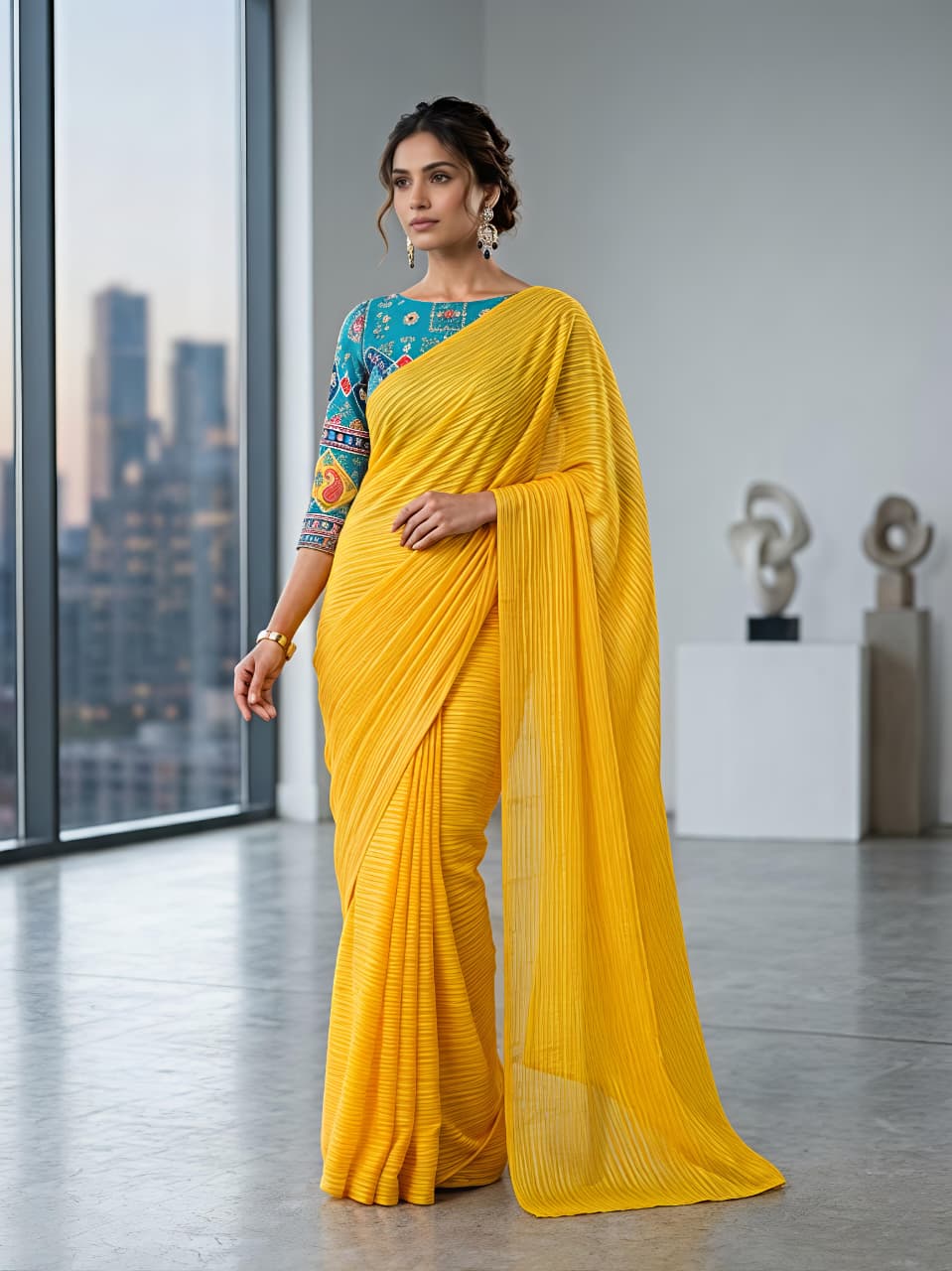
- Check the fit: Wear the blouse for 20 minutes and raise both arms to ensure the sleeves and armholes don't restrict movement.
- Secure the drape: Use safety pins at the waist, pleats, shoulder and head covering, while placing the sharp ends away from the skin.
- Measure the pallu: Confirm that the pallu reaches the desired head and shoulder position without dragging near the feet.
- Test the footwear: Walk on stairs and uneven flooring in the chosen juttis, sandals or closed shoes before leaving home.
- Prepare a repair kit: Carry three spare safety pins, a small needle, matching thread, fashion tape and a compact comb.
- Plan the layer: Choose a shawl or short jacket that doesn't hide the border or pull the pallu backward.
- Keep jewellery balanced: Select one prominent piece, such as a nath or hansuli, and let smaller pieces support it.
After wearing the saree, sit on a chair and on the floor, climb a few steps and walk for five minutes. Those simple tests reveal whether the pleats spread, the pallu slips or the blouse pinches. A beautiful festival outfit should allow respectful participation rather than require constant adjustment.
Common Questions About Garhwali Saree Styling for Festivals
How can I create a Garhwali saree look without wearing traditional Garhwali dress?
Use a saree as the base and add Pahadi-inspired red, yellow or green accents, a pallu over the head, silver-toned jewellery and a practical shawl. Describe the result as Garhwali-inspired unless the complete outfit follows a specific local tradition.
Which saree colours work best for a Pahadi festive look?
Red, turmeric yellow, deep green, maroon and teal work especially well for a Pahadi-inspired festive look. Red with yellow gives a bright ceremonial effect, while maroon or bottle green creates a more formal evening combination.
How should I drape a saree over my head for a temple visit?
Use a secure Nivi drape, pin the pleats at the waist and shoulder, then bring the pallu over the head with the face unobstructed. Keep the pallu moderately short and test the arrangement while walking and sitting before the ceremony.
What jewellery suits a Garhwali-inspired saree outfit?
Silver-toned earrings, a nath, glass bangles and a hansuli-style necklace suit a Garhwali-inspired saree outfit. Choose one prominent ornament and keep the remaining jewellery restrained so the outfit does not look overloaded.
How can I style a saree for a cold Uttarakhand festival?
Wear a full-sleeve lined blouse, a warm petticoat, a short fitted jacket or a neatly wrapped woollen shawl, and secure footwear with a textured sole. Test every layer with the saree because bulky outerwear can pull the pallu or disturb the pleats.
Is Pichora the same as a Garhwali saree?
No, Pichora is strongly associated with Kumaoni ceremonial dressing and is not the same as a Garhwali saree. Red-and-yellow Pichora-inspired colours can inform a contemporary Pahadi look, but Garhwal and Kumaon have distinct traditions.





