

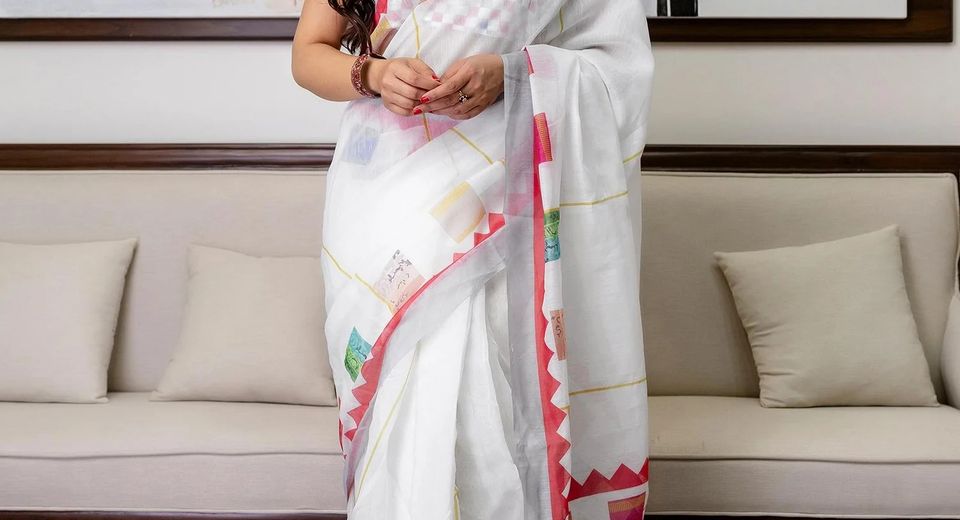
Gangaur Festival Fashion: Traditional Rajasthani Sarees and Outfits brings together devotion, colour and regional dress traditions during one of Rajasthan's most recognisable spring celebrations. Women traditionally honour Gauri, a form of Parvati associated with marriage, prosperity and marital well-being, while unmarried women may pray for a suitable spouse. A saree can create an elegant Gangaur look, although the time-honoured Rajasthani visible language also includes a ghagra, kurti and odhni. The most successful outfit balances cultural cues with dependable comfort for puja, visiting relatives and outdoor processions.
Gangaur Festival Fashion: Classic Rajasthani Sarees and Outfits and Their Cultural Meaning
Gangaur Festival Fashion traditionally expresses devotion to Gauri, regional identity and the arrival of spring through bright clothing, adornment and carefully observed rituals. Gangaur begins after Holi and is celebrated during the Chaitra month of the Hindu calendar, generally in March or April, with the final day occurring on Chaitra Shukla Tritiya.
The word Gangaur combines Gana, a name associated with Shiva, and Gaur, referring to Gauri or Parvati. In Rajasthan, images of Shiva and Gauri are decorated and carried in processions, with local customs varying between cities and communities. Jaipur, Udaipur, Jodhpur and other regions may differ in music, food, procession style and dress details.
Heritage Rajasthani dress often uses a long ghagra, a fitted or semi-fitted choli and an odhni covering the head or shoulders. Leheriya and bandhani textiles are strongly associated with Rajasthan, while gota patti, mirror work, colourful borders and silver jewellery add festive character. A saree is a graceful adaptation for women who prefer a familiar silhouette, live outside Rajasthan or need an outfit that moves easily between a temple visit and a family gathering.
Gangaur clothing should be approached with respect rather than treated as a costume. A saree in a vivid colour, an odhni-inspired pallu and one regional jewellery detail can acknowledge Rajasthani style without combining unrelated symbols or making claims about a single dress code for every community.
Gangaur Festival Fashion: Heritage Rajasthani Sarees and Outfits in Seasonal Colours
Rani pink, red, saffron, yellow, orange, green and fuchsia suit a Gangaur celebration because these shades reflect springtime festivity and the vivid palette associated with Rajasthani clothing. The best colour also depends on the ceremony, time of day, complexion and the amount of jewellery you plan to wear.
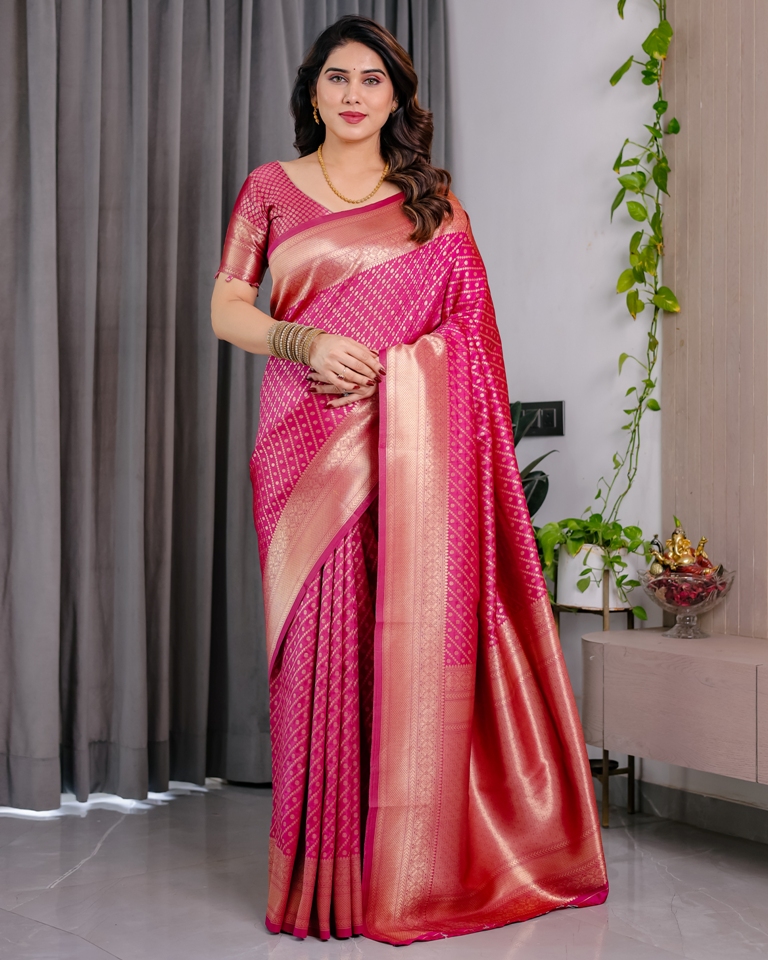
Red and rani pink create a heritage festive impression, especially with antique-gold zari or a warm gold blouse. Yellow and saffron feel particularly appropriate for a daytime gathering and pair well with green, pink or red accessories. Green can provide a fresh contrast to gold borders, while deep maroon creates a more formal evening look without losing its ethnic character.
Colour symbolism should not become a rigid rule. Gangaur clothing differs by community, family and location, so personal preference has a legitimate place in the outfit. A pastel saree with restrained zari can look more refined for a small home puja than a heavily embellished drape, while a saturated red or magenta saree may suit a public procession or larger family celebration.
An useful styling formula is one dominant colour, one metallic accent and one small contrast. A red saree with antique-gold jewellery and green glass bangles feels festive without becoming visually crowded. A pink saree with a yellow blouse and gold earrings creates a lighter spring palette suitable for a daytime festival celebration.
Gangaur Festival Fashion: Time-honoured Rajasthani Sarees and Outfits for Choosing a Saree
Choose a Gangaur saree according to the ceremony length, weather, walking required and the visual weight of the blouse and jewellery. Breathable cotton works well for daytime rituals, while Banarasi silk and tissue sarees suit evening celebrations or more formal family events.
Gangaur Festival Fashion: Heritage Rajasthani Sarees and Outfits in Cotton
Handloom cotton is a sensible choice for several hours of puja, visiting or standing outdoors because Rajasthan can be warm during the Gangaur season. Pastel Floral Tissue Handloom Cotton Saree with Zari Weaves combines a soft spring palette with a festive metallic detail, making it useful when you want a lighter interpretation of Gangaur dressing.
Multicolor Linen Cotton Floral Saree with Blouse Online offers another practical direction for a daytime festival celebration. Linen-cotton blends usually feel less heavy than dense silk, and a floral pattern can echo the seasonal mood without relying on extensive embellishment. Use a cotton lining in the blouse and secure the pleats with discreet pins if you expect to walk or sit on the floor.
Gangaur Festival Fashion: Heritage Rajasthani Sarees and Outfits in Silk
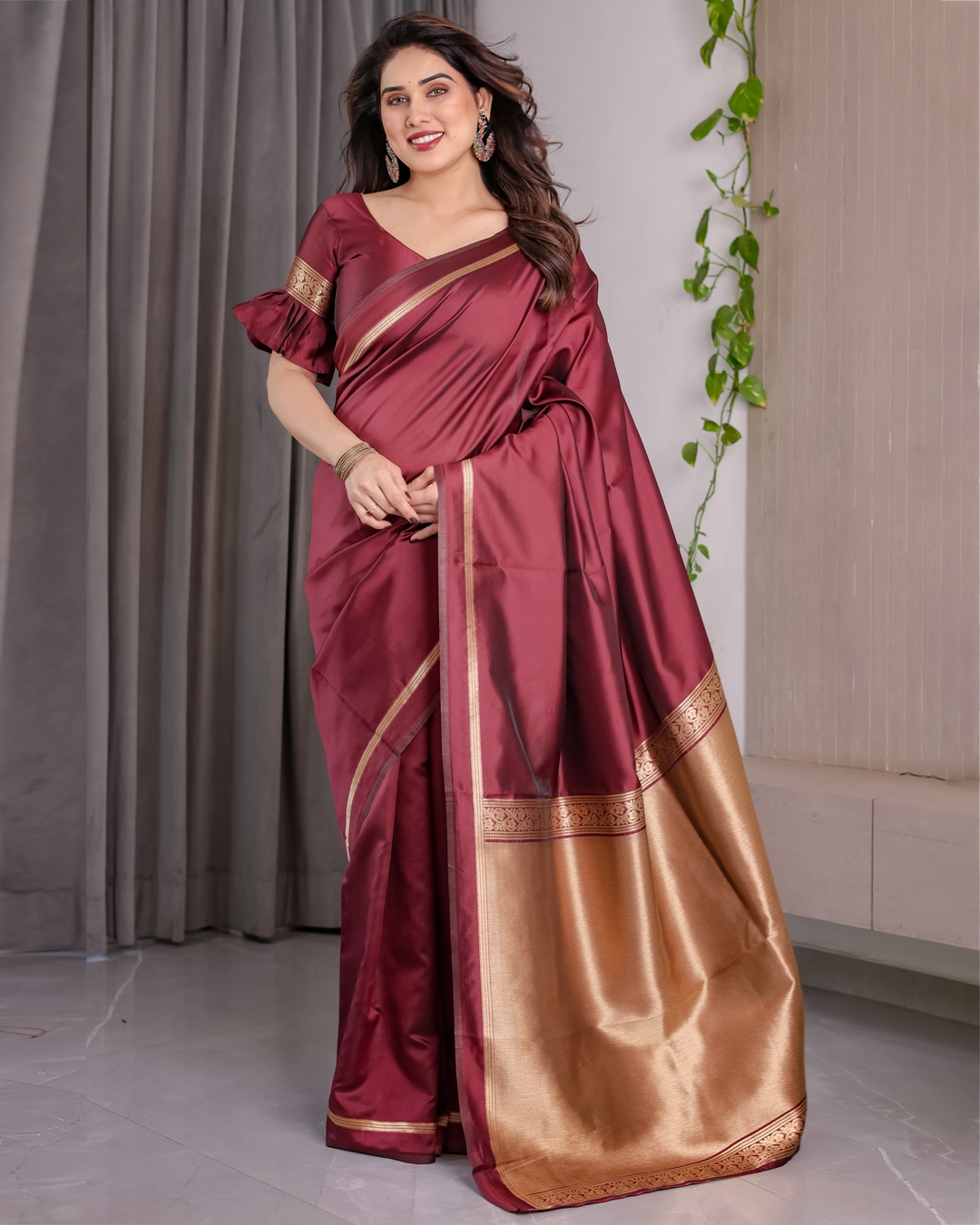
Banarasi silk adds structure, shine and ceremonial presence to an evening Gangaur outfit. Maroon Banarasi Soft Silk Saree with Golden Zari Border creates a rich base for kundan, polki-style or antique-gold jewellery, while Red Banarasi Soft Silk Saree with Jacquard Zari Border gives a brighter and more classic festive effect.
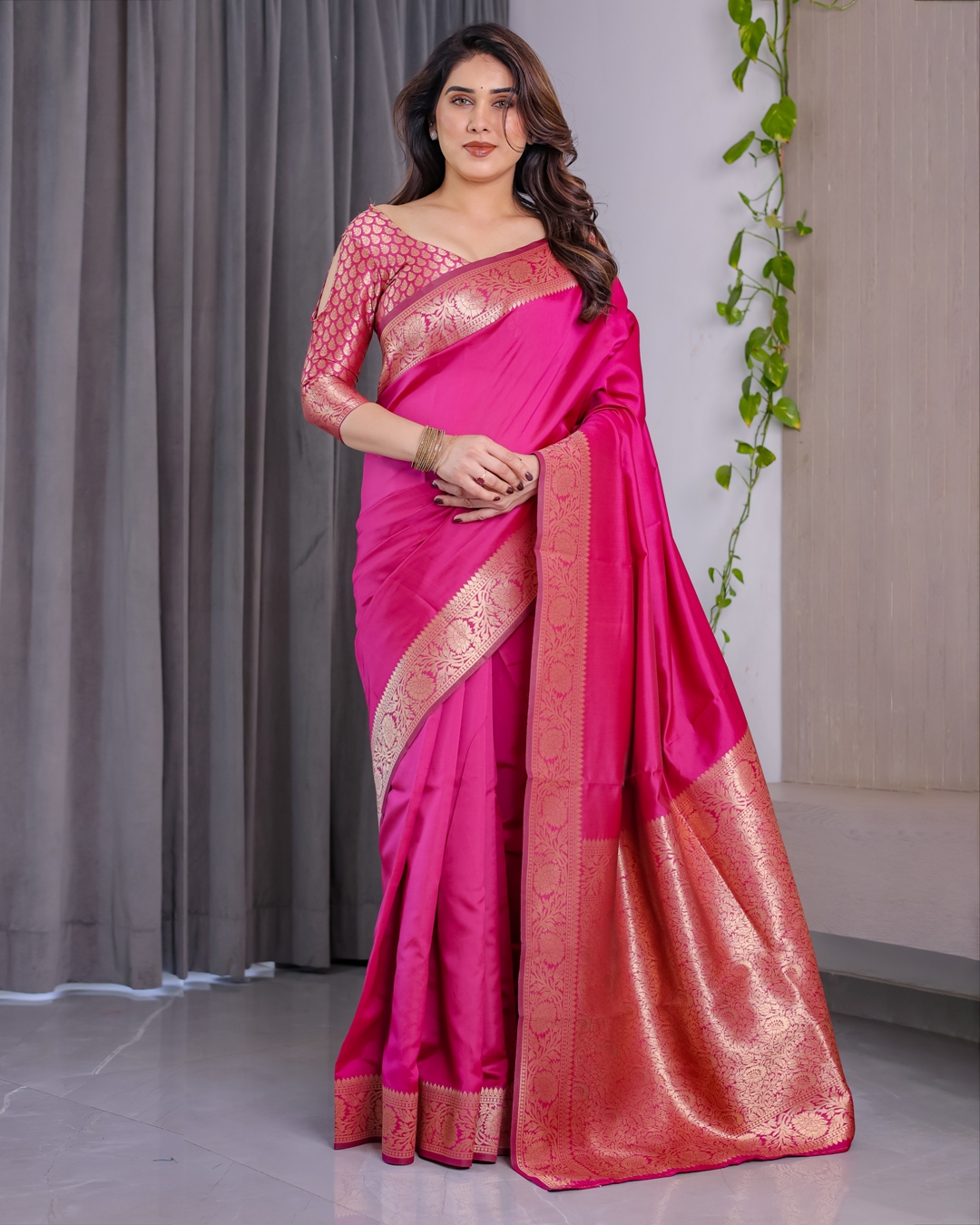
Buy Rani Pink Banarasi Silk Saree with Jacquard Zari Border is useful when you want a distinctly celebratory pink without adding multiple contrasting colours. A plain or lightly textured blouse keeps the jacquard border visible. Magenta Banarasi Soft Silk Zari Saree | Varnavi Online gives a stronger jewel-toned option for a larger evening gathering; pair it with a muted gold blouse rather than another bright shade.
Gangaur Festival Fashion: Classic Rajasthani Sarees and Outfits in Tissue
Tissue fabric gives a saree a luminous surface, but tissue doesn't automatically mean heavy or formal. Cream Pink Tissue Handloom Cotton Saree with Zari provides a gentle combination for a home puja, afternoon lunch or intimate family celebration. Keep the jewellery delicate if the saree already catches the light.
Check the saree's transparency before wearing it to a public ceremony. A full-length petticoat in a close colour, a properly lined blouse and a secure waist tuck improve coverage and prevent the fabric from shifting during movement.
Gangaur Festival Fashion: Time-honoured Rajasthani Sarees and Outfits with an Odhni-Inspired Drape
A saree reflects Rajasthani dress most naturally through colour, border, odhni-inspired styling and regional accessories rather than by combining every recognisable motif at once. One or two considered references usually look more authentic and wearable than a head-to-toe collection of mirrors, tassels, bangles and elaborate embroidery.
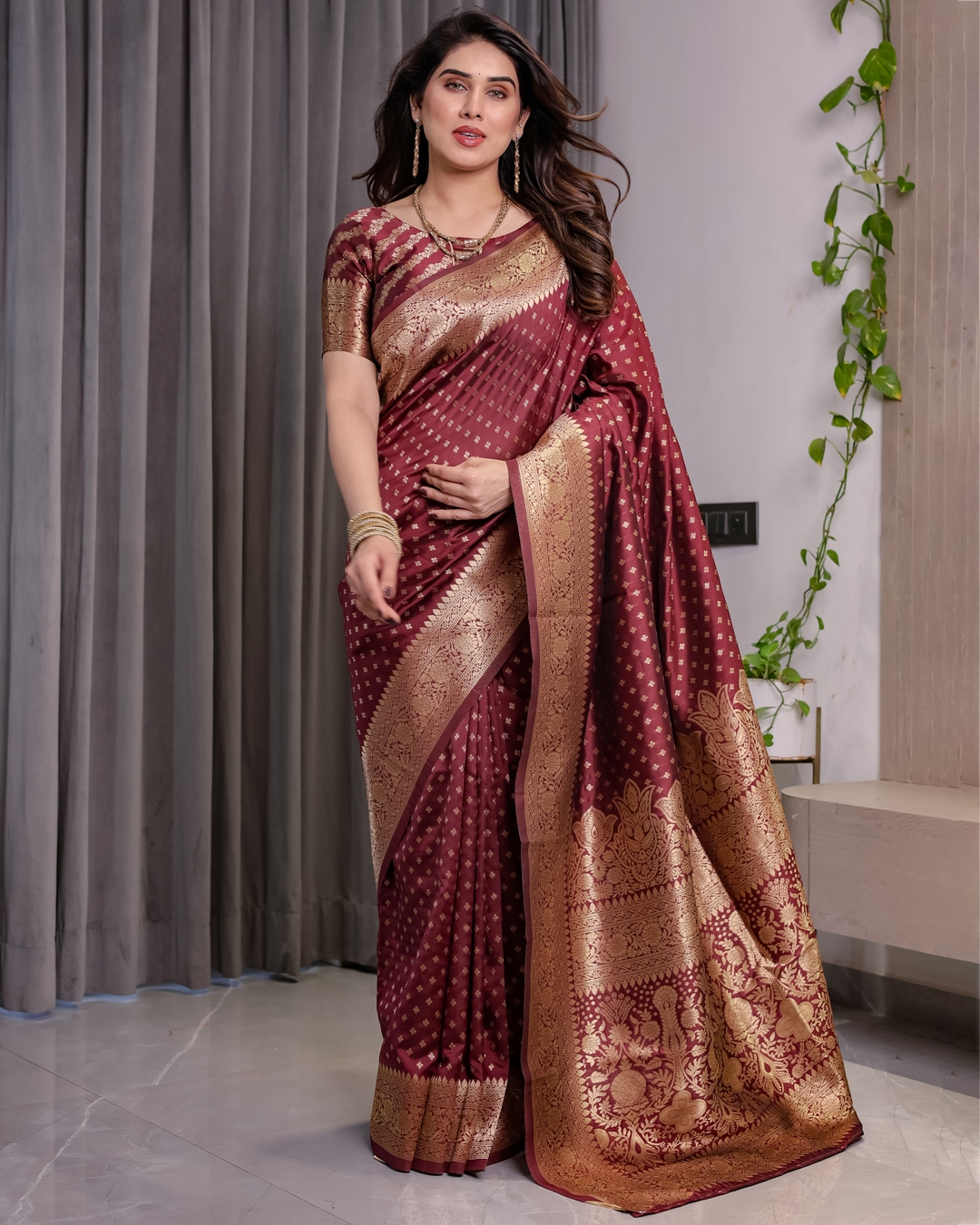
Try a pallu drape that crosses the front of the shoulder and comes lightly over the head, inspired by the protective and graceful role of the odhni. Pin the pallu near the crown or behind the shoulder so it stays secure during puja. The drape should not obscure your face, pull at the neck or make it difficult to move around a temple or procession.
A broad zari border can supply the required festive finish without additional surface work. A bandhani-inspired blouse, a gota-edged potli or a pair of colourful glass bangles can provide a smaller Rajasthani reference. Leheriya or bandhani fabric is best introduced through one accessory or a blouse panel when the saree itself already has a strong pattern.
For a particularly time-honoured silhouette, wear a saree with an odhni-style pallu and a fitted blouse with elbow-length sleeves. A high-back blouse can provide support for heavier Banarasi silk, while cotton sleeves improve comfort in warm weather. Avoid overly long petticoats, loose sandal straps and unfastened tassels if the celebration includes walking.
Gangaur Festival Fashion: Classic Rajasthani Sarees and Outfits with Jewellery
Gold-toned jewellery, glass bangles, jhumkas and a small bindi complete a Gangaur saree without competing with its regional colour palette. Choose jewellery weight according to the saree: delicate pieces suit cotton and tissue, while Banarasi silk can carry a heavier necklace or a wider pair of earrings.
Rajasthani-inspired options include borla-style maang tikka, kundan details, lac bangles, meenakari accents, silver hansli necklaces and colourful beaded ornaments. Regional jewellery differs considerably, so wearing one recognisable piece is more thoughtful than presenting an inaccurate combination as a universal Rajasthani set. A borla is particularly associated with Rajasthan, but it's optional rather than mandatory.
Match the blouse to the saree's strongest feature. A plain pink, maroon, red, mustard or green blouse can calm a zari border, while a lightly printed blouse can enliven a solid cotton saree. A blouse with a secure back closure, breathable lining and comfortable armholes matters more than a dramatic neckline when you'll participate in rituals.
Pink Georgette Sarees can help create a softer, flowing look, while Red Banarasi Silk Sarees for Weddings Under 1100 may offer a budget-conscious way to build a red festive wardrobe beyond Gangaur. Party Wear Sarees can be useful for evening styling, but inspect the fabric and embellishment before choosing one for a long daytime ceremony.
Gangaur Festival Fashion: Time-honoured Rajasthani Sarees and Outfits for Different Budgets
You can style Gangaur Festival Fashion at several price points by prioritising fabric comfort, one strong border and reusable accessories rather than buying a heavily embellished complete look. A saree that works for puja, weddings and family dinners brings better value than an outfit designed for one photograph.

For a modest budget, choose a handloom cotton saree, a ready-made blouse or a well-fitted cotton blouse, glass bangles and one pair of gold-tone earrings. Pastel Floral Tissue Handloom Cotton Saree with Zari Weaves or Cream Pink Tissue Handloom Cotton Saree with Zari can create a festive appearance without the weight or maintenance of dense silk.
For a mid-range wardrobe, invest in one Banarasi soft silk saree in maroon, red or rani pink and alter the styling through different blouses. The same saree can move from Gangaur to Diwali, a wedding reception or a family anniversary when the jewellery and drape change.
Silk Sarees Under 3000 With Discount may be relevant when you want a formal fabric within a controlled budget, but check the fibre composition, border finish, blouse-piece details and care instructions before purchasing. Gray Color Sarees Under 1000 can work for a quieter contemporary interpretation when styled with pink, red or gold accessories, although brighter shades generally create a more recognisable Gangaur mood.
Gangaur Festival Fashion: Traditional Rajasthani Sarees and Outfits for Comfort and Care
Comfort depends on correct fit, secure draping and fabric-appropriate underlayers as much as on the saree itself. Wear the blouse for at least 20 minutes before the festival to check shoulder movement, armhole pressure and the position of the hooks.

Use a petticoat with a firm but comfortable drawstring or an adjustable waistband. Cotton sarees can usually be folded into crisp pleats, while slippery tissue may need extra safety pins hidden behind the waist tuck and pallu. A low, stable heel or embellished flat sandal is safer than a narrow high heel for processions and uneven streets.
Banarasi silk should be folded with the zari facing inward and stored in clean cotton rather than plastic for long periods. Air the saree occasionally, keep perfume away from zari and embroidery, and follow the care label before washing. Handloom cotton may tolerate gentler home care than silk, but colour bleeding should still be tested on an inconspicuous area.
Pack a small repair kit with two safety pins, a needle, matching thread, a spare bindi and a few hairpins. Gangaur celebrations may involve extended sitting, walking and repeated greetings, so practical preparation protects the outfit and lets you participate comfortably.
Gangaur Festival Fashion: Traditional Rajasthani Sarees and Outfits for a Complete Look
A complete Gangaur look needs a coordinated saree, blouse, drape, jewellery and footwear, with each element supporting the ceremony rather than competing for attention. Begin with the saree's colour and fabric, add one regional reference, then remove any accessory that makes movement difficult.
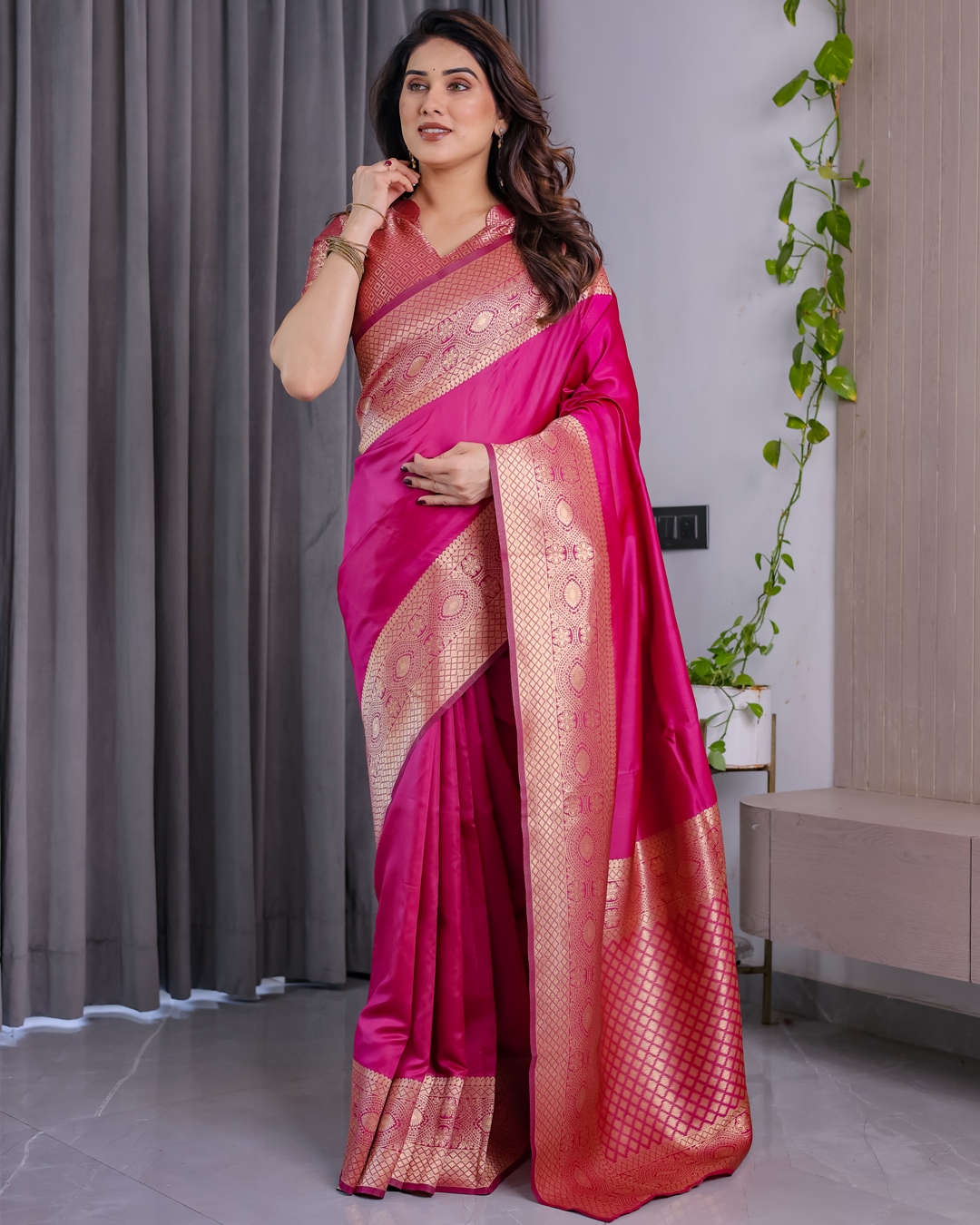
For a daytime cotton festival celebration, pair a pastel or multicolour saree with jhumkas, green or pink glass bangles, a small bindi and comfortable flats. For an evening silk look, use a red, maroon, rani pink or magenta Banarasi saree with a gold-tone blouse, one statement necklace and a secure odhni-inspired pallu.
Gangaur Festival Fashion works best when personal comfort and cultural awareness guide the styling. A thoughtfully chosen saree can honour the colour, craft and celebratory spirit of Rajasthan while remaining practical for the rituals and relationships that make Gangaur meaningful.
Common Questions About Gangaur Festival Fashion and Rajasthani Sarees
What should I wear for a Gangaur celebration?
A colourful saree with a secure pallu, comfortable blouse and traditional jewellery is suitable for many Gangaur celebrations. A ghagra, choli and odhni is a more conventionally Rajasthani option, while cotton suits daytime heat and Banarasi silk suits formal evening gatherings.
Which saree fabric is best for Gangaur?
Handloom cotton or linen-cotton is usually best for a warm daytime puja or procession because the fabric is lighter and breathable. Banarasi silk and tissue sarees work well for evening events when a more structured and luminous look is appropriate.
Which colours are traditionally associated with Gangaur outfits?
Red, rani pink, yellow, saffron, orange, green and magenta are strong choices for Gangaur outfits. Colour customs vary by family and region, so personal preference and the ceremony setting should also guide the selection.
Can I wear a saree instead of a traditional Rajasthani ghagra?
Yes, a saree is a practical and graceful alternative when you prefer its silhouette or already own suitable festive sarees. An odhni-inspired pallu, bright regional colours and one Rajasthani jewellery detail can connect the saree to the festival without imitating a complete ghagra outfit.
How do I keep a Gangaur saree comfortable during a procession?
Secure the pleats and pallu with discreet safety pins, wear a supportive blouse and choose flat or low-heeled footwear. A firm petticoat waistband, minimal loose tassels and a small repair kit can prevent common wardrobe problems during walking and outdoor rituals.
How should I accessorise a Rajasthani saree for Gangaur?
Jhumkas, glass or lac bangles, a small bindi and gold-tone jewellery create a suitable base for a Gangaur saree. A borla-style maang tikka, meenakari accent or silver hansli can add a regional note, but one or two statement pieces usually look more balanced than wearing every accessory together.





