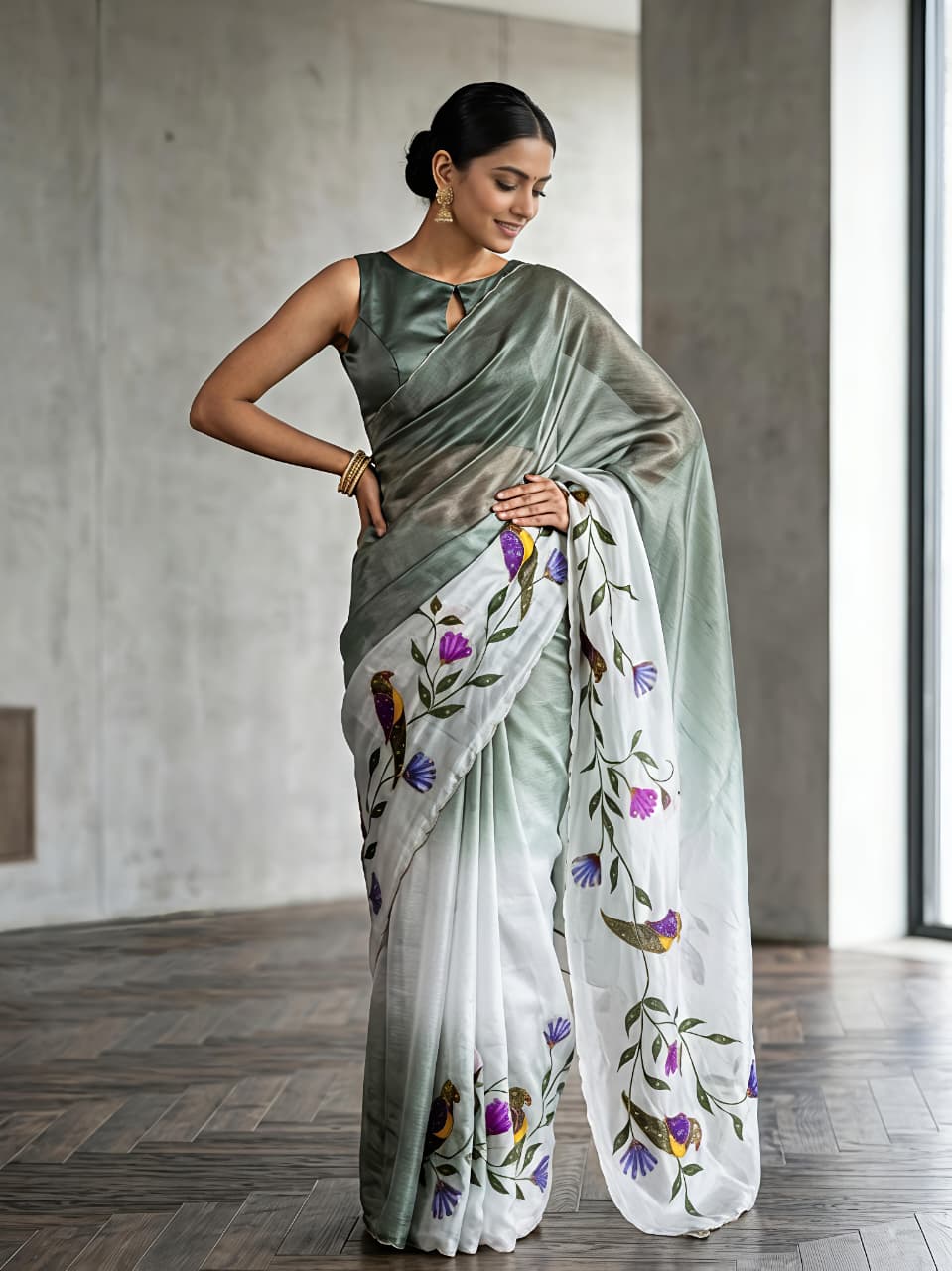
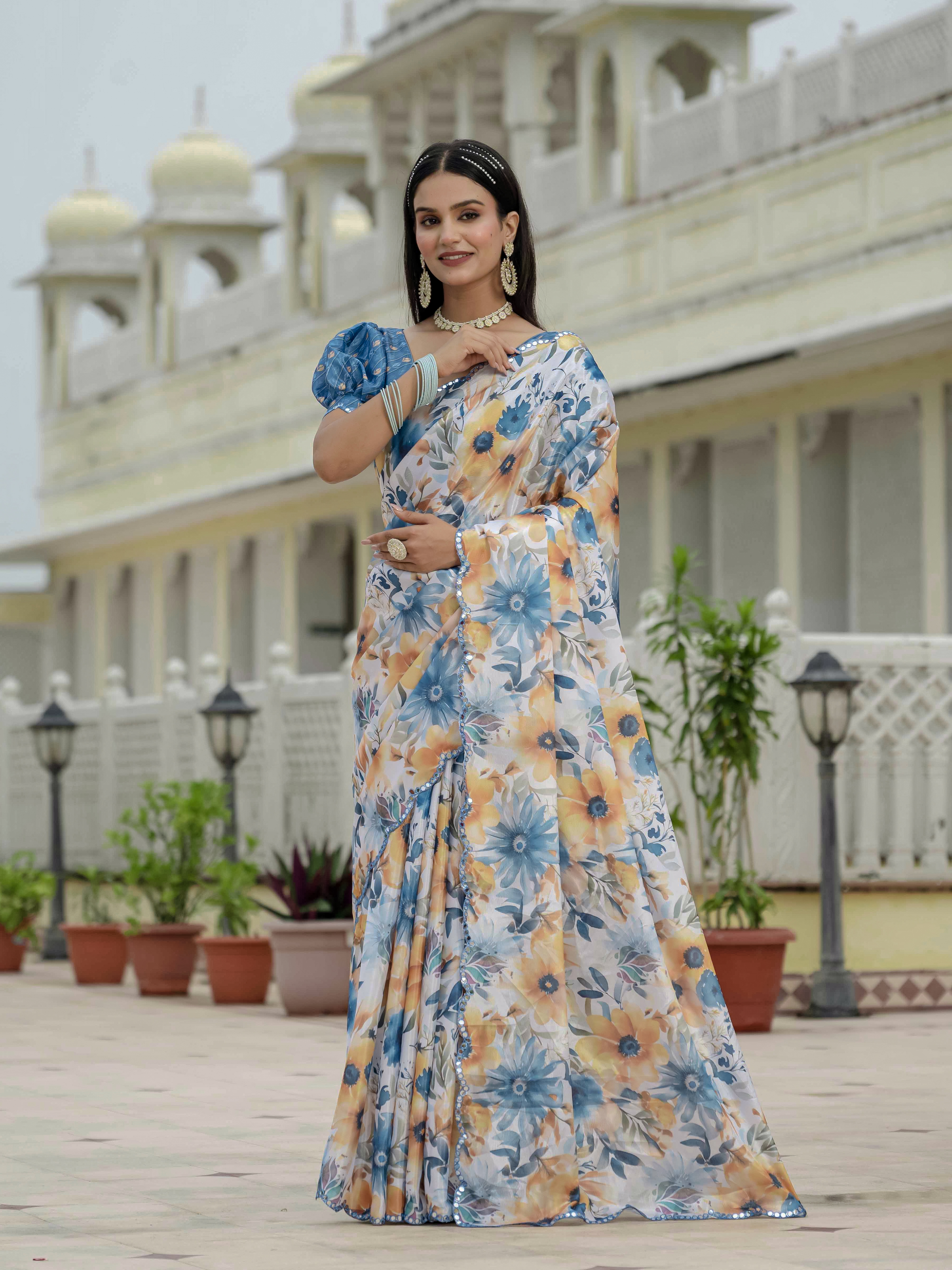
Ganesh Chaturthi Saree & Blouse Styling: Maharashtrian Traditional Fashion brings together regional drapes, meaningful colours, practical blouse details and jewellery that can withstand a busy day of puja, guests and family photographs. A successful festive outfit doesn't depend on wearing the heaviest saree available. The better approach is to match the saree structure, blouse fit, drape and accessories to the way you'll participate in the celebration.
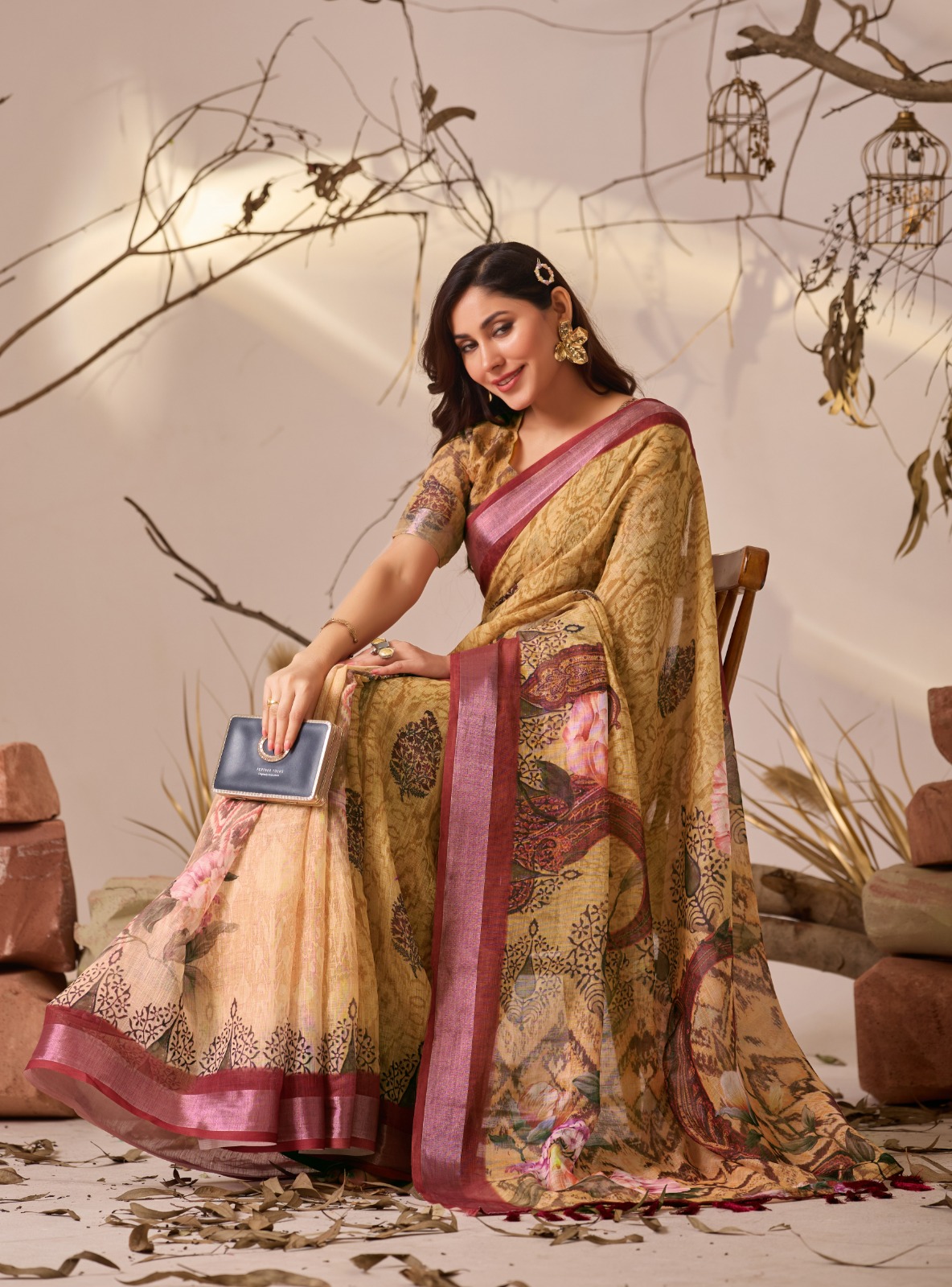
Maharashtrian dressing offers several distinct directions. A Nauvari saree creates freedom of movement through its dhoti-inspired construction, while a Paithani saree delivers a more formal silhouette. A silk saree with a zari border can suit an evening aarti, whereas a lighter Chanderi or cotton-silk saree may be more comfortable for visiting several homes. The most convincing look allows each element to support the others.
Ganesh Chaturthi Saree & Blouse Styling: What makes a look Maharashtrian?
A Maharashtrian Ganesh Chaturthi saree look becomes recognisably traditional through the combination of a regional drape, a structured blouse, culturally familiar jewellery and deliberate colour choices. No single garment makes an outfit Maharashtrian on its own.
The Nauvari saree is the strongest visual reference for a distinctly Maharashtrian appearance. The nine-yard saree passes between the legs and is tucked at the back, creating a trouser-like lower half that supports walking, sitting on the floor and performing household rituals. The style is often associated with the kashta or dhoti drape, although regional variations change the placement of pleats and the treatment of the pallu.
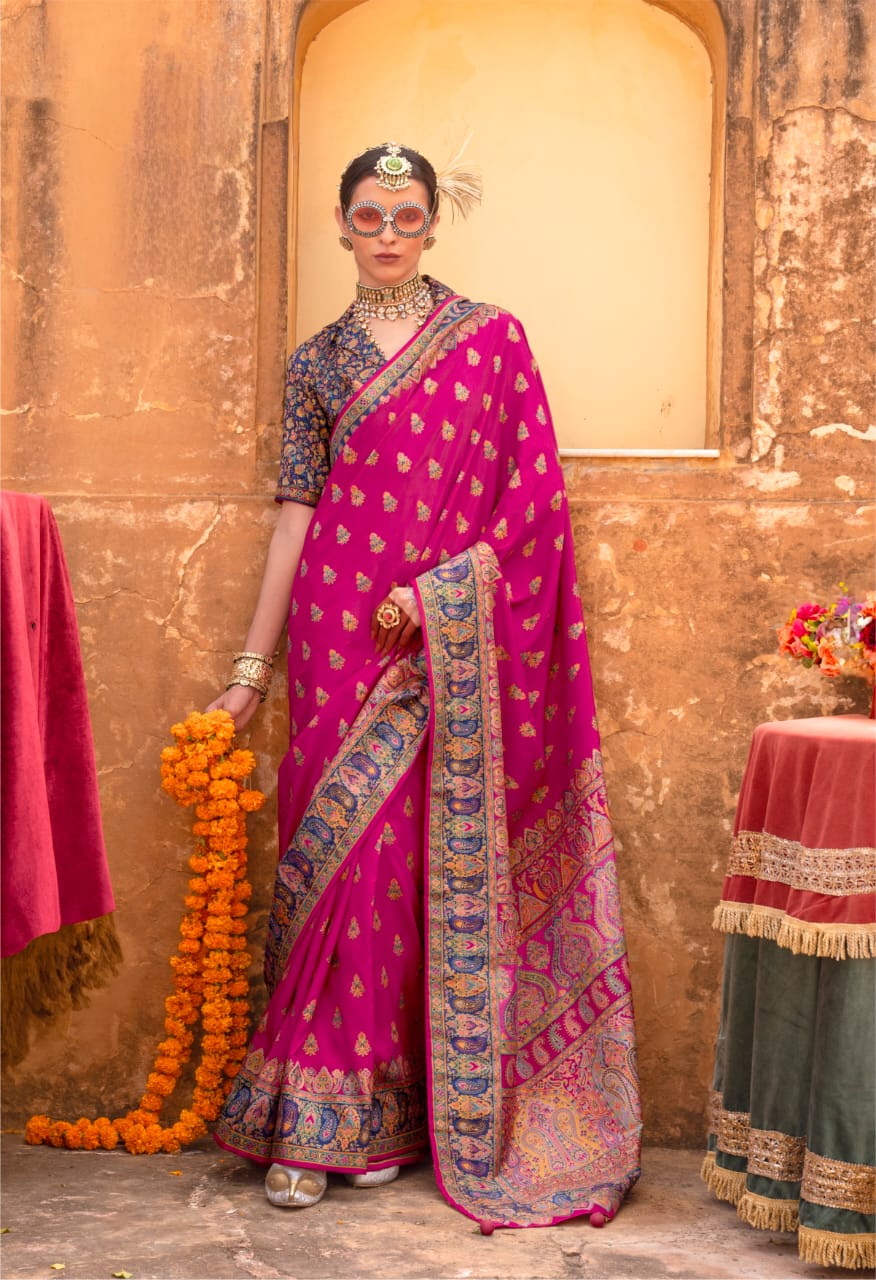
A more conventional saree can still carry Maharashtrian character when styled with a Paithani-inspired palette, a contrasting border, a fitted blouse and traditional accessories. Peacock motifs, lotus motifs, broad zari borders and a pallu with clear geometric or floral patterning are especially effective. A green saree with a purple border, a magenta saree with a green pallu or a deep blue saree with gold zari can create a festive appearance without excessive ornament.
The blouse should provide visual balance. A high round neck, elbow-length sleeves, a square back or a modest V-neck can look more rooted in traditional styling than a heavily cut contemporary design. Tailoring matters equally: a blouse that pulls across the bust or rides upward at the shoulder will distract from the saree and make ritual movement uncomfortable.
For a traditional wardrobe reference, the Nauvari Saree works as the most movement-friendly choice, while a Paithani Silk Saree creates a more formal festive impression. A Banarasi Silk Saree can also support Maharashtrian styling when its zari, blouse colour and jewellery are kept regionally coherent.
Ganesh Chaturthi Saree & Blouse Styling: Which drape should you choose?
Choose the saree drape according to your movement, the length of the celebration and the level of traditional formality you want. Nauvari works well for active participation, while a regular Nivi drape is easier for those unfamiliar with the nine-yard technique.
Ganesh Chaturthi Saree & Blouse Styling with a Nauvari drape
A Nauvari saree is practical when the day includes carrying puja plates, greeting visitors, climbing stairs or sitting cross-legged. The lower pleats should be secure between the legs, and the back tuck should be firm without pulling the fabric tightly. A cotton, cotton-silk or lightweight silk Nauvari is generally easier to manage than a very stiff brocade version.
Wear a fitted petticoat or suitable base layer that allows the central tuck to stay in place. Many wearers also prefer shorts or leggings underneath for additional security, particularly when the saree is sheer or when the day involves considerable movement. The pallu can be pleated over the shoulder or arranged in a looser regional style, but the shoulder anchoring should be tested before leaving home.
Ganesh Chaturthi Saree & Blouse Styling with a regular drape
A regular Nivi drape is the safer choice when you want the visual richness of Maharashtrian styling without learning a new draping method. Keep the pleats even, pin the pallu discreetly and use a firm waistband so the saree remains stable during long hours.
A seedha pallu can create a more formal appearance, especially with a Banarasi silk saree or a saree with a wide zari border. A standard shoulder pallu gives greater ease and usually works better for home visits. For a daytime Ganesh Chaturthi gathering, a six-yard Paithani-style saree with a neat shoulder pallu can look traditional while remaining relatively easy to maintain.
Ganesh Chaturthi Saree & Blouse Styling: Which blouse designs work best?
The most suitable blouse design combines a close fit, functional coverage and details that echo the saree border or regional jewellery. Traditional blouse styling doesn't require a plain shape; it requires controlled ornament and proportion.
A short-sleeved blouse with a round neck is a dependable choice for Paithani, silk and cotton-silk sarees. Elbow-length sleeves create a more formal line and provide enough surface for subtle piping, woven borders or small fabric-covered buttons. A square neckline can add definition without becoming visually modern, while a modest V-neck works well when the saree has a broad border and the jewellery needs room to show.
Contrast blouses are particularly effective in Maharashtrian styling. A green blouse with a magenta saree, a red blouse with a mustard saree or a purple blouse with a green Paithani palette can bring out the border and pallu. Repeat one saree colour in the blouse rather than introducing a completely unrelated shade. Repetition makes the outfit appear intentional.
Blouse fabric should respond to saree weight. A Banarasi silk saree usually pairs comfortably with raw silk, silk blend or another firm fabric that can hold a structured sleeve. A lightweight Chanderi saree benefits from a lighter blouse with enough lining to prevent transparency. A cotton saree can be paired with a cotton blouse, but pre-wash both fabrics if you expect different shrinkage rates.
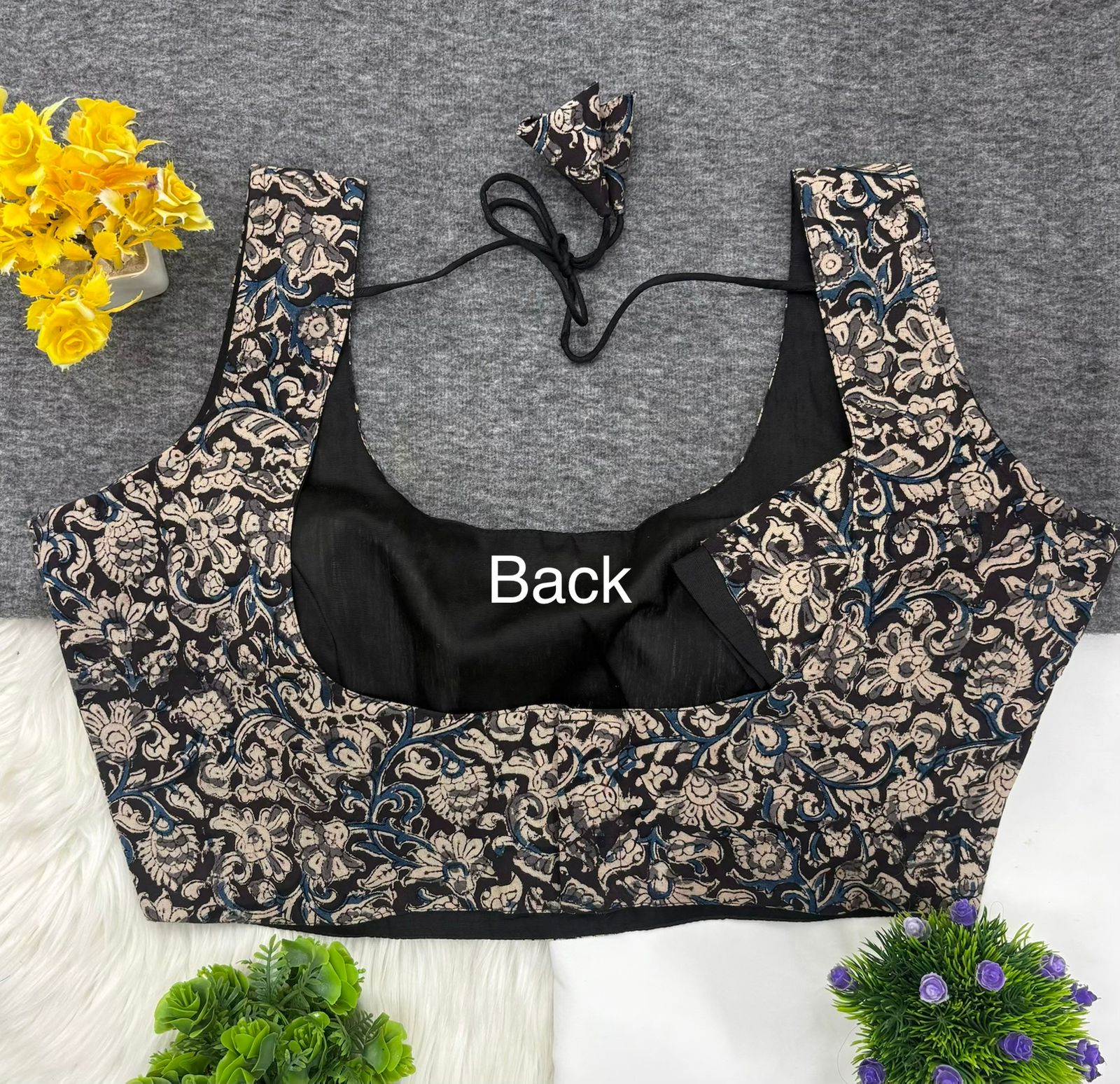
Back detailing should remain practical for a family ritual. A deep back with a fragile tie can shift while bending or sitting, whereas a medium back opening with hooks and a stable dori gives better support. If you choose tassels, keep them short enough that they don't catch on chairs, jewellery or the saree pleats.
A blouse from the Festive Blouse Collection can be adapted to a Maharashtrian saree when the sleeve length, neckline and border are proportionate to the drape. The Paithani Collection is a useful colour reference for pairing magenta, green, purple and gold without introducing unrelated shades.
Ganesh Chaturthi Saree & Blouse Styling: Which colours create a festive effect?
Rich green, red, yellow, magenta, orange, purple and royal blue are strong Ganesh Chaturthi colours because they reflect festive Maharashtrian palettes and photograph well beside flowers and décor.
Green has a particularly strong association with Maharashtrian festive dressing and pairs naturally with gold zari, pearl jewellery and a red or magenta blouse. Red and orange create warmth for morning puja, while yellow and mustard sit comfortably with marigold decorations. Purple and royal blue offer depth for evening celebrations, especially when the saree includes gold or antique zari.
Consider the room before choosing saturation. A heavily decorated mandap already contains red, orange and yellow, so a purple, bottle-green or deep blue saree can provide useful contrast. A simple home shrine can accommodate brighter colours without making the outfit feel overwhelming.
Metallic finish also changes the character of colour. Gold zari looks traditional with warm reds, greens and mustard. Silver zari can sharpen a blue, lavender or pink saree. Antique zari brings a softer, older-world appearance and often pairs well with oxidised silver jewellery. Match the blouse border to the dominant metallic finish where possible.
The Maharashtrian Saree Collection can guide colour coordination when you want a saree, blouse and pallu to look intentionally related. A bright saree doesn't need a heavily embellished blouse; a clean contrast and a repeated border colour often produce a more refined result.
Ganesh Chaturthi Saree & Blouse Styling: How should jewellery and hair be balanced?
Traditional Maharashtrian jewellery completes a Ganesh Chaturthi saree look through a nath, thushi, green glass bangles, gold-toned pieces and a gajra or neatly secured bun. Choose only the pieces that suit your face, neckline and level of activity.
The nath is one of the clearest regional accents, but comfort and scale matter. A large traditional nath can dominate a small face, while a smaller nath or nath-style clip provides the same visual reference with less weight. The thushi, a close-fitting layered necklace, works especially well with a round or square blouse neckline. A longer gold chain can be added when the saree has a plain pallu and the neck area needs length.
Green glass bangles are a familiar Maharashtrian choice and provide colour without competing with a detailed saree border. Stack bangles on both wrists only if you can comfortably handle puja items. Four to eight bangles per wrist can provide a visible accent while remaining easier to manage than a very heavy stack.
A low bun decorated with jasmine gajra keeps the neckline and pallu visible. A centre-parted bun with a small traditional hair accessory looks more formal, while a braid suits a softer daytime appearance. Secure the hairstyle with pins before placing the nath or earrings, because later adjustments can disturb the saree pallu.
Footwear should have a stable sole and a manageable heel. Embellished juttis, kolhapuris or low wedges are more useful than delicate high heels when the celebration includes standing, floor seating or outdoor walking. Test the footwear with the final saree length to prevent the hem from dragging.
Ganesh Chaturthi Saree & Blouse Styling: How can you stay comfortable?
Comfort improves when the blouse, base layer, pins and saree length are tested at least one day before Ganesh Chaturthi. A beautiful outfit becomes impractical if the neckline rubs, the sleeves restrict the arms or the pleats loosen after an hour.
Wear the finished blouse for 20 to 30 minutes at home and perform ordinary movements such as raising both arms, sitting on the floor, bending forward and reaching for a shelf. These tests reveal tight armholes, slipping straps and buttons that press into the skin. A tailor can usually correct sleeve width, hook placement and shoulder tension before the event.
Use safety pins sparingly but strategically. One pin at the shoulder and one near the waist can stabilise a regular pallu, while a concealed pin at the pleats can prevent uneven spreading. Pin through the inner layers rather than through a prominent zari line. For a delicate silk saree, use smaller pins with smooth closures.
Choose breathable lining for the blouse, particularly in humid weather. Cotton lining absorbs moisture more comfortably than polyester, although polyester may dry faster and hold shape well. The best choice depends on the saree weight, local climate and how many hours you expect to wear the blouse.
Carry two spare safety pins, a small packet of tissues and a compact sewing kit if you'll be away from home. A loose hook or displaced pleat can be corrected quickly when the essentials are available. Avoid placing a heavy phone, keys or wallet inside the blouse or pallu because uneven weight can distort the drape.
Ganesh Chaturthi Saree & Blouse Styling: What should you check before the festival?
Complete a full outfit trial before Ganesh Chaturthi so the saree, blouse, jewellery, footwear and hairstyle can be judged as one ensemble. A trial also reveals whether the selected drape suits the actual activities planned for the day.
- Check the blouse fit: Raise both arms, sit down and bend forward to confirm that the armholes, hooks and neckline remain comfortable.
- Check the saree length: Wear the intended footwear and make sure the hem stays approximately 1 to 2 centimetres above the floor rather than dragging.
- Check the pallu: Pin the shoulder and waist areas discreetly, then walk for five minutes to see whether the pleats separate.
- Check the jewellery: Wear the nath, necklace and bangles together for at least 15 minutes to identify pressure points or tangling.
- Check the care plan: Air the saree after wearing it, remove pins before folding and store silk away from direct sunlight and damp walls.
Silk sarees should be folded with the zari facing inward and refolded every few months to reduce permanent crease lines. Keep Banarasi silk and Paithani sarees in breathable cotton or muslin rather than sealed plastic for long-term storage. Dry-clean heavily embellished sarees through a specialist, while many cotton sarees can be gently hand-washed only when the care label permits it.
The strongest Ganesh Chaturthi outfit respects both tradition and real life. A Nauvari drape can honour Maharashtrian heritage while supporting movement, and a carefully tailored blouse can look festive without restricting the wearer. When colour, fabric, jewellery and comfort are planned together, the result feels personal, culturally grounded and suitable for every part of the celebration.
Common Questions About Ganesh Chaturthi Saree & Blouse Styling
Which saree is best for a Maharashtrian Ganesh Chaturthi look?
A Nauvari saree is the most distinctly Maharashtrian choice and works well for active participation because its dhoti-inspired drape allows movement. A Paithani saree or a six-yard silk saree is better suited to a formal puja, family gathering or evening celebration.
What blouse colour goes with a green Paithani saree?
A magenta, purple, red or gold blouse pairs effectively with a green Paithani saree. Repeat a colour from the saree border or pallu so the contrast looks deliberate rather than unrelated.
Can I wear a regular six-yard saree for Maharashtrian styling?
Yes, a regular six-yard saree can look Maharashtrian when paired with a traditional blouse, Paithani-inspired colours, a zari border, a nath, green bangles and a gajra. A seedha pallu can add formality, while a standard shoulder pallu is easier for movement.
How should I keep a Nauvari saree secure during Ganesh Chaturthi?
Secure the central tuck, back tuck and shoulder pallu before leaving home, and wear a comfortable base layer underneath. Walk, sit and bend during a trial fitting so loose pleats or uncomfortable tension can be corrected before the celebration.
Which jewellery suits a Maharashtrian saree and blouse?
A nath, thushi, green glass bangles, gold-toned earrings and jasmine gajra create a recognisable Maharashtrian combination. Choose smaller or lighter versions when you expect prolonged standing, floor seating or active participation in puja.
How should I store a Paithani or Banarasi silk saree after Ganesh Chaturthi?
Air the saree away from direct sunlight, remove all pins and fold the saree with the zari facing inward. Store the saree in breathable cotton or muslin and refold it every few months to reduce permanent creases.