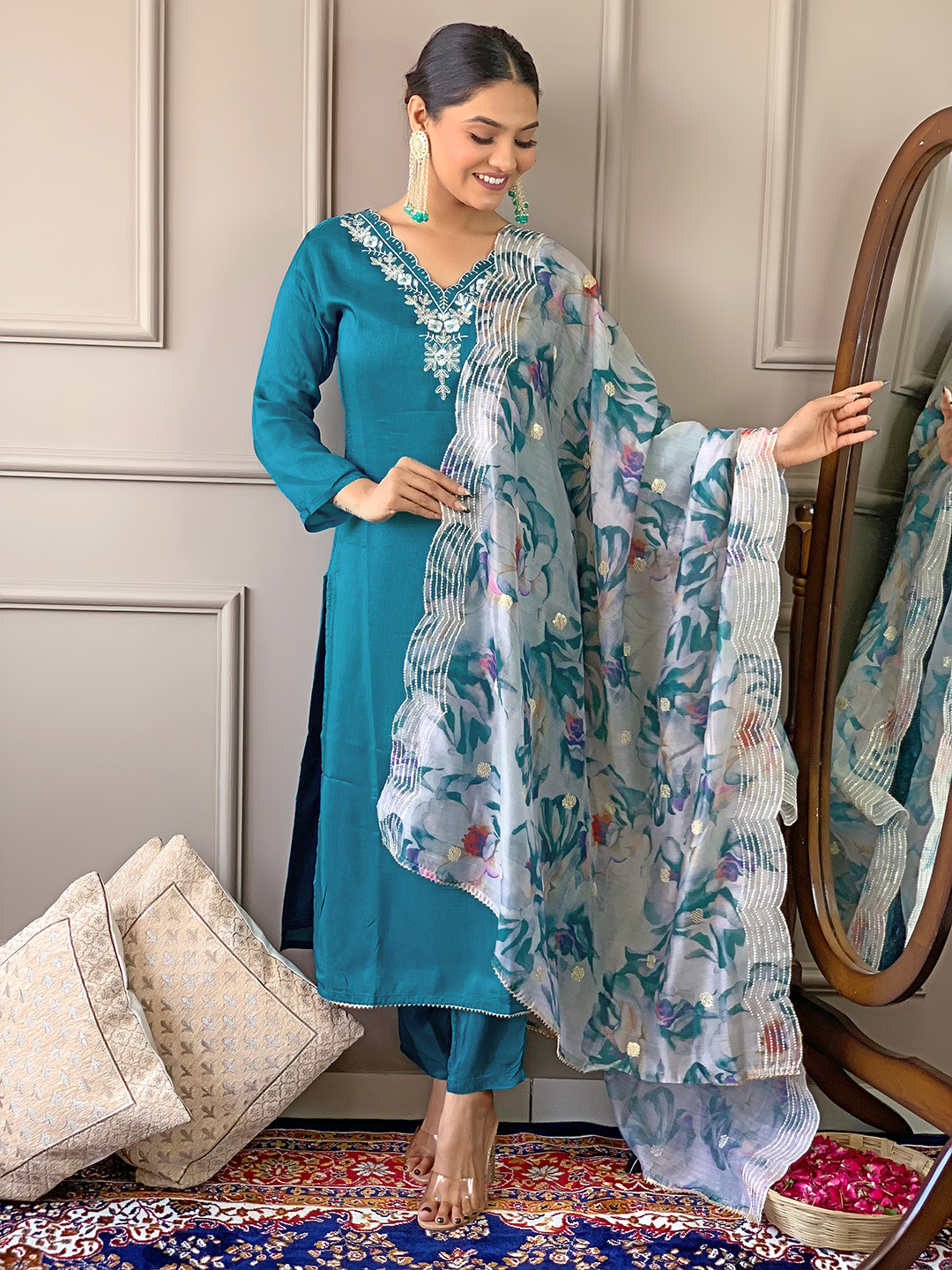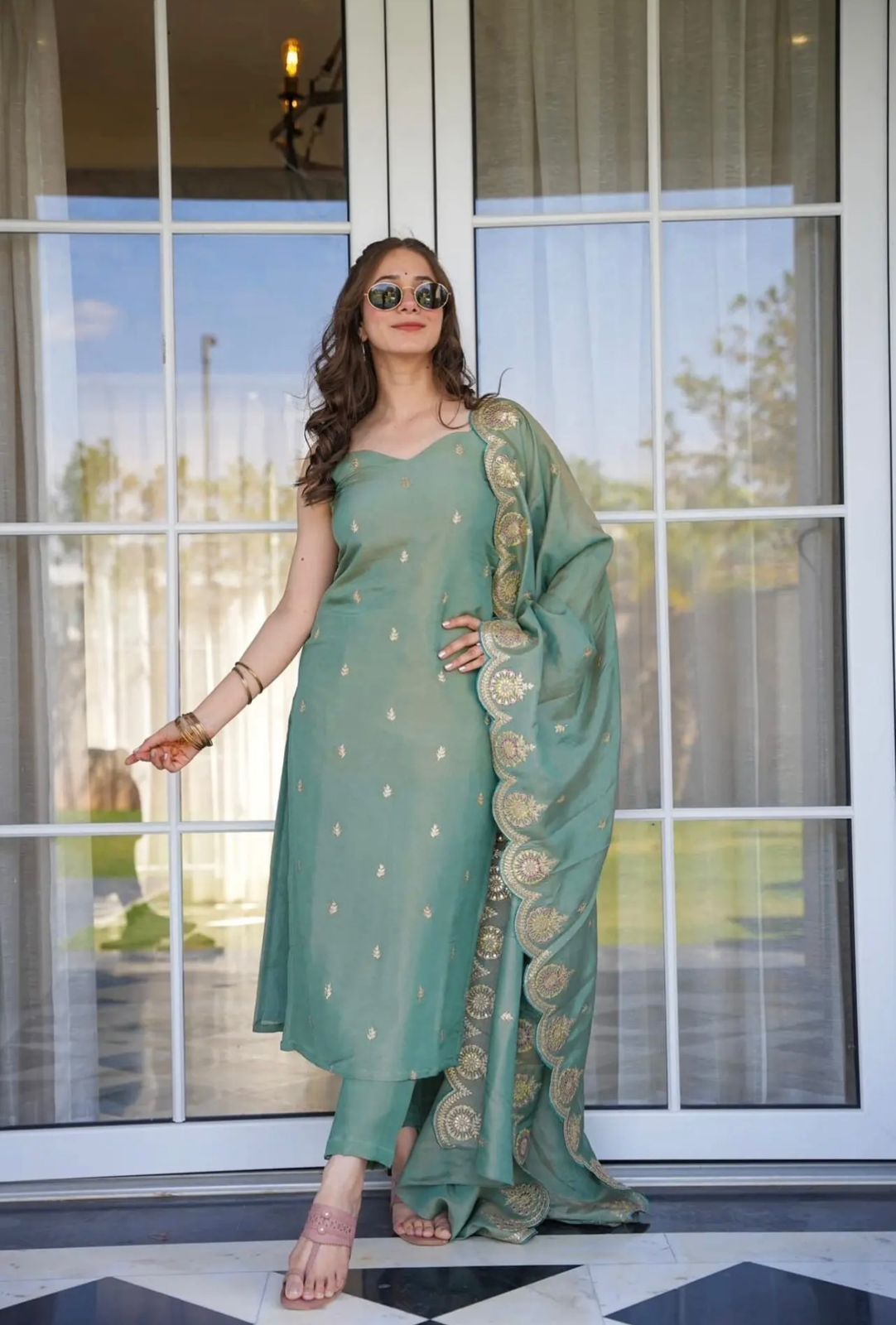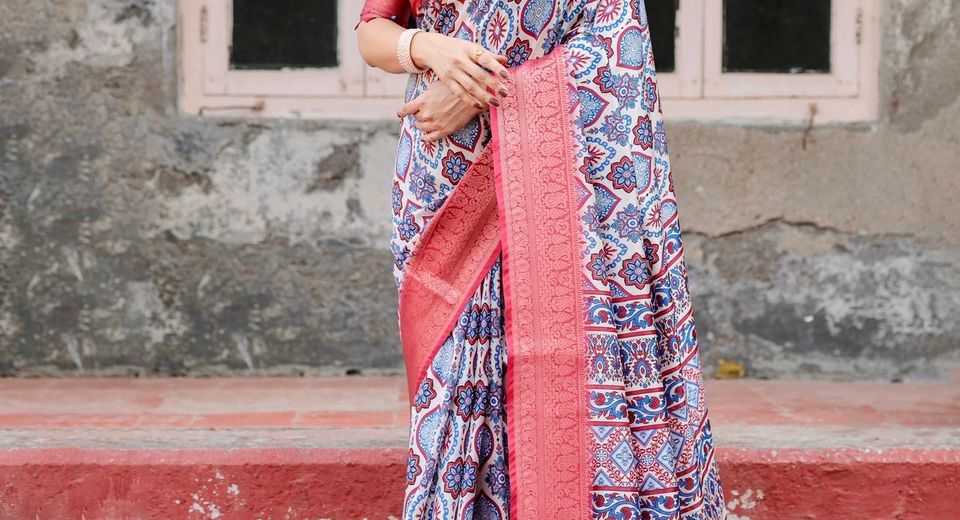
Famous silk sarees in India are not one uniform category. Kanjeevaram, Banarasi, Patola, Chanderi, Tussar and Mysore silk sarees differ in fibre, weaving method, surface texture, motifs, zari and regional history. Understanding those differences helps you choose a saree for a wedding, festival, ceremony or formal gathering without relying only on colour or shine.
An useful starting point is to separate three ideas: the silk fibre, the construction of the saree and the decorative technique. A saree may be handloom or powerloom, silk or a silk blend, and zari-rich or minimally decorated. Those details affect weight, price, drape, durability and care more reliably than the word "silk" alone.
What makes a silk saree famous in India?
A silk saree becomes widely recognised when its regional identity, weaving skill, distinctive motifs and cultural use continue across generations. Kanjeevaram is associated with Tamil Nadu weddings, Banarasi silk with Varanasi's brocade tradition, and Patola with Gujarat's resist-dyed double-ikat weaving.
Fame doesn't mean that every saree in a category has identical quality. A Kanjeevaram saree can vary in silk fineness, zari content and workmanship, just as a Banarasi saree can range from intricate handwoven brocade to a lighter, machine-assisted interpretation. The name identifies a tradition; the specification determines the value of an individual piece.
Traditional silk sarees often communicate regional history through motifs. Mango-shaped paisley motifs, peacocks, flowers, temple borders, geometric checks, buttas and scrolling vines are not merely surface decoration. Motif scale, placement and repetition can indicate the visual language of a particular weaving centre.
Famous silk sarees in India by regional tradition
Which silk saree is associated with South Indian weddings?
Kanjeevaram silk sarees are the South Indian wedding classic most strongly associated with ceremonial dressing. Woven in and around Kanchipuram, Kanjeevaram sarees are known for a firm body, contrasting borders, rich pallu designs and classic zari work.
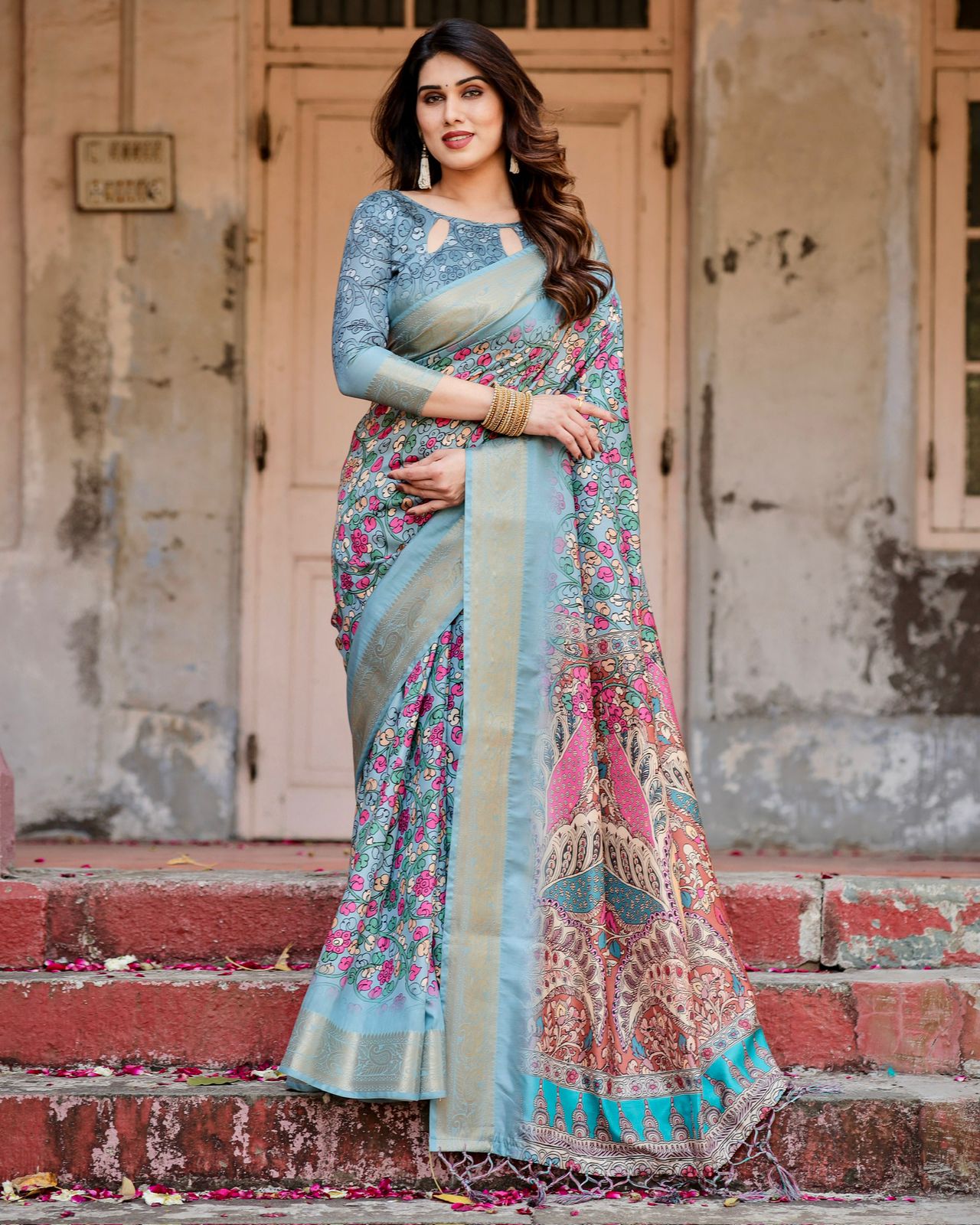
The characteristic structure often joins the body and border with a durable interlocking technique commonly called korvai. A Kanjeevaram saree usually feels more substantial than a very lightweight silk saree, which helps it hold a defined pleat and formal drape. Temple borders, checks, stripes and mythological or floral motifs are common design references.
Banarasi silk sarees come from Varanasi and are recognised for brocade surfaces created with zari and supplementary patterning. Gold or silver-coloured zari may form jaal patterns across the body, buttas, floral vines or elaborate borders. A Banarasi saree can be ornate and structured, although lighter designs are available for less formal wear.
Red Blue Printed Banarasi Silk Saree Online India demonstrates how a printed surface can deliver the visual language of Banarasi design without the dense weight of a heavily brocaded wedding saree. Red Banarasi Silk Saree With Rich Golden Zari Floral Border takes a more heritage route, using a strong contrast between the red ground and floral zari border.
What are other important regional silk sarees?
Patola sarees from Patan, Gujarat, are celebrated for double-ikat weaving, in which both warp and weft threads are resist-dyed before weaving. Precise alignment creates sharply defined geometric, floral and figurative patterns. The labour-intensive process explains why authentic Patola weaving is associated with high prices and long production times.
Chanderi sarees from Madhya Pradesh are valued for a light, airy hand and a subtle sheen. Chanderi may be woven in silk, cotton or a silk-and-cotton combination, so the fibre composition should be checked rather than assumed from the name alone. Small buttas and a fine transparent quality make Chanderi useful for daytime celebrations and warm-weather ceremonies.
Mysore silk sarees are known for a smooth finish, restrained ornamentation and clean, elegant colour fields. Tussar silk has a naturally textured, slightly matte character and can show irregular slubs that are part of its appeal. Muga silk from Assam is naturally golden-toned and is prized for its distinctive lustre and strength.
Paithani sarees from Maharashtra are recognised for richly coloured silk, peacock or parrot motifs and decorative pallus. The pallu is often the visual centre of the saree, making blouse and drape choices important when the saree is worn for photographs or formal rituals.
How do silk, zari and weave affect saree quality?
Silk quality depends on the fibre composition, yarn fineness, weaving consistency, finishing and the honesty of the product description. A saree labelled pure silk should provide clear information about its silk content rather than relying only on a glossy appearance.
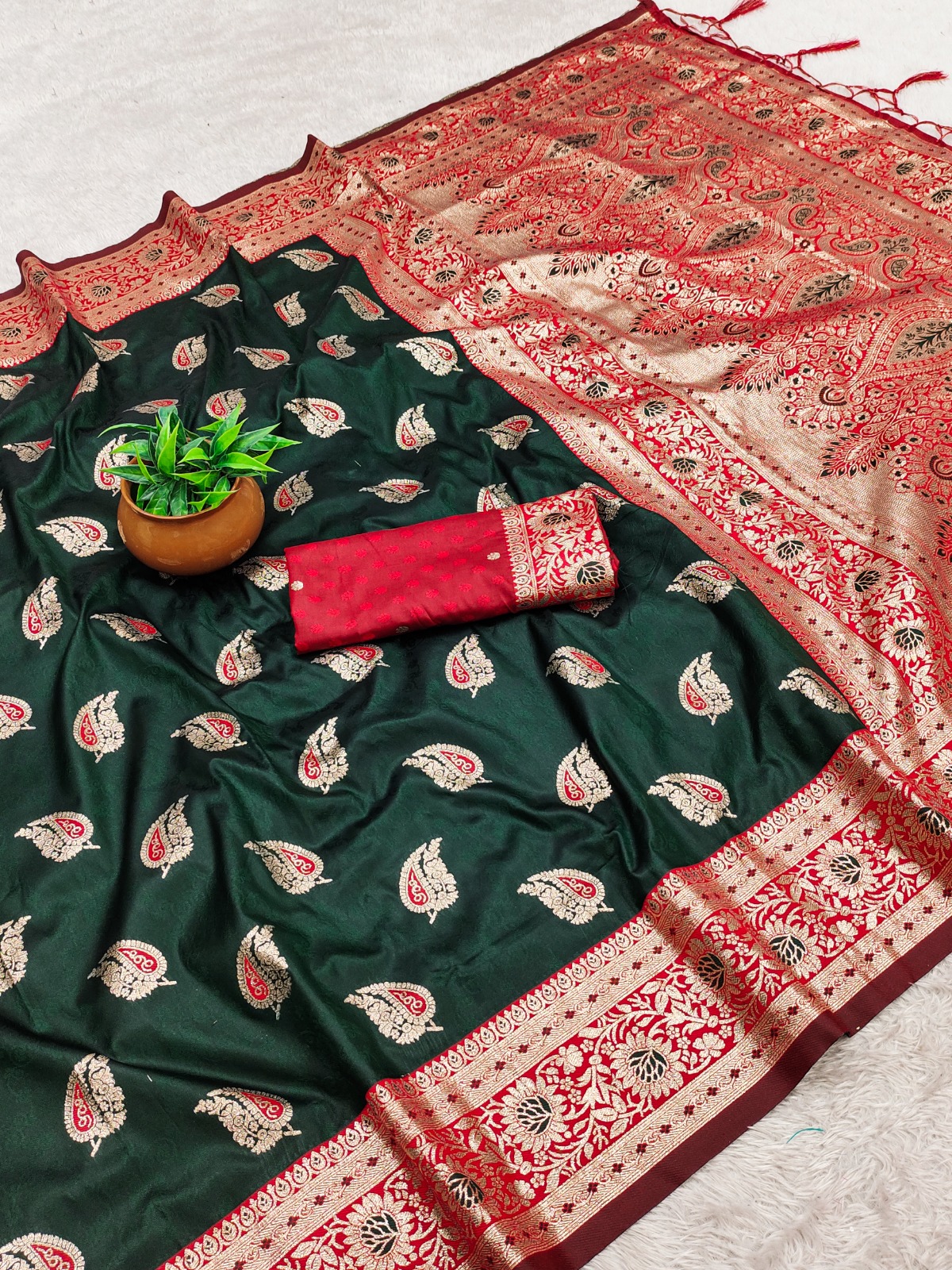
Ask whether the saree is pure silk, silk blend, art silk, silk viscose or another composition. Silk viscose can look attractive and may be more affordable, but it doesn't have the same fibre properties as natural silk. A transparent description should also identify whether zari is metallic, tested zari, imitation zari or a fibre-based substitute.
Zari is a metallic thread used for borders, pallus and motifs. Classic zari may contain precious-metal wrapping, while contemporary sarees commonly use tested zari or imitation zari for better affordability and easier maintenance. Zari type influences shine, weight, price and how the saree should be stored.
Weave density matters because a dense weave generally produces a more substantial hand and sharper pattern definition, although lightness isn't automatically a sign of poor quality. Hold the saree near a natural light source and inspect whether motifs look clean, borders run consistently and the reverse side shows loose threads or abrupt jumps.
Royal Blue Silk Saree with Exquisite Zari Work is an useful example of how zari changes the visual character of a solid-colour saree. Royal Ivory Banarasi Silk Saree with Zari Border shows why a pale base can make a border appear more prominent. In both cases, the amount and placement of zari matter as much as the base silk.
How should you choose a silk saree for an occasion?
The best silk saree for an occasion is the one whose weight, ornamentation, colour and drape match the setting and the amount of movement required.
What silk saree works for weddings?
A structured Kanjeevaram, rich Banarasi, Paithani or zari-heavy silk saree works well when a formal wedding look is appropriate. A heavier saree can support broad pleats and a defined pallu, but it may become uncomfortable during a long ceremony, especially in warm weather.
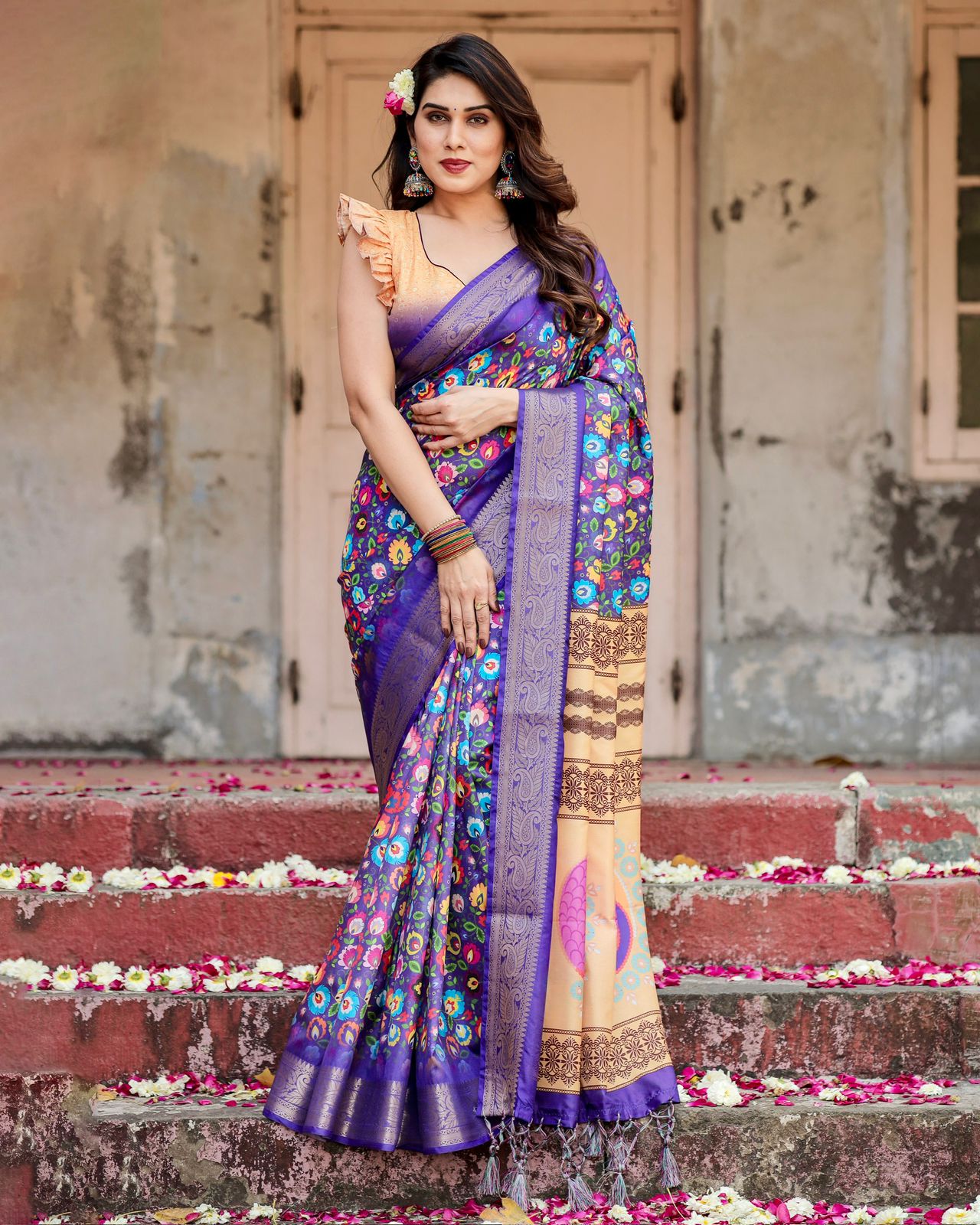
For a wedding guest look, Elegant Royal Blue Silk Saree for Festive & Wedding Wear offers a strong jewel-tone direction without requiring a heavily patterned blouse. Pair a richly woven saree with a simpler blouse when the pallu already contains substantial zari or brocade.
What silk saree works for festivals and family celebrations?
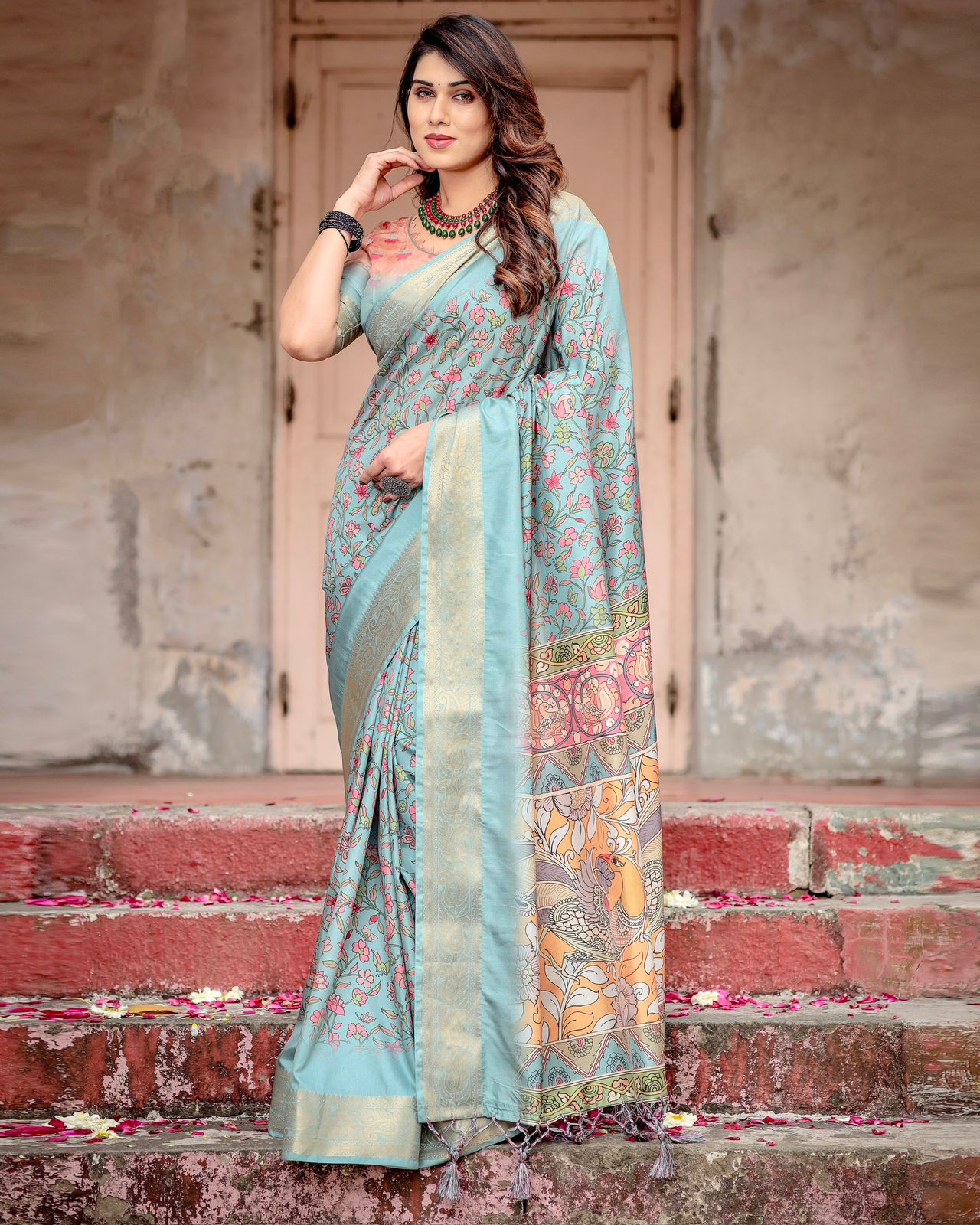
Medium-weight silk sarees with floral, printed or moderate zari details work well for festivals because they balance heritage formality with ease of movement. Blue Floral Heritage Silk Saree Online - Varnavi illustrates how a floral design can create a festive appearance without covering the entire saree in metallic work.
Red Patola Border Pashmina Silk Saree With Printed Pallu combines a statement border with a printed pallu, making the pallu the natural focal point. Keep pleats neat and allow enough of the border to remain visible rather than hiding it under an excessively wide drape.
What silk saree suits daytime events?
Chanderi silk, Tussar silk, lighter Banarasi styles and restrained Mysore silk are practical for daytime events. Ivory, rose, powder blue, sage, muted yellow and soft grey can appear refined in natural light, while a narrow zari border prevents the look from becoming overly bridal.
How can you buy a silk saree online without misjudging it?
You can buy a silk saree online more confidently by checking fibre details, measurements, close-up images, blouse-piece information, return conditions and care instructions before comparing price.
- Read the composition first. Look for explicit wording such as pure silk, silk blend, silk viscose or art silk. Do not treat "silk look" as a fibre declaration.
- Check the dimensions. A saree is commonly around 5.5 to 6.3 metres, with a blouse piece often included, but the listing should state the actual measurement. Border width and pallu length also affect draping.
- Study close-up photographs. Zoom into zari, printed motifs, selvedges and the reverse side. A close-up can reveal whether a pattern is woven, printed or embroidered.
- Compare weight with use. A heavy zari saree may be impressive but tiring for an all-day event. A lightweight saree is easier to pleat and transport.
- Confirm colour expectations. Screen brightness and indoor photography can shift shades. Product descriptions should name the base colour and contrast colour rather than using only poetic terms.
- Set a realistic budget. Handloom labour, natural silk, dense zari and complex patterning raise costs. A lower price may reflect a blend, simpler construction, printed decoration or a powerloom process rather than a flaw.
Collection labels can help organise a search, but collection names should not replace specifications. Silk Sarees At Flat 30% Off may be useful for comparing discounted options, while Party Wear Sarees can narrow the search by occasion. A collection titled silk saree is broad, so fibre composition and weave details still require careful reading.
Gray Color Sarees Under 1000 may suit a budget-conscious shopper looking for a muted colour, but a low price should prompt closer attention to whether the saree is pure silk, a blend or a synthetic interpretation. Price is useful evidence, but price alone can't authenticate a regional weave.
How should you drape and style a silk saree?
A silk saree usually looks most balanced when the pleat width, pallu length and blouse neckline allow the weave and border to remain visible.
For a broad zari border, make five to seven even front pleats and keep the lower edges aligned before securing them at the waist. A smaller number of uneven pleats can make a structured saree appear bulky. Pinning the pleats at the waist and shoulder is practical for long ceremonies, but use fabric-safe pins and avoid piercing prominent zari areas repeatedly.
A heavily patterned pallu generally needs a calmer blouse. A plain blouse in a colour taken from the border can make a Banarasi or Kanjeevaram saree appear intentional. Conversely, a solid silk saree can support a textured blouse, contrast sleeve or restrained embroidery.
Jewellery should respond to the scale of the weave. Temple jewellery and gold-toned pieces complement time-honoured Kanjeevaram styling, while pearls, diamonds or minimal metal jewellery can suit an ivory Banarasi or light Chanderi look. Footwear with a stable heel of approximately 1.5 to 2 inches can help maintain saree length without compromising comfort.
How do you store and wash silk sarees?
Silk sarees should be dry-cleaned when the care label recommends it, stored away from direct sunlight and refolded periodically to protect the fibres and zari.
Air a silk saree in shade after wearing it, especially after a Haldi ceremony or a humid event, because perspiration, turmeric and moisture can weaken fibres or stain the surface. Do not rub a spot aggressively or apply household bleach. A professional cleaner should assess difficult stains.
Wrap a clean silk saree in unbleached cotton or muslin rather than sealing it immediately in plastic. Fold along different lines every few months to reduce permanent creasing. Keep zari away from damp walls, perfume bottles and direct contact with unfinished wood or acidic paper.
Never iron silk directly on a high setting. Use a low-temperature setting with a pressing cloth, or steam from a safe distance after checking the care instructions. Heavy zari, hand-painted details and unusual finishes require especially cautious handling.
Which silk saree should you choose?
Choose Kanjeevaram for a structured South Indian wedding look, Banarasi for brocade and zari richness, Patola for distinctive double-ikat geometry, Chanderi for lightness, Tussar for natural texture and Mysore silk for smooth understated elegance.
Before buying, identify the event, estimate how long the saree will be worn, decide how much weight you can comfortably carry and check the fibre and zari description. A saree that fits the climate, ceremony and care routine will be worn more often than a visually impressive piece that's uncomfortable or difficult to maintain.
The most valuable choice isn't necessarily the heaviest or most expensive saree. The right choice combines an honestly described material, sound construction, appropriate ornamentation and a regional tradition that genuinely suits your wardrobe.
Common Questions About India’s Celebrated Silk Sarees
Which are the most famous silk sarees in India?
The best-known examples include Kanjeevaram, Banarasi, Patola, Chanderi, Mysore silk, Tussar, Muga and Paithani sarees. Each is associated with a particular region, weaving method, fibre quality, motif vocabulary or ceremonial tradition.
What is the difference between Kanjeevaram and Banarasi silk sarees?
Kanjeevaram sarees are associated with Kanchipuram and usually have a firm body, contrasting borders and traditional South Indian wedding motifs. Banarasi silk sarees come from Varanasi and are especially known for brocade surfaces, floral jaal patterns and zari work.
How can you tell if an online silk saree is pure silk?
Check the product description for explicit fibre composition, such as pure silk or a named silk blend, rather than relying on shine or the word "silk" in the title. Look for details about zari, weave, measurements and care, and ask the seller for clarification when the composition is vague.
Which silk saree is best for a wedding guest?
A medium-weight Banarasi, Mysore silk, Kanjeevaram-inspired or zari-accented silk saree is usually suitable for a wedding guest. Choose the weight and ornamentation according to the ceremony length, climate and dress code, and avoid an excessively bridal design when the invitation calls for understated festive wear.
Are Chanderi sarees made from pure silk?
Chanderi sarees may be woven in silk, cotton or a silk-and-cotton combination, so the fibre composition must be checked for each saree. Silk Chanderi is light and subtly lustrous, while cotton Chanderi generally has a different hand and price.
How should a silk saree be stored at home?
Store a clean, dry silk saree folded in breathable cotton or muslin, away from direct sunlight, humidity and perfume. Refold it every few months along different lines, and follow the care label or use a specialist dry cleaner for stains, heavy zari and delicate finishes.