Famous sarees of Pochampally are best known for Ikat, a resist-dyeing technique in which yarns are draw and dyed before weaving. The method creates sharply planned diamonds, zigzags, checks and temple-like borders that look in the woven cloth rather than being printed on top. Pochampally, in Telangana's Yadadri Bhuvanagiri district, has become closely associated with this distinctive textile tradition. Understanding the yarn preparation, motifs and fabric choices help you recognise a well-made saree instead of choosing only by colour or price.
Why Pochampally sarees are famous
Pochampally sarees are famous because the design is created through resist-dyed yarns arranged on the loom, giving the textile its characteristic Ikat alignment. In a printed saree, a motif is applied after the fabric is woven; in Ikat, the motif is planned before weaving and emerges as warp, weft or both sets of yarns meet.
The craft is associated with Bhoodan Pochampally and nearby weaving communities in Telangana. Pochampally Ikat received a Geographical Indication status, which recognises the regional identity of the craft. The name is therefore more meaningful than a general reference to any fabric with blurred geometric patterns.
Pochampally is also important because the tradition includes both cotton and silk versions. Cotton Ikat can suit warm-weather daily wear, while silk Ikat offers a more structured drape for festive dressing. Some weavers produce single Ikat, where one yarn direction is resist-dyed, and more complex double Ikat, where both warp and weft are prepared to create the pattern.
What makes Ikat different from a printed saree?
Ikat differs from a printed saree because the pattern is formed by dyeing sections of yarn before weaving rather than by applying colour to finished cloth. Slight feathering or soft edges can be a natural result of the resist-dyeing process, while perfectly flat, surface-level motifs may indicate printing.
Small irregularities are not automatically defects. A handmade Pochampally Ikat may show tiny shifts in alignment, variation in colour absorption or a subtle difference between the two sides of the fabric. These details should be judged alongside yarn quality, weave consistency and seller information, not treated as proof of authenticity on their own.
How Pochampally Ikat is made
Pochampally Ikat is made by designing, measuring, tying, dyeing and weaving yarns in a carefully controlled sequence. The more colours and interlocking forms a design contains, the more planning and repeated resist-dyeing the process requires.
- Design planning: The weaver converts a motif into a measured arrangement of colour sections. The design must account for the way yarns will move and interlace on the loom.
- Yarn grouping: Bundles of warp or weft yarn are aligned so that corresponding sections receive colour in the intended position.
- Resist tying: Selected portions are tightly wrapped or tied to prevent dye from reaching them. The yarn may be tied again for additional colours.
- Dyeing: The exposed sections are dyed, dried and sometimes retied before a second colour bath. Each extra colour increases the need for accurate registration.
- Loom preparation: The dyed yarns are arranged in sequence. The weaver adjusts the threads so the emerging shapes meet across the fabric.
- Weaving and finishing: The warp and weft interlock to reveal the design. The finished saree is checked, washed or finished according to the fibre and production method.
Double Ikat demands especially careful alignment because both warp and weft carry portions of the design. When the yarns meet correctly, diamonds and other motifs appear with a distinctive woven softness. When alignment shifts, the pattern can look intentionally blurred or slightly stepped rather than mechanically uniform.
Signature motifs and colours to recognise
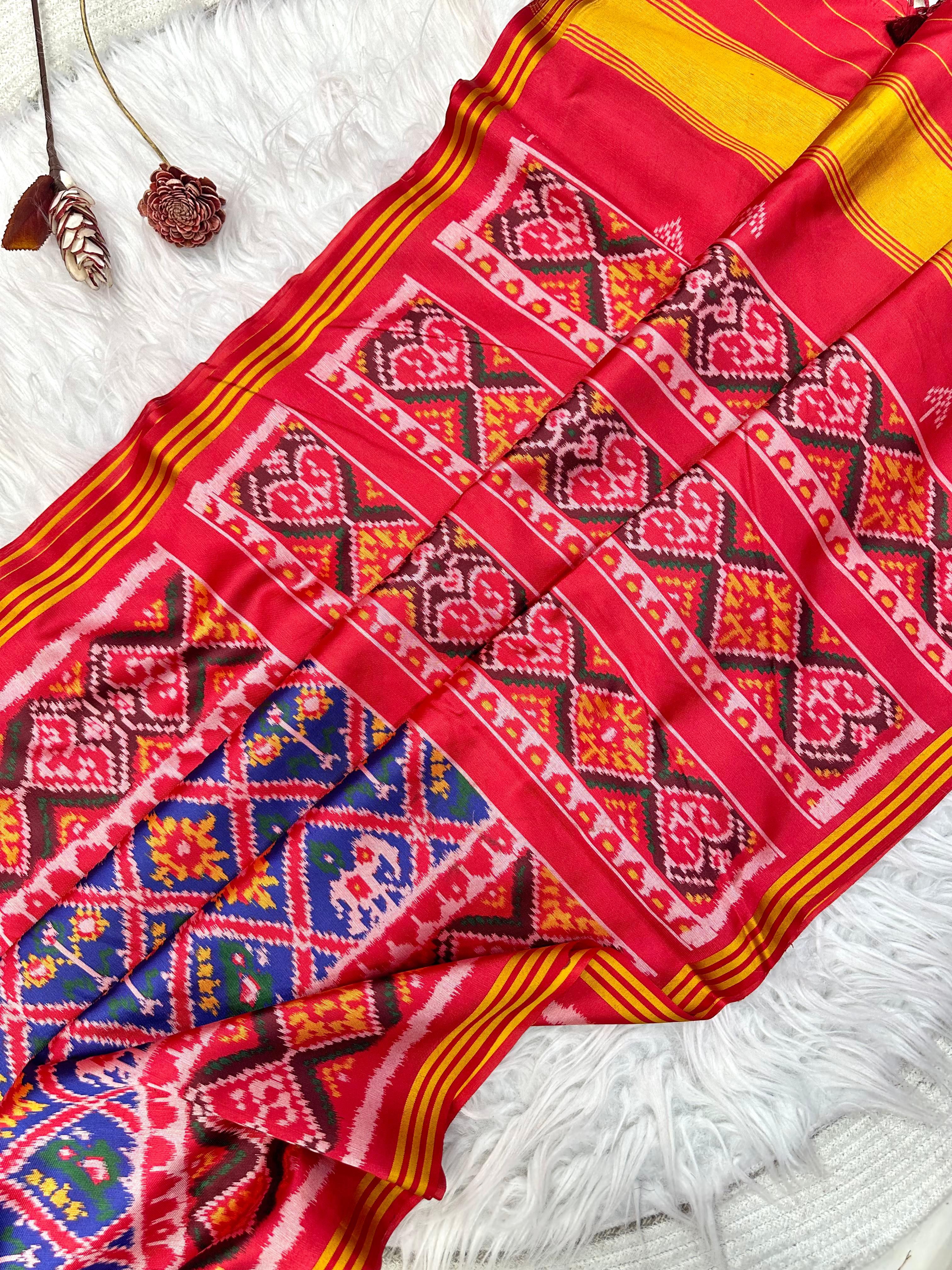
The signature motifs of Pochampally sarees include diamonds, chevrons, checks, stripes, zigzags and repeated geometric grids. Traditional layouts often use a stronger border and a more measured field, although contemporary designs may place smaller motifs throughout the body.
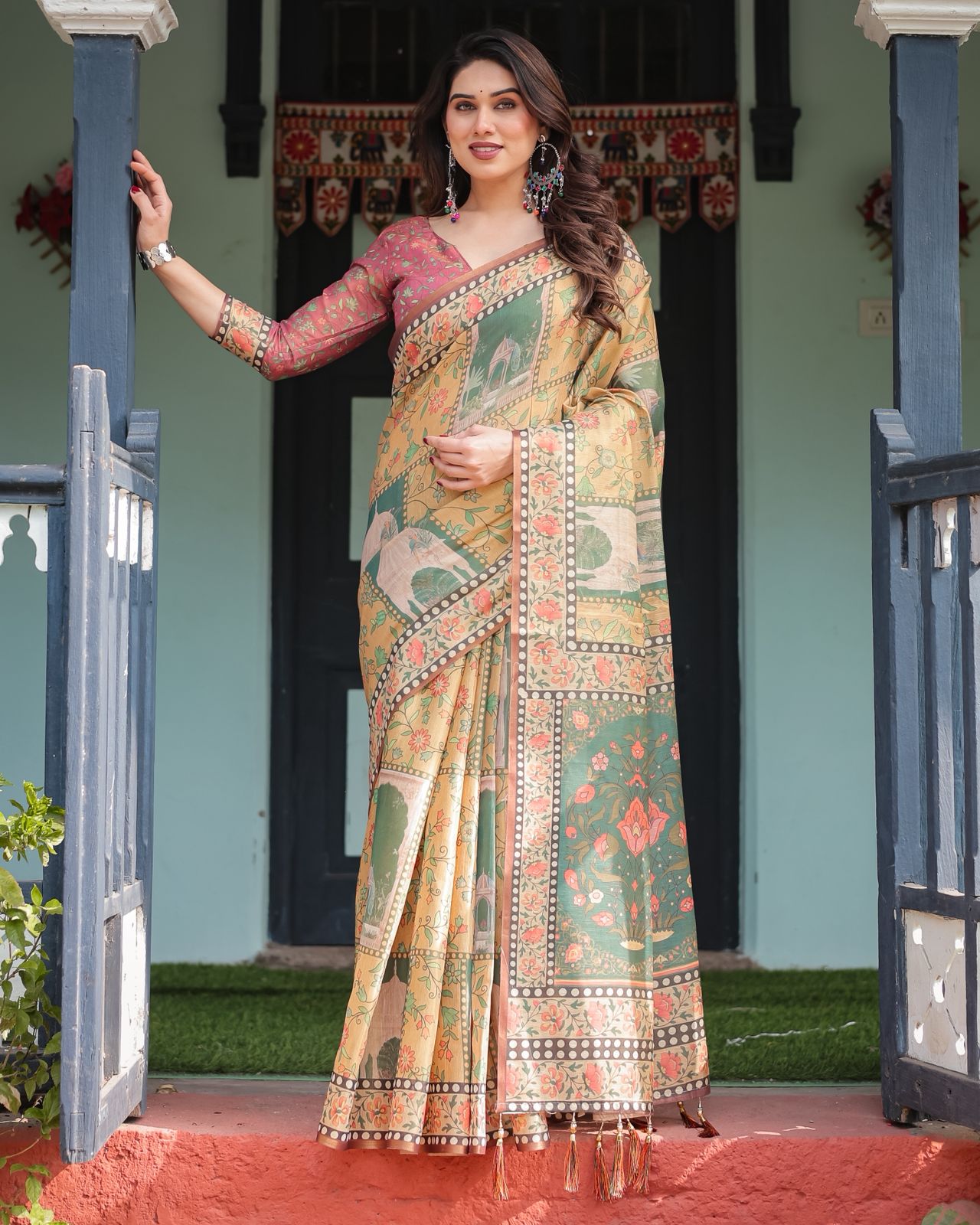
Geometry is the main visual clue
Geometric precision is the most useful visual clue when identifying Pochampally Ikat. Look for repeated units that continue logically across the body, pallu and border, rather than isolated floral images that appear unrelated to the weave structure.
Diamond motifs may be narrow and elongated or broad and layered. Chevron lines can form a herringbone effect, while checks may be built from crossing colour bands. Temple-inspired triangles and stepped borders are also common visual references in Indian handloom design, but a motif alone can't prove regional origin.
Colour combinations vary widely. Red with black or white creates a high-contrast traditional appearance; indigo, rust, mustard, maroon, ivory and green can produce a more restrained palette. A contemporary Pochampally saree may also use soft pastels, but the Ikat construction should remain visible through the organisation of the pattern.
A useful test is to inspect the reverse side: a woven Ikat motif generally has colour presence within the yarn structure, while a surface print may look flatter or less integrated on the reverse.
Choosing cotton, silk or silk-cotton
The right Pochampally saree fibre depends on climate, drape, frequency of wear and the formality of the event. Cotton is breathable and practical, silk has more lustre and body, and silk-cotton balances comfort with a polished fall.
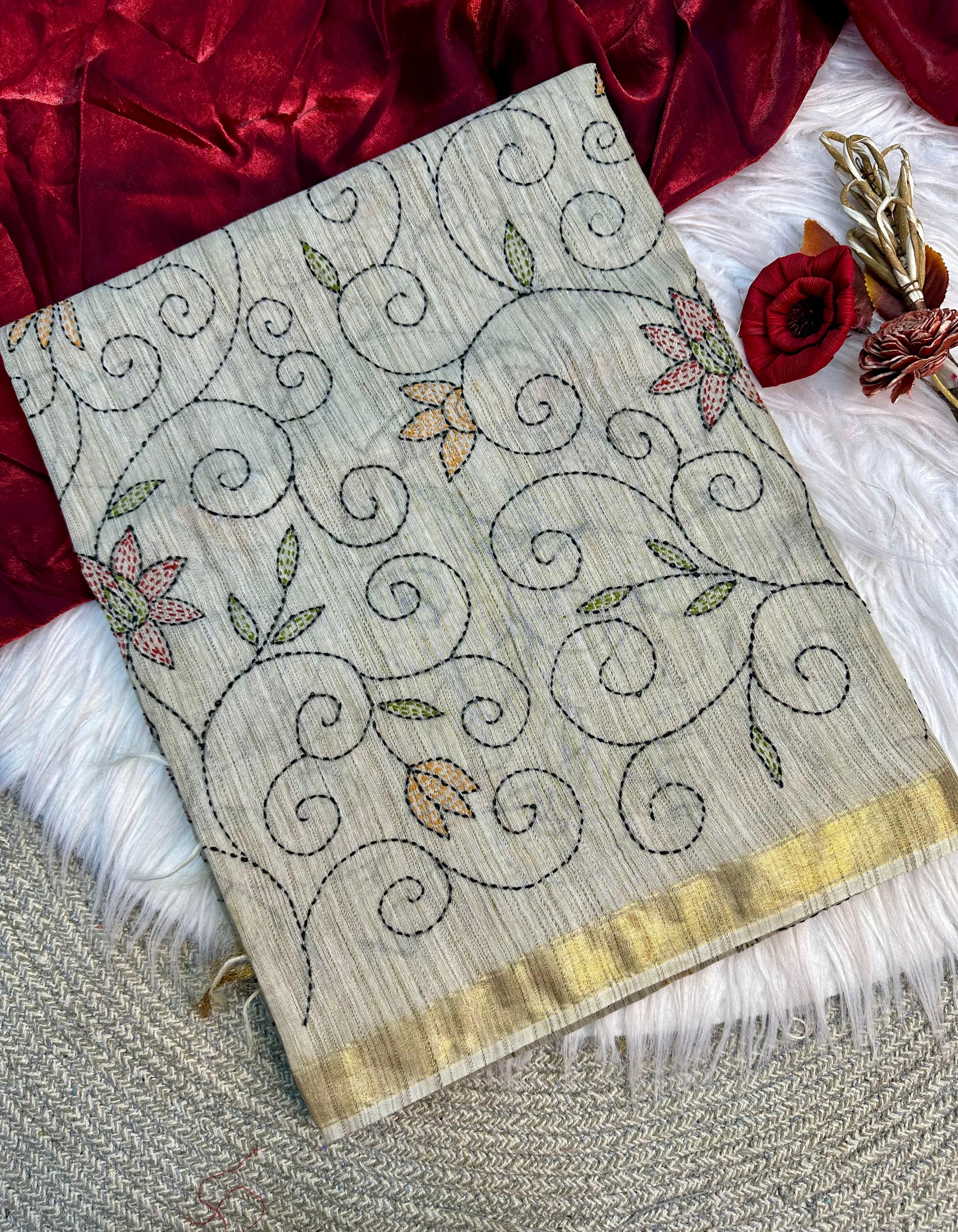
Cotton for everyday and summer wear
Cotton Pochampally sarees are usually the most comfortable choice for hot or humid weather and long daytime wear. A cotton weave can have a lightly crisp hand-feel, allowing pleats to hold their shape, although thickness and softness vary by yarn count and finishing.
Choose a cotton saree for office dressing, cultural events held during the day or regular handloom wear. Check whether the fabric is pre-washed or likely to shrink, especially if the saree is described as handloom cotton without a specific finishing detail.
Silk for festive occasions
Silk Pochampally sarees are better suited to weddings, receptions and evening celebrations when a richer surface and more formal drape are wanted. Silk generally reflects more light than cotton and may carry the weight of a broader border or a detailed pallu more effectively.
Silk doesn't automatically mean pure silk, so read the fibre composition carefully. A saree described as silk-cotton, blended silk or art silk will behave differently from a pure silk saree in sheen, fall, care and price.
For comparison, a separate textile such as the Pastel Floral Tissue Handloom Cotton Saree with Zari Weaves demonstrates how cotton and zari can create a festive appearance without using Ikat construction. A Pashmina product such as the Red Patola Border Pashmina Silk Saree With Printed Pallu also shows why border language and weave identity should not be confused: a printed pallu or Patola-inspired border doesn't make a saree Pochampally Ikat.
How to buy an authentic Pochampally saree
Buying an authentic Pochampally saree requires checking the weave description, fibre, motif alignment, finishing and seller details together. A low price or the word "Ikat" in a product title isn't enough evidence of regional handloom origin.
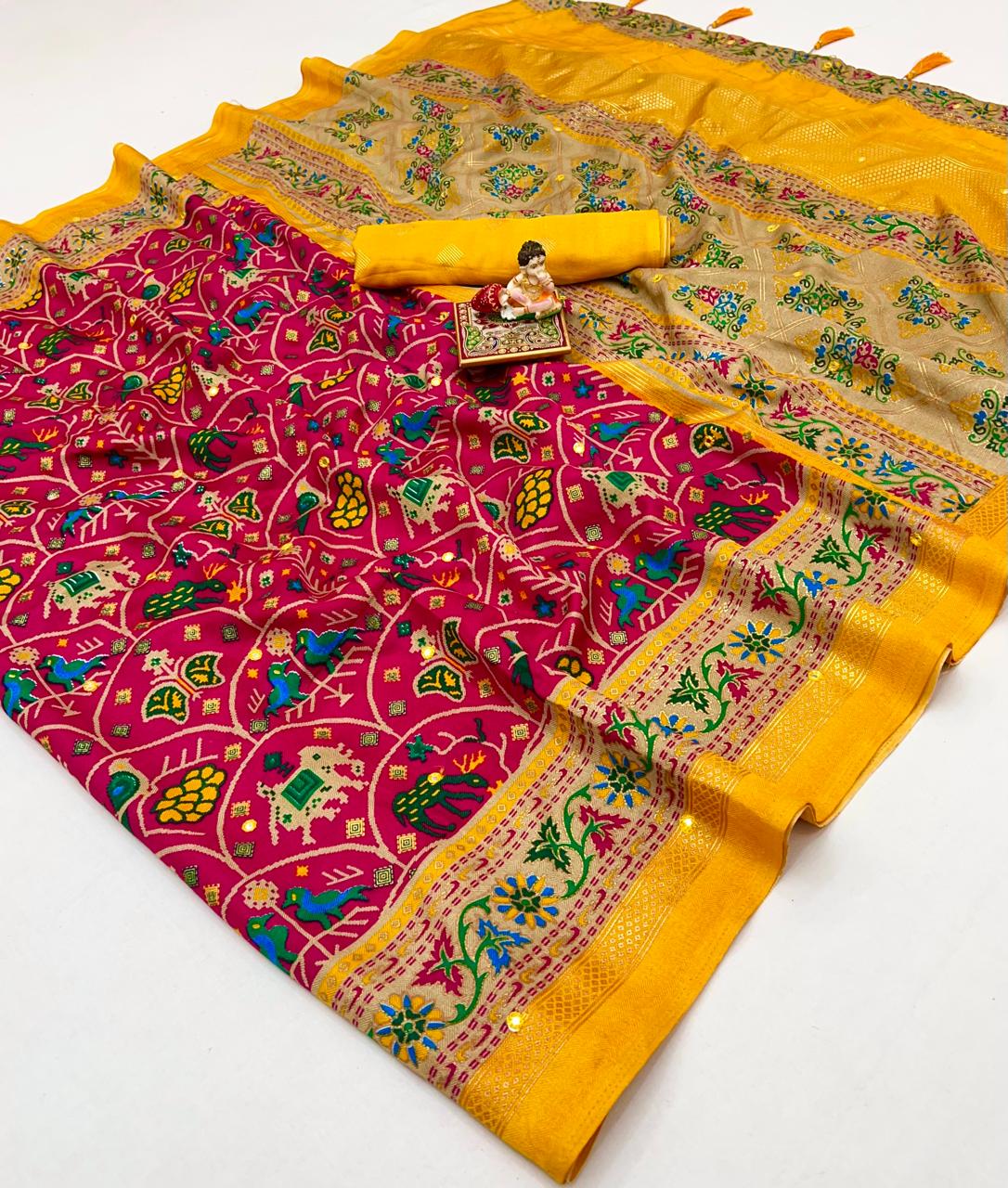
- Read the construction: Look for explicit terms such as Pochampally Ikat, handloom Ikat, warp Ikat, weft Ikat or double Ikat. Ask which yarn direction carries the resist-dyed design if the listing is unclear.
- Confirm the fibre: Check whether the saree is cotton, silk, silk-cotton, viscose or another blend. Fibre affects breathability, shine, shrinkage, ironing and dry-cleaning needs.
- Inspect the pattern: Examine a close image of the border, pallu and reverse. Consistent woven colour and logical motif continuation are more useful clues than a generic "traditional" label.
- Ask about origin: A credible seller should be able to provide the weaving region, product measurements and care instructions. GI recognition applies to qualifying goods, not automatically to every garment using a similar design vocabulary.
- Check the dimensions: A standard saree is often around 5.3 to 5.5 metres, with a blouse piece where included, but measurements vary. Confirm the exact length, width and blouse-piece details before purchase.
- Compare price intelligently: Hand preparation, silk content, double Ikat complexity, zari and finishing all affect price. Collections such as Sarees from Rs 1000 to Rs 1500 can be useful for budget comparison, but price alone can't establish authenticity.
Several garments can help clarify these comparisons. Luxury Pashmina Saree with Paisley Design & Shaw and Cream Floral Pashmina Saree With Shawl & Blouse Set belong to a different material and design category, while Pastel Linen Cotton Floral Print Saree with Designer Blouse is a useful reminder that printed floral linen-cotton isn't the same construction as Ikat.
Styling Famous sarees of Pochampally
Styling Famous sarees of Pochampally works best when the geometric weave remains the focal point. Keep the blouse either coordinated with one colour from the saree or deliberately plain so that checks, diamonds and zigzags are not visually crowded.
A solid blouse in black, ivory, maroon, mustard or deep indigo can balance a high-contrast Ikat body. For a daytime Haldi ceremony, cotton with a yellow or turmeric-toned blouse keeps the look breathable and practical; for a wedding reception, silk or silk-cotton with traditional jewellery creates a more formal silhouette.
Use jewellery that echoes the saree's scale. Silver, oxidised metal or terracotta can suit a rustic cotton handloom look, while gold-toned jewellery works with silk, zari or deeper festive colours. A neat front pleat and a clearly displayed pallu allow the geometric layout to be seen in photographs.
don't combine a dense Ikat body with an equally busy printed blouse unless the colours are tightly controlled. If a saree has a strong border, a three-quarter-sleeve blouse with minimal surface decoration often gives the border enough visual space.
Seasonal sale categories such as Sarees Under 20% Off and Sarees Under 10% Off can be used to compare styling options across fabrics, but shoppers should still verify whether a particular saree is Ikat, printed or woven before deciding how to accessorise it. A bright Traditional Yellow Pashmina Saree With Shawl and a Festive Cream Pashmina Saree with Designer Border may be excellent for other wardrobes, yet neither should be classified as Pochampally simply because the colours feel festive.
Care instructions for an Ikat saree
An Ikat saree should be stored clean, dry and folded with periodic refolding to reduce permanent crease lines. Cotton may tolerate gentle washing depending on the finish, while silk and zari usually need more cautious handling.
- Washing: Follow the seller's fibre-specific instructions. Use cold water and a mild detergent only when hand washing is explicitly permitted; avoid soaking dark or multicolour Ikat for long periods.
- Drying: Dry the saree inside out and away from harsh, direct sunlight. Prolonged sun exposure can fade natural and synthetic dyes unevenly.
- Ironing: Iron on the reverse at a low or medium setting suited to the fibre. Place a thin cotton cloth between the iron and zari or delicate surface details.
- Storage: Fold along different lines every few months, keep the saree in breathable cotton rather than sealed plastic, and avoid storing it while damp.
- Stains: Blot rather than rub. For silk, zari or uncertain dye fastness, take the saree to a professional cleaner instead of testing household stain removers.
Care requirements also explain why Pashmina sarees, silk sarees and cotton Ikat should not be treated identically. The fibre label is more reliable than the visual richness of the fabric when deciding whether to wash, steam or dry-clean a saree.
Why the craft still matters
The importance of Pochampally Ikat lies in the knowledge required to translate a measured design into dyed yarn and then into a wearable textile. The technique connects regional identity, mathematical planning, colour work and loom skill in one object.
Contemporary buyers can support the tradition by asking precise questions, valuing transparent fibre descriptions and recognising the labour behind complex alignment. Choosing a saree because its construction is understood, rather than because a listing uses fashionable language, encourages better textile literacy.
The strongest reason to learn about Famous sarees of Pochampally is practical as well as cultural: knowledge helps you select the correct fabric for the weather, identify whether a pattern is woven or printed, budget realistically and care for the saree for many years.
Common Questions About Famous Sarees of Pochampally
What are the famous sarees of Pochampally known for?
The famous sarees of Pochampally are known for Ikat, a resist-dyeing technique applied to yarn before weaving. Diamonds, checks, zigzags, chevrons and geometric borders are common visual features.
Is Pochampally saree the same as an Ikat saree?
Pochampally saree refers to Ikat associated with the Pochampally region, while Ikat is the wider textile technique used in several parts of the world. Not every Ikat saree is from Pochampally, so regional and construction details matter.
How can I identify a genuine Pochampally Ikat saree?
Check for a clear Pochampally or Telangana origin description, an explicit fibre and weave specification, and motifs formed within the yarn structure. Ask the seller about handloom production, GI-related credentials where relevant, measurements and whether the design is warp, weft or double Ikat.
Are Pochampally sarees suitable for summer?
Cotton Pochampally sarees are generally suitable for summer because cotton is breathable and comfortable for daytime wear. Silk and silk-cotton versions are better when you want more body, lustre or festive structure.
Can Pochampally sarees have floral designs?
Pochampally sarees can include contemporary floral interpretations, but geometric motifs are the more recognisable Ikat language. A floral saree described as printed should not be assumed to be Pochampally Ikat without evidence that the pattern is formed through resist-dyed yarns.
How should I wash and store a Pochampally saree?
Follow the fibre-specific care label, use gentle handling and avoid prolonged soaking or direct sunlight. Store the clean, dry saree folded in breathable cotton, and use professional cleaning for silk, zari or colour-sensitive pieces.