Famous sarees of Mysore are best understood as a family of textiles rather than one single design. Mysore silk is the most recognised name, but Mysore's saree culture also includes lightweight cottons, silk-cotton blends, printed drapes and zari-accented handloom styles. Knowing the difference helps you choose a saree for the right climate, ceremony, budget and level of formality.
Mysore became an important textile centre under the Wadiyar royal court, when silk production, sericulture and skilled weaving received sustained support. Today, the phrase "Mysore saree" may describe a specific Mysore silk tradition, a saree sold in the city, or a contemporary design inspired by Karnataka's textile heritage. Those meanings are not interchangeable, so a careful buyer should examine fibre, weave, border, finish and certification instead of relying on the city name alone.
What are the famous sarees of Mysore?
The most famous saree associated with Mysore is the Mysore silk saree, followed by lightweight cotton and silk-cotton sarees that suit the region's warm climate. Mysore silk is known for a smooth surface, lustrous appearance, compact weaving and a distinctive zari border, while cotton and silk-cotton versions are valued for easier everyday wear.
Mysore silk traditionally uses high-quality mulberry silk, which gives the saree a soft yet polished hand feel. The fabric generally falls close to the body without becoming stiff, making Mysore silk suitable for weddings, religious ceremonies and formal receptions. Solid jewel tones, restrained motifs, contrast borders and gold zari are common visual features, although contemporary versions may use pastels, prints or minimal borders.
Mysore cotton sarees provide a cooler and more relaxed alternative. Cotton absorbs moisture more readily than silk, feels less heavy during long wear and usually costs less. A cotton saree may be handloom or powerloom, plain or printed, and may include zari only along the border or pallu.
Silk-cotton sarees sit between the two categories. Silk adds sheen and drape, while cotton adds breathability and a slightly more textured finish. A silk-cotton label doesn't mean that the saree is Mysore silk; the fibre composition should be checked separately.
How do you identify genuine Mysore silk?
Genuine Mysore silk should be identified through fibre information, weaving quality, a credible silk mark or certification, and the seller's documentation rather than through shine alone.
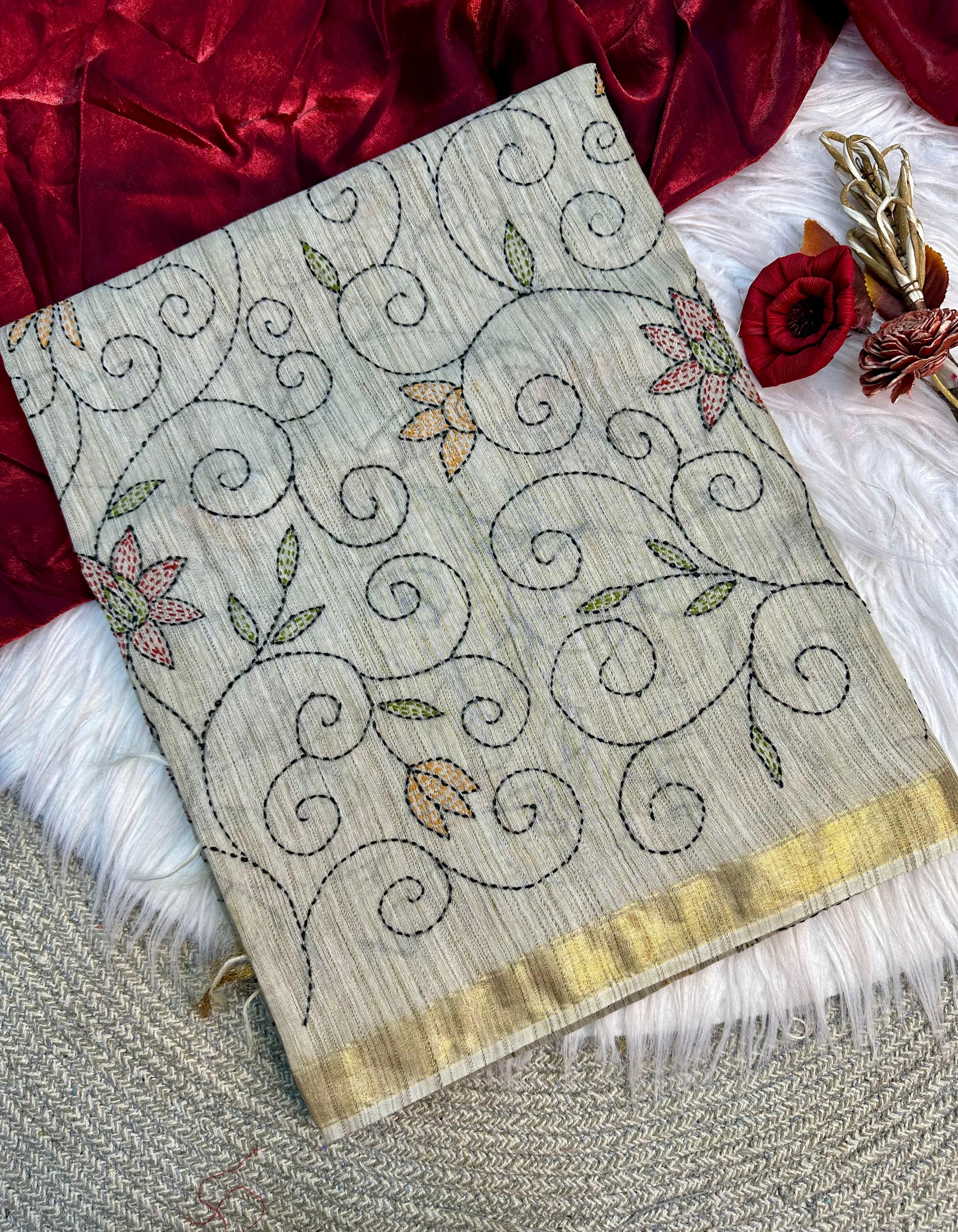
Look beyond surface gloss
Pure silk has a natural, deep lustre that changes subtly as the fabric moves. Artificial fibres often appear uniformly glossy or plasticky under direct light. A smooth hand feel is useful evidence, but touch can't prove fibre content because blended and synthetic fabrics can also feel soft.
Many authentic Mysore silk sarees carry a Silk Mark label issued under the Silk Mark Organisation of India's certification system. A Silk Mark label supports the claim that the material is pure silk, but buyers should still match the label and bill to the saree purchased. A Silk Mark doesn't automatically certify a particular regional weaving style, colour combination or design history.
Examine the zari and reverse side
Zari on a traditional Mysore silk saree is often used with restraint along the border and pallu. Buyers should inspect whether the border is woven into the fabric or add as a separate-looking strip. Neat selvedges, interior density and clean joins indicate better construction. Loose threads, uneven border width and big gaps in the pallu can signal rushed finishing.
Price also provides an useful clue. A pure silk saree with genuine zari, careful weaving and certification can't normally be compared with a polyester saree simply because both have a golden border. A very low price may indicate synthetic fibre, imitation zari, a blend, a factory-made product or a clearance condition. Price alone can't prove authenticity, but an unusually low price deserves questions.
Which Mysore saree fabric suits your lifestyle?
Mysore silk suits formal occasions, silk-cotton suits flexible festive dressing, and cotton suits frequent wear in warm or humid weather.
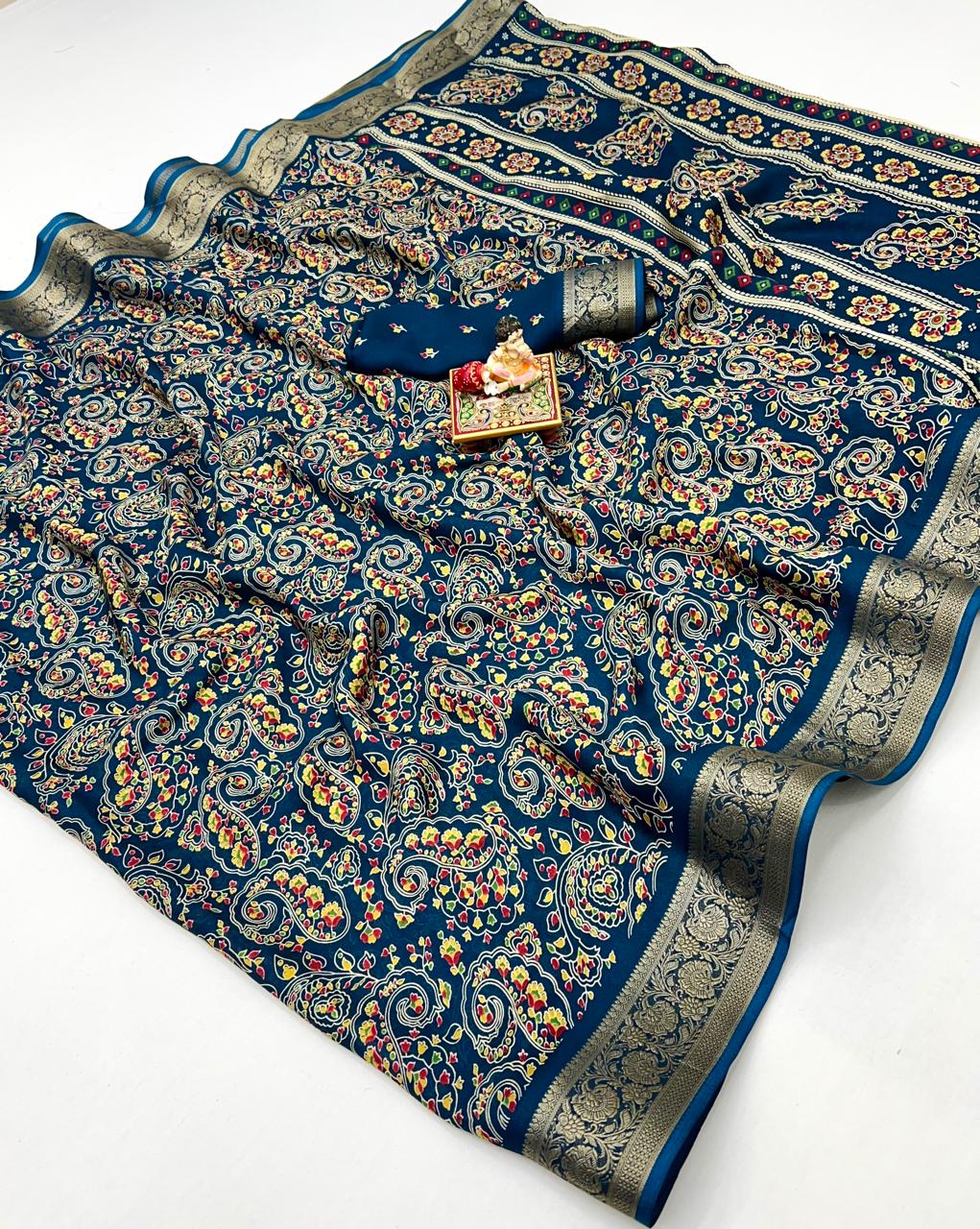
- Choose Mysore silk for weddings, temple visits, milestone celebrations and evening functions where a polished drape is important. A six-yard Mysore silk saree with zari may require more careful storage but can remain in a wardrobe for many years.
- Choose silk-cotton when you want some silk-like sheen without the weight or cost of a heavy pure-silk saree. Silk-cotton works well for daytime pujas, family lunches and festive office events.
- Choose cotton for daily workwear, summer celebrations, travel and long ceremonies. Cotton is usually easier to wash or air, although printed colours and zari borders still need careful handling.
- Choose linen-cotton for a crisp, contemporary silhouette. Linen-cotton creases more visibly than silk, but the texture can look intentional with a well-pressed pleat and a structured blouse.
Fabric weight should be considered along with climate. A dense silk saree can feel comfortable in an air-conditioned hall but warm during an outdoor Haldi ceremony. A cotton or linen-cotton saree is usually more practical for daytime functions, especially when the wearer will stand, travel or sit for several hours.
Print scale also affects appearance. Small florals create a softer everyday effect, while large motifs or reflective embellishment draw attention to the pallu. Pastel shades can look understated in daylight, whereas maroon, emerald, purple and deep blue create stronger evening contrast.
How can you style a Mysore saree for modern occasions?
A Mysore saree looks contemporary when the blouse, jewellery, pleat width and drape are coordinated with the saree's fabric weight.
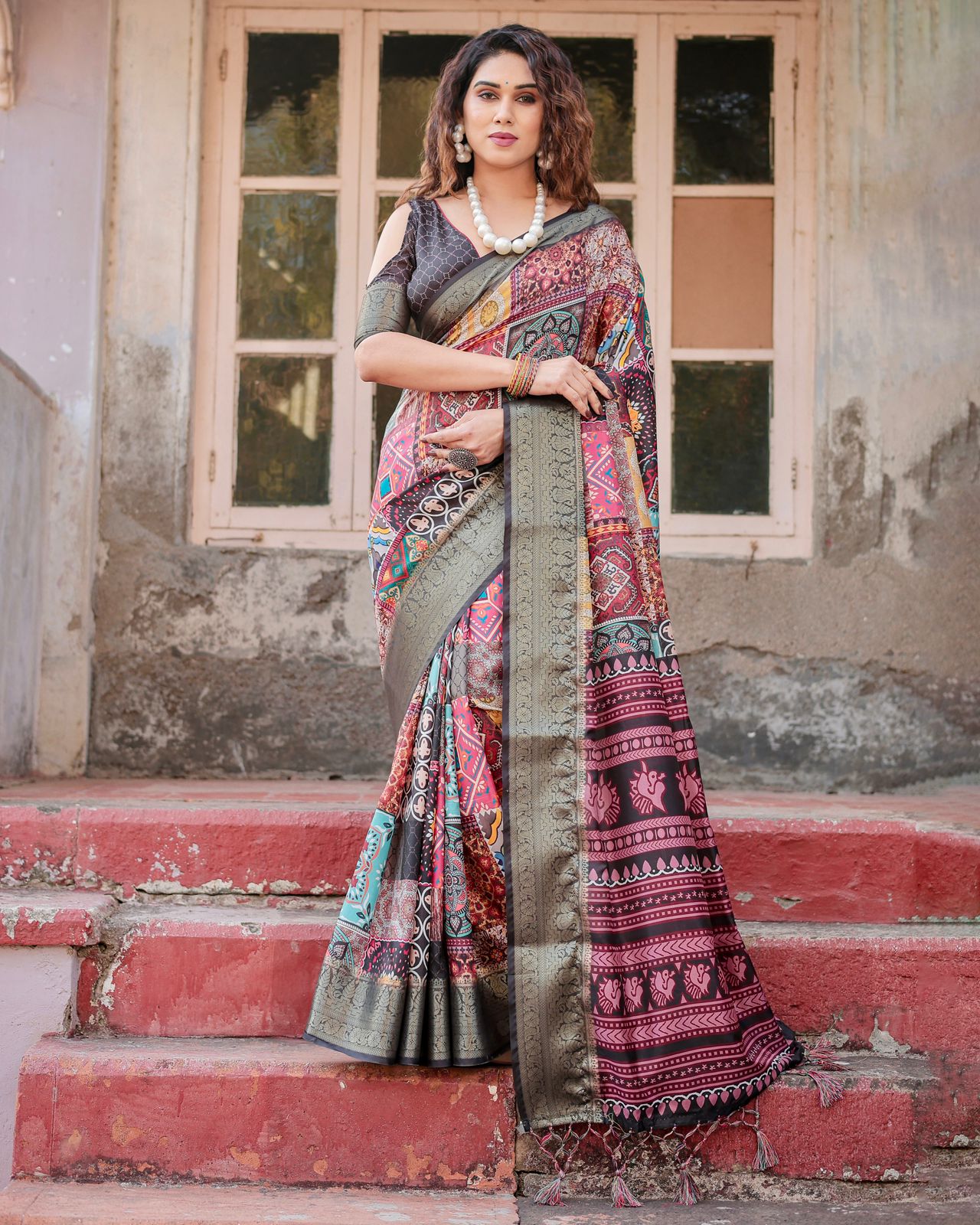
For weddings and festive ceremonies
Pair a heritage silk saree with a fitted blouse in raw silk, brocade or matching silk. Temple jewellery, jhumkas and a low bun with jasmine reinforce the South Indian aesthetic without requiring excessive embellishment. Keep the pallu spread wide enough to show the zari border, especially in photographs.
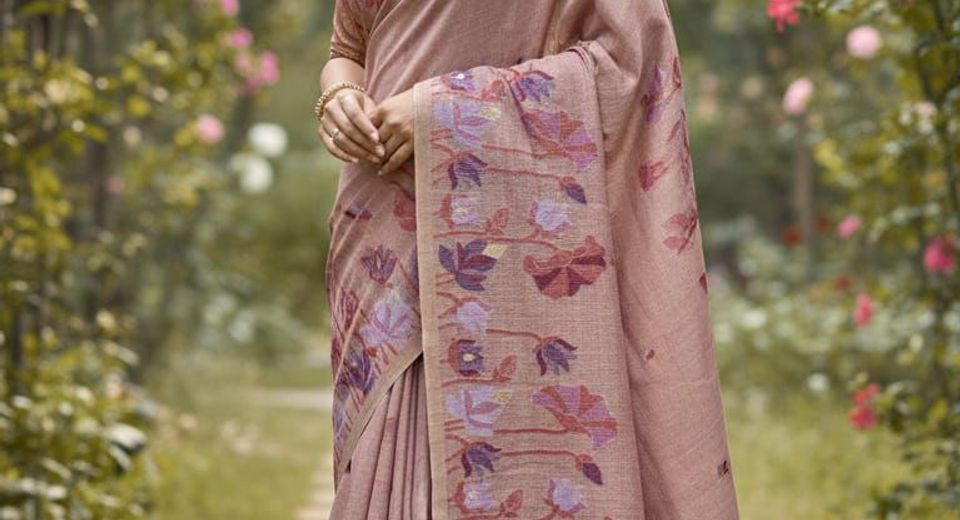
A saree such as Blush Peach Muga Cotton Saree with Jamdani Lotus Pallu demonstrates how a lighter fabric can retain a ceremonial feel through a detailed pallu. The lotus motif gives the drape a focal point, so heavy necklaces are not essential. Gold-toned earrings and a simple bangle stack can balance the design.
For daytime celebrations
Pastel or printed cottons work best with a blouse that repeats one small colour from the saree rather than matching every detail. A short-sleeved blouse, low bun or neatly pinned braid and comfortable sandals keep the outfit practical. A narrow belt can define the waist, but the belt should not flatten a delicate pallu or cover an important border.
Pastel Floral Tissue Handloom Cotton Saree with Zari Weaves combines a lighter base with a metallic accent, making it suitable for a daytime puja or a festive brunch. Pastel Linen Cotton Floral Print Saree with Designer Blouse offers a more coordinated route because the blouse is already part of the styling proposition. Linen-cotton benefits from sharp ironing and broad, even pleats.
For a contemporary evening look
Up-to-date styling works particularly well with a strong pallu, a clean blouse neckline and fewer accessories. A sleeveless or high-neck blouse can sharpen a fluid drape, while a metallic clutch can repeat the zari without competing with the saree.
Sunset Mosaic Mirror Designer Saree is better treated as a statement garment than as a restrained time-honoured silk. Let the reflective detail lead the outfit by choosing plain earrings, a compact hairstyle and neutral footwear. Varnavi Royal Kalamkari Maroon Handloom Saree can take a more craft-focused approach with oxidised silver jewellery, a handloom blouse and a naturally textured hairstyle.
What should you check before buying a Mysore saree online?
Before buying online, verify the fibre, dimensions, blouse-piece details, colour representation, care method, return terms and final cost.
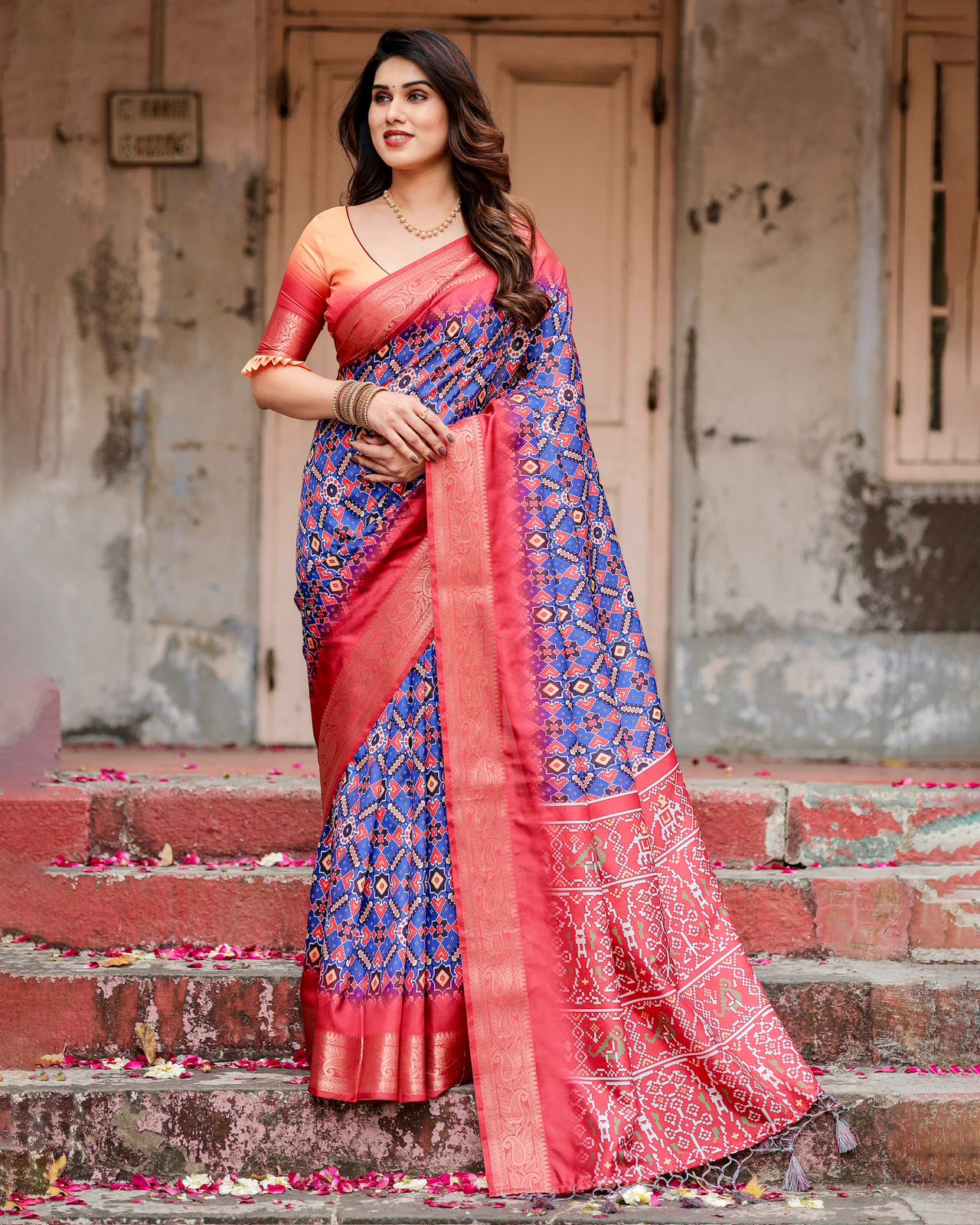
- Read the fibre composition. "Silk," "silk-cotton," "muga cotton," "linen cotton" and "tissue" describe different materials or constructions. A product title should not replace a composition line.
- Check the saree length and width. Most sarees are approximately five and a half to six and a half metres long, but measurements vary. A taller wearer or a saree with a broad border may need more length for comfortable pleats and pallu coverage.
- Confirm the blouse piece. Some sarees include an attached blouse piece, while others include a separate matching fabric or no blouse fabric. A product described as "with blouse" should still be checked for blouse length and usable width.
- Study close-up photographs. Enlarged images reveal weave texture, zari density, print alignment and whether embellishment is woven, embroidered, printed or glued.
- Allow for colour variation. Screen brightness, indoor lighting and camera processing can change the appearance of pastel and deep shades. Ask for a daylight image if the exact colour matters.
- Calculate the complete budget. The saree price may not include blouse stitching, fall and edging, tailoring, shipping or accessories. Lower-priced cotton options can be practical starting points; for example, the Sarees from Rs 1000 to Rs 1500 collection helps frame an entry-level budget.
Discount labels should be read as price information, not as proof of fabric quality. A buyer comparing gives such as Sarees Under 20% Off should compare the original composition, measurements and construction details before comparing the percentage reduction.
How should Mysore silk and cotton sarees be cared for?
Mysore silk should usually be dry-cleaned, while cotton and linen-cotton may follow the specific wash instructions supplied with the garment.
Store silk sarees folded in a clean, breathable cotton or muslin cover rather than sealed in plastic for long periods. Refold a stored silk saree every few months so that the same crease doesn't weaken the fabric. Keep zari away from damp walls, perfume, hair spray and direct sunlight, because moisture and chemicals can tarnish metallic threads and fade dyes.
Never rub a stain aggressively on silk. Blot liquid quickly with a clean, dry cloth and send the saree to a professional cleaner familiar with silk and zari. Home detergent, hot water and prolonged soaking can cause colour bleeding, water marks or loss of finish.
Cotton sarees should be aired after use before storage. Wash only when the care label permits it, use cool water and mild detergent, and dry the saree in shade. Direct, harsh sunlight can fade printed cotton and make some colours appear uneven. Linen-cotton should be pressed while slightly damp or with controlled steam, using a protective cloth over prints and embellishment.
A saree such as Lavender Muga Cotton Saree with Lotus Jamdani Pallu should be stored with attention to the contrast between its cotton base and decorative pallu. Peach Linen Cotton Floral Print Saree with Blouse for Women benefits from broad hangers or careful flat folding because tight, repeated folds can stress a crisp linen-cotton surface. Sage Green Muga Cotton Saree with Lotus Jamdani Pallu can be maintained similarly, with extra care around the Jamdani detailing during ironing.
How do you choose the right Mysore saree for an occasion?
Choose by combining formality, weather, movement, colour and maintenance rather than choosing by name alone.
- Wedding guest: Select Mysore silk, a silk-cotton saree or a saree with a defined zari pallu. Choose a blouse with enough structure to hold the drape through several hours of movement.
- Haldi ceremony: Choose washable or easier-care cotton, linen-cotton or a light silk-cotton saree in a colour that can tolerate turmeric splashes. Avoid delicate zari if the event involves active rituals.
- Office celebration: Pick a restrained border, small print or muted pastel. A saree such as Peach Linen Cotton Floral Print Saree with Blouse for Women can look professional with a plain blouse and minimal jewellery.
- Temple or family puja: Choose a modest Mysore silk, cotton or Jamdani-accented saree with a secure pallu. Comfortable footwear and safely pinned pleats matter as much as ornament.
- First saree purchase: Start with a fabric that matches your regular climate and schedule. A cotton or silk-cotton saree is often easier to wear repeatedly than a heavy formal silk.
Sale collections can be useful when the fabric and construction already meet your needs. Options such as Sarees Under 10% Off and Sarees Flat 50% Off may widen the colour or design choice, but a discount should never replace checking fibre content and care instructions. The best Mysore saree is the one whose material, occasion, budget and maintenance demands fit the wearer's real life.
Common Questions Before Choosing a Mysore Saree
What is the most famous saree from Mysore?
Mysore silk is the most famous saree associated with Mysore. Pure Mysore silk is generally recognised for its smooth mulberry-silk surface, compact drape, restrained zari borders and rich or pastel colours.
How can I tell if a Mysore silk saree is pure silk?
Check the fibre composition, Silk Mark documentation, seller invoice and close-up images of the weave and zari. Shine and softness alone cannot prove purity because synthetic fabrics and blends can imitate both qualities.
Is Mysore silk suitable for summer weddings?
Mysore silk can work for an indoor or evening summer wedding, but a cotton or silk-cotton saree is usually more comfortable for an outdoor daytime function. Climate, fabric weight and the length of the ceremony should guide the choice.
What is the difference between Mysore silk and silk-cotton sarees?
Mysore silk is a silk saree tradition associated with a smooth finish, silk fibre and zari detailing. Silk-cotton combines silk and cotton, so it usually feels more breathable and textured, but it should not be labelled as pure Mysore silk.
Which blouse works best with a Mysore saree?
A structured silk, raw-silk or brocade blouse suits formal Mysore silk, while cotton or linen-cotton blouses suit lighter everyday sarees. Matching one colour from the border or pallu usually looks more polished than copying every shade.
How should I store a Mysore silk saree?
Store a Mysore silk saree clean and completely dry in a breathable cotton or muslin cover, away from direct sunlight and moisture. Refold the saree periodically, avoid plastic for long-term storage and use professional dry cleaning for stains.