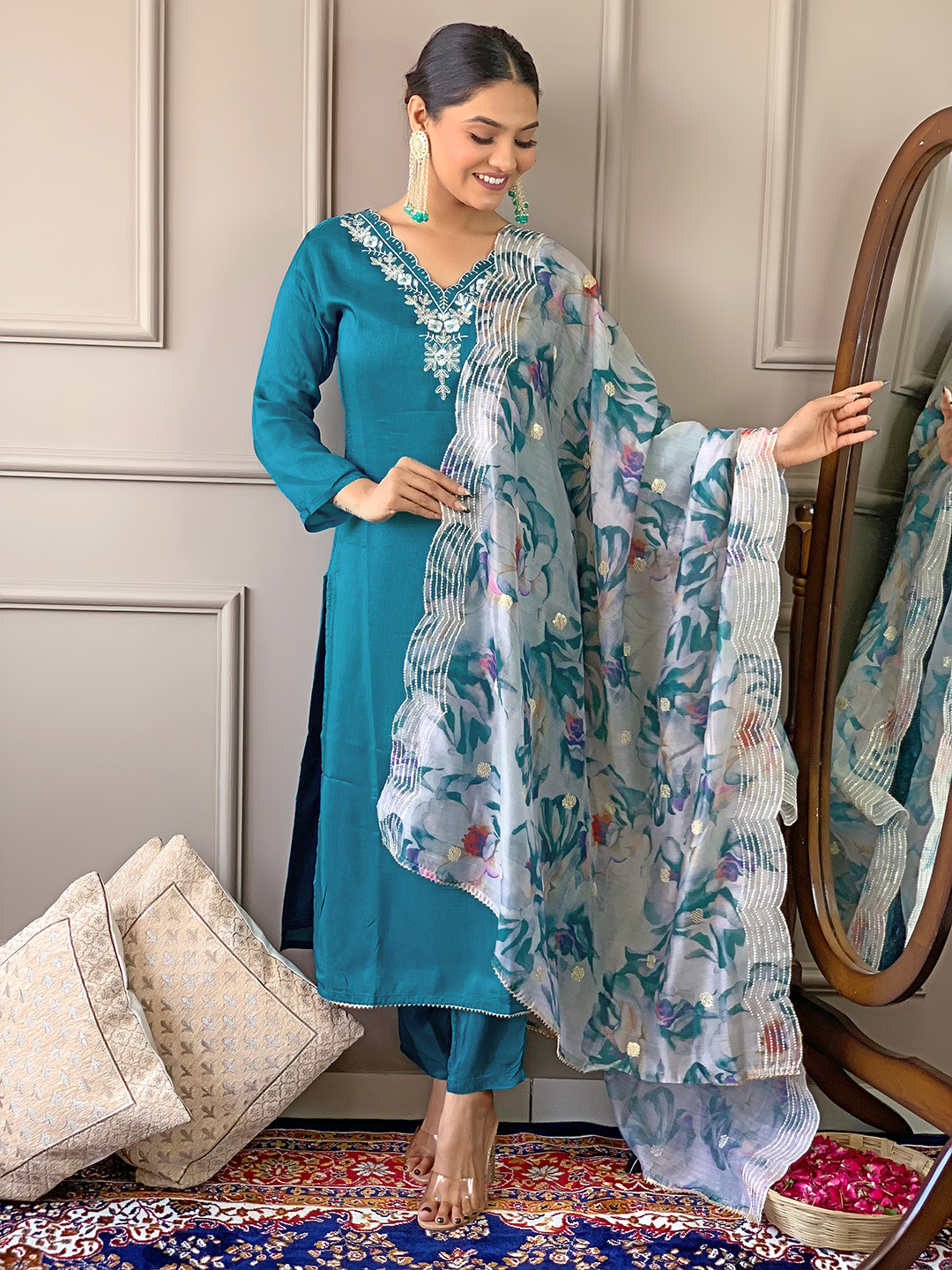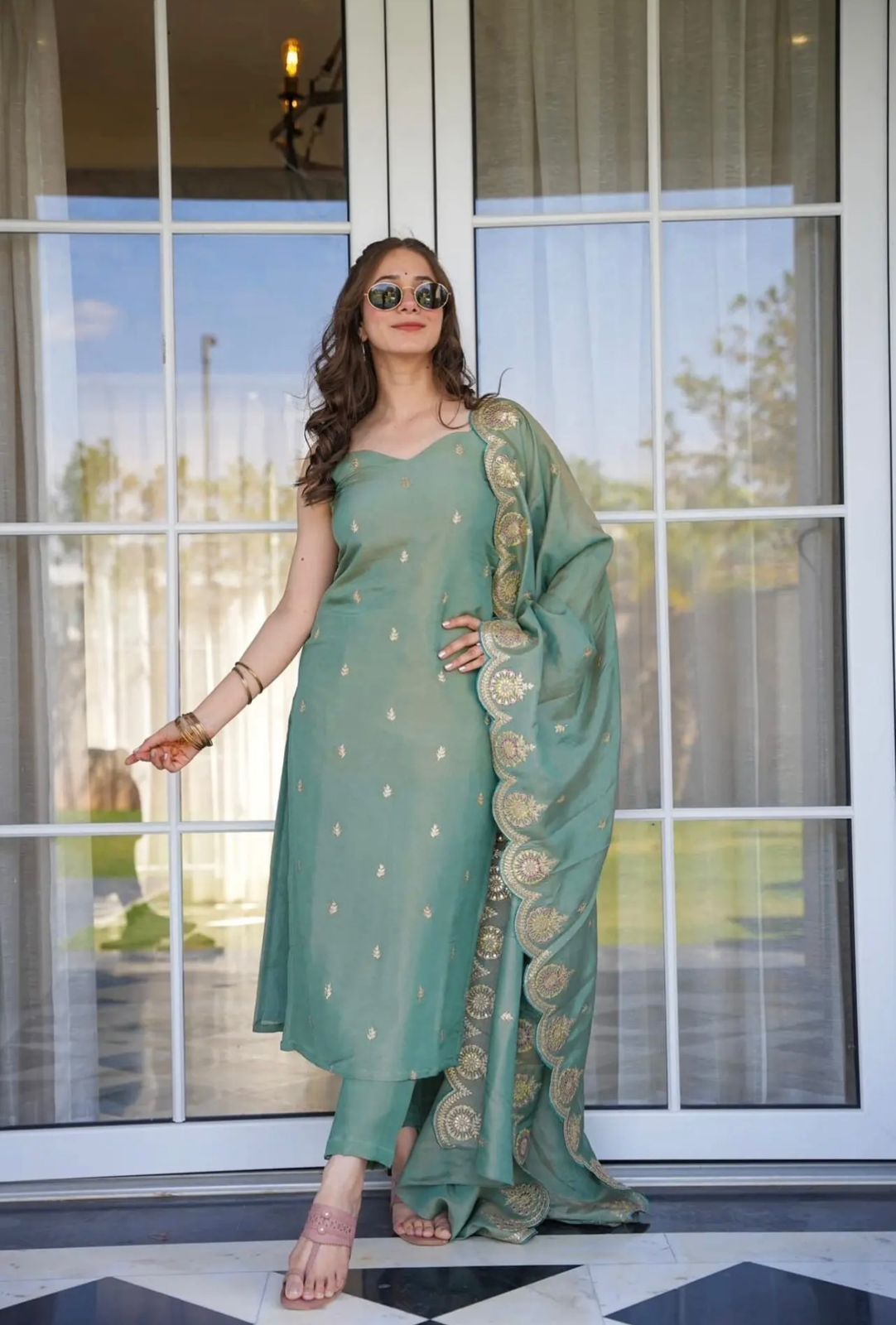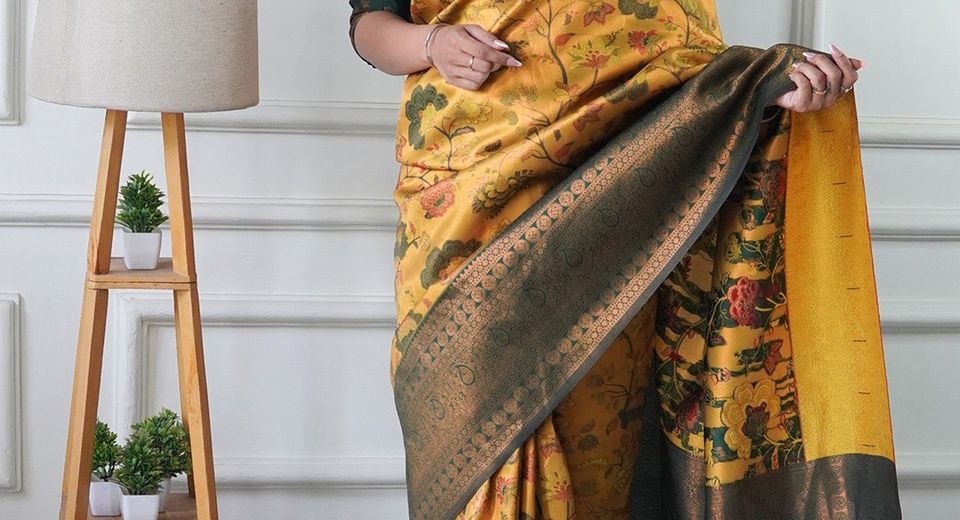
A Lucknowi saree can look quiet at first glance, yet its surface often records hours of handwork. The famous sarees of Lucknow are especially associated with chikankari embroidery, mukaish embellishment and light fabrics suited to the city's warm climate. Knowing the difference between those techniques helps you choose a saree for a summer gathering, a wedding function or everyday festive wear without confusing Lucknowi craft with unrelated silk traditions.
Lucknow's saree heritage is connected to the wider chikankari tradition of Awadh, where fine thread embroidery developed on fabrics such as cotton, muslin, georgette, chiffon and silk blends. A saree draw as Lucknowi may therefore refer to the embroidery language rather than one fixed fibre or silhouette. The fabric, stitch density, reverse side, embellishment and finishing together reveal its quality.
What makes the famous sarees of Lucknow distinctive?
The famous sarees of Lucknow stand out through hand or machine-rendered chikankari, delicate mukaish work and an emphasis on texture rather than heavy woven ornament. Chikankari creates motifs with white or coloured thread, while mukaish adds small metallic dots, circles or shimmer to the surface.
Traditional chikankari uses stitches including shadow work, jaali, bakhiya, phanda, murri, keel kangan and tepchi. A saree doesn't need to display every stitch, but varied stitchwork generally creates more visual depth than a repeated printed pattern. Jaali is particularly recognisable because the thread forms a net-like effect while leaving the fabric light.
Common motifs include flowers, leaves, vines, paisleys and stylised creepers. These forms are often arranged along the pallu, border and body rather than spread as a dense all-over pattern. The result allows the drape to remain fluid, which explains why Lucknowi sarees work well with narrow pleats and soft, close-to-the-body styling.
Is every white embroidered saree a chikankari saree?
Not every white embroidered saree is chikankari; a genuine identification requires examining the stitch construction, motif placement and reverse side. Printed floral designs may imitate chikankari visually, while cutwork, machine embroidery and lace appliqué produce different surfaces.
Turn a saree corner over before buying. Hand chikankari usually shows small variations in stitch length and occasional thread movement, whereas uniform machine work can appear mechanically even. Variation alone doesn't prove authenticity, because skilled machine embroidery can be neat and attractive, but a seller should clearly state whether the work is hand embroidered, machine embroidered or a combination.
Chikankari, mukaish and other Lucknow techniques explained
Chikankari is thread embroidery, whereas mukaish is a metallic embellishment technique that creates reflective points on the fabric. The two crafts can appear together, but they should not be treated as interchangeable names for the same work.
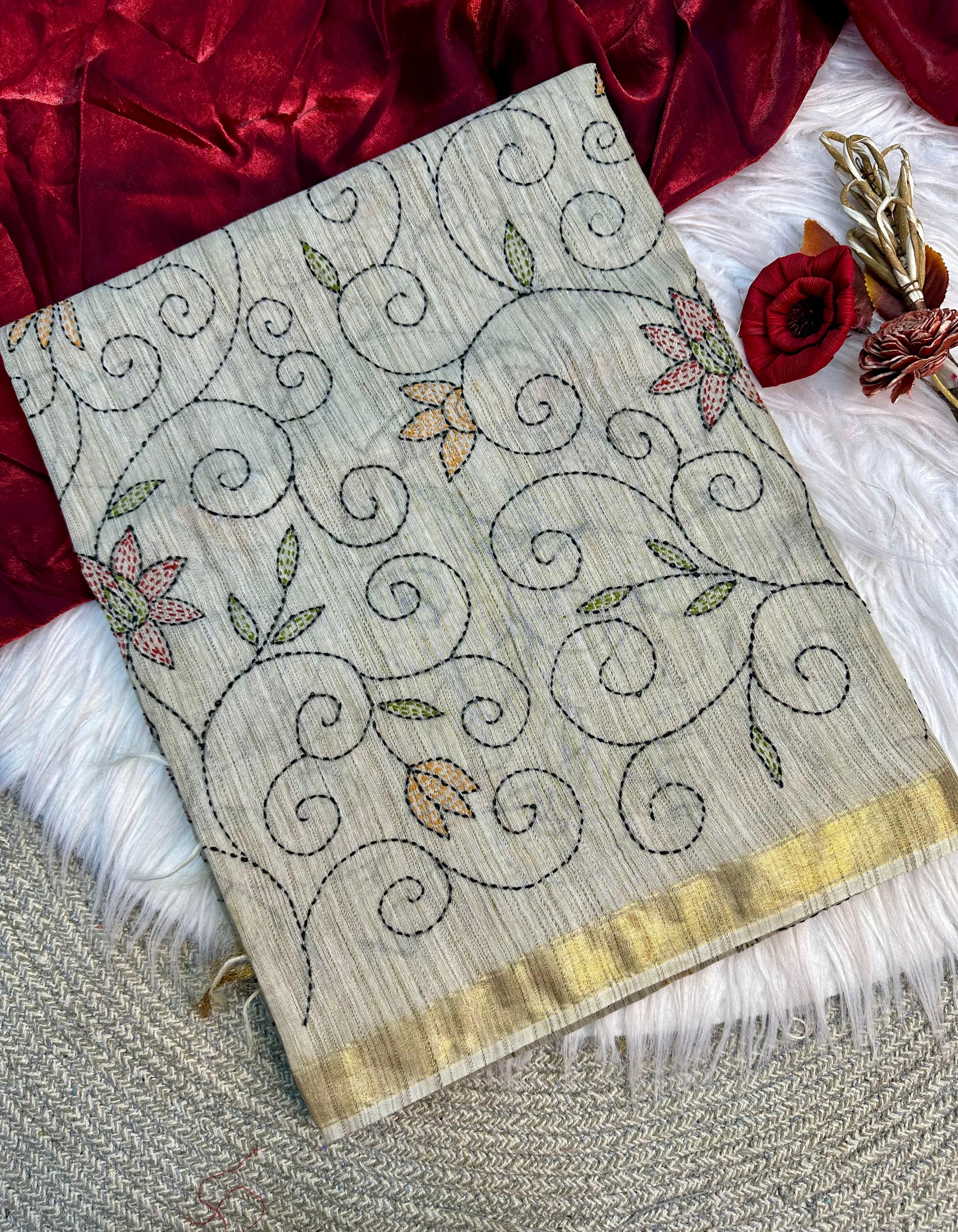
Chikankari may be worked in white, pastel or contrasting thread. White-on-white embroidery produces a restrained, classic effect, while coloured thread makes floral motifs more visible from a distance. The base fabric affects the final appearance: cotton gives a crisp, breathable feel, while georgette and chiffon allow a softer, more fluid drape.
Mukaish work is also called badla or kamdani in different craft contexts, although usage varies by region and seller. Tiny metallic pieces or threads are attached to create glints across a border, pallu or field. Silver-toned mukaish looks cool and understated; gold-toned mukaish creates a warmer festive finish. Ask whether the metallic detailing is hand applied, woven, printed or heat transferred, because durability differs between methods.
Lucknowi sarees can also carry zardozi-inspired accents, sequins, beads or resham embroidery in contemporary designs. Those additions may make a saree suitable for evening wear, but they don't automatically make the saree a heritage chikankari piece. A transparent product description should identify the primary embroidery technique and list secondary embellishments separately.
Which fabrics suit a Lucknowi saree?
Cotton, muslin, georgette, chiffon, organza, silk blends and lightweight viscose are among the fabrics used for Lucknowi-inspired sarees, and each fabric changes the wearing experience. Cotton is usually the easiest choice for daytime comfort, while georgette and chiffon create a more fluid party drape.
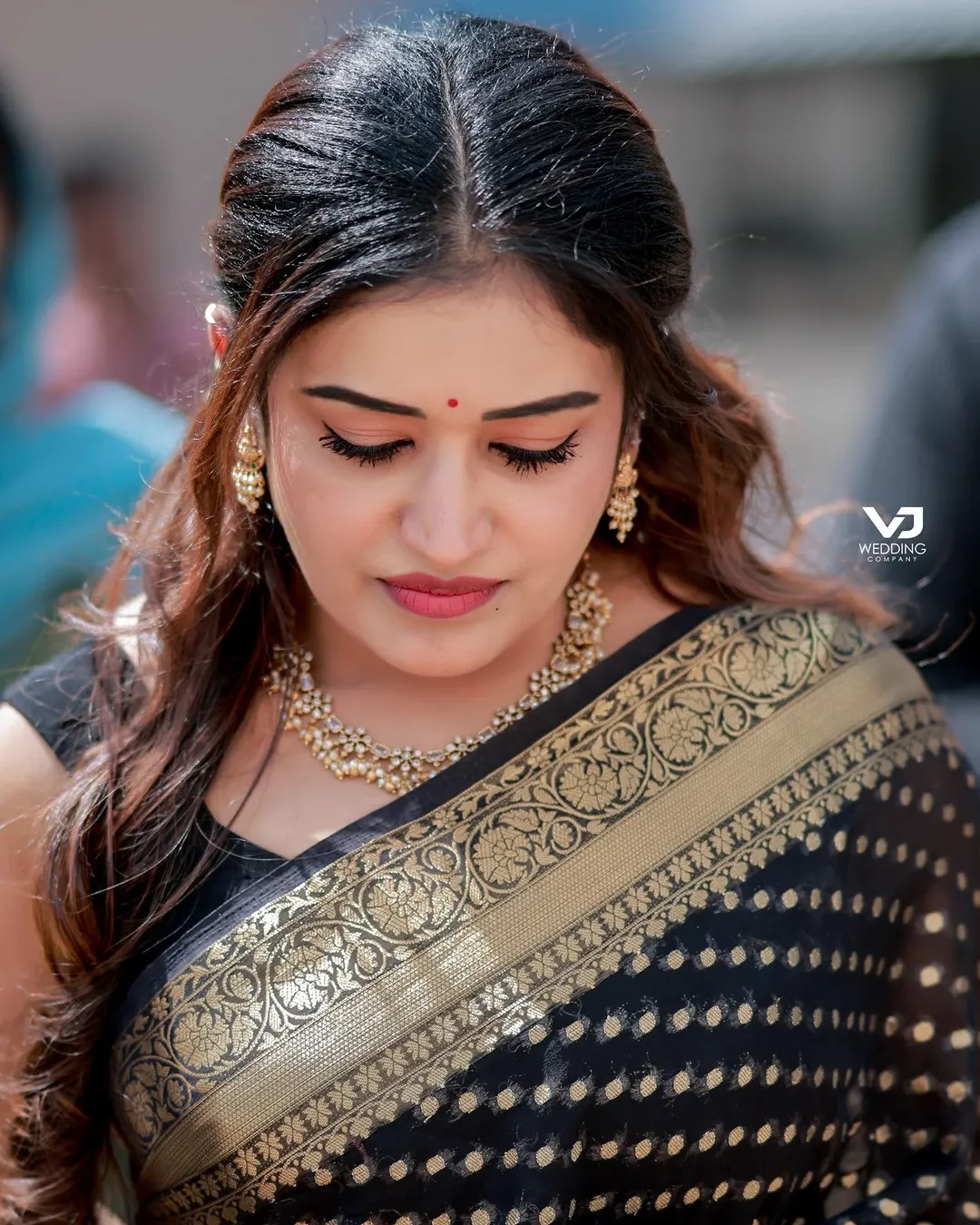
Cotton and muslin
Cotton and muslin suit warm weather, long daytime events and regular use because they absorb moisture and allow air circulation. Cotton chikankari tends to hold pleats more clearly than chiffon, making it easier for first-time saree wearers. A lightweight cotton petticoat or cotton underskirt keeps the drape comfortable without adding unnecessary bulk.
Handloom cotton may have small slubs, slight shifts in weave or minor irregularities. Those details are normal in many handwoven fabrics and should not automatically be treated as defects. The Pastel Floral Tissue Handloom Cotton Saree with Zari Weaves demonstrates how a cotton-based saree can combine a lighter floral look with metallic woven detail, although zari weaving is different from chikankari embroidery.
Georgette, chiffon and organza
Georgette and chiffon create a soft fall and are useful when the saree needs a slim, fluid silhouette. These fabrics can be more transparent, so check whether the blouse and petticoat provide adequate coverage. Organza has a crisper hand and can support embroidered motifs clearly, but organza borders may feel less forgiving during sitting, dancing or travel.
Linen cotton occupies a practical middle ground because it can feel airy while offering more body than chiffon. The Pastel Linen Cotton Floral Print Saree with Designer Blouse shows how a printed linen-cotton look differs from embroidered Lucknowi work: the visual language may be floral, but the surface technique and care requirements are not the same.
Silk and silk blends
Silk and silk blends give chikankari or mukaish sarees a richer fall and are more appropriate for receptions, festive dinners and formal gifting. Banarasi silk, Kanjeevaram and Lucknowi chikankari belong to different textile traditions: Banarasi silk is associated with Varanasi's figured zari weaving, Kanjeevaram with South Indian silk weaving, and chikankari with Lucknow's embroidery heritage.
Banarasi examples can help a buyer compare surface construction. Mustard Banarasi Soft Silk Jacquard Saree with Zari, Royal Mustard Bloom Banarasi Silk Saree and Royal Banarasi Soft Silk Zari Weave Saree rely on woven pattern and zari rather than Lucknowi thread embroidery. Maroon Banarasi Lichi Silk Saree With Zari Work offers another example of a lustrous, zari-led surface that should not be labelled chikankari simply because it's a time-honoured saree.
How can you identify a well-made Lucknowi saree?
A well-made Lucknowi saree has a balanced drape, clearly described embroidery, secure threadwork and finishing that remains comfortable against the skin. Inspection should begin with the fabric and construction, not with the number of motifs alone.
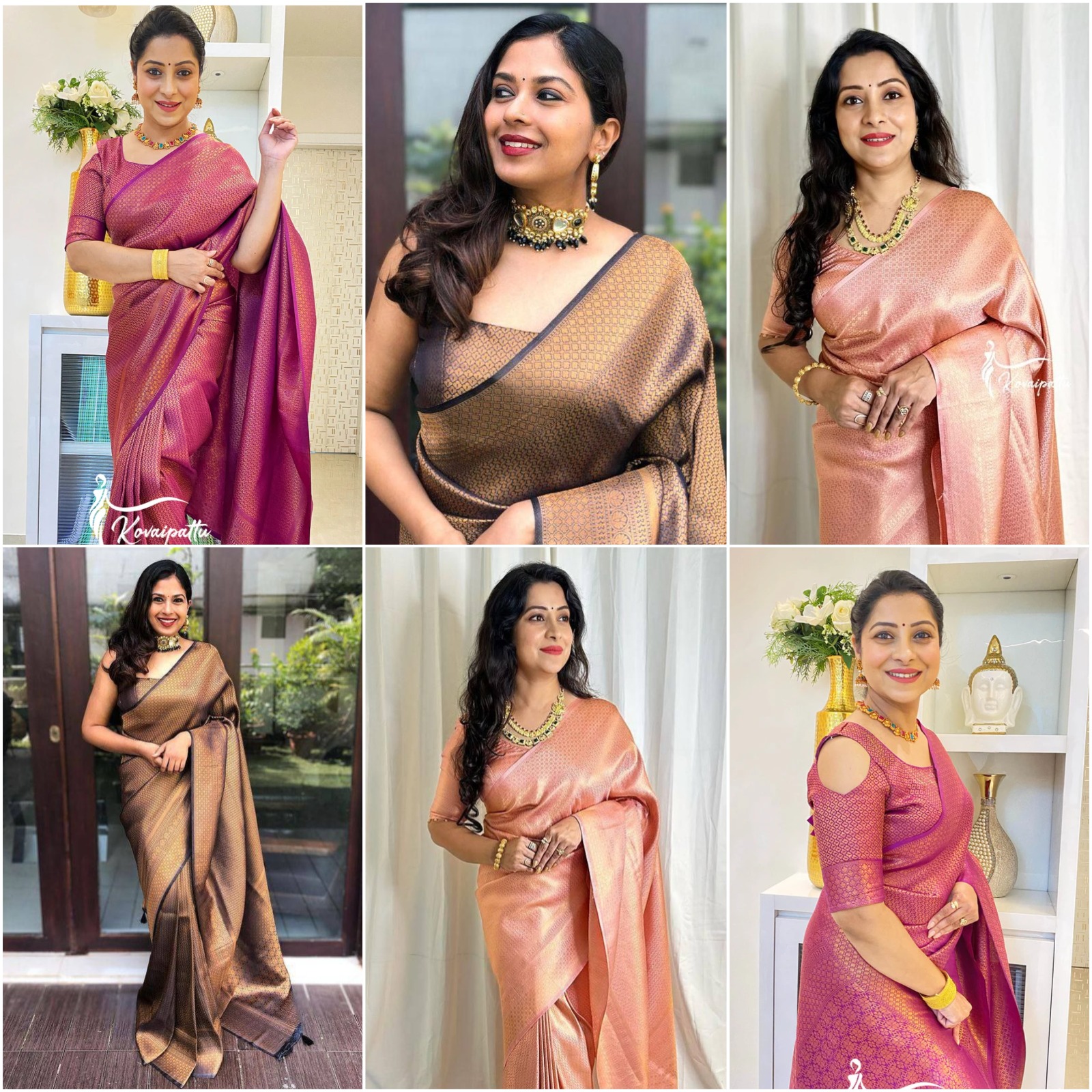
- Read the technique description. Look for specific terms such as chikankari, jaali, bakhiya, mukaish, resham or hand embroidery. "Designer work" without a technique description provides too little information.
- Inspect the reverse. Hand embroidery may show thread paths, knots or small irregularities. Loose threads, large floating strands and unfinished edges indicate a need for closer quality checking.
- Check motif density. Dense embroidery increases weight, stiffness and often price. A lightly worked pallu with a decorated border can be more comfortable than an all-over design for a six-hour event.
- Examine the border and pallu. Borders should lie flat and should not pull the fabric into ripples. A pallu that's noticeably heavier than the body may require careful pleating and stronger blouse support.
- Confirm transparency. Hold georgette, chiffon and organza against light. A sheer saree may need a matching or skin-toned lining, especially if the embroidery is concentrated away from the torso.
- Ask about care. Hand embroidery, metallic mukaish and dyed silk should not be assumed to tolerate machine washing. The care label or seller's written guidance matters more than a generic "easy care" claim.
Price should be interpreted alongside fabric, embroidery method, labour, finishing and blouse inclusion. A low price may indicate printed or machine work rather than poor design, while a high price doesn't prove hand embroidery. Collections such as Sarees from Rs 1000 to Rs 1500 can be useful for comparing accessible saree construction, but the product description remains the deciding evidence.
How should a Lucknowi saree be styled?
A Lucknowi saree looks most balanced when the blouse, jewellery and pleat structure support the embroidery rather than compete with it. The right styling depends on the fabric's weight and the density of the border.
Pair a white or pastel chikankari saree with a solid blouse in cotton silk, raw silk or matching embroidered fabric. Pearl studs, silver jhumkas, glass bangles and a small potli keep the look appropriate for a daytime puja, Eid gathering or summer lunch. A three-quarter-sleeve blouse works well when the saree has delicate embroidery and a narrow border.
Use metallic mukaish as the cue for jewellery. Silver mukaish pairs naturally with oxidised silver, pearls or white stones, while gold mukaish works with antique gold earrings and a warm-toned clutch. Avoid placing a heavily sequinned blouse beneath a saree whose pallu already carries dense metallic work, because the combined shine can obscure the embroidery.
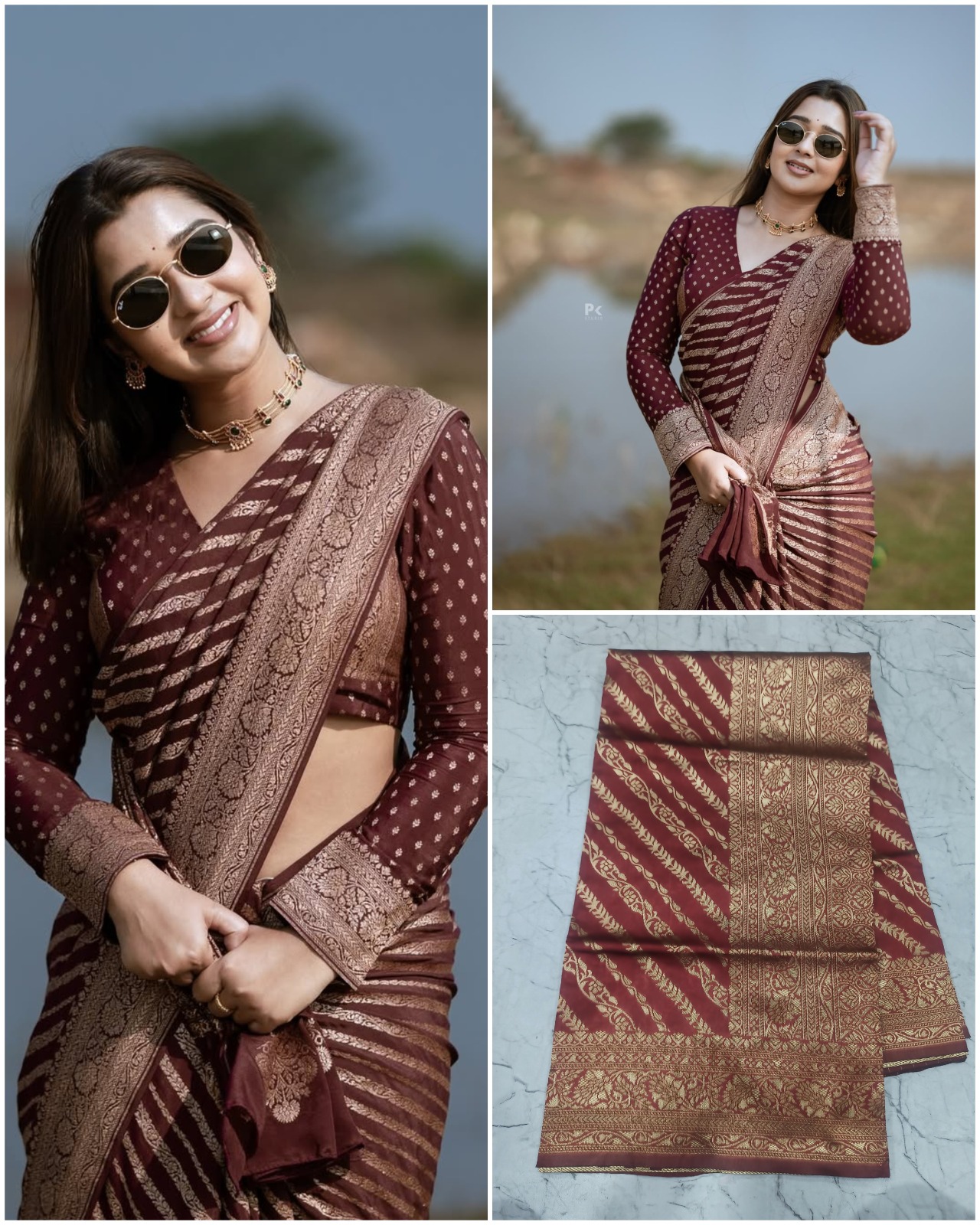
For a formal evening, a silk-blend Lucknowi saree can take a structured blouse with a square, boat or high neckline. For a daytime ceremony, cotton or linen-cotton creates a less restrictive drape. A product such as Maroon Banarasi Soft Silk Zari Weave Saree illustrates a different styling route: zari-led Banarasi texture suits richer jewellery and sharper pleats than airy chikankari cotton.
Pin the shoulder pleats securely but avoid flattening a three-dimensional jaali or raised stitch under multiple clips. A narrow petticoat with a stable waistband helps sheer fabrics fall smoothly. For travel, fold the embroidered side inward with acid-free tissue or clean cotton between layers, rather than pressing metallic work directly against another embellished surface.
How should you wash and store Lucknowi embroidery?
Professional dry cleaning or gentle hand cleaning is generally safer for delicate chikankari, silk blends and mukaish than routine machine washing. Always follow the garment label because fibre blends, dyes and metallic work respond differently to water and solvents.
don't soak a mukaish saree for hours, scrub embroidered motifs or wring chiffon and georgette. If a care label permits hand washing, use cool water, a mild detergent designed for delicate fabrics and a short wash time. Test colour fastness on an inner seam before treating the full saree.
Dry the saree in shade on a clean, broad support and keep direct midday sunlight away from dark dyes and metallic details. Store a completely dry saree folded with soft, unprinted tissue or clean muslin. Refold silk and heavily embroidered sarees every few months so the same crease doesn't weaken the fabric permanently.
Keep zari and mukaish away from perfumes, deodorant sprays, damp cupboards and untreated wooden surfaces. Air the saree briefly after wearing before storage, but don't leave it exposed overnight in humid weather. These small habits reduce tarnishing, mildew and pressure damage without requiring elaborate equipment.
Where do Lucknowi sarees fit among India's textile traditions?
Lucknowi sarees belong to India's embroidery-led textile landscape, while Banarasi, Kanjeevaram, Chanderi and Jamdani are primarily recognised through distinctive weaving traditions. Chanderi is known for a light, often translucent hand and elegant woven motifs; Banarasi silk is known for figured zari and brocade effects; Kanjeevaram is known for substantial silk and contrasting borders.
Understanding these categories prevents misleading comparisons. A saree can combine regional influences, such as a Banarasi-style woven border with contemporary embroidery, but the product description should identify the construction accurately. Maroon Banarasi Lichi Silk Saree with Zari Border and Maroon Banarasi Lichi Silk Saree With Zari Work are useful comparison points for buyers deciding between woven grandeur and the softer, stitched surface associated with Lucknow.
Discount labels should also be separated from craft claims. Sarees Under 20% Off, Sarees Under 10% Off, Sarees Flat 60% Off and Sarees Flat 50% Off describe promotional groupings, not levels of authenticity or handwork. Before purchase, compare fibre composition, embroidery method, blouse details, measurements and care instructions rather than using the discount percentage as a quality shortcut.
The most reliable choice is the saree whose technique matches the way you'll wear it. Choose cotton chikankari for breathability and repeat use, mukaish for controlled sparkle, georgette for fluid evening drape and silk blends for a more formal fall. That practical match matters more than selecting the heaviest embroidery or the most elaborate border.
Questions Buyers Ask About Lucknowi Sarees
What are the most famous sarees of Lucknow?
The best-known Lucknow sarees are chikankari sarees and sarees decorated with mukaish or badla work. They are often made in cotton, muslin, georgette, chiffon, organza or silk blends, so the embroidery technique matters more than one fixed fabric.
How can I tell whether a saree has real chikankari work?
Check the stitch names, motif construction and reverse side instead of relying on a white floral appearance. Hand chikankari may show small variations and visible thread paths, while printed designs and machine embroidery tend to look more uniform.
What is the difference between chikankari and mukaish work?
Chikankari is thread embroidery that creates floral, leafy or geometric motifs, while mukaish adds metallic dots, circles or glints to the fabric. Both techniques can appear on one saree, but mukaish does not replace chikankari embroidery.
Which fabric is best for a Lucknowi saree in summer?
Cotton and muslin are usually the most comfortable choices for summer because they are breathable and absorb moisture. Lightweight cotton also holds pleats more clearly than chiffon or georgette, making it easier to manage during long daytime events.
Can a Lucknowi saree be worn to a wedding?
A Lucknowi saree can suit a wedding when the fabric, embroidery density and styling match the function. Silk blends with mukaish, richer threadwork or a formal blouse work well for evening events, while cotton chikankari is better suited to daytime ceremonies and smaller gatherings.
How should a chikankari or mukaish saree be washed?
Professional dry cleaning is generally safer for silk blends, delicate embroidery and metallic mukaish. Follow the care label, avoid prolonged soaking and scrubbing, dry the saree in shade and store it folded with soft tissue or clean muslin.