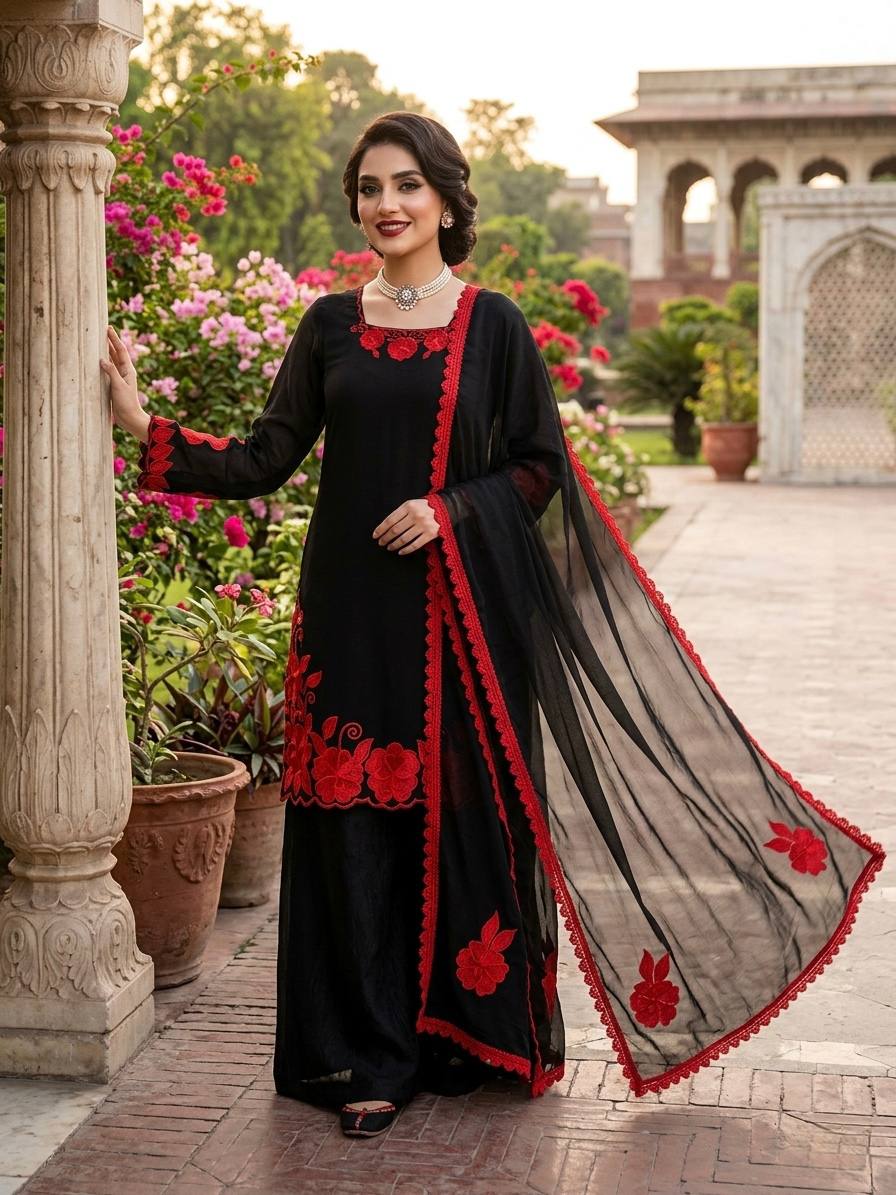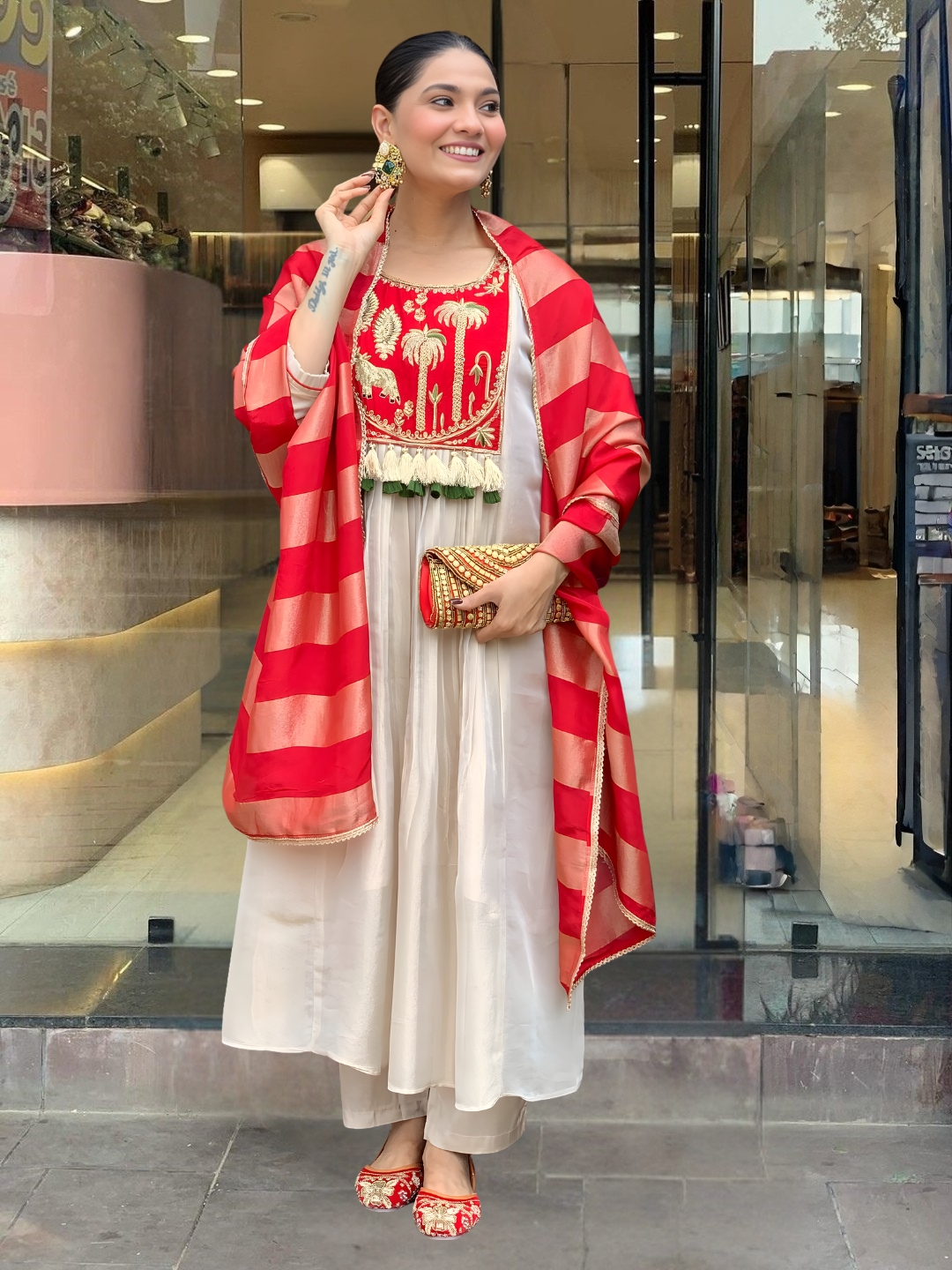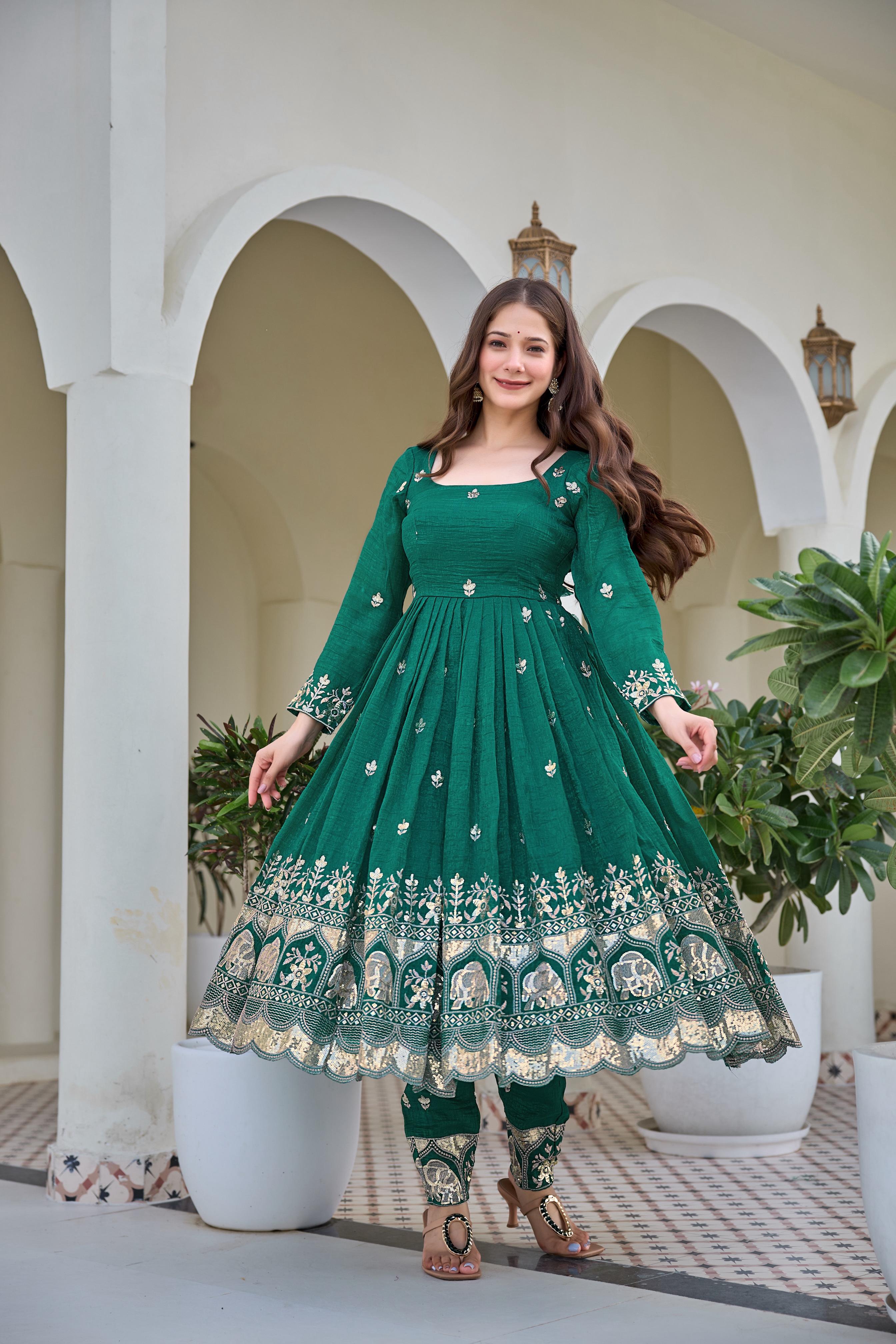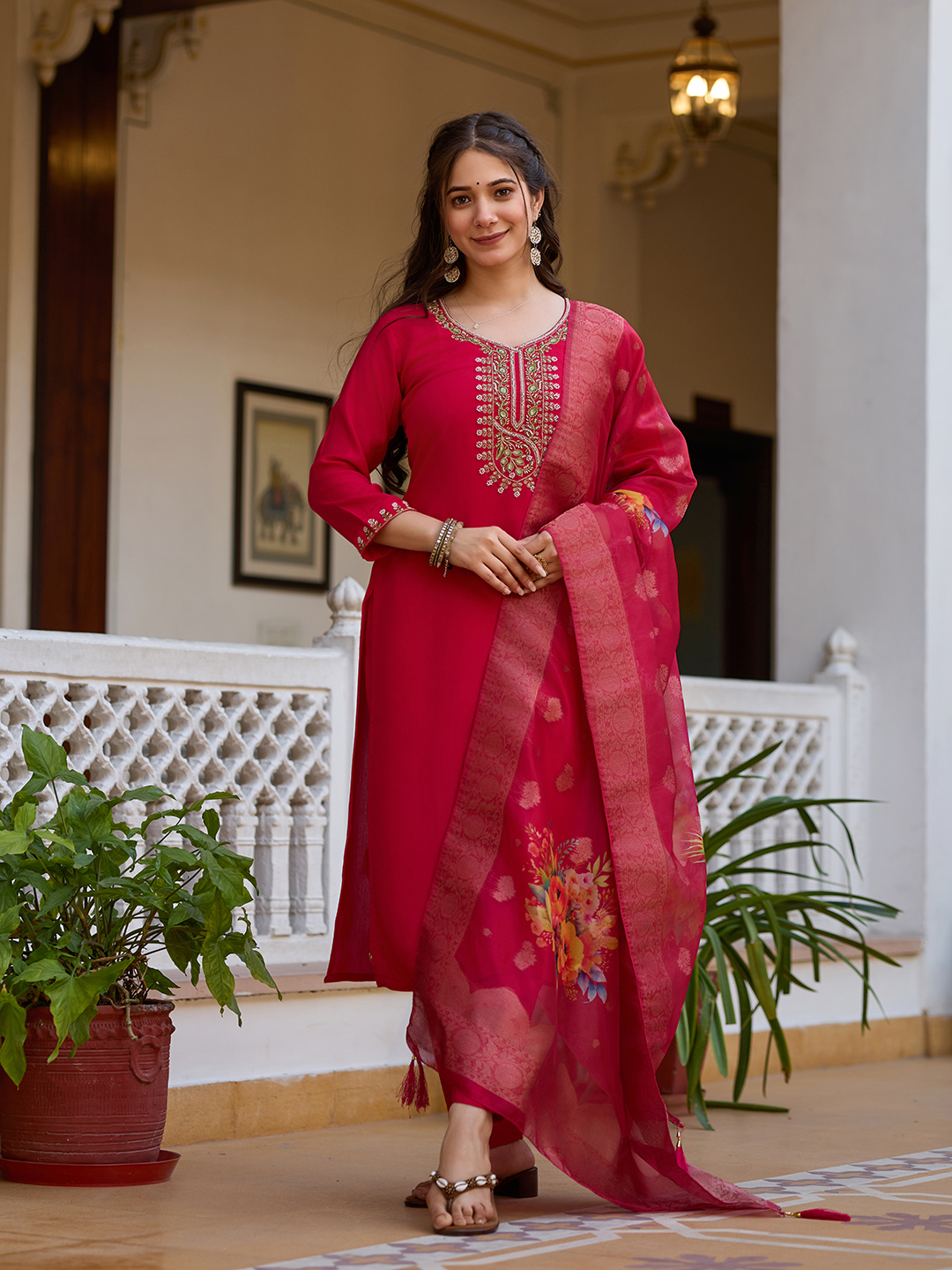
Famous sarees of Jaipur are best understood through the crafts used to decorate them rather than through one single weave. Sanganeri block prints, Bagru prints, Leheriya stripes, Bandhani dots and gota-patti embellishment each tell a different story about Rajasthan. Knowing the difference helps you choose a saree for a Haldi ceremony, an office gathering or a wedding reception without relying only on colour or price.
Jaipur is Rajasthan's commercial and cultural centre, but several saree traditions associated with the city come from craft clusters across the wider region. Sanganer is known for fine floral block printing, Bagru for earthy hand-block patterns and resist-dye techniques, while Leheriya and Bandhani are linked to Rajasthan's tie-dye vocabulary. Kota Doria from Kota is another important regional textile that's frequently sold in Jaipur markets.
What makes the famous sarees of Jaipur distinctive?
The famous sarees of Jaipur are distinctive because surface design, dyeing and lightweight drape are often more important than a single traditional loom identity. Jaipur sarees commonly combine cotton, Kota Doria, georgette, silk, tussar silk or tissue with regional prints and Rajasthani colour stories.
Jaipur's textile character is visible in three practical details: the rhythm of the motif, the way colour enters the fabric and the weight of the finished saree. A Sanganeri saree may show delicate floral butis arranged with considerable spacing. A Bagru saree may use bolder flowers, dots or geometric forms in indigo, black, rust and natural-looking earthy shades. A Leheriya saree is recognised by diagonal or wave-like bands created through resist dyeing.
Not every saree sell in Jaipur is made in Jaipur, and not every Rajasthani saree is a printed saree. Banarasi silk, Kanjeevaram, Chanderi and Bengal cotton are also wide available in Jaipur retail markets. A narrow buyer should therefore ask whether the selling point is the fabric, the print technique, the region of production or the embellishment.
Which heritage Jaipur sarees should you know?
The most recognisable Jaipur and Rajasthan saree traditions include Sanganeri print, Bagru print, Leheriya, Bandhani, Kota Doria and gota-patti sarees.
Sanganeri print sarees
Sanganeri print sarees are known for fine floral and nature-inspired motifs, often printed on a light base. Classic Sanganeri work commonly features flowers, leaves, birds and jaali-like arrangements created with carved wooden blocks. White, cream and soft pastel grounds are especially useful when you want a graceful daytime saree.
Hand-block printing can produce small shifts in alignment, slight variations in ink density and occasional marks around the motif. Those details are not automatically defects; they can indicate manual printing. A highly uniform surface may instead point to screen printing or digital printing, so ask for the technique when authenticity matters.
Bagru print sarees
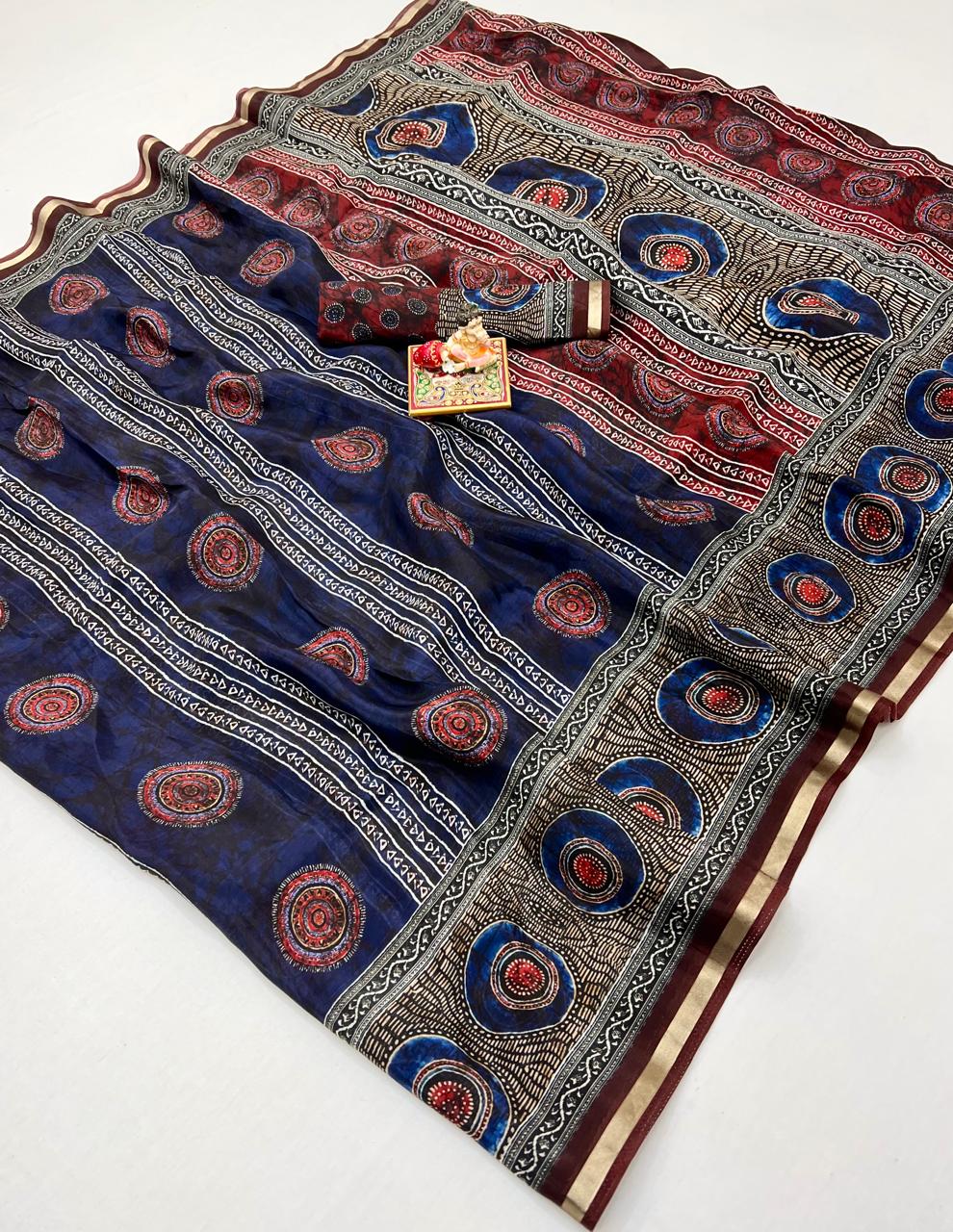
Bagru print sarees are associated with hand-block printing and resist-dye methods that create stronger, earthier patterns. Indigo, madder-inspired red, black, mustard and beige are familiar Bagru colour directions, although contemporary versions use many more shades.
Bagru textiles often have a more grounded visual weight than delicate Sanganeri prints. The designs can suit cotton sarees for everyday wear, but the same vocabulary also appears on silk-cotton and other dressier fabrics. Look closely at the reverse side: block printing usually leaves some colour presence on the back, while a very flat or plastic-looking surface may suggest a different production method.
Leheriya and Bandhani sarees
Leheriya sarees are identified by flowing diagonal waves, while Bandhani sarees are identified by tiny resist-dyed dots. Leheriya is made by tightly folding or rolling fabric before dyeing, which creates bands that move diagonally across the cloth. Bandhani involves tying small sections of fabric before dyeing, producing dotted patterns after the ties are opened.
Leheriya works particularly well for festive daywear because the stripes create movement without heavy embroidery. Bandhani can range from fine dotted patterns to larger motifs and can be made in cotton, georgette, silk and other fabrics. A time-honoured Bandhani surface may show small raised or puckered points where the fabric was tied.
Kota Doria and gota-patti sarees
Kota Doria sarees are lightweight textiles with a distinctive square-check texture created by the combination of fine cotton and silk yarns. Kota Doria is airy and comfortable in warm weather, but the open structure requires careful handling around jewellery and rough surfaces.
Gota-patti sarees are recognised by metallic ribbon or appliqué work, commonly in gold or silver tones. Gota patti can be used on cotton, georgette, chiffon, silk and tissue. The embellishment may be stitched, appliquéd or combined with sequins, so inspect the edges of the metallic pieces before purchase.
How do Jaipur saree fabrics change the wearing experience?
Fabric determines the saree's weight, fall, opacity, comfort, crease behaviour and suitability for an event. Print alone can't tell you how a Jaipur saree will feel after six hours of wear.
Cotton is breathable and practical for daytime use, but cotton prints may apply more visibly than silk blends. Georgette is fluid and comparatively easy to pleat, make it useful for beginners and movement-heavy events. Tussar silk has a slightly textured surface and a richer, more organic fall than crisp synthetic fabric. Tissue has a crisp, luminous appearance and can have a sharper pleat, although metallic yarns may make the saree less forgiving.
A product such as Pastel Floral Tissue Handloom Cotton Saree with Zari Weaves demonstrates how a pale floral surface and zari can shift a saree from plain daily cotton towards light festive dressing. Cream Pink Tissue Handloom Cotton Saree with Zari offers a similar lesson in balancing a soft colour palette with a dressier metallic finish.
For a stronger Rajasthani visual language, Orange Rajasthani Print Tussar Silk Saree with Zari combines a regional print direction with textured tussar silk and metallic detail. Tussar silk is generally more structured than georgette, so the pleats may look fuller and the pallu may need a firm shoulder pin.
How should you choose a Jaipur saree for an occasion?
Choose a Jaipur saree by matching fabric weight and surface decoration to the event's duration, dress code and weather. A breathable printed cotton suits a daytime gathering, while silk, tissue or substantial zari suits an evening celebration.
For a Haldi ceremony or daytime celebration
A printed cotton, Kota Doria or light georgette saree is usually the most comfortable choice for a Haldi ceremony. Choose a bright border or contrasting blouse if photographs matter, because small prints can disappear against busy backgrounds. Keep the blouse neckline and sleeves practical if turmeric, dancing or outdoor heat is expected.
Rajwadi Mor Premium Printed Georgette Saree is an example of how a fluid printed georgette can provide movement without the weight of a heavily woven silk. A georgette saree benefits from a well-fitted petticoat or saree shapewear because the fabric can otherwise cling unevenly around the knees.
For office, travel or daytime hosting
Choose cotton, silk-cotton or a lightly embellished saree for office and daytime hosting. Small floral prints, restrained borders and mid-weight fabrics are easier to sit in, fold into luggage and repeat across different blouses.
Pair a Sanganeri-inspired floral saree with a solid blouse in one of the print's minor colours. A high-contrast blouse can make the outfit more graphic, while a matching blouse creates a quieter heritage effect. Avoid very long tassels when travelling because tassels catch on chair arms, bags and vehicle doors.
For weddings and evening events
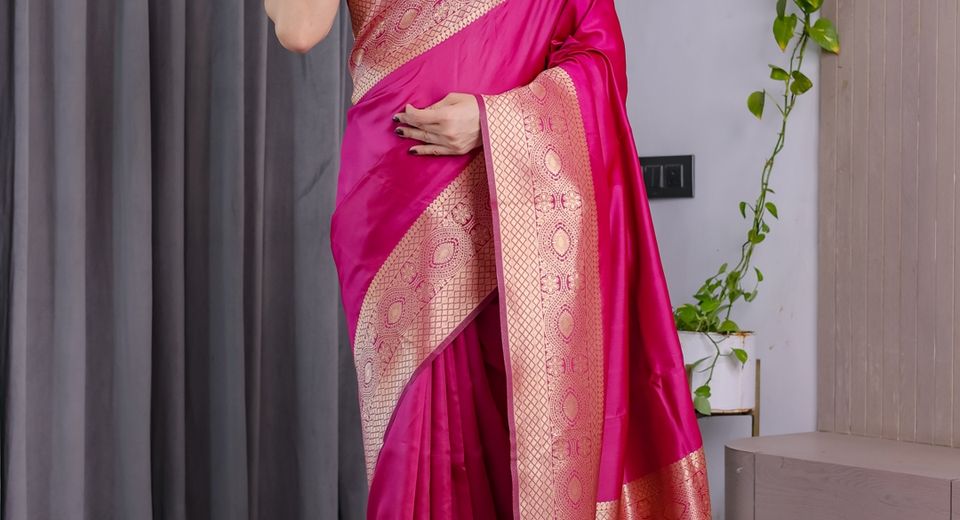
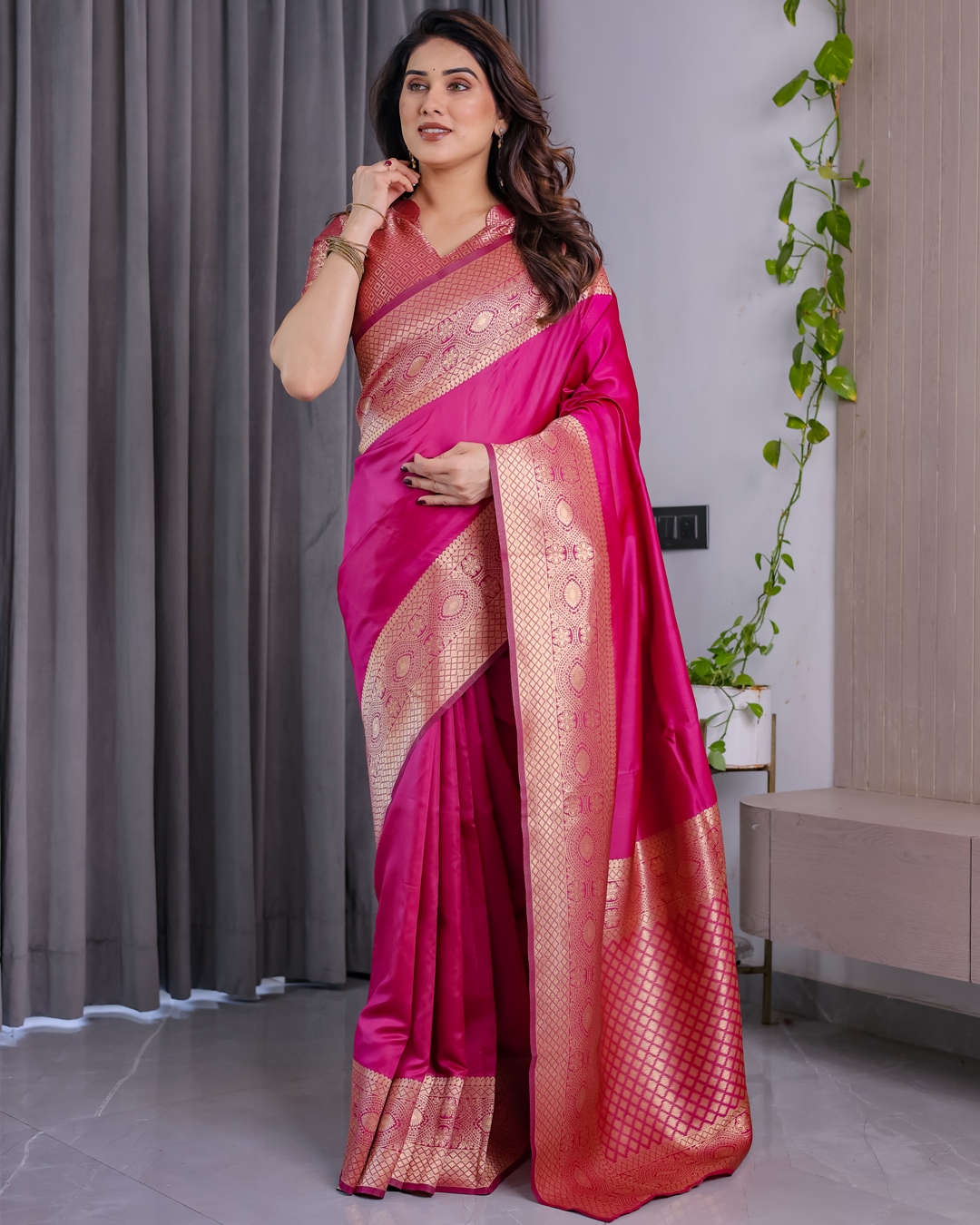
Silk, zari, mirror work and metallic tissue are suitable for weddings and evening events because artificial light reveals their surface texture. Rani Pink Banarasi Silk Saree with Jacquard Zari Border uses a saturated colour and a woven metallic border for a formal appearance. Rani Pink Banarasi Soft Silk Saree With Golden Zari Borders brings a softer drape while retaining the visual authority of zari.
Royal Banarasi Soft Silk Zari Weave Saree is another example of a saree where the weave itself supplies much of the occasion-ready effect. Banarasi silk isn't a Jaipur-origin weave, but Banarasi sarees belong in a Jaipur wardrobe because Jaipur is a major destination for varied Indian saree traditions. Regional identity should be described accurately rather than assumed from where a saree is purchased.
For a more contemporary wedding look, Royal Raj Gharana Mirror Work Designer Saree uses mirror-work styling as the main statement. Mirror work can catch light strongly, so keep the necklace smaller or choose earrings and bangles instead of wearing every accessory category together.
How can you identify quality before buying a Jaipur saree?
You can assess quality by checking the fabric composition, print or weave consistency, border attachment, finishing and care instructions before paying.
- Read the fibre information. Confirm whether the saree is cotton, silk, tussar silk, georgette, tissue, a blend or a synthetic fibre. "Silk feel" isn't the same as silk content.
- Inspect the border and pallu. Lay the saree flat and check whether the border remains reasonably straight. Small handwoven or hand-printed variations are acceptable, but major puckering can affect drape.
- Examine the reverse side. Woven zari, printed colour and stitched embellishment each leave different traces. Loose threads, unsealed mirror edges or metallic pieces catching on your fingers deserve attention.
- Check transparency under normal light. Hold the saree near a window rather than under a flattering shop spotlight. Transparency affects blouse choice and whether a lining or matching underskirt is needed.
- Ask about shrinkage and washing. Cotton may require gentle washing and shade drying, while zari, silk and mirror work may require dry cleaning. A seller should be able to state the recommended method.
- Compare the price with the construction. A lower price may indicate synthetic fibre, machine printing, a lighter border or less handwork. A higher price should be supported by identifiable fibre, weave, labour or embellishment details.
Budget collections can help with comparison, but discount percentage alone doesn't establish quality. Sarees from Rs 1000 to Rs 1500 can be useful for printed cottons and lighter blends, while Sarees Under 20% Off, Sarees Under 10% Off, Sarees Flat 60% Off and Sarees Flat 50% Off may contain very different fabrics and construction levels. Compare the fibre and finish before comparing the discount label.
How should Jaipur sarees be styled without losing their regional character?
Style a Jaipur saree by repeating one visual idea from its craft, such as a print colour, metallic detail, mirror motif or wave pattern. A saree looks more considered when the blouse and accessories support the surface rather than compete with it.
Pair a Sanganeri or Bagru print with a solid blouse in indigo, maroon, mustard, ivory or a colour lifted from a small motif. Jhumkas, a fabric potli and low-profile sandals reinforce a traditional mood without adding another busy print. For Leheriya, a plain blouse with a clean neckline allows the diagonal stripes to remain the focus.
Wear Bandhani with silver jewellery for a relaxed regional look or with kundan-style jewellery for a formal interpretation. Gota-patti and zari already provide shine, so matte bangles, pearl earrings or a simple bindi can create better balance than additional sequins.
A Banarasi silk saree usually benefits from neat pleats and a firmly pinned pallu because zari adds weight. A georgette saree benefits from a secure waist tuck and a petticoat that matches the base colour. A tissue saree should be stored away from sharp hooks because metallic yarns and crisp surfaces can snag more easily than everyday cotton.
How should you store and care for printed, silk and zari sarees?
Store sarees clean, completely dry, folded along different lines and protected from direct sunlight. Different fabrics require different care, but moisture, perfume residue and prolonged compression are common causes of damage.
Wash printed cotton separately in cool water only when the care label permits it, and dry it inside out in shade. Do not scrub a Sanganeri or Bagru print because friction can dull the printed surface. Silk, Banarasi silk, tussar silk, tissue with zari, mirror-work sarees and heavily embellished sarees are safer with professional dry cleaning.
Refold silk and zari sarees every few months so that one crease doesn't become permanent. Use unbleached cotton or muslin covers instead of airtight plastic for long-term storage, and keep neem leaves or commercial wardrobe protectors separate from direct fabric contact. Air the saree in shade before returning it to storage if it has been worn in humid weather.
A Jaipur saree is easiest to choose when the buyer identifies the craft first, the fabric second and the occasion third. Colour becomes more useful after those three decisions are clear.
Common Questions About Jaipur’s Famous Saree Traditions
What sarees is Jaipur famous for?
Jaipur is especially associated with Sanganeri block-print sarees, Bagru print sarees, Leheriya sarees, Bandhani sarees and regional Kota Doria textiles. Gota-patti embellishment is also strongly linked with Rajasthan's festive clothing tradition.
Are Sanganeri and Bagru sarees the same?
Sanganeri and Bagru sarees are different printing traditions. Sanganeri printing is often recognised by fine floral motifs on lighter grounds, while Bagru printing is known for bolder hand-block patterns, resist techniques and earthy colours.
Which Jaipur saree is best for summer?
Cotton and Kota Doria sarees are generally the most comfortable choices for hot weather because they are breathable and relatively light. A lightly printed cotton saree is practical for daytime use, while a georgette saree may feel comfortable but can be less breathable depending on its fibre content.
How can I tell whether a Rajasthani saree is hand-block printed?
Look for slight variations in motif alignment, ink density and the reverse-side colour presence, because hand-block printing rarely produces perfectly uniform results. Ask whether the saree is hand-block printed, screen printed or digitally printed instead of relying only on the design appearance.
Can I wear a Jaipur saree to a wedding?
You can wear a Jaipur saree to a wedding by choosing silk, tissue, zari, mirror work or a richly finished georgette version. Banarasi silk is suitable for formal dressing in Jaipur, although Banarasi silk is a Banaras tradition rather than a Jaipur-origin weave.
How should I care for a Jaipur saree with zari or mirror work?
Dry-clean zari and mirror-work sarees unless the care label specifically allows another method. Store the saree completely dry in a breathable cotton cover, refold it periodically and keep it away from rough jewellery, hooks and direct sunlight.