Eri Silk Saree Guide: Traditional Assamese Weave and Modern Styling begins with a functional distinction: Eri silk is valued for its soft, slightly woolly texture and low sheen, not for the mirror-like gloss associated with some other Indian silks. Also called Endi or Errandi silk, Eri silk has deep roots in Assam and neighbouring parts of Northeast India. An Eri silk saree can therefore bring regional textile history, comfortable drape and a quietly distinctive surface to a traditional wardrobe.
The word Eri is linked to the Assamese word "era," associated with the castor plant that feeds the Eri silkworm. Artisans have traditionally used Eri fibres for shawls, wraps, stoles and garments. Sarees made from Eri silk are now available in natural shades, dyed colours, patterned versions and blends, so understanding the fibre helps a buyer distinguish authentic characteristics from general "silk-like" finishing.
Eri Silk Saree Guide: What Makes Eri Silk Different?
Eri silk differs from Banarasi silk, Kanjeevaram and Chanderi through its matte surface, warmer handle and spun-yarn construction. Banarasi silk is often recognised for its lustre and elaborate zari work, Kanjeevaram for its substantial body and contrast borders, and Chanderi for its airy transparency and delicate lightness. Eri silk usually sits between a soft textile and a structured saree, offering visible texture without the weight of heavy brocade.
Eri silkworms usually feed on castor leaves, although tapioca and other host plants may also be used. Eri cocoons have an open-ended structure because the moth can leave the cocoon before collection. Traditional production therefore often involves spinning the shorter fibres rather than reeling one long filament. The spinning process contributes to Eri silk's lightly irregular surface and soft, dry touch.
- Surface: Eri silk generally has a matte or softly lustrous finish instead of a highly reflective shine.
- Handle: Eri silk feels warm, slightly nubby and sometimes cotton-wool-like compared with smooth mulberry silk.
- Drape: Eri silk creates rounded, comfortable pleats rather than extremely sharp, liquid folds.
- Weight: Eri silk can feel fuller than lightweight Chanderi while remaining easier to wear than a heavy brocade.
- Variation: Small differences in yarn thickness may be natural in handspun Eri silk, but broken threads and loose weaving indicate construction problems.
Not every saree sold as Eri silk has the same composition. Pure Eri silk, Eri-cotton, Eri blended with mulberry silk and powerloom versions can all appear in the market. A reliable product description should state the fibre percentage, weaving method, saree measurements and whether the blouse piece is included.
Eri Silk Saree Guide: How Is the Assamese Weave Made?
A traditional Assamese Eri silk saree is made by raising Eri silkworms, collecting open cocoons, spinning the fibres into yarn, preparing the warp and weft, and weaving the fabric on a handloom or powerloom. Regional practice, yarn thickness, dyeing method and loom tension determine the final texture.
From Castor Leaves to Spun Yarn
Eri silkworms are raised mainly on castor plants in several areas of Assam and Northeast India. Once the caterpillar forms a cocoon and leaves it, the open cocoon is cleaned and softened. Because the fibres are shorter than the continuous filaments in many mulberry-silk cocoons, artisans commonly spin Eri fibres into yarn.
Handspun Eri yarn can show small slubs and mild differences in thickness. Those variations may be signs of a handmade process rather than defects. However, excessive slubs, repeated broken threads, holes or severe gaps in the weave should not be described as desirable texture. A well-made handloom saree can be irregular in a controlled way while still having a stable selvedge and balanced construction.
Motifs, Borders and Assamese Textile Identity
Assamese weaving traditions frequently use geometric forms, stylised flowers, birds, plants and regional symbols. Eri silk sarees may feature understated borders, all-over motifs or natural undyed surfaces. Some designs draw visual connections with the colours and patterns used in Mekhela Chador textiles, although a saree follows the familiar format of a pleated lower section, pallu and border.
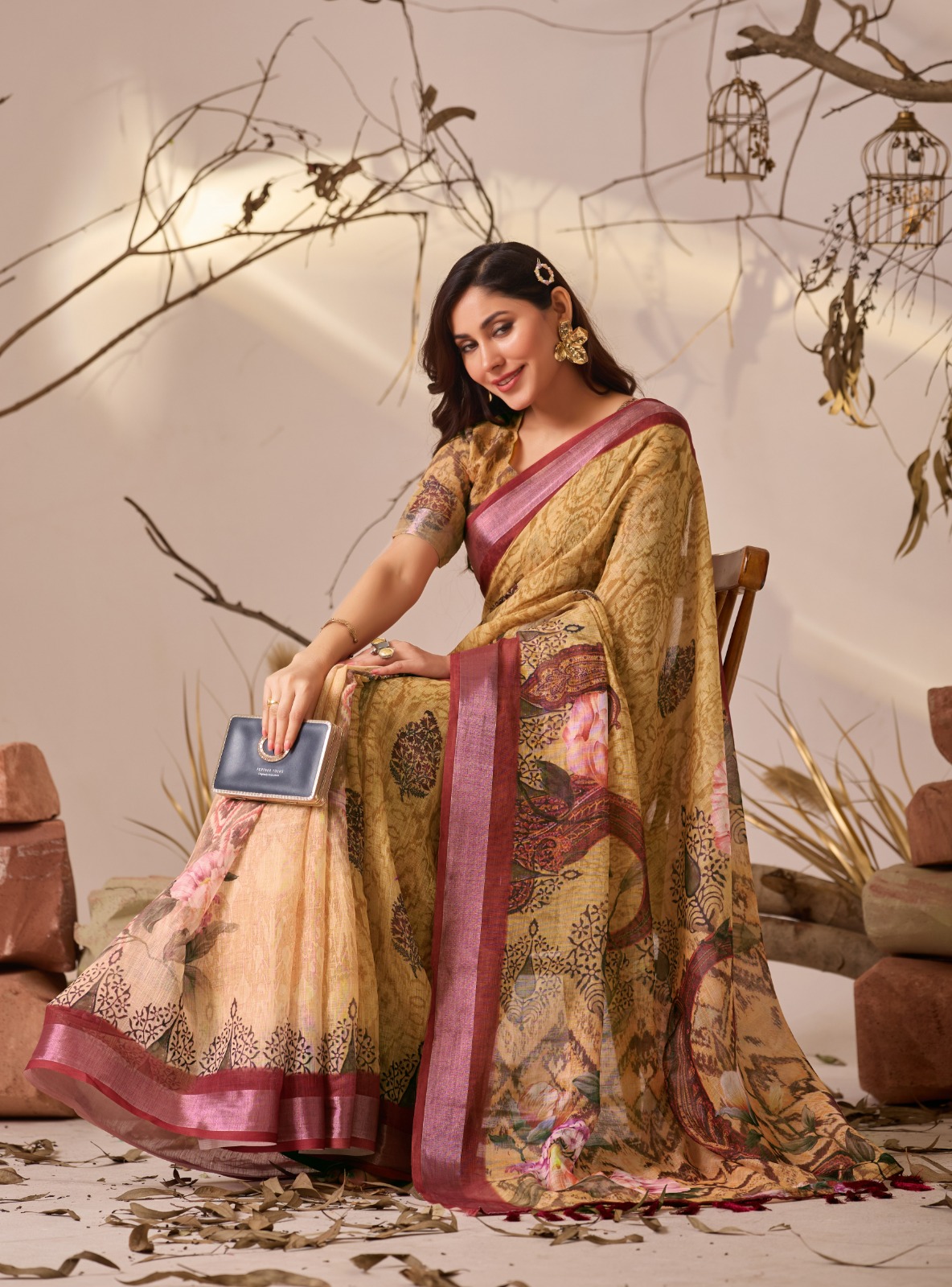
Zari can be added for festive appeal, but zari isn't an essential feature of Eri silk. An ivory Eri saree with a handwoven motif can carry stronger regional character than a heavily embellished saree made from another fibre. Natural beige, ivory, muted brown, indigo, mustard, rust and deep red are common palette references, while contemporary makers also use jewel tones and printed surfaces.
Eri Silk Saree Guide: How Can You Check Quality Before Buying?
You can check Eri silk saree quality by examining fibre disclosure, texture, weave density, selvedge, border construction, colour information and seller transparency. Price alone can't prove that a saree is pure Eri silk or handwoven.
- Read the fibre composition. Look for "100% Eri silk," "Eri-cotton blend" or a stated percentage of each fibre. "Silk finish" describes a treatment and doesn't confirm silk content.
- Feel the surface. Genuine Eri silk commonly feels soft, dry and gently uneven. A very slippery, glassy surface may point to another silk variety, a synthetic fibre or a strong finishing treatment.
- Inspect the reverse side. Look for a stable weave, a clean selvedge and consistent tension. Handwoven cloth may show subtle variations, while powerloom fabric can still be durable and well finished.
- Examine the border join. The border should lie flat. Puckering, loose metallic threads and abrupt tension changes can become more noticeable after washing.
- Ask about dyes. Natural dyes may show gentle tonal variation, while synthetic dyes usually produce stronger and more uniform colour. Neither method automatically determines quality, but the seller should identify the process honestly.
- Confirm measurements. Many sarees measure about 5.3 to 5.5 metres without a blouse piece, but handloom dimensions vary. Confirm the exact length, width and blouse-piece size before purchase.
- Request credible testing when necessary. A home burn test can damage silk and can't reliably identify a blend. A textile professional or laboratory is a safer choice for fibre testing.
Budget comparisons need context. Handspun and handwoven Eri silk generally costs more than synthetic fabric or a simple Eri blend because spinning and weaving involve greater labour. The collection Silk Sarees Under 3000 With Discount can be useful for comparing accessible silk options, but a discounted saree should still disclose whether it's pure Eri, blended or another silk category.
Eri Silk Saree Guide: Which Blouse and Accessories Work Best?
An Eri silk saree pairs well with textured, breathable and moderately embellished accessories that support its natural surface. Raw silk, cotton-silk, handloom cotton and matte-finish brocade are useful blouse choices because they don't compete with the fabric's low sheen.
Blouse Colours and Cuts
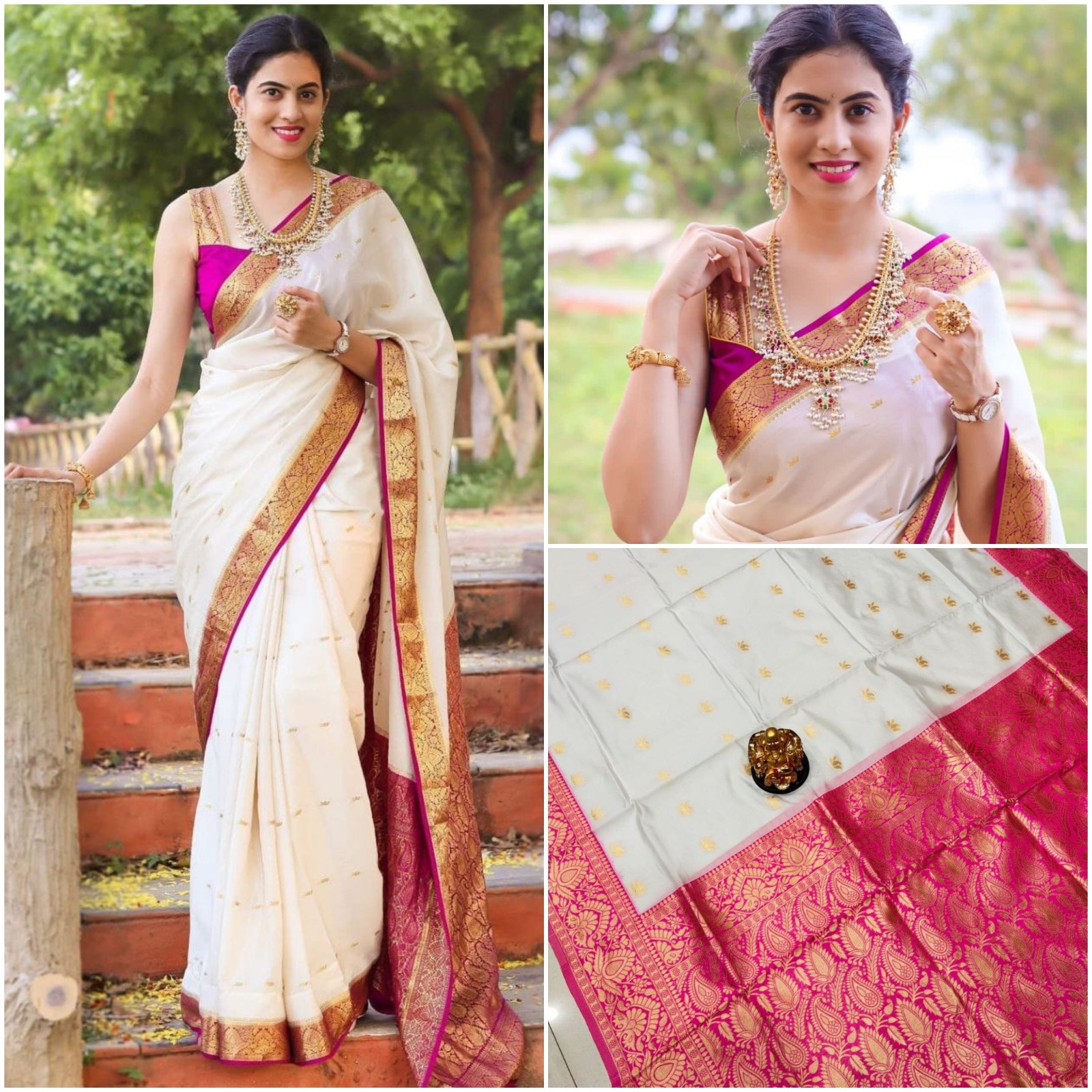
A deep maroon, forest green, indigo, mustard or rust blouse gives an ivory or beige Eri saree a distinctly Assamese-inspired palette. A high round neck, three-quarter sleeves and a narrow zari edge suit a family puja or cultural programme. Elbow-length sleeves and a modest back also make the blouse practical for daytime traditional events.
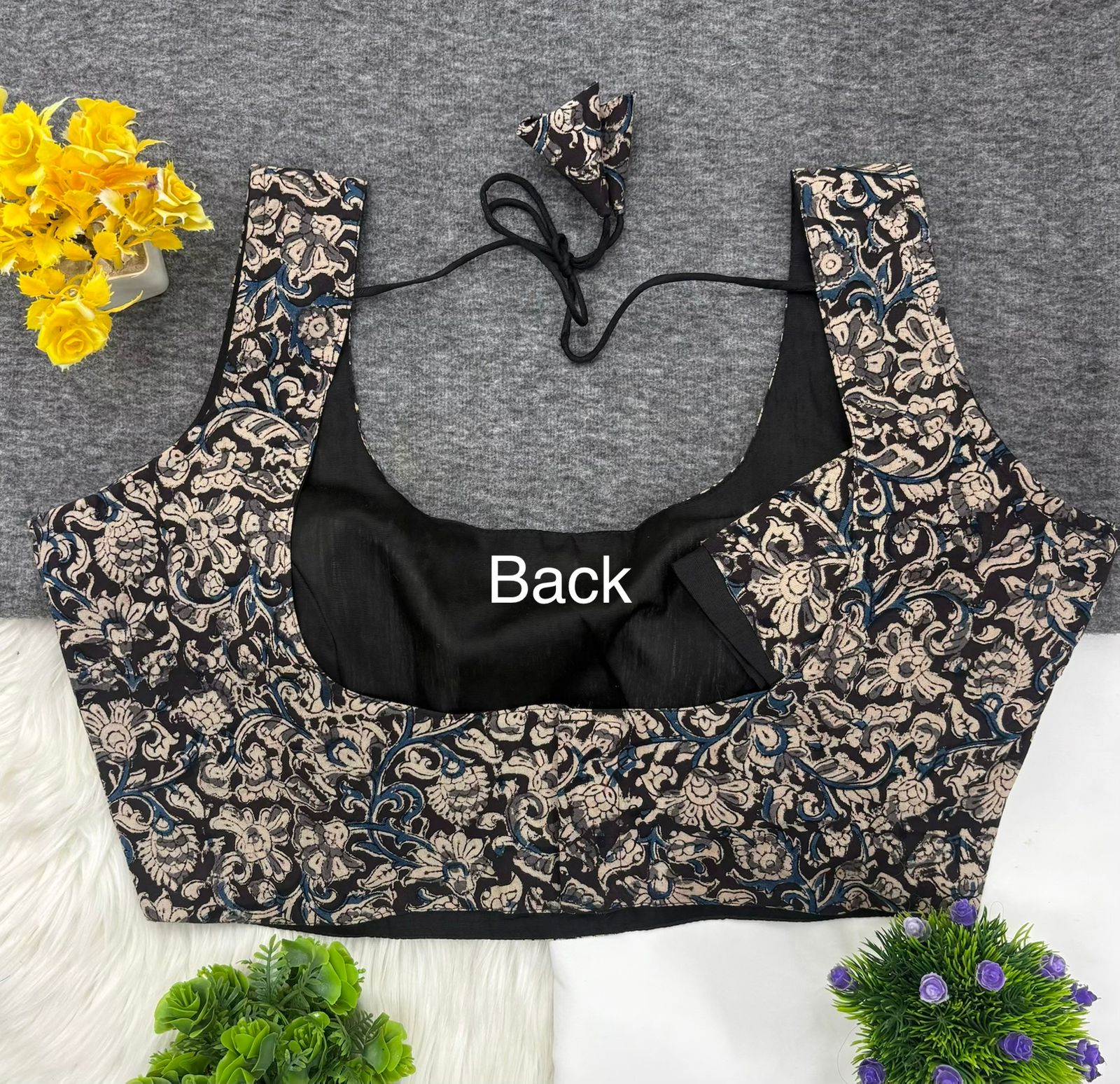
A sleeveless high-neck blouse in a solid jewel tone can give a contemporary Eri saree a sharper silhouette. A lightly embroidered blouse works when the saree has a simple border, but heavy embroidery can conceal the handwoven texture. A plain blouse is often the strongest choice for an Eri saree with bold motifs or a contrasting pallu.
Jewellery, Footwear and Hair
Silver jewellery, oxidised metal, terracotta and matte gold complement the restrained sheen of Eri silk. An Assamese gamkharu bangle, small gold earrings or a traditional pendant can add regional character without making the outfit look theatrical. Choose one focal accessory, such as a sculptural necklace or large earrings, rather than combining several competing statement pieces.
Juttis, leather sandals and low block heels are practical footwear choices for gatherings that involve walking or sitting on the floor. A low bun, braid or loosely pinned hair keeps the neckline and pallu visible. Fresh jasmine suits an evening celebration, while a simple hairpin or woven ribbon feels more natural for a daytime event.
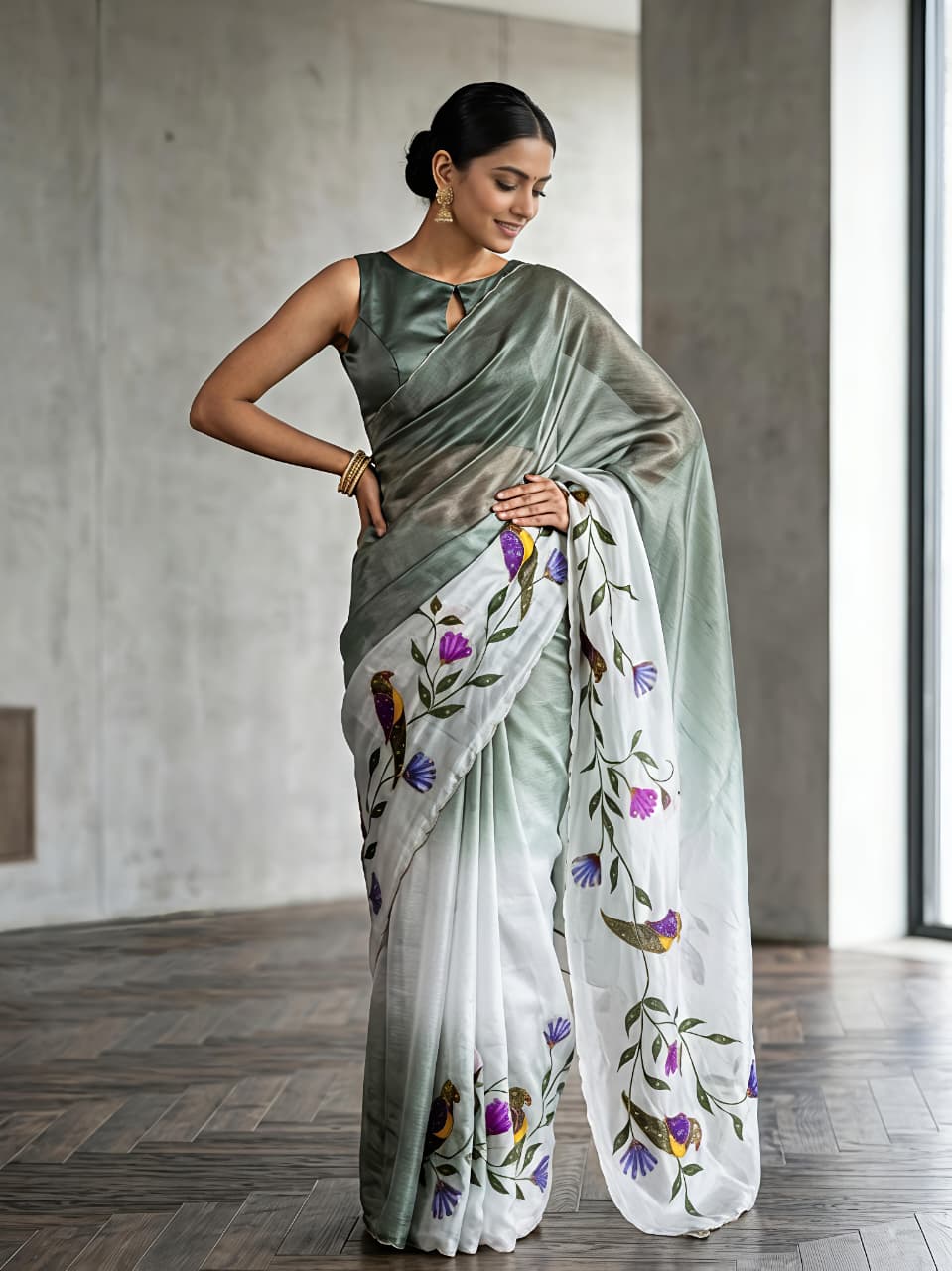
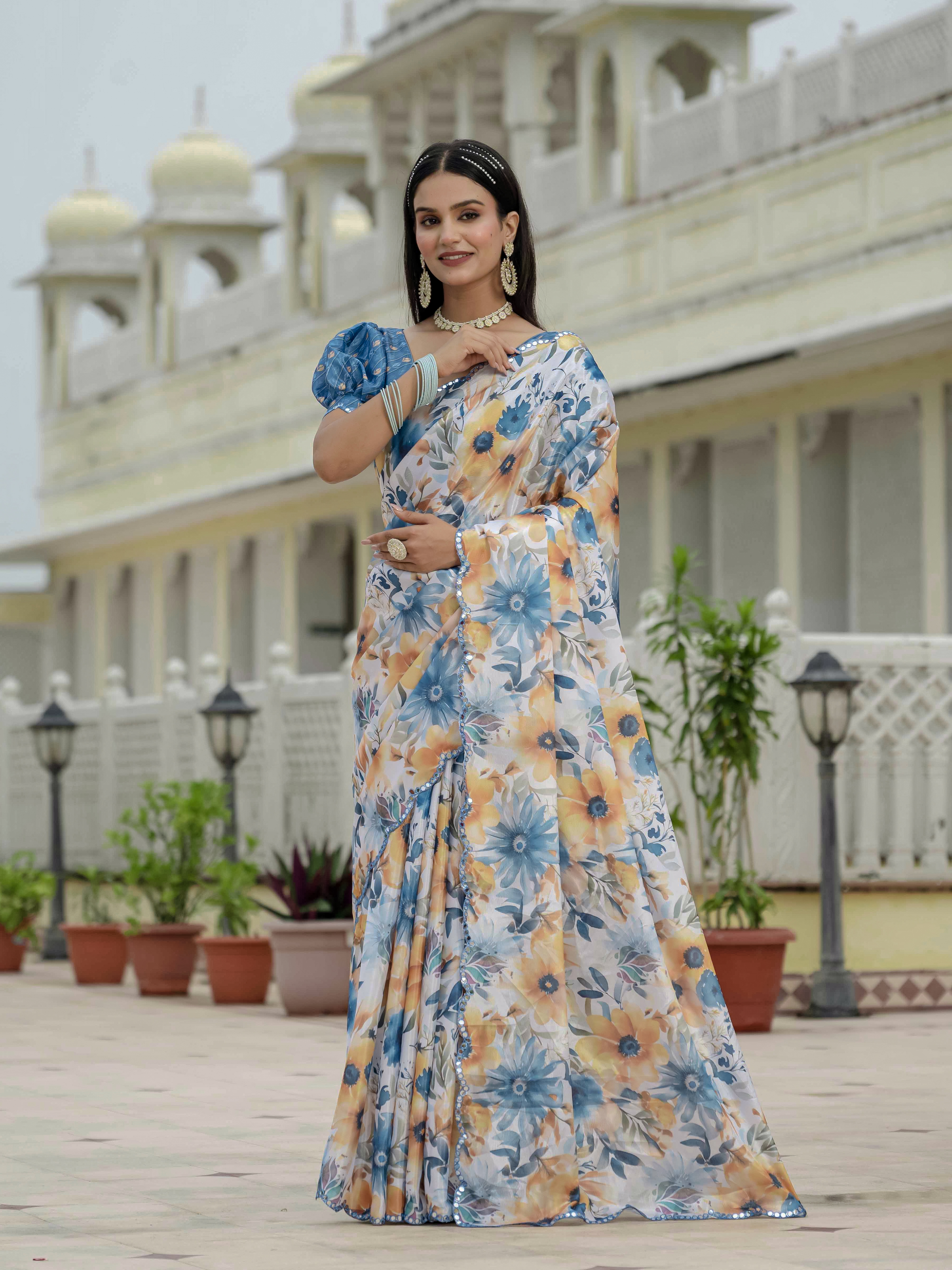
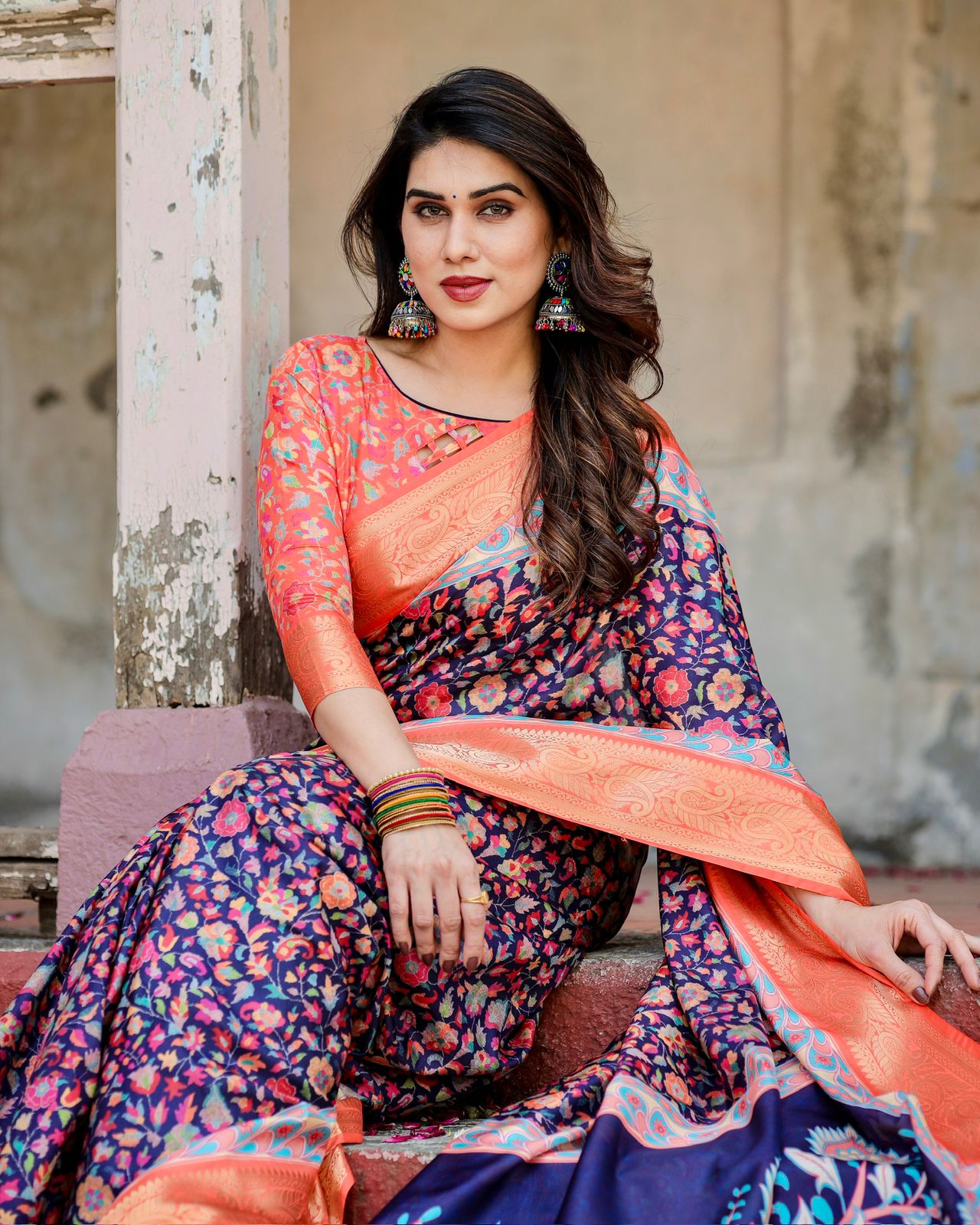
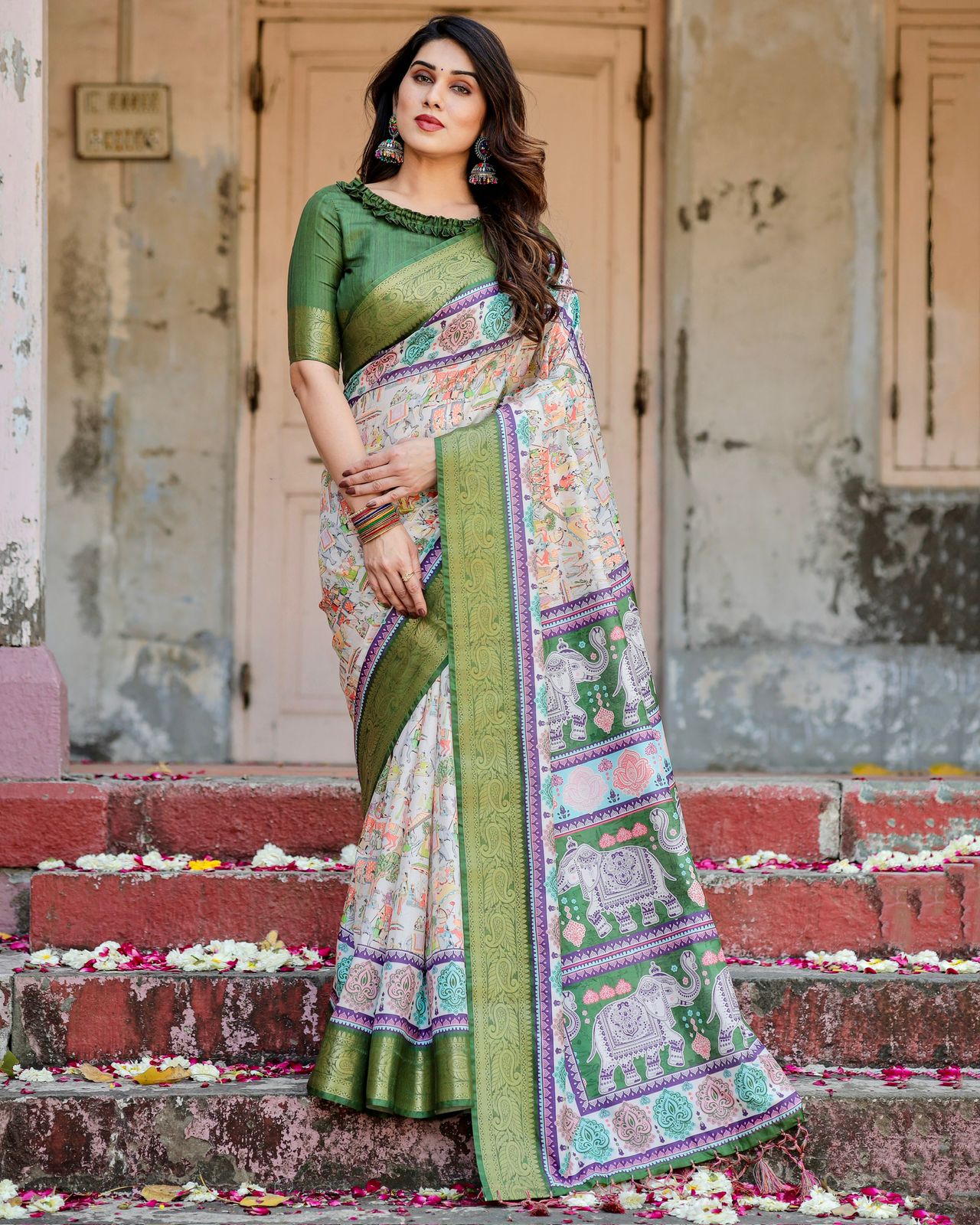
For comparison, Green Ivory Printed Silk Saree with Zari Border and Navy Blue Floral Silk Saree with Peach Zari Border create a more polished printed-silk effect. Eri silk generally communicates craft through yarn and texture rather than through a glossy surface or dense ornamentation.
Eri Silk Saree Guide: How Can You Style It for Modern Occasions?
You can modernise an Eri silk saree through a structured blouse, controlled pleats, minimal jewellery and thoughtful layering. Small styling changes preserve the Assamese textile story while making the outfit suitable for current wardrobes.
- For a Haldi ceremony: Pair an ivory or natural-toned Eri saree with a mustard or turmeric-yellow blouse, lightweight earrings and flat sandals. A short-sleeved blouse keeps the outfit comfortable during a busy daytime celebration.
- For a festive lunch: Wear a muted Eri saree with a sleeveless high-neck blouse, slim belt and compact potli. Position the belt over the saree pleats without tightening it enough to crush the yarn.
- For a cultural event: Choose an Assamese-inspired border, plain blouse, silver jewellery and a neatly pinned pallu. The arrangement looks considered while allowing the weave to remain visible.
- For an evening gathering: Select a darker Eri saree with a blouse carrying a small amount of zari, tonal embroidery or sequins. Keep other accessories restrained so the textured fabric remains the main visual feature.
- For office-to-dinner dressing: Use a solid blouse, compact pleats and a narrow belt during the day, then replace the belt with statement earrings before dinner. A structured handbag can make the drape feel more contemporary.
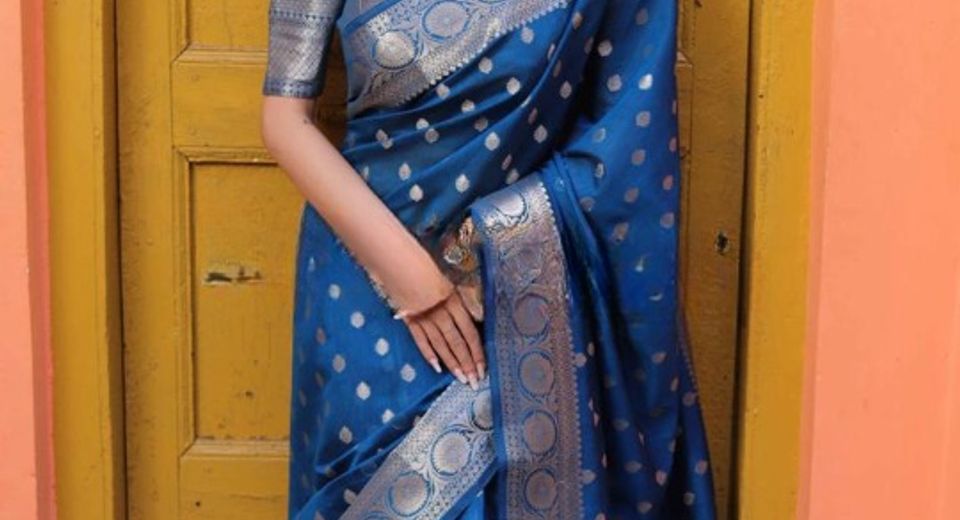
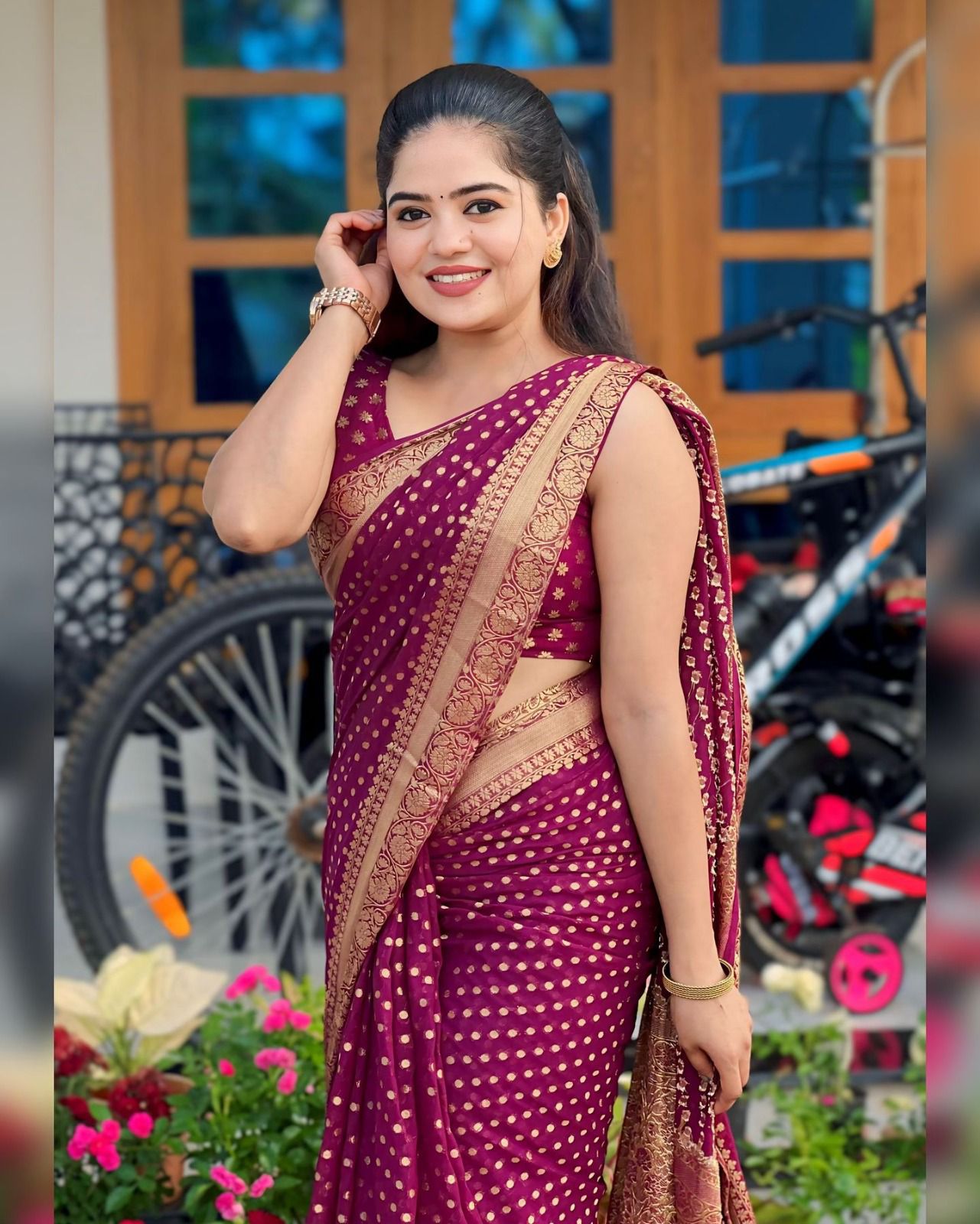
Other silk categories offer useful styling comparisons. Teal Blue Banarasi Soft Silk Saree With Golden Zari Border and Maroon Banarasi Soft Silk Saree with Golden Zari Border create more visible festive shine through zari and Banarasi weaving. Teal Traditional Silk Saree with Copper Jacquard Border offers another border-led styling direction, while Eri silk works best when its tactile surface remains part of the outfit's story.
Eri Silk Saree Guide: How Should You Wash and Store It?
Eri silk should usually be dry-cleaned or gently hand-washed only when the care label permits it, then dried in shade and stored away from moisture. Heat, bleach, prolonged sunlight and rough wringing can damage silk fibres and dyes.
Before washing, test a hidden area with a clean white cotton swab if the care instructions allow water contact. Use cool water, a mild silk detergent and a short soak of no more than five minutes. Do not scrub borders, rub stains aggressively or twist the saree. Press water out between clean towels, reshape the fabric and dry it flat or on a broad hanger away from direct sunlight.
Professional dry cleaning is safer for heavy zari, dark dyes, printed Eri silk and sarees with multiple fibre blends. Tell the cleaner that the garment contains silk and mention metallic zari or hand-painted details. Perfume, deodorant and hair products should be applied before wearing the saree has fully dried because alcohol and oils can leave marks.
For storage, fold the saree along different lines every few months to reduce permanent creasing. Wrap Eri silk in unbleached cotton or muslin rather than plastic, place it in a dry cupboard and keep it away from strong wood polish, damp walls and direct heat. Refold the saree every eight to twelve weeks, and air it briefly in shade if it has remained packed for a long period.
Eri Silk Saree Guide: Which Occasion and Colour Should You Choose?
The right Eri silk saree depends on the event's formality, time of day, climate and amount of movement required. Natural ivory, beige and muted colours suit daytime cultural gatherings, while indigo, maroon, teal and deep green create more presence for evening events.
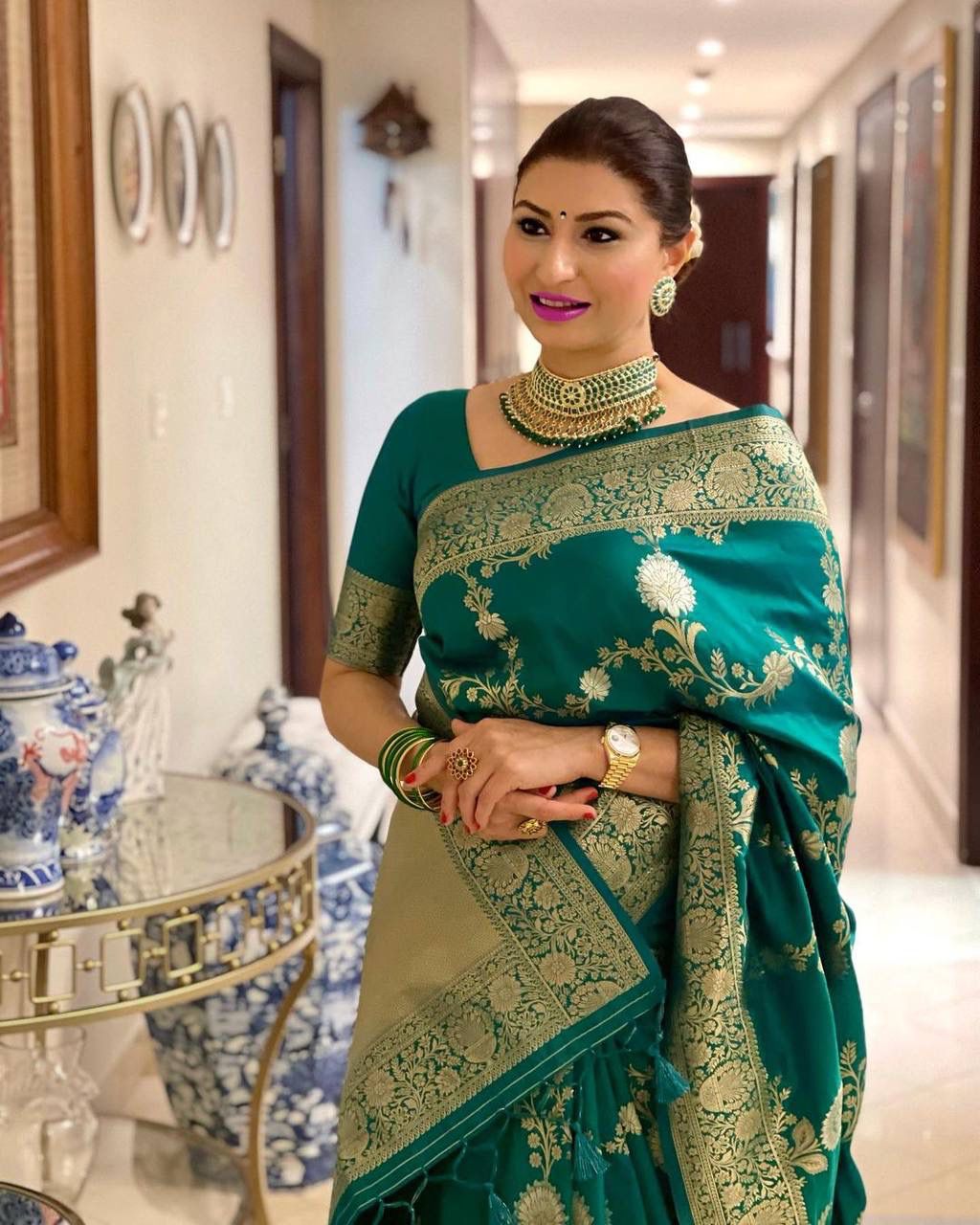
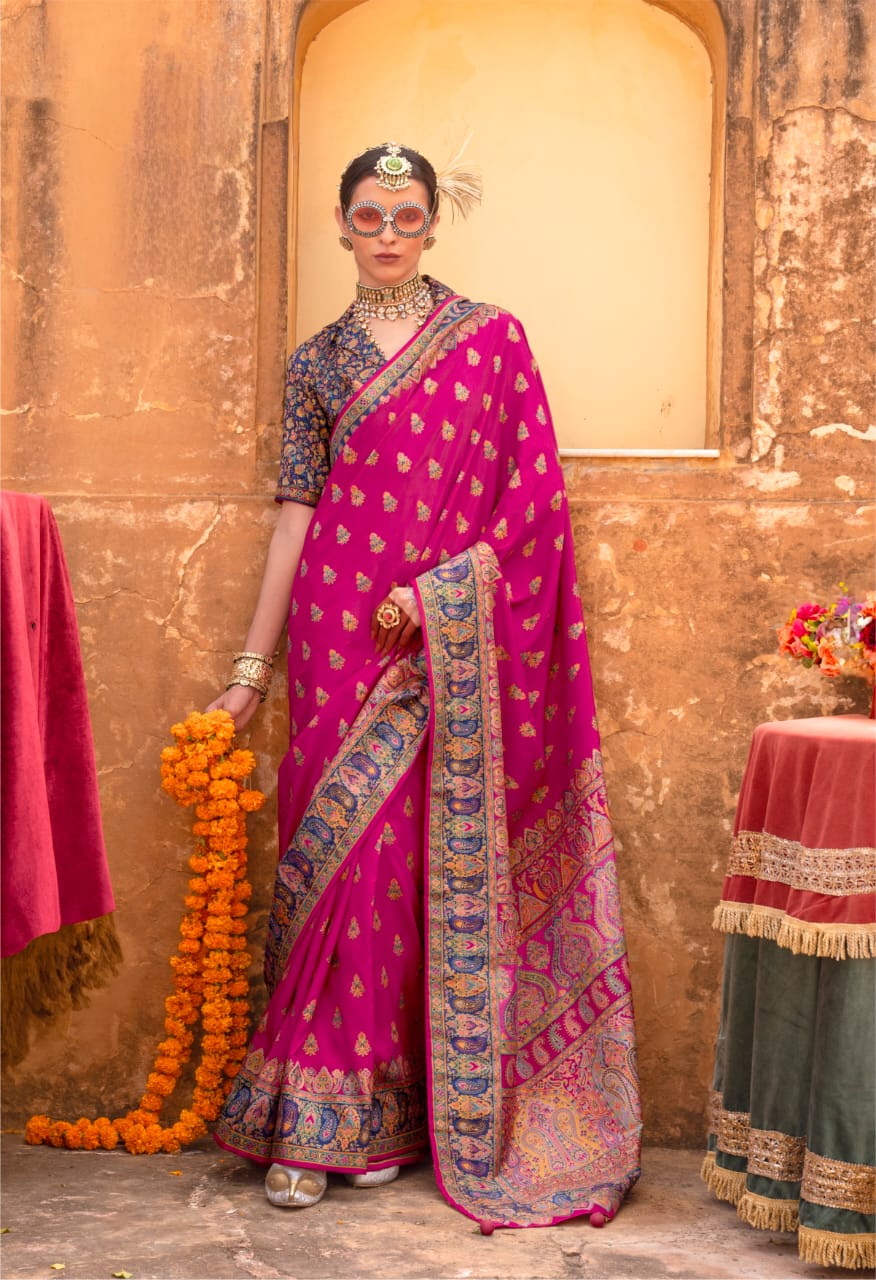
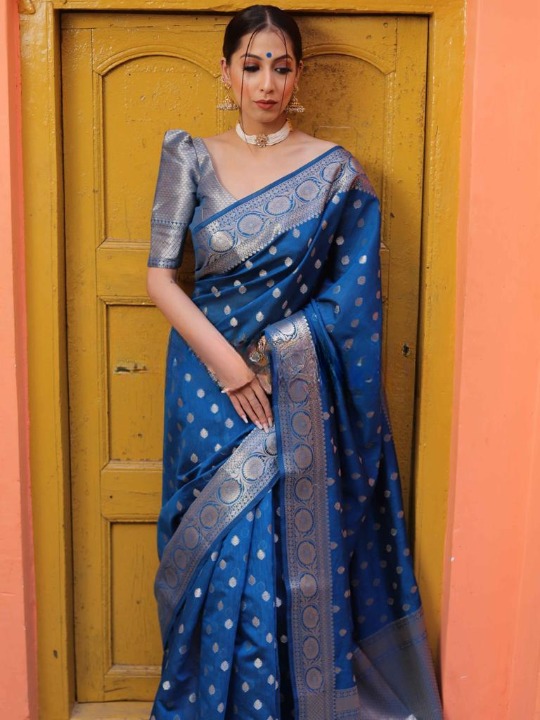
For a traditional ceremony, select a saree with an Assamese-inspired motif, a measured border and a blouse in a related colour family. For a wedding guest look, a zari-edged Eri blend or a richer dyed Eri saree can provide festive character without copying the shine of a bridal Banarasi. Royal Banarasi Soft Silk Zari Weave Saree and Classic Royal Blue Saree with Rich Zari Weaving are useful references when comparing a more ornate wedding aesthetic with the quieter appeal of Eri silk.
Collections such as Pink Georgette Sarees and Party Wear Sarees can help compare drape, shine and movement across fabric categories. Red Banarasi Silk Sarees for Weddings Under 1100 and Gray Color Sarees Under 1000 provide further colour and price references, but collection labels should never replace checking the individual saree's composition and care instructions.
The most versatile Eri silk saree isn't necessarily the most heavily decorated one. A medium-weight saree with a stable border, comfortable width, reliable colour and a blouse-friendly palette can move from a puja to a cultural event and later be restyled with a jacket or belt. That adaptability is one reason Eri silk continues to feel relevant beyond strictly traditional dressing.
Common Questions About Eri Silk Sarees and Assamese Styling
What is an Eri silk saree made from?
An Eri silk saree is made from yarn spun from Eri silkworm fibres, traditionally obtained from open-ended cocoons associated with castor-fed silkworms. Some sarees are pure Eri silk, while others combine Eri with cotton, mulberry silk or synthetic fibres, so the composition label matters.
How can I identify a genuine Eri silk saree?
A genuine Eri silk saree usually has a soft, warm, slightly textured surface and lower sheen than many other silks. Check the fibre composition, weave, selvedge and seller information rather than relying only on touch or a home burn test.
Is Eri silk suitable for summer?
Eri silk can be comfortable in mild or warm weather because it is breathable and not as heavy as many brocades, but its fuller texture may feel warmer than Chanderi or lightweight cotton. Choose a lighter weave, breathable blouse and minimal layering for hot outdoor events.
Can Eri silk sarees be machine-washed?
Machine washing is generally not recommended for Eri silk because agitation, heat and spin cycles can distort the weave and affect dyes. Follow the care label, and choose gentle hand washing or professional dry cleaning when the saree contains zari, dark dyes or mixed fibres.
Which blouse colours suit an Eri silk saree?
Mustard, indigo, rust, maroon, forest green and ivory suit the natural Assamese palette associated with Eri silk. A matte blouse in a contrasting jewel tone creates a modern look, while a related neutral keeps attention on the saree's texture.
Can I wear an Eri silk saree to a wedding?
You can wear an Eri silk saree to a wedding when the event's dress code suits handloom or understated festive clothing. Add a refined blouse, limited zari, polished jewellery and a well-pinned pallu, while choosing Banarasi or heavily embellished silk if the invitation specifically calls for grand formalwear.