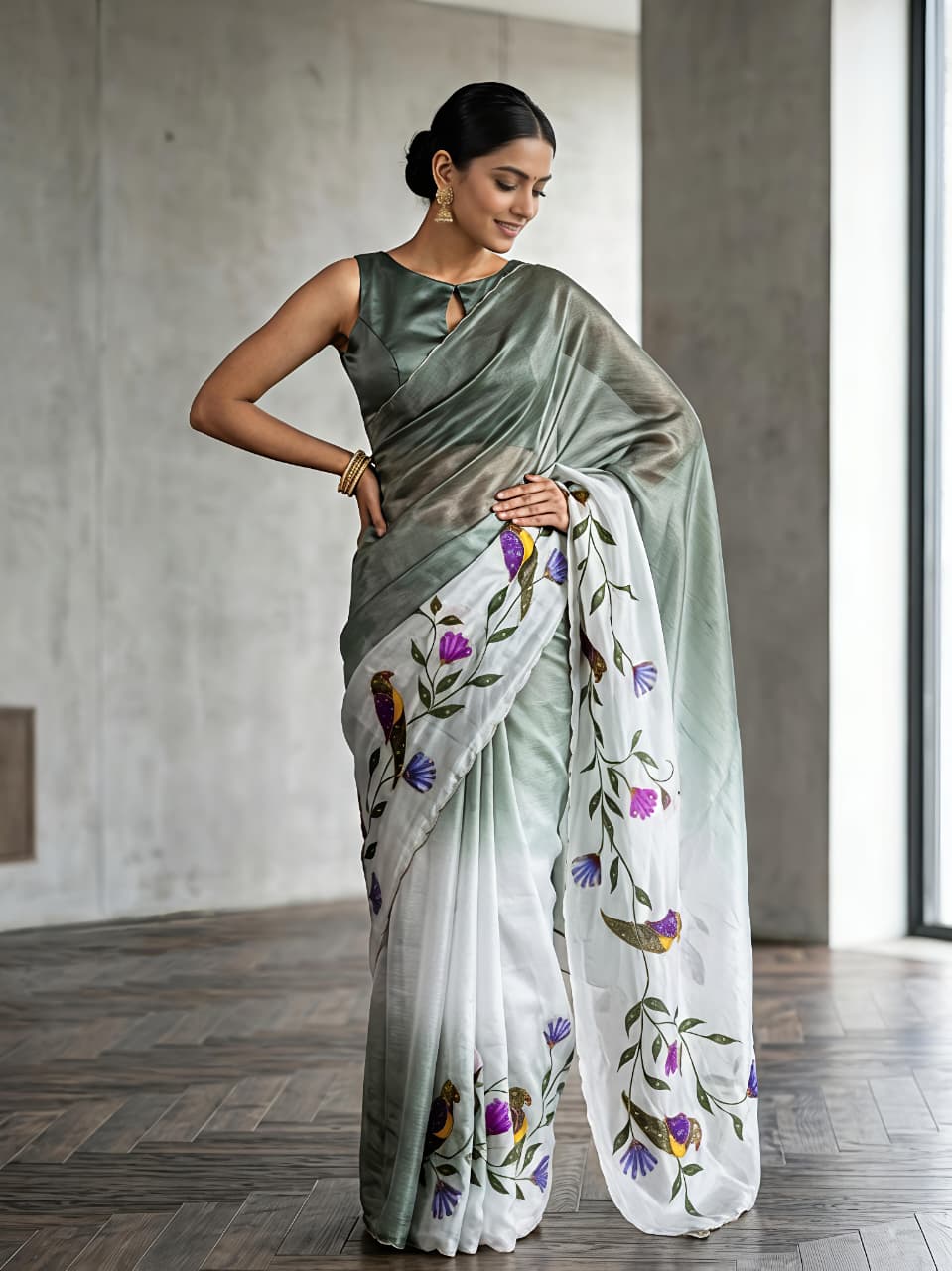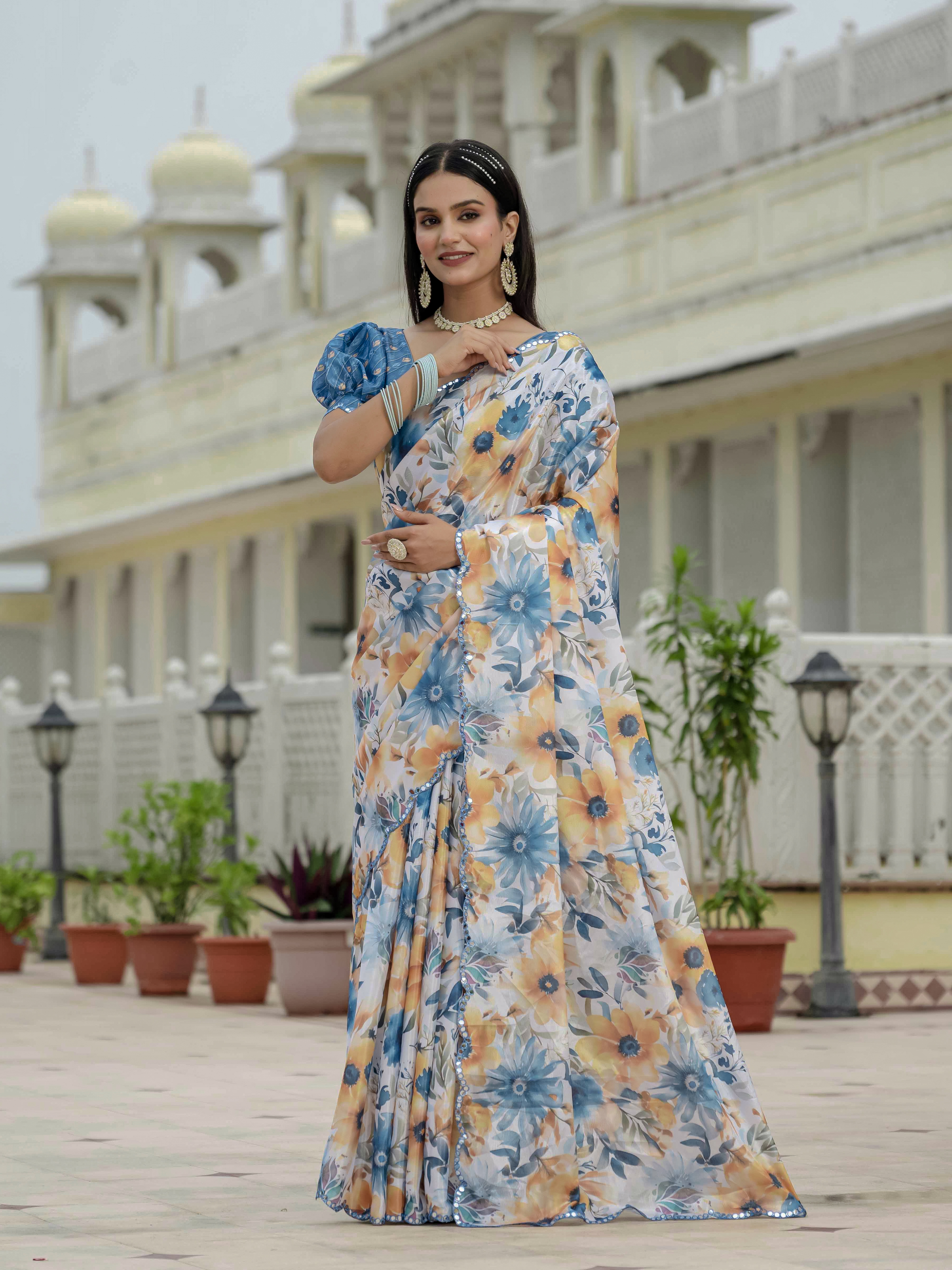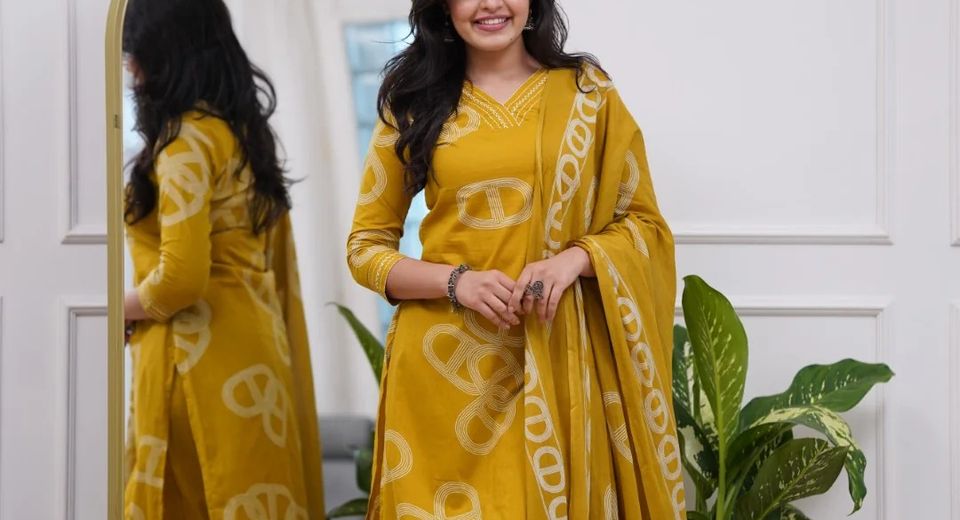
Elegant Salwar Suit Designs for Women become much easier to choose when you judge more than colour and embroidery. The right salwar suit balances silhouette, fabric weight, neckline, sleeve length, trouser shape and dupatta proportion. Those details decide whether a suit feels polished at a wedding, practical at work or comfortable during a family gathering.
A useful starting point is to identify the setting, the amount of movement required and the visual effect you want. A straight-cut suit creates a clean vertical line, an Anarkali adds flare and movement, while a sharara suit brings volume through the lower half. Once those differences are clear, browsing Ladies Dress Anarkali Salwar Suits becomes a more informed exercise rather than a search based only on colour.
What makes Elegant Salwar Suit Designs for Women look refined?
An elegant salwar suit looks balanced, well-fitted and appropriate to its setting. Refinement usually comes from controlled detail: a clear silhouette, coordinated colours, neat finishing and embroidery placed where it supports the shape instead of overwhelming it.
Elegance doesn't require heavy embellishment. A solid suit in a rich camel, navy or black shade can look more sophisticated than a heavily decorated design when the neckline, shoulder fit and trouser length are correct. Floral embroidery, zari accents or a contrasting dupatta can create occasion impact when the base silhouette remains uncomplicated.
Proportion matters particularly in a three-piece suit. A long kameez paired with a narrow cigarette pant gives a different impression from a short kurta paired with a voluminous salwar. The dupatta should also relate to the scale of the outfit. A broad, heavily decorated border needs a simpler drape, while a lightweight dupatta can be pleated, pinned or allowed to fall freely.
Colour repetition is another quiet marker of polish. If a suit has orange embroidery, an orange silk-blend dupatta can make the palette look intentional. If a garment combines black and white, shoes, earrings or a small handbag can repeat one of those shades without introducing a competing colour.
Which silhouette suits Elegant Salwar Suit Designs for Women?
The best salwar suit silhouette depends on the occasion, desired movement and the proportions you want to emphasise. Straight suits, Anarkalis, palazzo suits and sharara suits each create a different line on the body.
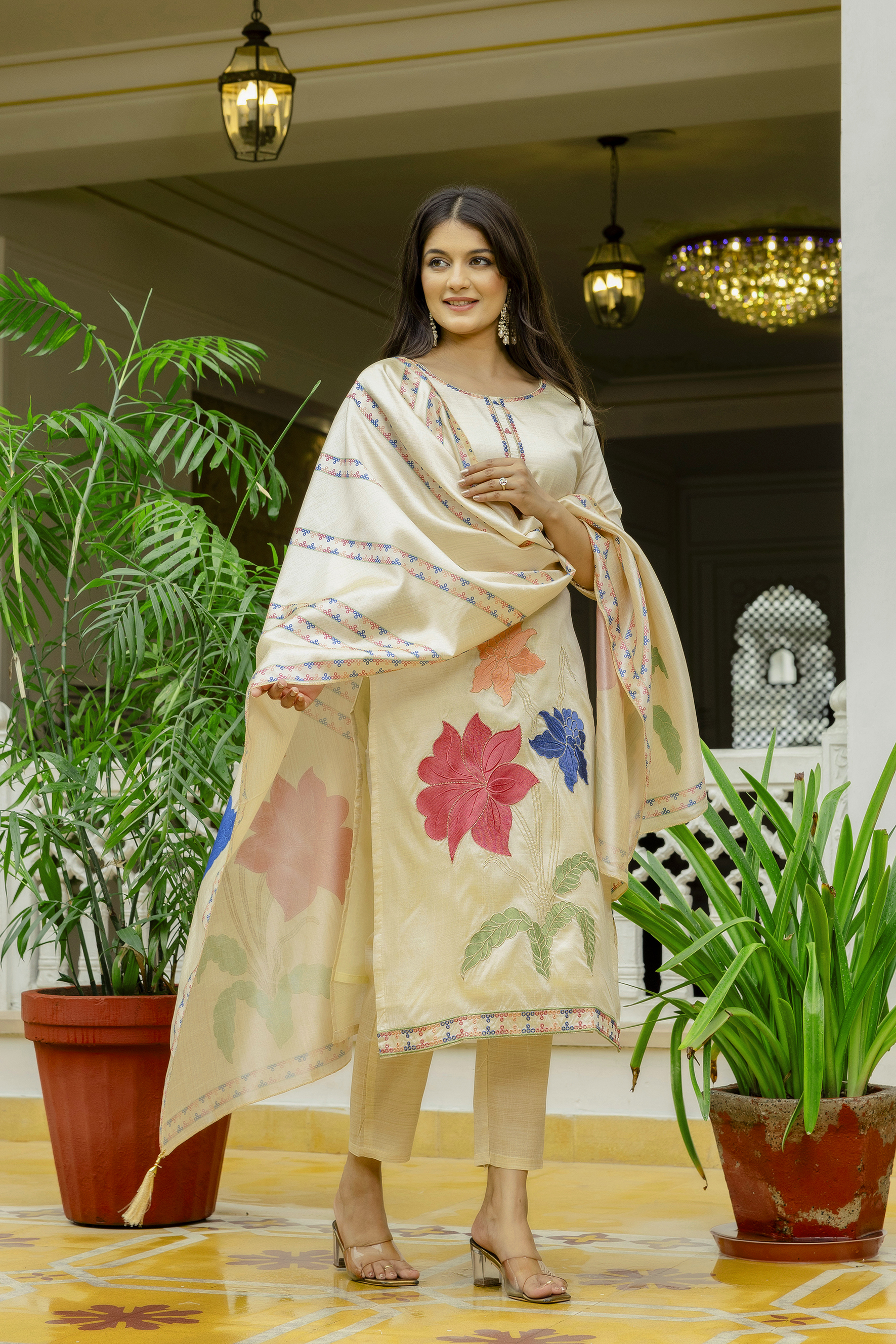
Are straight-cut suits suitable for everyday elegance?
Straight-cut salwar suits are a reliable choice for work, daytime events and travel because their narrow vertical shape is easy to move in and layer. A knee-length or calf-length kurta works well with cigarette pants, straight trousers or a lightly tapered salwar.
The straight silhouette benefits from side slits that begin at a practical height and sleeves that allow comfortable arm movement. A neatly pressed dupatta worn over one shoulder can make a simple set look formal without adding bulk around the waist.
When should you wear an Anarkali suit?
Anarkali salwar suits are suitable when you want a flared shape with visible movement and a more ceremonial appearance. The flare may begin below the bust, at the waist or lower on the torso, so checking the placement of the flare is important before buying.
A floor-length Anarkali generally suits evening celebrations, while a shorter Anarkali is easier for daytime gatherings. Embroidery concentrated around the yoke or hem helps define the garment; decoration spread evenly across a very wide flare can add visual weight.
How are sharara and palazzo suits different?
Sharara suits and palazzo suits create volume below the hip and are effective for festive dressing. A sharara has a more pronounced flare, while palazzo trousers usually fall in wide, continuous columns from the waist or hip.
A shorter kurta often complements a wide lower silhouette because it keeps the waist and hip line visible. A longer kurta can also work, but the hem should not end at the widest point of the trouser flare if you want a cleaner outline. Brown Chinon Silk Sharara Suit Set for Women shows how a richer fabric and wide-leg shape can deliver an occasion-ready look without requiring multiple layers of jewellery.
How should fabric guide Elegant Salwar Suit Designs for Women?
Fabric should be selected according to climate, wearing time, drape and the level of structure required. Breathable cottons suit heat and daytime use, while silk blends, Chinon silk and other fluid fabrics are often chosen for festive movement and sheen.
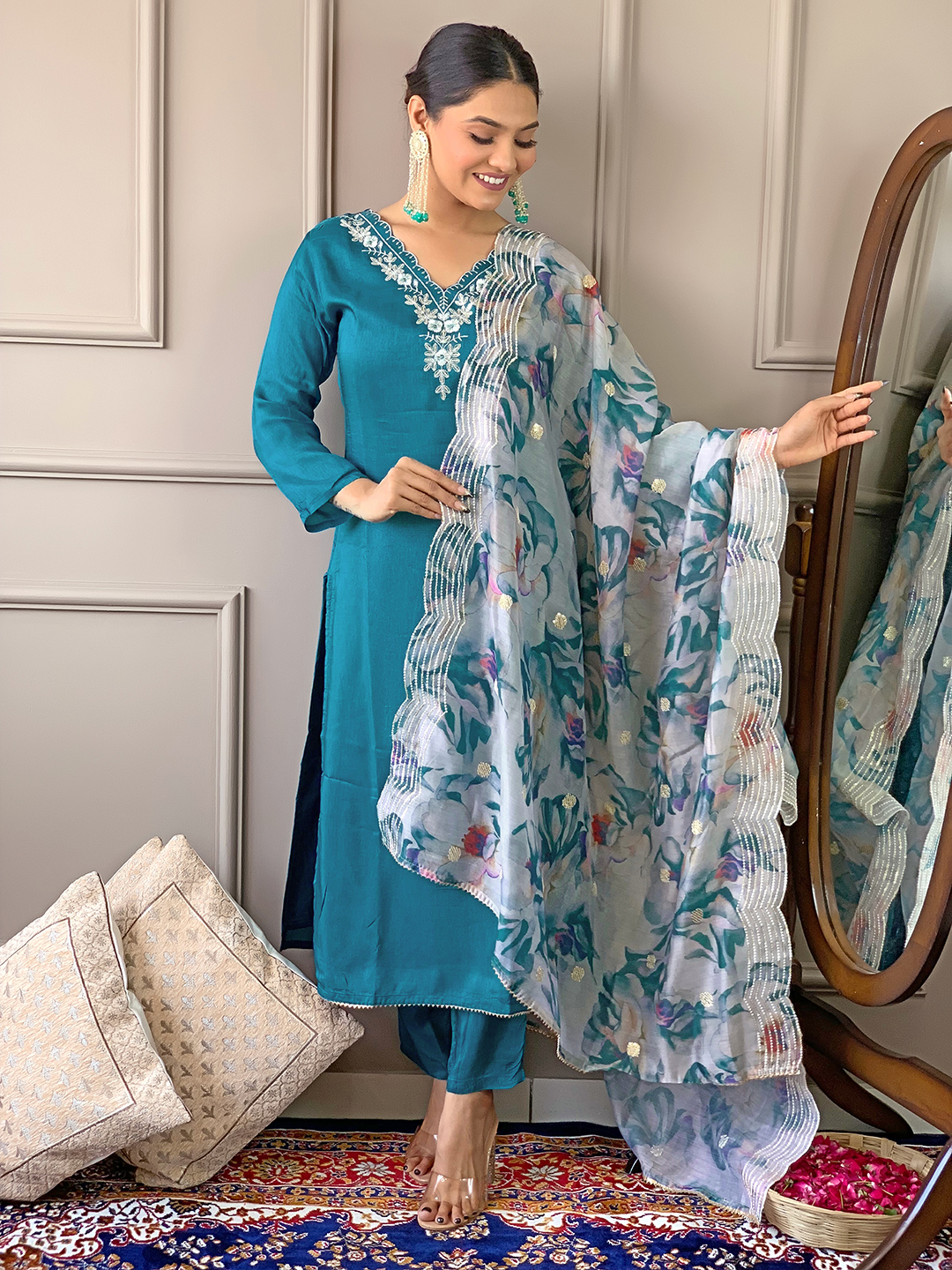
Chanderi is valued for its light hand and gently dressed-up appearance, making it useful when you want a refined daytime or semi-formal outfit that doesn't feel heavy. White Chanderi Blossom Salwar Suit demonstrates why a delicate fabric and floral surface detail can look celebratory without the weight of dense embellishment.
Silk-blend and Chinon fabrics generally catch light more visibly than matte everyday fabrics. That quality can elevate a wedding guest outfit, but it also makes pressing, folding and storage more important. Hang such garments on a broad hanger when possible and avoid cramming them beneath heavier clothes.
Fabric weight also changes the way a dupatta behaves. A stiff or bordered dupatta tends to hold a defined pleat, while a soft dupatta falls closer to the body. If you prefer an effortless shoulder drape, choose a fabric with fluid movement; if you want a formal pinned arrangement, a more stable fabric may be easier to manage.
Check lining and seam comfort as carefully as the outer fabric. A beautiful suit can become impractical if the armhole cuts into the underarm, the lining clings in humid weather or the trouser waistband twists after sitting. For online purchases, read the fibre details, compare garment measurements with a well-fitting suit and inspect the care instructions before ordering.
Which colours define Elegant Salwar Suit Designs for Women?
Polished colour choices come from matching contrast and saturation to the setting rather than following a single rule about bright or muted shades. Navy, camel, white, black, brown and jewel tones can all look elegant when the design distributes colour deliberately.
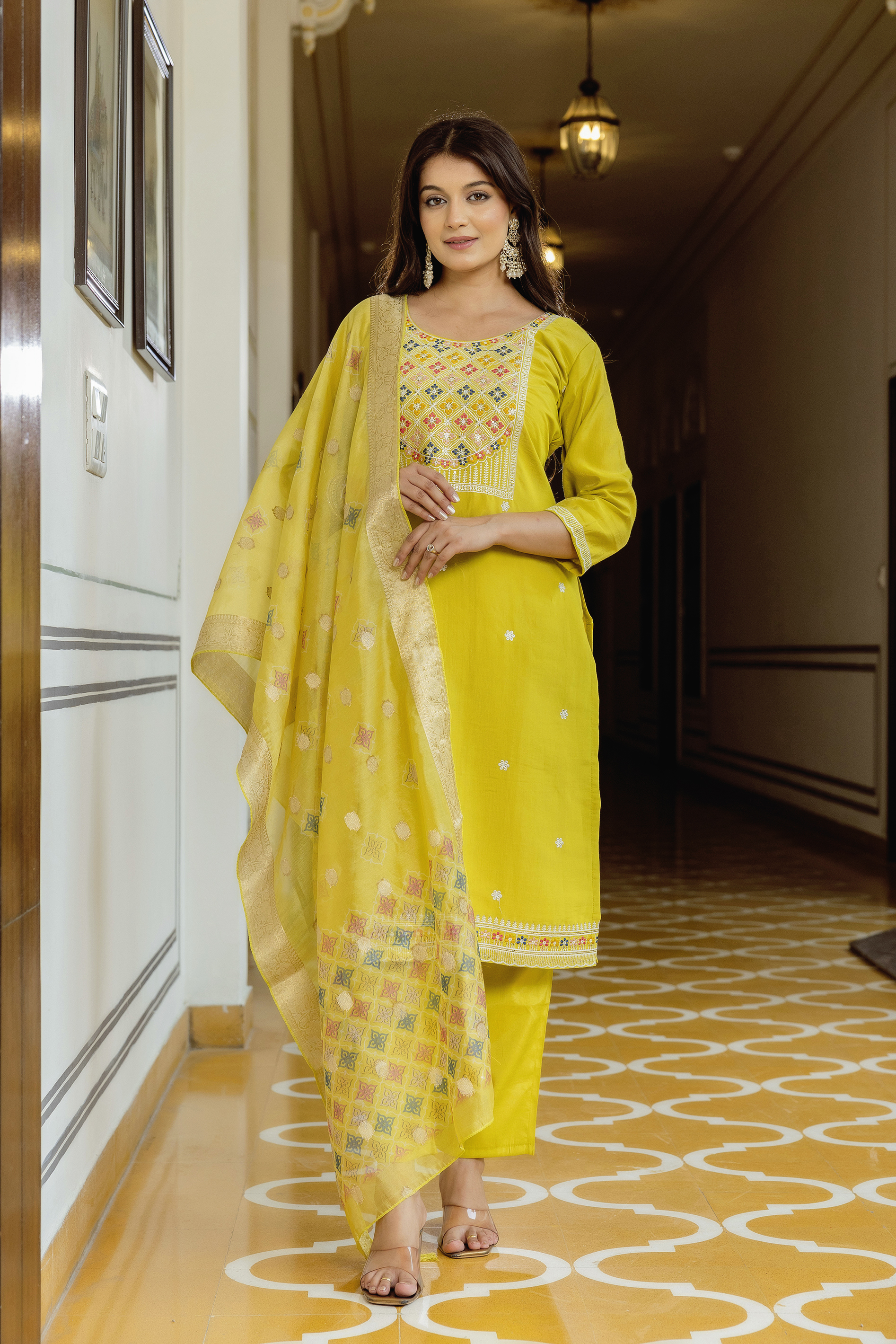
Navy creates a formal, versatile base and works particularly well with silver, antique gold or tonal blue accessories. Navy Blue Embroidered Salwar Suit can be styled for an evening gathering with metallic earrings, or made more restrained with pearl studs and neutral footwear.
Camel and brown shades bring warmth without the visual intensity of a saturated red or fuchsia. Elegant Camel Shade Salwar Suit Set is suited to daytime celebrations, intimate dinners and autumn or winter dressing because warm neutrals pair easily with tan, gold, ivory and deep green accessories.
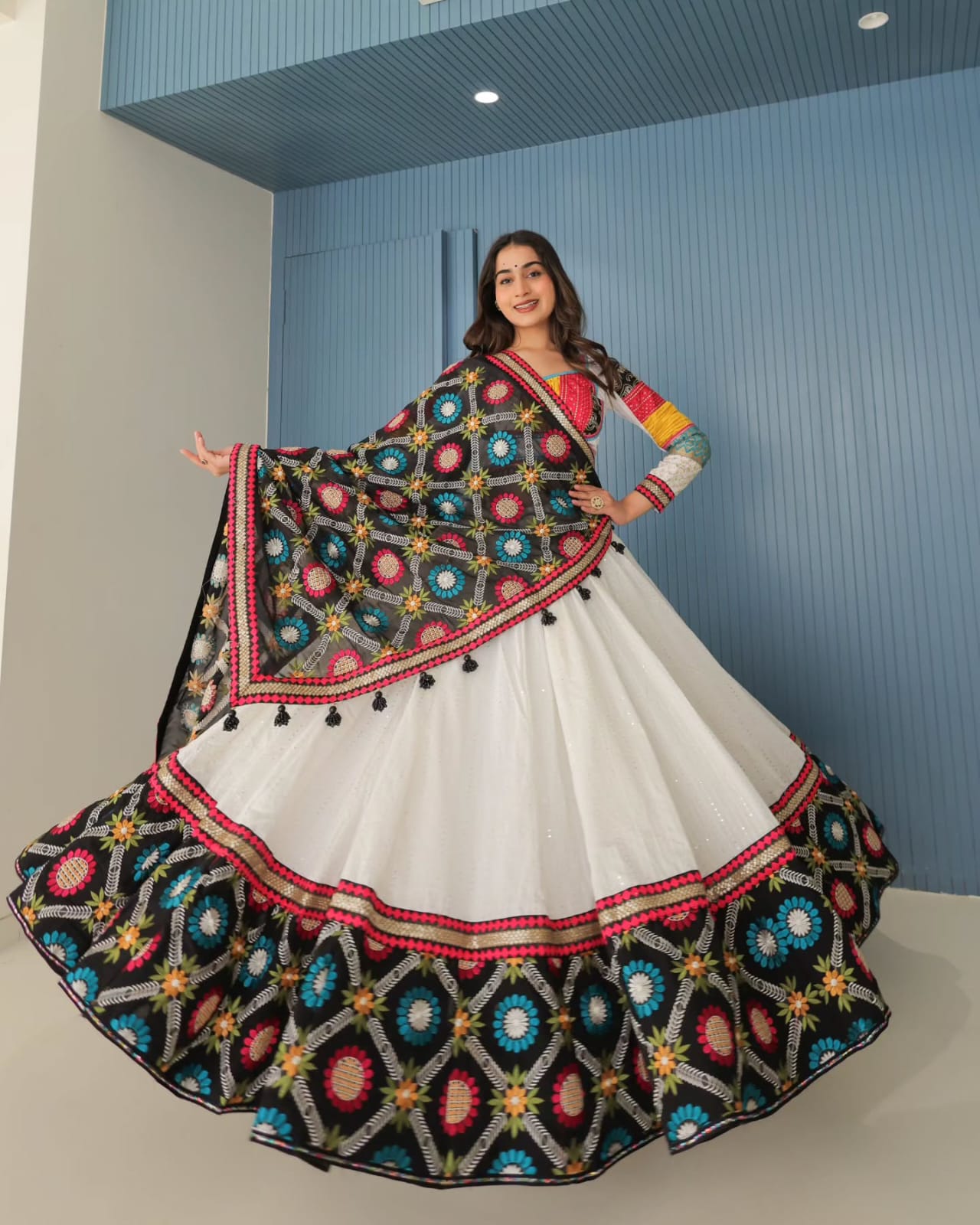
Black and white create strong contrast, so embroidery or floral motifs become immediately noticeable. Black White Floral Embroidered Readymade Salwar Suit can be kept graphic with black footwear and minimal jewellery, or softened with a red, pink or silver accent.
White provides a clean background for coloured embroidery and a bright dupatta. White Embroidered Salwar Suit with Orange Silk-Blend Dupatta offers an useful example of controlled contrast: the white base keeps the look fresh, while orange supplies the focal point through the dupatta.
When assessing prints, inspect the scale of the motif against the garment length. Small repeated flowers can look delicate on a straight suit, while larger motifs may work better on a broad Anarkali hem or dupatta. A print becomes easier to style when at least one accessory repeats a colour already present in the pattern.
How do you style Elegant Salwar Suit Designs for Women by occasion?
The appropriate salwar suit depends on the event's formality, time of day, expected movement and venue. A practical wardrobe works best when it includes one understated set, one embellished set and one fluid festive silhouette.
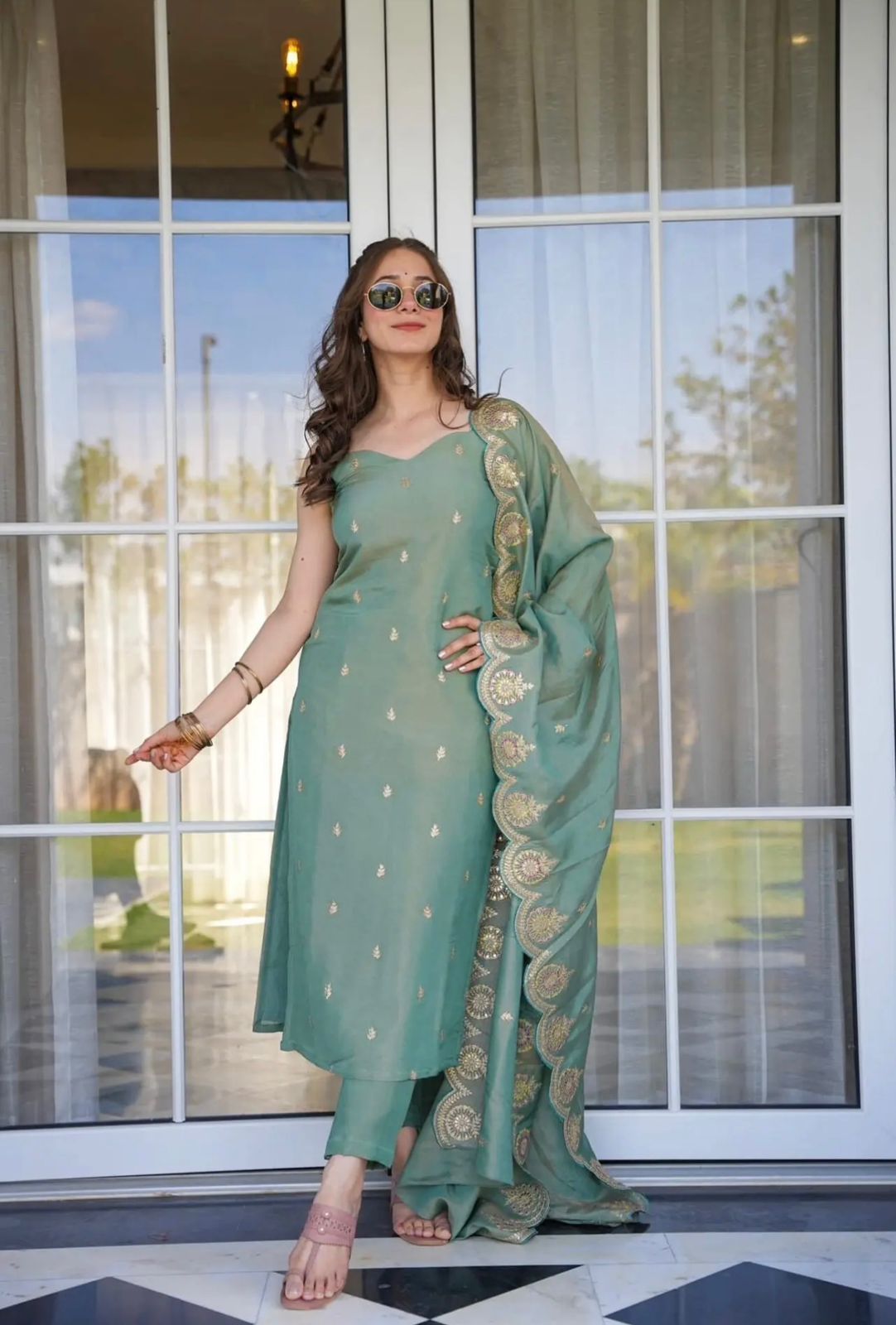
What works for office and daytime events?
Office dressing usually calls for a straight suit, restrained print or small-scale embroidery, and a dupatta that stays in place. Choose breathable fabric, a neckline that sits comfortably under a jacket or cardigan, and trousers that don't drag when you use stairs.
Neutral shades, navy, ivory and muted pastels are easy to repeat without appearing identical. A small stud, low heel, flat jutti or clean loafer can keep the outfit professional. Avoid excessive flare if you commute frequently or spend long periods seated.
What should you wear to weddings and festive gatherings?
Weddings allow more surface detail, richer colour and movement through Anarkali, sharara or palazzo silhouettes. Zari, embroidered borders, floral motifs and silk-blend dupattas can add ceremony, but one dominant feature usually looks more considered than heavy decoration everywhere.
Black Red Fendy Silk 3 Piece Readymade Salwar Suit Set gives a strong evening direction through a dark base and a vivid accent. Style a high-contrast set with simpler jewellery, because large earrings, a necklace, bangles and a decorated clutch can compete with the garment's existing focal points.
What is practical for family functions and daytime celebrations?
Family celebrations are ideal for comfortable fabrics, fresh colour combinations and medium-weight embroidery. A floral Chanderi suit, a camel-toned set or a white suit with a bright dupatta can look festive while remaining comfortable for several hours.
For a Haldi ceremony, avoid choosing only on the basis of a yellow colour preference. Consider whether the fabric can tolerate accidental turmeric marks and whether the silhouette allows sitting on the floor or moving through crowded spaces. A washable, moderately embellished suit is often more practical than a heavily decorated outfit.
How can you check fit before buying Elegant Salwar Suit Designs for Women?
The most dependable way to check fit online is to compare garment measurements with a similar suit that already fits comfortably. Body size charts and garment size charts are not interchangeable, so check whether the listed bust, waist and hip figures refer to your body or the finished garment.
Measure the bust at the fullest point, the natural waist, the fullest hip and the shoulder width. Measure kurta length from the highest shoulder point to the desired hem, and measure trouser length from the waistband to the ankle. Keep a small ease allowance for sitting, raising the arms and wearing a lining.
Neckline depth deserves special attention. A deep neckline may look different when worn than it does in a flat product photograph, while a high neckline can feel restrictive if the collar has little room. Sleeve circumference is equally important for comfort, especially when the sleeve includes embroidery or a firm cuff.
Readymade sets are convenient, but the kurta, trouser and dupatta may each have different proportions. A petite wearer may prefer a shorter hem or narrower trouser opening, while a taller wearer should check whether the kurta and sleeve lengths provide sufficient coverage. A local tailor can usually adjust side seams, sleeve length and trouser hems, but major changes to the shoulder, armhole or embroidery placement may be difficult.
Review the product description for lining, closure type, pockets, transparency and wash instructions. These details affect everyday usability more than a photograph can show. Keep the invoice and packaging until the fit has been checked indoors and the garment remains eligible under the seller's exchange terms.
How should Elegant Salwar Suit Designs for Women be cared for?
Salwar suits last longer when they're cleaned according to fibre, embroidery and colour rather than washed as a single category. Read the care label first, especially for Chanderi, Chinon silk, silk blends, zari and garments with attached embellishment.
Dry cleaning is generally safer for heavily embroidered or embellished suits because vigorous machine washing can loosen threads, distort lining and damage zari. For lightly decorated washable garments, use cold water, a mild detergent and a short gentle cycle only when the care label permits it.
don't wring silk-blend or fluid fabrics. Press excess water between clean towels, reshape the garment and dry it away from direct sunlight. Strong sunlight can fade dark colours and weaken some fibres over time.
Store a completely dry suit in a breathable cotton cover rather than sealed plastic for long periods. Fold heavily embellished pieces with soft tissue between decorated layers, and refold stored garments every few months to reduce permanent crease lines. Keep perfumes, deodorants and hair oils away from embroidery and silk-like fabrics because alcohol and oils can mark the surface.
Dupattas with zari or delicate borders should be folded loosely and stored without sharp creases across the decorated edge. A broad hanger is better than a thin wire hanger for structured kurtas because it reduces shoulder dents. Small repairs, such as a loose hook or open seam, should be completed promptly before the damage spreads.
Where can you compare Elegant Salwar Suit Designs for Women?
A sensible comparison begins with use rather than discount percentage. Collections such as Dress Materials are useful when you want tailoring flexibility, while Salwar Suits with 30% Off, Salwar Suits Flat 40% Off and Salwar Suits On Sale can help compare prices across different silhouettes and levels of detail.
Compare the complete outfit value by checking whether the set includes a dupatta, whether the trousers are lined, whether alterations are likely and whether the fabric suits your climate. A lower price doesn't compensate for an uncomfortable armhole, an impractical care routine or a trouser length that requires extensive alteration.
Keep a simple decision checklist: occasion, silhouette, fabric, measurements, colour palette, care method and accessories already owned. A suit that satisfies those seven points is more likely to be worn repeatedly than a design chosen only because it appears trendy in a photograph.
The most useful salwar suit is the one whose fabric, fit and level of decoration match the way you'll actually wear it.
Common Questions About Choosing Elegant Salwar Suit Designs for Women
Which salwar suit is most suitable for a wedding guest?
An Anarkali, sharara or palazzo suit with silk-blend fabric, embroidery, zari or a distinctive dupatta is suitable for most wedding guest settings. Match the amount of embellishment to the event and choose comfortable footwear if the celebration involves several hours of standing.
Which salwar suit silhouette is best for a petite woman?
A straight-cut suit or a moderately flared Anarkali usually creates a clean, proportionate line on a petite frame. Avoid excessive fabric volume and check that the kurta hem, sleeve length and trouser opening do not overwhelm your proportions.
Is Chanderi suitable for festive salwar suits?
Chanderi is suitable for daytime celebrations and semi-formal festive dressing because it is lightweight and has a refined appearance. Chanderi suits with floral detail or a contrasting dupatta can look celebratory without the heaviness of dense embellishment.
How do I choose the correct salwar suit size online?
Compare the seller's garment measurements with a similar suit that fits you well rather than relying only on your usual size. Check bust, waist, hip, shoulder, kurta length, sleeve length and trouser length, and allow room for comfortable movement.
What should I wear to a Haldi ceremony?
A moderately embellished, washable suit in yellow, orange, white or another bright shade works well for a Haldi ceremony. Choose a comfortable silhouette that allows sitting and movement, and avoid fabrics or heavy embellishments that are difficult to clean if turmeric marks occur.
How should an embroidered salwar suit be stored?
Store an embroidered salwar suit only after it is completely dry, using a breathable cotton cover rather than sealed plastic. Fold heavily decorated sections with soft tissue between layers, avoid sharp creases across zari borders and repair loose threads promptly.