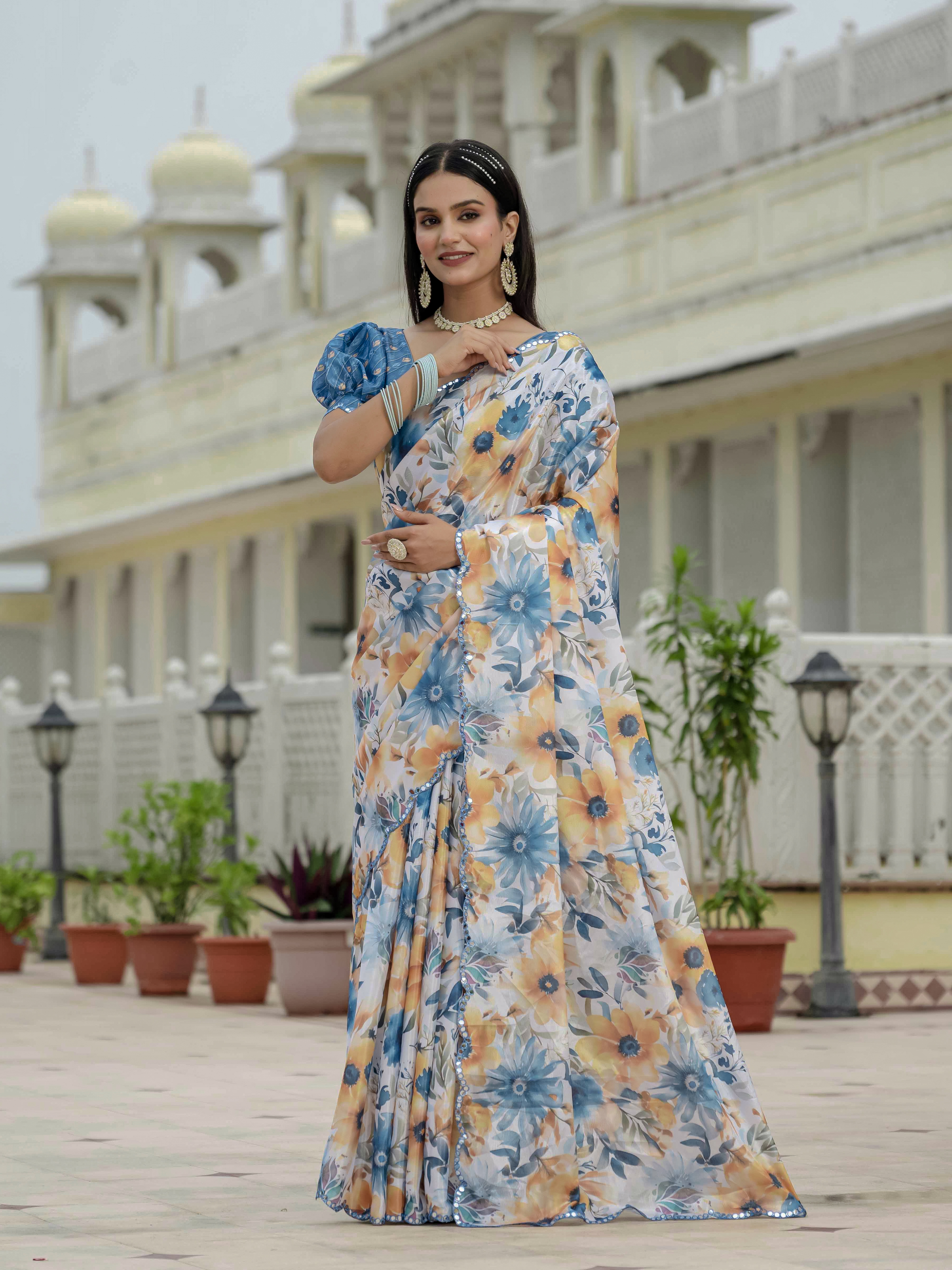
A Durga Puja Saree Guide: Laal Paar, Tant & Traditional Bengali Styles should do more than recommend a red-and-white outfit. Bengali Puja dressing carries visual codes, practical demands and small rituals that influence everything from fabric choice to the way the pallu is arranged. Laal Paar cotton, crisp Tant, linen blends, Banarasi silk and modern festive sarees can all work beautifully when chosen for the right day and activity.
Durga Puja normally involves long hours of walking between pandals, standing during Anjali, sitting on the floor, eating bhog and greeting relatives. The most successful saree therefore balances Bengali tradition with breathable comfort, secure pleats and jewellery that can hold a full day. Colour, weave, border width and drape matter as much as the blouse.
Durga Puja Saree Guide: Laal Paar, Tant & Traditional Bengali Styles and Their Meaning
A Laal Paar saree traditionally represents the Bengali pairing of a white or ivory ground with a red border and pallu. Red is associated with auspiciousness, strength and feminine energy, while the pale ground gives the saree a clean, ceremonial appearance.
The style is strongly associated with Bengali women during Durga Puja, especially during Ashtami Anjali, Nabami visits and Dashami rituals. The combination is recognisable without requiring heavy embroidery, which explains why an understated Laal Paar can feel more culturally specific than a heavily embellished red saree.
Traditional Laal Paar sarees are often woven in cotton or Tant, although silk, linen and blended versions are widely available today. A broad red border creates a more formal appearance; a narrow red paar feels lighter and easier for daytime pandal-hopping. A red blouse is classic, but an ivory, black, deep maroon or muted gold blouse can create a different mood without losing the Bengali reference.
Durga Puja Saree Guide: Laal Paar, Tant & Traditional Bengali Styles by Fabric
Tant cotton is usually the most practical fabric for warm, crowded Puja days because the open, airy weave feels light and allows ventilation. Tant also holds a recognisable Bengali silhouette: a firm border, a manageable fall and pleats that can look neat without adding much weight.
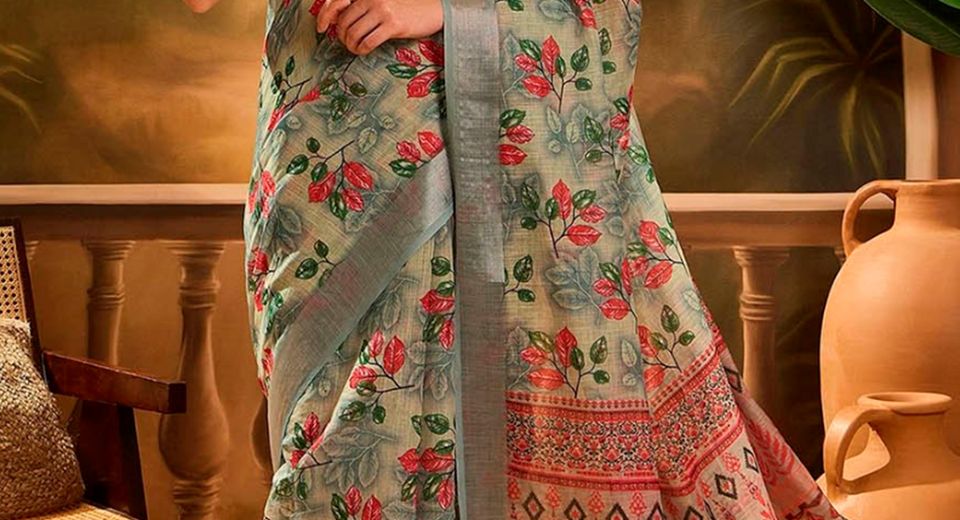
Handloom cotton is a strong choice for Saptami morning, Ashtami Anjali and long daytime visits. Cotton can crease more readily than silk, so pressing the saree before dressing and carrying a few safety pins are sensible preparations. A cotton petticoat with a stable drawstring helps the pleats stay in place while walking.
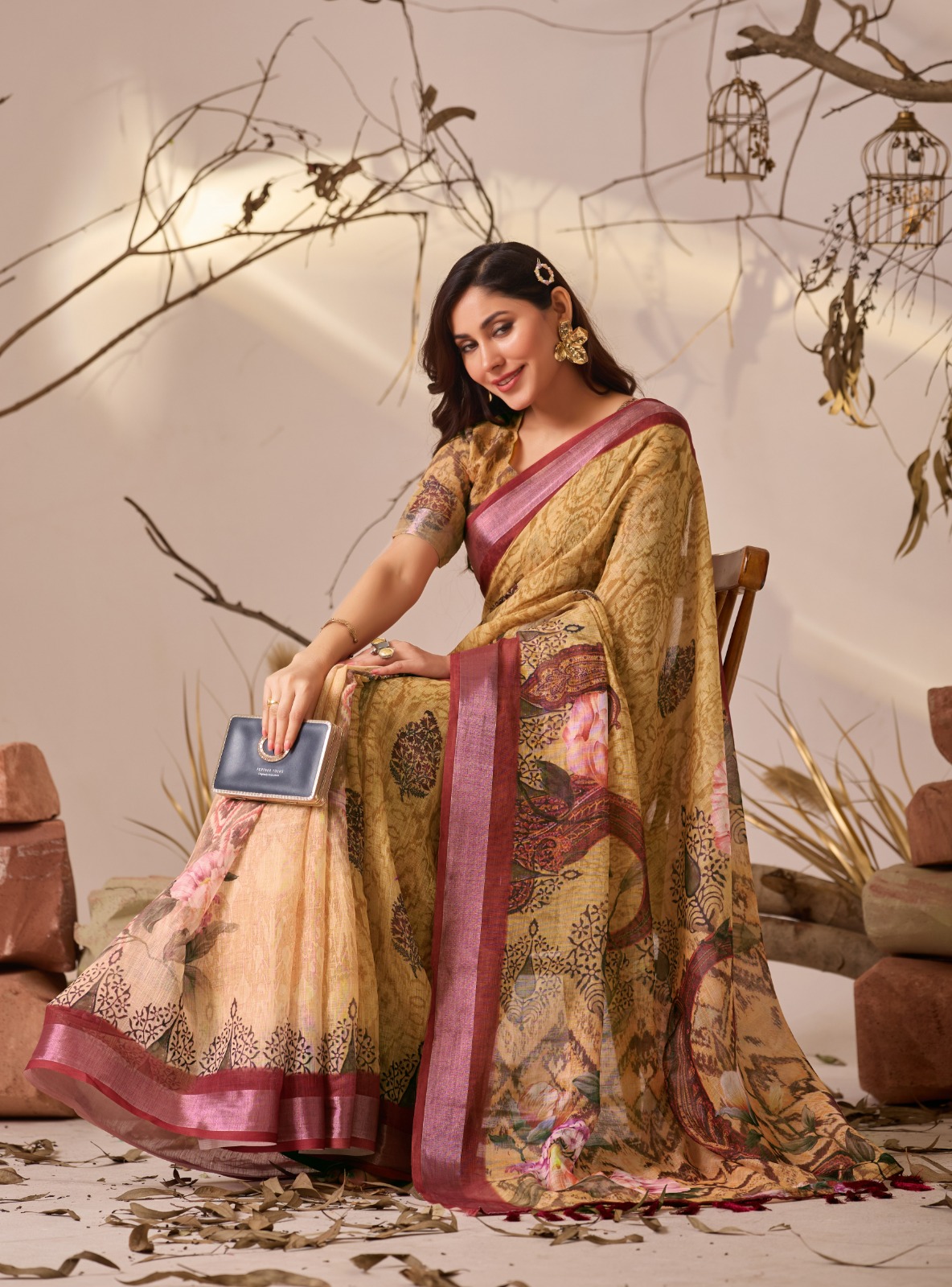
Linen cotton offers more texture and a slightly contemporary finish. Red Floral Linen Cotton Saree with Beautiful Printed Border demonstrates how a red base can retain festive energy without depending on metallic zari. Linen cotton is useful for daytime meals, office-to-Puja dressing and informal pandal visits because it looks polished while remaining comparatively breathable.
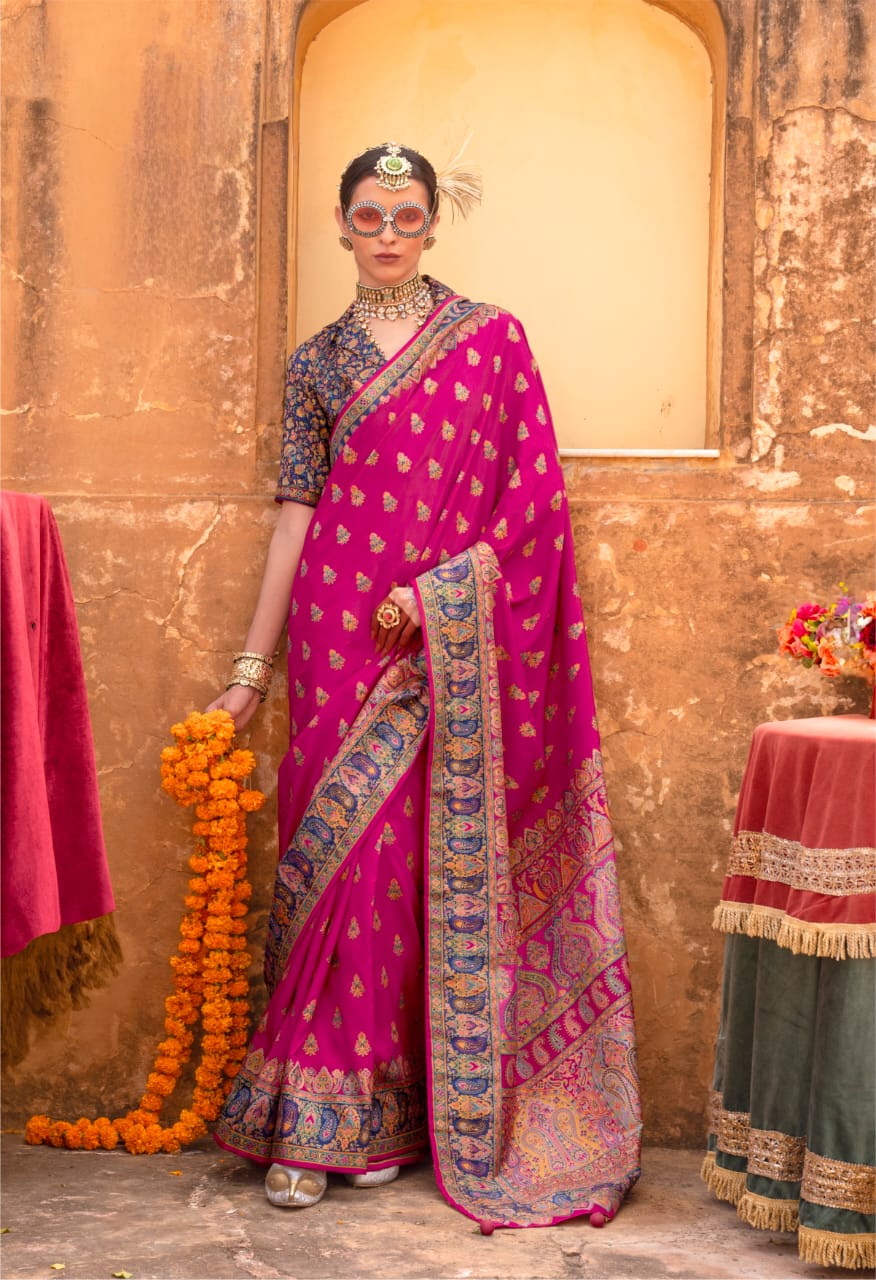
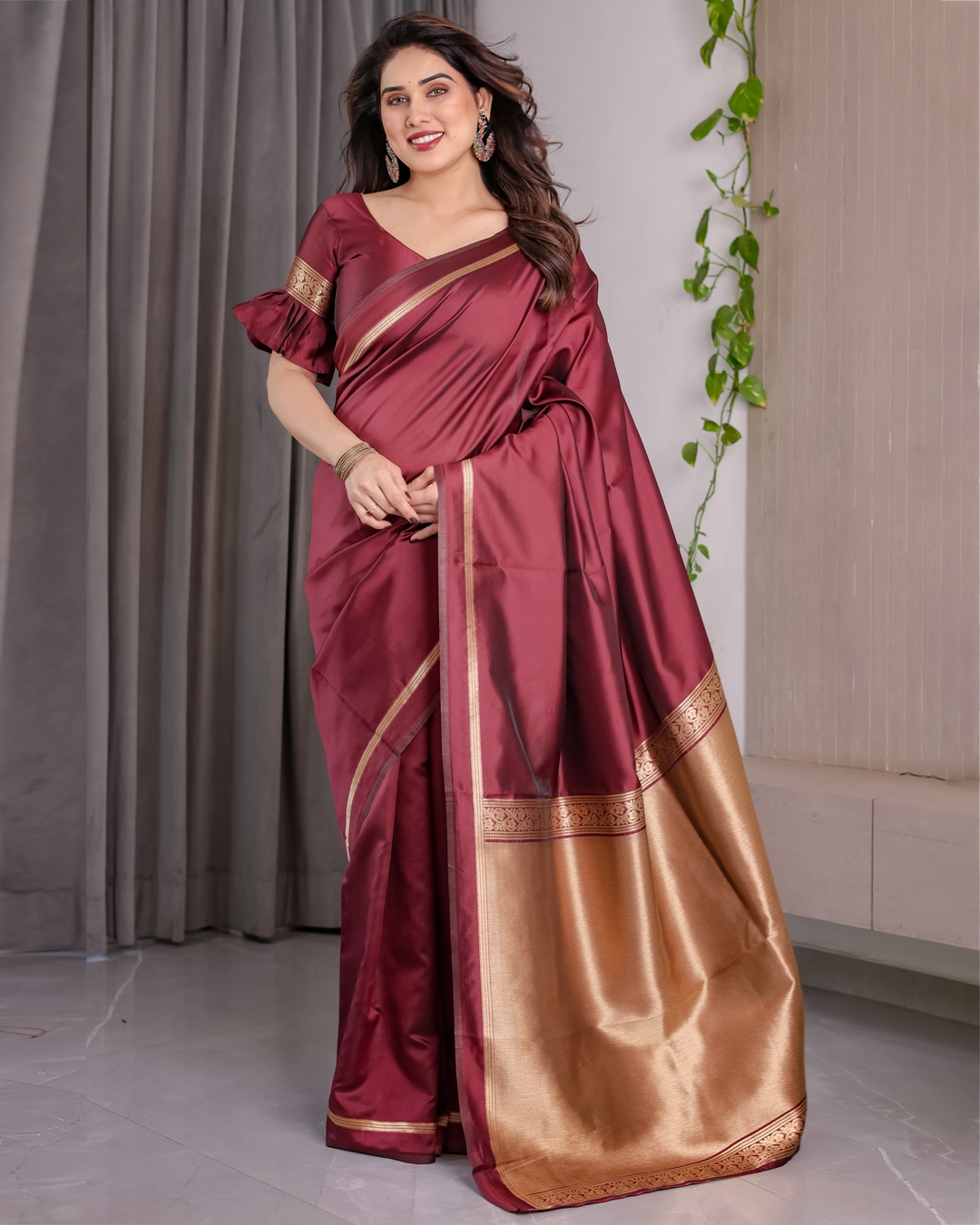
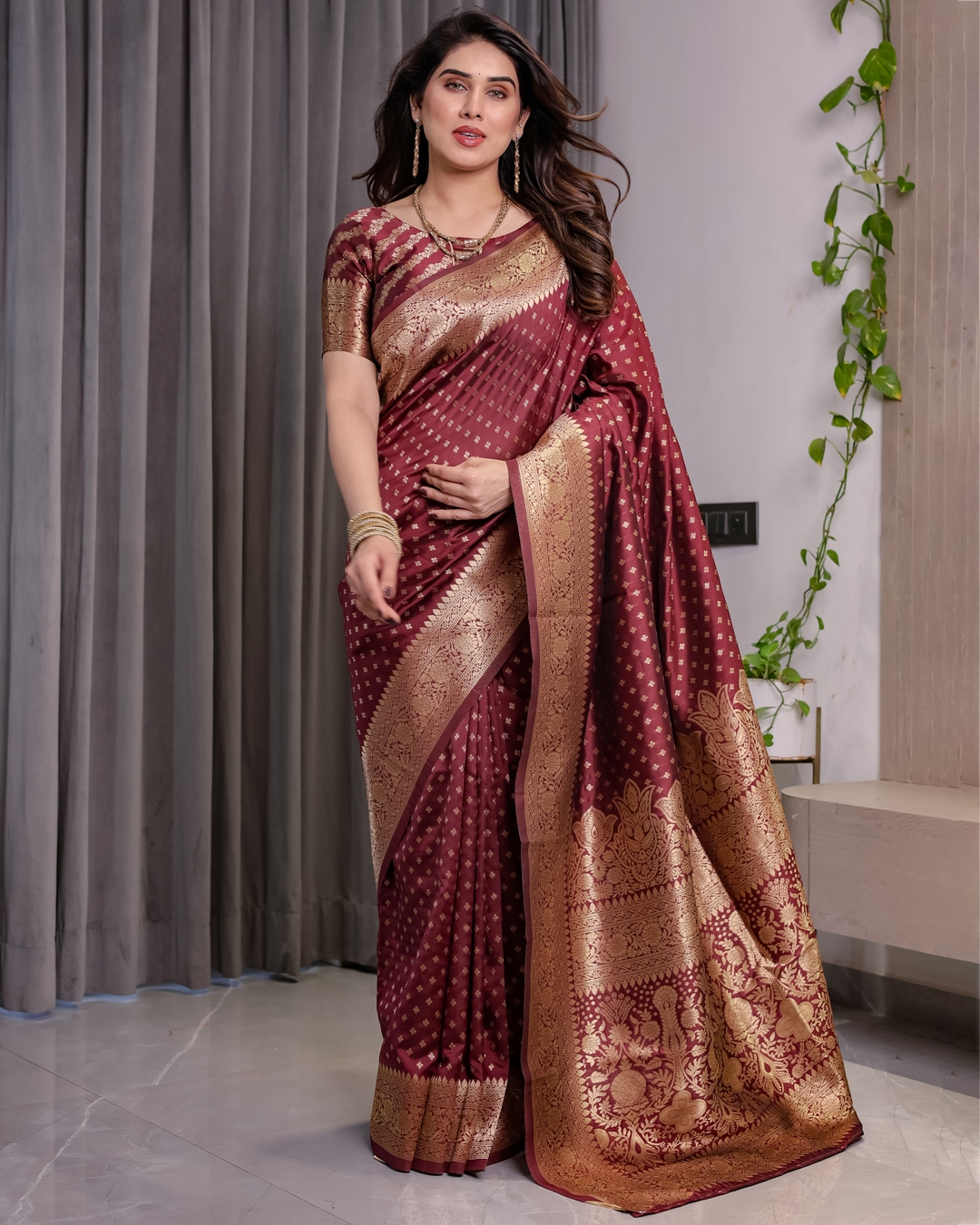
Banarasi silk brings structure, shine and a more formal presence to evening celebrations. Banarasi silk with zari is better suited to family gatherings, cultural programmes, Dashami dinners or a Puja where photographs and formal introductions are likely. Maroon Banarasi Soft Silk Saree with Golden Zari Border brings a deeper interpretation of the red-and-gold palette, while Red Banarasi Soft Silk Saree With Golden Zari Floral Border gives the look a brighter festive focus.
Soft silk generally drapes more fluidly than a stiff brocade and can be easier to wear for several hours. Heavy Kanjeevaram, dense brocade or heavily embellished silk may look magnificent but can become tiring in heat and crowded pandals. Fabric weight, lining and the number of zari motifs matter more than the label alone.
Durga Puja Saree Guide: Laal Paar, Tant & Traditional Bengali Styles for Each Puja Day
Choose a lightweight cotton or linen cotton saree for daytime Anjali and pandal-hopping, a soft silk for a long evening, and a heavier Banarasi for a formal family or cultural event.
Saptami and daytime pandal visits
Saptami often involves moving between several locations, so a breathable fabric and a secure drape are more useful than a very elaborate border. A red floral saree, a white-and-red Tant or a light printed cotton can be paired with comfortable sandals and a compact crossbody bag. Keep the pallu pinned near the shoulder and avoid a trailing length that can catch on railings or footwear.
Ashtami Anjali
Ashtami Anjali calls for a saree that remains comfortable while standing, folding hands, receiving flowers and moving through a crowd. Cotton, Tant and light linen cotton are reliable choices because they don't trap as much heat as dense silk. Select a blouse with sleeves and a neckline that allows free movement, particularly if you expect to sit on the floor.
Nabami evenings
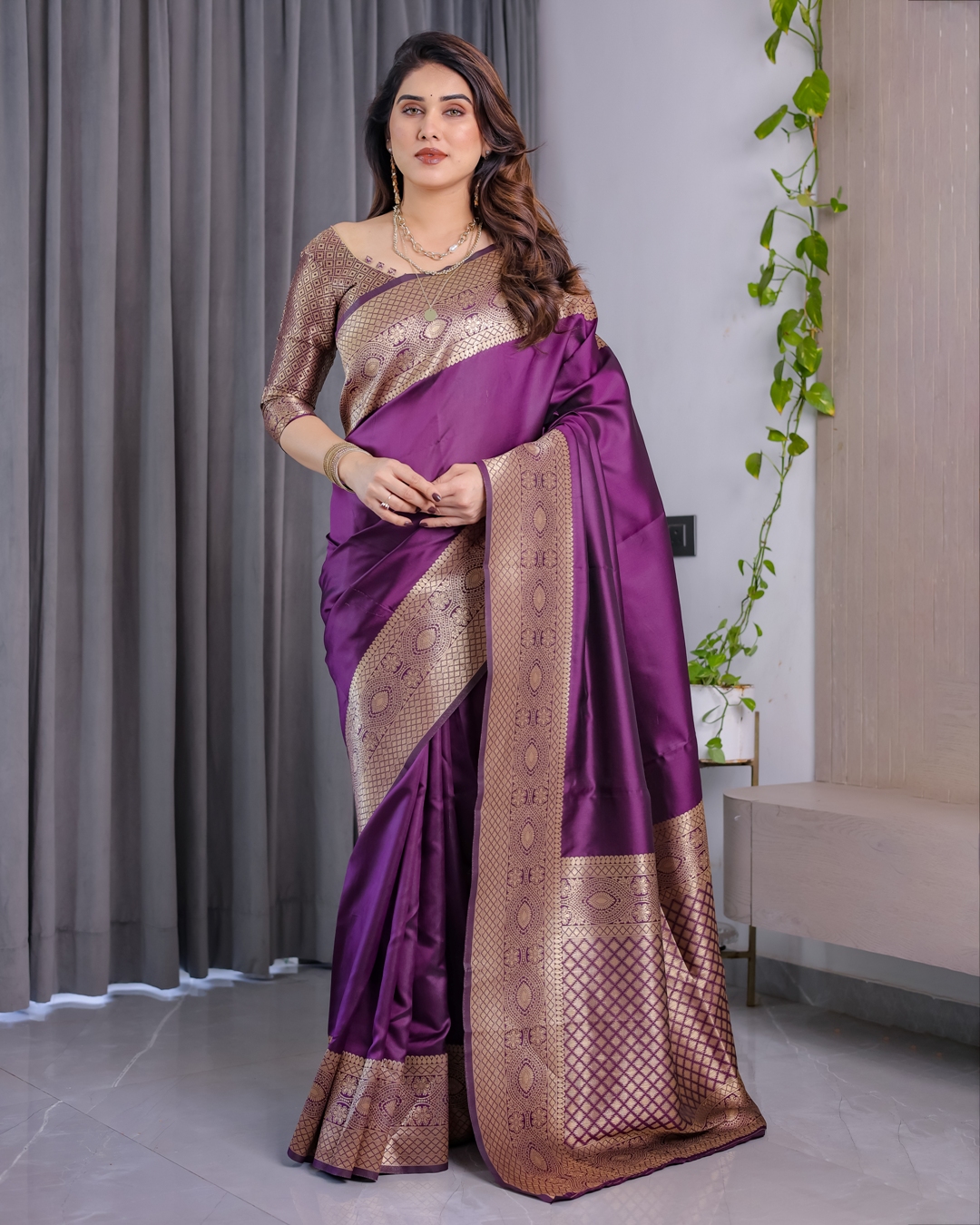
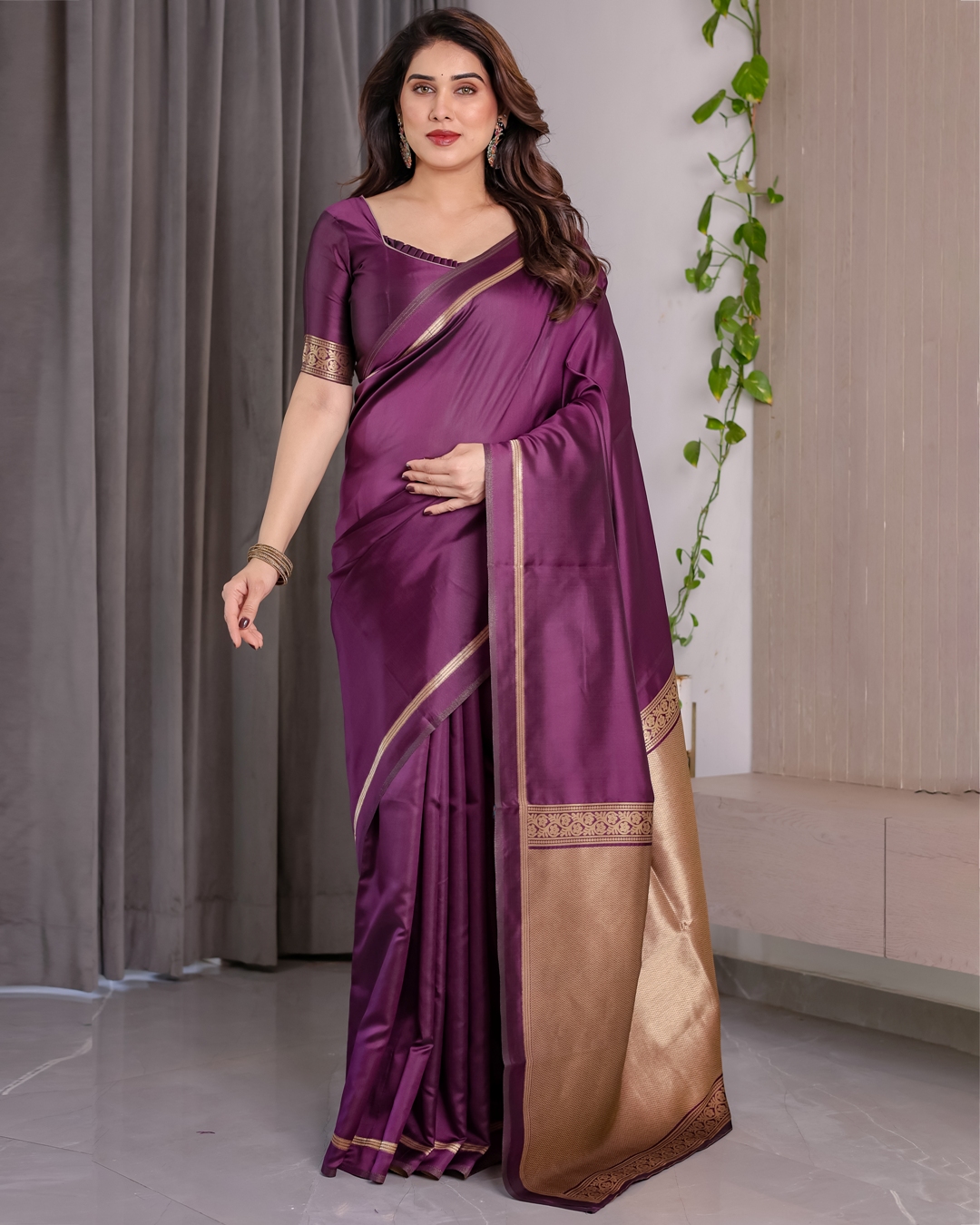
Nabami evening gatherings can accommodate richer silk, metallic borders and deeper shades such as maroon, wine or plum. Wine Banarasi Soft Silk Saree With Golden Zari Border creates a festive look without requiring a large jewellery set. For a softer colour story, Royal Plum Banarasi Soft Silk Saree With Golden Zari Border can be styled with antique gold earrings and a muted red lip.
Dashami and Sindoor Khela
Dashami clothing should allow easy movement and tolerate contact with vermilion, so washable cotton or a saree with a protected blouse area is practical. A classic red-and-white saree is especially associated with married women participating in Sindoor Khela, although anyone can wear red, white or Bengali-inspired styling respectfully. Avoid wearing heirloom silk if you don't want traces of sindoor or food to reach the fabric.
Durga Puja Saree Guide: Laal Paar, Tant & Traditional Bengali Styles for Bengali Draping
A Bengali-style drape uses broad pleats at the front and a generously arranged pallu that can be brought over the opposite shoulder and secured for movement. The recognisable fan-like pallu and visible border create much of the look, so pressing and pinning are as important as the saree itself.
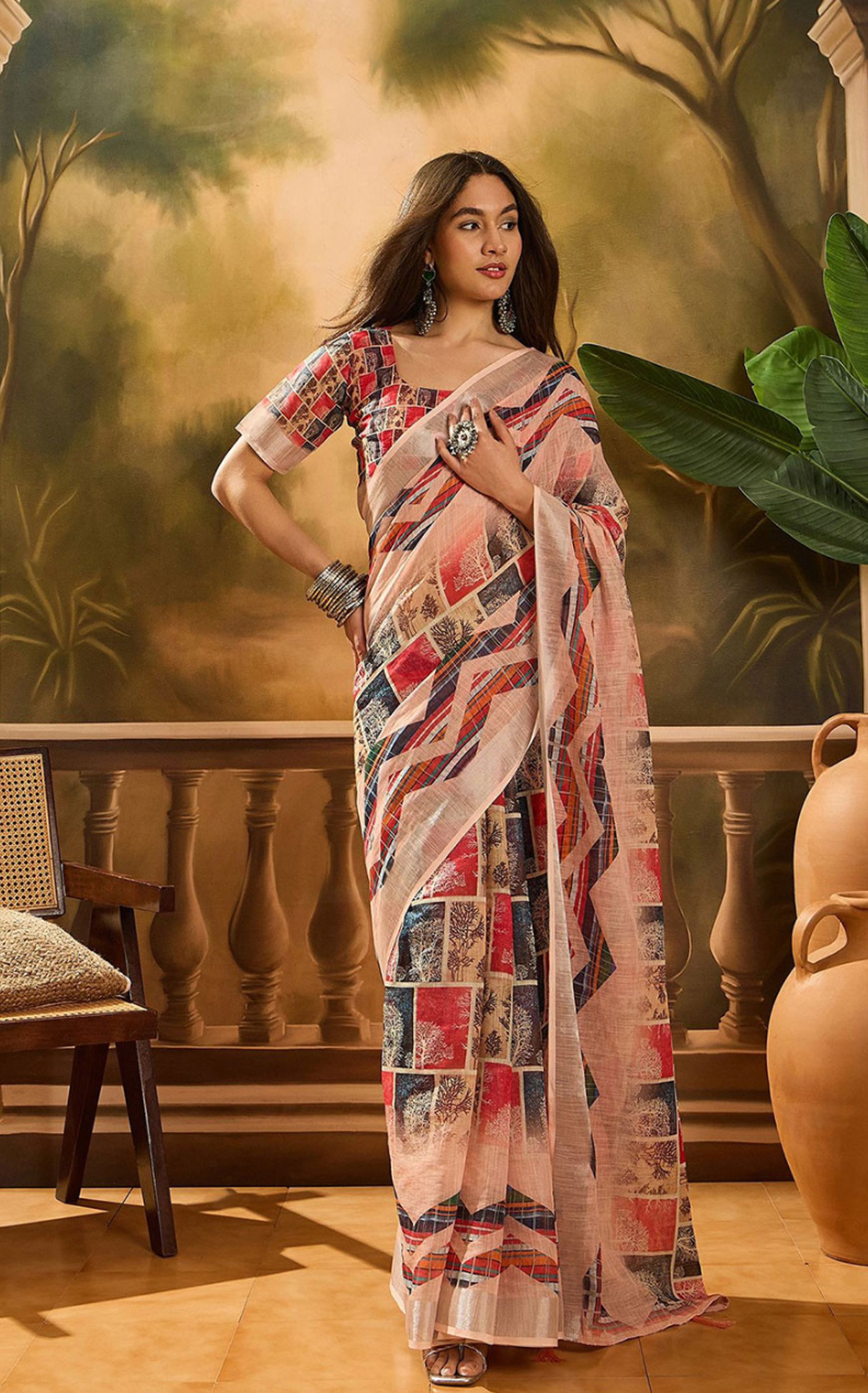
Start with a well-fitted blouse and a cotton or satin petticoat tied firmly at the waist. Tuck the saree securely, make one complete wrap and then form broad front pleats, keeping the lower edges even. The front pleats should fall cleanly over the feet rather than spread so widely that they become a tripping hazard.
After bringing the remaining fabric around the body, place the pallu over the left shoulder with enough length to create a broad, visible fall. A Bengali drape may leave the pallu more open than a standard Nivi drape, but crowded Puja settings call for two discreet pins: one at the shoulder and one near the blouse or waist. A decorative key ring, tassel or brooch can finish the pallu, provided the weight doesn't pull the shoulder fabric.
Practise the drape once before the festival, especially when wearing a stiff Tant or slippery silk. Walk, sit on a chair, climb a few steps and raise both arms during the trial. These simple tests reveal whether the pleats need to be narrower or whether the pallu requires another pin.
Durga Puja Saree Guide: Laal Paar, Tant & Traditional Bengali Styles with Blouses and Jewellery
A short-sleeved or elbow-sleeved blouse in red, ivory, black, maroon or gold works with most Bengali Puja sarees. A high round neck looks heritage with cotton, while a boat neck or square neck can make soft silk look more contemporary. A fitted blouse prevents excess fabric from catching underneath the pallu and helps a Bengali drape retain its shape.
Gold-toned jewellery complements zari, but silver, oxidised metal and terracotta jewellery pair well with cotton Tant and printed linen. A conch-shell style bangle, red glass bangles, jhumkas and a small red bindi provide recognisable Bengali accents without requiring a full bridal set. Choose one dominant element, such as a large necklace or statement earrings, so the border remains visible.
Time-honoured makeup can remain simple: a defined kajal line, warm blush, red or brick lipstick and a neat bindi withstand photographs and several hours outdoors. A low bun decorated with white flowers echoes Bengali styling, while a braid or half-up hairstyle may be more secure for a crowded pandal. Use transfer-resistant lipstick if Sindoor Khela or bhog is part of the day.
Accessories should also solve practical problems. A small fabric pouch can hold safety pins, tissues, blotting paper and a spare hair tie. Flat sandals with a secure strap are safer than delicate slip-ons when a Puja route includes uneven pavements, stairs or long queues.
Durga Puja Saree Guide: Laal Paar, Tant & Traditional Bengali Styles in Modern Colours
A heritage Bengali look feels contemporary when the cultural elements remain clear but the proportions, accessories or colour combinations are edited. A crisp red border with a plain blouse can look more current than adding several competing motifs.
Pair a Laal Paar or red cotton saree with a sleeveless high-neck blouse if the event is informal and the setting permits it. A structured belt can secure a loose pallu for a contemporary photograph, although the belt should be removed if it makes sitting or ritual movement uncomfortable. A small handbag in ivory, tan or black can replace a classic potli while keeping the overall palette restrained.
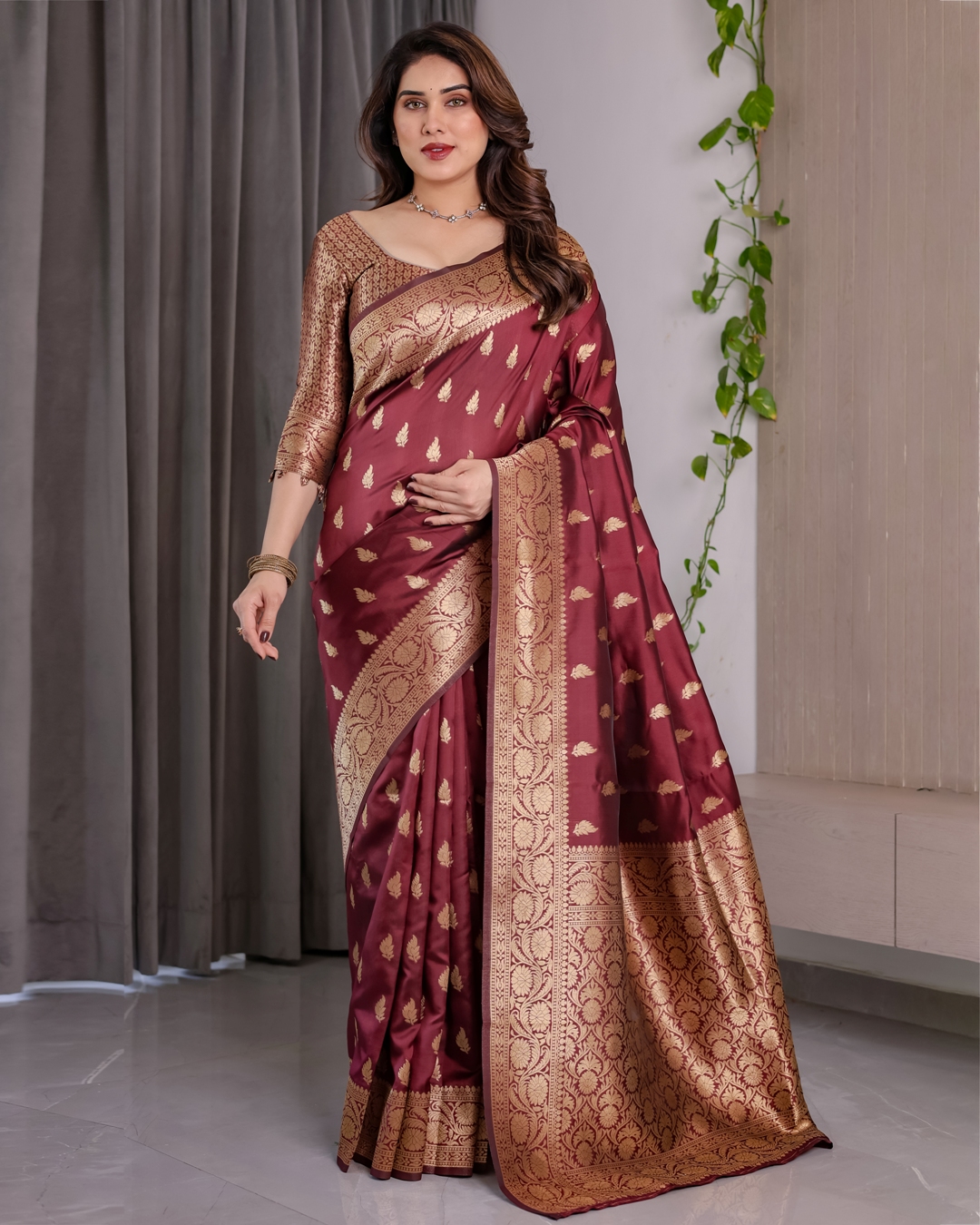
Banarasi silk also adapts well to up-to-date styling. Maroon Banarasi Silk Saree With Floral Jacquard Zari Border can be worn with a plain blouse and minimal earrings so the jacquard border supplies the visual detail. Purple Banarasi Soft Silk Saree with Elegant Zari & Jacquard gives another route for people who want Puja richness without wearing bright red from head to toe.
Colour-led browsing can assist when the desired style isn't limited to one traditional weave. Red Banarasi Silk Sarees for Weddings Under 1100 may provide budget-friendly festive options, while Silk Sarees Under 3000 With Discount can be useful when a richer silk appearance is needed without a large spend. Pink Georgette Sarees, Party Wear Sarees and Gray Color Sarees Under 1000 offer alternative palettes for visitors who want a festive saree without following the classic red-and-white formula.
Durga Puja Saree Guide: Laal Paar, Tant & Traditional Bengali Styles After the Festival
Proper post-Puja care means airing, cleaning and storing a saree according to its fibre rather than folding every saree in the same way. Cotton and linen cotton can usually be washed more simply than Banarasi silk, but care labels should always take priority.
After wearing a cotton saree, hang it indoors in shade for several hours before folding it. If the saree has received sweat, food or vermilion, wash it promptly according to the care instructions instead of leaving marks to set. Fold cotton with the border aligned and refold it in a different direction every few months to reduce permanent crease lines.
Banarasi silk and zari sarees should generally be dry-cleaned when visibly soiled. Do not spray perfume directly onto zari, soak silk in household detergent or place a silk saree in direct sunlight for extended periods. Wrap a clean, dry silk saree in unbleached muslin and store it away from damp walls, plastic bags and strong artificial fragrance.
Check the saree before storing it for loose zari, pulled threads or weakened hooks. Early repairs are usually easier than correcting damage discovered before the next wedding or festival. A cool, dry cupboard with occasional airing is safer than a tightly compressed trunk in a humid room.
Questions Readers Ask Before Choosing a Durga Puja Saree
What colour saree is traditionally worn during Durga Puja?
Red and white are the most recognisable colours, especially in a Laal Paar saree with a white or ivory body and red border. Maroon, wine, gold, plum and printed red sarees are also suitable for different Puja events when the fabric and styling fit the setting.
Is a Tant saree comfortable for Durga Puja pandal-hopping?
Yes, Tant cotton is usually comfortable for pandal-hopping because its airy weave is lightweight and comparatively breathable. Press the saree beforehand, secure the pallu with pins and choose footwear that can handle extended walking.
How do you drape a Bengali saree for Durga Puja?
A Bengali drape uses broad front pleats and a generous pallu arranged over the opposite shoulder, with the border kept visible. Two discreet safety pins can make the drape more secure for walking, sitting and standing in crowded Puja spaces.
Can I wear a Banarasi silk saree to Durga Puja?
Yes, Banarasi silk is especially appropriate for Nabami evenings, family gatherings, cultural programmes and formal Dashami events. Soft silk is easier to wear for several hours, while heavier zari styles are better reserved for occasions where you will not be walking continuously.
What jewellery goes with a Laal Paar saree?
Gold-toned jewellery, red glass bangles, jhumkas, a small red bindi and conch-shell-inspired accessories all complement a Laal Paar saree. Terracotta or oxidised jewellery creates a lighter, more contemporary interpretation with cotton Tant or printed linen.
How should a Banarasi saree be stored after Durga Puja?
Air the Banarasi saree in shade, dry-clean it when necessary and wrap it in clean muslin before storage. Keep zari away from direct perfume, household detergent, plastic packaging, damp cupboards and prolonged sunlight.