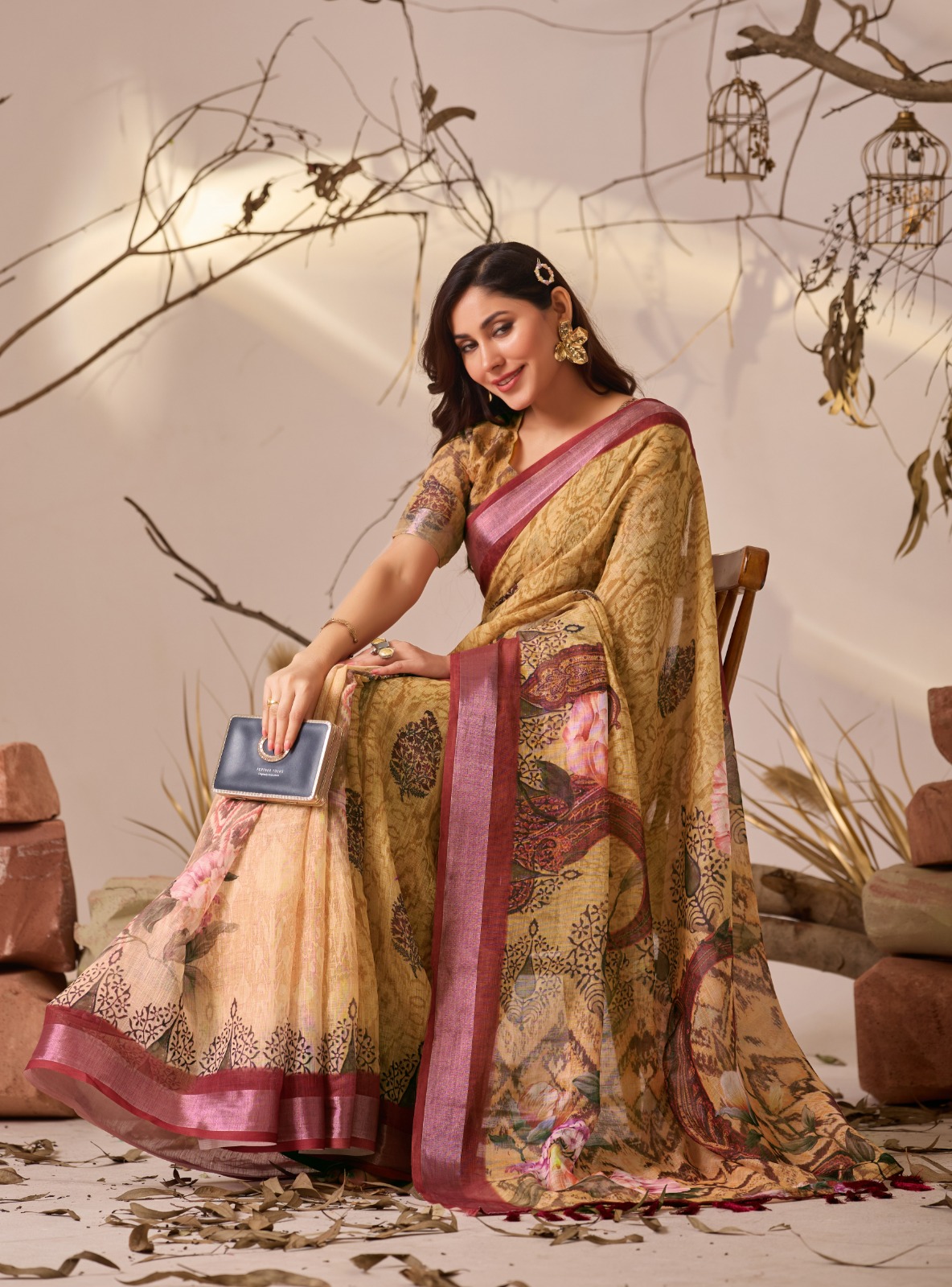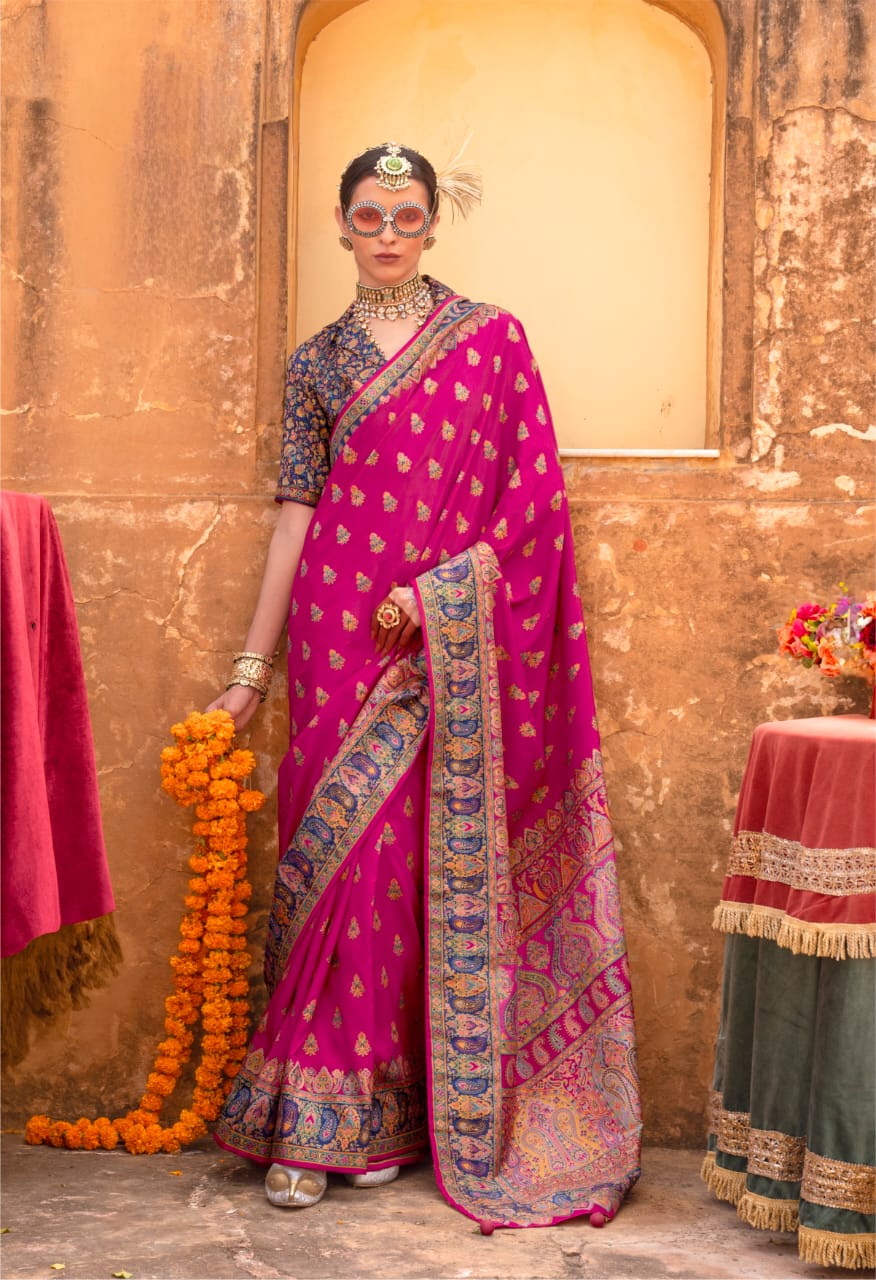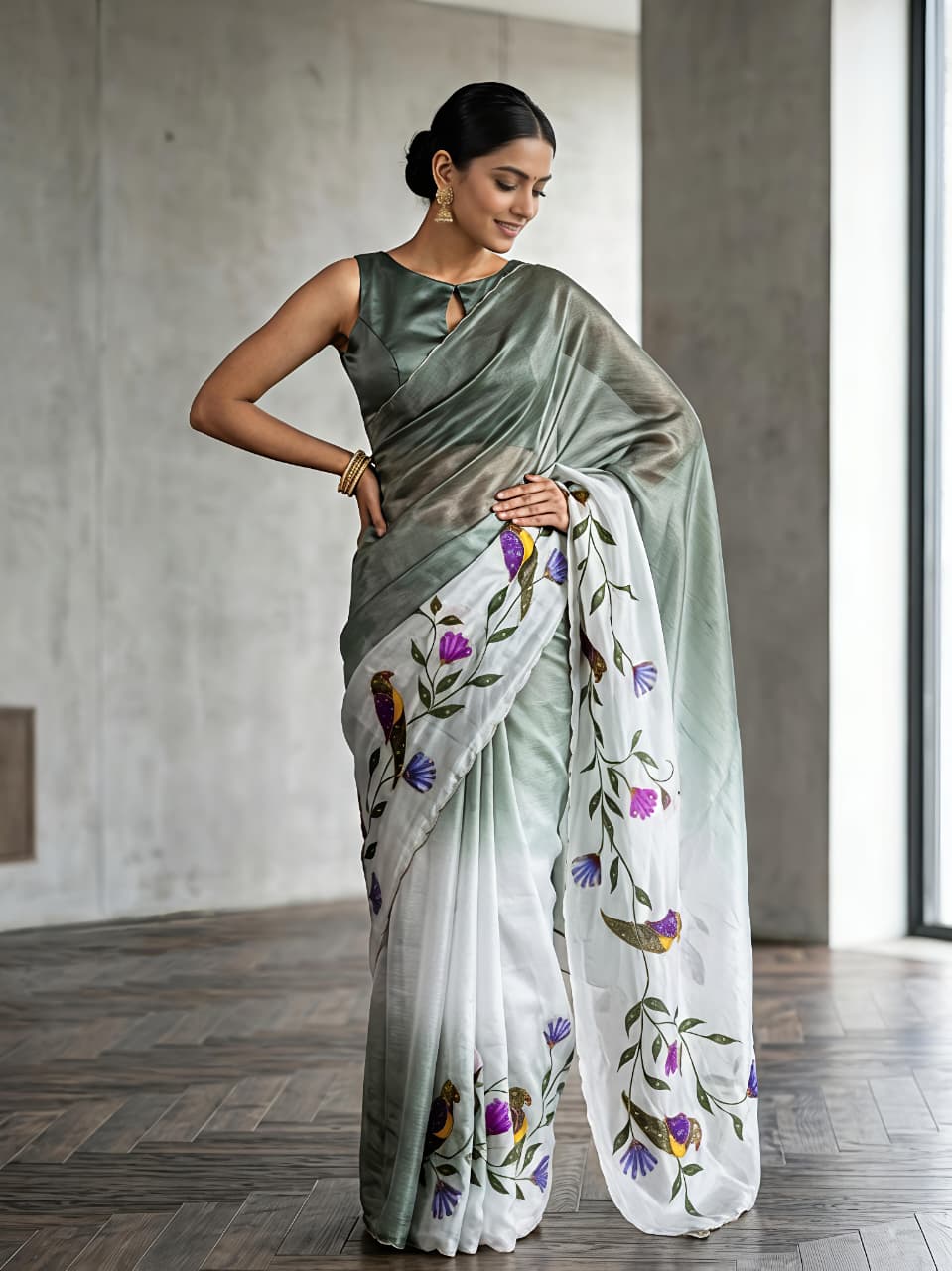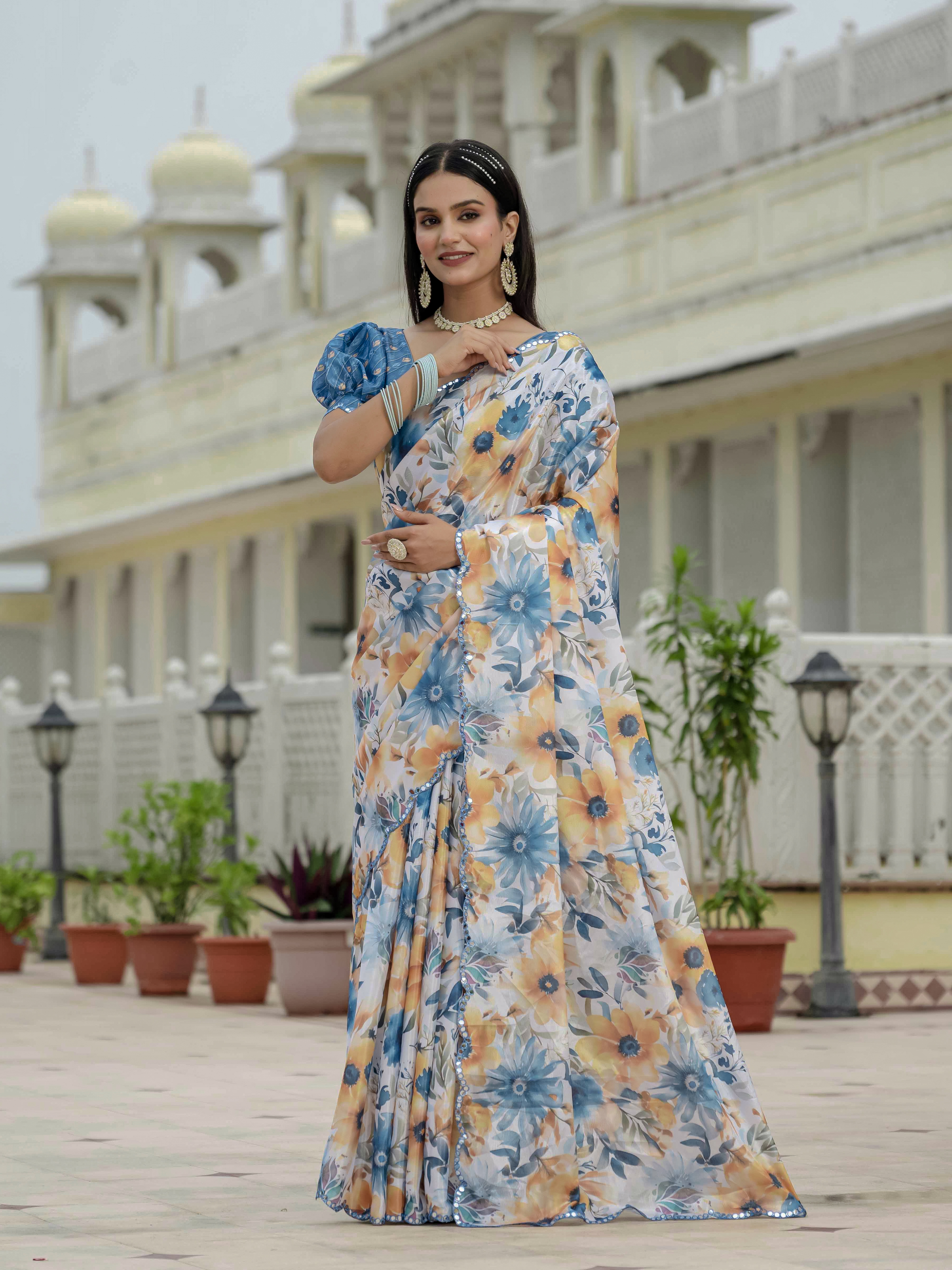
Diwali Fashion in Madhya Pradesh: Chanderi Sarees & Lehengas comes alive through lightweight textures, restrained zari, jewel-toned colour and silhouettes that remain comfortable during long family gatherings. Chanderi fabric connects festive dressing with the weaving heritage of Ashoknagar district, while contemporary lehengas make the same visual language easier to wear for pujas, card parties and evening celebrations.
A successful Diwali outfit needs to manage movement during rituals, enough richness for photographs and comfort in a warm indoor gathering. Chanderi silk, silk-cotton and cotton-silk blends meet that brief because their crisp drape gives structure without the heavy feel of brocade or densely layered velvet.
Why Diwali Fashion in Madhya Pradesh Values Chanderi
Diwali Fashion in Madhya Pradesh values Chanderi because the fabric combines a light hand, a slightly transparent surface, a graceful fall and a natural ability to catch diya light. The weave traditionally comes from Chanderi town in Madhya Pradesh, where artisans produce fine fabrics in cotton, silk and mixed compositions.
Chanderi silk generally has a silk warp and cotton weft, although commercial varieties and blends can differ. Silk-cotton Chanderi usually offers more body and sheen than pure cotton Chanderi, while pure silk Chanderi feels smoother and appears more luminous under warm lights. Checking the fibre composition before buying matters because the word Chanderi describes a weaving tradition and textile identity, not one single fibre formula.
The fabric's subtle transparency is one of its signature features. A saree with a translucent body can look elegant with a solid blouse, but a lehenga made from very sheer Chanderi may need a lining, layered panels or a sturdier inner skirt. Zari butis, floral motifs, peacocks and geometric borders are common visual references, although modern digital prints and mirror-work details also suit Diwali dressing.
Which Chanderi fabric suits a Diwali outfit?
Silk-rich Chanderi suits a polished evening outfit, while cotton Chanderi or a cotton-silk blend suits a lighter daytime puja. Silk-rich Chanderi reflects warm light more clearly, whereas cotton-rich Chanderi usually feels more breathable and holds a slightly crisper shape.
A silk-rich saree pairs naturally with a brocade, raw-silk or satin blouse. A cotton-silk saree looks balanced with a matte blouse in cotton, silk-cotton or handloom fabric. Matching the blouse's surface to the saree prevents the outfit from looking excessively shiny under indoor lighting.
How Diwali Fashion in Madhya Pradesh Reflects Regional Style
Diwali Fashion in Madhya Pradesh looks most authentic when it combines Chanderi's regional identity with practical silhouettes and colours suited to the celebration. A traditional saree can carry the heritage story directly, while a Chanderi-inspired lehenga translates the same visual language into a more relaxed festive outfit.
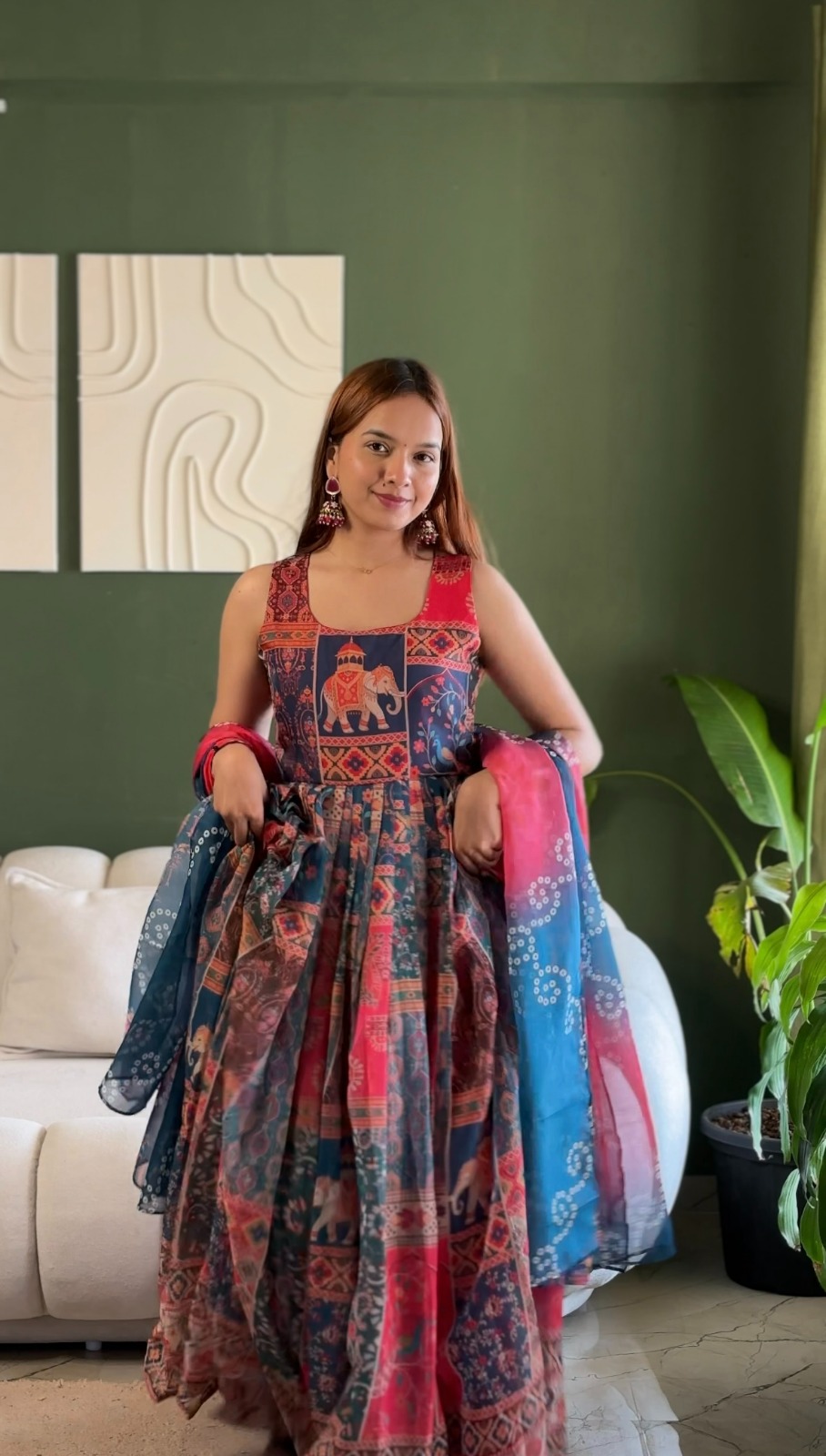
Deep maroon, rani pink, kesariya orange, bottle green, royal blue and plum create a strong evening palette. Ivory, cream, powder blue and soft pink work especially well for daytime Lakshmi puja, when a lighter outfit photographs clearly against marigold flowers and warm lamps. Gold zari suits the time-honoured Diwali palette, while silver zari or antique-gold borders give pastel Chanderi a contemporary finish.
Regional references don't require an entirely classic costume. A Chanderi saree with a cropped blouse, a pre-stitched pleat arrangement or a slim belt can feel current without hiding the textile's character. A lehenga with a short kurti-style blouse and a translucent dupatta creates a similar balance between heritage and ease.
The scale of ornament also matters. Fine zari butis and a narrow border suit a small family puja or a daytime visit. A broader zari border, gota patti, mirror work or an embroidered blouse creates more visual impact for an evening Diwali party. Keeping one element restrained-either the blouse, dupatta or jewellery-helps the outfit remain refined.
When Diwali Fashion in Madhya Pradesh Calls for a Saree or Lehenga
A Chanderi saree is better for graceful drape and repeat wear, while a lehenga is more convenient for dancing, hosting and movement-heavy celebrations. The right choice depends on the event format, the time of day and how much styling you want to manage.
When a Chanderi saree makes sense
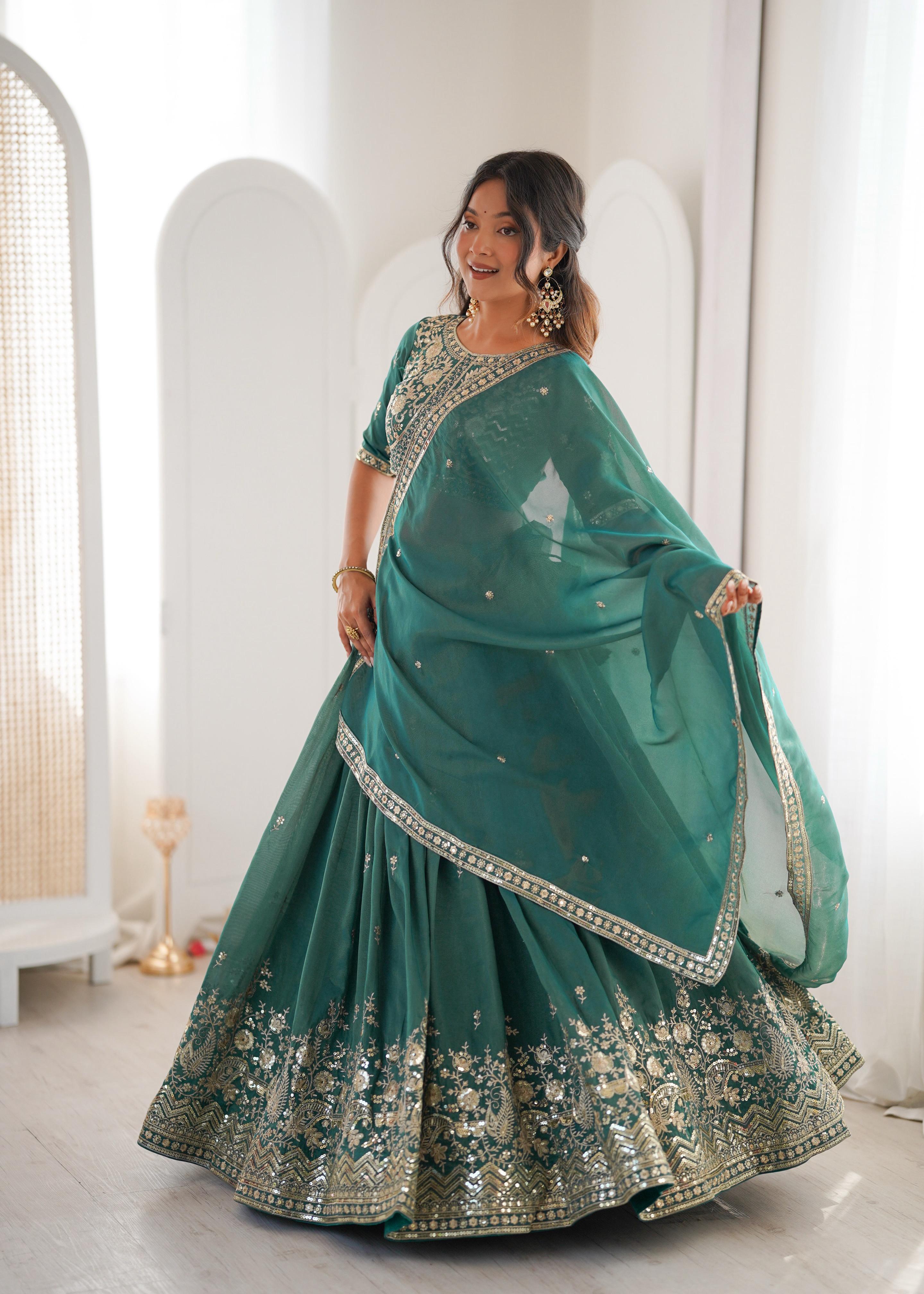
A saree suits Lakshmi puja, a formal family dinner, a Diwali office gathering or an event where a composed heritage appearance matters. A six-yard Chanderi saree can also be reused after Diwali with a plain blouse, a contrasting shawl or a simpler jewellery combination.
For a petite wearer, a narrow border and a blouse in a similar colour can create a continuous vertical line. For a taller wearer, a wider border or a contrasting blouse can add proportion. A structured petticoat or well-fitted underskirt improves the fall, particularly when the Chanderi fabric is lightweight.
When a lehenga is more practical
A lehenga is more practical for family card games, terrace celebrations, dancing and gatherings where sitting on the floor or moving between rooms is likely. A well-lined skirt should allow approximately 2 to 3 inches of ease at the waist, and the hem should sit about 1 to 1.5 inches above the floor when worn with the intended footwear.
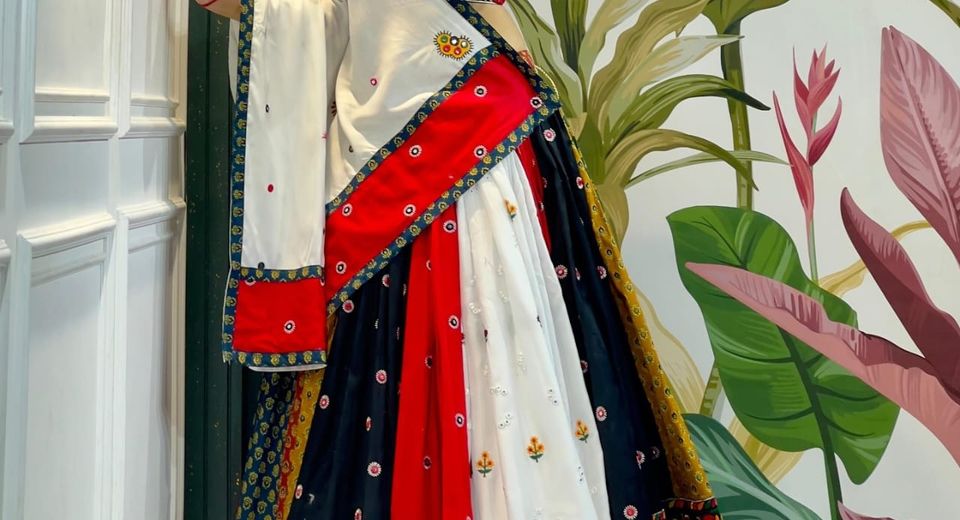
Ready-to-wear festive options can help when an event is close. Vibrant Multicolor Navratri Lehenga Choli Set can be adapted for Diwali with gold jhumkas and a plain dupatta, while White Digital Print Festive Lehenga Choli Set creates a lighter look for daytime puja. Elegant Mirror Work Navratri Lehenga Choli Set brings reflective detail that works naturally beside diyas.
How to Style Diwali Fashion in Madhya Pradesh with Chanderi
Chanderi lehenga styling works best when the outfit retains one visible lightweight element, such as a translucent dupatta, an airy skirt panel or a delicate border. Excessive layering can hide the fabric's fall and make a naturally elegant textile appear bulky.
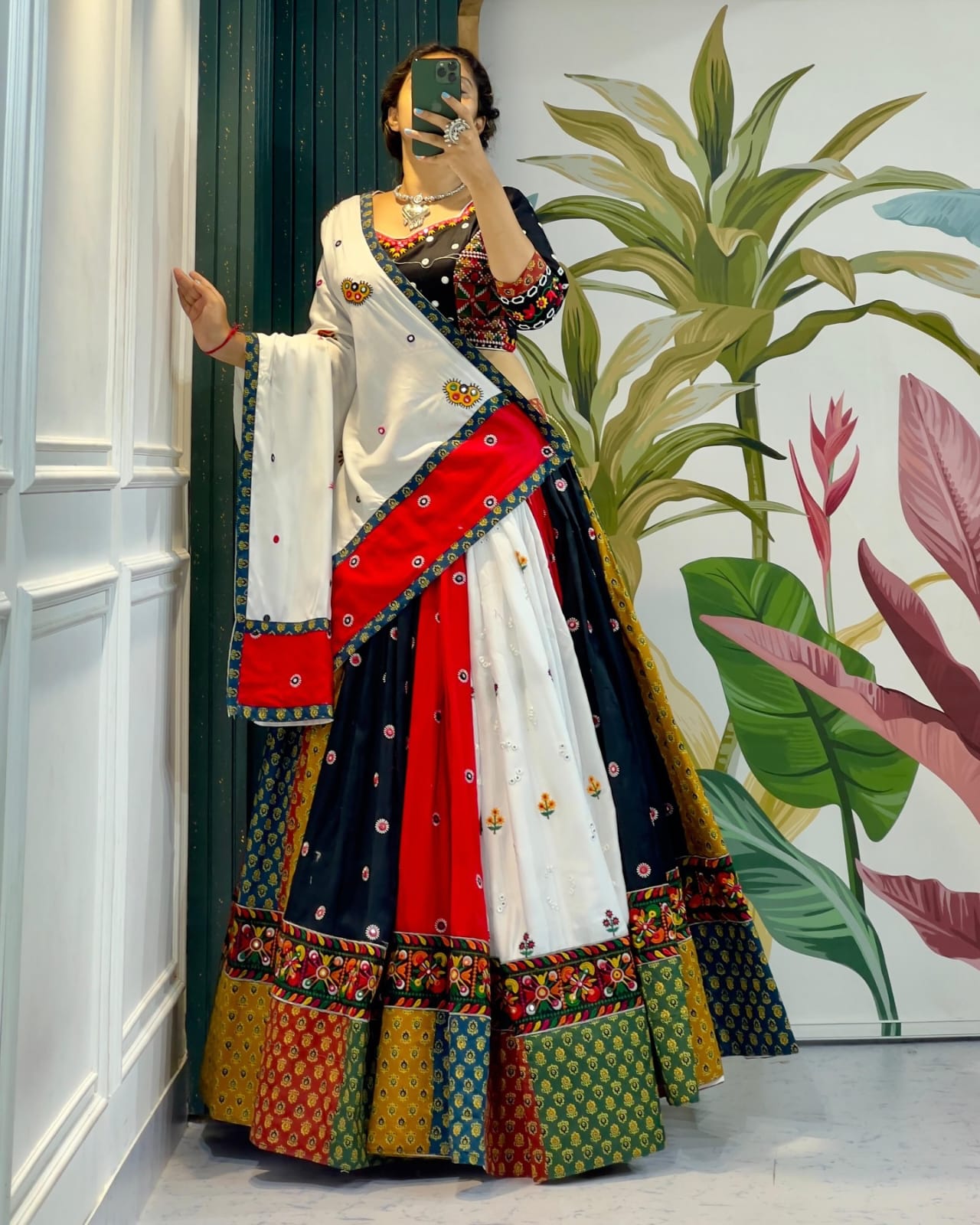
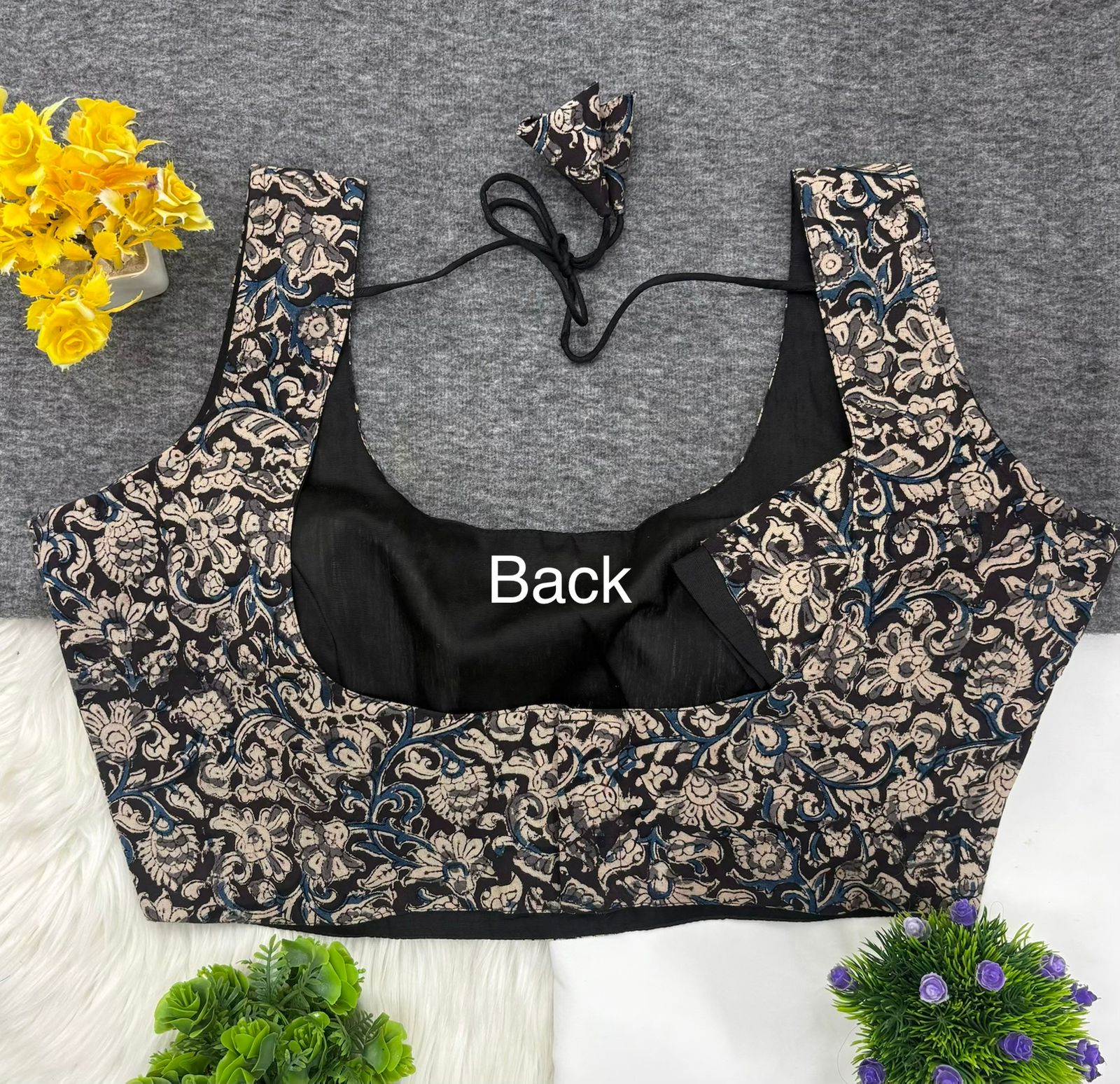
A fitted blouse with a modest neckline gives a Chanderi skirt a clean foundation. A sweetheart, square or high round neckline can all work, but the blouse should be lined if the fabric is sheer or zari-heavy. Three-quarter sleeves add a heritage note, while sleeveless or elbow-length sleeves suit a contemporary evening look.
Dupatta placement changes the visual balance of the outfit. Draping a sheer dupatta over one shoulder keeps the blouse visible and works well for photographs. Pinning the dupatta at both shoulders creates security during rituals. A front drape gives greater coverage and looks polished with a simpler skirt. For a heavily embellished lehenga, choose a plain or lightly bordered Chanderi dupatta instead of adding another dense surface.
Accessories should respond to the motif rather than compete with it. Gold jhumkas, a short necklace and bangles are enough for a zari-led outfit. Mirror work can be paired with oxidised silver or mixed-metal jewellery. A potli or small embroidered bag is more practical than a large handbag when carrying a phone, keys and a small amount of makeup.
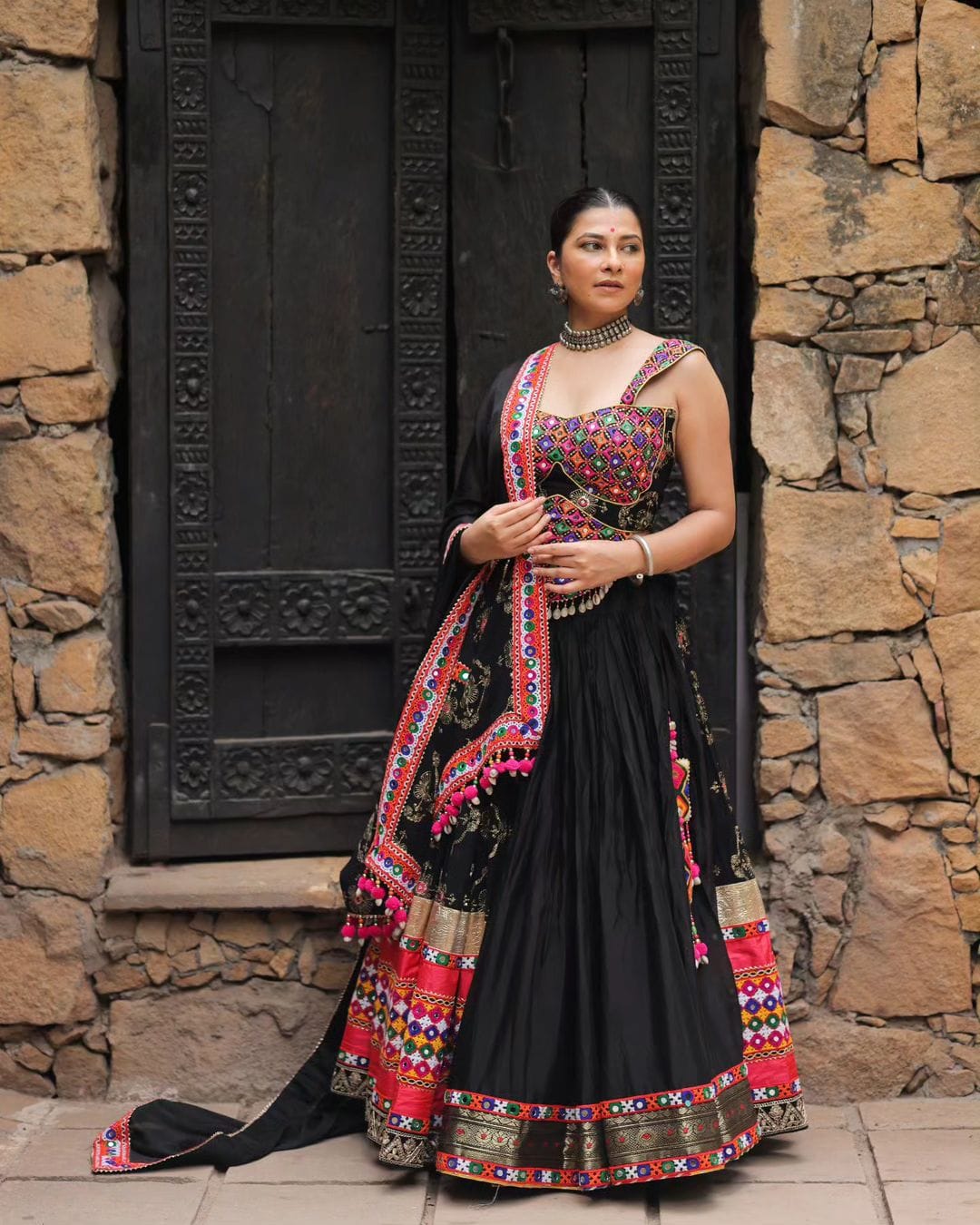
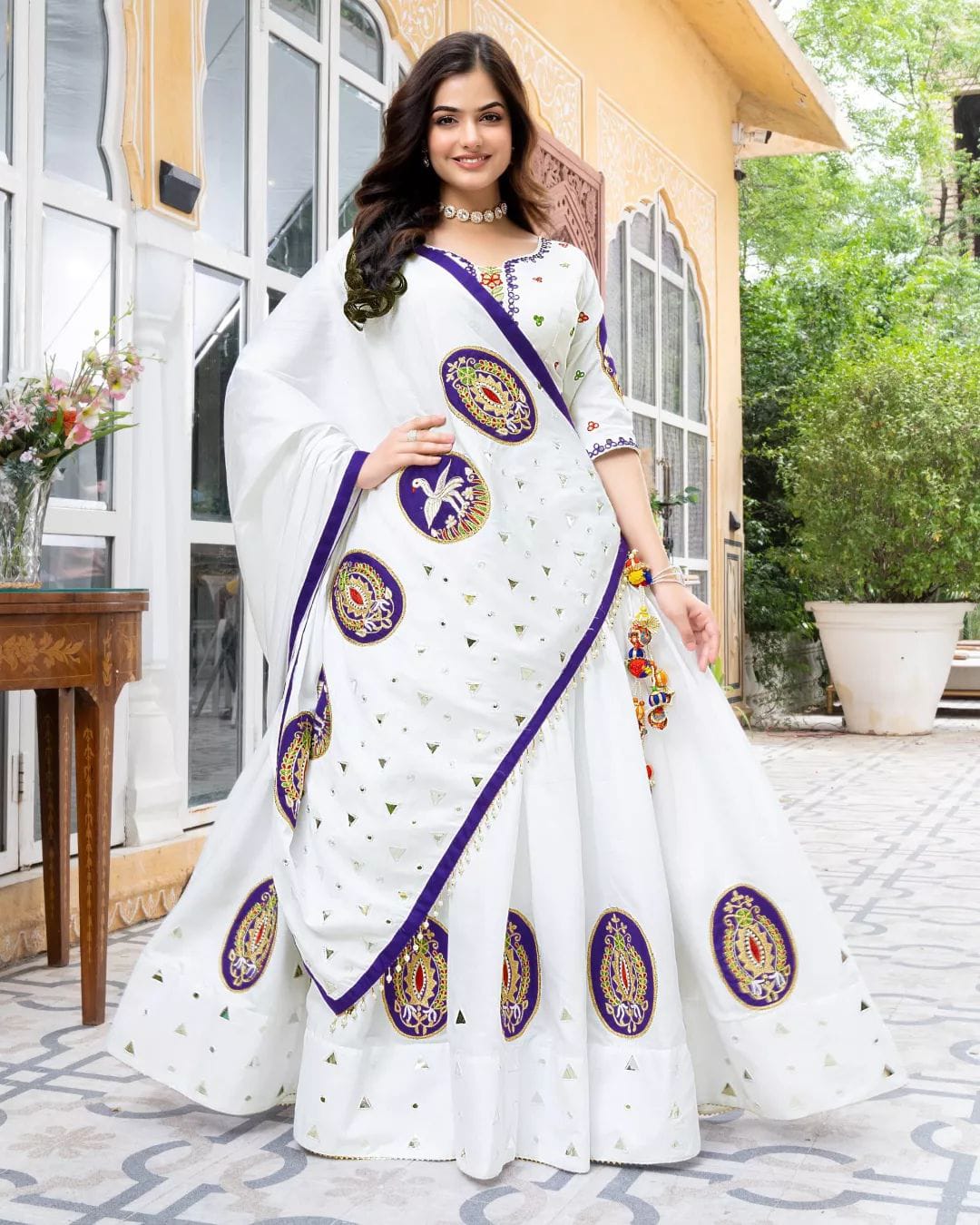
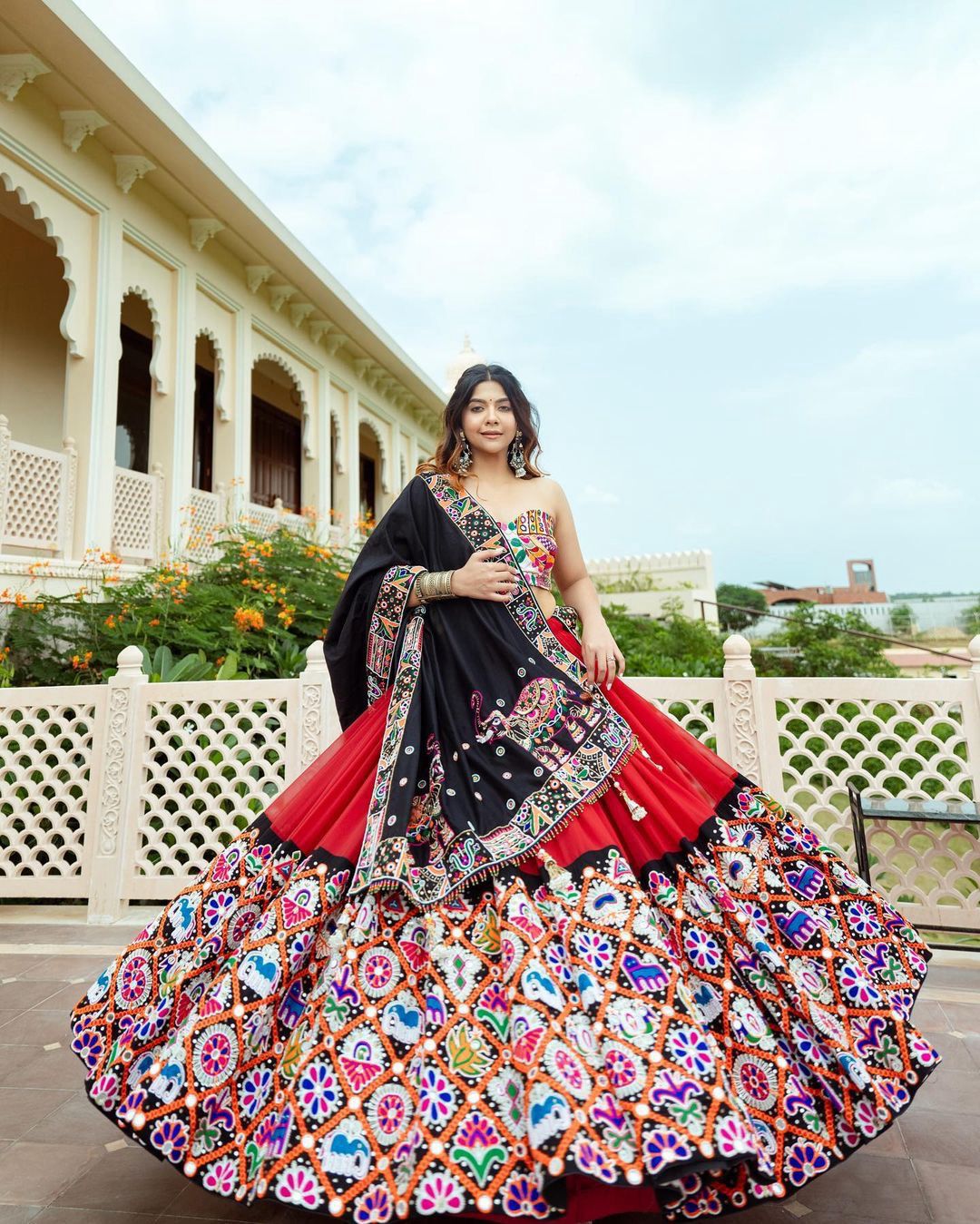
Stylish White Mirror Work Lehenga for Festive Wear demonstrates how a pale base can make reflective embellishment the focal point. Designer Black Garba Lehenga Choli for Festive Season gives a stronger evening direction, but black looks most festive when balanced with gold, fuchsia, emerald or bright red accessories. Red Ethnic Lehenga Choli with Digital Print Design can be softened with antique-gold jewellery rather than additional bright embellishment.
How to Budget for Diwali Fashion in Madhya Pradesh
A realistic lehenga budget should account for the garment, alterations, lining, footwear and accessories rather than the skirt price alone. Setting aside approximately 10% to 15% of the clothing budget for blouse adjustments and finishing work prevents last-minute compromises.
Under ₹3,000, printed lehengas and lighter synthetic blends may offer the best value for a single celebration. Between ₹3,000 and ₹5,500, shoppers can often find better lining, more detailed borders, mirror work or a fuller skirt, although fibre content and construction still need checking. Genuine silk-rich Chanderi and handwoven pieces may cost considerably more because weaving time, yarn quality and zari content affect the final price.
Silk Lehengas Under 3000 and Pink Lehengas Under 4000 with 50% Discount can help narrow a search by fabric direction, colour and budget, but a discount percentage should never replace inspection of fibre composition, seam quality and return measurements. Beige Ethnic Printed Lehenga Set for Navratri and Garba brings a neutral base that can be restyled for Diwali with a maroon, rust or gold dupatta.
Shoppers looking for coordinated outfits can compare Bridesmaid Lehengas Under 5500, particularly when several people need related colours without identical designs. Net Lehengas Under 4500 with 51% Discount may suit shoppers who want a fuller, lighter-looking skirt, but net requires careful handling around jewellery and rough surfaces.
Cream Ethnic Lehenga Choli with Mirror Work Design works for a soft festive palette and can become more Diwali-specific with a saffron dupatta or gold waist belt. Haldi Lehengas Under 5500 includes colour-led options that can also work for Diwali when the embellishment isn't overly ceremonial. Yellow, mustard and marigold shades photograph particularly well beside warm lights, but a deeper blouse or antique-gold border can give the palette greater evening depth.
What to Check Before Buying Chanderi Diwali Wear
Before buying Chanderi Diwali wear, check the fibre composition, lining, measurements, transparency, embellishment security and alteration allowance. These details determine whether a beautiful garment will remain comfortable and useful after one celebration.
Read the product description for terms such as pure silk, silk-cotton, cotton-silk, polyester blend or art silk. A seller should identify the composition clearly rather than relying only on the word Chanderi. If the product description is vague, ask whether the skirt is lined, whether the dupatta is included and whether the blouse is stitched or unstitched.
Measure the waist at the point where the lehenga will sit, measure the desired skirt length while wearing the intended footwear and check the blouse bust and shoulder measurements. A drawstring or adjustable waistband can be useful when measurements fall between sizes. A fixed waistband may provide a cleaner fit but usually leaves less room for alteration.
Inspect the underside of mirror work, sequins and zari embroidery where possible. Secure stitching, covered knots and a smooth lining reduce snagging. Heavy embellishment concentrated at the hem can make a skirt drag, while a lighter border is easier to wear during a long puja or dinner.
How to Care for Diwali Fashion in Madhya Pradesh Chanderi Wear
Chanderi garments should be dry-cleaned when the care label recommends it and stored folded in breathable cotton rather than sealed plastic. Correct storage protects the delicate weave, zari and embellishment from moisture, dust and friction.
Air a Chanderi saree or lehenga after wearing it, but keep the garment away from direct sunlight for prolonged periods. Do not spray perfume, deodorant or hair products directly onto the fabric because alcohol and oils can mark silk fibres and dull metallic work. Blot a fresh spill with a clean white cloth instead of rubbing it into the weave.
Fold sarees along different lines every few months to reduce permanent crease stress. Fold lehenga skirts with tissue paper between heavily embroidered panels, and store mirror-work garments so that sharp embellishments don't press against delicate fabric. A muslin or cotton cover allows ventilation and is safer than airtight packaging.
Iron Chanderi only at a low temperature with a pressing cloth, preferably from the reverse side. Direct high heat can flatten the texture, create shine or damage zari. Test the iron on an inconspicuous area first, and leave complex stain removal to a professional cleaner familiar with silk and metallic embroidery.
Putting Together Diwali Fashion in Madhya Pradesh with Confidence
The strongest Diwali outfit usually has one clear focal point: a Chanderi border, a richly worked blouse, a bright lehenga skirt or a statement dupatta. Choosing one focal point makes the look easier to coordinate and keeps the fabric visible.
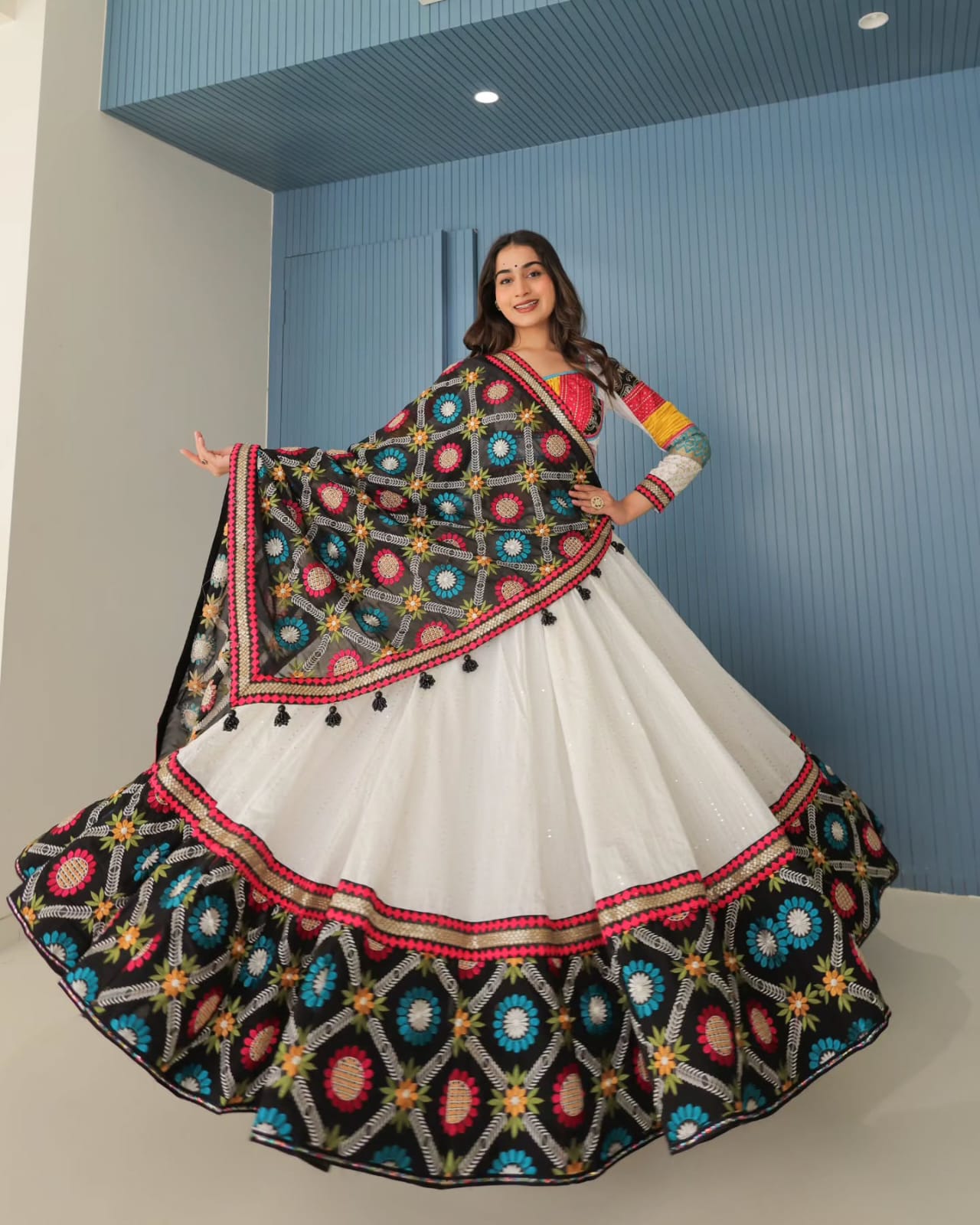
For a daytime puja, combine a cream, blush or soft yellow Chanderi saree with a lined blouse, small gold earrings and comfortable block heels. For an evening gathering, choose jewel-toned Chanderi, a broader zari border and a more substantial earring, then keep the handbag and footwear simple.
A lehenga can follow the same logic. A printed skirt needs a calmer blouse and dupatta, while a mirror-work skirt can be paired with a solid blouse and minimal necklace. A black, red or multicolour outfit becomes more connected to Diwali through gold accents, warm-toned makeup and a dupatta that adds softness.
Diwali Fashion in Madhya Pradesh becomes memorable when regional textile knowledge guides contemporary choices. Chanderi brings a lightweight foundation, while thoughtful colour, correct lining, measured fit and restrained accessories make the final outfit comfortable enough for real celebrations rather than only photographs.
Common Questions About Chanderi Diwali Dressing in Madhya Pradesh
What should I wear for Diwali in Madhya Pradesh?
A Chanderi saree or a lightweight festive lehenga is a suitable choice for Diwali in Madhya Pradesh. Select silk-rich Chanderi for an evening event and cotton-silk Chanderi for a breathable daytime puja, then coordinate the outfit with gold, antique-gold or mirror-work accessories.
Is Chanderi silk suitable for a Diwali lehenga?
Chanderi silk is suitable for a Diwali lehenga when the skirt has an adequate lining and a secure waistband. The fabric gives a light, crisp drape and catches warm light beautifully, but very sheer or delicate Chanderi may need layered panels for opacity and durability.
Which colours look best for Diwali lehengas?
Maroon, rani pink, kesariya orange, bottle green, royal blue, plum, cream and mustard are effective Diwali lehenga colours. Choose jewel tones for evening celebrations and lighter cream, blush or yellow shades for daytime Lakshmi puja.
How do I choose between a Chanderi saree and a lehenga for Diwali?
Choose a Chanderi saree for formal puja, family dinners and repeat wear, and choose a lehenga for dancing, hosting or celebrations involving frequent movement. The event format and desired comfort matter more than whether one silhouette is traditionally considered more festive.
How can I tell whether a Chanderi garment is good quality?
Check the stated fibre composition, even weaving, lining, seam finishing and secure zari or mirror-work attachment. A reliable description should also provide garment measurements, care instructions and clear information about whether the blouse and dupatta are included.
How should I store a Chanderi saree or lehenga after Diwali?
Air the garment away from direct sunlight, then fold it in breathable cotton with tissue paper between heavily embellished sections. Dry-clean it according to the care label, avoid plastic storage and refold it periodically to prevent stress along permanent crease lines.