

Diwali Fashion in Himachal Pradesh needs to balance festive colour with the cold, dry evenings of the hills. Traditional Pahari outfit ideas often begin with a warm base, a graceful drape or long kurta, and a regional accessory such as a Himachali cap, dhatu or patterned shawl. The most successful looks feel celebratory without ignoring altitude, wind or the practical need to move between indoor gatherings, temple visits and outdoor family rituals.
Himachal Pradesh doesn't have one single traditional costume. Dress varies across districts, communities, altitude zones and occasions. A woman in Kullu may wear a pattu-style woollen drape, while a festive salwar suit, ghagra-choli or sari may be more familiar in another household. The useful approach is to borrow identifiable Pahari elements respectfully rather than treating every Himachali garment as interchangeable.
Diwali Fashion in Himachal Pradesh: What Makes Pahari Dressing Distinctive?
Diwali Fashion in Himachal Pradesh stands out through layered silhouettes, woollen textures, bright borders, practical headwear and regional handcraft traditions. Pahari dressing commonly combines a long tunic or blouse with a draped lower layer, shawl, waist fastening or embroidered detail, depending on local custom.
The word pattu commonly refers to a warm woollen wrap or draped garment associated with Himachali clothing, especially in Kullu and nearby regions. A pattu isn't simply a decorative shawl: its weight, width and patterned borders help protect the wearer from cold. Traditional Kullu shawls are known for geometric borders and carefully arranged colour bands, while Kinnauri textiles may feature distinctive stripes, borders and motifs.
Women may also wear a dhatu, a headscarf associated with Himachali dress, or a regional cap and shawl combination. The Himachali topi is strongly associated with the state, although cap shapes and wearing styles differ by region. A topi can make a modern kurta set feel locally grounded without requiring a complete traditional costume.
Traditional Pahari clothing also reflects social and ceremonial context. A look for Lakshmi Puja at home can be lighter and more relaxed than clothing worn for a wedding, temple procession or village gathering. Diwali styling should therefore respect the setting, family customs and community identity rather than relying on a costume-like version of hill fashion.
Diwali Fashion in Himachal Pradesh: How Should Women Dress for a Cold Evening?
Women should choose a warm inner layer, a festive ethnic base and one substantial outer layer that can be removed indoors. A long kurta set, sari with a full-sleeved blouse, or structured sharara suit works well when paired with woollen socks, a shawl and low, stable footwear.
A cotton or silk-blend base is more comfortable than a thin synthetic outfit when temperatures fall after sunset. A fitted thermal vest can sit beneath a kurta without changing the visible shape, while a slip with a sari prevents cling and adds warmth. For a long evening, choose fabrics that don't crease severely when covered by a shawl or coat.
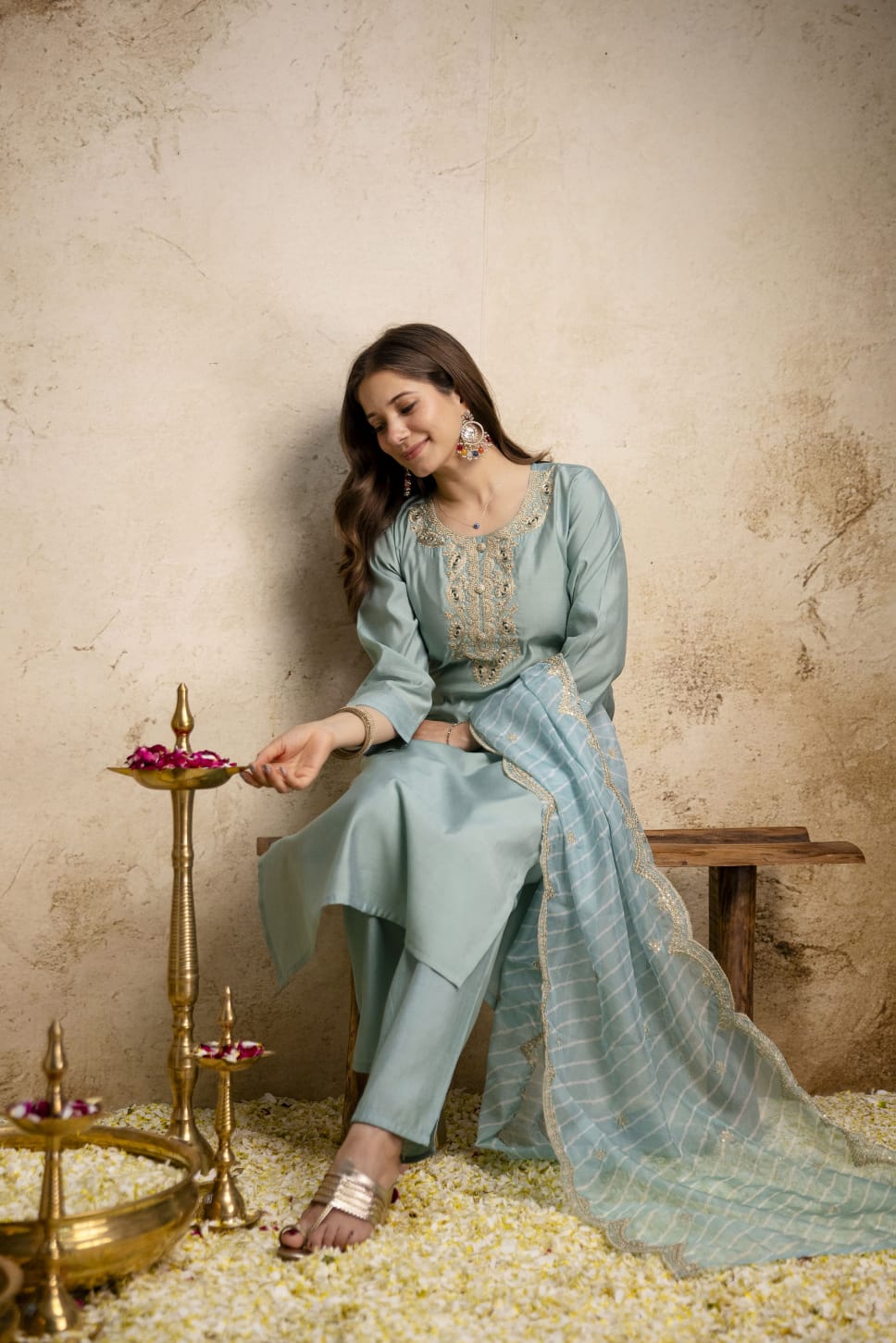
The Pastel Blue Embroidered Chanderi Kurta Set with Dupatta can be adapted for a daytime Diwali puja by adding a charcoal, rust or deep plum woollen shawl. Chanderi has a light, elegant surface, so the additional layer is important in colder towns and villages. Keep jewellery modest if the outfit will be worn beneath a thick wrap.
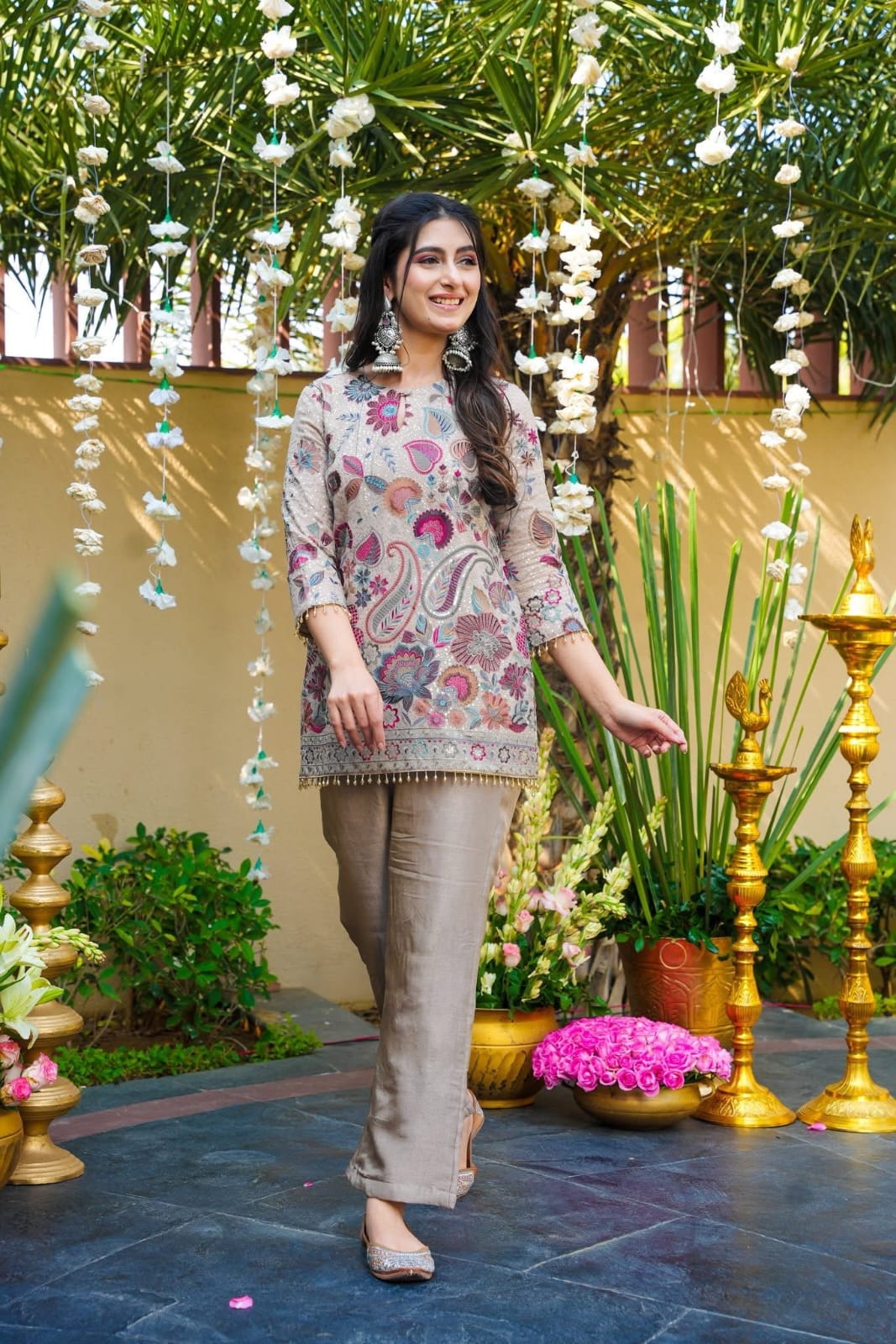
For a richer evening palette, the Modern Taupe Vichitra Silk Embroidered Co-Ord Set for Women offers a neutral base for a patterned Kullu-inspired shawl. Taupe, espresso, maroon and forest green combine naturally with the earthy tones found in many Himalayan textiles. A woven belt at the waist can provide structure, but it should remain loose enough for comfortable sitting during puja.
Diwali Fashion in Himachal Pradesh can also include a sari, particularly when the wearer already feels comfortable managing pleats and a pallu in cold weather. The Floral Mauve Linen Cotton Printed Saree with Unstitched Blouse is more suitable for a relatively mild indoor celebration than an exposed mountain terrace. Pairing the sari with a long-sleeved blouse, opaque tights and a woollen pattu-style wrap gives the outfit a more practical winter profile.
Diwali Fashion in Himachal Pradesh: Which Fabrics Work Best?
Wool, silk, lined cotton, velvet accents and medium-weight blends work best for Pahari-inspired Diwali outfits because they provide warmth, shape and visual texture. Lightweight Chanderi, linen cotton and Mal cotton can still work indoors when layered over warm basics.
Diwali Fashion in Himachal Pradesh with Wool and Shawl Fabrics
Wool is the most useful layer for outdoor Diwali events in Himachal Pradesh. A patterned woollen shawl, pattu or Kullu-style wrap adds warmth across the shoulders and can cover the upper arms without hiding the complete outfit. Select a shawl with a firm weave and a border that remains visible when draped over one shoulder.
Pure wool may feel scratchy against the neck, so wear a cotton or silk scarf underneath if needed. A wool-blend wrap is easier for many people to tolerate and often weighs less. Avoid placing perfume directly on wool because alcohol and oils can leave persistent marks.
Diwali Fashion in Himachal Pradesh with Silk, Chanderi and Cotton Blends
Silk provides a festive sheen but doesn't automatically provide sufficient warmth. Vichitra silk, Banarasi silk and Paithani-style zari fabrics are visually suited to Diwali, yet they need a shawl, lined jacket or thermal base in hill weather. Chanderi is breathable and lightweight, which makes it comfortable for indoor puja but less suitable as a standalone layer on a cold balcony.
Linen cotton has a crisp, breathable hand and works well for daytime celebrations. The Mustard Floral Linen Cotton Saree with Unstitched Blouse creates a warm seasonal palette with maroon, rust or dark green accessories. Linen cotton can crease at the waist, so a neatly pinned pallu and a medium-width belt can keep the drape orderly.
Mal cotton, including the Teal Mal Cotton Woven Saree With Blouse Piece - VARNAVI, is better suited to a milder indoor celebration or a daytime visit. Teal pairs effectively with antique gold, mustard and wine, but the saree should be layered with a full-sleeved blouse or a warm short jacket when temperatures drop.
Diwali Fashion in Himachal Pradesh: Which Colours and Motifs Feel Pahari?
Maroon, saffron, mustard, deep teal, pine green, navy, rust and ivory suit traditional Pahari outfit ideas because they echo Himalayan landscapes and the saturated borders of many regional textiles. Use one dominant colour, one supporting neutral and one metallic accent rather than combining several competing bright shades.
Red and gold remain natural Diwali choices, but they don't have to appear as a heavily embellished lehenga. A maroon kurta with a mustard shawl, a navy suit with a rust border or an ivory sari with a deep green wrap can look festive while remaining appropriate for a cold-weather setting.
Geometric borders are particularly useful when building a Pahari-inspired look. A striped shawl, diamond motif, narrow woven border or checked accessory can suggest Himalayan textile design more convincingly than random decorative embroidery. Floral prints also work, especially when their colours are repeated in the shawl or jewellery.
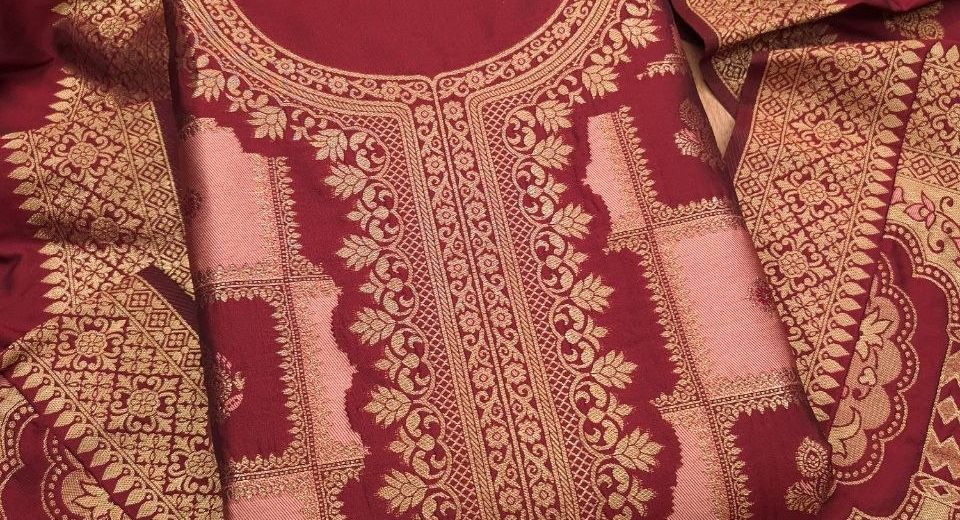
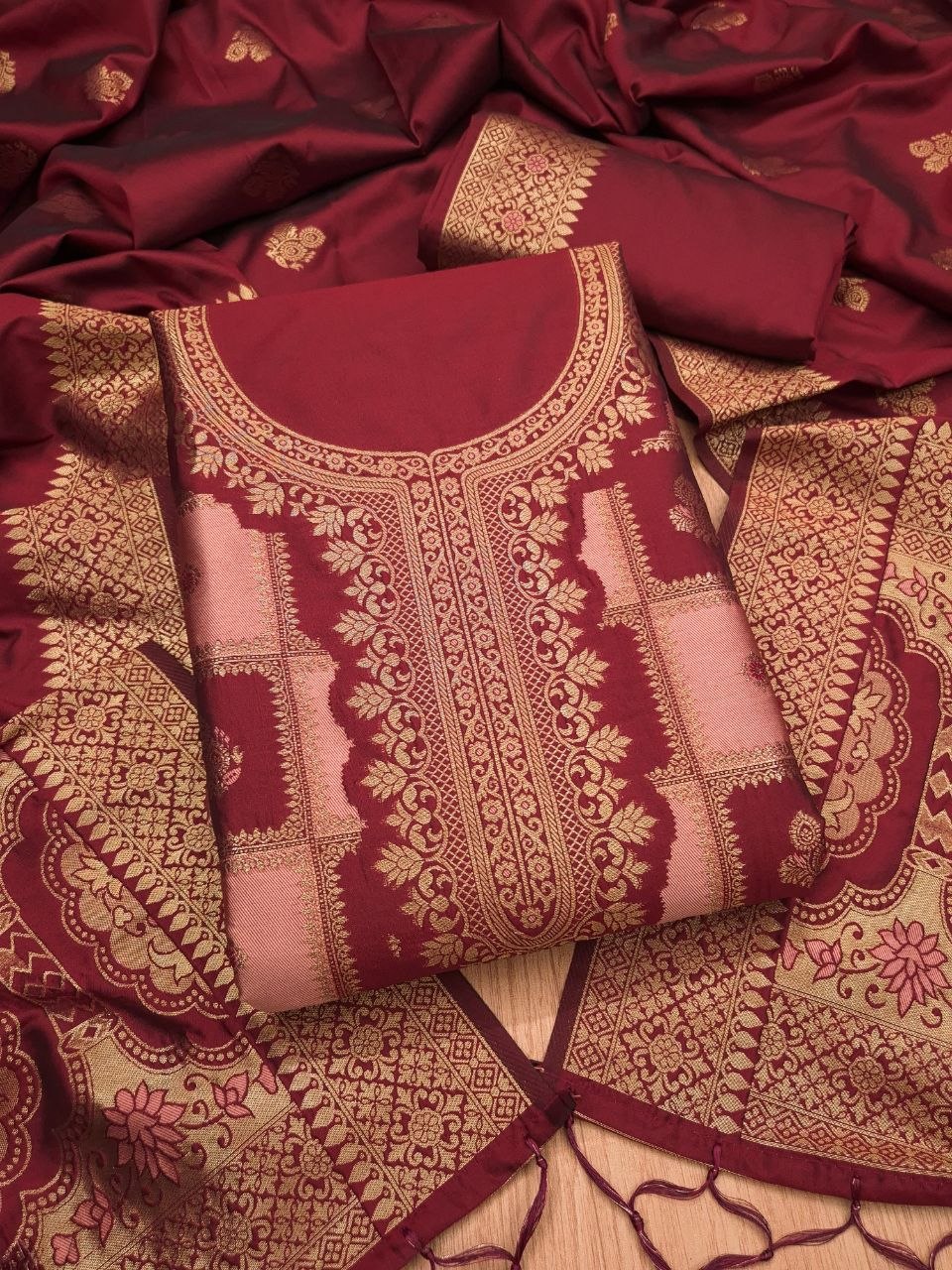
The Maroon Paithani Style Zari Woven Unstitched Suit Material demonstrates how zari can provide occasion brightness without requiring sequins across the entire garment. Style the finished suit with a plain woollen shawl and small gold earrings so that the metallic weave remains the focal point.
Diwali Fashion in Himachal Pradesh: How Can Saris, Suits and Shararas Be Styled?
A sari, salwar suit or sharara can gain a Pahari character through the outer layer, headwear, border selection and restrained jewellery rather than through changing the entire garment. The key is to make one regional reference prominent and keep the remaining elements clean.
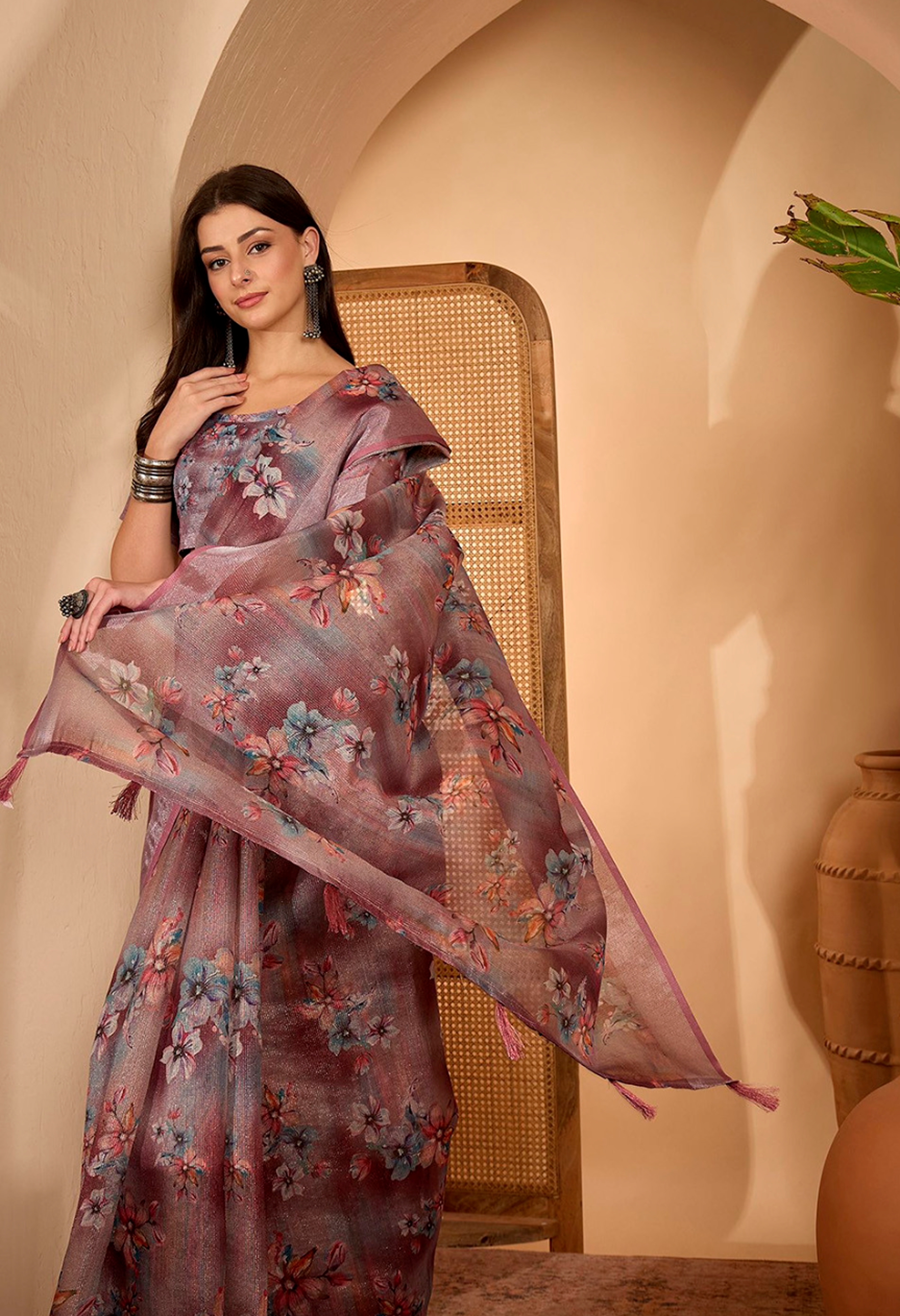
Diwali Fashion in Himachal Pradesh with a Sari
Wear a sari with a long-sleeved blouse, a compact pallu and a warm shawl pinned at one shoulder. The shawl should not cover the pleats completely if the sari weave or border is an important part of the outfit. A narrow leather or woven belt can secure the drape during outdoor movement, provided the belt doesn't crush delicate zari.
Florals and deeper colours create different effects. The Floral Mauve Linen Cotton Printed Saree with Unstitched Blouse suits a soft daytime gathering, while the Mustard Floral Linen Cotton Saree with Unstitched Blouse has stronger visual warmth for an afternoon family visit. Pair either sari with a maroon or bottle-green shawl instead of a matching printed wrap.
Diwali Fashion in Himachal Pradesh with a Salwar Suit
A salwar suit is one of the most practical choices for Diwali in Himachal Pradesh because it allows thermal leggings, warm socks and easy movement. Choose a straight or slightly flared kameez, a dupatta that can be wrapped securely, and trousers that don't expose the ankle when sitting outside.
The Midnight Blue Natural Crepe Patiala Kurta Set with Embroidery can be made more winter-ready with a rust or crimson shawl and closed juttis. Patiala pleats already create volume, so avoid a very bulky wrap around the hips; drape the shawl over the shoulders or fold it across the forearms instead.
Diwali Fashion in Himachal Pradesh with a Sharara or Co-Ord
A sharara works for indoor Diwali parties when the hem is high enough to avoid wet ground, soot and uneven paths. The Pink Mirror Work Zari Sharara Suit Set adds festive shimmer, but mirror work should be balanced with a plain shawl and simple earrings. Choose a fitted thermal layer beneath the kurta if the neckline and armholes permit it.
The Modern Taupe Vichitra Silk Embroidered Co-Ord Set for Women can also be styled with a short woollen jacket in forest green or burgundy. A co-ord keeps the base outfit visually neat, while the contrasting jacket supplies warmth and a more regional layered effect.
Diwali Fashion in Himachal Pradesh: Which Accessories Complete a Pahari Look?
A woollen shawl, Himachali cap, modest silver or gold jewellery, closed footwear and a practical hair arrangement complete a Pahari-inspired Diwali look. Accessories should support the outfit's warmth and movement rather than compete with every textile detail.
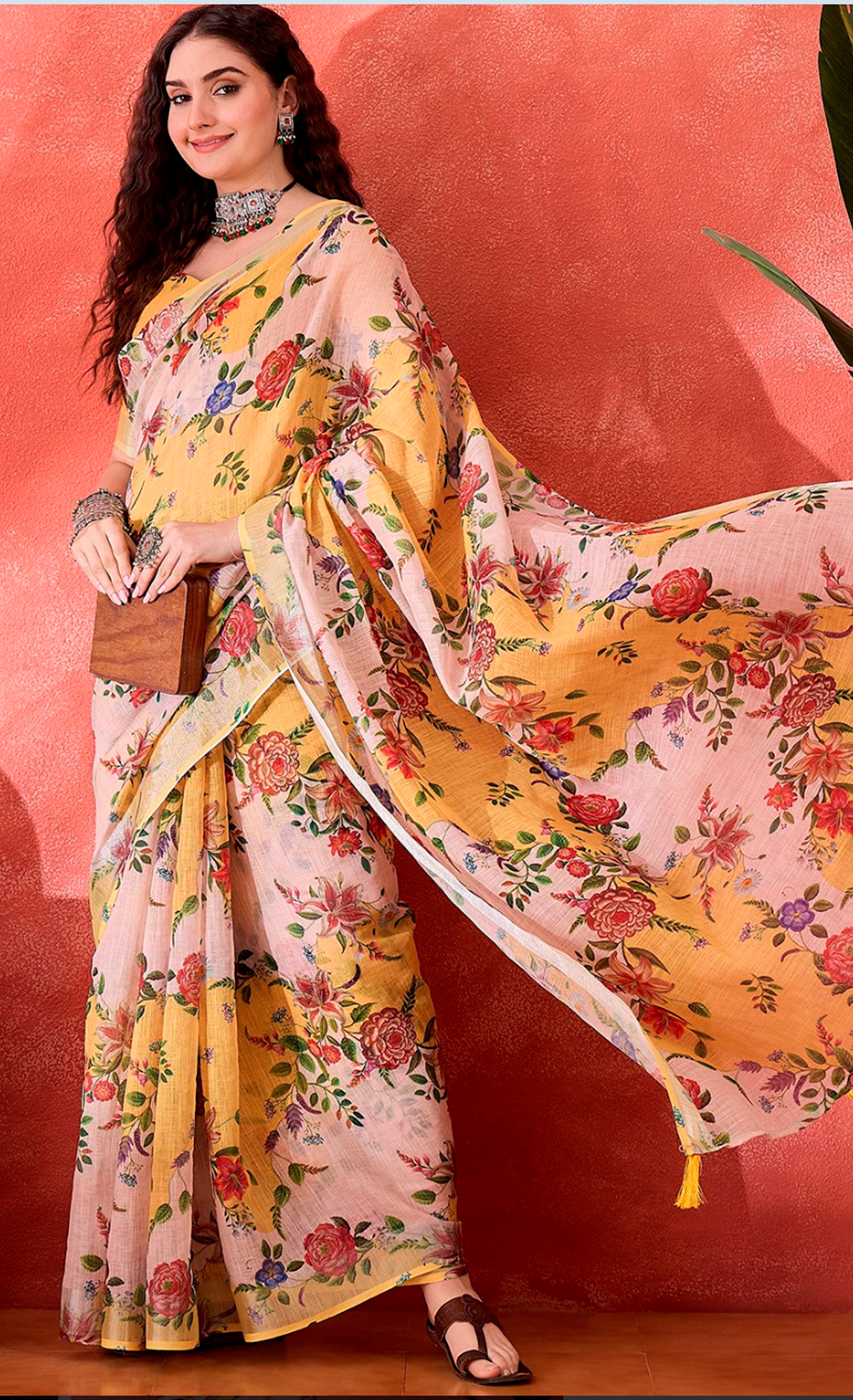
A Himachali topi is the most recognisable regional accessory, but it should be worn with awareness of local variations and personal context. Choose a restrained cap with a coloured band when the outfit already includes a patterned shawl. If a topi feels too formal or unfamiliar, a dhatu-style headscarf or a solid woollen stole can provide a softer reference.
Silver earrings, small jhumkas, a nose pin where culturally appropriate, or a simple metal kada can work with wool and handwoven borders. Heavy necklaces may become uncomfortable beneath a shawl. For a festive sari or suit, select either a statement earring or a broad bangle rather than wearing several high-volume pieces together.
Closed juttis, embroidered mojaris and low block heels are safer than delicate sandals on stone paths. Check the sole before an outdoor gathering because polished leather can become slippery on damp steps. A small crossbody potli or compact shoulder bag leaves both hands available for diyas, gifts and a shawl.
Diwali Fashion in Himachal Pradesh: How Can You Dress Respectfully and Stay Comfortable?
Respectful Pahari styling requires acknowledging regional diversity, avoiding invented claims about traditional dress and choosing authentic-looking elements for their function rather than using them as costume. Comfort requires testing the full outfit before Diwali, including the thermal layer, shawl, footwear and jewellery.

don't describe every woollen wrap as a Kullu shawl or every regional cap as identical. Kullu, Kinnauri, Chamba and other Himachali textile traditions have their own visual languages and histories. When the specific origin of a textile is unknown, call it a woollen or Pahari-inspired shawl instead of assigning a regional name without evidence.
Try the complete outfit indoors for at least 20 minutes before the event. Sit cross-legged, walk up stairs, raise both arms and practise carrying a diya safely. A dupatta that slides during a short trial may become difficult to manage during several hours of puja and socialising.
Keep a shawl pin, two safety pins, blister plasters and a small hand warmer in the bag. Store delicate zari away from rough wool by placing a thin cotton layer between the garments. After Diwali, air woollen pieces for several hours before folding them, and keep silk and zari in breathable muslin rather than sealed plastic.
Diwali Fashion in Himachal Pradesh becomes more convincing when the outfit reflects real weather, movement and local context. A well-chosen woollen wrap over a familiar sari or kurta set can communicate more care than an overloaded ensemble assembled from unrelated regional symbols.
Common Questions About Diwali Fashion in Himachal Pradesh and Pahari Style
What should women wear for Diwali in Himachal Pradesh?
Women should wear a festive sari, salwar suit, sharara or long kurta set with a warm inner layer and woollen shawl. Closed footwear, full sleeves and a secure dupatta are practical for cold evenings and outdoor movement.
Which colours are suitable for traditional Pahari Diwali outfits?
Maroon, mustard, rust, deep teal, pine green, navy, saffron and ivory are suitable choices. Combining one strong colour with a patterned border and a neutral shawl creates a balanced Pahari-inspired look.
Can I wear a sari for Diwali in the hills?
You can wear a sari for Diwali in Himachal Pradesh if you add a full-sleeved blouse, warm base layer and secure shawl. Pin the pallu carefully and choose closed footwear if the celebration includes outdoor steps or uneven paths.
How can I add a Himachali touch to a modern ethnic outfit?
Add one clear regional element, such as a woollen Pahari-inspired shawl, Himachali topi, dhatu-style scarf or geometric woven border. Keeping the rest of the outfit simple prevents the styling from looking like a costume.
Are Chanderi and linen cotton suitable for a Himachali Diwali celebration?
Chanderi and linen cotton are suitable for indoor or daytime celebrations when worn over warm basics. Neither fabric should be relied on alone for a cold outdoor evening, so add a woollen shawl, jacket or thermal layer.
How should Pahari woollen shawls be cared for after Diwali?
Air a woollen shawl away from direct sunlight before folding it loosely in breathable muslin. Follow the care label for washing, avoid hanging heavy wool for long periods and keep perfume, oil and damp storage away from the fibres.





