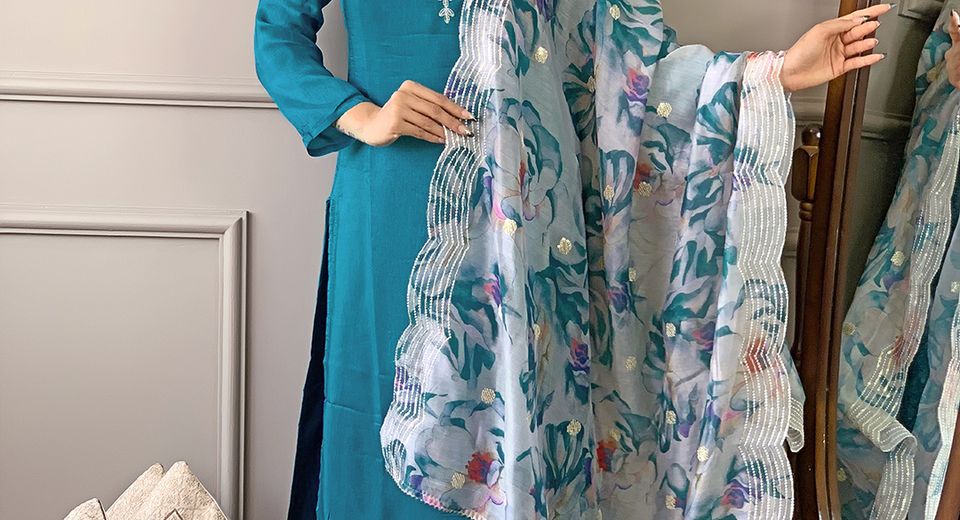
Different Types of Salwar Suits for Women become much easier to choose when you compare the cut, fabric and movement of each style rather than selecting only by colour. An Anarkali creates a long, flared line; a straight suit looks structured and versatile; a sharara adds volume below the knee; and a palazzo suit balances a kurta with wide-legged trousers. The right choice depends on the event, weather, body proportions, comfort level and the amount of embellishment you plan to wear.
How do the main salwar suit silhouettes differ?
The main salwar suit silhouettes differ by the shape of the kurta and the volume of the bottom: straight suits are streamlined, Anarkalis flare from the waist or yoke, Punjabi suits use a fuller salwar, palazzo suits widen from the hip. Sharara suits feature dramatic flared trousers.
Straight-cut salwar suit
A straight-cut salwar suit has a kurta that falls in a relatively direct line from the shoulder to the hem. The shape works well for office wear, family lunches and travel because the vertical line looks polished without restricting movement. A knee-length or calf-length kurta paired with cigarette pants creates a sharper appearance, while a longer kurta with a classic salwar feels more traditional.
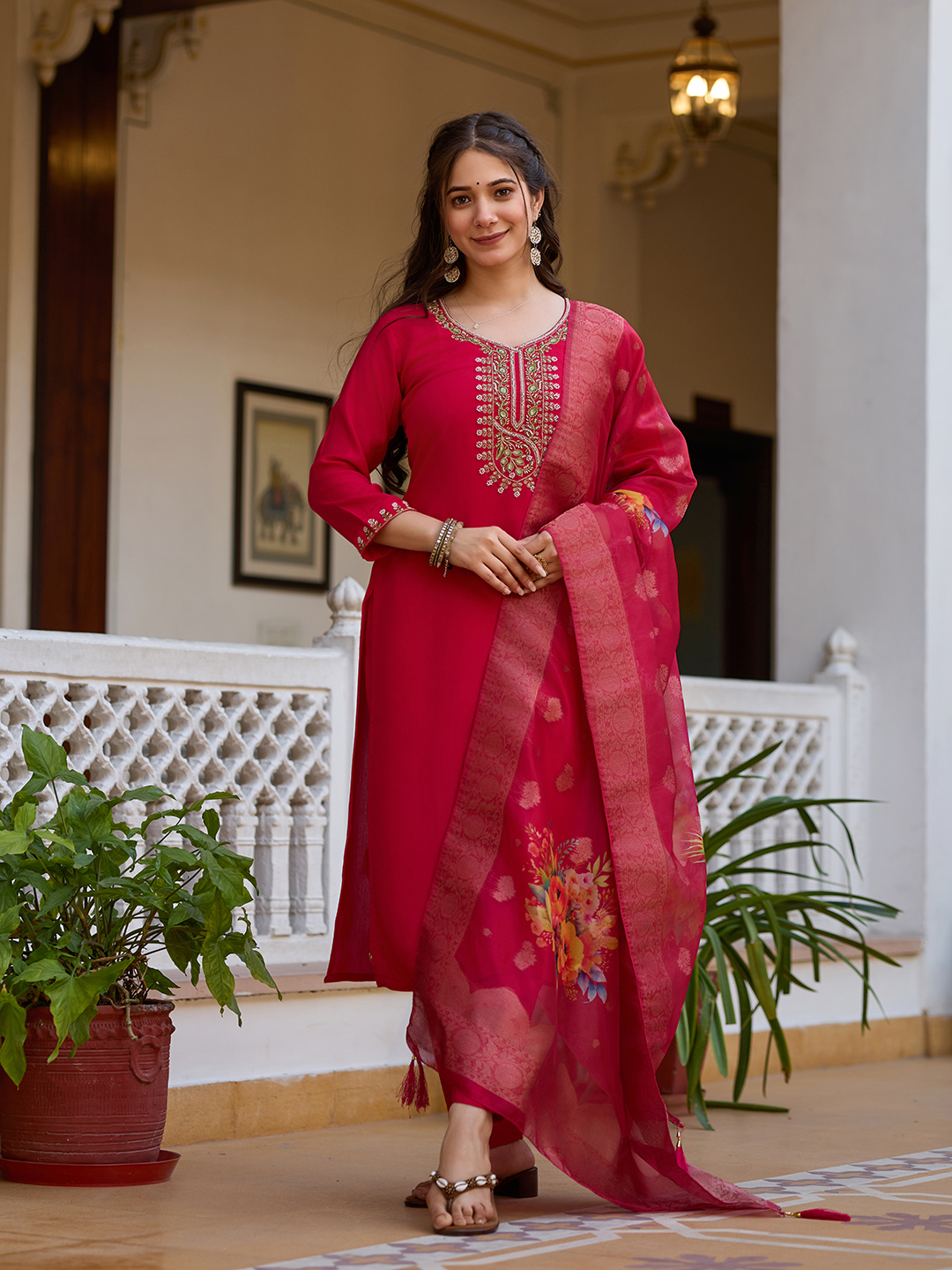
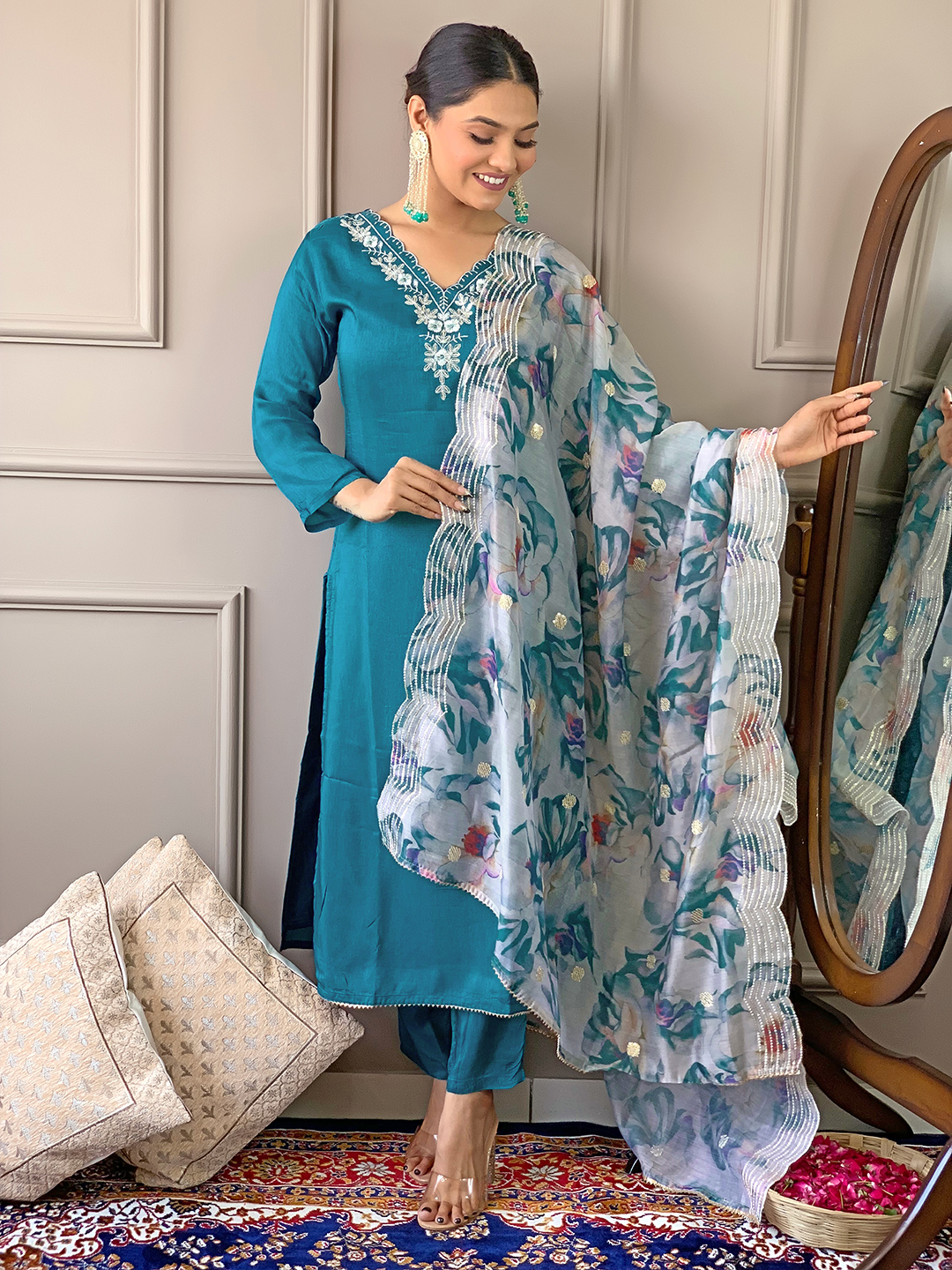
The Embroidered Salwar Suit Set for Women demonstrates why light surface work suits this silhouette: embroidery can add interest without interrupting the clean fall of the kurta. Choose a straight suit when you want one outfit to work with juttis, block heels or simple sandals.
Anarkali suit
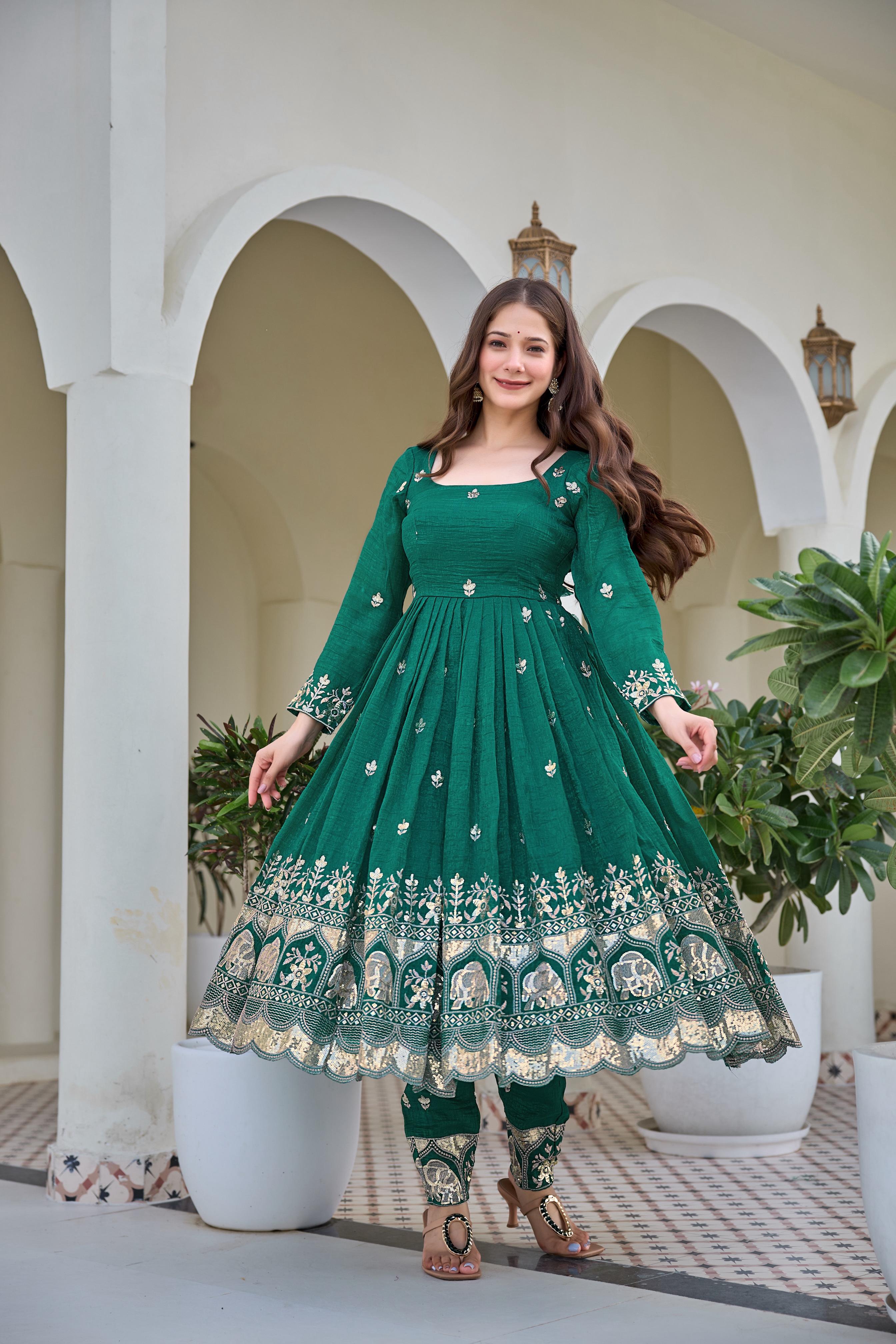
An Anarkali suit has a fitted or shaped upper section that opens into gathers or panels below the bust, waist or yoke. The flare may be modest for daytime wear or wide enough to create a gown-like effect for weddings and festive evenings. The Ladies Dress Anarkali Salwar Suits collection is useful for comparing how panel placement changes the final shape.
Panelled Anarkalis generally create a longer-looking line than heavily gathered versions. A floor-length Anarkali needs a hem that clears the floor by roughly 1 to 2 centimetres when worn with the intended footwear. A shorter Anarkali is easier to walk in and pairs well with churidar trousers or narrow pants.
Punjabi and Patiala suit
A Punjabi or Patiala suit pairs a relatively fitted kameez with a deliberately voluminous, pleated salwar. The deep pleats create movement around the hips and thighs, so the kameez often ends above or around the knee to keep the outfit balanced. A lightweight dupatta, such as cotton or chiffon, prevents the complete look from becoming visually heavy.
Patiala suits are especially practical for active daytime events because the gathered salwar allows a broad range of movement. The style needs enough fabric to form visible pleats; a narrow trouser substituted for a Patiala changes both the comfort and the character of the outfit.
What are the different types of salwar suits for women by bottom style?
Different Types of Salwar Suits for Women can also be identified by the bottom: churidar gives a close fit, pants provide a modern tailored line, palazzos add fluid width, and shararas create a festive flare from the knee or thigh.
Churidar suit
A churidar has a narrow leg that gathers into horizontal folds, or "churis", near the ankle. The extra length is intentional and should create soft folds rather than pull tightly across the calf. Churidar bottoms suit long Anarkali kurtas because the narrow ankle keeps the lower half visually controlled.
When buying a churidar, measure the calf, ankle and inseam instead of relying only on waist size. A fabric with a little stretch improves comfort, but excessive stretch can make the gathers lose definition after repeated wear.
Palazzo suit
A palazzo suit combines a kurta with wide-legged trousers that fall loosely from the waist or hip. The silhouette feels contemporary and comfortable in warm weather, especially when the palazzo is made from breathable cotton, rayon or a light silk blend. A shorter straight kurta often gives a balanced proportion, while a long kurta creates a more fluid, column-like outfit.
Wide-legged trousers look best when the hem skims the top of the foot without dragging. If the palazzo pools on the floor, the fabric can catch under sandals and lose its clean line. Pairing a palazzo suit with a shorter dupatta drape also prevents too many horizontal and diagonal layers from competing.
Sharara and gharara suit
A sharara suit has trousers that flare dramatically, usually from the knee or from a fitted upper section, while a gharara typically has a more defined joint and gathered or pleated flare. Both styles create a celebratory silhouette and work particularly well for sangeet functions, wedding receptions and Eid gatherings.
The Brown Chinon Silk Sharara Suit Set for Women shows how a fluid fabric supports a wide flare without making the garment look stiff. Chinon silk blends can photograph beautifully, but the trousers need a secure waistband and enough inner finishing because the repeated movement of a sharara places stress on seams.
Which fabrics suit each salwar suit style?
Fabric should match the silhouette: cotton and Chanderi suit structured daytime shapes, rayon drapes comfortably, silk blends support festive sheen, and Chinon silk works well for fluid sharara volume.
Everyday and warm-weather fabrics
Cotton is a practical choice for daily wear because it absorbs moisture and usually becomes more comfortable with use. Cotton also holds block prints and small motifs clearly, although it can crease more readily than synthetic blends. Rayon has a softer drape and less stiffness, making it suitable for straight suits and palazzo trousers, but rayon garments should be washed gently because wet fibres can weaken.
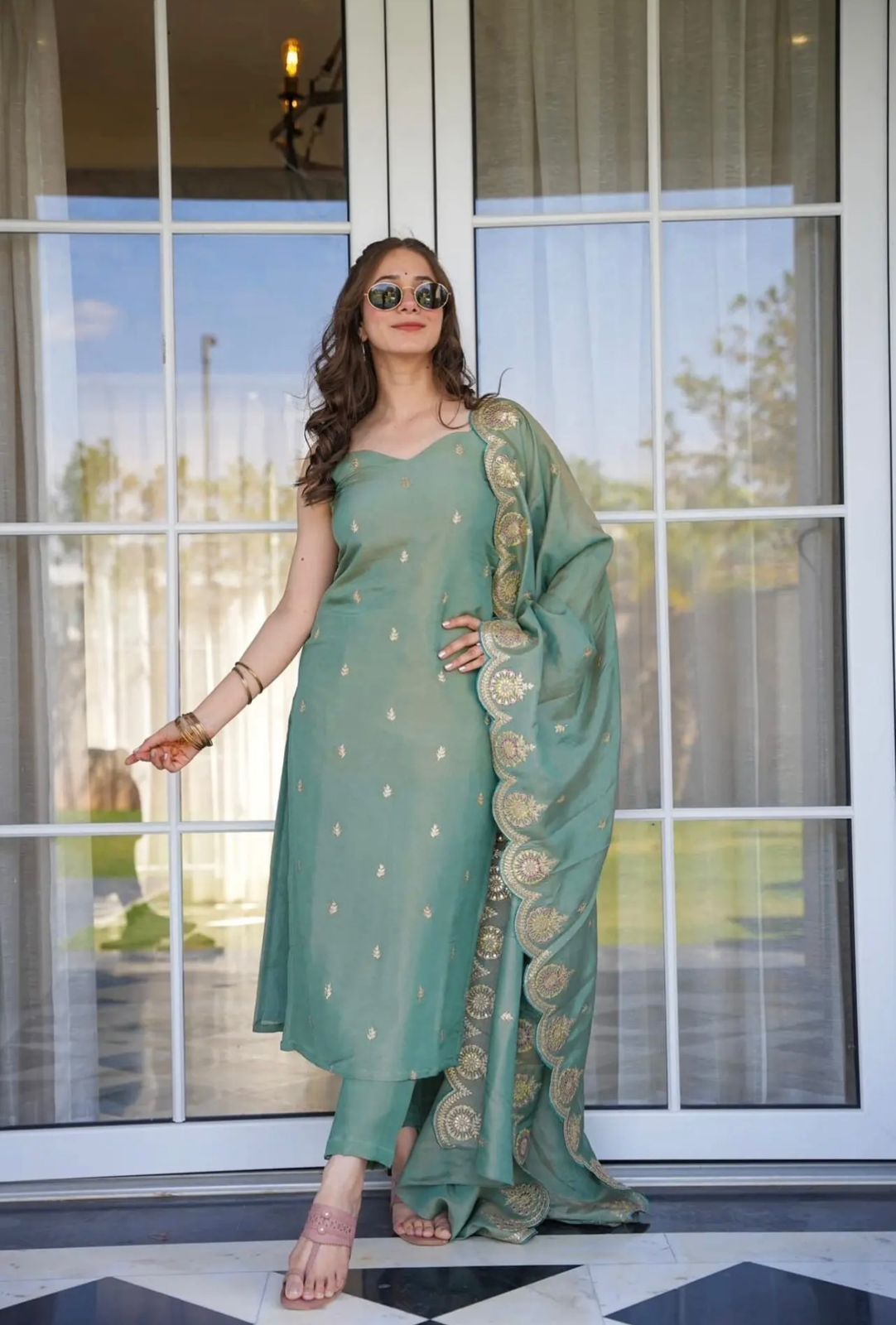
Chanderi combines a light hand with a slightly crisp fall and a subtle surface sheen. The White Chanderi Blossom Salwar Suit illustrates why Chanderi works for daytime festive dressing: the fabric feels airy, while floral detail adds enough visual interest for a family celebration without requiring heavy jewellery.
Festive and occasion fabrics
Banarasi silk, silk blends and Chinon silk are suitable for festive suits because their surfaces reflect light and hold richer colour. Zari, embroidery and woven motifs look more pronounced on a smooth or lightly lustrous base. Heavier fabric needs a well-constructed lining, particularly around the armhole, side seam and waistband.
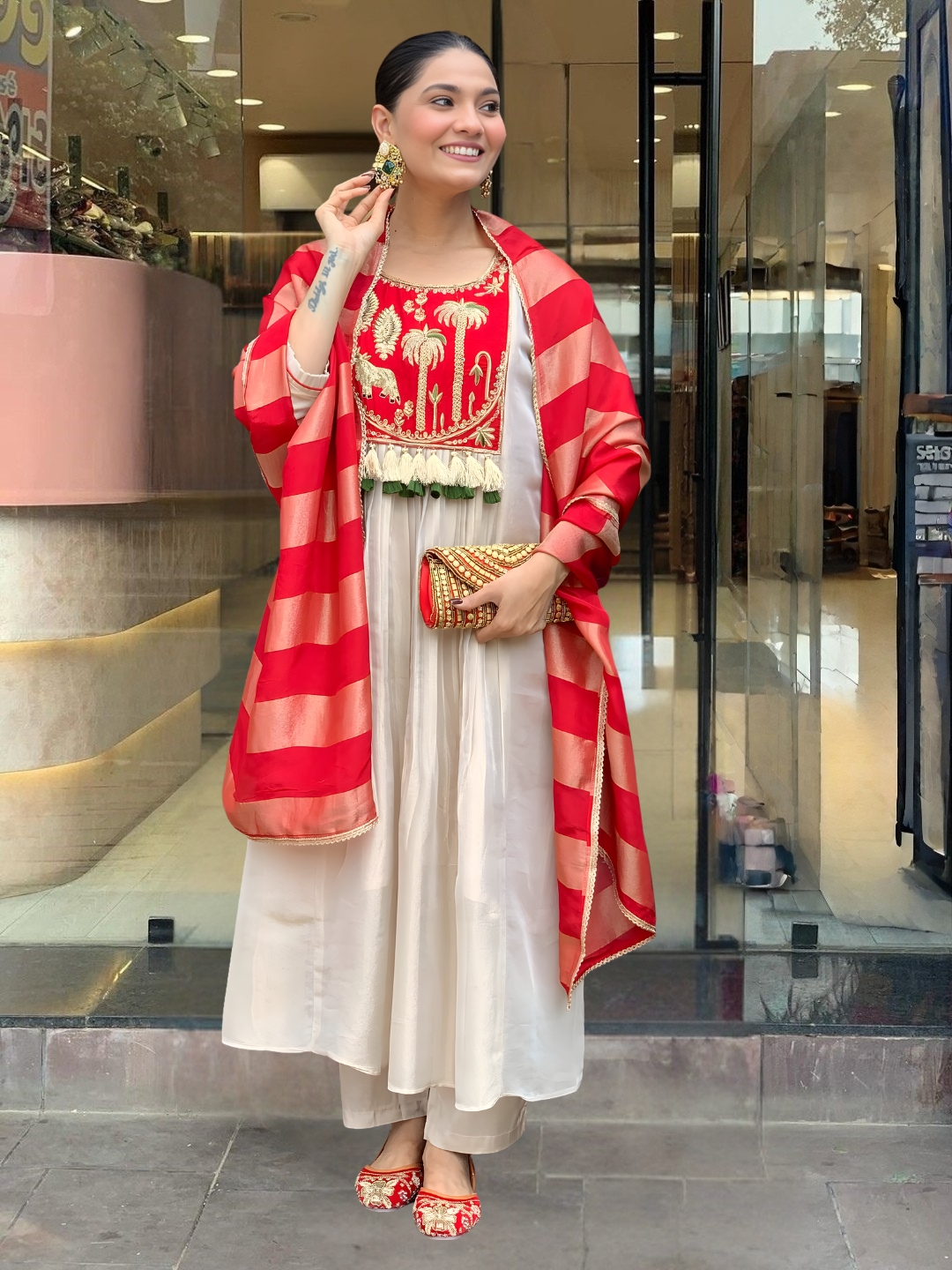
The White Embroidered Salwar Suit with Orange Silk-Blend Dupatta uses contrast strategically: a lighter suit base keeps the embroidery visible, while the orange silk-blend dupatta introduces warmth near the face. A contrasting dupatta can change the perceived colour of a suit more dramatically than changing the earrings or footwear.
How should you choose a salwar suit for the occasion?
Choose the salwar suit according to the event's formality, expected movement, weather and time of day, then select embroidery, fabric weight and accessories to match those conditions.
Work, travel and daytime gatherings
A straight suit, light palazzo suit or restrained Punjabi suit is usually the most practical choice for work and daytime travel. Look for breathable fabric, secure pockets if available, sleeves that allow arm movement and a dupatta that doesn't require constant adjustment. Small floral embroidery, woven texture or a controlled print offers polish without the maintenance of dense sequins.
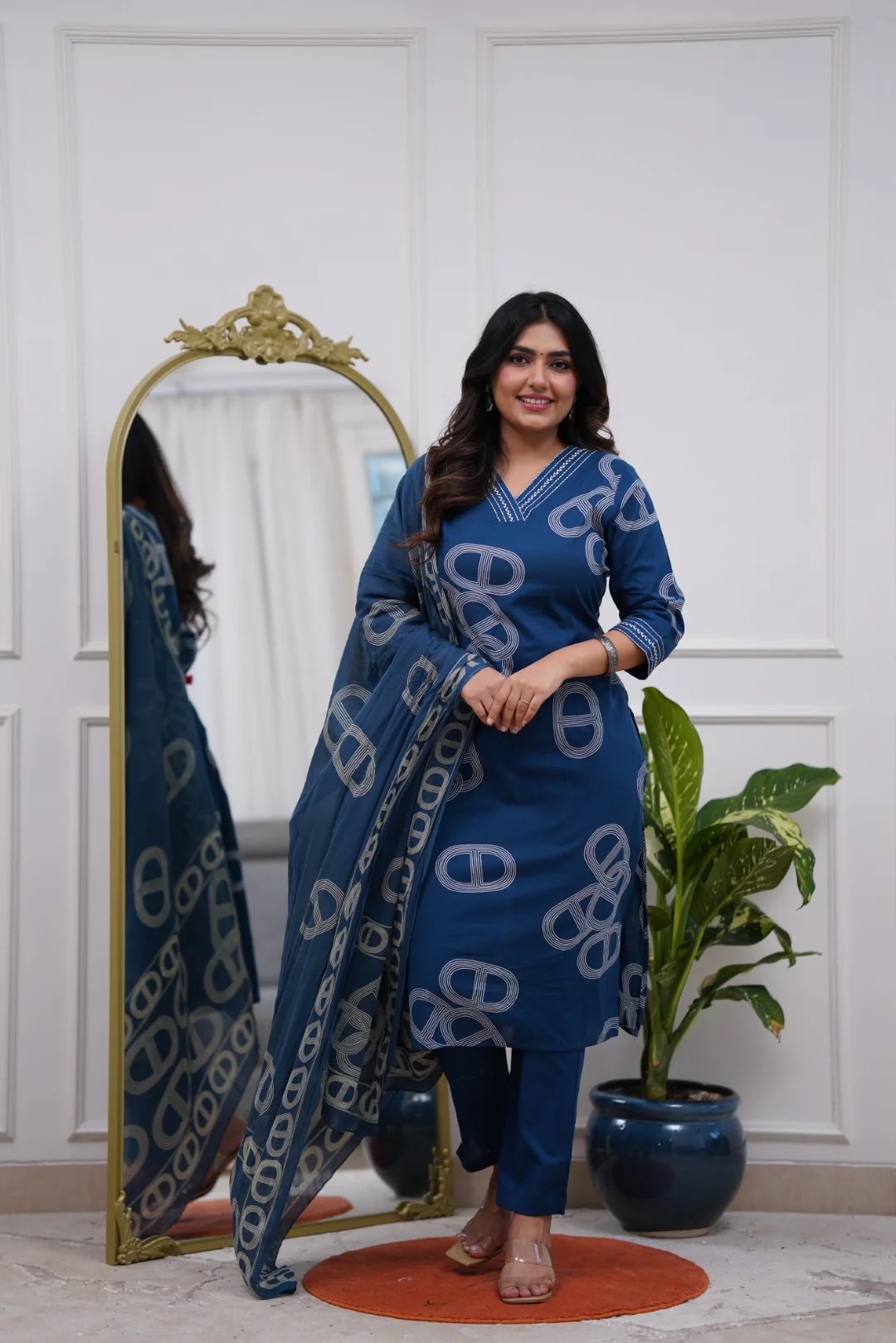
The Navy Blue Embroidered Salwar Suit is a useful example of a darker base with decorative detail. Navy can look formal without the severity of black, and the colour works with silver, pearl, tan and metallic footwear. For a lighter daytime wardrobe, the Elegant Camel Shade Salwar Suit Set can coordinate with brown sandals, antique-gold jewellery and a printed dupatta.
Festivals and family ceremonies
Festivals and family ceremonies allow more surface detail, richer colour and a more expressive dupatta. Anarkalis, silk-blend straight suits and moderate shararas provide movement for greeting guests and sitting comfortably. For a Haldi ceremony, washable or easy-care fabric and cheerful yellow, white, green or orange accents are more practical than delicate, heavily embellished surfaces.
For a reception or evening wedding, choose zari, sequin work or silk-blend shine in proportion to the venue lighting. Dense embellishment can look balanced on a simple straight kurta, while a wide sharara may need a quieter kurta to avoid excess volume.
How do fit and proportion change the final look?
Fit and proportion determine whether a salwar suit appears balanced: shoulder seams should sit correctly, the kurta should allow seated movement, and the width of the bottom should relate to the kurta length.
Measure the bust, waist, hip, shoulder, armhole and preferred kurta length before ordering. The bust and shoulder measurements are especially important because alterations at those points can affect the neckline, sleeve position and embroidery placement. Leave enough ease to sit, raise the arms and breathe; a garment that fits while standing may feel restrictive during a meal or ceremony.
A long, flared Anarkali generally benefits from a relatively simple bottom, such as a churidar or narrow pant. A wide palazzo or sharara can be balanced by a shorter or more fitted kurta. Petite wearers often find that smaller motifs, a continuous colour column and a hem that doesn't bunch create a clearer line, while taller wearers can carry larger prints, longer hems and broader dupattas with ease.
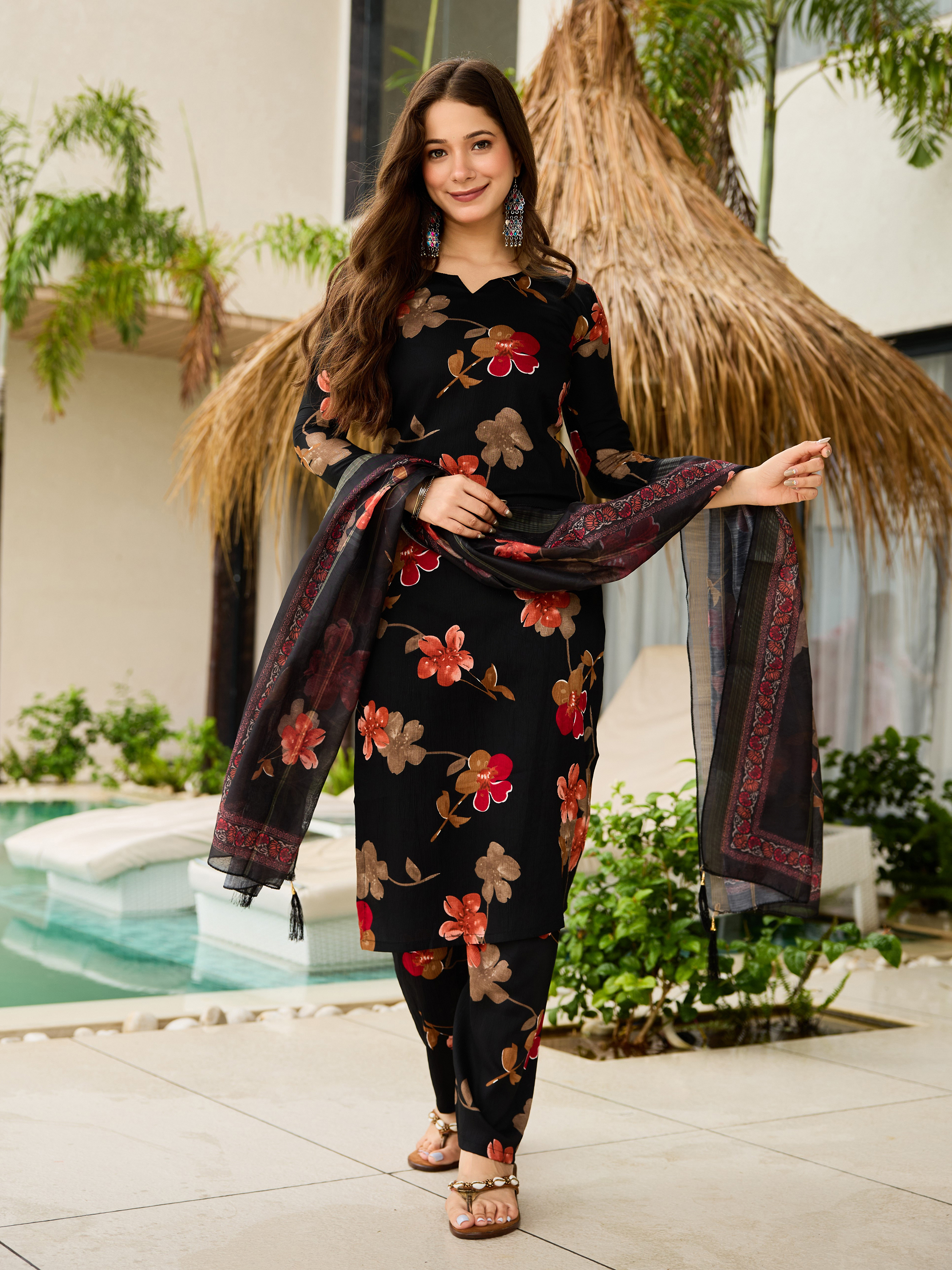
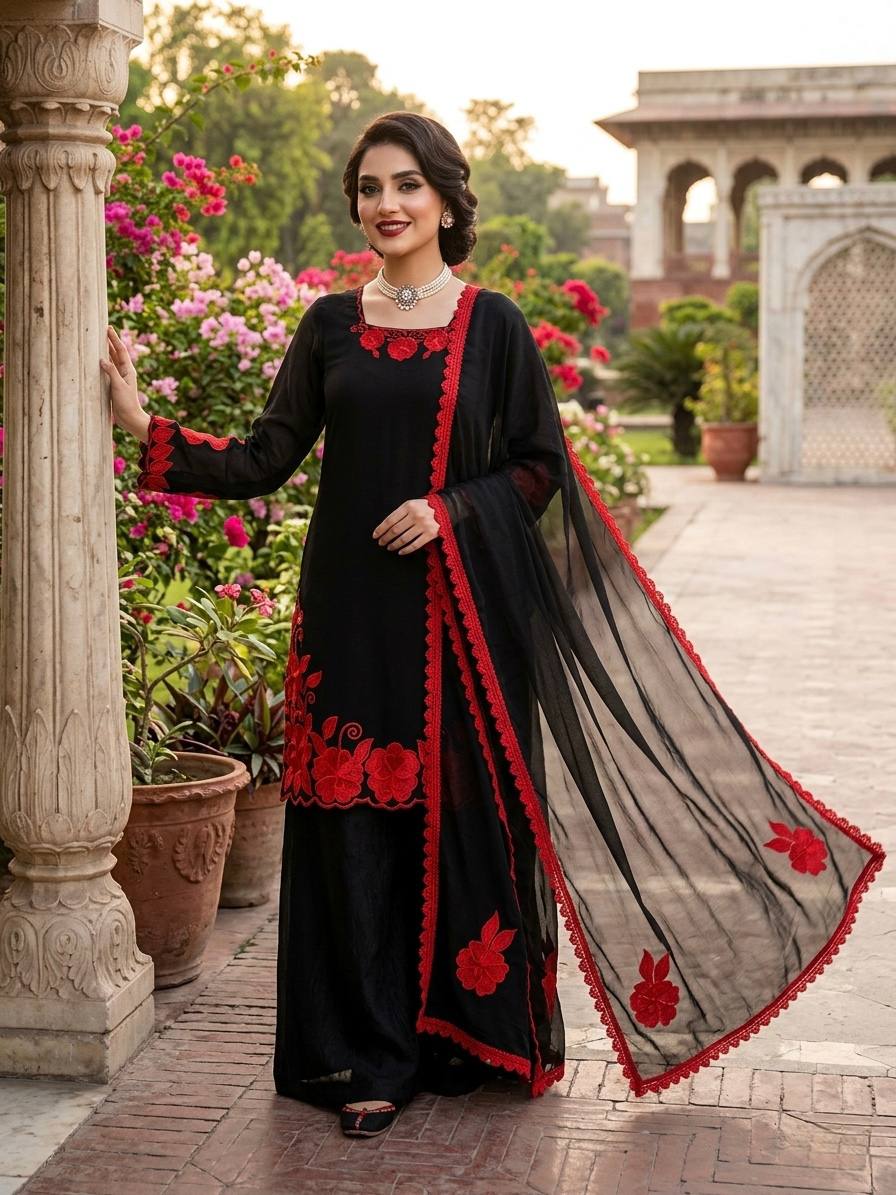
The Black Red Fendy Silk 3 Piece Readymade Salwar Suit Set demonstrates another proportion principle: a strong colour contrast can act as the outfit's main design feature. Keep jewellery and footwear more controlled when the suit already contains a high-contrast palette.
How should you style the dupatta and accessories?
Style the dupatta according to the suit's volume: a narrow shoulder drape suits a wide Anarkali or sharara, while a fuller open drape complements a simpler straight suit.
For a formal appearance, place one end over the left shoulder and secure it discreetly near the shoulder seam or with a brooch. For easier movement, fold the dupatta lengthwise before draping it across the front. A silk-blend dupatta can slide on smooth fabrics, so small hidden pins or a light cotton lining at the shoulder can improve stability.
Match jewellery to the neckline rather than automatically choosing a necklace. Jhumkas or chandbalis can be enough with a detailed neckline, while a simple round neck can take a longer necklace. Juttis suit Punjabi and straight suits, block heels complement Anarkalis, and low wedges are practical with palazzos when the hem is long.
What should you check before buying a salwar suit online?
Before buying online, check the measurement chart, fabric description, lining, included pieces, garment length, care instructions and return or alteration terms.
- Confirm the set contents. A three-piece set may include a kurta, bottom and dupatta, while some listings describe a kurta and bottom only. Do not assume a pictured accessory is included.
- Read the fabric composition. "Silk blend" and "rayon" describe different levels of sheen, fall and care. A natural fibre and a blended fibre may also shrink or crease differently.
- Compare garment measurements. Ready-made sizing isn't universal. Compare the listed garment bust and hip measurements with a well-fitting suit you already own.
- Inspect the care requirement. Embroidery, zari and delicate silk blends often need dry cleaning or gentle hand washing. Follow the specific care label rather than using a general wash cycle.
- Consider use frequency. A heavily embellished outfit may be ideal for one wedding, while a navy, camel, white or black-and-red suit can deliver more combinations across several events.
Collections such as Dress Materials can suit shoppers who want to customise the neckline, sleeve, kurta length or bottom style. Sale-led sections including Salwar Suits with 30% Off, Salwar Suits Flat 40% Off and Salwar Suits On Sale can offer value, but a discount doesn't replace checking fabric, measurements and construction details.
How should salwar suits be cared for?
Care for a salwar suit by following its fibre-specific label, washing dark colours separately, drying embellished garments away from direct sunlight and storing dupattas without heavy folds across embroidery.
Chanderi and silk-blend garments generally benefit from gentle handling and low heat. Turn embroidered pieces inside out before pressing, place a thin cotton cloth between the iron and the garment, and avoid ironing directly over zari or sequins. Hang structured kurtas on broad hangers, but fold heavy shararas and dupattas so the garment weight doesn't stretch the shoulders.
Air the garment fully before storage and use breathable cotton covers instead of sealed plastic for long-term keeping. Small maintenance habits preserve the fall of the fabric, the clarity of embroidery and the fit of the waistband far better than occasional emergency cleaning.
Questions Shoppers Ask About Salwar Suit Styles
Which type of salwar suit is best for daily wear?
A straight-cut cotton, rayon or light Chanderi suit is usually best for daily wear because it offers easy movement and uncomplicated styling. Choose breathable fabric, moderate embroidery and a dupatta that stays secure during travel or work.
What is the difference between a sharara and a gharara suit?
A sharara usually flares from the knee or from a fitted upper section, creating a continuous wide-leg shape. A gharara normally shows a more noticeable joint with gathers, pleats or a separate flared section near the knee.
Which salwar suit is best for a wedding guest?
An Anarkali, silk-blend straight suit or sharara suit works well for a wedding guest because each can carry festive embroidery, zari or a dressier dupatta. Choose the fabric weight and embellishment according to the venue, season and amount of movement required.
Is a palazzo suit suitable for short women?
A palazzo suit can suit shorter women when the kurta and trousers create a continuous colour line and the hem ends near the top of the foot. A shorter straight kurta, smaller print and moderate trouser width usually keep the proportions clear.
How do I choose the right salwar suit size online?
Compare your bust, waist, hip, shoulder and preferred length measurements with the garment measurement chart rather than relying only on a familiar size label. Allow enough ease to sit and raise your arms, especially around the bust, armhole and hips.
Can Chanderi be worn for a festive occasion?
Chanderi can be worn for a daytime festive occasion because its lightweight structure and subtle sheen look refined without excessive weight. Pair a Chanderi suit with statement earrings, a dressier dupatta or metallic footwear for more formality.