Key takeaways
- Banarasi sarees are recognised for patterned weaving, often using silk and zari, while Kanjeevaram sarees are known for lustrous silk, strong contrast borders and traditional South Indian construction.
- Both Banarasi and Kanjeevaram sarees should be dry-cleaned when necessary rather than machine-washed or soaked at home.
- Silk sarees last longer when folded in clean muslin with acid-free tissue between folds and stored away from sunlight, moisture and plastic.
- Zari should be protected from perfume, hairspray, perspiration and abrasive jewellery because chemical residue and friction can dull metallic surfaces.
- Refolding a stored silk saree every few months reduces permanent crease stress along the same fold lines.
Banarasi silk catches the light with dense motifs, while Kanjeevaram silk is known for its firm, luminous body and bold woven borders. The difference between Banarasi and Kanjeevaram saree isn't simply a matter of North India versus South India. The two traditions differ in weave, silk character, border construction, common motifs and care requirements. Knowing these details makes it easier to choose well-and to keep your saree looking beautiful after weddings, festivals and years in storage.
What is the difference between Banarasi and Kanjeevaram saree?
The difference between Banarasi and Kanjeevaram saree comes down to their traditional origins and construction. Banarasi sarees are mainly identified by patterned weaving associated with Varanasi, while Kanjeevaram sarees are traditionally associated with Kanchipuram, lustrous mulberry silk and strong woven borders.
Banarasi sarees commonly combine silk, zari and jacquard techniques to create butidars, florals, jaal patterns, paisleys and intricate geometric repeats. The pattern may cover much of the body or remain concentrated on the pallu and border. That's why Banarasi silk can look richly detailed even when the ground colour is understated.
Kanjeevaram sarees traditionally use substantial silk with a defined drape, contrasting borders and a pallu that often makes a clear colour statement. Temple-inspired forms, checks, stripes, mango motifs and floral elements are all part of the design vocabulary, although contemporary Kanjeevaram designs can be far more varied. Traditional joining methods such as korvai can create a visibly distinct relationship between the body and border.
Neither name, by itself, proves that a saree is pure silk or handwoven. A Banarasi saree may use different silk blends or be made on a powerloom, while Kanjeevaram-labelled sarees can vary in silk content and construction. Fibre composition, weaving method, zari type, finishing and seller documentation matter more than a regional label alone.
How do Banarasi and Kanjeevaram sarees differ in texture and weight?
Banarasi sarees often feel supple or moderately structured, depending on the silk, zari and jacquard density. Kanjeevaram sarees generally feel firmer, heavier and more supportive when draped.
A densely patterned Banarasi weave can add weight without making the saree stiff. Jacquard work may create a slightly raised surface, so rough upholstery or a coarse handbag can catch the threads. Lighter Banarasi silk folds easily and works well for long ceremonies, while a heavier zari-rich version may need more deliberate pleating.
Kanjeevaram silk usually has a crisp, resilient hand that supports broad pleats and a clearly arranged pallu. Its heavier body suits formal drapes, but repeated pressure along one fold can leave a lasting crease. The zari borders may also be more vulnerable to abrasion when they drag across stone, wooden edges or embellished footwear.
Texture can help you compare sarees, but it isn't a dependable authenticity test. A soft Banarasi saree isn't automatically inferior, and a very heavy Kanjeevaram saree isn't automatically genuine. Look at the weave, selvedge, reverse side, finishing and product specifications together instead of judging quality by weight alone.
Which saree is easier to preserve for regular use?
Banarasi sarees with moderate zari and manageable weight are often easier to rotate for regular festive wear. Kanjeevaram sarees can also be worn regularly, but their substantial silk and borders call for careful handling.
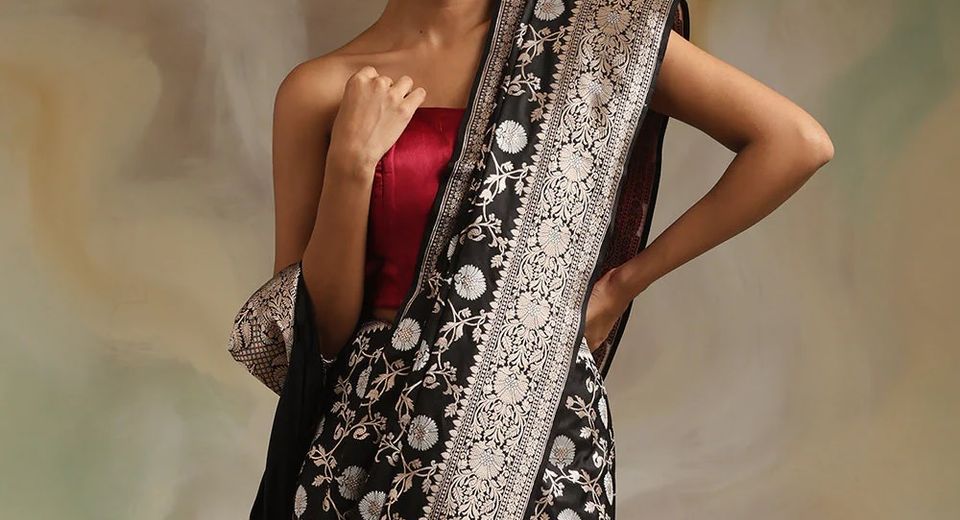
Regular use doesn't damage silk by itself. Concentrated friction, unremoved perspiration, poor storage and repeated folding in one place cause most avoidable damage. A Banarasi design such as Stylish Black Banarasi Saree with Detailed Jacquard Work should be protected from snags, since detailed jacquard surfaces can catch on jewellery, brooches and rough bag straps.
Digital printing changes the care routine slightly. Royal Banarasi Silk Saree with Digital Floral Print and Blue Banarasi Silk Saree with Digital Ethnic Design shouldn't be soaked or scrubbed, as prolonged exposure to water and household detergent can affect the colour, surface finish or both. A printed surface may look even and modern, but it still needs gentle handling.
Blue Banarasi Silk Saree with Floral Design makes another practical point: keep dark and saturated colours away from strong direct sunlight while drying or displaying them. Sunlight can gradually alter dyes, especially when one section stays exposed for hours while the rest remains folded.
Does zari need different care from silk?
Zari needs protection from chemicals and friction, in addition to the usual care required by silk.
Apply perfume, deodorant, hair spray and makeup before putting on a zari saree, and let each product dry fully. Perspiration can also affect metallic surfaces over time, particularly around the shoulder, waist and underarm areas. After wearing the saree, air it indoors in the shade for 30 to 60 minutes before folding it.
Never iron directly over zari. Place a thin cotton cloth between the iron and the saree, use the lowest suitable heat and avoid dragging the iron across raised jacquard or metallic motifs. For an expensive or heavily embellished saree, professional steam pressing is safer than repeated high-heat ironing at home.
How should Banarasi and Kanjeevaram sarees be washed?
For most silk Banarasi and Kanjeevaram sarees, professional dry cleaning is the safest routine cleaning option, particularly when the saree has zari, a deep colour or elaborate weaving.
Machine washing, soaking, twisting and detergent scrubbing can cause shrinkage, colour bleeding, water marks and loss of surface lustre. Home remedies such as lemon juice, baking soda, bleach and strong liquid soap are especially risky. Silk is a protein fibre, and metallic threads may react poorly to chemicals.
Tell the cleaner that the garment contains silk and zari, and point out any digital print, tassel, attached blouse piece or colour-blocked border. Choose a cleaner experienced with Indian silk sarees rather than treating a heavily woven saree like an ordinary synthetic garment. Keep the cleaning receipt and note the date, since unnecessary cleaning can shorten the saree's life.
For a small, fresh spill, blot gently with a clean, dry white cloth and stop rubbing. Don't apply water until the dye stability and zari construction are known. A professional can determine whether the mark is oil-based, water-based or pigment-based and select a safer treatment.
What is the best way to fold and store silk sarees?
Fold a completely dry saree loosely along different lines, wrap it in clean, breathable muslin and keep it flat in a dry, dark cupboard.
- Air the saree first. After wearing it, leave the saree in the shade for 30 to 60 minutes so body heat and surface moisture can dissipate.
- Remove accessories. Detach brooches, safety pins and heavy blouse hooks before folding. Metal edges can pull threads or leave pressure marks.
- Use tissue at stress points. Place acid-free tissue paper between the major folds, especially around zari borders, raised jacquard and densely embroidered areas.
- Change fold lines. Refold the saree every two to three months so the same crease isn't under pressure for an entire year.
- Choose breathable wrapping. Unbleached cotton or muslin is better than airtight plastic, which can trap humidity and encourage odour or mildew.
- Control the cupboard. Keep the saree away from direct sunlight, damp walls, heat sources and rough wooden shelves. Store heavier pieces above delicate ones only when the stack is low and stable.
Banarasi Soft Silk Jacquard Zari Saree and Black Banarasi Soft Silk Jacquard Zari Saree need particular care around their raised zari and jacquard areas. Don't leave them hanging for months on a narrow wire hanger, as concentrated shoulder pressure can stretch the silk. A broad, padded hanger is fine for short-term airing, but flat storage is safer for long-term preservation.
Black Soft Silk Banarasi Saree with Royal Jacquard Border benefits from tissue placed along the border before folding. This reduces surface-to-surface rubbing and helps stop the dark body from pressing permanently against the metallic border. Replace the tissue if it becomes damp, yellowed or dusty.
How can you make a Banarasi or Kanjeevaram saree last longer?
A saree lasts longer when you rotate it, air it after use, clean it only when necessary and protect it from friction while wearing and storing it.
Don't wear the same silk saree for several consecutive long events without airing and inspecting it. Rotate your pieces so fold stress, perspiration exposure and cleaning intervals are spread out. A Maroon Banarasi Soft Silk Jacquard Zari Saree, for example, should be checked around the waist and underarms after a wedding, as these areas have the most contact with skin and jewellery.
Choose petticoat and blouse fastenings that won't scrape the saree. Cover sharp hooks, trim loose threads on accessories and avoid necklaces with rough backs. A handbag chain can pull jacquard threads, while a stone-studded bangle can catch the pallu during repeated hand movement.
Budget and discount labels shouldn't decide the standard of care. Sarees from Rs 1000 to Rs 1500 may still need dry cleaning and breathable storage when silk, zari or jacquard is involved. Sarees Under 20% Off and Sarees Under 10% Off should be assessed by fibre, construction and finish rather than the percentage saved. Sarees Flat 60% Off also need the same checks for loose threads, border alignment and colour transfer before purchase.
Before buying, check whether the description mentions silk content, zari type, weave or print method, lining and care instructions. For a high-value Kanjeevaram or Banarasi saree, ask about authenticity documentation where available. Take photographs when the saree is new, including the border and pallu, so later changes in colour, snags or zari condition are easier to spot.
The simplest longevity rule is consistent: keep silk dry, keep zari away from chemicals, change your fold lines and clean the saree only when it genuinely needs it.
Which saree should you choose for long-term wardrobe value?
Choose Banarasi for intricate all-over patterning and versatile silk-and-zari styling. Choose Kanjeevaram for a firmer drape, architectural borders and a distinctly traditional South Indian presence.
A Banarasi saree may suit you better if you want floral, paisley or jacquard detail across the body, along with a choice of weights for different celebrations. Kanjeevaram may be the better fit if you prefer a substantial drape, crisp pleats and a strong contrast between the body, border and pallu.
Long-term value comes from matching the saree to the way you actually dress. Someone who attends frequent evening functions may prefer a moderately weighted Banarasi that's easy to rotate. Someone buying a ceremonial heirloom may value the structured silk and bold construction of a traditional Kanjeevaram more than lightness.
The most useful comparison isn't about which tradition is universally better. It's about whether the saree's fibre, weave, weight and care needs suit your wardrobe. Stored properly, both Banarasi and Kanjeevaram sarees can remain wearable for decades, gathering the personal history that makes an heirloom meaningful.
Frequently Asked Questions
What is the main difference between Banarasi and Kanjeevaram saree?
Banarasi sarees are known for intricate patterned weaving associated with Varanasi, often using silk and zari. Kanjeevaram sarees are traditionally associated with Kanchipuram, lustrous mulberry silk, firm drape and strong woven borders.
Is Banarasi silk softer than Kanjeevaram silk?
Banarasi silk can feel softer or more fluid, depending on the silk and pattern density. Kanjeevaram silk generally has a firmer, heavier body, although individual sarees vary by construction and silk content.
Can Banarasi and Kanjeevaram sarees be washed at home?
Most silk Banarasi and Kanjeevaram sarees should not be machine-washed, soaked or scrubbed at home. Professional dry cleaning is safer, particularly for sarees containing zari, deep dyes, jacquard work or digital prints.
How should a zari saree be stored?
A zari saree should be wrapped in clean breathable muslin with acid-free tissue between folds and stored flat in a dry, dark cupboard. Keep perfume, hairspray, perspiration, plastic wrapping and rough jewellery away from the zari.
How often should silk sarees be refolded?
Silk sarees should ideally be refolded every two to three months so permanent pressure does not remain on one crease line. The saree should be completely dry and free of accessories before refolding.
Which is better for a wedding, Banarasi or Kanjeevaram?
Banarasi is a strong choice for intricate motifs, versatile weights and rich zari patterning, while Kanjeevaram suits a structured drape, bold borders and traditional South Indian wedding styling. The better choice depends on the desired silhouette, weight and regional aesthetic.