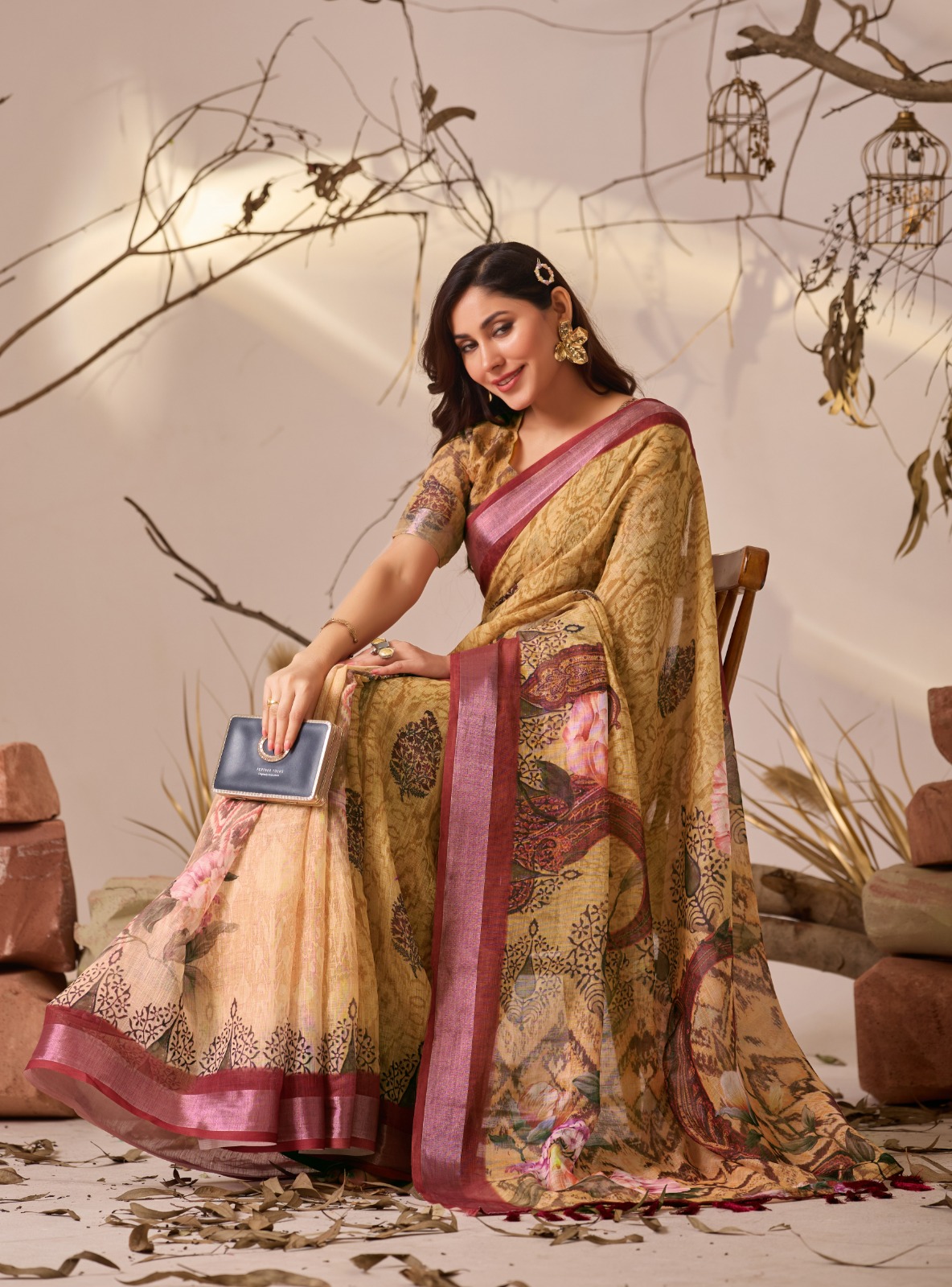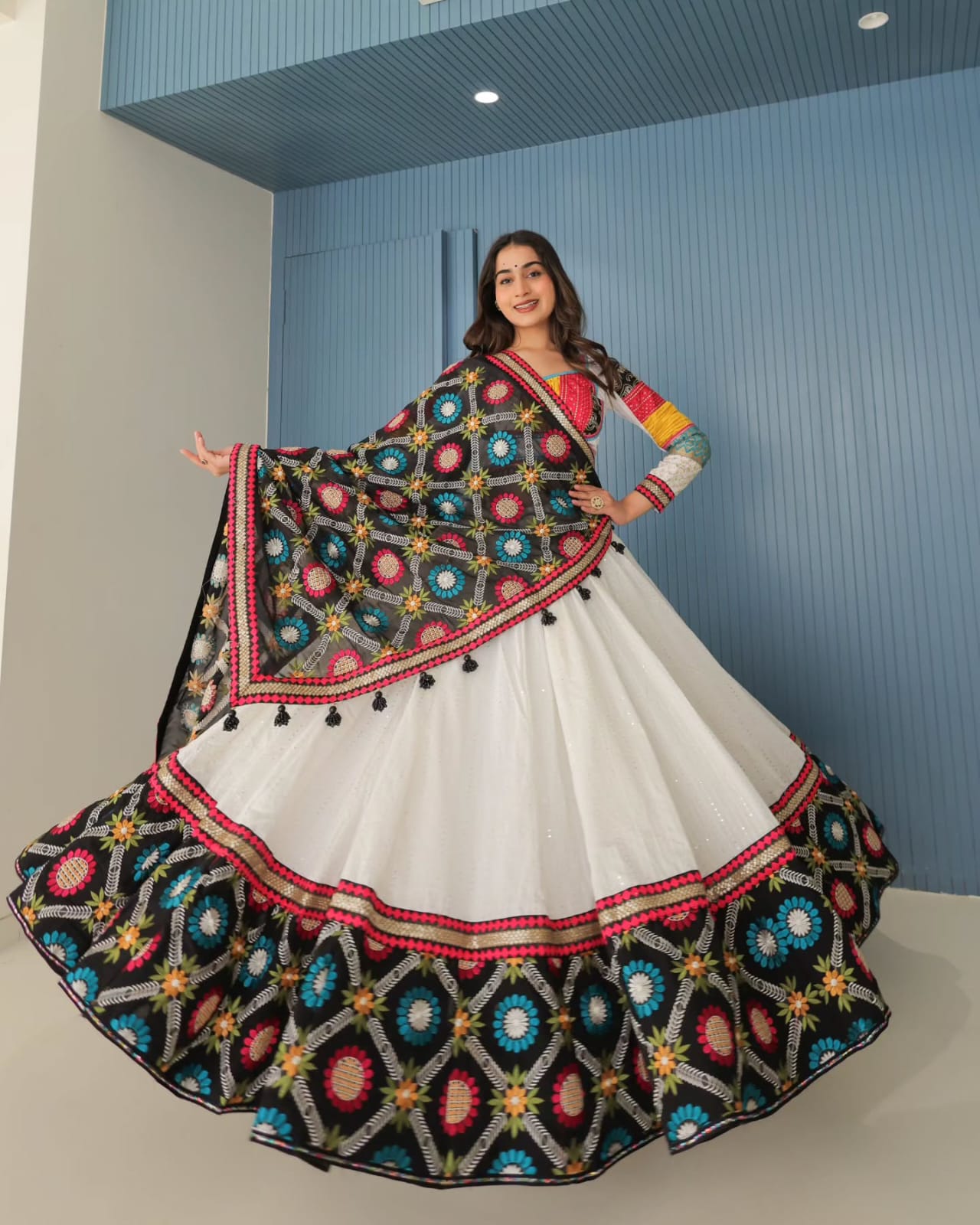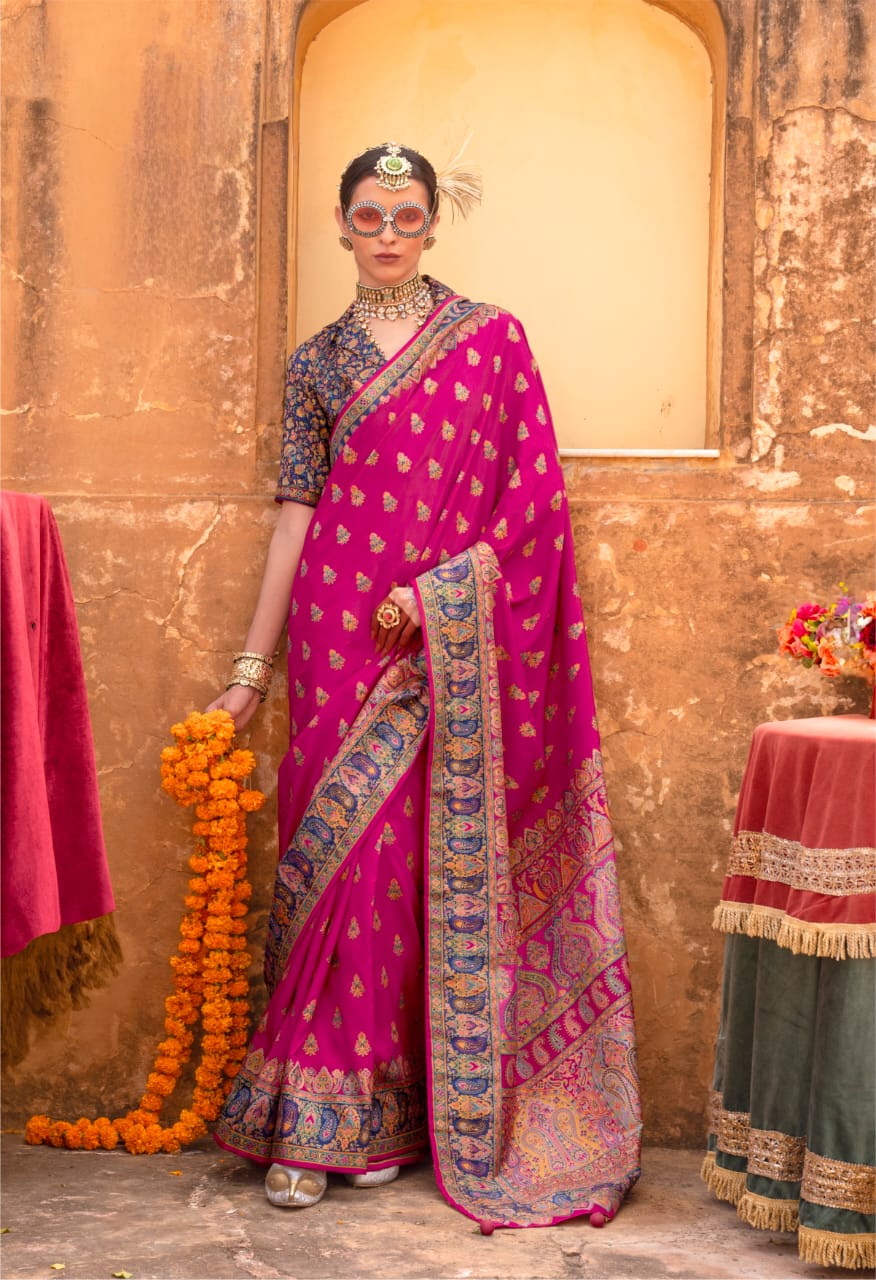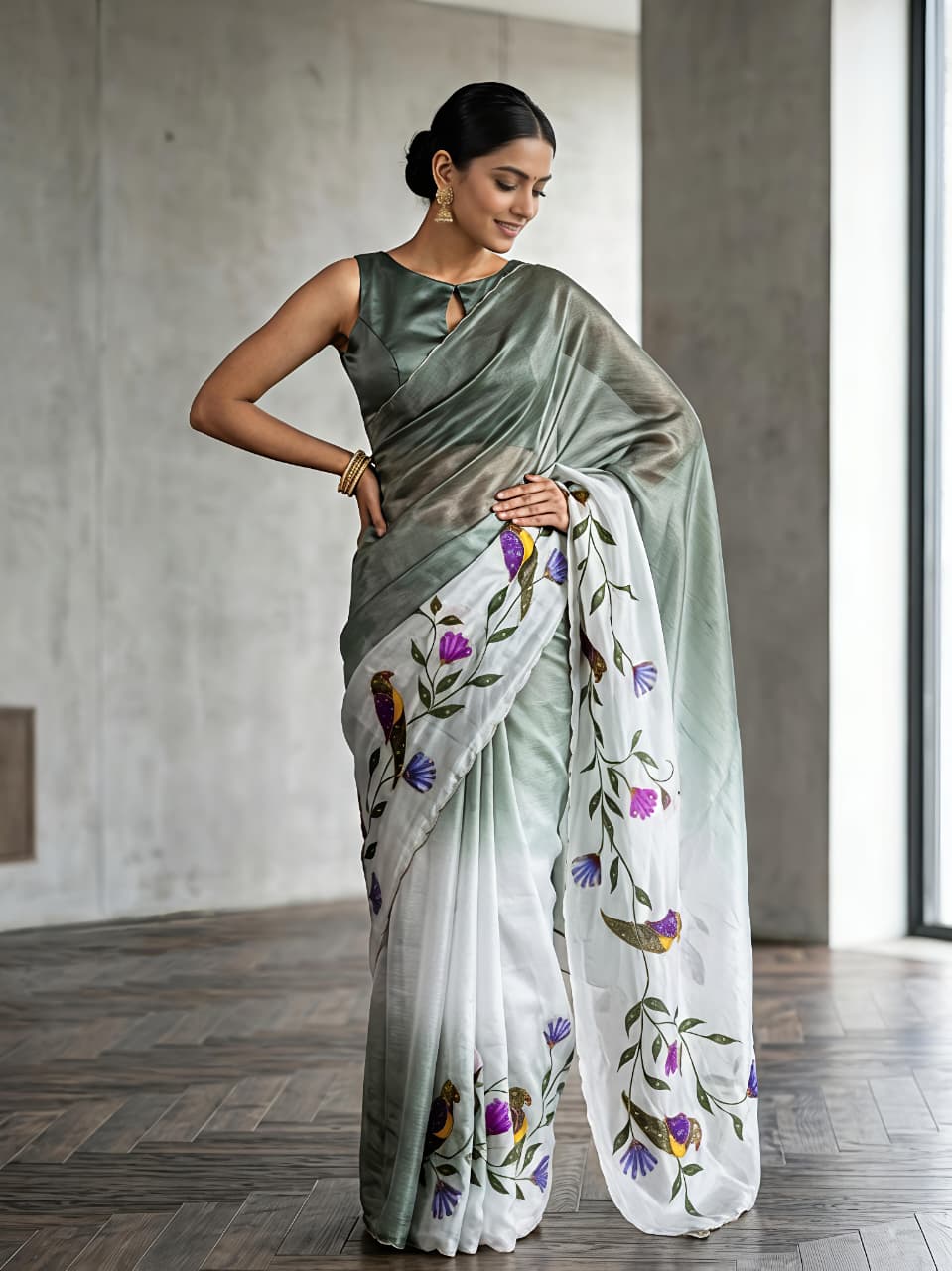
Dasara Saree Styling begins with a practical decision: choose a saree and blouse that can remain elegant through prayers, family visits, meals and photographs. A rich silk weave may need only a restrained blouse, while a simple cotton saree can look ceremonial with zari, polished jewellery and a carefully planned drape. The most dependable festive outfit begins with fabric, colour and comfort rather than accessories added at the last minute.
Dasara dressing also benefits from understanding how textiles behave. Banarasi silk reflects light, Chanderi feels airy, cotton Ikat holds a crisp shape and Kalamkari cotton contributes colour through print. Matching the material to the time of day and amount of movement makes the finished outfit more comfortable and more convincing.
Dasara Saree Styling: How should you choose a saree for Dasara?
Choose a Dasara saree according to the ceremony, weather, duration of wear and movement required. A formal puja may suit Kanjeevaram or Banarasi silk, while a daytime family gathering can be more comfortable in Chanderi, cotton Ikat or Kalamkari cotton.
Dasara often includes a mixture of rituals, visits, meals and photographs, so the saree must remain presentable beyond the first hour. Heavy silk creates a traditional silhouette and photographs beautifully, but it can feel warm indoors. Lightweight Chanderi gives a luminous appearance with less weight, while cotton Ikat provides breathability, structure and a distinctive geometric character.
Colour changes the visual mood of a saree. Maroon, vermilion, mustard, emerald, royal blue and deep purple carry the richness associated with festive dressing. Ivory, cream and muted beige become more ceremonial when paired with a contrasting zari border or a jewel-toned blouse. A red saree doesn't require gold styling by default; antique silver, oxidised jewellery or a dark green blouse can create a more considered result.
Look closely at the border before buying or styling a saree. A broad zari border adds visual weight near the feet and works well with a structured blouse. A narrow border looks lighter and allows a patterned blouse or statement jewellery to lead. The pallu should also be long enough for the intended drape because a short pallu can pull at the shoulder and disturb pleats during prayer or greetings.
Dasara Saree Styling: Which fabrics work for different festive settings?
Banarasi silk, Kanjeevaram, Chanderi, cotton Ikat and Kalamkari cotton suit different festive needs. Banarasi silk works particularly well for evening celebrations because woven motifs and zari catch warm light. Kanjeevaram offers a sculptural drape and a strongly heritage appearance for formal ceremonies.
Chanderi is useful for daytime Dasara events because the fabric is light, slightly sheer and naturally dressy. Cotton Ikat brings an artisanal appearance through resist-dyed geometric patterns. Kalamkari cotton introduces botanical or narrative motifs and pairs especially well with plain blouses, wooden jewellery or antique metal accents.
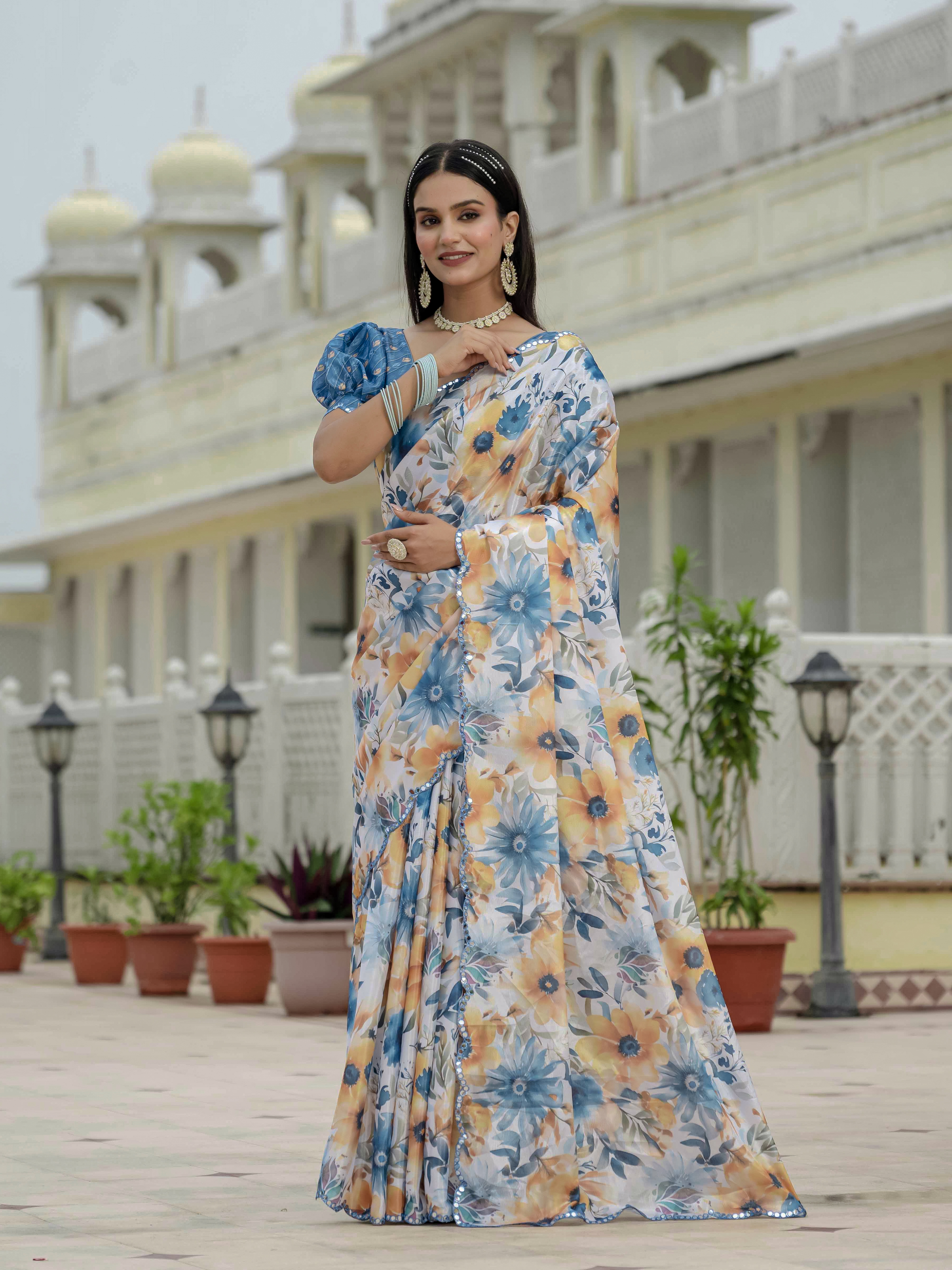
Blue Zari Work Cotton Saree for Wedding shows how cotton and zari can share the same outfit. A cream, rust or antique-gold blouse can support the blue without competing with the zari border. The same principle works with other cotton sarees that need a festive finish without the weight of silk.
Dasara Saree Styling: How do you pair a saree with the right blouse?
Pair a detailed saree with a quieter blouse and pair a plain saree with a blouse that contributes texture, print or zari. The blouse should repeat at least one colour from the saree while offering enough contrast to define the upper body.
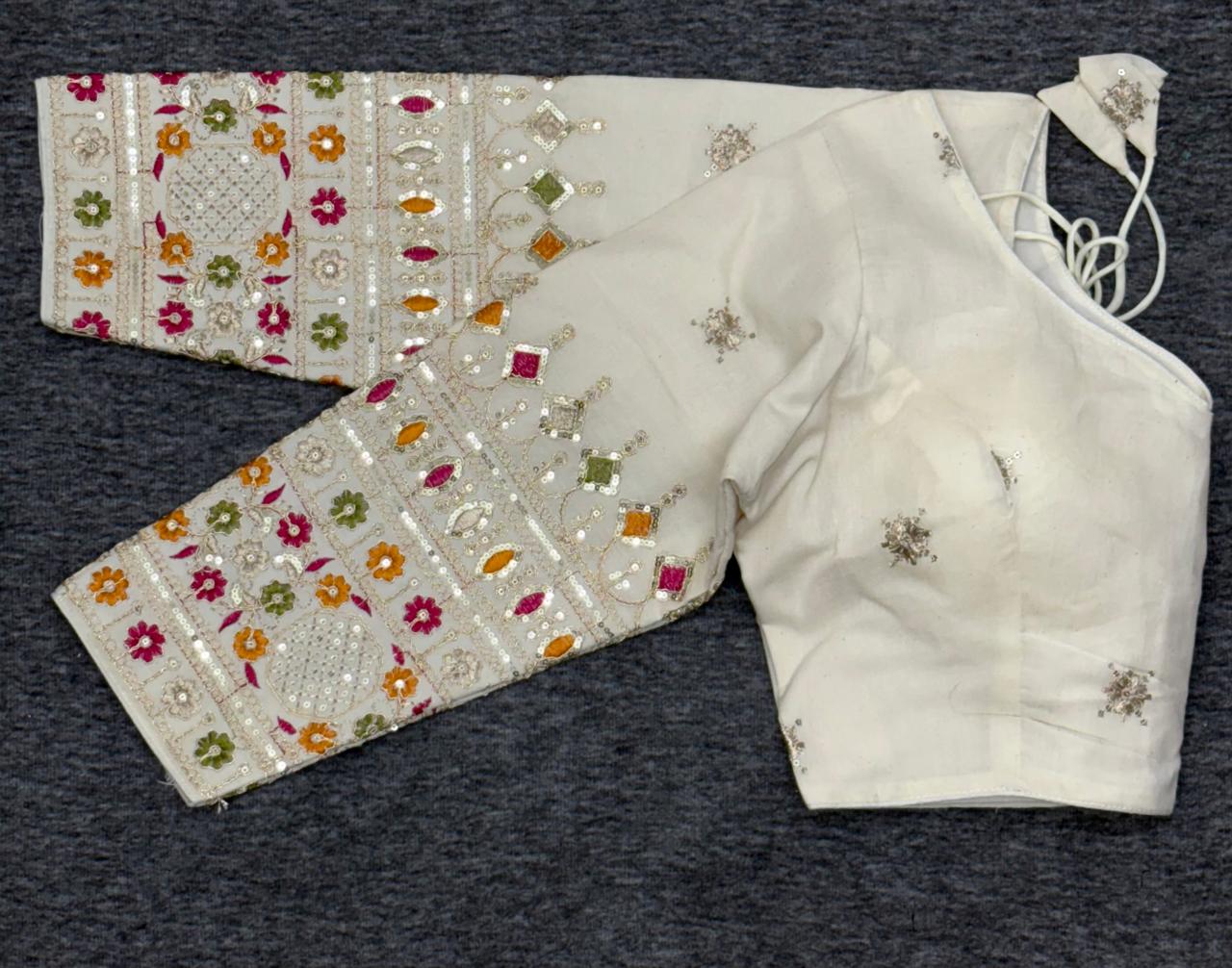
A plain blouse in the saree's deepest border colour is one of the safest combinations. A mustard saree with a maroon blouse looks grounded because the darker shade frames the face and echoes a familiar festive palette. A cream saree with a red blouse creates stronger contrast, while a blue saree with a cream blouse looks cooler and more contemporary.
Printed sarees need careful blouse proportion. Kalamkari prints can become visually busy when paired with another large print, so a solid blouse or small-scale woven texture usually works better. Ikat sarees already contain directional geometry; a plain blouse with a clean neckline prevents the ensemble from appearing crowded.
Classic Festive Wear Blouse for Stylish Saree Look gives an useful reference for a balanced festive wardrobe because a conventional silhouette can support several saree types. A fitted blouse with a modest sleeve length also gives more stability when a saree is worn for long periods or pinned in a formal pleated drape.
Dasara Saree Styling: What blouse neckline suits a festive saree?
A round, V-neck, square or collar neckline can suit a festive saree, but the best choice depends on the saree's border, jewellery and desired proportions. A V-neck visually lengthens the upper body, while a high or collar neckline creates a sharper, more tailored impression.
Kalamkari Cotton V Neck Collar Blouse for Women illustrates how a collar and V-neck can combine a classic print with a structured finish. Such a blouse works well with a plain saree or a saree with a narrow border. A strongly collared blouse should not automatically be paired with a heavy necklace and a wide zari border because too many structured details can crowd the upper half.
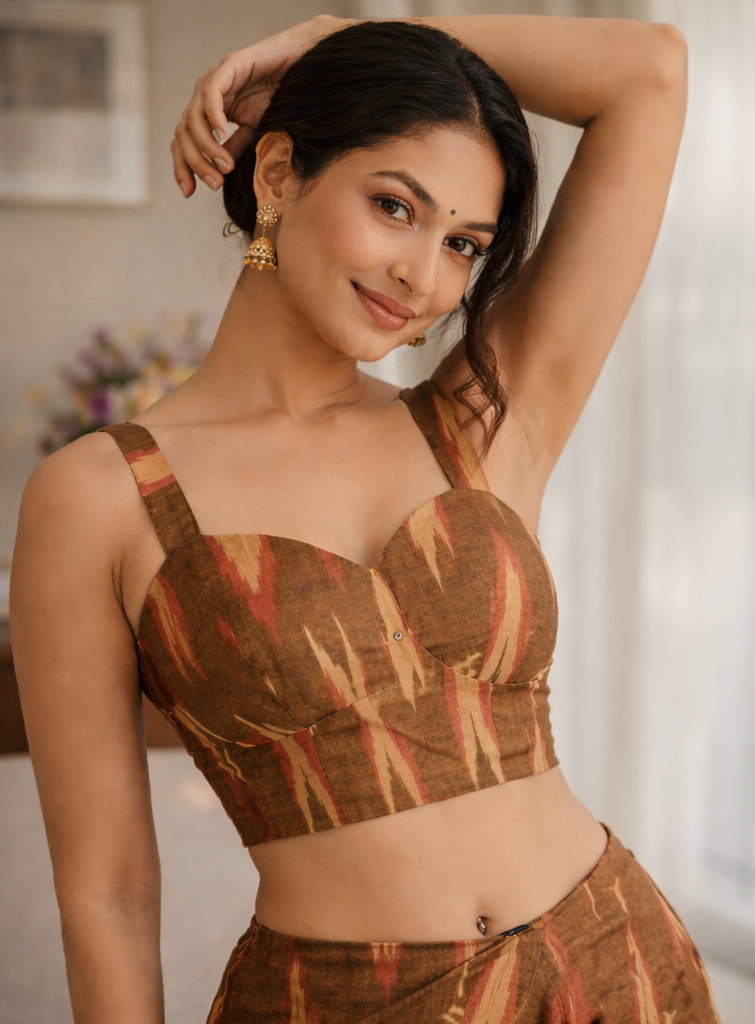
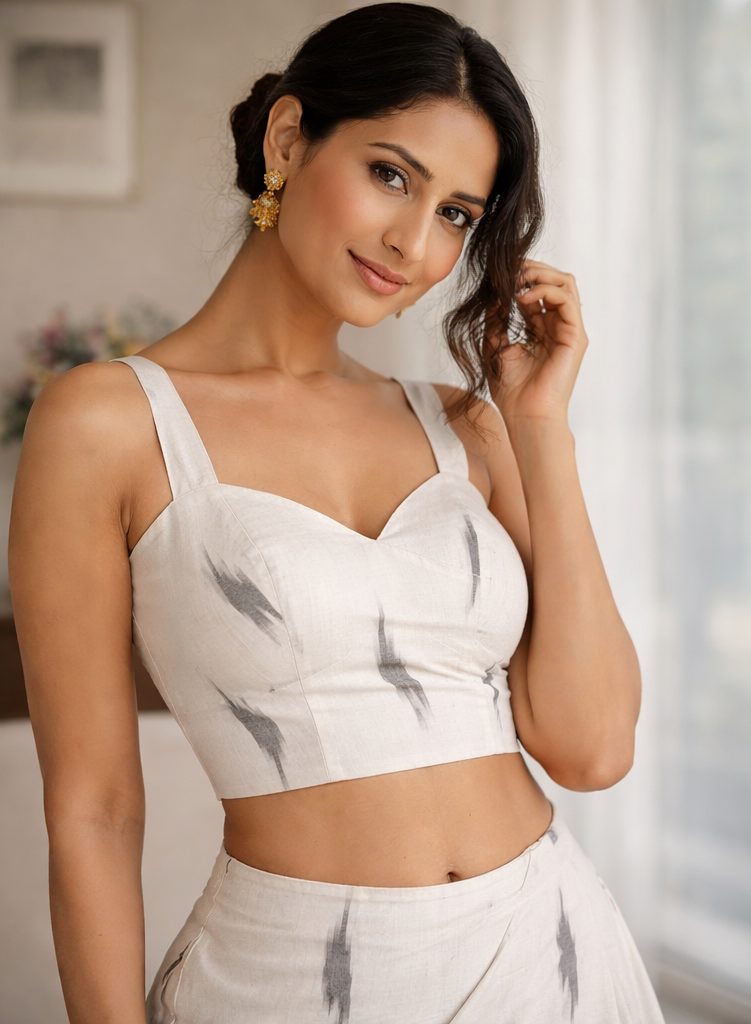
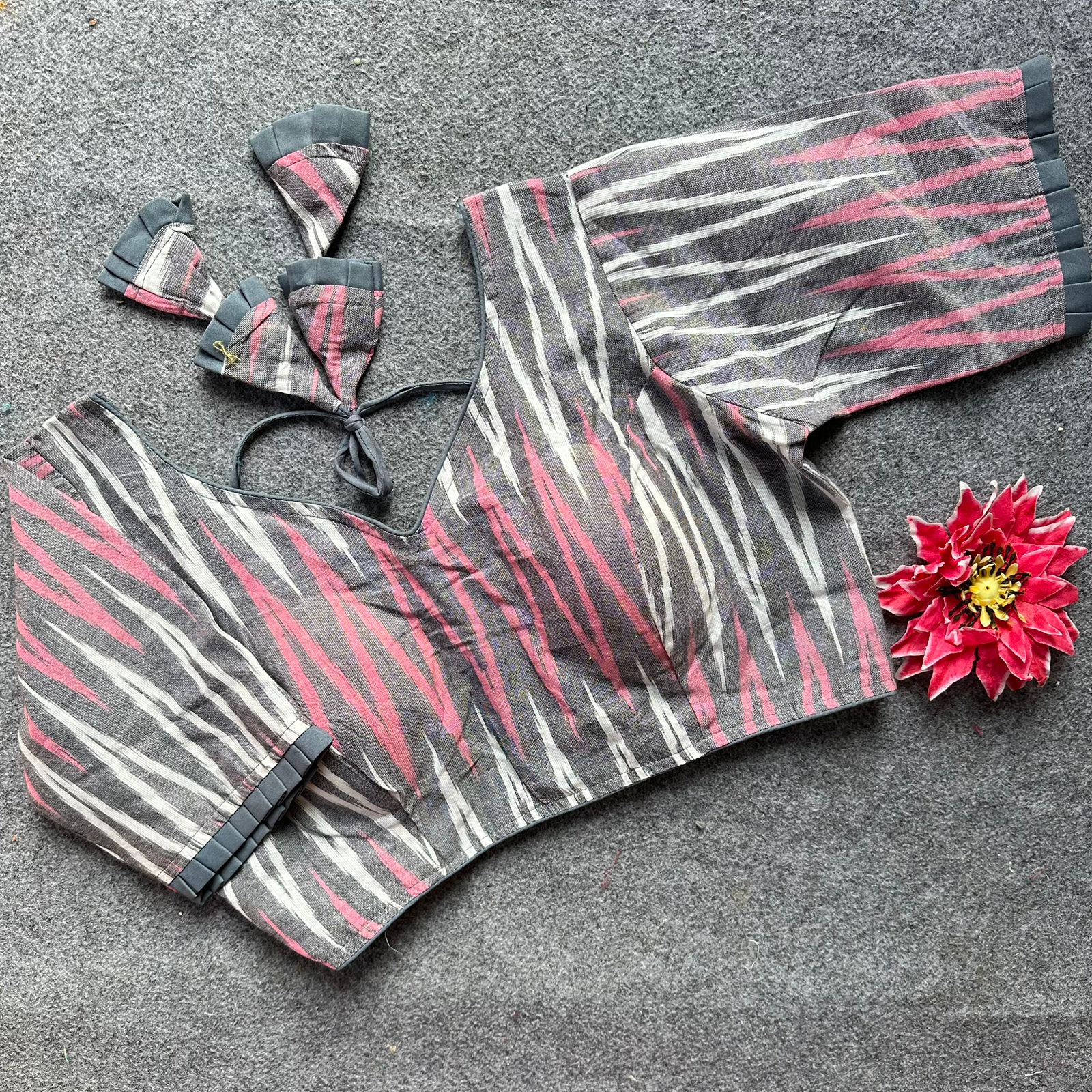
Sleeveless blouses suit warm weather and make the shoulders look open, but the armhole must sit securely without cutting into the skin. Brown Ikat Cotton Padded Blouse Sleeveless Stylish and Cream Ikat Cotton Padded Blouse Sleeveless Trendy show how sleeveless Ikat can support a festive cotton saree. Padded construction can reduce the need for extra lining, although the fit should be checked while raising the arms and sitting down.
A short sleeve is practical for temple visits and family gatherings because it gives coverage without adding much heat. A three-quarter sleeve gives a more formal appearance and balances a transparent or lightweight saree such as Chanderi. Elbow-length sleeves can look polished with Kanjeevaram, but sleeve circumference should allow comfortable movement.
Dasara Saree Styling: Which colour combinations create a polished look?
Polished Dasara colour combinations usually contain one dominant shade, one supporting shade and a small metallic accent. This three-part balance prevents the saree, blouse and jewellery from appearing unrelated.
- Mustard and maroon: This warm pairing works with gold zari and temple jewellery.
- Royal blue and cream: This clear contrast suits zari cotton, Banarasi silk and evening celebrations.
- Emerald and antique gold: This rich combination looks refined without relying on bright red.
- Rani pink and deep purple: This festive pairing suits weddings, music programmes and evening gatherings.
- Ivory and vermilion: This high-contrast combination lets the blouse define the outfit.
- Rust and beige: This earthy palette complements Kalamkari cotton and oxidised jewellery.
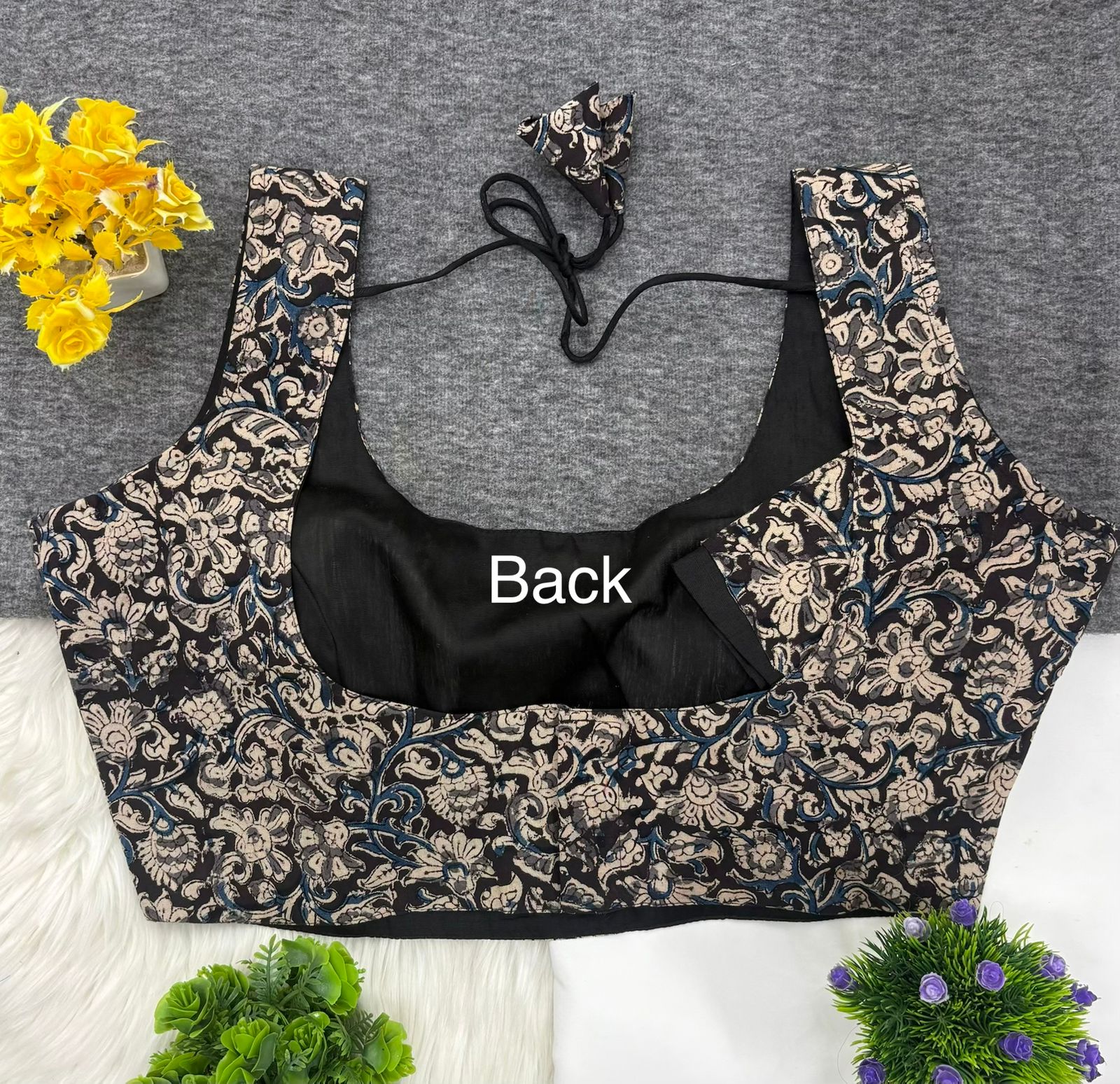
Cream Ikat Cotton Padded Blouse Sleeveless Trendy can work as a light neutral against a darker saree, especially when the saree contains cream motifs or a pale selvedge. Pure Kalamkari Cotton Padded Blouse for Women takes a different approach by making the blouse a printed focal point. A plain, lightly textured or narrow-bordered saree is preferable when the blouse already carries a strong print.
Metallic colour should be treated as an accent rather than a third dominant garment colour. Gold zari naturally supports gold jewellery, but antique gold, bronze and matte silver can also work with muted textiles. Matching every accessory to bright yellow gold can make a cotton or handloom outfit appear overly formal.
Dasara Saree Styling: How can you stay comfortable for long hours?
A comfortable festive saree requires a correctly fitted blouse, secure innerwear, a stable petticoat and pins placed where they don't pull the fabric. Comfort depends more on preparation and fit than on the saree's price.
Wear the blouse once before Dasara to test the neckline, armholes and back closure. Raise both arms, sit on a chair, bend slightly and walk up a few steps. A blouse that feels acceptable while standing may become restrictive during meals or when greeting guests. Padded blouses should lie flat against the bust without creating gaps at the neckline.
Choose a petticoat or underskirt with a firm but adjustable waist. A drawstring that's too tight can cause discomfort after eating, while a loose waist allows pleats to shift. Sarees with slippery silk surfaces benefit from an underskirt that brings gentle friction. Cotton sarees generally need less grip but still require a secure waistband.
Make five to seven front pleats of similar width and press them lightly before pinning. Pinning the pleats near the waistband and again below the knee can keep the drape stable, but excessive pins may damage delicate Banarasi silk or fine zari. Use safety pins with smooth closures and insert them horizontally through inner layers rather than directly through visible motifs.
Footwear should be selected before the final saree length is fixed. Wear the intended sandals or heels while draping so the hem falls just above the floor. A hem that drags can collect dust and cause tripping, while a hem that's too short disrupts the vertical line of the saree.
Ikkat Cotton Padded Blouse for Women Sleeveless can be particularly practical for a warm daytime celebration because cotton allows more airflow than many synthetic blends. The blouse should still be tested with the intended saree, since a thick cotton saree and a structured padded blouse may feel restrictive together.
Dasara Saree Styling: How should jewellery and accessories complete the outfit?
Jewellery should echo the saree's visual language and leave one area relatively quiet. Heavy earrings can replace a necklace, while a statement necklace can be balanced with smaller earrings.
Temple jewellery suits Kanjeevaram, silk-cotton sarees and heritage Dasara rituals because its motifs often include coins, deities, mango shapes or floral forms. Pearl strands soften Banarasi silk and work well with cream, pink and blue palettes. Oxidised silver works with Kalamkari cotton and Ikat, especially when the saree contains rust, indigo or black.
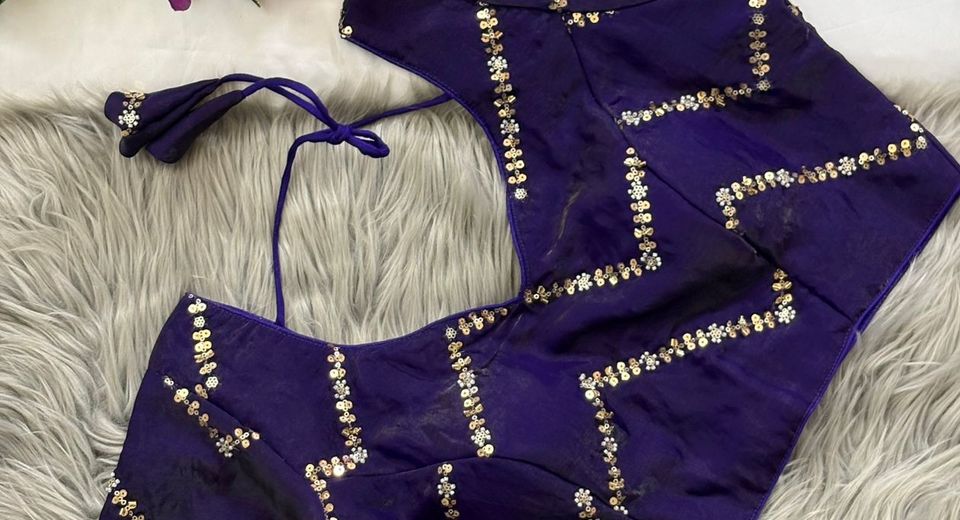
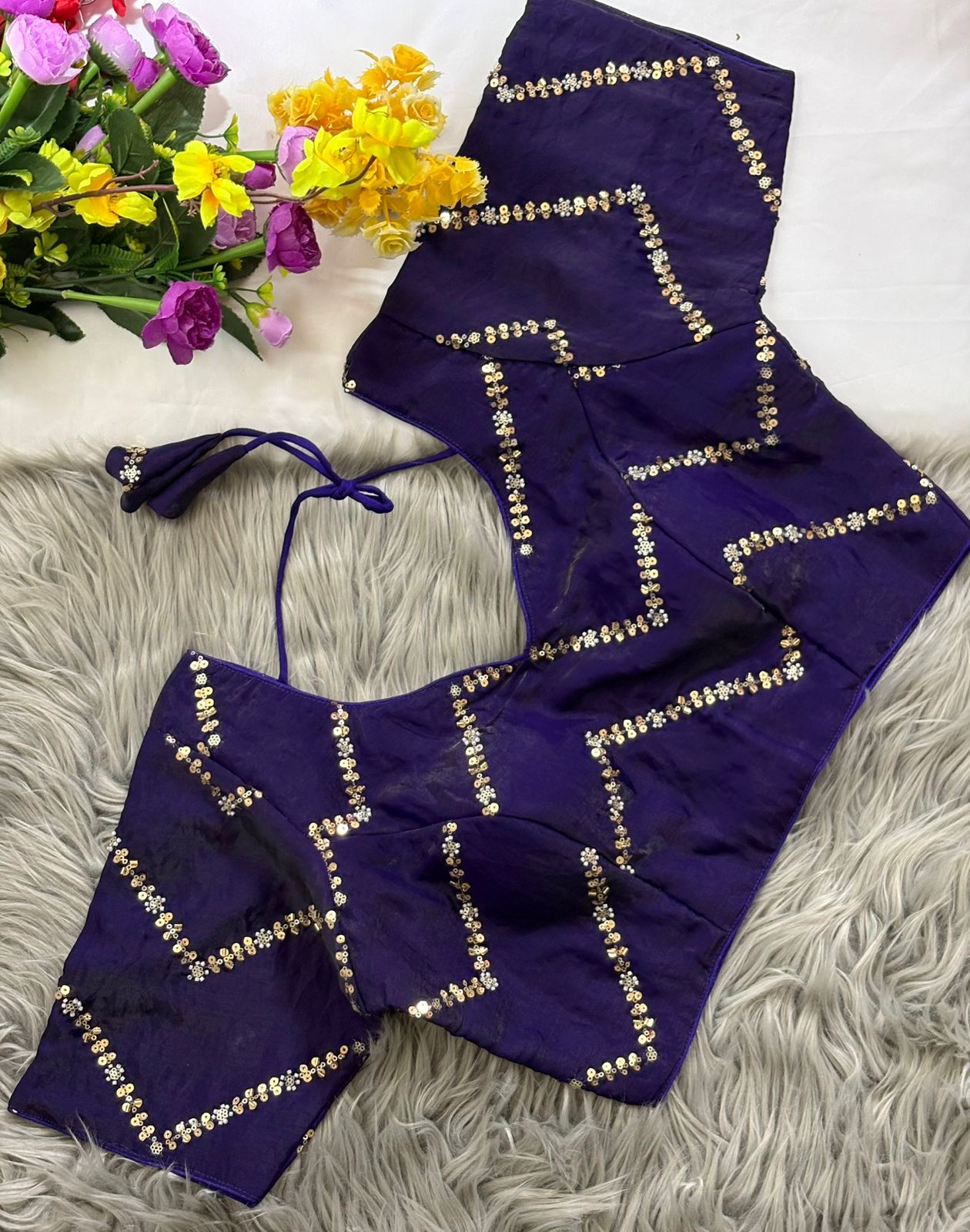
Fendy Silk Zigzag Moti Work Readymade Blouse demonstrates how motif-led embellishment can become the upper-body focus. When a blouse includes zari, sequins or moti work, choose a simpler saree border and reduce the number of competing necklaces. Matching the blouse's embellishment to a small bindi or hair accessory is enough to make the outfit feel coordinated.
Hair and footwear also affect the formality of the look. A low bun with jasmine suits silk and temple jewellery, while a braid or soft open hair can feel more relaxed with cotton. Block heels offer more stability than narrow stilettos on uneven floors. A small potli or structured clutch is easier to manage than a large shoulder bag with a pinned pallu.
Dasara Saree Styling: What preparation protects the saree and blouse?
Prepare a festive saree by checking the blouse fit, pressing the fabric safely, planning the drape and packing emergency pins at least one day before the event. Early preparation prevents rushed alterations and avoidable fabric damage.
Store a silk saree folded along different lines each time to reduce permanent creases. Wrap zari-rich sarees in soft cotton or muslin rather than plastic for long-term storage. Keep perfume, deodorant and hair spray away from silk and zari because alcohol and moisture can mark delicate surfaces.
Cotton sarees can usually be aired after wearing and folded only when completely dry. Kalamkari cotton should be washed according to its dye instructions because strong detergents, prolonged soaking and direct midday sun may fade printed areas. Press cotton on the reverse side when possible, using moderate heat.
Pure Kalamkari Cotton Padded Blouse for Women and Kalamkari Cotton V Neck Collar Blouse for Women should be stored dry and away from dark, damp cupboards. A breathable garment bag protects the blouse from dust without trapping moisture. Blouses with padding should not be crushed under heavy sarees because flattened cups can change the fit.
A simple emergency kit can contain two safety pins, one small brooch, fashion tape, a needle, matching thread and a spare bindi. Fashion tape can secure a slipping pallu temporarily, but it should be tested on an inconspicuous area before use. A brooch should be attached through the inner layers rather than through a visible zari motif.
Dasara Saree Styling: How do you build a complete festive outfit?
Build a complete festive outfit by deciding the saree's visual priority first, choosing a supporting blouse second and adding jewellery last. This order keeps the outfit balanced and prevents accessories from dictating every other choice.
- Select the setting: Decide whether the event is a daytime puja, an evening celebration, a family lunch or a wedding-related gathering.
- Choose the fabric: Select Kanjeevaram or Banarasi silk for high formality, Chanderi for light elegance, or cotton Ikat and Kalamkari cotton for breathable daytime wear.
- Set the colour hierarchy: Assign one dominant colour to the saree, one supporting colour to the blouse and one metallic tone to accessories.
- Check blouse structure: Test neckline, sleeve, padding, closure and armhole movement before the event.
- Plan the drape: Fix the pallu length, pleat width and footwear before applying final pins.
- Reduce visual competition: If the saree has zari or the blouse has embellishment, keep jewellery and hair accessories more restrained.
Classic Festive Wear Blouse for Stylish Saree Look can support a conventional silk or cotton saree when the outfit needs versatility. Brown Ikat Cotton Padded Blouse Sleeveless Stylish works better as a texture-led choice with a plain saree or a small-bordered handloom weave. Blue Zari Work Cotton Saree for Wedding needs a blouse that either repeats its blue or gives the zari enough contrast to remain visible.
The strongest festive styling often feels intentional because each element has a clear job. The saree establishes the mood, the blouse frames the upper body, jewellery identifies the level of formality and the drape determines comfort. That approach makes Dasara dressing more personal while preserving the dignity and colour of the celebration.
Common Questions About Dasara Saree Styling
Which saree is best for Dasara celebrations?
Kanjeevaram and Banarasi silk suit formal Dasara ceremonies, while Chanderi, cotton Ikat and Kalamkari cotton are practical for daytime gatherings. Choose according to weather, duration and the amount of movement required.
What blouse colour goes well with a Dasara saree?
A blouse in the saree's border colour is the safest choice, while cream, maroon, emerald, mustard and antique gold create reliable festive combinations. A strongly printed blouse should usually be paired with a plain or lightly textured saree.
Can a sleeveless blouse be worn for a Dasara function?
A sleeveless blouse can suit a Dasara function, particularly in warm weather or with a cotton saree. Check that the armhole sits securely and consider the formality of the venue before choosing the cut.
How can I keep saree pleats in place during a festive event?
Make five to seven even pleats, pin them near the waistband and secure them again below the knee if necessary. Use smooth safety pins through inner layers and avoid placing pins directly through delicate zari motifs.
Which jewellery suits a silk saree for Dasara?
Temple jewellery and gold-toned pieces suit Kanjeevaram and Banarasi silk, while pearls soften lighter colour palettes. Choose either a statement necklace or prominent earrings so the jewellery does not compete with a heavily detailed blouse.
How should I care for a Kalamkari cotton blouse after Dasara?
Air the blouse fully before folding it and follow the garment's washing instructions. Avoid prolonged soaking, strong detergent and direct midday sunlight because Kalamkari dyes can fade with harsh treatment.