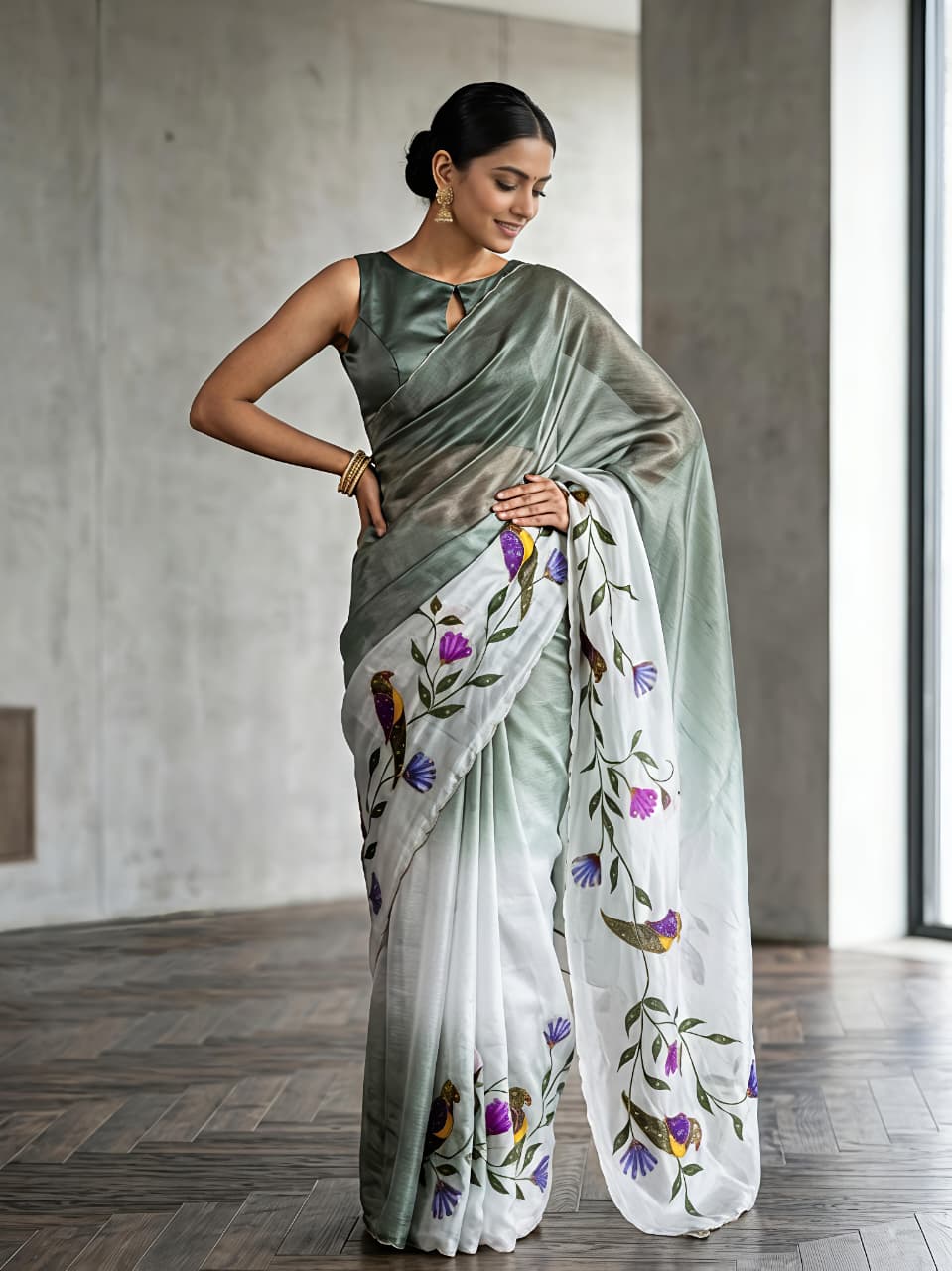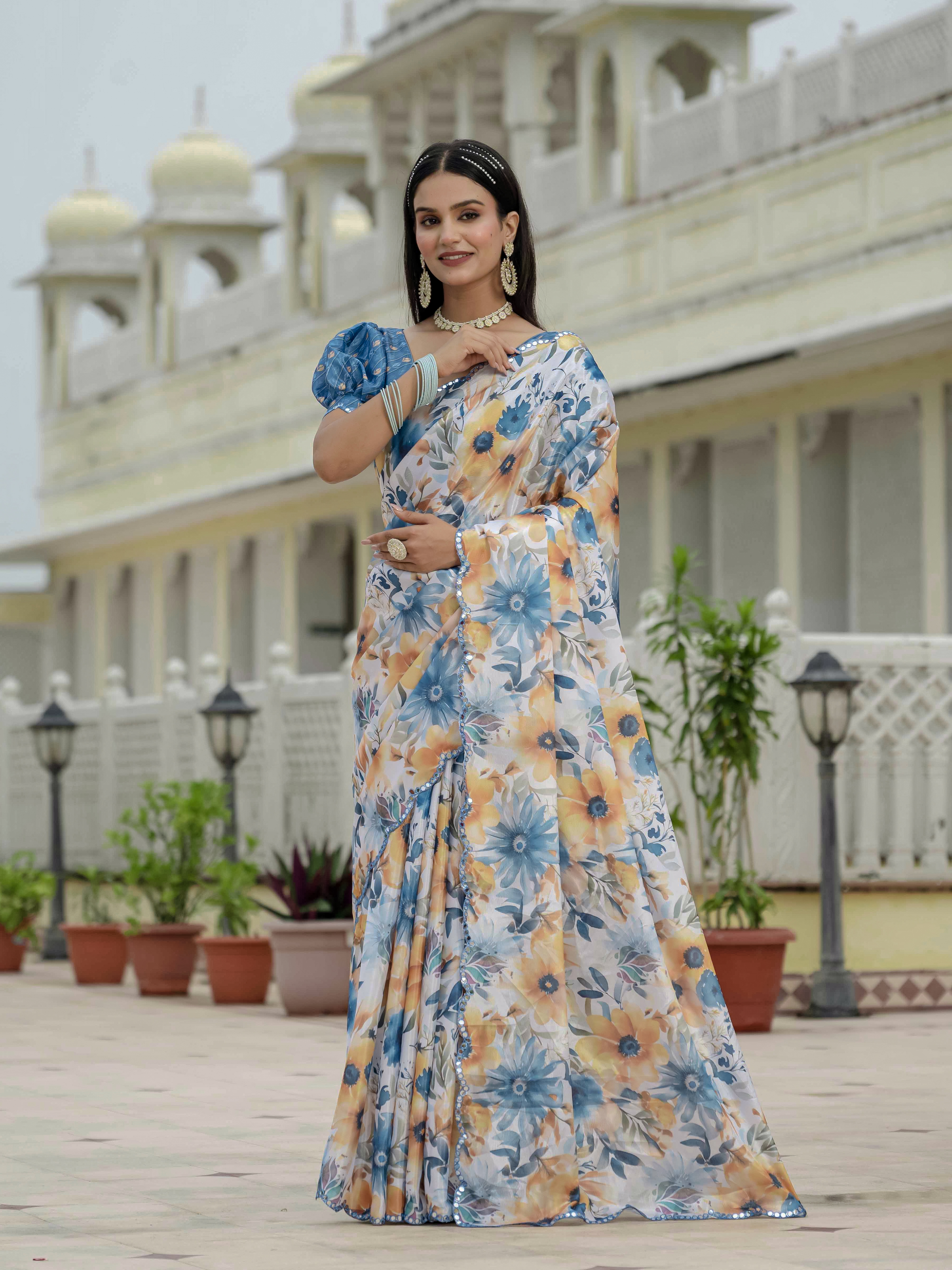
Dasara Fashion in Telangana: Best Sarees and Salwar Suits should make room for both celebration and movement. A Bathukamma gathering may affect standing, walking, arranging flowers and greeting several groups of people, while Vijayadashami visits often include travel, family photographs and a long lunch. The right outfit therefore depends on fabric, silhouette, colour, footwear and the amount of ornamentation, not only on how festive the garment looks in a photograph.
Telangana Dasara dressing can include a bright saree, a straight kurta set, an Anarkali-inspired silhouette, a sharara or a coordinated kurta-pant-dupatta outfit. Traditional visual cues such as zari, jacquard texture, mirror work, floral embroidery and saturated yellow, orange, pink or red can create a celebratory appearance without requiring heavy bridal clothing. This guide explains how to choose an outfit for the specific part of the festival you'll attend.
Dasara Fashion in Telangana: Best Sarees and Salwar Suits for Different Celebrations
A lightweight saree or a well-fitted salwar suit is usually the most practical choice for Telangana Dasara celebrations because both options combine festive detail with enough comfort for visiting, prayers, photographs and movement. Select the silhouette according to the setting: a saree suits a more traditional family gathering, while a coordinated salwar suit works well for daytime events, office celebrations and travel.
Bathukamma gatherings call for an outfit that allows easy movement and secure draping. A readymade salwar suit with a matching or coordinated dupatta reduces dressing time and avoids repeated adjustments. A saree remains a beautiful choice when the pallu is pinned at the shoulder and the pleats are secured at the waist.
Vijayadashami visits generally allow slightly more polish because the day may include formal greetings, temple visits or a family lunch. Banarasi silk, Chanderi, zari jacquard and refined embroidery can add occasion value, while a straight kurta or softly flared suit keeps the outfit manageable for several hours.
Dasara Fashion in Telangana: Best Sarees and Salwar Suits by Fabric
Choose the fabric by considering the event timing, outdoor exposure, expected walking and local temperature. Cotton and cotton blends are dependable for daytime celebrations, Chanderi and lighter silk work well when you want dressiness without excessive weight, and jacquard or Banarasi silk creates a richer look for evening gatherings.
Which fabrics suit daytime festivities in Dasara Fashion in Telangana?
Cotton salwar suits festive events are an useful choice for daytime gatherings because cotton absorbs moisture and generally feels less restrictive than dense synthetic or heavily embellished fabric. A cotton suit with moderate embroidery can look celebratory when paired with jhumkas, colourful bangles and a carefully pressed dupatta.
Chanderi offers a dressier middle ground. The fabric is known for a light, slightly sheer appearance and a graceful fall, so a Chanderi kurta-pant set can look elegant without the bulk of layered velvet or dense brocade. A lining may be important depending on the garment's opacity, especially in pale yellow, pink or ivory shades.
When does silk or jacquard suit Dasara Fashion in Telangana?
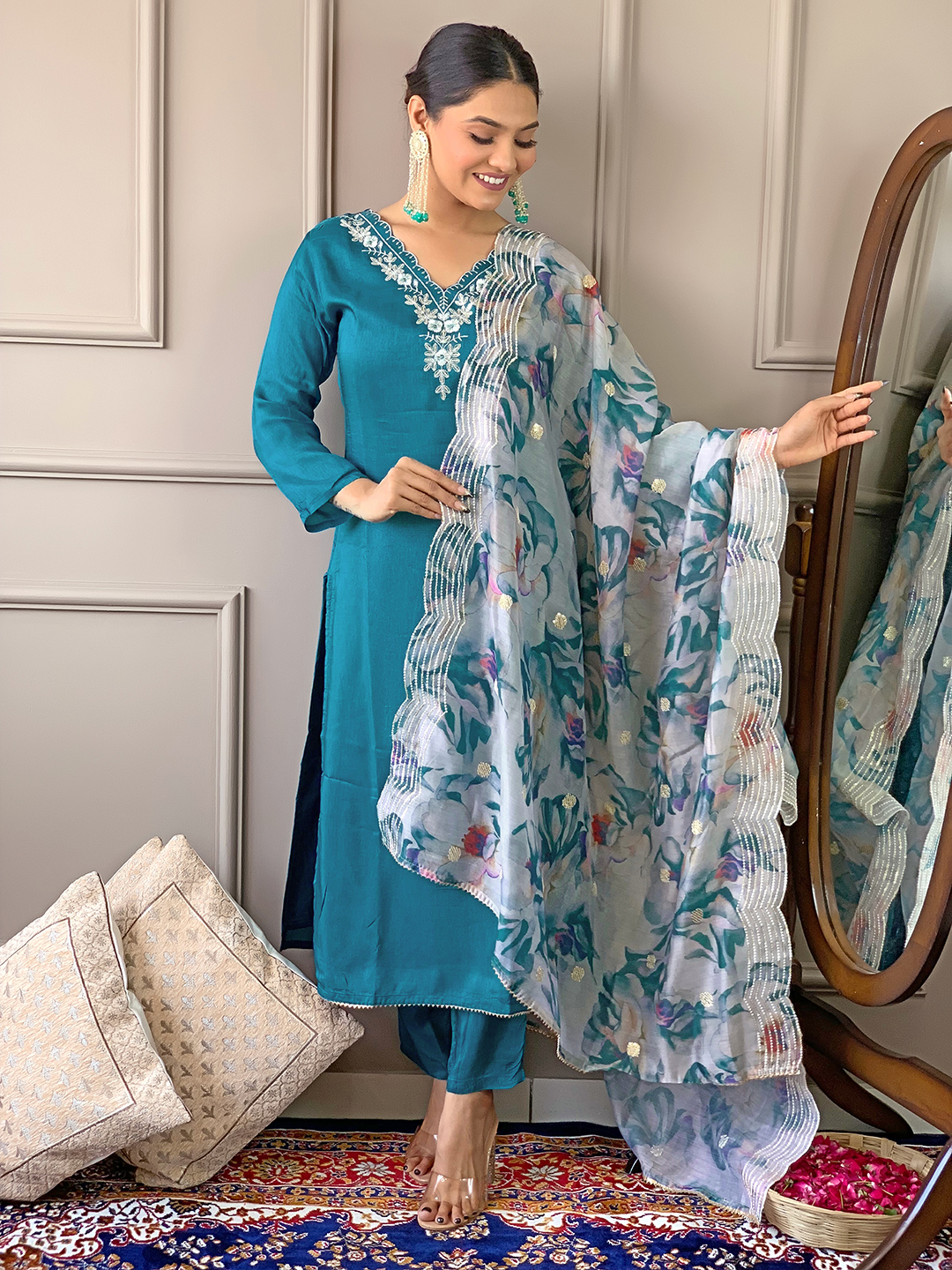
Silk or jacquard makes sense for evening Dasara celebrations, formal family photographs and occasions where a more substantial texture is appropriate. Silk Festive Kurta Pant Set with Zari Jacquard Dupatta shows how a relatively simple kurta-pant shape can gain visual richness from a patterned dupatta rather than from heavy work across every panel.
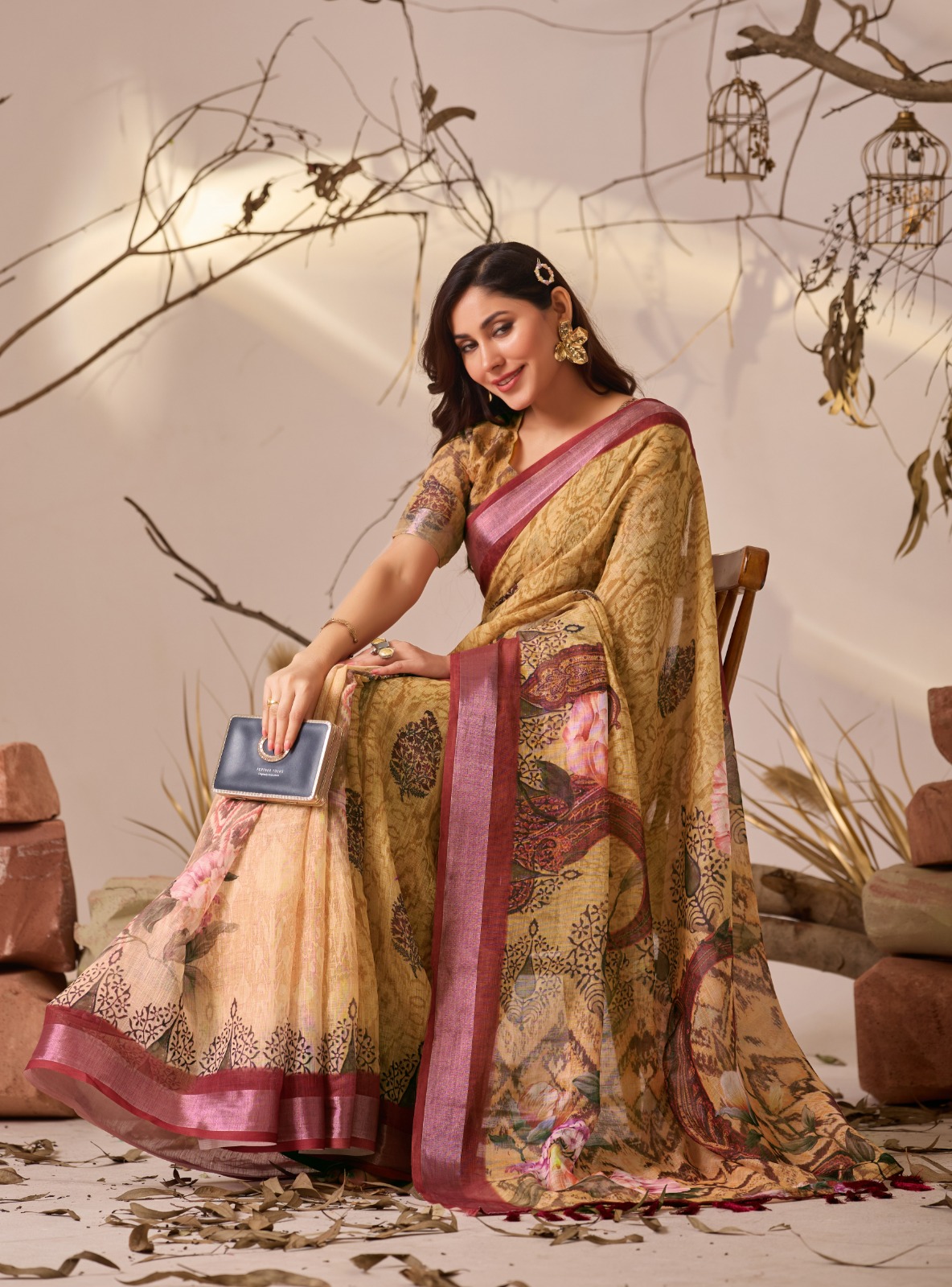
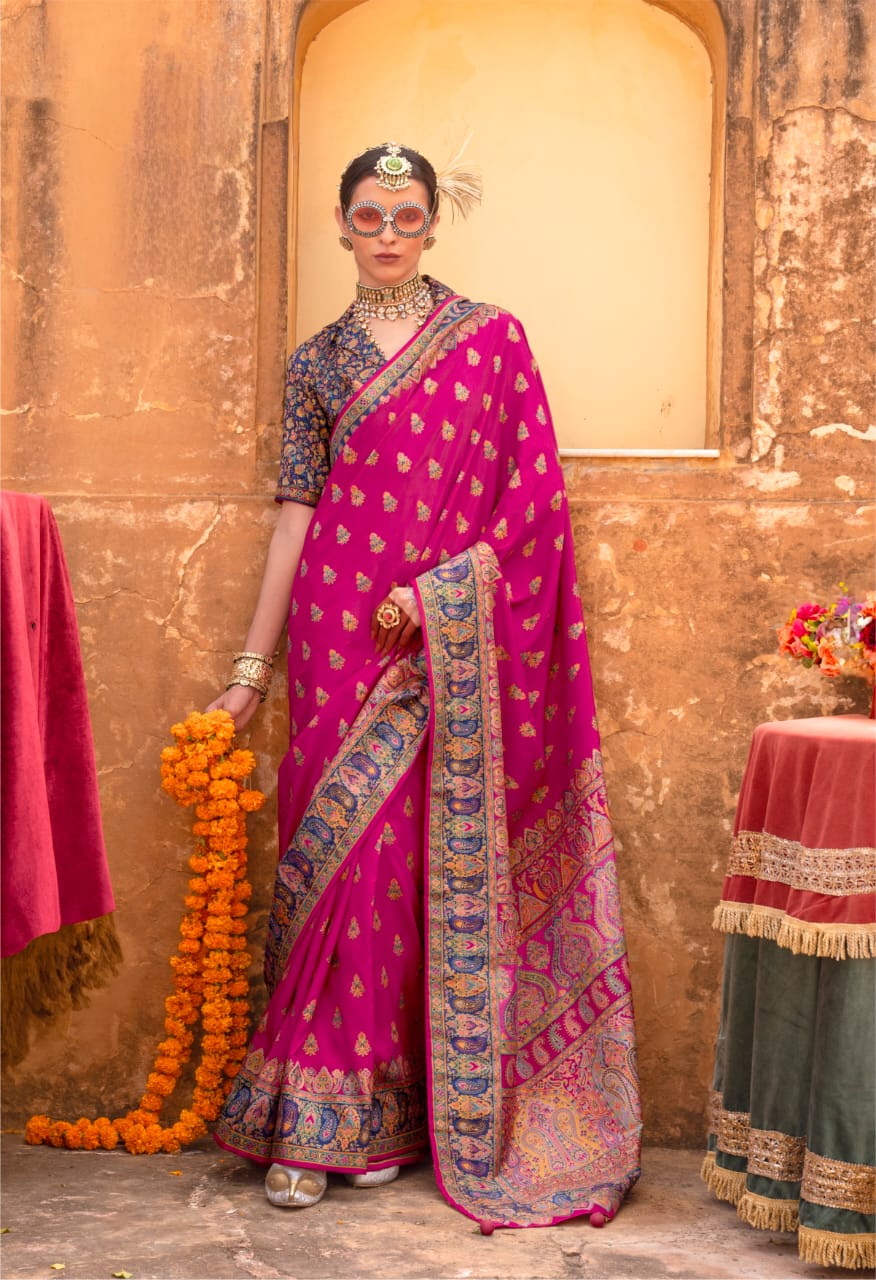
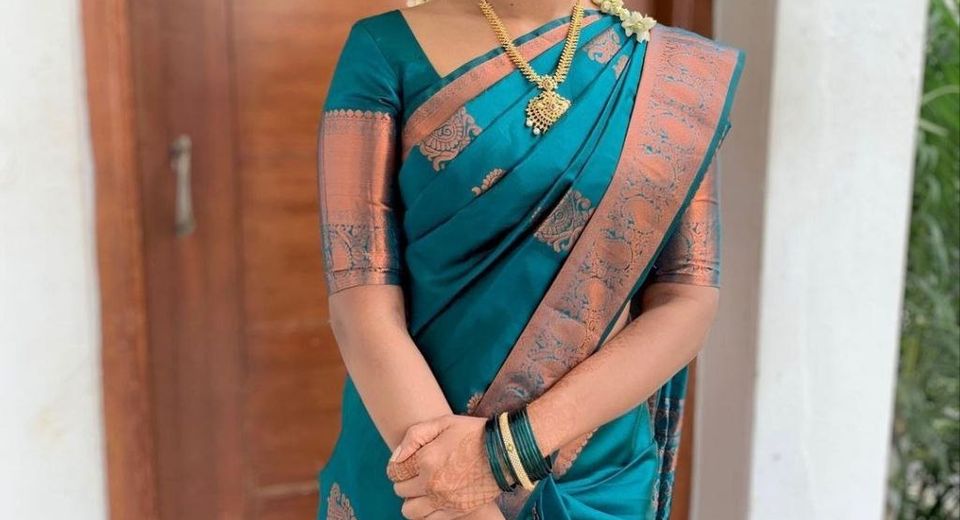
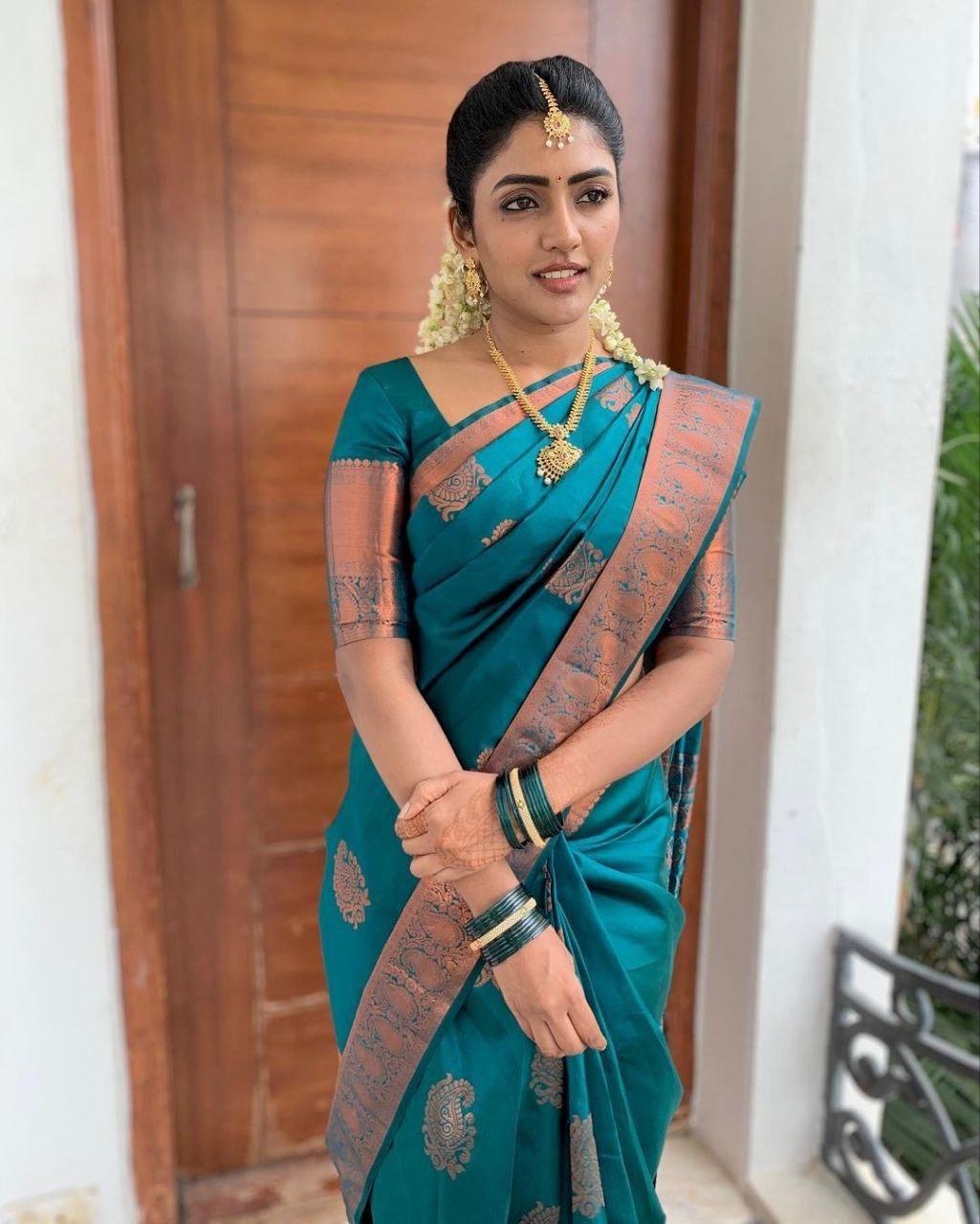
Banarasi silk is particularly effective when the saree itself needs to carry the festive mood. Festive Teal Banarasi Saree with Traditional Motifs uses a deep teal ground and traditional motifs as its defining visual elements, making it suitable for someone who wants a colour beyond the usual red, yellow or pink. Keep the blouse, jewellery and footwear controlled so the motifs remain visible.
Dasara Fashion in Telangana: Best Sarees and Salwar Suits by Colour
Yellow, orange, pink, red, teal and green are strong Dasara colour choices because they photograph clearly, complement festive floral settings and can be styled with gold-toned accessories. The most flattering choice still depends on skin undertone, daylight and the colours already present in your jewellery or dupatta.
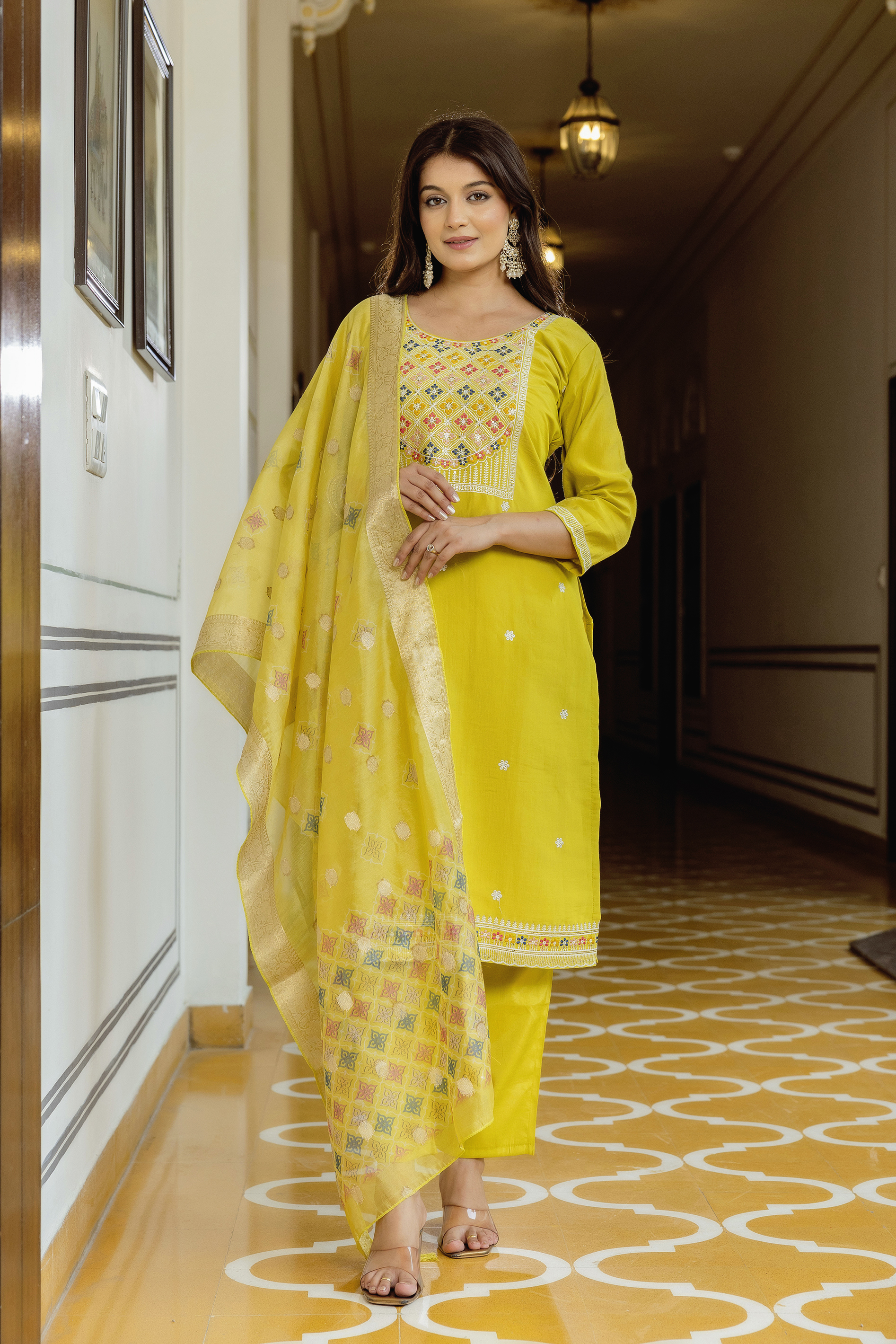
Yellow has a bright, auspicious visual quality and works especially well for daytime events. Designer Yellow Salwar Suit with Dupatta can form the foundation of a simple festive look when paired with gold studs, a small bindi and tan or metallic sandals. Yellow also combines easily with green, pink, orange and antique gold accessories.
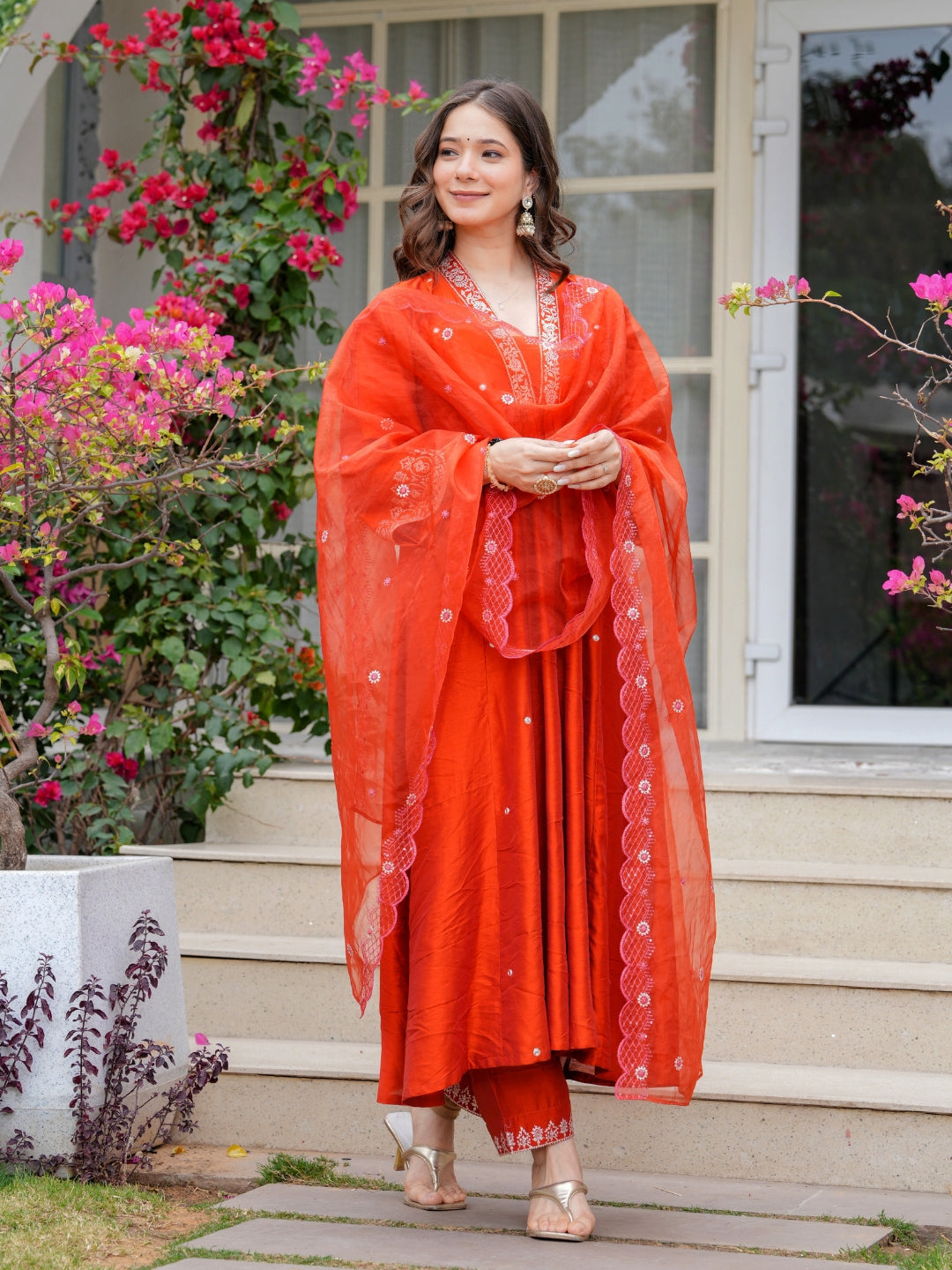
Orange creates energy without requiring elaborate embellishment. Orange Radiance Salwar Suit is an appropriate example of a single-colour statement outfit; use neutral footwear and one dominant jewellery finish so the shade remains the focus. Orange Thread Embroidered Ethnic Suit Set adds surface detail through thread embroidery, making it more suitable when you want the garment itself to provide texture.
Pink can look youthful and festive, especially for daytime gatherings and photographs with flowers. Pink Sharara Suit Set with Mirror Work Dupatta introduces movement through the sharara and light-reflecting detail through mirror work. Because a sharara already has volume, keep the upper garment fitted or neatly shaped and select a compact handbag rather than a large shoulder bag.
Red remains a strong choice for Vijayadashami, but red doesn't need to mean bridal. Festive Red Chanderi Kurta Pant Dupatta Set Women gives a way to use red in a lighter, coordinated format. Teal, emerald and deep pink are useful alternatives when you want festive colour with a cooler or more contemporary mood.
Dasara Fashion in Telangana: Best Sarees and Salwar Suits by Silhouette
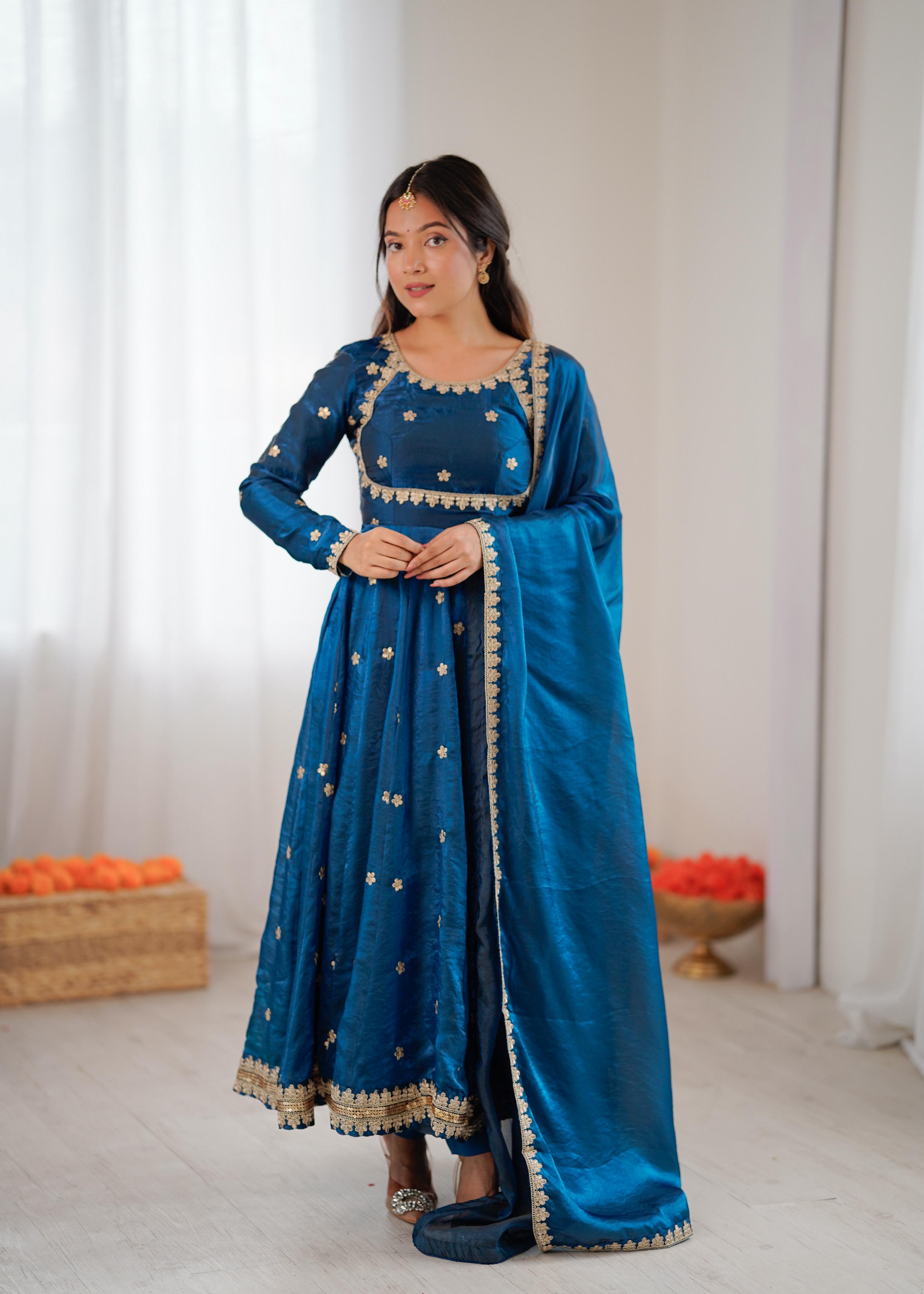
Select a salwar suit silhouette by matching its volume to your movement needs and body proportions. Straight suits are easy to sit and walk in, Anarkali shapes create graceful flare, shararas add festive drama, and kurta-pant sets provide a clean contemporary line.
When is a straight suit useful for Dasara Fashion in Telangana?
A straight suit is the most versatile option for office Dasara events, temple visits and long family days because the narrow kurta and matching trousers don't require constant arranging. A straight silhouette also works well under a structured dupatta pinned at one shoulder. Look for side slits that allow a comfortable stride and trousers with enough ease at the hip.
Readymade salwar suits festive collections are especially convenient when the kurta, bottom and dupatta are already colour-coordinated. Check garment measurements rather than relying only on a size label. Bust, shoulder, upper-arm and hip measurements matter more than the nominal size when embroidery or lining reduces fabric give.
When should you choose a sharara or flared style?
A sharara or flared style suits evening celebrations, dance-friendly gatherings and photographs where movement in the lower garment adds visual interest. Pink Sharara Suit Set with Mirror Work Dupatta is best balanced with a fitted or neatly shaped upper layer, because both a voluminous bottom and an oversized kurta can obscure the outfit's proportions.
An ethnic gown can provide a single-piece alternative when you want a formal result with fewer styling decisions. Refined Black Ethnic Gown with Floral Embroidery brings a darker palette and floral surface detail; use colourful earrings or a bright clutch to prevent black from appearing too severe for a daytime Dasara event.
Dasara Fashion in Telangana: Best Sarees and Salwar Suits with Regional Influences
Regional influences can guide colour, surface decoration and styling without requiring a head-to-toe traditional costume. Telangana Dasara dressing can borrow the visual language of Gujarati mirror work, Marwari colour contrast, Kalamkari prints, Paithani-inspired borders and Punjab Phulkari embroidery while retaining a comfortable salwar suit shape.
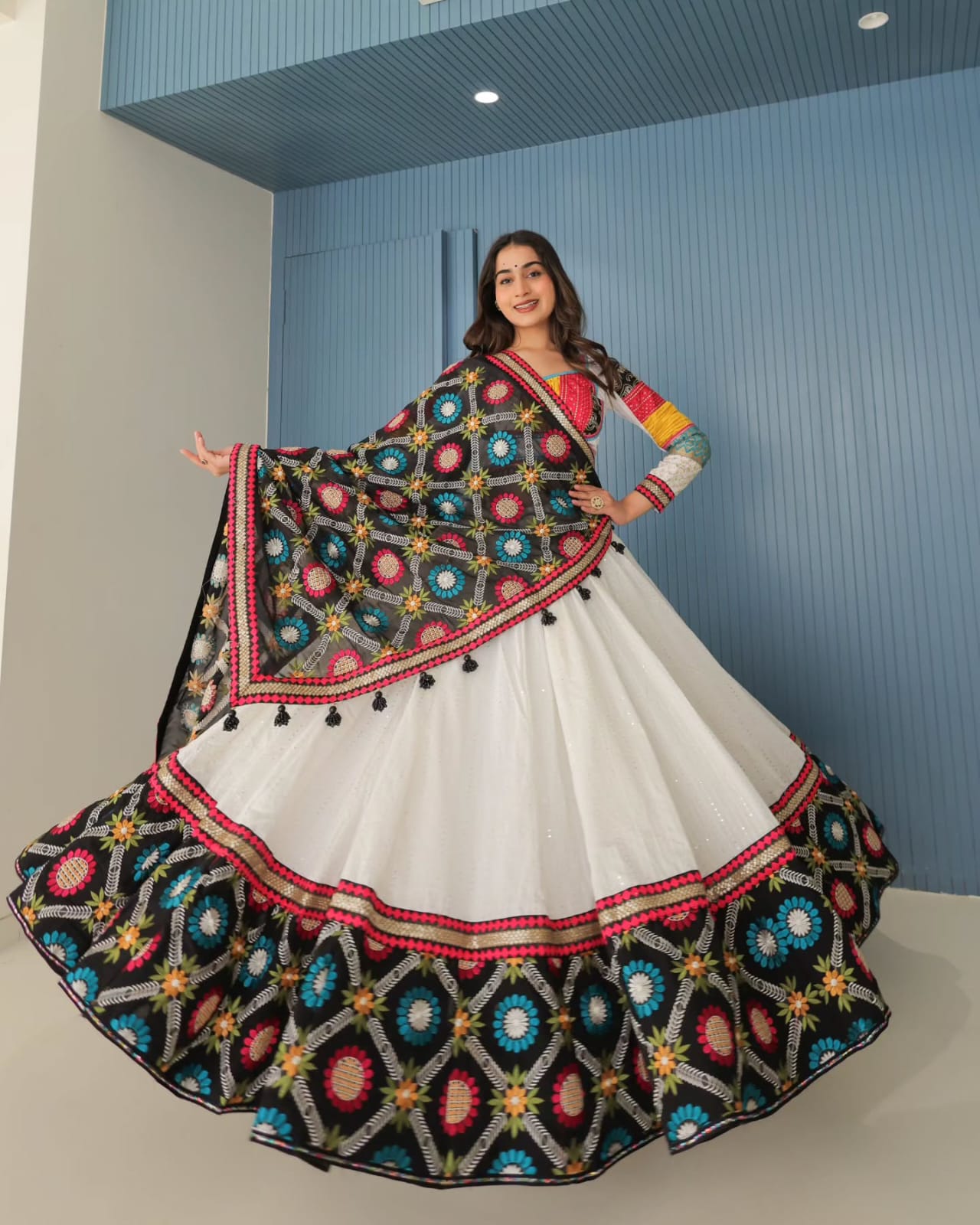
Gujarati Festive Salwar Suits are useful to consider when you like mirror work, lively colour combinations and movement-friendly festive sets. Pair such detail with understated earrings if the dupatta already contains reflective embellishment. Mirror work should be checked for secure stitching before wearing the garment for a long event.
Marwari Style Festive Salwar Suits often suggest rich colour pairing and a more ornate celebratory mood. A deep pink, orange, red or green combination can look striking for an evening gathering, but the outfit will feel more balanced when the footwear and handbag stay close to one neutral or metallic family.
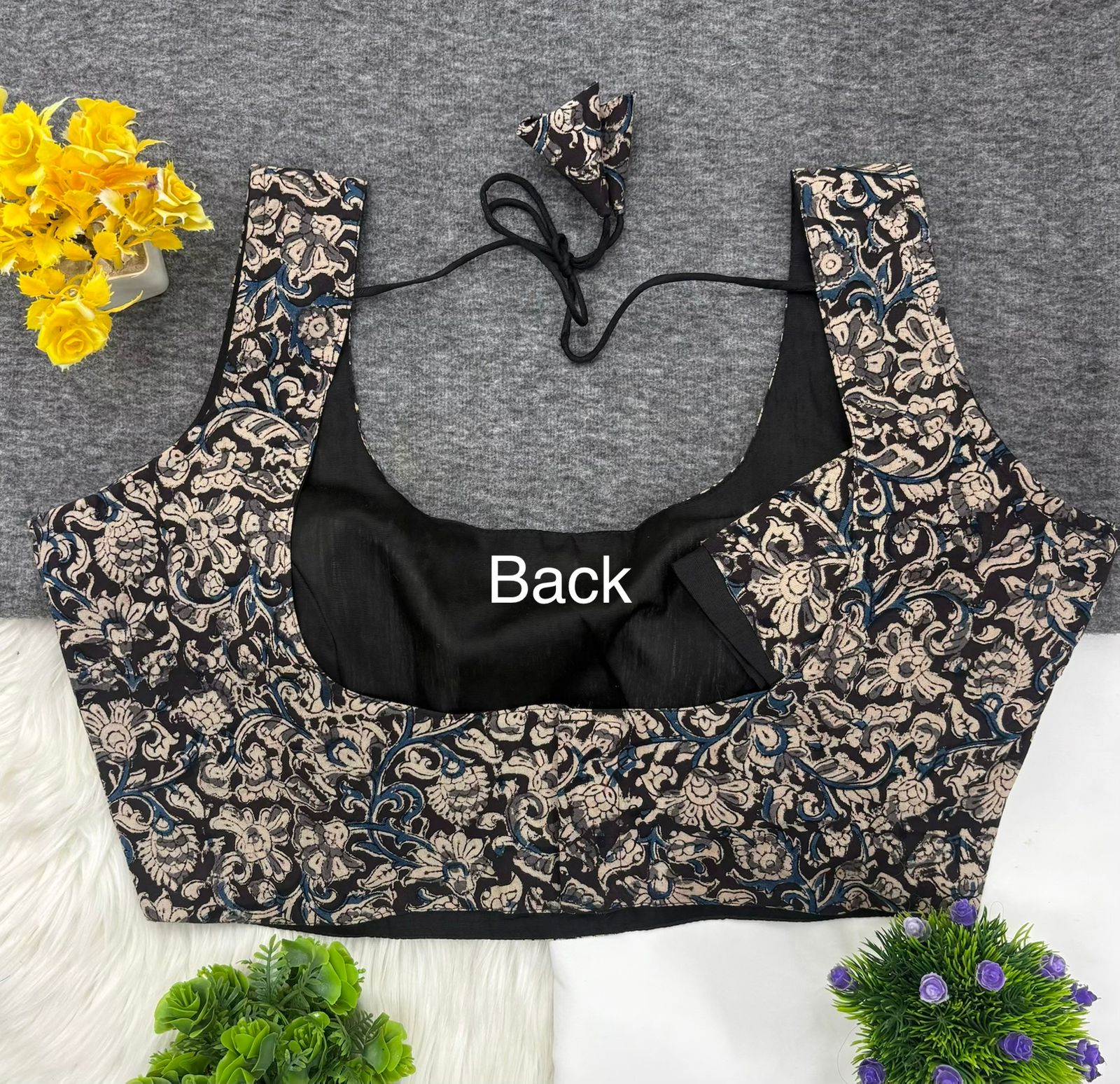
Kalamkari Print Salwar Suits (Copy) offer a print-led route to festive dressing. Kalamkari-inspired motifs can carry visual interest without sequins or heavy zari, making a printed kurta suitable for a daytime event. Keep jewellery simple enough that the print remains readable from a normal conversational distance.
Maharashtra Paithani Inspired Salwar Suits can introduce jewel-toned colour and border-inspired richness to a coordinated set. Punjab Phulkari Embroidered Salwar Suits are a good direction for floral threadwork and lively embroidery. These influences are styling references rather than rules; the most successful outfit is the one that suits the event, weather and wearer.
Dasara Fashion in Telangana: Best Sarees and Salwar Suits with Better Dupatta Styling
A dupatta looks polished when its placement supports the garment's neckline, embroidery and movement requirements. Pin one shoulder for walking-heavy events, use a front drape for a more formal appearance, or let a lighter dupatta fall naturally when the fabric isn't likely to catch on jewellery.
A heavily worked dupatta should usually be paired with a simpler kurta or bottom. A zari jacquard dupatta can supply enough shine for an evening outfit, while a plain chiffon, cotton or lightweight Chanderi dupatta may be more comfortable for a daytime Bathukamma gathering. Two small safety pins, placed discreetly near the shoulder and waist, can prevent repeated adjustments.
Dupatta length also affects comfort. A very long dupatta may brush against the floor or catch on chairs, whereas a shorter, neatly folded drape is easier to manage during travel. For a readymade party wear suits female look, test the complete outfit with footwear before the event so the hem and dupatta don't create avoidable hazards.
Dasara Fashion in Telangana: Best Sarees and Salwar Suits for Fit, Accessories and Care
A festive outfit looks more refined when the fit allows comfortable breathing, sitting and arm movement. Leave enough ease across the bust and upper arm, check whether the trouser waistband presses when seated, and test whether the blouse or kurta neckline stays in place while walking. Alterations made at least five to seven days before the event allow time for a second fitting.
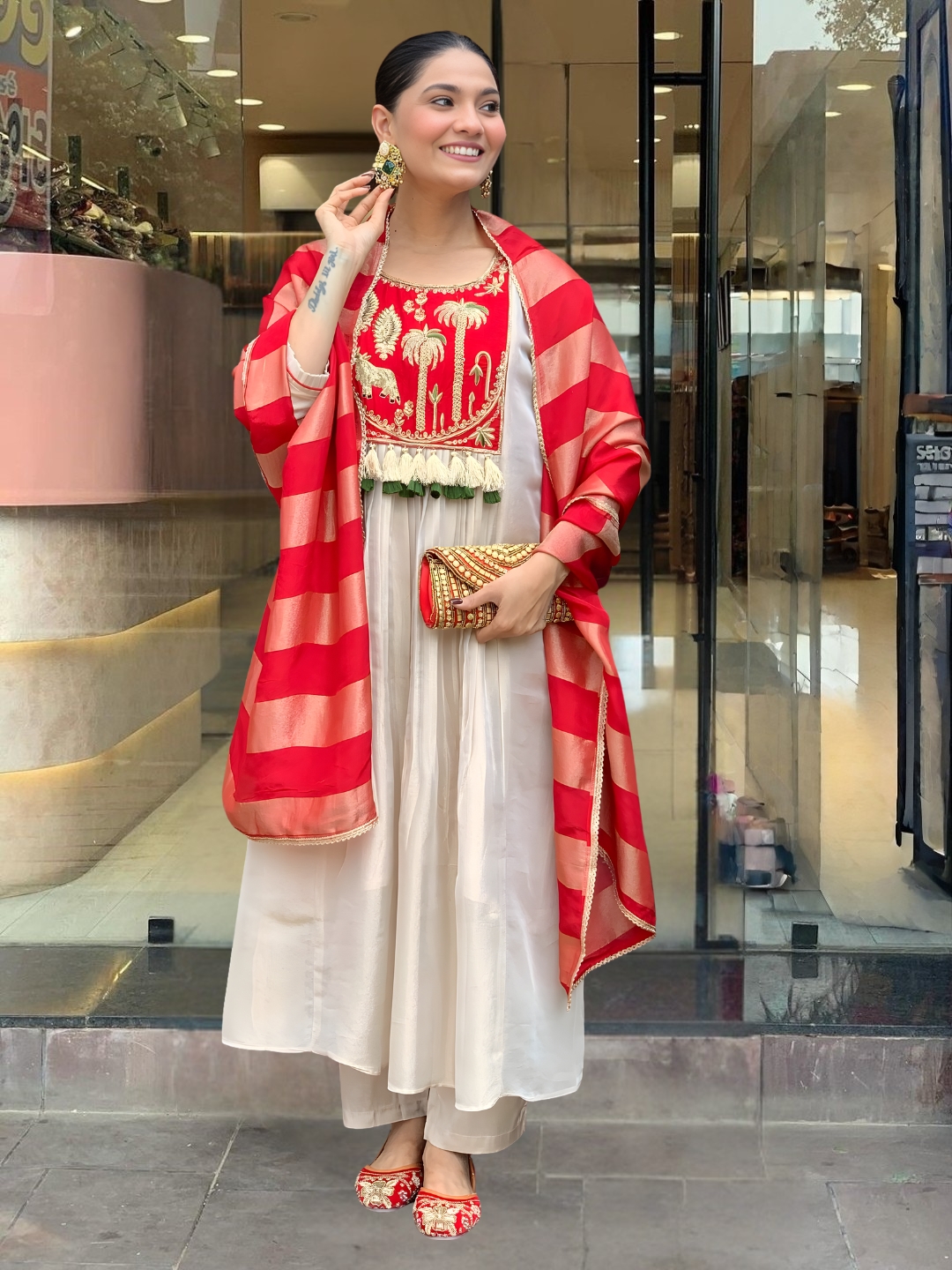
Choose accessories according to the garment's strongest detail. Zari works naturally with antique gold or gold-tone jewellery, mirror work can be balanced with small coloured stones, and floral embroidery pairs well with enamel, pearl or fabric earrings. A single statement element is usually enough when the suit already includes a detailed dupatta.
Footwear should be tested indoors for at least 20 minutes before a long celebration. Low block heels, embellished flats and cushioned sandals are generally more practical than unfamiliar high heels, particularly for temple visits or outdoor gatherings. A small crossbody or handheld potli keeps essentials secure without disturbing the line of a sharara or saree.
Store Banarasi silk, Chanderi and embroidered garments in breathable cotton covers rather than sealed plastic for long periods. Air the outfit after wearing it, remove visible surface dust with a soft brush and follow the garment's care label before washing. Fold heavy zari or mirror-work pieces with tissue between layers and refold them every few months to reduce permanent creasing.
A considered choice makes Dasara dressing more useful beyond one calendar day. A bright straight suit can work for office celebrations, a Chanderi set can suit a family lunch, and a Banarasi silk saree can return for weddings or formal dinners. The strongest festive wardrobe combines a few expressive colours with fabrics and silhouettes that genuinely suit the wearer's routine.
Common Questions About Dasara Sarees and Salwar Suits in Telangana
What should women wear for Bathukamma celebrations in Telangana?
A lightweight saree or a comfortable salwar suit is suitable for Bathukamma celebrations. Cotton, Chanderi and light silk work well when the event involves standing, walking and arranging flowers; secure the saree pallu or dupatta with discreet pins.
Which colours are considered suitable for Dasara outfits?
Yellow, orange, red, pink, green and teal are suitable festive colours for Dasara outfits. Choose the shade according to the time of day, your complexion and the colour of your jewellery or dupatta rather than treating one colour as compulsory.
Are cotton salwar suits suitable for a festive Dasara event?
Cotton salwar suits are suitable for daytime Dasara events, especially in warm weather or for gatherings that involve considerable movement. Embroidery, a printed dupatta, colourful accessories or a neatly coordinated three-piece set can make cotton look appropriately festive.
How can I style a readymade salwar suit dupatta for a formal event?
Pin one side of the dupatta at the shoulder and secure a second point near the waist for a formal, stable drape. If the dupatta has zari, mirror work or dense embroidery, keep the jewellery and handbag relatively restrained.
Is a saree or salwar suit better for Vijayadashami visits?
A saree is better when you want a traditional, formal appearance, while a salwar suit is better when travel, walking and repeated sitting are expected. Banarasi silk adds richness to a saree, and Chanderi, silk or zari-jacquard sets add polish to a salwar suit.
How early should a festive salwar suit be altered?
A festive salwar suit should ideally be altered five to seven days before the event. That timeframe allows you to test the garment while sitting and walking and still request a second adjustment if the bust, shoulder, sleeve or trouser fit remains uncomfortable.