Warm weather dressing becomes far easier when the fabric allows air to move and the silhouette doesn't cling. Comfortable Linen Salwar Suit Designs offer that balance through a naturally textured surface, relaxed movement and styling that can shift from weekday workwear to a small family gathering. The right choice, however, depends on more than the word "linen" on a product page. Fibre content, weave, lining, cut, dupatta weight and washing instructions all affect how a salwar suit feels after several hours.
This guide explains how to compare linen and linen-cotton options, select a practical silhouette, decide between a ready-made set and unstitched material, and style the finished suit without losing its easy character. It also clarifies why a soft linen blend may be more useful for everyday wear than a heavier pure linen suit.
Why Comfortable Linen Salwar Suit Designs Suit Indian Weather
Comfortable Linen Salwar Suit Designs work well in warm conditions because linen fibres and linen-rich blends generally allow air circulation and absorb small amounts of moisture from the skin. A loose weave can also feel less restrictive than dense synthetic fabric during commuting, indoor work and daytime errands.
Linen has a characteristic slubbed texture caused by variations in the yarn. That texture isn't necessarily a flaw; it's part of the fabric's visual identity and helps plain colours look more dimensional. Linen also creases more readily than polyester or heavily finished rayon. Many wearers value that relaxed crease pattern because it gives a suit a natural, understated finish, while people seeking a sharply pressed appearance may prefer a linen-cotton blend with a smoother surface.
Fabric weight matters as much as fibre content. A very light linen can be comfortable in direct heat but may need lining or a darker inner layer for opacity. A medium-weight linen can drape more neatly and hold embroidery better, although it may feel warmer under full sun. A lined bodice, airy sleeve and moderately wide trouser can improve comfort without making the outfit look oversized.
An useful rule is to judge linen by the complete garment: fibre composition, weave, lining and cut matter more than the label alone.
How to Read Linen, Linen-Cotton and Pure Suit Descriptions
A pure linen salwar suit contains linen as the principal textile fibre, while a linen-cotton salwar suit combines linen with cotton to balance breathability, softness, drape and crease control. A product described simply as "linen" should be checked for a detailed composition before purchase, because retailers may use the word for different blends.
Pure linen suits
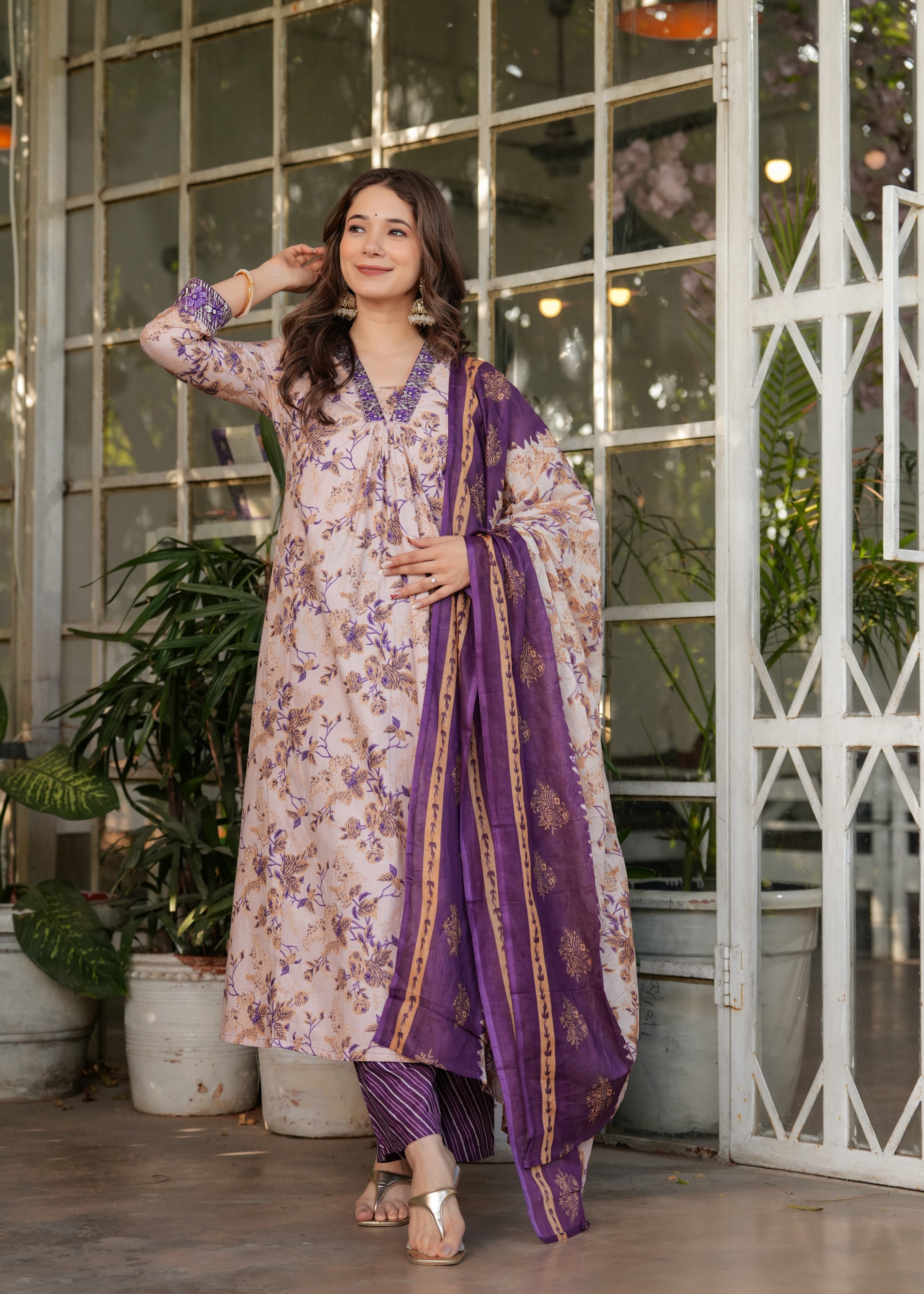
Pure linen suits offer a pronounced natural texture, good airflow and a crisp-to-soft hand that changes with washing and wear. Pure linen may crease more visibly, so it suits shoppers who appreciate an organic finish and don't need a perfectly smooth look throughout the day.
Pure linen salwar suits can be particularly attractive in straight-cut kurtas, short kurta-and-pant sets and lightly structured long tops. Heavy surface work can reduce the fluid feel of linen, so embroidery placement should be considered before choosing a highly decorated design.
Linen-cotton blends
Linen-cotton blends often provide the most versatile balance for daily Indian clothing. Cotton can soften the hand and make the fabric easier to wear, while linen contributes airflow and a dry, textured feel. The final result depends on the ratio, yarn quality and finishing process, so two linen-cotton garments can feel very different.
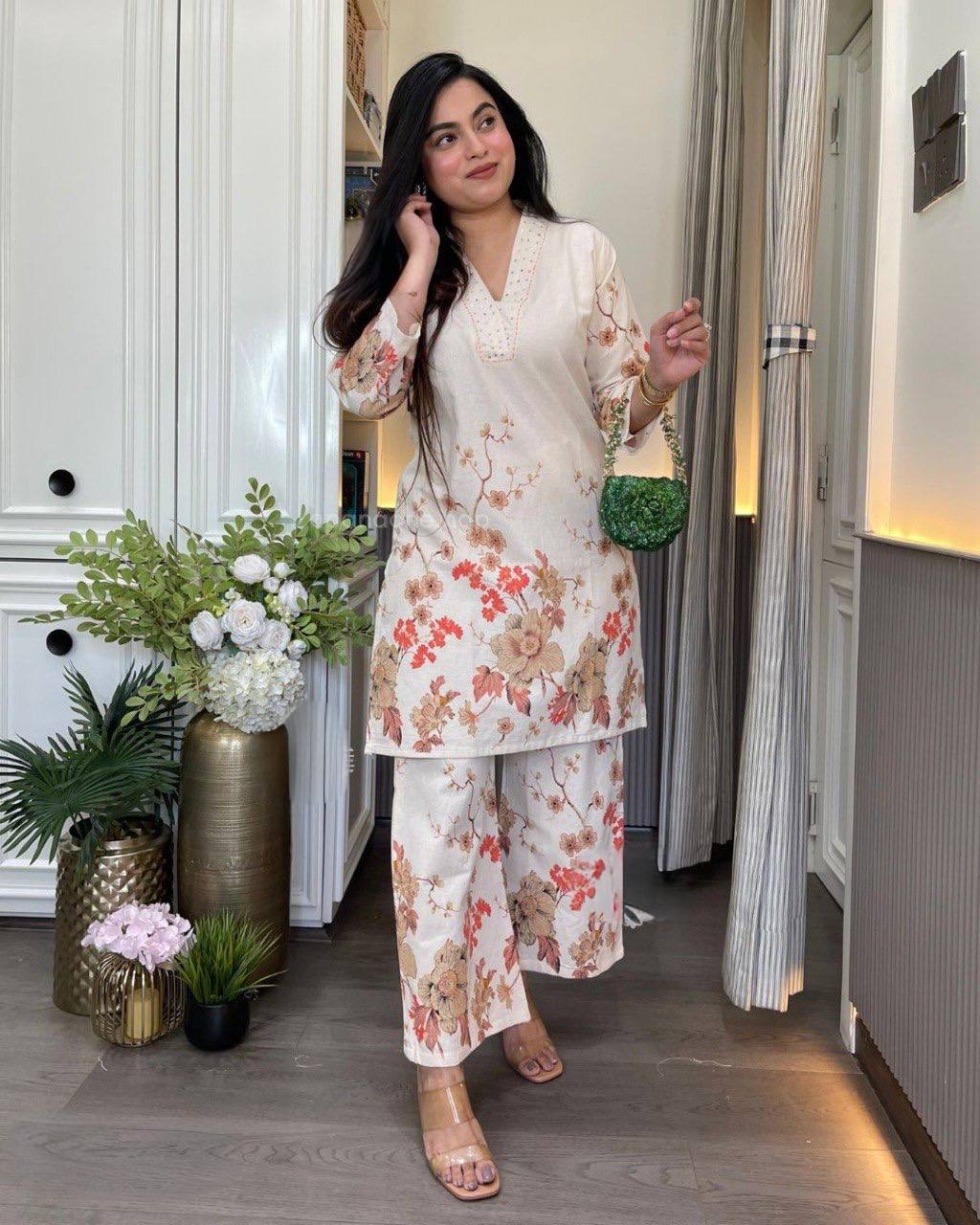
The Ivory Floral Linen Cotton Co-Ord Set for Women from Varnavi illustrates how a linen-cotton category can move beyond the traditional kameez-and-salwar format. A co-ord set may be useful for travel or casual lunches, while a conventional salwar suit remains more suitable when a dupatta or a distinctly festive appearance is required.
Unstitched linen suit material
Unstitched suits provide fabric for custom cutting, which allows the wearer to decide the kurta length, sleeve width, neckline, salwar style and trouser rise. A typical salwar suit material set may include fabric for the kameez, bottom and dupatta, but the exact contents should be verified before purchase.
Unstitched linen material is useful when standard ready-made measurements don't work well or when a wearer wants a particular proportion. A tailor can add side pockets, adjust the armhole and use a full lining where needed. The trade-off is extra time, tailoring cost and the need to account for shrinkage or fabric behaviour before cutting.
Which Silhouette Makes a Linen Salwar Suit More Comfortable?
A straight or gently relaxed silhouette usually offers the most dependable comfort because it leaves room around the torso and hips without creating excess fabric at the hem. The best cut still depends on body proportions, movement needs and the intended setting.
Straight kurta with trousers
A straight kurta with ankle trousers is a practical choice for office days, shopping and travel. A side slit beginning below the hip improves walking comfort, while a mid-calf or slightly longer hem can provide coverage without dragging on the floor. A narrow trouser works with a clean kurta, but a cigarette fit should not be so tight that linen loses its ease.
A-line and Anarkali shapes
An A-line kurta widens gradually from the bust and creates movement without the volume of a full Anarkali. Anarkali salwar suits suit festive lunches and family events, especially when the flare is supported by a lighter lining rather than multiple heavy layers.
The Ladies Dress Anarkali Salwar Suits collection is an useful reference for comparing fuller flare, yoke placement and hem proportions. For warm weather, a moderate flare generally feels easier than a heavily layered skirt because less fabric gathers around the legs.
Kurta with palazzo or relaxed salwar
A palazzo creates airflow around the legs and can complement a short or medium-length linen kurta. A classic salwar brings extra ease at the thigh and calf but gathers more fabric near the ankle. Both options can be comfortable when the waistband lies flat and the drawstring or elastic doesn't dig into the waist.
A design such as the Elegant Camel Shade Salwar Suit Set for Women demonstrates why a calm neutral colour can make a relaxed silhouette feel polished rather than casual. Neutral linen suits also allow more flexibility with printed, embroidered or contrast dupattas.
How to Choose the Right Linen Salwar Suit for the Occasion
The right linen salwar suit depends on heat, formality, sitting time and the amount of movement required. A breathable plain or minimally embroidered suit is usually more practical for daytime work, while zari, threadwork or a richer dupatta can raise the formality for celebrations.
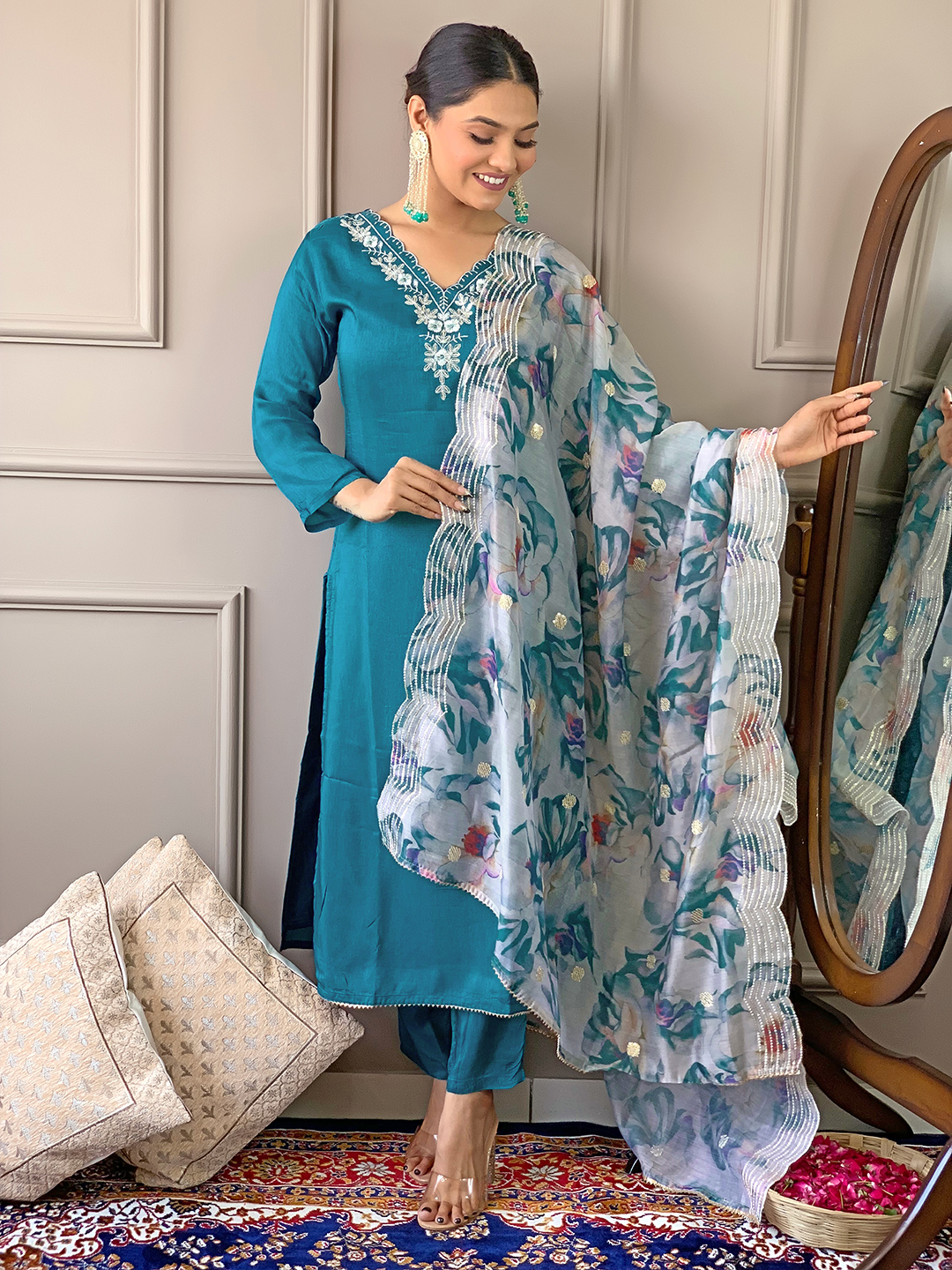
For office wear, consider a straight kurta, three-quarter sleeves, a stable neckline and trousers that don't need constant adjustment. Ivory, camel, navy, charcoal, muted green and dusty lavender can look composed without requiring elaborate accessories. The Navy Blue Embroidered Salwar Suit shows how a dark base can carry modest embroidery while remaining easy to style with silver, pearl or antique-gold accents.
For a daytime family event, choose a little more surface detail but keep the garment breathable. The Elegant White Cording Threadwork Salwar Suit can guide a tone-on-tone approach: white threadwork creates texture without adding the weight of dense metallic embellishment. White and ivory suits benefit from checking lining colour and opacity in natural light before wearing them outdoors.
For a festive evening, a linen-based suit can be paired with a more luminous dupatta, statement earrings and dressier footwear. The Lavender Chanderi Royale Embroidered Suit is an example of how Chanderi texture and embroidery create a more occasion-oriented direction. Chanderi isn't the same as linen, so the example is useful for styling contrast rather than for treating the fabrics as interchangeable.
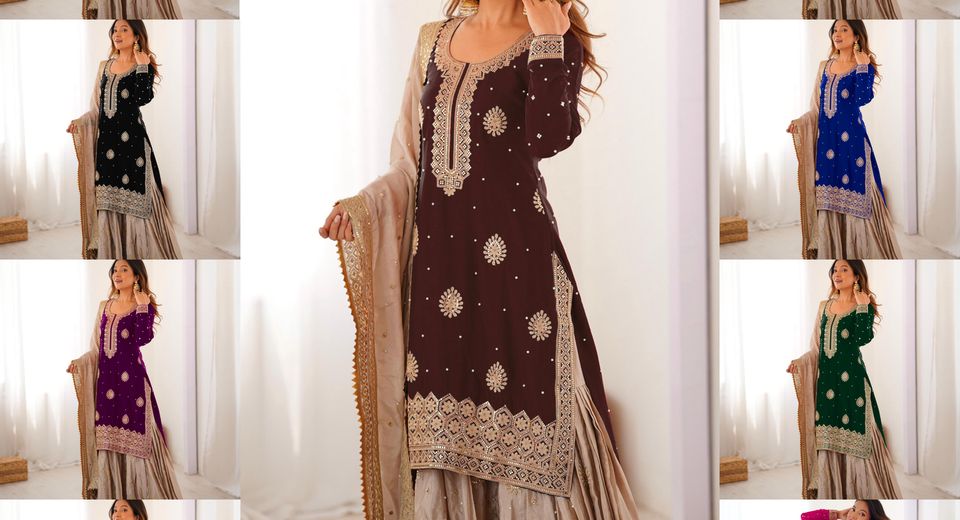
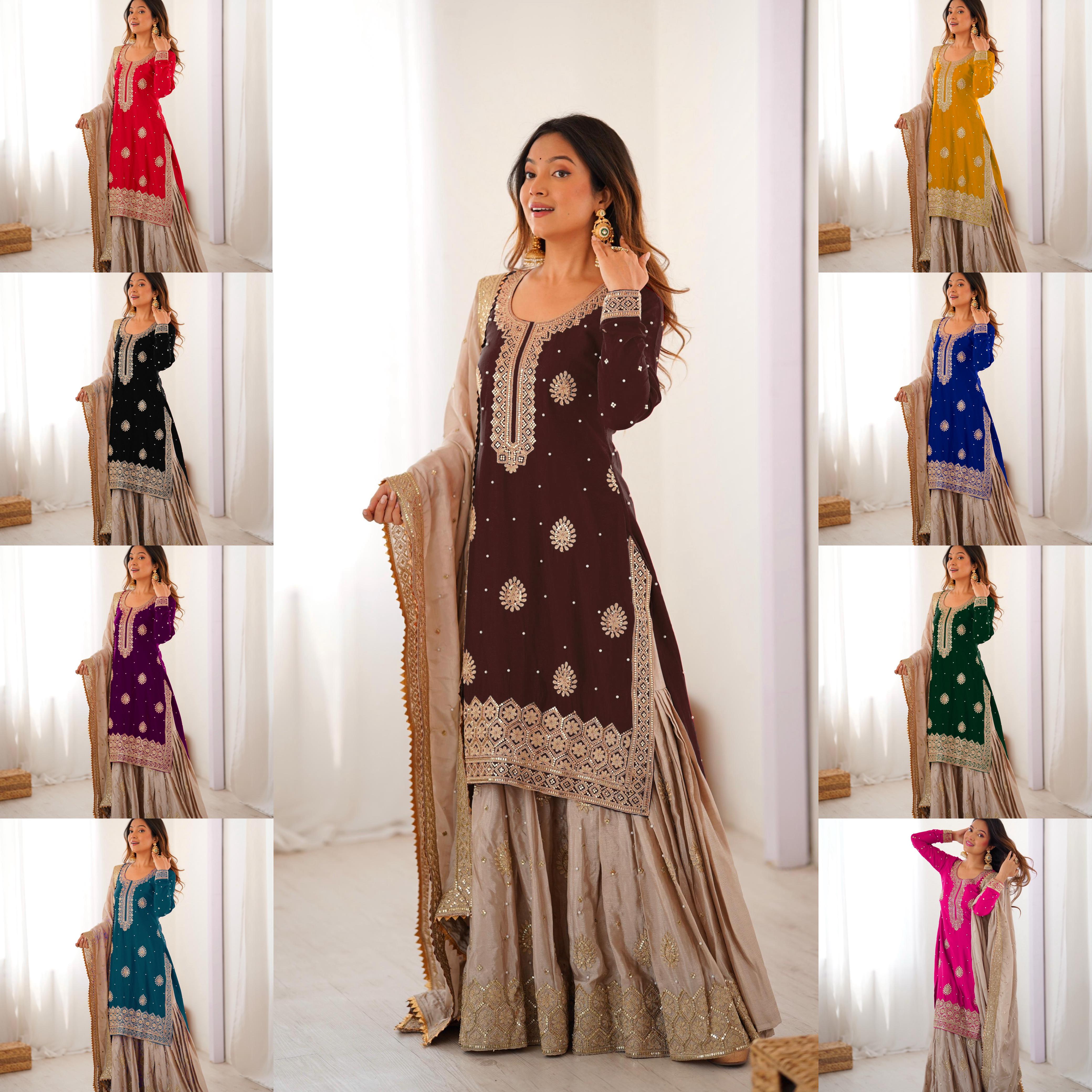
A suit such as the Brown Chinon Silk Sharara Suit Set for Women belongs to a more fluid and festive fabric category. Chinon silk has a different drape from linen, but a sharara silhouette can inspire a linen wearer to try wider bottoms for a celebration while retaining a lighter, more breathable top.
Dupattas, Colours and Accessories That Work With Linen
A medium-light dupatta with a controlled border is usually the easiest partner for linen because it adds shape without making the outfit cumbersome. Cotton voile, light Chanderi, soft mulmul or a similarly airy textile can work for daytime wear, while a silk-blend or zari-edged dupatta can create evening contrast.
A pure salwar suit dupatta should be assessed for proportion as well as material. A very wide dupatta may overwhelm a narrow straight kurta, while a narrow stole can look insufficient with a broad Anarkali. A border that repeats a colour from the embroidery helps the set look coordinated even when the dupatta is purchased separately.
Colour affects perceived practicality. Pale shades show marks more quickly and may need more careful washing, but they reflect sunlight and create a fresh summer appearance. Navy, brown and camel are forgiving for travel and regular use. Lavender, ivory and soft pink can look festive with minimal jewellery because the colour itself supplies visual interest.
Keep accessories proportionate to the texture of linen. Oxidised silver, matte gold, wood, beads and fabric-covered accessories complement a slubbed surface. Highly glossy jewellery can still work for evening dressing, but one statement element is generally enough when the suit already includes embroidery or a decorative dupatta.
Ready-Made or Unstitched: Which Linen Option Should You Buy?
Ready-made linen salwar suits are the easier choice when the measurements, garment length and styling details already suit the wearer. A ready-made set reduces tailoring uncertainty and can be worn soon after delivery, but alterations may be limited around the shoulder, bust and trouser rise.
Unstitched suits are better when fit is difficult, a long kurta is preferred, or specific functional details such as pockets and sleeve openings matter. Before buying unstitched Salwar Suit Material, measure the required kurta length, sleeve length, shoulder width and bottom circumference. Ask a tailor whether the available fabric is sufficient for the desired flare, because a large Anarkali or wide palazzo consumes considerably more fabric than a straight kurta.
Check whether the set includes a finished dupatta or dupatta fabric, and confirm whether lining is included. Dress Materials can be an useful starting point for custom tailoring, but the final cost should include lining, stitching, finishing and possible pre-washing.
When comparing discounted collections such as Salwar Suits with 30% Off or Salwar Suits Flat 40% Off, compare the garment specifications rather than judging only the percentage reduction. A lower price doesn't compensate for an unsuitable length, transparent fabric or an expensive alteration. Red Dress Materials Under 2000 may suit a budget-led search, but fabric quantity, border placement and tailoring charges still determine the finished value.
Linen Salwar Suit Care That Preserves Shape and Colour
Linen salwar suits generally last longer when washed gently, dried away from harsh midday sunlight and stored without prolonged compression. Care instructions on the garment should take priority because embroidery, dye, lining and blended fibres can change the recommended method.
Read the fibre and care label before the first wash. A linen-cotton garment may tolerate a different method from a pure linen garment with embroidery or zari.
Test colourfastness on an inside seam when the care label allows hand washing. Use cool or lukewarm water and a mild detergent rather than bleach or strong stain removers.
don't twist a wet kurta aggressively. Press out excess water with a clean towel, reshape the shoulder and seams, and dry the garment in shade or soft indirect light.
Iron linen while it's slightly damp, using the temperature recommended on the label. Place a thin cloth over embroidery, zari or delicate threadwork to prevent snagging and shine.
Store the suit on a broad hanger only after it's completely dry. Fold heavily embroidered garments with tissue or a soft cotton layer so the surface work doesn't press into another panel.
Small creases are part of linen's character, but deep permanent folds can weaken fabric along the same line over time. Rotating several suits instead of wearing one garment repeatedly also gives linen time to recover its shape between washes.
A Practical Checklist for Comfortable Linen Salwar Suit Designs
Before choosing Comfortable Linen Salwar Suit Designs, check the fibre composition, fabric weight, opacity and lining. Confirm whether the garment is a complete ready-made set or only a top-and-bottom combination, and check if a dupatta is included.
Choose a relaxed shoulder and armhole that allow the arms to move without pulling across the back.
Look for a side slit and hem length that support walking, sitting and climbing stairs.
Check the waistband, elastic and drawstring so the bottom remains secure without pressure at the waist.
Inspect embroidery backing and seam finishing, especially around the neckline and underarm.
Decide whether natural creasing suits your lifestyle before selecting pure linen over a linen-cotton blend.
For unstitched suits, calculate tailoring, lining and pre-wash costs before comparing prices.
Pair the suit with a dupatta whose weight and width match the kurta's flare and surface detail.
The most wearable linen suit isn't always the most elaborate one. A well-cut kurta, breathable bottom, manageable dupatta and realistic care routine will usually earn more use than a heavily decorated set that feels restrictive or demands specialist maintenance.
Questions Shoppers Ask About Linen Salwar Suit Comfort
Are linen salwar suits comfortable in hot weather?
Linen salwar suits can be comfortable in hot weather because linen and linen-rich blends allow airflow and absorb limited moisture. Comfort also depends on fabric weight, lining, fit and whether the bottom leaves enough room for movement.
Is a pure linen salwar suit better than a linen-cotton suit?
A pure linen salwar suit offers stronger linen texture and excellent airflow but usually creases more easily. A linen-cotton suit often feels softer and is easier to manage for regular office, travel and daytime wear.
How should a linen salwar suit be washed?
Follow the garment care label, and use cool or lukewarm water with mild detergent when hand washing is permitted. Avoid aggressive twisting, dry the garment in shade, and iron linen while slightly damp at the recommended temperature.
Are unstitched linen suits a good choice for women who need a custom fit?
Unstitched linen suits are useful when standard shoulder, sleeve, bust or trouser measurements do not fit comfortably. The buyer must budget for tailoring and confirm that the fabric quantity supports the preferred kurta length, flare and bottom style.
Which dupatta goes well with a linen salwar suit?
A light cotton, mulmul, voile or soft Chanderi dupatta usually complements linen for daytime wear. A silk-blend or zari-edged dupatta can make the outfit more festive, provided its weight does not pull down the kurta or feel uncomfortable.
Does linen crease more than other salwar suit fabrics?
Linen generally shows more natural creasing than polyester, rayon or heavily finished synthetic fabrics. The creasing is normal, but careful drying, prompt hanging and damp ironing can keep the garment looking neat without removing its relaxed texture.