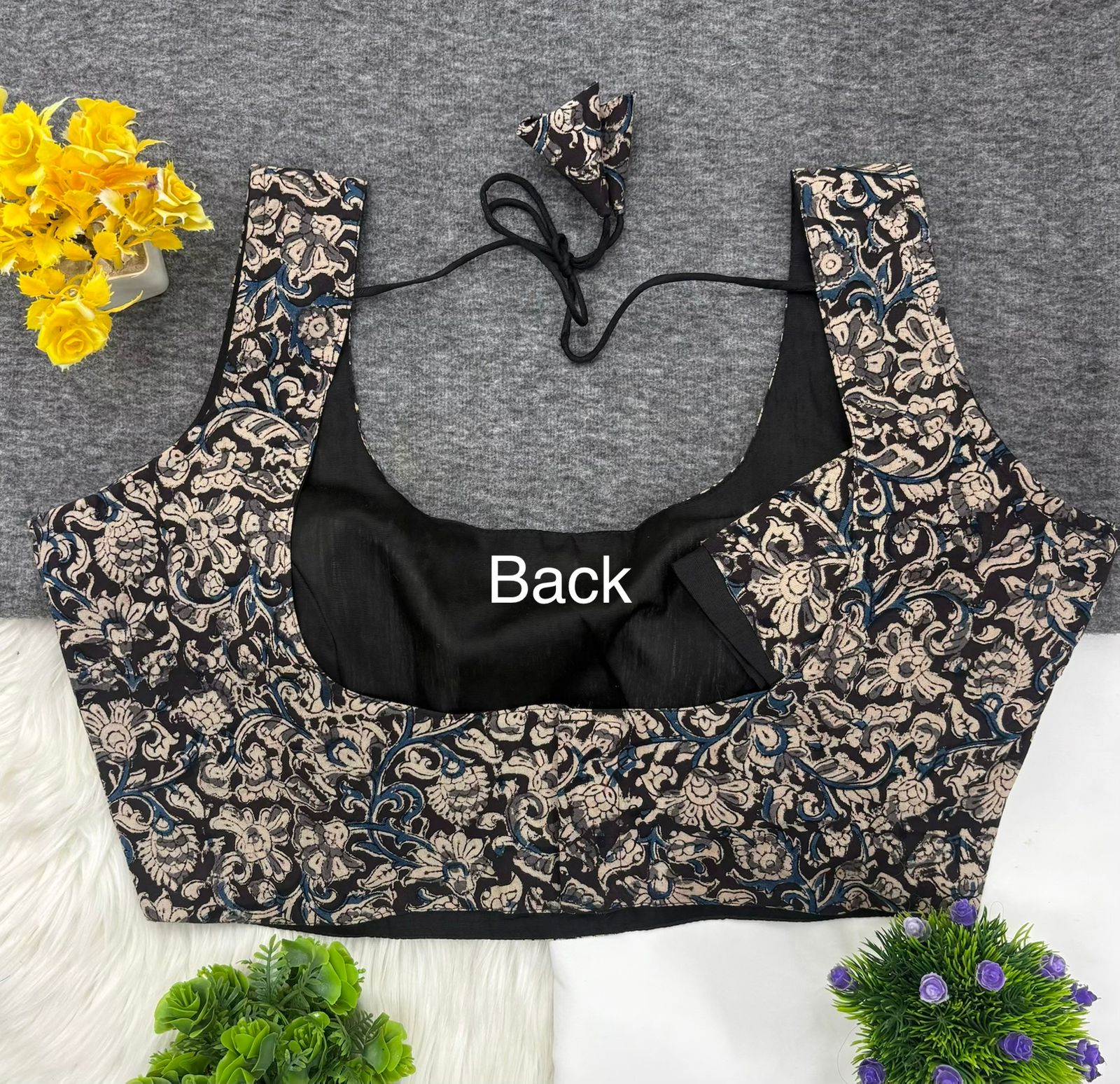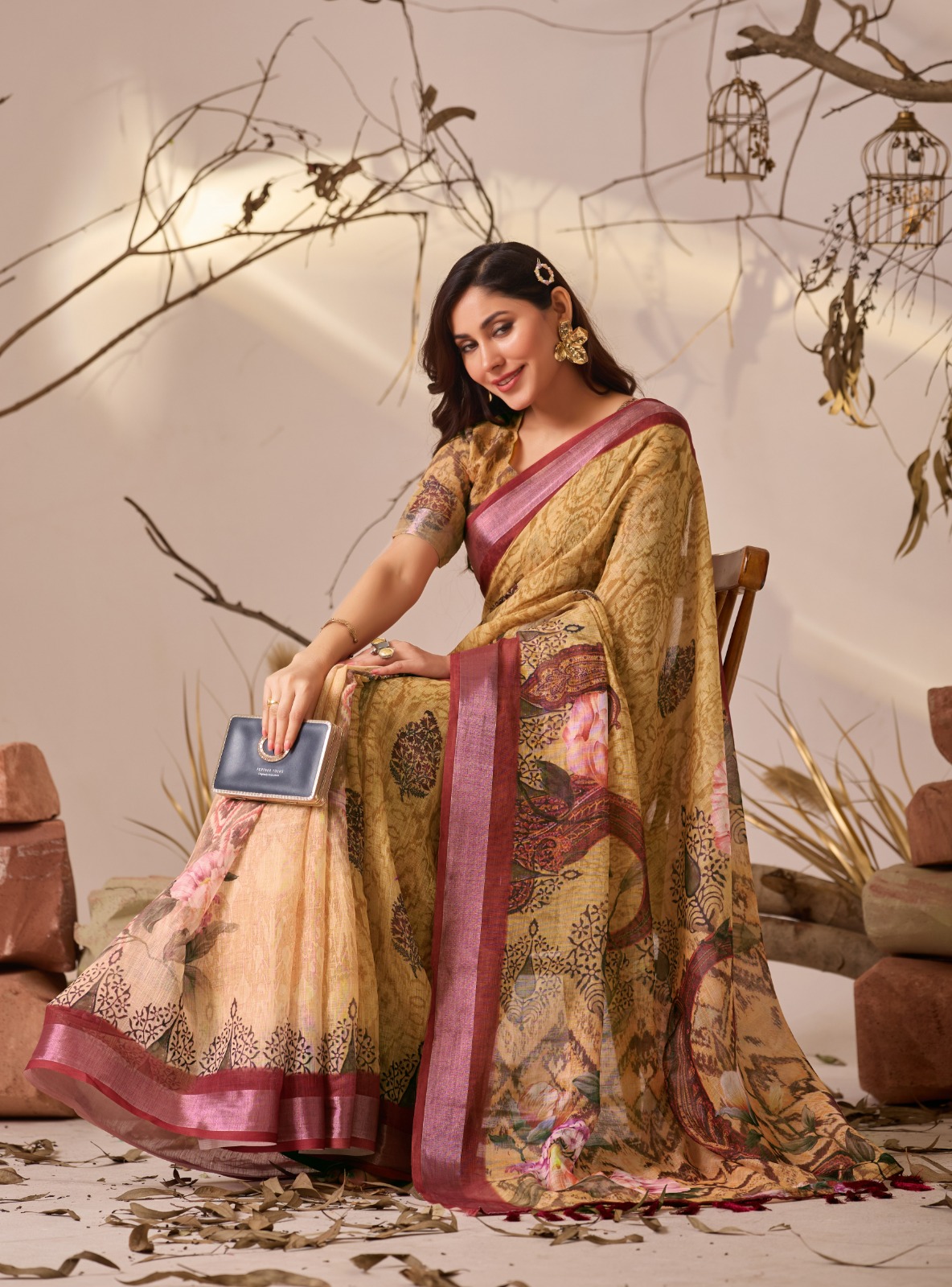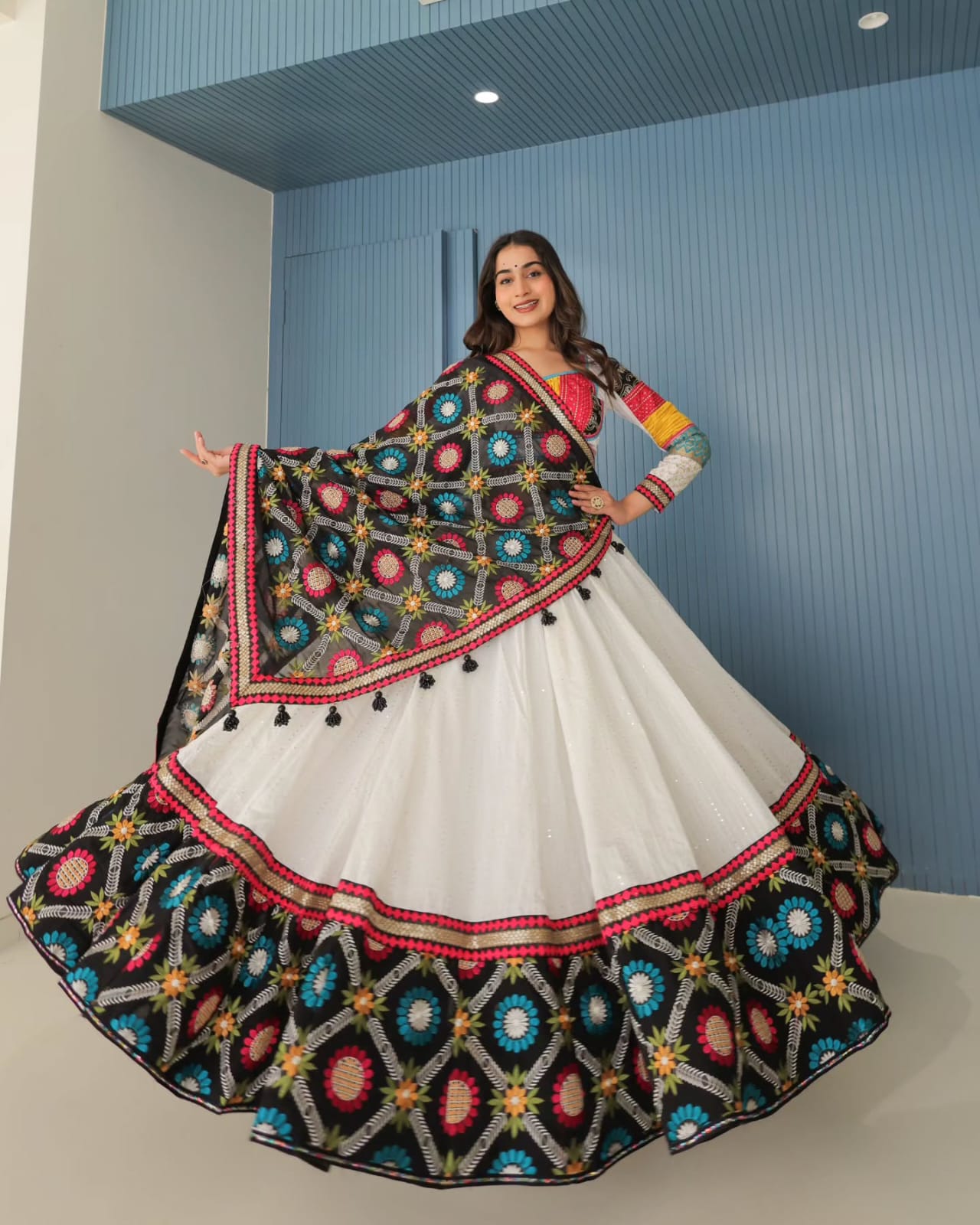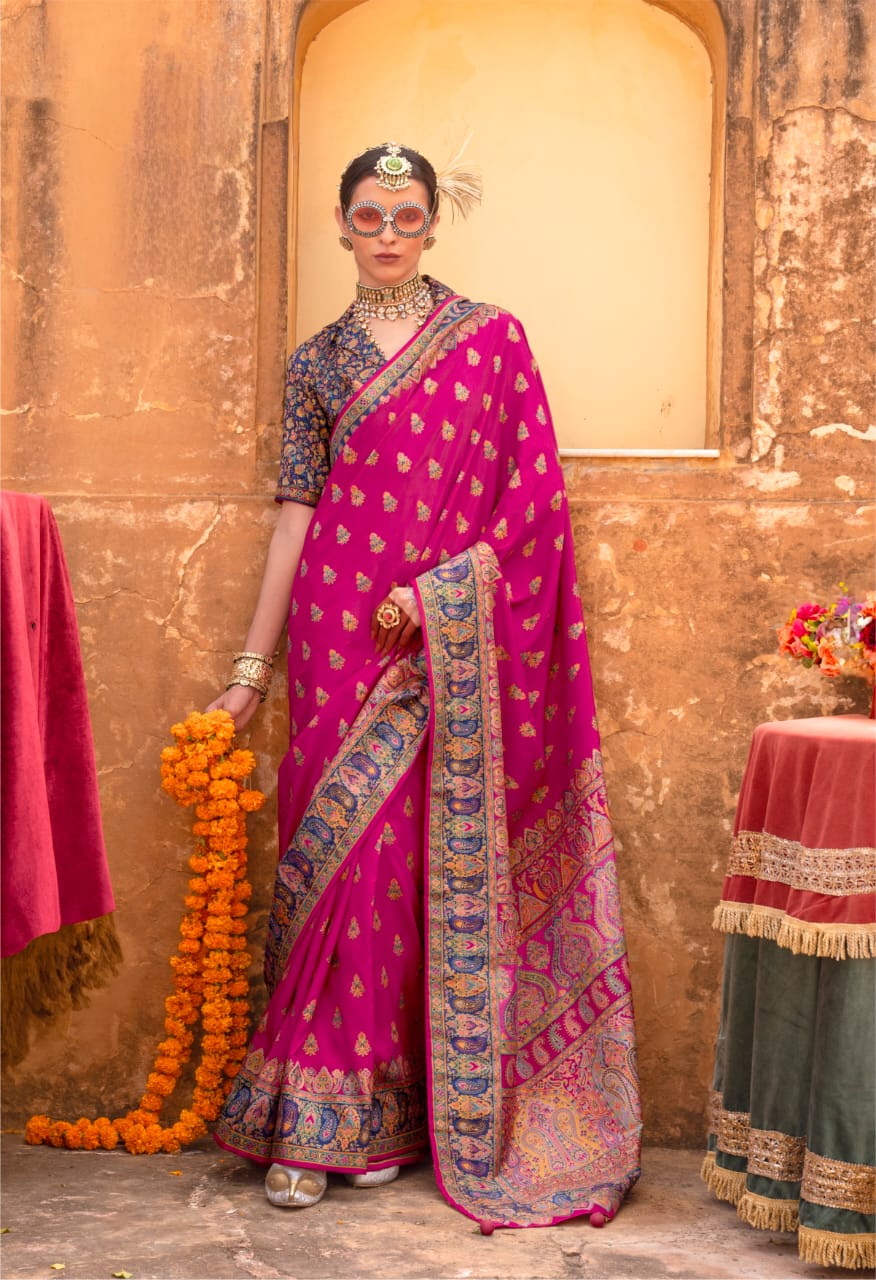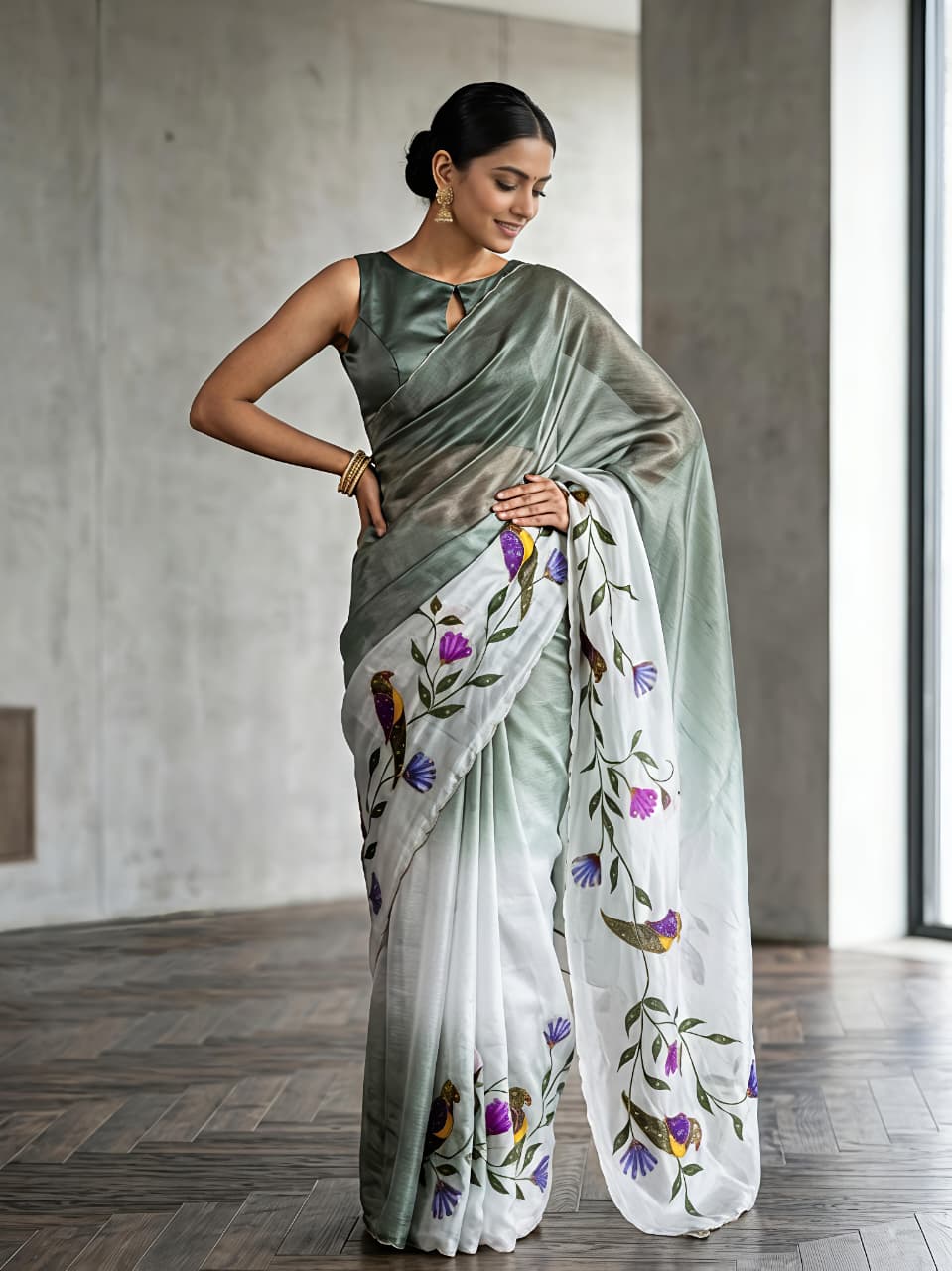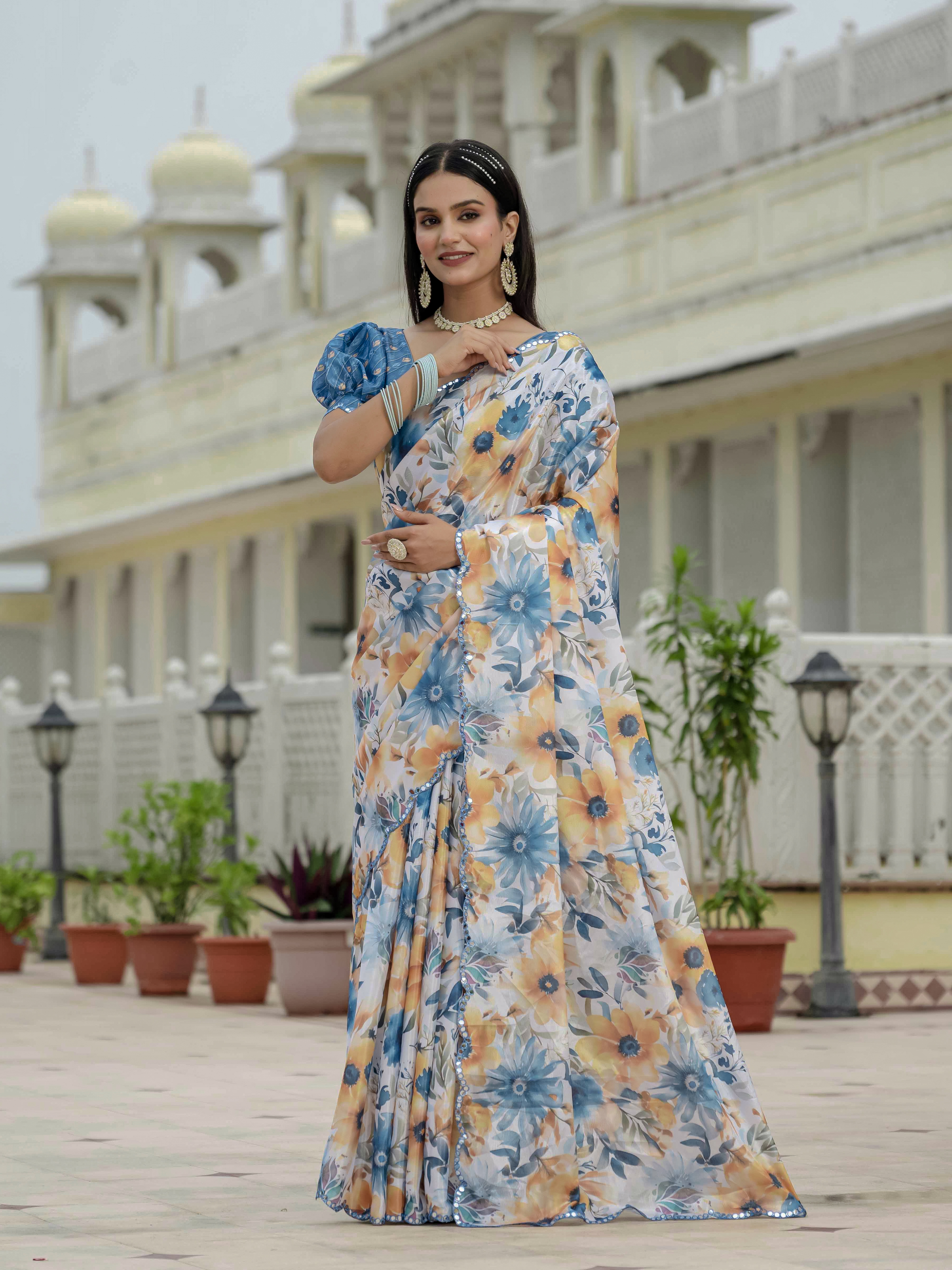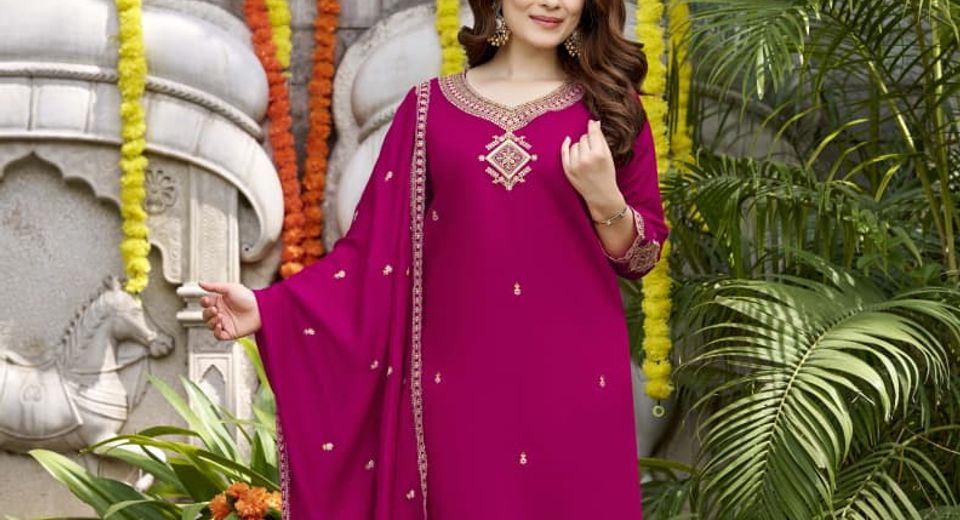
Colorful Salwar Suits for Nine Days of Navratri can turn a demanding festive wardrobe into a considered nine-look plan. The right approach isn't to buy nine unrelated outfits; it's to match each day's colour with a breathable fabric, a secure silhouette and accessories that can handle temple visits, family gatherings and several hours of Garba.
Navratri dressing also rewards practical decisions. A flowing palazzo set may be more comfortable for dancing than a heavily layered Anarkali, while a Chanderi kurta set may suit daytime puja better than a dense sequin outfit. Colour creates the festive mood, but fit, lining, sleeve movement and dupatta management determine whether the outfit remains enjoyable after sunset.
How to plan Colorful Salwar Suits for Nine Days of Navratri
Plan the nine outfits by assigning one dominant colour to each day, then vary fabric, neckline, embroidery and bottom shape so the wardrobe doesn't feel repetitive. An useful sequence is white, red, royal blue, yellow, green, grey, orange, peacock green and pink, although the exact Navratri colour calendar changes by region and by the weekday on which Navratri begins.
Many Gujarati households follow a popular day-by-day colour tradition, while other families choose colours associated with a local temple, a goddess form or a family custom. Check the year's regional colour calendar before shopping if matching the daily colour is important. A colour plan should guide your choices, not prevent you from wearing a well-fitting suit in a nearby shade.
- Day one: White or ivory creates a calm look for morning puja. White Chanderi works especially well with silver-toned earrings or a coloured dupatta.
- Day two: Red gives strong festive contrast. Choose crimson, wine or brick red when bright scarlet feels too intense.
- Day three: Royal blue, cobalt and indigo photograph clearly under evening lights and pair well with silver zari or mirror-style accents.
- Day four: Yellow and mustard bring warmth to daytime celebrations. Mustard Viscose Chanderi is more versatile than a very neon yellow.
- Day five: Green connects naturally with festive styling. Emerald, sage and bottle green offer different levels of saturation.
- Day six: Grey or silver-grey looks polished with pearl, crystal or oxidised silver jewellery.
- Day seven: Orange and rust create energy without requiring a heavily embellished garment.
- Day eight: Peacock green or teal offers a richer alternative to standard green and works beautifully with antique-gold accents.
- Day nine: Pink, rose or mauve closes the sequence with a softer celebratory mood.
Which salwar suit fabrics work best for Navratri?
Viscose Chanderi, Chanderi, georgette and Vichitra silk each suit a different Navratri requirement, so fabric selection should follow the time of day and the amount of movement expected. Breathable, light-to-medium-weight fabrics are generally more practical for long celebrations than thick, heavily layered textiles.
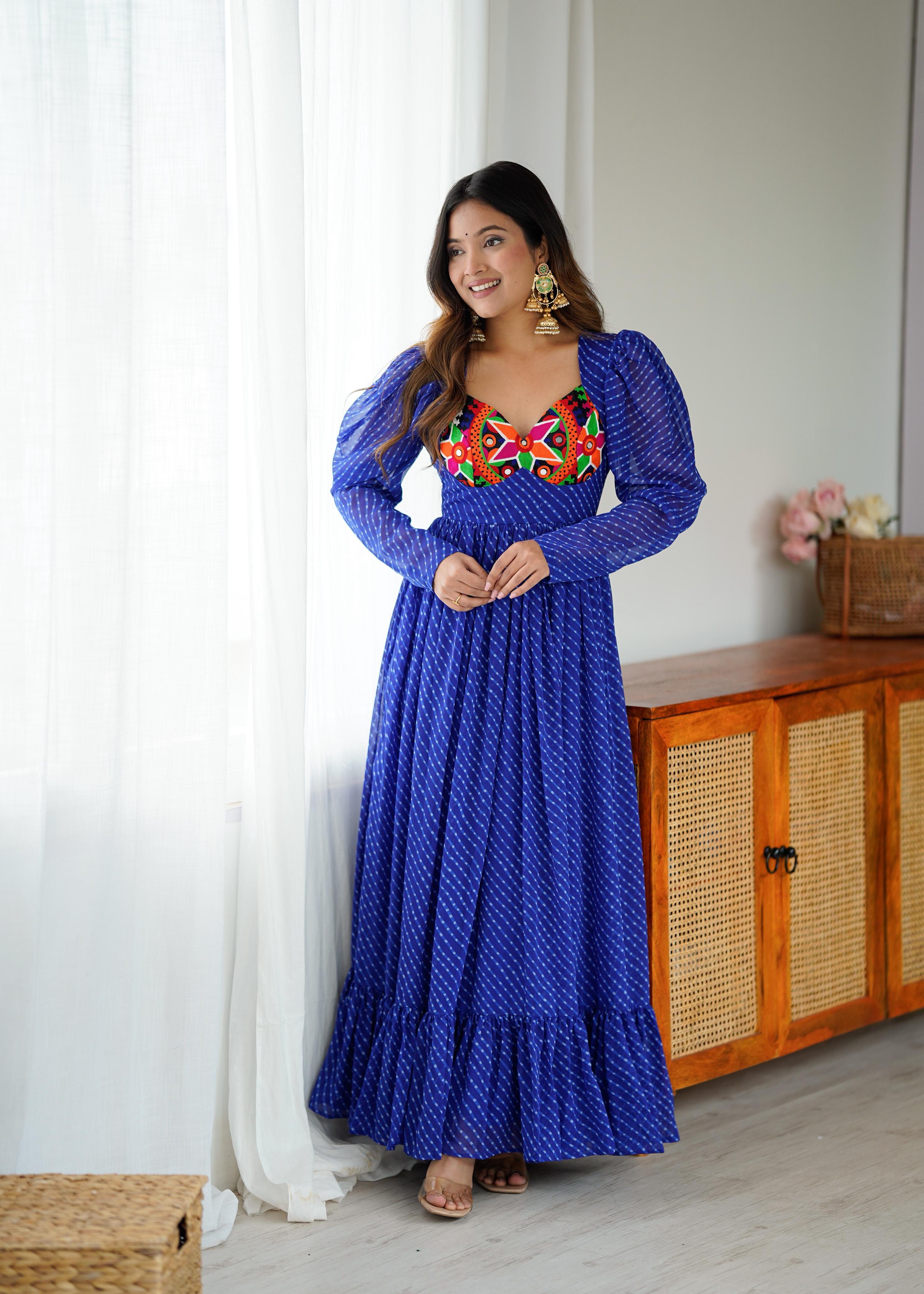
For daytime puja and family visits
Chanderi and viscose Chanderi are strong daytime choices because their light structure looks festive without feeling as dense as a fully embellished silk ensemble. Mustard Viscose Chanderi Kurta Set with Sequence Embroidery adds surface detail while retaining an easy kurta-set format. Pastel Blue Embroidered Chanderi Kurta Set with Dupatta and White Chanderi Kurta Set with Floral Embroidery and Dupatta can both move from puja to lunch when styled with comfortable footwear.
For evening Garba
Georgette and lighter Vichitra silk can work for evening Garba when the garment has secure seams, a manageable hem and a dupatta that won't slide constantly. Blue Printed Georgette Designer Gown for Women Festive brings a fluid option for a festive gathering, but a gown-style silhouette should be checked for floor length before dancing. Modern Taupe Vichitra Silk Embroidered Co-Ord Set for Women provides a contemporary alternative when the event is more social than traditionally dress-coded.
For a richer final-night look
Vichitra silk and controlled sequin work create a more formal finish for Ashtami, Navami or a family dinner. Wine Pure Vichitra Silk Kurta Set with Sequin Work & Dupatta suits a deeper red-wine colour direction and can be worn with minimal jewellery because the surface work already supplies visual focus. Silk-look garments are best reserved for cooler evenings or shorter events if you're sensitive to heat.
How should a Navratri salwar suit fit for Garba?
A Garba-ready salwar suit needs enough room at the shoulders, waist and hips for repeated turns, while the hem and dupatta must stay clear of the feet. Comfort is created by proportion rather than by simply choosing an oversized size.
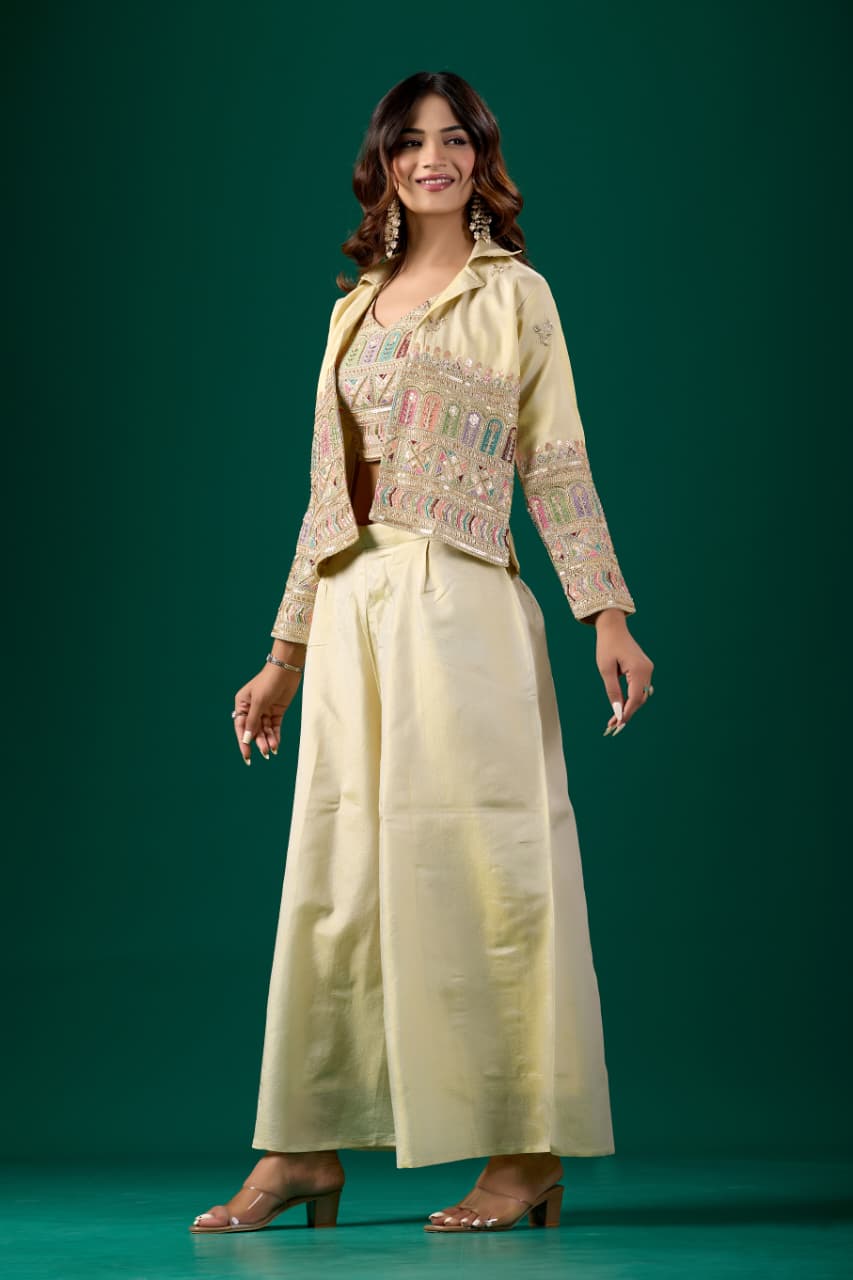
Check that the armhole doesn't pull when both arms are raised, because Garba movements repeatedly involve shoulder and arm extension. A straight kurta should sit smoothly across the chest without opening at the buttons, and a palazzo should have enough ease to accommodate a full stride. Ankle-length bottoms are usually safer than very long hems in crowded dance circles.
Dupatta placement deserves a separate fitting test. Pin one shoulder and the opposite waist, use two small concealed safety pins, or choose a shorter dupatta that doesn't trail behind you. Avoid placing a brooch where it can catch another dancer's clothing. A jacket or attached overlay can be easier to manage than a loose, wide dupatta when movement is the priority.
The Women's Embroidered Crop Top & Jacket Palazzo Set | Varnavi demonstrates the appeal of a coordinated top, jacket and palazzo structure for a more modern festive wardrobe. The cropped layer should sit securely at the waist, and the jacket should not have sleeves so tight that they restrict circular arm movements. A Mauve Crunchy Silk Embroidered Kurti Palazzo Set for Women gives another palazzo-based direction for a softer pink-purple day.
How can nine salwar suits look different without overspending?
Nine distinct Navratri looks can be created with four or five core garments when colour, dupatta, jewellery and styling change substantially. Repeating a well-fitting bottom or neutral accessory is more economical and often more comfortable than purchasing nine complete sets.
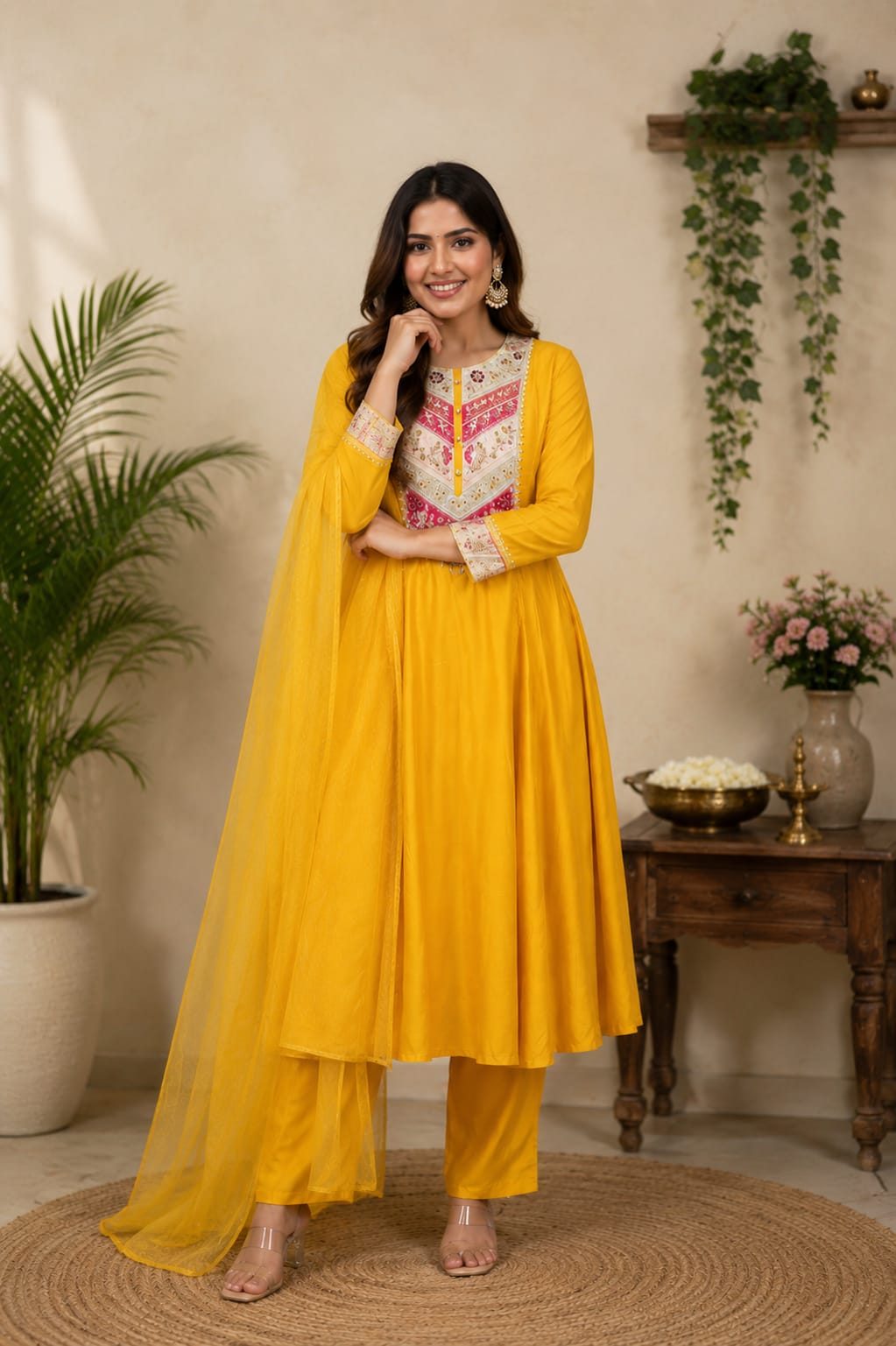
Start with three silhouettes: a straight kurta set for daytime, a palazzo set for movement and a longer Anarkali or gown for a formal evening. Add one white or ivory dupatta, one metallic dupatta and one strongly coloured dupatta. A white base can support red, green, blue or pink styling, while a taupe or grey base can balance brighter jewellery and footwear.
Collections such as Ladies Dress Anarkali Salwar Suits are useful when you want a longer, more traditional line for aarti or a formal family gathering. Dress Materials can make sense when an existing tailor can adjust sleeve length, side slits and trouser width to your exact measurements. Salwar Suits with 30% Off and Salwar Suits Flat 40% Off may help build a broader rotation, but compare fabric, lining, embroidery density and alteration costs instead of judging value from the discount alone.
Colour repetition can still look intentional. Wear a mustard suit with green jewellery on one day, then use the same mustard garment with a red dupatta and different earrings later in the festival. Red Dress Materials Under 2000 can be considered when you want a budget-friendly red accent, provided the material, colourfastness and tailoring charges fit the total budget.
What should you check before buying a Navratri suit online?
Before ordering, check the size chart, garment measurements, fabric composition, lining, sleeve construction, bottom style and dispatch time. Product photographs alone can't confirm whether a suit will be comfortable for eight hours of festive wear.
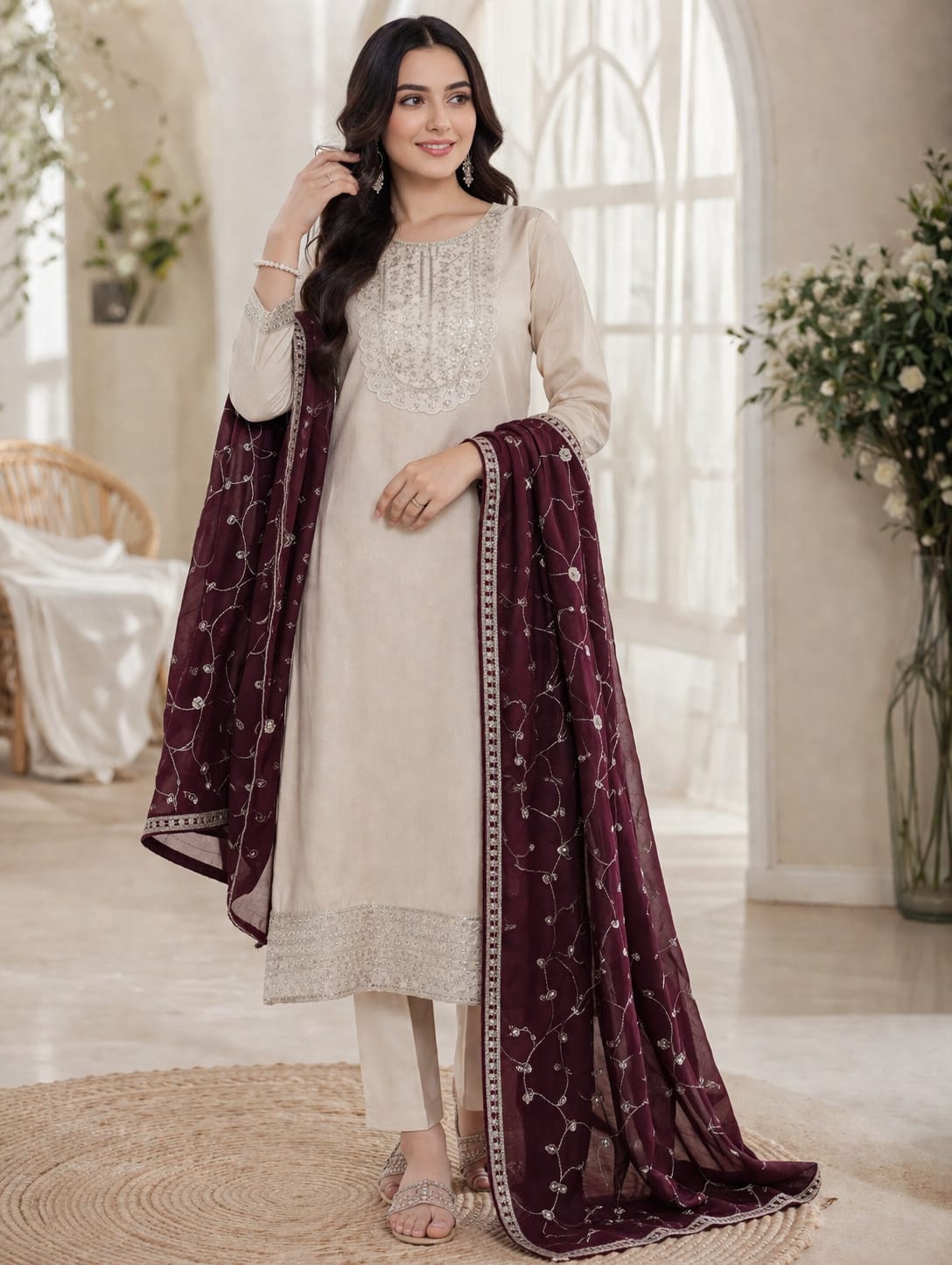
- Measure the garment you already wear: Compare bust, waist, hip, shoulder and kurta length measurements with the listing rather than relying only on a letter size.
- Read the fabric description: "Chanderi," "georgette" and "Vichitra silk" create different expectations for drape, sheen and weight. Ask whether the fabric is lined if the colour is pale.
- Inspect the bottom: Palazzo width, elastic placement and trouser rise affect comfort during sitting, walking and dancing.
- Look at embellishment placement: Sequins or embroidery near the underarm can irritate skin, while heavy decoration at the hem can add unwanted weight.
- Allow alteration time: Keep at least seven to ten days for basic sleeve, length or waist adjustments when the festival date is fixed.
- Test colour under daylight: Online screens can make mustard look yellow, wine look brown and pastel blue look grey.
An useful shopping shortlist includes one light daytime suit, two movement-friendly palazzo or straight sets, one statement evening outfit and a neutral set that can be restyled. This structure covers different event types without making every purchase equally elaborate.
How should you style colourful suits for puja and Garba?
Style the outfit according to the activity: keep puja dressing composed and breathable, while Garba dressing should prioritise secure jewellery, stable footwear and unobstructed movement. Accessories can change the perceived colour of the same salwar suit more effectively than adding more embroidery.
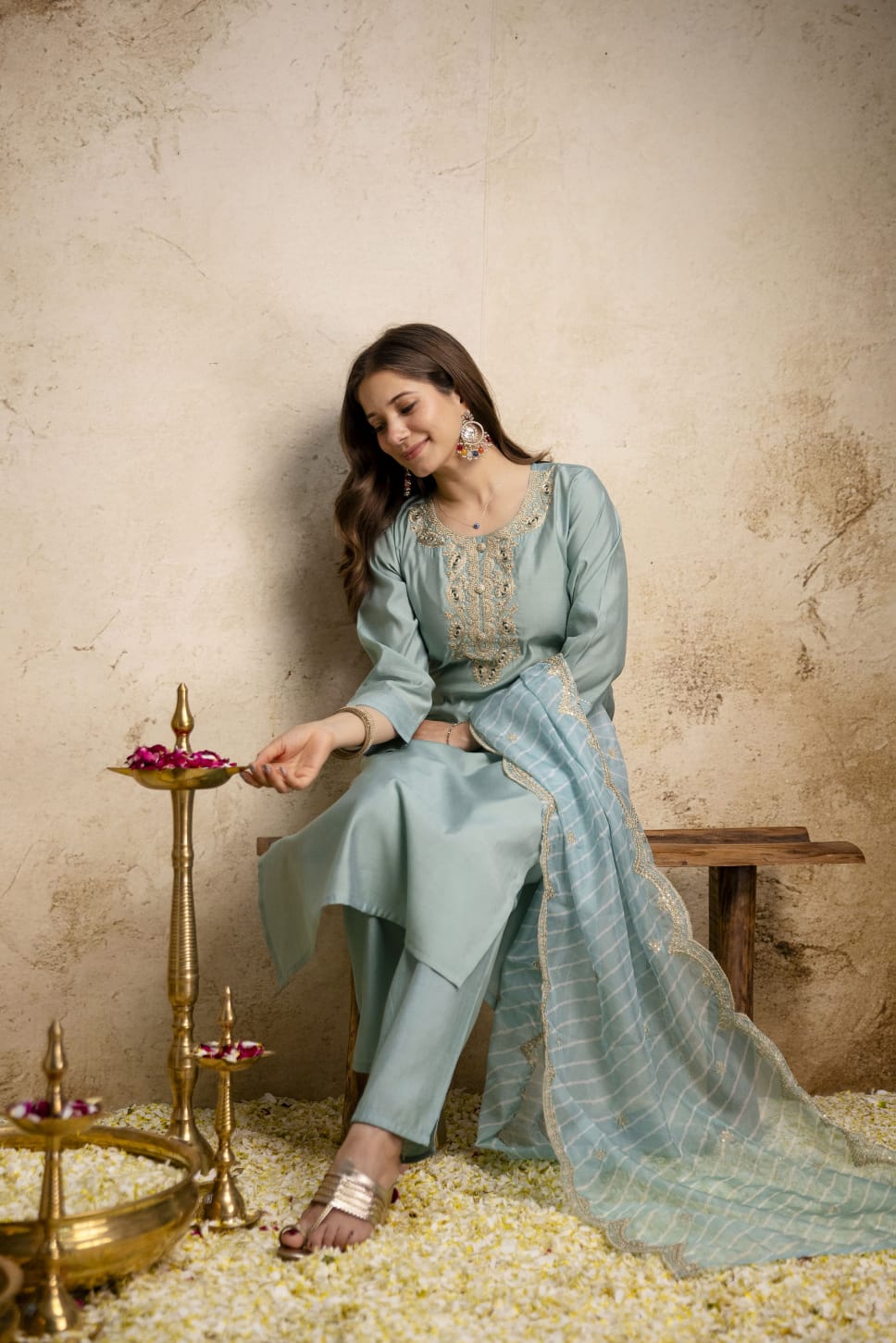
For morning puja, choose jhumkas, small studs, a slim bangle stack and flat sandals. White Chanderi with gold accents feels heritage, while pastel blue with pearls creates a quieter look. Keep the dupatta neatly pinned and select a handbag with a shoulder strap so both hands remain free for prasad and offerings.
For evening Garba, choose lightweight oxidised silver earrings, a compact crossbody bag and shoes with a cushioned footbed. Juttis, low block heels and secure sandals are more practical than slippery high heels on outdoor or crowded floors. A single statement necklace is usually easier to manage than multiple long chains that can move unpredictably.
Hair also affects comfort. A low braid, secure bun or pinned half-up style stays controlled during repeated movement, whereas loose hair can become uncomfortable in heat and crowds. Use breathable cotton or moisture-managing inner layers under embellished garments, but avoid bulky slips that change the fit of the kurta.
How can Navratri suits be cared for after nine days?
Care for a Navratri suit according to its fibre and embellishment, and clean it soon after use if perspiration, perfume or food has touched the garment. Immediate airing and correct storage prevent odour and reduce the chance that stains become permanent.
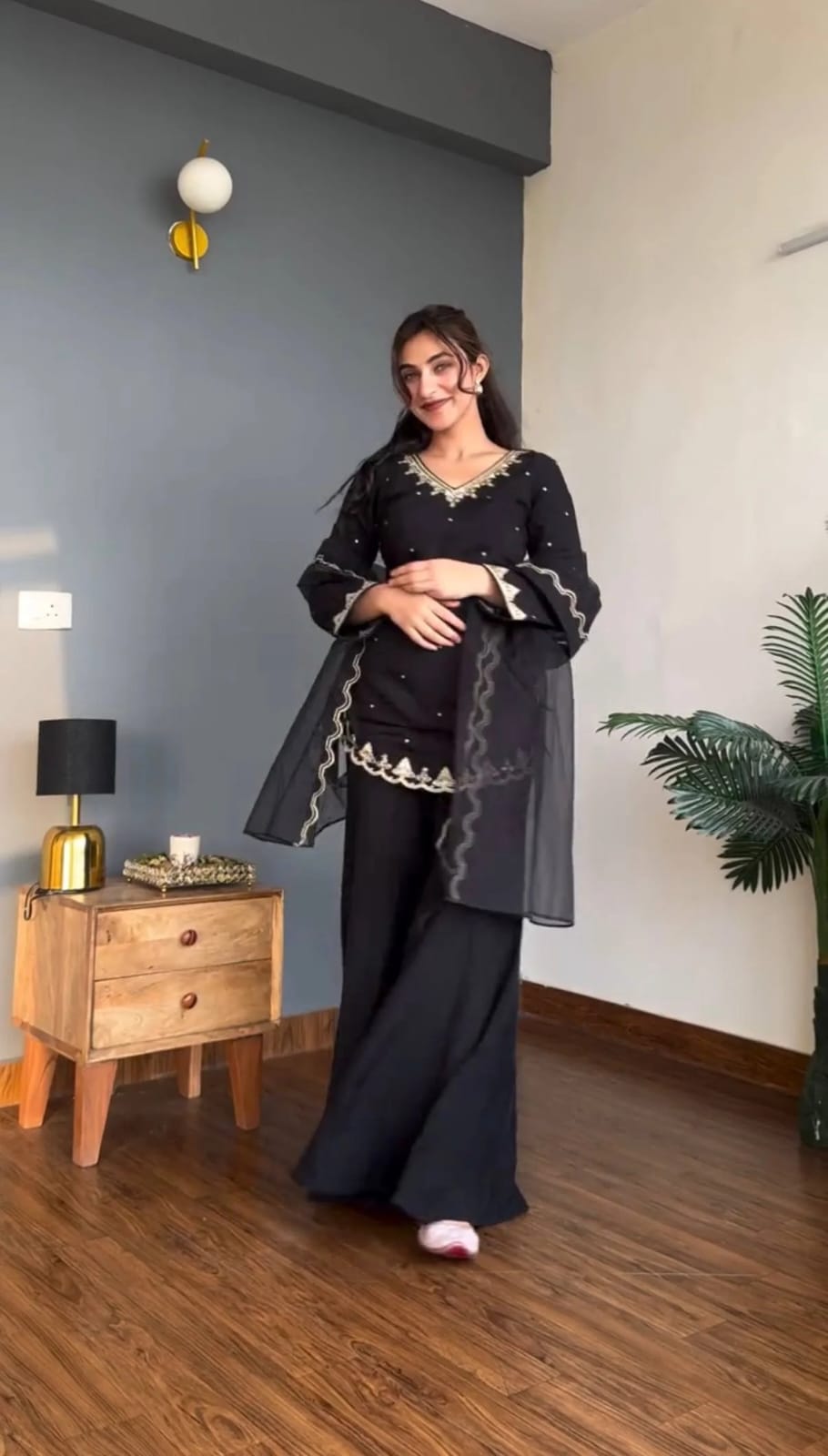
Air Chanderi, georgette and silk garments in shade for several hours before folding them. Do not leave embroidered clothing in direct sunlight, because strong light can gradually alter dyed colours and weaken some surface finishes. Fold embellished pieces with tissue paper or a soft muslin layer between embroidered sections so sequins don't snag the fabric.
Dry cleaning is usually safer for heavily embroidered, sequined or silk garments, while a care label should determine whether a lighter suit can be hand-washed. Do not wring georgette or Chanderi, and don't iron directly over zari, sequins or embroidery. Store clean garments in breathable cotton covers rather than sealed plastic for long periods.
A thoughtful nine-day wardrobe therefore has value beyond Navratri. A white embroidered set can serve for winter puja, a pastel Chanderi set can work at daytime celebrations, and a palazzo set can return for festive lunches. Choosing colour with fabric, fit and repeat-wear potential in mind makes every outfit more useful after the dandiya sticks are put away.
Practical Questions About Nine-Day Navratri Salwar Suit Dressing
What colours are worn for the nine days of Navratri?
A widely followed sequence includes white, red, royal blue, yellow, green, grey, orange, peacock green and pink. The sequence can change each year because many calendars assign colours according to the weekday on which Navratri begins, and regional traditions may differ.
Which salwar suit is most comfortable for Garba?
A palazzo or straight salwar suit with a secure waist, moderate hem length and flexible shoulder fit is usually most comfortable for Garba. Choose breathable georgette, viscose Chanderi or a lighter fabric, and pin the dupatta so it cannot catch during turns.
Can Chanderi suits be worn for Navratri?
Chanderi suits are well suited to daytime puja, family visits and lighter festive events because they look refined without being excessively heavy. A lined Chanderi kurta set with comfortable bottoms can also work for evening celebrations when the weather is mild.
How do I keep a dupatta secure while dancing Garba?
Pin the dupatta at one shoulder and the opposite waist, using concealed safety pins that do not damage embroidery. A shorter dupatta, a jacket-style layer or a coordinated set with a structured overlay can be easier to manage than a long, loose drape.
How many salwar suits do I need for nine days of Navratri?
You do not need nine new salwar suits. Four or five well-fitting outfits can create nine looks when you change dupattas, jewellery, footwear and layering pieces while keeping at least one palazzo set, one straight set and one formal Anarkali or gown.
What should I check when buying a Navratri salwar suit online?
Check garment measurements, fabric, lining, bottom width, embroidery placement, dispatch time and alteration requirements before ordering. Compare the listed measurements with a familiar garment and allow seven to ten days for basic tailoring whenever the festival date is close.