Classic Churidar Salwar Suit Designs continue to earn wardrobe space because the silhouette balances structure, comfort and traditional detail. A fitted kameez falls neatly over a churidar, while the dupatta adds colour, movement and occasion-appropriate polish. The right combination can work for an office presentation, a family puja or a wedding lunch without looking like the same outfit repeated everywhere.
The secret lies in understanding proportion rather than chasing every new neckline or print. Churidar trousers gather in slim folds at the ankle, so the length of the kurta, the placement of embroidery and the weight of the fabric all affect the final appearance. A few informed choices can make a readymade salwar suit look considered and personal.
What makes Classic Churidar Salwar Suit Designs distinctive?
Classic Churidar Salwar Suit Designs combine a straight or gently shaped kameez with narrow, ankle-gathered trousers and a separate dupatta. The churidar differs from a straight pant because extra fabric gathers below the knee and forms horizontal folds near the ankle. That detail creates the silhouette's characteristic classic finish.
A classic kameez usually reaches somewhere between the knee and mid-calf, although shorter versions create a younger, more casual proportion. Side slits allow movement, while a shaped shoulder and a clean armhole prevent the outfit from appearing bulky. The dupatta may be draped over one shoulder, wrapped around the neck or placed diagonally across the torso.
Neckline and sleeve choices also determine how formal a suit feels. A round neck with three-quarter sleeves suits everyday dressing, whereas a boat neck, keyhole detail or embellished cuffs can support evening wear. Heritage elements such as gota, zari, resham embroidery, threadwork and woven motifs add interest without changing the recognisable churidar shape.
Which fabrics suit a time-honoured churidar best?
Chanderi cotton, Chanderi silk, cotton blends and lightweight woven fabrics are especially useful for churidar suits because they hold a neat kurta shape without becoming excessively heavy. Fabric selection should match the season, the amount of movement required and the level of embellishment.
Chanderi and other light woven fabrics
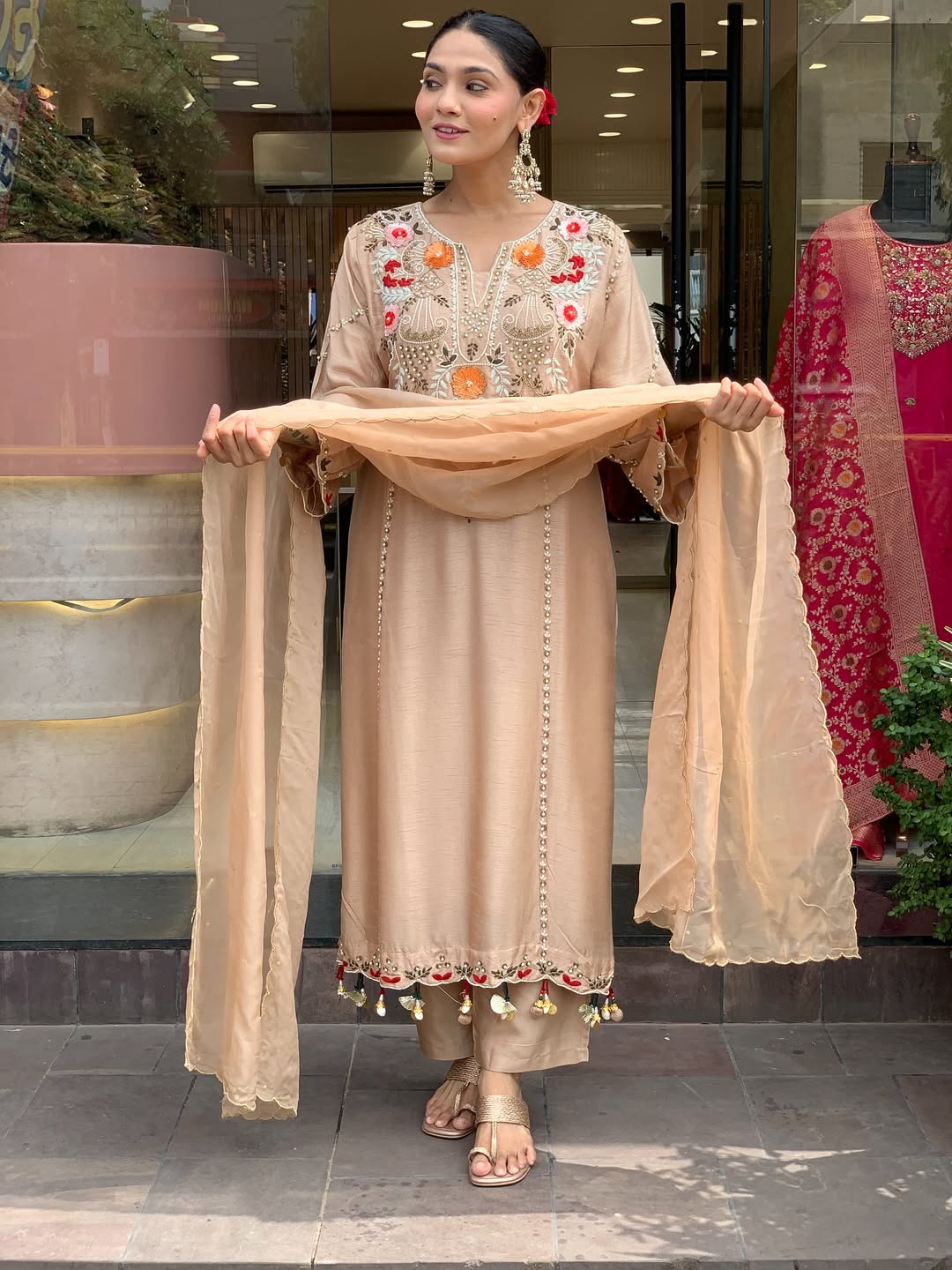
Chanderi cotton offers breathability with a slightly crisp fall, making it suitable for daytime gatherings and warm climates. Woven Chanderi often has a subtle sheen and delicate transparency, so a lining is important when the fabric is pale or finely textured. An outfit such as Woven Chanderi Cotton Readymade Salwar Suit demonstrates why the weave works well for a polished but comfortable daytime silhouette.
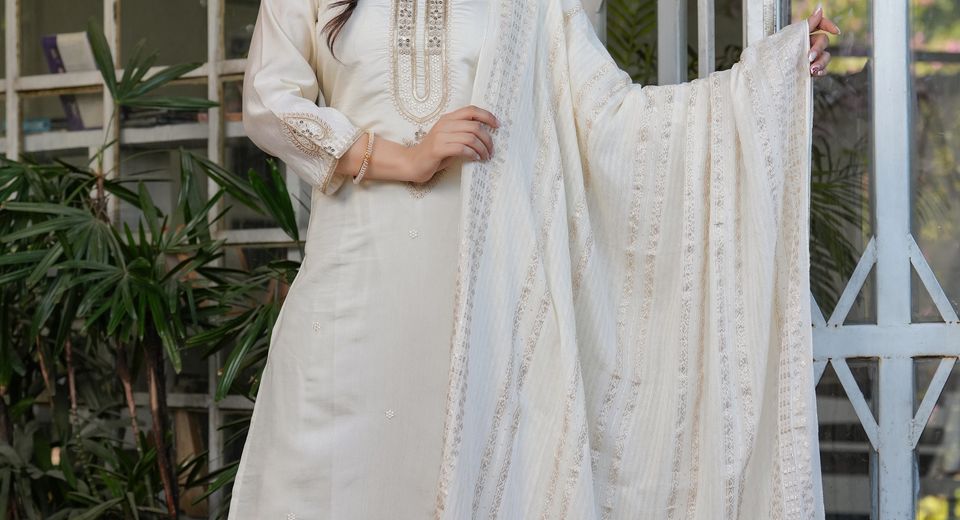
Chanderi silk has a dressier surface and pairs naturally with zari borders, woven motifs and restrained embroidery. Elegant White Chanderi Threadwork Suit with Dupatta uses the visual quietness of white fabric to make threadwork more noticeable. White Chanderi Blossom Salwar Suit brings another useful direction: floral detailing can provide festive character without the weight of dense all-over decoration.
Cotton, rayon and embellished textiles
Cotton is the practical choice for regular wear because it absorbs moisture and becomes easier to manage in hot weather. Cotton does crease more readily than synthetic blends, so a light press before wearing may be necessary. Rayon has a softer drape and stronger colour depth, but rayon garments should be washed according to the care label because heat and rough handling can affect the surface.
Embroidered fabrics need enough body to support thread, sequins or zari without pulling at the seams. Navy Blue Embroidered Salwar Suit shows how a darker ground can make embroidery look defined and evening-ready. An Embroidered Salwar Suit Set for Women can serve as an useful reference when comparing the visual impact of a coordinated kameez, churidar and dupatta.
How should a churidar salwar suit fit?
A well-fitting churidar should sit smoothly at the waist and hips, allow comfortable knee movement and form deliberate gathers at the ankle without cutting into the calf. The kameez should give enough room across the bust and upper arm for sitting, reaching and raising the arms without pulling at the buttons or armholes.
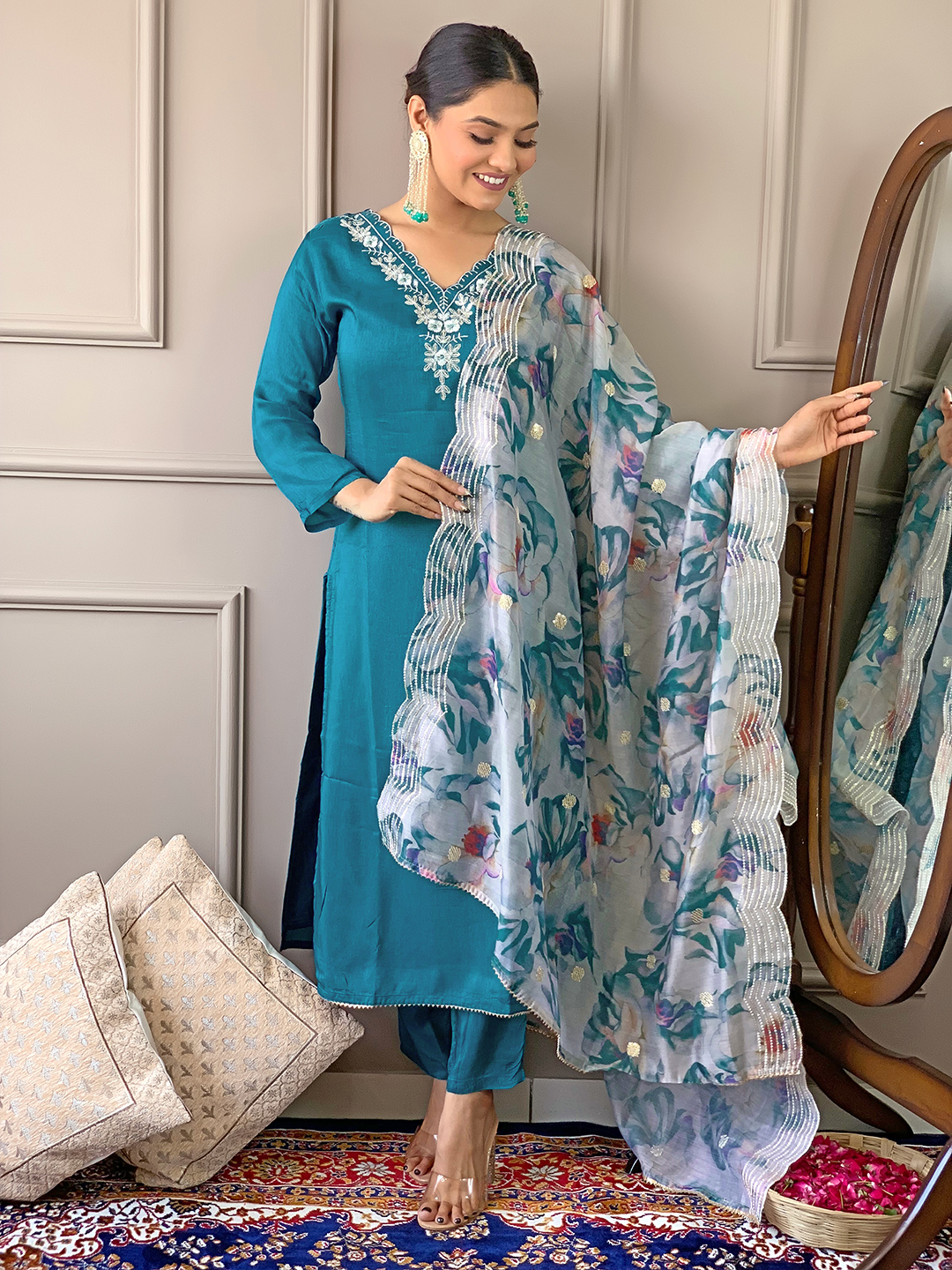
Check the shoulder seam first because a shoulder that falls too far outward can make the whole garment look oversized. Next, inspect the armhole: horizontal strain lines usually indicate insufficient room, while excessive fabric under the arm can create unwanted bulk. A straight kameez should skim the body rather than cling tightly, particularly when the fabric has embroidery or little stretch.
Trouser length deserves special attention. The churidar needs extra length beyond the wearer's ankle so the characteristic folds can form; a trouser that ends exactly at the ankle will resemble a narrow legging instead. The hem should not drag on the floor, and the ankle opening should be narrow enough to hold the folds while still allowing the foot to pass comfortably.
Readymade sizing varies, so compare garment measurements with a well-fitting suit rather than relying only on small, medium or large labels. Measure bust, waist, hip, shoulder width, sleeve length and kameez length. If the kameez fits well but the churidar is too long, a tailor can usually shorten the hem; altering a heavily embroidered shoulder or armhole is more complicated.
Which colours and details create a timeless look?
Deep navy, ivory, white, pista, lavender, bottle green, maroon and muted pink remain dependable colours because they work across several occasions and complement Indian skin tones in different ways. A neutral kameez with a contrasting dupatta is easier to re-style than a heavily coordinated three-piece set in one intense shade.
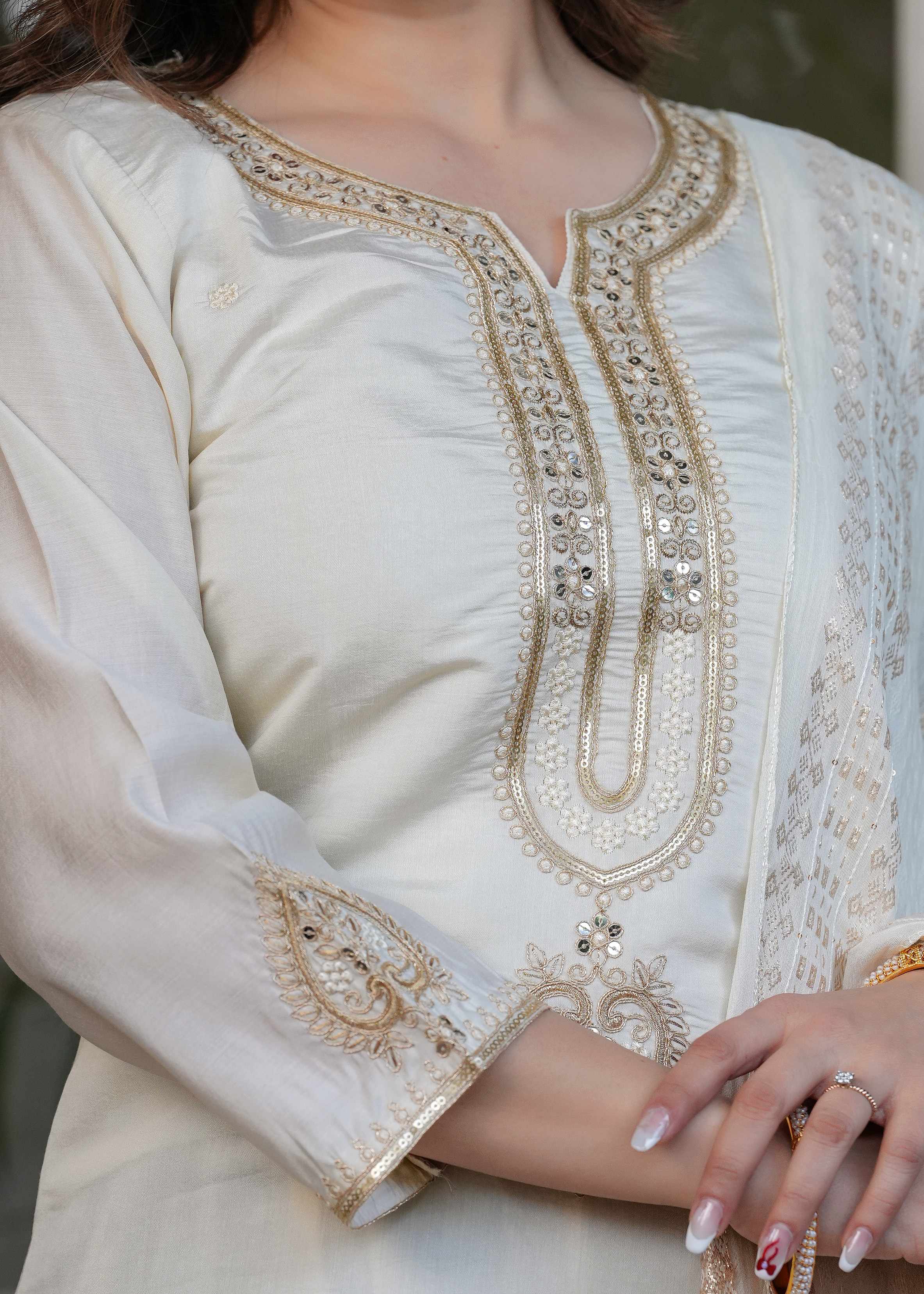
Navy creates visible depth and makes silver, gold and multicoloured embroidery stand out. White and ivory highlight threadwork, lace and floral motifs, but require more careful maintenance. Pista green and lavender offer soft festive colour without the brightness of neon shades. Pista Royale Salwar Suit illustrates how a gentle green palette can look celebratory when balanced with delicate surface work.
Green Chanderi Embroidered Salwar Suit with Organza Dupatta shows the effect of pairing a structured woven kameez with a lighter, more translucent dupatta. Organza adds volume at the shoulder and looks formal, but the fabric can slip, so small hidden pins or a discreet brooch help maintain the drape. Lavender Chanderi Royale Embroidered Suit gives a similarly dressy approach through colour, weave and embroidery rather than excessive ornament.
Use one dominant detail and let the other elements support it. If the neckline carries dense embroidery, choose a simpler dupatta border and smaller earrings. If the dupatta has a broad zari edge, keep the neckline cleaner so the outfit has visual breathing room. This method prevents a churidar suit from looking crowded in photographs.
How can one churidar suit work for different occasions?
A single churidar suit can move from daytime to evening through changes in accessories, dupatta drape, footwear and makeup. The base garment should remain comfortable, while styling changes should add formality without hiding the suit's embroidery or proportion.
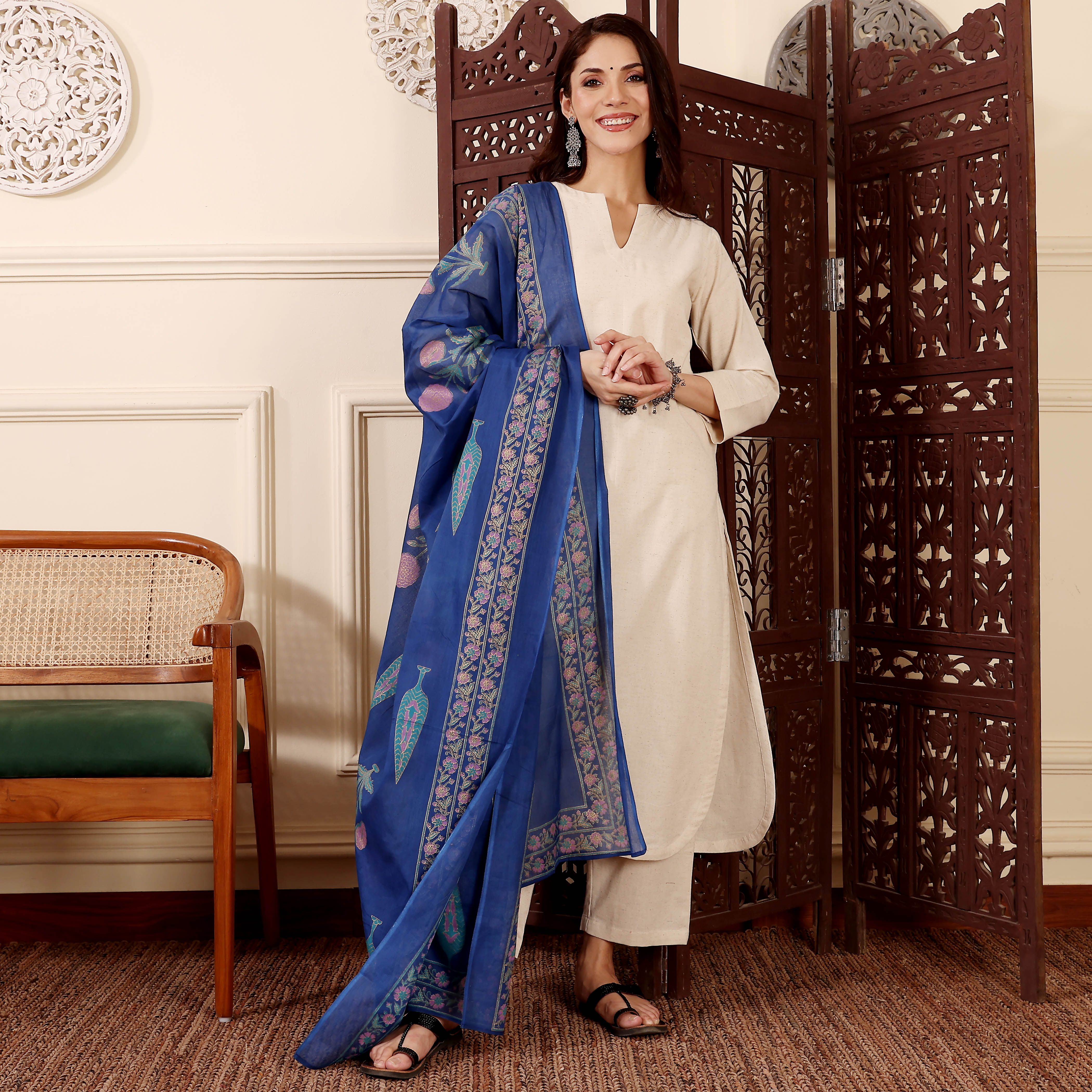
Work and daytime dressing
For office wear, choose a moderate hemline, opaque fabric, three-quarter sleeves and embroidery concentrated around the neckline or cuffs. A neatly folded dupatta, low block heels or juttis and a structured tote create a composed appearance. Chanderi cotton, cotton and matte woven fabrics are generally more practical than fragile organza for long working days.
Keep jewellery restrained for professional settings: small studs, a slim watch and one ring are usually enough. A navy or ivory churidar suit can support a printed scarf on another day, provided the scarf shares one colour with the kameez. This approach extends the wardrobe without requiring several complete sets.
Festivals and family functions
Festive dressing benefits from a brighter dupatta, delicate zari, jhumkas or embellished footwear. Pista, lavender, green and jewel-toned suits photograph well in daytime celebrations because they provide colour without relying on heavy bridal ornamentation. A slightly longer kameez and a formal dupatta draped over one shoulder create graceful movement for pujas, lunches and cultural events.
The Ladies Dress Anarkali Salwar Suits collection is relevant when a wearer wants the same churidar base with a more flared, ceremonial kameez. Anarkali silhouettes suit festive movement, while a straighter kameez often feels more versatile for repeated wear. A coordinated embroidered set from the Salwar Suits with 30% Off collection can be evaluated using the same checks for lining, measurements and dupatta quality.
Weddings and evening celebrations
For a wedding guest outfit, select richer colour contrast, a more detailed neckline or a dupatta with zari, organza or embellished edging. Navy embroidery, Chanderi sheen and carefully placed threadwork can look formal without competing with the bride's attire. Add metallic sandals, a compact potli and medium-sized earrings rather than layering every available accessory.
Seasonal shopping sections such as Salwar Suits Flat 40% Off and Salwar Suits On Sale can be useful for comparing value, but a discount should never replace a fit and fabric check. Confirm whether the listed price includes the churidar and dupatta, whether the dupatta is lined, and whether embroidery may snag against jewellery or bags.
How should the dupatta be draped with a churidar?
The most reliable dupatta drape is a balanced shoulder drape with one end falling near the knee and the other end secured lightly at the opposite side. This arrangement preserves the neckline, creates vertical lines and prevents the narrow churidar from making the outfit look visually bottom-heavy.
For a heritage presentation, pleat the dupatta evenly over one shoulder and let the front end fall straight. For a more relaxed appearance, place the dupatta around the neck with both ends hanging in front; this works particularly well with a plain kameez and a decorative border. A diagonal drape across the torso gives more coverage and helps keep slippery organza in place.
Dupatta width matters as much as length. A broad dupatta creates a softer, fuller upper silhouette, while a narrow dupatta looks lighter and more contemporary. Avoid making very tight pleats in organza because compressed folds can create unnecessary stiffness. Cotton and Chanderi dupattas usually hold pleats more easily and can be pinned discreetly beneath the shoulder seam.
What should you check before buying a readymade suit?
Before buying a readymade churidar suit, check the measurement chart, fabric composition, lining, included pieces, closure details and care instructions. These practical details predict comfort and longevity more accurately than photographs alone.
- Measurements: Compare bust, waist, hip, shoulder, sleeve and kameez length with a garment you already wear comfortably. Check the churidar length and ankle opening separately.
- Fabric and lining: Confirm whether the kameez is lined, especially when it's white, pastel, sheer or heavily embroidered. Ask whether the dupatta is Chanderi, organza, cotton or another named textile.
- Construction: Inspect seam finishing, zip or button placement, side slits and the density of embroidery around movement areas. Thick embellishment under the arm can become uncomfortable quickly.
- Set contents: Verify whether the price includes the kameez, churidar and dupatta or only selected pieces. Product photographs don't always communicate the full set composition.
- Versatility: Choose a colour and embellishment level that can work with at least two types of footwear and jewellery. A flexible suit earns more wears than a highly specific outfit.
Collections such as Dress Materials suit shoppers who prefer to customise sleeve length, kameez flare or trouser shape. A stitched readymade suit is quicker and more predictable, while a dress material allows a tailor to adjust the churidar rise, ankle gathers and overall length precisely.
How do you care for a churidar salwar suit?
Care depends on the fibre and embellishment, but gentle washing, shade drying and careful storage protect most churidar suits. Read the care label before washing because Chanderi, zari, organza, rayon and embroidered cotton can respond differently to water, heat and friction.
Hand-wash colourfast cotton separately in cool water when the label permits, and avoid twisting the churidar because stretching can distort the ankle gathers. Dry embroidered garments inside out and away from direct sunlight, which can fade navy, green and pastel dyes. Dry-clean heavily embellished suits or garments with zari when the care instructions recommend professional cleaning.
Iron Chanderi and cotton on the reverse side using low to medium heat and a pressing cloth over embroidery. Never place a hot iron directly on zari, sequins, organza or raised threadwork. Store a clean suit folded with acid-free tissue or a soft cotton cover, and avoid hanging heavy embroidered kameez for months because the shoulders may lose their shape.
Classic Churidar Salwar Suit Designs reward attention to proportion, fabric and maintenance. When the churidar gathers comfortably, the kameez length suits the wearer and the dupatta supports rather than overwhelms the outfit, a traditional salwar suit can remain relevant across workdays, celebrations and family occasions for years.
Questions Readers Ask About Classic Churidar Salwar Suit Designs
What is a churidar salwar suit?
A churidar salwar suit has a kameez worn with narrow trousers that gather into folds around the ankle. The set usually includes a dupatta, and the silhouette may be straight, flared or shaped like an Anarkali.
How should a churidar fit at the ankle?
A churidar should have enough extra length to create neat folds below the knee and around the ankle. The ankle opening should hold the gathers without cutting into the skin or making walking uncomfortable.
Which fabric is best for a summer churidar suit?
Chanderi cotton and lightweight cotton are strong choices for summer because they allow airflow and remain relatively easy to wear. A lined Chanderi suit can provide better coverage while retaining the fabric's crisp, elegant appearance.
Can a churidar salwar suit be worn to a wedding?
A churidar salwar suit is suitable for a wedding when it has festive colour, refined embroidery, zari, a dressy dupatta or an elegant Chanderi weave. Metallic footwear, earrings and a formal drape can increase occasion appeal without making the outfit excessively heavy.
What is the difference between a churidar and straight pants?
A churidar is longer than the leg and gathers into folds at the ankle, while straight pants end near the ankle with a mostly smooth leg line. Churidar trousers therefore create a more traditional silhouette beneath a kameez.
How can a white Chanderi salwar suit be styled?
A white Chanderi salwar suit can be styled with silver jewellery and cool-toned footwear for a minimal look, or with a colourful dupatta and gold accents for a festive look. Use a lining and gentle care because pale Chanderi can reveal transparency and show stains more readily.