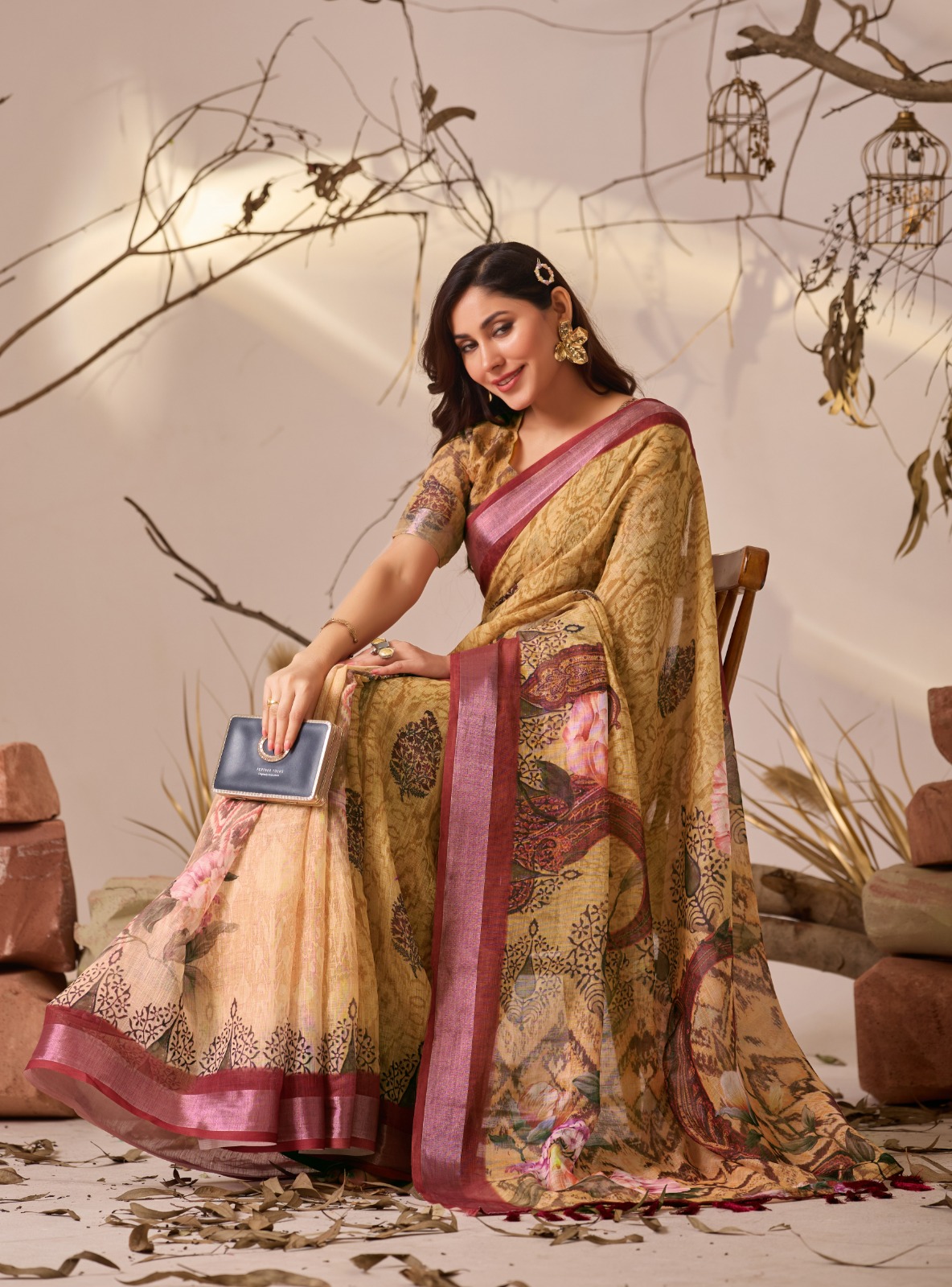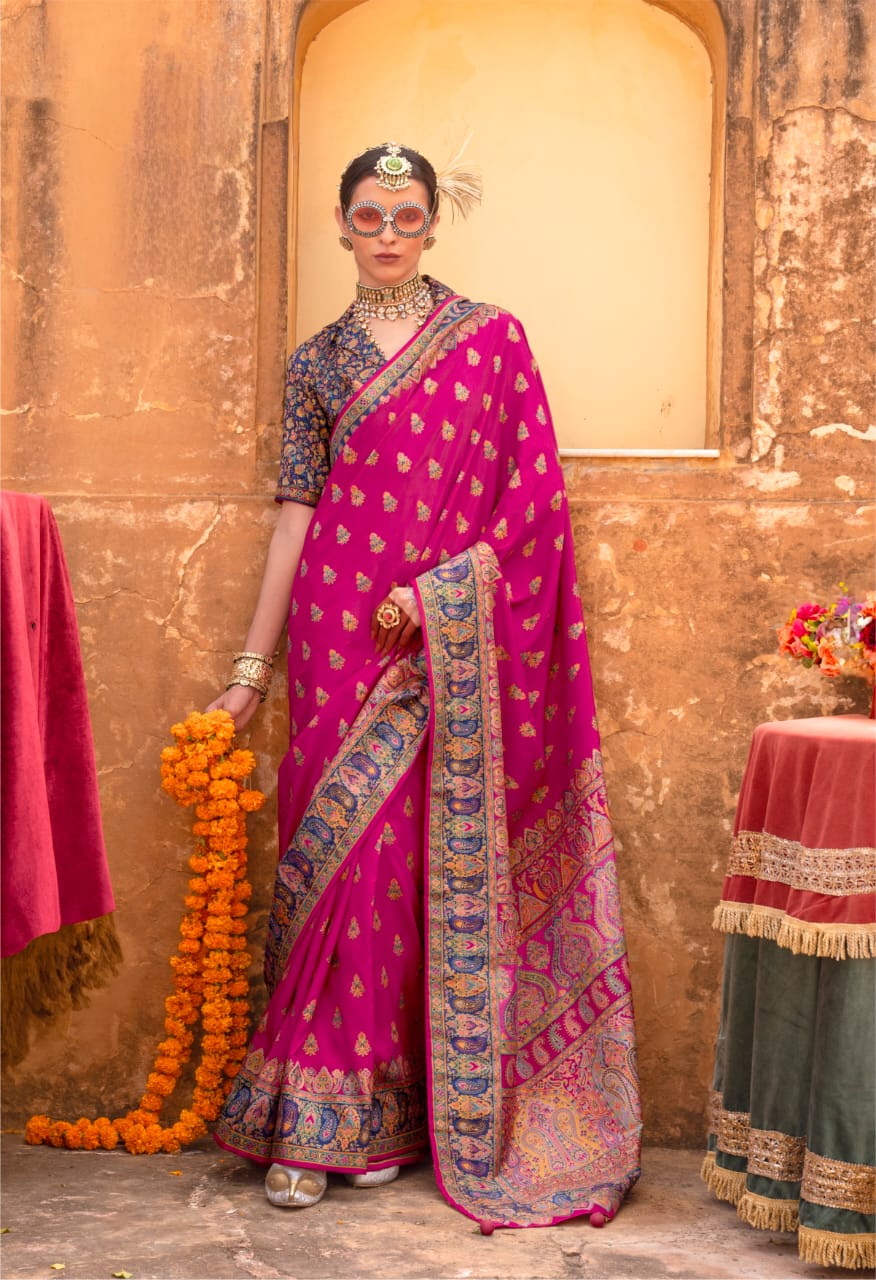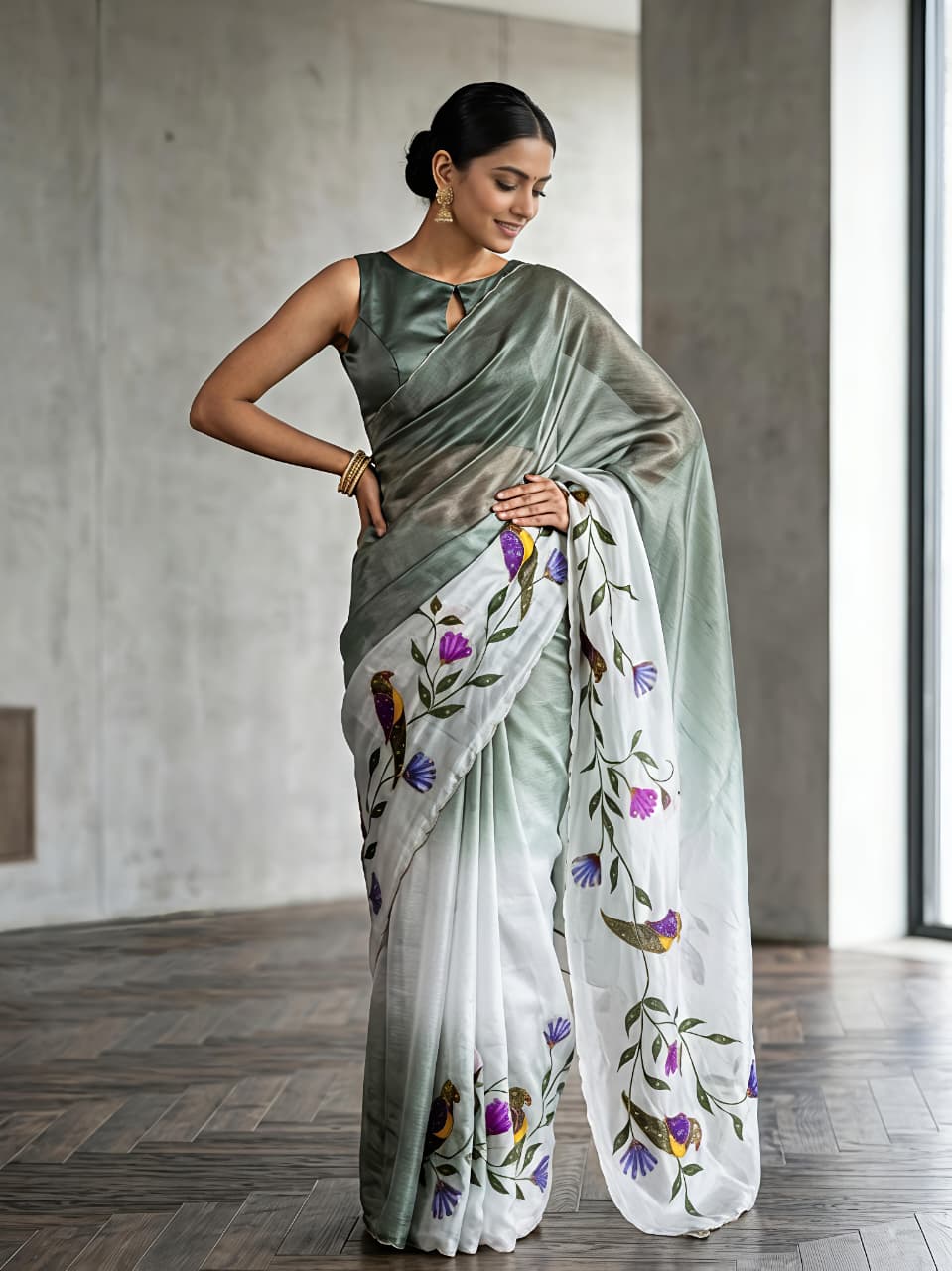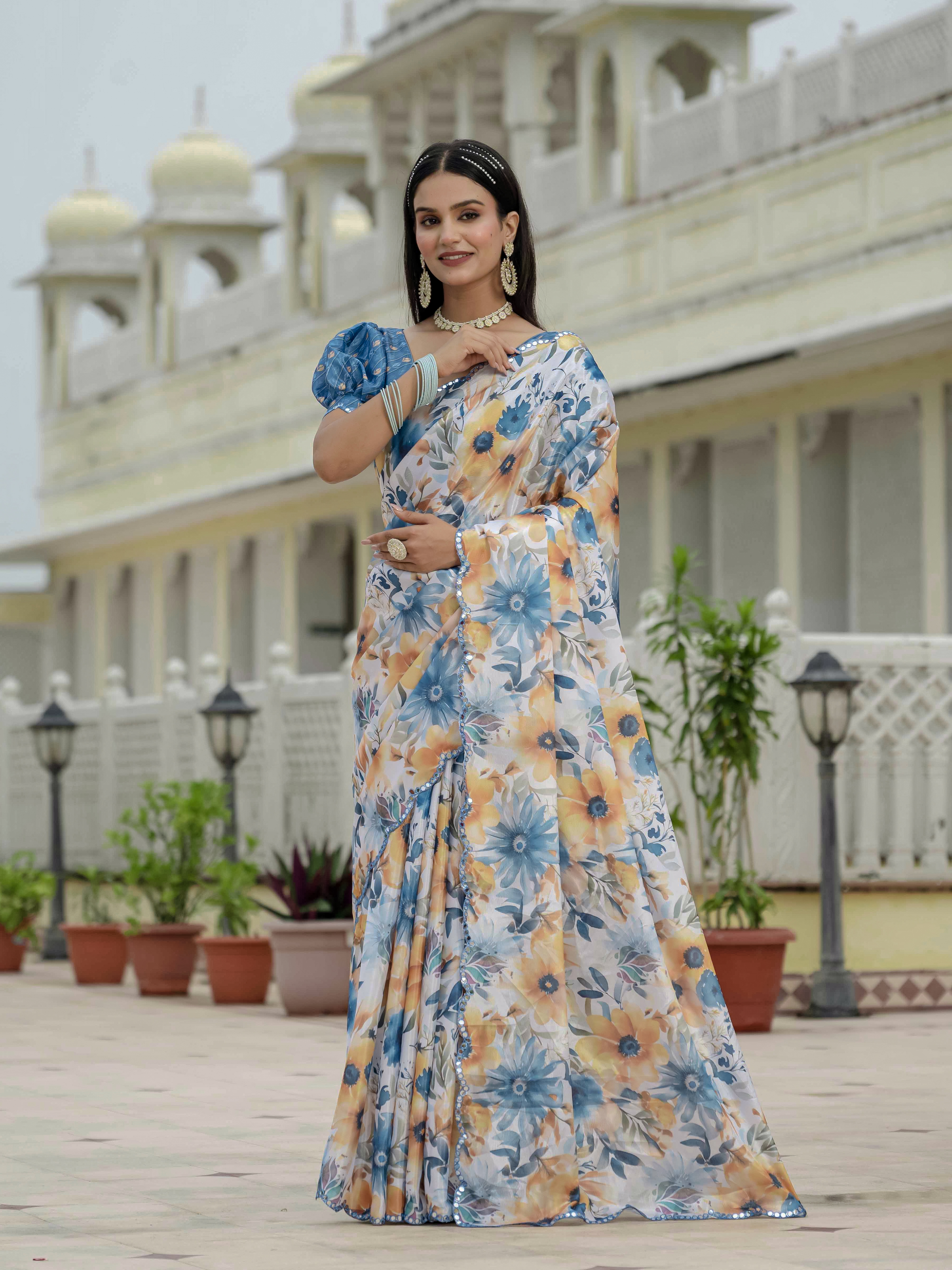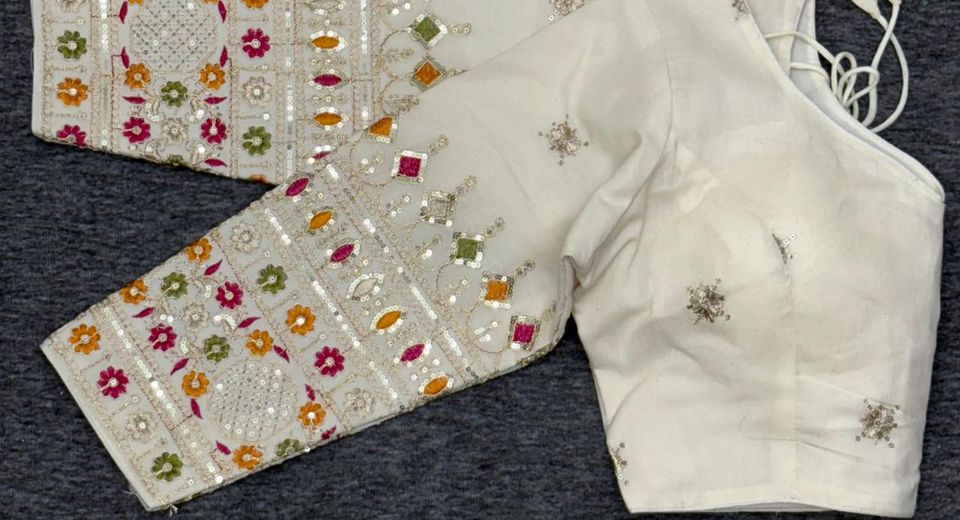
Chikankari Blouse Designs: Lucknowi Embroidery Ideas for Sarees can make a familiar drape feel lighter, more intricate and distinctly personal. The most successful blouse doesn't simply copy a chikankari kurta; it considers the saree's weave, the scale of the embroidery, the neckline, sleeve length and the amount of structure needed for a clean fit. A delicate Chanderi saree may need fine white shadow work, while a heavier Banarasi silk saree can support denser motifs and a stronger contrast.
Lucknowi chikankari is built from hand or machine embroidery stitches worked on fabric, often with floral, paisley, vine and lattice-inspired patterns. The design language looks gentle, but the blouse requires precise planning because embroidery can affect seam bulk, transparency, comfort and fall. The following ideas explain how to choose a design that complements a saree instead of competing with it.
What makes a chikankari blouse work with a saree?
A chikankari blouse works with a saree when its embroidery scale, colour and structure support the saree's fabric and border. A blouse with small scattered motifs suits a printed or heavily woven saree, while a more concentrated jaali panel works well with a plain saree.
Proportion is the first decision. A wide Banarasi silk border already creates visual weight, so a blouse with embroidery concentrated at the neckline and sleeve edge usually looks more balanced than an all-over design. A plain cotton saree gives more freedom for embroidered front panels, floral sleeves or a richly worked back.
Colour also determines whether the blouse feels traditional or contemporary. White chikankari on ivory, powder blue or blush pink creates a soft tonal effect. White thread on emerald, rust, navy or black produces sharper contrast. A saree with zari can be paired with cream or gold-toned thread, but metallic detail should remain secondary if the aim is to keep the Lucknowi character visible.
Structure matters because chikankari fabric can be lightweight or slightly sheer. A blouse intended for a formal event may need cotton lining, a firm neckline and discreet cups or padding. A relaxed daytime blouse can use a softer lining and less rigid tailoring. The finished garment should hold the saree securely without flattening the embroidered surface.
Which Lucknowi embroidery stitches suit saree blouses?
The most useful chikankari stitches for saree blouses are shadow work, jaali, bakhiya, phanda, murri, keel kangan and floral stem stitches. Each stitch creates a different texture, density and degree of formality.
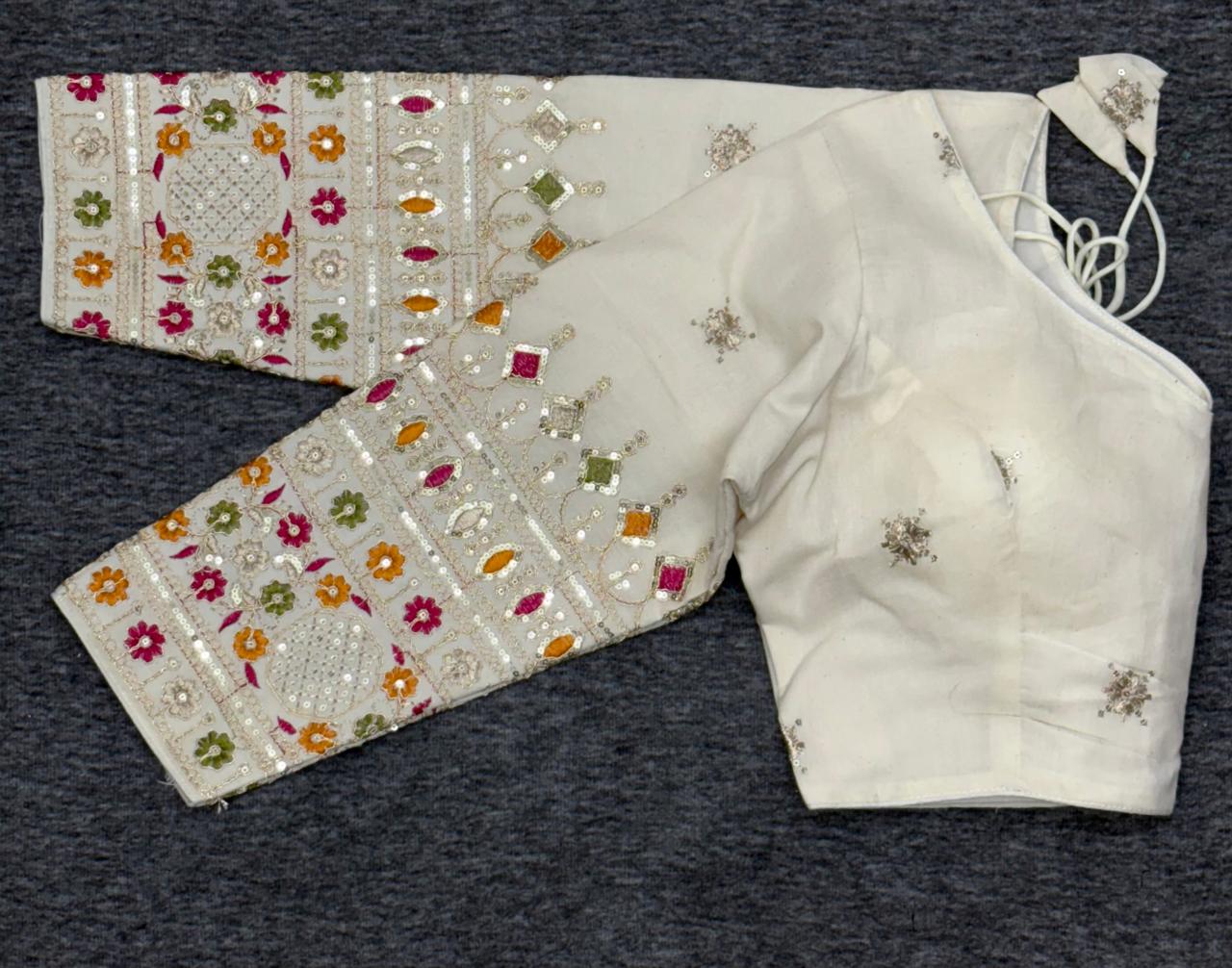
Shadow work and bakhiya
Shadow work, also called ulta bakhiya in many chikankari traditions, creates a soft reverse-side texture beneath the fabric. Shadow work suits pastel sarees, organza drapes and daytime celebrations because the embroidery appears delicate rather than raised.
Bakhiya uses neat running or satin-like embroidery to define petals, leaves and stems. Fine bakhiya is especially effective on a front yoke, sleeve border or narrow neckline panel. The stitch gives definition without adding the heavy surface bulk associated with dense embellishment.
Jaali, phanda and murri
Jaali embroidery creates an open lattice effect and needs careful spacing to prevent the blouse from appearing visually crowded. A jaali back panel or sleeve insert can add interest to a plain saree, but transparent areas should be supported with lining where modesty and durability matter.
Phanda forms small raised knots that resemble buds, while murri creates compact grain-like textured details. These stitches are useful for the centre of flowers, tiny buds and scattered motifs. A blouse with restrained phanda or murri can look festive without relying on sequins, beads or heavy zari.
How should you choose a chikankari neckline?
The best chikankari neckline depends on the saree's border, the wearer's comfort and the amount of embroidery planned around the face. A round neckline is versatile, a square neckline frames dense embroidery clearly, and a V-neck creates a longer visual line with a lightweight saree.
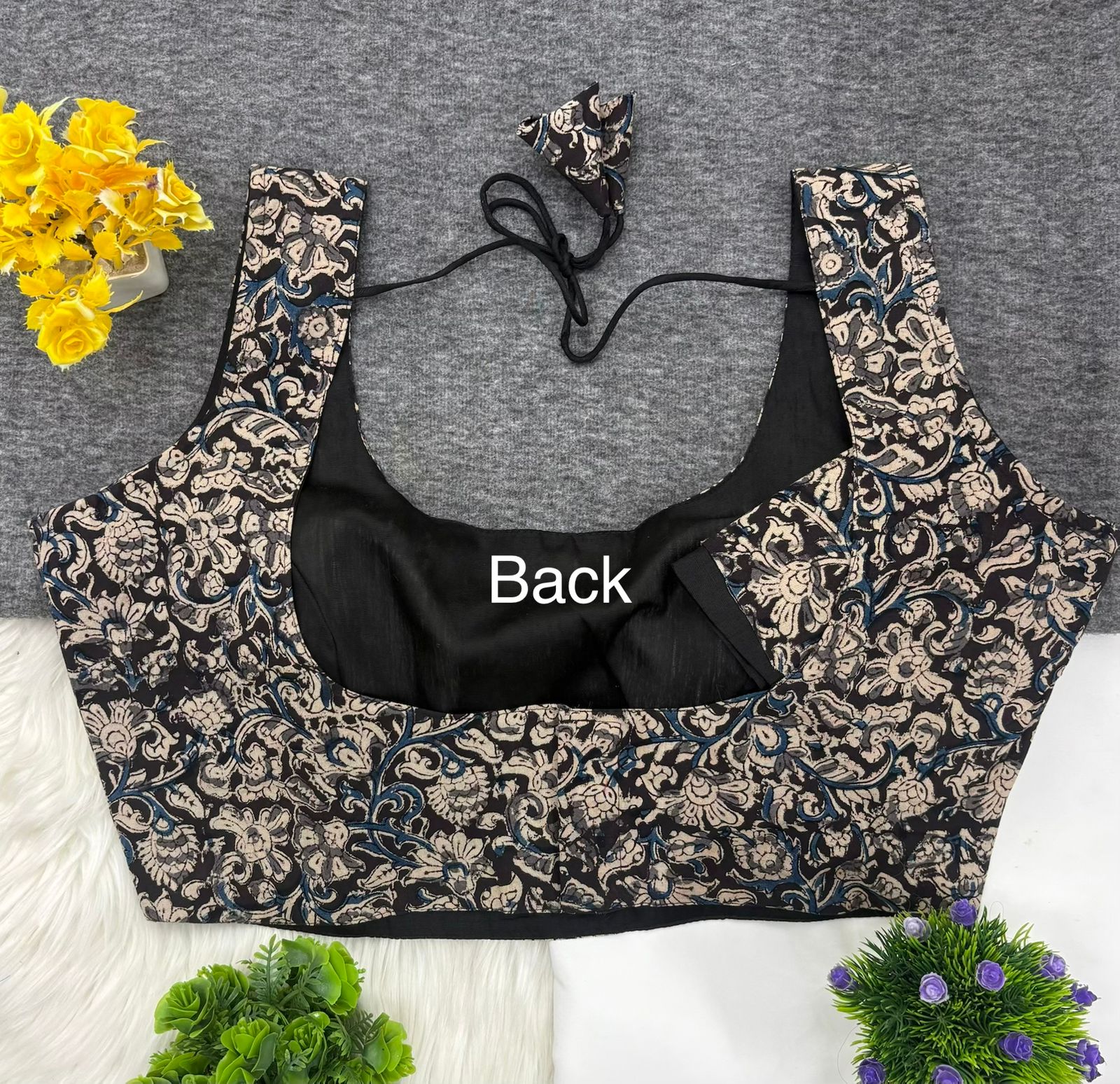
A round neck with a two- to three-inch embroidered border is an easy choice for daily sarees and office-friendly festive dressing. The curved shape follows floral vines naturally and works with both short and elbow-length sleeves. Keep the border narrow when the saree has a prominent zari edge.
A square neckline gives chikankari motifs a defined frame. A front panel with jaali work, floral sprays or a central paisley can be placed neatly inside the square, making the embroidery look intentional rather than scattered. A square neck also suits a structured blouse worn with a pre-pleated saree.
A modest V-neck works particularly well with a plain silk, satin or organza saree because the open line adds length without demanding heavy jewellery. Embroidery can follow the V-shaped edge, or a small floral motif can sit at the point of the neckline. Avoid placing a large raised motif exactly where a necklace will rest.
Boat necks provide a broad canvas for horizontal chikankari vines and pair well with sleeveless or elbow-length sleeves. High necks create a more formal appearance, but high necklines need smooth lining and careful finishing because embroidery threads can feel irritating against the skin.
Chikankari Blouse Designs: Lucknowi Embroidery Ideas for Sarees by fabric
Chikankari blouse designs should be selected according to fabric weight, transparency and drape rather than embroidery alone. Cotton, silk, organza, georgette and linen each need a different balance of lining and surface detail.
Cotton and linen sarees
Cotton and linen sarees pair naturally with breathable chikankari blouses featuring floral vines, small bootis or three-quarter sleeves. A cotton blouse can carry more visible embroidery because the saree usually has a matte surface and less reflective ornamentation.
The Pure Kalamkari Cotton Padded Blouse for Women demonstrates how a printed cotton blouse can bring pattern and structure to a saree wardrobe, even though Kalamkari and chikankari use different visual traditions. Pairing a patterned blouse with an embroidered saree requires restraint; use one dominant motif family and keep the other surface quieter.
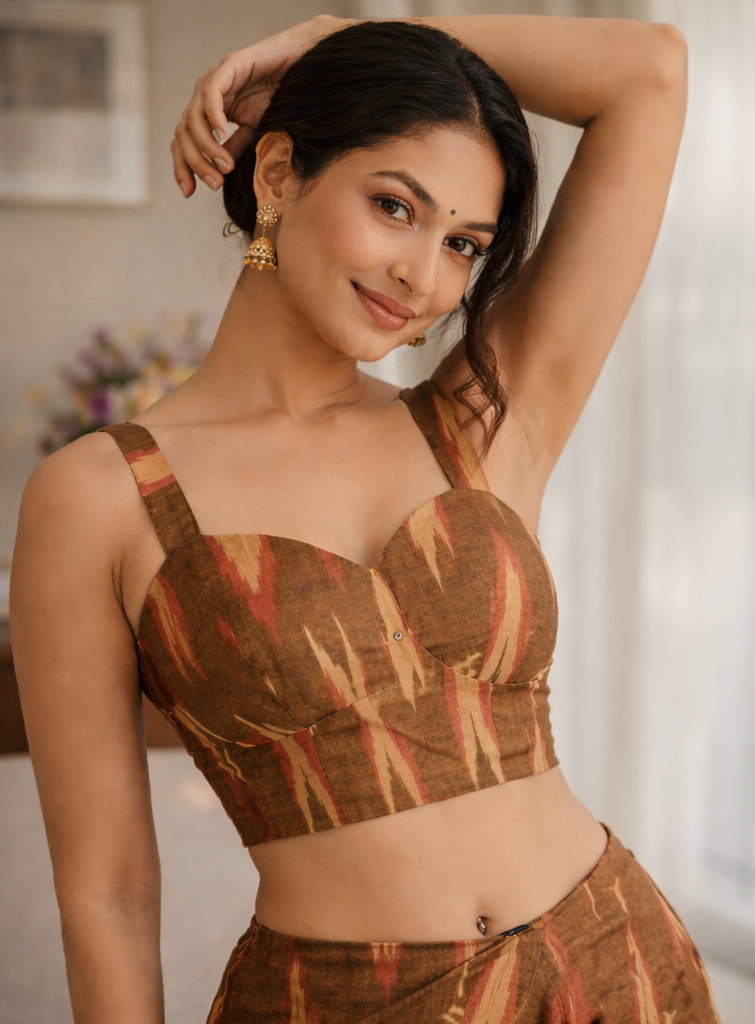
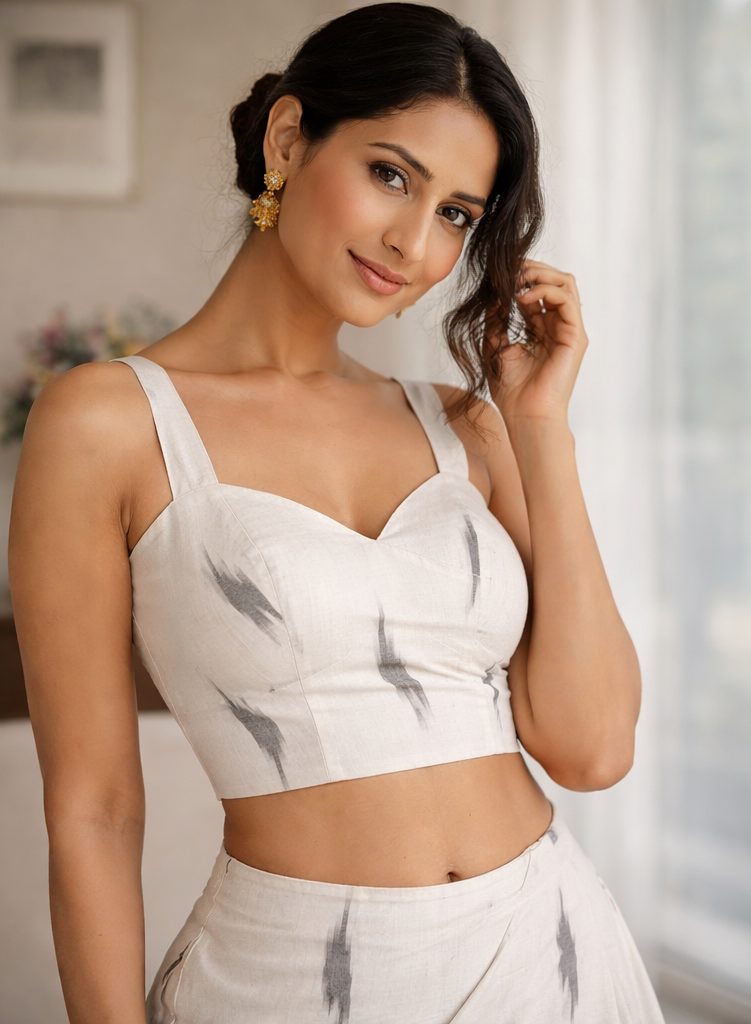
The Brown Ikat Cotton Padded Blouse Sleeveless Stylish and the Cream Ikat Cotton Padded Blouse Sleeveless Trendy are useful references for balancing geometric textile character with a saree. Their Ikat direction is different from Lucknowi floral embroidery, but the styling lesson is valuable: a patterned blouse can look polished when the saree has a calm, solid field.
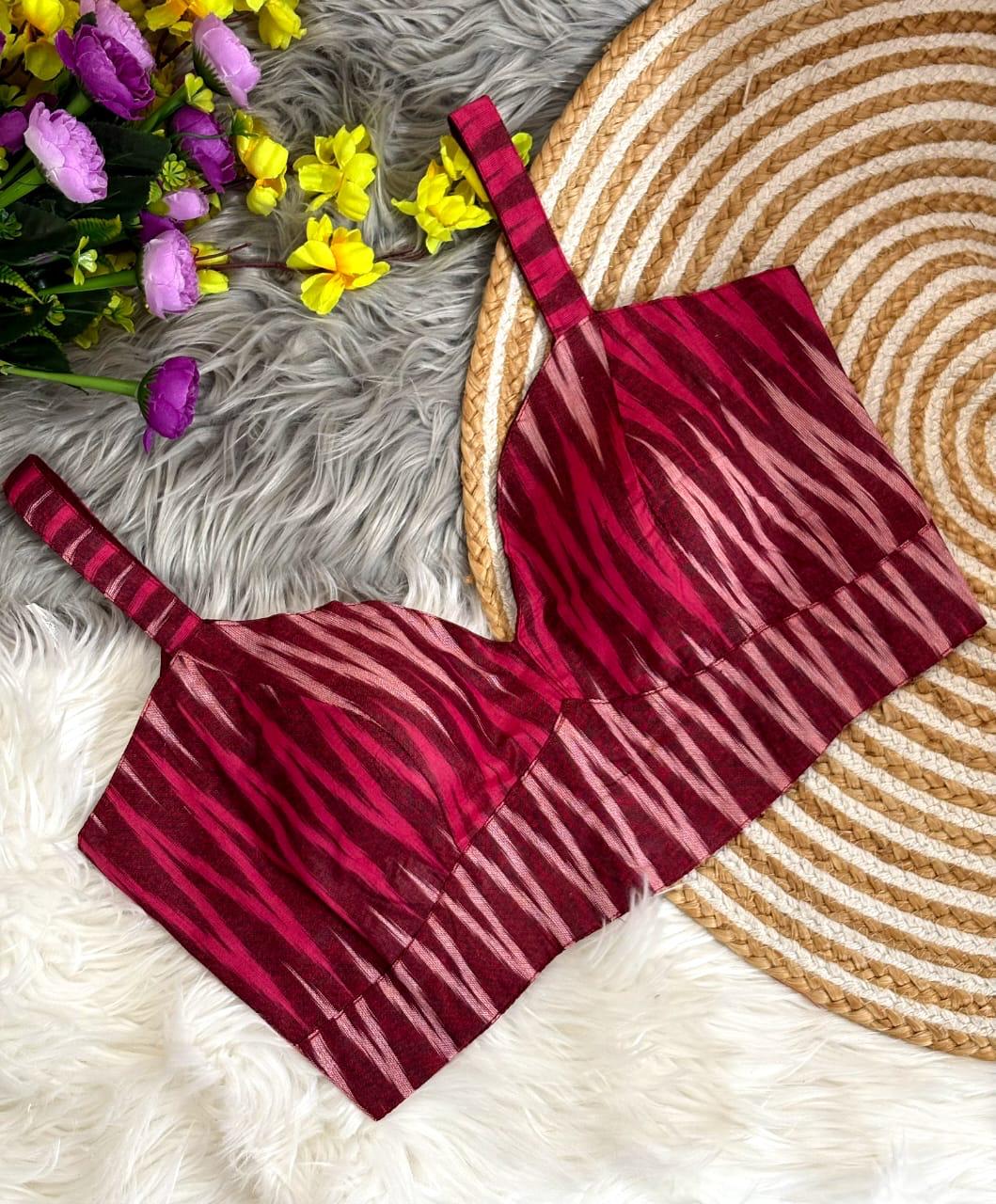
The Ikkat Cotton Padded Blouse for Women Sleeveless offers another example of how a sleeveless cotton silhouette can keep a saree look practical in warm weather. A sleeveless chikankari blouse should have reinforced armholes and a comfortable lining because repeated movement can place stress on the embroidered fabric.
Silk, organza and georgette
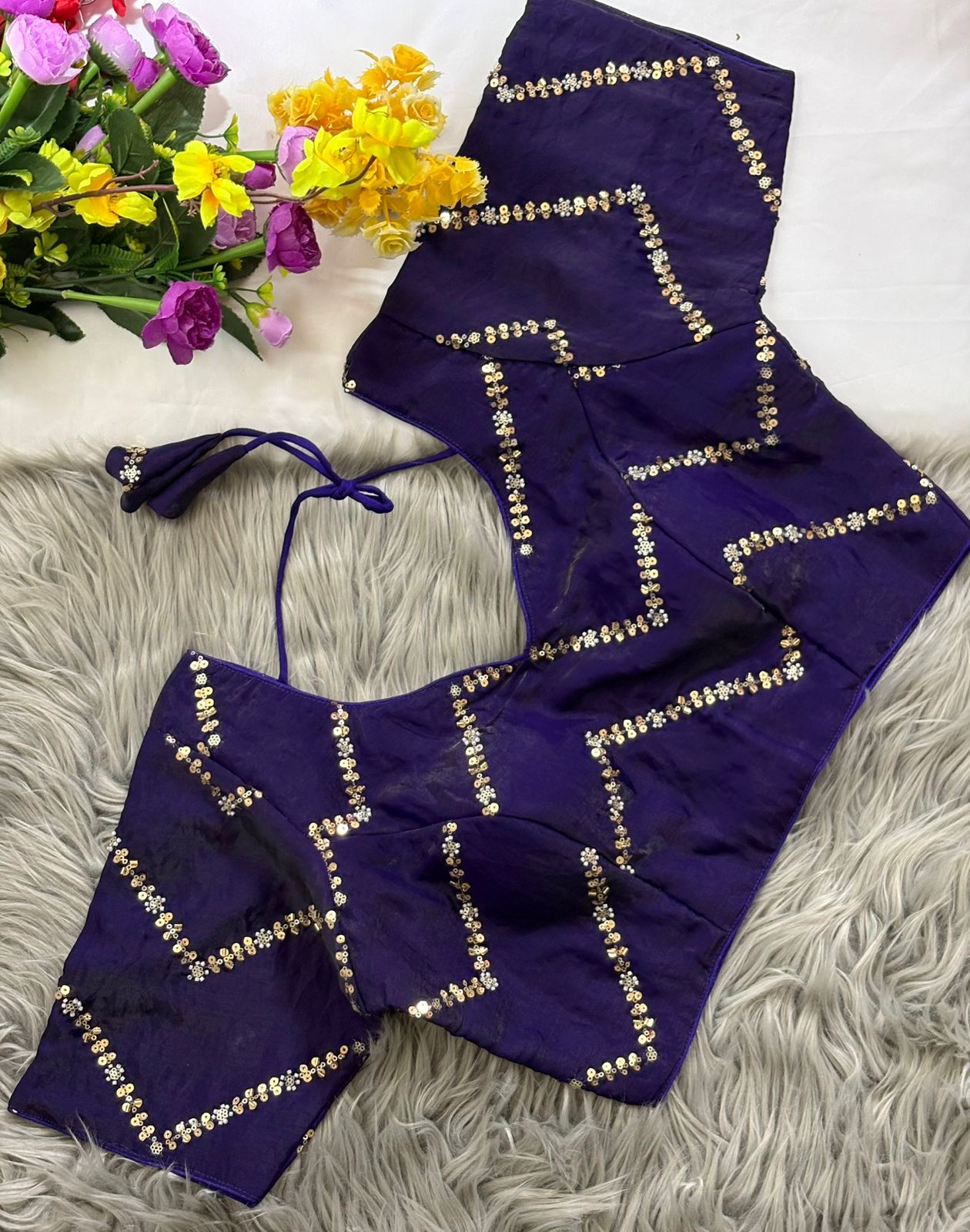
Silk sarees benefit from chikankari placed in controlled areas such as the yoke, sleeves or back. The Fendy Silk Zigzag Moti Work Readymade Blouse shows how a silk blouse can use surface detail for an occasion-ready finish; a chikankari alternative can replace dense beadwork with raised floral stitches for a quieter effect.
Organza and georgette require a stable lining because both fabrics can reveal construction lines or stretch under embroidery. Use a lightweight cotton or silk lining, reinforce the shoulder seams and avoid very large motifs near the armhole. Small shadow-work flowers remain lighter than thick satin embroidery and preserve the drape.
Handloom and woven silk sarees
Kanjeevaram and other handloom silk sarees can carry chikankari when the blouse uses clear structure and controlled colour. A cream blouse with tone-on-tone floral embroidery can soften a bright Kanjeevaram border, while a jewel-toned blouse with ivory embroidery can create deliberate contrast.
Chanderi sarees are especially compatible with fine chikankari because both textiles reward lightness and detail. Use a blouse with a narrow embroidered cuff, a translucent sleeve panel backed with lining, or a delicate floral yoke instead of competing with the saree's airy surface.
Which blouse details make chikankari look contemporary?
Contemporary chikankari looks come from cleaner placement, updated sleeves and thoughtful contrast rather than from removing heritage embroidery entirely. A simple cut can make handwork look modern when the finish is precise.
- Scalloped sleeve edges: A small embroidered scallop on a short or elbow-length sleeve gives definition without adding fringe or tassels.
- Back-button styling: Fabric-covered buttons or small pearl buttons can turn a plain back into a considered focal point.
- Asymmetric placement: A diagonal floral vine across one shoulder creates movement and uses fewer motifs than an all-over front.
- Contrast piping: Piping in silk, velvet or a narrow zari cord can outline a chikankari neckline without covering the embroidery.
- Sheer sleeve panels: A lined bodice with transparent but modest sleeves brings texture while keeping the garment comfortable.
- Minimal padding: Light padding can improve shape, but excessive stiffness can distort soft chikankari fabric and make the blouse look disconnected from the saree.
The Classic Festive Wear Blouse for Stylish Saree Look provides an useful styling comparison for a polished festive silhouette. A chikankari version of that approach would work best with a controlled neckline, fitted waist and embroidery concentrated at the front or sleeve border.
How can you style a chikankari blouse without overdoing the embroidery?
Style a chikankari blouse with one strong supporting element, such as statement earrings, a textured saree border or a defined dupatta, while keeping the remaining accessories restrained. Too many competing surfaces can hide the embroidery.
With a plain silk saree, choose the embroidery as the main texture and add pearl, silver or uncut-stone jewellery according to the thread colour. With a saree covered in zari, use a simpler chikankari blouse and let the border remain the brightest detail. With a printed cotton saree, select a blouse colour that appears in the print rather than introducing a fourth prominent shade.
White or ivory chikankari blouses pair well with pastel chiffon, printed cotton and jewel-toned silk sarees. A coloured chikankari blouse can be more adaptable when the thread is tonal: sage green thread on sage fabric, rose thread on dusty pink or ivory thread on deep blue. Tonal embroidery also makes small construction imperfections less noticeable than high-contrast thread.
Jewellery should follow the neckline. Chokers and short necklaces suit open round and square necks, while long chains work with V-necks and higher necklines. Jhumkas, pearl drops and small chandbalis complement floral embroidery without obscuring it. Choose a simple clutch or potli if the saree already contains zari, beadwork or a dramatic border.
For a Haldi ceremony, cotton or lightweight chikankari with bright yellow, green or pink sarees keeps the outfit breathable and movement-friendly. For a wedding reception, silk lining, structured shoulders and more concentrated murri or phanda work can give the blouse enough presence for evening lighting. For daytime puja or family gatherings, soft shadow work and three-quarter sleeves offer comfort without looking underdressed.
How should a chikankari blouse be fitted and cared for?
A chikankari blouse should be fitted with enough ease for sitting, lifting the arms and breathing, while the shoulder and underbust remain secure. Measure the bust, underbust, shoulder width, armhole and blouse length, and allow extra attention to seam placement when embroidery reaches the edges.
Embroidery near a side seam can create thickness, so a tailor may need to shift motifs slightly inward or protect the seam with a narrow lining strip. Padded styles should not pull across the bust because tension can distort floral shapes and open jaali areas. Try the blouse with the intended saree before final alterations, especially when the saree has a stiff border.
Hand-wash delicate chikankari only when the care label permits it, using cool water and a mild detergent. Do not wring, scrub or soak embroidered fabric for long periods. Press the blouse on the reverse side over a clean cotton cloth, and dry it in shade rather than direct sunlight to reduce fading and thread discolouration.
Store a clean chikankari blouse folded in soft muslin or hung on a padded hanger. Avoid placing heavy zari sarees on top of delicate embroidery. For long-term storage, refold the blouse every few months so sharp creases don't remain across floral panels or raised stitches.
How do you choose between ready-made and custom chikankari?
Choose a ready-made chikankari blouse when the size chart, neckline and padding match your needs; choose custom tailoring when embroidery placement, sleeve comfort or body measurements require precise adjustment.
A ready-made blouse is convenient for a planned event and can provide consistent finishing, lining and closures. Check the bust and underbust measurements rather than relying only on a general size label. Also check whether the blouse has adjustable hooks, removable padding and sufficient seam allowance.
Custom tailoring is valuable when the saree has an unusual border, when the wearer prefers a specific sleeve length or when the embroidery must align across a front panel. Discuss motif placement before cutting because moving an embroidered panel after construction can leave visible needle marks or uneven borders.
The final choice should reflect frequency of wear. A flexible cream, ivory or pastel chikankari blouse can support several sarees, while a strongly contrasting embroidered blouse may be more suitable for one particular silk or festive drape. Good Lucknowi design isn't measured by the number of motifs; it's measured by how comfortably and clearly those motifs work with the complete saree ensemble.
Common Questions About Styling Chikankari Blouses With Sarees
Which saree looks best with a chikankari blouse?
Plain silk, Chanderi, cotton, linen, organza and lightly printed sarees all work well with chikankari blouses. Choose dense embroidery for a simple saree and restrained neckline or sleeve embroidery when the saree already has zari, heavy print or a wide border.
Can I wear a white chikankari blouse with a silk saree?
Yes, a white or ivory chikankari blouse pairs especially well with jewel-toned Banarasi silk and Kanjeevaram sarees. Keep the embroidery concentrated around the neckline or sleeves if the silk saree has a prominent zari border.
What is the best neckline for a chikankari blouse?
Round, square, boat and modest V-necklines are the most versatile choices. Select a round neckline for everyday wear, a square neckline for framed floral panels, a boat neck for horizontal vines and a V-neck for a longer visual line.
Is chikankari suitable for a wedding blouse?
Chikankari is suitable for weddings when the blouse has a stable lining, a well-fitted structure and embroidery with enough presence for the saree. Murri, phanda, raised floral work or subtle zari accents can make the blouse festive without making it as heavy as a fully embellished design.
How should I wash a chikankari blouse?
Follow the garment care label and use cool water with a mild detergent for delicate embroidery. Avoid wringing, harsh scrubbing and direct sunlight, then press the blouse on its reverse side over a clean cloth.
Should a chikankari blouse be padded?
Padding is optional and depends on the desired shape, support and fabric opacity. Light padding can help a sheer or soft blouse hold its form, but excessive padding may distort the embroidery and make the blouse feel stiff.