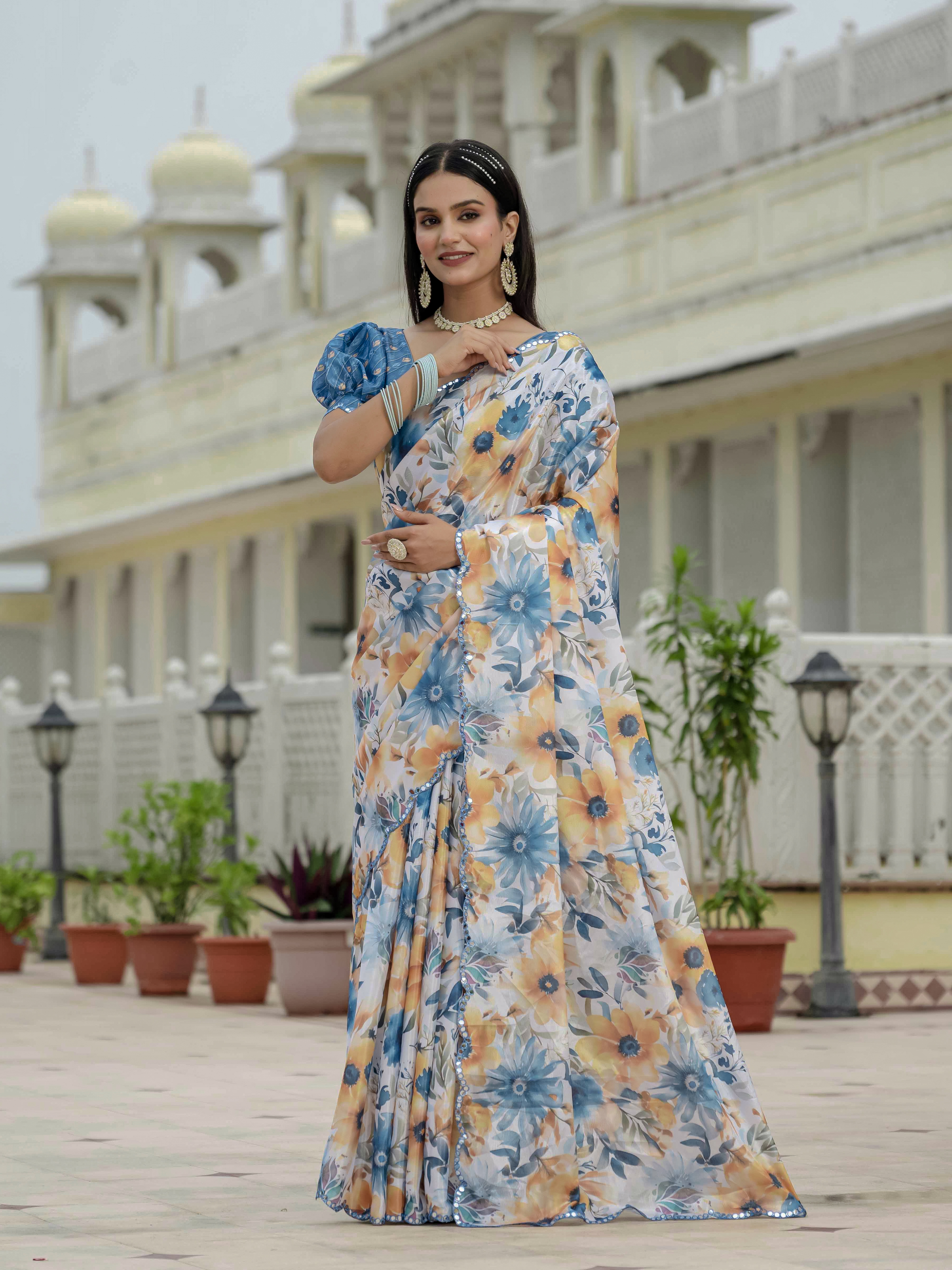
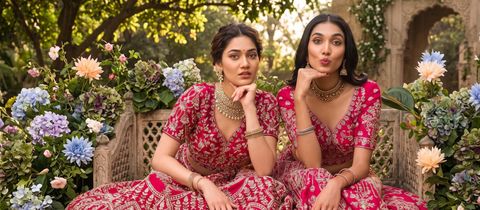
Chhath Puja Fashion in Jharkhand begins with respect for the ritual, not with heavy decoration. A saree for Chhath Puja should remain comfortable during fasting, carrying offerings, walking to the ghat and standing in water for arghya. A well-fitted blouse matters just as much because the right sleeve, neckline and fabric can make several hours of worship easier.
Jharkhand's Chhath celebrations bring together regional customs, family traditions and practical dressing choices. Many devotees choose a clean, traditional saree in cotton, tussar silk or another breathable weave, then keep the blouse modest and secure. Colour, fabric, border width and ease of movement all deserve attention before accessories or makeup.
Chhath Puja Fashion in Jharkhand: What makes clothing suitable for the rituals?
Suitable Chhath Puja clothing is clean, comfortable, modest and easy to manage near water. The outfit should allow the wearer to sit, walk, bend, carry a soop or daura and complete arghya without repeatedly adjusting the pallu or blouse.
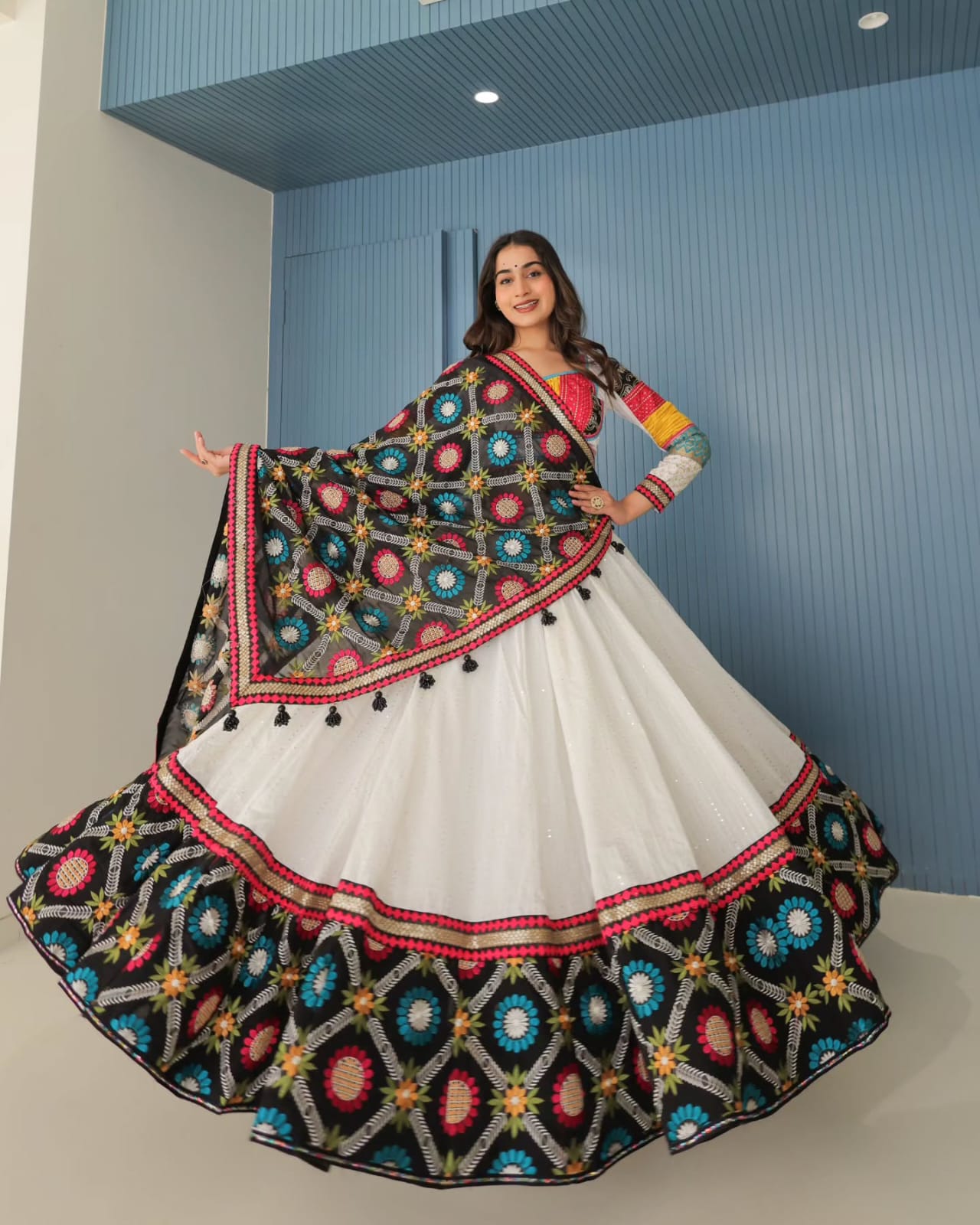
Chhath Puja is associated with offerings to Surya Dev and Chhathi Maiya, disciplined fasting and prayers performed at a river, pond or other water body. Clothing therefore needs a different balance from a reception outfit. A heavily embellished lehenga may seem festive but can become cumbersome when the wearer is walking on uneven ground or managing wet hems.
Time-honoured dressing varies between families. Some households prefer a plain red, yellow or saffron saree, while others select green, maroon, orange or a regional handloom. Certain families may avoid particular colours or decorative details according to household practice. Personal and family customs should take priority over general fashion advice.
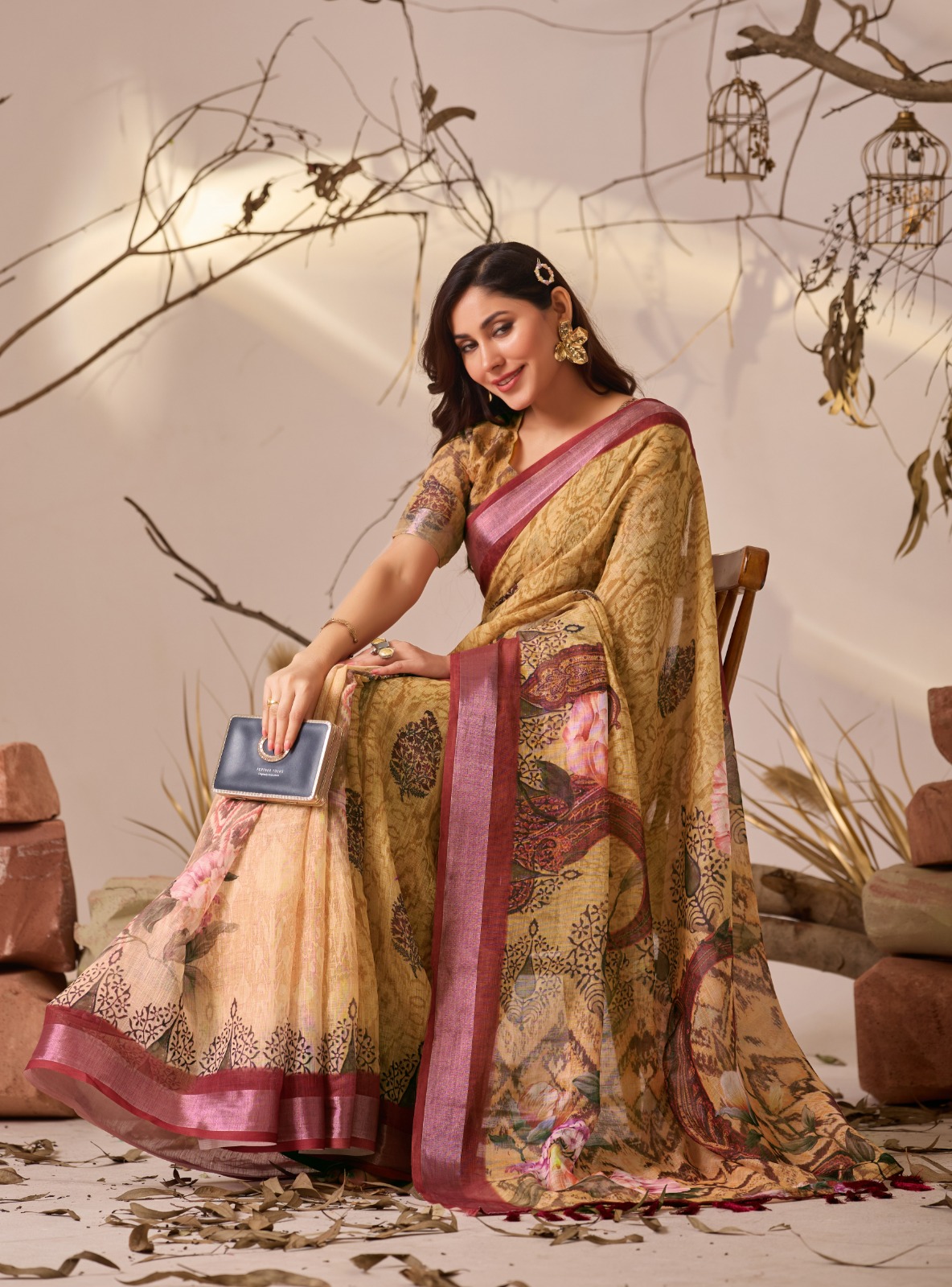
Jharkhand's handloom traditions make cotton and tussar especially useful choices. Tussar silk has a textured, slightly raw surface and a graceful fall, while cotton remains lighter and easier to wash after contact with dust, water or prasad. A zari border can add festivity, but a narrow or medium border is usually easier to handle than a broad, heavily weighted one.
Chhath Puja Fashion in Jharkhand: Which saree fabrics work best?
Cotton, lightweight tussar silk and breathable cotton-silk blends are among the most practical saree fabrics for Chhath Puja. These fabrics offer movement, moderate weight and better comfort than dense velvet, stiff brocade or heavily layered synthetic styles.
Cotton sarees for long ritual hours
Cotton sarees are a dependable choice when the day includes walking, fasting and prolonged standing. Ikat cotton, handloom cotton and crisp everyday cotton can hold a pleat well when starched lightly, although excessive starch may make the saree uncomfortable at the waist.
Ikat cotton creates pattern through yarn dyeing before weaving, giving the saree a distinctive blurred or geometric effect. An Ikat cotton saree pairs well with a plain blouse, a blouse in one of the weave's accent colours or a restrained printed design. A cream, brown or earthy Ikat palette can look rooted without appearing overworked.
Tussar and silk options
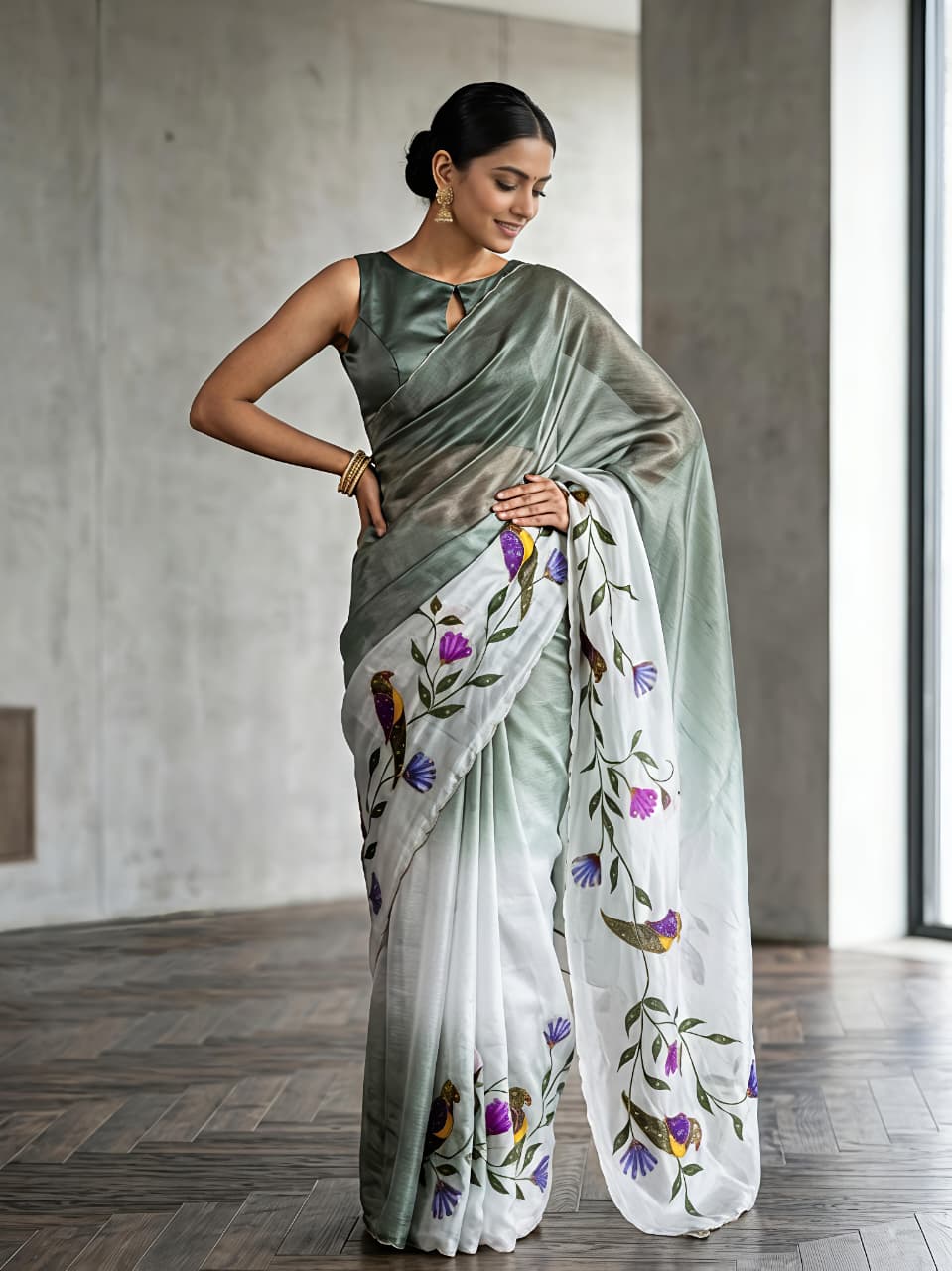
Tussar silk suits devotees who want a more formal classic appearance without choosing a very glossy fabric. Tussar usually has a textured finish and a structured drape, so the saree can look elegant with minimal jewellery.
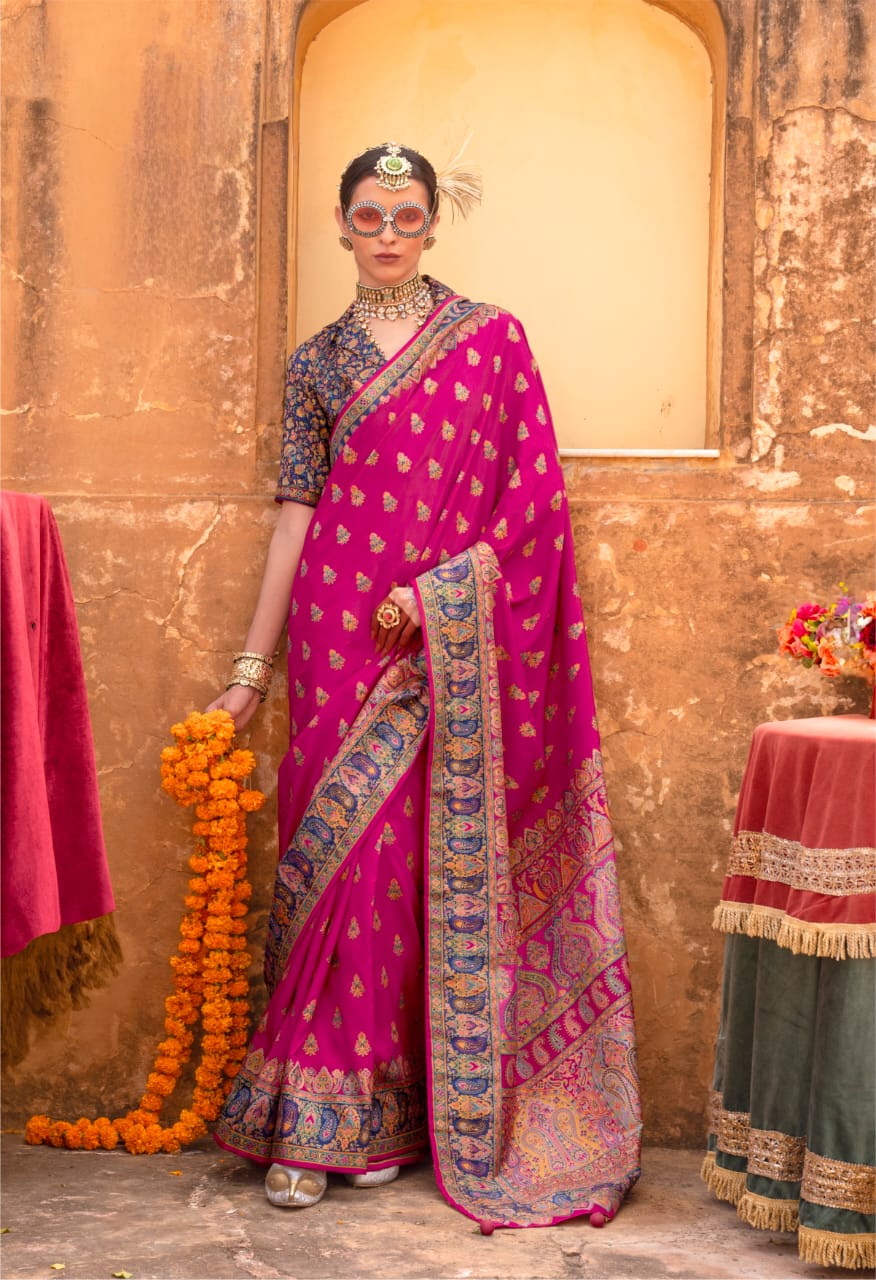
Banarasi silk can be beautiful for a family gathering or evening observance, but dense zari may add weight. Kanjeevaram sarees are also highly ceremonial, although their heavier silk and broad borders may be less convenient for walking to a crowded ghat. Chanderi offers a light, delicate alternative, but its sheer texture may require careful blouse and petticoat coordination.
A saree worn for Chhath Puja should be checked for colourfastness before the festival. Place a damp white cloth on an inside edge and press gently. If strong colour transfers, avoid wearing the saree where the lower half may become wet. This small test can prevent staining the petticoat, blouse or skin.
Chhath Puja Fashion in Jharkhand: How should a blouse fit?
The best blouse for Chhath Puja has a secure fit, comfortable armholes, a stable neckline and enough coverage for repeated movement. A blouse should support the saree rather than require constant correction during prayer.
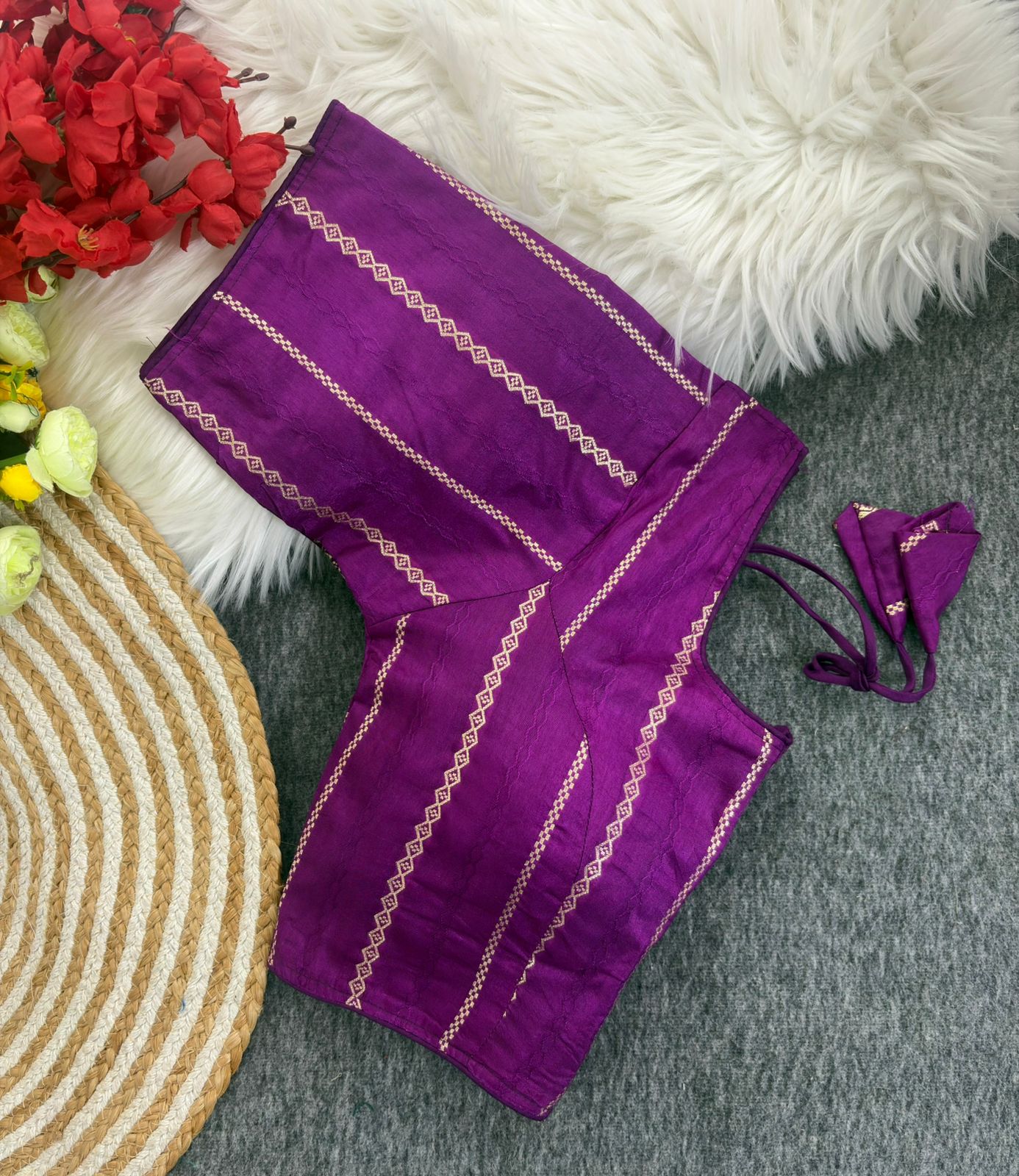
Blouse length is important near water. A slightly longer blouse that meets the saree waistband can prevent the fabric from shifting when the wearer bends or lifts the pallu. The back should close securely with hooks, a covered zip or well-finished tie strings. Loose decorative tassels can catch on baskets, bangles or other people in a crowded procession.
Sleeve lengths that balance comfort and tradition
Elbow-length sleeves offer a practical balance between heritage coverage and ease of movement. Short sleeves can work when the armhole isn't tight, while sleeveless blouses are most comfortable when the wearer prefers unrestricted movement and the family's dressing customs permit that style.
Necklines should sit flat against the body. A modest round, square or boat neckline generally works better for a long pooja than a deep neckline that needs repeated adjustment. A front opening is convenient for dressing, but the fastening should remain secure while carrying offerings.
Padded blouses can provide structure under a soft cotton or chiffon saree, but padding should not make the garment tight across the chest or ribs. A wearer who is fasting or spending many hours outdoors will usually appreciate breathable lining more than extra shaping. Cotton lining, smooth seams and non-scratch hooks are practical details worth checking.
Blouse ideas for classic sarees
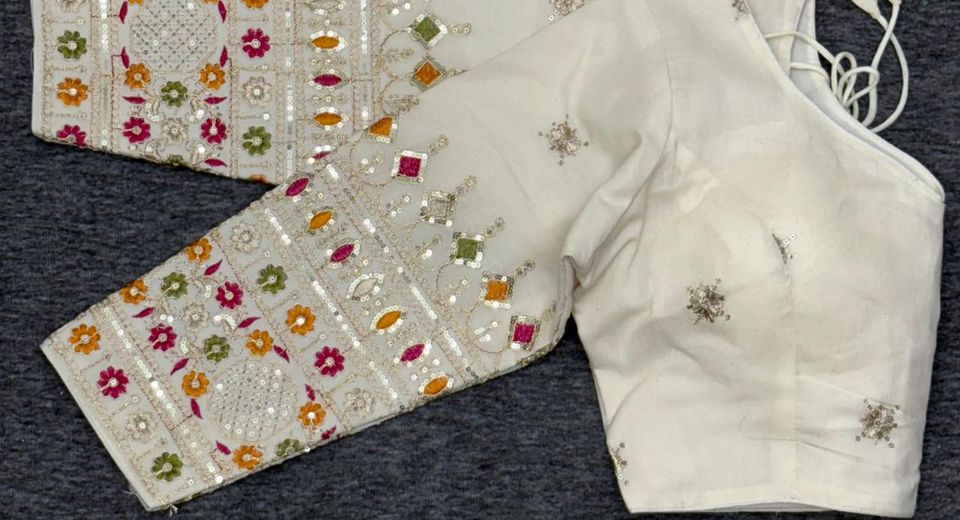
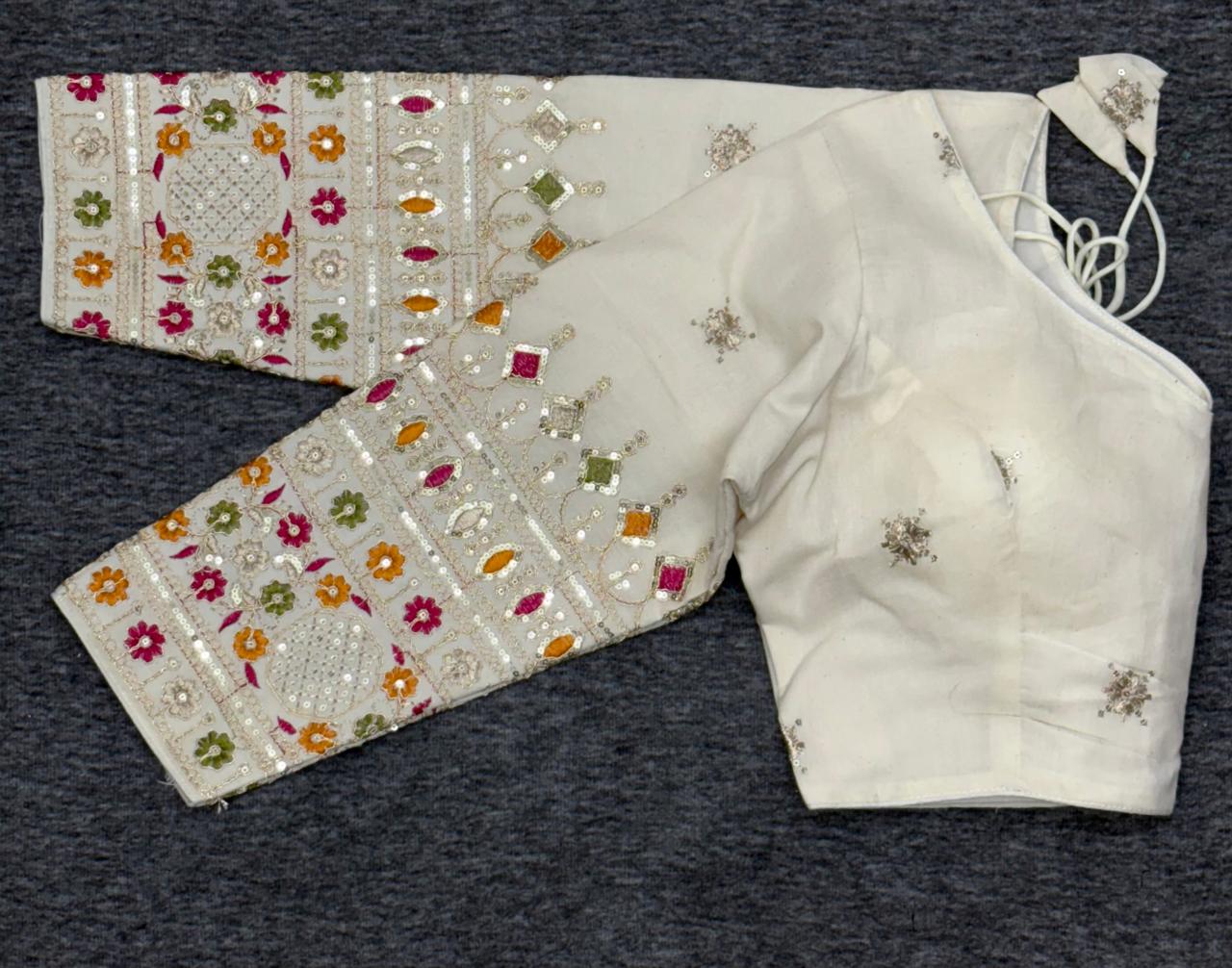
Classic Festive Wear Blouse for Stylish Saree Look can anchor a plain cotton or tussar saree when the wearer wants a conventional festive silhouette. The blouse works best when its colour repeats a border tone rather than competing with a strongly patterned saree.
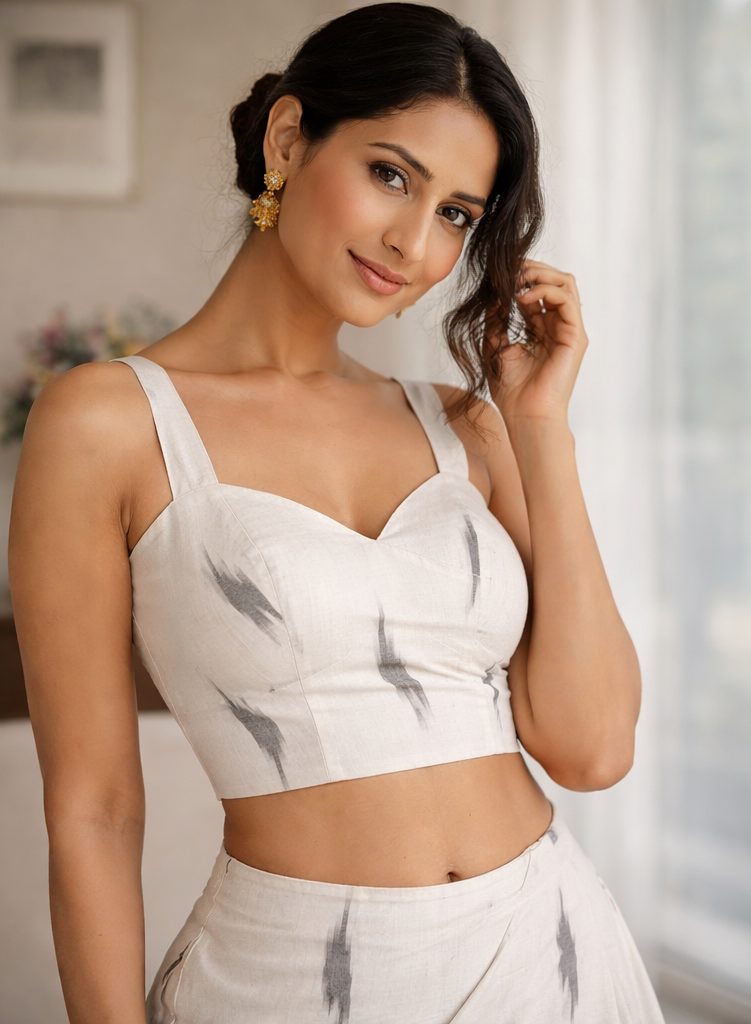
Cream Ikat Cotton Padded Blouse Sleeveless Trendy suits an Ikat cotton saree in cream, rust, mustard or muted brown. The sleeveless cut keeps the look contemporary, while the woven cotton character remains appropriate for a handloom-led outfit.
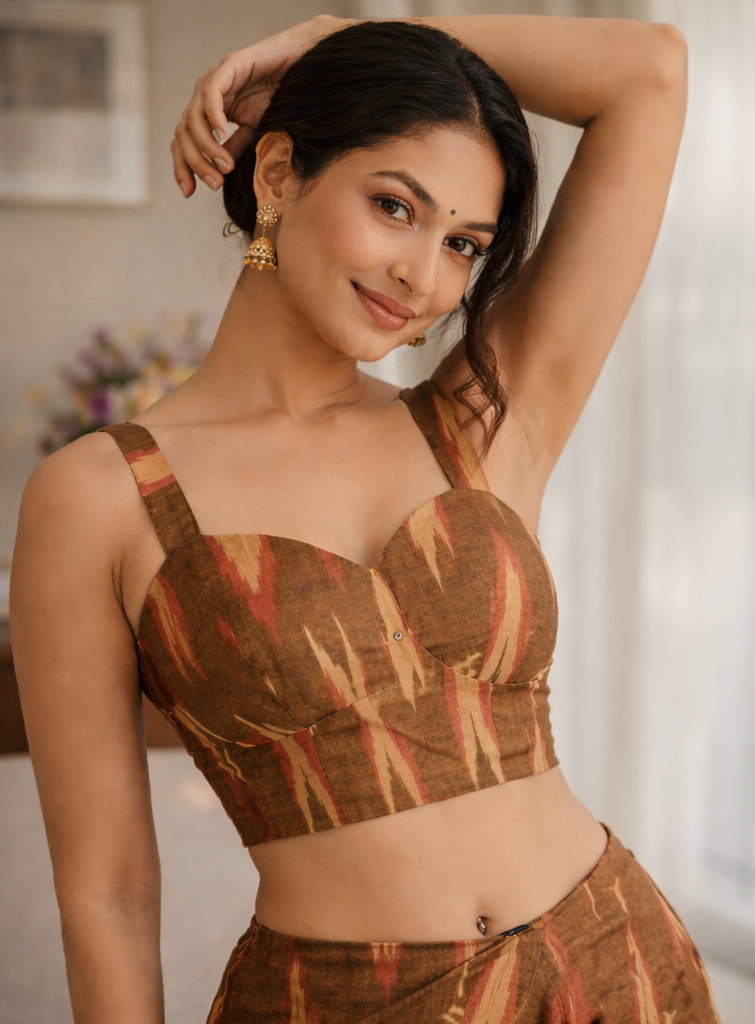
Brown Ikat Cotton Padded Blouse Sleeveless Stylish provides a grounded option for beige, cream, orange or red sarees. Brown can soften a bright festive palette and coordinate naturally with wooden bangles, a terracotta accessory or a muted border.
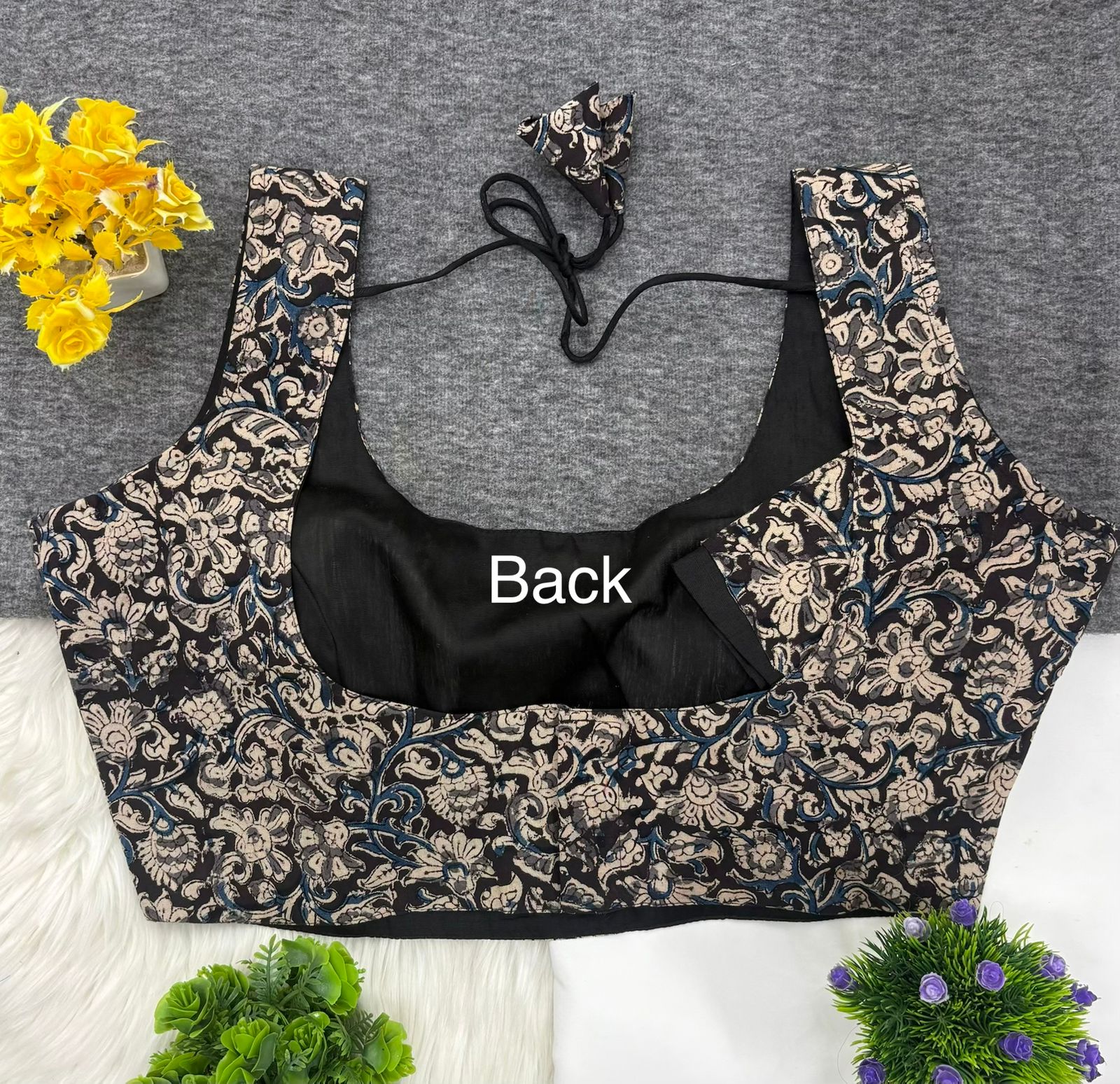
Pure Kalamkari Cotton Padded Blouse for Women brings a printed textile element to a plain saree. Kalamkari prints often contain floral, vegetal or narrative motifs, so the saree should remain relatively quiet when the blouse is the main patterned piece.
Banarasi Silk Golden Jari Padded Blouse for Women is suited to a more ceremonial silk or plain saree with a gold border. Golden zari can connect the blouse to classic festive dressing, but the overall outfit remains more comfortable when the saree and jewellery are not both heavily embellished.
Chhath Puja Fashion in Jharkhand: Which colours and motifs suit the occasion?
Red, golden, saffron, pink, green and maroon are commonly chosen for festive saree dressing, but a suitable Chhath colour ultimately depends on family tradition and personal comfort. A clean, well-maintained saree matters more than following a universal colour rule.
Yellow and saffron create a bright connection with sunlight and work well in cotton, tussar and lightweight silk. Red and maroon offer a more time-honoured visual depth, especially with a gold or antique zari border. Green can provide contrast through a blouse, pallu or bangles without making the outfit excessively ornate.
Motifs should support the devotional setting. Small butis, temple borders, floral prints, paisley, Ikat geometry and restrained woven patterns are versatile choices. Oversized sequins, long fringe and stiff three-dimensional embellishment may become uncomfortable when the saree is exposed to wind, water or crowds.
Gold-toned zari should be chosen thoughtfully. A narrow zari line on a cotton saree can look festive while preserving lightness. A dense metallic border can pull the saree downward and make pleats harder to keep in place. Matte gold jewellery often complements handloom textures more naturally than very high-shine costume pieces.
Chhath Puja Fashion in Jharkhand: How should a saree be draped for arghya?
A saree for arghya should have a firmly secured waist, compact pleats and a pallu that stays on the shoulder without restricting the hands. The drape must allow the wearer to step carefully, bend slightly and hold offerings safely.
Begin with a well-fitted cotton petticoat or underskirt that doesn't loosen when damp. Tuck the saree firmly but comfortably at the waist, keeping the hem above the ground by a small, practical margin. Very long hems collect mud and water, especially at a riverbank or pond edge.
Make narrower pleats than you might choose for a formal indoor event. Five to seven even pleats are often easier to control than a very broad fan of fabric. Secure the pleats inside the waistband with a discreet safety pin placed horizontally, then check that the pin can't touch the skin.
Bring the pallu over the shoulder at a length that leaves both hands free. A hidden pin near the shoulder and another near the waist can prevent sudden slipping. The pallu should not drag on the ground or trail into the water. A simple seedha pallu or a securely arranged ulta pallu can work, provided the wearer has practised it before the festival.
Footwear requires equal attention. Flat, washable sandals with a secure strap are safer than heels on wet stone or uneven soil. If the ritual requires barefoot participation, carry a clean bag for footwear and avoid walking through areas where broken glass, sharp stones or hot surfaces may be present.
Chhath Puja Fashion in Jharkhand: How can accessories remain practical?
Practical Chhath Puja accessories are lightweight, secure and easy to remove before entering water. Small earrings, a simple chain, a few fitted bangles and a bindi can complete a heritage look without creating distractions during worship.
Glass bangles may carry cultural significance, but wearing too many can make it difficult to hold a soop, daura or lota securely. Two or three sets are usually easier to manage than a full armful. Avoid loose bracelets that can slide down when hands become wet.
A firmly pinned bindi and a braid or low bun are more reliable than loose hair near a crowded ghat. Jasmine flowers can add a traditional touch, but flowers should be secured so that they don't fall into the water or interfere with the pallu. A small amount of transfer-resistant kajal and lip colour is more practical than a layered makeup routine.
Choose a cloth bag for essentials such as a phone, tissues, safety pins and a spare blouse hook. Plastic packaging can become difficult to manage in a ritual space. A lightweight cotton shawl may also help during early-morning or evening hours when temperatures fall.
Chhath Puja Fashion in Jharkhand: How can the outfit be prepared and cared for?
Outfit preparation should begin at least one day before Chhath Puja so that the saree, blouse, petticoat and accessories are tested together. A complete trial reveals slipping pleats, tight armholes, scratchy seams and colour mismatches before the wearer reaches the ghat.
Wash or air the saree according to its fibre instructions rather than assuming that every festive textile can be machine washed. Cotton may tolerate gentle hand washing, while Banarasi silk, tussar silk and zari work generally require more cautious care. Never rub metallic zari aggressively or leave a wet silk saree folded for several hours.
Iron cotton sarees on the reverse side at a moderate temperature and use a pressing cloth for silk. Fold the saree along the pleat direction only after it's completely dry. Damp storage can create mildew, odour and permanent creases.
Keep a small emergency kit with two safety pins, a needle, matching thread, a spare hook, tissues and a clean handkerchief. These inexpensive items can solve common problems such as a loose hook or slipping pleat without requiring a change of outfit. A second cotton blouse is useful when the day involves water, heat or extended travel.
The most successful Chhath Puja outfit combines cultural respect with physical ease. A breathable saree, a stable blouse, a secure drape and restrained accessories allow attention to remain on prayer rather than clothing adjustments. Jharkhand's cotton, Ikat and tussar traditions offer enough texture and colour to create a festive appearance without sacrificing practicality.
Common Questions About Chhath Puja Fashion in Jharkhand
Which saree is best for Chhath Puja in Jharkhand?
Cotton, lightweight tussar silk and breathable cotton-silk sarees are practical choices for Chhath Puja in Jharkhand. Cotton works particularly well for long hours, walking and contact with water, while tussar offers a more formal appearance with moderate weight.
What colour saree should women wear for Chhath Puja?
Red, yellow, saffron, orange, green and maroon are commonly selected for Chhath Puja, but family customs should guide the final choice. A clean, comfortable saree in a colour accepted by the household is more important than following a universal colour rule.
Which blouse design is suitable for Chhath Puja?
A modest blouse with secure fastenings, comfortable armholes and a stable neckline is suitable for Chhath Puja. Elbow-length sleeves, breathable cotton lining and a blouse length that meets the saree waistband can make bending, walking and carrying offerings easier.
Can a sleeveless blouse be worn for Chhath Puja?
A sleeveless blouse can be worn when it suits the family's customs and the wearer feels comfortable in the style. The blouse should fit securely, provide adequate coverage and coordinate with a breathable saree suitable for extended outdoor rituals.
How can a saree stay in place at the Chhath ghat?
Secure the saree with a well-fitted petticoat, compact pleats and discreet safety pins at the waistband and shoulder. Keep the pallu short enough to leave both hands free, and avoid a hem that drags through mud or water.
Is Banarasi silk suitable for Chhath Puja?
Banarasi silk can suit a ceremonial Chhath Puja gathering, especially when the saree has moderate zari and a manageable weight. Dense zari, very broad borders and delicate finishes may be less practical for walking to a crowded ghat or standing near water.