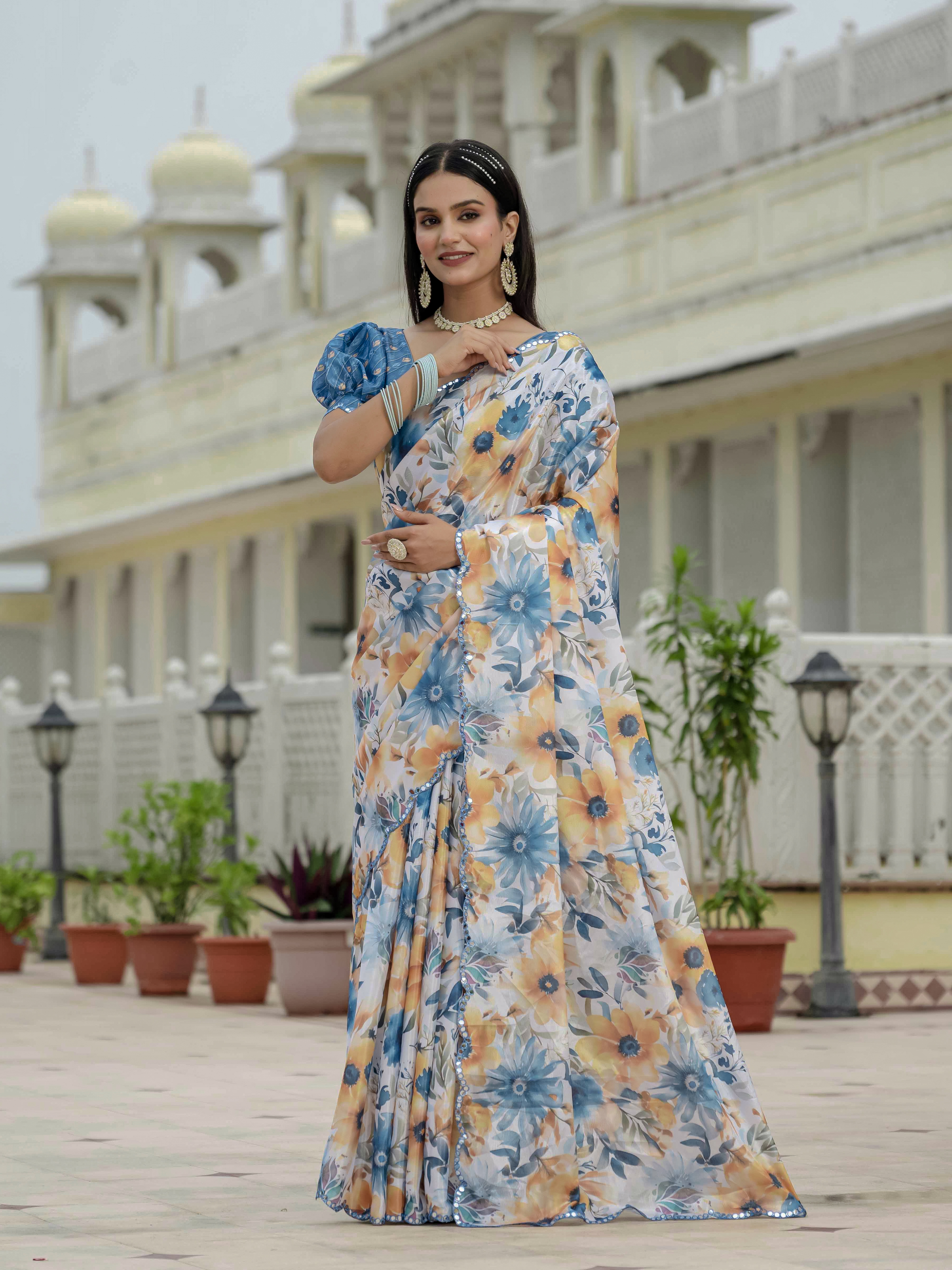
Chhath Puja 2026 Saree Ideas should account for more than colour and ornamentation. A woman observing Chhath may spend hours preparing prasad, walking to a ghat, standing in water during arghya and returning home before sunrise. The most suitable saree combines cultural respect, a secure drape, breathable fabric and a blouse that remains comfortable through a long ritual day.
Chhath Puja is closely associated with Bihar, Jharkhand, eastern Uttar Pradesh and parts of Nepal, while families across India now observe the festival at homes, neighbourhood ponds and city ghats. Traditional Bihari sarees for women can be styled with restraint and practicality. Banarasi soft silk, linen cotton and other lightweight sarees each offer a different balance of ceremony, movement and care.
Chhath Puja 2026 Saree Ideas for choosing a ritual-ready outfit
A clean, comfortable saree in silk, cotton or linen cotton with a secure blouse is a dependable choice for Chhath Puja. The saree should allow walking, bending and standing for extended periods, especially when worship takes place beside a river, pond or temporary ghat.
Chhath isn't one short prayer. Preparations can include cleaning the home, making thekua and other offerings, arranging a soop or daura, carrying fruits and joining both the evening and morning arghya. A saree that looks attractive in a photograph but slips at the waist, catches on wet ground or becomes heavy after contact with water can create unnecessary difficulty.
For a time-honoured appearance, choose a saree with a defined border, modest blouse coverage and jewellery that doesn't interfere with carrying offerings. A zari border can provide festive richness, but a heavily embellished surface isn't essential. The devotional setting generally rewards neatness, freshness and ease more than excessive decoration.
Chhath Puja 2026 Saree Ideas are most useful when they distinguish between the outfit worn for preparation and the outfit worn for the main ritual. A breathable linen cotton saree may be ideal while cooking or arranging offerings, whereas a structured soft silk saree may feel more appropriate for a family gathering or evening arghya.
Why does fabric weight matter during Chhath rituals?
Fabric weight matters because Chhath Puja may involve several hours of preparation and outdoor worship. Soft silk offers a ceremonial appearance with more body than a very fluid synthetic saree, while linen cotton usually feels lighter and more breathable during daytime preparation.
Banarasi silk and Banarasi soft silk work well when the wearer wants a visibly festive textile. A soft silk saree with a moderate zari border can be easier to manage than a heavily woven bridal Banarasi silk saree. Cotton and linen cotton are practical choices for home pooja, cooking, carrying prasad and warm-weather travel.
Chhath Puja 2026 Saree Ideas using silk and linen cotton
Banarasi soft silk is a strong option for an evening arghya or family gathering because the fabric has enough structure to hold pleats and the zari border gives the outfit a ceremonial finish. Banarasi silk is traditionally associated with Varanasi rather than Bihar, but the textile is widely worn across India for puja and festive occasions.
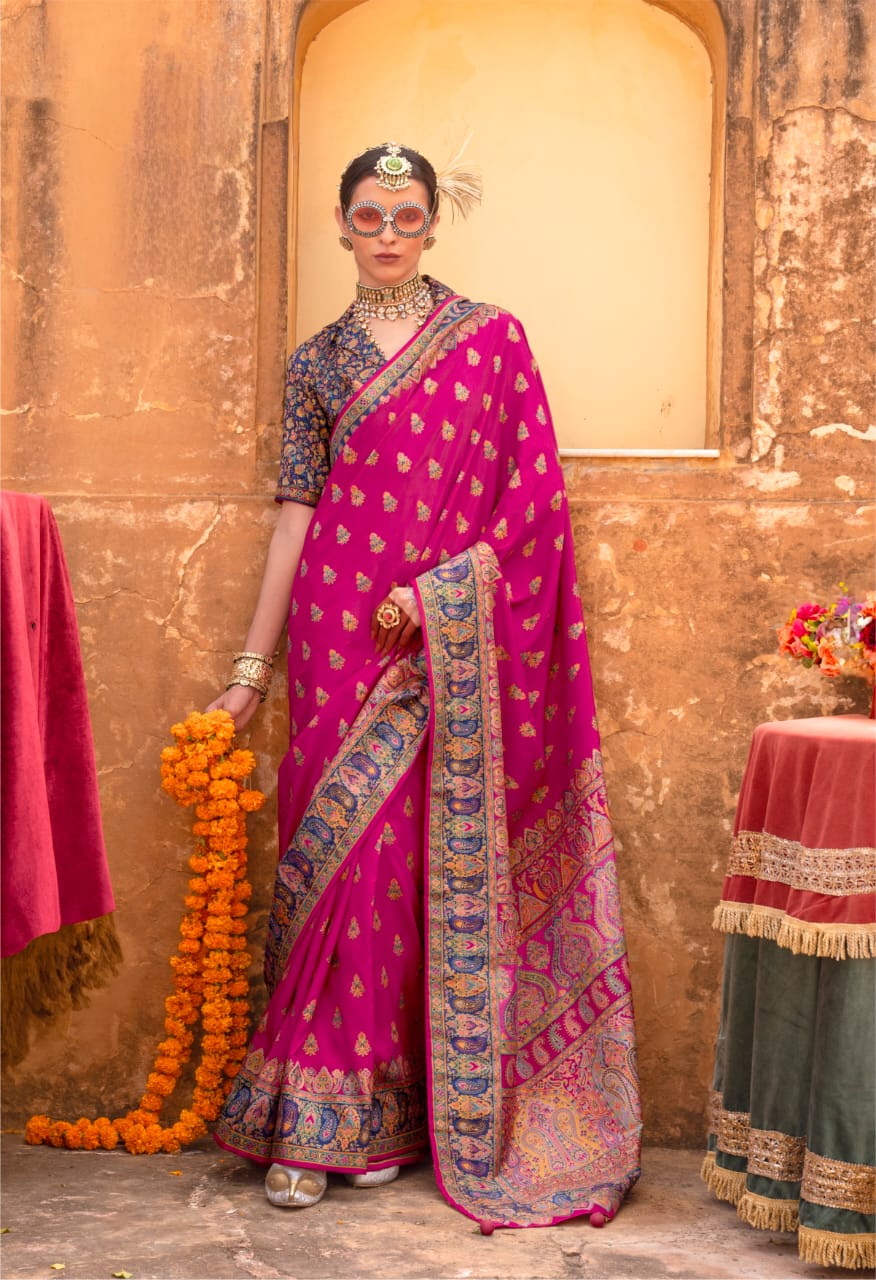
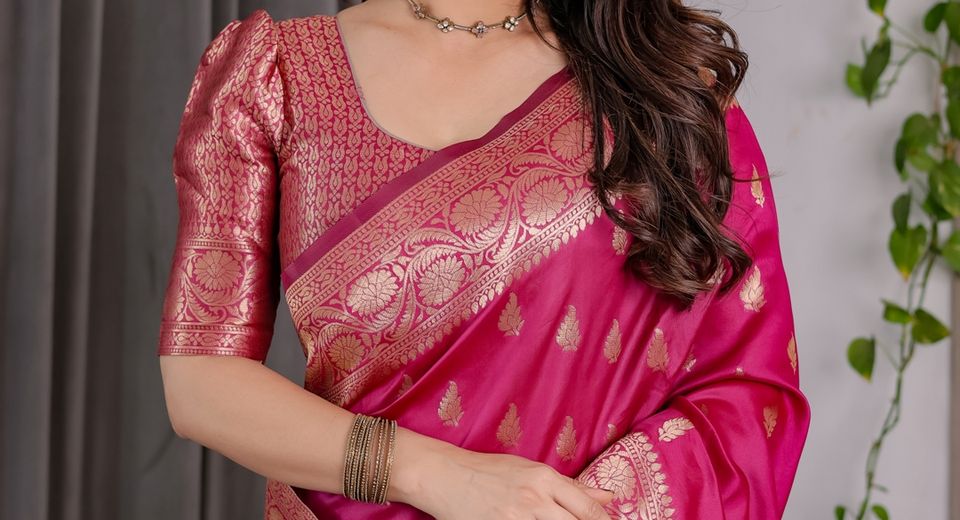
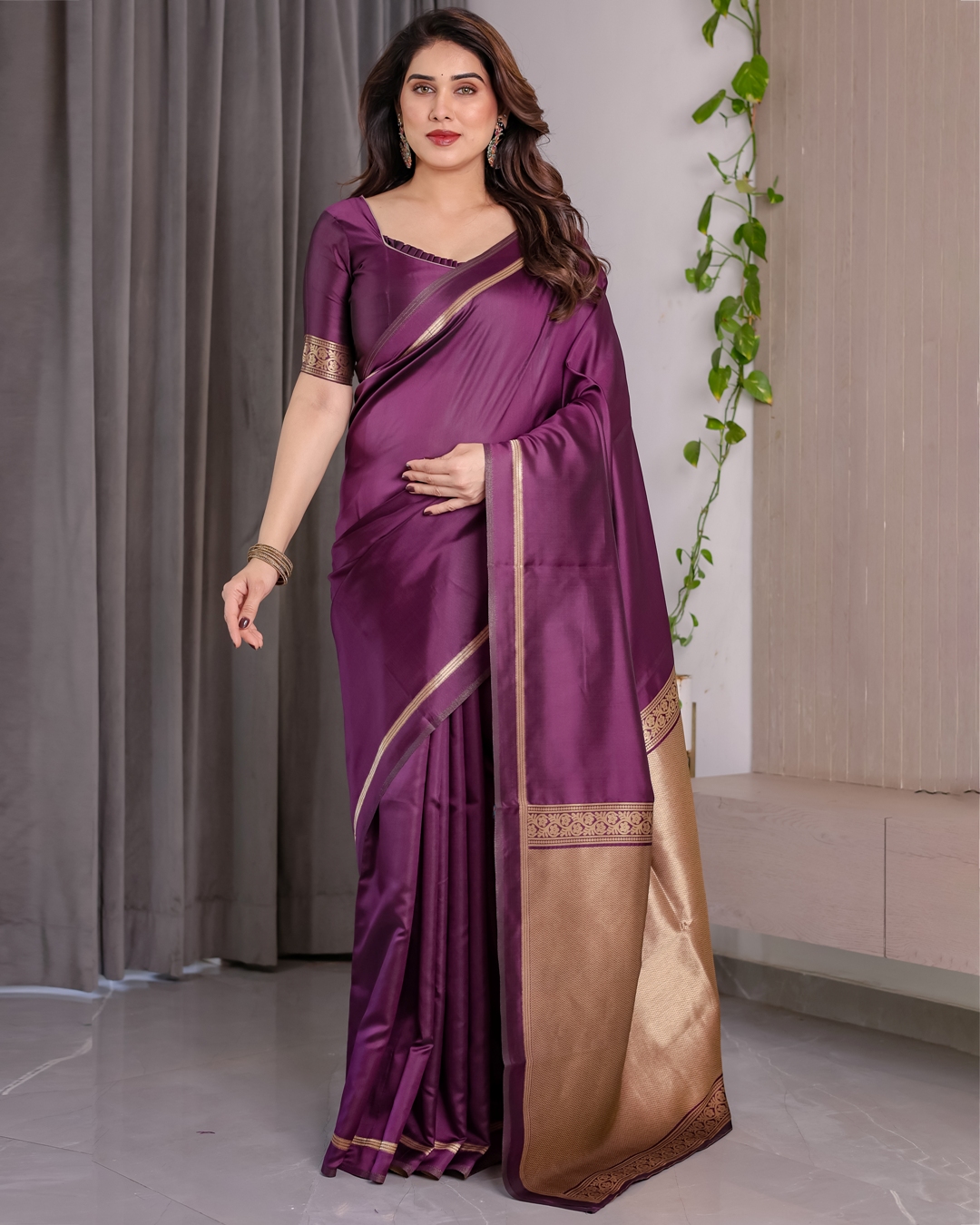
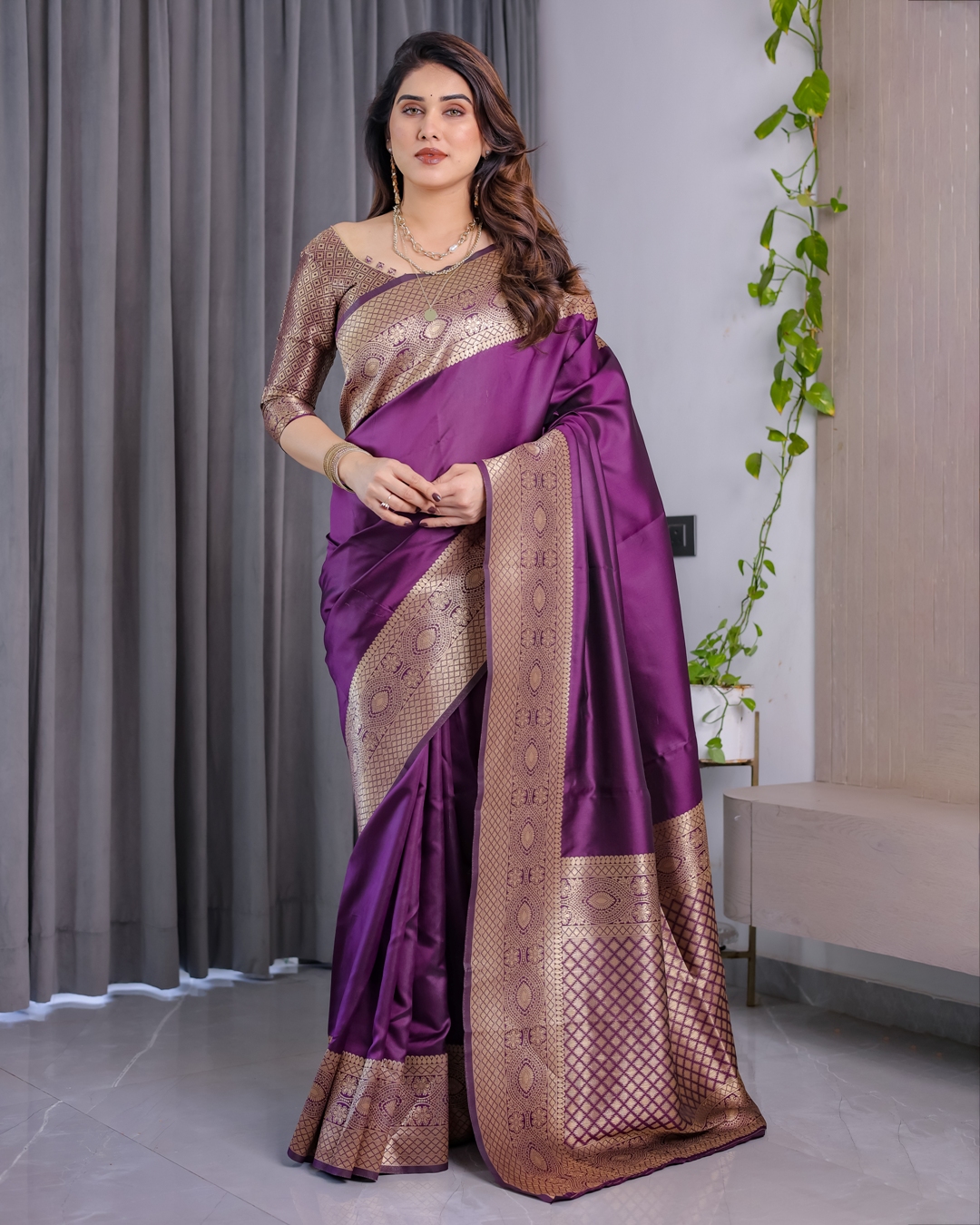
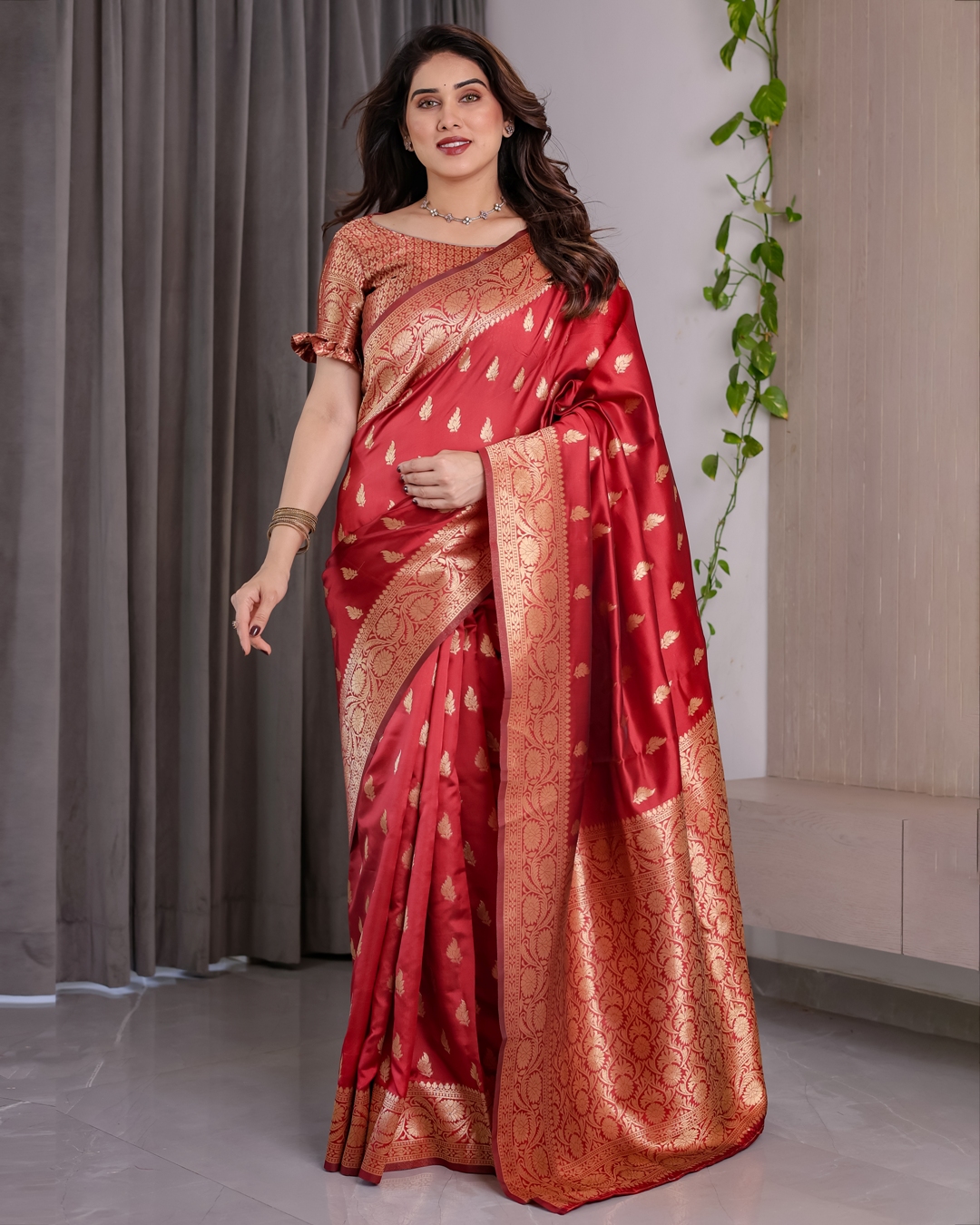
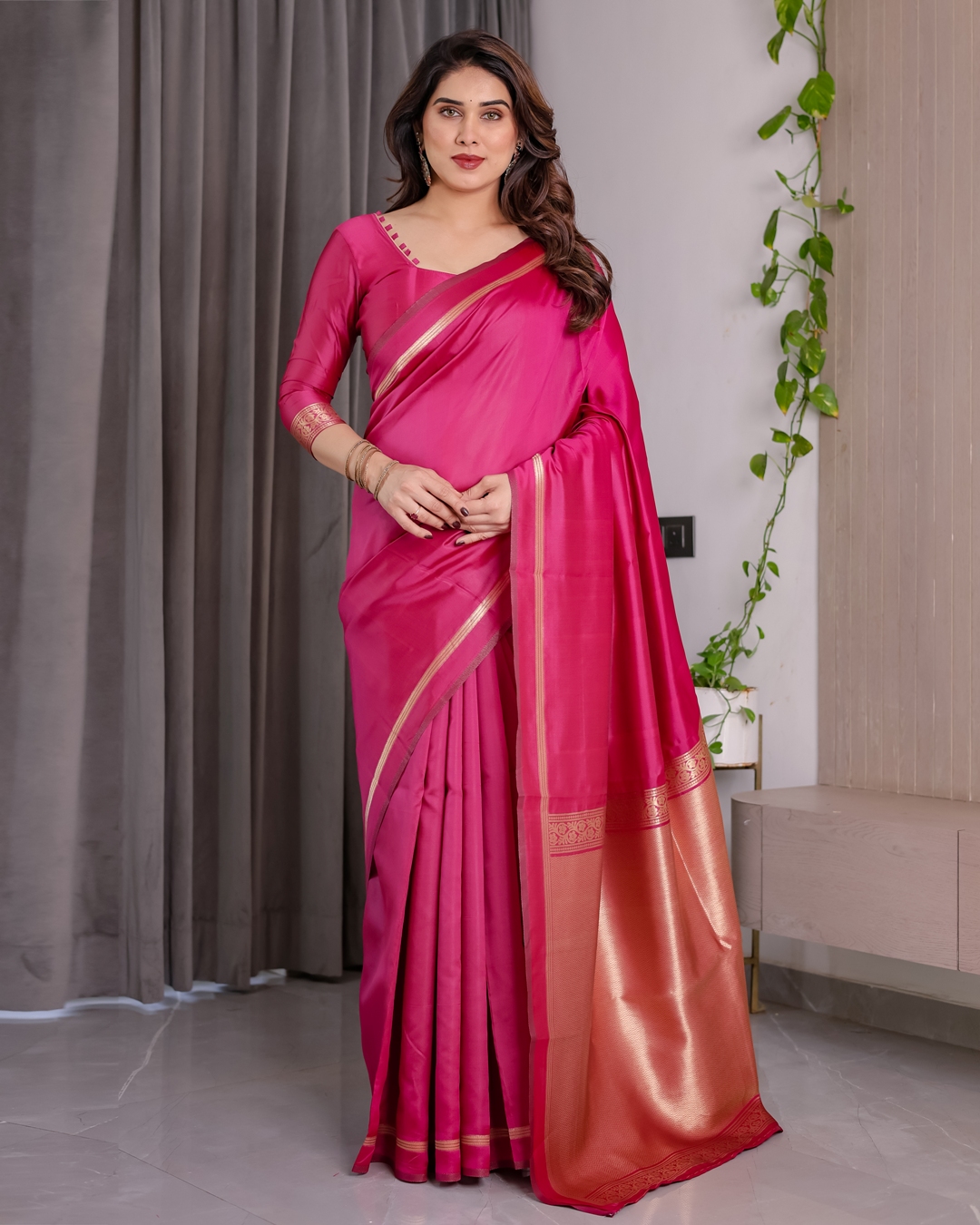
The Royal Plum Banarasi Soft Silk Saree With Golden Zari Border creates a deep jewel-toned look suited to an evening setting. The Pink Banarasi Soft Silk Saree with Golden Zari Border gives a softer festive palette. Both colour directions can be balanced with a plain blouse and limited jewellery.
The Purple Banarasi Soft Silk Saree with Elegant Zari & Jacquard adds surface interest through its jacquard detail. A textured saree can look complete without extensive jewellery, although the wearer should check the saree's weight and blouse fit before committing to a long outdoor ritual.
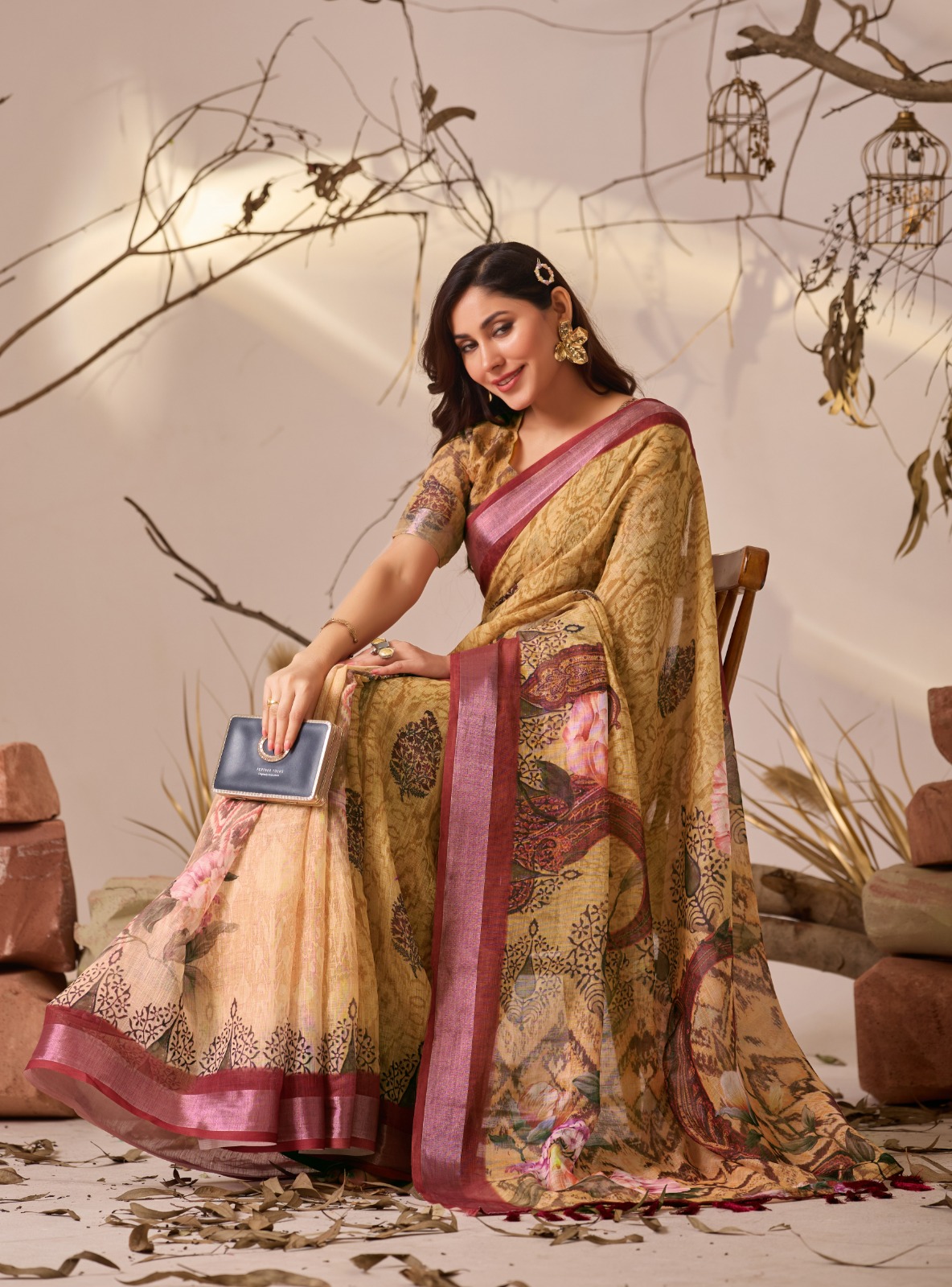
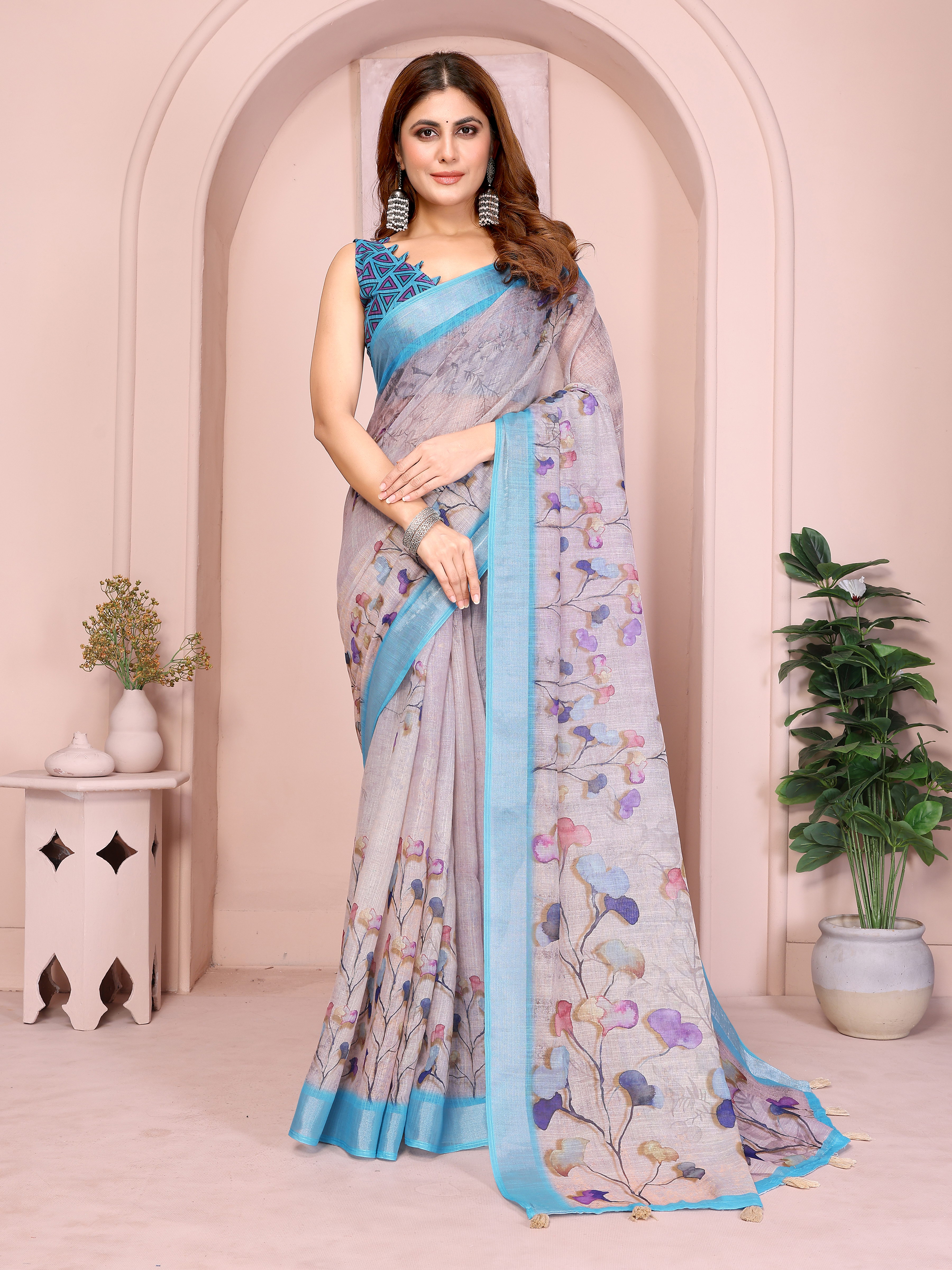
Linen cotton suits women who prioritise breathability and a less formal appearance. The Pastel Linen Cotton Floral Print Saree with Designer Blouse can work for daytime preparation or a home-based pooja, particularly when paired with flat footwear. The Peach Linen Cotton Floral Print Saree with Blouse for Women brings a warm colour option for women who prefer floral prints over metallic borders.
Georgette can feel comfortable because of its light fall, but a very slippery georgette saree may need careful pinning near the shoulder and waist. Test the chosen saree at home before the festival by walking for ten minutes, sitting on the floor, bending forward and climbing a few steps while wearing the planned blouse and footwear.
When is a Banarasi saree more suitable than a linen cotton saree?
A Banarasi saree is more suitable when the main priority is a formal festive appearance, while linen cotton is more suitable when breathability and easy movement matter most. The choice should reflect the ritual schedule, weather and amount of walking involved.
A Banarasi soft silk saree is useful for an evening arghya followed by visiting relatives. A linen cotton saree may be easier for preparing prasad, managing household tasks or attending a daytime pooja at home. Neither fabric is automatically more time-honoured for every family, so local custom and personal comfort should guide the final decision.
Chhath Puja 2026 Saree Ideas for colours and border details
Red, yellow, orange, pink, maroon, green and earthy shades are commonly chosen for festive Indian dressing, but Chhath Puja doesn't require one universal saree colour. The best colour respects family tradition, remains comfortable for the wearer and photographs well in early morning light.
Red has strong festive visibility and works well for an evening ghat gathering. The Red Banarasi Soft Silk Saree With Golden Zari Floral Border brings a heritage red-and-gold direction. The Pink Banarasi Soft Silk Saree With Rich Golden Zari Borders provides a brighter alternative with a more elaborate border.
Pink and peach can look graceful at sunrise because soft natural light reduces the sharp contrast created by very dark colours. Purple, plum and wine shades suit women who want a deeper palette without choosing red. The Purple Banarasi Soft Silk Saree With Golden Zari Border can be paired with a muted gold blouse rather than an equally dark blouse.
White and cream may be worn according to local family custom, but preferences vary across communities and households. Ask the family whether a very pale saree is appropriate for the specific Chhath observance before purchasing one. Personal tradition should take priority over a generic fashion rule.
A border also changes the visual character of a saree. A narrow zari border looks understated and can suit a simple home pooja, while a wide gold border creates a more ceremonial appearance. Floral zari, jacquard texture and printed borders can each work, provided the saree remains comfortable and the embellishment doesn't make the garment unnecessarily heavy.
Chhath Puja 2026 Saree Ideas for a secure and comfortable drape
A secure Nivi drape with closely set pleats, a firmly pinned pallu and comfortable footwear is practical for both arghya rituals. Keep the pallu long enough for modest coverage but not so long that the end touches wet ground or becomes difficult to control near water.
Make six to eight front pleats of similar width and anchor the pleats at the waist with a concealed safety pin if the fabric permits it. Pin the pallu at the shoulder when carrying a thali, soop or fruit basket. A second small pin inside the shoulder fold can prevent shifting without making the fastening visible.
Choose a blouse with sleeves and a neckline that allow the wearer to raise her arms comfortably. A blouse that's too tight across the shoulders can restrict movement while carrying offerings. A lining that feels breathable and fastenings that don't dig into the skin become especially important during long rituals.
Flat sandals with a textured sole are safer than narrow high heels on grass, stone steps and damp ground. Carry a small cloth bag for pins, tissues and a spare hair tie. A transparent rain cover or cotton garment bag can protect the saree during travel, but the pallu should still be kept away from wet ground near a ghat.
How should jewellery and makeup remain practical?
Lightweight jewellery is practical for Chhath Puja because the wearer may carry offerings and stand outdoors for a long period. Studs or medium jhumkas, a thin chain, two or three bangles and a small bindi create a finished look without catching on the pallu.
Low-transfer makeup is more suitable than a thick base for an outdoor pooja. Sunscreen, a small amount of powder and a lip colour that can be reapplied are generally enough for daytime preparation. Hair should be secured in a bun or braid because wind, humidity and movement around a ghat can loosen an open hairstyle.
Chhath Puja 2026 Saree Ideas for practical pooja shopping
Online pooja shopping should begin with measurements, fabric details and delivery timing rather than colour alone. Read the stated saree length, blouse-piece length, fabric composition, border description and care instructions before placing an order.
Many standard sarees measure approximately 5.3 to 5.5 metres, with an attached blouse piece of roughly 0.8 to 1 metre, but measurements vary by product. A taller wearer, a broader waist or a preference for a longer pallu may require additional planning. Send an unstitched blouse piece to a tailor at least 7 to 10 days before Chhath Puja to allow time for a fitting and one alteration.
Budget-led shoppers can compare the Silk Sarees Under 3000 With Discount collection when a festive fabric is needed at a defined price point. A lower price doesn't remove the need to inspect the weave, finishing, return conditions and delivery estimate. Red-focused shoppers can also compare the Red Banarasi Silk Sarees for Weddings Under 1100 collection, although a wedding-oriented assortment should be judged for Chhath by comfort and drape rather than by its category label.
Pink Georgette Sarees can help when a lightweight fall is the priority, while Party Wear Sarees may offer more embellished choices for a family gathering after the puja. Gray Color Sarees Under 1000 can suit understated personal style, but gray should be checked against the family's preferred festive colour tradition before becoming the final Chhath selection.
Product photographs can hide fabric weight and transparency. Look for close images of the border, reverse side and blouse fabric, and check whether the colour shown is photographed in daylight or studio lighting. Place the order early enough to allow a delivery inspection, blouse stitching and a possible exchange. For Chhath Puja 2026, completing saree shopping at least two weeks before the planned event gives a practical margin for alterations.
What should be checked when buying a saree for pooja online?
Check fabric composition, saree length, blouse-piece measurements, border weight, care instructions, delivery date and exchange conditions before buying a saree online for pooja. These details are more useful than relying on a product title such as festive, heritage or party wear.
Inspect the saree as soon as it arrives. Confirm that the colour, border and blouse piece match the order, then drape it once before removing tags. A trial can reveal whether the pleats hold, whether the pallu length feels sufficient and whether the blouse fabric can support the desired neckline or sleeve pattern.
Chhath Puja 2026 Saree Ideas for care after the festival
After Chhath Puja, air-dry the saree in shade before storing it, especially if the garment has been exposed to humidity, river water, pond water or perspiration. Do not seal a damp saree in plastic because trapped moisture can create odour, mildew or fabric damage.
Banarasi silk and zari sarees should usually be dry-cleaned according to the care label rather than washed aggressively at home. Fold the saree with the zari facing inward to reduce direct abrasion, refold it every few months and store it in a clean cotton or muslin cover. Avoid placing heavy jewellery boxes on top of the folded saree.
Linen cotton can usually be cared for more simply, but the specific care label should still be followed. Remove stains by dabbing gently with a clean, damp cloth instead of rubbing the printed or woven surface. Keep perfume, hair spray and cosmetic products away from zari because alcohol and chemicals can affect metallic finishes.
A well-chosen Chhath saree can remain useful beyond one festival. A red or pink Banarasi soft silk saree may return for weddings and family ceremonies, while a pastel linen cotton saree can serve for daytime pooja, cultural events and summer gatherings. Choosing a versatile fabric and a blouse with a classic cut improves the garment's long-term value.
How can a Chhath saree be reused for another occasion?
A Chhath saree can be reused for weddings, family ceremonies, Durga Puja visits or other religious gatherings by changing the blouse, jewellery and drape. A Banarasi saree with a gold border can become more formal with a brocade blouse, while a linen cotton saree can remain understated with silver-toned jewellery and a simpler drape.
For a Kolkata Durga Puja visit, a printed linen cotton saree can provide a lighter daytime look, while a soft silk saree can suit an evening pandal visit. The same principles apply to a Pooja Function at home: choose secure pleats, practical footwear and accessories that don't interfere with movement.
Common Questions About Chhath Puja 2026 Saree Ideas
Which type of saree is best for puja?
A clean, comfortable silk, cotton or linen cotton saree is suitable for puja, depending on the weather and ritual schedule. Banarasi soft silk works well for a formal festive appearance, while linen cotton is practical for preparation, home pooja and long periods of movement.
Which saree is suitable for Chhath Puja?
A saree with a secure drape, breathable fabric, modest blouse and manageable border is suitable for Chhath Puja. Red, pink, orange, yellow, green, maroon and jewel tones are common festive choices, but family tradition should guide the final colour.
Where can I buy authentic pooja sarees?
Authenticity depends on accurate fabric details, clear measurements, care instructions and a reliable exchange process rather than on the word pooja in a product name. Compare Banarasi soft silk, linen cotton and other sarees by weave, border, blouse-piece length and delivery timing before ordering.
How should I drape a saree for Chhath Puja?
Use a secure Nivi drape with six to eight even pleats, a firmly pinned pallu and flat footwear with a textured sole. Keep the pallu away from wet ground and test the complete drape by walking, sitting and bending before the ritual.
Can I wear a silk saree for a pooja at home?
A silk saree is appropriate for a pooja at home when the fabric is comfortable and the drape does not restrict movement. Banarasi soft silk is particularly suitable for a polished festive look, while linen cotton may be easier for cooking and arranging offerings.
Where can I shop for Durga Puja sarees online?
Online collections featuring Banarasi silk, georgette, linen cotton and other festive sarees can be compared for Durga Puja dressing. Check fabric weight, blouse measurements, delivery dates and care requirements because a saree suitable for a pandal visit may differ from one chosen for outdoor Chhath rituals.