

Chaniya Choli and Salwar Suit Styles for Gujarati Navratri need to handle two very different demands: festive visual impact and hours of movement. Garba and dandiya involve repeated spinning, walking, clapping and energetic arm movements, so a beautiful outfit also needs a stable fit, breathable fabric and a dupatta that won't become a distraction. The right choice depends on the dance setting, venue temperature, personal comfort and how traditionally you want to dress.
Gujarati Navratri clothing traditionally draws attention to colour, circular movement, mirror work, embroidery and a full silhouette. A chaniya choli creates that familiar swirling effect, while a salwar suit offers easier everyday wear, simpler fitting and often better mobility through the knees and ankles. Both can look appropriate for Garba when the proportions, details and accessories are selected with intention.
What makes an outfit suitable for Gujarati Navratri?
A suitable Gujarati Navratri outfit combines visible festive detail with enough freedom for dancing, walking and sitting comfortably. The most useful checks are fabric weight, sleeve comfort, waistband security, hem length, lining and dupatta placement.
Garba outfits are often worn for several hours, including travel and time spent standing in a crowded circle. Heavy velvet, stiff layers and excessive surface embellishment can feel uncomfortable after the first hour. Lightweight Viscose Chanderi, Chanderi and Vichitra silk blends can provide a more practical balance when the garment has a comfortable lining and doesn't pull at the shoulders.
Movement also changes how a garment should fit. A chaniya needs enough flare to rotate without catching around the ankles, but the waistband should remain firm while turning. A salwar suit should allow a full stride, with trousers that are neither so narrow that they restrict movement nor so long that they brush the floor.
Garba venues may have bright lights, warm indoor air and large crowds. Colours such as red, mustard, pink, royal blue, green, orange and ivory photograph well under festival lighting, while metallic zari, sequins and mirror-like embellishments add the reflective quality associated with Navratri dressing.
Chaniya Choli and Salwar Suit Styles for Gujarati Navratri
Chaniya choli works best for a strongly traditional Garba appearance, while a salwar suit works best for easy movement, repeat wear and a polished festive look without a full skirt.
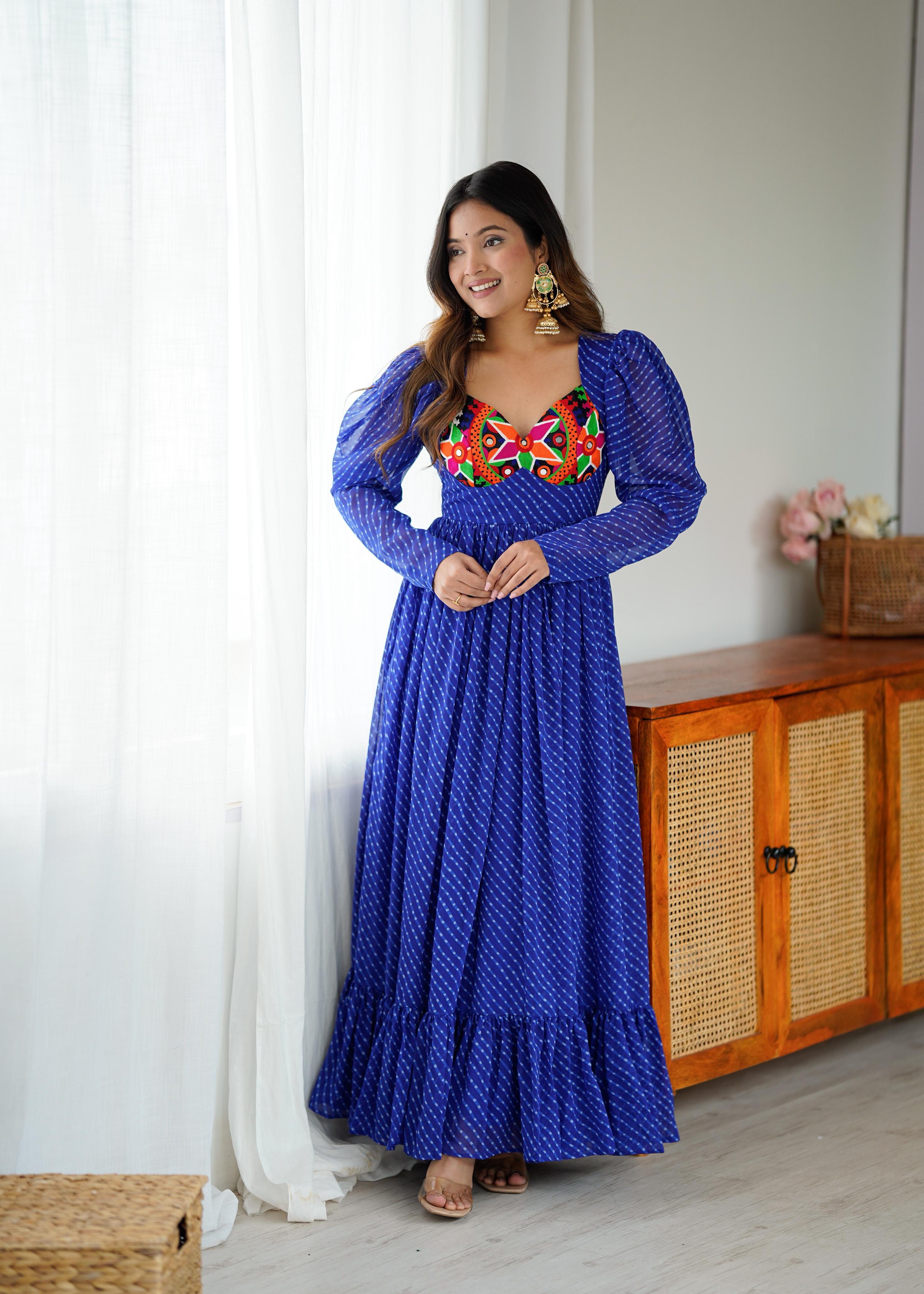
Chaniya choli for a classic Garba silhouette
A chaniya choli usually consists of a fitted or semi-fitted blouse, a flared skirt and a dupatta or odhani. The skirt creates visual movement during Garba, especially when the flare is evenly distributed and the hem isn't too heavy. A blouse with secure straps, comfortable armholes and a moderate neckline is more practical than a very loose or restrictive design.
Traditional Gujarati styling may include mirror work, colourful embroidery, bandhani-inspired colour placement, tassels and zari. These elements don't all need to appear together. One detailed component, such as an embroidered choli or embellished border, can provide enough festive character when balanced with a simpler skirt or dupatta.
Salwar suits for a lighter, easier alternative
Salwar suits are a strong Navratri option because straight kurtas, Anarkalis, palazzo trousers and relaxed salwars allow comfortable movement without requiring the volume of a full chaniya.
An Anarkali salwar suit gives a graceful flare and works well for family gatherings, temple visits and slower Garba events. A straight kurta with palazzo trousers gives more controlled volume for crowded venues. A sharara-style bottom creates a festive outline while keeping the outfit separate from the floor, which can be useful when commuting or dancing on a compact indoor stage.
The Ladies Dress Anarkali Salwar Suits collection is worth considering when you want a longer, flowing line without choosing a lehenga. The Dress Materials collection is useful when you need to customise length, sleeves or fit before Navratri. Sale-led browsing can also be practical for a second festive outfit through Salwar Suits with 30% Off or Salwar Suits Flat 40% Off, provided the available delivery and alteration time suit your event date.
Which fabrics are comfortable for Garba and dandiya?
Chanderi and lightweight Viscose Chanderi are generally more comfortable for long Garba sessions than dense, heavily layered fabrics because they offer a lighter feel and a fluid drape.
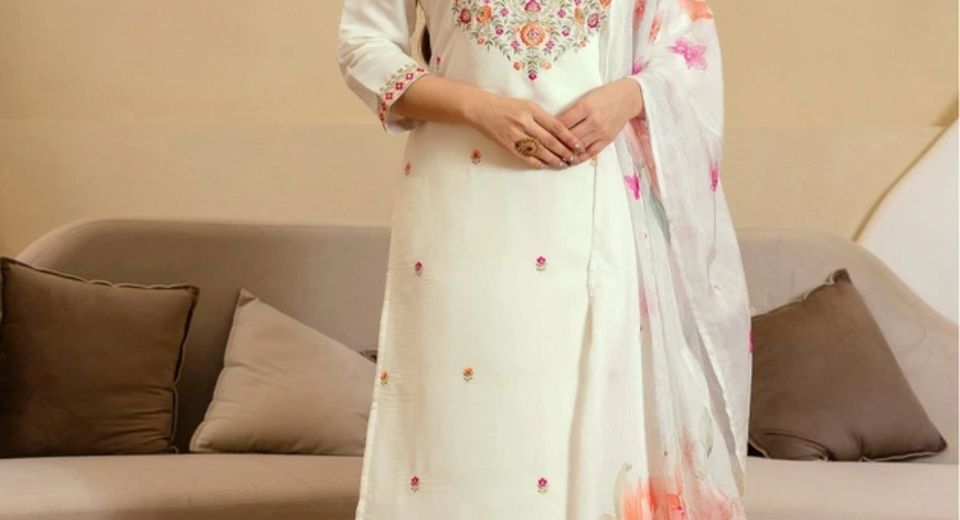
Chanderi has a delicate, elegant surface and can look especially effective with floral embroidery or a restrained border. The White Chanderi Kurta Set with Floral Embroidery and Dupatta demonstrates how a pale base can look festive when embroidery and the dupatta provide definition. White may require more care around food, dust and coloured powder, so it suits controlled indoor events better than an outdoor venue with heavy foot traffic.
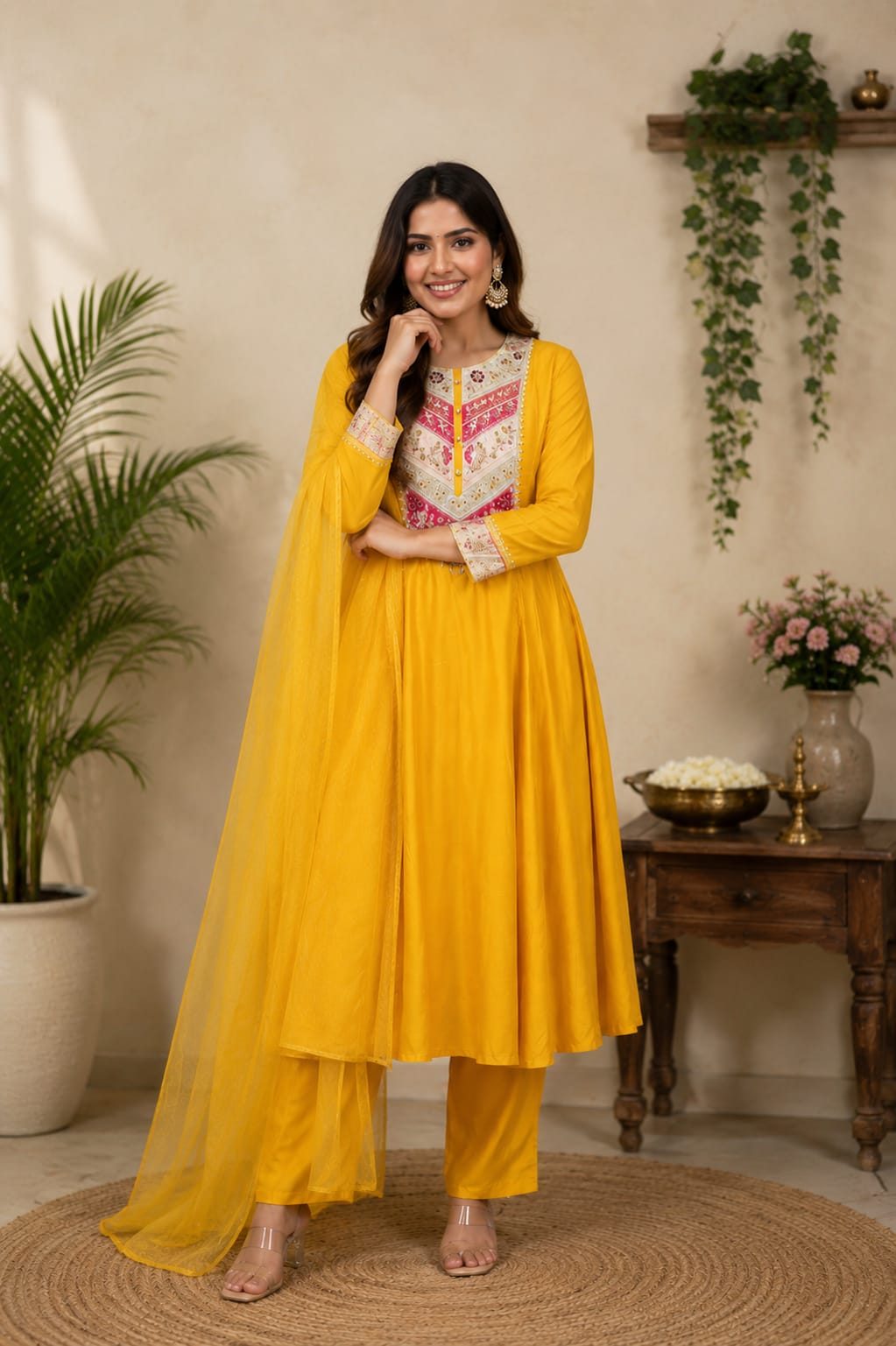
Mustard Viscose Chanderi Kurta Set with Sequence Embroidery brings together a warm Navratri colour and a relatively fluid fabric character. Mustard works well with antique gold jewellery, green accents, maroon footwear or a contrasting dupatta. Sequence embroidery catches movement and light, but checking the reverse side for rough threads is important before dancing for several hours.
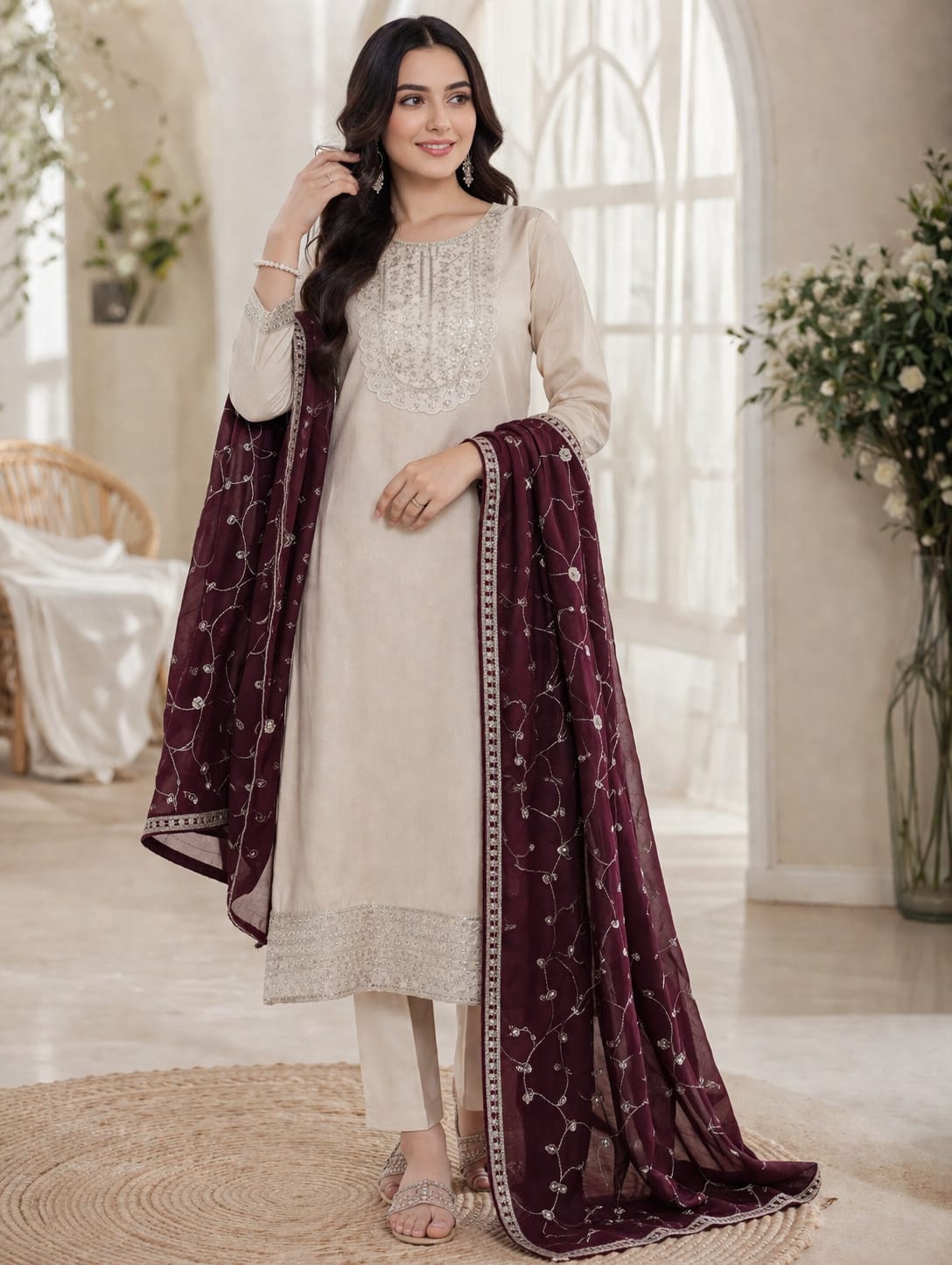
Vichitra silk has a richer visual finish and can give a kurta set a more dressed-up appearance. Elegant Beige Vichitra Silk Embroidered Kurta Set for Women is an useful example of a neutral festive outfit: beige can be intensified with red bangles, a bright bandhani-style dupatta or oxidised silver jewellery. Maroon Vichitra Silk Kurta Set with Elegant Embroidery Work brings a deeper colour option for evening celebrations and photographs strongly against warm lighting.
Fabric choice should also account for the venue. A breathable, lightly lined outfit is preferable for a warm community hall, while a more structured silk-blend set may be comfortable in an air-conditioned banquet space. Do not judge comfort from fibre names alone; lining, seam finish, sleeve construction and garment weight matter equally.
How should you choose colours for the nine nights?
Choose Navratri colours according to the event's traditional theme, your skin-tone preferences and the lighting at the venue, rather than buying a colour that looks attractive only in a product photograph.
Many people enjoy assigning a different colour to each Navratri night, although the exact colour sequence can vary by year, region and family tradition. Confirm the organiser's theme if you're attending a community Garba event. A colour-coordinated night is a good reason to use a solid kurta set with detailed accessories instead of purchasing a new heavily embroidered outfit for every evening.
Red, fuchsia and maroon create a visibly festive effect and pair naturally with gold or antique-finish jewellery. Mustard, orange and yellow look energetic under evening lights. Blue and green offer a cooler visual balance, particularly when the venue is warm or when you prefer silver accessories. White, ivory and beige can look refined with colourful embroidery, but they need more careful maintenance.
Pastel Blue Embroidered Chanderi Kurta Set with Dupatta shows how a softer shade can remain festive through embroidery and coordinated layering. Pastel blue pairs well with pearl earrings, silver jhumkas, white bangles or a bright pink accent. A pale outfit can also be easier to restyle for a daytime puja or family lunch after Navratri.
How can a salwar suit be styled for Garba?
A salwar suit becomes Garba-ready when the silhouette, accessories and dupatta support movement without competing with one another.
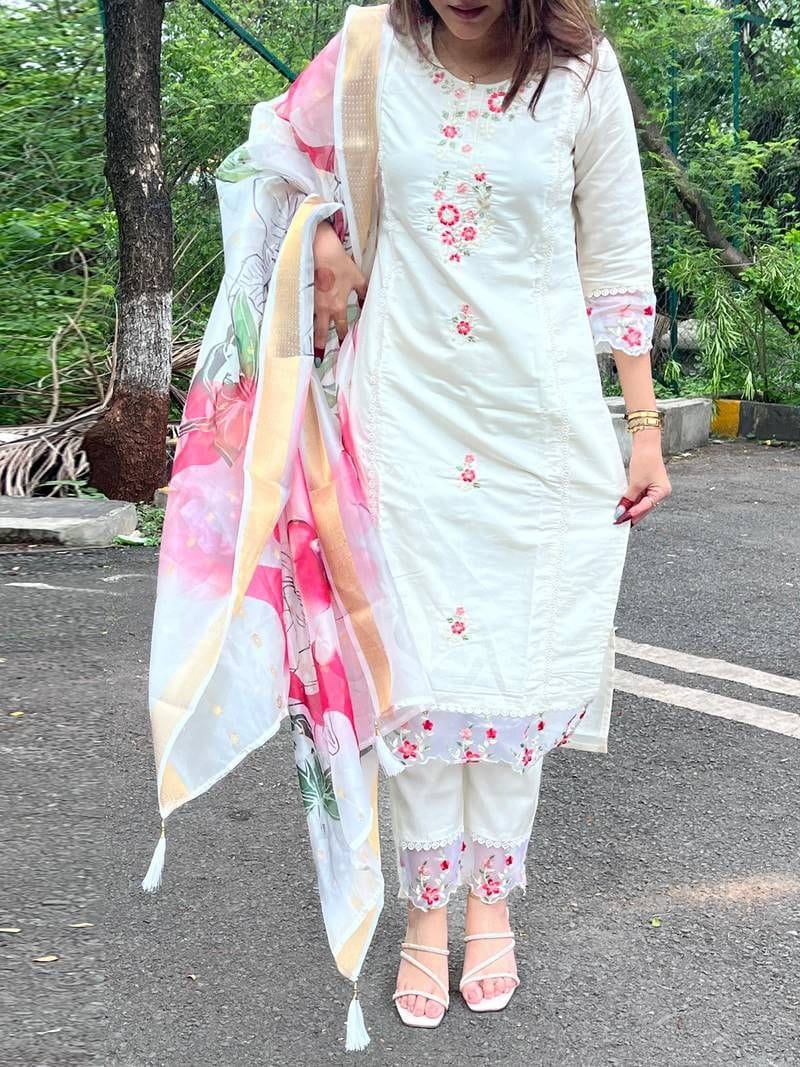
Build the outfit around movement
Choose a straight kurta with palazzos, a lightly flared Anarkali or a relaxed kurta set with a secure waistband. Avoid a trouser hem that drags below the ankle. If the kurta has a high side slit, test the garment by taking a large step and raising both arms before wearing it to the event.
Maroon Viscose Chanderi Silk Embroidered Kurta Set for Women can work for an evening Navratri event where a deeper tone and embroidery provide enough impact without a very wide skirt. Modern Taupe Vichitra Silk Embroidered Co-Ord Set for Women gives a contemporary neutral direction; colourful earrings, a bright dupatta or stacked bangles can bring the outfit closer to a traditional festive palette.
Secure the dupatta before adding jewellery
Pin the dupatta at one shoulder and anchor it discreetly near the waist when dancing in a crowd. A front-draped dupatta can be elegant for photographs, but a shorter, securely pinned drape is safer during dandiya because loose fabric can catch on bangles, sticks or another dancer.
Use two small safety pins with covered heads rather than one large visible pin. Place one pin at the shoulder and one at the waist, keeping the pin away from delicate embroidery. A lightweight dupatta is usually easier to manage than a densely embellished one, particularly with a full-sleeved kurta.
Use accessories strategically
Choose one major accessory direction: oxidised silver for a folk-inspired look, gold-toned pieces for silk and warm colours, or colourful enamel jewellery for a more playful Garba combination. Jhumkas, bangles and a small bindi can create a complete festive look without a heavy necklace.
Comfortable footwear matters more than an extra accessory. Select flat juttis, cushioned sandals or low wedges with a secure strap. Wear the shoes indoors before Navratri so that stiff edges don't cause blisters during a long evening.
What fit details should you check before buying?
Check the shoulder, bust, armhole, waist, trouser length and lining before buying a Navratri outfit, because a festive garment can't compensate for an unstable or restrictive fit.
Raise both arms, sit on a chair and take several long steps when trying on a kurta set. The armhole should not cut into the underarm, and the shoulder seam should remain close to the shoulder edge. A kurta that twists when you lift your arms may become increasingly uncomfortable during Garba.
Inspect the waistband of palazzos, shararas and salwars. An elastic waistband should lie flat without rolling, while a drawstring should have enough adjustment to stay secure without creating a bulky knot. The bottom hem should clear the floor by approximately 1 to 2 centimetres with your chosen footwear.
Consider sleeve length carefully. Three-quarter sleeves are often practical for dancing because they reduce contact with bangles and sticks. Full sleeves can feel warmer, while very wide sleeves may catch on jewellery or other clothing in a crowded circle.
Order alterations at least 7 to 10 days before the event when possible. That timeframe allows a tailor to adjust sleeve length, trouser hems, side seams or the dupatta edge without relying on last-minute fixes. If ordering online, compare the garment measurements with a well-fitting kurta already in your wardrobe instead of selecting a size from memory.
How should Navratri outfits be cared for after the festival?
Care for embroidered Chanderi, Viscose Chanderi and silk-blend outfits by following the garment label, avoiding prolonged soaking and storing each piece in a clean, dry, breathable cover.
Air the outfit in shade after wearing it, especially if the garment absorbed perspiration. Do not leave embellished clothing in direct sunlight, because strong exposure can affect dyes and weaken delicate surface work. Remove temporary safety pins before storage so that the metal doesn't rust or snag the fabric.
Dry cleaning may be appropriate for heavily embroidered or silk-blend garments, while some lighter outfits may permit gentle hand washing. Never assume that a pale Chanderi or embellished kurta is colourfast. Test an inconspicuous area only if the care label permits it, and keep dark and light garments separate during storage.
Fold embroidered panels inward with soft cotton or plain tissue between layers. Avoid hanging a heavy embellished garment for months because the shoulders can stretch. Refolding the outfit every few months reduces permanent creases, and storing it away from damp walls helps prevent musty odours.
How do you choose between chaniya choli and a salwar suit?
Choose chaniya choli for maximum traditional volume and choose a salwar suit for easier movement, simpler fitting and broader post-Navratri wear.
A chaniya choli suits a dedicated Garba night, an outdoor celebration or a theme that encourages traditional Gujarati styling. A salwar suit is often the more versatile purchase when you also need clothing for puja, family visits, office festivities or other wedding-season events.
Budget can also guide the decision. A complete chaniya choli may require separate choices for blouse fitting, skirt volume, lining and dupatta. A coordinated kurta set reduces those decisions and can offer a lower alteration burden. Browsing Red Dress Materials Under 2000 can be useful for shoppers who want to create a custom festive set within a defined budget, although stitching and embellishment costs should be included in the final calculation.
For a particularly long or active evening, prioritise breathable fabric, secure construction and comfortable shoes over maximum embellishment. For photographs or a formal family gathering, a richer Vichitra silk or embroidered Chanderi set can provide the polished finish you want. The strongest Navratri wardrobe often includes both approaches: one high-energy outfit for dancing and one adaptable suit for the quieter parts of the celebration.
Questions About Choosing Gujarati Navratri Outfits
What should women wear for Gujarati Navratri Garba?
Women can wear a chaniya choli for a traditional Gujarati silhouette or a salwar suit for easier movement and simpler fitting. Choose breathable fabric, a secure waistband, comfortable footwear and a dupatta that is pinned at the shoulder and waist.
Is a salwar suit suitable for Garba?
A salwar suit is suitable for Garba when the trousers allow a full stride and the kurta does not restrict the shoulders or arms. Straight kurtas with palazzos, lightly flared Anarkalis and relaxed embroidered kurta sets are practical choices.
Which fabric is best for a Navratri salwar suit?
Chanderi and lightweight Viscose Chanderi are comfortable options for long Navratri events because they feel relatively light and drape well. Lining, seam finish and garment weight also affect comfort, so fibre content should not be the only deciding factor.
How do I stop my dupatta from slipping while dancing Garba?
Pin the dupatta securely at one shoulder and anchor it near the waist with a second covered-head safety pin. Keep the drape shorter and lighter when playing dandiya, because loose embellished fabric can catch on bangles, sticks or nearby dancers.
What colours are popular for Gujarati Navratri outfits?
Red, maroon, mustard, yellow, orange, pink, blue, green, ivory and white are popular Navratri choices, although the colour assigned to each night can vary by year and region. Confirm any event-specific colour theme before choosing your outfit.
How early should I buy or alter a Navratri outfit?
Buy the outfit early enough to allow alterations at least 7 to 10 days before the event. Use that time to check the hem, sleeve length, waistband, lining, dupatta pins and footwear rather than discovering fit problems on the first Garba night.





