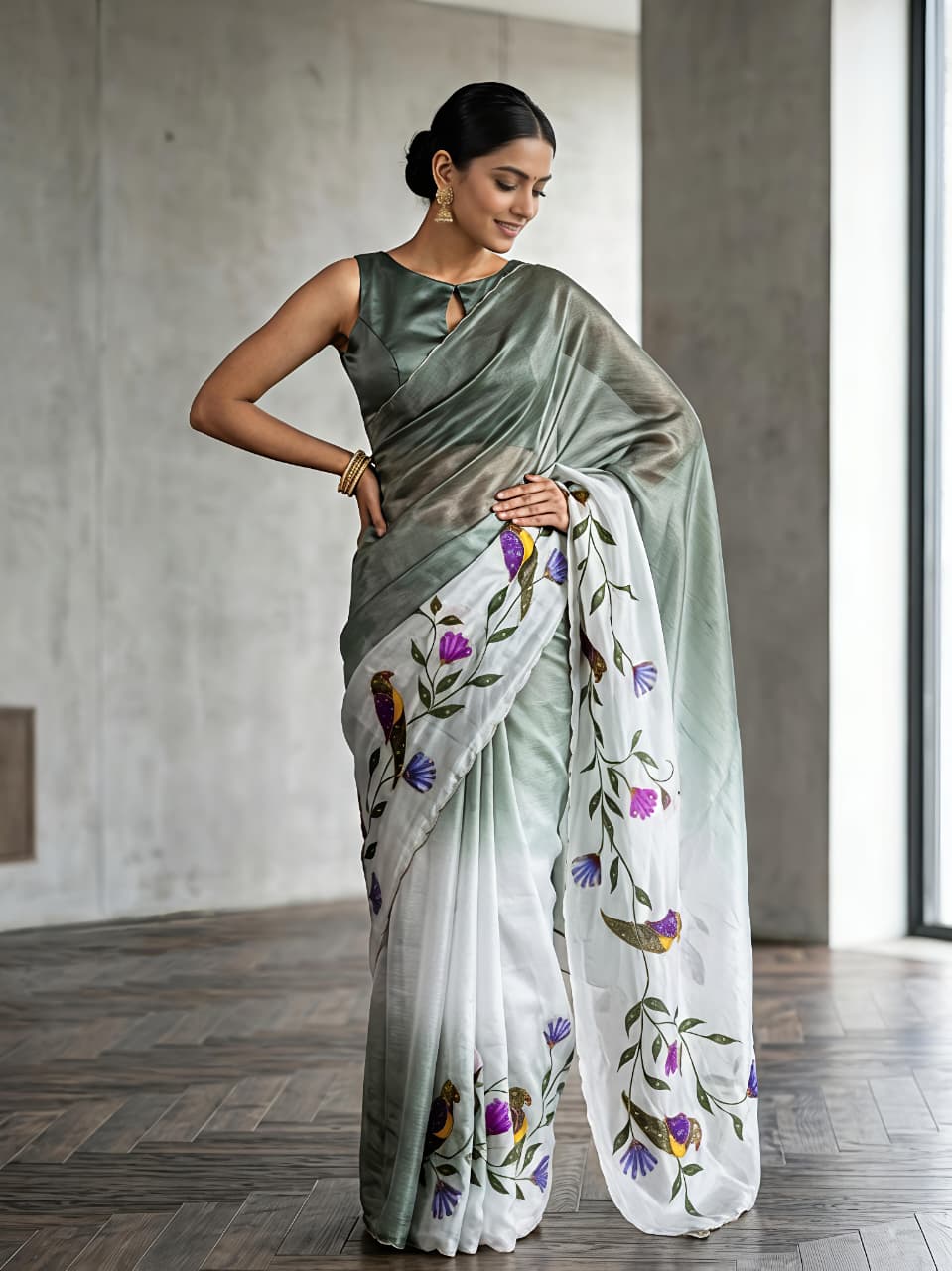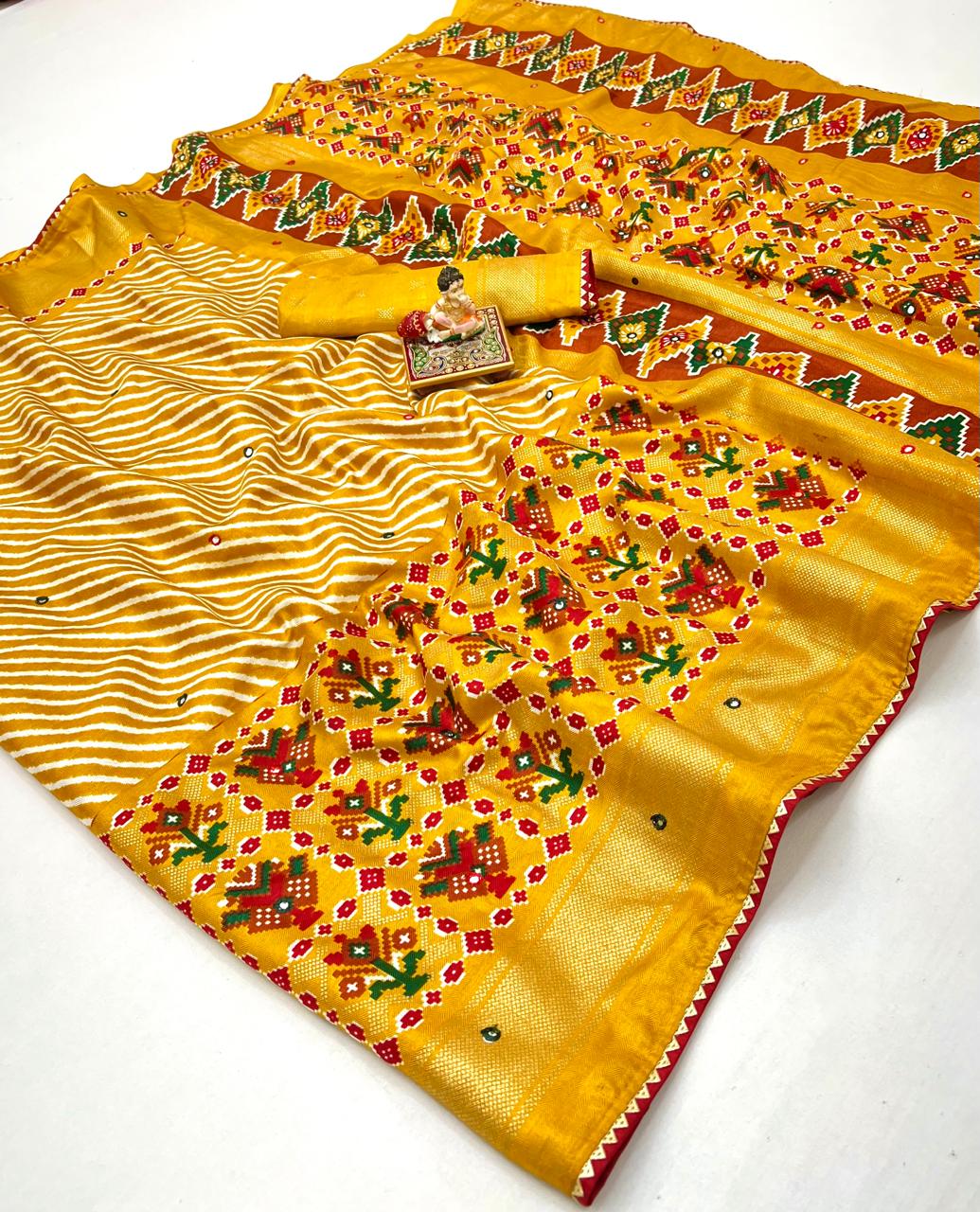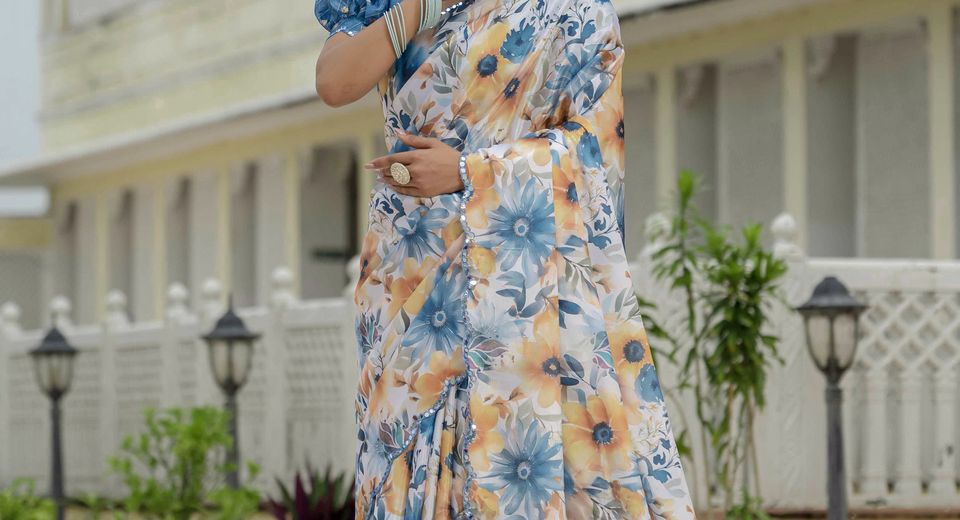
Chanderi vs Maheshwari Sarees: Weaves, Styling & Occasion Guide helps you choose between two lightweight Indian textiles that can look similar in photographs but behave differently when worn. Chanderi is known for a translucent, airy surface and delicate zari or woven motifs, while Maheshwari is recognised for its organised borders, stripes, checks and balanced cotton-silk structure. The right choice depends on the amount of sheen, body, transparency and border definition you want.
Both traditions come from Madhya Pradesh and suit warm-weather dressing, intimate celebrations and polished daytime wardrobes. Neither name guarantees one fixed fibre composition: online sarees may be made from silk, cotton, cotton-silk or contemporary blends. Read the fibre description, inspect the border and ask how sheer the fabric is before deciding.
Chanderi vs Maheshwari Sarees: What Actually Separates the Weaves?
Chanderi usually feels lighter, more translucent and more delicate, whereas Maheshwari generally offers a crisper drape with a clearly engineered border and pallu. The difference comes from textile traditions, yarn combinations and surface patterns rather than colour alone.
How is Chanderi woven?
Chanderi fabric is traditionally associated with Chanderi in Madhya Pradesh. Chanderi sarees may use silk, cotton or silk-cotton yarns, producing a fine, airy cloth with a subtle luminous quality. Small butis, floral forms, geometric motifs and zari details are common visual signatures, although designs vary between weavers and contemporary collections.
The open, light character of Chanderi makes the saree comfortable in warm weather and visually graceful when pleated. The same delicacy can make pale Chanderi more revealing under strong light, especially when the saree has a thin body and a lightly woven pallu. A lining, carefully chosen blouse and neutral slip can make the final outfit feel more secure without hiding the fabric's transparency.
How is Maheshwari woven?
Maheshwari sarees originate in Maheshwar, Madhya Pradesh, and are valued for their cotton, silk and cotton-silk constructions. A Maheshwari saree commonly features a defined border and pallu with stripes, checks, zari lines or stylised motifs. Some designs are reversible, allowing the wearer to use the border contrast in more than one way.
Maheshwari fabric normally has enough body to hold neat pleats while remaining comparatively light. The exact hand-feel depends on the fibre ratio: a cotton-rich version may feel more matte and breathable, while a silk-rich version can appear smoother and more lustrous. The word Maheshwari alone doesn't tell you whether a saree will be sheer, glossy or completely opaque.
Chanderi vs Maheshwari Sarees: How Do They Drape?
Chanderi creates a softer, floating drape, while Maheshwari usually creates sharper pleats and a more visibly structured pallu. The final appearance also depends on starch, weave density, fibre content, saree length and the way the fabric has been pressed.
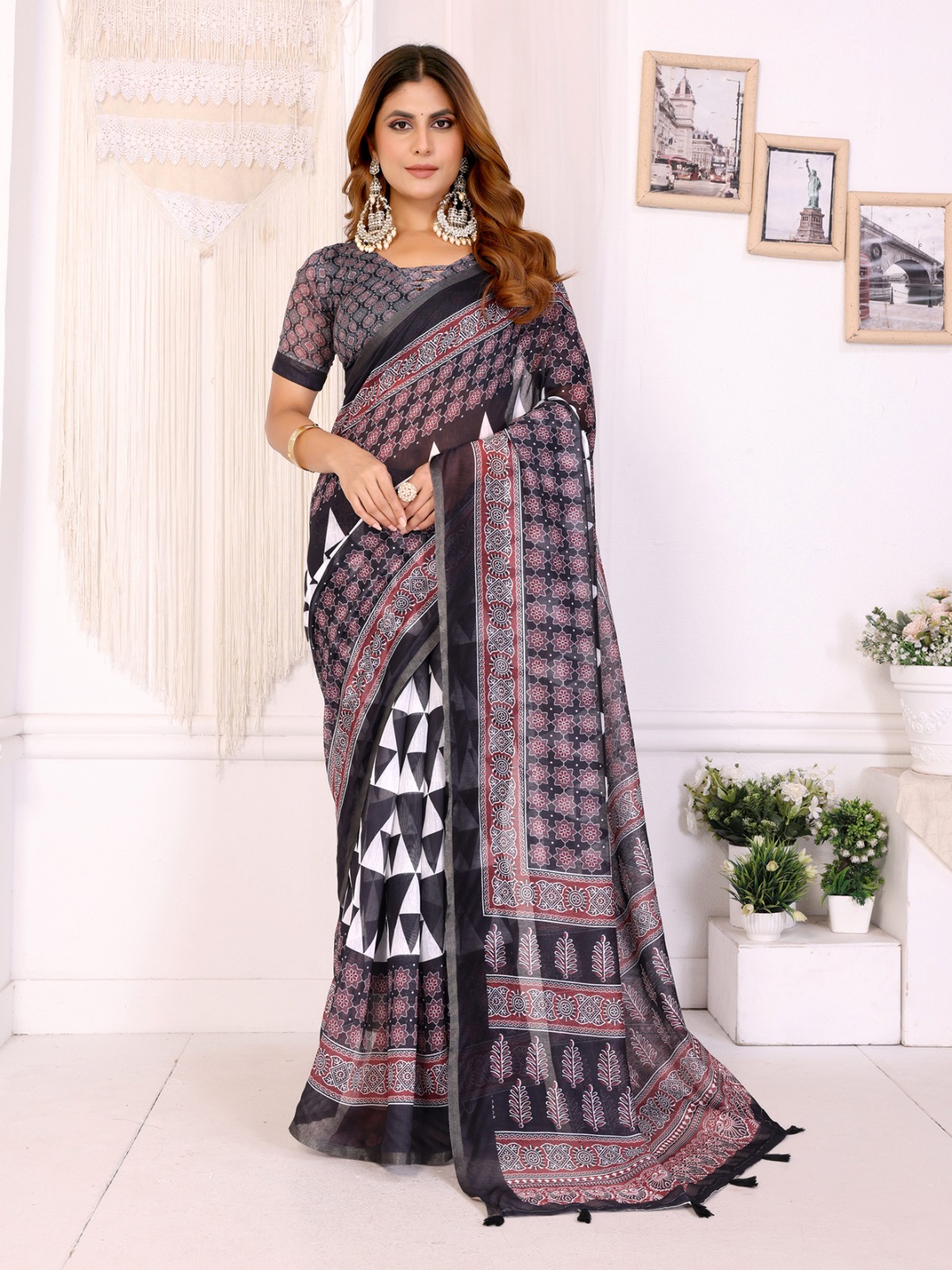
Chanderi works well with a relaxed Nivi drape because the fabric falls close to the body without looking heavy. Narrow pleats keep the translucent layers elegant, and a pallu worn over one shoulder allows the zari or woven motifs to remain visible. Avoid excessive pinning on a very fine Chanderi saree because repeated pressure can stress delicate yarns.
Maheshwari suits a clean Nivi drape, a seedha-pallu arrangement or a neatly pleated front pallu. The border can frame the shoulder and create a strong vertical line, which is useful when the saree has stripes or checks. A slightly firmer cotton-silk Maheshwari also works for office presentations, museum visits and daytime family gatherings because the pleats tend to stay orderly.
A simple test helps when shopping online: look for close-up photographs of the pallu, border and reverse side. A soft, gauzy body with scattered motifs suggests a Chanderi-like lightness; a clearly separated border with linear patterning and more body often points towards Maheshwari construction. Product descriptions remain essential because photographs can't reliably show thickness.
Chanderi vs Maheshwari Sarees: Which Suits Your Occasion?
Choose Chanderi for airy festive elegance and choose Maheshwari for a composed, versatile drape that can move between daily and occasion dressing. Both can work for celebrations, but styling details should match the setting.
Which saree works for daytime celebrations?
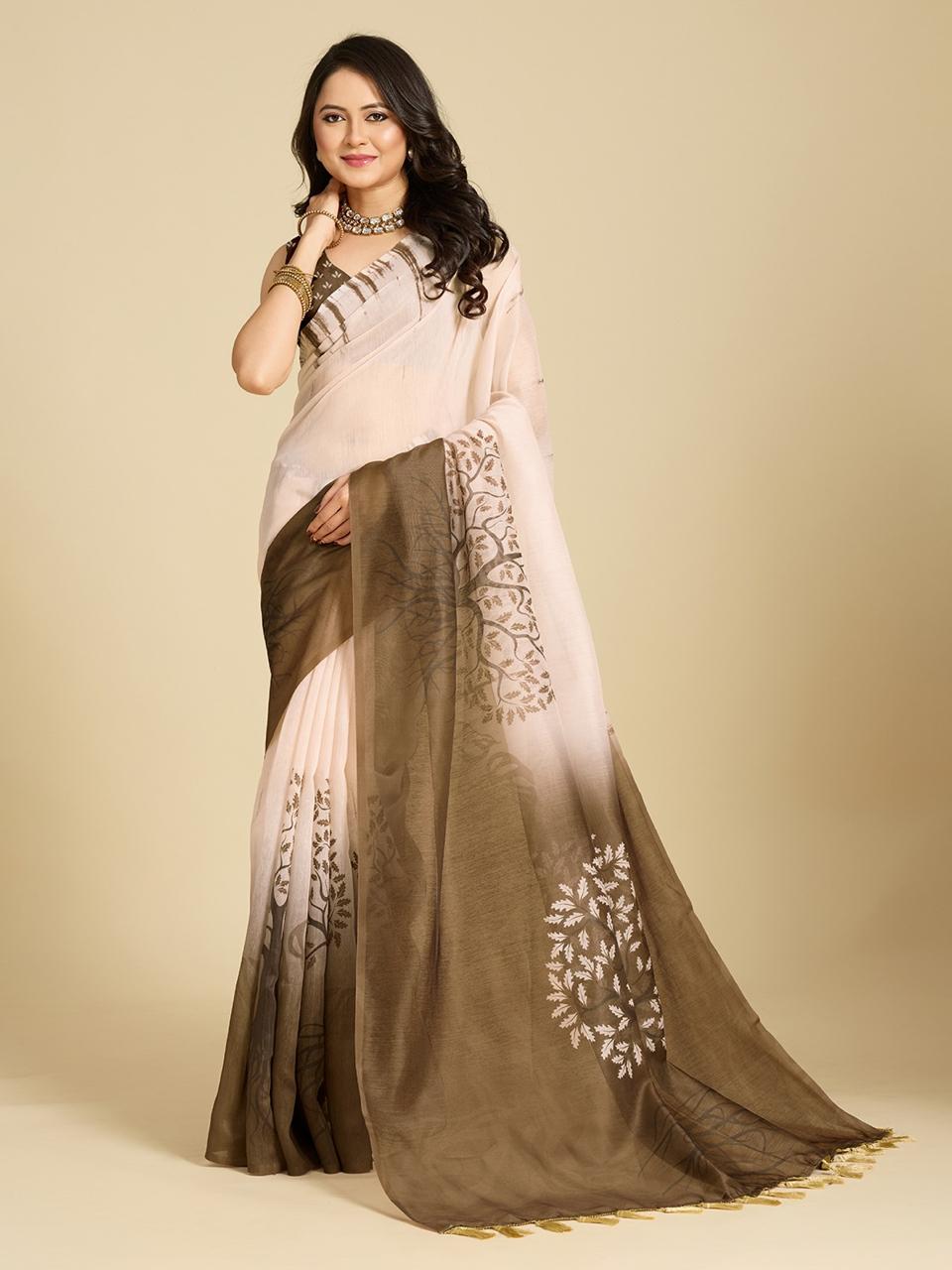
Chanderi is effective for a puja, daytime engagement, festive lunch or intimate wedding function when you want light sheen without a heavily embellished appearance. Pastel shades, small motifs and a narrow zari border keep the outfit refined in natural light. Pastel Floral Tissue Handloom Cotton Saree with Zari Weaves illustrates how a delicate, patterned surface can carry a festive mood without relying on dense embroidery.
Maheshwari is equally suitable for daytime celebrations when you prefer visible borders and a more graphic finish. Pair a muted saree with a blouse in the border colour, then add small gold earrings rather than a heavy necklace. A structured cotton-silk texture also makes Maheshwari practical for standing, greeting guests and moving between indoor and outdoor spaces.
Which saree works for work and everyday wear?
A cotton-rich Maheshwari is often the practical choice for regular wear because its body supports tidy pleats and its patterned border can look finished with minimal jewellery. Chanderi can also work for workwear, particularly in deeper colours or less sheer constructions, but delicate zari and pale transparent bodies may need more careful handling.
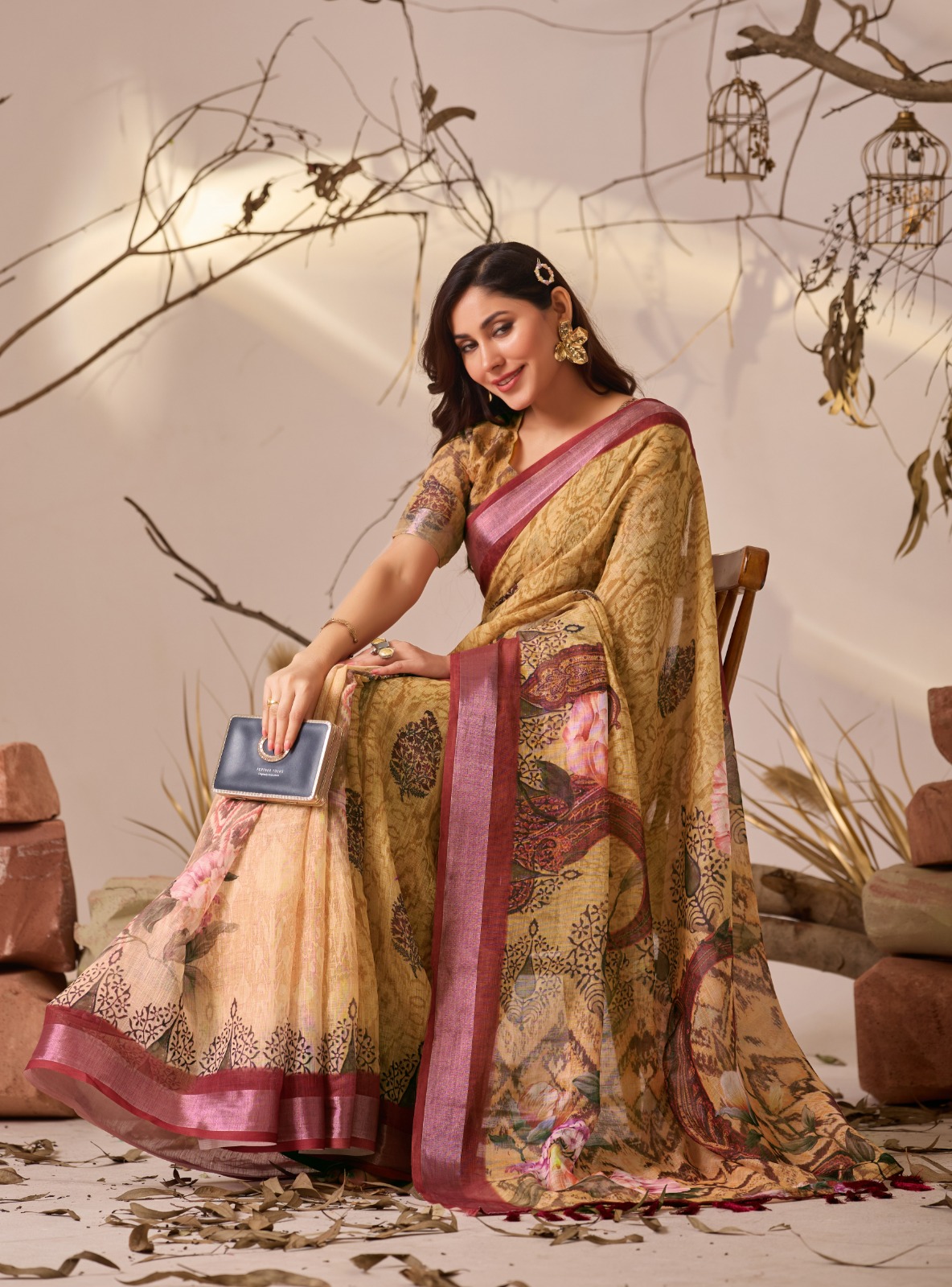
Beige Grace Cotton Silk Saree for Daily Wear demonstrates why a restrained cotton-silk palette can be useful in a repeat wardrobe. Cream & Blue Floral Linen Cotton Saree with Contrast Border brings another approach: a breathable floral surface and contrast border create definition without requiring a traditional zari-heavy look. These examples are not substitutes for checking fibre details; they show how texture and border scale influence everyday styling.
Which saree works for weddings and evening events?
Choose a silk-rich Chanderi with zari motifs for a light wedding guest look, or choose a lustrous Maheshwari with a strong border when you want more architectural definition. Neither weave automatically replaces a heavier Kanjeevaram or Banarasi silk saree for a large formal ceremony, but both can be excellent for a mehendi, sangeet, reception or smaller wedding gathering.
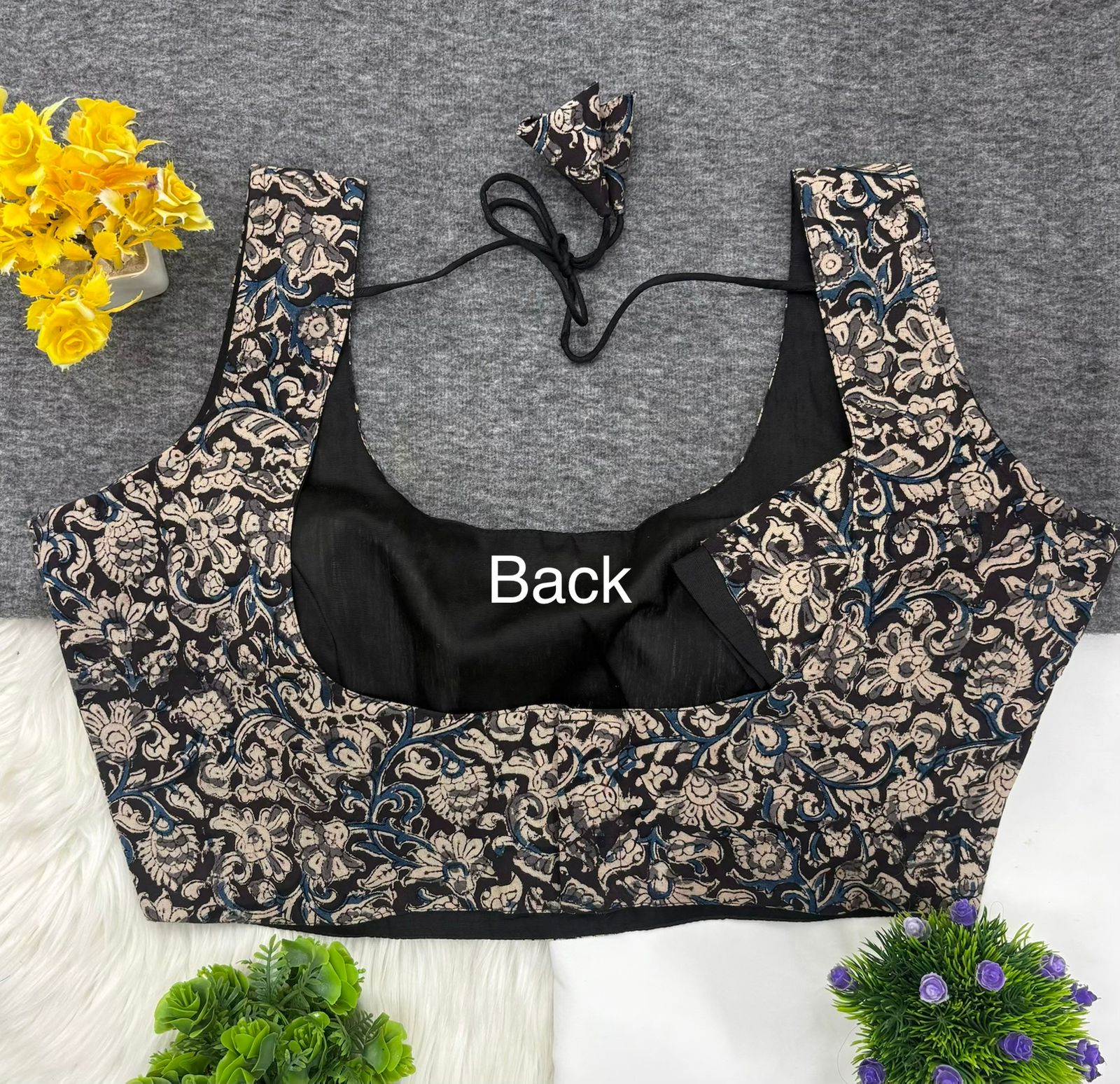
A Chanderi saree with gold earrings, a brocade blouse and a low bun creates a soft, luminous outfit. A Maheshwari saree with a sleeveless high-neck blouse, a defined waist and a sleek bun produces a more modern silhouette. Keep the blouse lining secure because a transparent or semi-transparent saree can reveal poorly finished seams.
Chanderi vs Maheshwari Sarees: How Should You Style Them?
Chanderi responds best to controlled contrast, while Maheshwari benefits from styling that either echoes or deliberately interrupts its border geometry. The blouse, jewellery, pallu placement and footwear should each support the fabric's natural character.
What blouse suits a Chanderi saree?
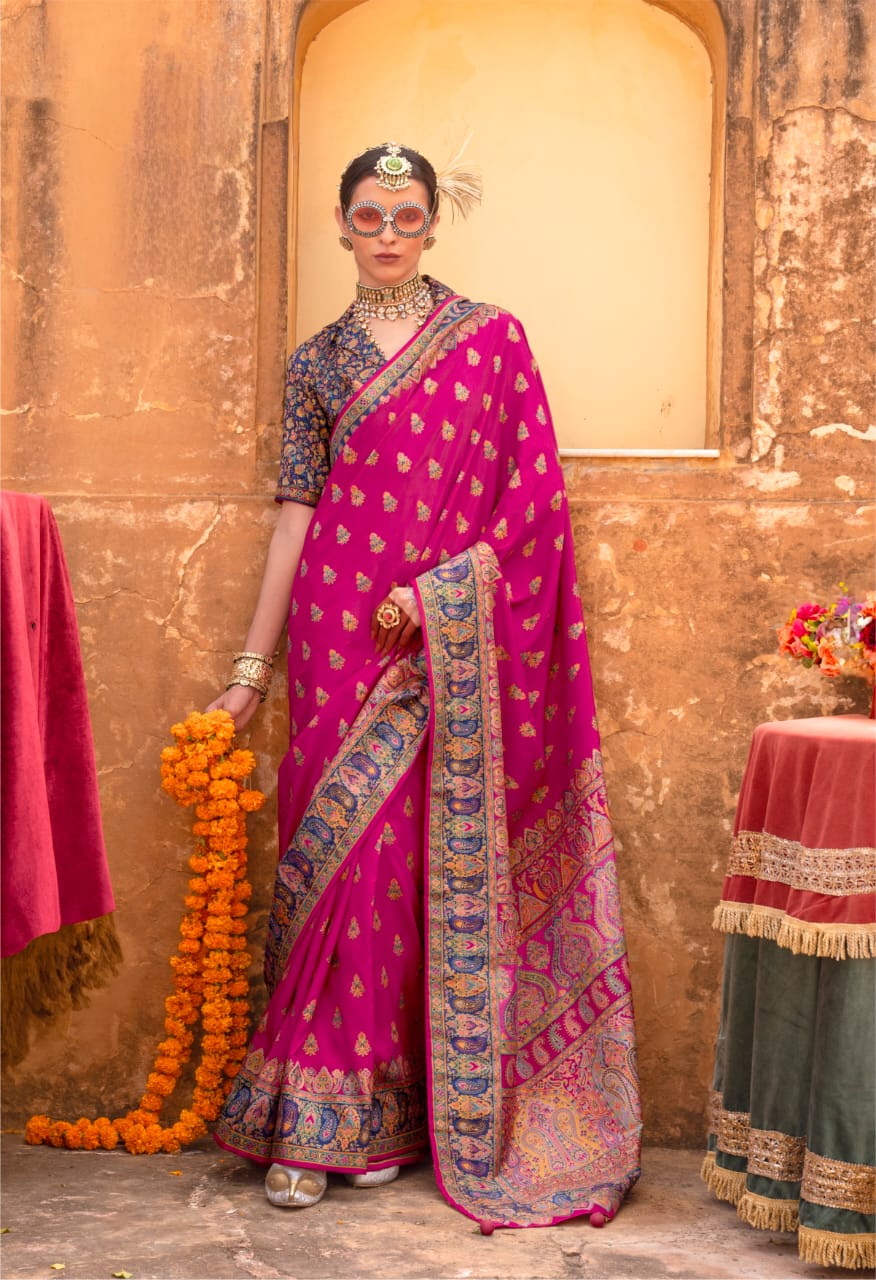
A raw-silk, silk-cotton or lined brocade blouse suits Chanderi when the saree has a fine body. A blouse in the exact border colour creates a continuous line, while a contrasting jewel tone makes small woven motifs more visible. Elbow-length sleeves and a modest round neck balance a sheer saree for family functions; a square neck or tie-back blouse can make the same fabric feel contemporary for an evening event.
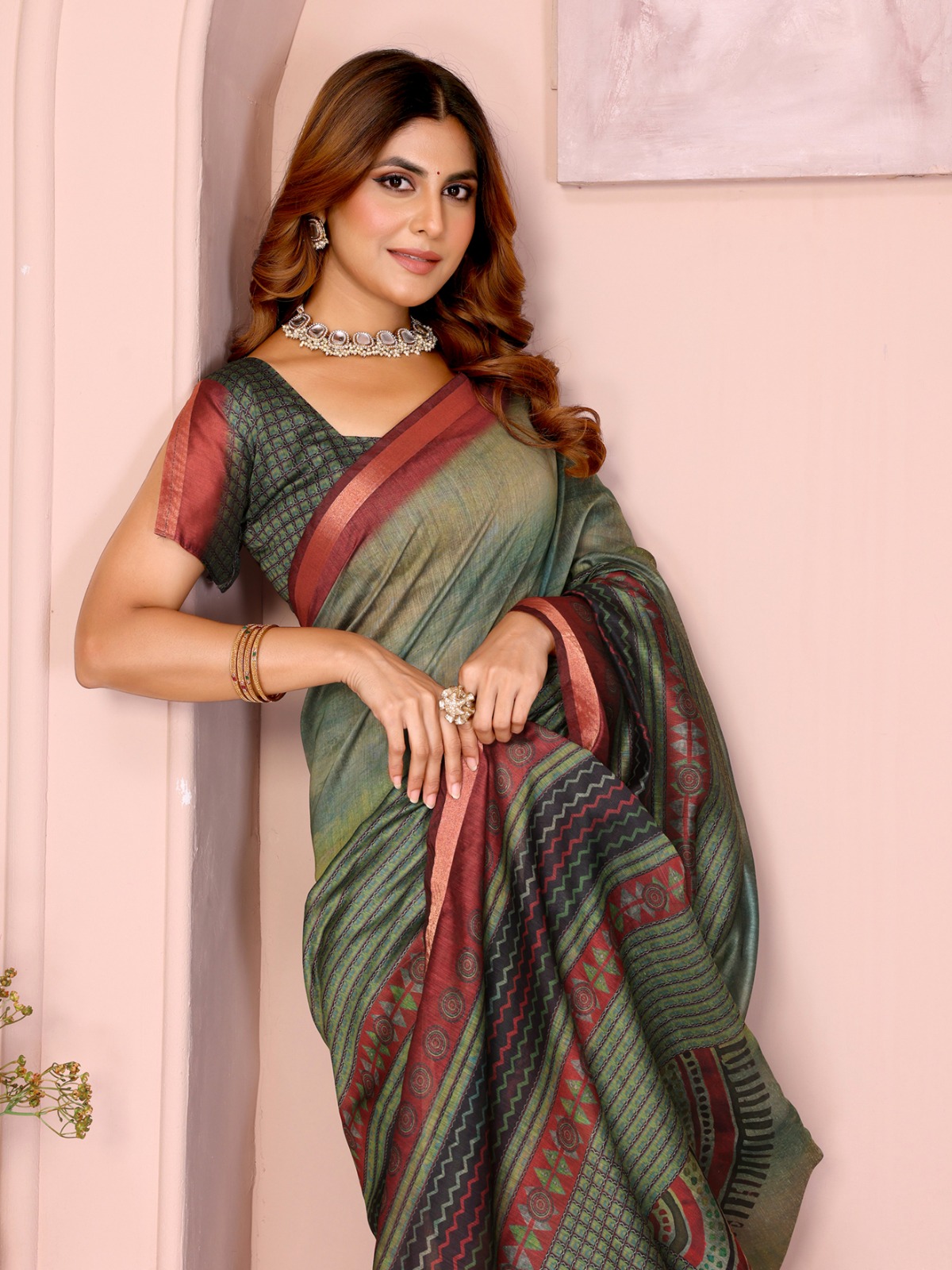
Printed Chanderi doesn't always need elaborate jewellery. Black Maroon Chanderi Printed Saree for Women can be styled with antique-gold studs, a narrow bangle stack and a solid blouse so the print remains the focal point. Green Maroon Chanderi Printed Saree Online India can take a maroon, forest-green or antique-gold blouse depending on whether you want a tonal or high-contrast result.
What blouse suits a Maheshwari saree?
Match a Maheshwari border with a plain blouse when the saree contains checks, stripes or multiple pallu lines. A high-neck blouse sharpens the geometric character, while a softly gathered sleeve prevents the outfit from looking too formal. For a cotton-rich saree, textured cotton or matte silk can look more harmonious than highly reflective satin.
A seedha-pallu drape highlights a Maheshwari border and works well with a blouse that has a simple back. A standard Nivi drape is easier for long wear and keeps the graphic pallu visible over one shoulder. Avoid adding a large printed blouse to a busy border unless the prints share a clear colour relationship.
Which jewellery and accessories work best?
Gold-toned jewellery complements zari, while silver, oxidised metal and terracotta can reduce the formality of cotton-rich versions. A compact potli or structured shoulder bag suits festive dressing, and neutral sandals prevent a delicate saree from competing with footwear. For a stronger contemporary look, wear one substantial cuff instead of several unrelated bangles.
Chanderi vs Maheshwari Sarees: How Can You Judge Quality Online?
Check composition, measurements, transparency, border construction and return conditions before buying a Chanderi or Maheshwari saree online. A beautiful product photograph can't confirm weave authenticity or fabric weight by itself.

- Read the fibre composition: Look for precise terms such as cotton, silk, cotton-silk, linen cotton or blend. "Silk feel" describes a finish, not necessarily silk content.
- Inspect the border: Zoom into the border and pallu to see whether motifs are woven, printed, embroidered or applied. Woven zari and printed metallic effects will age differently.
- Ask about transparency: Pale Chanderi may require a slip or lined blouse. Request a daylight video if the listing doesn't show the fabric against a contrasting background.
- Check dimensions: A saree around 5.5 to 6.3 metres is common, but blouse-piece length and width vary. Confirm whether the blouse piece is attached, separate or absent.
- Look at the reverse: Loose threads, uneven zari and abrupt pattern breaks can indicate finishing issues. A few thread tails may be normal in handloom textiles, but they should be secured rather than pulled.
- Compare price with construction: Cotton-rich sarees, silk-rich sarees, printed sarees and zari-woven sarees occupy different price ranges. A low price doesn't automatically mean poor quality, and a high price doesn't prove handloom origin.
Budget filters can help narrow a search, but they should not replace fabric inspection. Collections such as Sarees from Rs 1000 to Rs 1500, Sarees Under 20% Off and Sarees Under 10% Off are useful starting points when comparing accessible options. Sarees Flat 60% Off and Sarees Flat 50% Off may offer stronger discounts, but always check the original composition, measurements and sale-return terms.
Chanderi vs Maheshwari Sarees: What Care Do They Need?
Store Chanderi and Maheshwari sarees clean, dry and folded in breathable fabric, while washing and ironing should follow the fibre composition and care label. Delicate zari, silk yarns and printed surfaces need different treatment from sturdy cotton.

Air the saree after wearing it, especially after a humid Haldi ceremony or a long event. Fold it with the pallu and border inside rather than leaving zari exposed to direct contact with other garments. Refold a stored saree every few months to prevent permanent creases along one fold line.
Dry cleaning is usually the safer option for silk-rich Chanderi, zari-heavy sarees and pieces with unstable dyes. Cotton-rich Maheshwari may tolerate gentler washing, but colour bleeding can still occur, particularly with maroon, green, black or deep blue dyes. Test an inconspicuous edge only if the care label permits washing.
Iron Chanderi and Maheshwari on the reverse side using low to medium heat and a pressing cloth. Do not drag a hot iron across raised zari or printed metallic areas. Avoid plastic garment bags for long-term storage because trapped moisture can encourage odour and fabric damage.
Chanderi vs Maheshwari Sarees: Which One Should You Choose?
Choose Chanderi when you want translucency, delicate sheen, scattered motifs and a soft fall; choose Maheshwari when you want defined borders, sharper pleats and a more structured cotton-silk appearance. Fibre composition and finish matter more than the label alone.
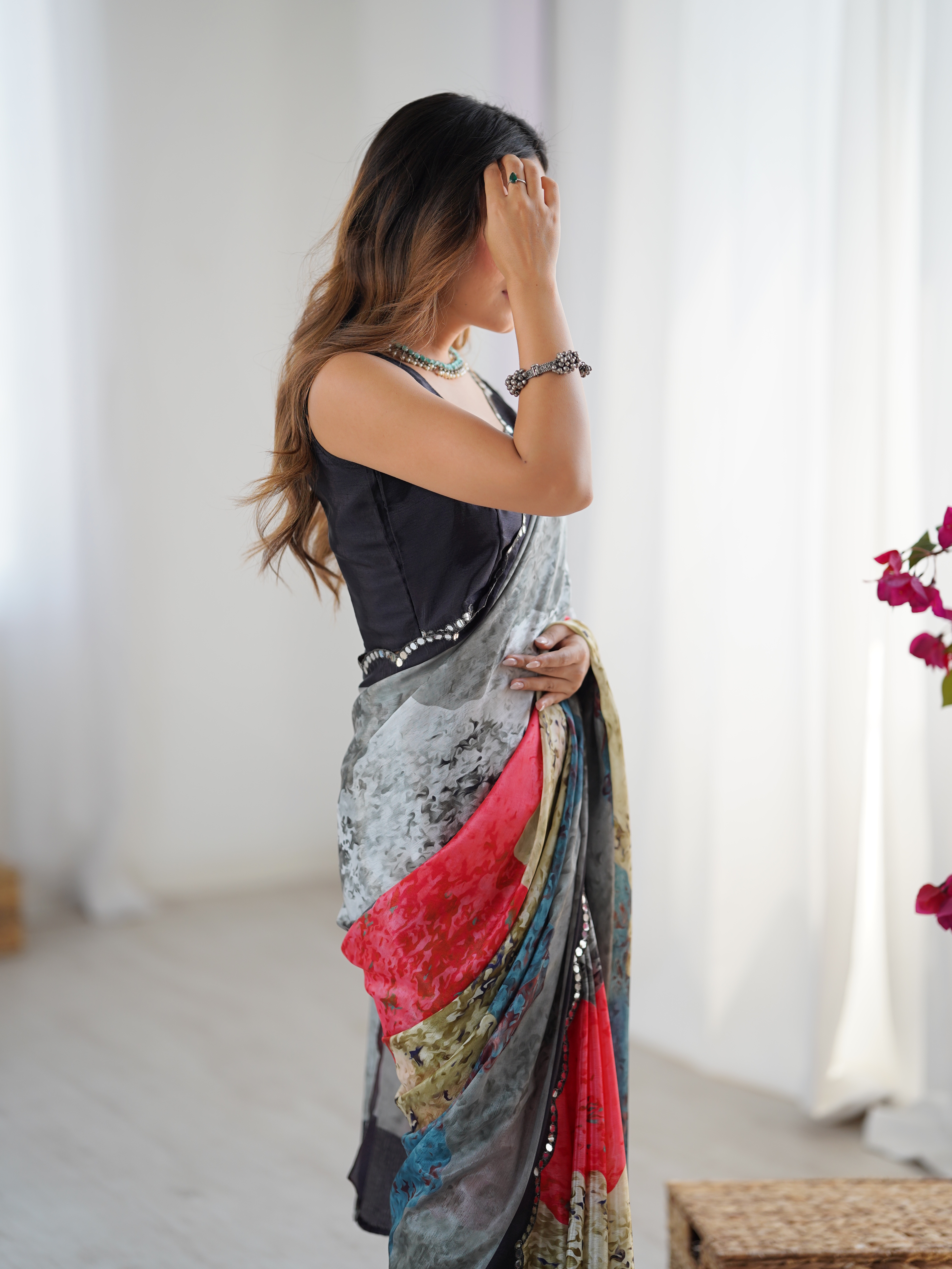
For a light festive wardrobe, Chanderi brings elegance with minimal visual weight. For a practical wardrobe that moves between office, family gatherings and daytime functions, Maheshwari provides dependable structure. A careful buyer can own both: Chanderi for luminous occasion dressing and Maheshwari for repeat wear with a polished heritage edge.
Before placing an order, compare the close-up weave photograph, the stated fibre content, the border width and the care instructions. That four-point check will tell you more about comfort and longevity than colour trends or discount percentages. The best saree is the one whose transparency, weight, drape and maintenance requirements match the way you plan to wear it.
Common Questions About Choosing Between Chanderi and Maheshwari Sarees
What is the main difference between Chanderi and Maheshwari sarees?
Chanderi is generally lighter, more translucent and more softly draped, while Maheshwari usually has a crisper cotton-silk body with defined borders and pallu designs. Fibre composition can change the feel, so check whether the saree uses cotton, silk or a blend.
Which is better for summer, Chanderi or Maheshwari?
Both can suit summer, but a lightweight cotton Chanderi or cotton-rich Maheshwari is usually the most breathable choice. Chanderi feels airier, while Maheshwari may provide slightly more coverage and structure.
Can Chanderi sarees be worn for weddings?
Chanderi sarees work well for daytime weddings, mehendi functions, receptions and intimate ceremonies, especially when they include zari or silk yarns. A heavily formal wedding may call for a denser silk such as Kanjeevaram or Banarasi silk, depending on the dress code.
Are Maheshwari sarees suitable for daily wear?
Cotton-rich Maheshwari sarees are suitable for daily wear because they are lightweight and tend to hold neat pleats. Choose darker or medium shades, a moderate border and a construction that does not require delicate handling for regular use.
How can I tell whether an online saree is sheer?
Check close-up photographs of the body, pallu and reverse side, and look for a daylight video or transparency description. Pale Chanderi is often more translucent than a structured Maheshwari, but colour and fibre density can change the result.
How should Chanderi and Maheshwari sarees be stored?
Store both sarees clean and completely dry in a breathable cotton or muslin cover, with zari folded inward. Use low heat and a pressing cloth for ironing, and prefer professional dry cleaning for silk-rich, zari-heavy or colour-sensitive sarees.