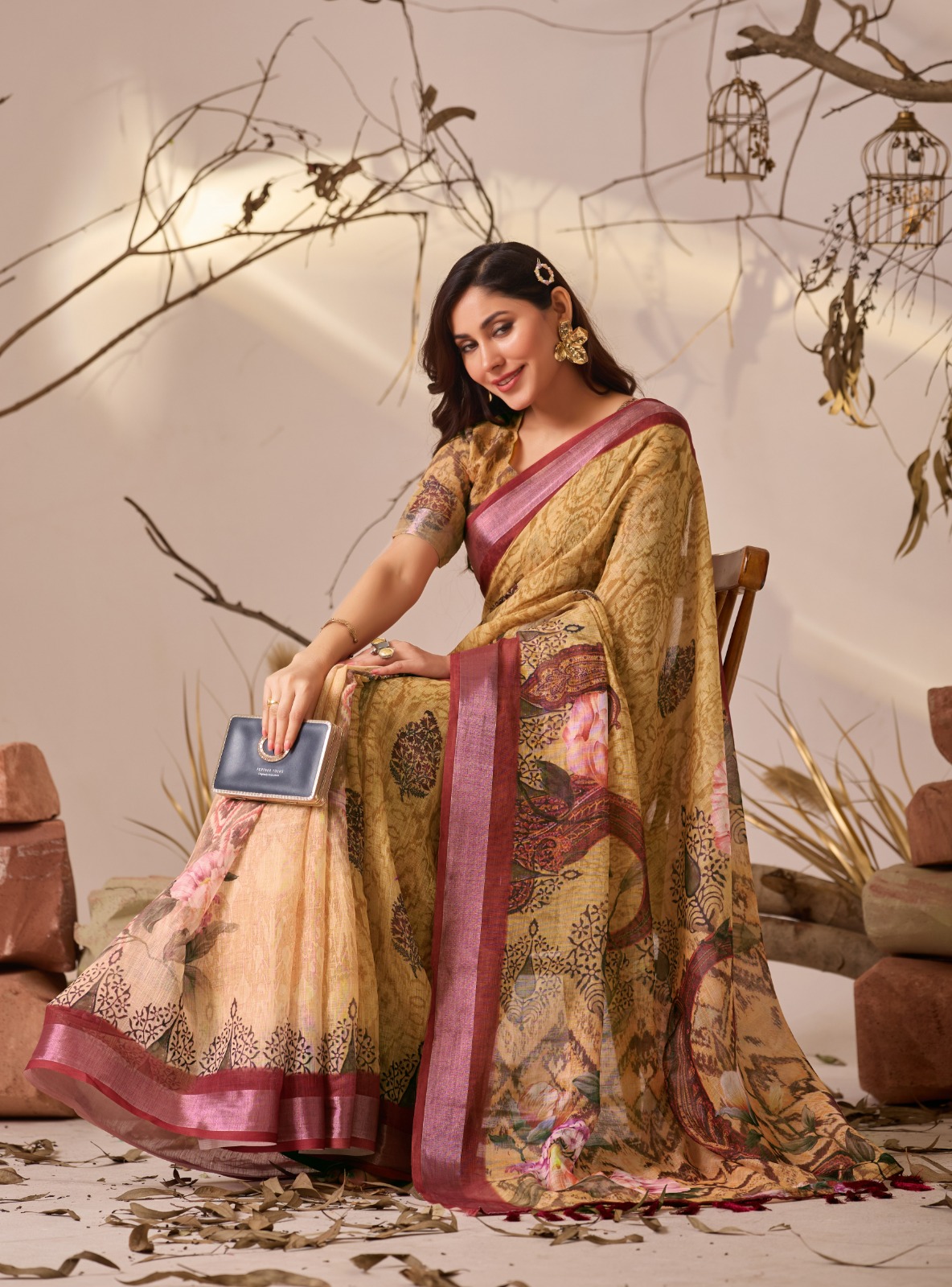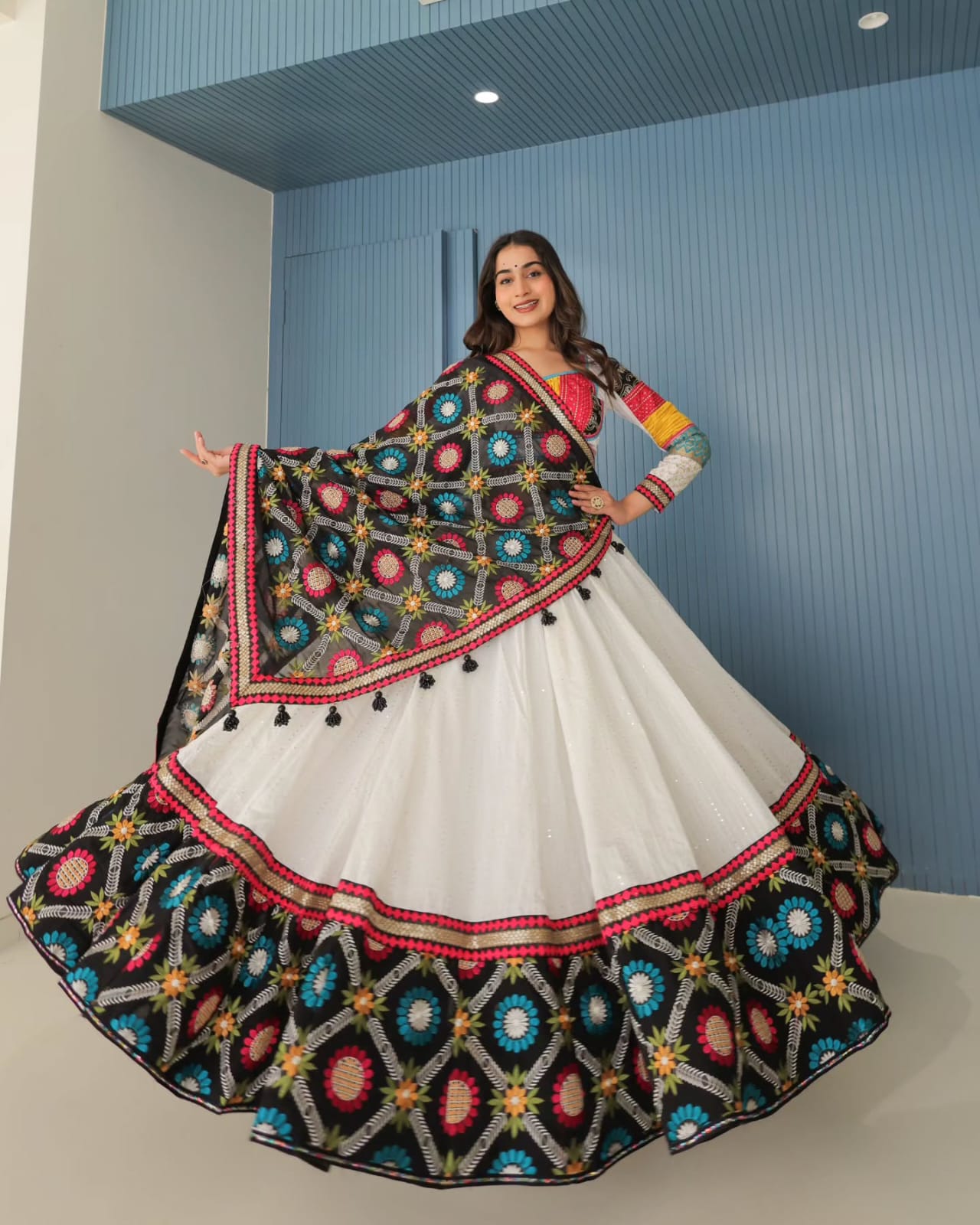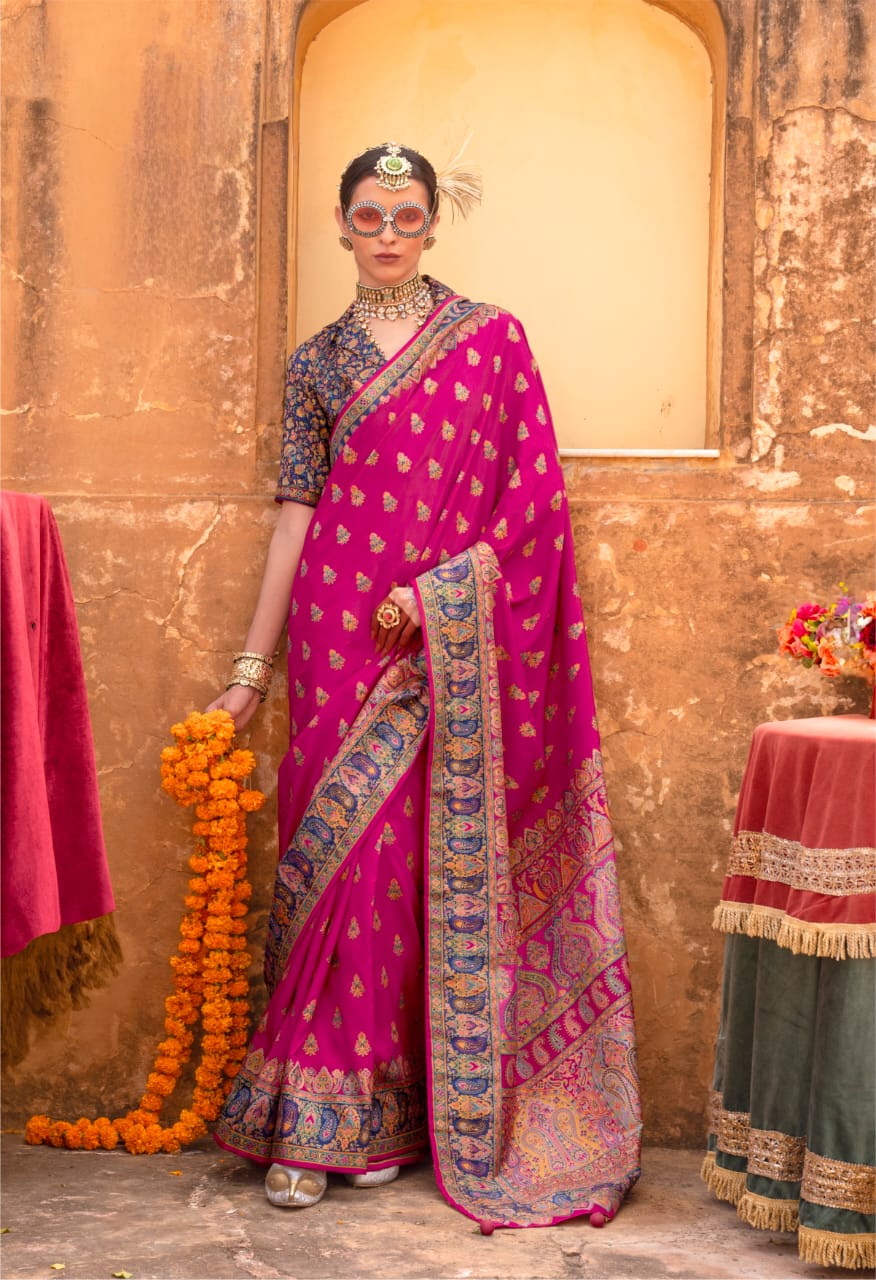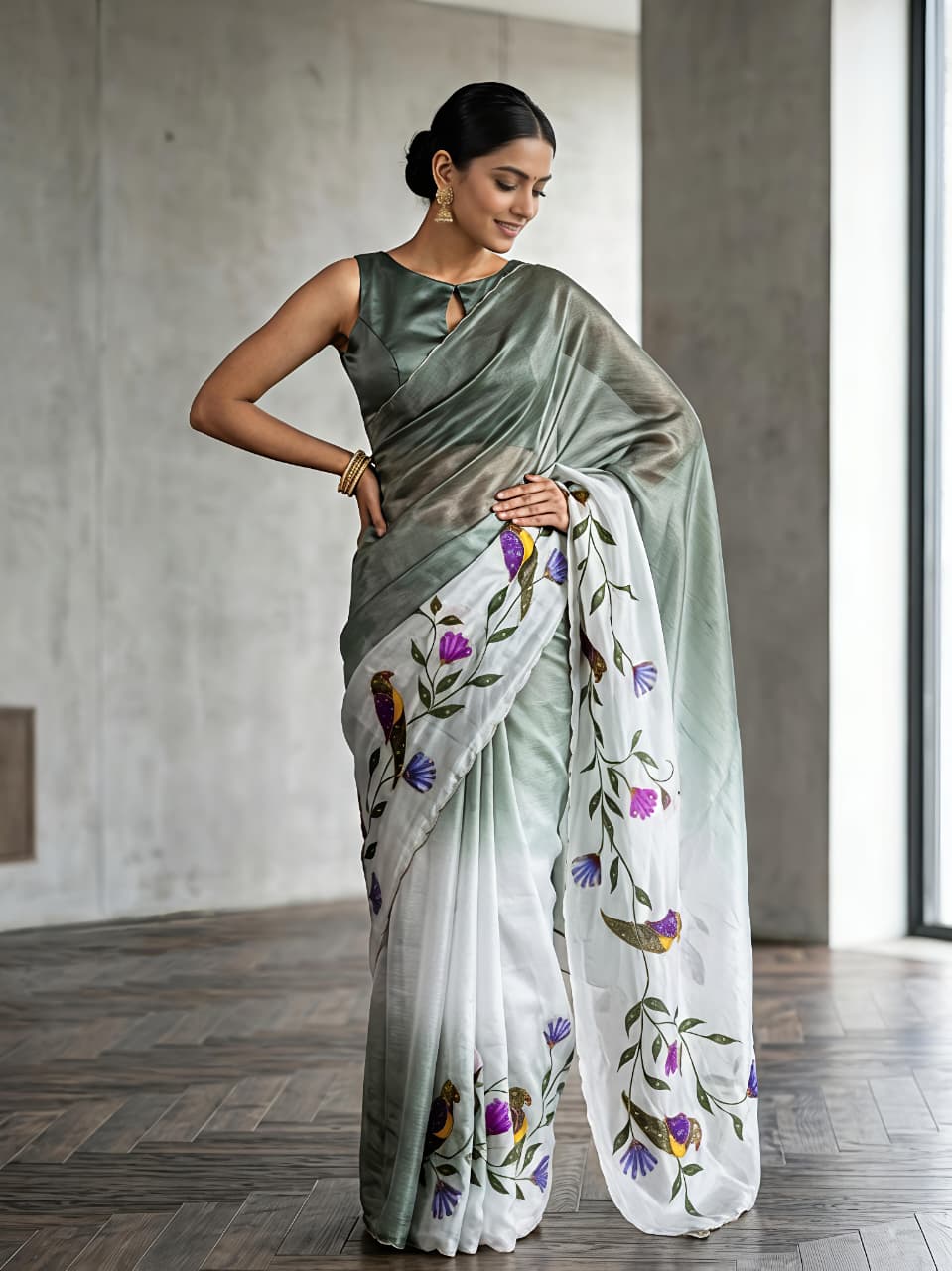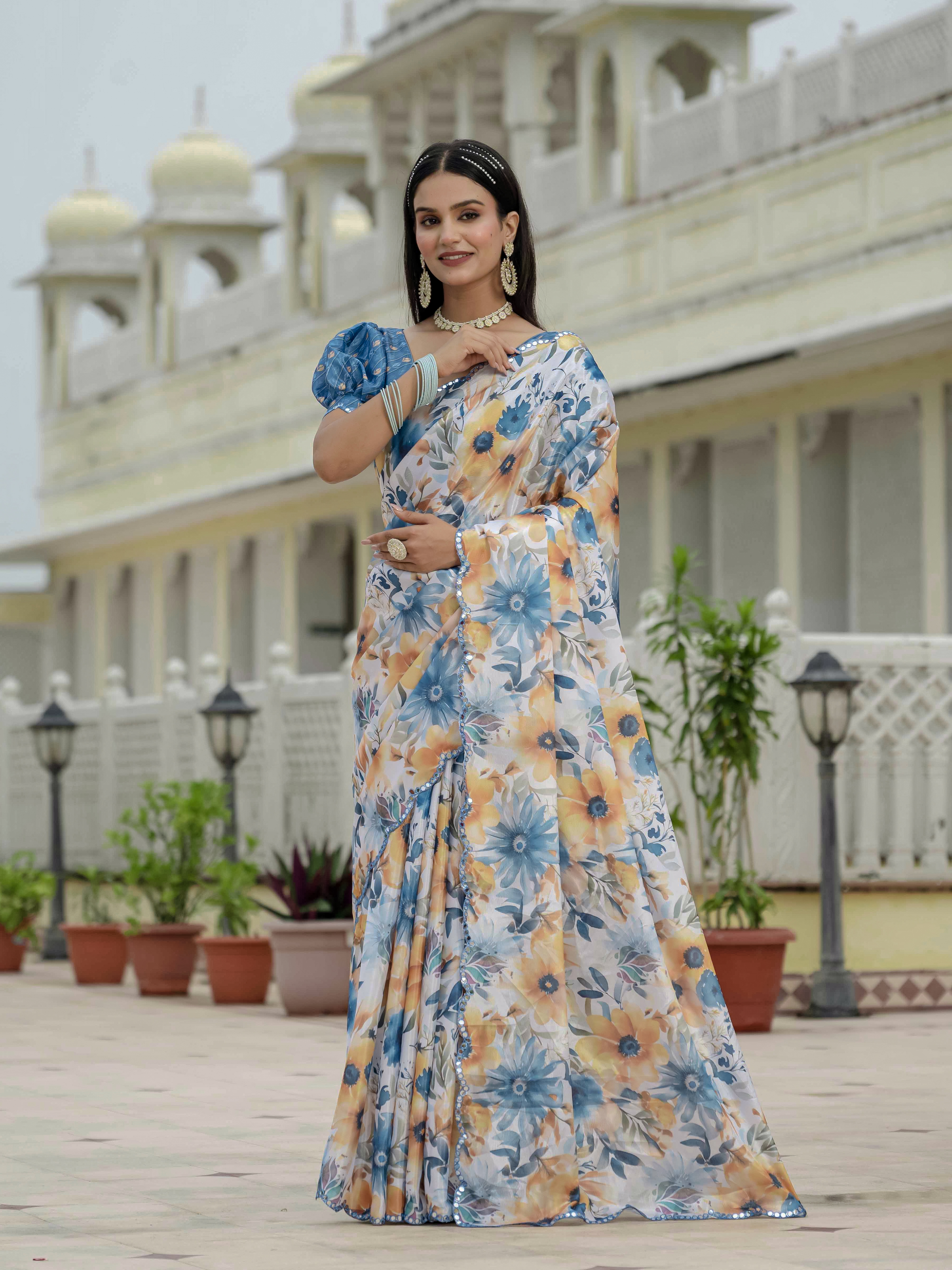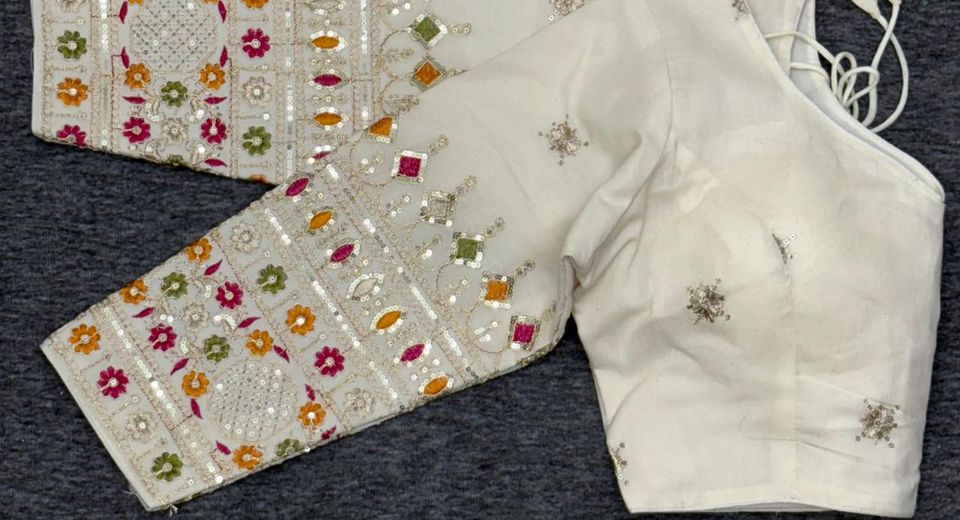
Choosing Chanderi Saree Blouse Designs for Weddings & Festivals involves more than matching a blouse to the saree colour. Chanderi fabric has a light, slightly crisp structure, a delicate sheen and enough transparency in some weaves to make lining, seams and back coverage important. A successful blouse should support the saree's zari, print or border while remaining comfortable through a ceremony, family photographs and several hours of movement.
The most useful starting point is the saree itself. A gold tissue Chanderi saree may need a restrained blouse so the metallic surface remains elegant, while a plain pastel Chanderi saree can carry embroidered sleeves, a shaped neckline or a jewel-toned contrast. The blouse must also suit the event's formality, the weather, the wearer's comfort with exposure and the practical demands of sitting, greeting guests and dancing.
How to Read a Chanderi Saree Before Choosing the Blouse
Read the saree's weave, border, colour temperature and level of embellishment before selecting a blouse design. Chanderi cotton-silk, pure silk and tissue blends can look similar from a distance but behave differently when paired with a structured blouse.
Match the blouse weight to the saree
A lightweight Chanderi saree generally works best with a blouse that has controlled structure rather than heavy padding or thick embroidery. A cotton-silk Chanderi saree can support raw silk, brocade or lined cotton-silk at the blouse, provided the shoulder doesn't become visibly bulky. A tissue Chanderi saree benefits from a smooth blouse with clean seams because excessive surface texture can compete with the saree's shine.
Banarasi silk can support a denser brocade blouse because the saree itself has visual weight. Chanderi usually looks more refined when the blouse repeats one detail, such as zari, a woven motif or a border colour, instead of combining several unrelated embellishments.
Use the border as a design instruction
A broad zari border provides a clear cue for sleeve cuffs, piping or a narrow neckline trim. A saree with a fine border can look overwhelmed by a wide embroidered blouse border. When the saree has a printed pallu, select one colour from the print for the blouse rather than copying the entire motif.
The Blue Zari Work Cotton Saree for Wedding demonstrates why a blouse doesn't have to be blue from neckline to hem. A blouse in antique gold, muted silver, ivory or deep navy can pick up the zari and create a more deliberate contrast. The final choice should consider whether the blue is warm, cobalt, ink-toned or powdery, because each shade changes the effect of gold jewellery.
Chanderi Saree Blouse Designs for Weddings & Festivals by Neckline
The best neckline depends on the saree's border, the wearer's preferred coverage and the jewellery planned for the event. Neckline shape changes the visible space around the face, so it should be chosen alongside the necklace rather than in isolation.
Round and boat necklines
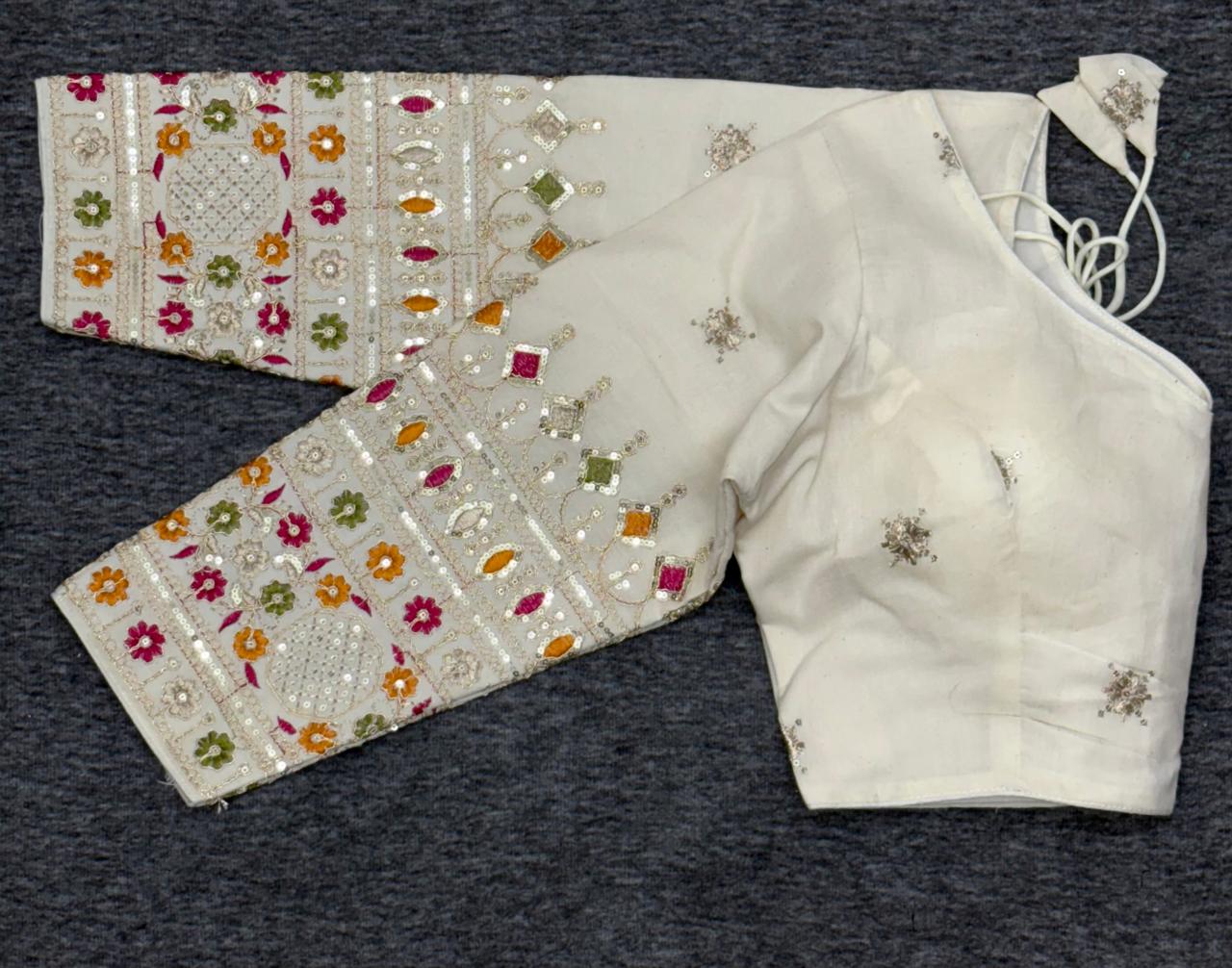
A medium round neckline is a dependable choice for family weddings, pujas and daytime festivals because it frames the face without making the blouse appear overly dramatic. A boat neck creates a wider horizontal line and pairs well with chandelier earrings when the wearer prefers to skip a necklace. Keep the boat neckline high enough to stay flat while sitting and turning.
A round neck with a narrow zari piping works especially well with a plain Chanderi saree. A plain boat neck can balance a heavily patterned pallu. The neckline should not end exactly where a thick necklace rests, because that arrangement can make the upper body look crowded and cause the jewellery to catch on the blouse edge.
Square, sweetheart and V necklines
A square neckline gives a crisp, architectural finish and suits structured sleeves, elbow-length sleeves and vintage-inspired wedding styling. A shallow V neckline visually lengthens the neck and allows a pendant to sit inside the opening. A sweetheart neckline introduces a softer, more sculpted line but usually needs careful bust support and a firm upper edge.
For a Haldi ceremony, a moderate square or rounded V neckline is practical because it looks festive without requiring fragile surface work. For an evening reception, a deeper V can work when the blouse has secure shoulder construction and the wearer is comfortable with the coverage. A neckline should be tested while raising both arms, not only while standing still for a fitting photograph.
Sleeves, Backs and Details That Work for Indian Celebrations
Sleeve length and back construction determine how easily a Chanderi blouse moves, photographs and handles changing temperatures. Wedding guests often need a design that looks polished from the front, side and back because photographs are taken throughout the event.
Choose sleeves for the ceremony and climate
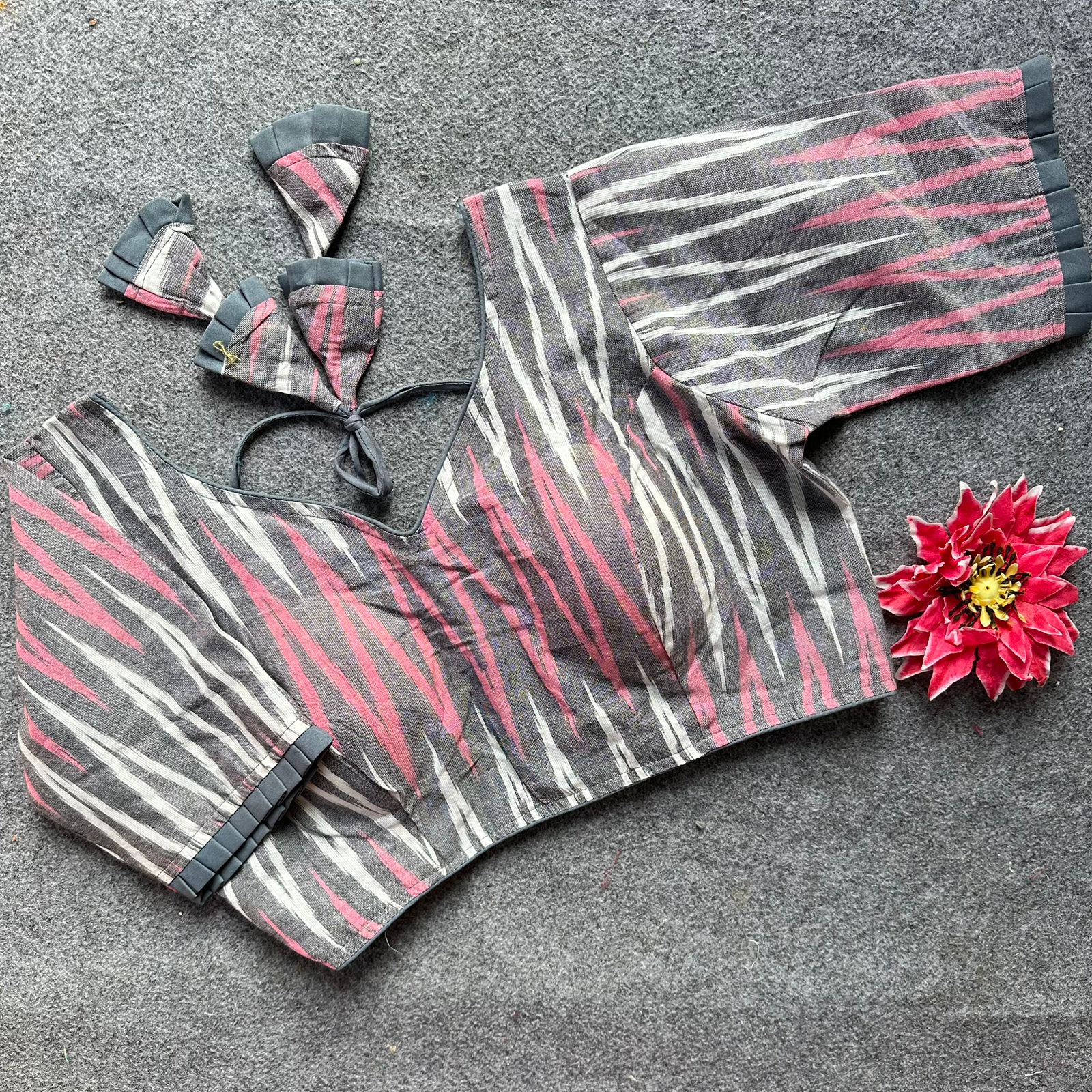
Elbow-length sleeves provide one of the most versatile proportions for Chanderi sarees. Elbow-length sleeves leave enough room for bangles, create a defined shoulder line and suit both daytime and evening functions. Short sleeves are cooler for outdoor ceremonies, while three-quarter sleeves provide more coverage in air-conditioned venues or winter weddings.
Sheer sleeves can add lightness, but the material should be checked for snagging against zari and bangles. Organza, net and fine Chanderi overlays need a smooth inner seam. Bell sleeves and very wide cuffs look attractive in photographs but can interfere with serving food, carrying a phone or performing rituals. They are better reserved for shorter events.
Make the back beautiful but functional
A functional blouse back should stay secure during movement and leave enough room for comfortable arm rotation. A keyhole back, a shallow U-back or a row of fabric-covered buttons can provide visual interest without requiring constant adjustment. Tie-back dori details are attractive but should have secure loops and sufficiently long, soft-ended ties.
Back embroidery should not sit directly beneath the saree's heaviest pleats if the wearer will sit for long periods. Hooks, zips and hooks-and-eyes should be covered or finished smoothly because rough hardware can catch the saree. A modest back with a statement sleeve is often more practical than combining a deep back, long dori and heavy tassels.
Colour Pairings That Make Chanderi Sarees Look Occasion-Ready
Use one of three colour strategies-tonal, border-matched or deliberate contrast-to coordinate a Chanderi saree blouse. The right strategy depends on how ornate the saree already is and whether the event takes place in daylight or under warm evening lighting.
Tonal and border-matched combinations
A tonal blouse in a slightly darker or lighter version of the saree colour creates a long, uninterrupted line. Blush Chanderi can be paired with rose, dusty mauve or muted wine. Mint Chanderi can work with pistachio, sage or soft gold. Ivory Chanderi looks refined with champagne, beige or a slightly deeper sandalwood shade.
Border-matched styling is useful when the saree has zari. A blouse that repeats the zari colour can be plain while the saree supplies the ornament. Gold zari mostly pairs naturally with marigold, coral, rani pink, bottle green and warm ivory. Silver zari often works with lavender, ice blue, emerald, charcoal and cool pink.
Contrast combinations for weddings and festivals
A contrasting blouse gives a simple Chanderi saree a stronger festive presence. Pair a yellow saree with parrot green, a pink saree with deep plum, or a cream saree with rust or emerald. The contrast should appear at least once elsewhere through jewellery, footwear, a hair accessory or a small border detail, otherwise the blouse can look disconnected.
Red, magenta and deep green are especially effective for wedding receptions because warm indoor light intensifies their depth. For morning ceremonies, turmeric yellow, coral, sky blue and leaf green usually photograph more softly. Kanjeevaram-inspired colour combinations can be adapted to Chanderi. But the lighter fabric usually benefits from less dense zari than a traditional silk Kanjeevaram blouse.
Embroidery, Zari and Fabric Choices for the Blouse
Choose embellishment according to the saree's existing shine and the amount of time the blouse will be worn. Small-scale zari, thread embroidery, fabric-covered buttons and restrained piping often look more sophisticated on Chanderi than a heavily encrusted front.
A classic Chanderi blouse may use the same fabric with a cotton lining for stability. A silk blouse can introduce richness to a plain saree, while a raw silk blouse offers a matte contrast against Chanderi's sheen. Brocade works best when its motif is small or when the saree is otherwise quiet. Velvet can suit a winter evening wedding, although its weight and heat make it less comfortable for daytime functions.
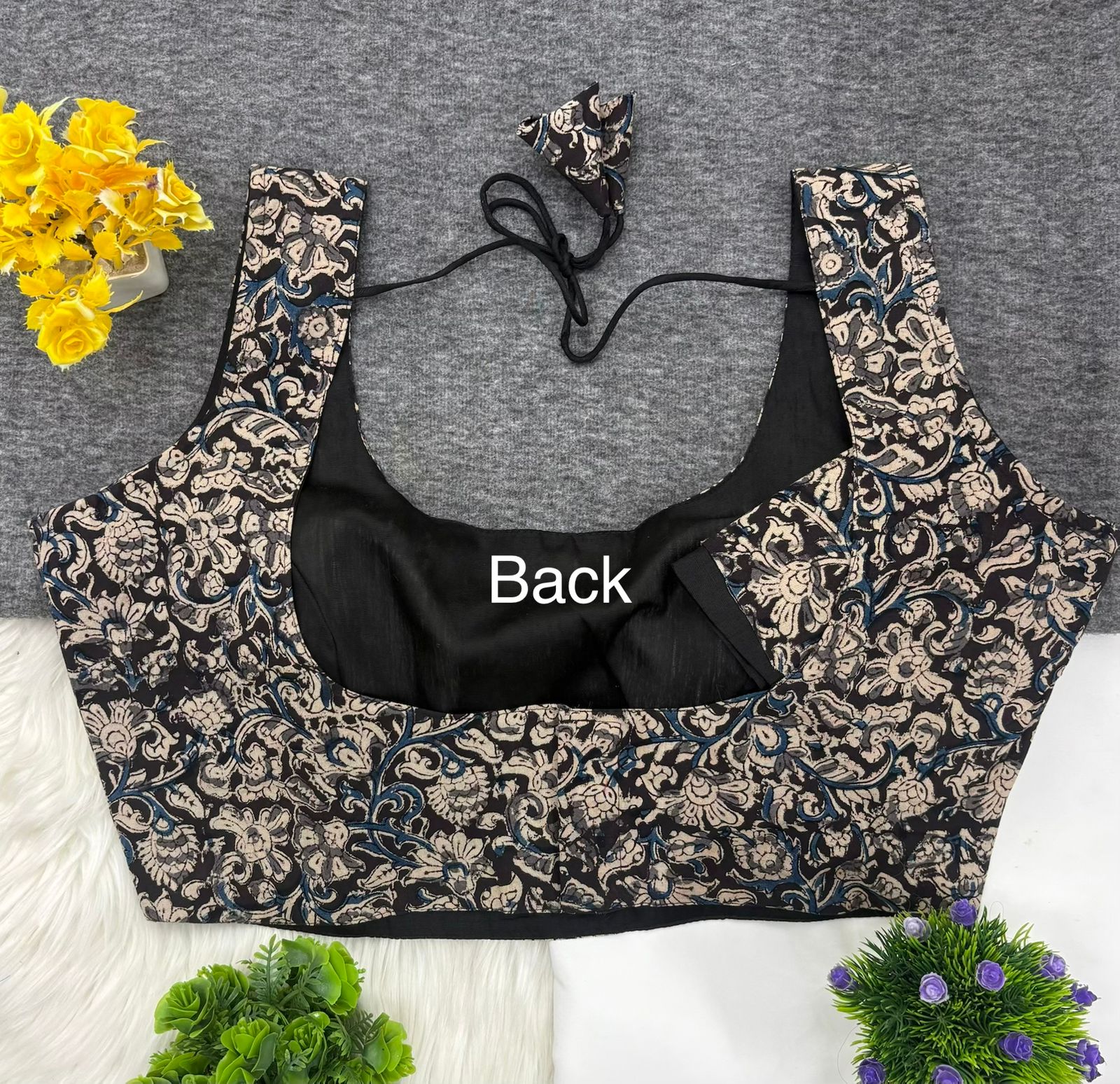
The Pure Kalamkari Cotton Padded Blouse for Women illustrates another useful styling direction: printed cotton can provide pattern and structure without metallic embellishment. A printed blouse should repeat one colour from the saree or border. Kalamkari motifs pair naturally with earthy Chanderi shades, indigo, rust, mustard and maroon, especially for a daytime festive gathering.
Padding is optional and should be selected for support, not automatically added for shape. Light removable cups can help a blouse hold its line, while thick fixed padding may feel hot under a saree with multiple pleats. A tailor should check the bust seam, armhole depth and lining before adding embroidery because decoration can't correct an uncomfortable pattern.
How to Fit and Tailor a Chanderi Blouse for Long Events
A wedding-ready blouse should be fitted in the underbust, shoulder, armhole and upper back while allowing normal breathing and arm movement. A blouse that looks perfect with the arms lowered may pull across the back when the wearer raises both hands for a ritual or dance.
Carry the actual saree to the final fitting whenever possible. The saree's pleat thickness, pallu weight and drape affect the blouse's neckline and shoulder balance. Mark the pallu side, decide whether the saree will be worn with a belt or pinned tightly, and test the blouse with the intended bra or sewn-in support.
Allow approximately 1 to 1.5 inches of usable alteration margin at the side seams when the blouse design permits it. Seam allowance isn't a substitute for correct measurements, but it can help with minor changes before a wedding. Schedule the first fitting at least three weeks before the event and complete the final fitting after any major change in weight or undergarment style.
Chanderi can crease at sharp stress points. Avoid an excessively tight armhole and test sitting comfort for at least ten minutes. Blouse hooks should close without strain, and the neckline should remain flat when the wearer bends slightly forward. These practical checks matter more than copying a dramatic photograph from a different body shape or fabric.
Jewellery and Draping Choices for a Complete Look
Coordinate jewellery with the blouse neckline and the saree's metallic details rather than wearing every matching piece. A high round neck often needs earrings instead of a large necklace, while a shallow V neckline can frame a single pendant or short haar.
Gold zari and warm-toned Chanderi pair naturally with temple jewellery, kundan, polki and antique gold. Silver zari can be styled with pearls, uncut diamond jewellery, silver-toned jhumkas or coloured stones in blue and green. A simple blouse can support a statement necklace, but an embroidered blouse usually needs one main jewellery focus.
Pin the pallu at the shoulder after deciding how much blouse sleeve should remain visible. A narrow front pleat can reveal sleeve embroidery, while a broad, heavily folded pallu can hide a carefully designed blouse. For a Haldi ceremony, secure the pallu with discreet pins and choose jewellery that can tolerate movement and turmeric powder more easily than delicate heirloom pieces.
The Classic Festive Wear Blouse for Stylish Saree Look can serve as a useful reference for a balanced festive silhouette: a blouse doesn't need an elaborate back or excessive embellishment to look occasion-appropriate. Proportion, secure fitting and one repeated detail often create a more polished result than adding decoration everywhere.
How to Care for the Blouse Before and After the Celebration
Store a Chanderi blouse clean, dry and folded inside a breathable cotton cover. Avoid sealing embroidered or zari work in plastic for long periods because trapped moisture can affect metallic threads, lining and colour.
Air the blouse after wearing it, but keep it away from harsh direct sunlight for prolonged periods. Do not spray perfume directly onto Chanderi, zari or delicate embroidery; apply fragrance to the skin before dressing and allow it to dry. For stains, blot gently with a clean white cloth and send the blouse to a cleaner experienced with silk, zari and embellished garments.
Fold the blouse along different lines each time it's stored to reduce permanent creases. Place soft tissue between dense embroidery or metal embellishment so the surface doesn't rub against the fabric. Before the next event, inspect hooks, sleeve seams and dori attachments because small repairs are easier before the saree is draped.
Final Selection Checklist for Chanderi Saree Blouse Designs for Weddings & Festivals
A strong final choice matches the blouse to the saree's weave, border, colour temperature, ceremony timing and expected movement. The most attractive design will still disappoint if the lining scratches, the sleeve restricts the arm or the neckline shifts during photographs.
- Identify whether the saree is cotton Chanderi, cotton-silk, pure silk or tissue before selecting blouse fabric.
- Repeat one visible detail, such as zari, a border colour, a print shade or a motif.
- Choose the neckline with the intended necklace, earrings and comfort level in mind.
- Test sleeves while raising both arms, sitting down and carrying a small handbag.
- Use cotton or silk lining for stability and check that seams don't scratch.
- Complete the final fitting at least several days before the wedding or festival.
- Store the finished blouse in breathable fabric and repair hooks before the next wear.
Chanderi Saree Blouse Designs for Weddings & Festivals work best when visual delicacy is supported by careful construction. A well-proportioned neckline, a sensible sleeve, one considered embellishment and a comfortable fit can make a lightweight Chanderi saree look fully wedding-ready without losing the fabric's natural airiness.
Common Questions About Styling Chanderi Saree Blouses for Celebrations
Which blouse fabric is best for a Chanderi saree at a wedding?
Cotton-silk, silk, raw silk and lined Chanderi are reliable blouse fabrics for a wedding Chanderi saree. Choose a smoother, lighter blouse when the saree has tissue shine or zari, and use brocade or raw silk when the saree is plain and needs more visual weight.
Which blouse colour goes with a Chanderi saree?
A blouse can match the saree, repeat its zari border or create a deliberate contrast. Gold zari works well with warm ivory, coral, green and pink, while silver zari suits lavender, blue, emerald and cool pink.
Which neckline suits a Chanderi saree blouse?
Round, boat, square and shallow V necklines are versatile choices for Chanderi sarees. Select the neckline according to the planned necklace, desired coverage and the saree's border width, then test the neckline while sitting and moving.
Can I wear a heavy embroidered blouse with a Chanderi saree?
A Chanderi saree can be paired with an embroidered blouse, but the embroidery should balance the saree's existing shine and border. Small-scale zari, thread work, piping or limited motifs usually preserve Chanderi's light appearance better than dense embellishment across the entire blouse.
Are short sleeves or full sleeves better for a Chanderi saree at a wedding?
Elbow-length sleeves are the most adaptable choice because they suit daytime and evening celebrations and work with bangles. Short sleeves are cooler outdoors, while three-quarter sleeves offer more coverage in winter or air-conditioned venues.
How should a Chanderi saree blouse be stored?
Store a clean, completely dry Chanderi blouse folded in a breathable cotton cover away from direct sunlight. Keep tissue between heavy embroidery or zari, avoid long-term plastic storage and repair hooks or loose seams before storing the garment.