Can saree be washed in washing machine? Sometimes, but only when the fibre, dye, embellishment and care label permit it. A machine cycle that's harmless for a sturdy cotton saree can cause colour bleeding, pulled threads, crushed zari or permanent shrinkage in silk. The safest approach is to identify the fabric first, inspect the surface details, and then select the gentlest possible cleaning method.
A saree isn't a single type of garment. Banarasi silk, Kanjeevaram silk, Chanderi, handloom cotton, linen cotton, tissue and embroidered sarees respond differently to water, friction, detergent and heat. The word "cotton" alone doesn't make every saree machine-washable, because handloom weave structures, printed dyes and zari borders may still be delicate.
Can Saree Be Washed in Washing Machine?
Yes, some plain, colourfast cotton or cotton-linen sarees can be machine washed on a short, cold, delicate cycle, but silk, zari-heavy, embroidered and hand-finished sarees should generally not enter a washing machine.
Before washing, check the care label and perform a colourfastness test on an inside seam or an unnoticeable portion of the pallu. Dampen a white cotton cloth, press it against the fabric for 10 seconds, and look for transferred dye. If the cloth picks up strong colour, avoid soaking and machine washing. A care label that says "dry clean only" should take priority over general fabric advice.
Machine washing creates three kinds of stress: agitation rubs fibres against one another, the spin cycle stretches or creases the garment, and detergent can strip loose dyes or affect metallic threads. A saree may emerge clean but lose its original fall, sheen, border alignment or colour depth. Reducing all three stresses is more important than choosing a fashionable detergent.
Which Saree Fabrics Can Usually Handle a Machine Cycle?
Plain, colourfast cotton sarees are the best candidates for machine washing, while cotton-linen blends require a cautious test because linen can crease and some prints can bleed.

Plain cotton and handloom cotton
Plain cotton sarees without zari, sequins, heavy embroidery or unstable dye can usually be washed in cold water on a delicate cycle. Use a mesh laundry bag, a mild liquid detergent and the lowest spin speed available. Handloom cotton may soften, shrink slightly or develop a different texture after the first wash, so avoid hot water and never assume that a handloom saree will behave like a factory-finished cotton shirt.
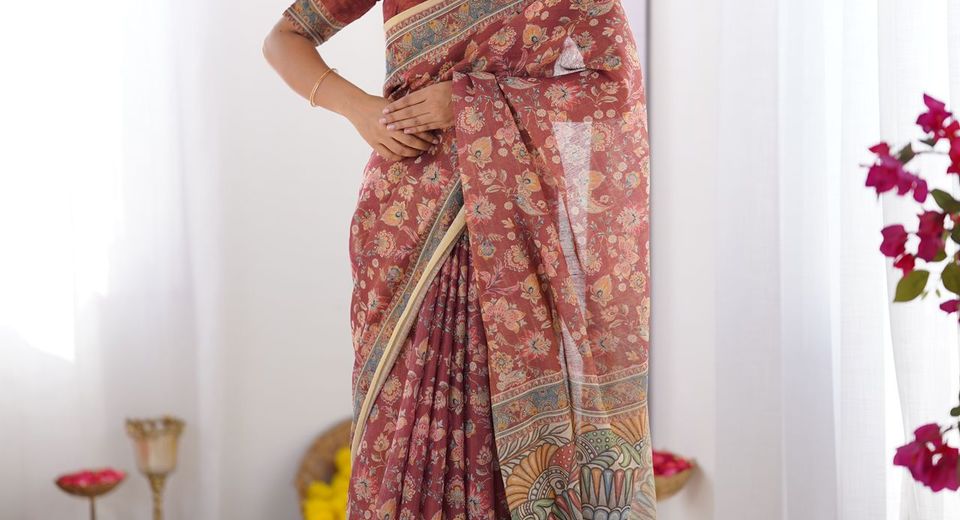
A saree such as Pastel Floral Tissue Handloom Cotton Saree with Zari Weaves needs more caution than an ordinary plain cotton saree because tissue texture and zari weaves add delicate surfaces. A saree such as Rust Red Handloom Printed Saree with Ethnic Border should also be tested for colour transfer, especially when the print contains deep rust, maroon or other saturated shades.
Cotton-linen and linen blends
Cotton-linen sarees can sometimes be machine washed in cold water, but they should be removed immediately after the cycle and dried flat or on a broad hanger to control creasing. Linen fibres naturally wrinkle, and high-speed spinning can create hard-set folds that are difficult to press out. Avoid fabric softener because it can coat the fibres and change the crisp drape that makes linen attractive.
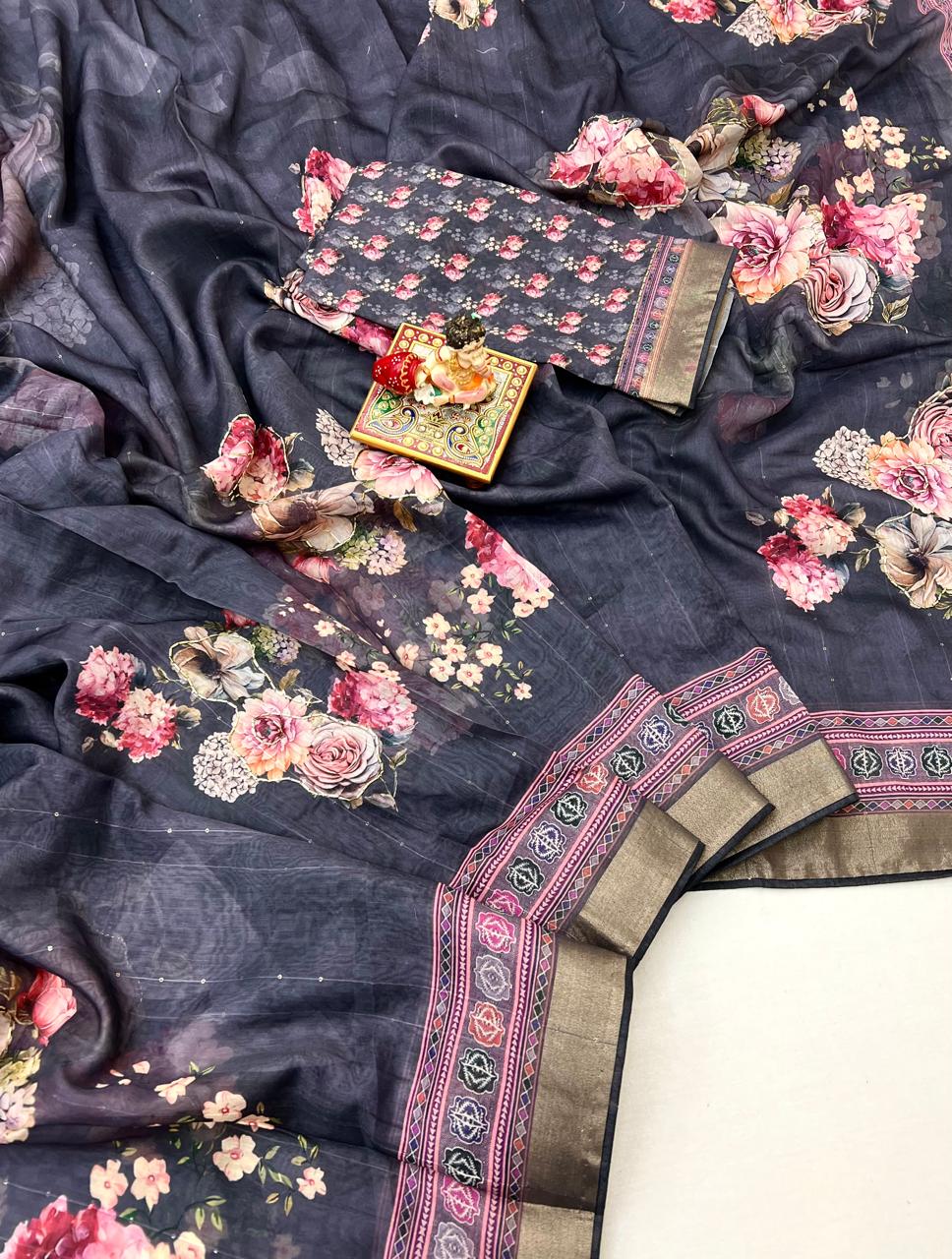
Sea Green Cotton Linen Printed Saree with Woven Border is a useful example of why a fabric blend deserves a separate test. Cotton and linen may tolerate cool water, but a printed surface and woven border still require a low-friction cycle. Elegant Rust Linen Cotton Printed Saree Set should be washed separately the first time, because rust-toned dyes can release excess colour even when the base fabric is washable.
When cotton should not go into the machine
Cotton sarees with zari, Aari work, mirror work, hand painting, heavy tassels, glued embellishments or loose woven borders should be hand washed only when the label allows washing at all. Decorative threads can snag on the drum or wrap around the agitator. A saree that has been starched, block printed with unstable pigment or repaired by hand may also need professional cleaning.
Which Sarees Should Never Be Machine Washed?
Pure silk, heavily embellished sarees, zari-rich sarees and sarees marked dry clean only should not be machine washed.
Silk sarees
Banarasi silk and Kanjeevaram silk should normally be dry cleaned or cleaned according to the weaver's specific instructions, because water can create uneven patches, shrinkage, colour bleeding and changes in lustre. Silk fibres are weaker when wet, and washing-machine agitation can disturb the yarns and flatten the surface. A Premium Handloom Silk Saree with Handkatha deserves particularly conservative care because hand-finished details can react differently from the main silk body.
Chanderi sarees, silk-cotton sarees and tissue silk sarees also need careful handling. Chanderi may lose its delicate crispness if soaked or rubbed, while metallic zari can tarnish or become dull when exposed to detergent for too long. A short machine cycle doesn't remove these risks, because the problem is the combination of water, friction and movement.
Zari, embroidery and surface work
Zari borders and pallu work should be protected from detergent, twisting and direct heat. Metallic zari may be made with a metal-coated thread or a synthetic metallic yarn, and both can catch against the machine drum. Floral Aari work, sequins and beadwork can also snag, loosen or pull the base fabric.
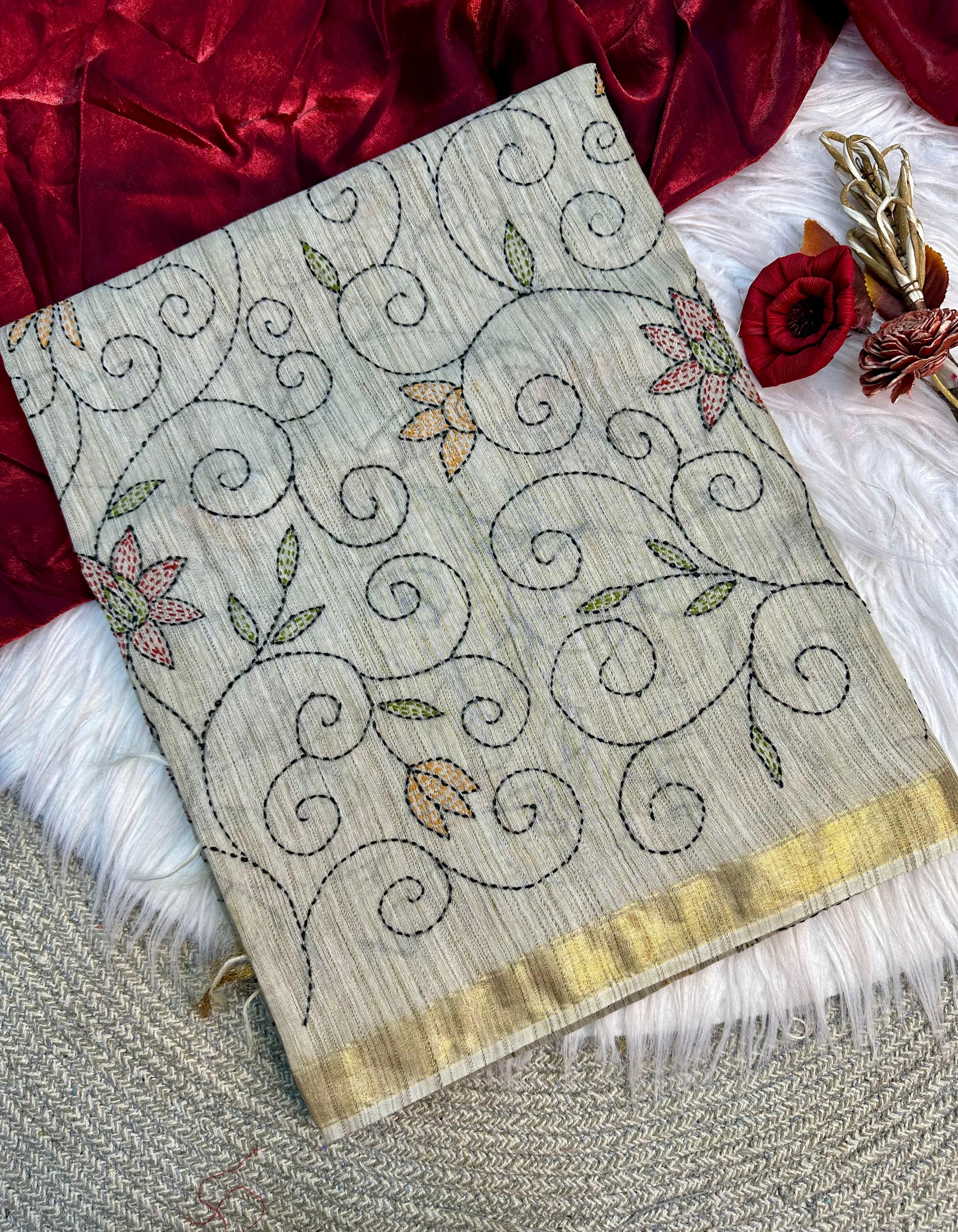
Cream Floral Tissue Handloom Cotton Saree with Zari Weaving should therefore be treated as a decorative saree rather than as a regular cotton garment. The same rule applies to Lavender Floral Aari Work Linen Saree with Blouse: the linen portion may tolerate cold water, but Aari work and the attached blouse make a machine cycle unnecessarily risky.
How Should You Machine Wash a Suitable Saree?
A suitable saree should be washed alone or with similar lightweight garments in a mesh bag, using cold water, mild detergent, a delicate cycle and low spin.
- Test the colour first. Press a damp white cloth against the inside seam, border and darkest printed area. Stop if dye transfers noticeably.
- Remove detachable accessories. Take off brooches, safety pins, waist chains and removable tassel supports. Fasten any loose hooks on a blouse before washing it with the saree.
- Fold the saree loosely. Do not roll it into a tight bundle. Fold the saree lengthwise and place it inside a large mesh laundry bag so the pallu and border don't catch.
- Select cold water and a delicate setting. A temperature below 30°C is safer for colour and shrinkage. Choose the shortest gentle programme that can clean the garment.
- Use a small amount of mild liquid detergent. Avoid bleach, optical brighteners, strong stain removers and powdered detergent that may leave particles between the folds.
- Choose low spin or skip spin. High-speed spinning creates sharp creases and puts stress on the border. Pressing out water by hand is safer than wringing.
- Remove the saree immediately. Leaving damp fabric inside the drum encourages colour transfer, musty odour and deep creasing.
Never wash a saree with towels, denim, garments with hooks or clothing with zippers. Rough surfaces increase abrasion, while dark garments can release dye. Wash a new saree separately until its colourfastness is known.
How Should a Saree Be Hand Washed?
Hand washing is safest when the saree is colourfast, washable and free from fragile embellishment; use a short cold-water wash without rubbing or wringing.
Fill a clean tub with cold water and dissolve a small quantity of mild liquid detergent before placing the saree inside. Let the saree rest for five to ten minutes, gently move it through the water, and lightly press soiled areas with your fingertips. Do not scrub the border, rub the pallu against itself or soak the saree for an hour.
Drain the wash water and rinse with fresh cold water until no detergent remains. Lift the saree with both hands because wet fabric becomes heavier and can stretch under its own weight. Press the saree between clean towels to remove moisture. Never twist, wring or beat a saree against a hard surface.
For an isolated mark, use a clean damp cloth and gentle dabbing rather than immersing the entire saree. Oil, turmeric and makeup stains can become permanent if exposed to heat, so don't iron or tumble-dry a stained area before professional advice. Haldi ceremony clothing with turmeric marks is especially likely to need a specialist cleaner when the fabric is silk or zari-adorned.
How Should Sarees Be Dried, Ironed and Stored?
Sarees should be dried away from direct sunlight, ironed inside out at the fabric's safe temperature, and stored clean and completely dry.
Drying
Lay a washed saree flat on a clean towel for the first stage of drying, then place it over a broad padded hanger or a clean drying rod. Support the full width rather than hanging the wet saree from one narrow point. Direct midday sunlight can fade printed cotton, rust, maroon and indigo dyes, while high heat can affect zari and silk.
don't use a tumble dryer unless the care label specifically permits it. Tumble drying combines heat, repeated friction and rapid movement, which can shrink cotton, distort linen and damage decorative threads. Drying indoors with good airflow is slower but safer than placing a delicate saree beside a radiator or under a hot iron.
Ironing
Iron a saree on the reverse side at the lowest temperature suitable for the fibre, using a thin cotton pressing cloth between the iron and the saree. Silk, tissue and zari should not receive direct high heat. Press rather than drag the iron over Aari work, woven borders or raised motifs.
Storage
Store a clean, dry saree folded along its existing pleat lines inside a breathable cotton or muslin cover. Refold silk and zari sarees every few months along different lines to reduce permanent creases, and keep them away from damp walls, perfume, hairspray and direct sunlight. Do not seal a slightly damp saree in plastic, because trapped moisture can encourage mildew and tarnish metallic threads.
What Is the Safest Cleaning Decision for Common Saree Types?
The safest cleaning decision depends on the most delicate element in the saree, not merely on its main fibre.
- Plain cotton: Cold delicate machine wash may be suitable after a colourfastness test.
- Printed cotton: Use cold water and wash separately at first because dark prints can bleed.
- Cotton-linen: A gentle machine cycle may work, but expect wrinkles and avoid high spin.
- Chanderi: Prefer professional cleaning or very careful hand washing when the label allows it.
- Banarasi silk and Kanjeevaram: Prefer dry cleaning or the manufacturer's stated method.
- Zari sarees: Avoid machine washing, bleach, long soaking and direct heat.
- Aari, sequin and beadwork: Use specialist cleaning unless the care label gives a safe alternative.
Price and discount don't determine washing safety. A saree from Sarees from Rs 1000 to Rs 1500 may still contain zari or delicate handloom work, while a saree from Sarees Flat 60% Off may need exactly the same careful treatment as a full-price silk saree. Sarees Under 20% Off is a shopping filter, not a fabric-care instruction.
The practical rule is simple: machine wash only a tested, colourfast, lightly decorated washable saree; hand wash plain delicate fabric with care; and send silk, zari-heavy or embellished sarees to a reliable professional. A five-minute label and colour check can prevent irreversible damage to the weave, border and drape.
Practical Answers for Washing and Caring for Sarees
Can saree be washed in washing machine on a delicate cycle?
A plain, colourfast cotton or cotton-linen saree may be washed on a cold delicate cycle with low spin and a mesh bag. Silk, zari, embroidery and unstable prints should not be machine washed merely because the cycle is labelled delicate.
Can I machine wash a cotton saree with zari?
A cotton saree with zari should generally be hand washed only if its care label permits washing. Machine agitation can snag metallic threads, while detergent and spinning may dull, loosen or crease the zari border.
How do I wash a silk saree at home?
Silk sarees are safest with professional dry cleaning or the exact method specified by the manufacturer. Do not soak, wring, machine wash or expose Banarasi silk, Kanjeevaram or delicate Chanderi silk to direct heat without clear care instructions.
How can I stop a saree from bleeding colour during washing?
Test the darkest area with a damp white cloth before washing and use cold water if the colour does not transfer. If noticeable dye appears on the cloth, avoid soaking and machine washing, and use professional cleaning instead.
Can I put a saree in the dryer after washing?
A tumble dryer is usually unsafe for sarees because heat and friction can shrink cotton, distort linen and damage silk, zari or embroidery. Press out water with towels and air-dry the saree away from direct sunlight.
How often should sarees be washed?
Wash a saree only when it needs cleaning rather than after every wear, provided it was worn briefly and allowed to air out fully. Spot-clean small marks, follow the fabric's care instructions, and clean silk or zari sarees professionally when required.