

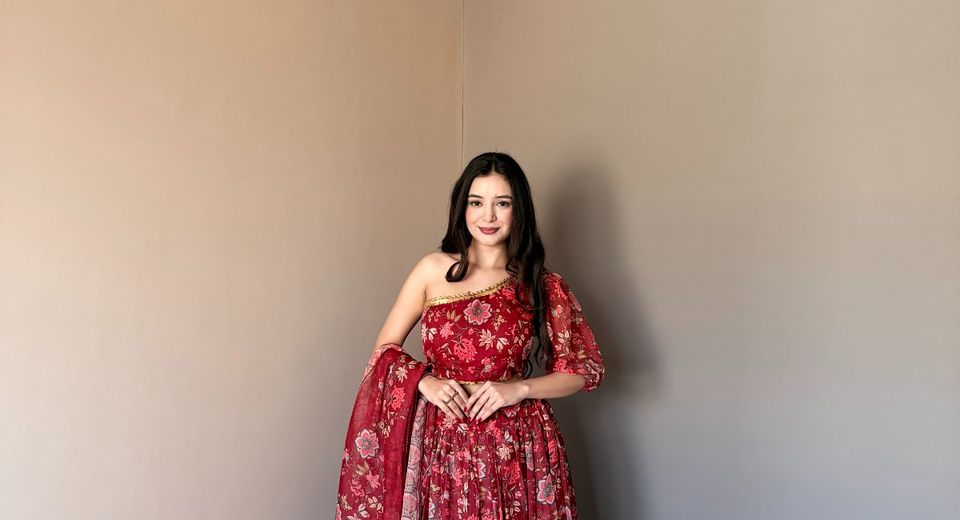
Can One Lehenga Skirt Be Styled for Two Different Wedding Seasons? Yes, provided the skirt has a versatile colour story, a comfortable waistband and enough visual balance to work with different layers. The most effective change usually comes from replacing the choli and dupatta, then adjusting jewellery, footwear and makeup for the weather.
A lehenga skirt doesn't need to be reserved for one wedding date or one fixed set. A lightweight skirt with floral print, threadwork or restrained shine can move from a warm-weather Mehendi ceremony to a winter reception when the supporting pieces change. The practical goal isn't to disguise the skirt completely; the goal is to create a different balance of coverage, texture and colour.
Start with the Right Base
One lehenga skirt can serve two wedding seasons when its fabric, colour and volume allow different styling layers. A butter silk, georgette, organza or moderately embellished skirt can be paired with a breathable blouse for summer and a richer blouse, shawl or lined dupatta for winter.
Assess four details before planning the second look: the skirt fabric, waistband construction, hem volume and dominant colours. A very heavy bridal skirt may feel excessive at a daytime summer ceremony, while a sheer pastel skirt may need a substantial blouse and opaque dupatta for a cold evening. Mid-weight designs offer the greatest flexibility because they can be cooled down with airy accessories or warmed up with silk, embroidery and additional layers.
Colour flexibility matters as much as fabric. A skirt containing two or three usable tones can support contrasting looks, while a single intense colour needs more careful blouse selection. A floral organza skirt, for example, can take a soft pink blouse in spring and a deep green or wine blouse in winter if both colours already appear in the print or embroidery.
Skirt volume also affects repeat wear. A slim or moderately flared silhouette works well with a cropped jacket, a long draped dupatta and different blouse shapes. A very wide can-can skirt may already look highly bridal, leaving fewer practical options for a daytime wedding or intimate family function.
Can One Lehenga Skirt Be Styled for Two Different Wedding Seasons with New Blouses?
The second blouse should change the season, silhouette and formality of the outfit without fighting the skirt. Matching one colour from the skirt and changing the neckline, sleeve length or surface texture creates more contrast than choosing another blouse in a nearly identical shade.
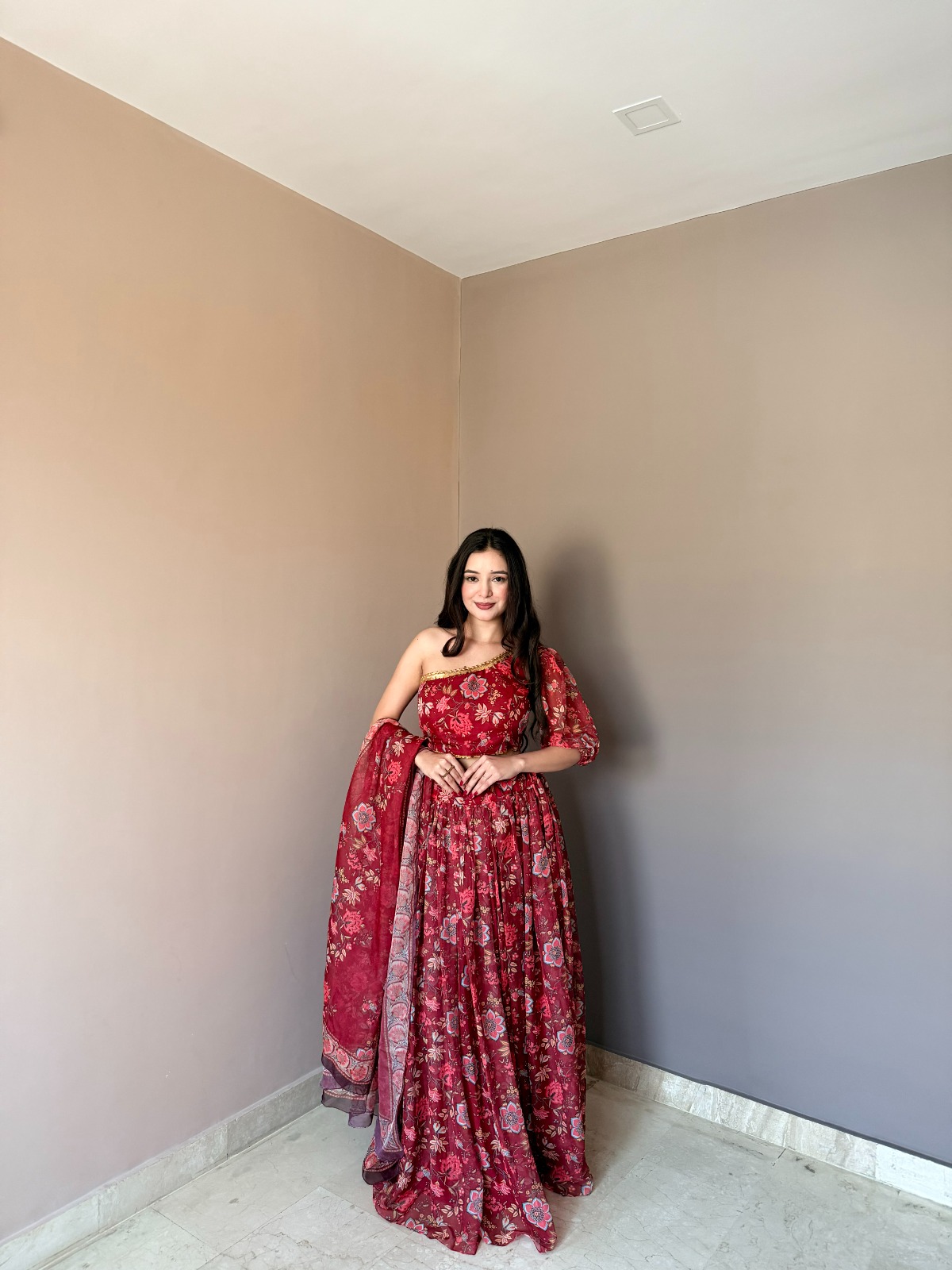
A printed skirt usually benefits from a solid blouse, while an embroidered skirt can support either a plain blouse or a blouse with carefully repeated threadwork. The Red Floral Organza Lehenga Set with One Shoulder Blouse shows how an asymmetrical blouse can give a skirt a contemporary, warm-weather identity. A full-sleeved square-neck or round-neck blouse in a deeper colour would make the same floral skirt feel more suited to a winter evening.
Silhouette changes the perceived formality. An one-shoulder blouse feels modern and celebratory, a high-neck blouse feels polished, and a structured choli creates a more fashion-led look. Longer sleeves are useful for winter weddings or family ceremonies where a more covered outfit is preferred. Short sleeves or sleeveless cuts are more comfortable for a summer Sangeet held outdoors, provided the event dress code permits them.
People comparing fully stitched choli shopping with separate blouse purchases should check measurements, lining and fastening placement before ordering. A fully stitched choli gives immediate structure, but a separate blouse offers more control over sleeve length and fit. Readymade sets are convenient when the waist and bust measurements fall within the listed size chart; alterations are advisable when the shoulder, armhole or bust fit is significantly different.
A blouse can also change the apparent waistline. A fitted blouse ending at the natural waist highlights a flared skirt, while a slightly longer blouse gives more coverage and a streamlined look. Keep the blouse hem clear of the skirt's heaviest embroidery so the outfit doesn't look visually crowded.
Can One Lehenga Skirt Be Styled for Two Different Wedding Seasons with a New Dupatta?
A lightweight single dupatta makes a lehenga summer-ready, while a denser, lined or richly bordered dupatta gives the same skirt a winter-appropriate finish. Dupatta texture changes the outfit's warmth, volume and formality more quickly than most accessories.
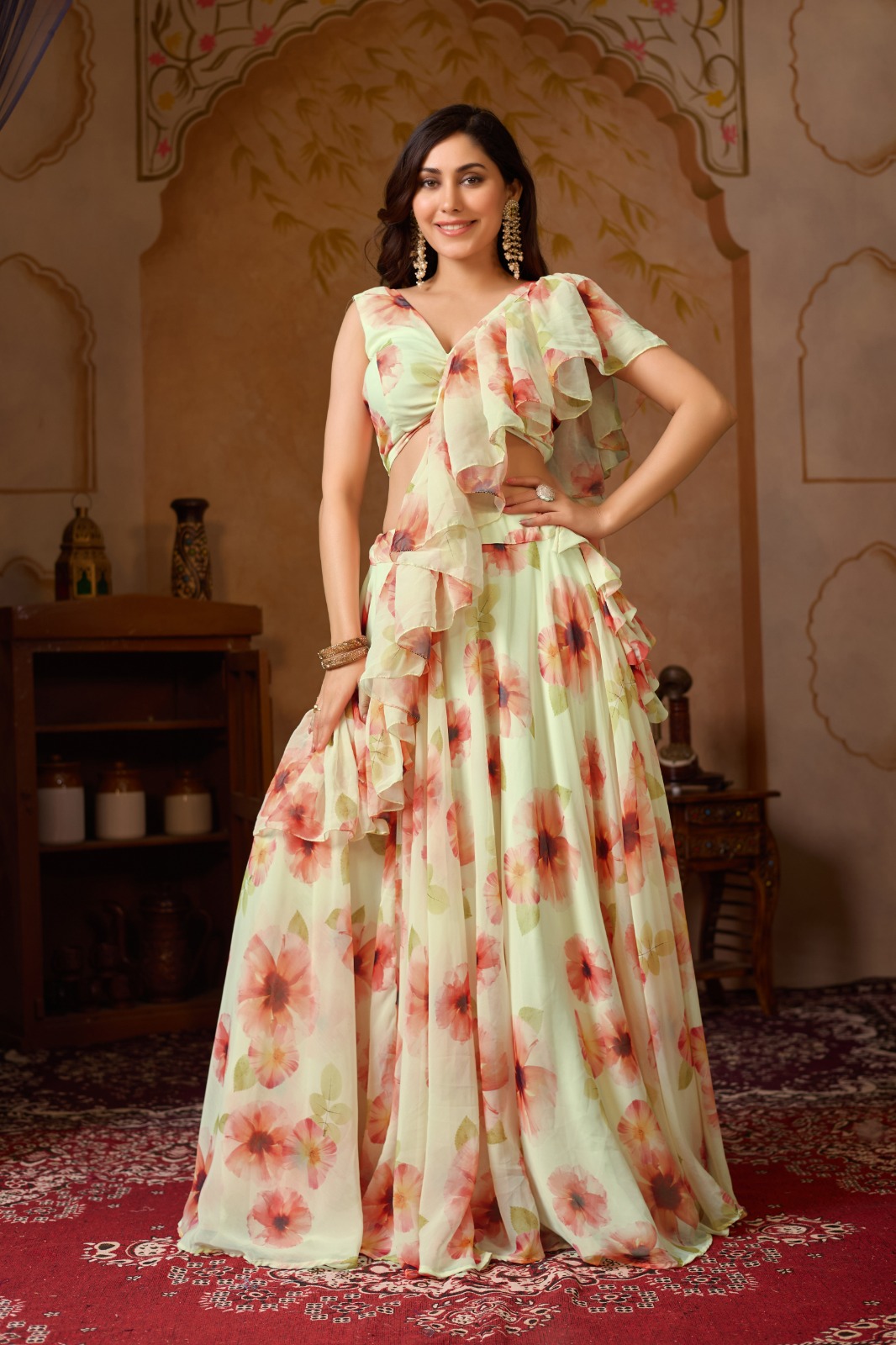
For a warm-weather look, choose chiffon, light georgette, organza or another airy fabric with a manageable border. A printed or lightly embellished dupatta can add interest without competing with a detailed skirt. The Pastel Floral Georgette Lehenga Set with Ruffle Blouse demonstrates how soft fabric movement and a romantic surface suit a daytime celebration; the same styling principle works with a flexible skirt and a light floral or pastel dupatta.
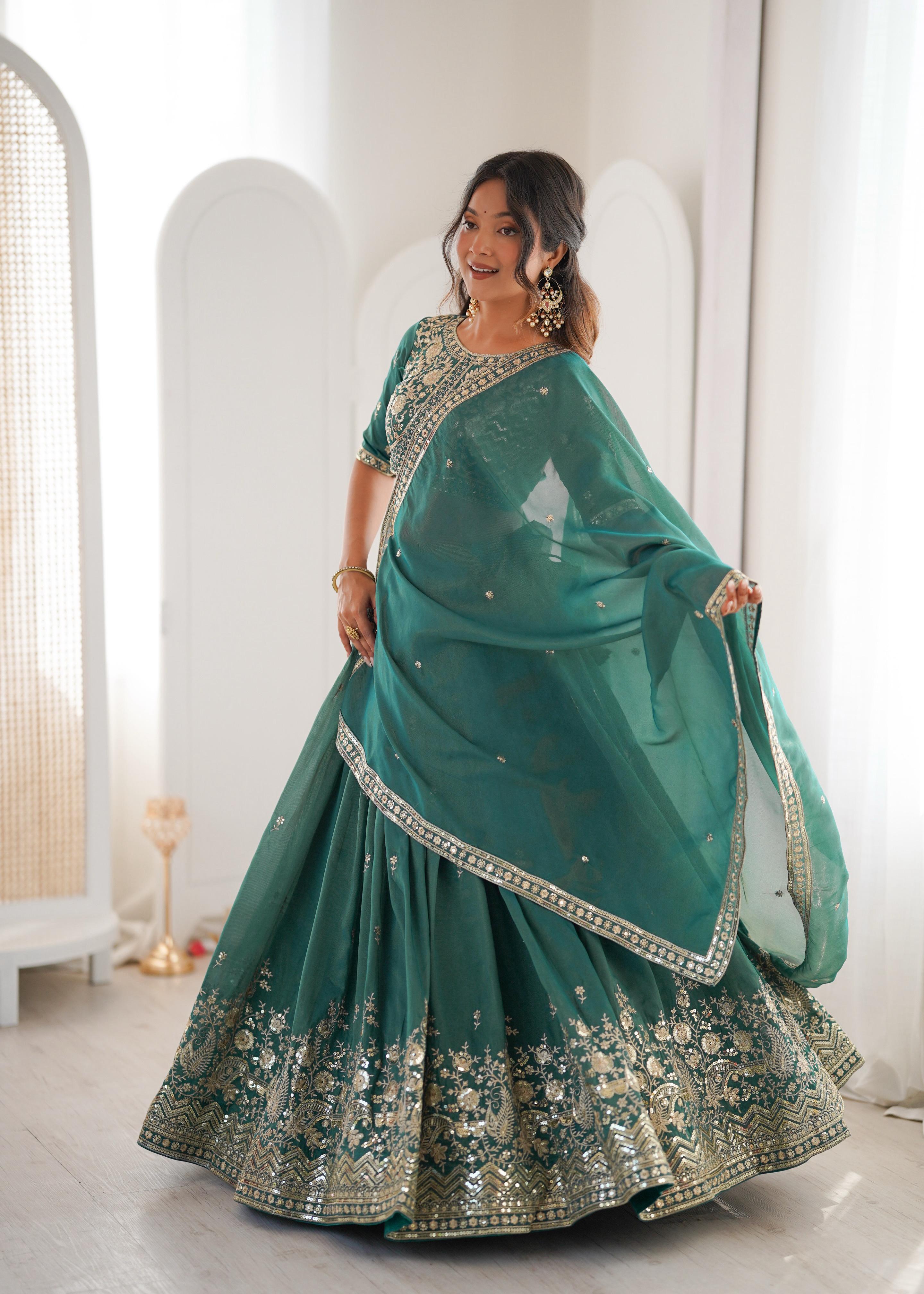
For a colder celebration, use a silk, velvet-look, heavier georgette or densely bordered dupatta. Drape the fabric over both shoulders for coverage, or pin one end near the shoulder and wrap the remaining length around the arms. The Designer Threadwork Silk Lehenga Choli Set with Dupatta shows how silk and threadwork create a more substantial visual finish for formal evening dressing.
Dupatta draping changes the apparent proportions of the outfit. A front-open drape creates a long vertical line, a pleated shoulder drape looks formal, and a waist-tucked drape keeps the hands free for dancing. Secure a heavy winter dupatta with small concealed pins at the shoulder and waist so the fabric doesn't pull on the blouse.
A summer dupatta should not be so short that it constantly slips from the shoulder, especially during a Mehendi ceremony. Measure the drape against the blouse and skirt before the event. A longer dupatta is useful for winter wrapping, but extra length should be pleated neatly rather than allowed to collect around the feet.
Can One Lehenga Skirt Be Styled for Two Different Wedding Seasons Through Colour?
Colour makes the same lehenga look new when the second outfit uses a different contrast level rather than repeating the original palette. Pairing a pale skirt with a saturated blouse, or a bright skirt with a muted blouse, alters the mood without changing the base garment.
A green skirt can move from daytime freshness to evening richness with a yellow or ivory blouse in summer and an emerald, bronze or deep wine blouse in winter. The Green Lehengas collection and Yellow Lehengas collection offer useful references for combining neighbouring festive colours without making the outfit feel random.
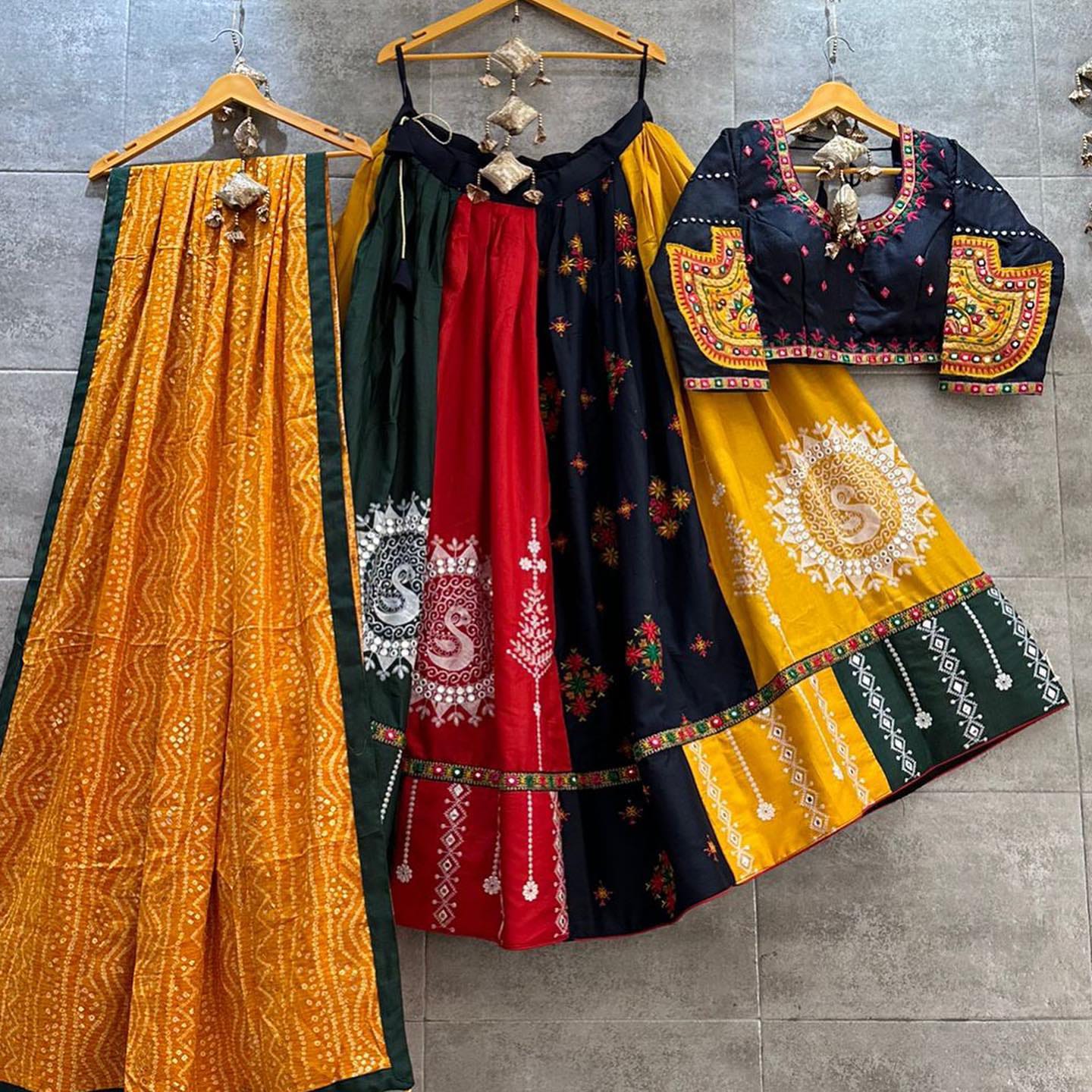
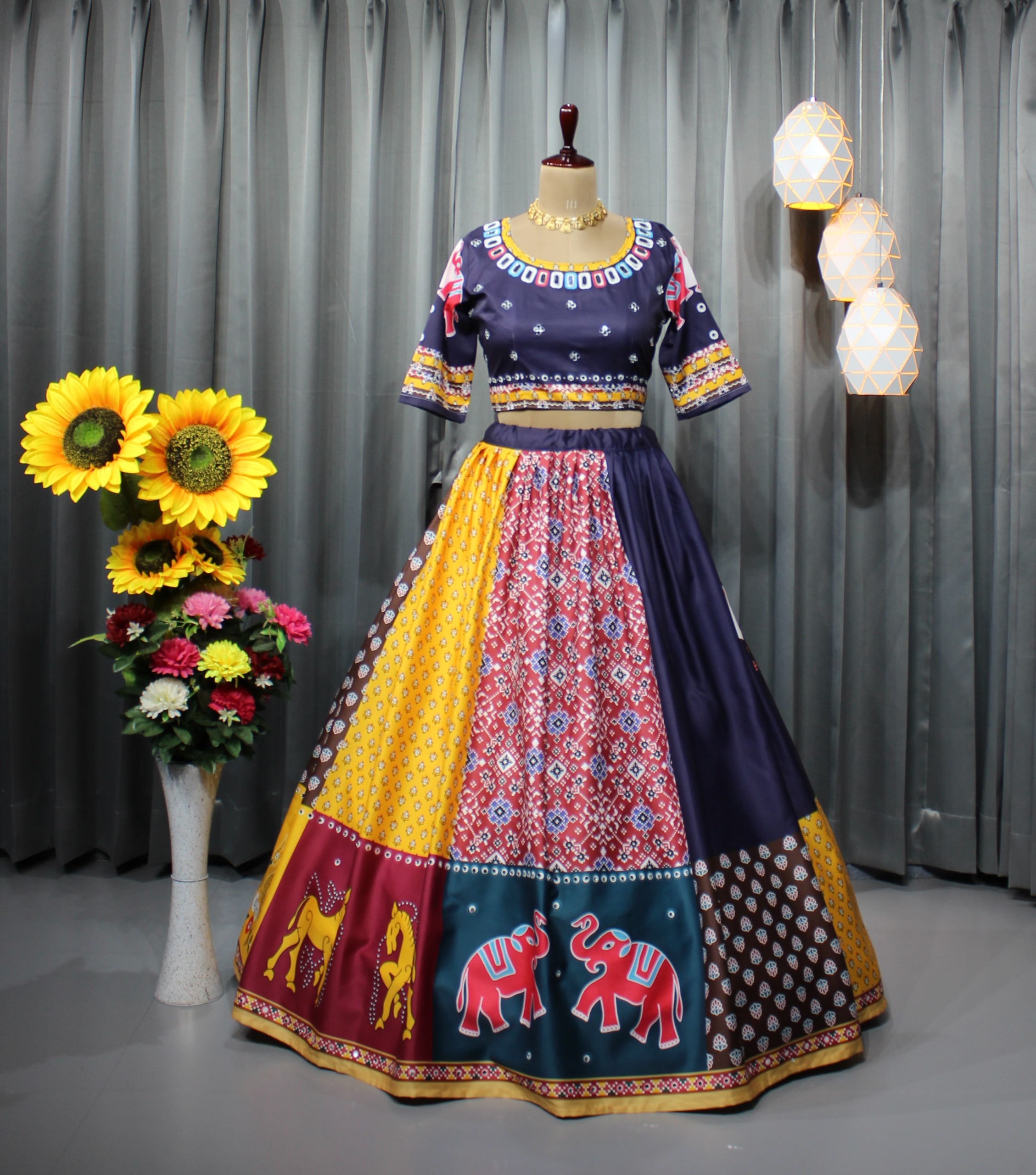
Multicolour skirts offer even more options, but one supporting colour should be repeated at least twice. If the skirt includes pink and blue flowers, a pink blouse with blue earrings creates cohesion; a blue blouse with pink bangles creates a different balance. The Stylish Multicolor Butter Silk Lehenga Choli Set and Multicolor Printed Butter Silk Lehenga Choli Set demonstrate why multicolour bases can support more than one accessory direction.
Colour temperature can also suggest the weather. Coral, yellow, mint and fresh green generally feel lighter for summer celebrations, while wine, navy, bronze and emerald create a richer winter mood. These associations are not strict rules; a pastel skirt can look winter-ready when paired with a dark blouse, warm metallic jewellery and a substantial dupatta.
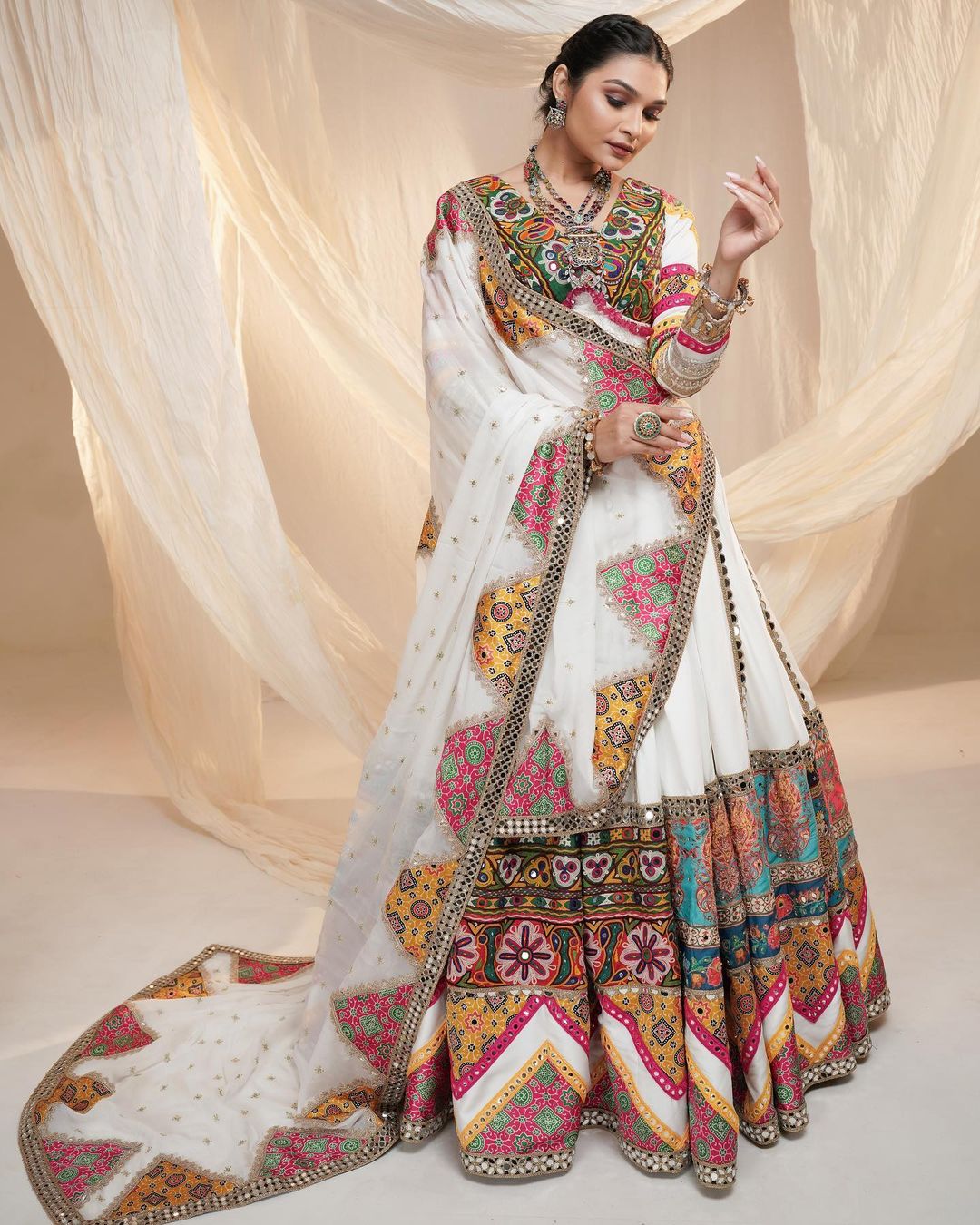
White and ivory require attention to ceremony context. Festive White Lehenga Choli with Mirror Work Design can suit a reception, engagement or festive gathering, but guests should consider regional customs and the couple's stated dress code before wearing a predominantly white outfit. A coloured dupatta or bright blouse can make white feel celebratory rather than bridal-minimal.
Can One Lehenga Skirt Be Styled for Two Different Wedding Seasons with Accessories?
Summer accessories should be lighter and more breathable, while winter accessories can be larger, layered and more textural. Changing jewellery scale and footwear is enough to separate two versions of the same skirt.
For summer, choose lightweight jhumkas, enamel bangles, a slim maang tikka, block heels or embellished sandals. Keep metal finishes consistent: gold jewellery works naturally with warm embroidery, while silver or oxidised finishes can sharpen pastel and multicolour outfits. A compact potli is practical for ceremonies where a large clutch would be inconvenient.
For winter, consider a choker with longer earrings, layered bangles, a statement ring and a structured clutch. Antique gold, kundan-inspired settings and richer stones add depth to silk or threadwork. A cropped embroidered jacket can replace a separate shawl when movement and dancing are priorities.
Footwear should match the venue as well as the weather. Thin stilettos may sink into grass at an outdoor Mehendi ceremony, while embellished closed-toe heels or low wedges provide more stability. Test the skirt hem with the chosen footwear before the wedding because changing heel height can alter the fall of the lehenga and cause the border to drag.
Hair and makeup can complete the seasonal shift. A low bun, fresh flowers and softer makeup suit a warm daytime function, while a sleek bun, defined eyes and a deeper lip can support a winter evening look. Use transfer-resistant products for long ceremonies, but avoid heavy layers of makeup simply to make the outfit appear more formal.
Can One Lehenga Skirt Be Styled for Two Different Wedding Seasons Without Looking Repeated?
The outfit will look meaningfully different when at least three visible elements change: the blouse, dupatta and accessory scale. Changing only earrings or lipstick usually leaves the original look recognisable.
Use a simple planning grid before shopping. For summer, note a breathable blouse, airy dupatta, lighter jewellery and practical footwear. For winter, note longer sleeves, a denser dupatta, layered jewellery and a warmer shoulder layer. The grid prevents accidental repetition and helps identify whether a new blouse or a new dupatta will create the greater difference.
A repeat-wear wardrobe benefits from neutral supporting pieces. An ivory, blush, gold or deep green blouse can work with several skirts, while a reversible or two-tone dupatta can provide two styling directions. The Ready Made Lehenga collection can be useful for shoppers who want a complete outfit with less alteration, while the Semi Stitched Lehengas Collection may suit someone who wants greater control over blouse fit and skirt finishing.
Storage affects whether the skirt remains presentable for a second season. Air the lehenga after each wear, remove surface dust with a soft brush and store the skirt flat or folded along clean muslin rather than in thin plastic. Do not spray perfume directly on zari, mirror work or metallic embroidery. Professional dry cleaning is safer for heavily embellished pieces, and any stain should be treated promptly instead of rubbed at home.
Plan alterations at least two weeks before the next wedding. A tailor may need time to adjust the waistband, replace hooks, add sleeve lining or shorten a blouse. Try the complete outfit with the intended footwear and dupatta because a blouse that looks comfortable on its own may feel restrictive once a pinned drape is added.
The most adaptable lehenga isn't necessarily the most heavily decorated design. A skirt with a coherent colour palette, moderate embellishment and a comfortable fit gives more opportunities for designer, bridal-adjacent and festive styling. A thoughtful second blouse and season-appropriate dupatta can make one purchase serve two celebrations with very different visual identities.
Questions Readers Ask About Styling One Lehenga Skirt Across Seasons
Can a summer lehenga be worn to a winter wedding?
A summer lehenga can be worn to a winter wedding when the blouse and dupatta provide additional coverage. Add full sleeves, a lined choli, a heavier dupatta or a cropped embroidered jacket, and choose closed-toe footwear if the venue is cold.
Which lehenga fabric works best for two wedding seasons?
Mid-weight butter silk, georgette, organza and moderate-weight silk blends are generally easier to restyle across seasons. Very sheer fabrics may need lining for winter, while extremely heavy bridal fabrics can feel uncomfortable at a warm daytime function.
How can one lehenga look different at a Mehendi and reception?
Use a lighter blouse, airy dupatta, floral jewellery and sandals for a Mehendi ceremony, then switch to a structured blouse, richer dupatta, layered jewellery and heels for a reception. A change from daytime pastels to deeper contrast can further separate the two looks.
Is a readymade lehenga suitable for repeat wedding styling?
A readymade lehenga is suitable when the skirt and blouse fit securely and the design allows separate styling. Check the size chart, lining, waistband and alteration allowance before buying, especially when planning to replace the original blouse.
Can the same lehenga skirt be used for a bridal event?
The same skirt can work for a pre-wedding bridal event such as a Mehendi or Sangeet if its embellishment and colour suit the dress code. A formal bridal wedding ceremony may require more substantial fabric, coverage or traditional detailing depending on family and regional expectations.
Questions Readers Ask About Styling One Lehenga Skirt Across Seasons
Can a summer lehenga be worn to a winter wedding?
A summer lehenga can be worn to a winter wedding when the blouse and dupatta provide additional coverage. Add full sleeves, a lined choli, a heavier dupatta or a cropped embroidered jacket for warmth.
Which lehenga fabric works best for two wedding seasons?
Mid-weight butter silk, georgette, organza and moderate-weight silk blends are generally easiest to restyle across seasons. Very sheer or heavily layered fabrics may need additional alterations for comfort.
How can one lehenga look different at a Mehendi and reception?
Use a lighter blouse, airy dupatta, floral jewellery and sandals for a Mehendi ceremony. Switch to a structured blouse, richer dupatta, layered jewellery and heels for the reception.
Is a readymade lehenga suitable for repeat wedding styling?
A readymade lehenga is suitable when the skirt and blouse fit securely and the design allows separate styling. Check the size chart, lining, waistband and alteration allowance before buying.
Can the same lehenga skirt be used for a bridal event?
The same skirt can work for a pre-wedding bridal event such as a Mehendi or Sangeet if its embellishment and colour suit the dress code. A formal wedding ceremony may require more substantial fabric or traditional detailing.




