

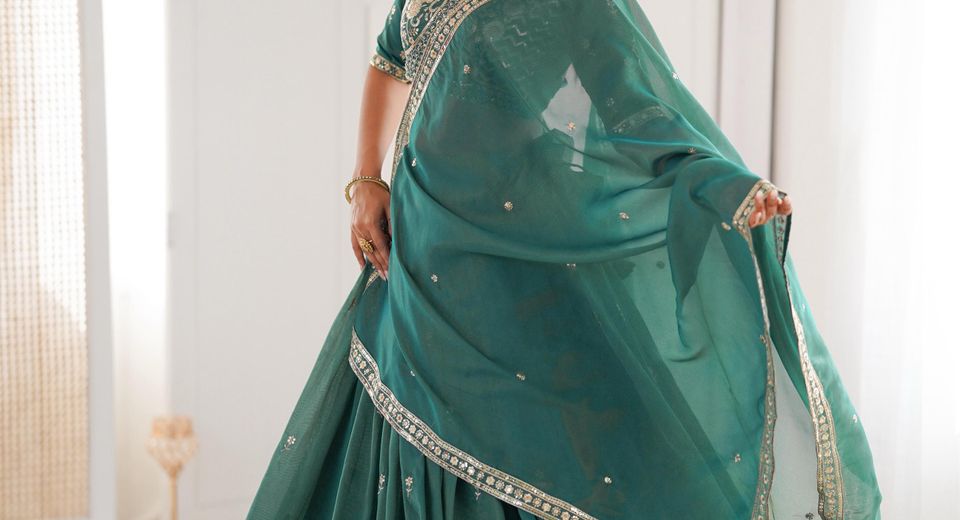
Can a Heavy Bridal Dupatta Work With a Minimal Lehenga? Yes, when the outfit gives the dupatta room to lead without allowing its border, colour or fabric to overwhelm the wearer. A restrained skirt and blouse can make zari, sequins, threadwork or a broad embroidered edge look more deliberate. The key isn't matching the amount of decoration on every garment; the key is controlling visual weight across the full silhouette.
A heavy bridal dupatta can also solve a practical styling problem. A simpler lehenga may be easier to alter, rewear and sit in, while an ornate dupatta supplies the ceremonial richness expected at a wedding. The combination works especially well when the blouse has a clean neckline, the skirt has controlled volume and the dupatta is draped in a way that shows its most valuable details.
Start With Visual Balance
Yes, a heavy bridal dupatta works with a minimal lehenga when the skirt, blouse and drape share at least one visual connection. That connection may be a common colour, a repeated thread shade, a matching border or a similar finish such as matte embroidery paired with matte embroidery.
Minimal doesn't mean plain or inexpensive. A minimal bridal lehenga can have high-quality fabric, a precise flare, a well-constructed waistband and a cleanly finished blouse without dense surface ornamentation. The absence of excessive decoration makes the cut more visible, so fit and fabric quality matter more than they would under layers of embellishment.
Visual balance depends on three practical factors: the amount of surface work, the physical weight of the fabric and the size of the silhouette. A net dupatta with a wide zari border may look heavy even when the fabric itself is light. A jacquard dupatta may feel substantial but appear calmer when the border is narrow. Judge both kinds of weight before deciding whether the pairing is balanced.
The contrast works because the eye needs a quiet area to appreciate a detailed area. A heavily decorated lehenga paired with an equally elaborate dupatta can make the blouse, waist and drape merge into one busy field. A cleaner skirt creates negative space around the dupatta and helps the bride's face, jewellery and posture remain visible.
Choose the Right Base
Choose a base lehenga with enough structure to support the dupatta, a moderate flare that permits movement and one small design detail that connects it to the dupatta.
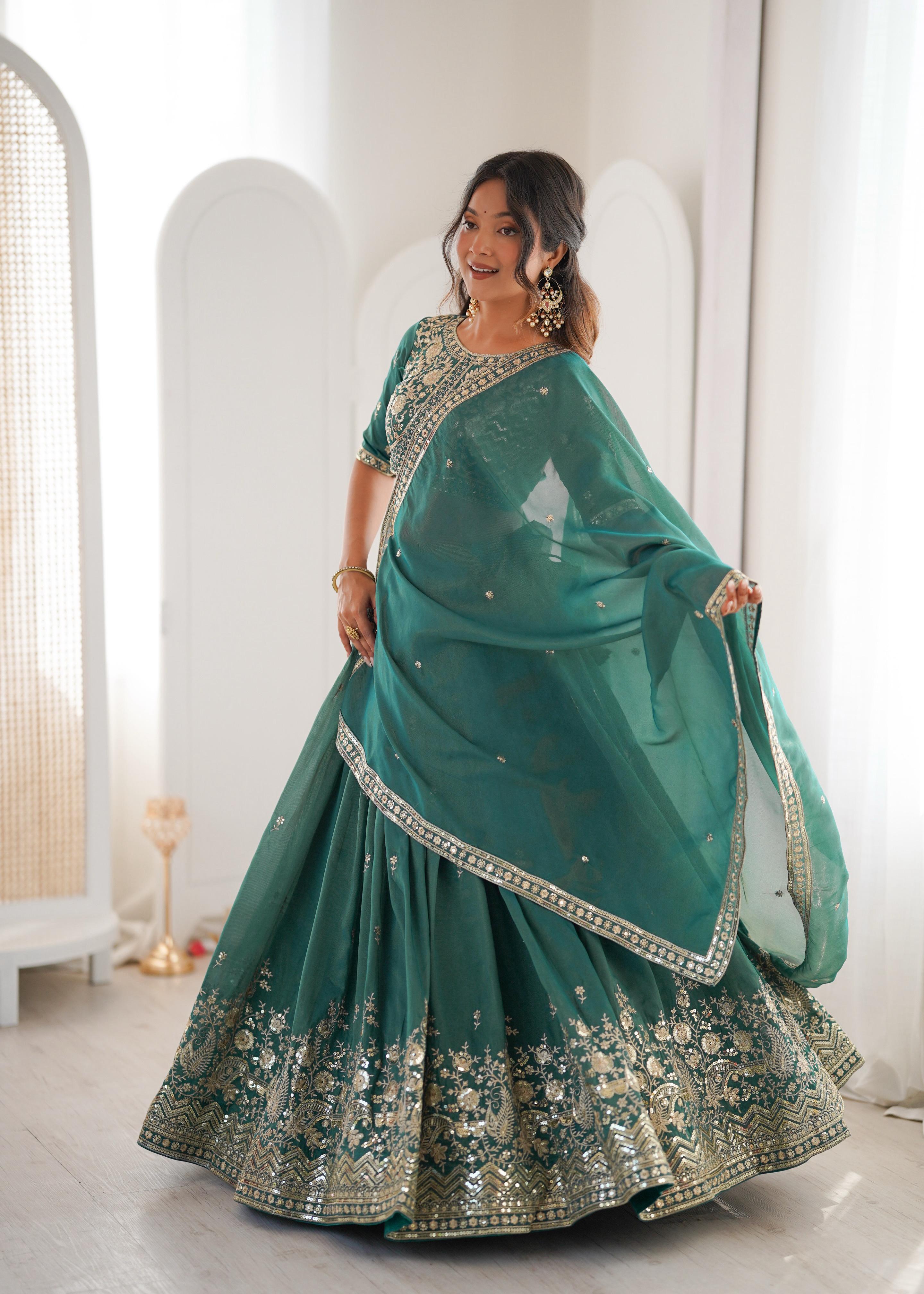
The Designer Threadwork Silk Lehenga Choli Set with Dupatta illustrates how threadwork can provide richness without requiring every inch of the skirt to be covered in reflective embellishment. Silk has a natural sheen, so controlled threadwork can look dressed-up even when the motif arrangement is relatively restrained.
A broad dupatta border can sit well with a plain or lightly worked skirt, but the border should not finish at an awkward point across the torso. A border that cuts directly across the fullest part of the bust may broaden the upper body visually. Placing the border closer to the shoulder, along one vertical edge or lower across the skirt can produce a longer-looking line.
How much embellishment should a minimal lehenga have?
A minimal lehenga should usually carry one quiet detail that relates to the dupatta rather than compete with it. A narrow hem, a small motif near the waistband, tonal threadwork on the blouse or a modest border is enough to connect the pieces.
A silk skirt can echo the dupatta through one thread colour, while a simple georgette skirt can repeat a floral motif from the border in a much smaller scale. Repeating the same large motif on the skirt, blouse and dupatta removes the contrast that makes the outfit interesting.
The Cream & Maroon Jacquard Lehenga Choli with Dupatta Set shows why a woven fabric can carry a rich bridal mood even without heavy all-over embroidery. Jacquard patterns are built into the weave, so the surface already has depth. A heavily embellished dupatta should therefore be paired with such a skirt only when the colours and pattern scale rest controlled.
Match Fabric and Flare
Match the dupatta to a skirt that keeps its shape beneath additional fabric and pins, because a limp or poorly supported skirt can make the complete silhouette look untidy.
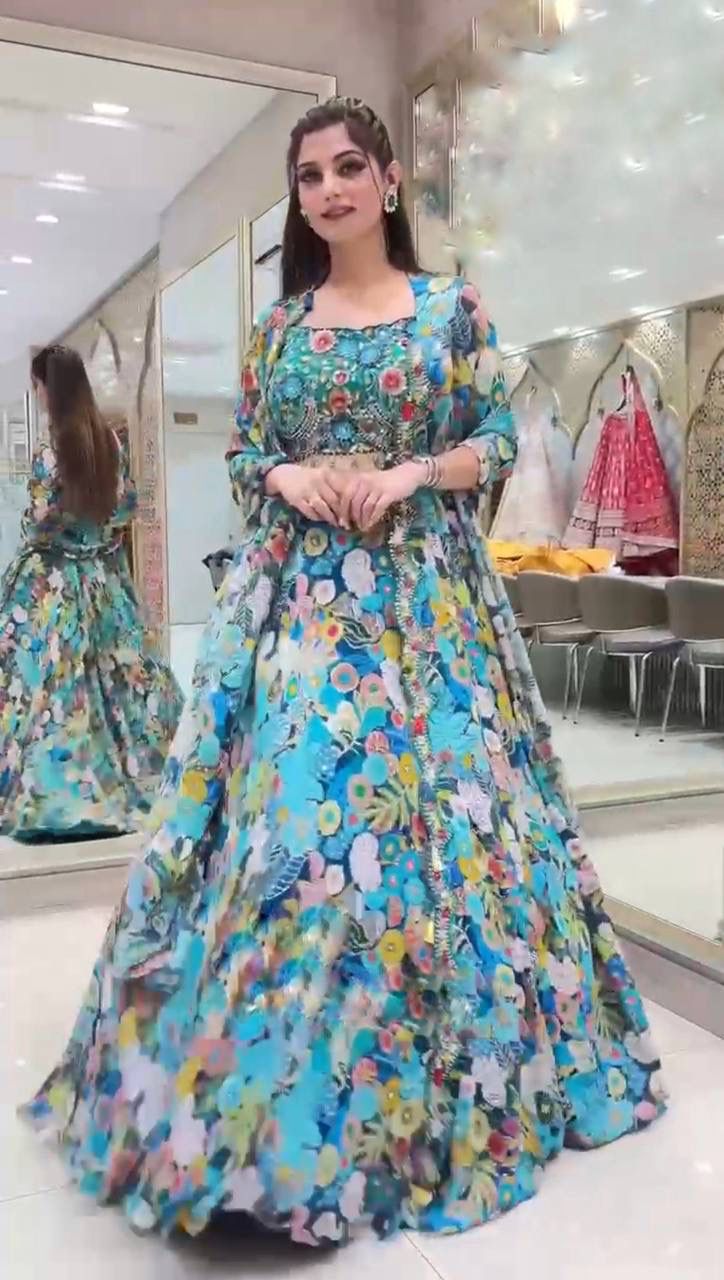
A structured skirt is useful when the dupatta is dense or broad. Silk, jacquard and carefully layered net can provide structure, while a very soft fabric may twist when the dupatta is pinned at the shoulder and waist. Test the skirt by walking, sitting and turning before finalising the outfit.
Georgette is useful for movement and a lighter fall, particularly for a wedding guest or a bride who wants a less rigid silhouette. The Blue Floral Georgette Lehenga Set with Heavy Flare and the Pastel Floral Georgette Lehenga Set with Ruffle Blouse show two different ways floral detail can create interest without requiring a fully embellished skirt.
A heavy dupatta generally looks more balanced with a moderate or well-supported flare than with an extremely narrow skirt. A narrow skirt may pull at the hip when the dupatta is pinned tightly, while excessive flare can make the complete outfit look bulky when the dupatta already has a broad border.
Check how many can-can or lining layers are included, whether the waistband lies flat and whether the hem keeps its shape after sitting. The Pink Bridal Sequins Lehenga Set with Heavy Flare has a strong volume statement, so pairing it with another dramatic dupatta requires restraint elsewhere. A simpler, lighter drape can prevent the lower half from appearing overloaded.
Build Colour Harmony
Colour harmony prevents a heavy dupatta from dominating the outfit by giving the eye a controlled path from the face to the hem.
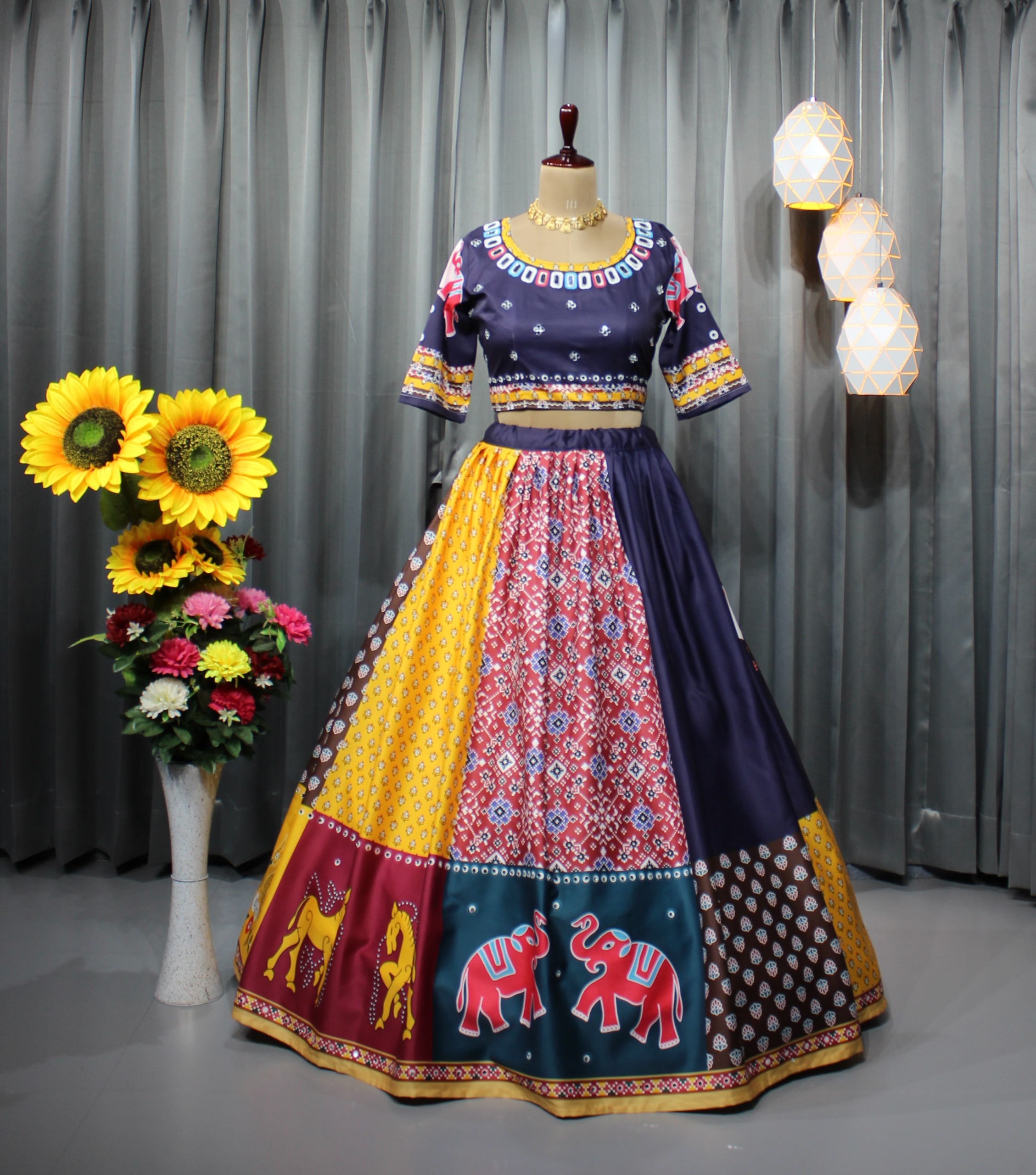
The safest approach is to select a base skirt in one of the dupatta's secondary colours rather than copying its strongest contrast colour. A deep maroon dupatta can sit against cream, muted rose or warm beige when the border contains those tones. A green dupatta can work with a softer sage or ivory skirt if the blouse repeats one green detail.
A pastel dupatta can look bridal when paired with pearl, silver or tonal embroidery instead of being forced into a bright red-and-gold palette. Green Lehengas and Yellow Lehengas are useful starting points for daytime wedding functions because both colour families can support gold, champagne and muted pink accents.
Mehendi Lehengas often benefit from floral or botanical colour relationships, while a formal wedding look may need a deeper base colour to prevent a pale dupatta from appearing disconnected. The Mint Embroidered Lehenga Set with Net Dupatta for Women shows how a soft colour family can feel occasion-ready through embroidery and a coordinated net layer.
A pastel or mint base is especially effective when the heavy dupatta contains concentrated work around the border rather than dense decoration across its centre. A crowded central field can obscure the blouse and make a pale outfit lose its intended lightness.
Select the Blouse Carefully
A clean blouse gives the dupatta a stable visual anchor and prevents the upper half of the outfit from becoming visually crowded.
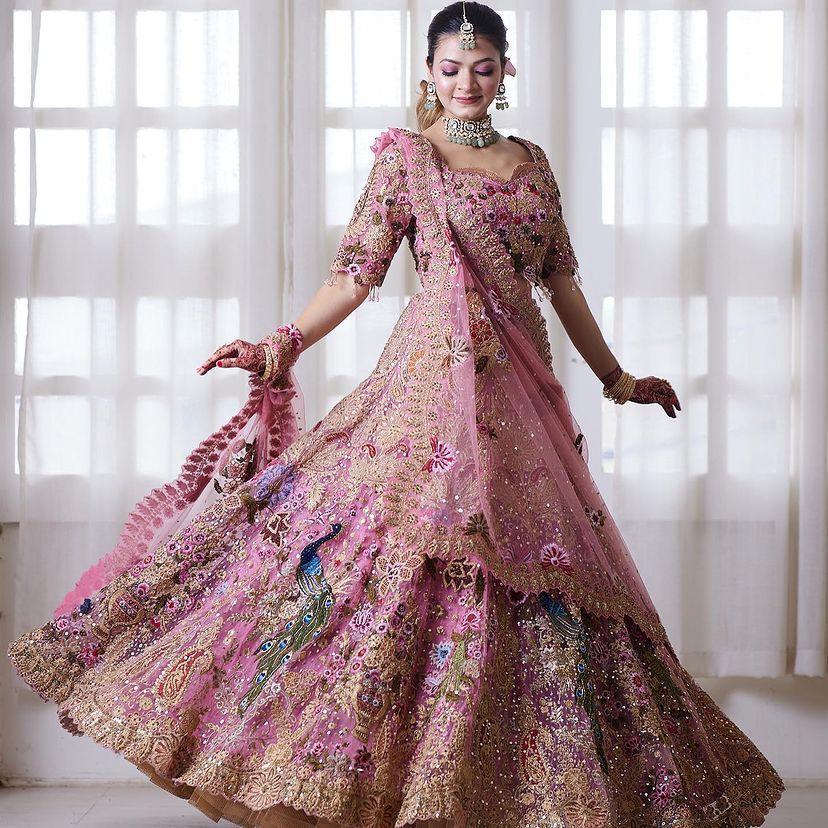
A sweetheart, square, round or modest V neckline can work, but the neckline should leave enough uninterrupted space for the dupatta border to sit without hiding the entire blouse. A very high neckline combined with a broad border can make the upper body appear compact, while a carefully placed neckline can give the drape room to frame the face.
Blouse length also changes the balance. A slightly longer blouse can create a clean waistline beneath a heavy dupatta, especially when the skirt is high-waisted. A shorter blouse can work with a lighter drape, but it may expose a narrow strip of midriff between the waistband and border if the dupatta shifts during movement.
Fully stitched choli shopping is useful when the blouse measurements are close to standard sizing and the event date is near. A readymade choli can still need alterations at the bust, shoulder, armhole and waist. Semi Stitched Lehengas Collection options offer more adjustment room, but tailoring time should be reserved for panel alignment, hook placement and blouse length.
A plain blouse doesn't have to be visually empty. Covered buttons, a contrasting piping edge, tonal sleeves or a small amount of embroidery can repeat the dupatta's finish without competing with the border.
Use the Right Drape
The best drape displays the ornate section while leaving enough of the blouse and skirt visible to preserve contrast.
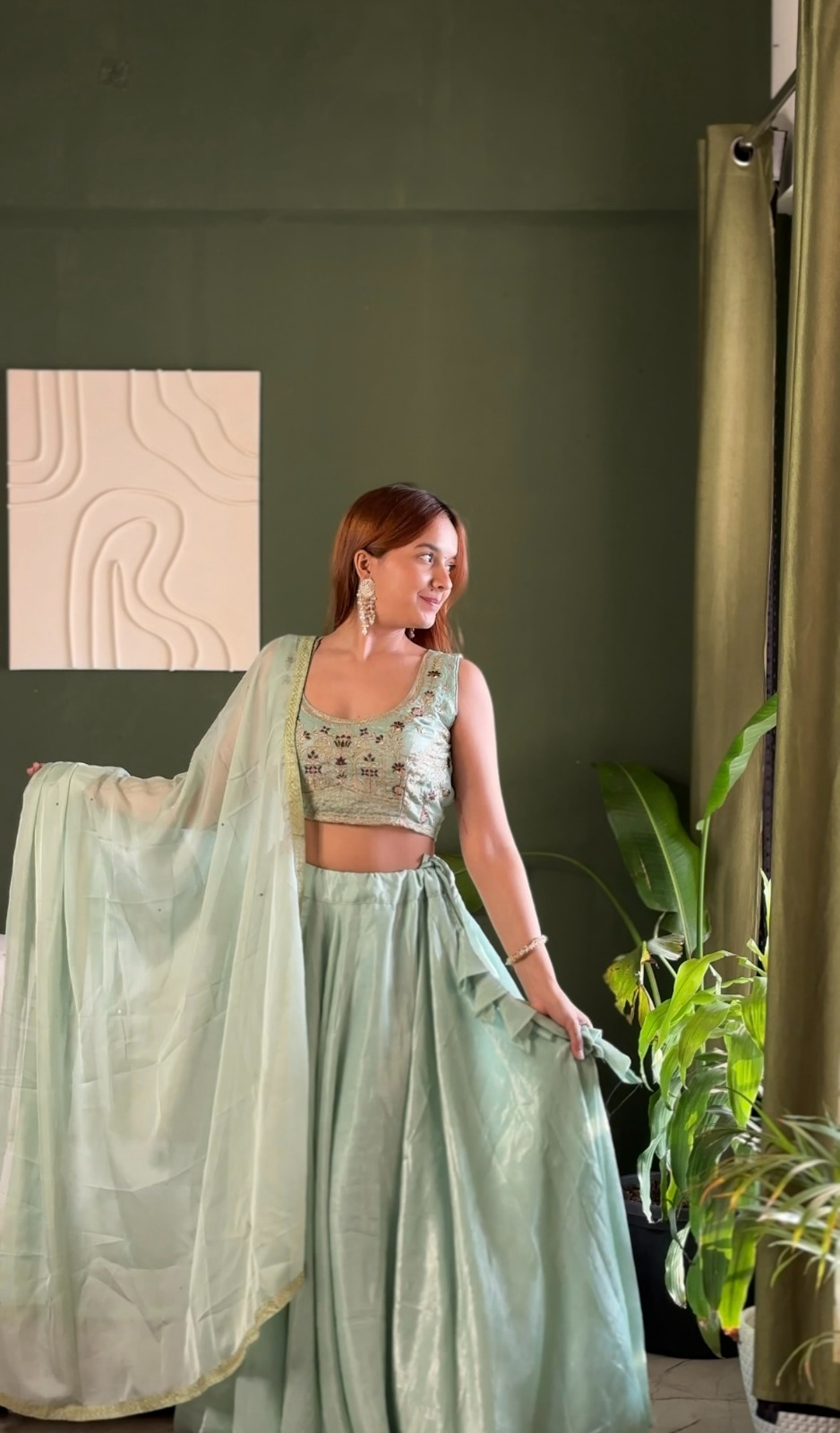
A front-open shoulder drape, a single-side pleat or a neatly pinned one-shoulder fall usually works better than wrapping every layer around the torso. A broad border should be pleated narrowly at the shoulder and allowed to fall vertically. The vertical edge creates length, while restrained pleats reduce bulk around the chest.
Pin the shoulder at two points rather than one if the fabric is slippery or the border is heavy. One pin may allow the dupatta to rotate, causing embroidery to face inward or the border to cross the bust at an unplanned angle. A second discreet pin near the waist can stabilise the drape without flattening the skirt.
A head-covering drape can be appropriate for a bridal ceremony, but the dupatta should be tested with the jewellery and blouse before the event. A dense border placed over the forehead may shorten the face visually and hide earrings. A lighter inner veil or a carefully folded border can preserve the bridal effect without covering every detail.
The Pastel Grey Embroidered Butterfly Net Lehenga Set demonstrates why net can support a graceful drape. Net may look delicate, but embroidery placement and border width determine whether the final effect is airy or visually dense. Secure a net dupatta with small, discreet pins and avoid pulling the edge sharply, which can distort the embroidery.
Shop for the Occasion
A minimal lehenga with a heavy dupatta makes sense when the event calls for ceremony-level dressing but the wearer wants comfort, rewear value or a less crowded silhouette.
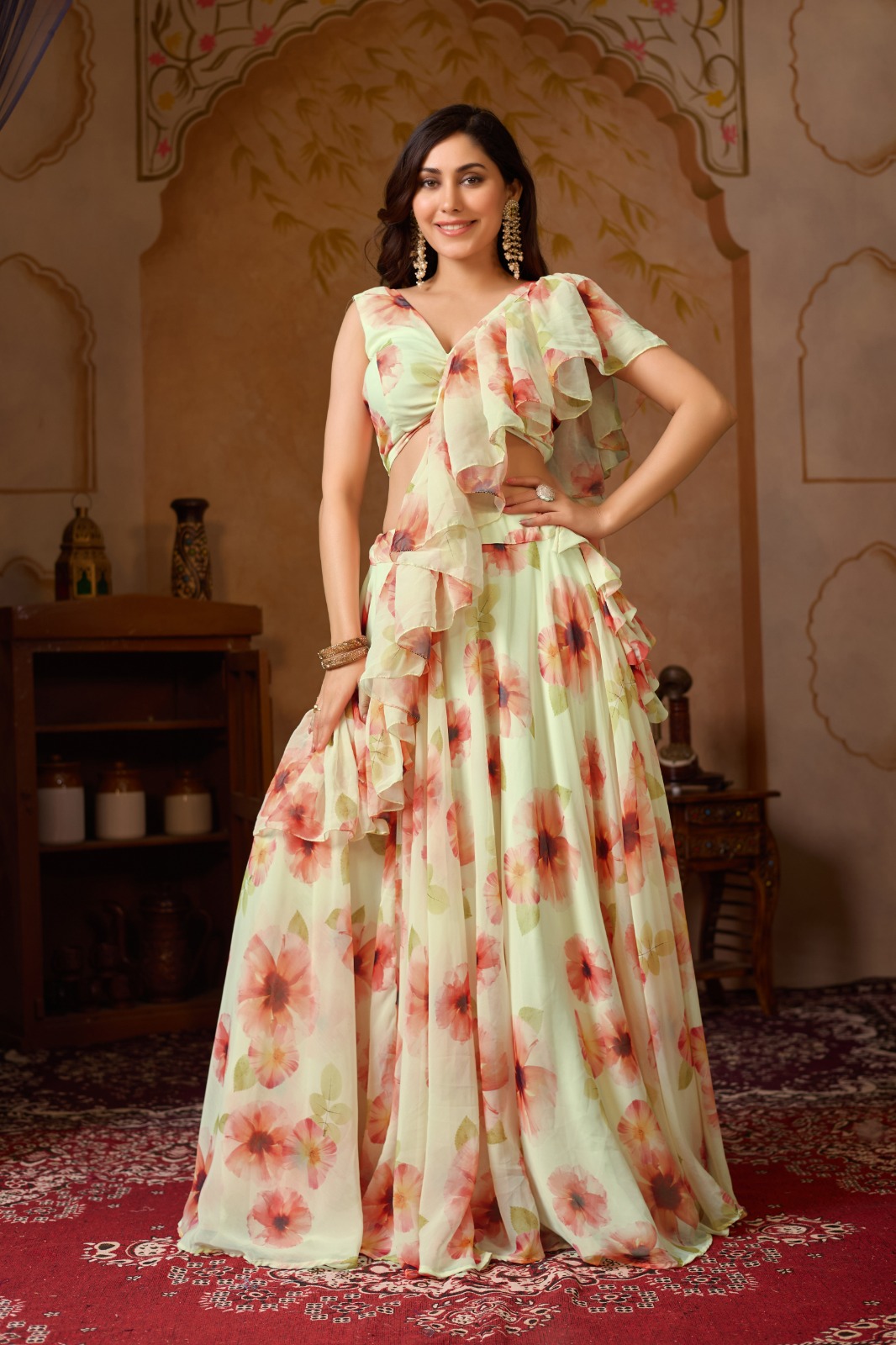
The combination suits a bridal pheras look, a reception change, an engagement, a family wedding or a formal festive gathering, depending on the colours and jewellery. For a main bridal ceremony, a rich dupatta can provide the traditional focal point while a simpler skirt allows easier movement during rituals.
For a mehendi or haldi ceremony, lighter fabrics and brighter colours are generally more practical than heavily layered bridal textiles. Yellow Lehengas and Mehendi Lehengas can be styled with a richly bordered dupatta when the drape is secured away from food, flowers and turmeric. A lighter net or georgette layer may be easier to manage than a densely woven fabric.
For a reception, a minimal skirt with a dramatic dupatta can look refined beside a structured blouse and statement earrings. The Blue Floral Georgette Lehenga Set with Heavy Flare can support a more noticeable drape because the skirt already has movement, while a very ornate necklace may be unnecessary.
Ready Made Lehenga options are convenient when the ceremony is close, but check the actual garment measurements instead of relying only on the size label. Measure the waist, hip, blouse bust, shoulder and skirt length. Allow at least 10 to 14 days for alterations when possible, and schedule a full outfit trial with footwear, jewellery and the intended drape.
Check Fit and Comfort
Yes, the pairing is successful only when the wearer can walk, sit, lift the arms and turn without repeatedly adjusting the dupatta.
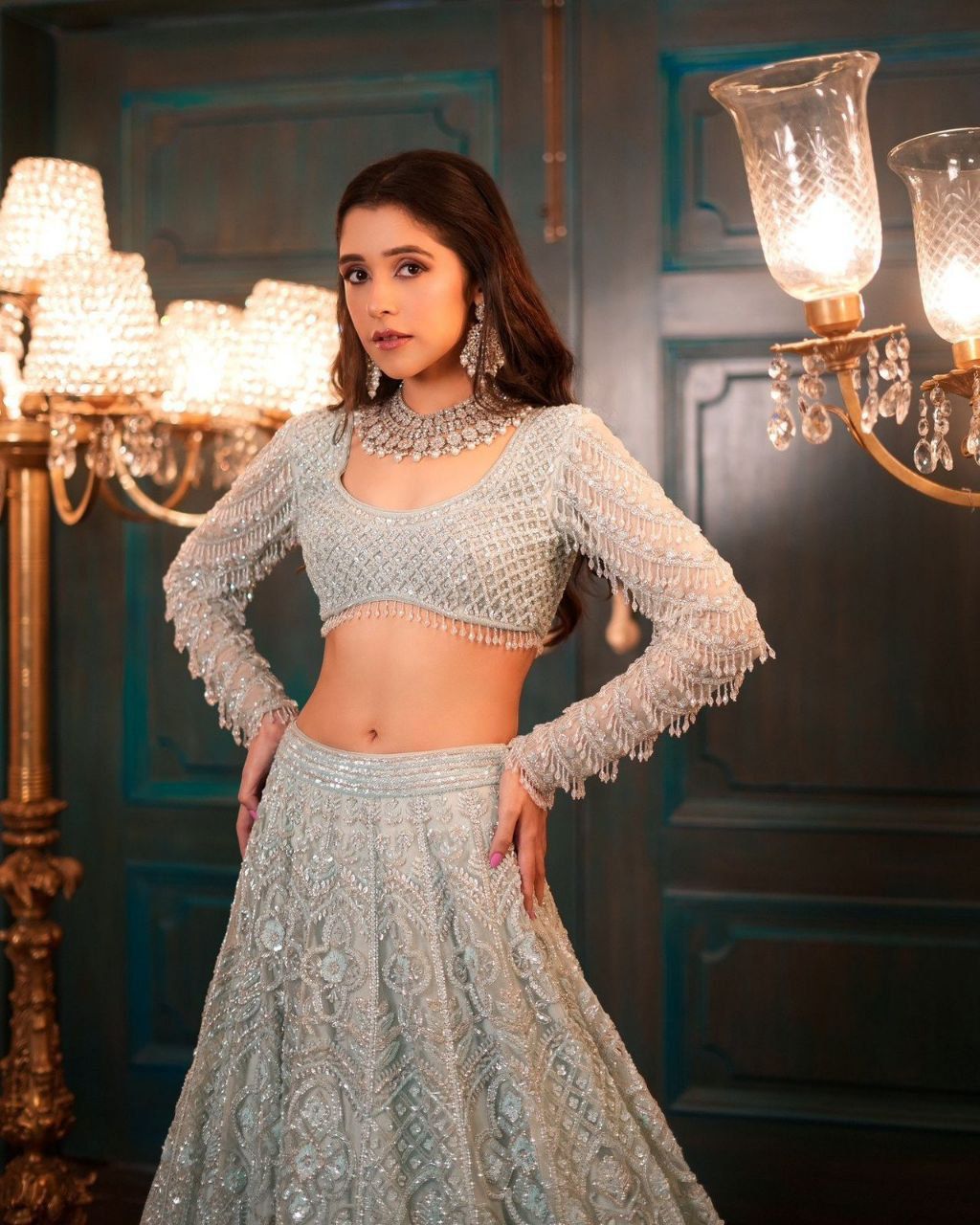
Test the outfit for at least 15 minutes before the wedding. Walk up a few steps, sit on a chair, bend slightly and raise both arms. Watch for a waistband that rolls, a blouse armhole that cuts into the underarm or a dupatta border that slips across the face.
Weight distribution matters during long ceremonies. A dense border pinned only at the shoulder can pull on the blouse and create discomfort near the neck. A second waist pin, a secure brooch or a concealed loop can distribute the load, provided the fastening doesn't damage delicate net or embroidery.
Jewellery should follow the same principle of controlled emphasis. If the dupatta has dense zari or mirror work, choose either a strong necklace or statement earrings rather than making both equally large. The Stylish White Mirror Work Lehenga for Festive Wear shows how reflective detail can become the main accent; adding a heavily worked dupatta and oversized jewellery may obscure the outfit's structure.
Care also affects the final appearance. Store an embellished dupatta flat or loosely rolled with acid-free tissue, never compressed beneath heavy garments. Remove pins after wearing, air the fabric away from direct sunlight and use professional cleaning for zari, sequins, mirror work and delicate net. Proper storage prevents crushed borders and keeps the statement layer ready for later styling.
Final Styling Checklist
Yes, the pairing can look polished when every major choice supports one clear focal point: the dupatta.
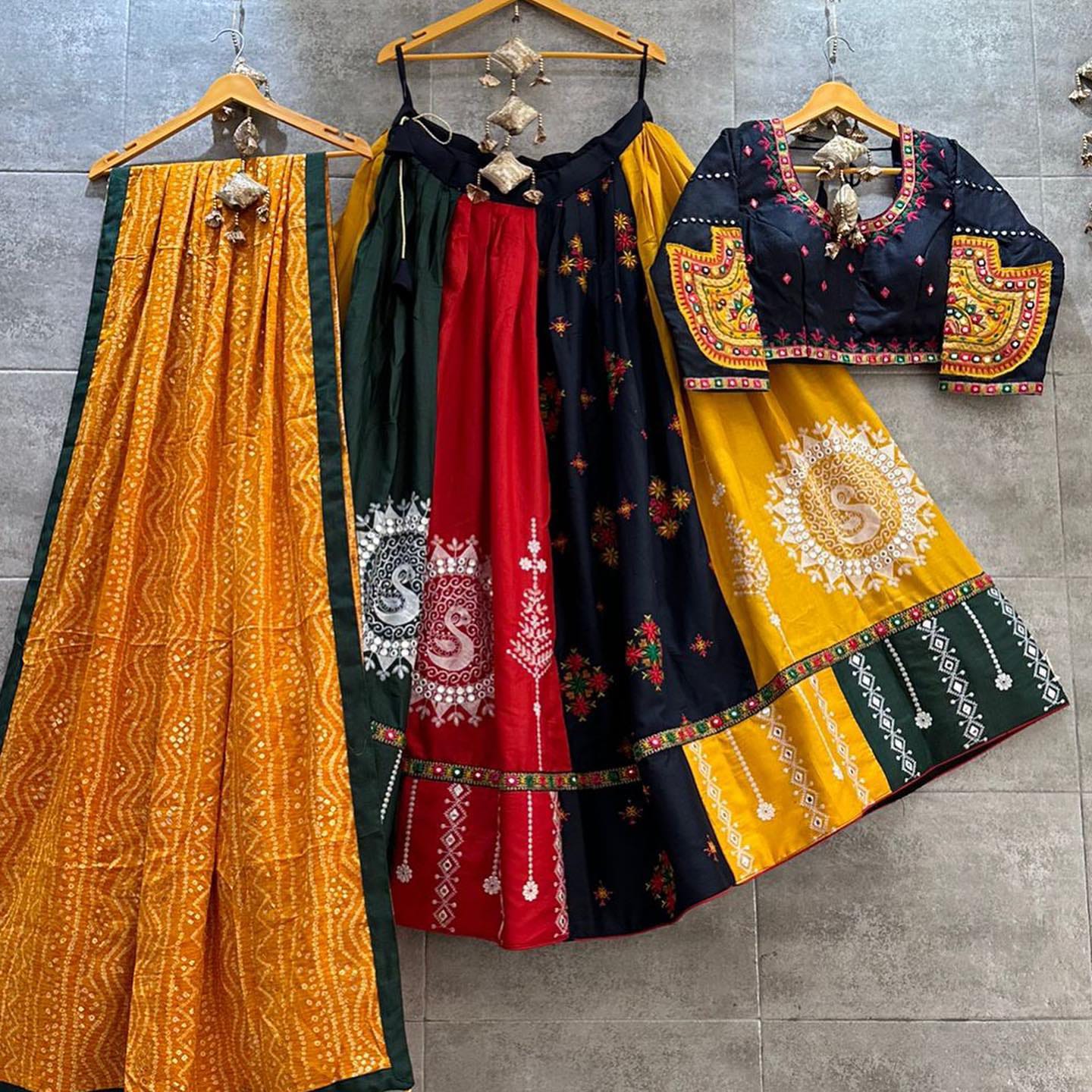
- Check the connection: Repeat at least one colour, thread shade, border finish or motif between the dupatta and the lehenga.
- Check the silhouette: Keep the skirt structured, the flare controlled and the waistband secure.
- Check the blouse: Choose a clean neckline and verify that the dupatta doesn't hide every important detail.
- Check the drape: Place the heaviest border vertically or diagonally instead of allowing it to form a bulky horizontal band across the torso.
- Check movement: Walk, sit and turn in the complete outfit before final pinning.
- Check the accessories: Let the dupatta remain the primary statement and reduce jewellery when the border is especially dense.
- Check the event: Select lighter layers for haldi and mehendi functions, and reserve denser textiles for ceremonies or evening receptions.
The strongest version of this styling idea doesn't make the lehenga compete with the dupatta. The skirt supplies shape, the blouse supplies structure and the dupatta supplies bridal drama. When fabric, colour, proportion and comfort are considered together, a minimal lehenga can provide the calm foundation that makes an ornate dupatta look intentional rather than excessive.
Common Questions About Pairing a Heavy Bridal Dupatta With a Minimal Lehenga
Can a simple lehenga be worn with a heavy bridal dupatta?
Yes, a simple lehenga can be worn with a heavy bridal dupatta when the colours share a clear connection and the skirt has enough structure to support the drape. Keep the blouse clean and repeat only one or two details from the dupatta.
Which lehenga fabric works best with a heavy dupatta?
Silk, jacquard and structured net generally work well because they hold their shape beneath extra fabric and pins. Georgette can also work when the skirt has adequate lining and the dupatta is secured carefully.
How should a heavy dupatta be draped over a minimal lehenga?
Use a front-open shoulder drape, a single-side pleat or a one-shoulder fall that leaves part of the blouse and skirt visible. Pin the shoulder at two points and add a discreet waist fastening if the fabric is slippery or the border is dense.
Can a readymade lehenga be altered for a bridal dupatta?
Yes, a readymade lehenga can usually be altered at the waist, blouse, hem and shoulder areas, provided the construction allows adjustment. Allow about 10 to 14 days when possible and conduct a complete trial with the dupatta, footwear and jewellery.
What jewellery should be worn with a heavily embellished bridal dupatta?
Choose one main jewellery emphasis, such as a statement necklace or prominent earrings, when the dupatta has dense zari, sequins or mirror work. Smaller supporting pieces keep the face and dupatta border visible.
Can a heavy dupatta work for a mehendi or haldi ceremony?
Yes, but lighter net or georgette is usually easier to manage than a densely woven or heavily beaded layer. Bright yellow, green, mint and floral colour combinations suit daytime functions, while secure pins help protect the dupatta from movement, food and turmeric.




