Bihu Wedding Guest Outfits need to balance Assamese identity, wedding etiquette and real comfort. A Mekhela Chador can feel especially appropriate for a traditional Assamese ceremony, while a saree or lehenga works well for receptions, festive evenings and fusion celebrations. The right choice depends on the function, season, fabric, level of formality and amount of movement required.
A guest doesn't need to copy the bride's clothing. A polished outfit with one strong focal detail usually looks more respectful and photographs better than several competing embellishments. Before choosing colours or jewellery, check the invitation, ask the family about any regional dress expectation and consider whether the venue is indoors, outdoors or split across several locations.
Bihu Wedding Guest Outfits: How should you choose the right silhouette?
Choose Bihu Wedding Guest Outfits by matching the garment's formality and fabric to the wedding function, rather than choosing only by colour or trend. A daytime naam, engagement or turmeric ceremony usually suits lighter silk, cotton-silk or georgette, while an evening reception can accommodate heavier zari, sequins, mirror work or layered lehenga styling.
Assamese weddings may include several events, and each event can have a different visual language. The wedding ceremony may call for a more restrained, time-honoured outfit, whereas a reception may allow a contemporary blouse, cropped jacket or embellished lehenga. A guest attending multiple events can repeat jewellery or footwear while changing the main garment, which is more practical than buying an elaborate outfit for every function.
Three questions narrow the choice quickly:
- Will the function be held outdoors, in humid weather or on a cool evening?
- Will you sit on the floor, walk across grass, travel between venues or dance?
- Does the invitation suggest classic, festive, formal or fusion clothing?
Avoid extremely bridal red, dense head-to-toe embellishment and very long trailing dupattas unless the family has requested a dress code. A guest outfit should allow comfortable movement, especially during greetings, meals and rituals. Secure pleats, test the waistband and walk in the complete outfit before the wedding day.
Bihu Wedding Guest Outfits: Why is a Mekhela Chador a meaningful choice?
A Mekhela Chador is meaningful because it's the heritage two-piece Assamese drape, consisting of a lower garment called the mekhela and an upper cloth called the chador or riha. The lower piece wraps around the waist, while the chador is pleated and draped across the upper body, creating a silhouette distinct from a saree.
Muga silk, mulberry silk, eri silk and cotton are important textile choices in Assam. Muga silk has a naturally warm golden sheen and is strongly associated with Assamese heritage. Eri silk has a soft, matte character and a comfortable hand feel. Mulberry silk can appear smoother and more lustrous, while cotton Mekhela Chador sets are practical for daytime ceremonies and warm weather.
Classic Assamese motifs may include florals, geometric borders, jaapi-inspired forms and locally recognisable woven patterns. Zari can make a set more formal, but a Mekhela Chador doesn't need heavy metallic decoration to look festive. A contrasting red, gold, green or cream border can provide enough visual structure for a wedding guest outfit.
Check the pleats before leaving home because a Mekhela Chador depends on secure, even folds. A tucked-in underskirt or cotton petticoat gives the mekhela stability, while discreet safety pins at the shoulder and waist prevent shifting. Wear a blouse with a neckline and sleeve length that allow movement without making the chador difficult to arrange.
A pre-stitched or semi-stitched Mekhela Chador can be easier than a completely unstitched set for someone unfamiliar with Assamese dressing. Handwoven pieces deserve careful handling, so avoid fastening delicate silk directly with sharp pins. Use small covered safety pins and store the garment flat or rolled in breathable cotton after the event.
Bihu Wedding Guest Outfits: When does a saree work better?
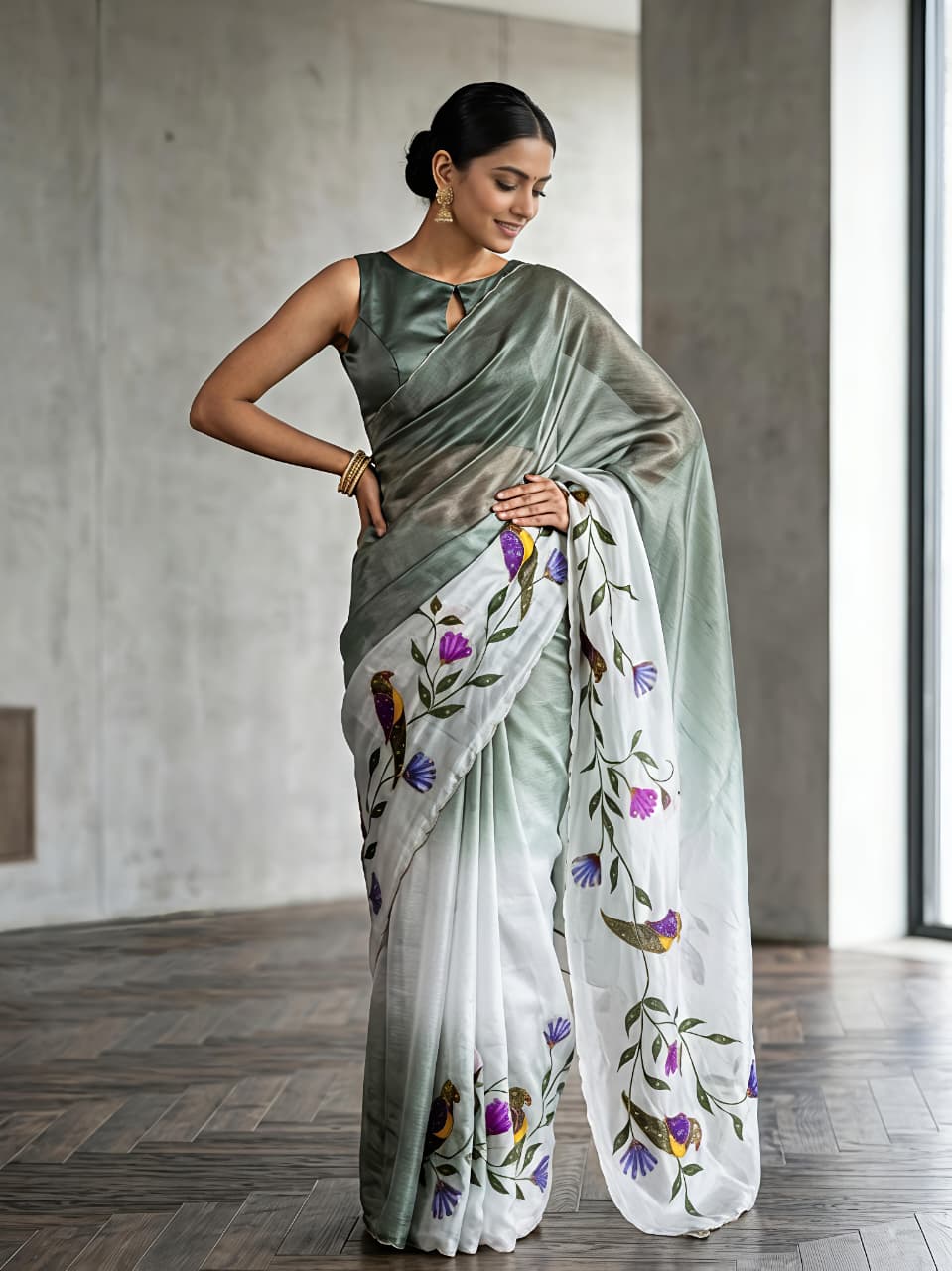
A saree works better when you want familiar draping, broad fabric availability or a silhouette that can move between a classic ceremony and a modern reception. A saree also offers flexibility in fabric weight, blouse design and drape style, especially when the guest is travelling to the wedding.
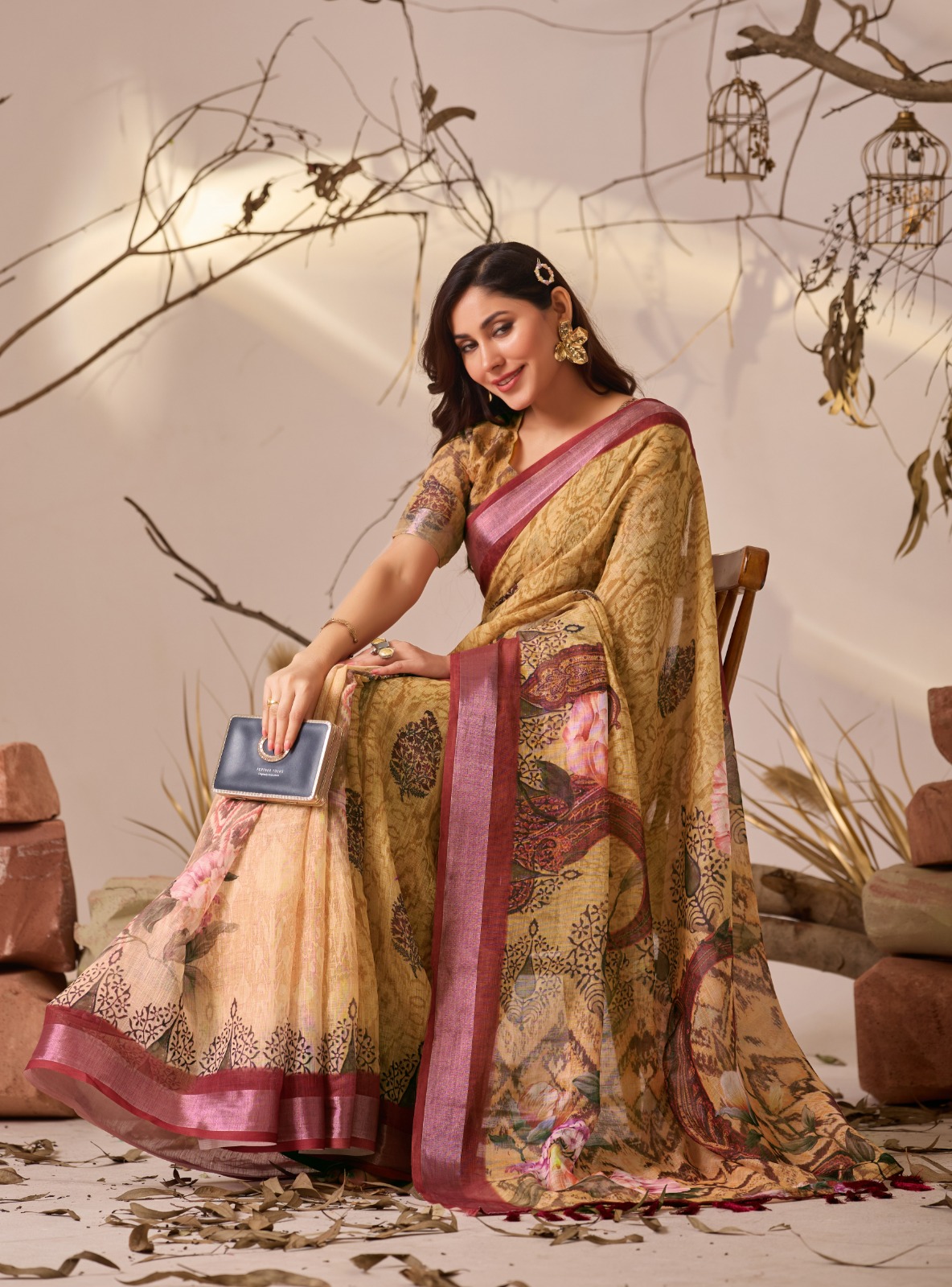
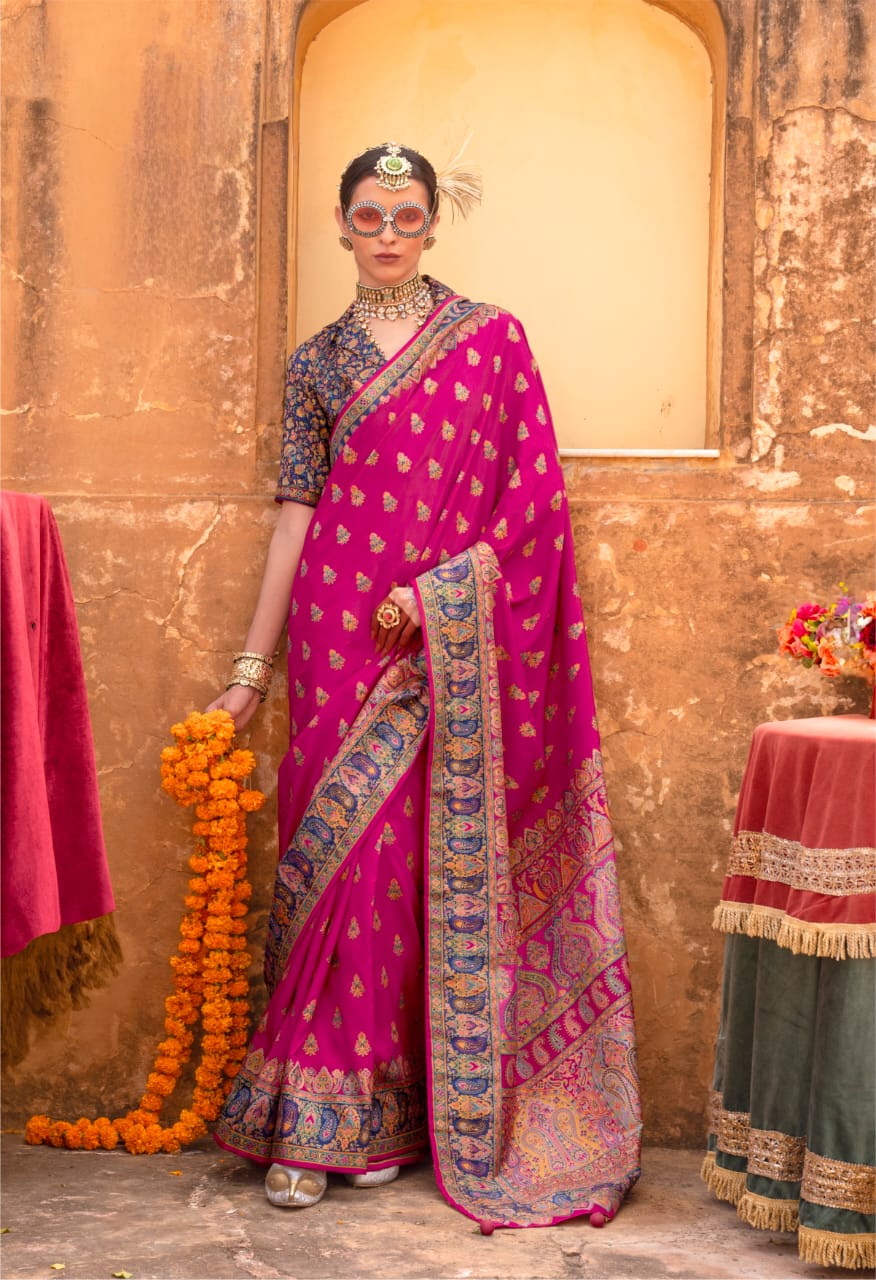
Banarasi silk creates a formal appearance through woven zari and a rich surface. Kanjeevaram suits guests who prefer a heavier South Indian silk with a strong border, although its weight can feel warm at an outdoor event. Chanderi gives a lighter, translucent texture for daytime dressing, while cotton-silk and linen-silk blends are more comfortable in humid conditions.
For an Assamese wedding, a saree can acknowledge regional colour traditions without pretending to be a Mekhela Chador. Try a cream saree with a red border, an ivory saree with a gold blouse or a jewel-toned silk saree with a restrained zari edge. Assamese gamusa-inspired red-and-white references can appear through a narrow border, scarf or jewellery detail rather than an overly literal costume effect.
Choose the drape according to the venue. A conventional Nivi drape with firmly secured pleats is dependable for seated ceremonies. A shorter pallu or pre-pleated saree can help at a reception where you expect to walk and dance. Avoid excessively long pallus at crowded venues because they can drag, catch on chairs or become difficult to manage around lamps and food counters.
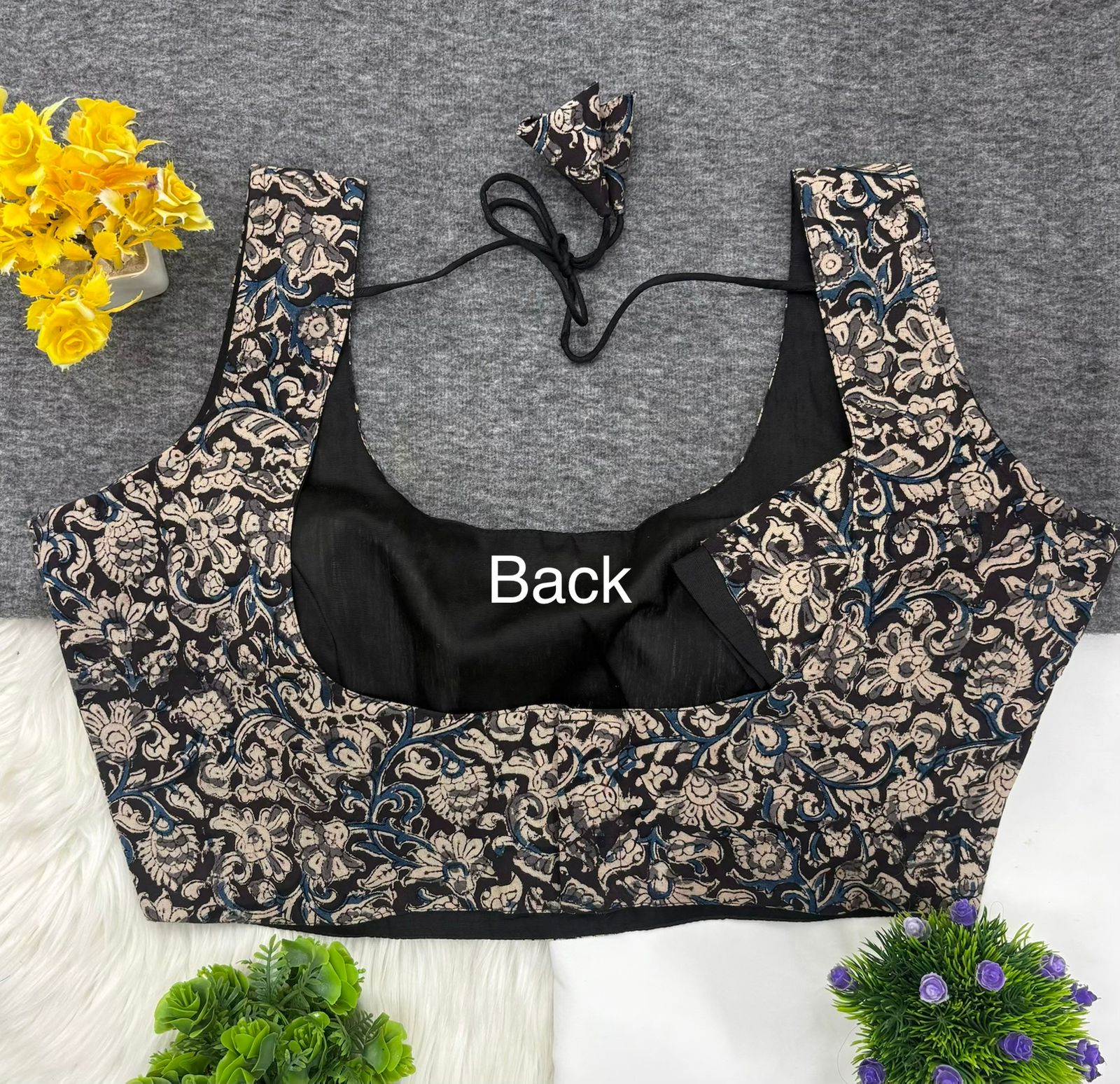
Blouse construction affects comfort as much as saree fabric. Cotton lining, adjustable hooks and sleeves that don't cut into the upper arm matter during ceremonies lasting three hours or more. A blouse with a structured shoulder can keep a lightweight saree from appearing limp, while a softer blouse can prevent a heavy silk saree from feeling overly formal.
Bihu Wedding Guest Outfits: When is a lehenga appropriate?
A lehenga is appropriate when the invitation includes a reception, festive evening or contemporary fusion dress code, and the outfit is less bridal than the couple's attire. A lighter lehenga also works well for guests who want freedom to move without managing a full saree drape.
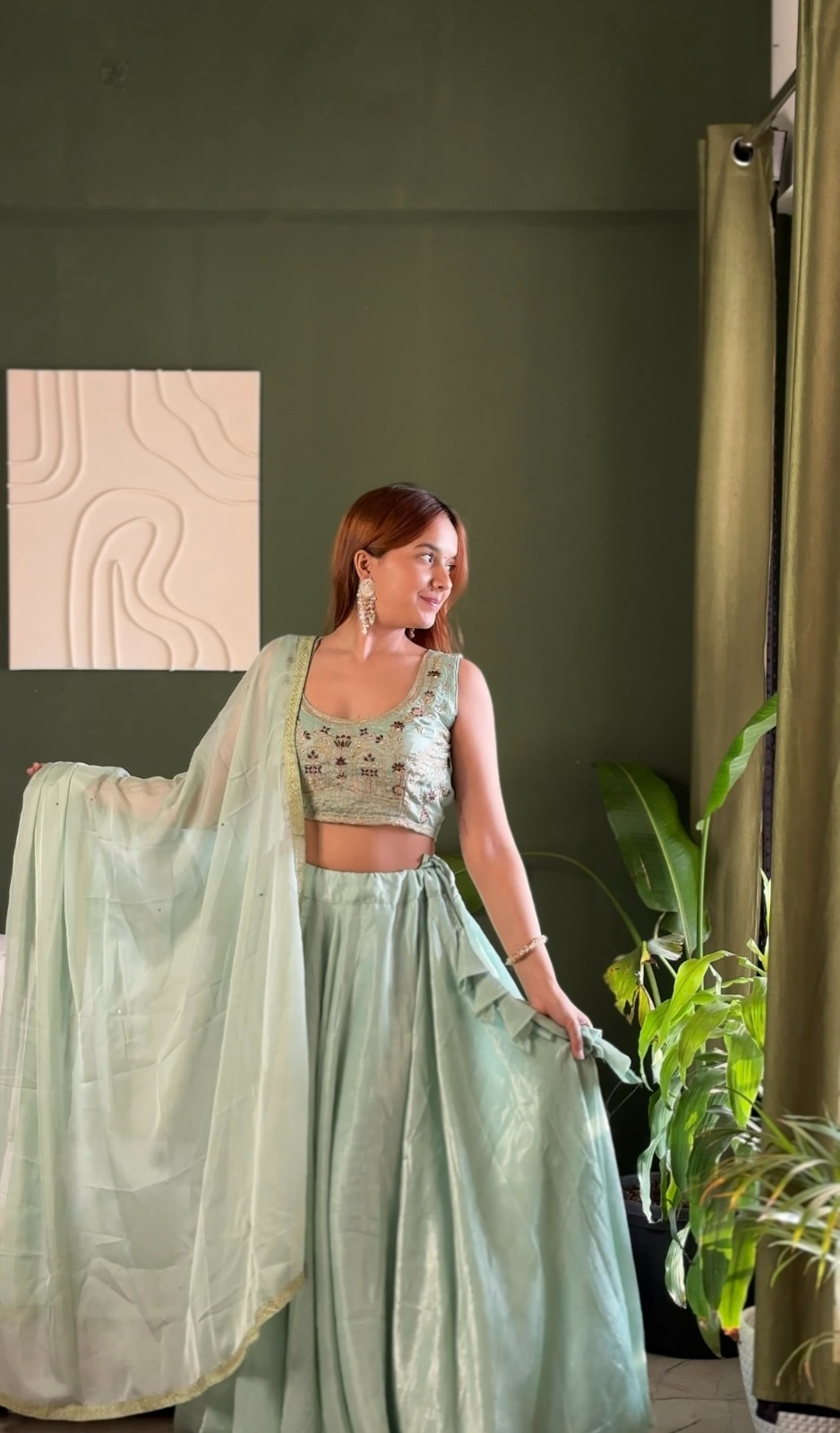
Fabric changes the formality of a lehenga more than many shoppers expect. Muslin cotton and georgette feel lighter and suit daytime or warm-weather functions. Butter silk gives a smooth, softly reflective finish without the weight of heavily woven silk. Net adds volume and translucency, while silk with threadwork creates a more formal appearance.
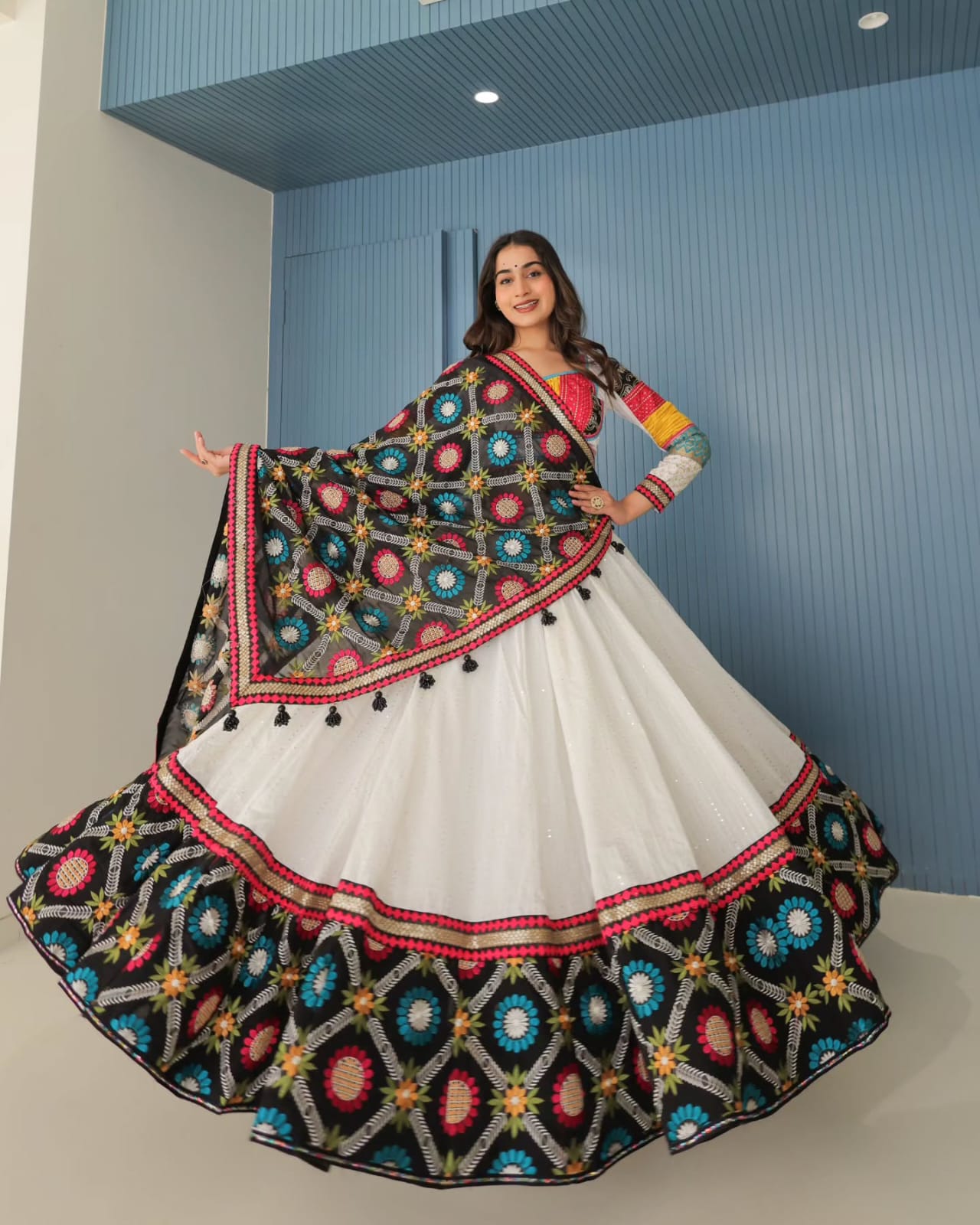
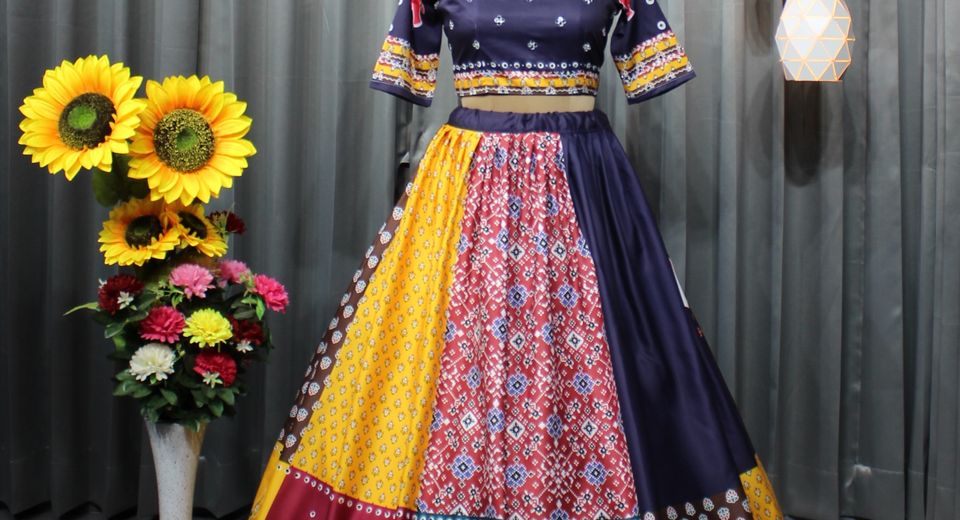
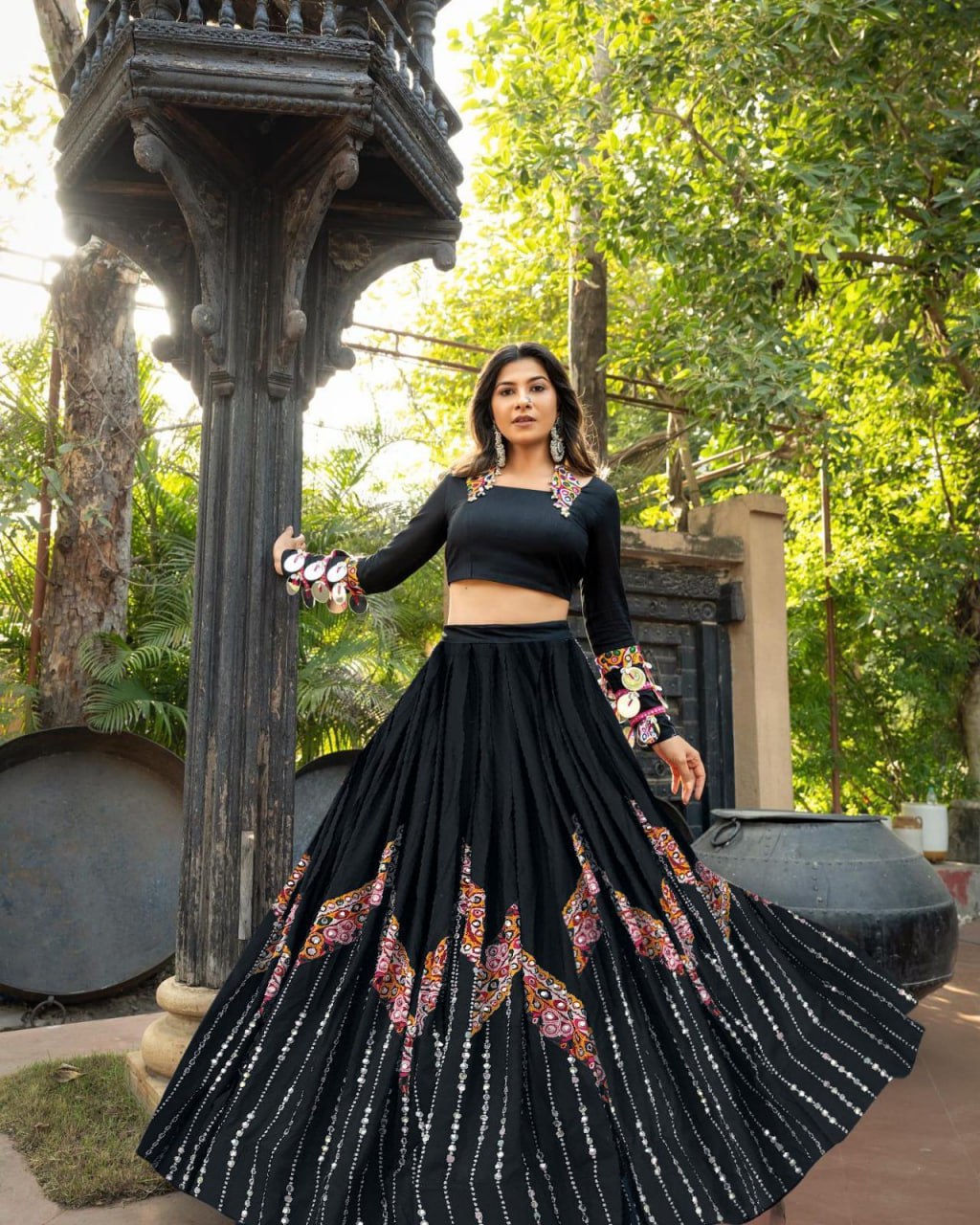
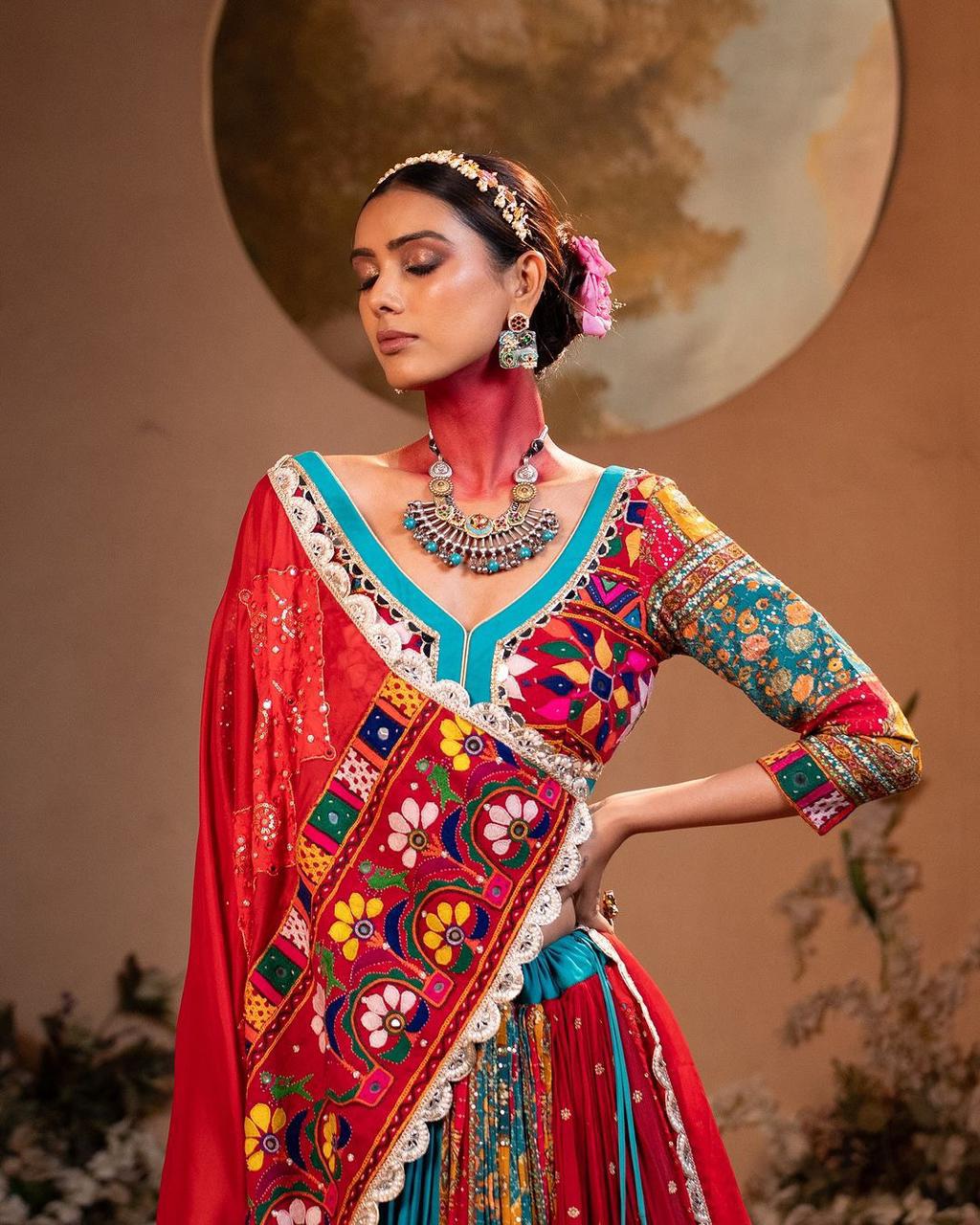
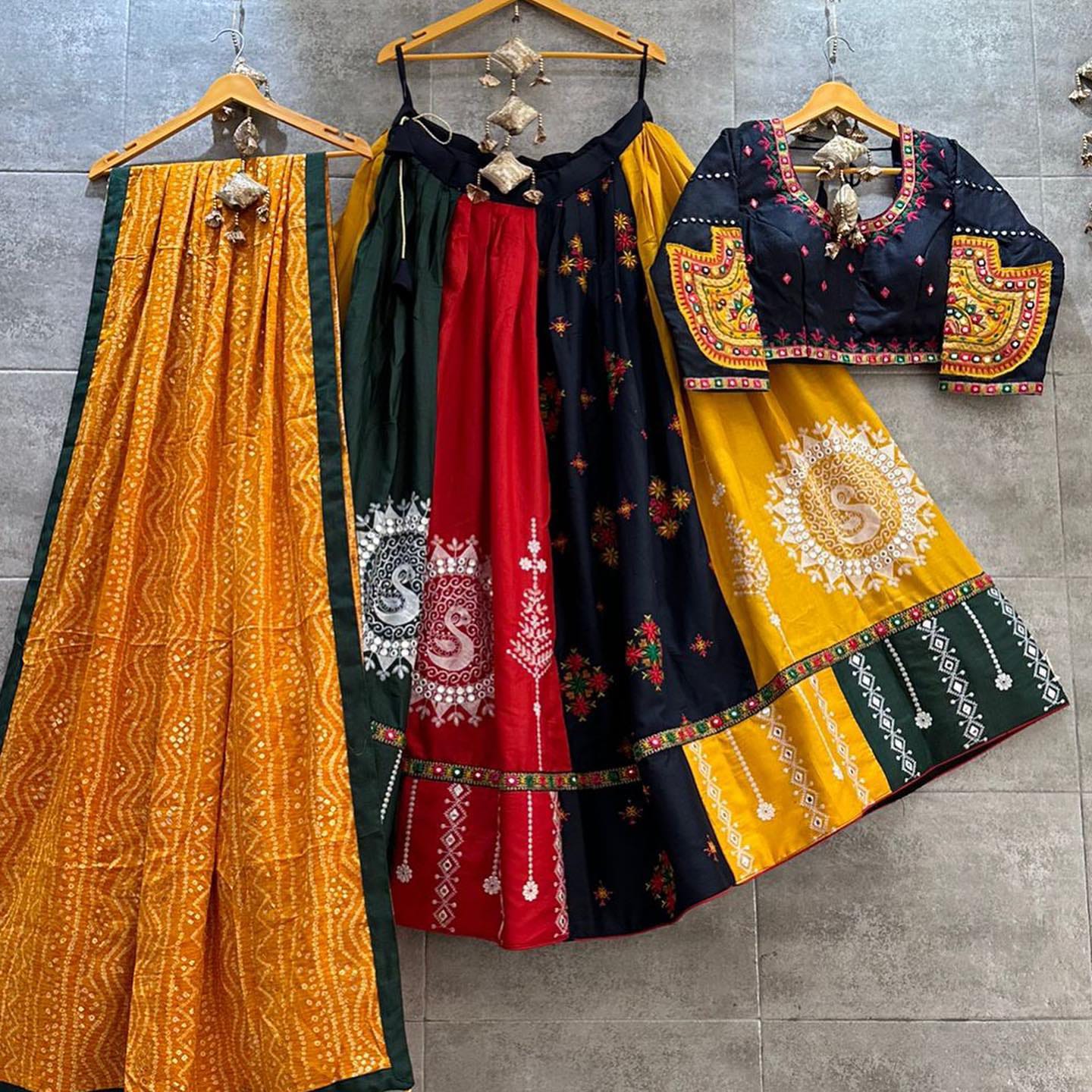
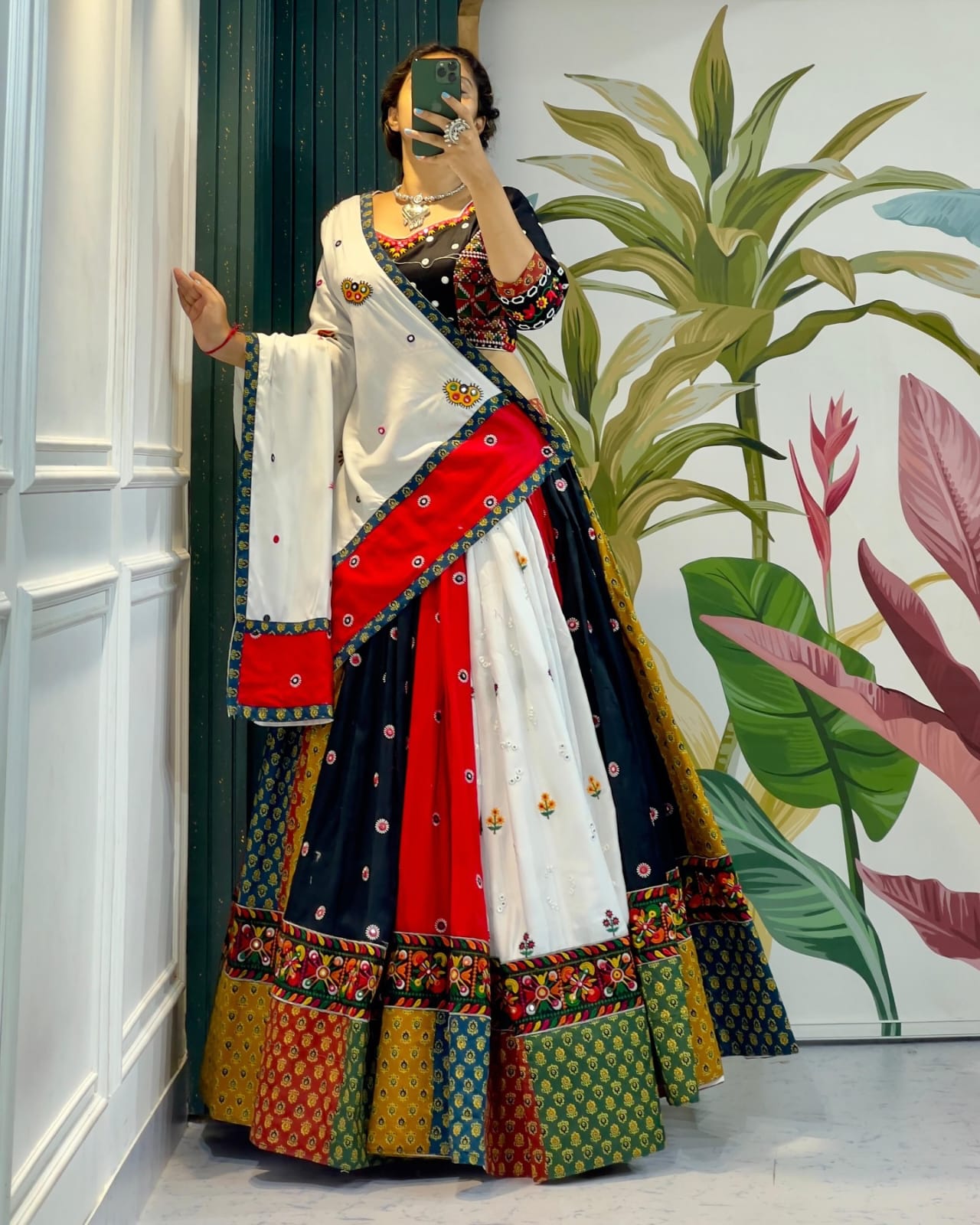
Black Wedding & Festive Wear Designer Lehenga shows how a dark base can look appropriate for an evening reception when balanced with elegant embroidery and controlled accessories. Multicolor Mirror Work Muslin Cotton Lehenga Choli Set is better suited to a bright festive mood because muslin keeps the mirror work from becoming visually heavy. Stylish Multicolor Butter Silk Lehenga Choli Set brings colour and sheen while remaining easier to wear for several hours.
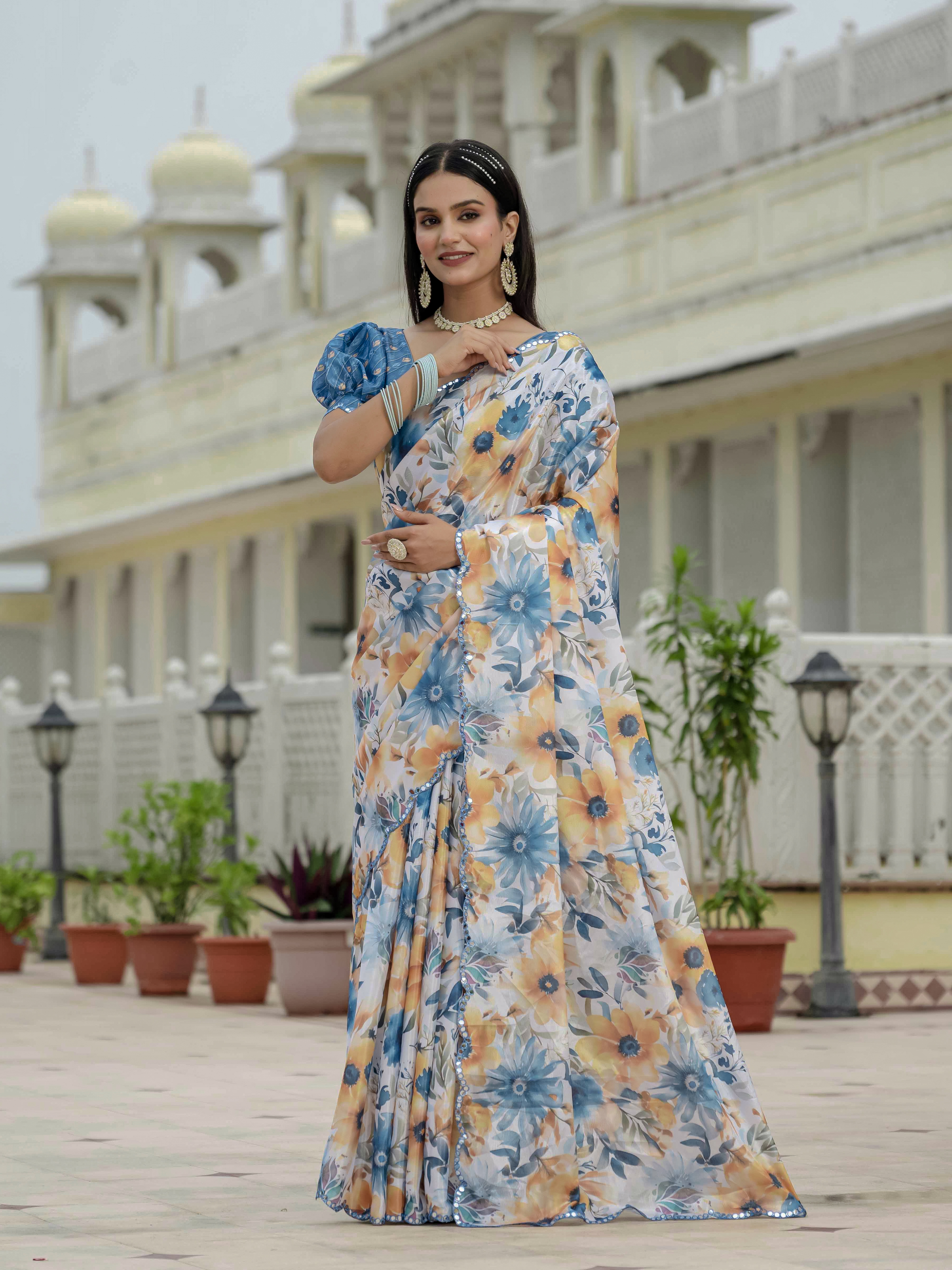
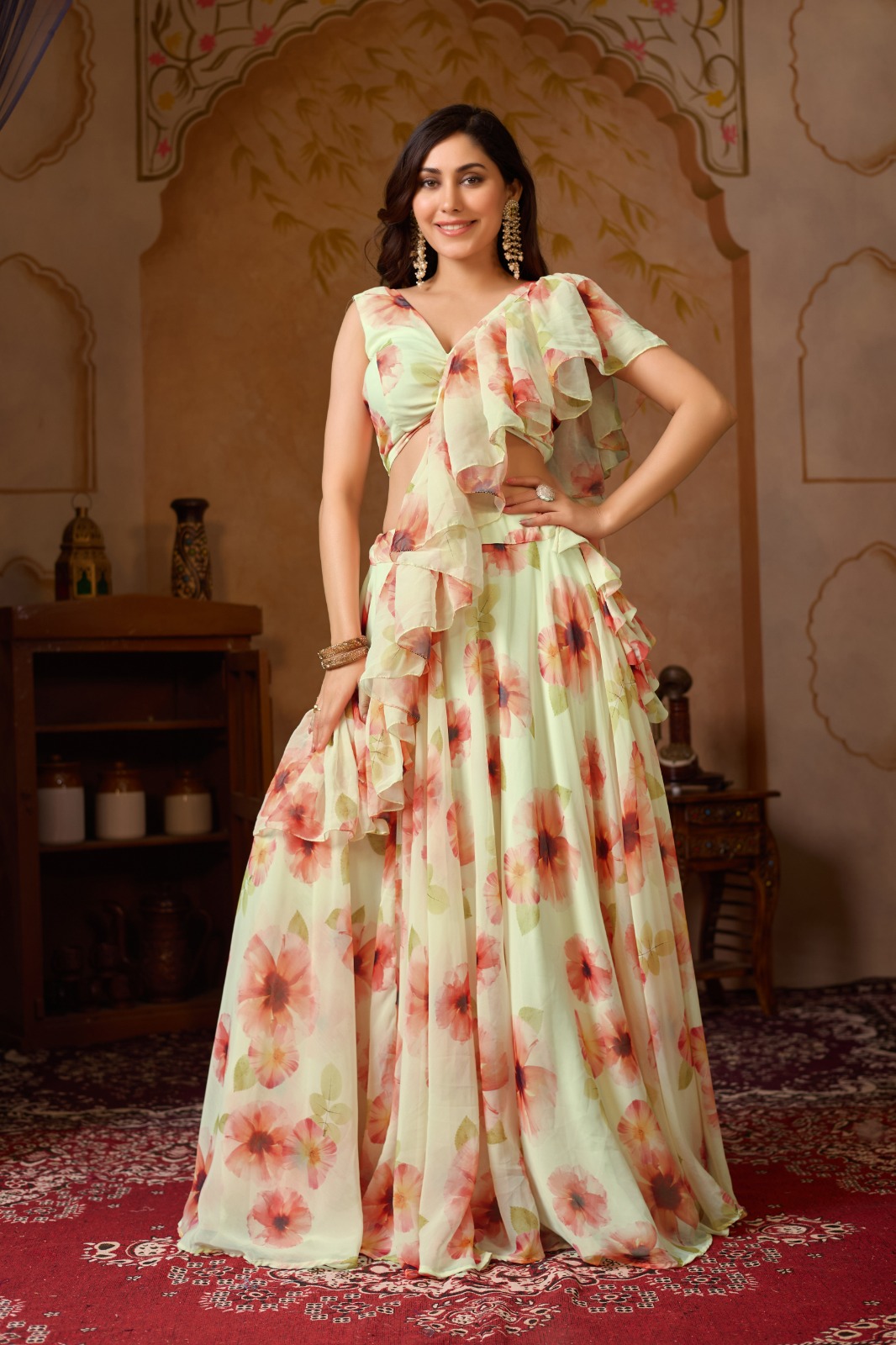
Floral prints and ruffle details can soften a lehenga for daytime ceremonies. Pastel Floral Georgette Lehenga Set with Ruffle Blouse illustrates that approach, particularly when paired with small earrings and minimal hair accessories. For a more exuberant celebration, Vibrant Multicolor Navratri Lehenga Choli Set or Beige Ethnic Printed Lehenga Set for Navratri and Garba can be adapted with a simpler dupatta drape so the outfit feels festive without looking like bridalwear.
Mirror work deserves a venue check. Stylish White Mirror Work Lehenga for Festive Wear can reflect strong sunlight and flash photography, so it works well with matte jewellery and a less glittering clutch. Heavy embroidery around the waist can become uncomfortable after several hours, making a well-fitted waistband more important than an extra layer of decoration.
Budget can guide fabric and construction choices without determining quality. Pink Lehengas Under 4000 with 50% Discount may suit guests looking for a cheerful daytime option, while Silk Lehengas Under 3000 can provide a richer surface at a lower price point. Check lining, seam finishing, size measurements and return conditions before judging an outfit by its listed price.
Bihu Wedding Guest Outfits: Which colours and fabrics suit the celebration?
Red, white, ivory, gold, yellow, green and pink suit Bihu wedding celebrations, but the best shade depends on the function and lighting. Bright yellow and marigold work naturally for a Haldi ceremony, while deeper wine, emerald, navy and plum are effective for evening receptions.
White can look refined at a wedding when combined with gold, red, pink or green, although guests should check whether the family reserves plain white for mourning or a particular ritual. Black is increasingly accepted for festive evening wear, but a black outfit with soft gold or multicolour detailing may feel more celebratory than an entirely matte-black ensemble.
Humidity changes how fabric behaves. Cotton, cotton-silk, light Chanderi, muslin and georgette allow better air circulation than dense velvet or multiple layers of net. Silk remains suitable when the weave isn't excessively heavy and the blouse is breathable. A cotton or smooth lightweight lining can prevent scratchiness during long ceremonies.
Colour also interacts with photography. Neon shades can become harsh under flash, while pale pastels may lose definition against a light stage backdrop. A coloured border, zari edge, embroidered blouse or contrasting dupatta creates separation without requiring an overly bright full outfit.
Collections such as Bridesmaid Lehengas Under 5500 can be useful when coordinated dressing is requested, but matching exactly isn't always necessary for guests. Net Lehengas Under 4500 with 51% Discount may offer volume for a reception, while Haldi Lehengas Under 5500 can point shoppers towards yellow, mustard and marigold palettes. Inspect transparency and lining carefully when selecting net for a daytime function.
Bihu Wedding Guest Outfits: How can you style them without looking bridal?
You can avoid a bridal appearance by limiting one major embellishment, choosing moderate jewellery and keeping the silhouette easy to move in. A heavily embroidered lehenga should be paired with a quieter blouse or dupatta treatment, while a simple silk saree can support a more detailed necklace or blouse.
Gold-toned jewellery complements Muga silk, zari and warm shades such as mustard, rust and red. Silver, oxidised metal and mirror-work accessories suit cool pastels, white, black and multicolour outfits. Heritage Assamese jewellery, including gamkharu-style bangles, thuria-inspired earrings or a gold necklace with a restrained design, can connect a contemporary lehenga or saree to the regional setting.
Designer Threadwork Silk Lehenga Choli Set with Dupatta suits guests who want a formal finish without relying on dense mirror work. Keep jewellery to earrings and one bangle if the blouse already has prominent threadwork. A lightweight dupatta placed over one shoulder is more practical than a complicated front drape for greeting relatives and moving between ceremony spaces.
Footwear should be selected before finalising the hem. Low block heels, embellished juttis or cushioned sandals are safer than narrow stilettos for grass, uneven courtyards and long standing periods. Leave at least 1 to 2 centimetres of walking clearance beneath a lehenga hem so the fabric doesn't catch under the shoe.
Hair and makeup can remain polished without becoming theatrical. A low bun, braid or half-up style works with a Mekhela Chador, while soft waves suit a lehenga or saree. Waterproof eyeliner, setting spray and blotting paper are practical choices for humid weather, but heavy foundation can feel uncomfortable during a long daytime event.
Bihu Wedding Guest Outfits: What should you check before buying and packing?
Check measurements, lining, fastening quality, fabric weight and delivery time before buying Bihu Wedding Guest Outfits. Online photographs rarely reveal whether a waistband is rigid, whether a dupatta is transparent or whether a blouse has enough ease across the bust and upper arm.
- Measure the bust, waist and hip while wearing the undergarments intended for the outfit.
- Compare garment measurements with body measurements instead of relying on a familiar size label.
- Confirm whether the blouse is stitched, semi-stitched or unstitched.
- Check the total lehenga length with the footwear you plan to wear.
- Order at least 10 to 14 days before the event when alterations may be needed.
- Try the complete outfit indoors and walk, sit and raise your arms before removing tags.
Pack silk and embellished garments in breathable cotton rather than sealed plastic for long periods. Use tissue paper between zari or mirror-work surfaces to reduce snagging. Transport jewellery separately in a padded pouch, and carry a small repair kit containing covered safety pins, fashion tape, a needle, matching thread and a stain-removal wipe.
Care instructions vary by fibre. Banarasi silk, Muga silk and embellished net generally benefit from professional dry cleaning, while some cotton pieces can be gently hand-washed if the care label permits. Never iron zari, mirror work or delicate embroidery directly; place a cotton cloth between the iron and garment and use the lowest suitable temperature.
The most successful Bihu wedding guest outfit is the one that respects the setting while allowing the wearer to remain comfortable, mobile and recognisably themselves. Mekhela Chador gives regional meaning, sarees offer adaptable elegance and lehengas offer movement and festive colour. Selecting among the three becomes much easier when fabric, function, weather and styling are considered together.
Common Questions About Bihu Wedding Guest Outfits
What should a guest wear to a Bihu wedding?
A guest can wear a Mekhela Chador, a saree or a non-bridal lehenga, depending on the ceremony and dress code. Muga silk, cotton-silk, Chanderi, georgette and lighter embroidered fabrics work well when comfort and movement matter.
Can I wear a lehenga to an Assamese wedding?
Yes, a lehenga is suitable for a reception, festive evening or fusion-themed Assamese wedding when it is not excessively bridal. Choose moderate embellishment, a practical dupatta and a length that allows comfortable walking.
Is a Mekhela Chador difficult to drape?
A Mekhela Chador requires practice because the mekhela pleats and chador drape must be secured separately. A pre-stitched or semi-stitched set, a trial fitting and discreet safety pins make the outfit easier for first-time wearers.
Which fabrics are comfortable for a Bihu wedding in warm weather?
Cotton, cotton-silk, muslin, light Chanderi and georgette are generally comfortable in warm or humid weather. Heavy velvet, dense net and heavily layered silk can feel hot during outdoor ceremonies or long receptions.
Can guests wear red or white to a Bihu wedding?
Guests can usually wear red or white, but they should check family preferences because these colours may carry specific bridal or ritual associations. Combining red or white with gold, green, pink or another contrasting shade creates a clearly festive appearance.
How can I stop a saree or Mekhela Chador from shifting?
Use a well-fitted petticoat or underskirt, secure the waist and shoulder with discreet covered pins, and test the complete drape by walking and sitting. Fashion tape can help with blouse and pallu placement, but delicate silk should not be pierced repeatedly with sharp pins.