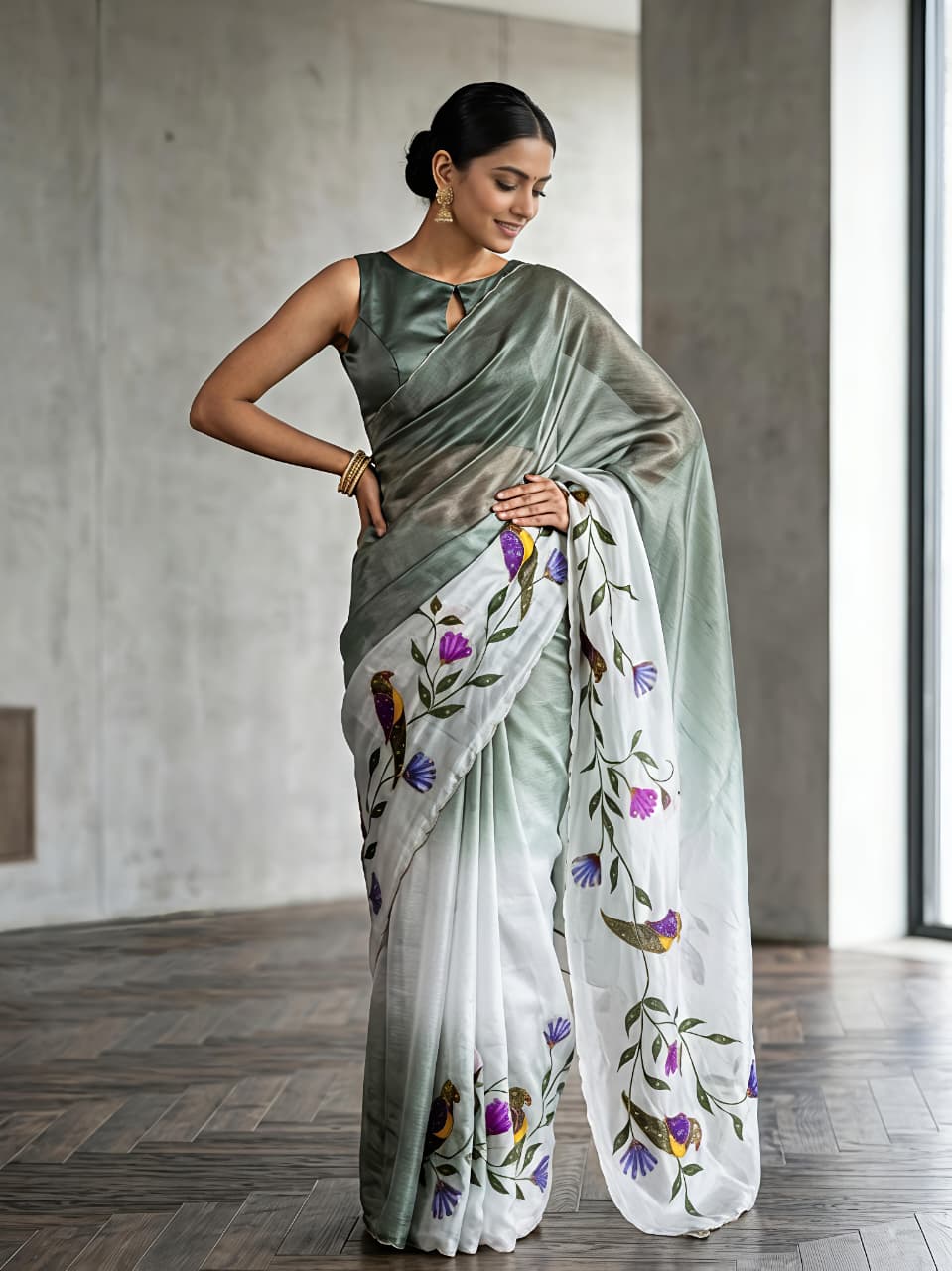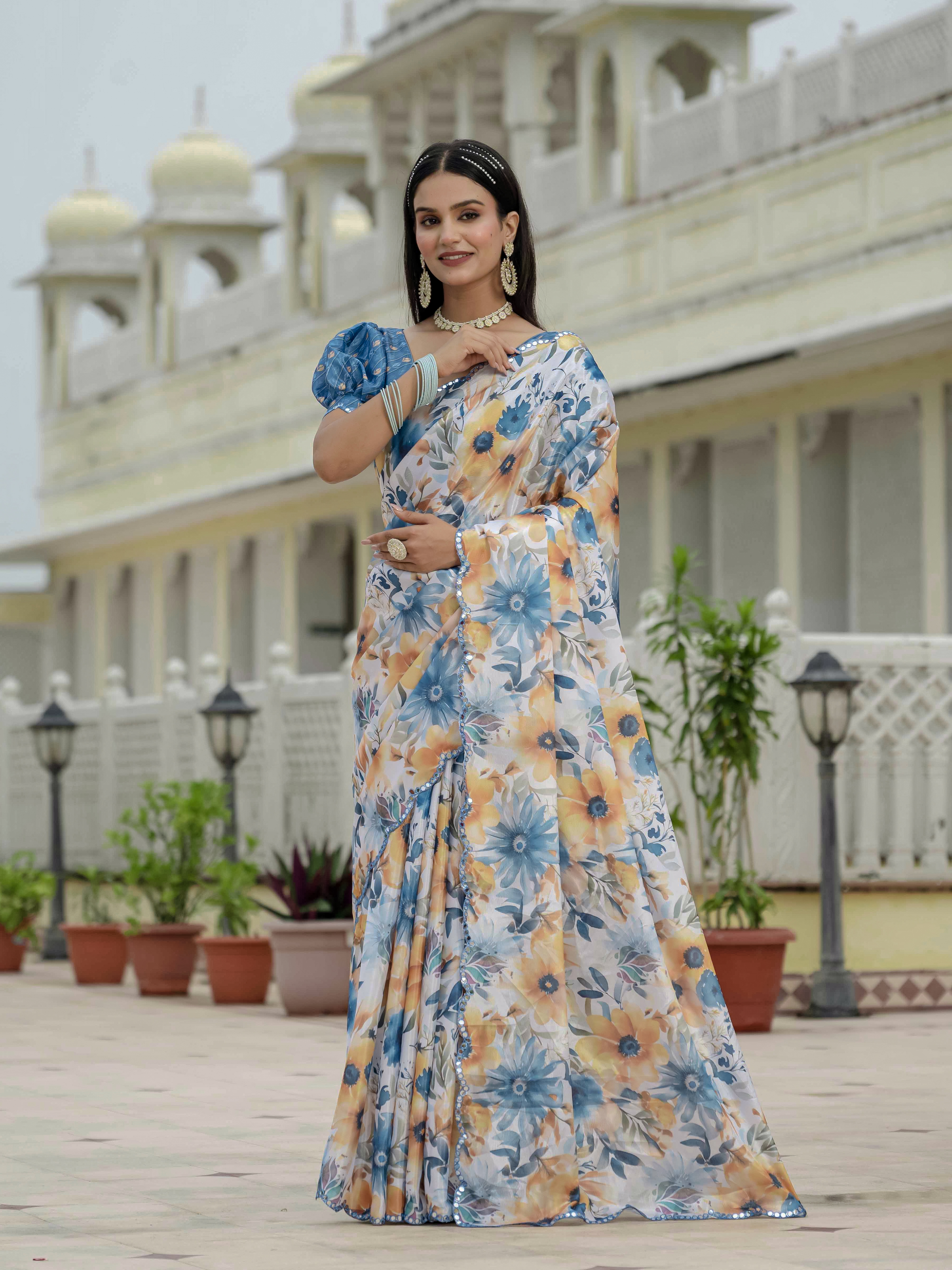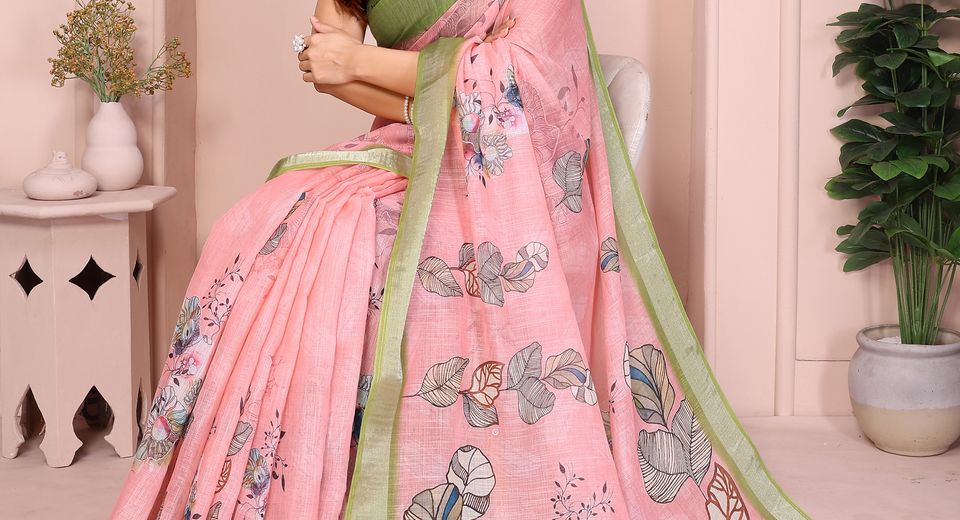
Pongal brings together an early-morning kolam, sunlight, temple prayers, family visits and the joyful ritual of cooking sakkarai pongal. The Best Sarees to Wear for Pongal: Traditional Tamil Styles for Women should therefore look festive while allowing easy movement, breathable comfort and tight pleats. Traditional Tamil style doesn't need a heavy silk saree for every gathering; cotton, linen-cotton and silk-cotton can feel equally appropriate when the border, blouse and accessories are chosen thoughtfully.
A practical Pongal wardrobe begins with three decisions: how formal the celebration will be, how long the saree must remain comfortable, and whether the wearer will spend time outdoors near the kolam or Pongal pot. Fabric weight, colour depth and drape stability matter more than a vague label such as "festive."
Best Sarees to Wear for Pongal: Traditional Tamil Styles for Women and Fabric Choice
The most suitable Pongal saree fabric depends on the ceremony, weather and amount of movement planned during the day. Cotton and linen-cotton suit daytime rituals, while silk, silk-cotton and richer woven fabrics suit formal gatherings.
Pongal takes place in January, when many parts of South India can still feel warm in the afternoon. Cotton and linen-cotton sarees help reduce heat around the waist and shoulders, especially when the pallu is worn over one shoulder rather than wrapped tightly. A saree with a moderate border also photographs well without feeling ceremonially heavy.
Movement is another useful test. The wearer may bend to draw a kolam, sit on the floor, walk outdoors or help prepare food. A saree that holds crisp pleats and has a manageable fall is more practical than an extremely slippery fabric that needs constant adjustment.
Why cotton and linen-cotton work for Pongal mornings
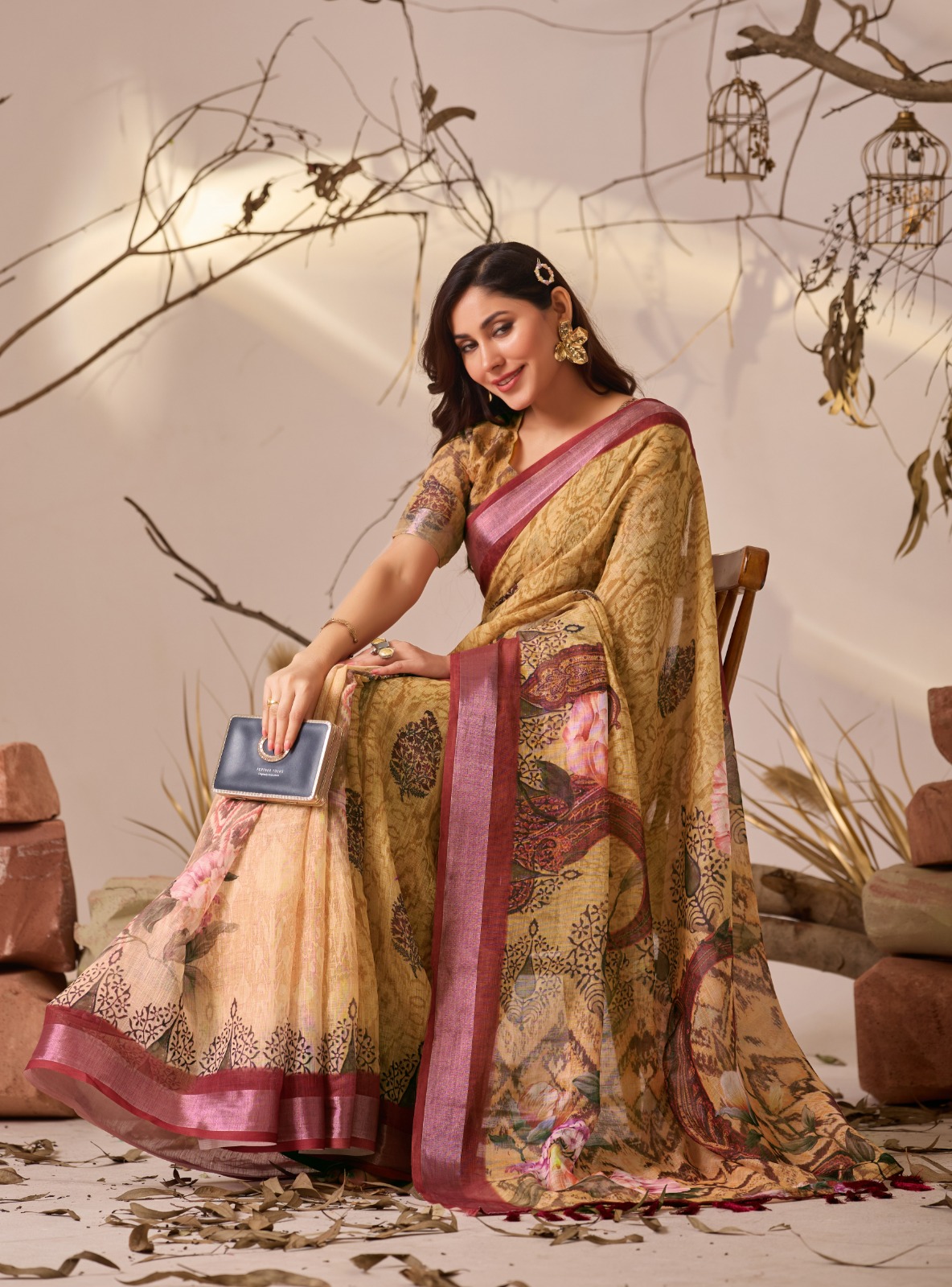
Cotton sarees are dependable for an outdoor Pongal morning because they absorb moisture and remain comparatively breathable. Linen-cotton blends add a slightly structured fall and often create sharper pleats than very soft cotton. Pastel Linen Cotton Floral Print Saree with Designer Blouse offers a light base, floral interest and a coordinated blouse for a polished daytime outfit.
Floral linen-cotton sarees work particularly well for a kolam competition, neighbourhood gathering or long family lunch. Pink Floral Linen Cotton Saree with Green Border for Ladies shows how a green border can make pink feel more grounded and connected to harvest-season dressing. Green also relates naturally to sugarcane leaves, fresh crops and agricultural abundance.
When silk and silk-cotton make more sense
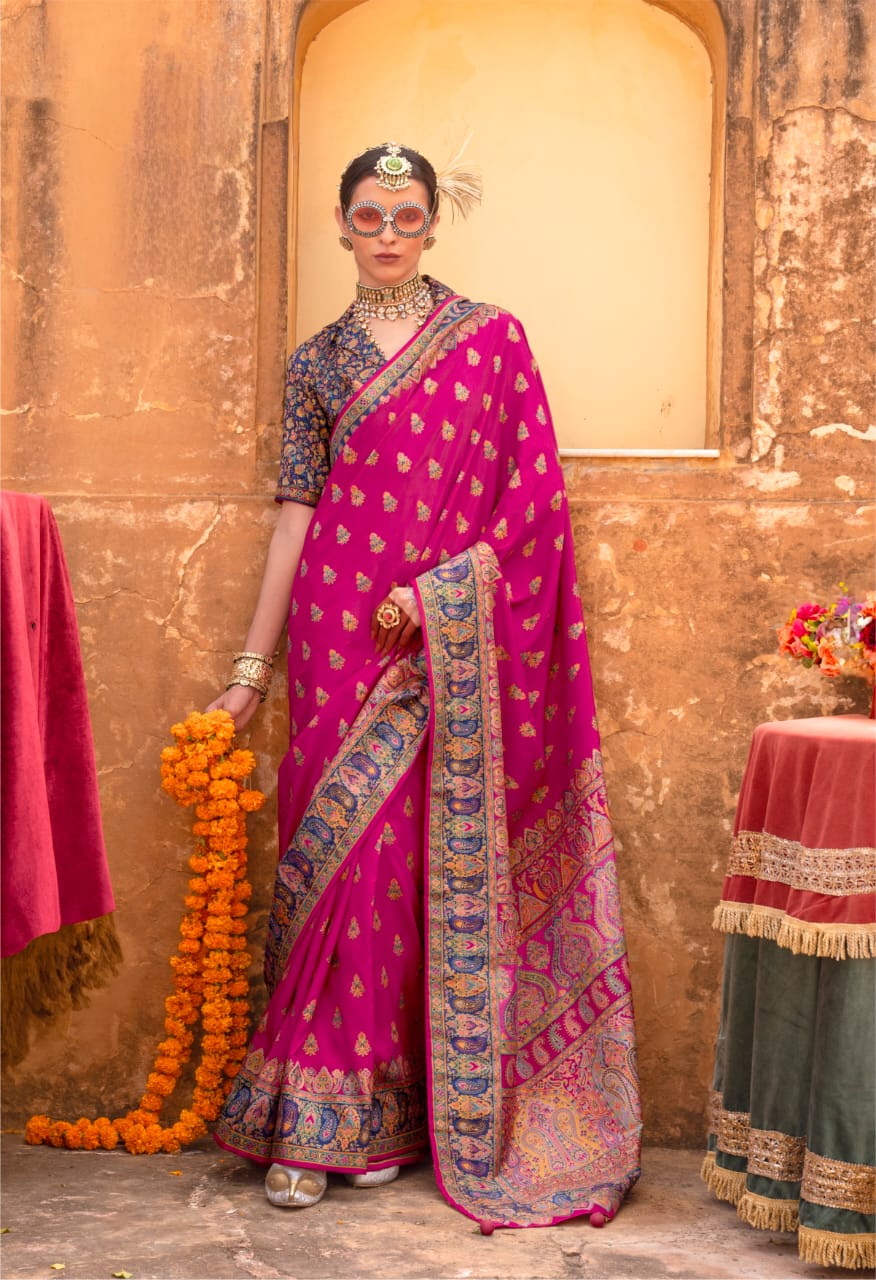
Silk sarees and silk-cotton sarees are stronger choices for a temple visit, formal family portrait or larger festive gathering. Kanjeevaram silk carries strong Tamil cultural associations through its lustre, contrasting borders and zari work. A lighter silk-cotton alternative can provide festive presence without the weight and maintenance of heavy pure silk.
Banarasi silk can also suit a formal Pongal event, although its brocade surface and metallic detailing create a different regional visual language from traditional Kanjeevaram. Styling should respect the saree's character rather than forcing every festive garment into one regional formula.
Best Sarees to Wear for Pongal: Traditional Tamil Styles for Women in Festive Colours
Pongal saree colours are most effective when they combine festive brightness with a wearable undertone. Yellow, turmeric, green, pink, red, orange, cream and off-white all connect easily with harvest imagery and traditional Indian celebration dressing.
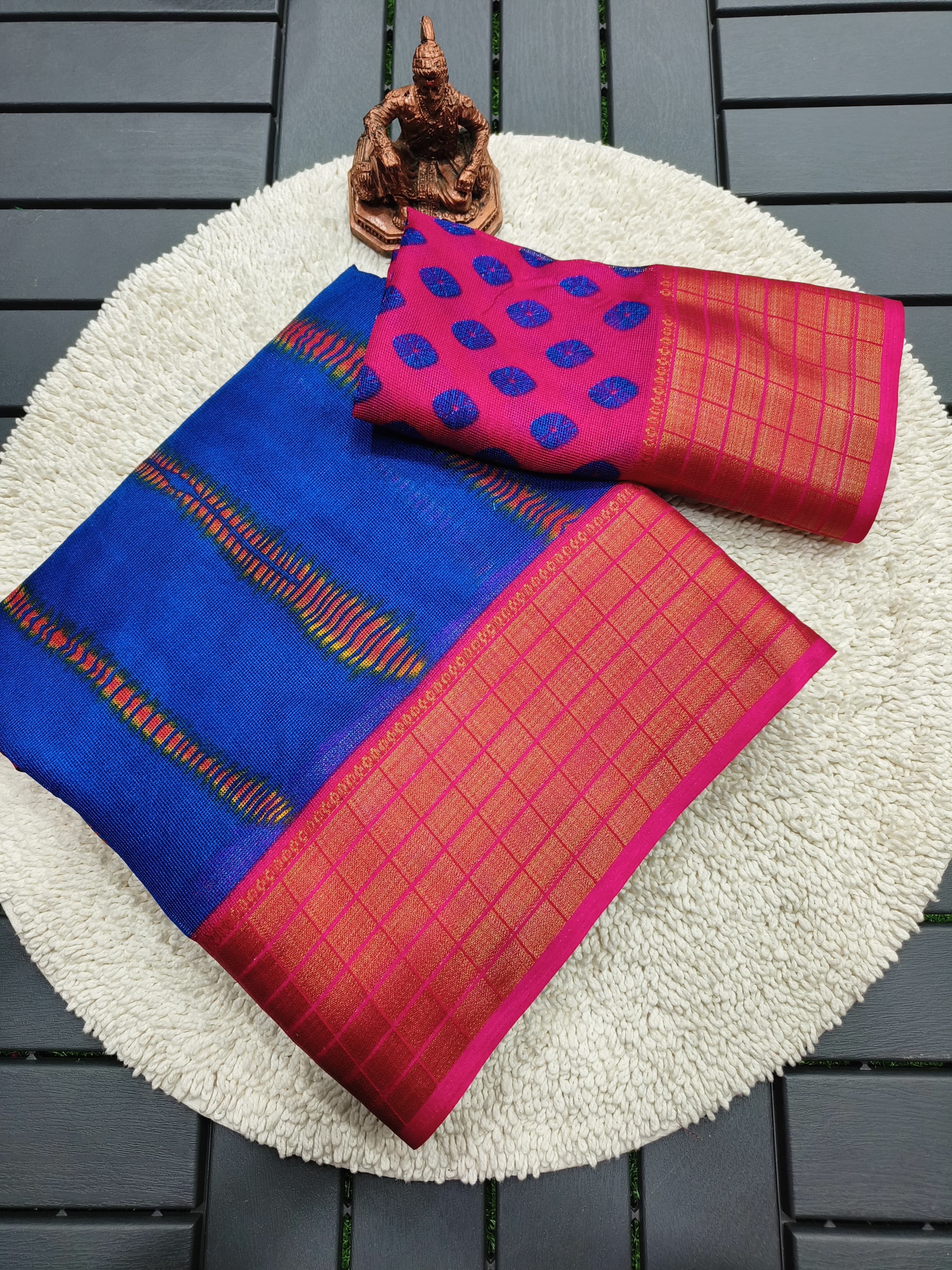
Yellow and turmeric shades suggest sunlight, auspiciousness and the colour of haldi used in many Indian rituals. Saffron and orange create visual intensity and pair neatly with antique gold jewellery. Green suggests new crops and abundance, while pink feels celebratory without the formality of deep red.
Cream, ivory and off-white become more festive when supported by a coloured border. Peach Linen Cotton Floral Print Saree with Blouse for Women is an useful example of a soft warm base that can be dressed up with gold earrings, a jasmine gajra and a blouse in rust, green or muted pink. Pastel Floral Printed Linen Cotton Saree with Blouse creates a similarly gentle look for a morning function where comfort and softness matter.
Colour should also be selected according to lighting. Very pale pastels can lose definition in bright outdoor photographs, while intense red or fuchsia can dominate a small family gathering. A medium-depth border, a contrasting blouse or a string of fresh flowers can give lighter sarees enough visual structure.
Pink with green, peach with blue and teal with gold are especially practical combinations because each pairing contains a clear contrast without becoming visually chaotic. A border colour can guide the choice of bangles, blouse piping, handbag or footwear more successfully than matching every accessory to a small printed flower.
Best Sarees to Wear for Pongal: Traditional Tamil Styles for Women and Blouse Pairings
A well-fitted blouse that repeats the saree border or one prominent print colour creates the most balanced Pongal outfit. Sleeve length, neckline and blouse colour can shift the same saree from everyday ethnic wear to temple-ready dressing.
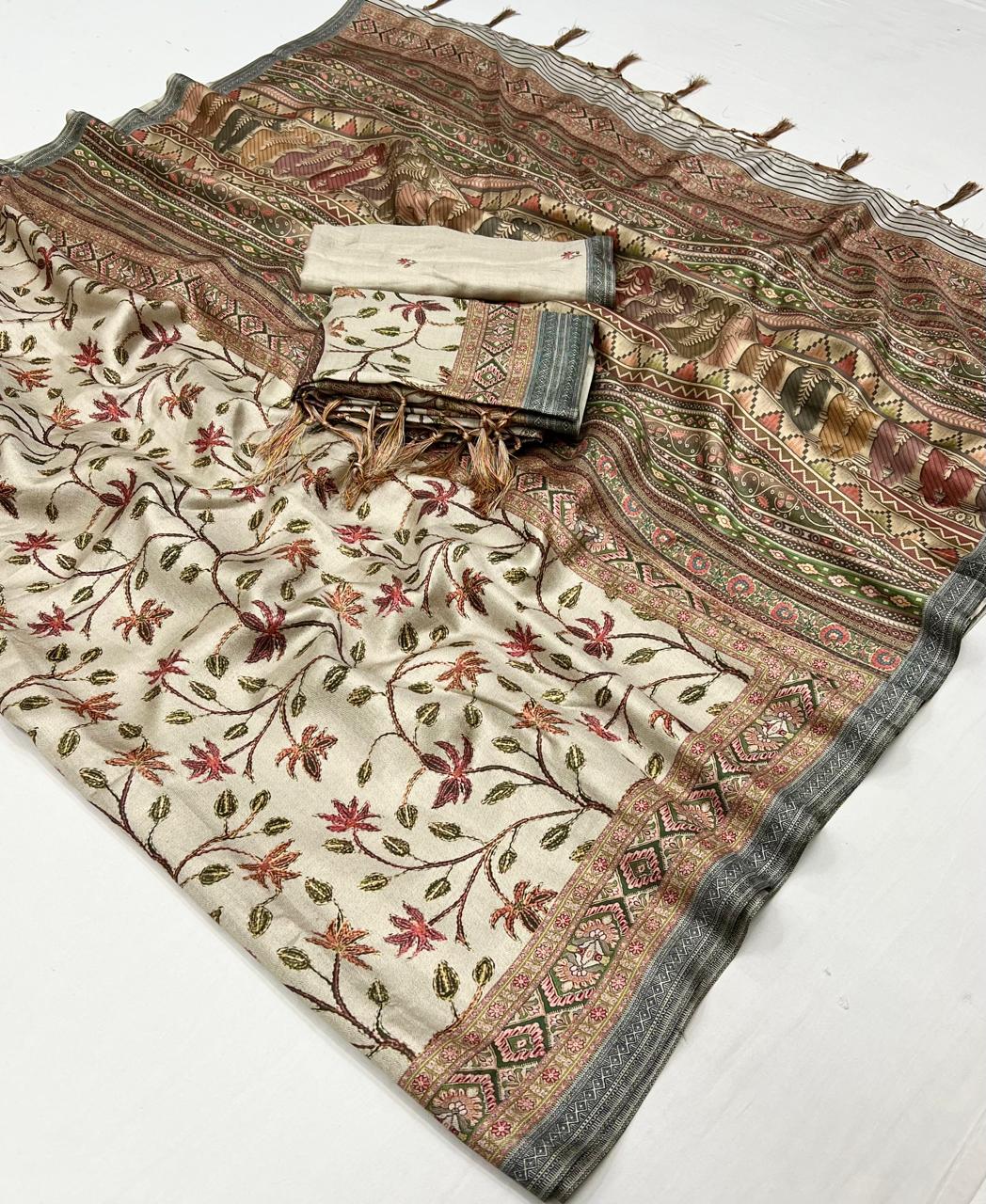
The most reliable blouse colour is one that repeats either the saree border or a noticeable shade in the print. Pink Floral Linen Cotton Saree with Elegant Contrast Border works well when the blouse echoes the contrast border instead of introducing a third strong shade. A green blouse can add harvest-inspired contrast to pink, peach or cream sarees.
A contrast blouse is especially effective when the saree has a quiet print. The blouse should still share one visual relationship with the saree through colour, border, sleeve piping or jewellery. Randomly adding a bright blouse can make a floral saree look disconnected.
Blouse silhouettes for different Pongal settings
A short-sleeved round-neck blouse suits a home ritual because the shape feels traditional and allows comfortable movement. Elbow-length sleeves offer more coverage for a temple visit or family gathering. A high-neck blouse looks polished for photographs, while a simple V-neck can make a structured linen-cotton saree feel less formal.
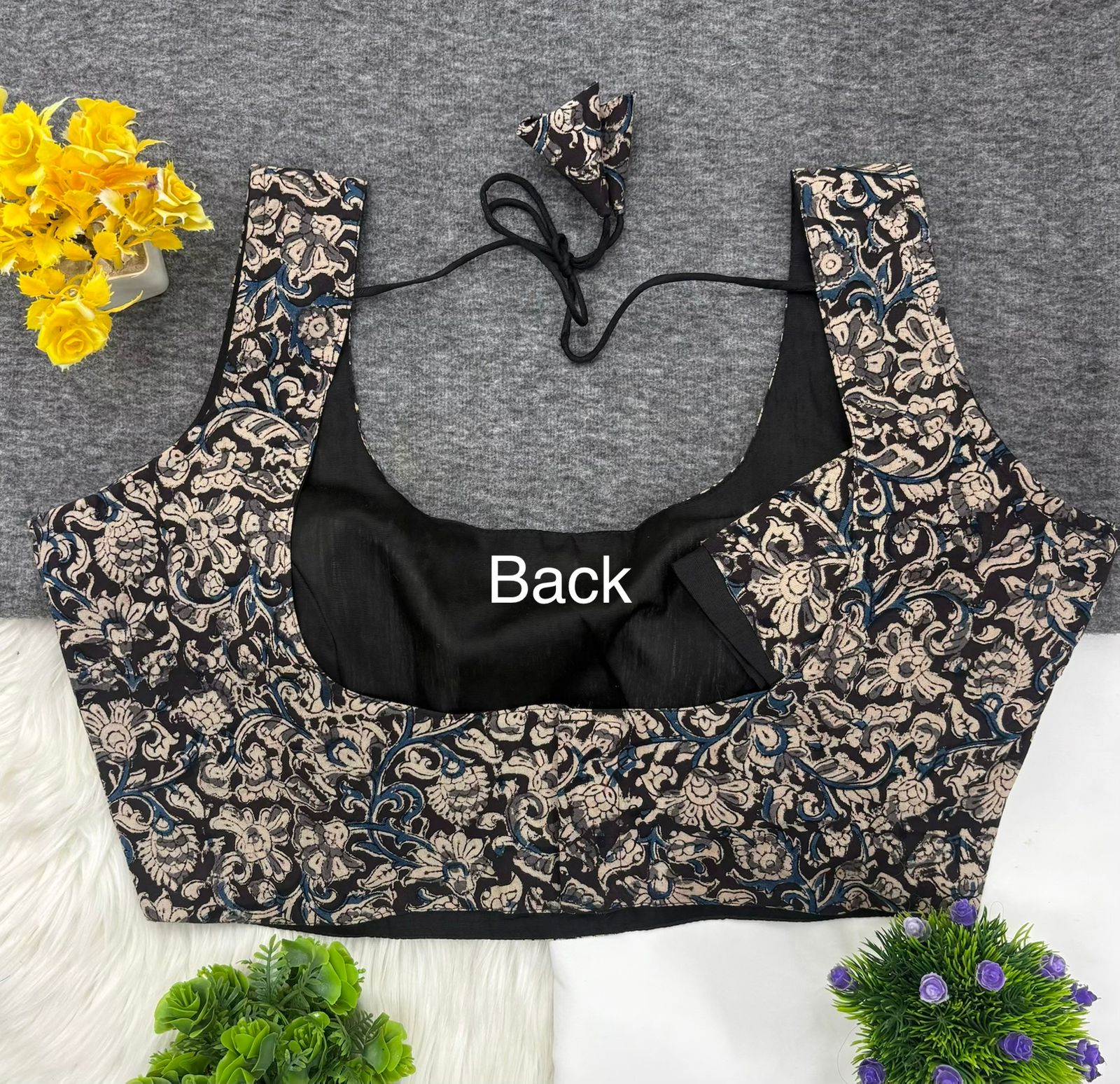
Blouse fit matters more than elaborate tailoring. The armhole should allow the wearer to lift both arms, the shoulder seam should sit correctly and the hooks should close without pulling. A blouse that's too tight can disturb the saree drape and become uncomfortable during a long Pongal lunch.
Best Sarees to Wear for Pongal: Traditional Tamil Styles for Women with a Secure Drape
A secure Nivi drape with firmly arranged pleats is the most versatile saree arrangement for Pongal rituals, temple visits and family gatherings. The pallu should remain attractive while allowing the wearer to sit, walk and bend safely.
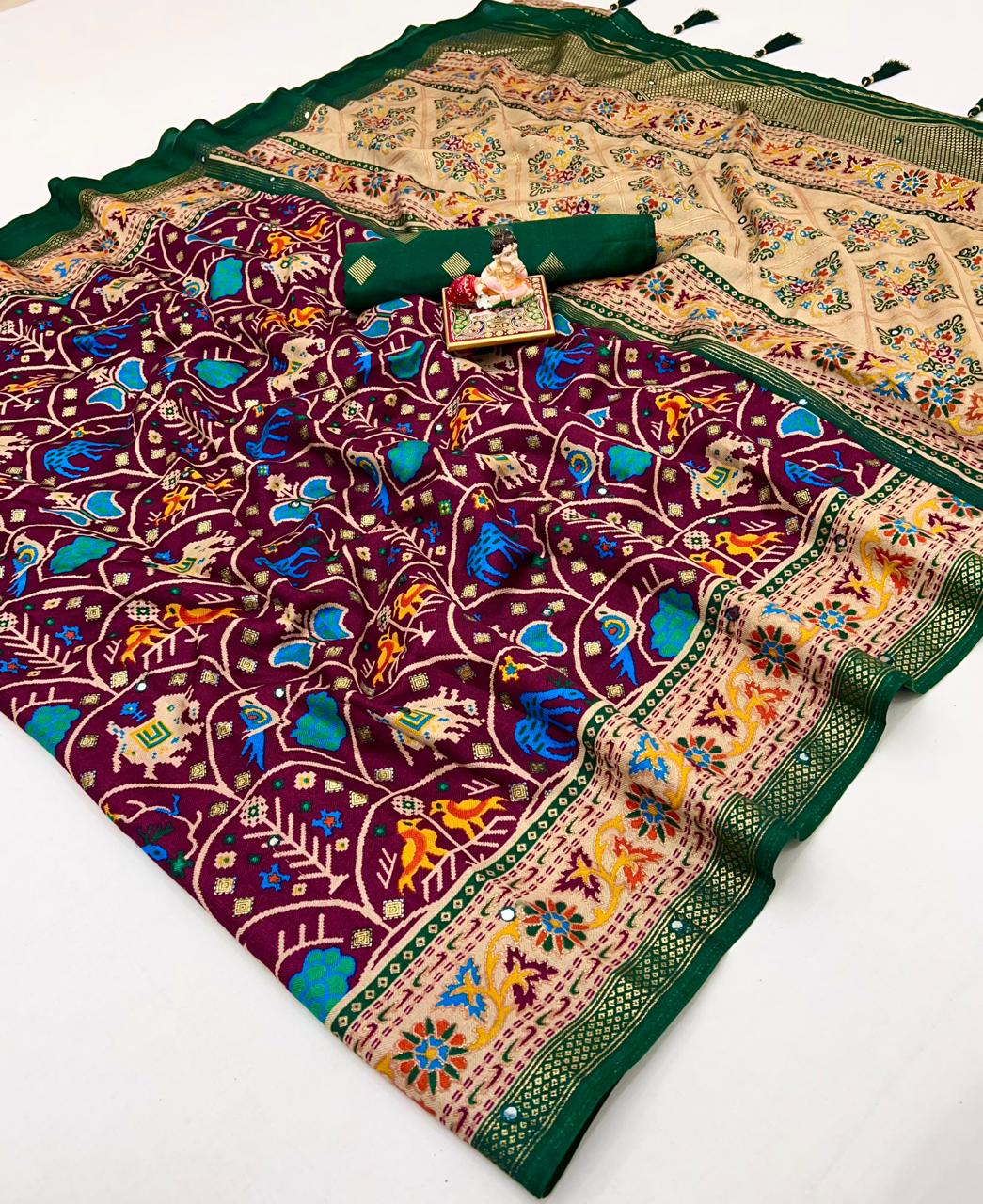
Five to seven front pleats usually create a balanced silhouette, although the number depends on the saree width and the wearer's height. A slightly narrower pleat stack can make walking easier during a temple visit. The pallu should be secured at the shoulder and lightly pinned near the upper arm or blouse seam when active movement is expected.
A more firmly tucked pallu is useful for cooking or outdoor rituals. The saree should be pinned only after the wearer has sat, walked and raised both arms once. This simple check catches restrictive pleats before the celebration begins.
For a home Pongal ritual, wear the pallu at a comfortable length so that it doesn't drag near the cooking area. For photographs, allow the pallu to fall smoothly over the shoulder and display the border clearly. For a temple visit, use one discreet shoulder pin and avoid excessive fabric near the feet.
Peach Floral Linen Cotton Saree with Blue Border for Ladies can be styled with blue or green glass bangles, while the blue border can be echoed in a small stone detail on the earrings. The colour relationship looks intentional without requiring a completely matching accessory set.
Best Sarees to Wear for Pongal: Traditional Tamil Styles for Women and Accessories
Accessories should reinforce the saree's colour and level of formality without competing with the print, border or pallu. Small gold jhumkas, a bindi, glass bangles and fresh flowers are sufficient for many daytime Pongal celebrations.
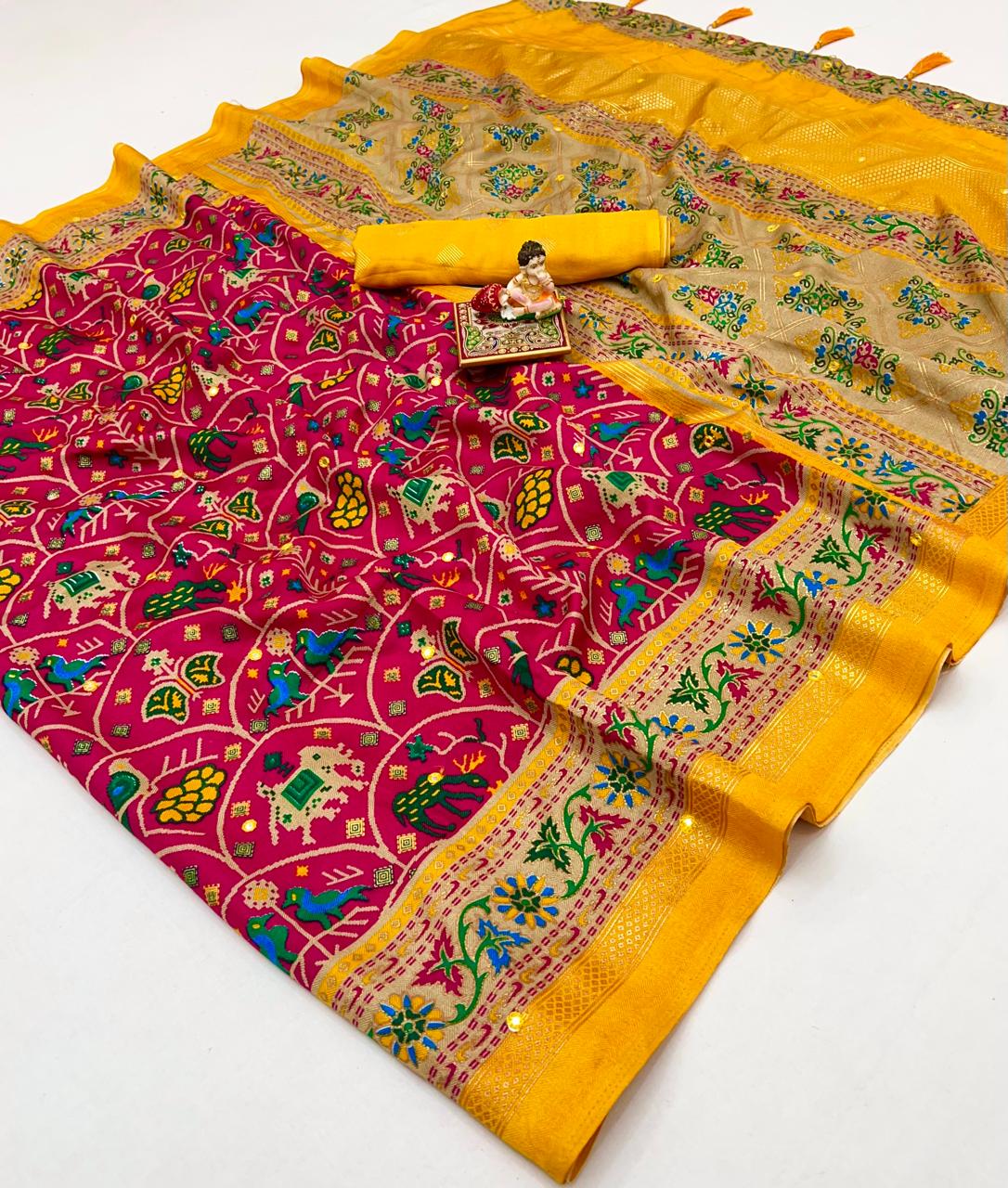
For a morning home celebration, pair a pastel or peach linen-cotton saree with small gold jhumkas, a compact bindi and jasmine flowers. A low bun decorated with a jasmine gajra gives a traditional Tamil finish while keeping hair away from the face during outdoor activities.
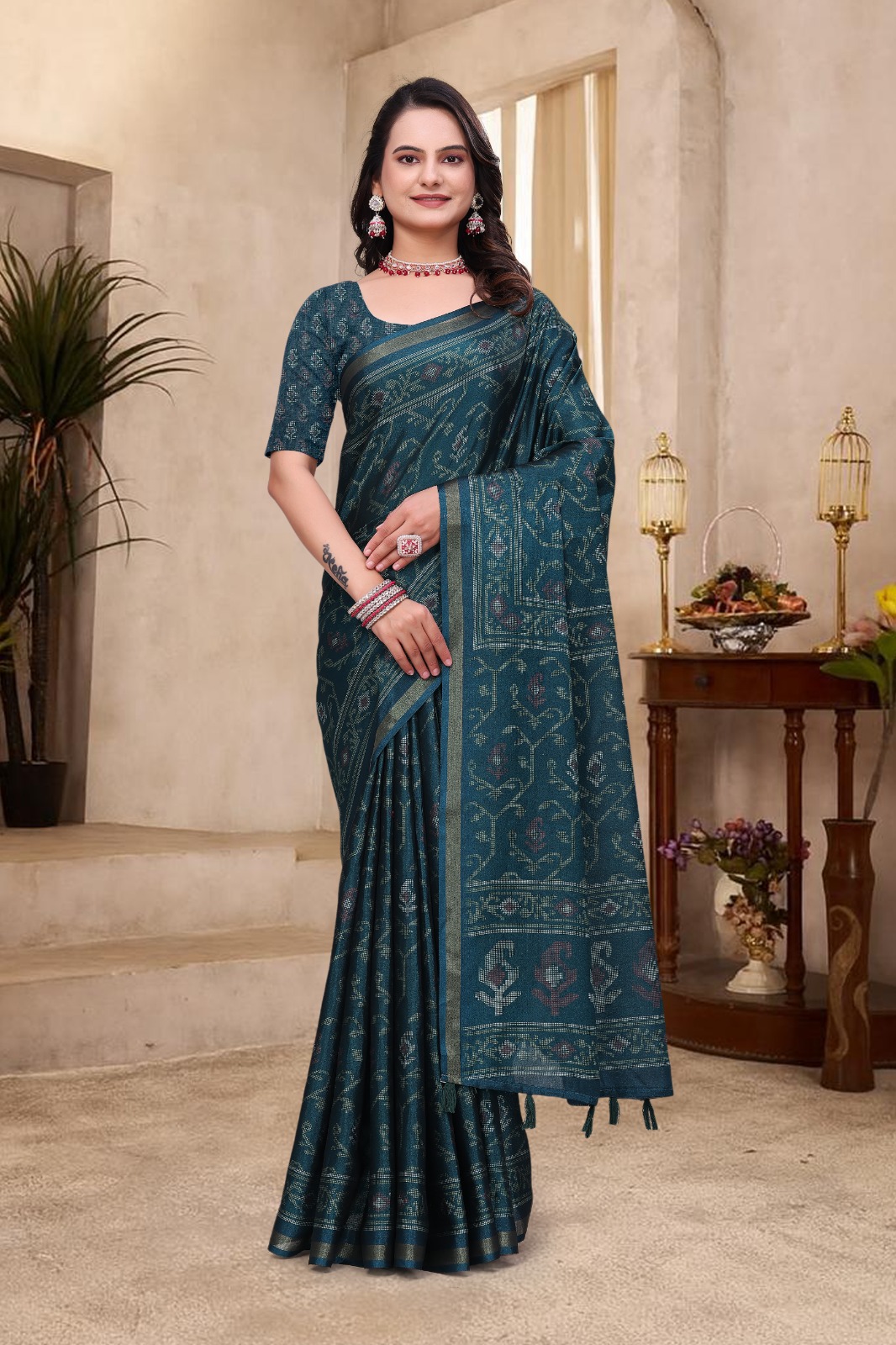
For a temple visit, a more defined border and neat low bun create a composed silhouette. Teal Mal Cotton Woven Print Saree With Blouse - VARNAVI gives a deeper colour option for women who prefer teal to pink or yellow. Temple-appropriate styling can remain understated with one long chain, medium jhumkas, a bindi and fresh flowers.
For a family lunch or portrait session, use the blouse as the strongest contrast point. VARNAVI Peach Linen Cotton Floral Saree with Border Tassels adds movement at the pallu and border, so jewellery can be kept cleaner and more linear. A simple bracelet stack and drop earrings prevent tassels, flowers and heavy necklaces from competing for attention.
Footwear should be stable rather than merely decorative. Low block heels, flat sandals with a secure strap or traditional juttis make it easier to walk across courtyards and remove shoes at a temple. Match footwear to the border or blouse instead of trying to match every accessory to the saree's print.
Best Sarees to Wear for Pongal: Traditional Tamil Styles for Women When Shopping Online
Online saree shopping becomes more reliable when the buyer checks fabric composition, blouse inclusion, measurements, border width and return details before focusing on the photograph. Product images can make a lightweight saree look heavier than it's, so written specifications deserve equal attention.
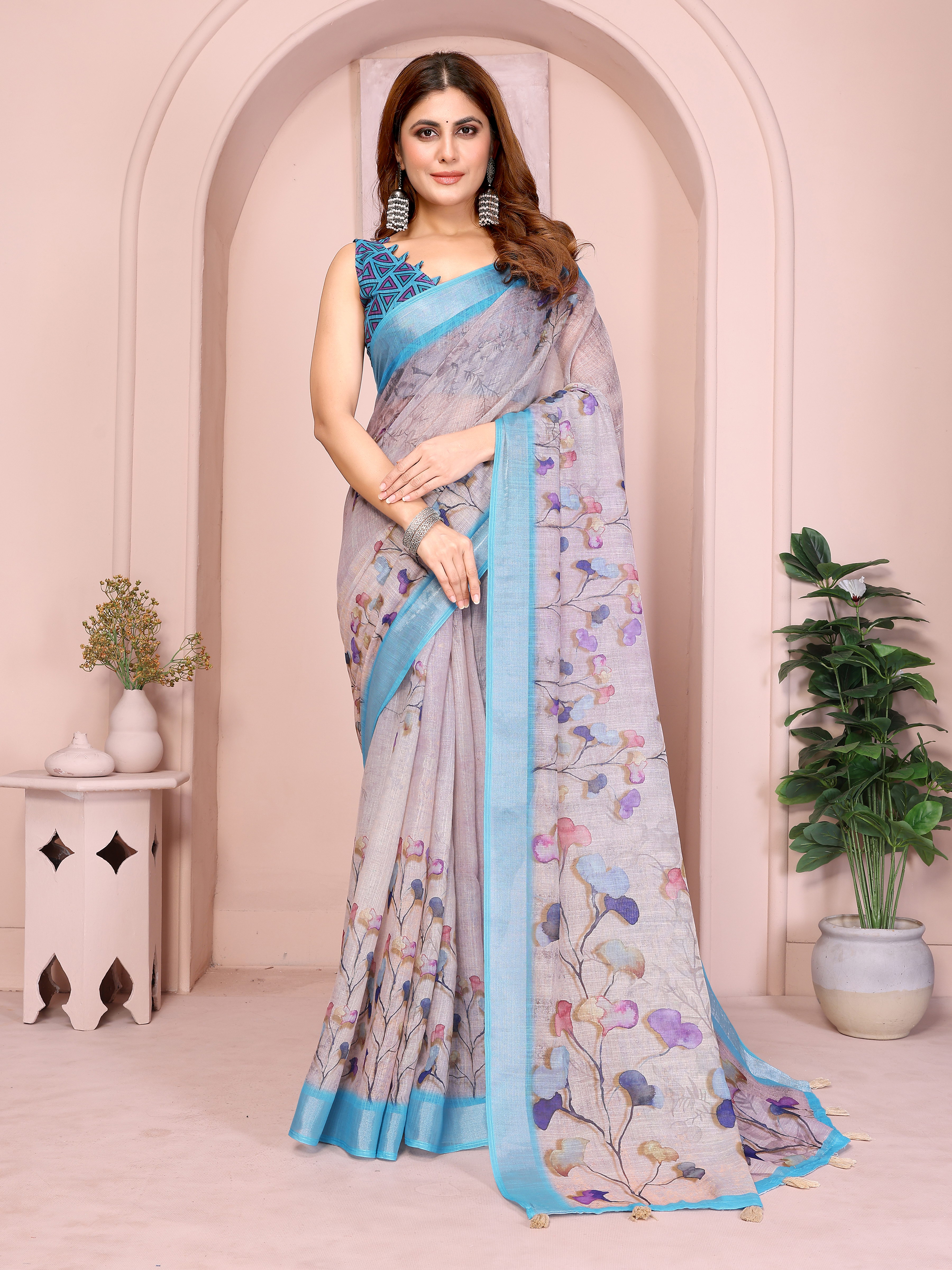
Check whether "with blouse" means a stitched blouse or an attached unstitched blouse piece. A ready-to-wear blouse saves tailoring time, but sleeve length and body measurements still need checking. An unstitched blouse piece gives more flexibility for neckline and sleeve design, although tailoring may take three to seven days during a busy festive period.
Price can help establish expectations, but price alone can't confirm quality. Sarees from Rs 1000 to Rs 1500 can be practical choices for daytime Pongal celebrations when the buyer wants a breathable printed saree rather than a ceremonial silk. Read the fabric details, inspect the border in close-up images and check whether the blouse is included.
Discount collections such as Sarees Under 20% Off, Sarees Under 10% Off, Sarees Flat 60% Off and Sarees Flat 50% Off may make comparison easier, but a discount should never replace checking measurements and care instructions. A low-cost saree that needs extensive alteration or special cleaning may be less convenient than a slightly higher-priced saree that can be worn immediately.
Before ordering, confirm delivery timing and allow at least two days for pressing, blouse adjustments and a trial drape. Linen-cotton may arrive with fold lines, so hang the saree for several hours and use a low-to-medium iron setting with a thin cotton cloth between the iron and fabric. Do not wait until Pongal morning to discover that the blouse hooks, pallu length or pleat width needs correction.
Best Sarees to Wear for Pongal: Traditional Tamil Styles for Women and Care
Correct washing, drying and storage help a Pongal saree retain its colour, texture and border shape for later festivals. Care instructions should follow the fibre blend and any zari, tassel or printed detail.
Wash linen-cotton and printed cotton sarees according to the garment label, preferably using cool water and a mild detergent. Avoid soaking printed sarees for long periods because prolonged contact with water can affect colour intensity. Dry sarees inside out and away from harsh midday sunlight when the fabric has a strong print or delicate border.
Never wring a saree aggressively. Press excess water between clean towels, then hang the saree evenly so the weight doesn't distort the pallu or tassels. Iron from the reverse side when possible, using a moderate setting suited to cotton or linen.
Store a completely dry saree folded along different crease lines every few months. Keep zari-heavy sarees in breathable cotton or muslin rather than sealed plastic for long-term storage. Place tissue or soft cotton between very embellished folds, and keep perfume, oil and damp flowers away from the fabric.
A well-selected Pongal saree can serve more than one purpose: the same linen-cotton drape may suit a harvest lunch, a summer family event and a casual festive gathering. Choosing breathable fabric, a meaningful colour relationship and a secure blouse makes traditional Tamil dressing feel comfortable rather than costume-like.
Common Questions About Choosing a Pongal Saree
Which saree fabric is most comfortable for Pongal?
Cotton and linen-cotton are usually the most comfortable fabrics for Pongal because they breathe well and remain manageable during outdoor rituals. Silk-cotton is a useful middle option when the event is more formal but a heavy silk saree would feel uncomfortable.
Which colours are considered suitable for a Pongal saree?
Yellow, turmeric, green, pink, orange, red, cream and peach are suitable Pongal colours because they reflect sunlight, harvest, abundance and festive dressing. A coloured border can make a pale cream or pastel saree look more celebratory.
Can I wear a floral saree for a traditional Tamil Pongal celebration?
Yes, a floral saree can suit Pongal when the fabric, border and styling retain a festive appearance. Linen-cotton floral prints paired with a defined blouse, gold-toned jewellery and jasmine flowers create a traditional silhouette with a contemporary finish.
How should I drape a saree for Pongal cooking or kolam rituals?
Use a secure Nivi drape with firmly tucked pleats and pin the pallu at the shoulder and upper arm. Check that the saree allows walking, sitting and bending before beginning the ritual, and keep excess fabric away from cooking surfaces.
What blouse colour goes with a Pongal saree?
The best blouse colour usually repeats the saree border or one strong shade in the print. Green works with pink and peach, blue works with a blue border, and a deeper version of the saree's base colour creates a coordinated tonal outfit.
How early should I order a saree for Pongal?
Order a saree at least one week before Pongal when possible, especially if the blouse needs tailoring. Two days before wearing the saree, check the fit, remove fold lines, arrange pleats and test the complete outfit with footwear and accessories.