The best sarees for wedding guests are not always the heaviest or most heavily embellished designs. The right choice balances ceremony, climate, movement, colour, drape and the amount of time you'll spend wearing it. Banarasi silk, Kanjeevaram, Chanderi, tissue cotton and lightweight party-wear sarees each solve a different wedding-guest need.
A wedding guest may attend a Haldi ceremony in the afternoon, a pheras ceremony at night or a reception with a formal dress code. An useful saree decision begins with the event rather than with a colour trend. The sections below explain how to choose a fabric, coordinate a blouse, avoid common styling mistakes and build a polished look for a modern wedding guest.
How to choose the best sarees for wedding guests
The best saree for a wedding guest is one that suits the ceremony, weather and amount of movement required. A six-yard saree can look formal without becoming impractical when the fabric, pallu and blouse are chosen deliberately.
Start by writing down four details: the ceremony, time of day, venue and likely temperature. An outdoor daytime wedding favours breathable cotton silk, Chanderi or tissue blends, while an air-conditioned evening reception allows a denser Banarasi silk or a richer zari border. A long commute, frequent standing and dancing make a lighter saree more sensible than a stiff, heavily worked style.
Consider the visual scale of the wedding before choosing ornamentation. A narrow zari border and small woven motifs look elegant at a daytime function. A broad golden zari border or floral zari work provides enough definition for evening photographs without requiring a fully embellished saree. The saree should look festive from a distance, but the fabric should still allow comfortable pleating.
A reliable guest wardrobe can include one lightweight daytime saree, one versatile Banarasi silk saree and one statement colour for a reception. That three-saree approach is more useful than buying several similar heavy designs.
Match the saree fabric to the wedding ceremony
Fabric determines comfort, drape, sheen and how formal a saree appears. The most useful wedding-guest fabrics are Banarasi silk, Kanjeevaram silk, Chanderi, tissue cotton, silk blends and lightweight georgette or crepe.
Banarasi silk for receptions and evening weddings
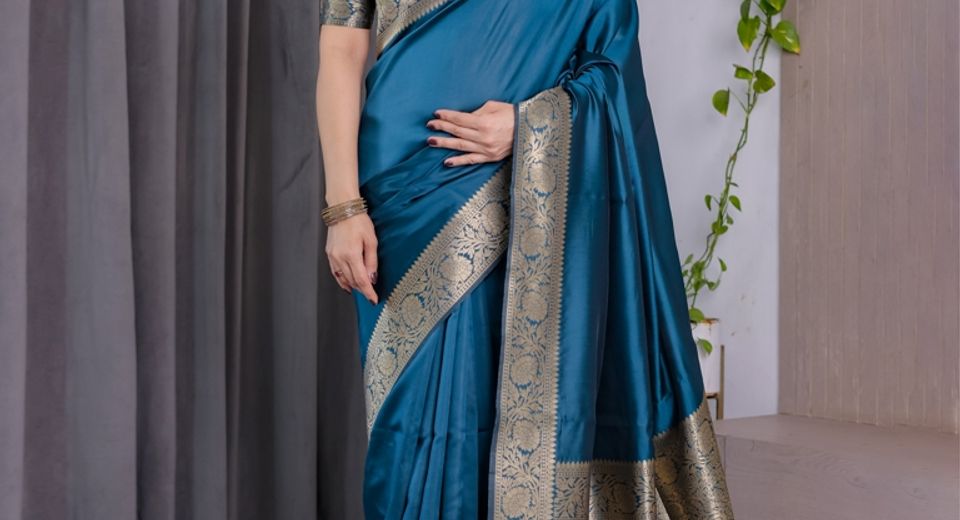
Banarasi silk is a strong choice for an evening reception because woven zari catches warm indoor and outdoor light without needing excessive surface decoration. Banarasi silk also holds pleats well, which helps the saree maintain a structured appearance through dinner, photographs and conversation.
A design such as Teal Blue Banarasi Soft Silk Saree With Golden Zari Border gives a guest a jewel-toned base with a defined metallic edge. Wine Banarasi Soft Silk Saree With Golden Zari Border creates a deeper, sophisticated look for an evening wedding. Green Banarasi Soft Silk Saree with Golden Jacquard Border works particularly well when the blouse and jewellery are kept visually controlled.
Chanderi and tissue cotton for daytime functions
Chanderi is suitable for a daytime wedding because its lighter hand and gentle sheen look festive without trapping as much heat as a dense silk. Tissue cotton with zari weaves offers a similar balance when the guest wants a more breathable, artisanal appearance.
Pastel Floral Tissue Handloom Cotton Saree with Zari Weaves is an useful example for a morning ceremony, garden venue or Haldi ceremony where a soft base and restrained shimmer feel more appropriate than deep jewel tones. Handloom cotton also rewards a simpler blouse, because the weave itself supplies texture.
Kanjeevaram and heavier silk choices
Kanjeevaram silk suits a formal South Indian wedding or a guest who wants a traditional, substantial drape. Kanjeevaram silk generally has a firmer body and stronger contrast between the silk ground and zari border, so it benefits from careful pre-pleating and secure pinning.
Heavier silk is most comfortable when the event is short, seated or held in a cool venue. For a full-day wedding, a soft silk or silk blend may provide a similar festive impression with less weight around the waist and shoulder.
Colour choices that work for a wedding guest
The best saree colours for wedding guests are festive, photograph well and remain distinct from the bridal palette when the family has indicated a specific colour code. Colour should be selected with ceremony timing, lighting and the guest's own wardrobe in mind.
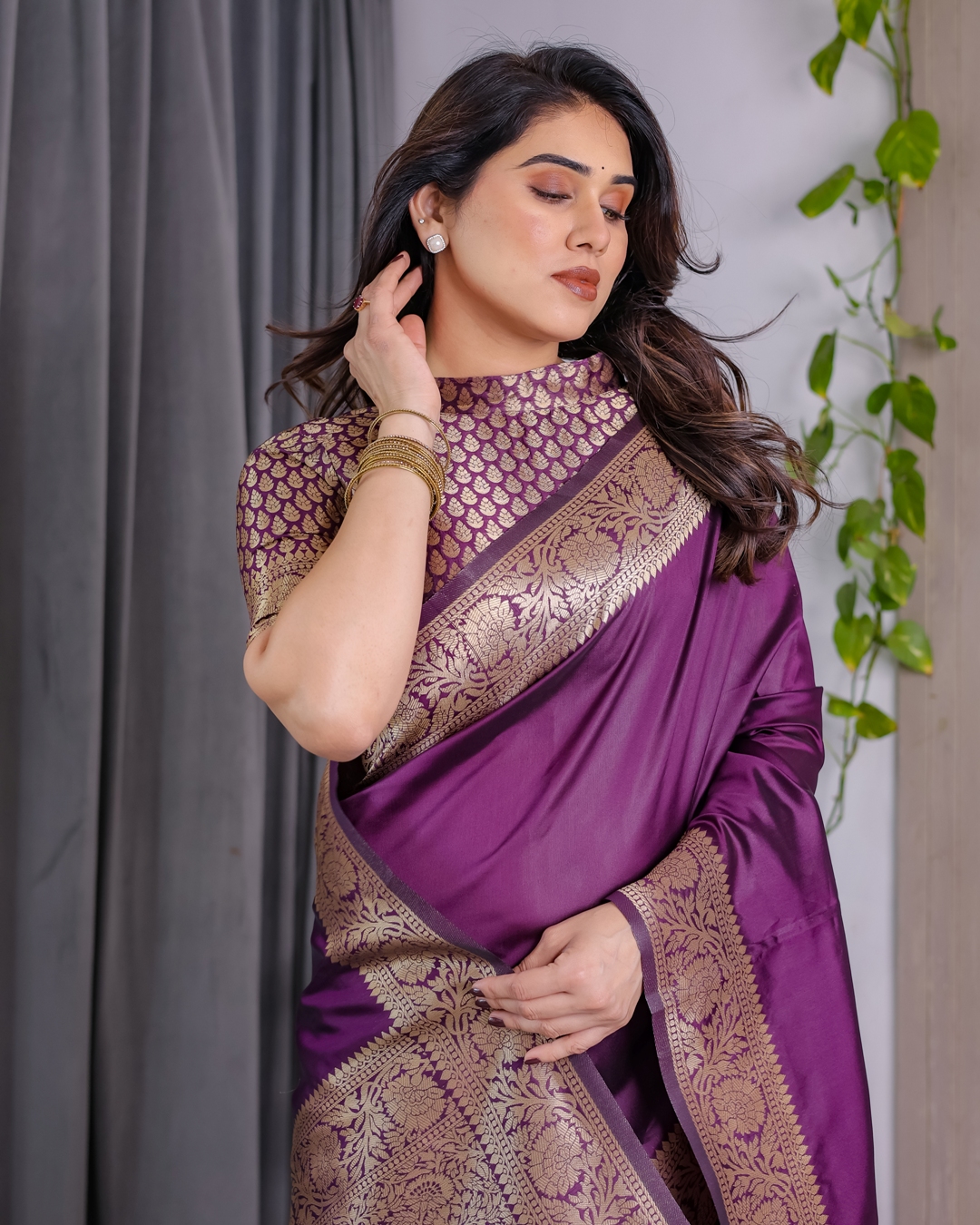
Teal, wine, emerald green, royal purple and red are dependable evening colours because they retain depth under artificial lighting. Royal Purple Banarasi Soft Silk Saree With Floral Zari Work makes a strong reception choice when paired with a plain blouse and limited gold accessories. Red Banarasi Soft Silk Saree with Jacquard Zari Border can look celebratory, but a guest should check whether red is reserved for the bride or close family.
Pastel pink, powder blue, ivory, butter yellow and soft green are effective for morning ceremonies. Pastels don't need to look plain when the saree includes a floral weave, a tissue finish or a narrow zari border. White and ivory require more care because some families reserve these shades for specific rituals, while certain communities associate white with mourning; ask the hosts when the dress code is unclear.
Yellow is a natural choice for a Haldi ceremony, but a guest should select washable or easy-care accessories because turmeric can stain fabric. A yellow saree with a green, pink or red blouse creates contrast without relying on heavy embroidery. Maroon, rust and deep pink offer alternatives when red feels too close to bridal dressing.
Blouse, border and pallu: the details that change the look
The blouse controls the formality of a saree more strongly than many guests expect. A high-neck blouse with elbow-length sleeves appears composed and heritage, while a sleeveless or square-neck blouse gives a more contemporary wedding guest look when the venue and family setting allow it.

Match the blouse to one secondary colour in the saree rather than automatically repeating the border. A golden zari border can work with a matte gold, champagne, deep green or wine blouse. A contrasting blouse is especially useful with Banarasi silk because it prevents the woven pattern from becoming visually flat.
The pallu should be chosen according to movement. A neatly pleated pallu secured at the shoulder is practical for greeting guests and eating. A longer open pallu creates drama for photographs but requires extra pins and more attention while walking. A pre-stitched or lightly structured pallu can help a wedding party girl move between ceremonies without repeatedly adjusting the drape.
Border width also affects body proportions and styling. A broad border draws attention to the lower half and gives a time-honoured appearance. A narrow border makes a lightweight saree feel more contemporary and can suit an unmarried girl attending a wedding party when the desired look is youthful rather than bridal.
Styling ideas for every wedding function
Each wedding function benefits from a different balance of colour, shine and comfort. Repeating one saree style across every ceremony often feels less polished than changing the fabric and styling level.

Haldi ceremony and daytime rituals
A Haldi ceremony calls for a breathable saree, secure drape and washable or uncomplicated accessories. Choose tissue cotton, Chanderi or a soft silk in yellow, green, pink or a light floral colour, and avoid trailing tassels that can catch on seating or become marked by turmeric.
A compact blouse, flat sandals, small hoops and a waist-length braid keep the outfit practical. The Pastel Floral Tissue Handloom Cotton Saree with Zari Weaves can be styled with a fresh-coloured blouse and minimal jewellery for a graceful daytime result.
Sangeet and wedding party dressing
A Sangeet or wedding party permits more shine, colour contrast and movement-friendly styling. Soft silk, Banarasi silk and lightweight party-wear sarees are suitable because they photograph well and can be pinned securely for dancing.
Try a wine, purple, teal or green saree with a sleeveless blouse, metallic earrings and a low bun. The Purple Banarasi Soft Silk Saree with Elegant Zari & Jacquard gives enough texture for an up-to-date party look, so the accessories can remain simple. A guest attending several hours of dancing should use fashion tape at the blouse edge and two discreet pallu pins.
Wedding ceremony and reception
A formal wedding ceremony supports a richer silk, defined zari and more classic jewellery, while a reception allows a cleaner blouse and stronger makeup. Red Banarasi Silk Saree With Rich Golden Zari Floral Border brings a ceremonial quality to an evening look, especially with antique gold earrings and a restrained necklace.
don't copy the bride's complete visual language. Guests can wear zari, silk and statement jewellery, but should avoid combining a bridal-red saree with a heavy veil, dense head-to-toe embellishment and elaborate bridal-style accessories unless the hosts specifically request it.
How to build a current wedding guest look without overstyling
An up-to-date wedding guest look comes from editing the outfit, not removing every heritage element. Keep one focal point-saree, blouse, jewellery or makeup-and make the remaining elements support it.
For a richly woven Banarasi saree, choose a solid blouse, one pair of statement earrings and a small clutch. For a plain or lightly patterned saree, a sculptural blouse sleeve, layered necklace or textured potli can add interest. Gold jewellery suits zari, while silver, pearl or coloured stone jewellery can modernise a cooler-toned saree.
Hair and footwear should reflect the venue. A low bun or braid is secure for temple visits and outdoor functions. Soft waves suit a reception but need enough hold to withstand humidity. Block heels are safer than narrow stilettos on grass, stone courtyards and uneven wedding venues.
Collections such as Party Wear Sarees can help a guest compare occasion-ready silhouettes, while Gray Color Sarees Under 1000 gives an useful direction for someone exploring neutral or budget-conscious styling. Red and Yellow Sarees from Rs 799 with Up to 75 Percent Off may suit guests shopping for ceremony-specific colours, but the final choice should still be based on fabric and drape rather than discount alone.
Buying and care checks before the wedding
A saree should be checked for fabric feel, border alignment, blouse measurements and delivery time before it's assigned to a wedding. Order at least 10 to 14 days before the event when blouse stitching or alterations are required.
Measure the blouse against a garment that already fits well, and confirm whether seam allowance is available. Check the saree length if you're tall, prefer a larger pallu or plan to wear heels. A very stiff border may need extra pleating time, while a slippery silk may require a fall, petticoat with a firm waistband and additional pins.
Collections such as White Silk Sarees in Cream Ivory and Off White can be considered for elegant neutral dressing, but white and ivory should be cleared with the hosts for culturally sensitive ceremonies. Maroon Silk Sarees with Up to 74% Off brings a deeper alternative to bridal red for evening celebrations.
Store silk sarees folded inside a breathable cotton cloth, refolding them every few months to prevent permanent creases. Keep zari away from direct perfume, deodorant and damp storage. Air the saree in shade after wearing, remove stains through a professional dry cleaner rather than rubbing them, and never iron zari directly on high heat. Cotton and tissue sarees should also be stored dry because humidity can encourage mildew and weaken metallic threads.
A simple decision formula for wedding-guest sarees
The simplest way to choose is to match one fabric, one colour family and one styling level to the event. Daytime plus outdoor venue usually means lightweight fabric and fresh colour; evening plus formal venue usually means silk, deeper colour and more defined zari.
For a Haldi ceremony, choose breathable tissue cotton, Chanderi or a soft silk in pink, pastel or green. For a Sangeet, choose a movement-friendly Banarasi soft silk or party-wear saree with secure pleats. For the wedding ceremony, choose a traditional silk or structured Banarasi with a turned blouse and jewellery plan. For a reception, use a jewel tone, metallic detail or modern blouse while keeping the silhouette comfortable.
The best sarees for wedding guests succeed because they respect both the celebration and the person wearing them. A well-fitted blouse, secure drape, suitable fabric and thoughtful colour will look more refined than a heavier saree chosen without considering heat, movement or the ceremony's dress code.
Common Questions About Choosing a Wedding Guest Saree
Which type of saree is best for a wedding guest?
Banarasi silk is a dependable choice for an evening wedding or reception because zari adds formality and the fabric holds pleats well. Chanderi, tissue cotton and soft silk are better for daytime, outdoor or full-day events because they are generally lighter and easier to wear.
Which saree is trending now for weddings?
Jewel-toned Banarasi soft silk sarees, floral zari designs, tissue sarees and contemporary blouses are popular choices for wedding guests. Teal, wine, purple and green provide a modern alternative to choosing bridal red for every formal event.
Can an unmarried girl wear a silk saree to a wedding party?
Yes, an unmarried girl can wear a silk saree to a wedding party, provided the styling suits her age, comfort and the dress code. A lighter Banarasi soft silk with a contemporary blouse, compact jewellery and secure pleats creates a youthful party look without appearing bridal.
What should a modern wedding guest wear to a daytime ceremony?
A modern wedding guest should choose a breathable saree such as Chanderi, tissue cotton or lightweight soft silk in a pastel, yellow, green or floral colour. Flat or block-heeled footwear, smaller jewellery and a neatly pinned pallu make the outfit practical for daytime movement.
Is red appropriate for a wedding guest saree?
Red can be appropriate for a wedding guest saree when the couple or family has not reserved red for the bride. Guests who are unsure can choose wine, maroon, rust or purple, which retain a festive richness while creating more distance from a traditional bridal-red look.
How early should I buy a saree for a wedding?
Buy a wedding guest saree at least 10 to 14 days before the event if the blouse needs stitching or alterations. Allow additional time for delivery, fitting, fall and edging, trial draping and replacing accessories that do not work with the final colour or fabric.