Best sarees for summer are not chosen by colour or trend alone. The right saree must release heat, manage perspiration, avoid unnecessary weight and remain comfortable when worn for several hours. Cotton, linen, cotton-silk and lightweight printed sarees can all work well, but their comfort depends on yarn, weave, finishing, lining and draping. A pale saree can still feel hot if it has a dense synthetic lining, while a darker open-weave saree may feel easier in a breezy room. This guide explains what to look for before buying a summer saree and how to style each option for Indian weather.
What makes a saree comfortable in summer?
A summer saree is comfortable when its fabric allows air movement, absorbs or releases moisture at an useful rate, and doesn't add excessive weight around the body. Fibre content matters, but weave and finish matter just as much.
Cotton fibres absorb perspiration and usually feel familiar against the skin, making cotton sarees dependable for office wear, errands and long daytime events. Linen has a crisp, airy character and becomes softer with use, although linen can crease more visibly than cotton. Cotton-linen blends balance breathability with a little more structure. Cotton-silk and soft silk can feel comfortable when the fabric is light and the event is indoors, but dense zari, jacquard construction and multiple layers can increase warmth.
Look for a fabric that falls easily rather than standing stiffly away from the body. A saree with a bulky border, heavy pallu or dense embellishment concentrates weight at the shoulder and waist. A lightweight pallu is particularly useful in summer because it reduces the need to repeatedly adjust the drape.
Moisture management also depends on finish. A heavily starched cotton saree may feel crisp when first worn but less flexible in humid weather. A very smooth, tightly finished surface may slide more easily and require frequent pinning. The practical choice depends on whether the saree is for commuting, sitting at a desk, walking outdoors or attending a short indoor function.
Which fabrics are among the best sarees for summer?
Cotton, linen, cotton-linen, lightweight cotton-silk and breathable silk blends are the most useful summer saree categories for different kinds of wear.
Cotton for regular daytime wear
Cotton is the safest starting point for a saree intended for repeated summer use. Cotton sarees suit workdays because they're generally breathable, comparatively easy to wash and available in prints, checks, stripes and plain finishes. A thinner cotton may feel cooler, while a medium-weight cotton can drape more neatly and resist becoming limp during a long day.
The Beige Grace Cotton Silk Saree for Daily Wear illustrates why cotton-silk deserves a place in a practical wardrobe. Cotton-silk can offer the easy visual polish of silk with a lighter, more everyday character than a dense ceremonial silk saree. Check the care label before washing because silk content can require gentler handling than pure cotton.
Linen and cotton-linen for airflow
Linen is a strong choice when airflow and a dry hand feel matter more than a perfectly smooth finish. Linen creases naturally, so visible folds should be treated as part of the fabric's character rather than as a defect. Linen-cotton blends are often easier to drape than very crisp linen and can be more forgiving for first-time linen wearers.
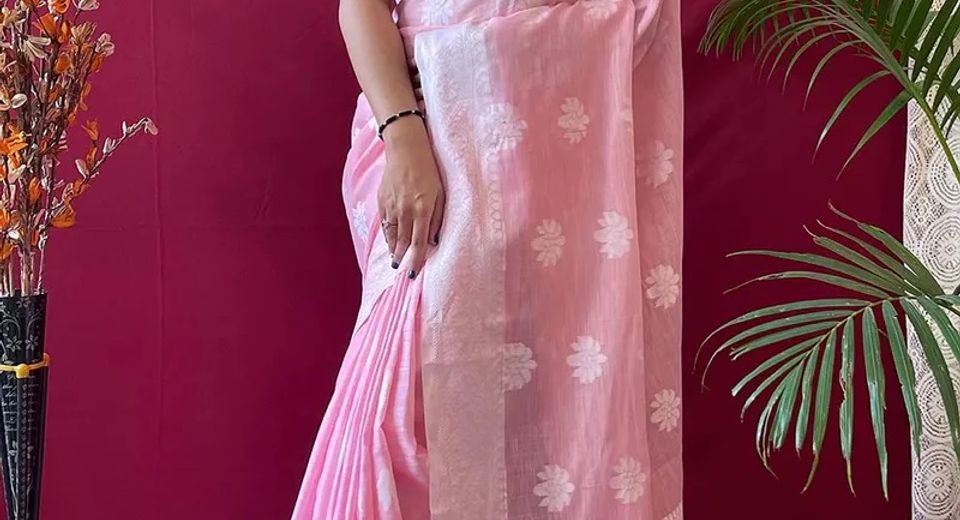
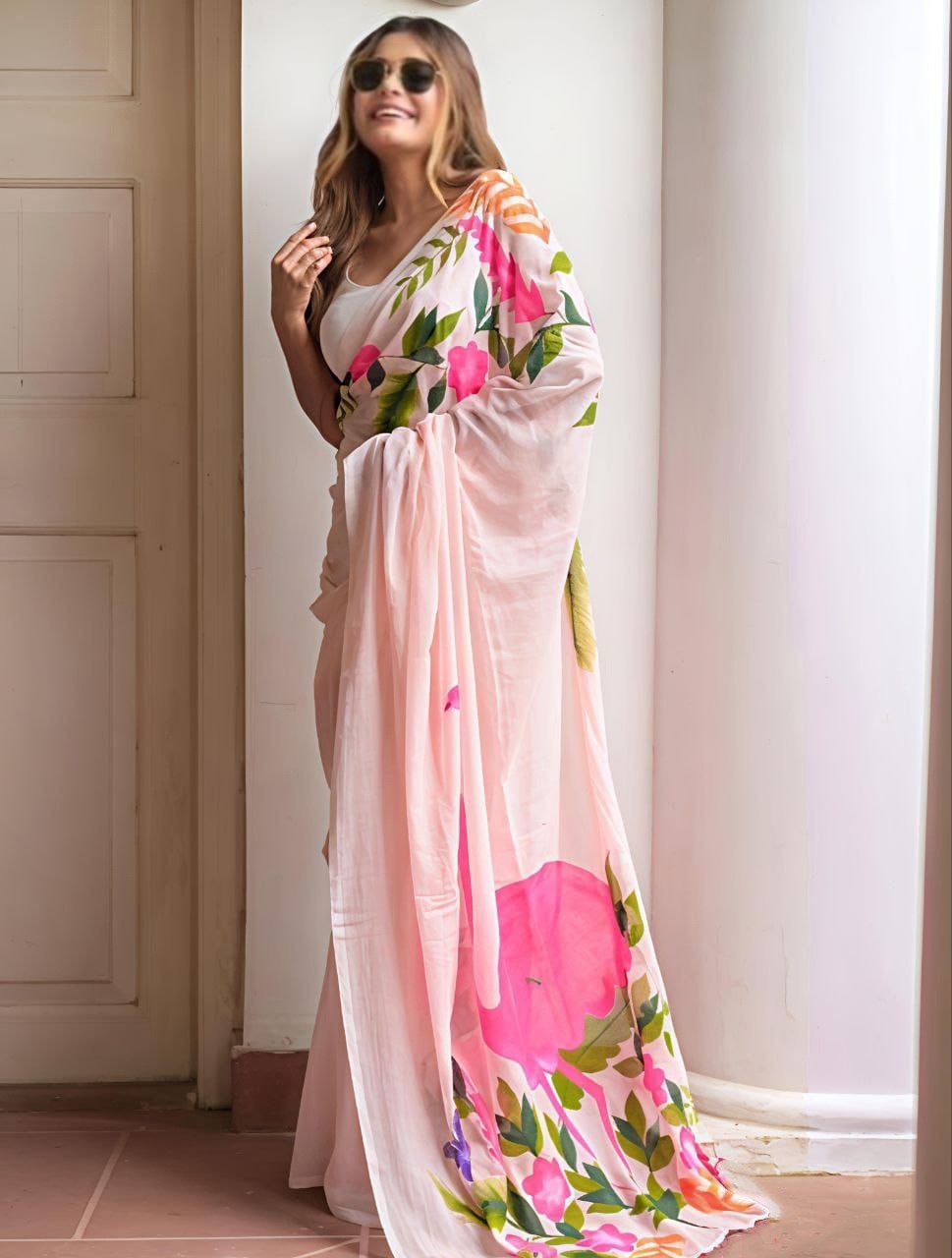
The Pink Floral Cotton Linen Printed Saree is an useful example of a summer-friendly printed option, while the Beige Kalamkari Printed Linen Cotton Saree Online suits shoppers who want a more artisanal visual language. Kalamkari refers to a traditional Indian style of hand-painted or block-printed textile design, so the printed surface should be assessed separately from the base fabric. A printed linen-cotton saree can work for office-casual dressing, daytime visits and travel when paired with a simple blouse.
Silk blends and soft silk for controlled occasions
Silk blends are most comfortable in summer when the saree is lightweight, the zari coverage is moderate and the event isn't spent entirely outdoors. Banarasi silk is known for woven motifs and zari work, but a Banarasi saree can vary considerably in weight depending on the yarn and construction. Soft silk generally falls more fluidly than a rigid, heavily ornamented silk, which can make it easier to wear for a few hours.
The Pink Banarasi Soft Silk Jacquard Saree with Zari and the Maroon Banarasi Soft Silk Zari Weave Saree demonstrate two ways a Banarasi-inspired look can enter a summer wardrobe. These sarees are better suited to evening gatherings, air-conditioned venues or shorter celebrations than to prolonged outdoor heat. Kanjeevaram and dense time-honoured silk sarees remain valuable for weddings and ceremonies, but they're not automatically the coolest choices simply because silk is a natural fibre.
How should you choose a summer saree by use?
The best summer saree for you depends on the number of hours you'll wear it, the amount of outdoor travel involved and the level of formality required.
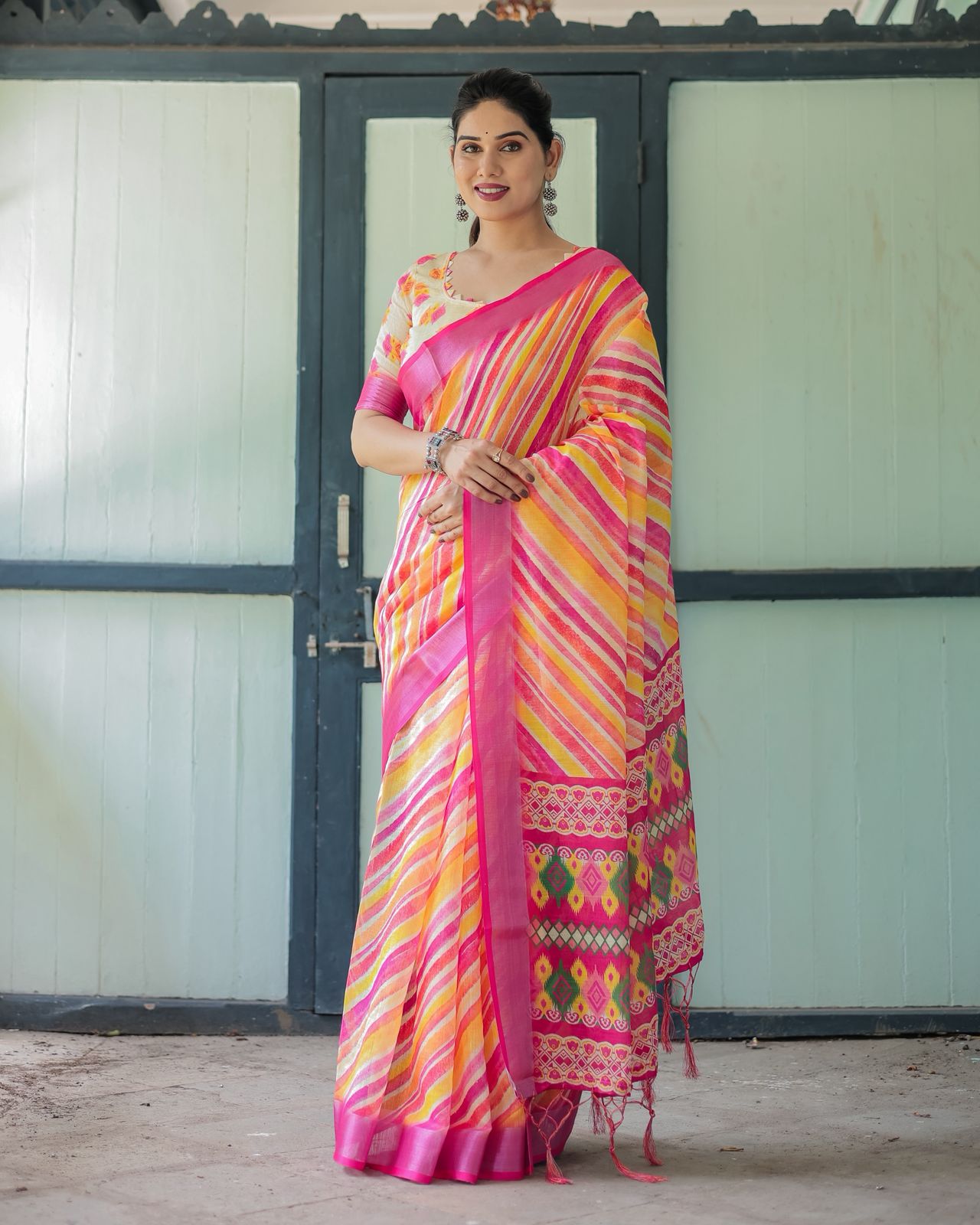
- For office wear: Choose cotton, cotton-linen or a light cotton-silk saree with a modest border. Medium-weight fabric usually stays neater through commuting and desk work than an extremely thin saree that shifts easily.
- For daily errands: Choose a washable print, soft cotton or linen blend with a manageable pallu. Avoid heavy zari and elaborate embellishment that add care requirements without improving everyday comfort.
- For travel: Choose a saree that resists deep creasing or can be folded and steamed quickly. A compact blouse, safety pins and a small petticoat adjustment cord are more useful than carrying a large number of styling accessories.
- For a Haldi ceremony: Choose a breathable saree in a washable or reasonably easy-care fabric. Haldi ceremony dressing involves movement, sitting on the floor and possible contact with turmeric, so delicate dry-clean-only options require extra caution.
- For an evening function: Choose lightweight soft silk, cotton-silk or a less densely woven Banarasi silk. A controlled amount of zari can provide occasion value without making the entire saree heavy.
- For an outdoor daytime event: Choose a light-coloured cotton or linen blend and avoid a dark, heat-absorbing blouse with synthetic lining. A breathable sleeve and a secure but not tight drape matter as much as the saree itself.
The Maroon Floral Linen Saree with Elegant Printed Design shows how a darker colour can still work for summer when the fabric is airy and the styling remains uncomplicated. Colour influences perceived heat, but fibre and weave determine much of the physical comfort. Treat colour as one factor rather than the complete answer.
Which weave, border and finish should you look for?
An open or moderately spaced weave usually feels airier than a dense, heavily packed weave, while a narrow border and light pallu reduce weight at the edges of the saree.
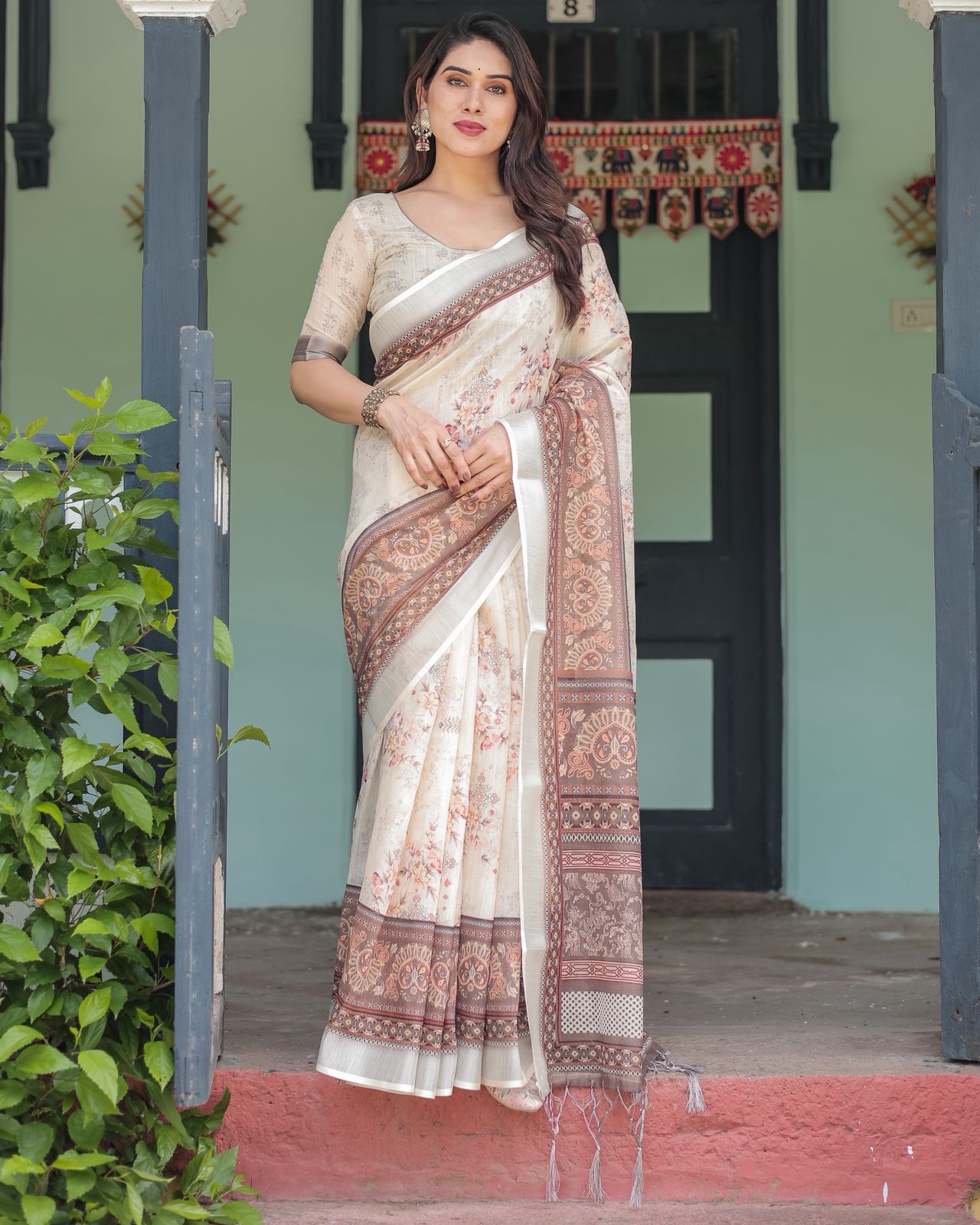
Jacquard construction creates woven patterns by controlling the structure of the fabric rather than simply printing the design on top. The Pink Banarasi Soft Silk Jacquard Saree with Zari therefore needs to be judged by actual weight and drape, not by the word "jacquard" alone. Zari may be metallic or metallic-coated yarn used in decorative motifs and borders; extensive zari increases visual richness but can also make a saree warmer and heavier.
Printed sarees are often practical for summer because the design can create visual interest without adding embroidered layers. Floral prints, Kalamkari-inspired motifs and folk designs can make a simple saree feel occasion-ready with a plain blouse. The Beige Kalamkari Printed Linen Cotton Saree Online and Pink Floral Cotton Linen Printed Saree are examples of how print can replace heavier surface decoration.
Check the reverse side of a saree when possible. Excessively loose threads, rough finishing or dense knots can irritate the skin and complicate maintenance. Inspect the selvedge, pallu attachment and blouse-piece finish because weak edges may fray faster when the saree is washed frequently.
How can you style a saree to stay cooler?
A summer saree stays cooler when the blouse, petticoat, pleats and accessories allow movement and ventilation.
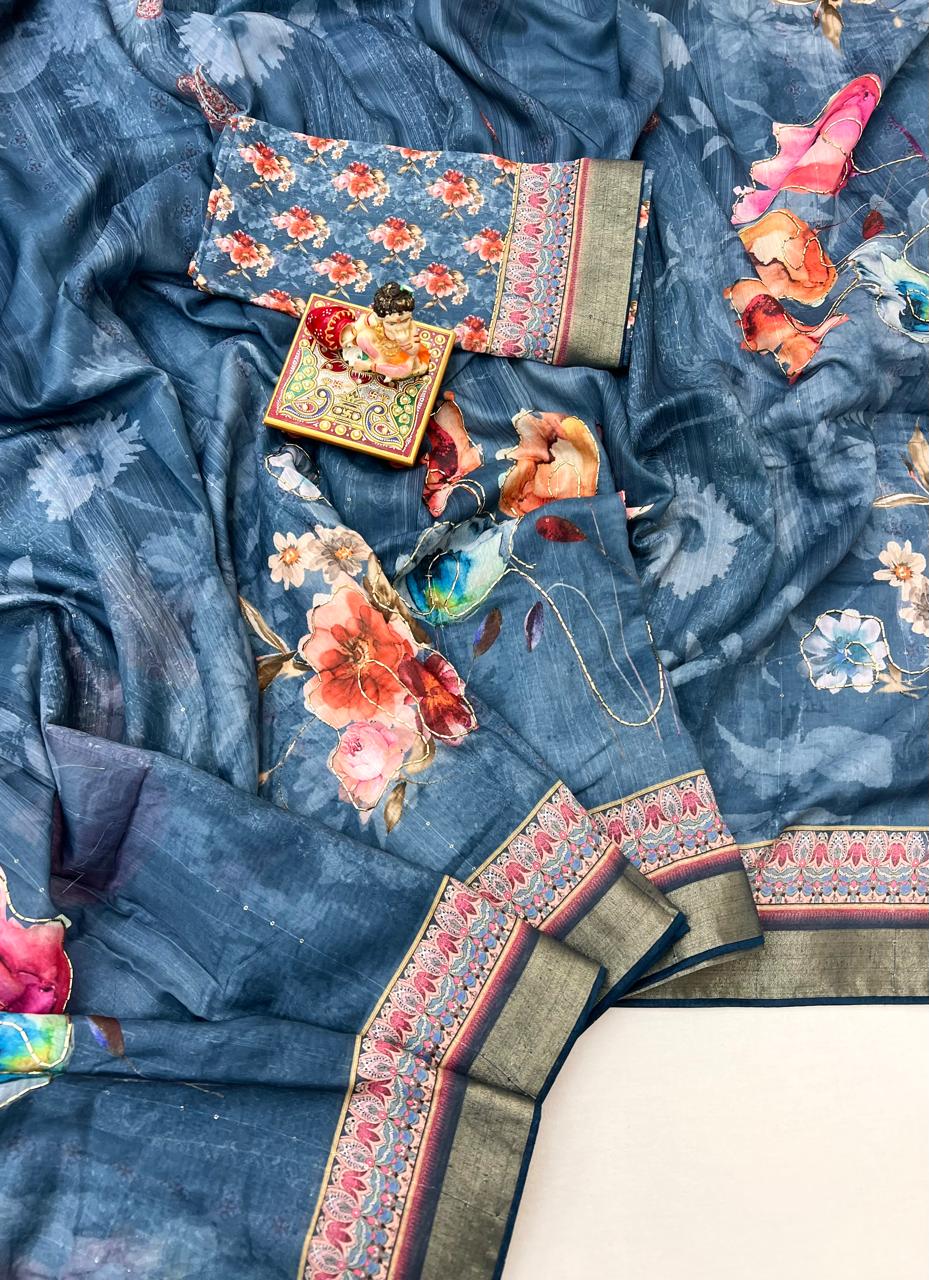
Choose the right blouse
A cotton, linen or breathable cotton-blend blouse usually works better in heat than a thick polyester lining. Sleeveless, short-sleeve and elbow-sleeve styles can all be comfortable; the more important factors are armhole ease, lining and seam placement. A blouse that's too tight traps perspiration and makes the saree feel warmer within an hour.
Use a blouse colour that can be worn with several sarees. A plain beige, ivory, black or matching blouse can reduce the number of extra garments needed for travel. For a printed saree, a solid blouse usually keeps the outfit visually balanced and avoids adding another dense layer of pattern.
Keep the base layers light
A cotton petticoat or a breathable underskirt is generally more comfortable than a heavy synthetic base in humid weather. The petticoat should support the saree without being tied so tightly that it restricts breathing or walking. Shapewear can create a smooth fall, but a tight, non-breathable base may undermine the comfort of an otherwise airy saree.
Make fewer, broader pleats when the fabric allows it. Excessively narrow pleats stack multiple layers over the abdomen and can feel warm. Secure the pallu with one or two discreet pins instead of adding several heavy brooches or layered necklaces to the shoulder area.
Use accessories strategically
Light earrings, a compact handbag and breathable footwear are practical complements for summer saree dressing. Heavy jewellery can make the upper body feel crowded, particularly when combined with a high-neck blouse and a dense pallu. A lightweight cotton stole is usually unnecessary with a saree and can add another warm layer.
How should summer sarees be washed and stored?
Summer sarees last longer when they're washed or dry-cleaned according to fibre content, dried away from harsh midday sun and stored only after complete drying.
Pure or mostly cotton sarees can often be washed lightly, but colour bleeding should be tested on an inside edge before the first full wash. Use cool or lukewarm water, a mild detergent and modest soaking. Linen should not be aggressively twisted because twisting can accentuate the yarn and distort the drape. Cotton-silk, Banarasi silk, zari and jacquard sarees should be checked against the care label; many require dry cleaning or narrow hand washing.
don't leave a damp saree in a laundry basket after a humid day. Perspiration and moisture can produce odour, weaken fibres and affect metallic zari. Air the saree in shade before folding. Direct, prolonged sunlight can fade prints and colours, especially when a saree is repeatedly dried in the same position.
Fold zari sarees with the decorative surface inward or refold them every few months to prevent permanent creases along the same line. Store cotton and linen in a dry, ventilated cupboard rather than in sealed plastic for long periods. A clean muslin cover can protect the saree while allowing some air circulation.
Affordable summer options can be found in the Sarees from Rs 1000 to Rs 1500 collection, while sale sections such as Sarees Under 20% Off and Sarees Under 10% Off can be useful for building a small rotation of everyday fabrics. Discount percentage should never replace checking fibre content, measurements and care instructions.
What is the simplest summer saree buying checklist?
The simplest checklist is to confirm fibre content, approximate weight, weave density, blouse fabric, care method and intended wearing time before placing an order.
- Read the fibre composition: Confirm whether the saree is cotton, linen, cotton-linen, cotton-silk, soft silk or another blend.
- Estimate the wearing conditions: Decide whether the saree will be worn outdoors, in an office, at a Haldi ceremony or in an air-conditioned hall.
- Assess the decorative load: Zari, jacquard motifs, embroidery and a broad border may add weight and warmth.
- Check the blouse piece: A breathable saree paired with a thick synthetic blouse can still feel uncomfortable.
- Review care instructions: Choose a washable saree for frequent use and reserve specialist-care pieces for planned occasions.
- Consider the rotation: Two or three breathable sarees in different colours are more useful than one elaborate saree worn repeatedly.
The Beige Grace Cotton Silk Saree for Daily Wear, Pink Floral Cotton Linen Printed Saree and Maroon Floral Linen Saree with Elegant Printed Design cover different levels of everyday polish. The Maroon Banarasi Soft Silk Zari Weave Saree and Pink Banarasi Soft Silk Jacquard Saree with Zari are better considered for shorter, more formal wear. Choosing by wearing conditions rather than by category name leads to a cooler and more useful wardrobe.
The best sarees for summer are ultimately the ones that match your climate, schedule and tolerance for care. Cotton and linen normally make the strongest daily foundation, while cotton-silk and lightweight soft silk extend the wardrobe into celebrations. A thoughtful blouse, light base layer and proper storage can improve comfort as much as the saree fabric itself.
Common Questions About Choosing and Wearing Summer Sarees
Which saree fabric is best for very hot and humid weather?
Cotton, lightweight linen and cotton-linen blends are usually the most practical choices for very hot and humid weather because they allow airflow and suit repeated daytime wear. Choose a moderate weave and avoid heavy zari, thick lining and multiple synthetic layers.
Are Banarasi sarees suitable for summer?
Banarasi sarees can be suitable for summer when they are soft, lightweight and worn for a short indoor or evening event. Dense zari, heavy jacquard construction and broad borders can make a Banarasi silk saree warmer than cotton or linen.
Is linen better than cotton for a summer saree?
Linen often feels airier and has a dry, crisp texture, while cotton is usually easier to maintain and may feel softer against the skin. Cotton-linen blends offer a practical middle ground, especially for shoppers who want airflow with easier draping.
What colour saree is best for summer?
White, beige, ivory, pastel pink, light blue and other pale shades reflect more sunlight and often feel visually cooler during daytime. Fabric weight and weave still matter, because a dark saree in a breathable linen can be more comfortable than a pale saree made from a dense, warm fabric.
How can I make a saree more comfortable for a Haldi ceremony?
Wear a breathable cotton or linen-blend saree with a washable blouse, secure pleats and a lightweight pallu. Avoid delicate dry-clean-only fabrics, heavy jewellery and tight synthetic shapewear because a Haldi ceremony involves movement and possible turmeric stains.
How should I care for a linen or cotton summer saree?
Wash linen and cotton gently according to the care label, avoid aggressive twisting and dry both fabrics in shade. Store the saree only when completely dry, and use dry cleaning or specialist care for zari, Banarasi silk and cotton-silk pieces when instructed.