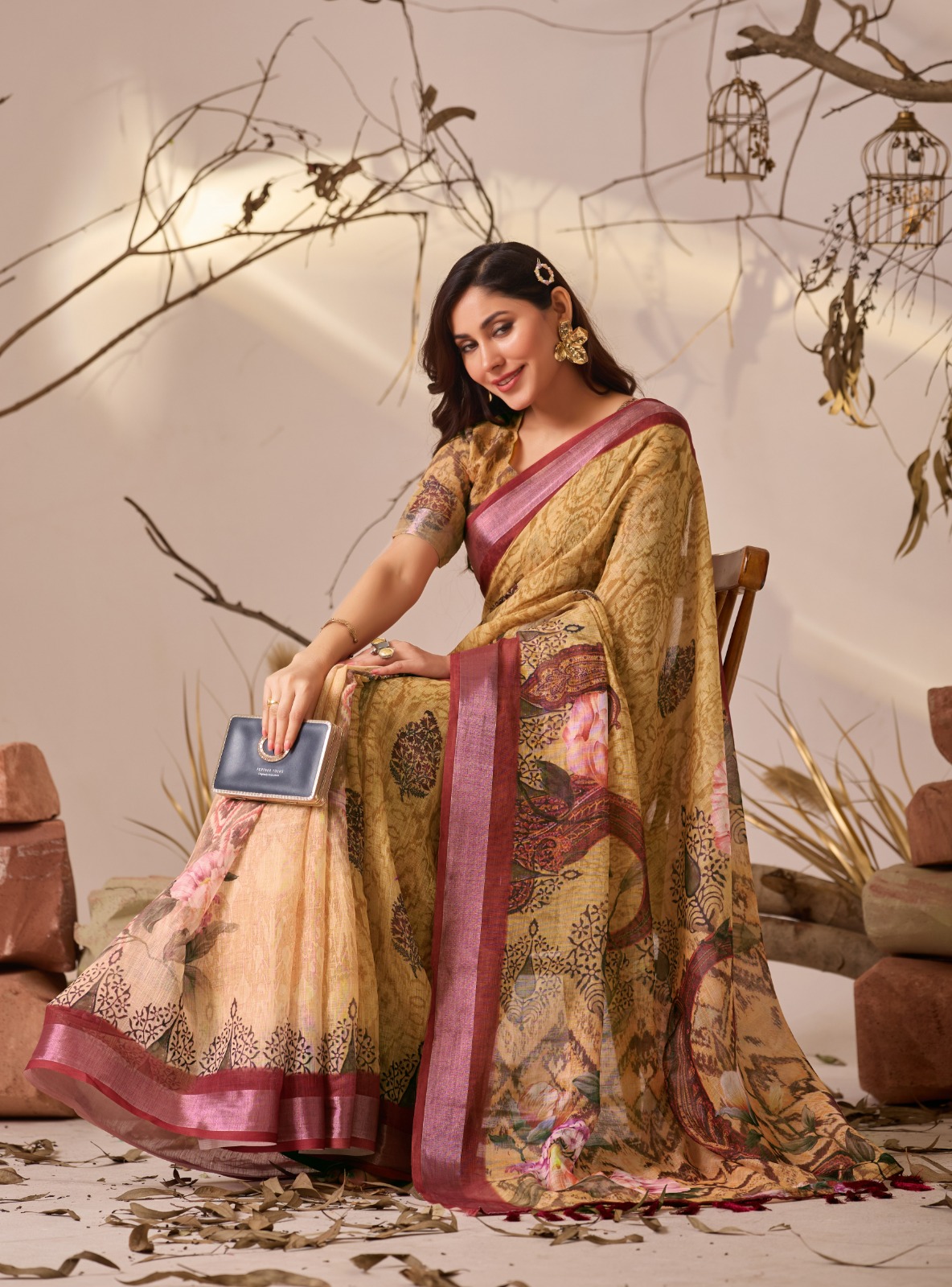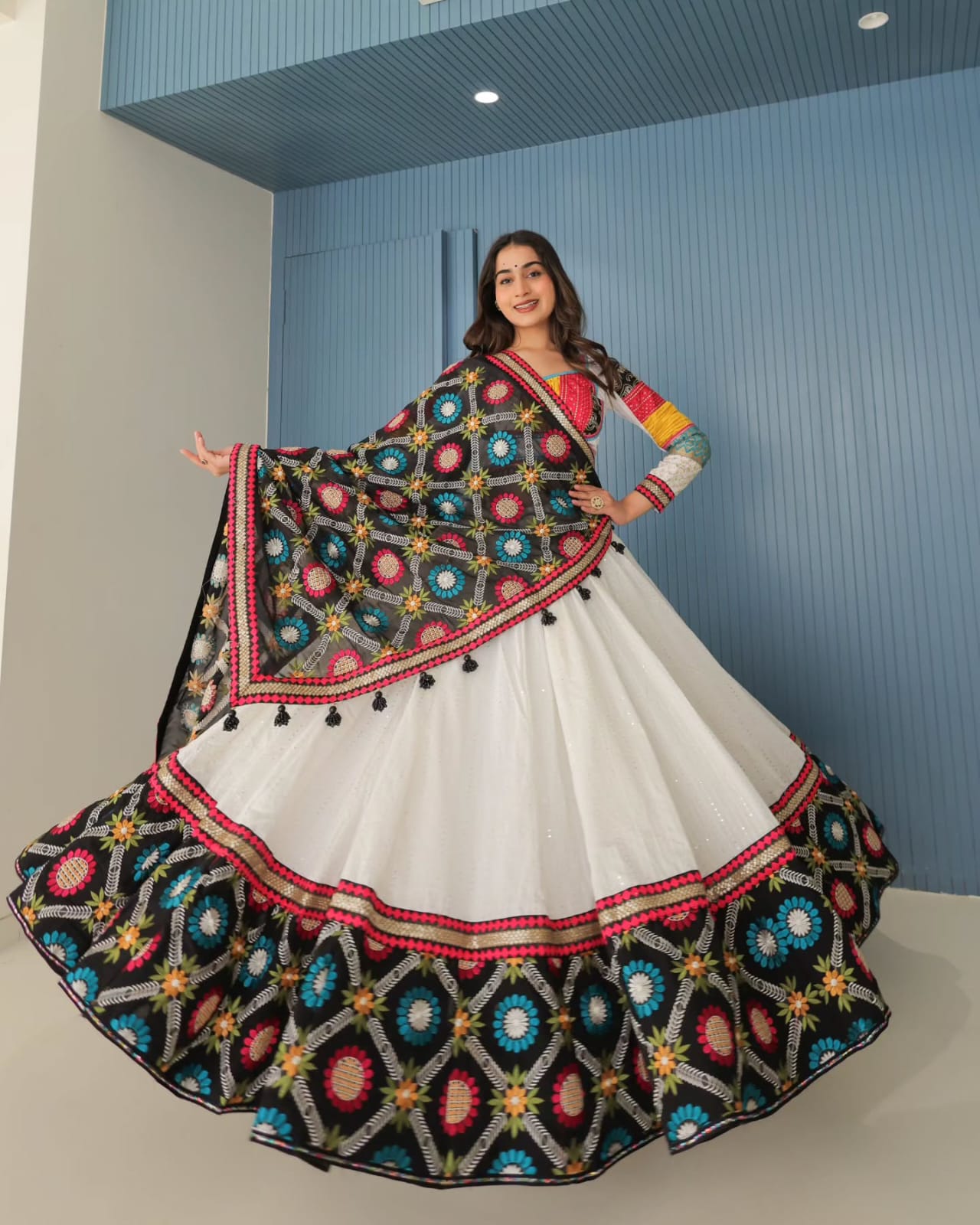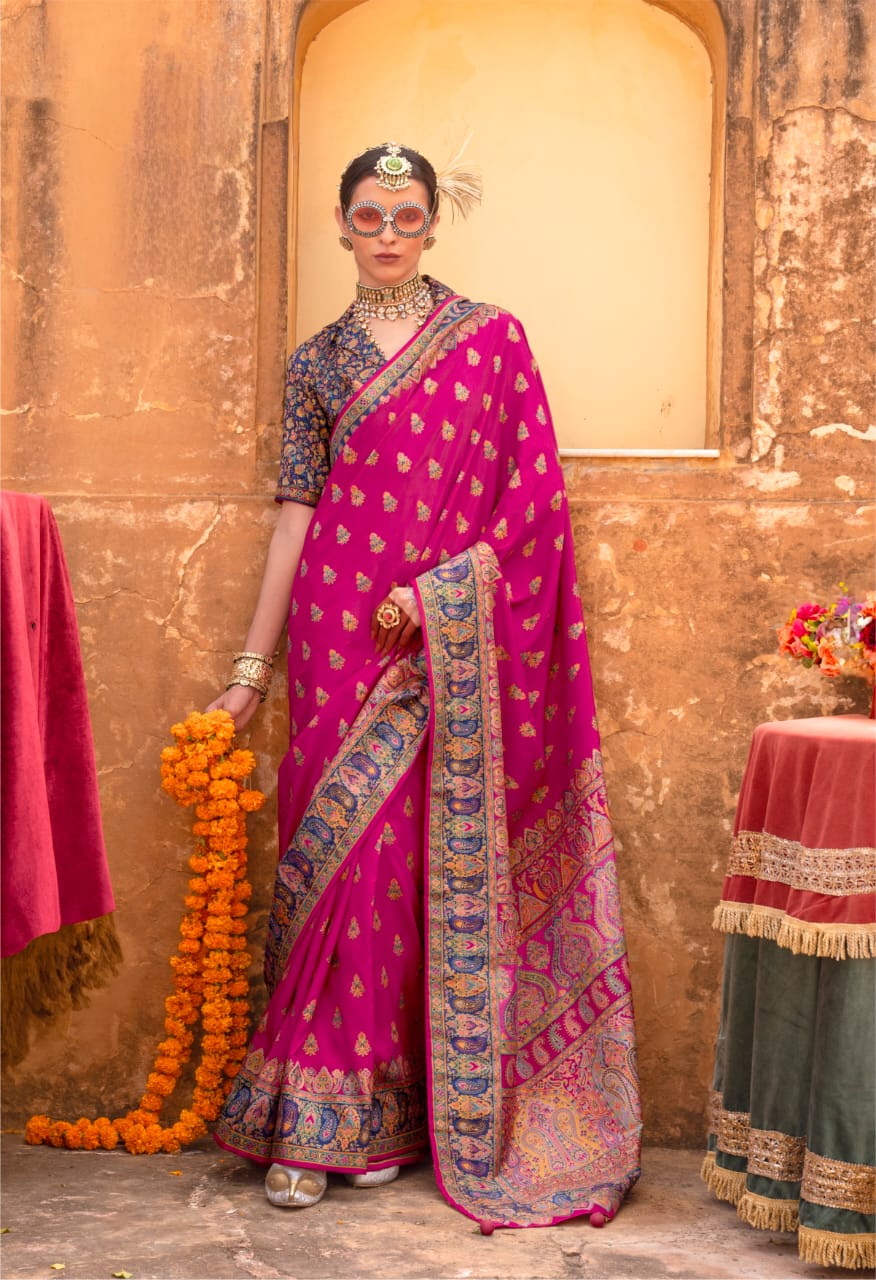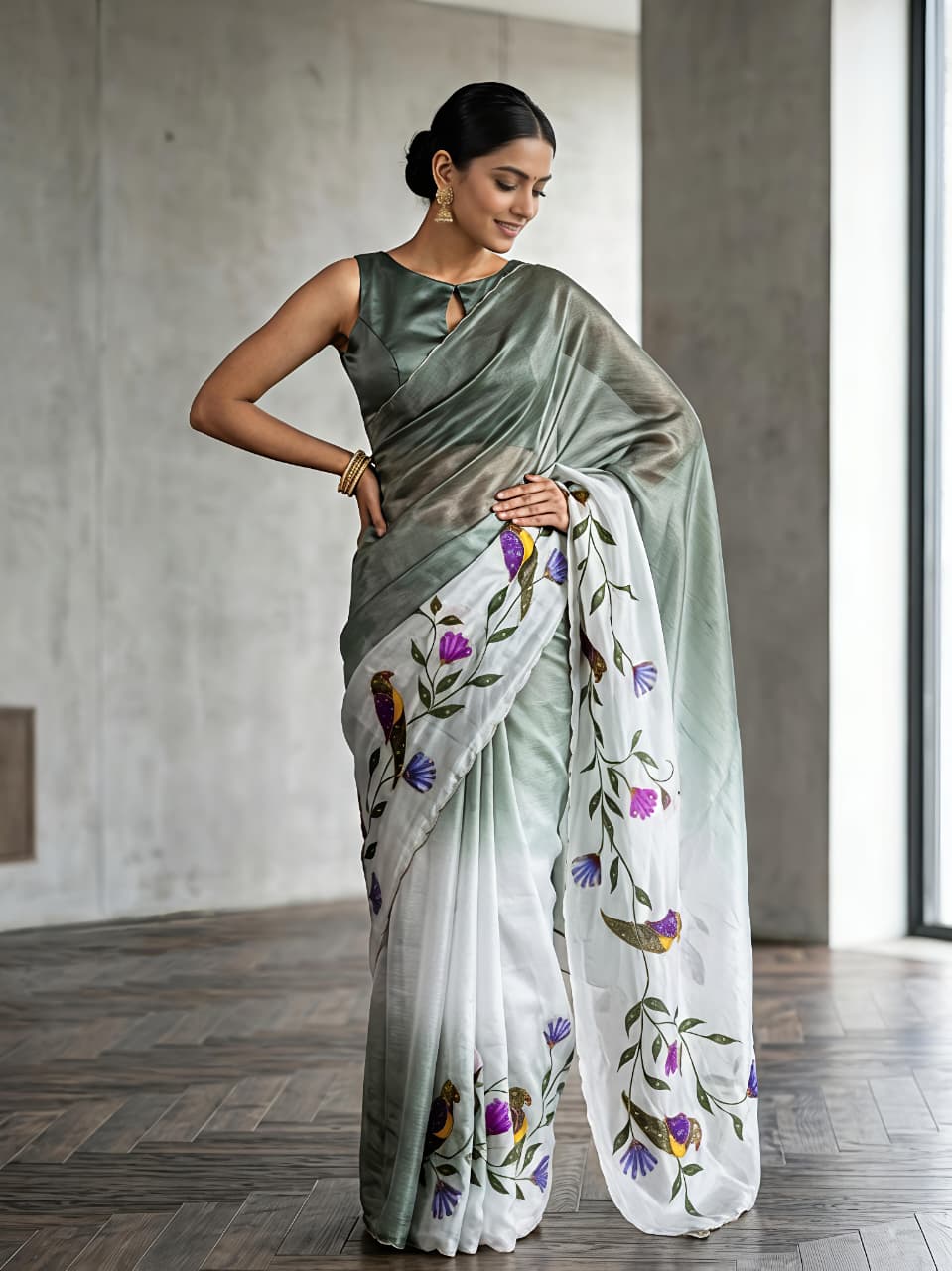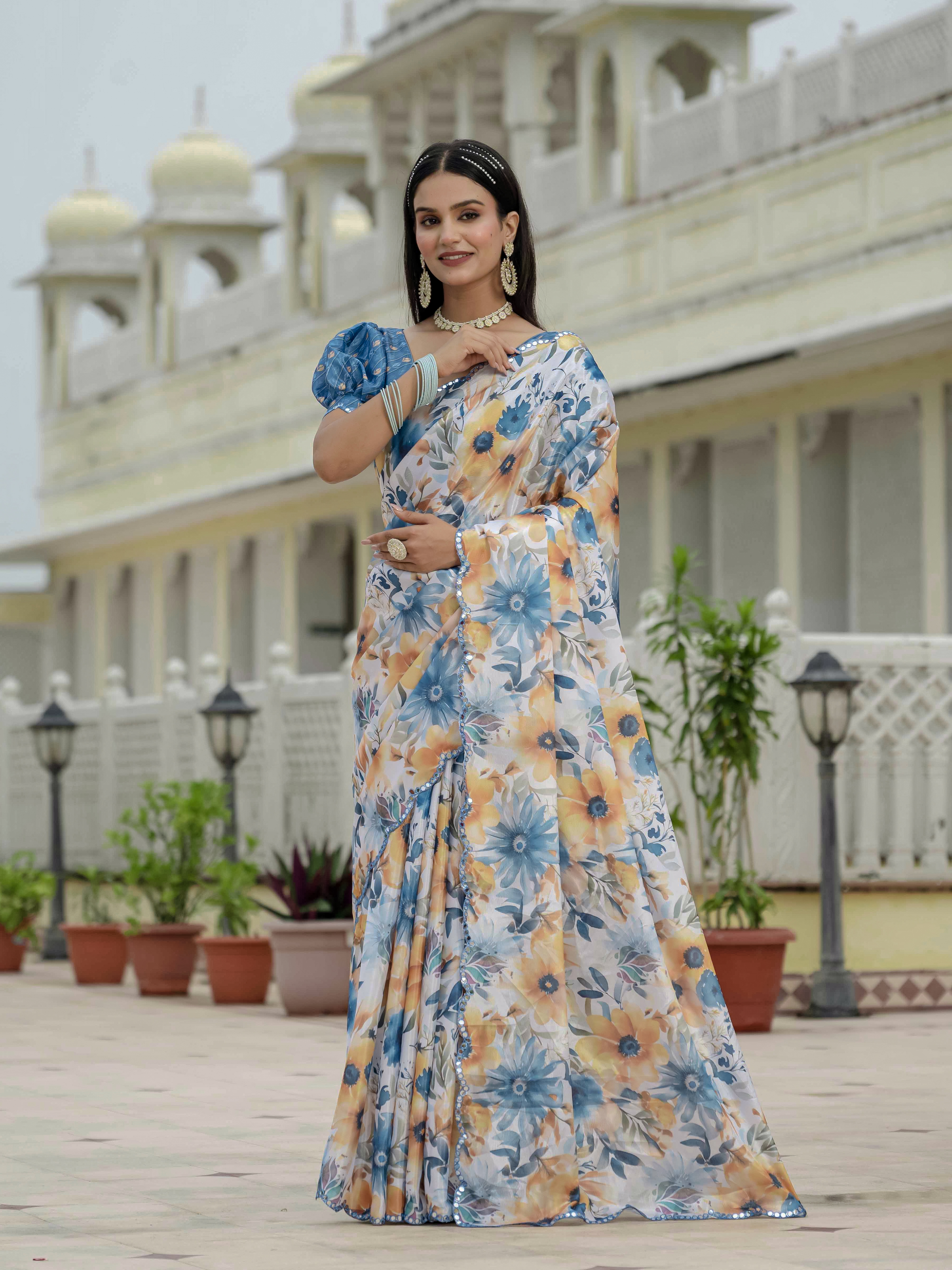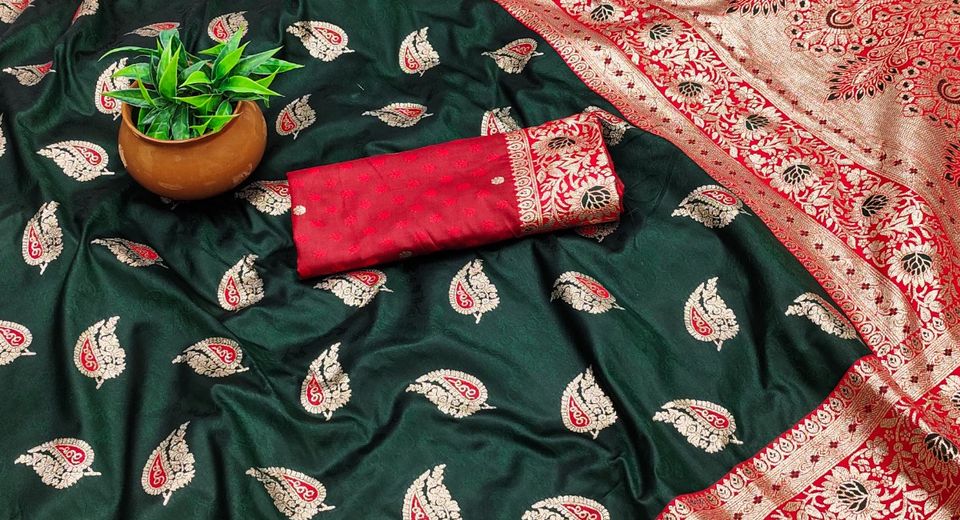
Choosing the best sarees for South Indian festivals and temple visits involves more than selecting the brightest silk or widest zari border. A saree for a temple morning must remain secure while walking, sitting, climbing steps and standing in a queue; a saree for a festival gathering also needs colour, texture and enough structure for photographs. Fabric weight, blouse fit, pallu length, footwear and local customs all affect whether the outfit feels graceful or cumbersome.
South India covers several climates and textile traditions, so one saree can't suit every visit. Humid coastal weather may favour handloom cotton or cotton-silk, while an evening wedding-linked puja may justify Banarasi silk or a heavier silk weave. The most reliable choice is a saree whose material, border and drape match the duration and physical demands of the day.
What should a saree for a South Indian festival or temple visit do?
A suitable saree should stay breathable, sit securely at the waist and cover the shoulder without constant adjustment. These practical qualities matter because temple visits often include walking on stone floors, removing footwear, sitting cross-legged and waiting outdoors.
Traditional visual details can be added through a zari border, a rich pallu, a deep festive colour or a carefully coordinated blouse. A formal look doesn't require the heaviest possible fabric. A medium-weight Banarasi soft silk saree can provide sheen and structure without the drag of a very dense wedding silk, while a cotton-silk saree can feel more manageable during a daytime procession.
Check four points before choosing: the saree should not be so slippery that pleats open, the border should not catch underfoot, the pallu should reach comfortably over the shoulder, and the blouse should allow full arm movement. A saree that meets these conditions will usually look more polished than a more luxurious garment that needs repeated correction.
How to choose the right fabric for temple days
The right fabric depends on temperature, duration, movement and the level of formality planned for the visit. Silk, soft silk, cotton-silk and handloom cotton each solve a different dressing problem.
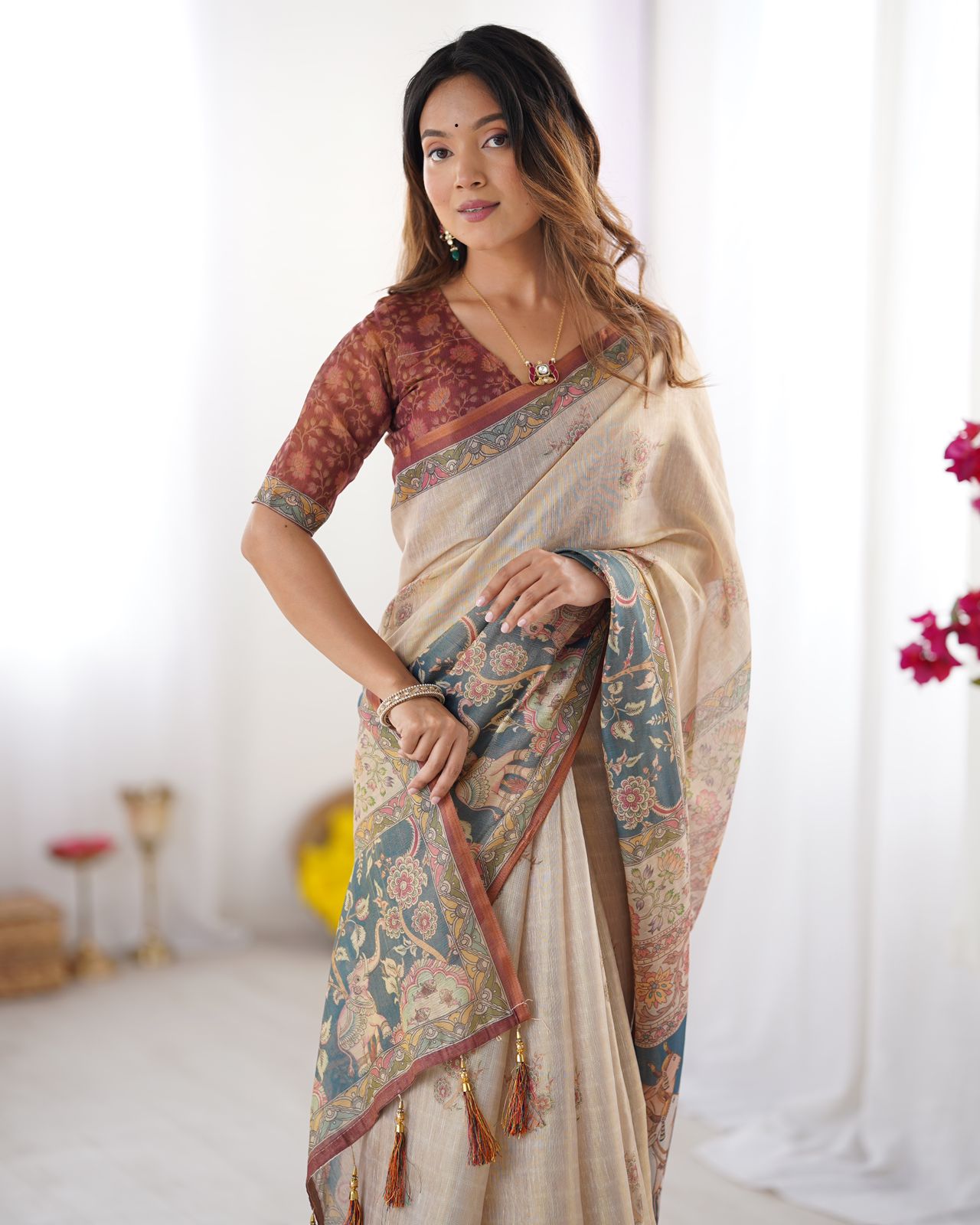
Silk and soft silk for ceremonial dressing
Silk and soft silk work well for major festivals, family pujas and temple visits followed by a formal meal because their body helps pleats hold their shape. Banarasi silk is recognised for its patterned weaving and zari work, while Kanjeevaram is associated with the South Indian silk-saree tradition and traditionally features a distinctive body-and-border construction. A product described as Banarasi should not automatically be called Kanjeevaram; weave origin and construction should be verified separately.
Royal Banarasi Soft Silk Zari Weave Saree offers the kind of structured, luminous surface that suits a morning puja or festive family gathering. Teal Blue Banarasi Soft Silk Saree With Golden Zari Border provides a cooler jewel-toned alternative to the usual red and gold palette. Red Banarasi Soft Silk Saree with Jacquard Zari Border is especially useful when the styling plan needs a strong classic colour without relying on elaborate jewellery.
Cotton-silk for comfort with festive polish
Cotton-silk is a practical middle ground for warm weather because the cotton component can reduce the heavy, dense feeling associated with some formal silks, while the silk component adds drape and subtle lustre. Beige Grace Cotton Silk Saree for Daily Wear can work for a low-key temple morning when paired with a festive blouse, gold-toned earrings and a defined border-focused drape.
Cotton-silk doesn't always have the same stiffness as a heavier silk saree, so pinning the shoulder pleats is useful for crowded temple routes. Cotton-silk also suits people who want one garment to move from a devotional visit to lunch without looking excessively bridal.
Handloom cotton for hot and active days
Handloom cotton is generally the most comfortable option for a long outdoor visit in warm or humid weather, although the exact feel varies with yarn, weave and finishing. Blue Tissue Handloom Cotton Saree with Zari Floral Print adds festive surface interest while remaining more suitable for daytime movement than a dense metallic saree.
Handloom cotton may crease more visibly than soft silk, so light, even pleats and a properly fitted petticoat are important. Creasing isn't a defect in cotton; it's a normal result of movement and natural fibre behaviour. A fabric spray should not replace correct pressing and storage.
Which colours and borders suit South Indian festivals?
Red, mustard, green, maroon, royal blue and gold are dependable festival colours, but colour choice should also account for time of day, lighting and personal comfort. A temple visit doesn't require a single prescribed colour across every South Indian tradition.
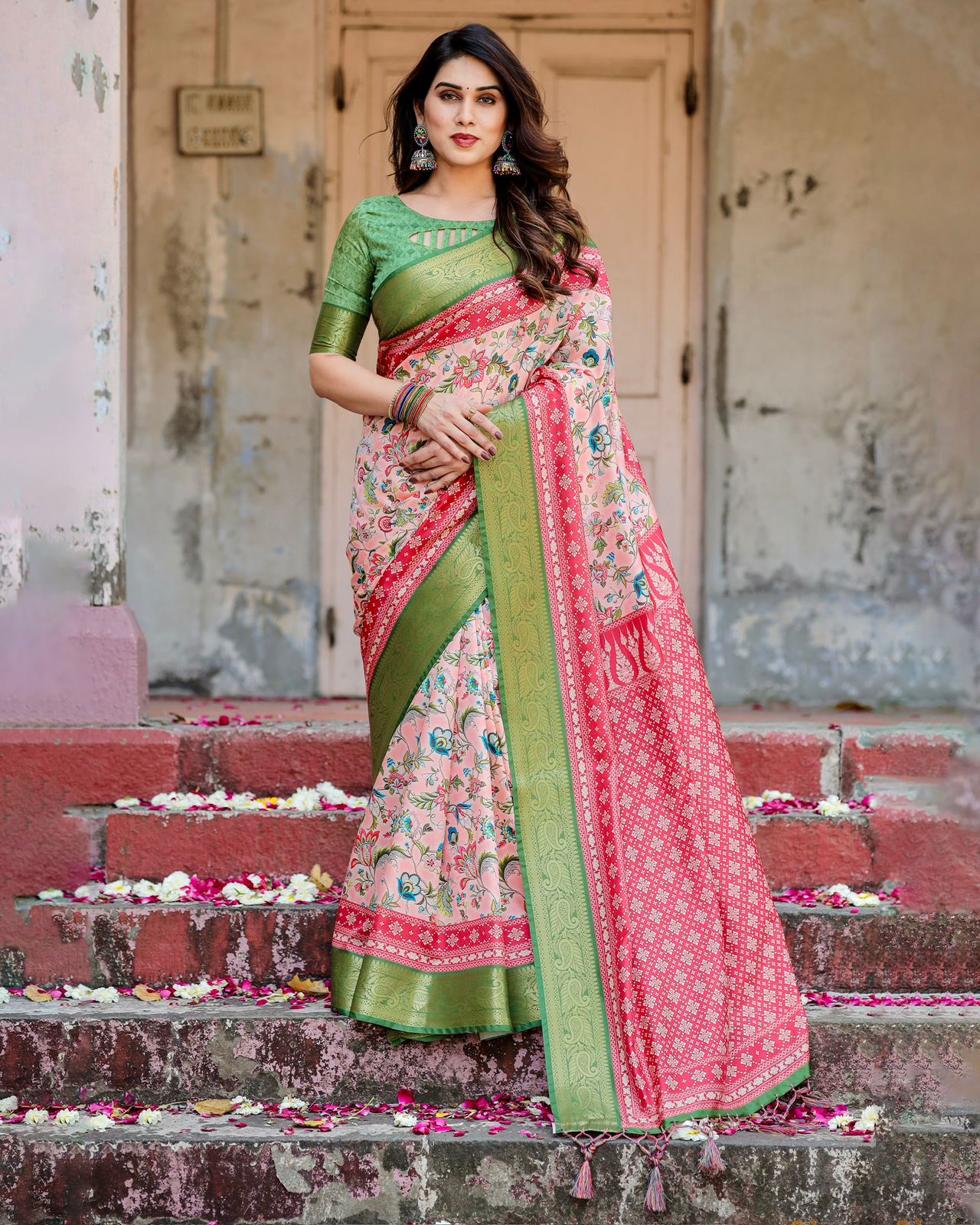
Red and maroon create a visibly ceremonial impression and pair naturally with antique-gold jewellery. Red Banarasi Silk Saree With Rich Golden Zari Floral Border demonstrates how a strong body colour and a defined zari edge can create impact without a complicated drape. Royal blue gives a cooler, high-contrast alternative; Elegant Royal Blue Silk Saree for Festive & Wedding Wear can be styled with a gold blouse for a formal evening or a muted blouse for a daytime puja.
Green works well for harvest festivals and family ceremonies, while mustard and orange bring warmth to daytime photographs. Teal, blue and beige can be especially useful when red is already common in the family group or when the wearer prefers a less conventional palette.
Border width affects the visual balance of the outfit. A broad border creates a more formal, time-honoured impression and can shorten the apparent length of the body when the saree is draped low. A narrow or medium border is easier to manage for walking and can look lighter on a petite frame. Zari borders should be checked for secure finishing at the edge because loose metallic threads can snag on rings, bangles or rough temple surfaces.
How should you style a saree for a temple visit?
A temple-appropriate saree should be styled with a secure pleat structure, covered shoulders and jewellery that won't interfere with movement. Styling should support modesty and comfort rather than depend on exposed midriff, loose drapes or very high heels.
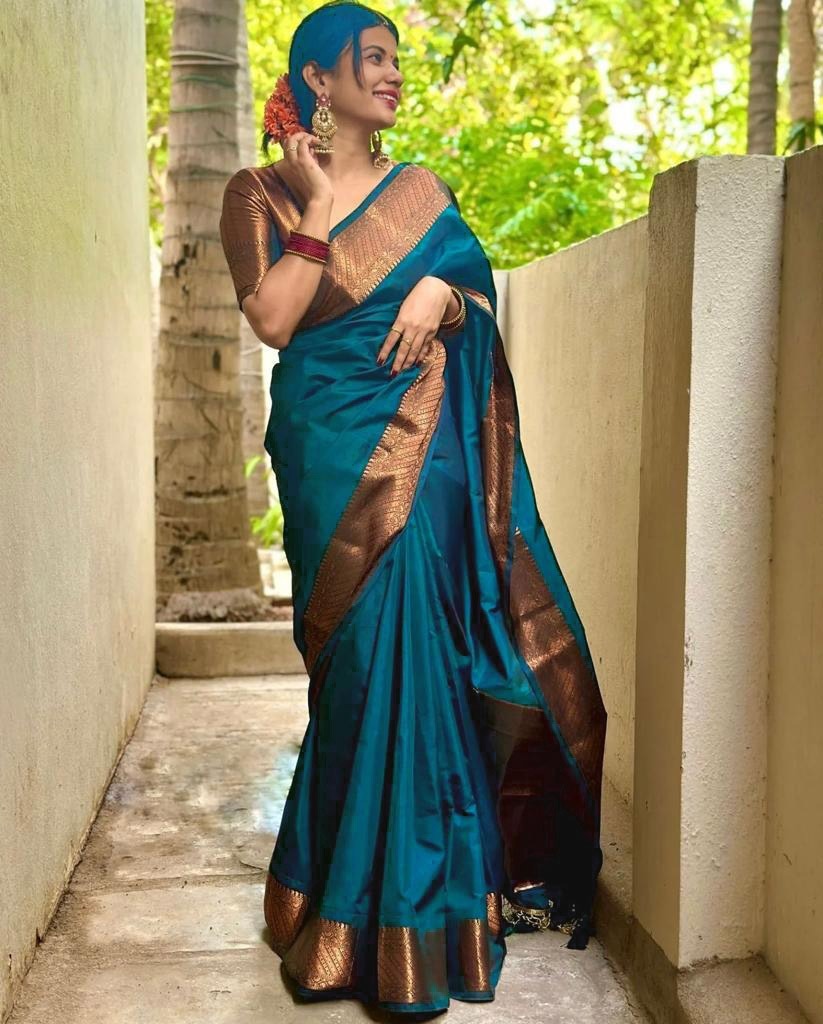
Build the outfit from the inside out
Begin with a well-fitted blouse and a petticoat or underskirt that matches the saree's weight. The petticoat drawstring should hold firmly without digging into the waist, because a loose base causes the saree to descend during walking. A blouse with sleeves reaching the elbow or near the elbow brings a heritage appearance and can feel more comfortable inside a crowded shrine.
Make five to seven front pleats of similar width, depending on the fabric and the wearer's height. Tuck the pleats securely at the centre and use a discreet safety pin inside the waistband if the fabric is slippery. Pin the pallu at the shoulder after arranging enough length to cover the upper body without pulling the blouse sideways.
Low block heels, wedges or embellished flats are safer than narrow stilettos on uneven paths and stone flooring. Temple visits may require removing footwear, so choose footwear that's easy to take off and put back on. Keep a small cloth bag for footwear, hairpins or a phone rather than filling the saree blouse pockets or overloading the pallu.
Keep jewellery purposeful
Gold-toned jhumkas, a short necklace, bangles and a small bindi can complete a festive temple look without creating unnecessary weight. A long necklace may catch on the pallu, and very large earrings can become uncomfortable during a lengthy queue. Fresh jasmine flowers can complement a heritage saree, but hair accessories should be pinned firmly if the visit includes walking outdoors.
What should you avoid wearing to a temple?
Avoid unstable drapes, transparent fabric without adequate lining, excessively short blouse lengths and accessories that make sitting or walking difficult. Individual temple rules vary, so visitors should follow signage and the guidance of temple staff even when a garment is generally considered classic.
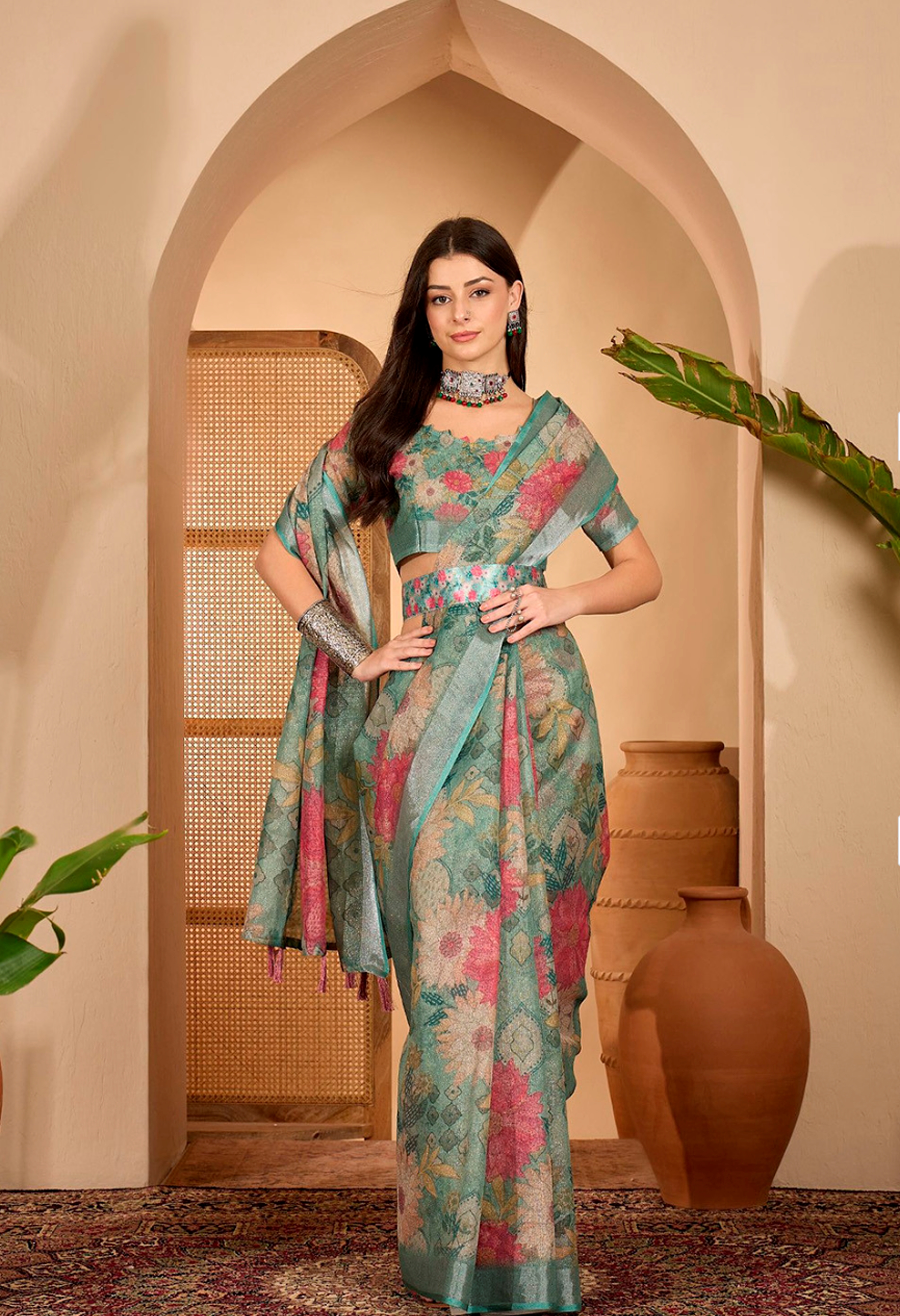
Some temples request covered shoulders, covered legs or clothing that's not tight or revealing. A saree naturally gives substantial coverage when worn with a secure blouse and petticoat, but a very sheer tissue saree may still need a full-coverage blouse and suitable lining. The pallu should not drag on the floor, and loose tassels should be kept away from lamps, crowds and door hardware.
White and pale colours can look elegant, although they show dust and oil marks quickly. If the route includes outdoor walking, a darker border can be easier to maintain than an all-over pale saree. Party Wear Brown Cotton Saree With Designer Blouse is an useful example of a practical darker option for a less formal gathering, especially when paired with restrained gold accessories.
How can you shop for the best sarees for South Indian festivals and temple visits?
Shop by use case first, then compare colour, fabric, border and blouse requirements. A saree selected for a two-hour indoor puja should not be judged by the same criteria as one intended for a full-day temple trip.
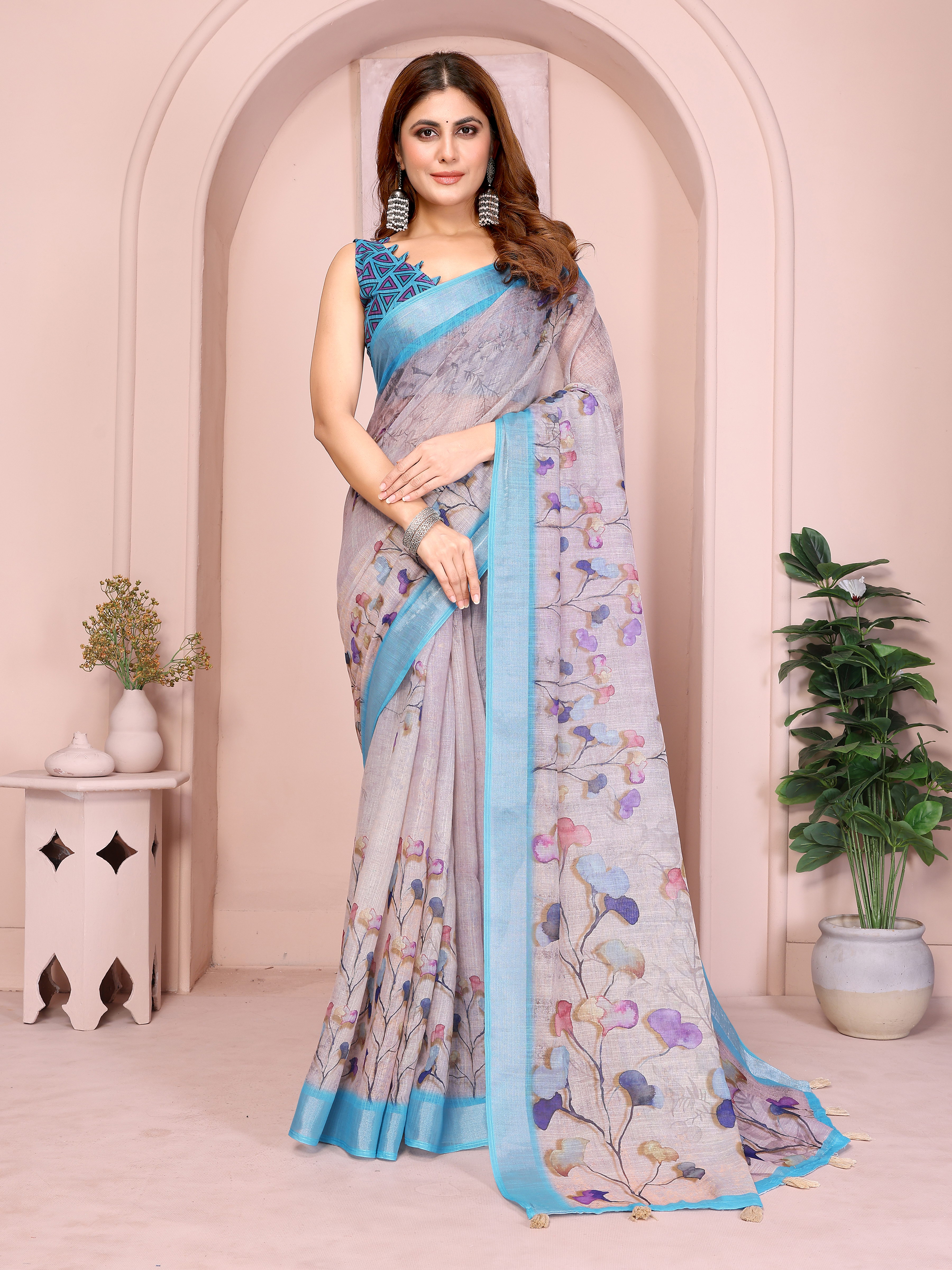
- Estimate the schedule. Choose handloom cotton or cotton-silk for long daytime movement, and reserve heavier silk or dense zari for shorter formal events or cooler evenings.
- Inspect the drape. Look for enough width and length to form stable pleats and a shoulder pallu that brings coverage without excessive trailing fabric.
- Plan the blouse. Confirm whether the saree comes with an unstitched blouse piece and allow tailoring time. A blouse generally needs several days for measurement, stitching and alterations.
- Check colour accuracy. Compare the product description, close-up images and return terms because zari sheen and colours such as teal, royal blue and maroon can appear different under indoor and outdoor lighting.
- Set a realistic budget. Entry-level festive sarees can use cotton, cotton-silk or lighter synthetic blends, while Banarasi silk and dense zari usually command more because of material and weaving detail. A lower price doesn't by itself identify fibre quality.
Collections such as Silk Sarees Under 3000 With Discount can help shoppers compare formal options within a fixed budget, while Red Banarasi Silk Sarees for Weddings Under 1100 may suit buyers looking specifically for a red festive palette at a lower price point. Party Wear Sarees can provide broader styling choices for a festival meal or family celebration, and Gray Color Sarees Under 1000 may appeal to someone seeking a subdued, reusable colour rather than a conventional red or gold look.
Pink Georgette Sarees can also work for a festive gathering when the event is less traditional or when a lighter, fluid drape is preferred. Georgette is usually more movement-friendly than a stiff silk, but a slippery georgette pallu benefits from shoulder pins and a secure blouse fit before a temple visit.
How should festive sarees be cared for after a temple visit?
Air the saree in shade, remove pins carefully and store the garment folded in a clean cotton cloth after it's completely dry. Immediate attention prevents perspiration, incense smoke and food residue from remaining in the fibres.

don't leave a silk saree crumpled in a travel bag overnight, and don't expose zari to direct, harsh sunlight for extended periods. Refold silk and zari sarees along different lines every few months to reduce permanent crease marks. Handloom cotton can usually be aired and folded after use, but washing instructions should come from the garment label because dye fastness and finishing differ.
Dry-cleaning is often safer for heavily zari-worked silk, while some cotton sarees may permit gentle hand washing. Never scrub metallic borders, wring wet sarees or apply perfume directly to the fabric. Store sarees away from damp walls and inspect them periodically for moisture damage, especially during monsoon months.
Common questions about festival and temple-visit sarees
The best saree depends on the temple's dress expectations, the weather and how much walking the day includes. A breathable, secure saree is usually more appropriate than the heaviest ceremonial textile.

A red or gold saree isn't compulsory for every South Indian festival. Green, blue, mustard, maroon, beige and pink can look equally festive when the border, blouse and accessories are coordinated.
Practical Questions About Festival Sarees for Temple Visits
Which saree fabric is most comfortable for a long temple visit?
Handloom cotton is usually the most breathable choice for a long, warm visit, while cotton-silk offers a balance of comfort and festive sheen. Soft silk works well for shorter ceremonial visits but may feel warmer and heavier during extended outdoor movement.
Can I wear a Banarasi saree to a South Indian temple?
Yes, a Banarasi saree can be worn to a South Indian temple when the drape provides secure pleats and adequate shoulder coverage. Check the temple's specific dress rules and choose a manageable border and blouse rather than relying only on the saree's formality.
Is Kanjeevaram the only traditional saree for South Indian festivals?
No, Kanjeevaram is one important South Indian silk tradition, but Banarasi silk, soft silk, cotton-silk and handloom cotton can also be appropriate. The right choice depends on the festival, climate, budget and the level of formality expected.
How do I stop a saree pallu from slipping in a temple queue?
Pin the pallu at the shoulder and secure the inside pleats near the waist with a discreet pin. A fitted blouse, a firm petticoat and a less slippery fabric such as cotton-silk or soft silk also improve stability.
What colour saree is suitable for a temple visit?
Red, maroon, green, mustard, royal blue, teal and gold-accented neutrals are all suitable festive choices in many settings. Temple customs vary, so visitors should follow any colour or dress restrictions stated by the temple.
How should I store a zari saree after a festival?
Air the saree in shade, remove all pins, fold it in clean cotton and keep it away from moisture and direct sunlight. Avoid wringing, scrubbing or applying perfume to zari, and follow the care label or use professional cleaning for heavily worked silk.