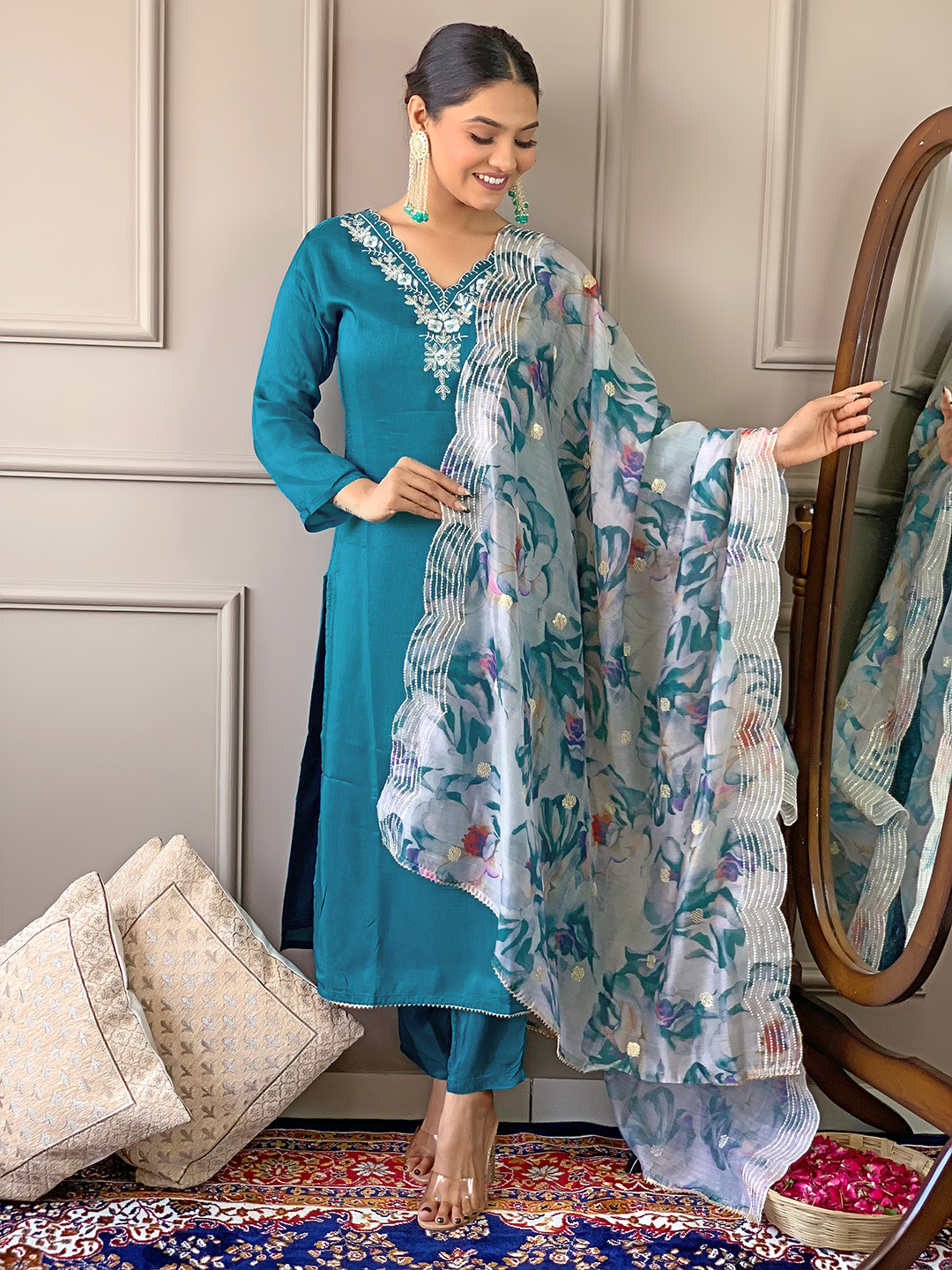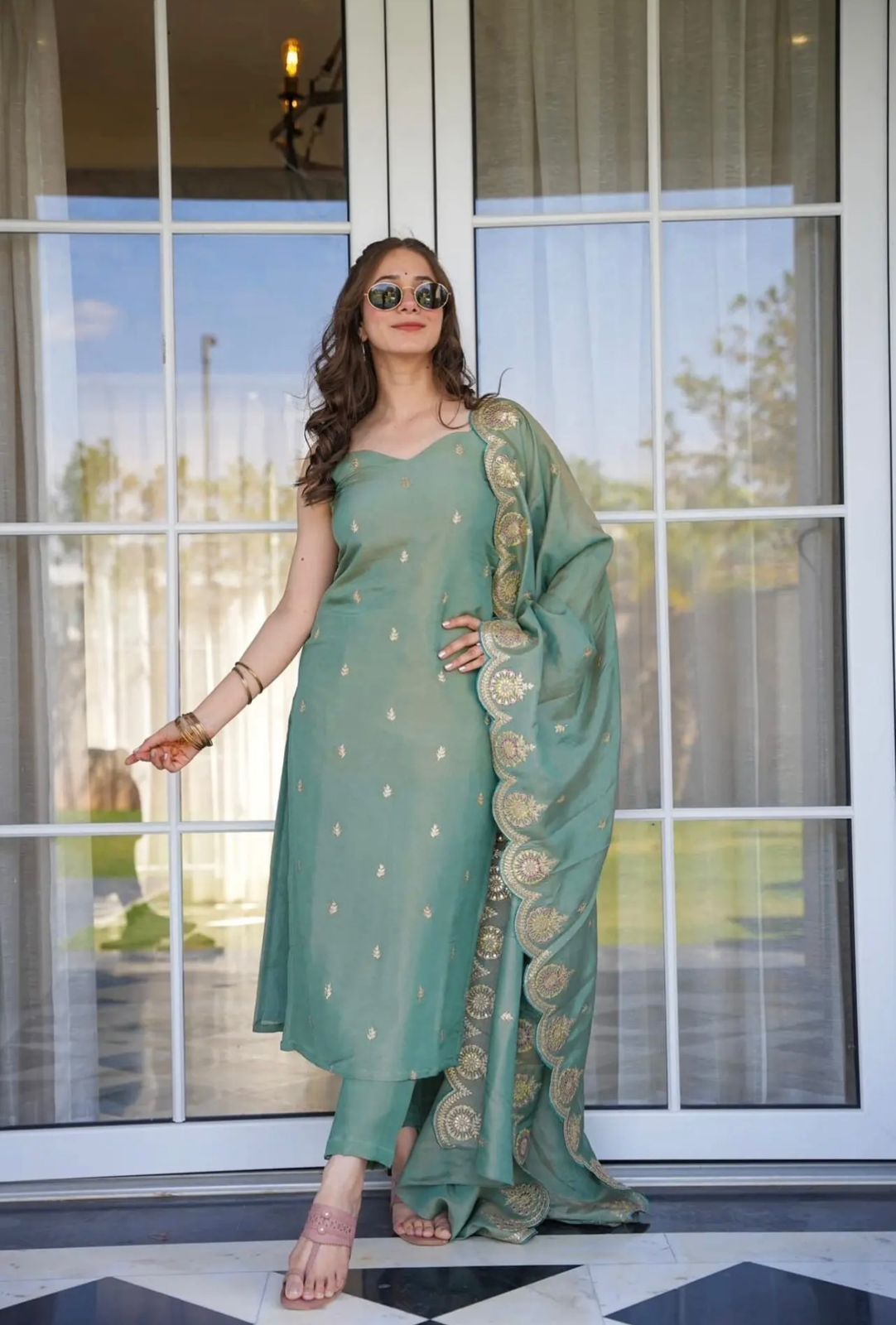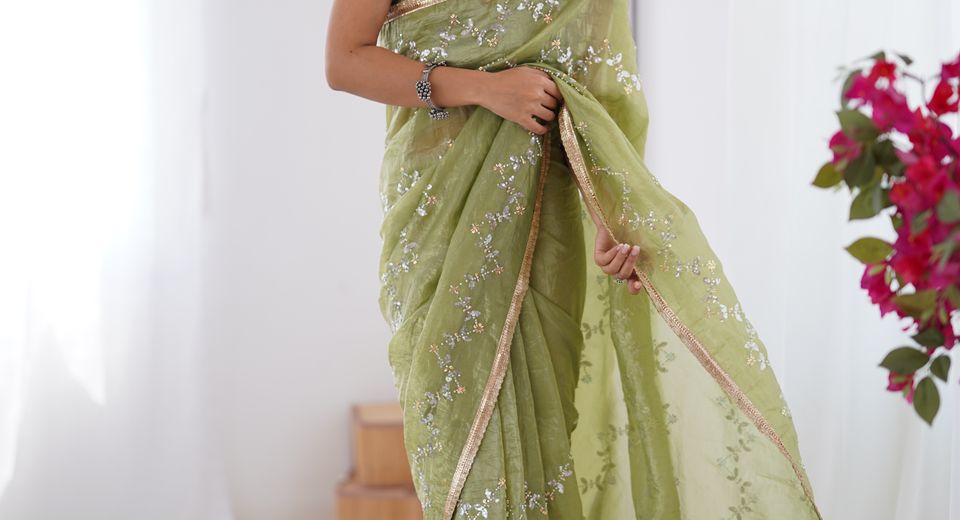
The best sarees for receptions balance ceremony-appropriate richness with the freedom to move, greet guests and remain comfortable under photographs and evening lights. The right choice depends on more than colour: fabric weight, zari placement, blouse structure, drape security and the venue all change how a saree looks after several hours.
A reception usually allows more visual polish than a daytime wedding ritual, but that doesn't mean every heavily embellished saree is equally suitable. A Banarasi silk saree can look stately in a hotel ballroom, while a gold crush saree may create more impact at a cocktail-style celebration. This guide explains how to make that decision with specific fabrics, colours and styling details.
How to choose the best sarees for receptions
The best sarees for receptions should suit the event's formality, lighting, duration and your role in the wedding. Brides can choose a more dramatic weave or embellished finish, while close family members and guests often look best in a controlled amount of shine and a comfortable, secure drape.
Start by identifying four practical conditions: whether the reception is indoors or outdoors, whether the event is in the afternoon or evening, how long you'll be standing or moving, and whether you're the bride, a family member or a guest. Indoor evening lighting rewards metallic borders and textured surfaces, but excessive shine can reflect harshly in flash photography. Outdoor venues need a saree that won't drag, catch easily or become uncomfortable in wind.
Reception Sarees Under 2000 is useful when the goal is an occasion-ready look without committing to a high-cost bridal wardrobe. A modestly priced saree can still look considered when the blouse fits correctly, the pleats are pressed sharply and the jewellery repeats one colour from the border.
Should a reception saree be heavy?
A reception saree doesn't need to be heavy; it needs a deliberate focal point. A saree with a broad zari border, an embroidered pallu or a textured body can appear festive without using dense work across every section.
Weight matters because a heavy saree can pull at the waist, loosen pleats and become tiring during a four- to six-hour celebration. If the saree is visually elaborate, use a simpler blouse or quieter jewellery. If the saree is relatively plain, a sculpted blouse, statement earrings or a defined belt can provide the finish without adding unnecessary fabric weight.
Fabric choices: Banarasi silk, crush texture and cotton zari
Fabric determines the saree's fall, shine, breathability and level of formality. Banarasi silk, soft silk, crush fabric and cotton with zari create noticeably different silhouettes even when they share the same colour.
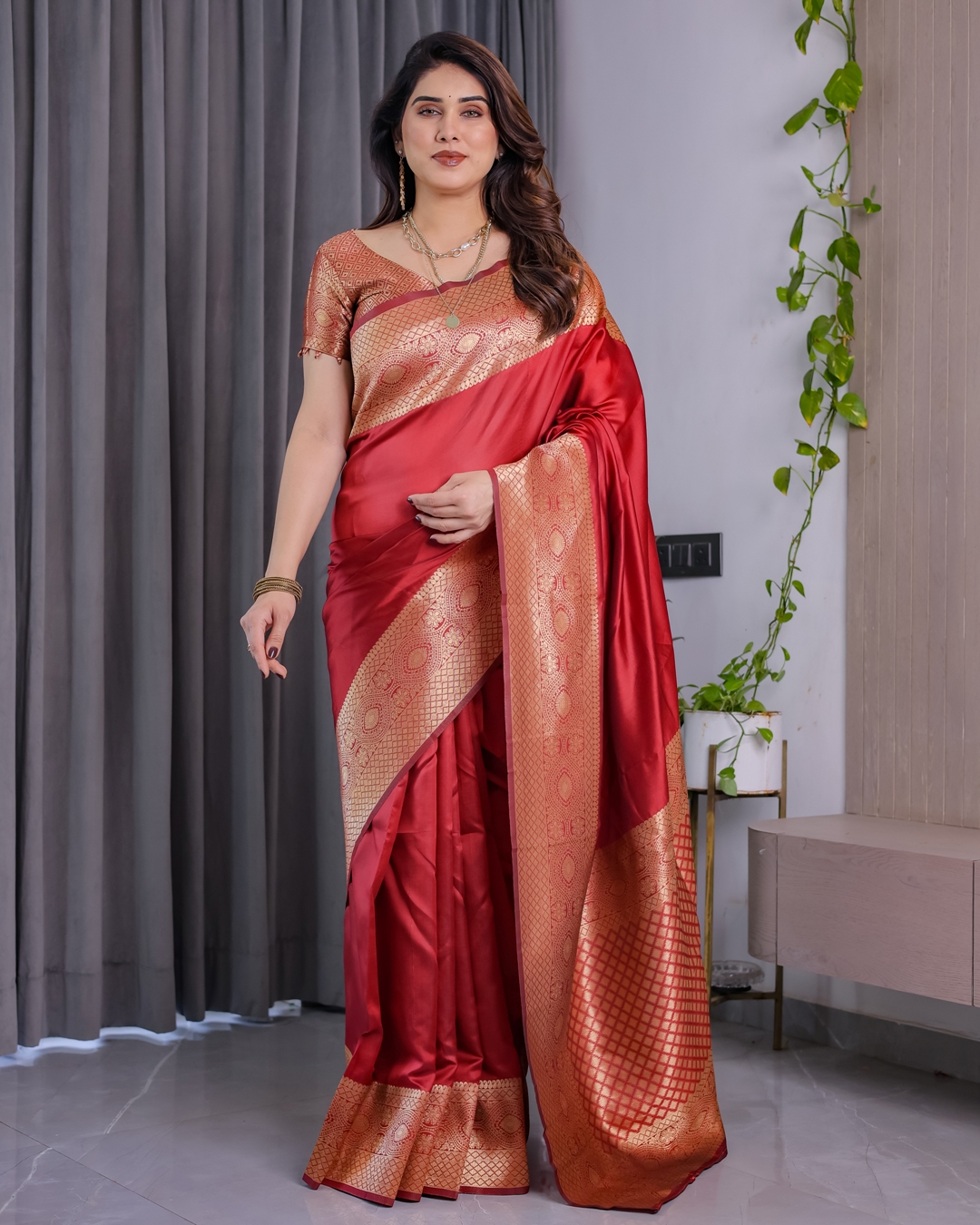
Banarasi silk is a strong choice for a formal reception because its woven zari and structured fall give the drape visual depth. The Teal Blue Banarasi Soft Silk Saree With Golden Zari Border demonstrates how a saturated jewel tone can carry a reception look without requiring all-over embroidery. The Red Banarasi Silk Saree With Rich Golden Zari Floral Border offers a more traditional effect through the contrast between red silk and floral zari.
Soft silk generally feels easier to arrange than very stiff silk and can create a graceful, rounded pleat. The Wine Banarasi Soft Silk Saree With Golden Zari Border is especially suited to evening styling because wine sits between red and purple, making it rich without appearing as bright as scarlet. The Royal Purple Banarasi Soft Silk Saree With Floral Zari Work gives a similar evening depth with a more jewel-toned impression.
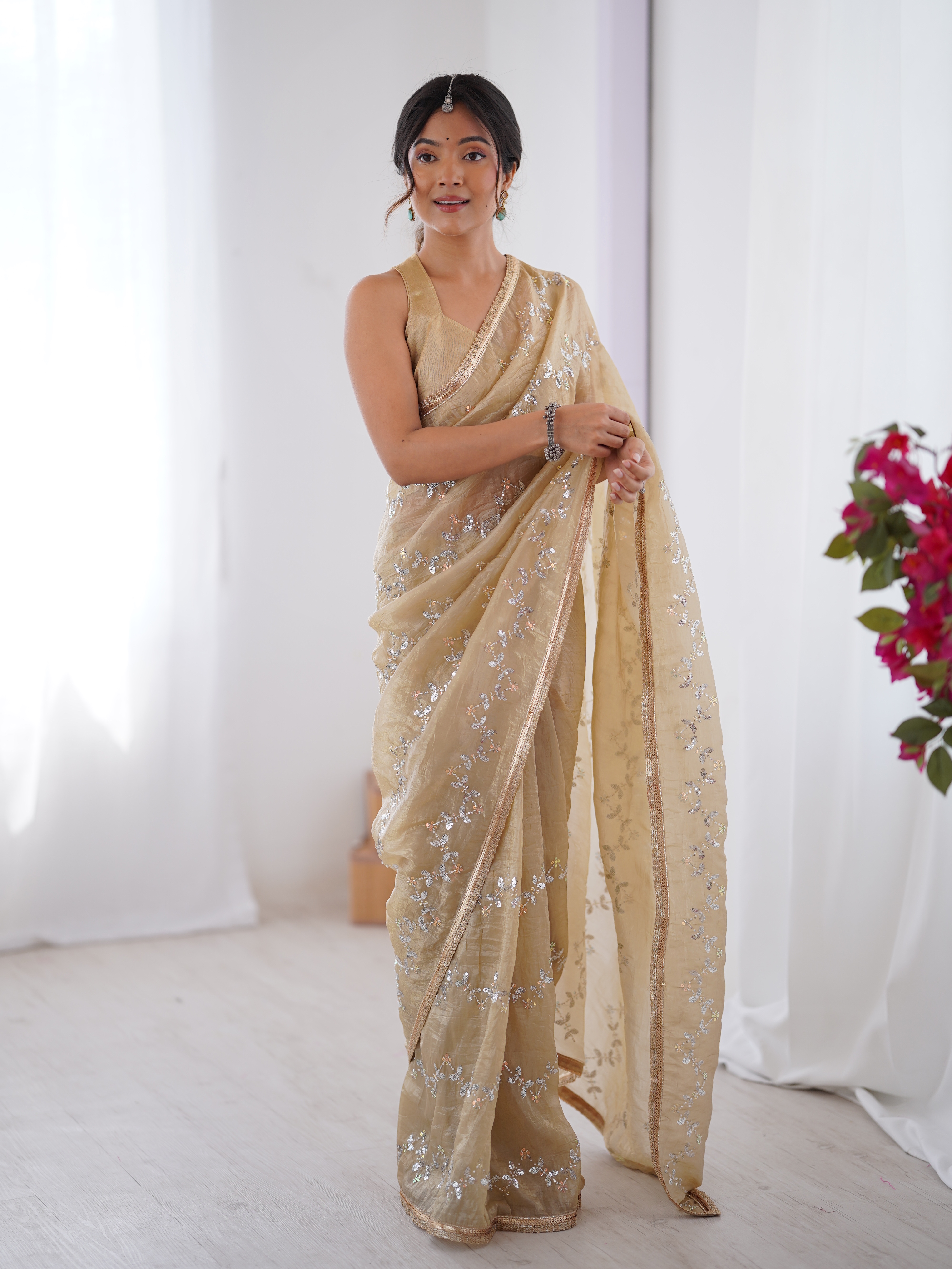
Crush fabric catches light through its deliberately rippled surface. The Premium Gold Crush Embroidered Party Wear Saree for Women and Golden Glow Gold Crush Embroidered Party Wear Saree for Women can work well when the reception calls for a glamorous party-wear finish rather than a temple-inspired silk appearance. Crush texture photographs differently from flat satin: small folds create changing highlights as you move.
Cotton with zari is a practical option for a warm venue or a guest who values breathability. The Maroon Cotton Saree with Zari Work for Wedding has a more grounded texture than soft silk, so pair it with a polished blouse and refined accessories if you want it to read as reception wear rather than daytime clothing.
Is Banarasi silk suitable for a wedding reception?
Banarasi silk is suitable for a wedding reception because woven zari and a structured drape provide formal presence without requiring excessive surface embellishment. Choose a softer Banarasi weave for easier movement and a denser silk-zari look when the reception is especially classic or grand.
Banarasi silk also gives useful flexibility after the event. A saree with a moderate border and an adaptable colour can be worn again at Diwali, an anniversary dinner or a family ceremony. Check the zari density and fabric weight before buying, because two sarees described as Banarasi can feel very different when draped.
Reception saree colours that work under evening lights
The most dependable reception colours are jewel tones, deep neutrals, metallics and selected soft shades that retain contrast in photographs. Colour should be judged with the venue's lighting in mind, not only under bright shop or phone lighting.
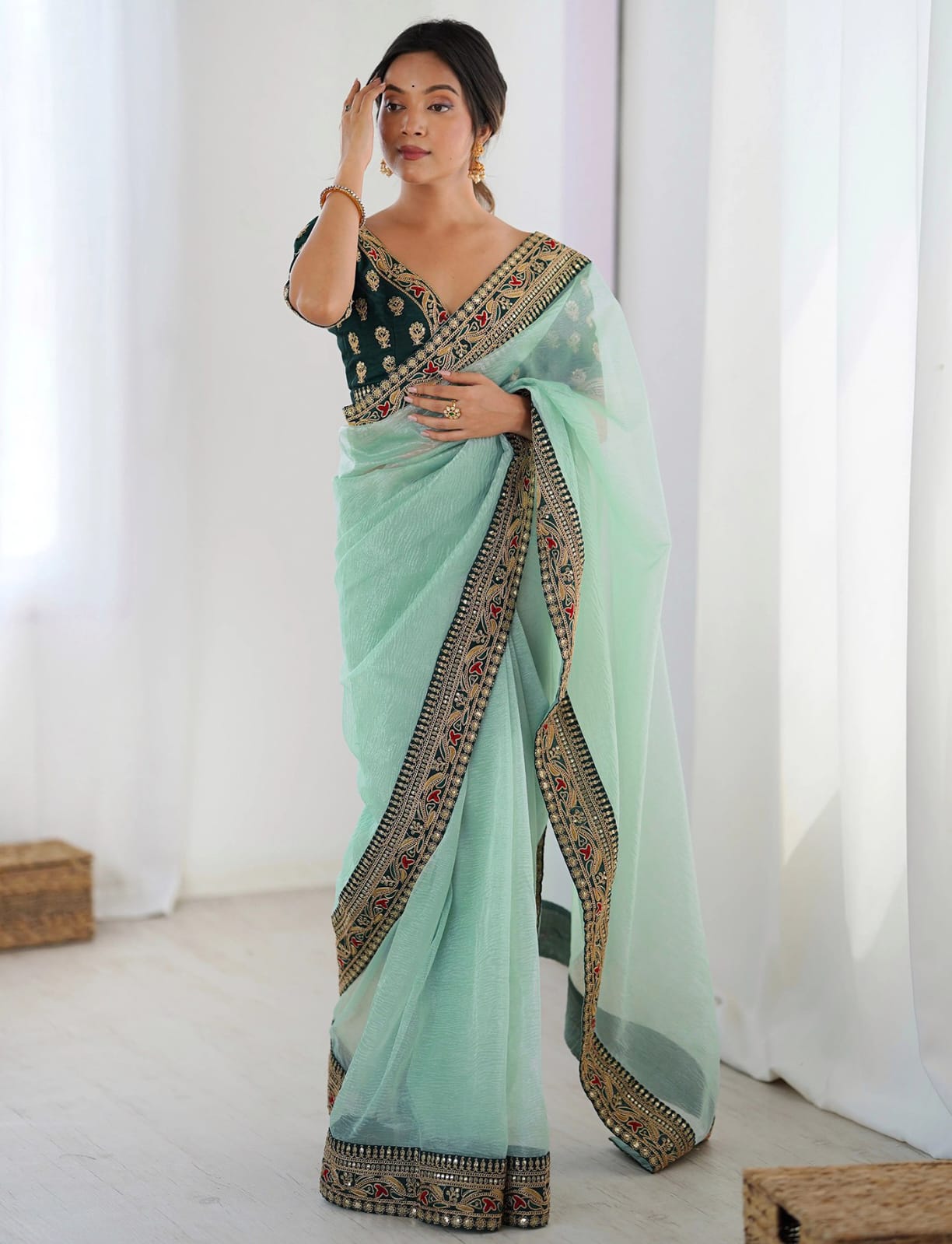
Wine, maroon, teal blue and royal purple offer depth and tend to look composed in warm indoor lighting. Red remains highly ceremonial, but a red saree with a defined gold border can appear more balanced than a red saree with several competing embellishment colours. Gold and champagne shades create instant evening shine, although a matte blouse or darker jewellery can prevent the outfit from becoming visually flat.
Ivory, cream and off-white can look elegant at a reception when styled with gold, antique zari or a contrasting blouse. White Silk Sarees in Cream Ivory and Off White is an useful colour direction for someone who wants a softer, modern appearance instead of a saturated bridal shade. Ask about the venue's dress expectations before choosing white, especially if the bride has selected white or ivory as a signature colour.
Red and Yellow Sarees from Rs 799 with Up to 75 Percent Off can inspire a warmer reception palette for family members or guests. Yellow works particularly well when balanced with antique gold, green or maroon accessories; bright yellow with bright gold everywhere can lose definition under warm lighting.
Which saree colour is best for a night reception?
Wine, maroon, teal blue, royal purple and deep red are among the best saree colours for a night reception because they retain visual depth under artificial light. Metallic gold also works, but the blouse and jewellery should introduce contrast so the outfit remains defined in photographs.
Before finalising a colour, take a phone photograph under both white light and warm light. A shade that looks understated in daylight may become overly orange, dull or reflective in a ballroom. A five-minute lighting check can prevent an expensive styling mismatch.
Blouse design and draping decisions
A reception blouse should support the saree's strongest feature rather than compete with it. A plain silk saree can take embroidery, structured shoulders or a dramatic neckline, while a zari-heavy saree usually benefits from a cleaner blouse.
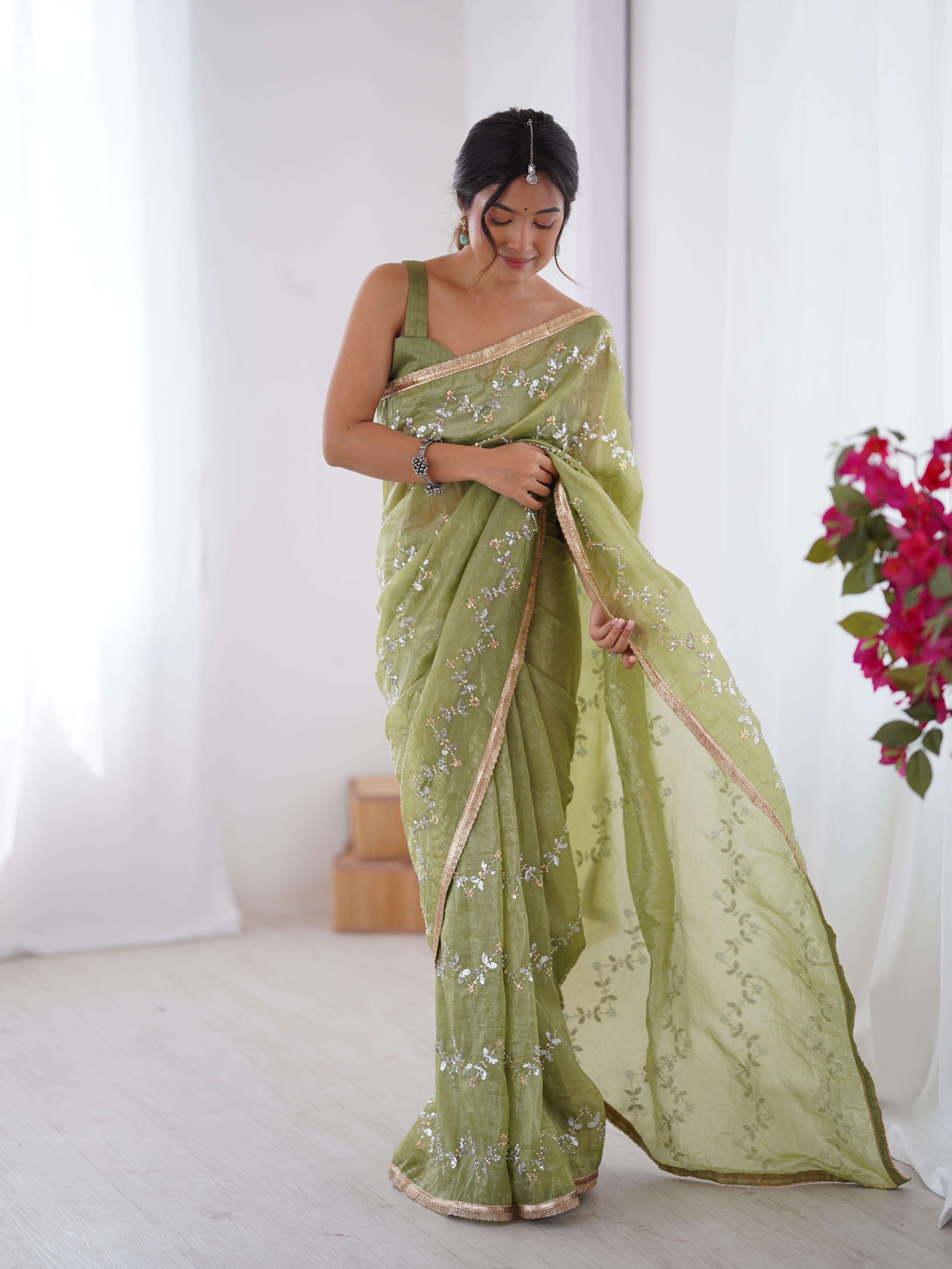
For a Banarasi saree with a floral border, repeat one border colour in the blouse piping or sleeve edge. A teal saree with golden zari can use a gold, antique gold or deep teal blouse; introducing a third bright colour may interrupt the continuity of the outfit. For a gold crush saree, a wine, black, ivory or bronze blouse can create the contrast needed for definition.
Neckline choice should reflect comfort as much as fashion. A higher front neckline brings support during extended wear, while a square or sweetheart neckline can frame a necklace more clearly. Elbow-length sleeves often create a balanced proportion with an embellished saree, especially when the pallu already adds width near the shoulder.
The classic Nivi drape remains dependable for a reception because the pleats fall centrally and the pallu can be pinned securely over the shoulder. A slimmer pleat count can make the waist look cleaner, but extremely narrow pleats may open while walking. Use five to seven even pleats for a stable, polished front, depending on the saree width and your height.
A belt can secure a lightweight saree and give a contemporary outline, but the belt should sit comfortably rather than compress the waist. A belt in antique gold works with zari, while a fabric belt matching the blouse creates a quieter silhouette. Pin the pallu at the shoulder and near the blouse side seam if you expect to dance, greet guests or carry a handbag.
How to match jewellery, footwear and makeup
Reception accessories look most cohesive when they repeat one material or colour from the saree. Gold zari pairs naturally with gold or antique-gold jewellery, while a silver-toned border usually benefits from cooler metal rather than mixed warm gold.
don't match every accessory to the saree at equal intensity. With the Red Banarasi Soft Silk Saree with Jacquard Zari Border, for example, choose either a strong necklace with smaller earrings or statement earrings with a lighter necklace. The jacquard surface already adds pattern, so excessive jewellery can make the upper body appear crowded.
Footwear should provide stable support because reception venues often involve polished floors, stairs and prolonged standing. A block heel of approximately two to three inches is generally easier to manage than a narrow high heel. Test the footwear with the pinned saree before the event, since heel height changes the pleat length and pallu position.
Makeup should account for flash photography and warm lighting. A softly defined eye, controlled facial shine and a lip colour that echoes the saree usually photograph more reliably than heavy shimmer across the entire face. Gold crush fabric already supplies reflected light near the face, so a satin rather than intensely metallic highlighter can keep the result balanced.
Reception sarees for brides, family members and guests
The best sarees for receptions differ according to the wearer's relationship to the couple. A bride may choose a signature colour, a richer border or more elaborate embroidery, while a guest can create distinction through styling instead of bridal-level embellishment.
A bride seeking an up-to-date yet recognisably heritage look might select wine, red, teal or royal purple Banarasi silk, then use a custom-fit blouse and carefully placed jewellery. A bride changing from a heavily ceremonial outfit can choose a gold crush saree for a lighter, more party-oriented second look.
The bride's mother or close family member can choose maroon, cream, ivory, muted gold or a deep jewel tone. The Maroon Cotton Saree with Zari Work for Wedding brings a breathable direction, while a Banarasi soft silk option adds more formal structure. Keep the jewellery graceful and let the saree's border provide the primary statement.
Guests should avoid copying the bride's exact colour, embroidery language or unusually dramatic silhouette when that information is known. Party Wear Sarees is an useful styling direction for guests who want polish without a bridal appearance. A clean blouse, medium-width border and one statement accessory are enough for a sophisticated reception outfit.
Buying checklist: fit, finish and care before the event
A reception saree should be checked at least seven to ten days before the celebration so alterations, blouse fitting and fall-pico work can be completed without rushing. Buying at the last minute can leave the wearer with an untested drape and unsuitable footwear length.
- Check the fabric: Hold the saree vertically to see whether the fall is fluid, stiff or bulky. Confirm that the texture feels comfortable against the skin.
- Inspect the border and zari: Look for even weaving, secure embroidery and a border that lies flat. Loose threads should be trimmed carefully rather than pulled.
- Measure the blouse: Allow enough room for sitting, lifting the arms and breathing. A blouse that's too tight can distort the saree's shoulder line.
- Plan the drape: Decide whether the pallu will be open, pleated, belted or pinned. Practise once with the intended footwear.
- Pack the essentials: Carry safety pins, a few small clips, fashion tape, a needle and matching thread. These items solve common pallu and pleat problems quickly.
Store silk and zari sarees folded with clean cotton or muslin between major folds. Refold the saree every few months so permanent creases don't form in one place, and avoid direct perfume or hairspray on zari because alcohol and moisture can affect surface finishes. Follow the care label for cleaning; professional dry cleaning is safer for embroidered, metallic or heavily decorated sarees than repeated home washing.
When comparing options, judge the total outfit rather than only the saree price. A saree that needs an urgent blouse, complex alterations, new footwear and extensive jewellery may cost more to wear than a simpler saree that already works with pieces you own. A considered purchase gives you a reception outfit that photographs well, moves comfortably and remains useful beyond one evening.
Common Questions About Choosing a Reception Saree
What are the best sarees for receptions in winter?
Banarasi silk, soft silk and gold crush sarees work well for winter receptions because their structured surfaces feel formal and pair comfortably with a blouse that offers more coverage. Wine, maroon, royal purple and deep red are especially effective for evening venues.
Is a Banarasi saree too traditional for a modern reception?
A Banarasi saree is not too traditional for a modern reception when the styling is streamlined. Choose a clean blouse, restrained jewellery, a neat Nivi drape or a slim belt, and let the woven zari remain the main feature.
How can I keep a reception saree from slipping?
Use a well-fitted petticoat, secure the waist pleats with pins and fasten the pallu at both the shoulder and blouse side seam. A belt can add stability to a lightweight saree, while comfortable footwear helps prevent the hem from shifting during movement.
Which saree is better for a reception: silk or crush fabric?
Silk is better for a traditional, structured and reusable look, while crush fabric is better for a light-catching party-wear effect. Choose Banarasi silk for woven richness and choose crush fabric when the venue and styling call for more visible texture and glamour.
Can I wear an ivory or white saree to a wedding reception?
An ivory or white saree can work beautifully at a reception if the bride has not reserved those shades and the styling includes enough contrast. Cream, ivory and off-white paired with gold zari, a darker blouse or defined jewellery can look elegant rather than bridal-white.
How early should I prepare a saree for a reception?
Prepare the saree at least seven to ten days before the reception so the blouse fitting, fall, pico, ironing and drape rehearsal are complete. Practise with the final footwear and jewellery because both can change the saree's balance and length.