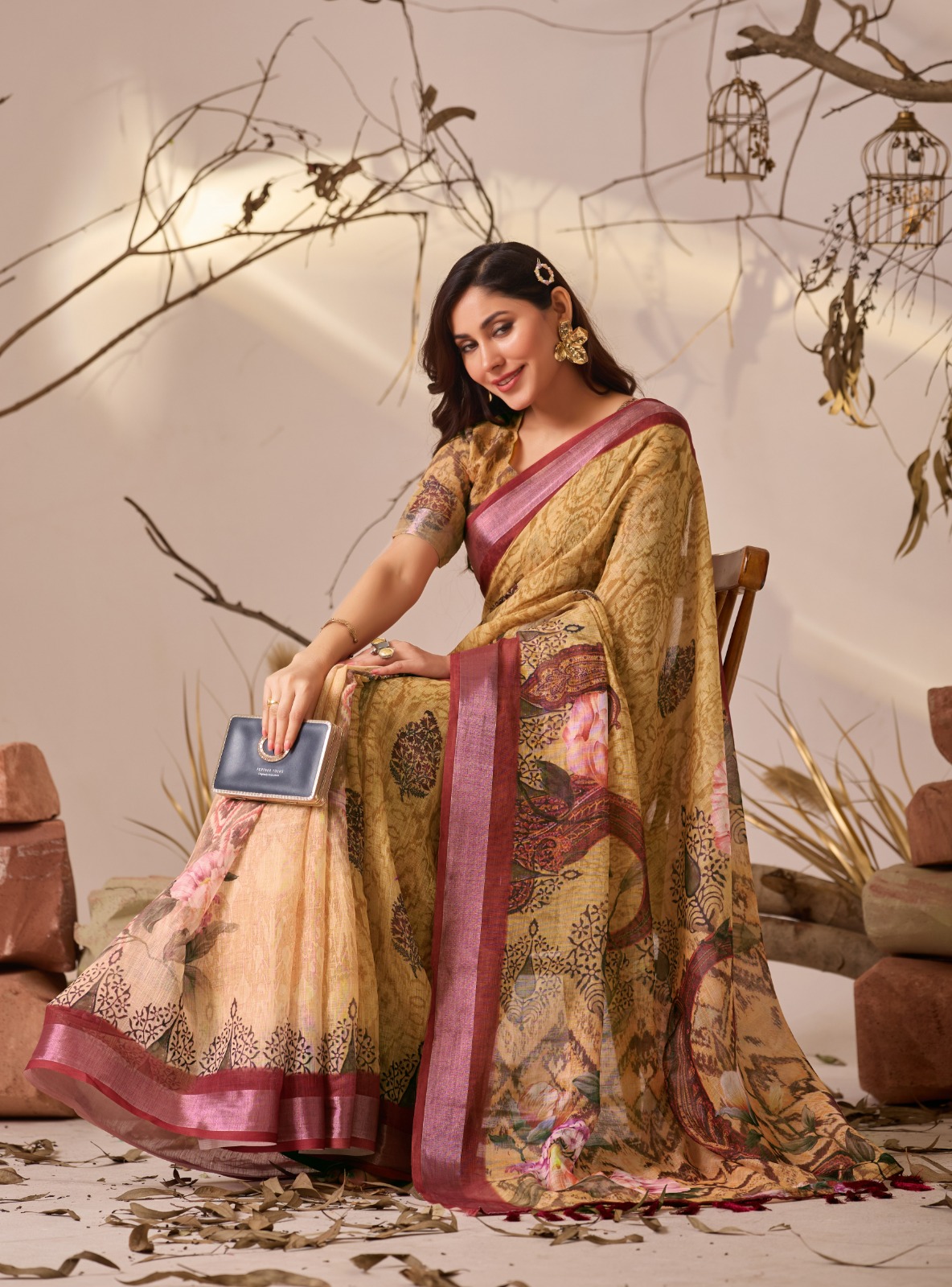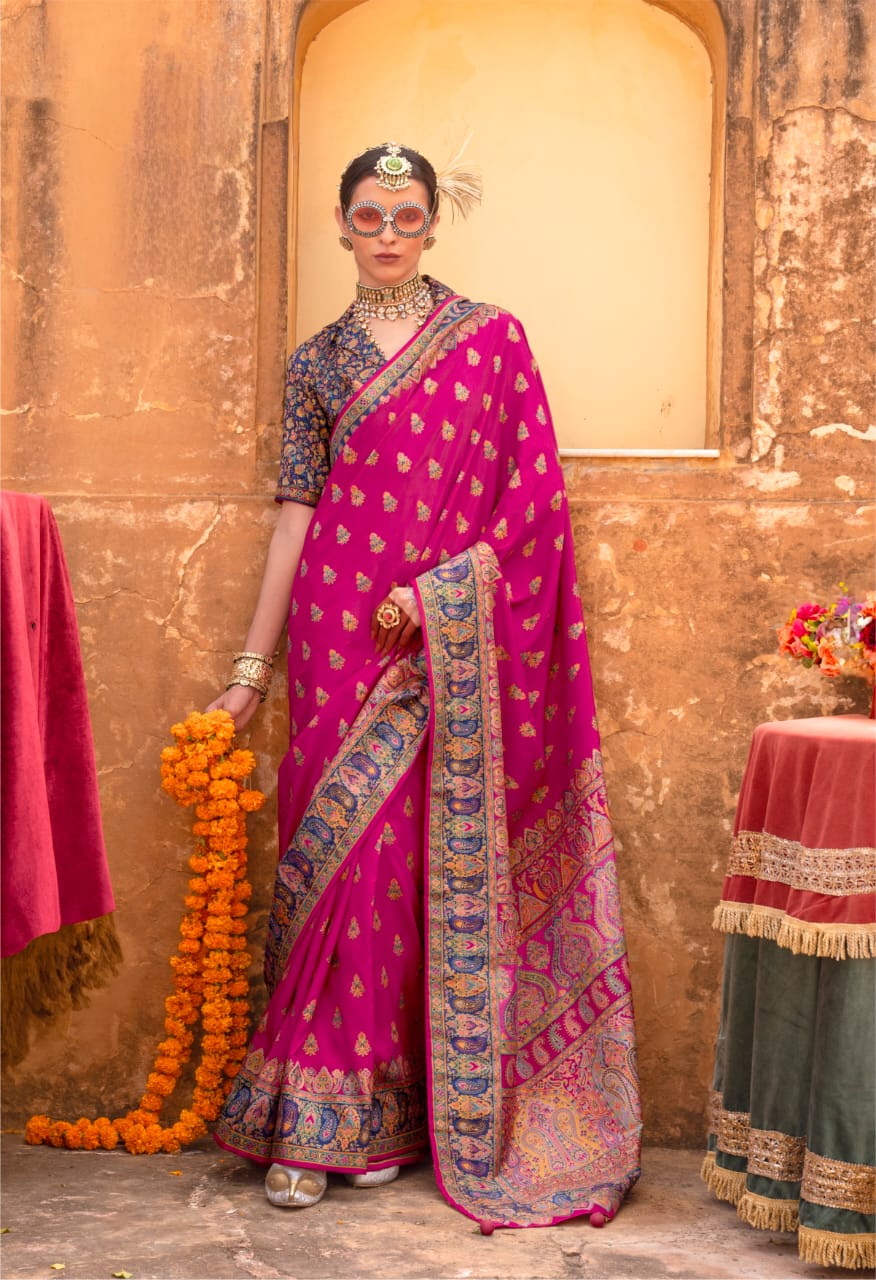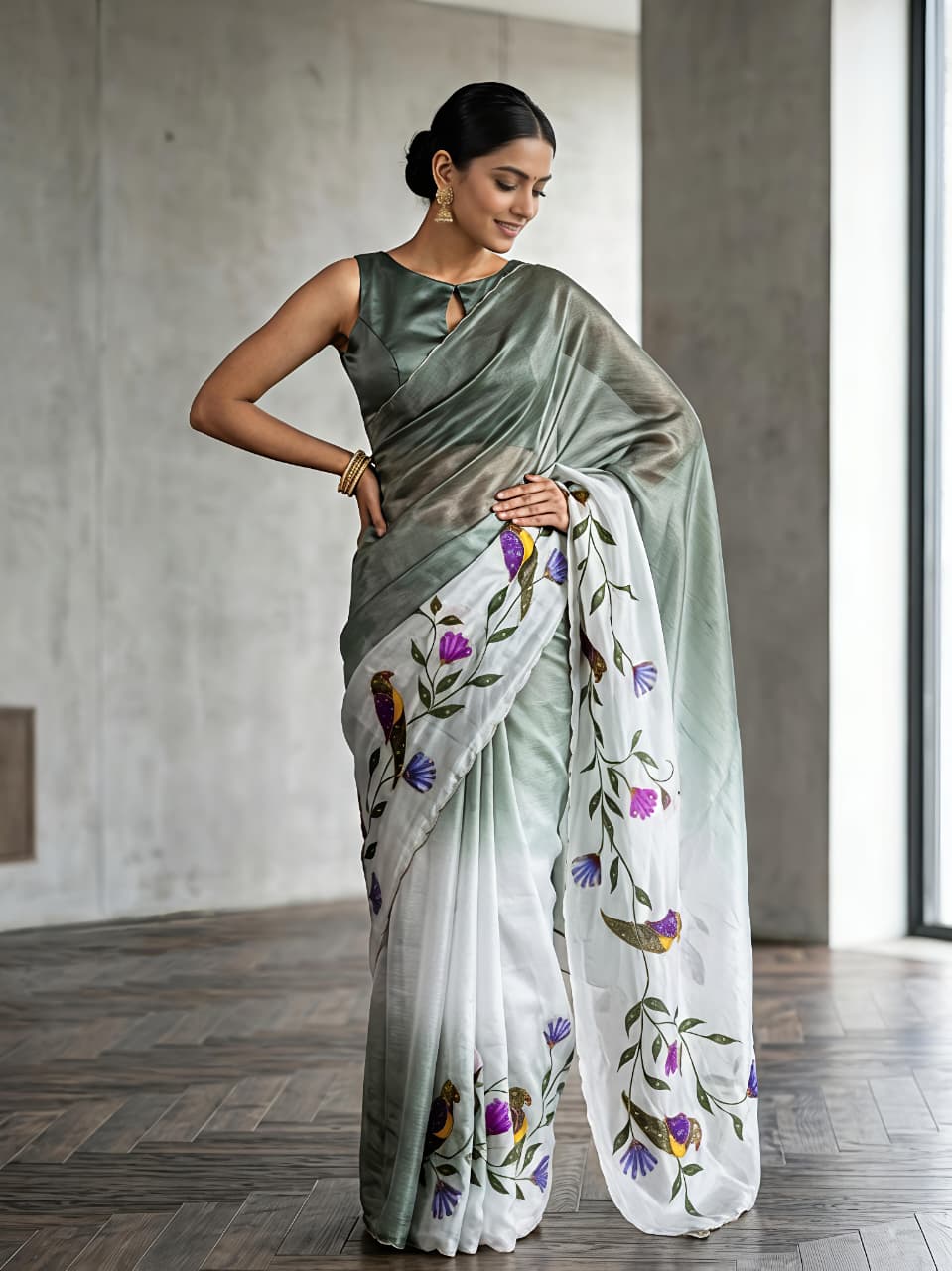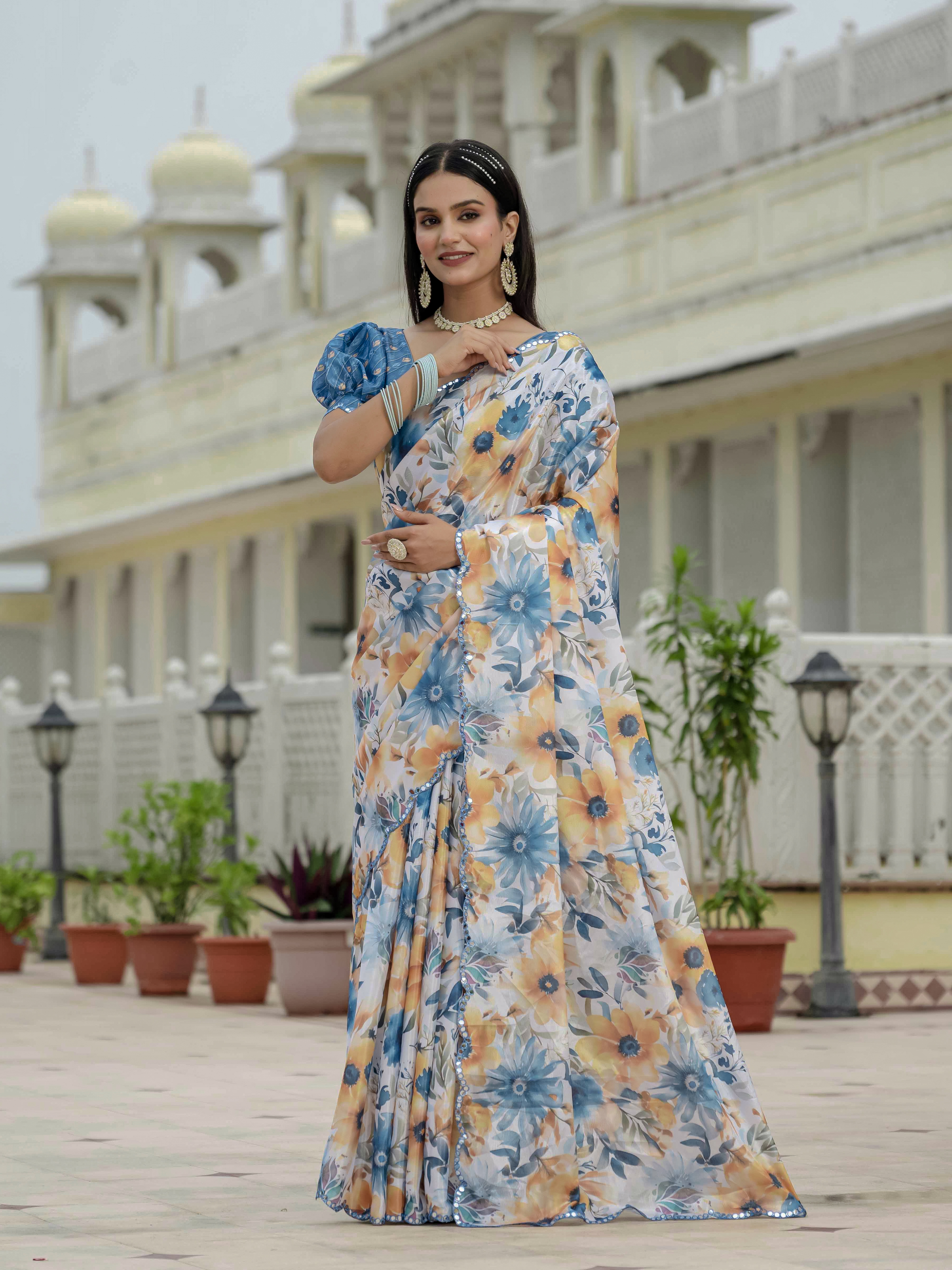
Best Sarees for Goan Weddings: Elegant Traditional & Modern Styles should be chosen according to the ceremony, venue, weather and amount of movement expected during the celebration. A Goan wedding may move from a church service to a reception, or from a Hindu ritual to dinner beside the sea. A saree with a manageable fall, a secure blouse and a border that photographs clearly will usually serve you better than a very heavy drape that becomes uncomfortable after an hour.
Goa's humid weather, strong daylight and mix of wedding traditions make fabric and styling decisions especially important. Banarasi silk, georgette, Chanderi and soft silk each create a different effect. The right choice also depends on whether you're attending as a close family member, bridesmaid, wedding guest or part of the bridal party.
Best Sarees for Goan Weddings: How should you choose?
The right saree for a Goan wedding should match the ceremony, venue, dress code, weather and practical need for movement. A six-yard saree with a breathable blouse and firmly pinned pallu is generally more useful than a heavily embellished drape for a coastal celebration.
Start with the invitation and schedule. A formal church wedding often suits polished silk, restrained zari or jewel tones, while a beachside engagement may call for georgette, soft silk or another fabric that moves easily. A Hindu wedding with several rituals may require a more traditional appearance, especially for immediate family members.
- Church ceremony: Choose an elegant drape with a covered or moderately cut blouse, controlled embellishment and a shawl or stole if the venue is air-conditioned.
- Hindu ceremony: Banarasi silk, Kanjeevaram-inspired borders, zari motifs and rich colours provide a respectful traditional vocabulary.
- Outdoor or beach reception: Select a lighter saree, pin the pleats securely and avoid a loose trailing pallu that can catch on chairs or blow in the wind.
- Destination wedding: Prioritise easy packing, reasonable wrinkle resistance and jewellery that can work across more than one event.
Check the wedding colour guidance before buying. White may be associated with bridal clothing in some Christian wedding settings, while red, maroon and gold can be prominent in Hindu ceremonies. Guests should avoid copying the bride's exact palette when the family has shared one, particularly for a coordinated wedding party.
Best Sarees for Goan Weddings: Which fabrics work best?
Banarasi silk for formal traditional dressing
Banarasi silk works well for a formal Goan wedding because zari weaving creates visual richness without requiring layers of surface embroidery. Banarasi silk holds pleats neatly, catches warm evening light and pairs naturally with gold jewellery, temple earrings or a structured potli bag.
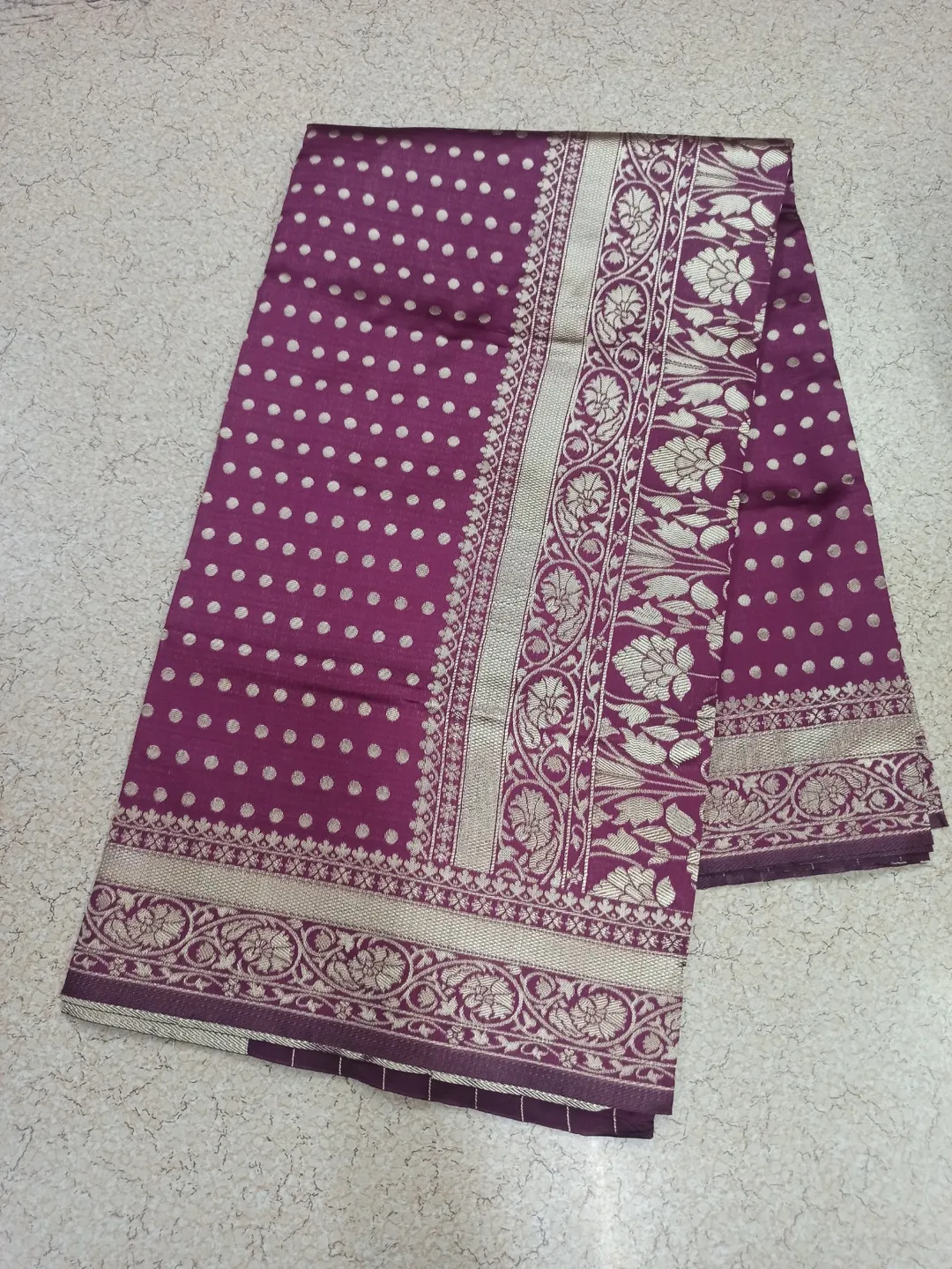
Soft silk Banarasi sarees are often more comfortable for long celebrations than very stiff, densely woven fabrics. Cream Pink Banarasi Soft Silk Zari Weave Saree creates a gentle contrast between a light ground and metallic detail, making it suitable for a daytime ceremony or pastel-themed reception. Red Banarasi Soft Silk Zari Weave Sareee creates a stronger festive impression and works particularly well with antique gold accessories.
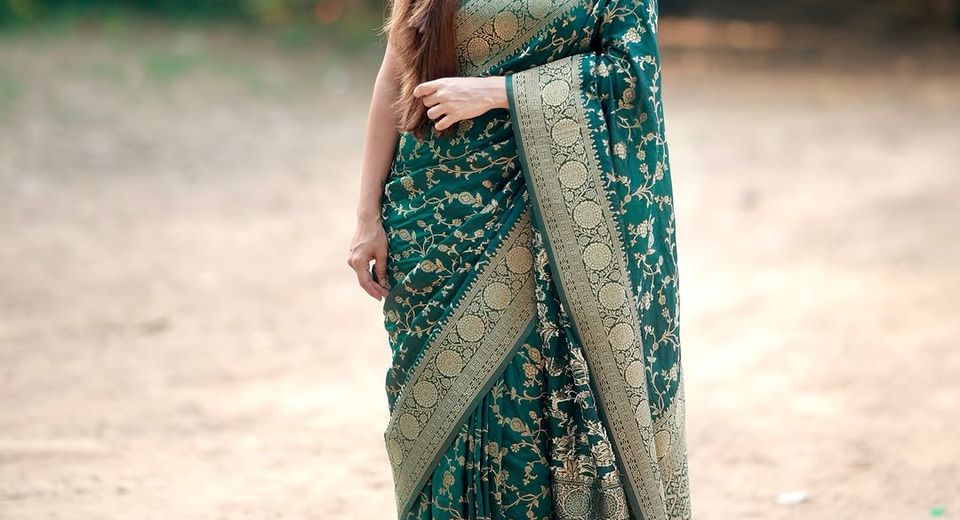
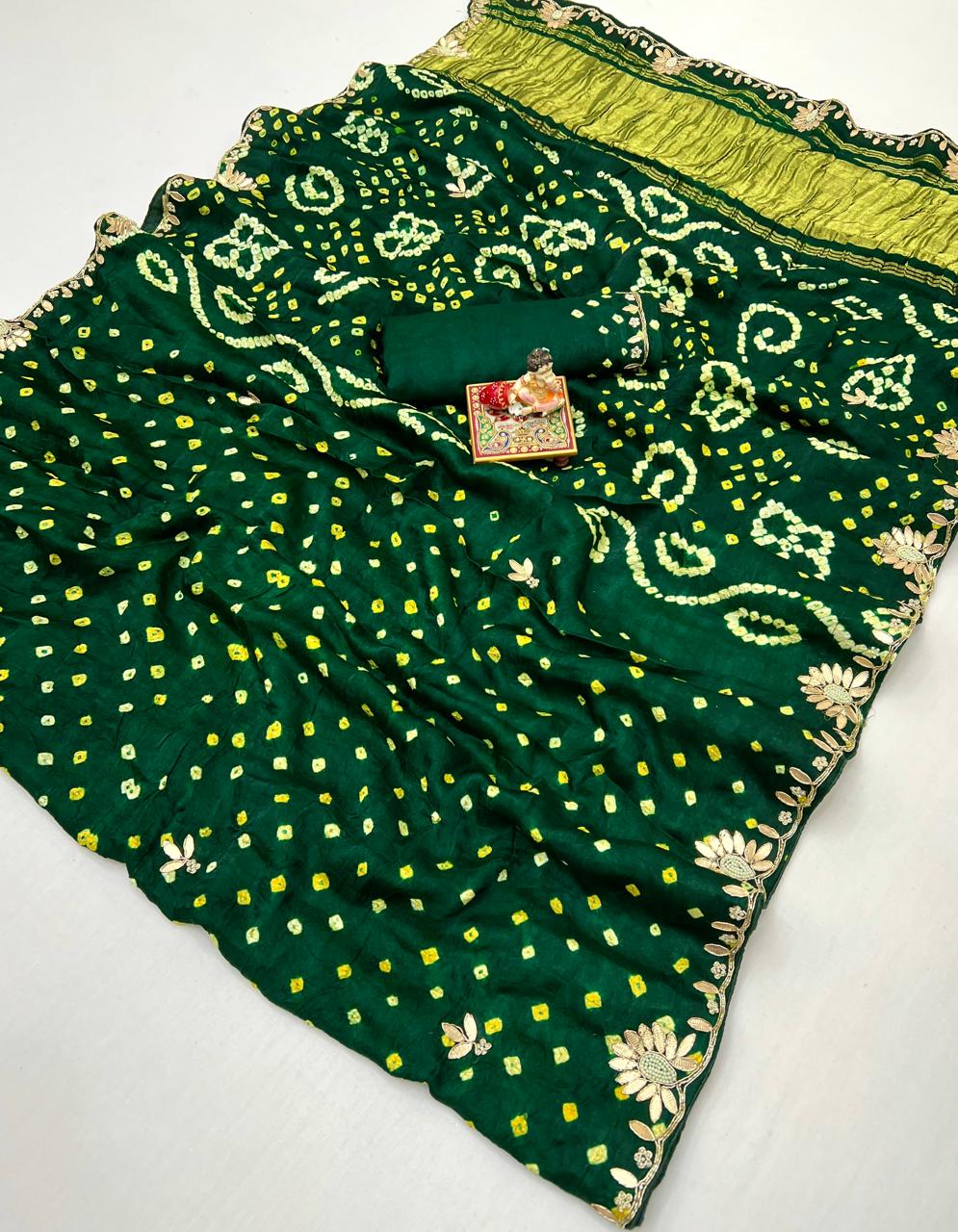
Green Banarasi Soft Silk Zari Weave Saree brings depth without relying on red. Maroon Banarasi Soft Silk Zari Weave Saree gives a mature, evening-ready appearance, while Royal Banarasi Soft Silk Zari Weave Saree suits guests who want a saturated jewel tone that remains visible in photographs and indoor lighting.
Soft silk and jacquard for texture
Soft silk is a practical middle ground when you want the polish of silk with easier movement and less visual weight than a heavily embellished bridal saree. A jacquard weave adds pattern through the construction of the fabric, so the saree can look detailed even with a simple blouse.
Maroon Banarasi Soft Silk Jacquard Zari Saree is a textured formal option that can transition from a religious ceremony to a dinner reception. A plain blouse in deep maroon, muted gold or a carefully matched contrast keeps the jacquard pattern from competing with the rest of the outfit.
Lightweight fabrics for daytime coastal venues
Lightweight sarees are better suited to humid daytime weddings because they reduce bulk around the waist and dry more quickly if the wearer becomes warm. Georgette drapes close to the body and is useful for dancing or walking, while Chanderi creates a lighter, more translucent appearance that benefits from a well-fitted lining and careful pleating.
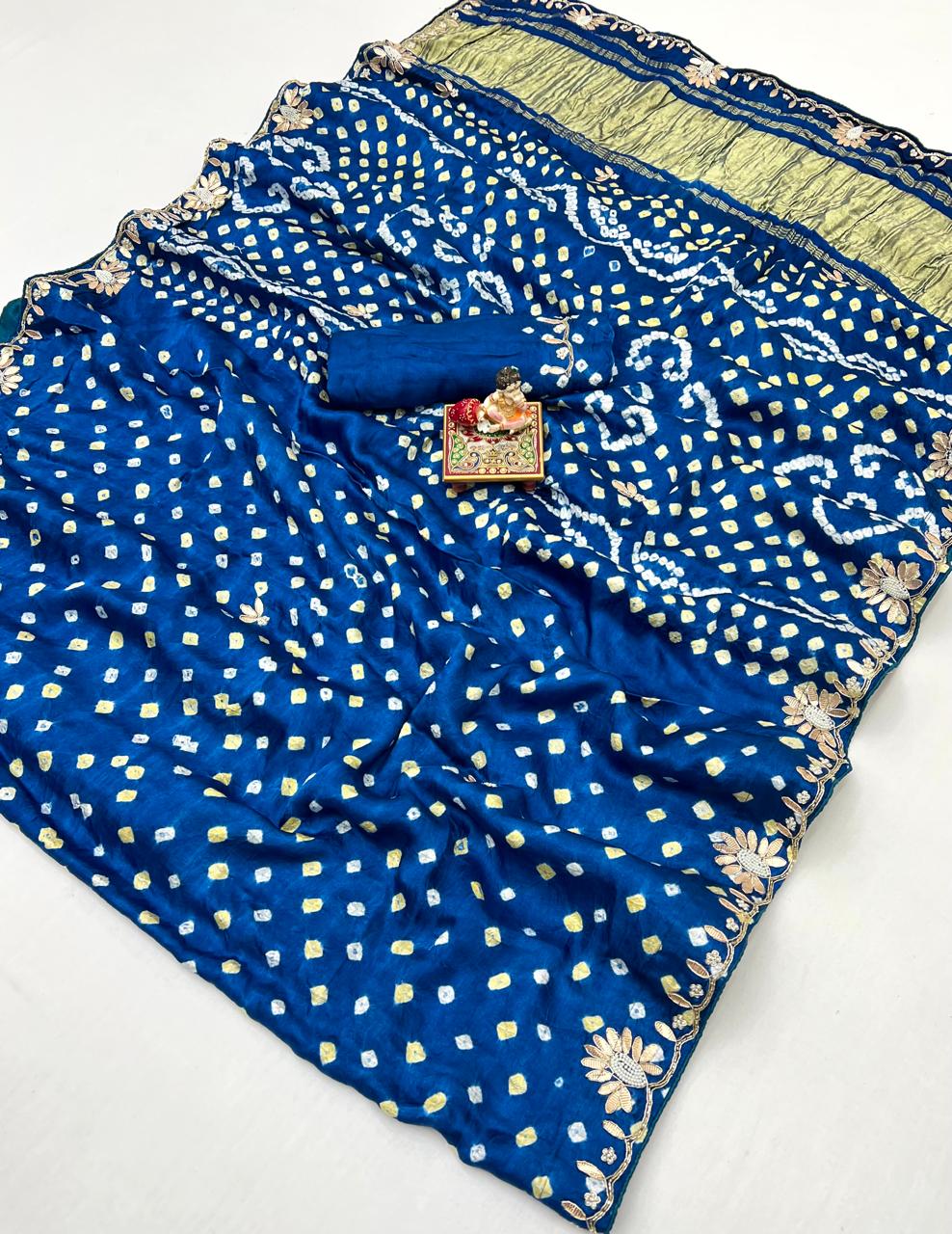
Teal Blue Banarasi Soft Silk Saree With Golden Zari Border combines a cooler colour with a defined border, making it useful for a modern reception look that still has classic structure. A light fabric doesn't automatically look informal; a crisp border, tailored blouse and deliberate jewellery can make a lightweight saree highly appropriate for a wedding.
Best Sarees for Goan Weddings: Which colours suit the setting?
Jewel tones, soft pastels and controlled metallic accents are reliable colour directions for Goan weddings because they work in bright coastal daylight and warm indoor reception lighting. The ceremony, time of day and desired photographic effect should guide the final colour.
- Red and maroon: Choose these colours for a classic festive appearance, especially at evening receptions or Hindu wedding rituals.
- Royal blue and teal: Select these shades for a contemporary look with enough contrast to stand out against pale walls, greenery or the sea.
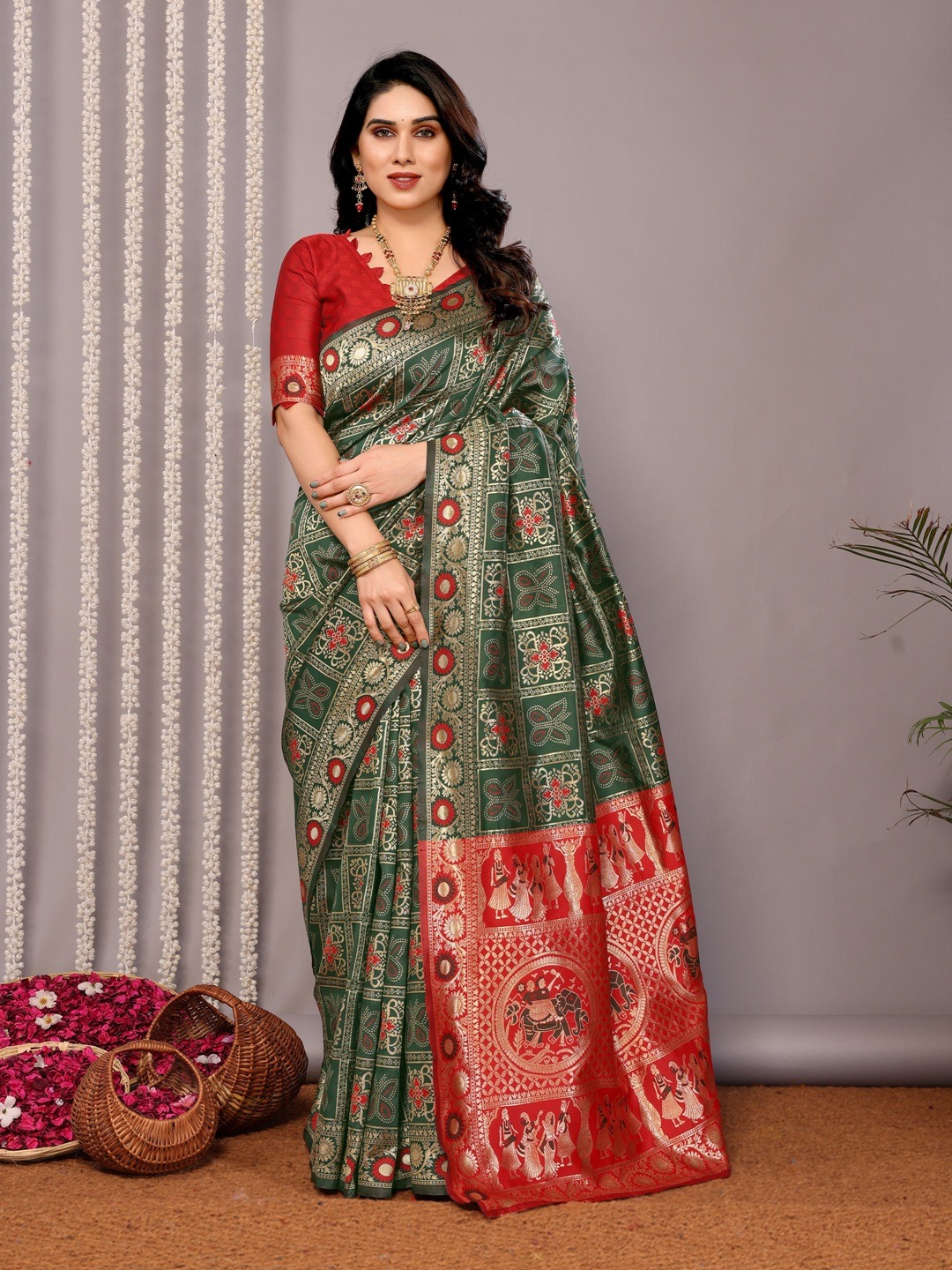
- Green: Emerald, bottle green and jewel green provide richness without repeating the most predictable red-and-gold combination.
- Cream, blush and pink: These shades suit daytime ceremonies, particularly with pearl, rose-gold or antique-gold accessories.
- Gold: Use gold as an accent through zari borders, jewellery or a clutch rather than layering metallic detail across every element.
Bright sunlight can make highly reflective zari appear stronger than expected, so examine a saree near a window before finalising the blouse and jewellery. Deep colours usually photograph with more definition at night, while pale colours need a clearly contrasting border or blouse to avoid looking flat in flash photography.
Pink Georgette Sarees can be useful for daytime celebrations when the invitation calls for a softer, more modern palette. Red Banarasi Silk Sarees for Weddings Under 1100 may suit shoppers seeking a traditional colour at a controlled budget, although the final look should still be judged by the fabric, border, blouse and tailoring rather than colour alone.
Best Sarees for Goan Weddings: How should you drape and tailor them?
A secure Nivi drape is the safest choice for a Goan wedding because it keeps the pleats controlled and the pallu easy to pin. Slimmer pleats can reduce bulk, while a longer pallu provides more coverage during a church ceremony or an evening breeze.
Pin the pleats from the inside at the waist, secure the pallu at the shoulder and add a discreet second pin near the upper arm when the venue is outdoors. A cotton or sweat-resistant underskirt can improve grip in humid weather. A well-fitted blouse with broad enough shoulder straps also prevents the saree from pulling during movement.
Modern styling can come from the blouse rather than from an unusually complicated drape. Elbow-length sleeves, a high back, a boat neckline, a modest square neckline or a structured blouse in a related contrast can update a traditional saree without making it unsuitable for a religious ceremony. A church service generally calls for a blouse that doesn't require constant adjustment.
Pre-drape the saree at home and walk, sit, climb a few steps and raise your arms before the wedding day. The practical test reveals whether the hem is too long, the pallu slips or the pleats restrict movement. Keep three to five safety pins, a small sewing kit and double-sided fashion tape in an emergency pouch.
Best Sarees for Goan Weddings: What jewellery and footwear work?
Jewellery should echo the saree's weave and border rather than compete with every visible detail. Zari-heavy Banarasi silk usually needs one dominant jewellery element, such as a necklace, jhumkas or a statement waist belt, with simpler pieces elsewhere.
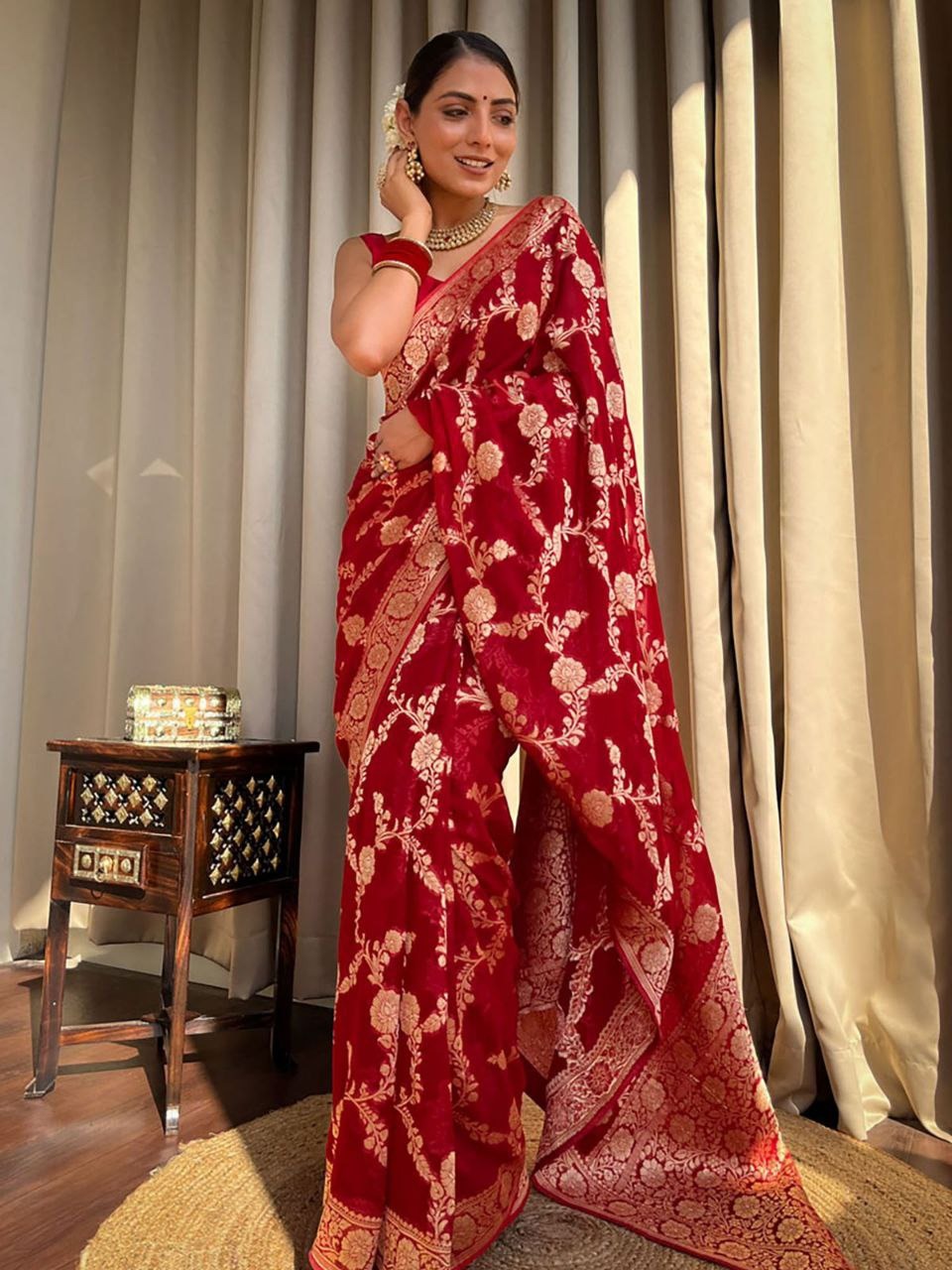
Antique gold complements maroon, red, green and royal blue Banarasi silk, while pearls and rose gold soften cream, blush and teal sarees. A small bindi, low bun or braid and a compact clutch create a finished appearance without adding unnecessary weight in humid weather.
Footwear deserves advance planning for Goan venues. Block heels, embellished flats or low wedges are more practical than narrow stilettos on lawns, cobbled paths and sandy areas. Choose footwear that can be worn for at least fifteen minutes before packing it for the event; an attractive saree isn't practical if the shoes prevent comfortable walking.
Keep the accessory scale appropriate to the wedding role. A close family member may wear a wider necklace or more elaborate earrings, while a regular guest can use one striking pair of earrings and a simple bracelet. Bridesmaids should coordinate with the wedding palette without selecting a colour reserved for the bride.
Best Sarees for Goan Weddings: How can you shop by budget?
A sensible saree budget should include the blouse, alterations, fall and edging, not only the displayed saree price. Those additions can change the final cost by several hundred to several thousand rupees depending on tailoring and embellishment.
Shoppers seeking a broad starting point can compare the Latest Wedding Sarees Collection. A controlled budget may make the Wedding Sarees Collection Under 4000 more useful, while silk-focused shoppers can review Silk Sarees Under 3000 With Discount. Buyers should check the weave, measurements, lining requirements and care instructions before assuming that every discounted saree has the same weight or finish.
A close family member may choose a richer Banarasi silk or a saree with a wider zari border, while a regular guest can achieve equal polish with a lighter fabric and a simpler blouse. The best purchase is the saree that fits the event, body comfortably and can be worn confidently for several hours.
For online shopping, measure the blouse area against a garment that already fits instead of relying only on a general size label. Check the saree length, border width, fabric description and whether the blouse piece is included. Allow at least seven to fourteen days for tailoring and alterations when a wedding date is fixed.
Best Sarees for Goan Weddings: How should you care for the saree?
Proper storage protects zari, silk fibres and the saree's pleat structure after a Goan wedding. Air the saree away from direct sunlight, remove pins carefully and fold the saree with soft muslin or clean cotton rather than sealing it while it's damp from humidity.

Dry-clean Banarasi silk when the care label recommends professional cleaning, and avoid applying perfume, deodorant or hair spray directly to zari. Store the saree in a breathable fabric bag in a dry cupboard. Refold stored silk every few months so permanent crease lines don't develop in one place.
Small marks should not be scrubbed aggressively because rubbing can disturb zari and spread moisture through silk. Blot a fresh spill with a clean, dry cloth, then consult a professional cleaner familiar with silk. Never iron zari directly; use a low-temperature setting from the reverse side with a pressing cloth if the care instructions permit home pressing.
Questions to Ask Before Choosing a Saree for a Goan Wedding
What colour saree should a guest wear to a Goan wedding?
Jewel tones, soft pastels and restrained metallic accents are dependable choices for Goan wedding guests. Red, maroon and gold suit many traditional Hindu ceremonies, while cream, blush, teal and royal blue can work well for daytime, church or modern reception settings; guests should first check the invitation and avoid the bride's exact palette.
Which fabric is best for a beach wedding in Goa?
Lightweight georgette, soft silk and lighter woven fabrics are usually more comfortable for a beach wedding because they reduce bulk and move more easily in humidity and wind. Pin the pleats and pallu securely, avoid excessive trailing fabric and choose footwear that works on sand or uneven ground.
Is Banarasi silk suitable for a Goan wedding?
Banarasi silk is suitable for a Goan wedding when the ceremony is formal or traditional and the wearer is comfortable with a structured fabric. Soft silk Banarasi options are generally easier for long celebrations than very stiff, heavily woven sarees, and zari borders photograph well in evening light.
How can I keep a saree secure during an outdoor wedding?
Secure the waist pleats from the inside, pin the pallu at the shoulder and add a second discreet pin near the upper arm. A well-fitted blouse, a non-slip underskirt and three to five spare safety pins can prevent most movement-related problems.
What blouse style works for a church wedding in Goa?
A well-fitted blouse with a boat neckline, modest square neckline, high back or elbow-length sleeves works well for a church wedding. The blouse should provide comfortable coverage and remain secure while sitting, walking and participating in photographs.
How should I pack a silk saree for a destination wedding in Goa?
Fold the silk saree inside soft muslin or clean cotton and place it in a breathable garment bag rather than compressing it in plastic for long periods. Carry the saree flat when possible, unpack it after arrival and arrange professional steaming or careful reverse-side pressing if creases remain.