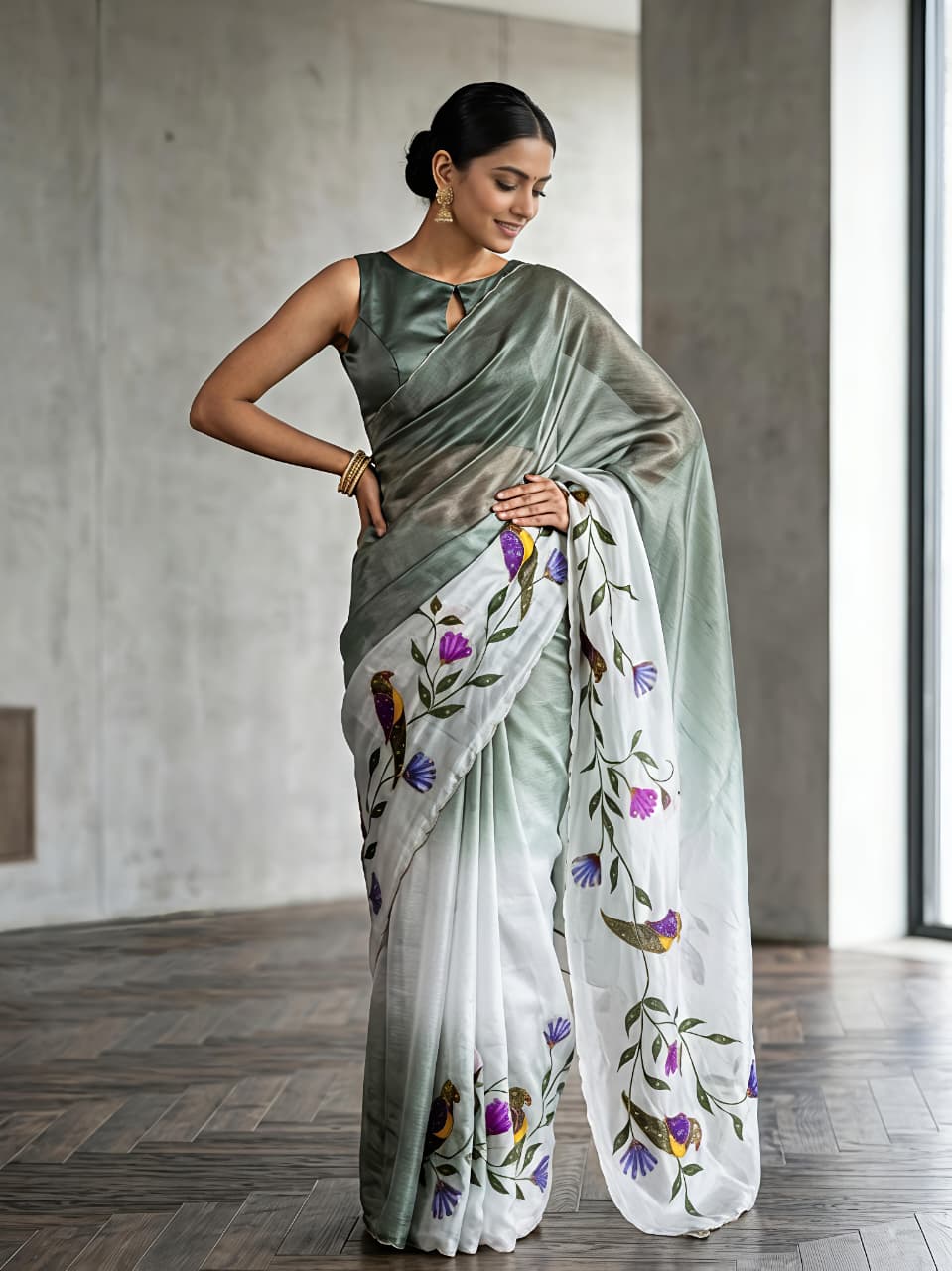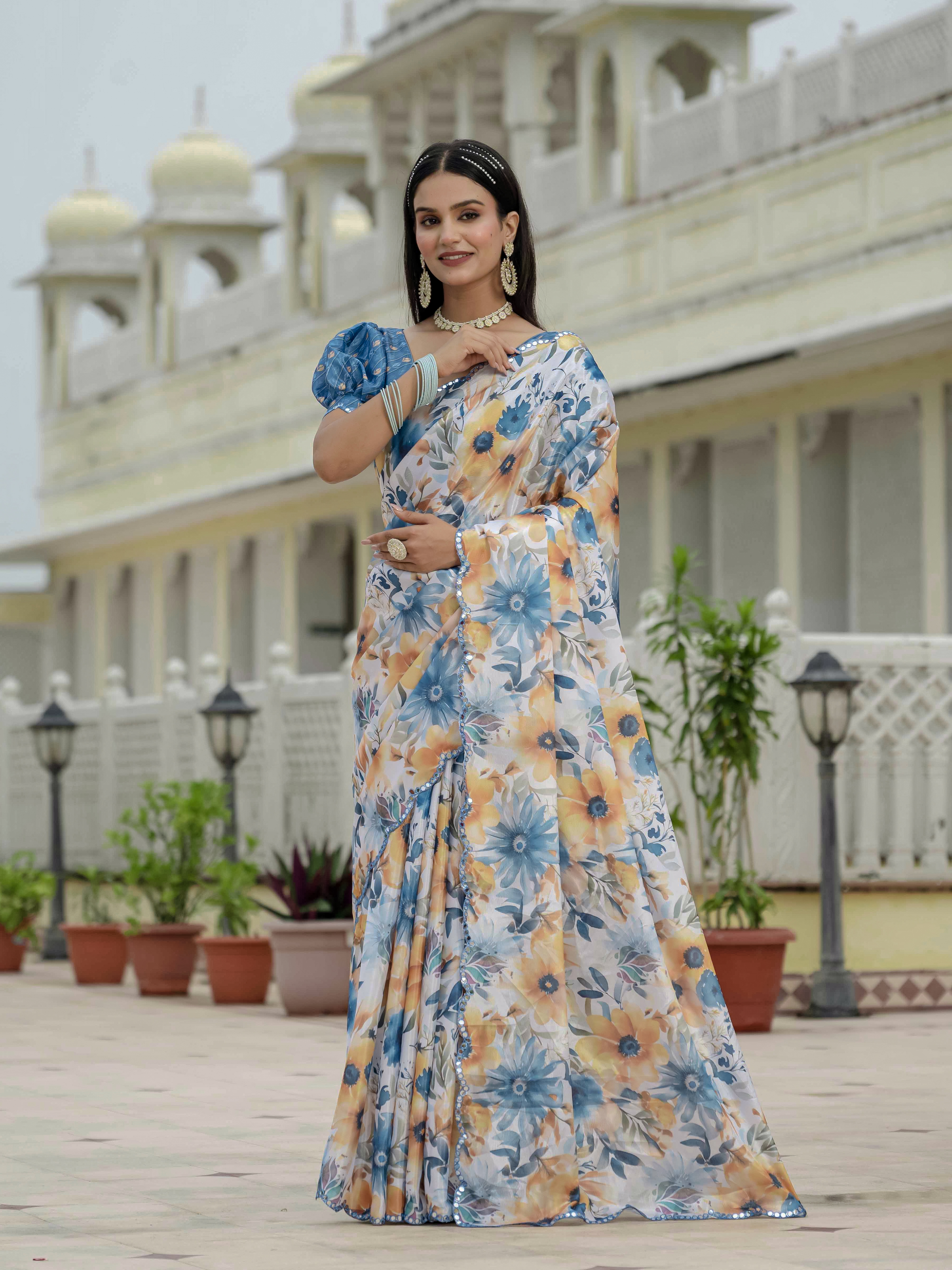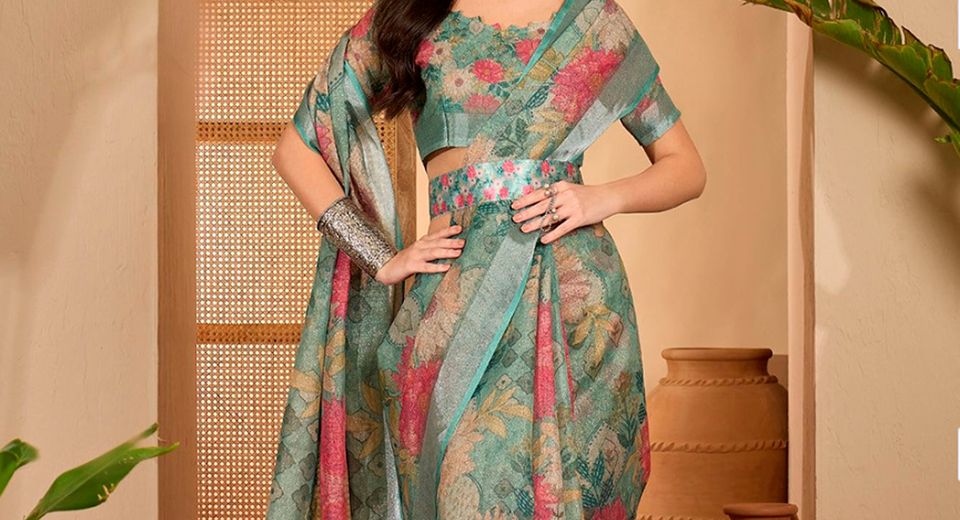
Best Sarees for Chithirai Festival should balance Tamil tradition with Madurai's April heat, long walks and crowded temple surroundings. Kanjeevaram silk with zari remains a formal choice for family ceremonies, while linen-cotton, cotton-silk and lightweight printed sarees are more practical for daytime temple visits and processions. Fabric weight, pallu security, blouse comfort and footwear all deserve attention before colour or ornamentation.
Chithirai Festival is associated with the Meenakshi-Sundareswarar Temple celebrations in Madurai, the celestial wedding of Goddess Meenakshi and Lord Sundareswarar, and the Kallazhagar procession connected with the Vaigai River. The festival brings together religious observances, family gatherings, cultural programmes and outdoor crowds. A carefully chosen saree can look traditionally appropriate while still allowing you to sit, stand, walk and manage the heat comfortably.
Best Sarees for Chithirai Festival: What makes one suitable?
A suitable Chithirai saree is breathable, secure at the waist, easy to walk in and sufficiently modest for a temple setting. A saree that needs constant adjustment can become uncomfortable and impractical during a long religious visit, regardless of how rich it looks.
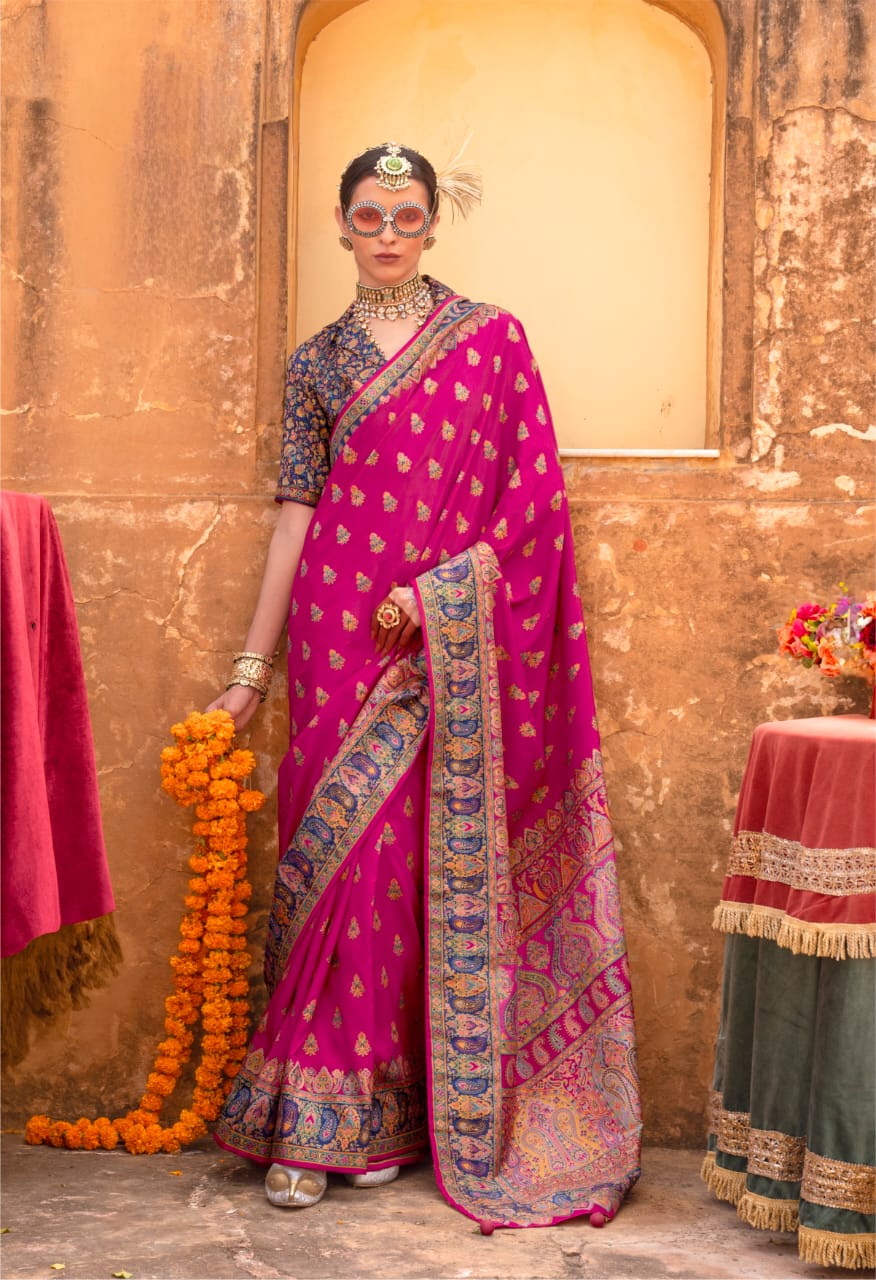
Traditional Tamil Nadu dressing commonly brings together silk, gold-toned zari, a defined border, temple jewellery and a neatly controlled pallu. Kanjeevaram silk is the most recognisable formal option because its firm silk body, contrasting borders and woven zari create a distinctive South Indian festive silhouette. Kanjeevaram silk can also feel heavy after several hours, especially when the saree has a broad border and dense pallu.
Lighter choices include Chettinad cotton, Sungudi, cotton-silk and linen-cotton sarees. Linen cotton isn't a replacement for a ceremonial Kanjeevaram when a family event specifically expects silk, but linen-cotton floral sarees are sensible for daytime temple visits, cultural programmes and informal meals. Banarasi silk offers a rich brocade appearance, although its weaving heritage differs from the Kanjeevaram tradition of Tamil Nadu.
- Formal family ceremony: Choose Kanjeevaram silk, silk cotton or a saree with a substantial zari border.
- Hot afternoon procession: Choose cotton, linen cotton or another lightweight weave with a manageable pallu.
- Morning temple visit: Choose a pressed saree with a neat border, secure pleats and a modest blouse.
- Evening cultural event: Choose silk, Chinon or a dressier printed saree with statement earrings.
Best Sarees for Chithirai Festival in Madurai's April Weather
Lightweight, breathable sarees are usually the most comfortable choice for daytime Chithirai events in Madurai. Heavy silk works better for shorter ceremonial appearances, indoor family functions or cooler evening hours.
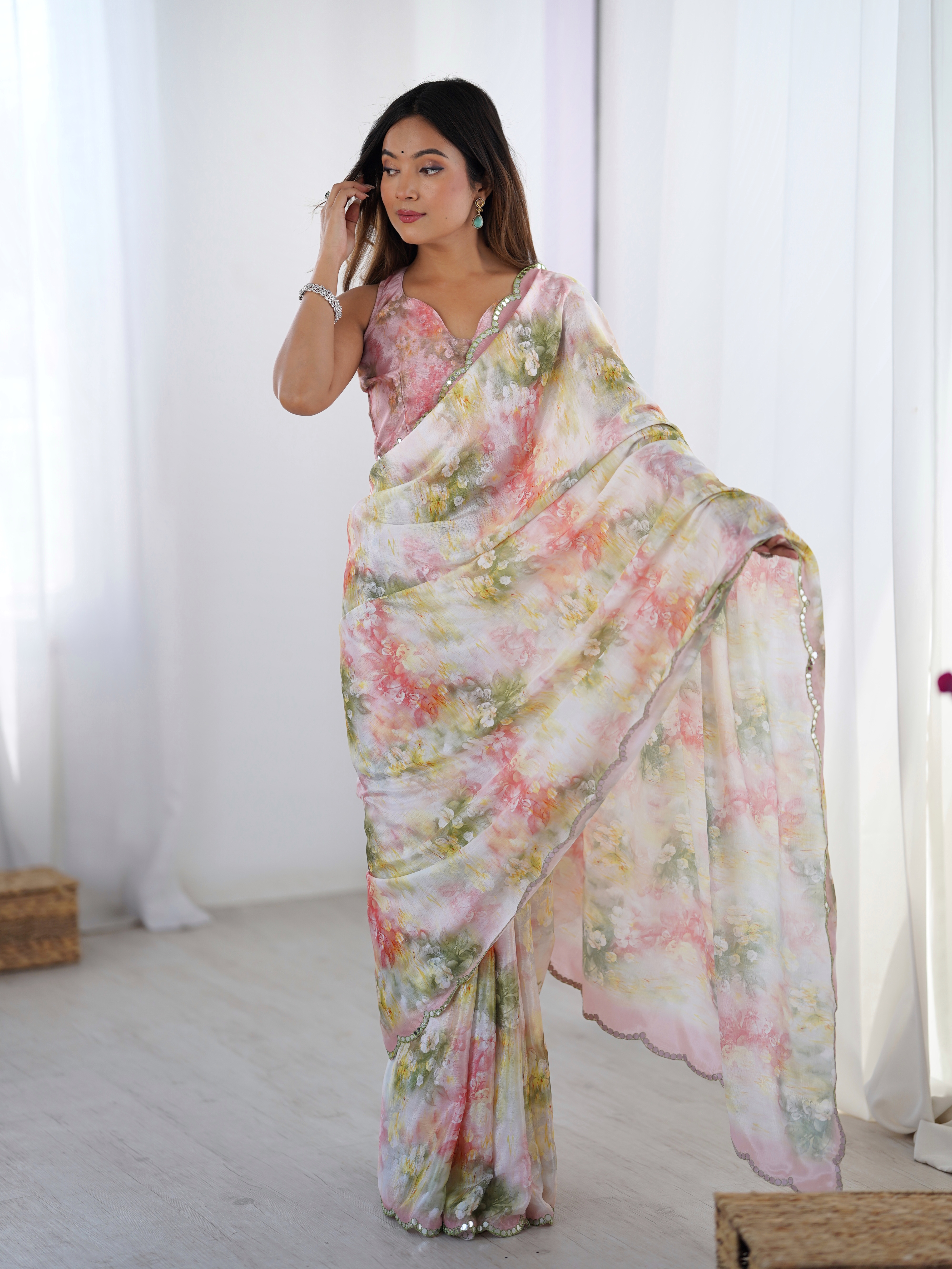
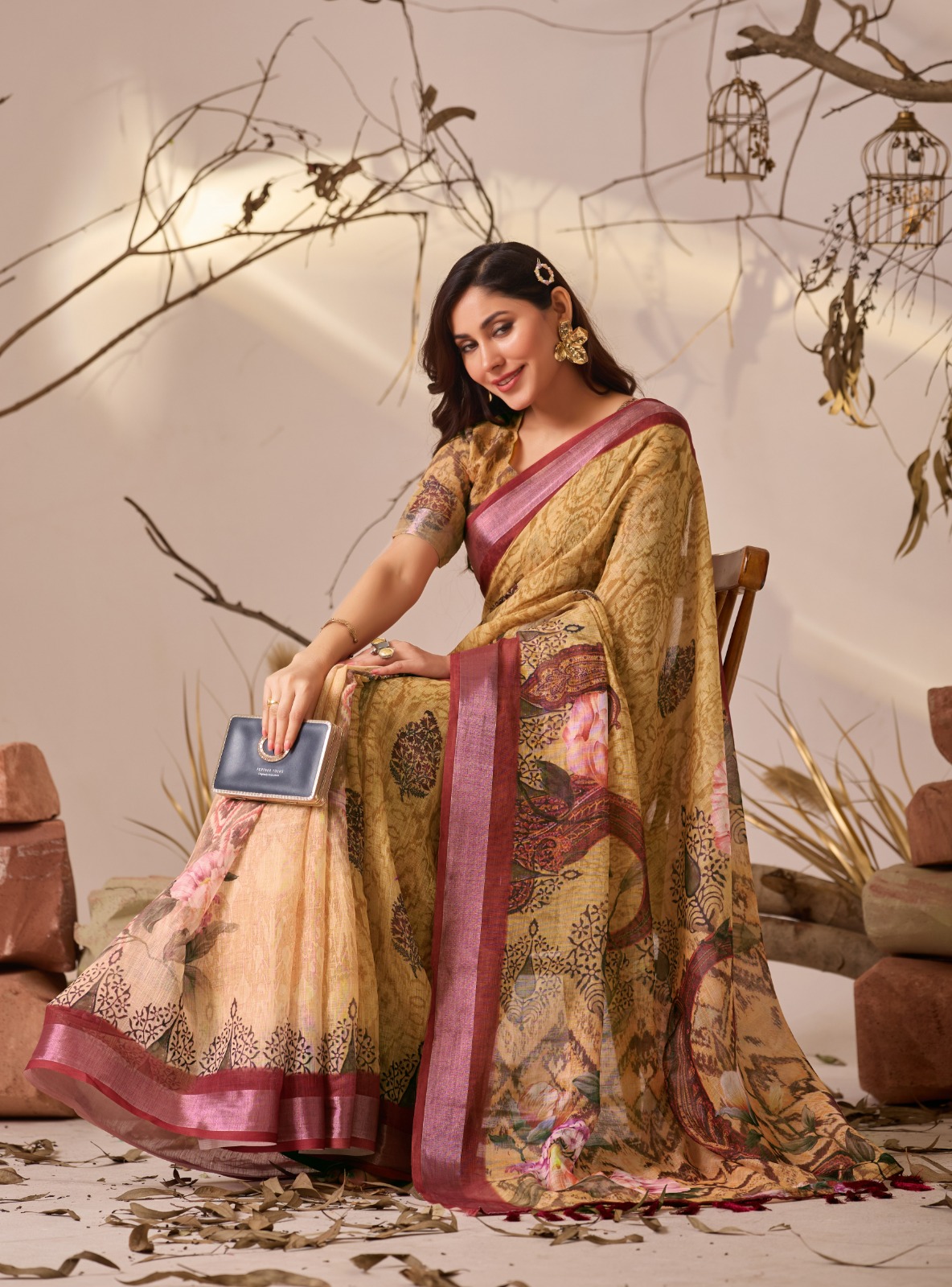
Linen cotton gives an useful balance between structure and airflow. Linen helps the saree hold a crisp shape, while cotton makes the fabric more comfortable against the skin than many synthetic dress materials. A printed linen-cotton saree is also easier to manage if the wearer expects a full day of movement.
Teal Floral Printed Linen Cotton Saree With Matching Blouse is a practical example of a coordinated daytime outfit. A matching blouse removes the need to search for a separate fabric match, while the floral surface adds festive character without the weight of dense metallic embroidery. Teal also provides a cooler visual alternative to the red, orange and yellow shades often associated with summer celebrations.
Teal Floral Linen Cotton Saree with Elegant Contrast Border demonstrates how a contrasting border can define the drape without adding substantial weight. Repeat the border colour in glass bangles, earrings or a small hair accessory rather than introducing several unrelated shades.
Red Floral Linen Cotton Saree with Beautiful Printed Border suits a wearer who wants a stronger festive colour while retaining the practical qualities of linen cotton. A printed border can look polished in photographs and is generally lighter than heavy embroidered or metallic borders. Check the blouse details, saree length and care instructions before ordering.
Colorful Ethnic Chinon Saree for Women creates a more fluid evening look. Chinon is lightweight and drapes softly, but its smooth surface can shift more easily than cotton or linen cotton. Secure the pleats at the waist and pin the pallu at the shoulder if you plan to walk through a crowded route.
Should you wear silk or cotton for a temple visit?
Both silk and cotton are appropriate for a temple visit when the saree is modestly draped and comfortable enough to wear respectfully. Silk communicates ceremony, while cotton and linen cotton are often better for heat, walking and prolonged standing.
Traditional clothing should not be selected by label alone. A cotton saree with a crisp border and neat pleats can appear more considered than a heavy silk saree that causes discomfort or repeatedly comes undone. Consider the distance between parking, accommodation and the temple, as well as whether footwear must be removed for part of the visit.
Best Sarees for Chithirai Festival: Which colours and prints work?
Red, maroon, turmeric yellow, green, teal, orange and pink all suit the bright visual atmosphere of Chithirai celebrations. The most successful colour depends on the time of day, the blouse shade, the wearer's complexion and the amount of jewellery being added.
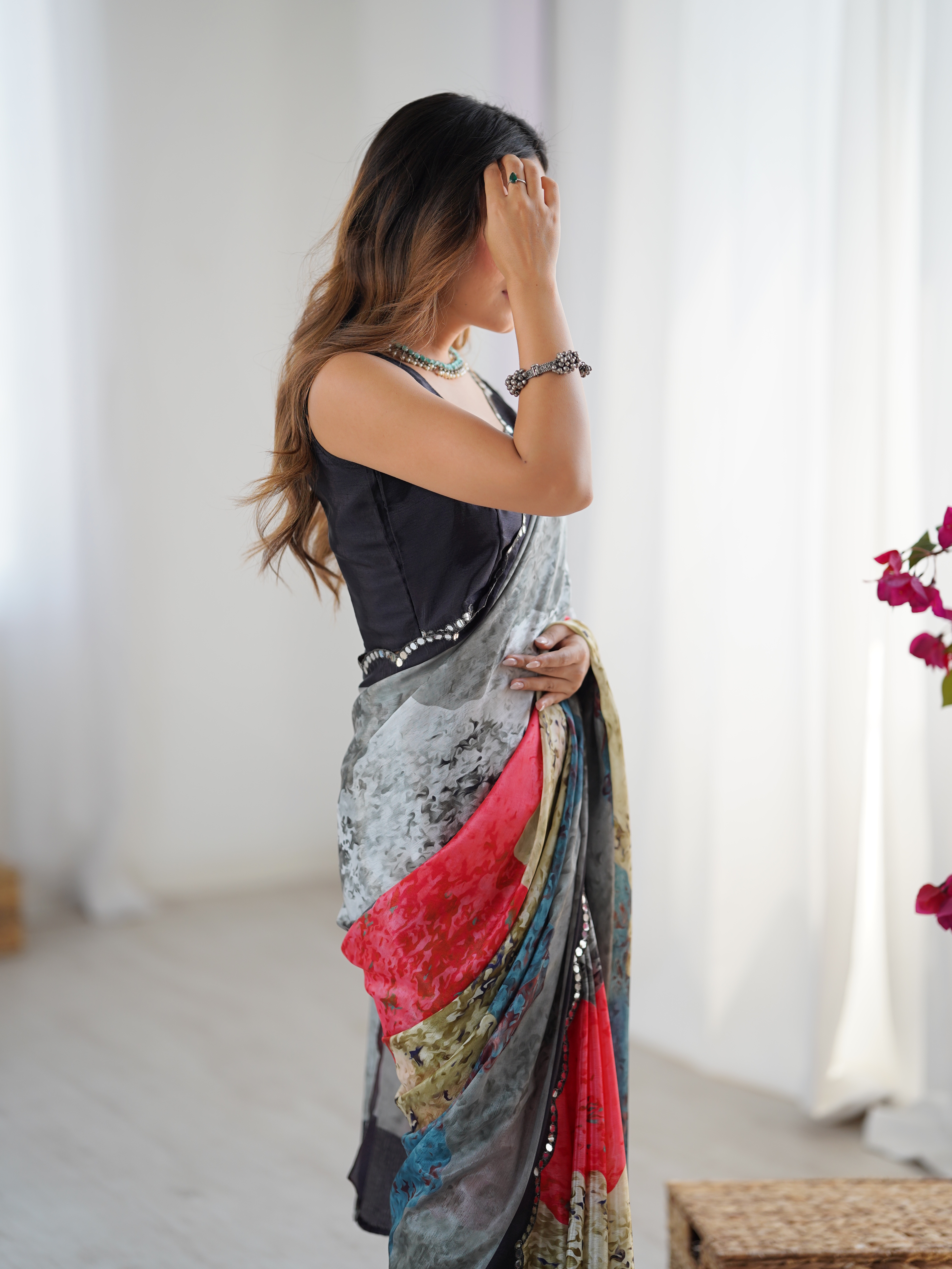
Red and deep pink create a high-impact appearance for family photographs and evening gatherings. Yellow and orange connect naturally with the warm palette of many South Indian festive decorations. Green and teal offer a cooler daytime alternative, particularly when paired with gold-tone earrings or a contrasting blouse.
Pastel Linen Cotton Floral Print Saree with Designer Blouse suits a softer daytime palette. Pastel shades can look fresh in strong sunlight, while a defined blouse adds structure around the shoulders and neckline. Use brighter earrings, a bindi or bangles so a pale saree retains visual definition in outdoor photographs.
Multicolor Linen Cotton Floral Printed Saree at VARNAVI gives several styling colours in one drape. Choose one colour from the print for the blouse, bindi, bangles or footwear instead of adding a different shade at every styling point. A controlled palette prevents a multicolour saree from appearing visually crowded.
Multicolour Floral Linen Cotton Saree with Blue Border Look gives the border a clear styling role. Blue can be repeated in glass bangles, a blouse detail or a compact potli, while gold accessories connect the look to traditional festive dressing.
Floral prints work particularly well for daytime celebrations, informal temple visits and family meals. For a formal wedding-related gathering, a plain silk body with zari or a restrained woven motif generally looks more ceremonial than a very casual all-over print.
Best Sarees for Chithirai Festival: How should you drape one?
A secure waist tuck, medium-width pleats, a pinned pallu and stable footwear make a saree more practical for Chithirai temple visits. The drape should support walking, sitting and standing without exposing the midriff or requiring frequent correction.
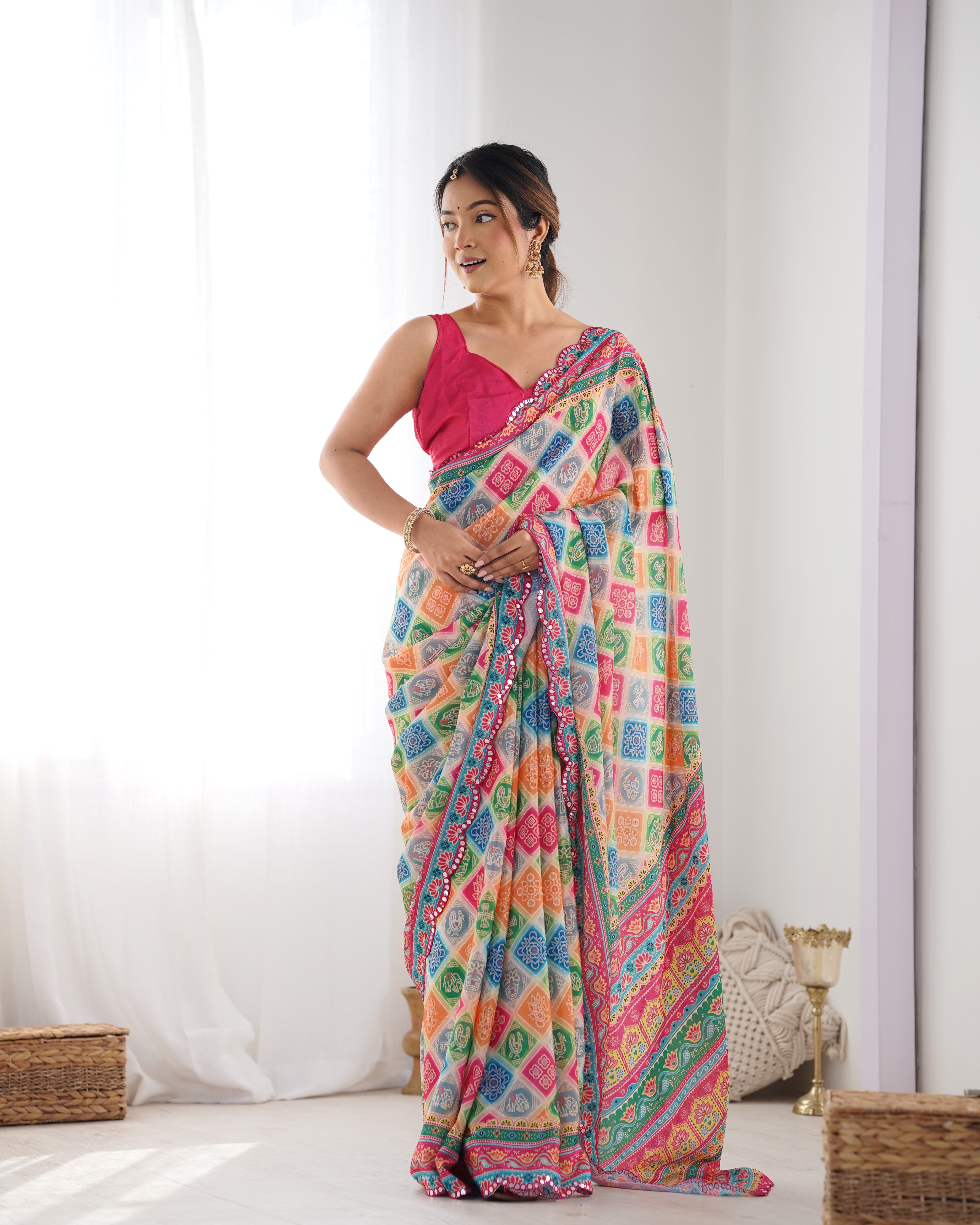
Make five to seven even front pleats, depending on the saree width and your preferred movement. Tuck the pleats firmly but not tightly, and position the pallu over the left shoulder. One discreet safety pin at the shoulder seam and a second pin inside the pallu near the waist can prevent the fabric from sliding in a crowd.
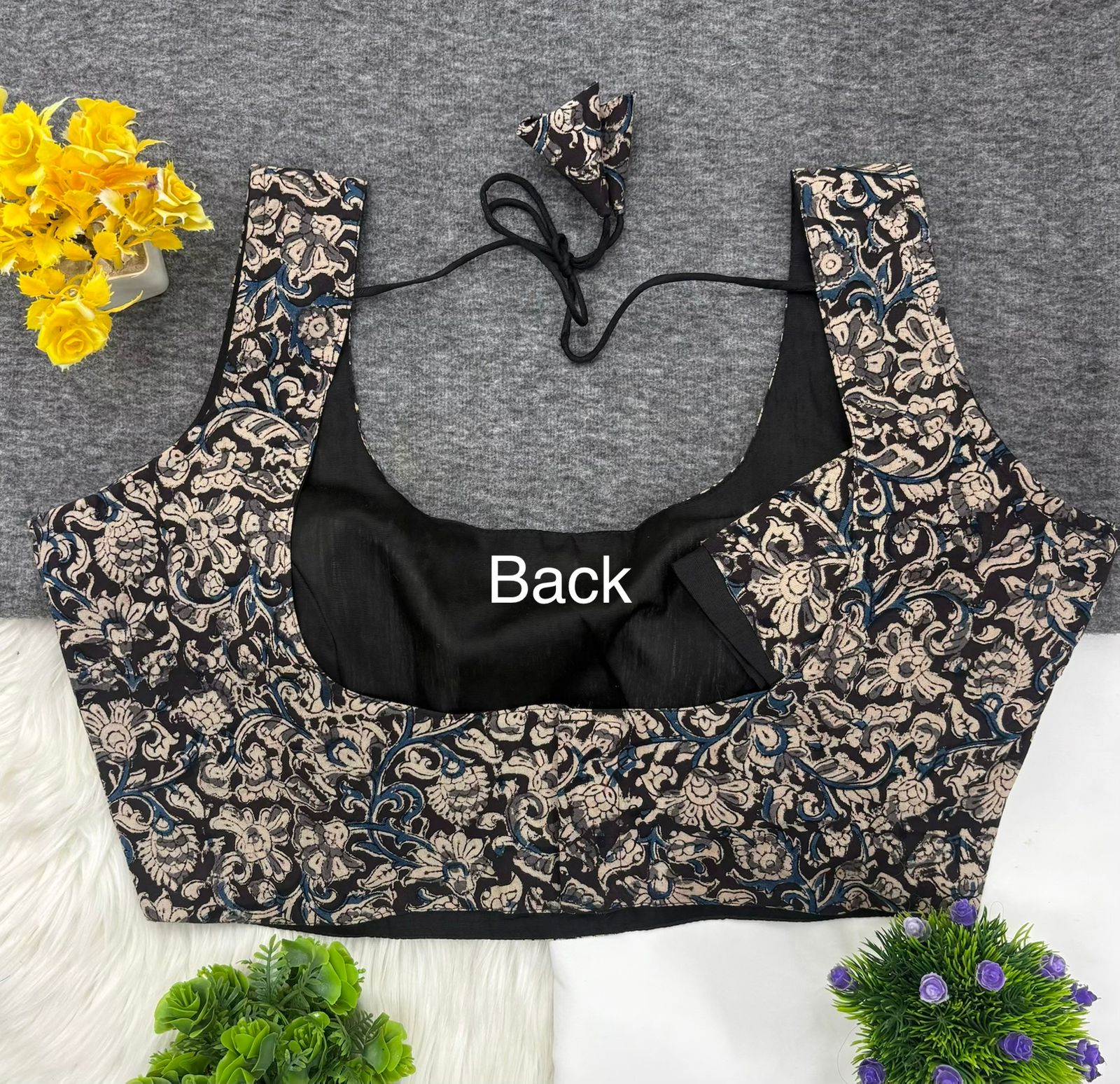
A moderate neckline and short or elbow-length sleeves give a balanced traditional appearance and provide useful coverage in a temple environment. A matching blouse creates a calm coordinated outfit, while a contrast blouse can highlight one colour from a floral print or the shade of a border.
Blouse comfort matters during a long festival day. Shoulder movement should remain easy when carrying a phone, water bottle or small handbag. A blouse that's too tight across the upper arm can make the pallu difficult to adjust and can become uncomfortable in warm weather.
Which footwear and bag are practical?
Low block heels, padded sandals and clean flat shoes with secure straps are the most practical footwear for temple visits and procession routes. Very high heels are difficult on uneven streets, temple floors and areas where footwear must be removed.
A compact crossbody bag or small potli keeps both hands available, but crowded festival routes call for limited valuables. Carry tissues, a small water bottle, safety pins and a phone pouch if the schedule includes several hours outdoors. A cloth handkerchief can be more useful than an extra decorative accessory in humid weather.
Best Sarees for Chithirai Festival with Tamil Jewellery and Blouses
Gold-tone jhumkas, glass bangles, a bindi and jasmine flowers provide a recognisable Tamil festive finish without requiring heavy bridal jewellery. Accessories should match the visual weight of the saree rather than compete with its border or print.
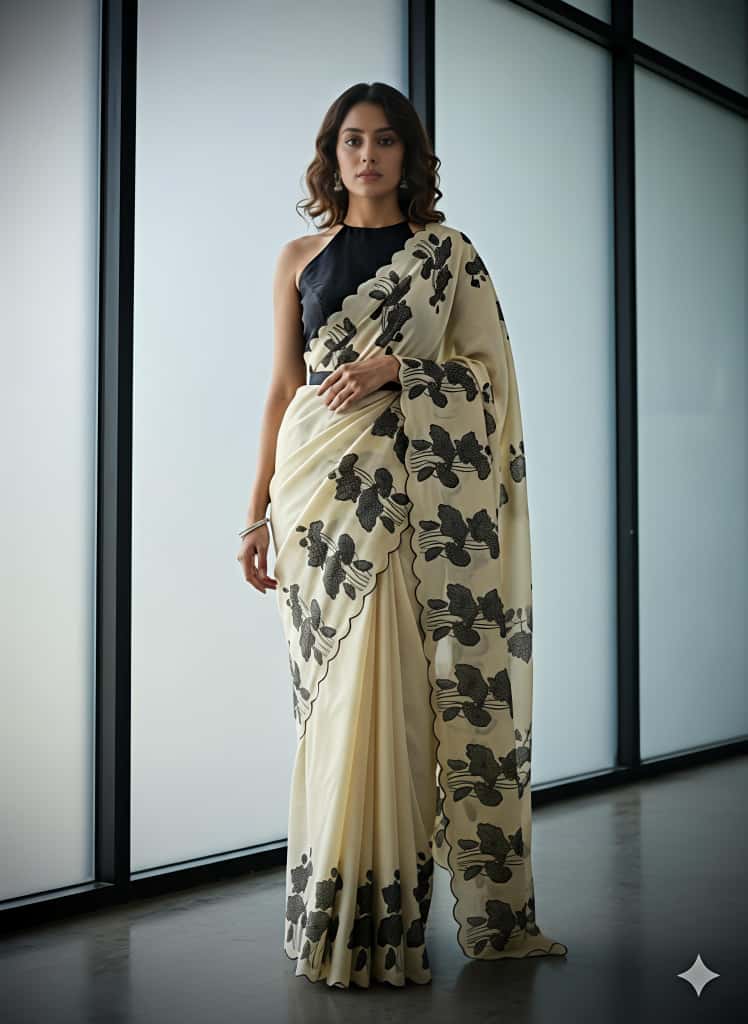
Temple jewellery with coin, peacock or deity-inspired forms can suit a formal family event, but a large necklace may overwhelm a heavily patterned blouse. Choose either a statement necklace or prominent earrings when the saree already has a broad border. Small gold-tone studs and bangles are enough for a simple linen-cotton daytime look.
A jasmine gajra or a small cluster tucked into a braid adds fragrance and traditional character. Carry a few spare hairpins because flowers can loosen during a long procession. A low bun or braid is usually more stable than an elaborate open hairstyle in heat and crowds.
Collections such as Sarees from Rs 1000 to Rs 1500 can be useful when you're comparing lightweight options for daytime events rather than investing in a ceremonial silk saree. Sarees Under 20% Off and Sarees Under 10% Off may also help shoppers compare price ranges, but fabric composition, blouse inclusion and measurements should be checked before discount percentage.
Best Sarees for Chithirai Festival According to the Day's Schedule
The day's schedule should determine the saree: breathable fabrics suit daytime crowds, formal silk suits short ceremonial appearances, and dressier fluid fabrics suit evening gatherings. Planning around activity is more reliable than choosing one saree solely because it looks festive in a product photograph.

- Morning temple visit: Wear linen cotton, cotton or lightweight silk with a pinned pallu, modest blouse and flat footwear.
- Family prayer or wedding-related gathering: Choose Kanjeevaram silk, silk cotton or a zari-bordered saree, and allow extra time for pleating.
- Outdoor procession: Avoid very long loose pallus, excessive embellishment and footwear that can't handle uneven streets.
- Evening cultural programme: Choose a richer colour, Chinon or silk, then add statement earrings and a more defined blouse.
- Multiple events in one day: Keep a spare blouse, safety pins, deodorant, tissues and a lightweight shawl or stole available.
Sarees Flat 60% Off and Sarees Flat 50% Off may be relevant for shoppers building a festival wardrobe on a fixed budget. A large discount doesn't automatically indicate suitability for Chithirai. Confirm the fabric, length, blouse piece, wash instructions and dispatch timeframe before making a purchase.
Best Sarees for Chithirai Festival: Care and preparation before wearing
Prepare the saree at least one day before the festival by checking the blouse fit, pressing the fabric and testing the complete drape. Advance preparation prevents last-minute problems with slipping pleats, mismatched colours or uncomfortable footwear.

For linen-cotton sarees, follow the garment's stated wash and ironing instructions because high heat can affect printed surfaces and fabric texture. Iron the reverse side when recommended, and place a thin cotton cloth between the iron and the print if the care label permits ironing. Store the saree folded loosely rather than compressed under heavy garments.
Silk sarees require more careful storage. Keep Kanjeevaram silk away from direct sunlight and damp walls, refold it periodically to reduce permanent fold lines, and avoid spraying perfume directly onto zari or silk. Professional cleaning is safer for heavily woven or embellished sarees than repeated home washing.
Try sitting, walking up a few steps and raising one arm while wearing the fully styled outfit. That simple test reveals whether the pleats are too tight, the blouse restricts movement or the pallu needs another pin. A festival saree should remain elegant after movement, not only while standing still for a photograph.
Questions About Choosing a Saree for Chithirai Festival
What is the best fabric for a Chithirai Festival saree?
Linen cotton, cotton and lightweight silk are practical fabrics for daytime Chithirai events because they allow easier movement in warm weather. Kanjeevaram silk is better suited to formal family ceremonies or shorter ceremonial appearances.
Can I wear a cotton saree to a Chithirai temple visit?
Yes, a neat cotton saree is appropriate for a Chithirai temple visit when it is modestly draped and paired with a secure pallu and suitable blouse. A crisp border, simple jewellery and clean stable footwear can make cotton look distinctly festive.
Which saree colours are suitable for Chithirai Festival?
Red, maroon, yellow, orange, green, teal and pink all suit Chithirai celebrations. Choose a colour that works with the time of day, your blouse and the jewellery you plan to wear.
Is Kanjeevaram silk too heavy for Madurai's Chithirai Festival?
Kanjeevaram silk can feel heavy during long outdoor events, especially when it has a broad zari border or dense pallu. It remains an excellent choice for shorter formal functions, while linen cotton or cotton-silk is usually more comfortable for extended daytime walking.
How can I stop my saree from slipping during a procession?
Make firm, even pleats, tuck them securely and use one safety pin at the shoulder and another near the waist inside the pallu. Choose a blouse with a comfortable shoulder fit and avoid an excessively long loose pallu.
What jewellery goes well with a Tamil festive saree?
Gold-tone jhumkas, glass bangles, a bindi and jasmine flowers suit most Tamil festive sarees. Use fewer large pieces when the saree already has a bold floral print, wide border or bright contrast blouse.