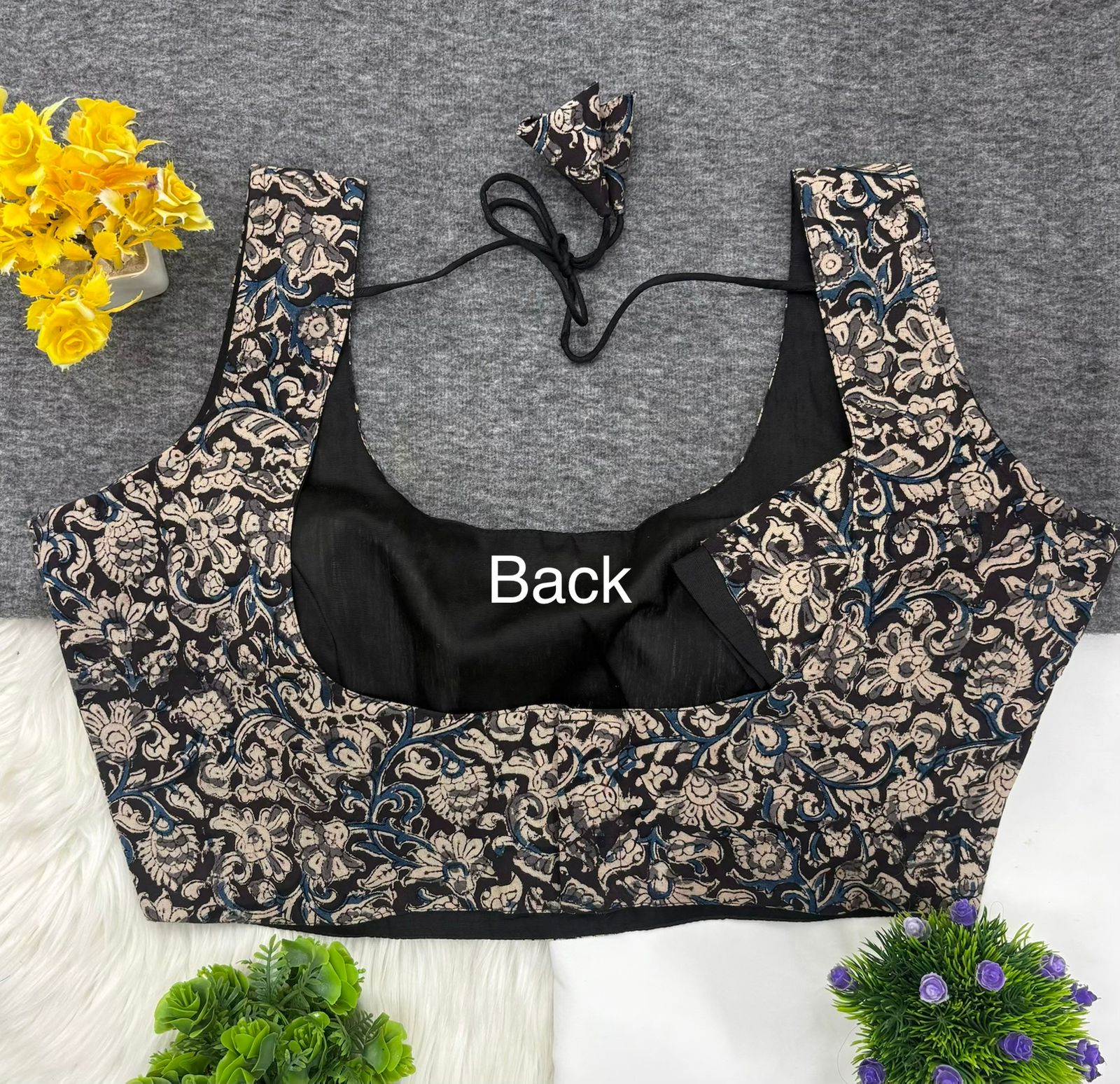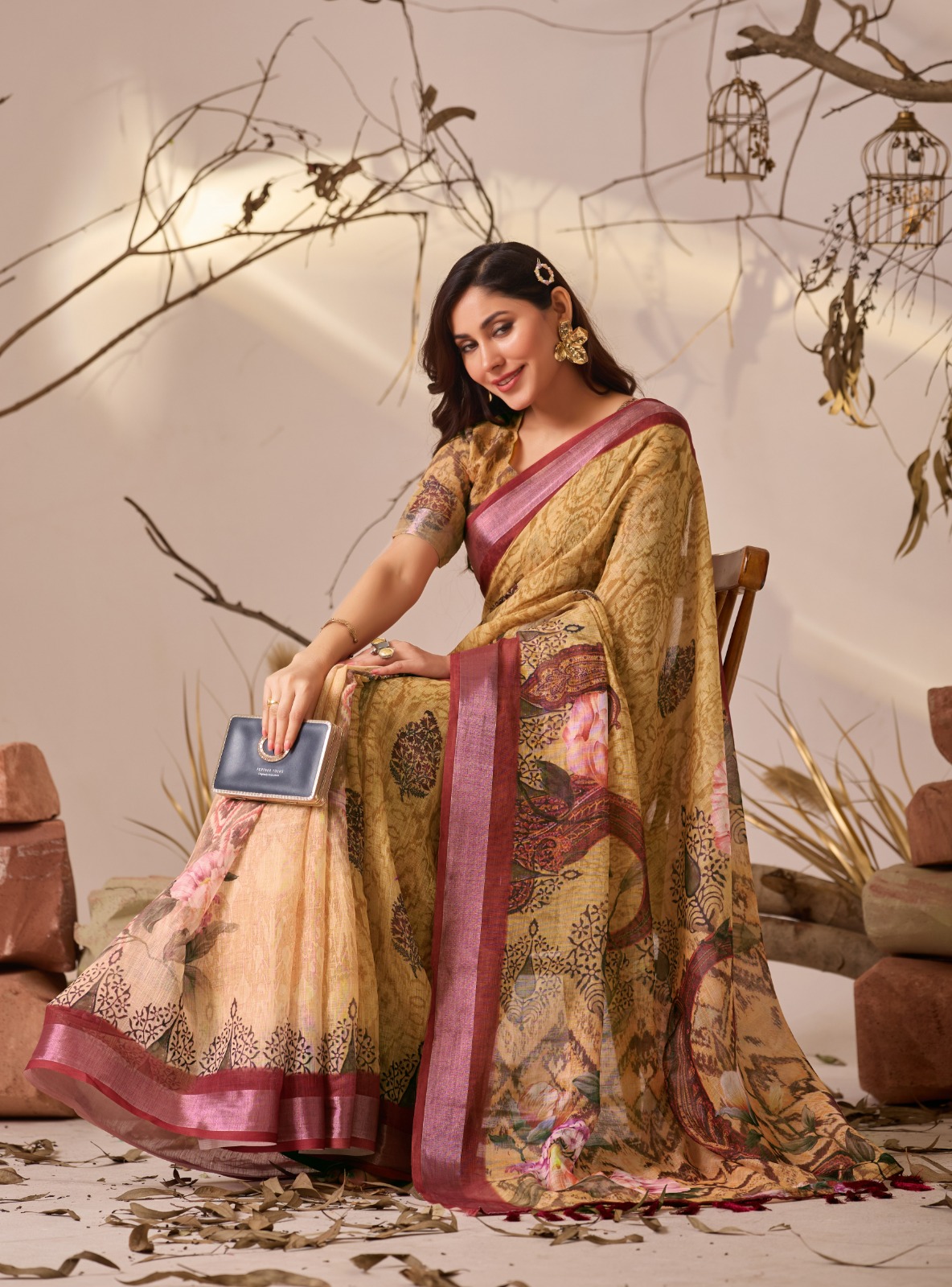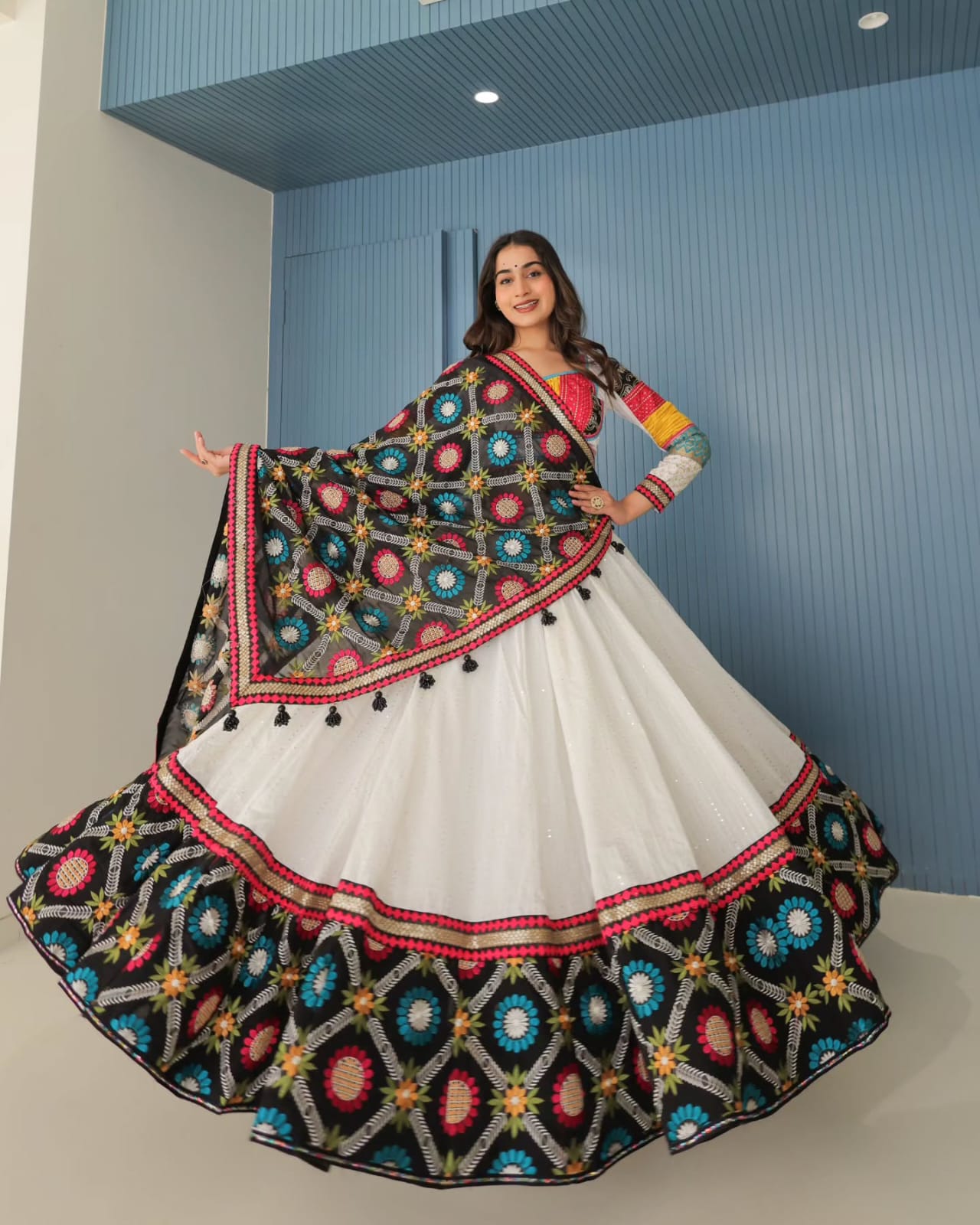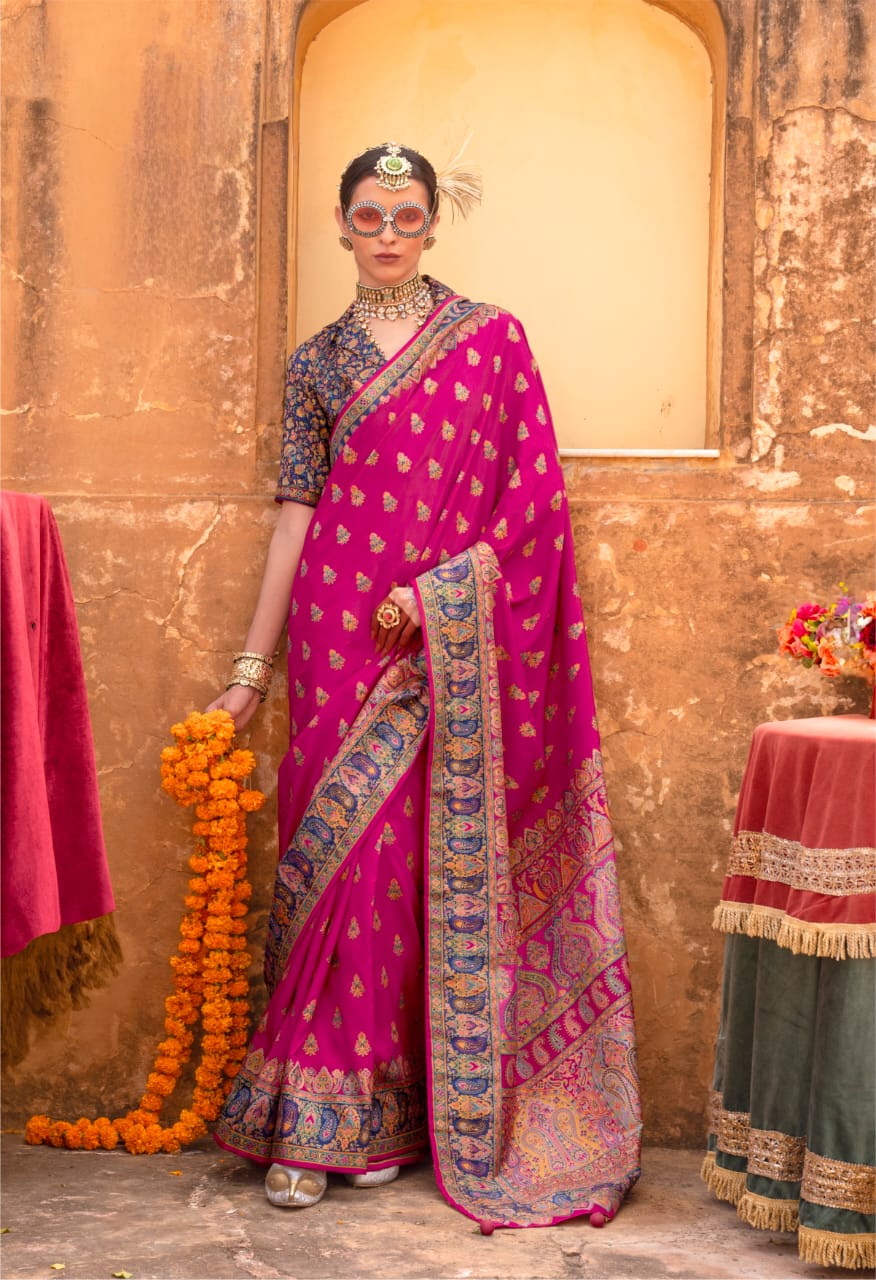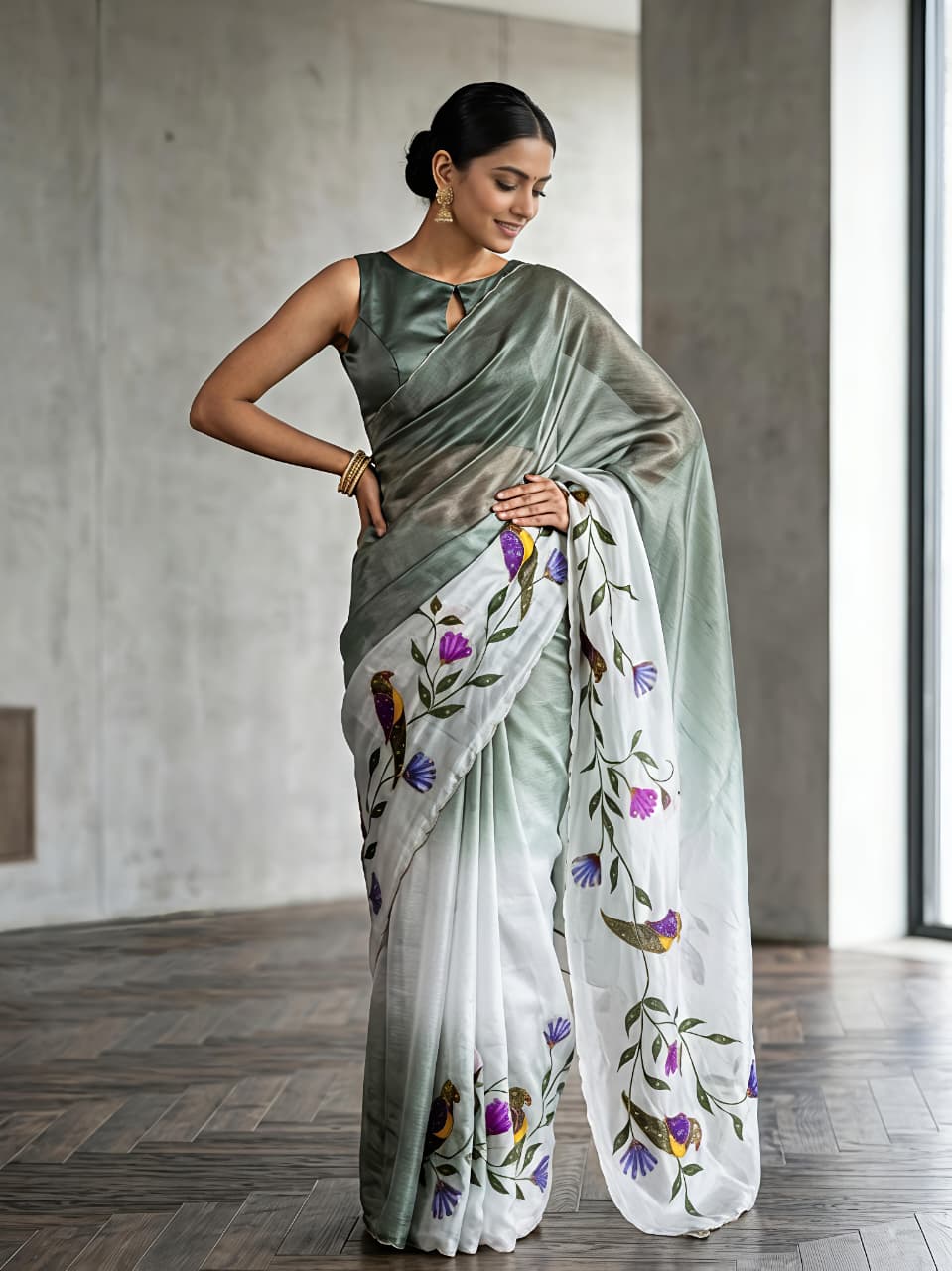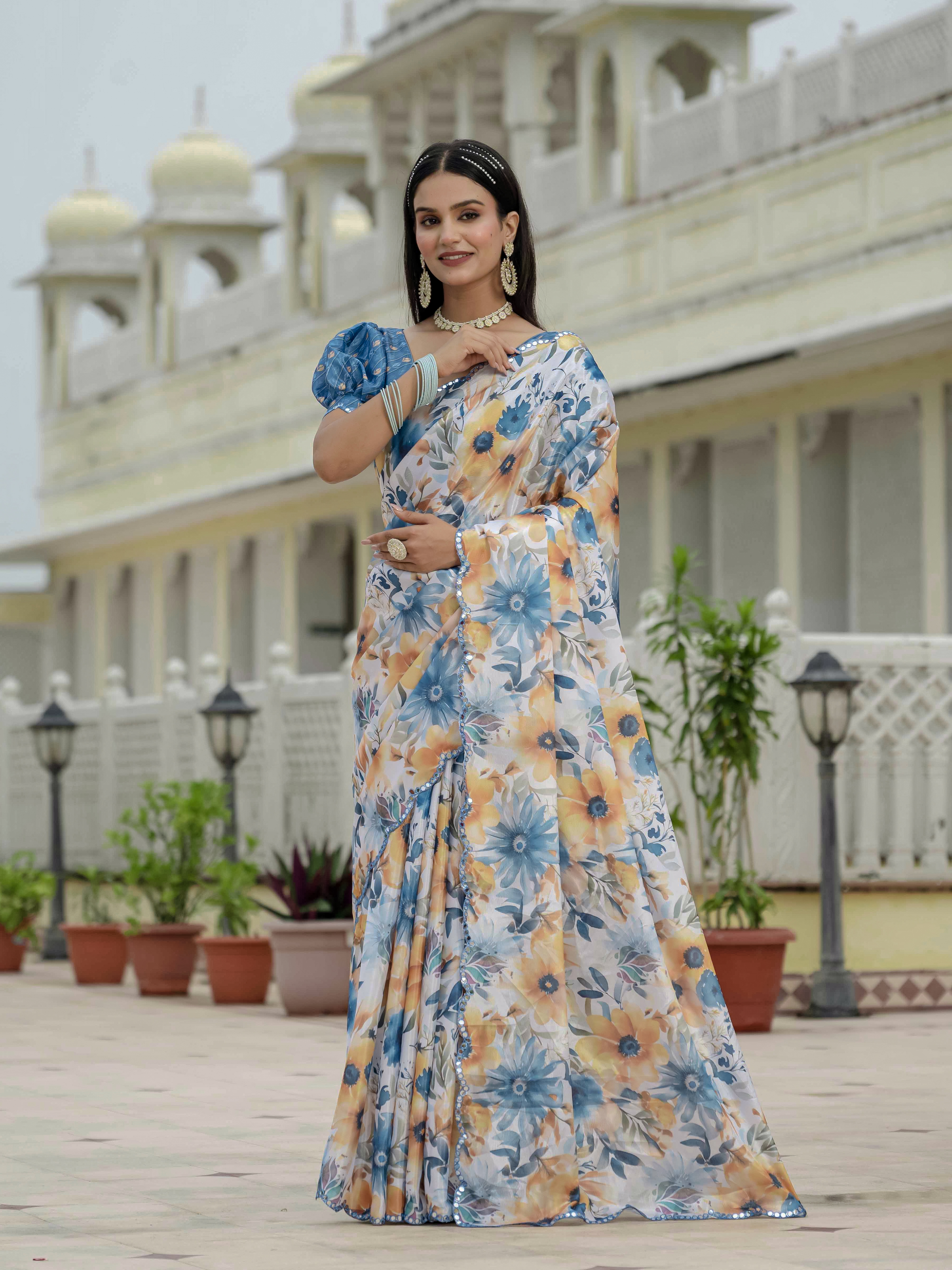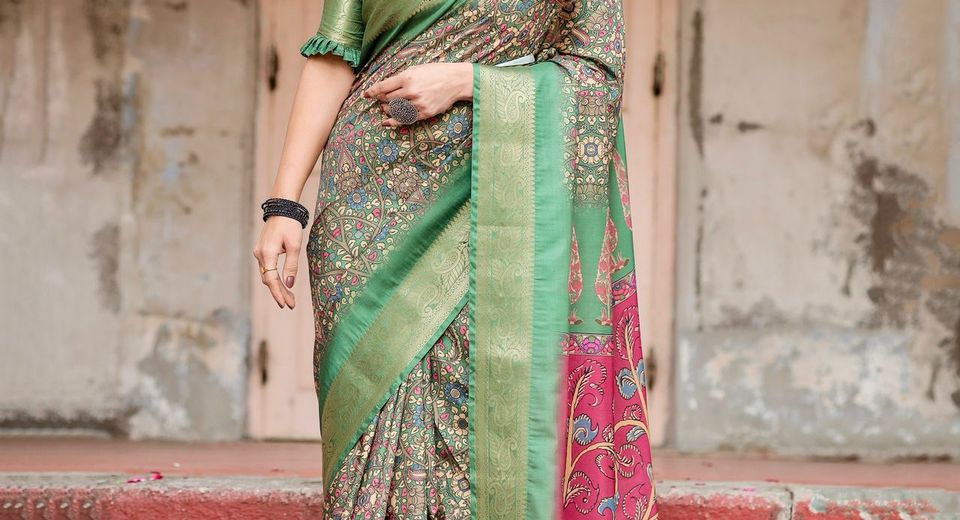
Best Saree Colour Combinations Inspired by Mizo Textiles begin with a confident use of contrast. Mizo textiles are often recognised through strong bands, geometric rhythms and colour groupings that can include red, black, white, green, yellow and deep blue. A saree inspired by that visual language doesn't need to copy a traditional Mizo garment; it can borrow the discipline of the palette and translate it into a balanced drape, blouse and accessory plan.
The most useful styling principle is to choose one dominant colour, one supporting colour and one small accent. For example, a black saree with red borders can take a white blouse accent, while a teal saree can use beige to soften the contrast. The result feels distinctive without turning every element of the outfit into a competing pattern.
What Makes Mizo Textiles a Strong Colour Reference?
Mizo textiles offer a strong colour reference because their visual impact often comes from ordered contrast rather than a large number of unrelated shades. Puanchei and other Mizo woven garments are associated with carefully arranged stripes, bands and motifs, although colours and patterns vary by textile, community and contemporary interpretation.
Red can bring warmth and ceremony, black can create definition, white can provide visual space, green can suggest freshness, and yellow can act as a bright highlight. Deep blue and earthy beige are useful bridging shades when a saree palette needs to feel less stark. These relationships matter more than copying a particular motif onto a saree.
Respectful styling also requires accurate language. A modern saree with a geometric border may be Mizo-inspired, but it should not be described as a Mizo time-honoured garment unless its provenance supports that claim. The inspiration can be acknowledged through colour balance, stripe placement and textile appreciation.
Best Saree Colour Combinations Inspired by Mizo Textiles
Red, black and white
Red, black and white create the clearest high-contrast combination for a Mizo-inspired saree look. Use red as the primary saree colour, black for the blouse or border, and white in a narrow stripe, earrings or embroidery detail.
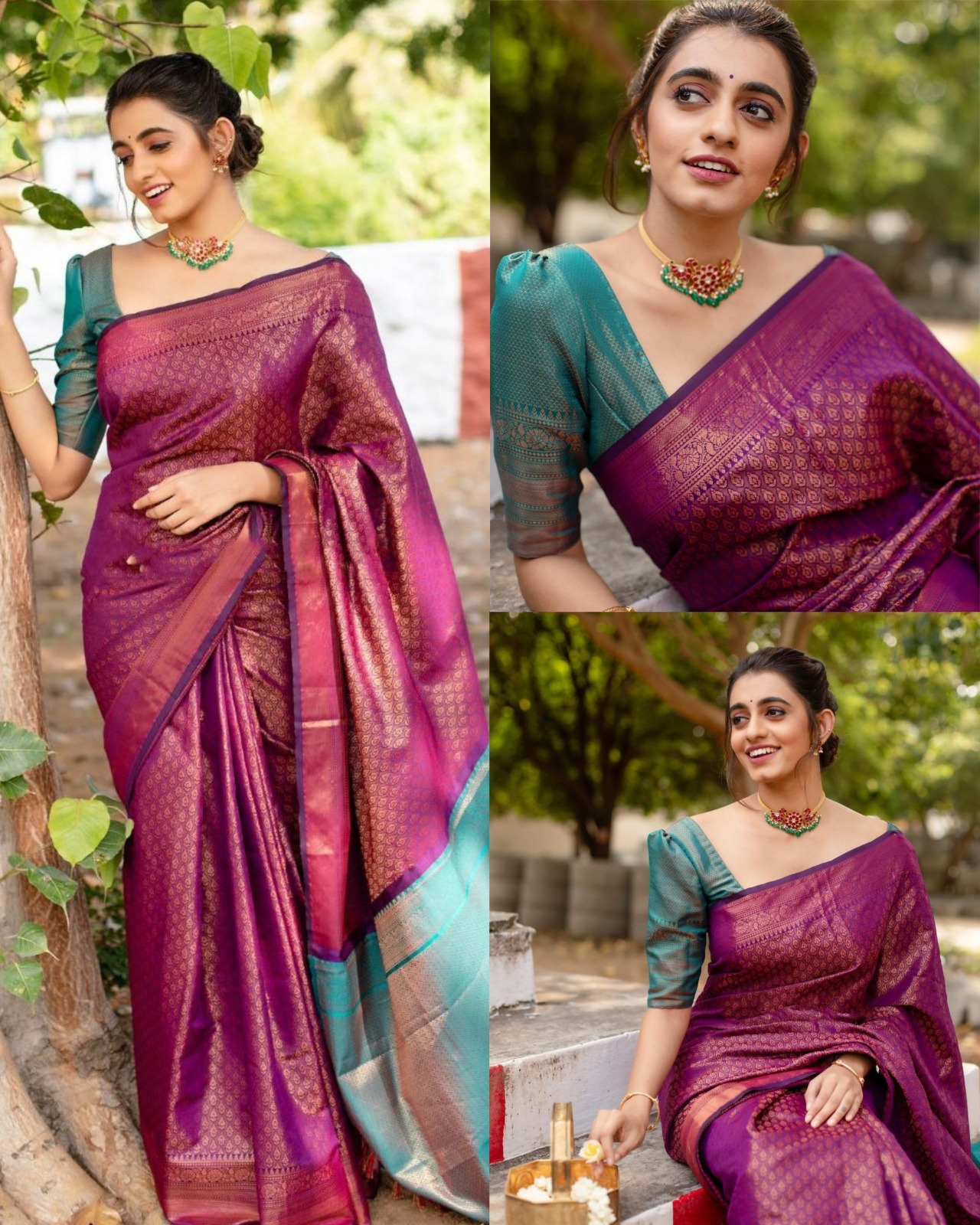
A red saree with a black blouse works particularly well for evening celebrations because black gives saturated red a sharper outline. Keep the jewellery metallic rather than multicoloured; antique gold, oxidised silver or a single white-stone necklace will preserve the graphic quality. A white potli or white flowers can repeat the accent without making the outfit look costume-like.
The Magenta Lichi Silk Saree with Copper Zari Pallu offers a related approach when magenta replaces classic red. Pair it with a black blouse, copper-toned earrings and a restrained white detail in the hair or bangles. Copper zari is warmer than silver, so bronze, rose-gold and antique-gold accessories will connect more naturally than bright white gold.
Green, black and yellow
Green, black and yellow create an energetic palette that suits daytime festive dressing. Let green occupy the largest area, use black to anchor the blouse or border, and reserve yellow for a narrow contrast detail.
A deep green saree with a black sleeveless or elbow-length blouse looks polished when the yellow appears only in bangles, a small border, a clutch or threadwork. Mustard is easier to wear than lemon yellow with rich green because mustard has enough depth to sit beside black without appearing fluorescent.
The Green Mughal Print Tussar Silk Saree with Zari Border demonstrates why a patterned green saree benefits from a quiet blouse. A black, muted mustard or warm beige blouse can support the zari border while keeping the printed surface visible. Gold jhumkas and a low bun complete the look without adding another strong colour.
Teal, beige and red
Teal, beige and red make a balanced Mizo-inspired combination for people who prefer colour with less visual intensity. Teal can lead, beige can soften the outfit, and red can appear as a controlled accent in the blouse piping, bindi, bag or woven border.
This palette is particularly useful for linen and handloom sarees because beige echoes the natural character of the weave. A teal blouse with a beige saree creates a calm base, while a red blouse with a teal saree gives a more festive result. Avoid adding bright yellow jewellery to the same outfit, because the palette already has enough contrast.
Varnavi Beige Teal Heritage Art Handloom Linen Saree is a practical example of this muted-to-bold relationship. Choose a red or rust blouse for a celebration, or repeat beige in the blouse for a quieter daytime appearance. Terracotta jewellery, wooden bangles and a tan leather-style clutch keep the handloom mood grounded.
Blue, red and ivory
Blue, red and ivory create a versatile combination that can move from a cultural event to a contemporary evening gathering. Use blue as the base, red as the contrast, and ivory as the breathing space around the face.
A red blouse with a blue saree is visually decisive, so select a plain blouse when the saree includes an ikat-inspired or geometric print. Ivory can appear through a woven bag, pearl studs, an off-white underskirt edge or a narrow blouse trim. Silver jewellery suits cooler blue, while antique gold works better when the red is deep and warm.
Blue Red Ikat Silk Saree Online with Zari | Varnavi already brings the two strongest colours together. A plain ivory blouse will reduce visual density, whereas a red blouse will create a more dramatic festive silhouette. Keep the pallu fully visible when the ikat-inspired pattern is the main point of interest.
Multicolour, black and metal accents
A multicolour saree needs a neutral anchor, and black is one of the most reliable choices. Select one colour from the print for the blouse, then repeat a second colour only through jewellery or footwear.
Vibrant Multicolor Linen Saree with Ikat Inspired Prints can be paired with a black blouse for a clear, graphic finish. A rust, green or red blouse will also work, but the chosen shade should appear visibly in the saree rather than being introduced at random. Linen usually benefits from matte accessories, such as oxidised silver, wood, terracotta or brushed metal.
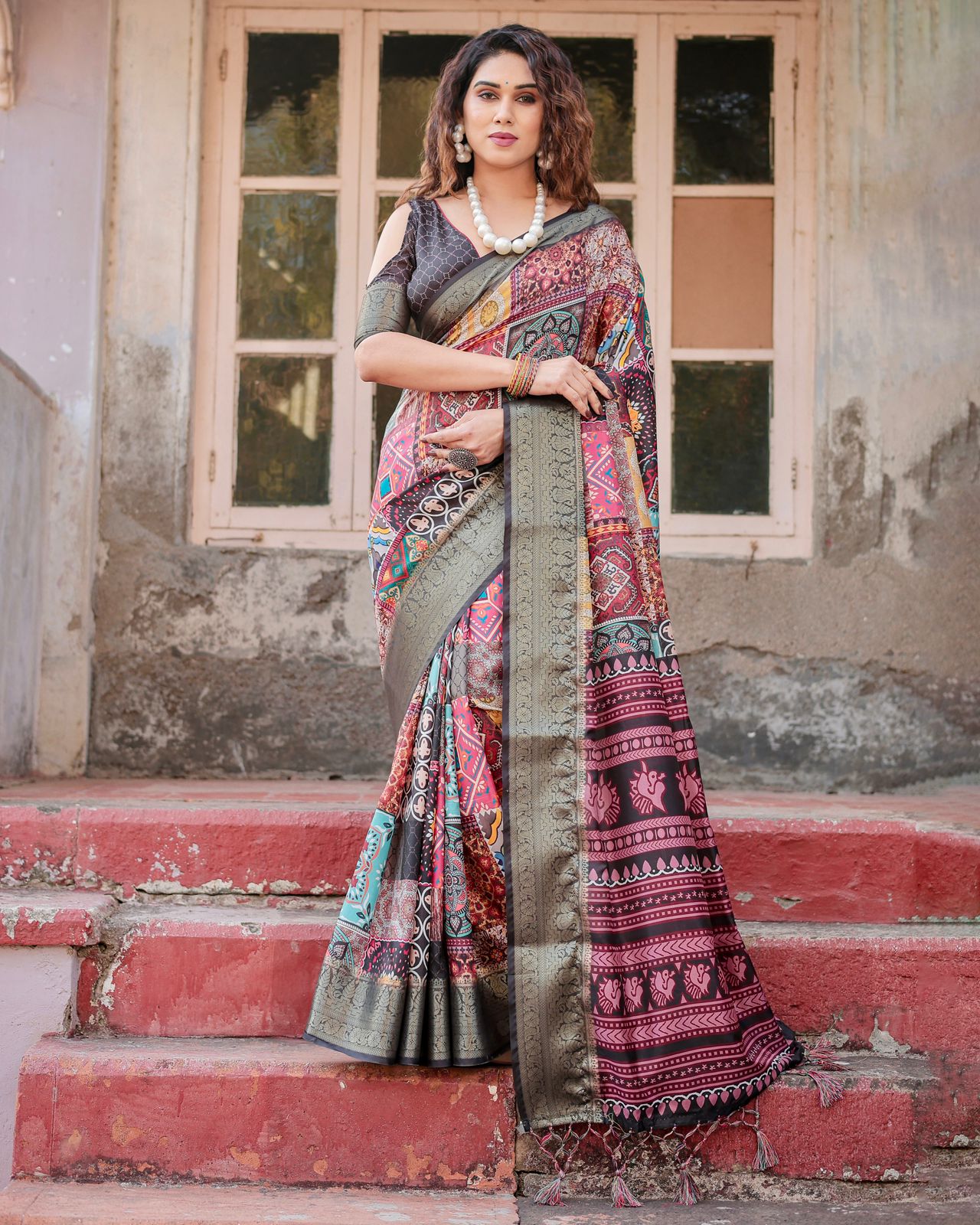
Multi Color Banarasi Silk Saree with Artistic Prints calls for a different treatment because Banarasi silk and zari already reflect light. Choose a solid blouse in black, deep red or one dominant print colour, and avoid heavily embellished jewellery if the saree has a richly detailed pallu. A small metal clutch is enough to connect the festive elements.
How Should the Blouse Be Chosen for a Mizo-Inspired Saree?
The blouse should repeat one meaningful saree colour and remain simpler than the dominant woven or printed detail. This approach allows the colour story to read clearly from a distance.
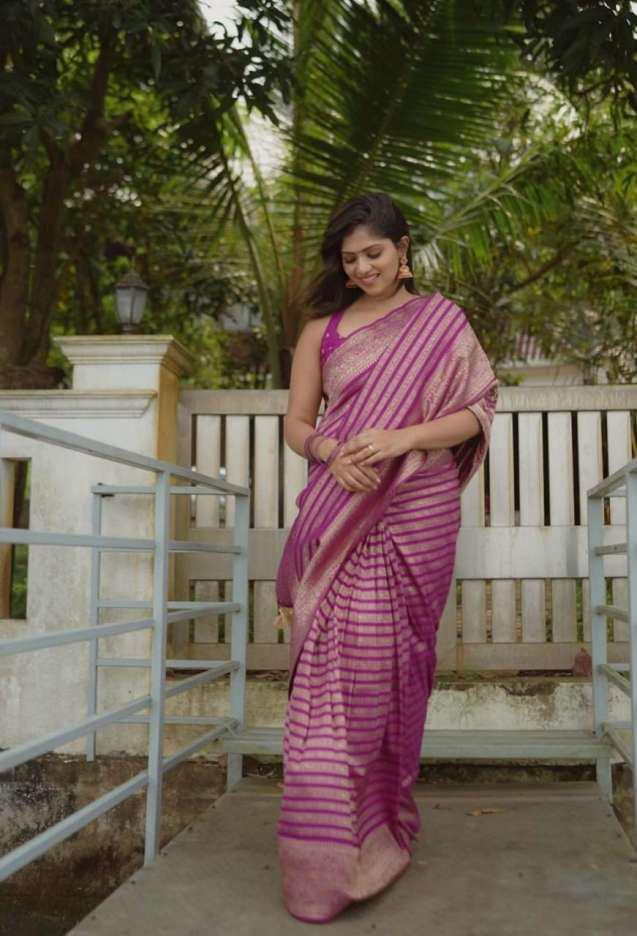
For a striped or geometric saree, a plain blouse usually creates the best proportion. A square neckline or high round neckline can echo the structured quality of bands and borders, while a V-neck introduces softness. Elbow-length sleeves are useful for formal daytime events, and sleeveless cuts can make a dense colour palette feel lighter at night.
Use pattern on the blouse only when the saree surface is relatively quiet. A narrow geometric trim, a single contrast piping line or small woven motifs can reference Mizo textile structure without producing pattern overload. A blouse in the exact same print as the saree may hide the separation between the torso and the drape.
For fitting, leave enough ease to sit and raise the arms comfortably. A blouse that's too tight across the bust can pull the saree pleats out of alignment, especially in silk and linen with less stretch. A trial fitting at least 7 to 10 days before an event gives time for shoulder, sleeve and neckline adjustments.
How Can Borders, Pallu and Pleats Carry the Colour Story?
The border and pallu should carry the strongest secondary colour, while the pleats should preserve the saree's main field colour. This division keeps the outfit readable instead of visually fragmented.
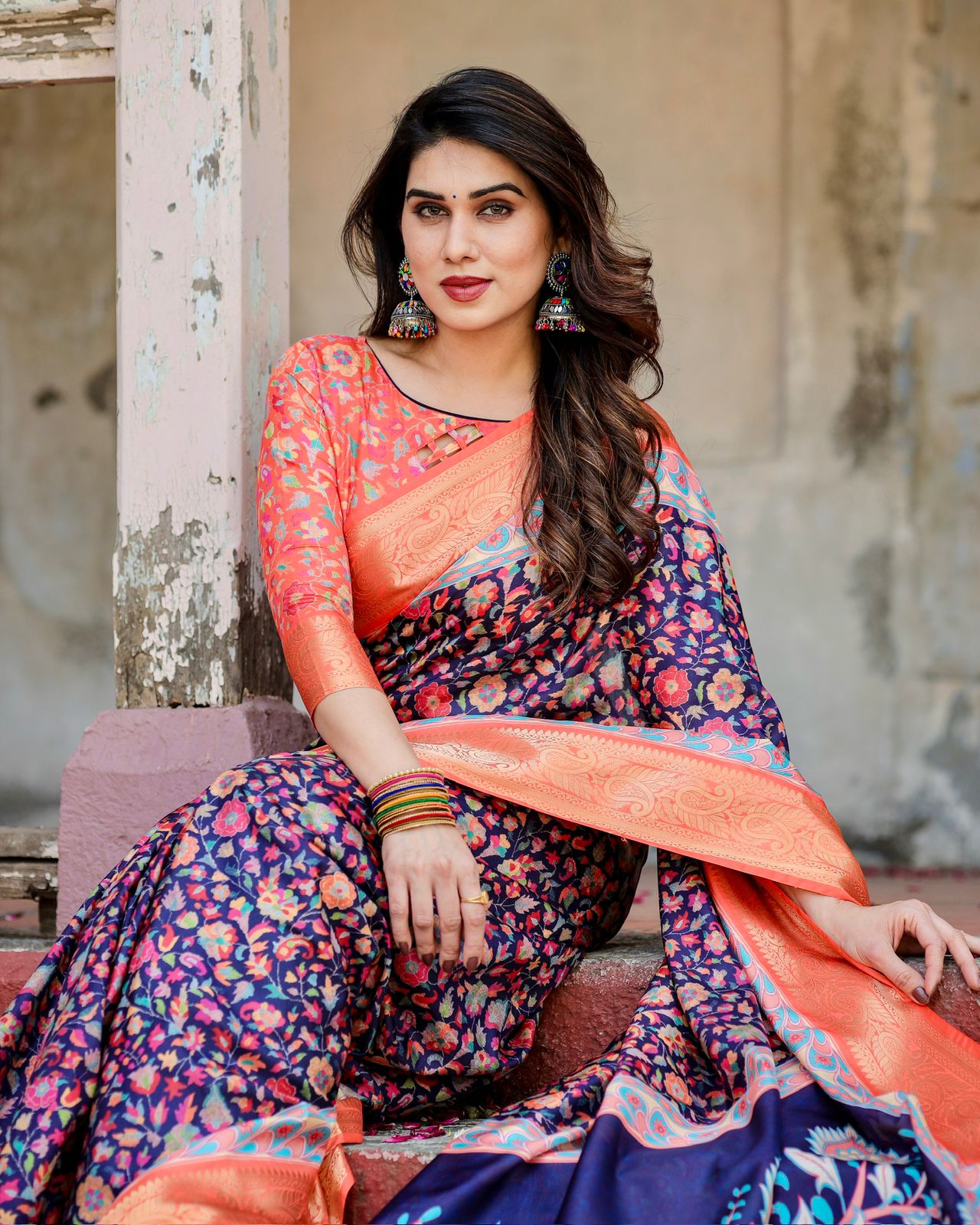
When the saree has a narrow border, repeat the border colour in the blouse or earrings. When the saree has a broad pallu, allow the pallu to remain unobstructed by a large brooch or oversized necklace. A seedha pallu can display a graphic border more fully, while a conventional shoulder drape gives a softer vertical line.
Pinning also affects colour visibility. Place one safety pin near the shoulder and a second pin below the bust to stabilise the pallu without flattening its fall. Make five to seven front pleats of similar width, depending on the saree fabric and your preferred silhouette. Uneven pleats can break the visual rhythm that makes striped or banded inspiration effective.
For Banarasi silk, use smooth, strong pins placed from the underside so the zari isn't exposed to repeated friction. For linen, press the pleats lightly before draping and avoid pulling the fabric too tightly. For Tussar silk, a slightly relaxed drape often looks more natural than sharply compressed pleats.
Which Fabrics Work Best with These Colour Combinations?
Linen, silk, Tussar silk and Banarasi silk each interpret strong colour differently, so fabric choice should follow the level of structure and shine desired.
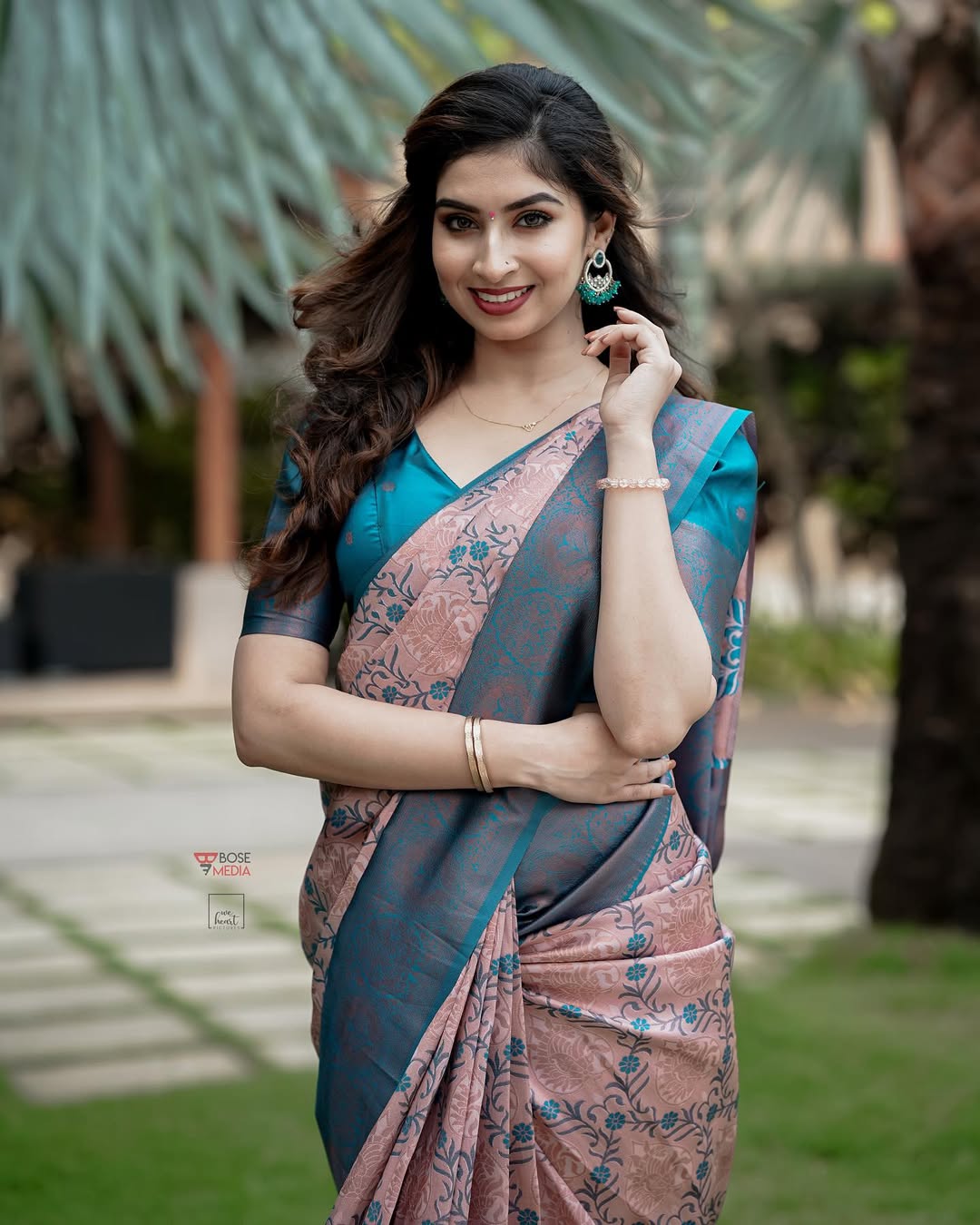
- Linen: Linen softens saturated colour and makes red, teal, black and beige suitable for daytime wear. Its texture supports handloom-inspired styling, but it should be stored dry and folded with a clean cotton cover.
- Banarasi silk: Banarasi silk intensifies colour through sheen and zari. Deep red, magenta, black, blue and emerald green are effective for weddings and evening celebrations.
- Tussar silk: Tussar silk has a gently irregular texture that works well with earthy green, mustard, beige, rust and black. The fabric usually looks better with moderate rather than excessive embellishment.
- Lichi silk: Lichi silk can give magenta and jewel tones a smooth, festive surface. Copper zari, antique gold and warm neutral accessories tend to complement its richness.
Care affects long-term colour quality. Store silk sarees away from direct sunlight, refold them every few months to prevent permanent creases, and use professional dry cleaning when the care label recommends it. Do not spray perfume directly onto zari or silk, because alcohol and oils can leave marks over time.
How Can You Style Mizo-Inspired Sarees for Different Occasions?
Occasion styling works best when the colour contrast remains constant but the jewellery, blouse finish and drape change. The same red-black palette can look formal, minimal or celebratory depending on the supporting details.
For a Haldi ceremony
Yellow, green and red combinations suit a Haldi ceremony when the fabrics are comfortable and the jewellery is easy to remove. Choose a lighter saree, secure the pallu firmly, and wear small metal or fabric earrings rather than delicate pieces that can stain.
For a wedding reception
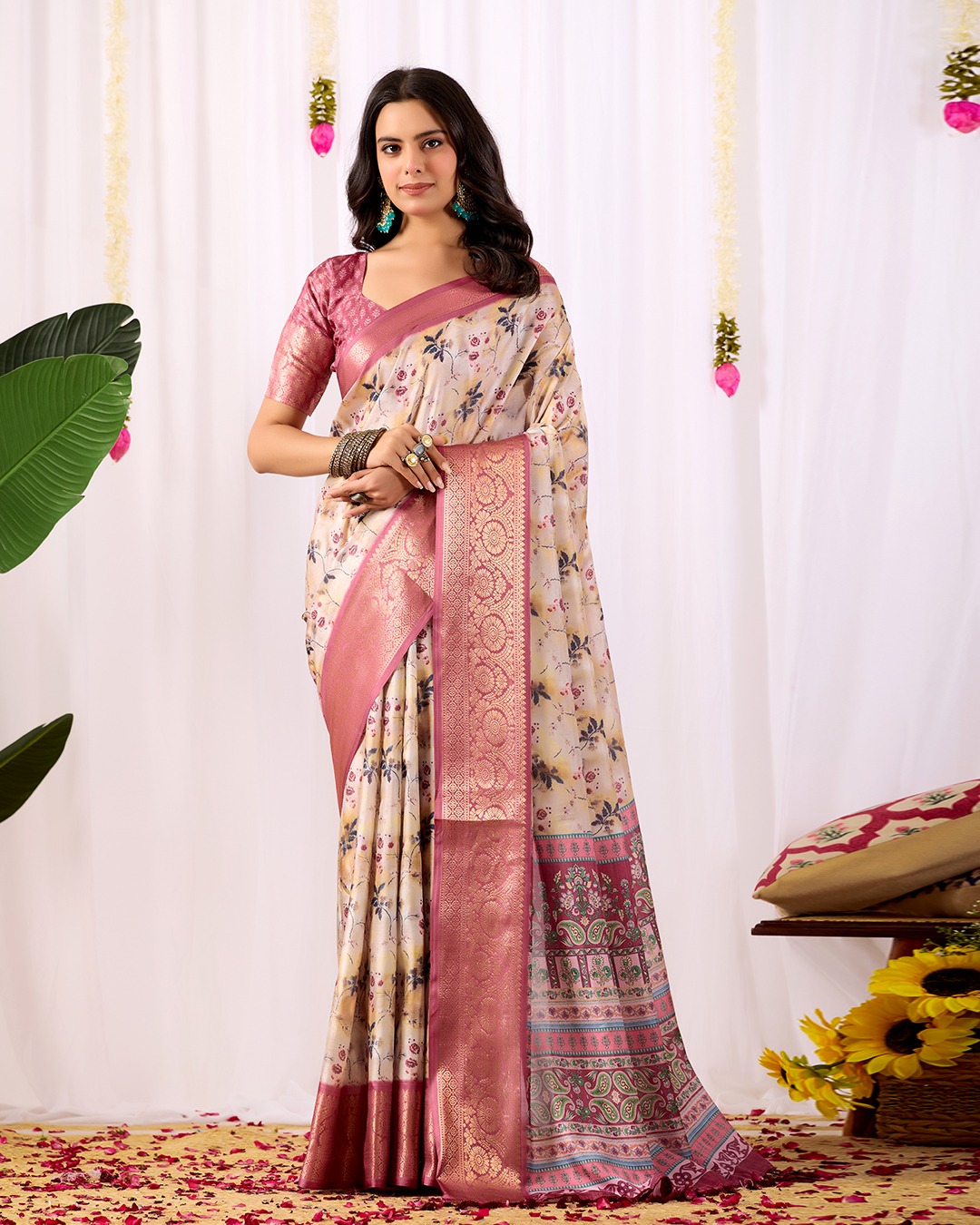
Magenta, red, blue, black and zari create a reception-ready palette when paired with a defined blouse and polished drape. A Banarasi silk saree with a solid blouse, structured clutch and one substantial necklace usually looks more refined than several competing accessories.
For a cultural or handloom event
Teal, beige, black, rust and green suit a handloom event because the palette allows texture to remain visible. Choose a linen or Tussar silk saree, oxidised silver jewellery and a practical low bun that keeps the neckline and pallu border clear.
For everyday festive dressing
Blue, ivory, muted green and beige offer an easier everyday festive combination than saturated red and black. Use a cotton or linen saree, a short-sleeved blouse and lightweight earrings so the look remains comfortable for several hours.
Where Can You Compare Sarees for These Colour Ideas?
Budget comparison is more useful when the saree's fabric, border detail and colour density are considered together. A lower price doesn't automatically mean a better match if the blouse and accessory costs are substantially higher.
The Sarees from Rs 1000 to Rs 1500 collection can be a practical starting point for testing a red-black, teal-beige or blue-ivory palette without committing to a heavily embellished saree. The Sarees Under 20% Off collection may offer more room to compare silk, linen and printed options while keeping the focus on construction rather than discount size.
For shoppers building a festive wardrobe gradually, Sarees Flat 50% Off can be considered alongside fabric composition and care requirements. Check the product details for the actual fibre, zari description, measurements and return conditions before choosing a saree for an important event.
The most successful Mizo-inspired saree styling usually has one clear visual decision: a red border against black, teal softened by beige, blue interrupted by red, or green lifted by yellow. Once that decision is made, the blouse, jewellery and drape should support it rather than introduce another unrelated colour.
Questions About Mizo-Inspired Saree Colour Pairings
What colours are commonly used for a Mizo-inspired saree palette?
Red, black, white, green, yellow and deep blue are useful starting colours for a Mizo-inspired saree palette. Beige, teal and rust can be added as bridging shades when a softer contemporary combination is preferred.
Which blouse colour goes with a red and black saree?
A plain black blouse is the safest choice for a red and black saree because it strengthens the contrast and keeps the look coordinated. White, ivory or muted beige can work as lighter alternatives when the saree has a broad dark border.
How can I style a multicolour saree without looking overdressed?
Choose a plain blouse in one colour already present in the saree and keep the jewellery in one metal family. A black blouse is especially effective with multicolour ikat-inspired prints, while matte accessories prevent excessive shine.
Is Banarasi silk suitable for Mizo-inspired colour combinations?
Banarasi silk is suitable when its zari and shine are balanced with a solid blouse and limited jewellery. Deep red, magenta, blue, black and green work well, but a heavily printed or embellished saree should not be paired with an equally elaborate blouse.
What saree colour combination works for a Haldi ceremony?
Green, yellow and red create a festive combination for a Haldi ceremony, especially in a lightweight linen or silk-blend saree. Secure the pallu carefully and choose jewellery that can be removed or cleaned easily if turmeric comes into contact with the outfit.
How do I care for a silk saree with zari after wearing it?
Air a silk saree in shade before storing it, then fold it with the zari facing inward and refold it every few months. Keep the saree in a clean cotton cover away from moisture, sunlight and direct perfume, and follow the care label for professional cleaning.