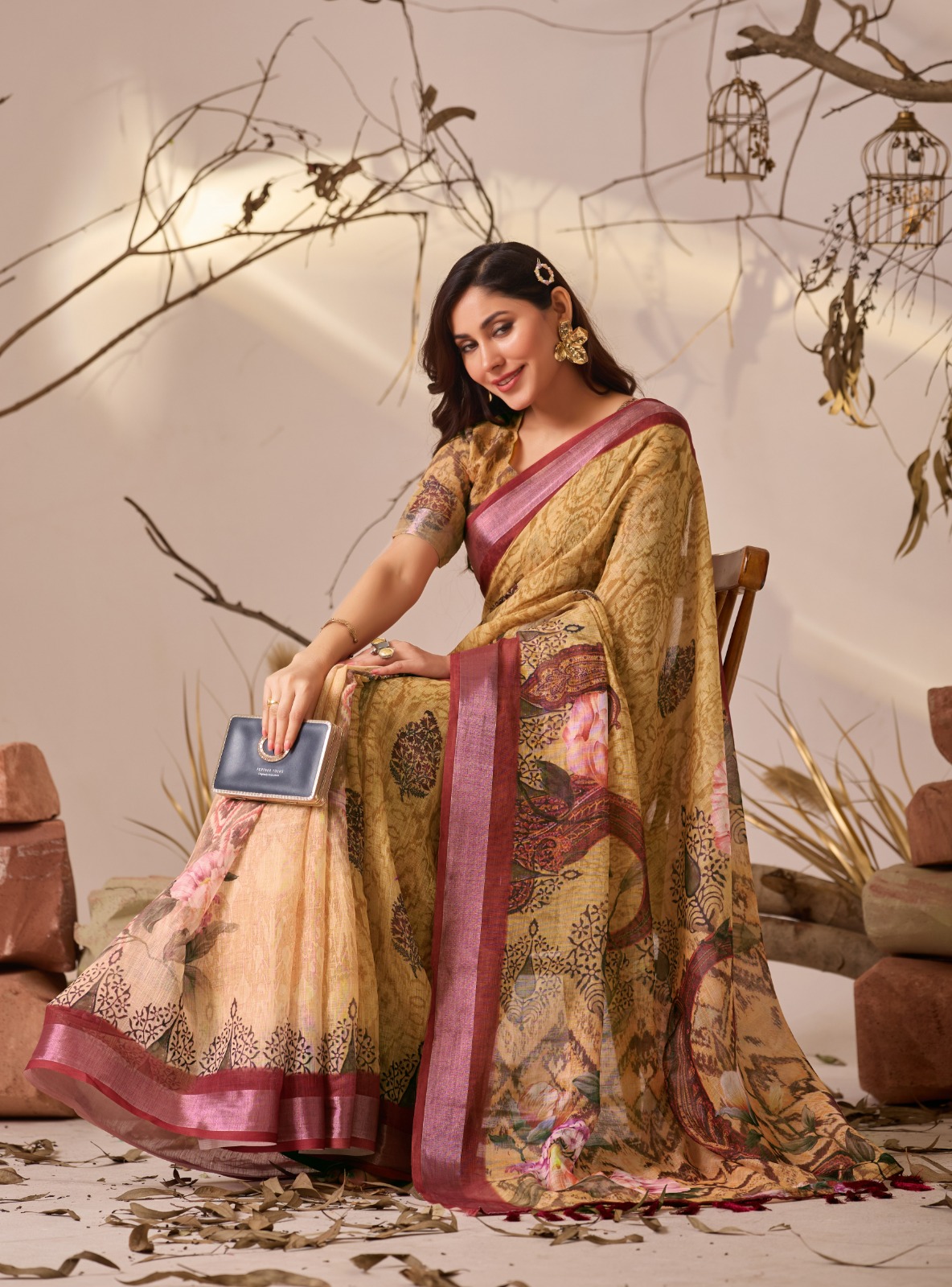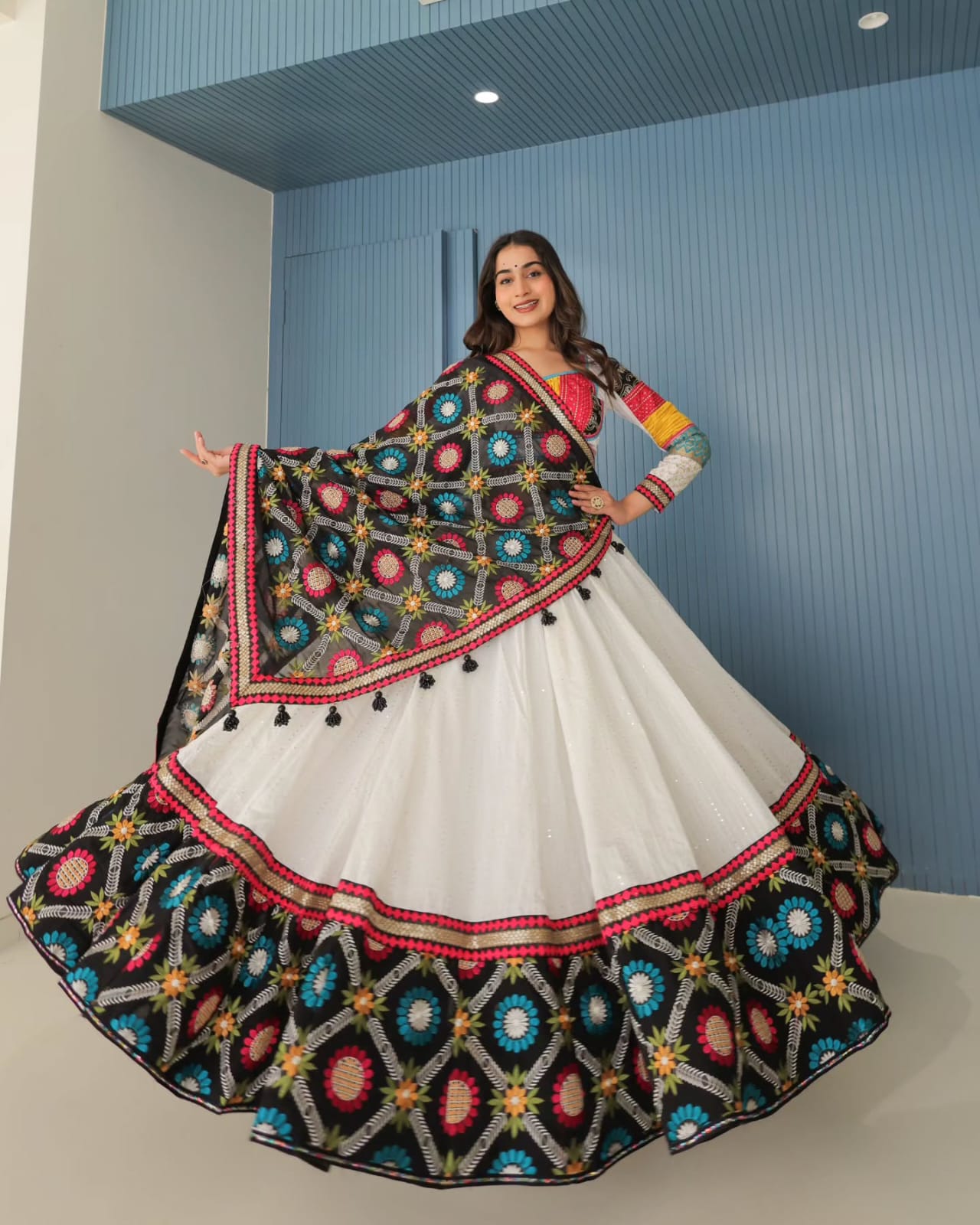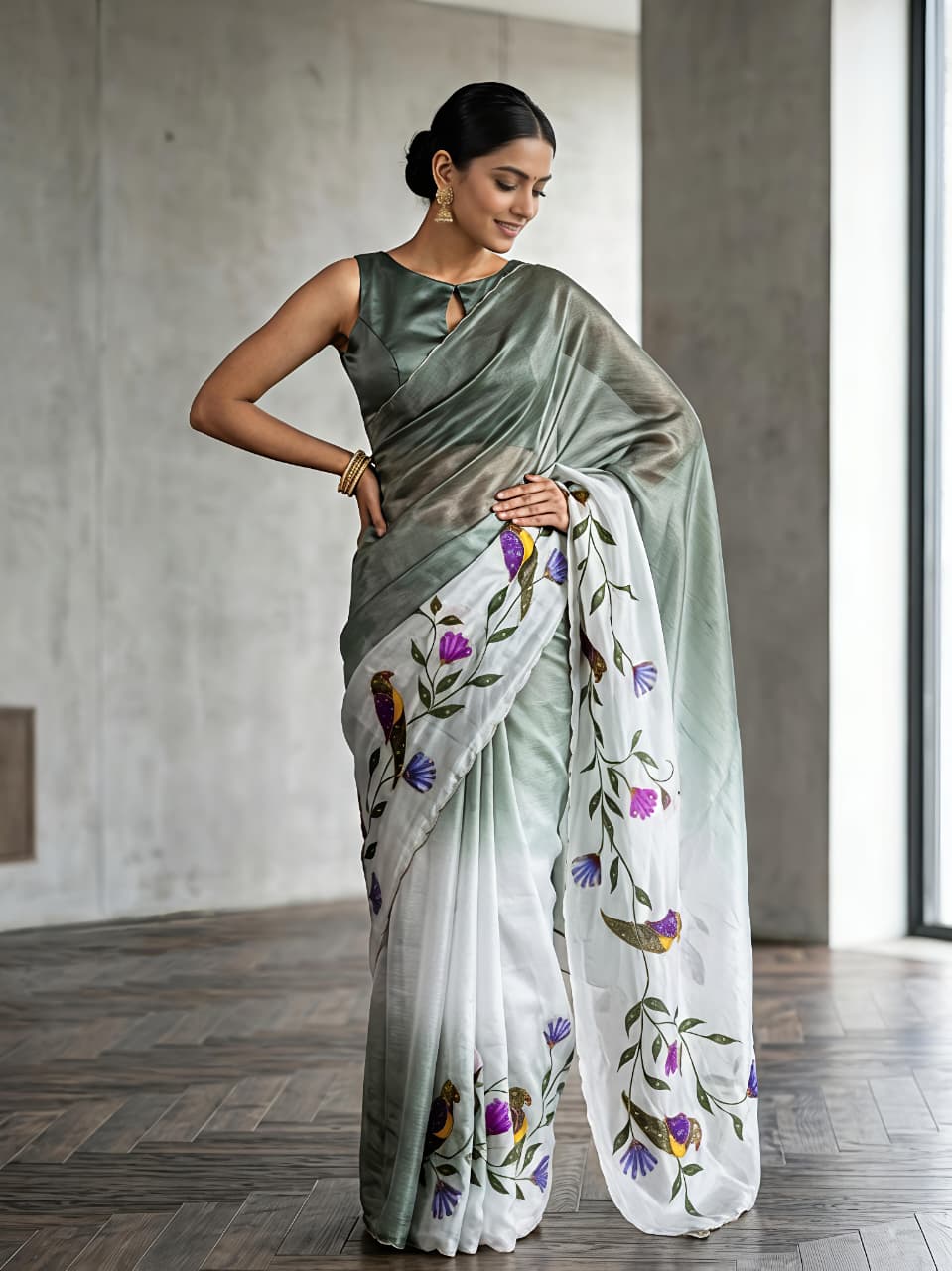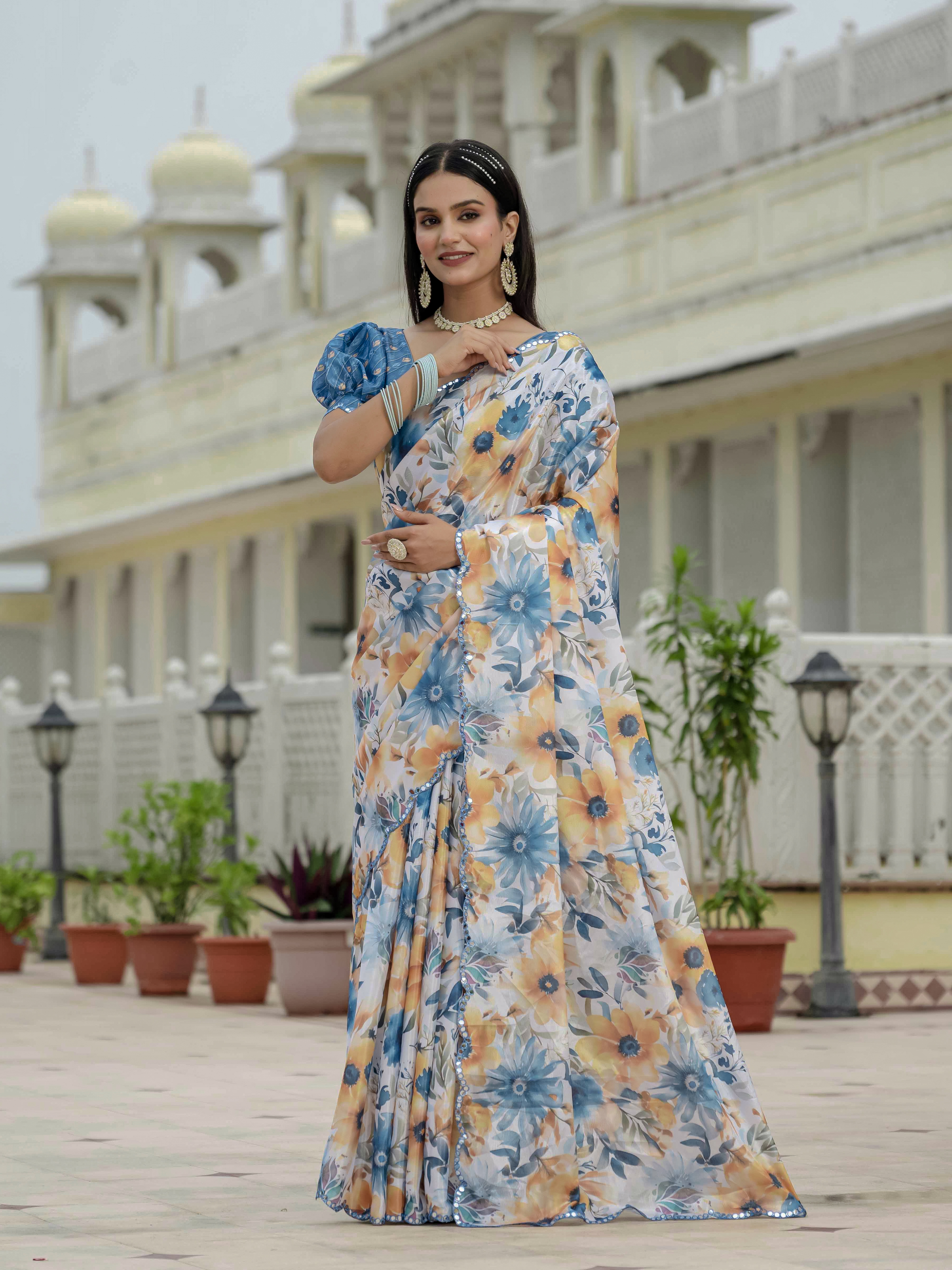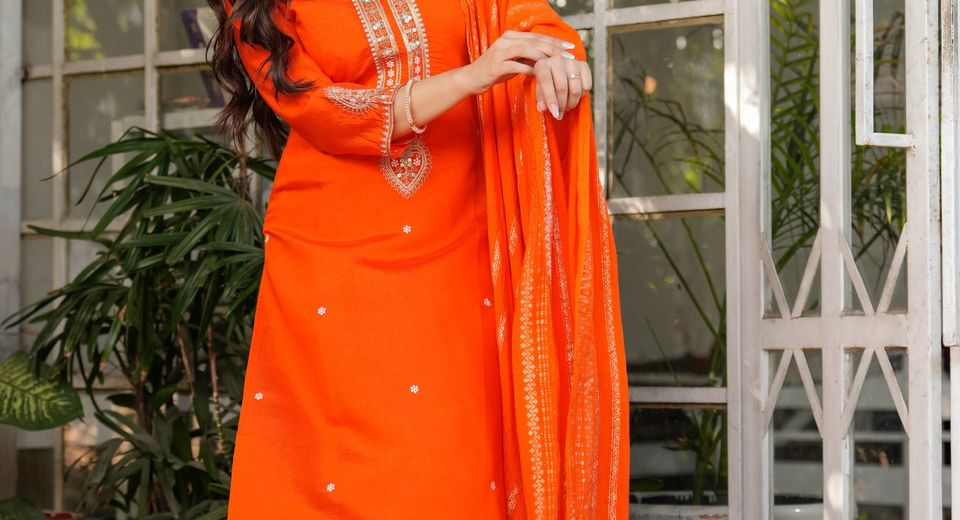
Best Salwar Suits for Chhattisgarh Festivals need to look celebratory without becoming difficult to wear through long rituals, family visits, outdoor gatherings and warm weather. Hareli, Teeja, Pola, Madai fairs and Bastar Dussehra each create a different dressing situation. Fabric, colour, sleeve length and footwear matter as much as embroidery. A well-chosen salwar suit gives you the grace of traditional clothing while allowing comfortable walking, sitting and movement.
Why Salwar Suits Work Well for Chhattisgarh Festivals
Salwar suits work well for Chhattisgarh festivals because they provide coverage, mobility and styling flexibility in one coordinated outfit. A straight kurta with trousers or a palazzo allows easier movement than a heavily layered lehenga, while a dupatta adds the ceremonial finish expected at family celebrations and temple visits.
Many Chhattisgarh festivals involve more than a short evening function. Hareli may include household rituals and community participation, Teeja often involves fasting and family gatherings. Bastar Dussehra can involve extended processions and outdoor time. A suit with a manageable hemline, secure neckline and comfortable salwar or trouser waistband is therefore more practical than an outfit selected only for photographs.
Salwar suits also adapt to the visual character of the event. A simple cotton suit can suit a daytime Madai visit, a Chanderi set can bring quiet shine to a family puja. An embroidered silk-blend outfit can make a stronger impression at an evening reception. The most useful wardrobe contains different weights and levels of ornamentation rather than one heavily embellished style for every festival.
Best Salwar Suits for Chhattisgarh Festivals by Fabric
Chanderi, cotton, silk blends and lightweight viscose are among the most useful fabrics for Chhattisgarh festival dressing. The right choice depends on the month, the amount of outdoor activity and whether the event is a daytime ritual or a formal evening gathering.
Chanderi for polished daytime dressing
Chanderi is a strong choice for daytime festivals because the fabric feels light, has a graceful fall and can carry embroidery without looking excessively heavy. Chanderi silk and Chanderi cotton are especially useful during warm weather, although a lining may improve comfort when the fabric is slightly sheer.
The Cream Threadwork Viscose Chanderi Readymade Salwar Suit demonstrates how a pale neutral base can make threadwork visible without overwhelming the wearer. Cream works well for a morning puja when paired with a rose, green or marigold dupatta, but a slip or lined kurta should be used if the fabric is translucent in bright sunlight.
The Yellow Readymade Chanderi Embroidered Salwar Suit and Yellow Chanderi Radiance Embroidered Suit are suited to cheerful daytime dressing. Yellow connects naturally with turmeric, marigold and harvest-inspired festive palettes, while Chanderi keeps the colour from appearing too dense or winter-heavy.
Cotton and viscose for long outdoor events
Cotton and breathable viscose are sensible choices for long outdoor festivals because they absorb moisture more comfortably than dense synthetic fabrics. Choose a kurta with side slits and trousers that don't cling at the knees when walking over uneven ground.
Light cotton is particularly useful for Madai fairs, community gatherings and daytime visits where the outfit may encounter dust, heat or repeated sitting. Small-scale prints, woven borders and restrained embroidery are easier to maintain than sequins or raised embellishment. A washable cotton dupatta can also be more practical than a fragile net style.
Silk and silk blends for evening celebrations
Silk and silk-blend salwar suits create a richer appearance for evening functions, formal family gatherings and ceremonial photographs. These fabrics reflect artificial light well, but they should be balanced with a breathable lining and a non-restrictive silhouette.
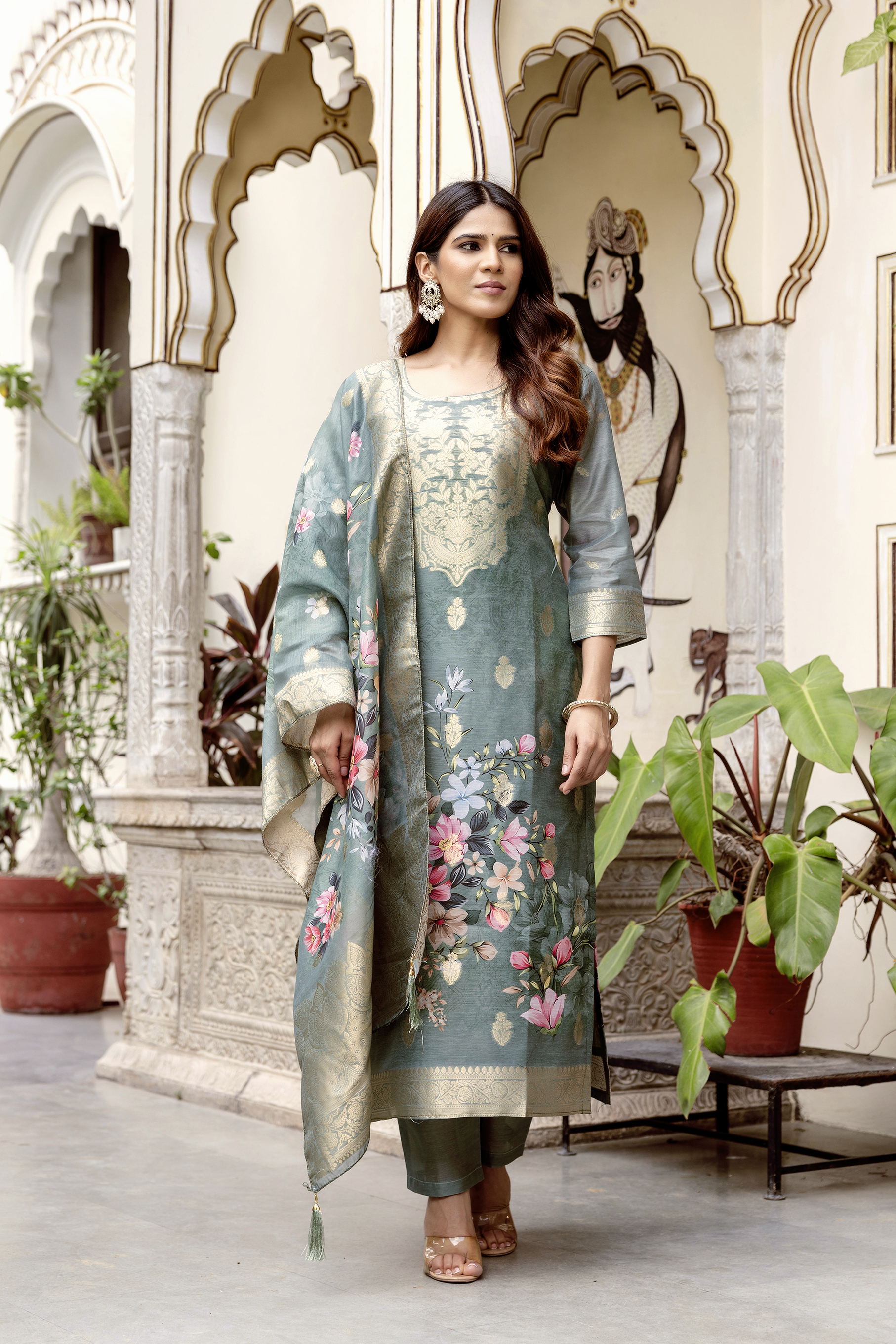
The Green Chanderi Silk Kurta Pant Dupatta Set for Women offers a refined option when you want the sheen of silk without the bulk of a heavily layered outfit. The Pista Royale Salwar Suit uses a softer green direction that can feel elegant for a puja or dinner, especially with antique-gold earrings and a neatly folded dupatta.
Colour Choices for Hareli, Teeja, Pola and Bastar Dussehra
Colour should reflect the festival's mood, the time of day and your personal comfort rather than follow a rigid rule. Bright yellow, red, green, pink, cream and rust can all work well when the fabric and embellishment remain suitable for the event.
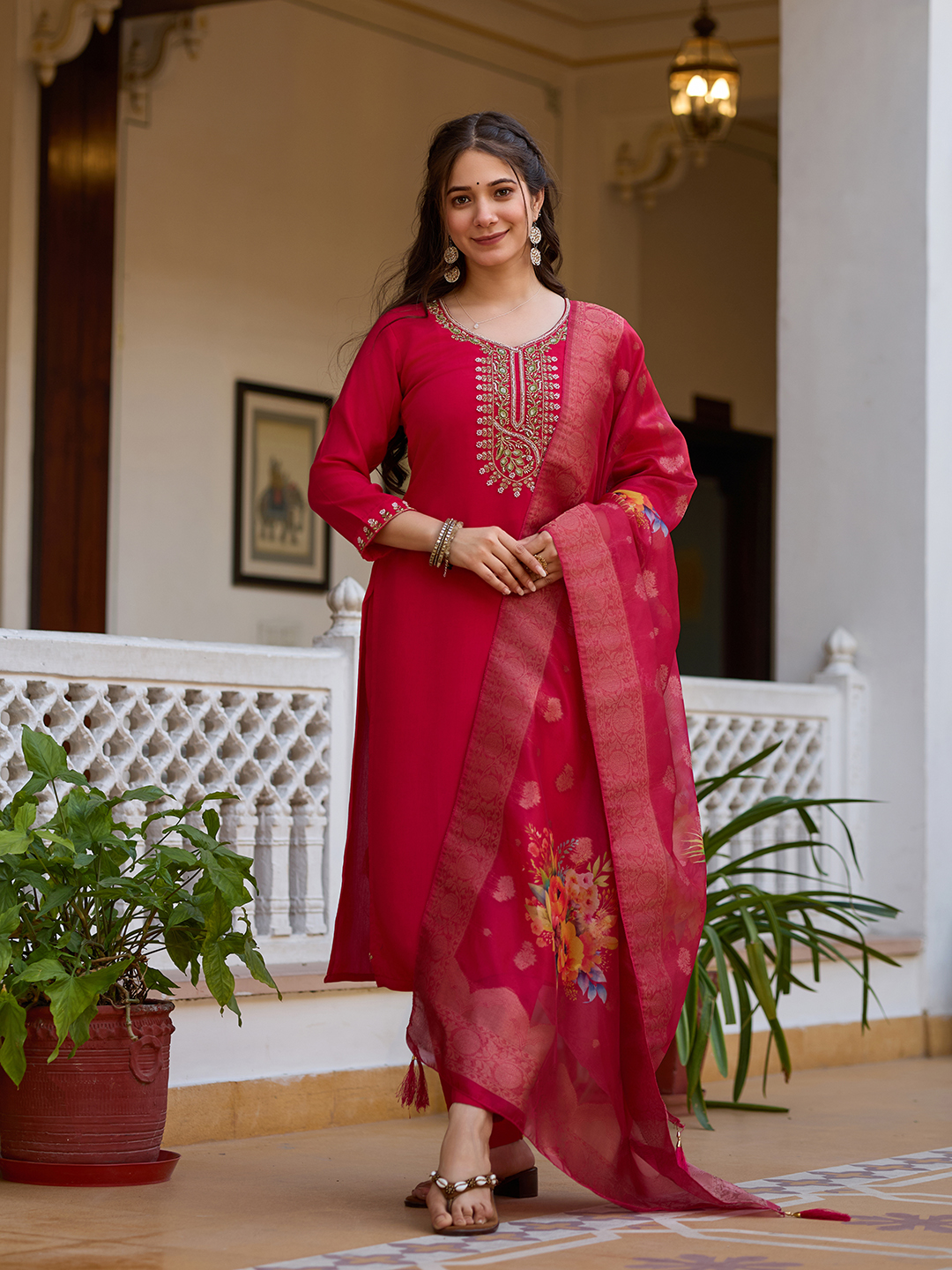
Hareli and monsoon-friendly colours
Green, yellow and earthy shades suit Hareli because the festival is associated with agriculture, greenery and monsoon life. A pista, leaf green or turmeric yellow suit can express the seasonal mood without requiring dense decoration.
The Pista Royale Salwar Suit is an useful example of a soft green festive outfit that can be styled for a daytime gathering. Pair it with small gold studs, a fabric potli and flat juttis when the event involves walking or visiting several homes.
For a more vivid interpretation, the Yellow Chanderi Radiance Embroidered Suit brings brightness through colour and surface detail. Keep the accessories restrained if the kurta already includes elaborate embroidery, because a crowded combination can make a light Chanderi outfit look visually heavy.
Teeja and family puja dressing
Red, pink, maroon, yellow and green are suitable choices for Teeja and other family-centred festive gatherings because they photograph well and carry a recognisably celebratory character. Choose a comfortable neckline and sleeve if you'll be sitting for long periods or observing a fast.
The Red Chanderi Threadwork Suit Set for Women gives festive colour with a lighter threadwork surface rather than an all-over sequin finish. Red suits a more time-honoured styling direction, while gold or pearl accessories can change the look from bright daytime wear to a more formal evening appearance.
A rose or blush suit can provide a gentler alternative to red. The RoseGlow Designer Salwar Suit can be paired with a contrasting green, champagne or deep pink dupatta, depending on whether you want a softer family-puja look or a more noticeable festive ensemble.
Pola, Madai and Bastar Dussehra
Earthy red, rust, deep green, indigo and mustard work well for Pola, Madai and Bastar Dussehra because these colours remain visually strong in outdoor settings. A medium-weight suit with a secure dupatta is more practical than delicate draping when you'll move through a crowd.
Red can be grounded with tan sandals and antique-finish jewellery, while mustard looks balanced with brown, bottle green or ivory accessories. For a cultural fair or procession, avoid floor-length hems and very long dupattas that may drag, catch on chairs or require constant adjustment.
Regional Design Influences That Complement Chhattisgarh Dressing
Regional textile references can enrich a festive salwar suit when they're used thoughtfully rather than combined without regard for proportion. A printed kurta, woven border or embroidered dupatta can provide a clear visual connection to Indian craft traditions while keeping the outfit easy to wear.
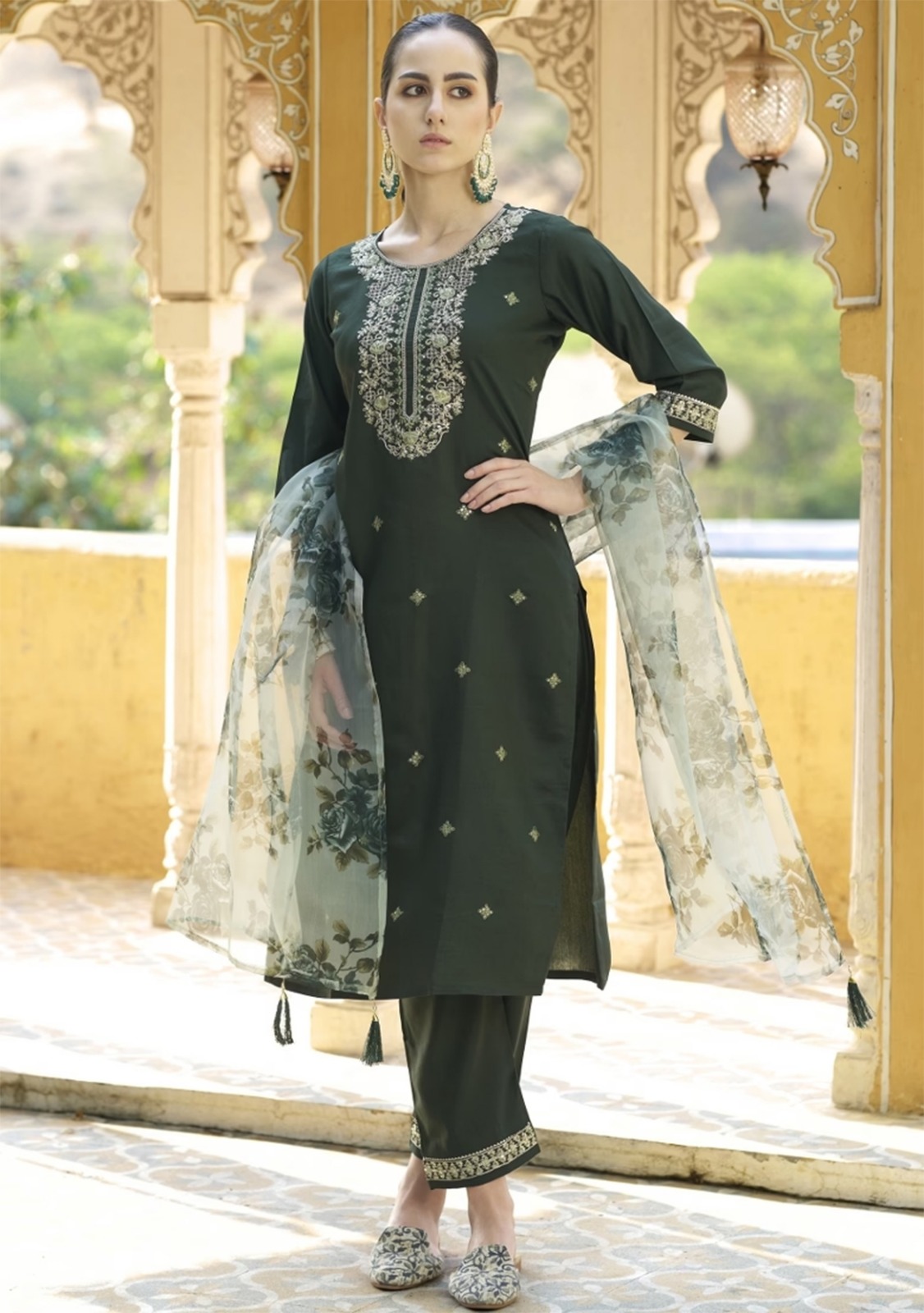
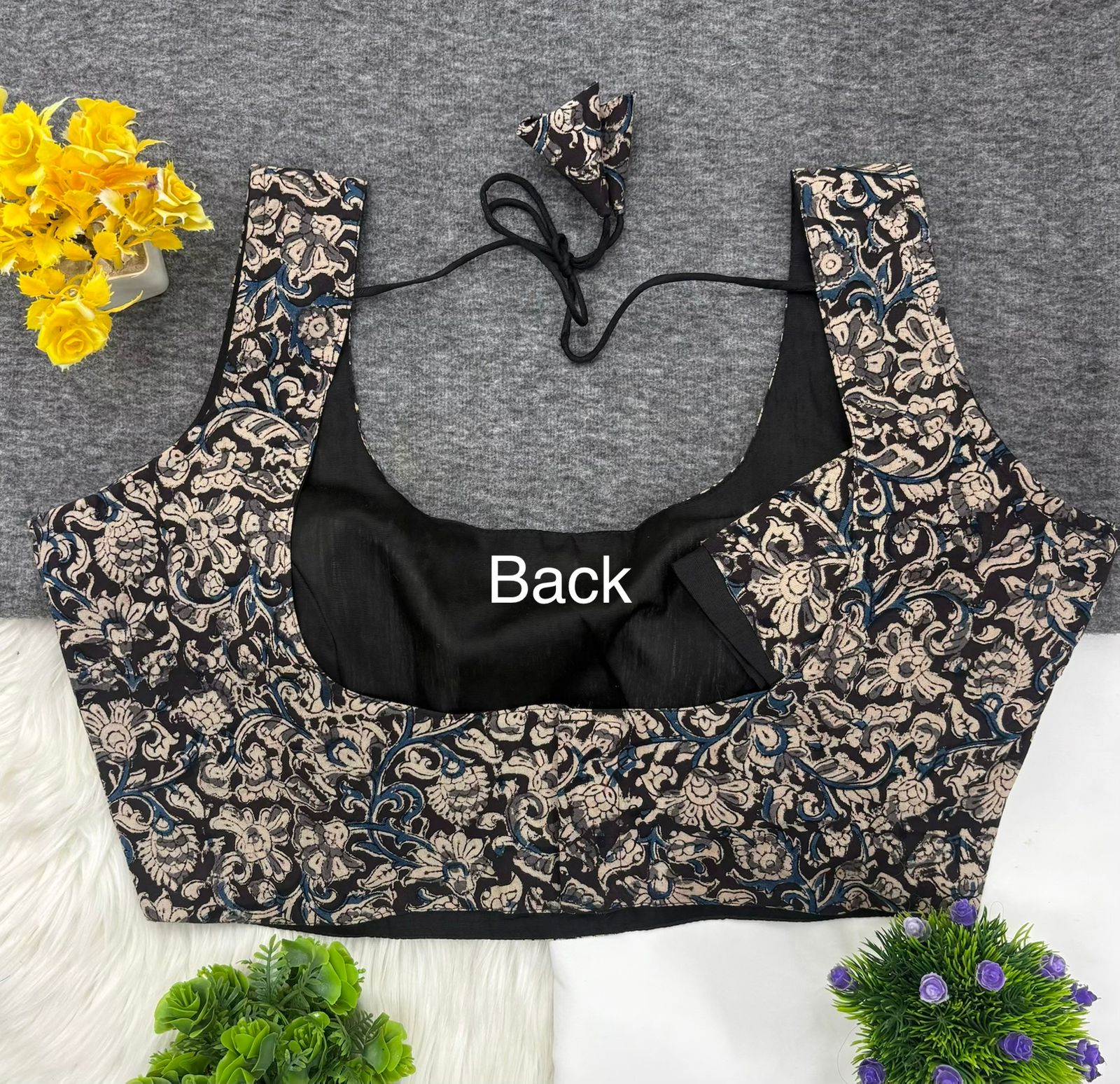
Kalamkari Print Salwar Suits can introduce narrative floral or nature-inspired motifs that work for daytime celebrations. Keep jewellery simple when the print is dense, and choose footwear in one of the quieter colours already present in the design.
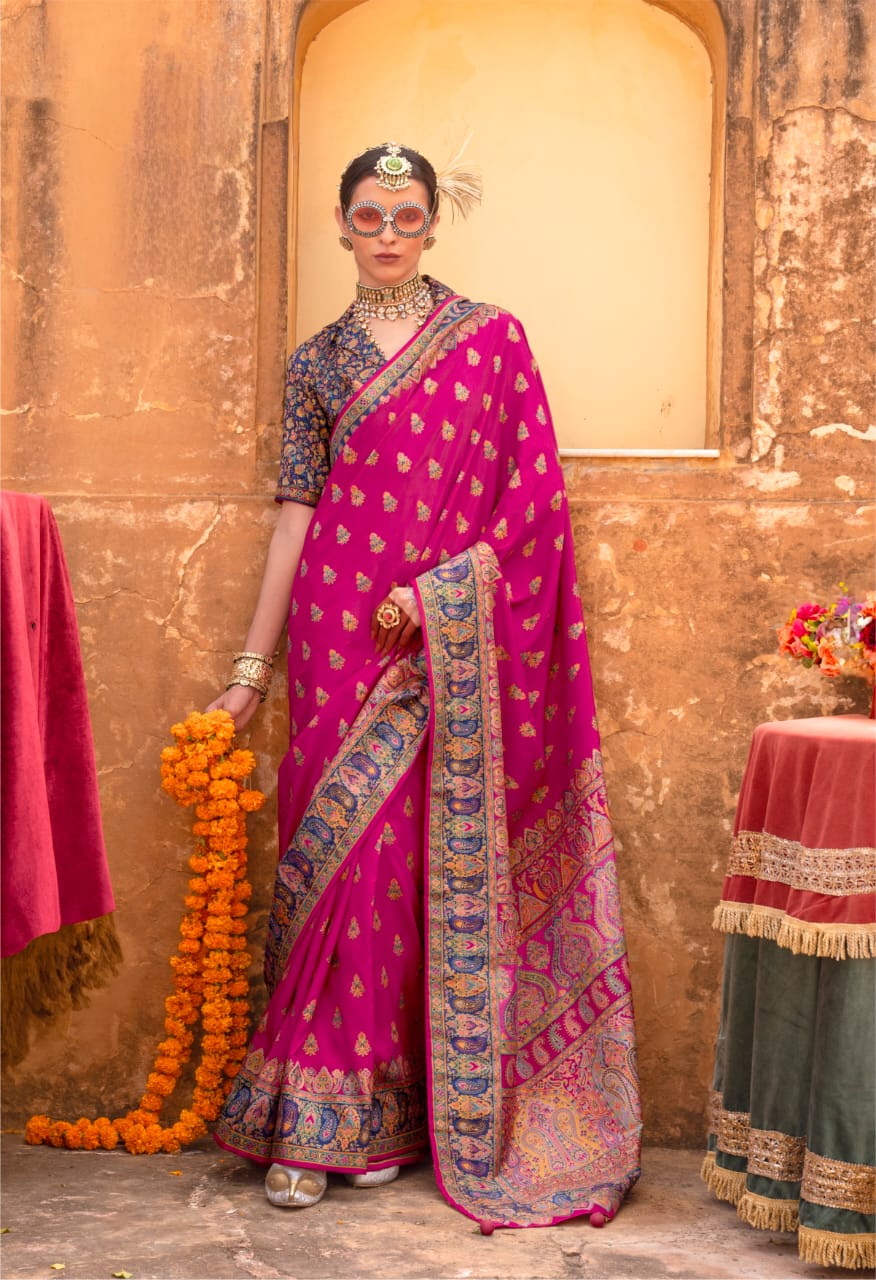
Maharashtra Paithani Inspired Salwar Suits are useful when you want a woven, silk-like festive effect without wearing a full sari. Peacock, magenta, green and gold-inspired details can look striking for an evening family function, but a restrained dupatta and simple trousers will prevent the outfit from appearing too formal for a daytime ceremony.
Punjab Phulkari Embroidered Salwar Suits bring colourful floral embroidery and a lively surface to festive dressing. Phulkari-inspired detail is particularly effective on a plain base because the embroidery becomes the focal point; avoid adding a heavily embellished necklace if the dupatta already carries bold threadwork.
Karnataka Silk Salwar Suits provide a structured silk appearance that suits formal celebrations, while Kashmir Embroidered Salwar Suits offer a more delicate embroidered character. Either direction can work for Chhattisgarh festivals, provided the weight, sleeve design and lining are comfortable for the local weather.
How to Choose the Right Silhouette and Fit
The best silhouette depends on movement, body comfort and the amount of ornamentation already present on the outfit. Straight-cut kurtas, A-line kurtas and short kurta-and-pant sets are usually easier to style for festivals than very long anarkalis with multiple layers.
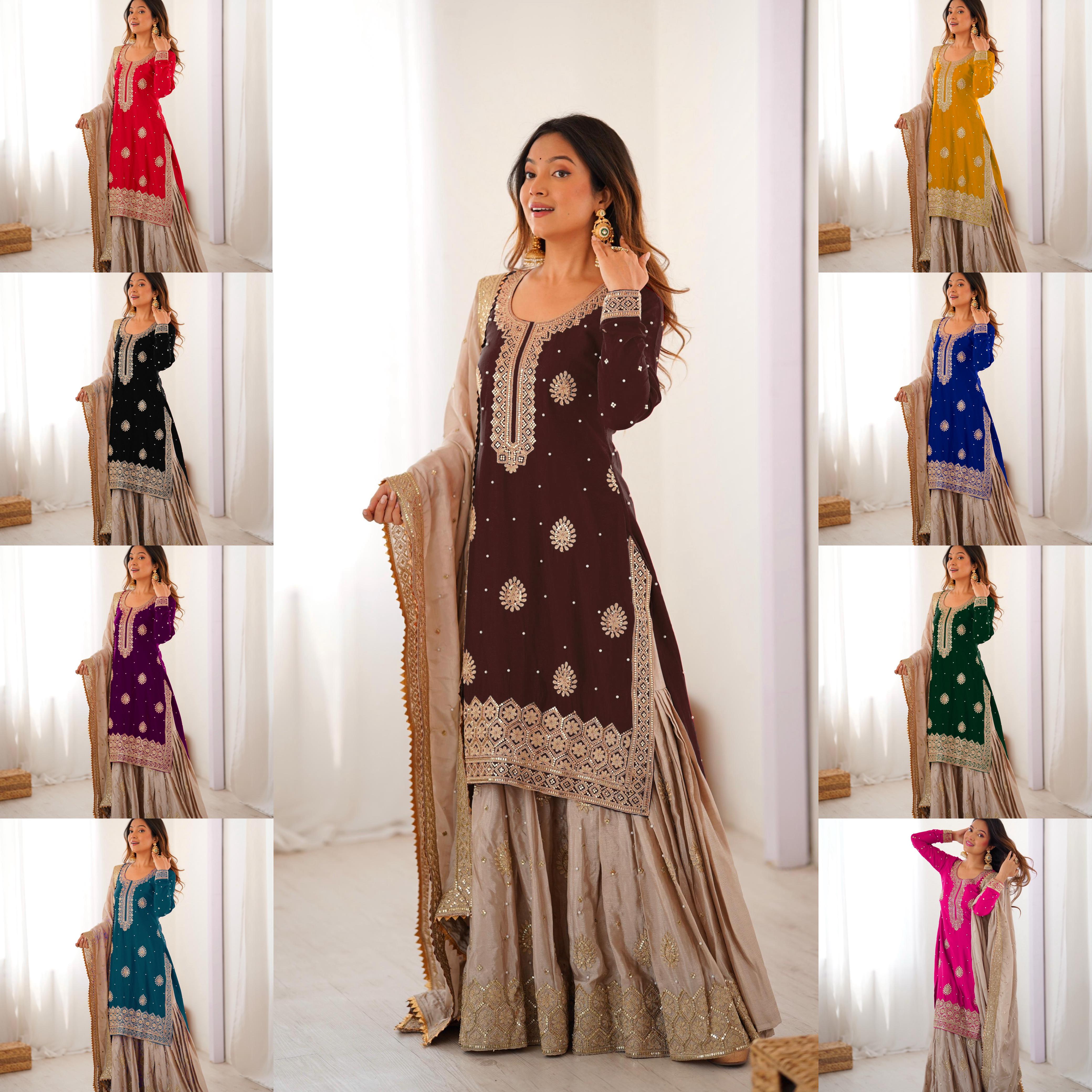
Straight kurta with pants
A straight kurta with cigarette pants or relaxed trousers creates a clean line and works well for puja visits, family lunches and semi-formal gatherings. Select a trouser hem that ends above the floor and check that the waistband stays comfortable while sitting cross-legged.
A-line and flared silhouettes
A-line and lightly flared kurtas provide more room around the hips while retaining a festive shape. Moderate flare is preferable for outdoor festivals because excessive volume can become inconvenient in crowds and can collect dust near the hem.
Palazzo and sharara-inspired bottoms
Palazzo bottoms offer airflow and a relaxed fit, but very wide legs need careful length selection. Sharara-inspired trousers can look festive with short kurtas, although the flare should not drag or catch under flat footwear.
Readymade suits are especially useful when you need a coordinated outfit quickly, but check the garment measurements rather than relying only on the label size. Measure bust, shoulder, kurta length, sleeve opening, waist and trouser length, and allow enough ease for sitting and lifting the arms.
Dupatta, Jewellery and Footwear for Festival Comfort
A festival-ready dupatta should stay secure, remain proportionate to the kurta and allow both hands to remain free. Pin one shoulder and lightly anchor the opposite side near the waist when walking through a fair, joining a ritual or carrying a small bag.
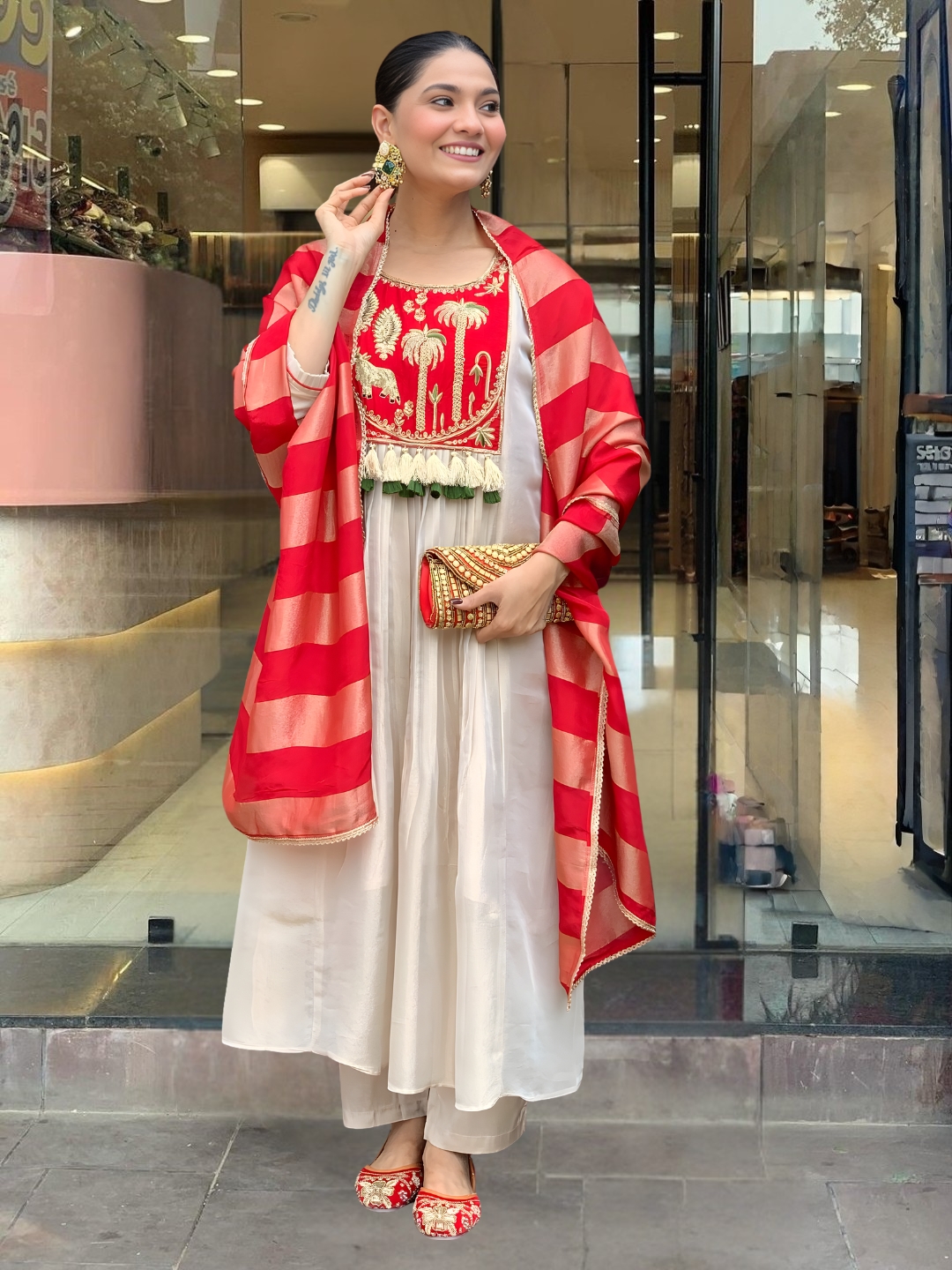
Chanderi and silk dupattas add polish but may slide more easily than cotton. Use two small safety pins beneath the shoulder fold, or choose a narrow border that gives the fabric a little structure without adding excessive weight.
Jewellery should follow the amount of embroidery on the suit. Jhumkas and a bangle stack suit a simpler kurta, while a heavily embroidered outfit may need only earrings and a ring. Gold-tone jewellery works with yellow, red and green, whereas pearls or silver-tone pieces can soften cream, pista and rose shades.
Choose footwear with a stable sole for outdoor celebrations. Juttis, low wedges, cushioned sandals and embroidered flats are generally more practical than thin high heels on uneven ground. Match the footwear to the longest garment hem and walk in the complete outfit before the festival to identify tripping points.
A Practical Buying Checklist Before the Festival
An useful buying checklist prevents an attractive salwar suit from becoming uncomfortable after an hour of wear. Check the following details before keeping the outfit for a festival:
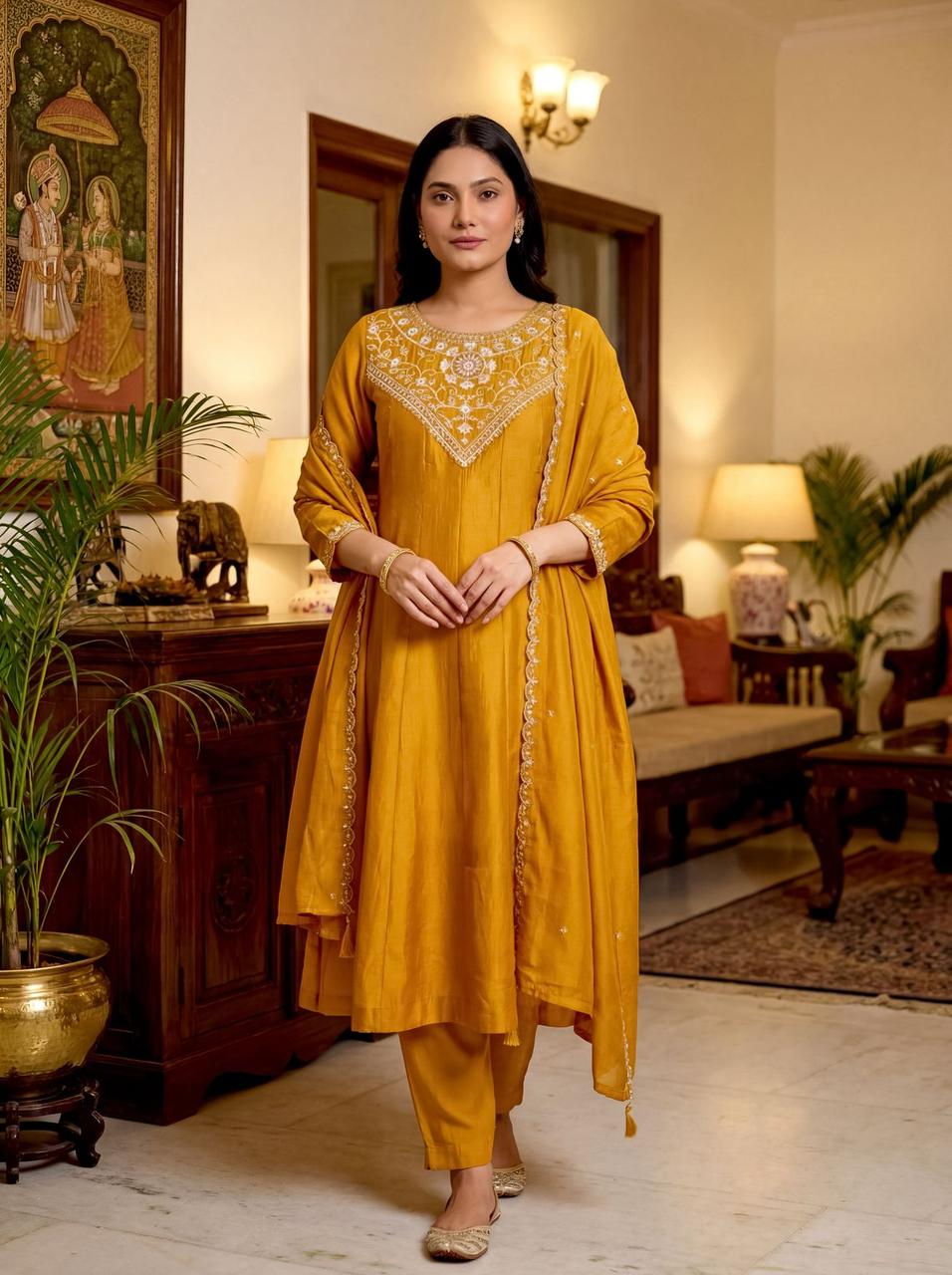
- Fabric: Choose breathable cotton, viscose or light Chanderi for daytime and outdoor events, and reserve heavier silk blends for shorter evening functions.
- Opacity: Hold pale Chanderi or cream fabric against a window or bright light to decide whether a lining or inner slip is necessary.
- Fit: Confirm bust, waist, hip, shoulder and garment-length measurements, with enough ease for sitting and arm movement.
- Fastenings: Inspect hooks, zips and waistbands, especially when the suit includes a dupatta that must be adjusted repeatedly.
- Embroidery: Run your hand gently over the inside of the kurta to check whether zari, sequins or thread ends may irritate the skin.
- Care: Read the wash instructions before wearing the outfit, and avoid applying perfume directly to silk, Chanderi or metallic embroidery.
- Weather: Keep a light cotton stole or inner layer available for changing temperatures between daytime heat and evening gatherings.
For first-time buyers, a medium-colour Chanderi or viscose suit is often the most versatile starting point. Cream, yellow, green, red and rose can each be restyled with different dupattas and jewellery, making one well-fitted suit useful beyond a single festival.
How to Care for an Embroidered Festival Suit
Embroidered Chanderi and silk salwar suits should be stored clean, dry and loosely folded with acid-free tissue or a soft cotton cover. Do not leave a worn suit sealed in plastic because trapped moisture can create odour, dull metallic work and encourage mildew during humid weather.
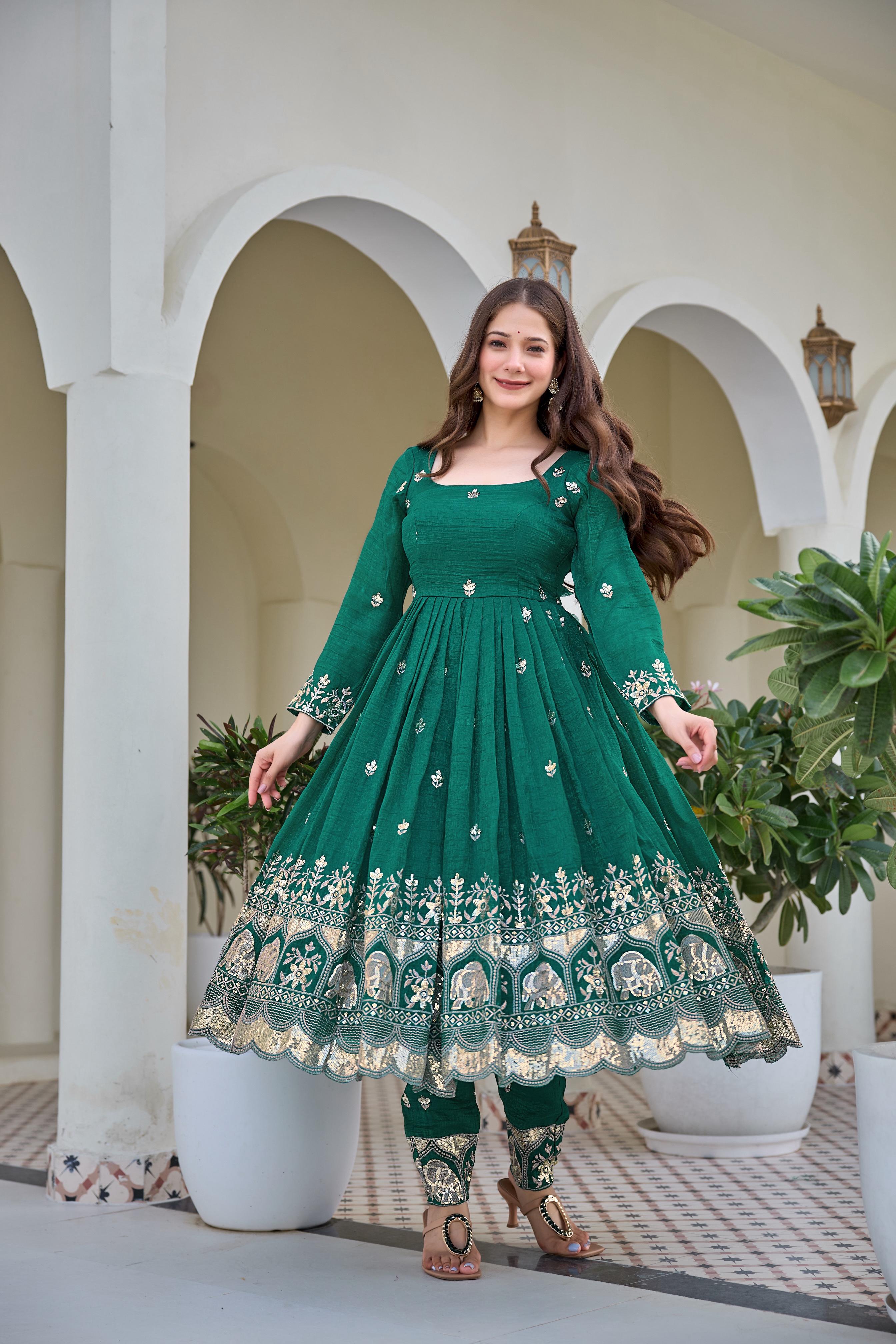
Air the outfit in shade after wearing it, then spot-clean minor marks according to the care label. Avoid rubbing threadwork, zari or sequins, and use professional dry cleaning for heavily embroidered pieces or silk garments that carry colour contrast.
Fold the kurta along different lines each time to reduce permanent creases, and store the dupatta separately if its embroidery may catch on the kurta. A low-temperature iron from the reverse side, with a pressing cloth between the iron and fabric, is safer than applying direct heat to Chanderi or metallic detail.
With the right fabric, a secure fit and practical accessories, Best Salwar Suits for Chhattisgarh Festivals can move easily from a morning puja to a family meal or an evening cultural gathering. The strongest choice is the outfit that respects the festive mood while allowing you to participate fully rather than spend the day adjusting your clothes.
Common Questions About Choosing Salwar Suits for Chhattisgarh Festivals
Which fabric is best for a Chhattisgarh festival salwar suit?
Light Chanderi, cotton and breathable viscose are best for daytime and outdoor festivals because they offer airflow and easier movement. Silk or silk blends suit shorter evening events when a richer finish is desired.
What should women wear for Hareli in Chhattisgarh?
Green, yellow, pista and earthy-toned salwar suits are suitable for Hareli because they reflect the festival's agricultural and monsoon associations. Choose a breathable fabric and comfortable flat footwear for household rituals or outdoor gatherings.
Which colour salwar suit is suitable for Teeja?
Red, pink, yellow and green salwar suits are suitable for Teeja and family puja gatherings. Select a comfortable, non-restrictive silhouette because the outfit may be worn for several hours of sitting and visiting.
Can Chanderi salwar suits be worn in summer festivals?
Chanderi salwar suits can be worn in summer because the fabric is lightweight and has a fluid fall. Pale or sheer Chanderi may require a breathable lining or inner slip for comfortable coverage in strong sunlight.
How should a dupatta be styled for an outdoor festival?
Pin one shoulder and lightly secure the opposite side near the waist so the dupatta stays in place while walking. Avoid very long or heavily embellished dupattas for crowded fairs and processions.
What footwear goes best with a festive salwar suit?
Juttis, cushioned sandals, embroidered flats and low wedges are practical choices for festive salwar suits. Stable soles are safer than thin high heels on uneven ground at fairs, processions and outdoor gatherings.