A well-chosen salwar suit can look polished, festive, relaxed or formal depending on how you style the same three elements: the suit, the dupatta and the accessories. The best salwar suit styling ideas for women begin with proportion and occasion, not with adding every available embellishment. A heavily embroidered neckline may need only small earrings, while a plain cotton kurta can carry a printed dupatta and colourful jewellery.
Small decisions also change the visual effect of an outfit. A short kurta with a high-waisted palazzo creates a longer leg line, while a long Anarkali with a narrow dupatta looks more fluid and traditional. The guide below explains how to coordinate silhouettes, colours, fabrics, footwear and jewellery so that a salwar suit feels intentional rather than overworked.
Best Salwar Suit Styling Ideas for Women Start With the Silhouette
The most effective salwar suit styling choice is matching the silhouette to your body proportions and the movement required for the occasion. Straight-cut, Anarkali, palazzo, sharara and classic salwar shapes each distribute volume differently.
Straight-cut suits for a clean everyday line
A straight-cut salwar suit falls in a relatively narrow column and works well for office dressing, travel and daytime gatherings. Choose cigarette pants or slim trousers when the kurta has side slits, and select a longer dupatta when you want a more vertical appearance. The Black White Floral Embroidered Readymade Salwar Suit combines a graphic colour contrast with embroidery, so simple black flats and a structured tote can keep the look balanced.
Anarkali suits for movement and ceremony
Anarkali suits are most effective for festive events when the flare has enough room to move without being hidden by a bulky dupatta. A floor-length Anarkali pairs well with jhumkas and low heels, while a shorter Anarkali can work with churidar trousers and embroidered mojaris. The Ladies Dress Anarkali Salwar Suits collection is an useful reference point when comparing flare, length and neckline before choosing accessories.
Palazzo and sharara suits for a contemporary proportion
Palazzo and sharara trousers add width below the waist, making the upper half of the outfit important. A fitted or lightly shaped kurta prevents the outfit from looking visually heavy. The Lavender Chanderi Kurta with Olive Embroidered Palazzo Suit shows how a restrained kurta shape can support a wider trouser without needing a large necklace.
How Should You Choose a Salwar Suit Colour Combination?
Choose a salwar suit colour combination by selecting one dominant shade, one supporting shade and one small accent colour. This three-part method prevents embroidery, dupatta and jewellery from competing for attention.
Monochrome dressing creates a taller, quieter effect. A camel or beige suit with gold accessories looks refined for daytime celebrations, while navy with silver or antique gold can feel more formal in the evening. The Elegant Camel Shade Salwar Suit Set benefits from a tonal dupatta, tan footwear and pearl or antique-gold jewellery rather than a high-contrast neon accessory.
Contrasting combinations are more memorable when one colour occupies less space. Rust orange with ivory, black with red, lavender with olive and navy with muted pink are practical examples. The Rust Orange Embroidered Readymade Suit Set for Women can be styled with neutral sandals and a small green or gold accent in the earrings. The Black Red Fendy Silk 3 Piece Readymade Salwar Suit Set already contains a strong colour relationship, so black heels and minimal red detailing will usually look more considered than multicoloured accessories.
Use the dupatta as the accent when the kurta and trousers are plain. Use jewellery as the accent when the suit already contains zari, sequins or dense threadwork. Silver-toned jewellery generally complements cool colours such as lavender, blue and emerald, while gold, bronze and antique-gold finishes sit naturally with rust, camel, maroon and mustard.
How Can You Style the Dupatta Without Losing the Outfit's Shape?
A dupatta looks most polished when its drape preserves the kurta neckline and allows the suit's strongest detail to remain visible. The right drape also controls volume around the shoulders and waist.
Three reliable dupatta drapes
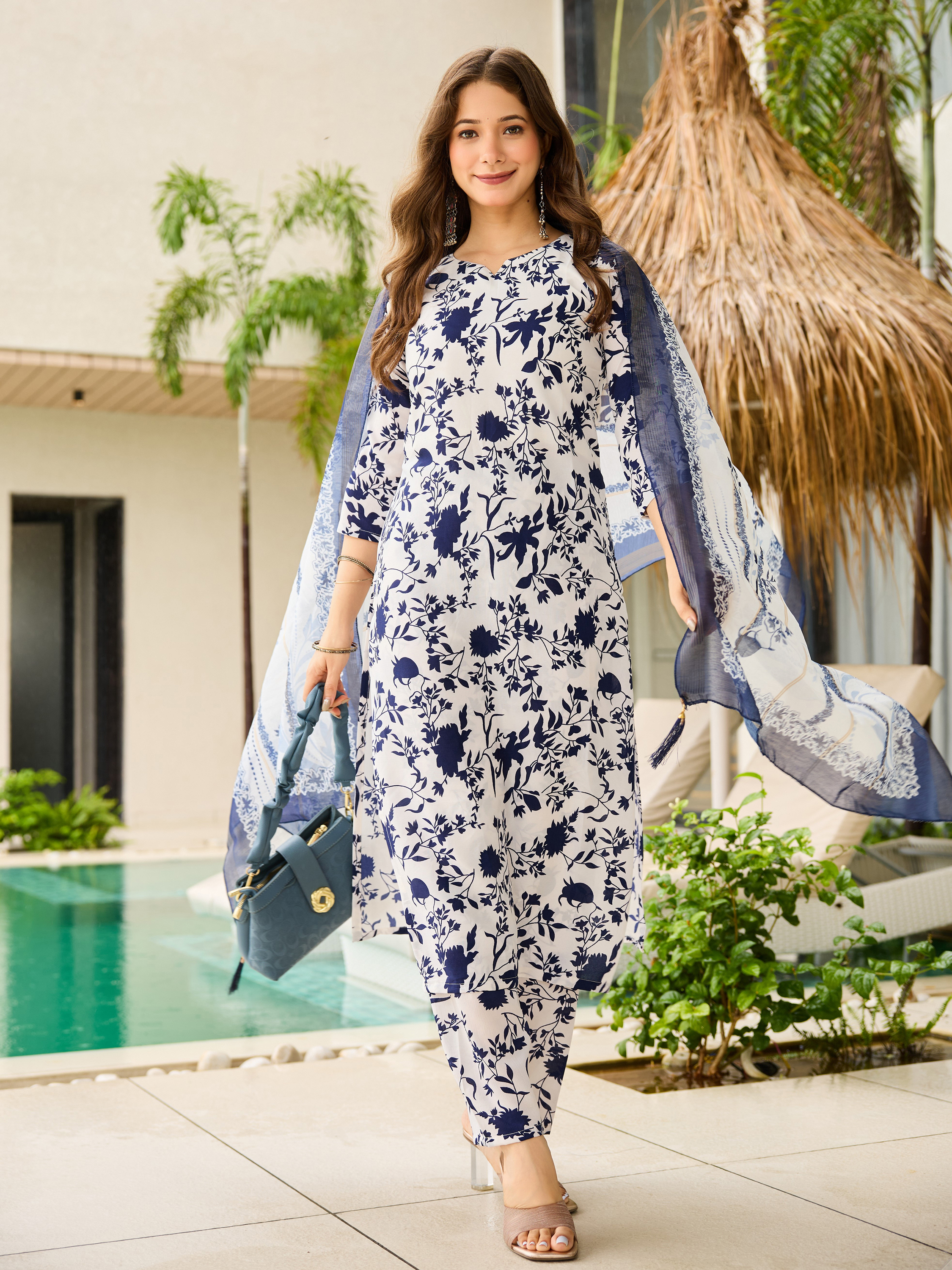
- One-shoulder fall: Place the dupatta over one shoulder and let both ends fall at the front for a relaxed, elongated line. This works particularly well with a straight-cut suit.
- Neck loop: Wrap the dupatta once around the neck and let the ends hang evenly. This method is practical for commuting and keeps the fabric away from door handles and food.
- Front pleats: Pleat the dupatta neatly across the chest and secure one shoulder with a discreet pin. This formal drape suits Anarkali and heavily embroidered suits because it looks orderly in photographs.
A wide dupatta with heavy borders needs fewer folds because excess layering can obscure the kurta. A lightweight Chanderi or chiffon dupatta can tolerate more structured pleating, whereas a stiff silk dupatta often looks better in a single shoulder fall. Pinning the shoulder and waist points can keep the drape secure for ceremonies without making the outfit appear rigid.
Which Accessories Make a Salwar Suit Look Complete?
The best accessories for a salwar suit repeat one detail from the garment without copying every colour and embellishment. Jewellery, footwear, handbag and hair styling should support the suit's visual weight.
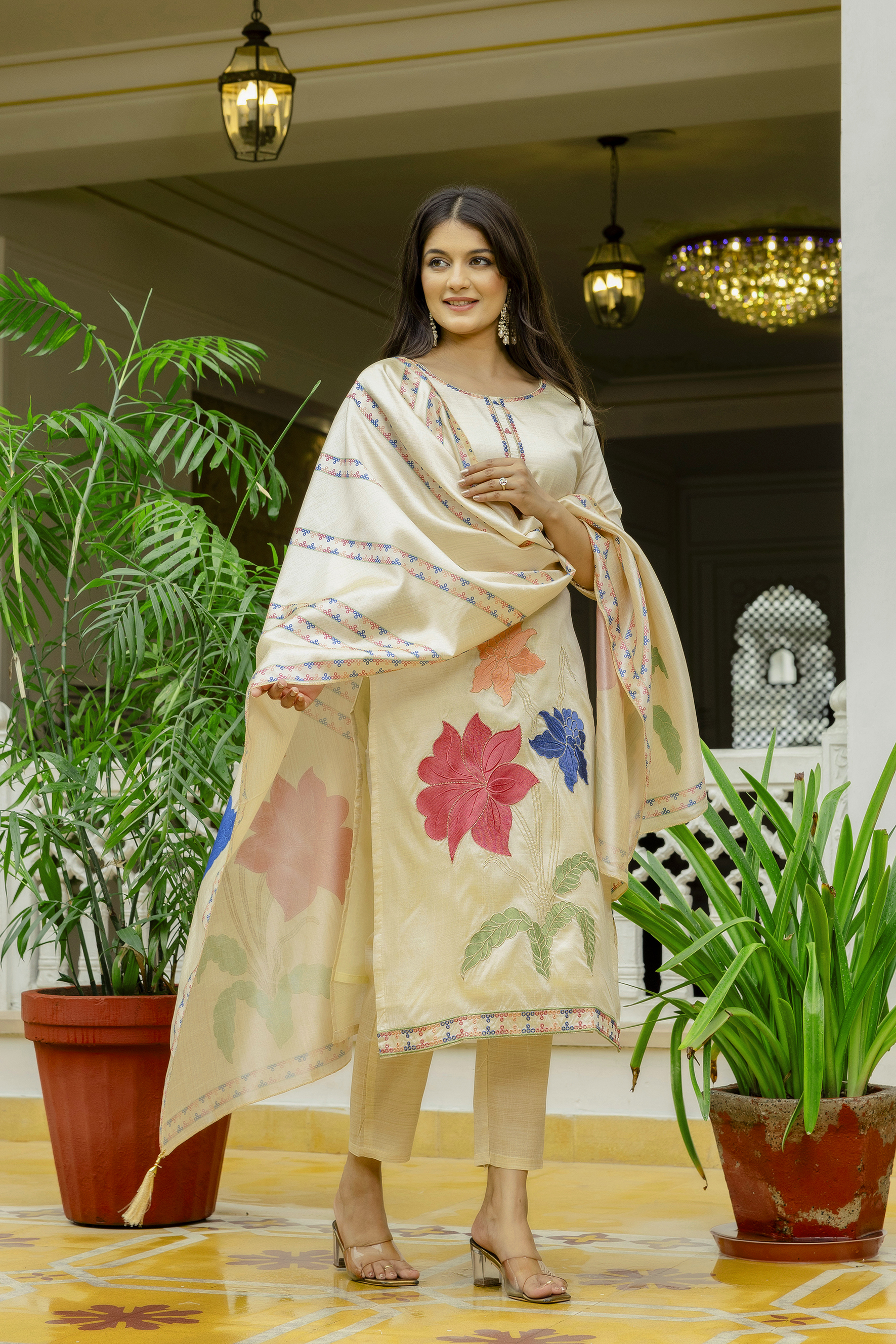
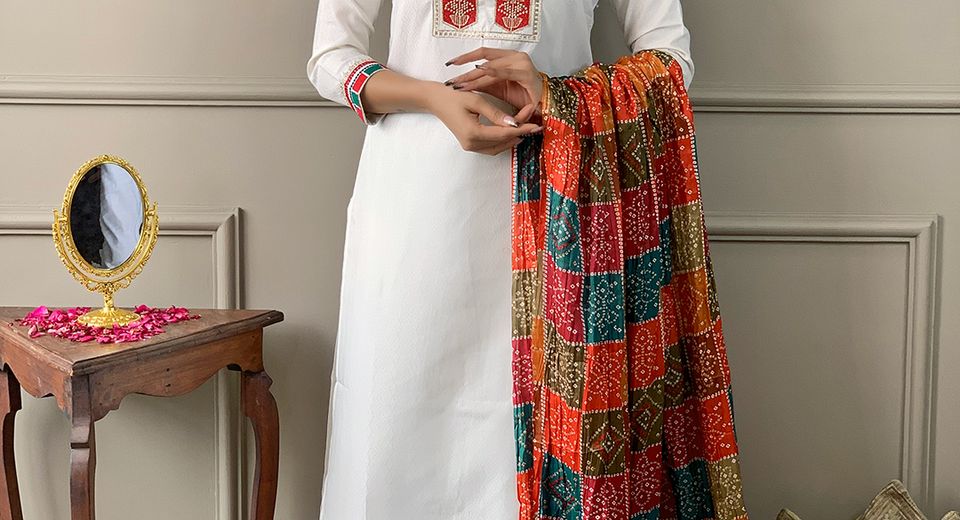
Jhumkas work especially well with heritage necklines and embroidered Anarkalis. Long drop earrings suit open necklines and sleek straight suits. A choker can balance a deep or broad neckline, but it should be avoided when the neckline already has dense zari or stonework. A single statement ring is often enough when the sleeves and cuffs contain embroidery.
Footwear should match the trouser width and the setting. Juttis and mojaris complement churidars and cigarette pants for daytime events. Block heels work with palazzos and long Anarkalis because they add height without the instability of a narrow heel. Metallic sandals suit evening silk and brocade, while tan or nude footwear makes a bright suit feel less formal.
Choose a handbag that doesn't interrupt the dupatta. A small potli or compact clutch works for weddings and receptions, while a medium structured tote is more useful for work. Hair can be worn in a low bun to highlight earrings, in a braid for a time-honoured mood or in soft waves when the suit has a contemporary cut.
The Embroidered Salwar Suit Set for Women can carry a more time-honoured accessory combination because embroidery already establishes a festive mood. Pairing it with a low bun, medium jhumkas and neutral embroidered flats keeps the outfit coordinated without adding a second statement piece.
How Should Salwar Suits Be Styled for Different Occasions?
Style a salwar suit for the occasion by adjusting fabric weight, embellishment, footwear and the amount of exposed jewellery. The same colour can look suitable for work, a Haldi ceremony or a wedding when these four elements change.
Office and daytime dressing
Office-ready salwar suits should use breathable fabrics, controlled prints and accessories that don't interfere with movement. Choose a straight kurta with cigarette pants, a small handbag and low block heels or flats. Keep embroidery limited to the neckline, sleeve or hem, and use a compact watch instead of multiple bangles.
Haldi ceremony and daytime celebrations
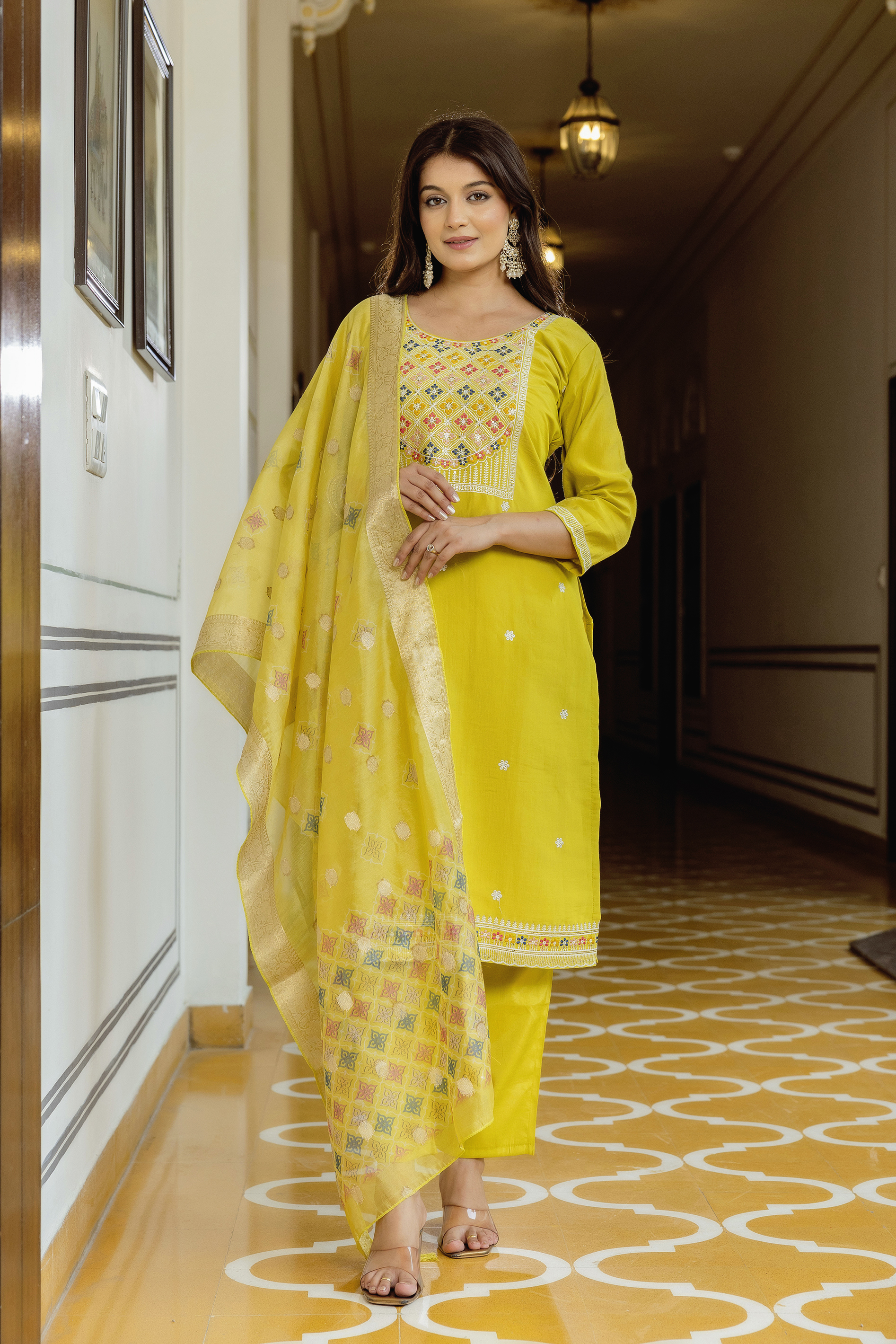
A Haldi ceremony calls for light, washable-feeling fabrics, cheerful colour and secure draping. Yellow, rust, green, pink and ivory work naturally in daylight, but avoid very long loose dupatta ends near turmeric, food and crowded seating. A palazzo suit with juttis, small hoops and a pinned one-shoulder dupatta gives enough movement for rituals and photographs.
Weddings and evening receptions
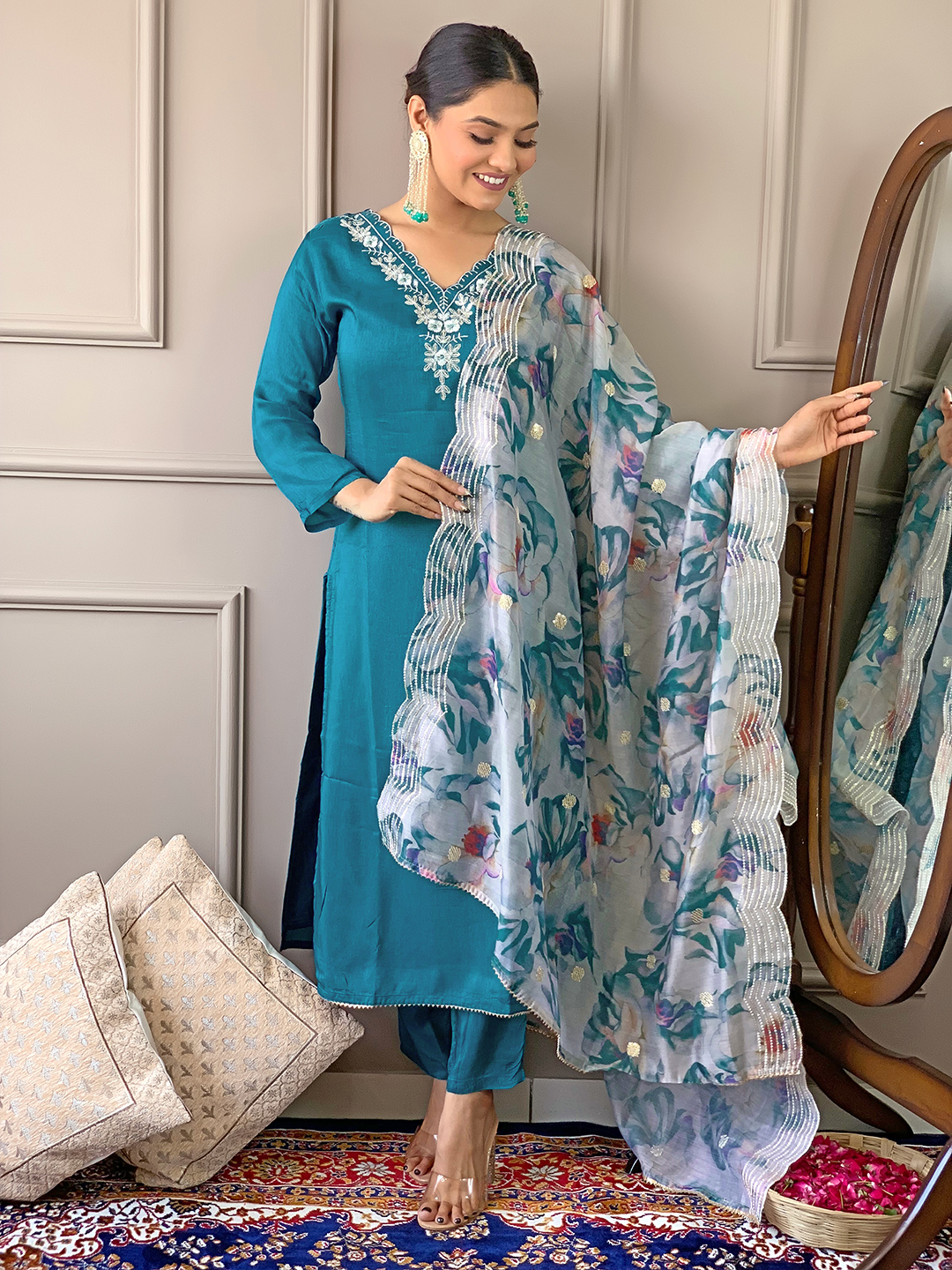
Wedding styling can support richer fabrics such as silk, Chanderi with embroidery or embellished blends, along with zari, metallic footwear and a more formal drape. The Navy Blue Embroidered Salwar Suit can be taken into evening dressing with antique-gold earrings, a small clutch and low heels. The Brown Chinon Silk Sharara Suit Set for Women already has a fluid, festive texture, so sleek hair and limited jewellery will preserve its elegance.
Family dinners and small festive gatherings
For a family dinner, choose one noticeable feature rather than a full ceremonial look. A printed dupatta, embroidered sleeve, coloured jutti or sculptural earrings can provide enough interest with a simple kurta and trouser combination. This approach also makes the suit easier to rewear in a different way later.
How Do You Create Better Proportion With a Salwar Suit?
Good proportion comes from balancing the volume of the kurta, trouser and dupatta across the body. A wide garment on the lower half usually needs a visually cleaner upper half, while a fitted trouser can support a more voluminous kurta.
If the kurta is long and flared, keep the dupatta narrow or drape it over one shoulder so the waist and flare remain visible. If the trouser is broad, choose a kurta that skims the body rather than one with excessive gathers. A short kurta can work with a high-waisted palazzo or sharara, especially when the dupatta is worn in a long vertical fall.
Neckline and sleeve length also affect proportion. A V-neck can create a longer upper line, while a round neckline gives a softer, more traditional impression. Three-quarter sleeves are versatile for daily wear, but sleeveless or short sleeves can make a festive suit feel lighter when the fabric and setting allow them.
Fit matters more than a label size. Check shoulder seams, armhole comfort, trouser rise and the position of the waist seam. A kurta that pulls across the bust or a trouser that twists at the hip will remain uncomfortable regardless of how attractive the embroidery looks.
How Can You Build a Versatile Salwar Suit Wardrobe?
A versatile salwar suit wardrobe needs at least one practical straight suit, one festive Anarkali or embroidered set, one palazzo or sharara silhouette and two adaptable dupattas. Building around these categories creates more combinations than buying several outfits with the same cut.
Start with one neutral such as camel, ivory, navy, black or brown, then add one warm colour and one light or pastel shade. The Salwar Suits with 30% Off and Salwar Suits Flat 40% Off collections can be useful for comparing these wardrobe roles when shopping within a defined budget. Sale pricing should not replace checking measurements, lining, fabric composition and return conditions.
Dress Materials can support a more customised wardrobe when a preferred kurta length, sleeve shape or trouser width is difficult to find in a ready-made set. Ready-made suits provide convenience, while dress materials allow a tailor to adjust the neckline, hem and fit. Salwar Suits On Sale can also be approached strategically by looking for a colour or silhouette missing from the existing wardrobe rather than purchasing only because the discount is large.
Before buying, imagine at least three styling combinations: the original dupatta with the set, a plain neutral dupatta and a different footwear-and-jewellery arrangement. A suit that works for a daytime gathering, a family dinner and a festive event will generally deliver more use than a highly specific design worn once.
Practical Finishing Checks Before You Step Out
A final five-minute check can prevent most styling problems. Confirm that the dupatta is pinned securely, the trouser hem doesn't drag, the neckline sits flat and the footwear allows comfortable walking. Check the outfit in natural light because indoor lighting can change how rust, camel, navy and lavender appear.
Steam or iron the garment according to its fabric, and place a protective cloth between the iron and embroidered areas. Test jewellery against the neckline before applying perfume, because metallic pieces can catch on delicate Chanderi, Chinon silk or fine embroidery. Keep a spare safety pin and a small stain-removal wipe in the handbag for long events.
The strongest salwar suit styling usually has one clear focal point: a beautiful dupatta, an embroidered neckline, an unusual trouser shape, striking earrings or an exceptional colour combination. Once that focal point is selected, the rest of the outfit can remain quiet. That balance is what makes the best salwar suit styling ideas for women practical enough for real wardrobes and memorable enough for special occasions.
Common Questions About Styling Salwar Suits for Every Occasion
How can I style a salwar suit for a wedding?
Style a wedding salwar suit with a formal dupatta drape, metallic or embroidered footwear and one statement jewellery piece. Rich fabrics such as silk or embroidered Chanderi can support antique-gold earrings, a compact clutch and low heels without needing several competing accessories.
Which dupatta style is best for a salwar suit?
A one-shoulder fall is the most versatile dupatta style for a salwar suit because it creates a long vertical line and keeps the neckline visible. Front pleats are better for formal photographs, while a neck loop is practical for work, travel and everyday movement.
How do I style a salwar suit for office wear?
Choose a straight-cut kurta with cigarette pants, restrained embroidery or a small print, and comfortable block heels or flats. Keep jewellery minimal with small earrings, a watch and a structured work bag, and secure the dupatta so it does not interfere with movement.
What jewellery looks good with an embroidered salwar suit?
Medium jhumkas, simple drop earrings or one statement ring usually complement an embroidered salwar suit. Avoid matching heavy jewellery to every embroidered detail, especially when the neckline, sleeves and dupatta already contain dense zari or threadwork.
Can palazzo suits suit petite women?
Palazzo suits can suit petite women when the kurta ends near the hip or upper thigh, the trouser waist sits correctly and the hem does not pool on the floor. A monochrome or low-contrast colour combination and a modest block heel can create a longer uninterrupted line.
How can I make one salwar suit look different for multiple events?
Change the dupatta, footwear, jewellery and hairstyle to create distinct versions of one salwar suit. For example, juttis and small earrings suit daytime, while a metallic clutch, formal drape and statement earrings can move the same set into evening dressing.