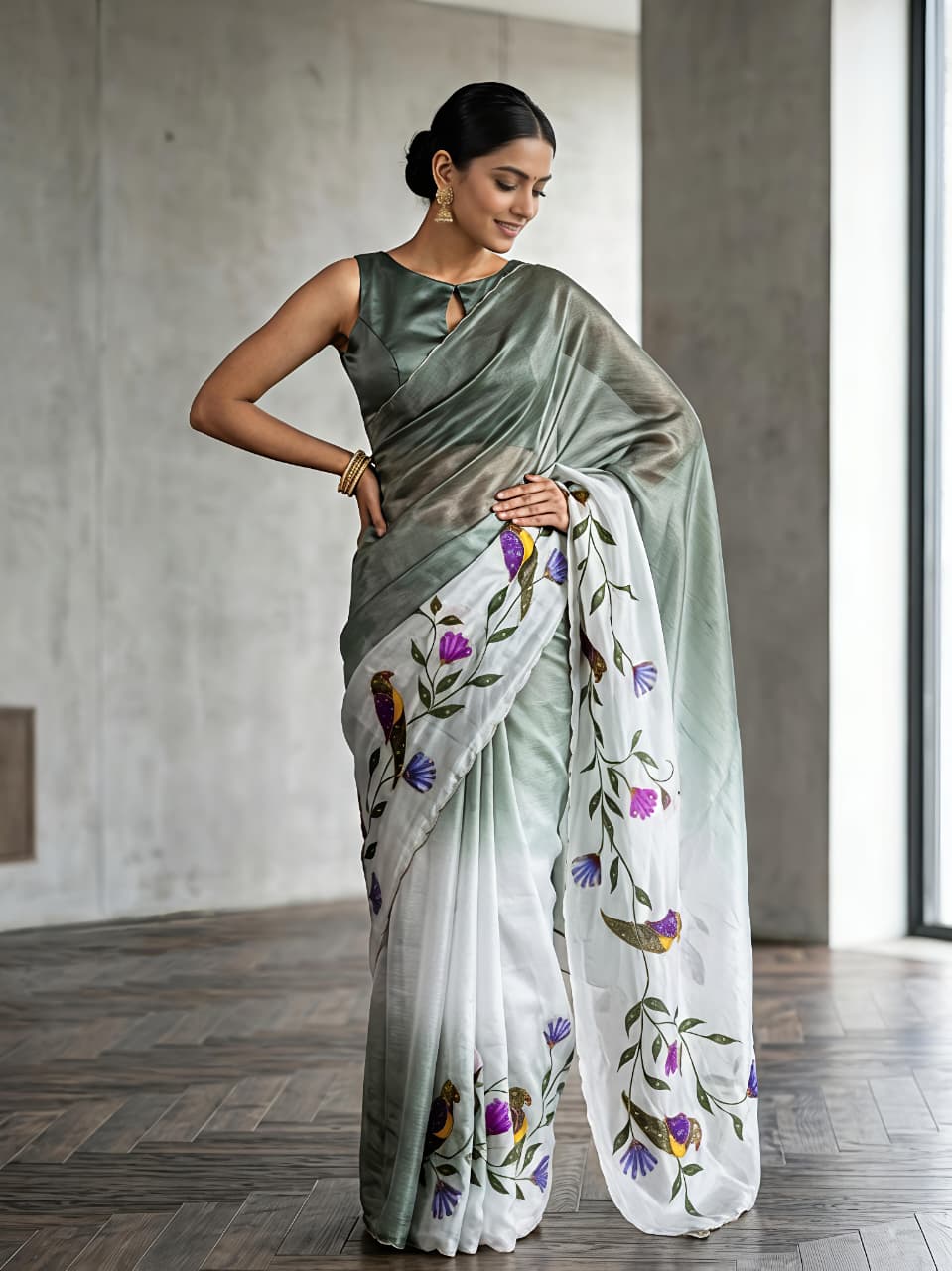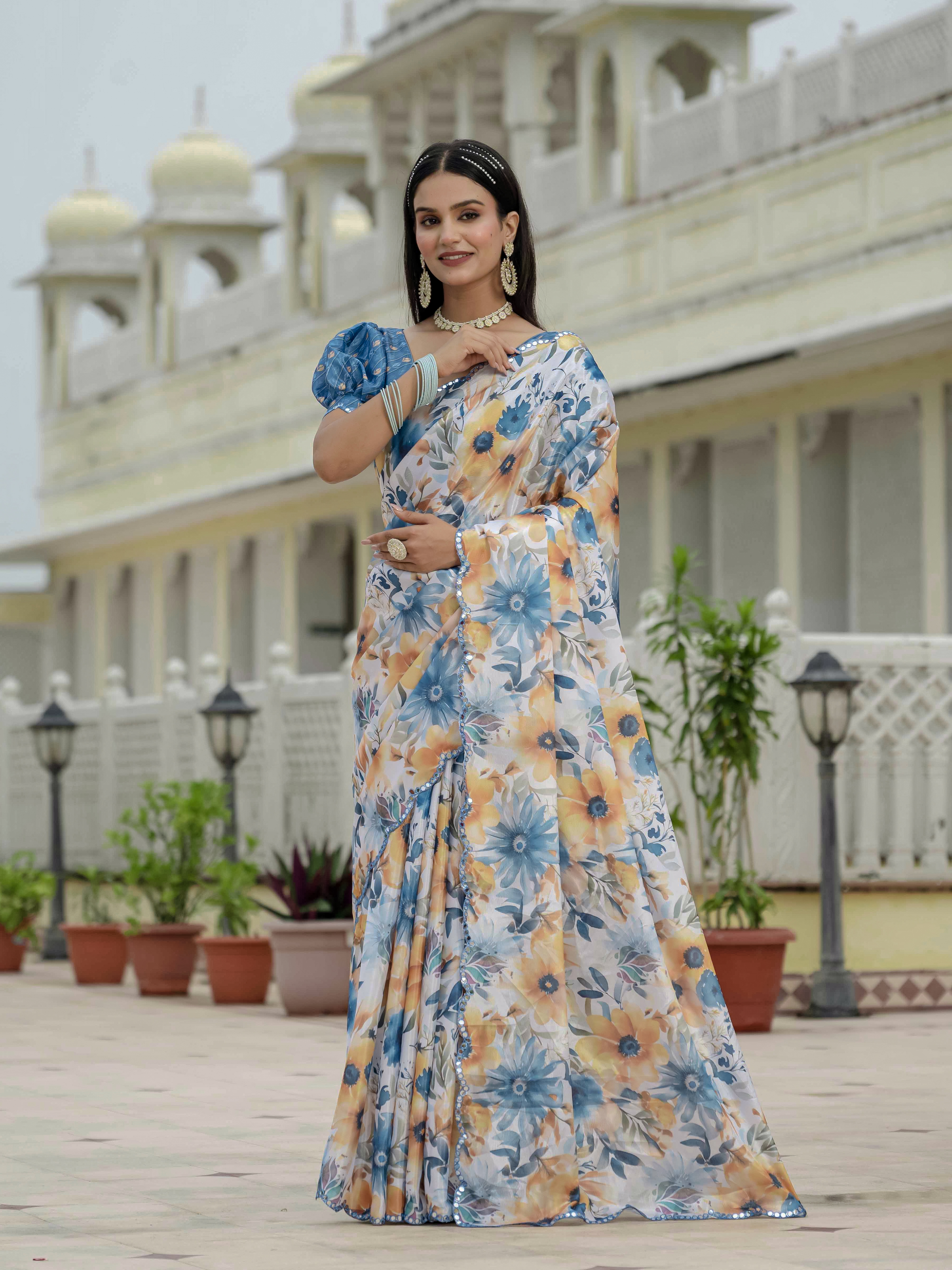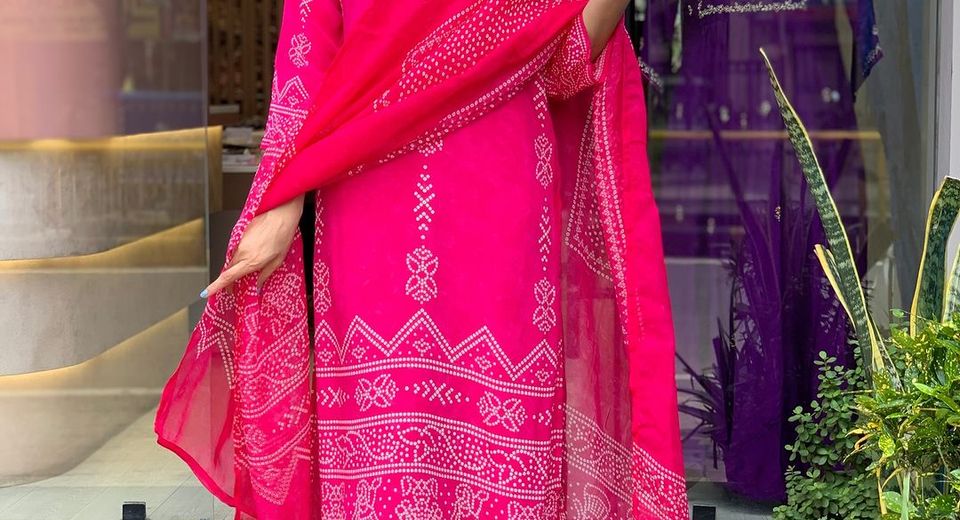
A neckline can change the apparent length of your neck, the width of your shoulders and the visual balance of a salwar suit within seconds. The Best Salwar Suit Neck Designs are not chosen only because they look fashionable; they also need to work with your face shape, bust proportion, fabric, embroidery and the way you plan to drape the dupatta.
A small round neck may make a heavily embroidered kameez look neat, while a V-neck can give a straight-cut suit more vertical movement. A collar neck can bring structure to a workwear outfit, and a keyhole neckline can add festive interest without requiring a deep cut. The sections below explain how to select a neckline with enough precision to make online shopping easier.
How Do You Choose the Best Salwar Suit Neck Designs?
The best neckline for a salwar suit balances three things: the wearer's face shape, the garment's silhouette and the event's level of formality. A neckline should frame the face without competing with the dupatta or the embroidery around the bodice.
Start by identifying the visual line you want. Vertical lines, such as a V-neck or a narrow slit neckline, can make the upper body appear longer. Horizontal lines, including wide boat necks and broad square necks, can make the shoulders look wider. Curved necklines, including round and U-shaped designs, soften angular features and suit many everyday kameez styles.
- Round neck: A medium-depth round neck is versatile, comfortable and suitable for cotton, rayon, silk blends and embroidered suits.
- V-neck: A narrow or medium V-neck adds a vertical line and pairs well with long earrings or a pendant.
- Square neck: A square neckline creates definition around the collarbone and works especially well with structured fabrics.
- Boat neck: A boat neck gives a graceful, horizontal frame and looks polished with minimal jewellery.
- Collar neck: A collar introduces a tailored finish that suits office wear, straight suits and button-front designs.
- Keyhole neck: A small keyhole offers a decorative focal point while keeping the overall neckline relatively covered.
Neckline depth also matters. For an adaptable ready-to-wear suit, a neckline ending roughly 5 to 8 centimetres below the base of the neck is generally easy to style with a dupatta. Deeper cuts may look striking, but they require careful placement of the dupatta and a well-fitted inner layer.
Which Neck Designs Suit Different Face Shapes?
Face shape can guide neckline selection, although personal comfort and garment fit remain more important than strict rules. The aim is to create a pleasing contrast between the shape of the face and the shape of the neckline.
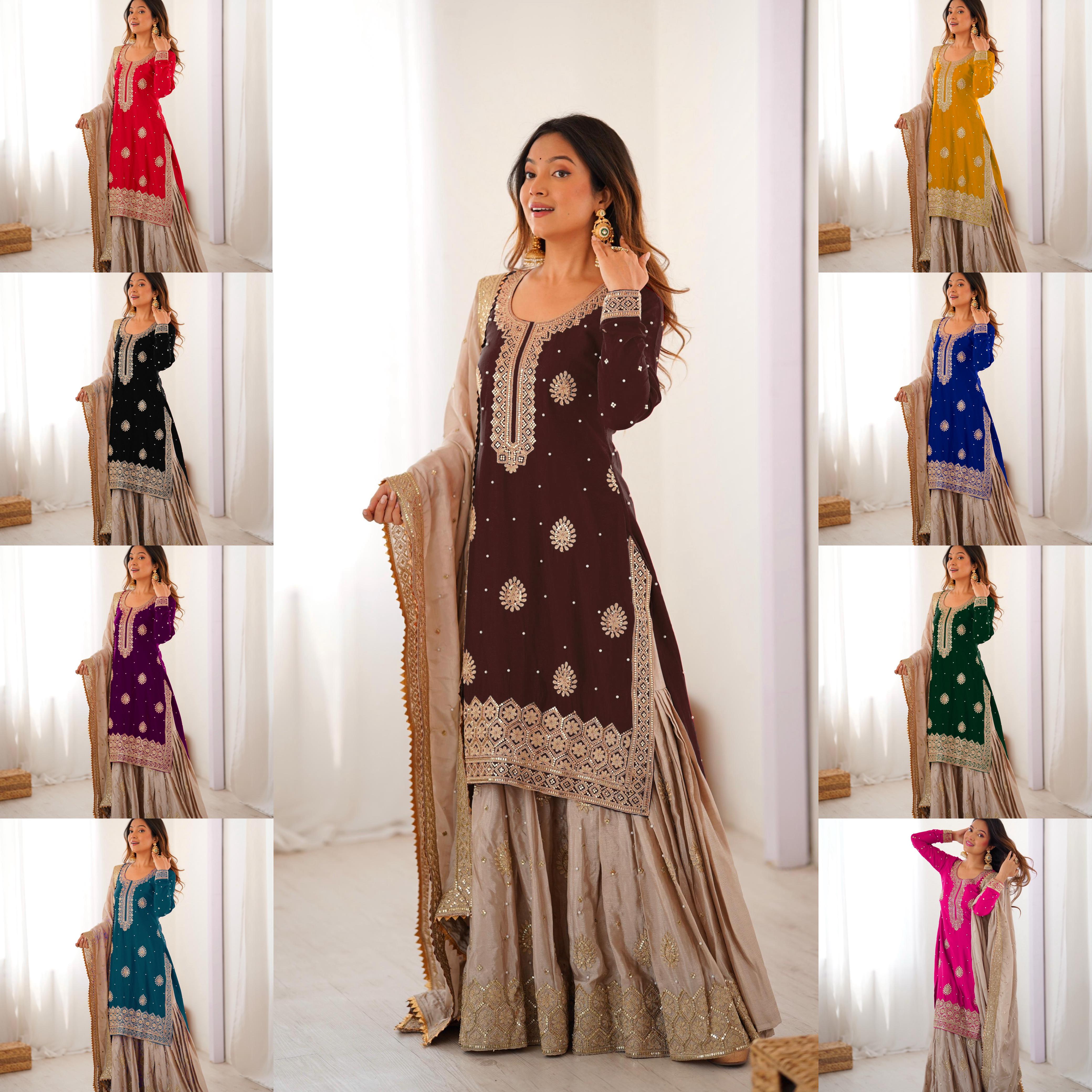
Round and full faces
V-necks, narrow sweetheart necks and elongated U-necks generally suit round faces because they introduce length below the chin. A long pendant or an open dupatta drape reinforces the same vertical effect. Very high round necks and extremely wide boat necks can make the upper frame appear broader, particularly when the fabric is stiff or heavily embellished.
Long or oval faces
Round necks, boat necks, square necks and high necks can add visual width to a long or oval face. A broad embroidered border across a boat neckline can be especially effective for festive dressing. Short necklaces, jhumkas and a dupatta arranged closer to the shoulders help maintain balance.
Angular, square or heart-shaped faces
Curved U-necks, round necks and soft sweetheart shapes can temper a strong jawline or pointed chin. A gently curved neckline with floral threadwork creates a softer frame than a sharp geometric cut. A narrow V-neck can also work for a heart-shaped face when the neckline isn't too deep.
Face-shape guidance should never override the actual cut of the garment. A broad shoulder line, a high bust placement or a stiff Banarasi silk panel can change how a neckline appears, so product measurements and model photographs deserve attention before purchase.
How Should Necklines Match the Salwar Suit Silhouette?
A neckline should repeat or balance the main shape of the kameez rather than create a disconnected focal point. Straight suits, Anarkali suits, Punjabi suits and palazzo suits each benefit from slightly different neckline treatments.
Straight-cut and Punjabi suits
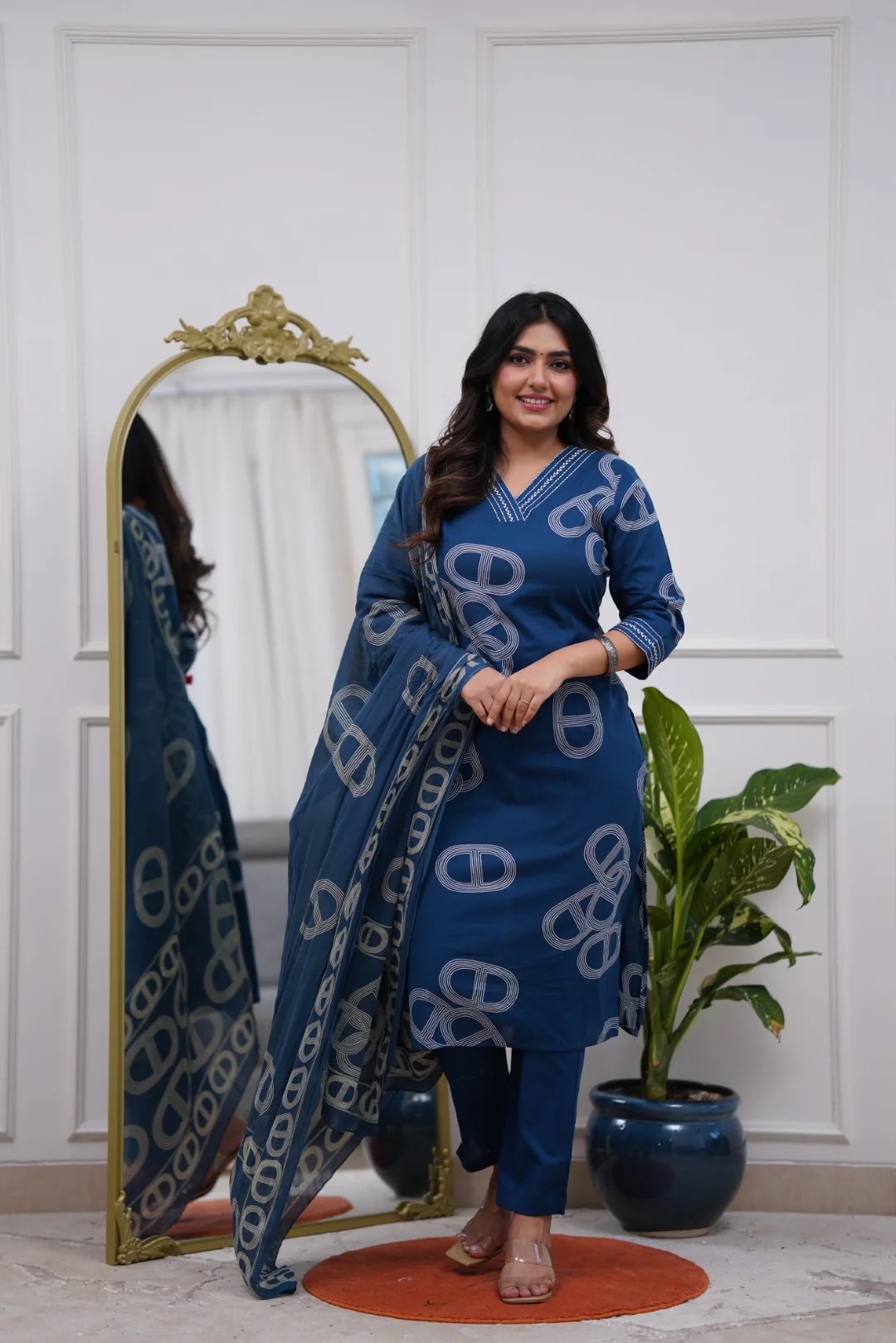
Straight-cut salwar suits pair naturally with V-necks, round necks, square necks and modest collar necks. A V-neck adds movement to a clean vertical silhouette, while a square neck gives a sharper finish to a tailored outfit. A Punjabi suit with a shorter kameez can carry a wider round neck or a small keyhole because the proportions are more compact.
Navy Blue Embroidered Salwar Suit demonstrates why a simple neckline can be useful when the garment already has surface detail. Pairing a detailed neckline with a heavy necklace may make the upper half look crowded, whereas medium jhumkas leave the embroidery visible.
Anarkali suits
Anarkali suits generally suit necklines that keep attention near the face while allowing the flare to remain the main silhouette. Round, sweetheart, keyhole and shallow V-neck designs work well for this reason. A high neckline can look elegant on a formal Anarkali, especially when the bodice has zari or dense threadwork.
Ladies Dress Anarkali Salwar Suits can include several different flare and bodice proportions, so the neckline should be assessed with the waist seam and yoke height. A high yoke with a deep neckline may lengthen the torso too much, while a low yoke with a high neck can make the bodice appear visually compressed.
Palazzo and sharara-style suits
Palazzo suits and sharara suits have movement below the waist, making a defined neckline useful for visual structure. A collar neck, square neck or medium V-neck can provide that definition. If the trousers are heavily embellished, a simpler neckline keeps the outfit from looking overloaded.
Which Neckline Works Best With Embroidery and Fabrics?
Embroidery and fabric weight determine how much decoration a neckline can carry before the bodice looks crowded. Lightweight fabrics benefit from controlled embellishment, while structured fabrics can support stronger geometric cuts.
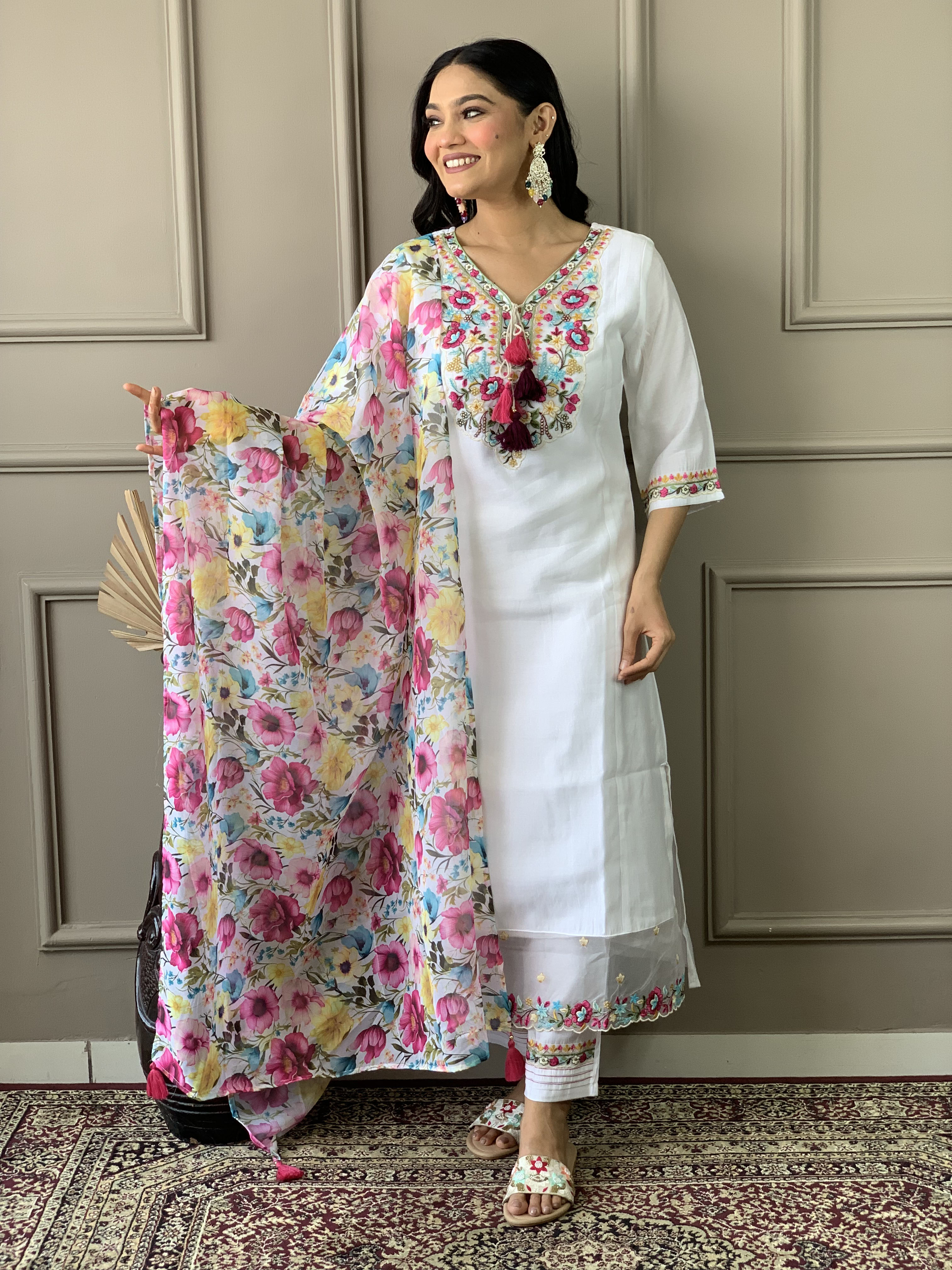
Chanderi and organza have a light, airy quality, so narrow V-necks, round necks and small keyholes preserve their delicate appearance. Cotton and rayon can support printed or embroidered neck facings without becoming uncomfortable in warm weather. Banarasi silk and other lustrous fabrics can carry a square neck, boat neck or high neck, but the finishing must be precise because uneven stitching is more visible on a smooth surface.
Threadwork Salwar Suit with Pure Organza Dupatta illustrates an important styling principle: the dupatta may already provide translucence and surface interest, so the neckline doesn't need excessive embellishment. A neatly finished round or shallow V-neck lets the organza border frame the face without competing with it.
Zari, gotapatti, sequins and dense metallic embroidery reflect light around the face. When a neckline contains zari, balance the look with smaller earrings or a plain chain. Gotapatti can suit a square or U-shaped neck because the geometric trims echo the neckline's outline. Floral threadwork looks softer on curved necklines, although a sharp V-neck can create an attractive contrast.
How Can You Match Neck Design to an Occasion?
Occasion, weather and movement should determine the neckline before decorative preference. A neckline that photographs beautifully at a wedding may be impractical for a long daytime ceremony or a work meeting.
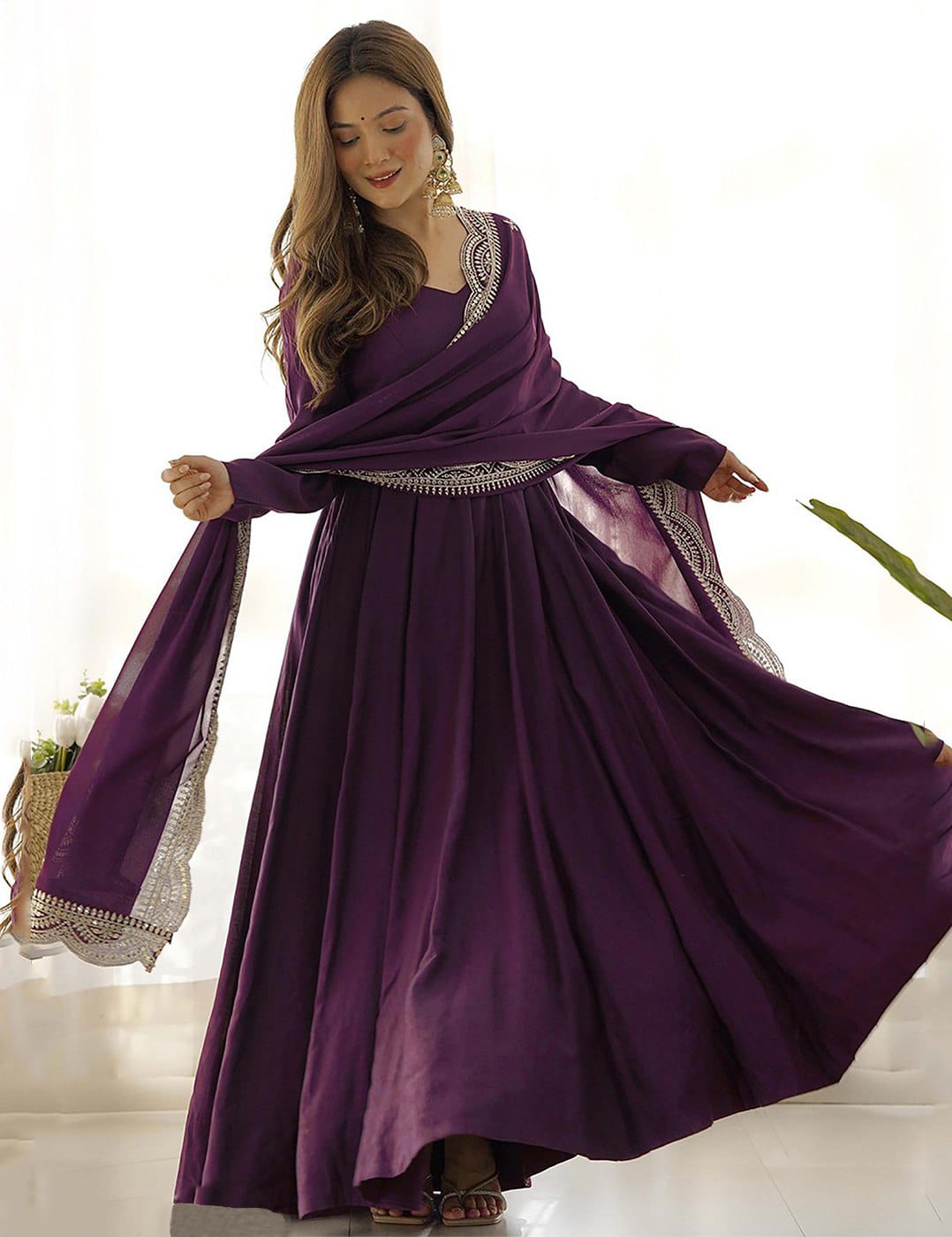
- Office and formal daytime wear: Choose a round, shallow V, band collar or classic collar neck. Keep the depth moderate and use cotton, rayon, Chanderi or a breathable blend.
- Festive puja: A keyhole, boat neck or embroidered round neck brings interest while retaining a relatively covered appearance.
- Haldi ceremony: A comfortable round neck or medium V-neck is practical because the outfit may need repeated movement, sitting and hand washing around the sleeves and dupatta.
- Wedding guest dressing: A square, sweetheart, embellished V-neck or elegant boat neck can carry richer zari, gotapatti or sequin work.
- Evening reception: A clean V-neck or structured collar neck works with statement earrings and a more deliberate dupatta drape.
Designer Yellow Salwar Suit with Dupatta is the kind of bright ensemble where neckline restraint can improve the overall result. A medium round neck or shallow V-neck allows the colour to remain prominent instead of placing too many competing details beside the face.
Pink Salt Gotapatti Salwar Suit Set can support a more decorative neckline because gotapatti creates a clear festive border. Keep the necklace short or skip it entirely if the neckline trim is wide. The same principle applies to a black festive suit: Midnight Black Blossom Salwar Suit can look more refined with one strong focal point, such as a floral neckline or statement earrings, rather than both together.
What Jewellery and Dupatta Styling Suit Each Neckline?
Jewellery should follow the open space created by the neckline, while the dupatta should frame rather than conceal the design. The easiest way to preserve a neckline is to place one end of the dupatta over the shoulder and keep the opposite side lightly gathered.
- Round neck: Use a short necklace, pearl strand, small pendant or medium jhumkas. Avoid placing a large pendant directly over dense embroidery.
- V-neck: Choose a pendant that follows the V or use long earrings without a necklace. A single vertical accessory reinforces the neckline.
- Square neck: Try a choker, short necklace or angular earrings. Keep the chain inside the square frame rather than crossing its border.
- Boat neck: Long earrings and an open dupatta work better than a broad necklace, which can make the shoulder line look crowded.
- Collar neck: Wear studs, hoops or a watch. A collar usually supplies enough structure without a necklace.
- Keyhole neck: Let the keyhole remain visible and choose earrings or a slim bracelet as the main accessory.
Elegant White Cording Threadwork Salwar Suit is an useful example of why contrast matters. White cording threadwork already creates texture, so silver-toned earrings or pearls can complete the outfit without adding another heavy layer around the neck.
What Should You Check Before Buying a Salwar Suit Online?
Before buying a salwar suit online, check the neckline measurements, lining, closure, embroidery placement and return-size information rather than judging the neck design from a front photograph alone.
- Measure the neckline depth: Compare the product measurement with a well-fitting kameez you already own. Mark the base of your neck and measure down the centre front.
- Check the shoulder width: A neckline can look correct while the shoulder seam sits too far out or too close in. Shoulder fit affects the apparent width of every neck design.
- Inspect the finishing: Look for piping, facing, lining and clean embroidery around the cut edge. Metallic trims need secure stitching because loose zari or gotapatti can catch on jewellery.
- Consider the bust and armhole: A neckline that's too high can pull across the bust, while a deep neckline can gape if the armhole is loose.
- Account for shrinkage: Cotton garments may need care for shrinkage, so washing instructions matter before selecting a close-fitting neck.
- Match the dupatta: A heavy border, a transparent organza panel or a slippery fabric can cover or shift the neckline during wear.
Navy Blue Threadwork Readymade Salwar Suit can suit buyers who want the convenience of a ready-made garment, but ready-made sizing makes shoulder and neckline measurements particularly important. RoseGlow Designer Salwar Suit may call for a more considered jewellery plan if the bodice has a strong colour or decorative focal point.
For shoppers comparing price and variety, Dress Materials can be useful when a preferred neckline needs custom tailoring. Salwar Suits with 30% Off, Salwar Suits Flat 40% Off and Salwar Suits On Sale may offer value, but a discount should never replace checking measurements, fabric composition and neckline construction.
How Can You Make a Neckline More Comfortable and Durable?
Comfort improves when the neckline lies flat, doesn't press against the throat and allows the head to turn without pulling the shoulder seams. A tailor can add a discreet hook, modesty panel, soft facing or a small dart when the basic cut is suitable but the opening needs adjustment.
Wash embellished salwar suits according to the care label and avoid rubbing zari, gotapatti or raised threadwork against rough surfaces. Fold suits with heavy neck embroidery inside out or place soft tissue between decorated layers. Air-dry garments away from harsh direct sunlight when the fabric is dyed in saturated colours such as navy, yellow, pink or black.
When a neckline is the main feature, keep ironing temperatures low around embroidery and use a pressing cloth. Organza, Chanderi and delicate threadwork can lose their shape under direct high heat. Proper storage preserves the neckline edge, which is often the first area to show stretching or puckering.
Questions to Ask Before Choosing a Salwar Suit Neckline
Which salwar suit neck design is best for a round face?
A medium V-neck, narrow sweetheart neck or elongated U-neck usually flatters a round face by adding a vertical line below the chin. Pairing the neckline with long earrings or a slim pendant can reinforce that effect.
Is a V-neck suitable for a heavy bust?
A medium-depth V-neck can be flattering for a heavy bust when the garment has adequate bust ease, stable fabric and good lining. Avoid a very deep or loose V that gaps during movement, and consider a small modesty panel for additional coverage.
Which salwar suit neckline is best for office wear?
A moderate round neck, shallow V-neck, band collar or classic collar neck is usually most practical for office wear. Cotton, rayon, Chanderi and breathable blends work well when the neckline is neatly finished and not heavily embellished.
How do I style jewellery with an embroidered salwar suit neck?
Choose jewellery according to the empty space around the neckline. Wear long earrings with a boat or collar neck, a short necklace with a plain round neck, and either a pendant or earrings with a detailed V-neck.
Can a tailor alter a salwar suit neckline?
A tailor can often raise a neckline, add a modesty panel, replace a facing or adjust a small opening. Deepening a neckline is riskier because it may disturb embroidery, lining, bust fit and the garment's original proportions.
Which neck design works best for an Anarkali suit?
Round, shallow V, sweetheart and keyhole necklines usually work well with Anarkali suits because they frame the face without competing with the flare. A high neck can also suit a formal Anarkali when the bodice and yoke are proportioned correctly.