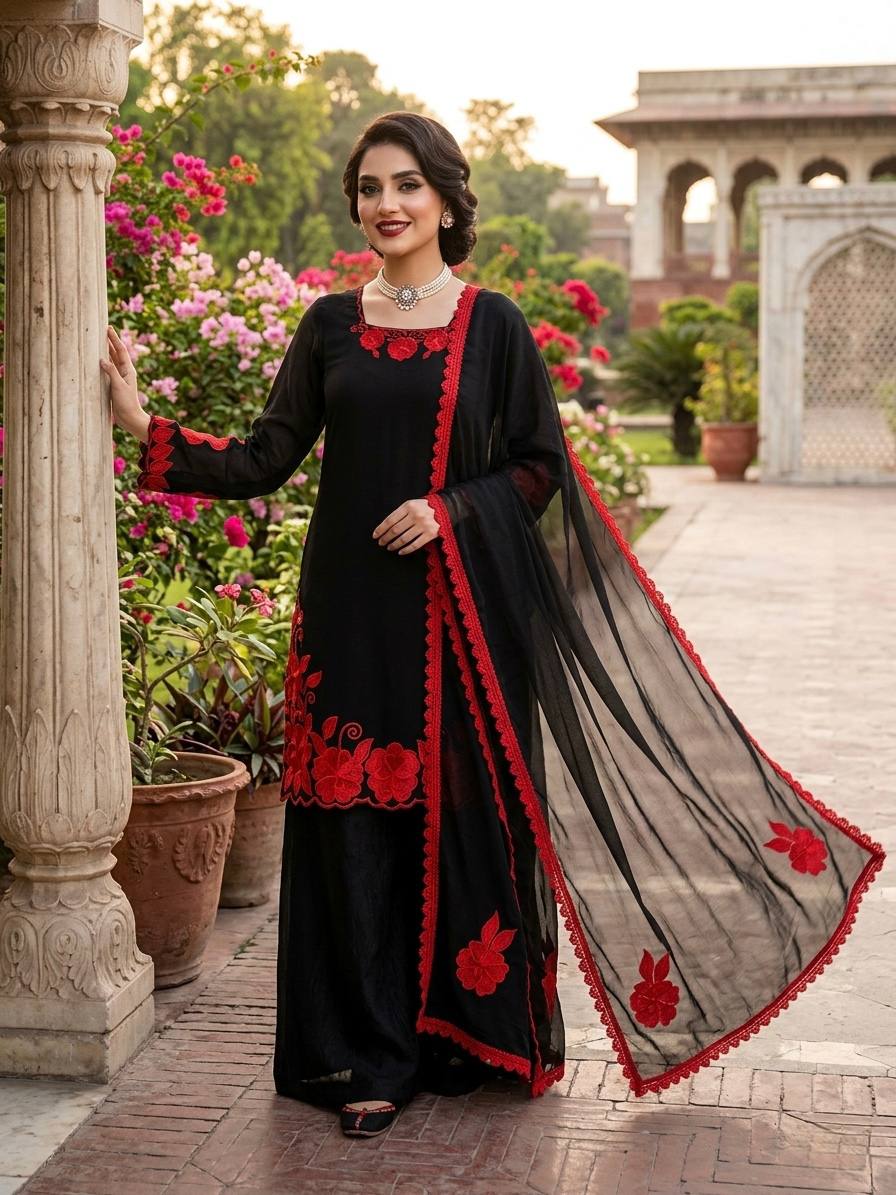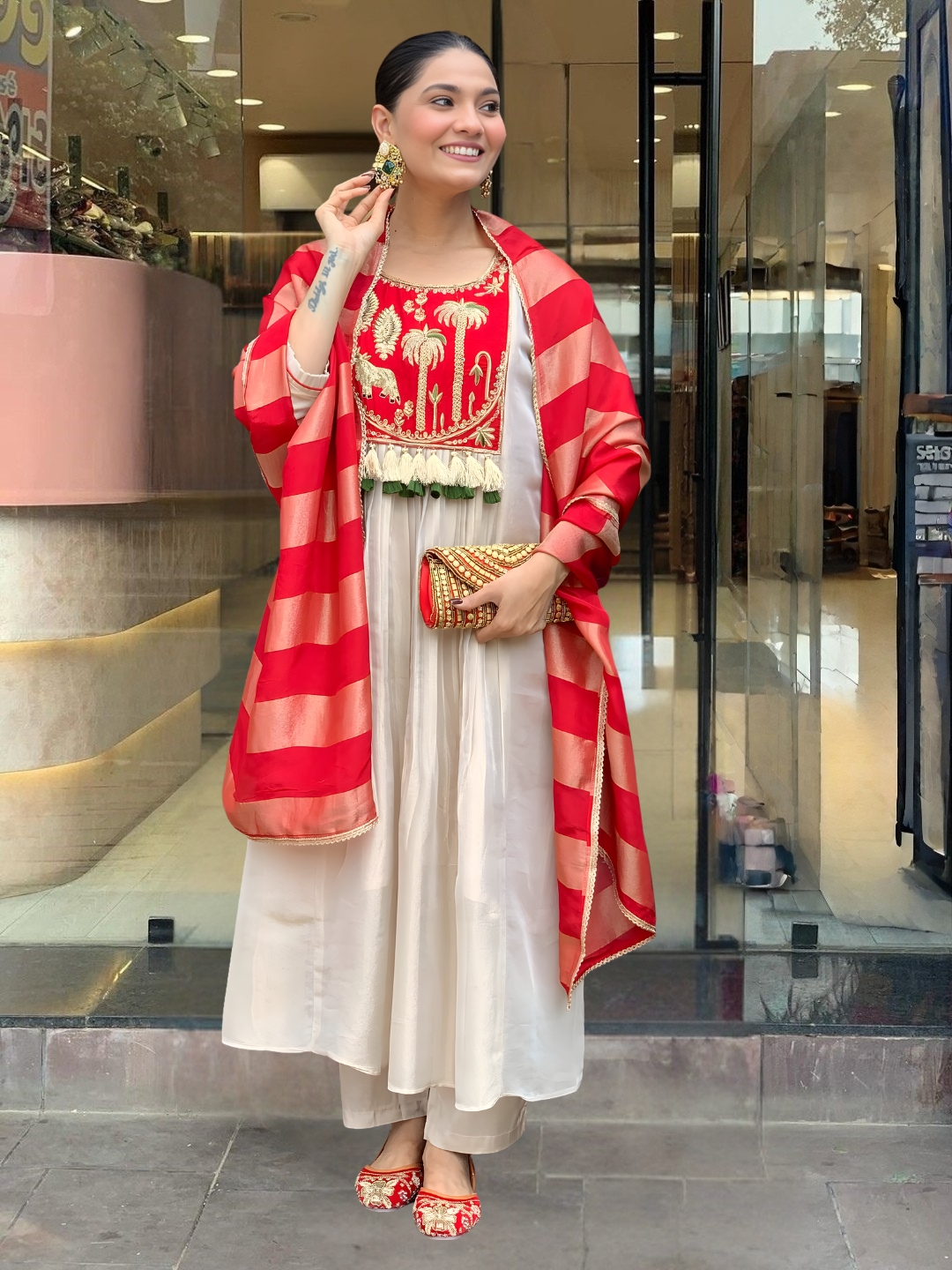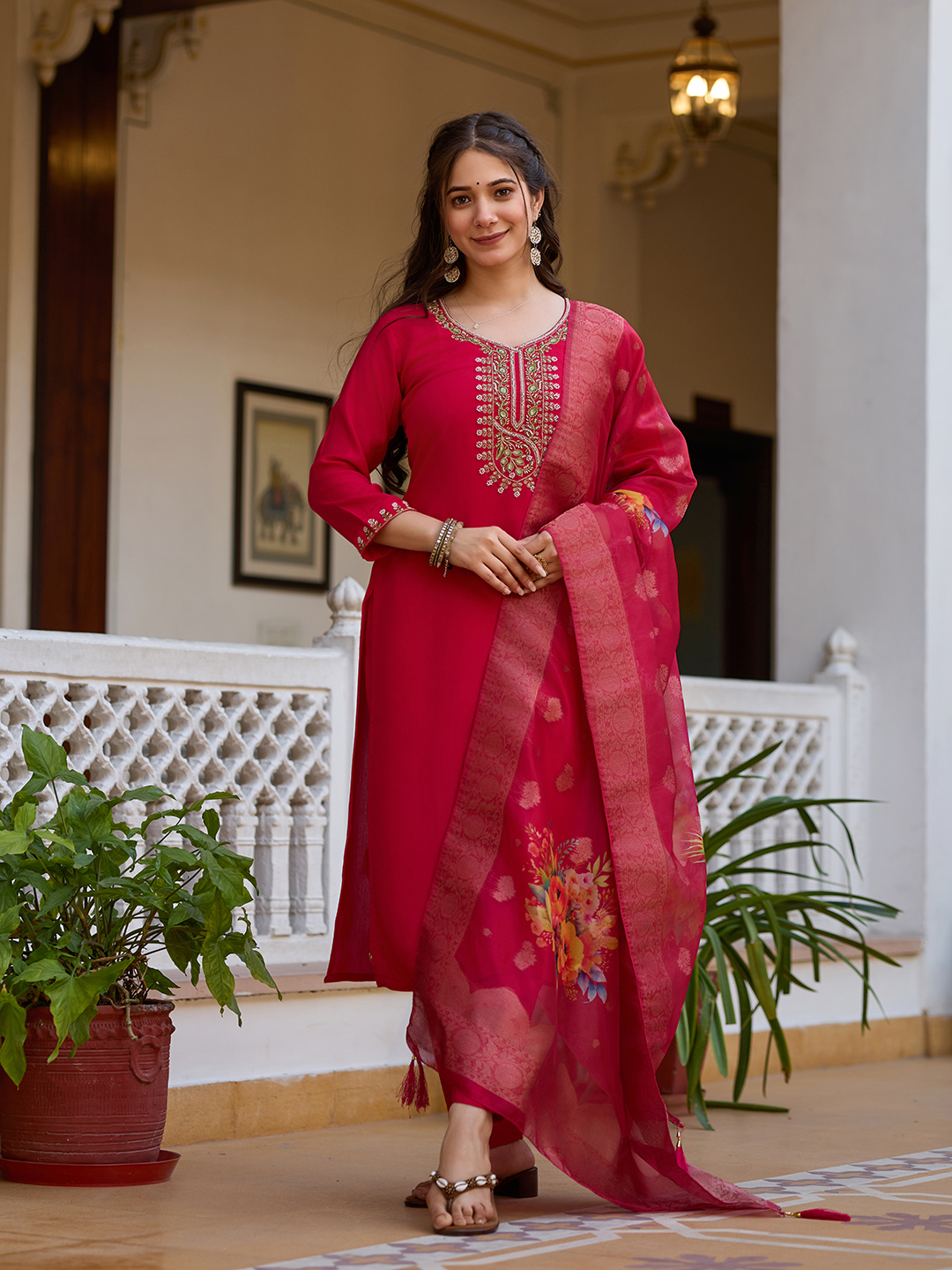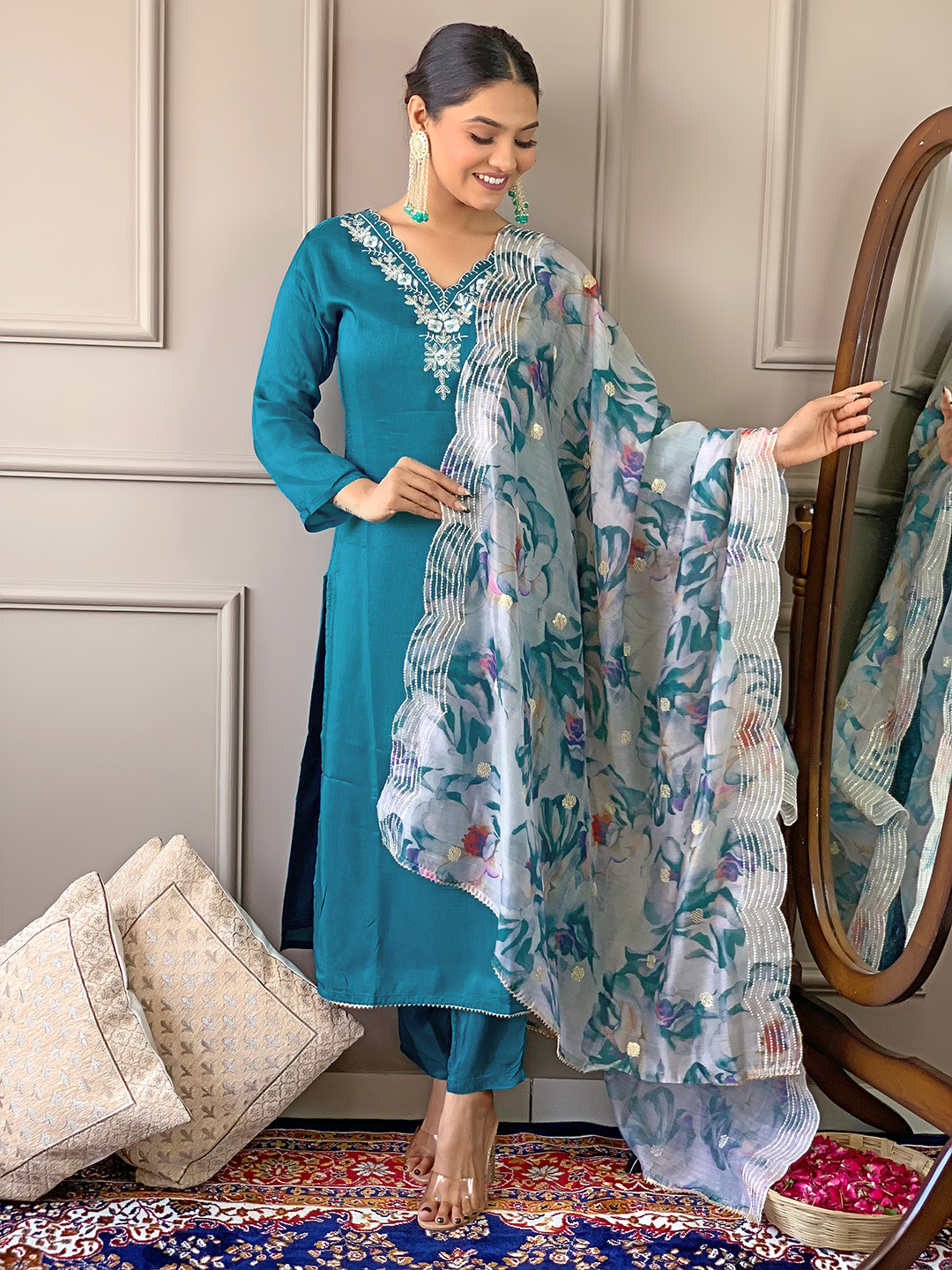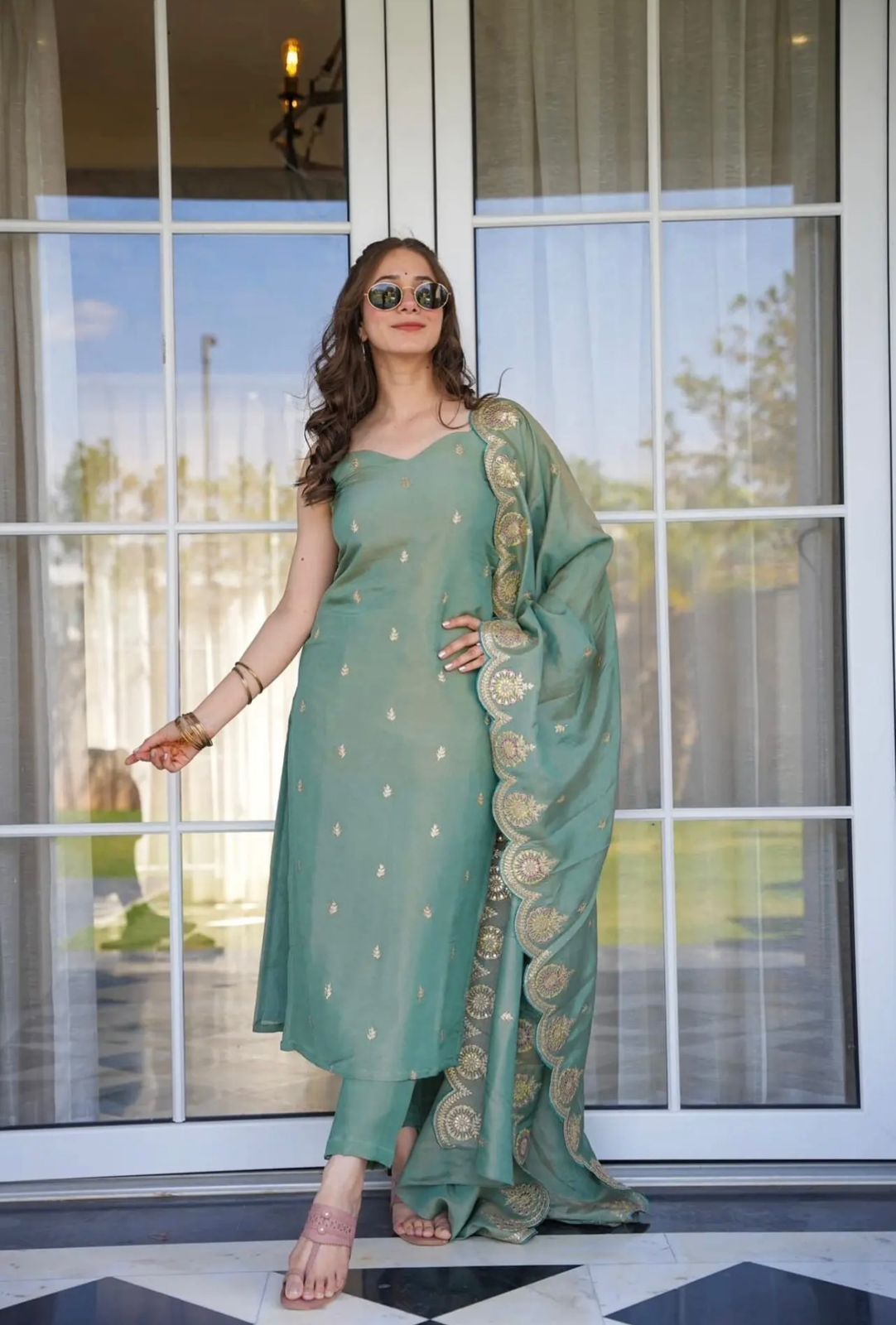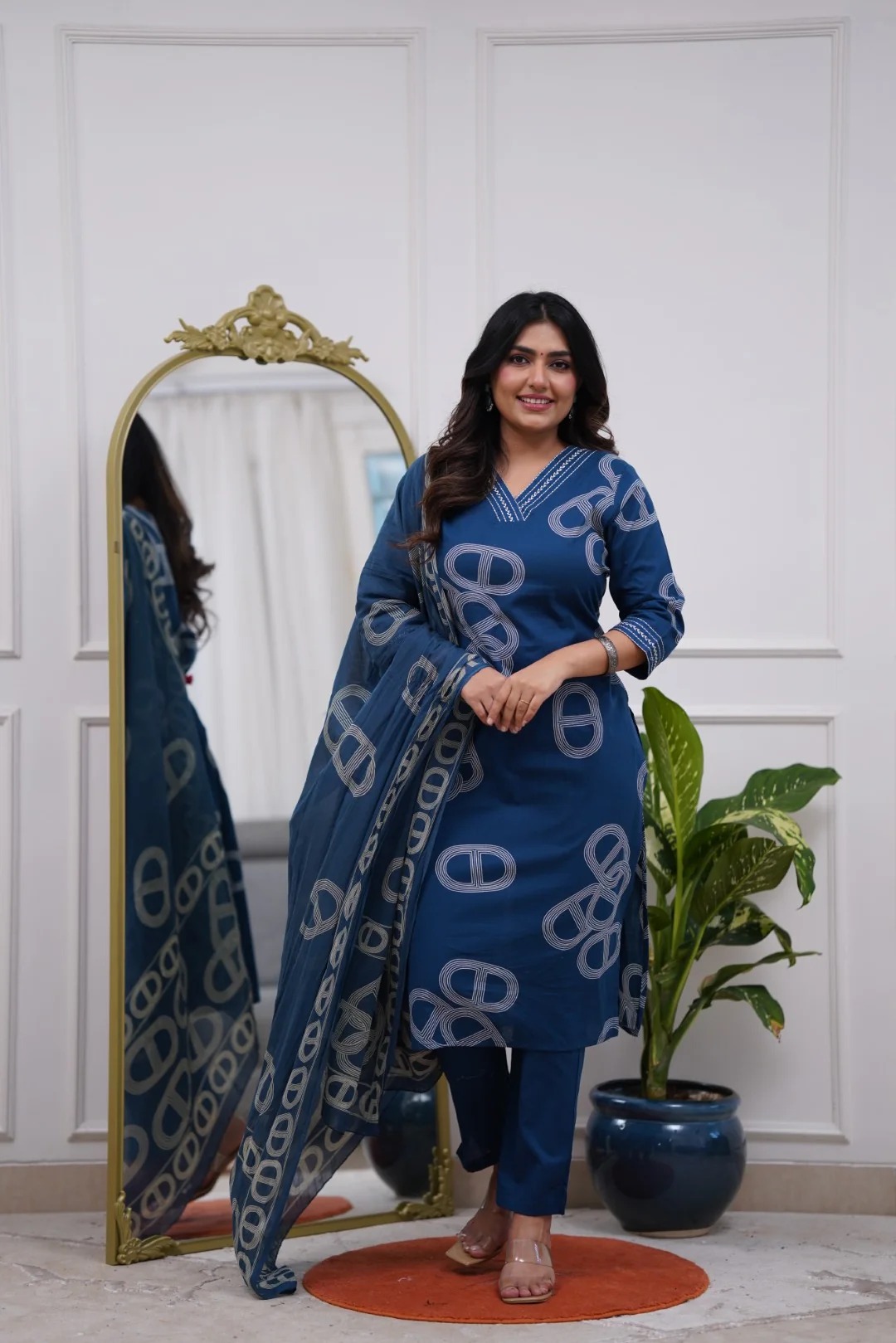
The best salwar suit designs for weddings are not chosen by embroidery alone. The right outfit must suit the ceremony, allow comfortable movement, photograph well, and work with the weather and venue. An Anarkali can create graceful volume for a reception, while a palazzo suit or sharara may be easier to move in during a Mehendi ceremony. Fabric, hem length, dupatta weight and fit often matter more than the number of embellishments.
This guide explains how to compare wedding salwar suits, select a silhouette for each function, style readymade sets, and avoid common buying mistakes. The goal is a polished outfit that feels appropriate at a family wedding without becoming difficult to sit, walk or dance in.
How to choose the best salwar suit designs for weddings
Choose a wedding salwar suit by matching the silhouette and fabric to the function, then check the fit, embellishment and dupatta before considering colour.
A morning Haldi ceremony usually calls for breathable fabric, a manageable dupatta and cheerful colour. A formal evening reception can support silk, velvet-like textures, dense zari or sequins, and a more dramatic flare. A long family celebration may require a lighter outfit than a single-hour reception, even when both events have a festive dress code.
- For daytime functions: choose Chanderi, cotton-silk, lightweight silk blends or airy georgette with moderate embroidery.
- For evening functions: consider Banarasi silk, satin-finish silk, Chinon silk, zari borders, threadwork or controlled sequin placement.
- For repeated wear: select a clean silhouette with detachable jewellery or a versatile dupatta rather than a highly specialised bridal design.
- For active celebrations: prioritise side slits, secure shoulders, a non-dragging hem and trousers that don't restrict the knees.
Readymade salwar suits for weddings are useful when the event is close or tailoring access is limited. Confirm the garment measurements rather than relying only on a labelled size. Bust, waist, hip, shoulder, sleeve and kurta length can vary significantly between suit patterns.
Which salwar suit silhouettes work for different wedding functions?
Anarkalis suit formal receptions, shararas suit festive daytime gatherings, palazzo suits offer movement, and straight kurta sets suit understated family celebrations.
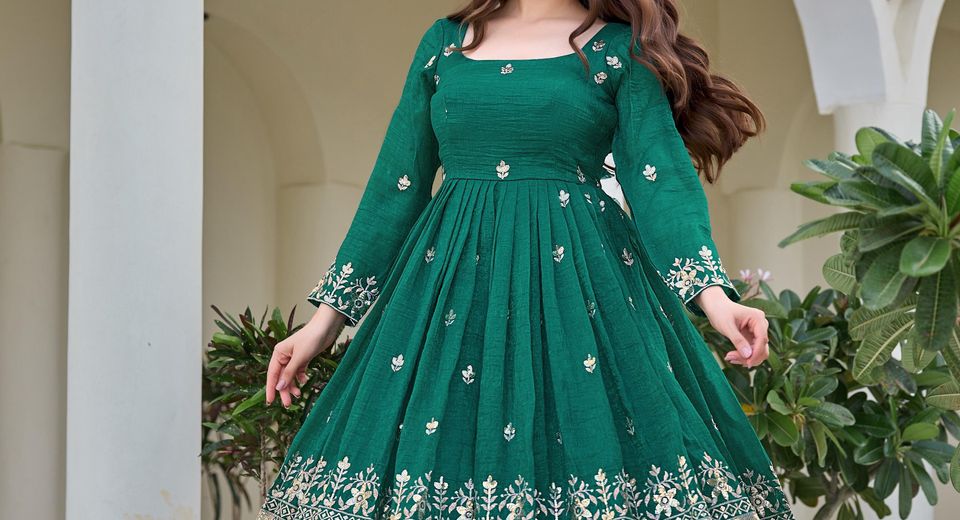
Anarkali suits for the reception
Anarkali suits create a long vertical line through a fitted upper body and a flared lower section. A floor-length Anarkali looks especially dressy with a structured neckline, embroidered yoke and a dupatta carried over one shoulder. The Green Embroidered Anarkali Suit Set for Women illustrates how colour and surface work can provide occasion impact without requiring a lehenga.
For a crowded venue, check whether the flare catches on chairs or footwear. A calf-length or ankle-length Anarkali can be more practical than a floor-grazing hem. The Designer Teal Blue Embroidered Anarkali Suit Set for Women offers an useful direction for evening dressing: jewel tones photograph strongly, especially when the embroidery is concentrated around the neckline and borders.
Sharara suits for Mehendi and Sangeet
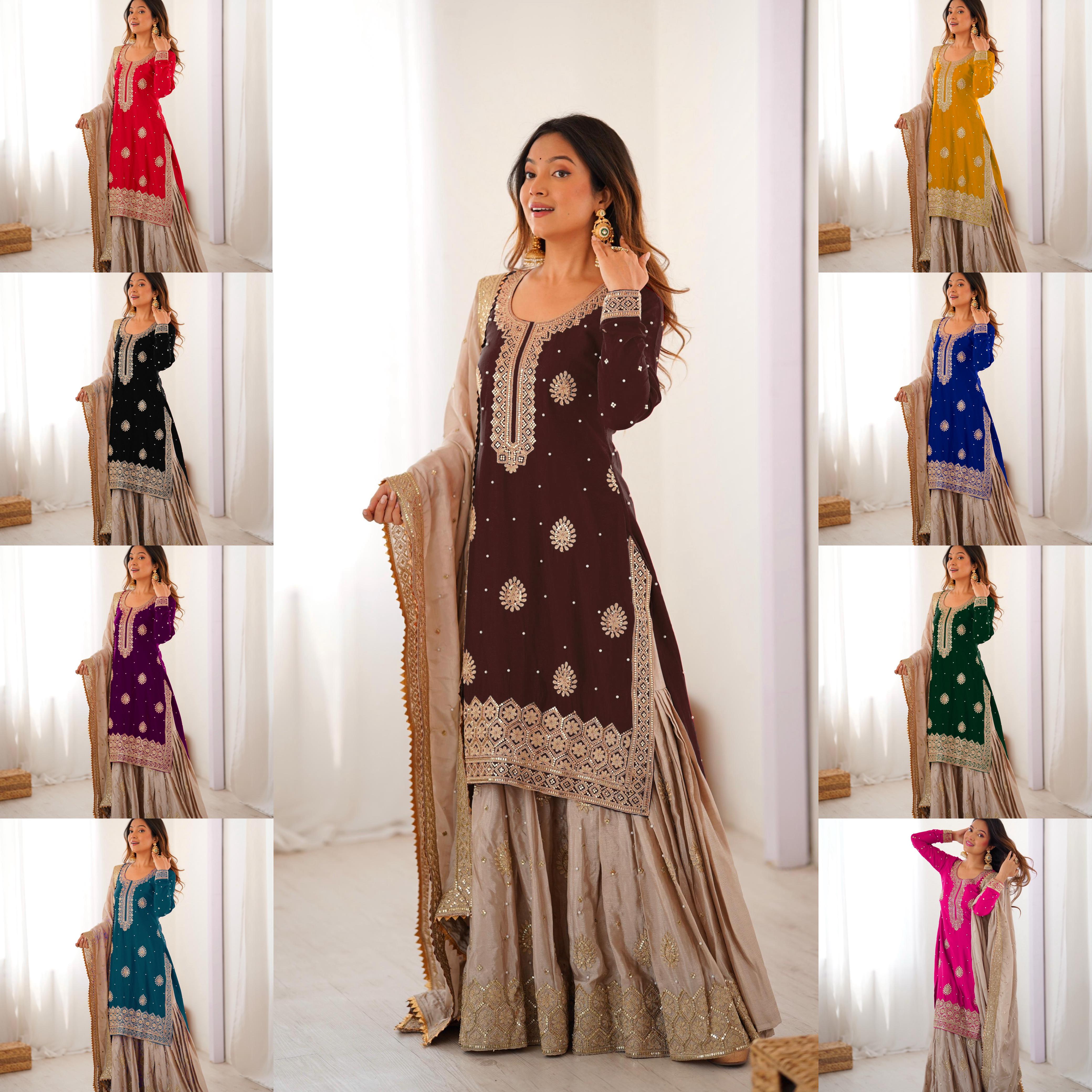
Sharara suits are effective for Mehendi and Sangeet celebrations because the divided, flared trousers allow easier movement than a narrow churidar. The Brown Chinon Silk Sharara Suit Set for Women demonstrates how Chinon silk can give a fluid, festive fall while retaining the recognisable sharara shape.
A short or medium-length kurta balances the volume of a sharara. Keep the dupatta pinned at one shoulder if dancing or applying Mehendi, and avoid placing heavy tassels directly at wrist level where they may interfere with handwork.
Palazzo and straight suits for long ceremonies
Palazzo suits and straight kurta sets are practical choices when a wedding involves several hours of sitting, greeting guests and moving between venues. The Maroon Wedding Wear Embroidered Palazzo Suit Set combines a relaxed lower silhouette with a wedding-appropriate colour and embroidery direction.
A straight suit can look refined when the neckline, sleeve finish and dupatta border are coordinated. The Cream Embroidered Silk Kurta Pant Set for Women is an useful example of a softer, more restrained palette for a daytime wedding, a civil ceremony or a guest who prefers quiet elegance over high contrast.
Which fabrics and embellishments are suitable for a heavy salwar suit wedding?
Silk, Chinon silk, velvet accents and lined georgette support heavy wedding dressing, while cotton and light Chanderi work better for warm daytime functions.
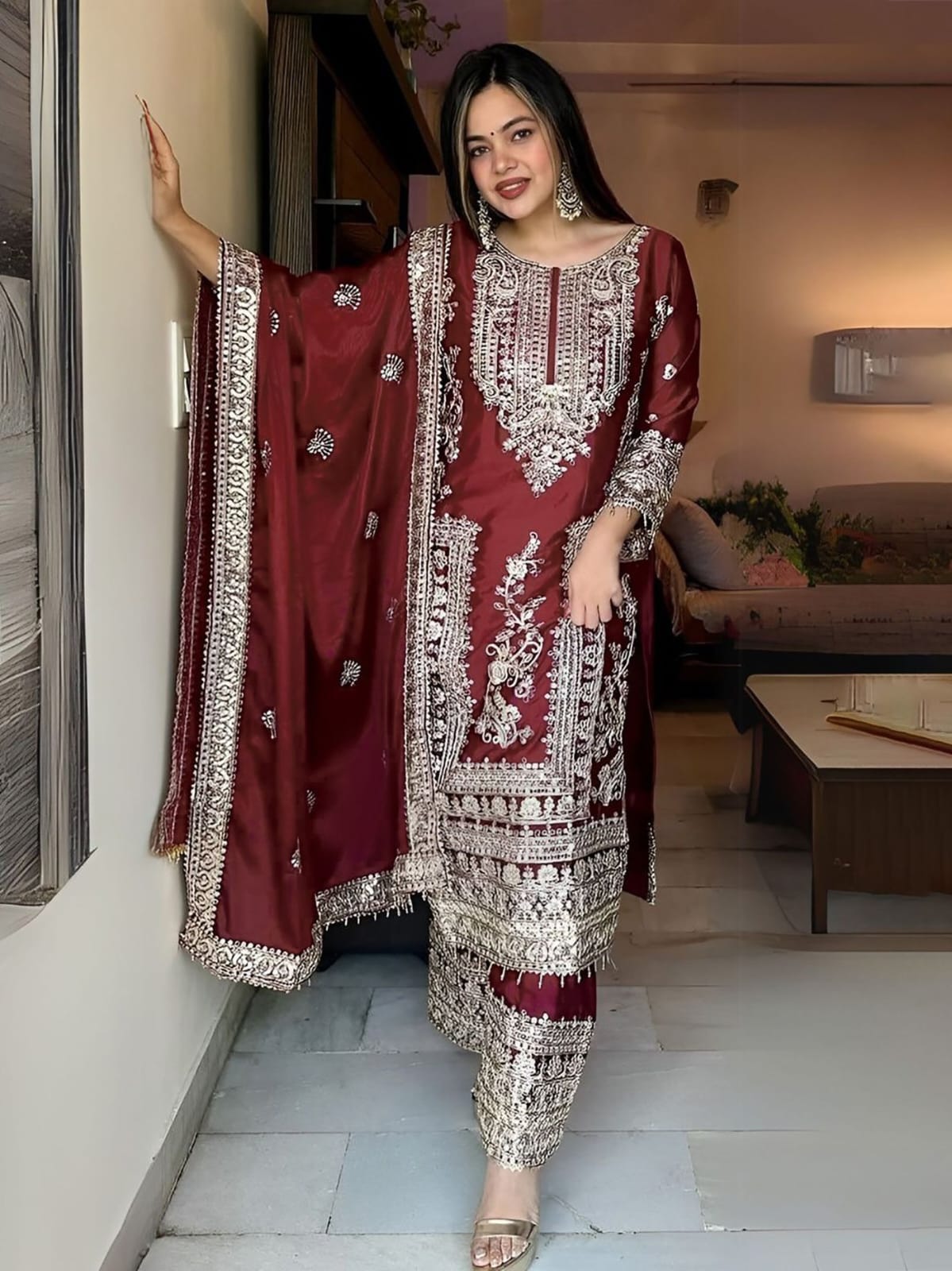
A heavy salwar suit wedding outfit doesn't need embellishment across every centimetre. Dense work on the yoke, sleeve cuffs, hem and dupatta border can look more intentional than uniform decoration. Embroidery also changes the garment's weight, so a heavily worked dupatta may require shoulder pins and a stronger neckline construction.
- Silk: holds shape, reflects light and suits formal evening wear; look for a breathable lining in warm weather.
- Chinon silk: gives a soft drape and works well for shararas, flowing dupattas and layered silhouettes.
- Chanderi: feels relatively light and has a subtle sheen, making it suitable for daytime festive dressing.
- Cotton: provides comfort and absorbency for outdoor functions, although very casual prints may not suit a formal reception.
- Zari: adds metallic definition to borders and motifs; pair substantial zari with simpler accessories to prevent visual overload.
For cotton salwar suits wedding guests should select, choose festive details such as a woven border, embroidered neckline, silk-blend dupatta or statement earrings. Plain cotton with casual block prints may be ideal for a smaller daytime gathering but can appear underdressed at a black-tie-style reception.
The Festive Wear Maroon Silk Anarkali Suit Set for Women shows why maroon silk works well for evening celebrations: the deep colour carries visual richness, while the Anarkali structure creates ceremony-ready volume. The Wine Embroidered Anarkali Suit with Dupatta Online brings another strong direction for guests who want a deep, saturated tone with a coordinated drape.
How should you style a bridal or guest suit with a heavy dupatta?
A heavy dupatta should be secured at the shoulder and balanced with lighter jewellery, a clean neckline and footwear that won't catch its border.
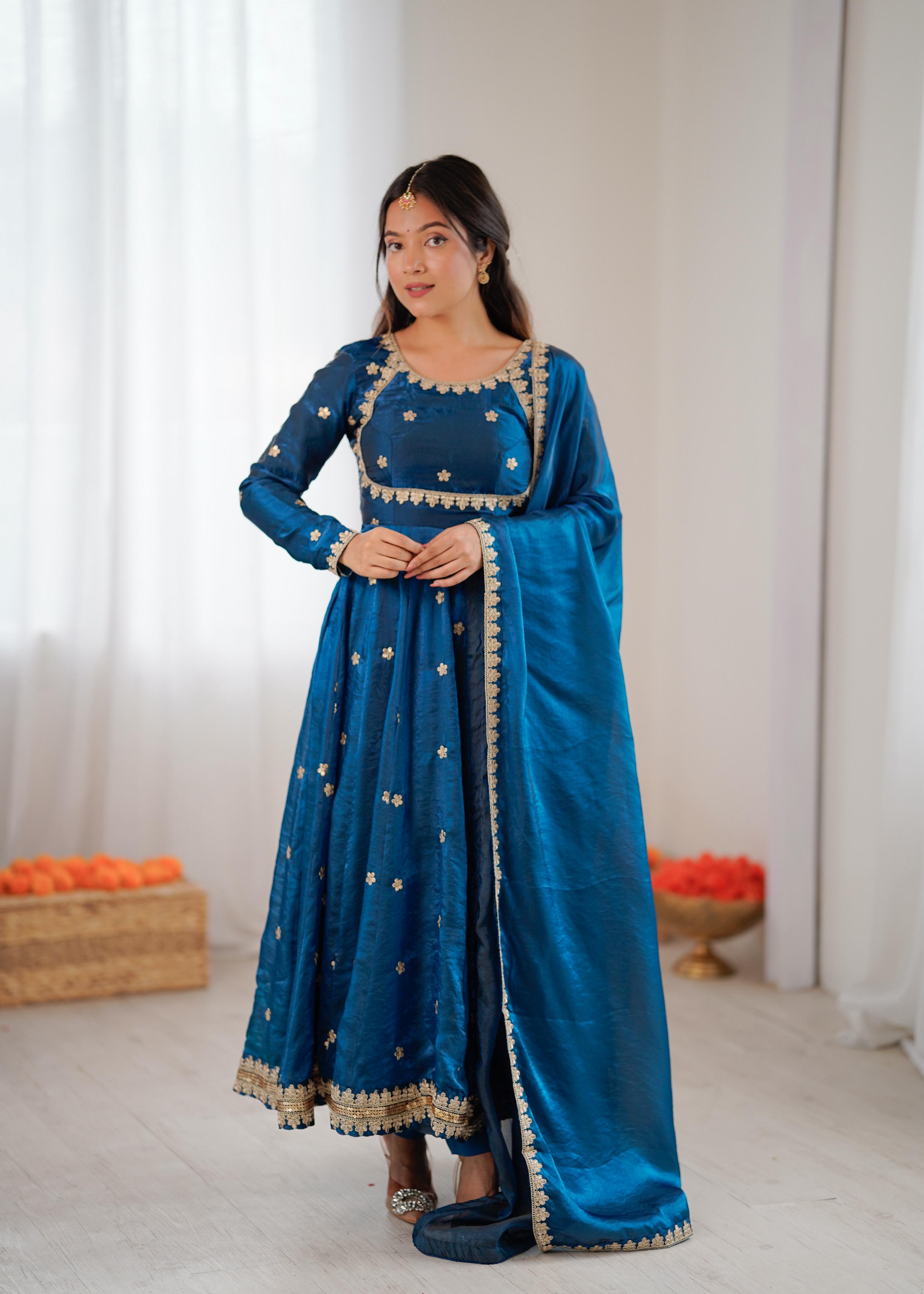
Bridal suits with heavy dupatta designs create impact through layering, but the drape should be planned before leaving home. Fold the dupatta along its length, place the most detailed border where it will be visible, and use two or three concealed pins at the shoulder and waist. A single shoulder drape is elegant for photographs; a front-pinned drape is more secure for greeting guests and dancing.
When the dupatta contains dense zari, sequins or embroidered motifs, avoid a heavily embellished necklace that competes with the neckline. Jhumkas, a maang tikka or stacked bangles can provide a focal point without crowding the upper body. A plain or lightly worked kurta benefits from a dramatic dupatta, while a heavily embroidered kurta generally looks better with a controlled border.
Footwear should match the hem rather than the other way around. Wear the shoes intended for the event during a fitting, and check that the trouser hem or Anarkali length clears the floor by approximately 1 to 2 centimetres. That small allowance reduces staining and prevents the fabric from catching under the heel.
What colours and styling details make wedding suit sets look polished?
Rich maroon, wine, teal, emerald, rust, cream and jewel-toned blue are dependable wedding colours when their intensity matches the time and formality of the event.
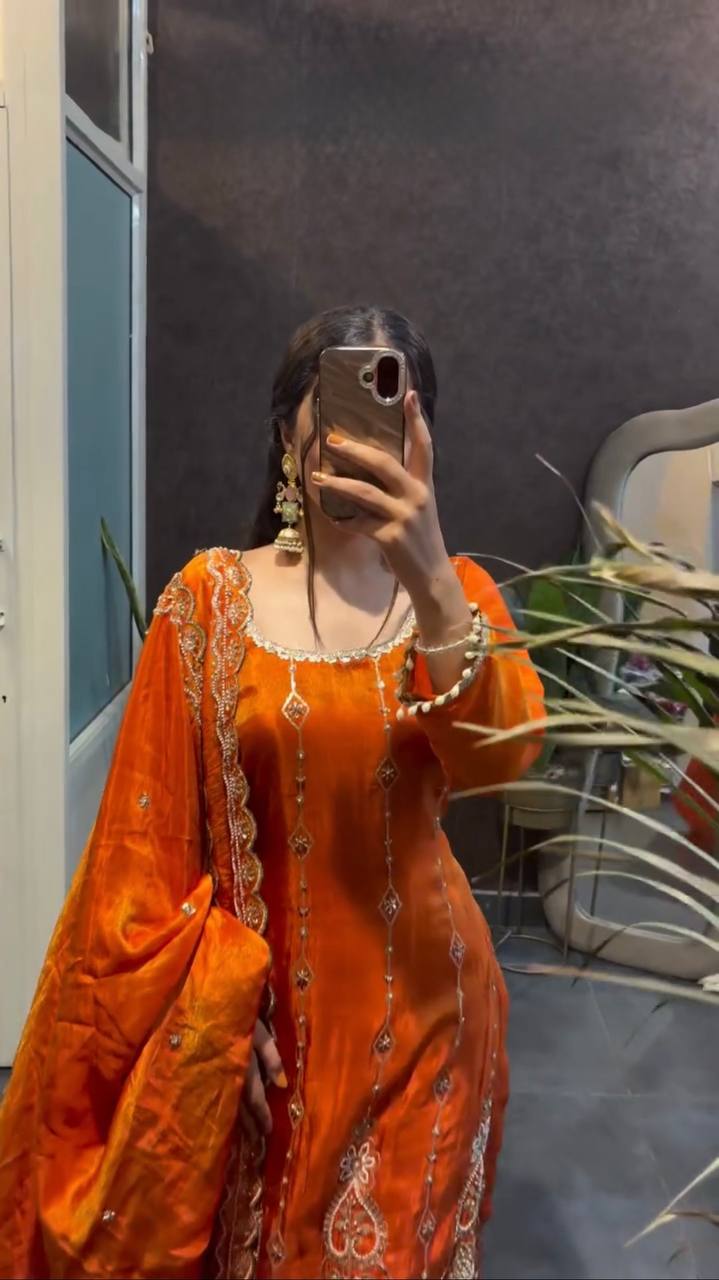
Maroon and wine work particularly well for evening ceremonies because they absorb and reflect warm indoor light attractively. Teal and emerald provide colour without relying on the conventional red palette. Rust orange can look excellent at a daytime festive function, especially with antique-gold embroidery. The Rust Orange Embroidered Readymade Suit Set for Women gives a practical reference for guests seeking warmth and brightness without choosing neon colour.
Cream and other pale neutrals are appropriate for daytime weddings when balanced with gold, green, maroon or other defined accents. Cream can photograph beautifully, but check whether the event has a stated colour theme or whether white and ivory are reserved for the bride. A contrasting dupatta border, embroidered sleeve or coloured jewellery can keep a pale suit from appearing too office-like.
Use one dominant metal across the outfit whenever possible. Gold zari pairs naturally with antique-gold jewellery, while silver-toned threadwork usually works better with cooler accessories. Matching every item exactly is unnecessary; repeating one colour in the earrings, footwear or potli is enough to make the outfit look deliberate.
Where can you buy readymade wedding salwar suits, and what should you check?
You can buy readymade wedding salwar suits from established ethnic-wear collections, but measurement details, fabric information, lining and return conditions should be checked before payment.
Collections such as Ladies Dress Anarkali Salwar Suits are useful when the preferred shape is a flared Anarkali. Dress Materials may suit shoppers who want a tailored fit or a specific neckline, but they require enough time for stitching and alteration. Discount-led collections such as Salwar Suits with 30% Off and Salwar Suits Flat 40% Off can be practical for a second wedding event or a reusable festive wardrobe, provided the discounted item still meets the required measurements and delivery schedule.
Before ordering, compare these details:
- Garment measurements: check bust, waist, hip, shoulder, sleeve and length against a well-fitting kurta.
- Construction: confirm whether the Anarkali has lining, whether the trousers have an elastic or fixed waistband, and whether the dupatta includes a finished border.
- Fabric behaviour: understand whether the material is structured, fluid, transparent, crease-prone or likely to feel warm indoors.
- Delivery time: allow at least 7 to 10 days before the function for inspection, steaming and any minor alteration.
- Accessories: check whether the photographs show a dupatta, pants and other components included in the set or only used for styling.
A collection such as Red Dress Materials Under 2000 may help with budget-conscious colour planning, but a material purchase isn't the same as a ready-to-wear set. Add the cost and lead time of tailoring before comparing prices. A slightly higher-priced readymade suit may be more economical when the wedding is imminent and alteration work is limited.
How can you make a wedding salwar suit comfortable for an entire day?
Comfort improves when the suit has a breathable lining, secure closures, a manageable dupatta and enough ease at the waist, arms and hips.
Try sitting, raising both arms and walking several steps during a fitting. Tight armholes become uncomfortable during photographs, while a waistband that digs in becomes noticeable after a meal. If the suit includes a churidar, ensure the fabric doesn't pull sharply behind the knees. Palazzo trousers and shararas should have enough room at the hip and a waistband that stays in place while walking.
Steam the outfit before the wedding rather than ironing embellishment directly. Place a thin cotton cloth between the iron and embroidery when pressing is unavoidable. After wearing, air the garment away from direct sunlight, remove detachable jewellery or pins, and follow the stated cleaning method. Silk, zari and embellished Chinon silk generally deserve professional cleaning instead of repeated home washing.
A well-chosen suit can serve more than one function. Change the dupatta, earrings and footwear to move a maroon Anarkali from a family ceremony to a reception, or wear a cream silk kurta-pant set with a colourful dupatta for a later daytime event. Rewearing becomes easier when the base silhouette is comfortable and the embellishment isn't tied to a single dress code.
Questions Guests Ask Before Choosing a Wedding Salwar Suit
Which salwar suit is trending now for weddings?
Anarkali suits, sharara sets and embroidered palazzo suits remain strong choices because they combine festive volume with practical movement. Jewel tones, maroon, wine, teal and rust are popular directions, while concentrated embroidery and statement dupattas look more polished than excessive decoration everywhere.
What are some good salwar suits for a wedding party?
An embroidered Anarkali suits a formal reception, a sharara works well for Mehendi or Sangeet, and a palazzo suit is practical for a long celebration. Choose silk or Chinon silk for evening events and lighter Chanderi or cotton-silk blends for warm daytime functions.
Are cotton salwar suits suitable for a wedding?
Cotton salwar suits are suitable for Haldi ceremonies, daytime weddings and outdoor celebrations when they include festive details such as embroidery, a woven border or a dressy dupatta. Plain casual cotton prints may look underdressed at a formal evening reception.
What should I check when buying readymade salwar suits for a wedding?
Check the actual garment measurements, lining, fabric composition, trouser construction, dupatta dimensions and delivery date. Try the outfit with the intended footwear and allow 7 to 10 days before the event for inspection or minor alterations.
How do I style a bridal suit with a heavy dupatta?
Secure a heavy dupatta at the shoulder and waist with concealed pins, and balance dense embroidery with simpler jewellery. Keep the most detailed border visible in photographs while ensuring the dupatta cannot drag or catch under footwear.
Where can I buy wedding suits online?
Online ethnic-wear stores and dedicated salwar suit collections offer Anarkalis, shararas, palazzo sets and silk kurta sets in ready-to-wear formats. Compare product measurements, included components, fabric details, delivery timing and alteration or return terms before ordering.