Choosing the Best Salwar Suit Designs for Every Body Type starts with proportion, not a rigid rule about what a person should or should not wear. A well-cut salwar suit should allow comfortable movement, sit neatly at the shoulders, and create the visual balance you want. Silhouette, fabric weight, neckline, sleeve length, trouser shape and hem placement all affect the final result.
Body-shape advice works best as a set of useful observations rather than a list of restrictions. A petite shopper may enjoy a long Anarkali, while a taller shopper may prefer a cropped straight kurta; the deciding factors are garment measurements and personal styling. The sections below explain how to assess those details before buying a salwar suit online.
Best Salwar Suit Designs for Every Body Type begin with the silhouette
The most important salwar suit choice is the relationship between the kurta's width, length and lower-half volume. Straight suits, Anarkali suits, palazzo sets and sharara suits create distinctly different lines, even when they use similar embroidery and colours.
Straight-cut salwar suits
Straight-cut salwar suits create a clean vertical line from shoulder to hem. The shape works especially well when you want a polished everyday outfit, a visibly longer line through the torso, or a style that layers easily under a dupatta. A straight kurta with side slits and trousers that skim rather than cling usually feels balanced across many proportions.
Embroidered Salwar Suit Set for Women can demonstrate this approach when embroidery is concentrated around the neckline or upper chest instead of extending heavily across the entire front. Navy Blue Embroidered Salwar Suit offers another useful styling direction: a darker base with a neat vertical fall can look refined without requiring excessive surface decoration.
Anarkali silhouettes
Anarkali suits create volume below the waist through panels or gathers, making them suitable when you want movement and a pronounced festive shape. A fitted shoulder and bust area followed by a controlled flare generally looks more polished than a very wide flare from the neckline. Check the garment's flare and length together, because a floor-skimming Anarkali can require different footwear and alterations from a calf-length design.
Ladies Dress Anarkali Salwar Suits are useful for comparing flared proportions rather than judging one style from a photograph. Petite wearers can look for fewer panels and a hem that sits around the ankle, while taller wearers can carry additional length and a broader flare comfortably. These are suggestions, not limitations.
Palazzo and sharara suits
Palazzo suits add width below the hip through wide, straight trousers, while sharara suits add a more visible flare, often from the knee or lower leg. Both silhouettes suit festive dressing, but the kurta length controls the overall proportion. A shorter kurta shows more of the trouser shape; a longer kurta creates a more continuous line.
Maroon Wedding Wear Embroidered Palazzo Suit Set illustrates why palazzo styling benefits from deliberate balance: detailed fabric and wide trousers already provide visual presence, so accessories can remain focused around one area. Brown Chinon Silk Sharara Suit Set for Women takes a dressier route, where the fluid drape of Chinon silk complements the movement of a sharara.
Best Salwar Suit Designs for Every Body Type depend on kurta length
Kurta length changes how the eye reads height, leg length and overall volume. A length between the knee and mid-calf is often versatile, but the correct point depends on the wearer's height, trouser shape and footwear.
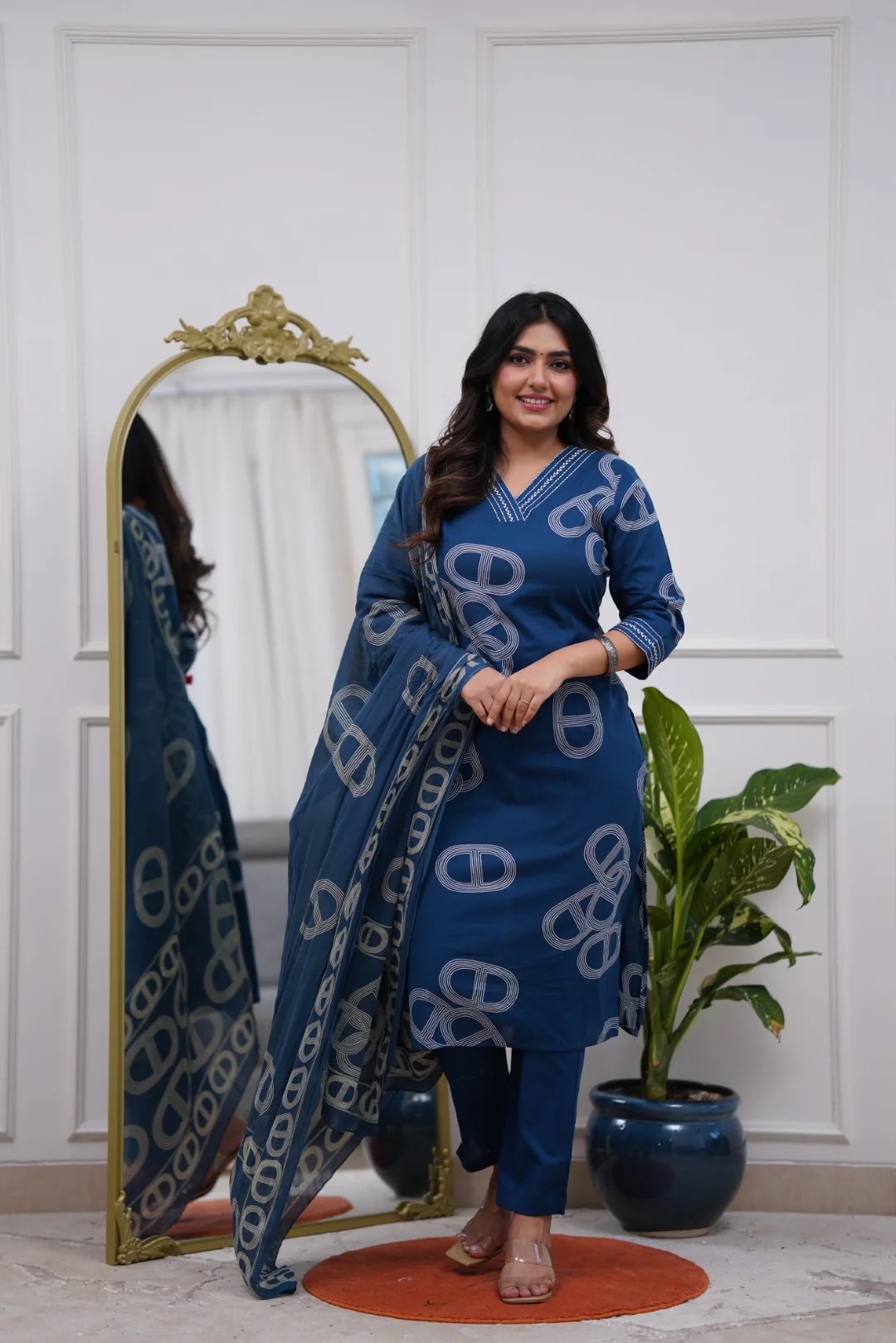
A shorter kurta can make wide palazzos or shararas more visible and may suit someone who wants to emphasise the lower silhouette. A longer straight kurta can create a continuous vertical line and offer additional coverage. An Anarkali should generally flare from a point that feels comfortable at the waist or under the bust, rather than pulling across the midsection.
Use a measuring tape before ordering. Measure shoulder width, bust at the fullest point, waist, hip and preferred kurta length while standing naturally. Compare those measurements with the garment chart instead of choosing only by small, medium or large. If the bust fits but the hip area needs more room, a tailor can often adjust side seams more easily than shoulders or armholes.
Hem placement also matters. A hem ending directly at the widest part of the calf can draw attention to that point, while an ankle-length hem creates a cleaner finish with slim trousers. The most useful choice is the hemline that allows comfortable walking and doesn't bunch above the footwear.
Height should guide proportion rather than restrict style. Petite shoppers may prefer a narrower border, a compact print and a hem that reveals the ankle. Taller shoppers can comfortably consider longer kurtas, broad borders and fuller Anarkali panels, although shoulder and waist fit still matter more than height alone.
Best Salwar Suit Designs for Every Body Type use necklines and sleeves strategically
Neckline and sleeve design determine where attention gathers around the upper body. These details also affect practical comfort, especially during long ceremonies or warm-weather events.
Neckline proportions
V-necks and narrow U-necks create a downward visual line, while broad round necks and boat necks create more horizontal emphasis. A square neckline can look structured and architectural. The right choice depends on personal comfort, bust fit, shoulder width and the jewellery you plan to wear.
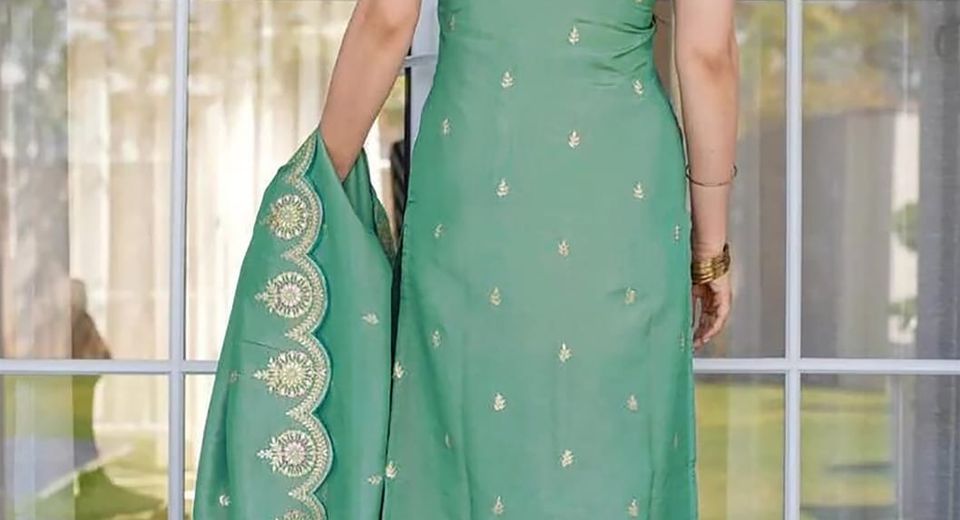
A heavily embroidered neckline can frame the face without needing a large necklace. A simpler neckline leaves room for a choker, long chain or layered pearls. Light Green Embroidered Ethnic Suit Set for Women can be styled with restrained jewellery when its embroidery already supplies the focal point.
Sleeves and shoulder fit
Shoulder seams should sit close to the natural shoulder edge, and the upper sleeve should allow the arm to move without pulling across the bicep. Three-quarter sleeves offer an adaptable proportion for work, family gatherings and festive dinners. Full sleeves can add elegance in winter or formal settings, while shorter sleeves make a heavily embellished suit feel lighter.
don't use sleeve length to hide or correct a body feature you dislike. Use sleeve length to manage temperature, movement and the visual weight of the embroidery. A sleeve with a clean cuff can make a relaxed suit look more tailored, whereas excessive trim may add bulk around the arm.
Placement of embroidery
Embroidery placement matters more than embroidery quantity. Motifs running vertically along the front can reinforce length, border work at the hem can define the silhouette, and concentrated motifs near the neckline can direct attention towards the face. Repeated motifs across the entire kurta create a more ornate effect and may need simpler accessories.
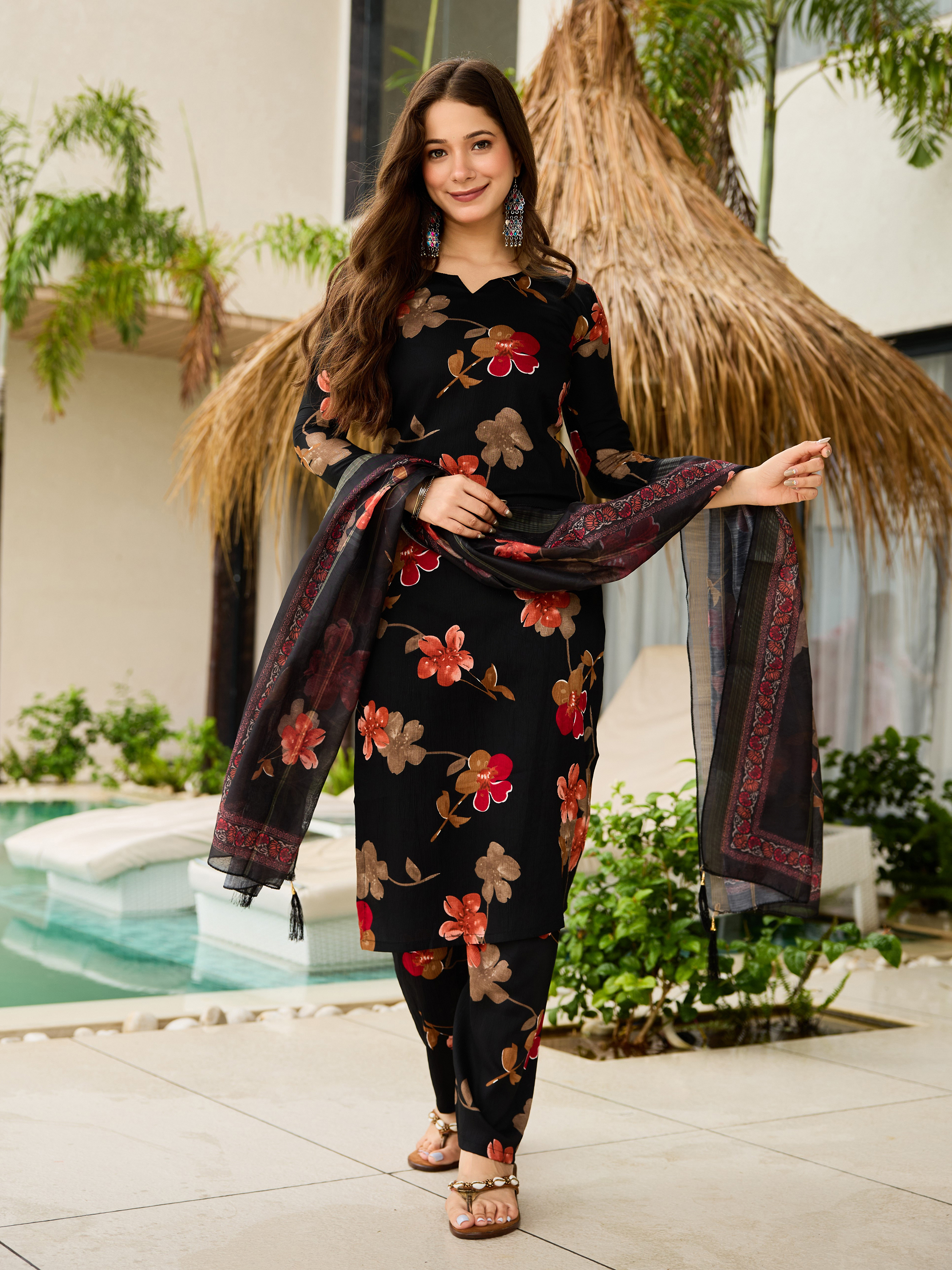
Midnight Black Blossom Salwar Suit shows how a dark base can support floral detail without requiring contrasting accessories in every colour. Pista Royale Salwar Suit brings a softer colour direction for shoppers who want festive richness without choosing a very dark base.
Best Salwar Suit Designs for Every Body Type need the right fabric weight
Fabric changes the way a salwar suit hangs, holds shape and responds to movement. Lightweight fabrics usually skim the body, while structured or richly embellished fabrics create more defined volume.
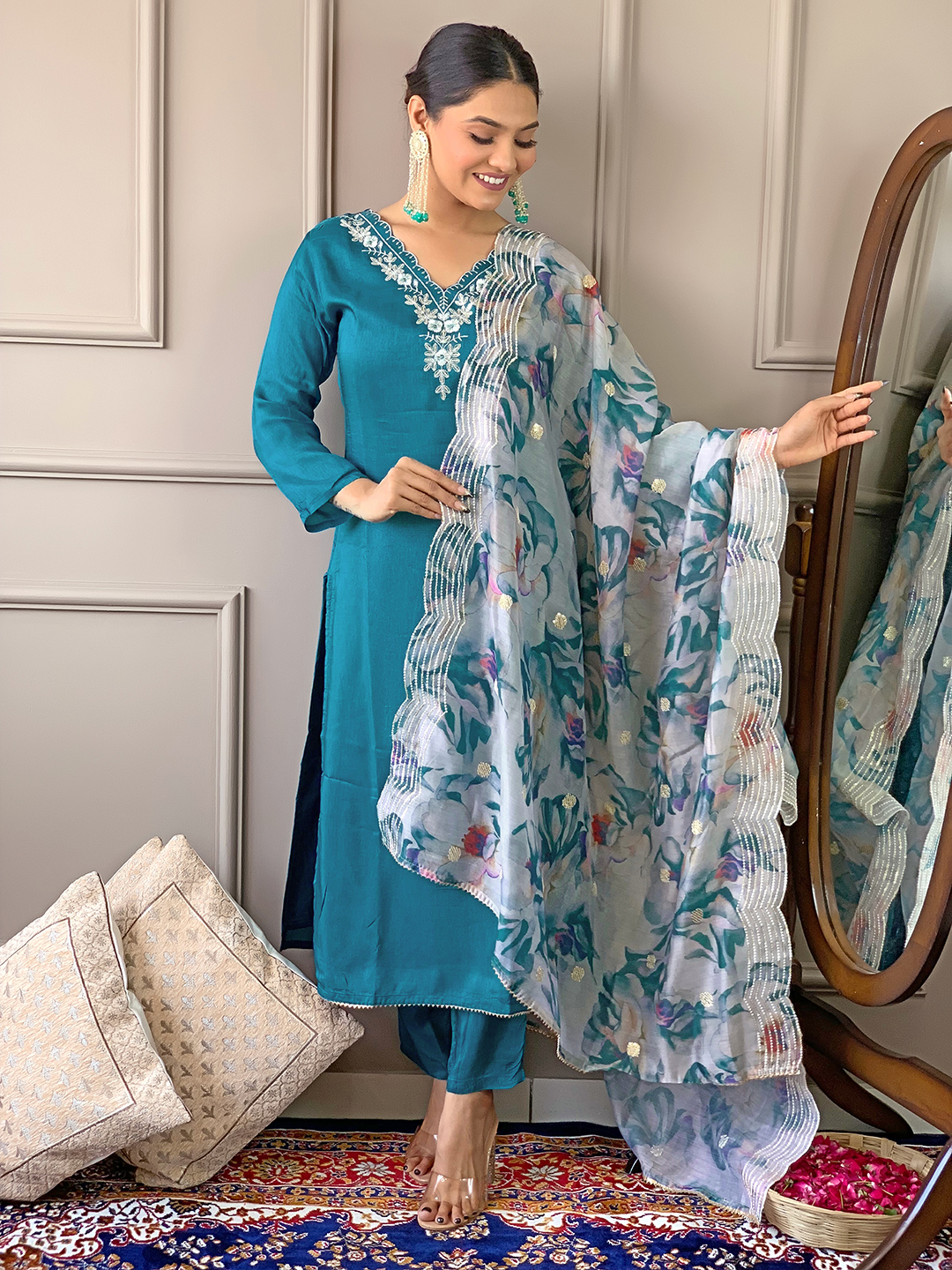
Chinon silk has a fluid fall that works naturally with shararas and festive drapes. Banarasi silk has a more substantial hand and visible woven richness, so a Banarasi silk suit may benefit from a simpler silhouette rather than multiple bulky layers. Chanderi is known for a light, airy character and can suit daytime celebrations when paired with a lining that prevents transparency.
Rayon and similar fluid blends can work well for straight everyday suits because they fall smoothly and are often easier to wear for extended periods. Zari, sequins and dense thread embroidery add weight, so check whether shoulder seams and lining can support the decoration without pulling.
Fabric selection should also follow the weather. Cotton and breathable blends are practical for humid daytime events, while lined silk-look fabrics can feel warmer at indoor winter functions. A comfortable suit that allows sitting, walking and raising the arms will usually look better throughout a long celebration than a visually impressive outfit that requires constant adjustment.
Fabric care should influence the purchase as well. Read the care label before ordering a heavily embellished salwar suit, because zari and delicate embroidery may require dry cleaning or careful hand washing. Store a completely dry suit in a breathable cotton garment bag, and avoid pressing directly over sequins, metallic thread or raised embroidery.
Best Salwar Suit Designs for Every Body Type benefit from considered colour contrast
Colour doesn't determine whether a salwar suit suits a body type, but contrast and placement can influence the outfit's visual balance. A single-colour suit creates continuity, while a contrasting dupatta, hem border or trouser changes the division between upper and lower body.
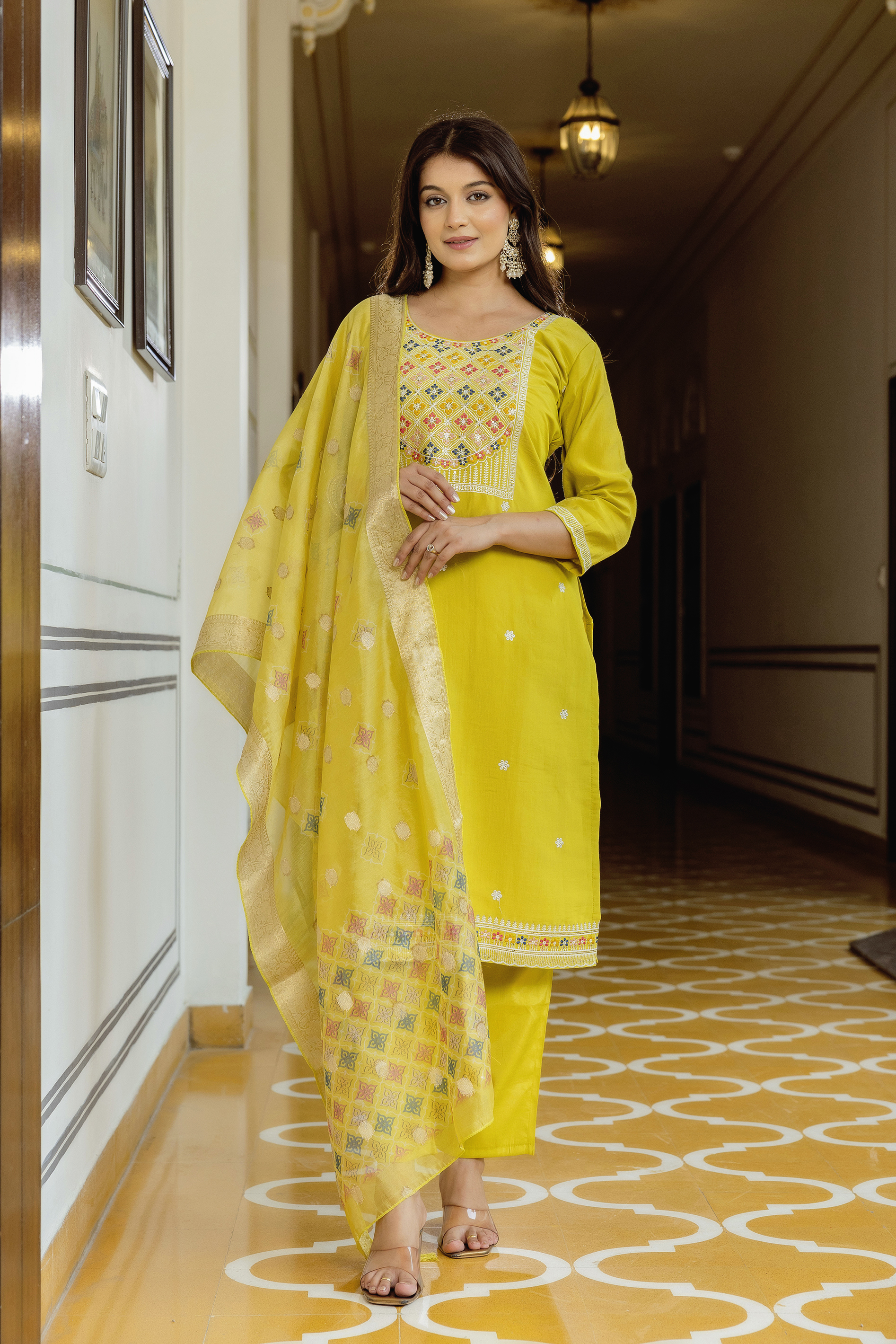
Deep navy, maroon, black and brown can create a grounded formal appearance, while pista, light green, camel and other muted shades offer a softer daytime direction. Elegant Camel Shade Salwar Suit Set can work as a neutral base for a contrasting dupatta or metallic accessories without becoming visually busy.
Choose contrast according to the effect you want. A contrasting dupatta can frame the torso diagonally when draped over one shoulder. Matching kurta and trouser colours create a longer uninterrupted line. A brighter trouser or embellished hem shifts attention downwards, which may be useful when you want the lower silhouette to lead the outfit.
Colour also needs to work with lighting and occasion. Very pale colours can show lining, makeup or food stains more readily, while extremely dark embellished fabrics may reveal loose threads or lint. Photograph an outfit in daylight if you're comparing shades online, because warm indoor lighting can make beige look more golden and green look more muted.
Best Salwar Suit Designs for Every Body Type should match the occasion
The most flattering salwar suit is also one that matches the event's dress code, duration and setting. A practical selection process begins by identifying when and where the suit will be worn.
For daytime and semi-formal wear
Daytime gatherings generally suit breathable fabrics, moderate embroidery and colours that remain comfortable in natural light. A straight suit with a three-quarter sleeve and a lightweight dupatta can work for office celebrations, lunches and family visits. Dress Materials can be useful when you want to customise the kurta length, sleeve shape or trouser width through a local tailor.
For weddings and festive ceremonies
Wedding dressing benefits from richer colour, controlled shine and a silhouette that permits movement. A maroon palazzo suit or Chinon silk sharara can create occasion presence without requiring a heavily layered lehenga. Maroon Wedding Wear Embroidered Palazzo Suit Set is an example of a style where earrings and footwear can complete the outfit without competing with every embroidered detail.
For a Haldi ceremony, lighter colours such as pista, light green, ivory or camel can reflect the daytime setting, but washable or carefully lined fabrics are more practical when turmeric, flowers and food are nearby. Avoid a trailing hem if the ceremony includes outdoor seating or movement across grass.
For evening celebrations
Evening events can support deeper colours, zari, tonal embroidery and more defined silhouettes. Midnight Black Blossom Salwar Suit and Navy Blue Embroidered Salwar Suit can both form a strong evening base, with metallic earrings or a contrasting clutch adding brightness. Keep footwear stable enough for standing and walking, especially when the suit has a wide flare.
Best Salwar Suit Designs for Every Body Type are easier to buy online with a checklist
Online shopping becomes more reliable when you evaluate measurements, fabric information and return conditions before judging a product photograph. A model's height and styling can make a garment appear significantly shorter, longer or fuller than it will look on another person.
- Record your measurements: Note shoulder, bust, waist, hip, sleeve and preferred kurta length in centimetres.
- Check garment measurements: Compare the size chart with your own measurements and leave enough ease for sitting and arm movement.
- Inspect the fabric description: Look for the named material, lining details, transparency notes and care instructions.
- Assess the complete set: Confirm whether the listing includes the kurta, bottom, dupatta and any attached lining or belt.
- Study detail placement: Notice whether embroidery sits at the neckline, sleeves, hem, waist or across the full front.
- Plan alterations: Choose a size that fits the shoulders and armholes first, because those areas are harder to alter cleanly.
- Compare occasion and budget: Sale pages such as Salwar Suits with 30% Off, Salwar Suits Flat 40% Off and Salwar Suits On Sale can help with price comparison, but the size chart remains more important than the discount.
Buying from the largest available size and altering everything later isn't always economical. Shoulder, armhole and neckline changes can alter the balance of embroidery and may cost more than a minor side-seam adjustment. If measurements fall between sizes, check the alteration allowance and contact the seller when that information isn't clear.
A reliable wardrobe can include more than one silhouette. An everyday straight suit, a softly flared Anarkali, a palazzo set for festive gatherings and a sharara for weddings cover different needs without forcing one design to perform every role. The goal of the Best Salwar Suit Designs for Every Body Type isn't to follow a fixed formula; it's to select a garment whose proportions, fabric and construction support the way you want to look and move.
Common Questions About Choosing Salwar Suits for Different Body Types
Which salwar suit silhouette is easiest to wear for most body types?
A well-fitted straight-cut salwar suit is usually the easiest starting point because its vertical shape works with many proportions and suits both everyday and semi-formal settings. Choose the kurta length, trouser fit and fabric weight according to your height, comfort and preferred coverage.
Are Anarkali suits suitable for petite women?
Anarkali suits can suit petite women when the flare, panel count and length are controlled. A hem near the ankle, a fitted shoulder and a moderate flare often prevent the silhouette from overwhelming a shorter frame.
Which salwar suit is suitable for a wedding?
Embroidered palazzo suits, sharara suits and richly detailed Anarkali suits are suitable for weddings because they provide movement and festive presence. Choose the fabric according to the season and select a hem that allows comfortable walking and sitting.
How should I choose a salwar suit size online?
Choose a size by comparing your shoulder, bust, waist, hip and kurta-length measurements with the seller's garment chart. Prioritise shoulder and armhole fit because those areas are more difficult to alter neatly than side seams or trouser hems.
Which fabric is comfortable for a salwar suit in warm weather?
Breathable cotton and lightweight blends are generally more comfortable in warm weather than heavily lined or densely embellished fabrics. Chanderi can suit daytime festive wear because of its light character, while the lining should be checked for comfort and opacity.
Can a dark salwar suit look appropriate for daytime wear?
A dark salwar suit can work during the day when the fabric is lightweight and the styling is not overly ornate. Pair navy, black, brown or maroon with minimal jewellery, a lighter dupatta or daytime footwear to soften the overall effect.