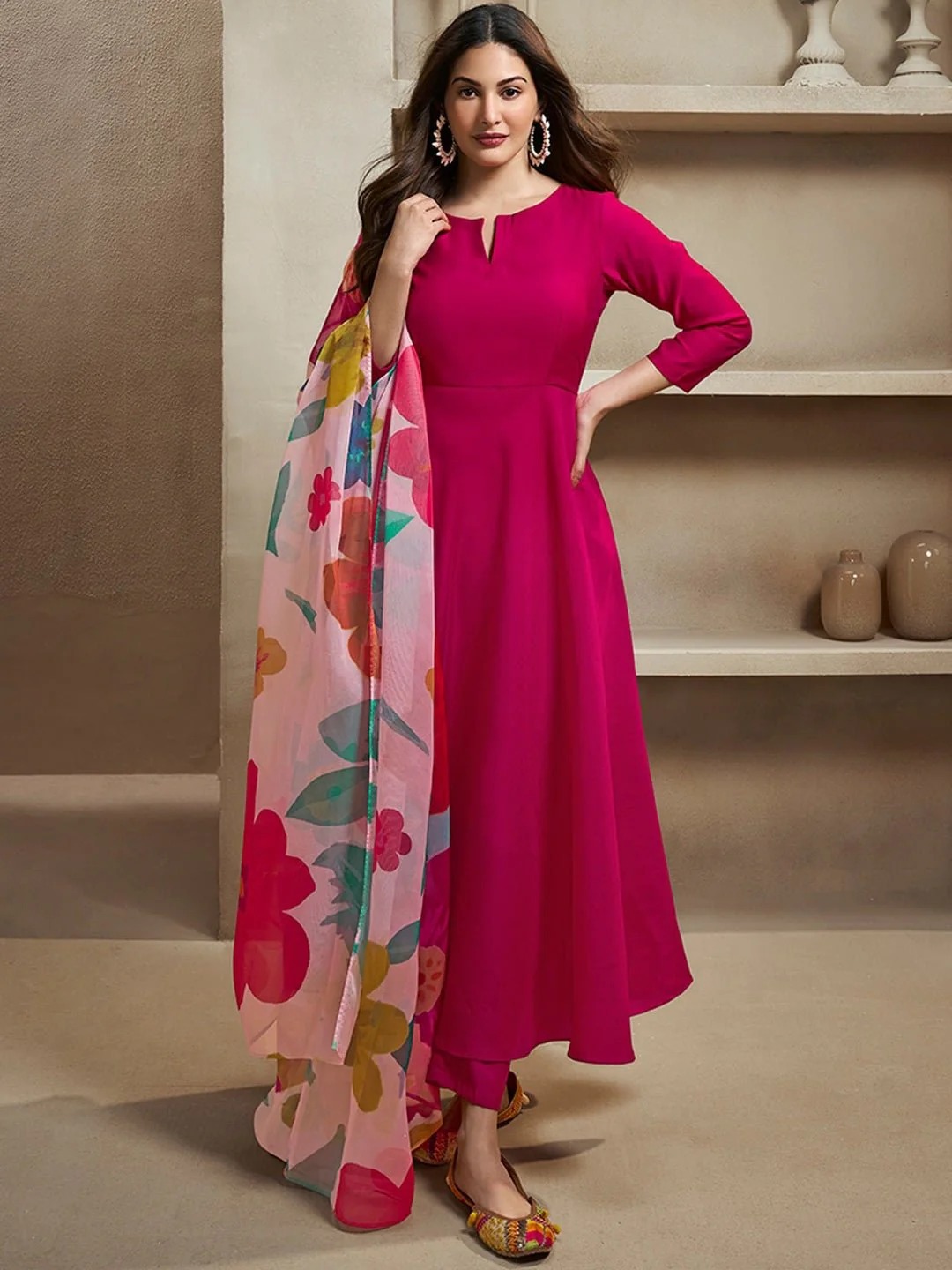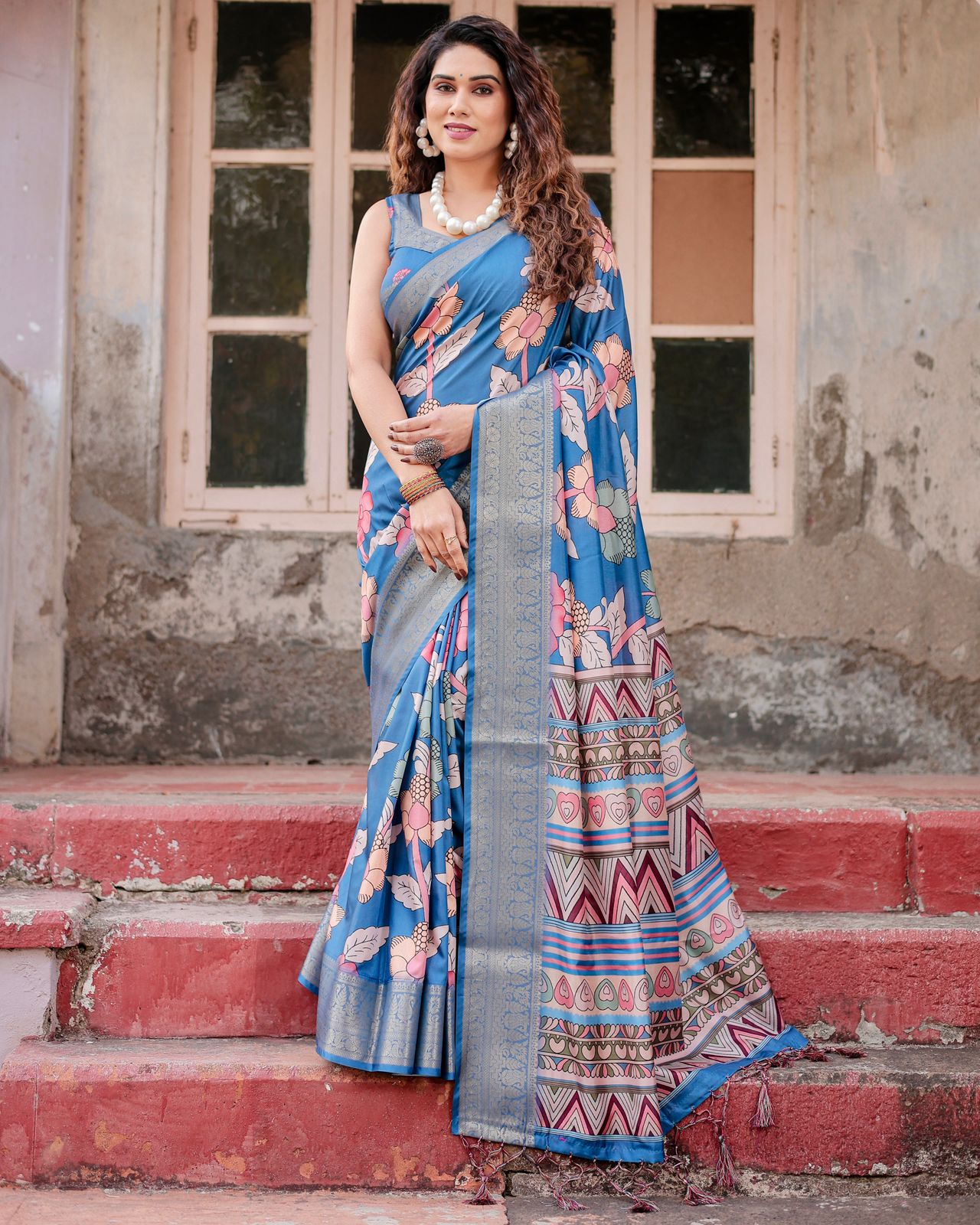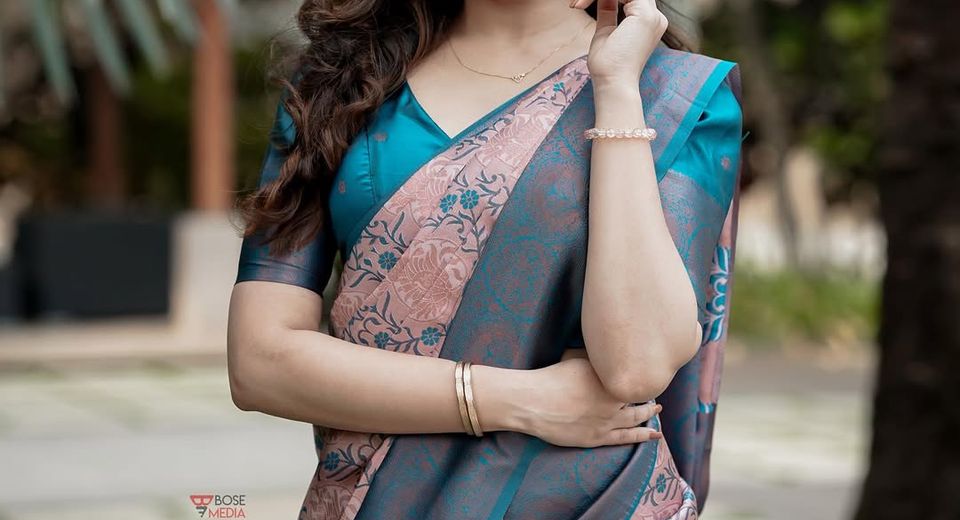
Key takeaways
- A medium-width zari border is usually easier to manage at a long wedding reception than an extremely heavy bridal border.
- Red, maroon and green Kanjivaram silk create rich reception photographs, while ivory and cream need stronger jewellery or blouse contrast.
- Pure Kanjivaram silk generally feels more substantial than lightweight silk blends, so drape weight should be checked before purchase.
- Reception sarees should be selected according to venue lighting, photography distance, blouse comfort and expected wearing time.
- Kanjivaram silk should be stored folded in muslin, aired periodically and dry-cleaned instead of machine-washed.
You're halfway through getting ready for the reception when the familiar question appears: will the saree look luminous under the banquet hall lights, or will the zari feel too heavy after four hours of photographs and greetings? The best Kanjivaram saree for wedding reception isn't automatically the brightest red or the most elaborate bridal weave. The right choice balances colour, silk weight, zari, border width, blouse construction and the practical demands of the venue.
A reception allows more flexibility than a wedding ceremony. You can choose a dramatic jewel tone, a softer ivory palette, a contemporary blouse or a lighter border without losing the heritage of Kanjivaram silk. This decision guide compares the main choices so you can judge how a saree will look, feel and photograph rather than relying on colour alone.
What makes the best Kanjivaram saree for wedding reception?
The best Kanjivaram saree for wedding reception combines a recognisable silk weave, a stable drape, appropriate zari and enough comfort for several hours of movement. Kanjivaram sarees, also called Kanjeevaram sarees, traditionally use silk with contrasting or coordinated borders and pallu designs, often enhanced with zari.
Reception dressing has different requirements from a short religious ceremony. Guests may stand for family portraits, walk between tables, greet relatives and remain seated for a long dinner. A very dense bridal saree can look magnificent but become tiring when its weight is concentrated around the pleats and pallu. A medium-weight Kanjivaram silk saree with a defined border often gives a more versatile result.
Examine five details before deciding:
- Silk weight: Heavier silk gives a structured drape, while lighter silk is easier to wear for extended periods.
- Zari finish: Gold zari creates a traditional glow, while silver-toned or muted zari can look more contemporary.
- Border width: A broad border creates a ceremonial appearance, while a medium border keeps the silhouette visually lighter.
- Pallu scale: A large pallu design photographs well from the back, but a compact pallu is easier to arrange.
- Blouse compatibility: The saree should work with the neckline, sleeve length and jewellery style you plan to wear.
Which colour suits the best Kanjivaram saree for wedding reception?
Choose the colour by considering reception lighting, jewellery, stage decor and whether you want a classic or contemporary impression. The same shade can appear different under warm chandeliers, daylight-filled venues and camera flash.
Red and yellow for a heritage reception look
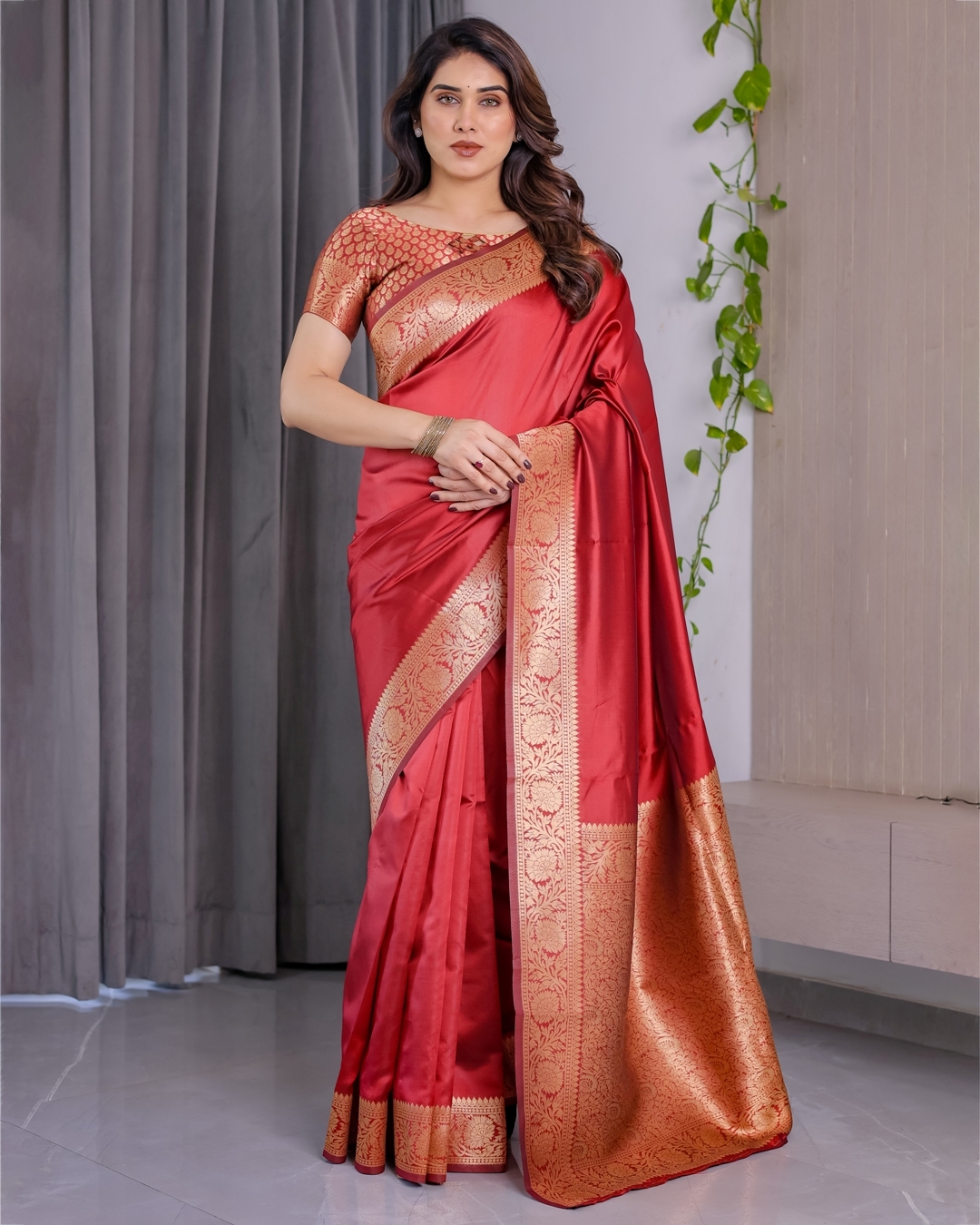
Red Kanjivaram silk communicates celebration and looks especially strong with antique gold jewellery, temple motifs and a time-honoured blouse. Yellow adds brightness and can flatter venues with darker interiors. The Red and Yellow Sarees from Rs 799 with Up to 75 Percent Off collection is useful for comparing warm colour directions before settling on a red-and-gold, mustard or turmeric-inspired palette.
Red works best when the reception decor contains cream, gold, wood or deep green accents. If the stage already uses saturated red flowers and red drapes, a red saree may blend into the background. In that setting, choose a red saree with a contrasting zari border or a blouse in ivory, pink or muted gold to create separation in photographs.
Maroon for depth and evening photographs
Maroon Kanjivaram silk is a strong choice for an evening reception because its depth remains visible under artificial light and pairs naturally with gold zari. Maroon also gives a refined effect without losing the visual authority of a bridal colour.
The Maroon Silk Sarees with Up to 74% Off collection can help you assess how different maroon tones behave. Wine, burgundy, brick and plum don't photograph identically. Select a warmer maroon if your jewellery is yellow gold, and choose a cooler wine shade if your styling includes diamonds, pearls or silver-toned embellishment.
Green for a jewel-toned statement
Green Kanjivaram silk creates a jewel-toned reception look and complements both heritage gold jewellery and modern polki designs. Emerald looks formal, bottle green looks deep and elegant, and brighter green feels more festive.
Green Color Silk Sarees offers an useful direction for comparing these shades. A green saree is especially effective against neutral stage decor, ivory florals and warm lighting. Avoid matching the saree too closely to a green-heavy venue backdrop because the border and pallu may disappear in wide photographs.
Ivory and cream for a contemporary reception
Ivory, cream and off-white Kanjivaram silk look sophisticated when paired with a richly coloured blouse or noticeable jewellery. White Silk Sarees in Cream Ivory and Off White demonstrates the range within a supposedly simple palette: cream looks warmer, ivory looks balanced and off-white can appear more luminous under cool lighting.
A pale saree needs contrast to avoid looking flat in photographs. Add a maroon, emerald, pink, copper or gold blouse, or select a saree with a clearly visible zari border. Ivory is also practical when reception decor is colourful because it creates a calm base for flowers, jewellery and makeup.
How should the best Kanjivaram saree for wedding reception use zari?
A medium-width border with controlled zari is the most adaptable choice for a wedding reception because it brings ceremonial detail without overwhelming the drape. Border width should be selected according to your height, the saree's silk weight and the amount of visual drama you want.
A broad zari border gives a strong classic silhouette and makes the lower edge easy to see in seated photographs. A very wide, high-contrast border can visually shorten the body. A narrower border lengthens the impression of the saree but may look less dramatic from a distance.
Heavy zari affects comfort as well as appearance. Metallic yarn adds structure and weight, especially in a dense pallu. If you expect to wear the saree for five or more hours, look for a balanced combination: a defined border, a noticeable pallu and a body that remains flexible enough for walking and sitting.
Gold zari is the classic choice with red, maroon, green and mustard silk. Silver zari, muted zari or dual-tone metallic work can modernise ivory, lavender, blue and cooler pinks. Check the zari in natural light and indoor light because reflective metallic work can appear brighter in a showroom than in a reception hall.
Which blouse works with the best Kanjivaram saree for wedding reception?
The best blouse design supports the saree's border and keeps the shoulder and neckline comfortable during photographs, sitting and movement. A blouse should not compete with a heavily woven pallu unless the saree body is relatively plain.
For a classic red or maroon saree, a high round neck, elbow-length sleeve and zari-edged neckline create a cohesive result. A contrasting blouse in green, pink or ivory can make the saree look more considered than a perfectly matched blouse. Temple jewellery and a structured sleeve work particularly well with a broad zari border.
An ivory or cream saree can carry a more expressive blouse. Consider a jewel-toned raw silk blouse, a brocade blouse with a restrained motif or a blouse with a square neckline and short sleeves. Keep the embellishment scale in proportion: a densely embroidered blouse, heavy necklace, dramatic earrings and a broad zari pallu may all compete for attention.
Measure the blouse for the way you'll actually wear it. A sleeve that cuts into the upper arm becomes uncomfortable during a long reception, and a neckline that requires constant adjustment can affect posture in photographs. Request a functional lining, secure hooks and enough seam allowance for minor alterations. An additional hook setting can accommodate a small change in fit after travel or a meal.
How do venue and photography affect the best Kanjivaram saree for wedding reception?
Venue lighting and photography distance should influence saree colour, zari contrast and pallu design. A saree that looks subtle in a close mirror view may appear plain in a large hall, while intensely reflective zari can create bright hotspots in flash photographs.
For an indoor evening reception
Choose maroon, emerald, red, deep pink or royal blue for an indoor evening reception, especially when the venue has warm lighting. Medium or high-contrast zari helps the border remain visible in stage photographs. Do not select a shade after viewing it beneath a single yellow bulb; inspect the saree near a window and under white light as well.
For a daytime or outdoor reception
Choose ivory, cream, yellow, soft pink, leaf green or lighter jewel tones for a daytime reception. Natural light reveals silk texture and can make gold zari look more pronounced. A less reflective border may be more flattering outdoors because direct sunlight can make dense metallic work appear harsh.
For a compact venue
Select a controlled border, a readable pallu and a saree body with enough contrast to remain visible in close photographs. Extremely large motifs can look crowded when the photographer works at short distance. A clearly defined pallu is valuable when guests photograph you from behind or at an angle.
How can you test the best Kanjivaram saree for wedding reception before buying?
Test the saree in several lighting conditions, inspect the reverse side, estimate its wearing weight and check the return or alteration terms before buying. A ten-minute evaluation can prevent a difficult decision after delivery.
- Check the colour in three lights: View the saree in daylight, neutral white light and warm indoor light. Note whether the body becomes dull, overly bright or unexpectedly orange, pink or green.
- Lift the folded saree: Compare its weight with another saree you can comfortably wear for several hours. Weight isn't a perfect measure of quality, but it matters for reception comfort.
- Examine the selvedge and reverse: Look for a neat finish, secure zari and a consistent weave. Loose metallic threads should be addressed before the blouse and pleats are prepared.
- Check the fall and petticoat plan: A cotton or blended petticoat with a secure waistband supports movement. The fall should be attached carefully so it doesn't distort the lower border.
- Photograph the pallu: Take a phone photograph from several metres away. The image shows whether the motifs and border remain readable beyond a mirror view.
- Plan the full look: Place the intended blouse, necklace, earrings, footwear and hair accessory beside the saree. The complete combination reveals whether the final look is balanced.
Budget should be judged alongside silk content, zari type, finishing and expected frequency of wear. A saree reserved for one ceremony may justify a heavier ceremonial weave, while a saree intended for anniversaries, family functions and future receptions may be better as a lighter, more flexible Kanjivaram silk.
How should the best Kanjivaram saree for wedding reception be stored?
Store Kanjivaram silk folded in soft muslin, away from direct sunlight, moisture, perfume and rough wooden surfaces. Refold the saree along different lines every few months and air it in shade to reduce permanent creases.
Dry-clean Kanjivaram silk after a heavily worn event, particularly if perspiration, food or makeup has reached the fabric. Do not machine-wash, soak or wring the saree. Allow perfume and hair products to dry before draping because alcohol and oils can affect silk and zari over time.
For travel, fold the saree in muslin rather than plastic and place it above heavier luggage. Remove jewellery before taking off the saree so hooks and stones don't catch the silk. Proper storage preserves the drape, zari and colour, making a well-chosen reception saree useful for future celebrations.
The final decision is simple: choose the saree that fits the reception rather than choosing the most elaborate saree in isolation. Red and maroon suit warm evening drama, green creates jewel-toned contrast, and ivory or cream brings a current base for expressive styling. Add a manageable border, a comfortable blouse and lighting-aware jewellery, and the heritage Kanjivaram weave will look intentional from the first family photograph to the last greeting.
Frequently Asked Questions
Which colour Kanjivaram saree is best for a wedding reception?
Maroon, red and emerald green are strong choices for an evening reception because they retain depth under artificial light and pair well with gold jewellery. Ivory and cream are better for a contemporary look, but they need a contrasting blouse, zari border or statement jewellery to remain distinct in photographs.
Is a heavy Kanjivaram saree comfortable for a long reception?
A heavy Kanjivaram saree can be comfortable when the drape, pleats and petticoat are fitted correctly, but a medium-weight saree is usually easier for five or more hours of movement. Check the folded weight and test sitting, walking and climbing a few steps before finalising the choice.
Should a reception Kanjivaram saree have gold or silver zari?
Gold zari is the most traditional pairing for red, maroon, green and yellow Kanjivaram silk. Silver or muted zari works well with ivory, cream, blue, lavender and cooler pinks, especially when the jewellery also uses diamonds, pearls or silver-toned metal.
What blouse design looks best with a Kanjivaram silk saree?
A structured blouse with a comfortable neckline and secure sleeves works best because it supports the saree without competing with the pallu. A matching blouse creates a classic look, while a contrasting ivory, emerald, maroon or pink blouse can make a simpler saree more distinctive.
How do I choose a Kanjivaram saree for an indoor reception?
Choose a colour that remains visible under warm or low light, such as maroon, emerald, red or deep pink, and select a border with enough zari contrast for photographs. Inspect the saree in daylight and neutral white light before buying because showroom lighting can change the apparent colour.
How should I care for a Kanjivaram silk saree after the reception?
Dry-clean Kanjivaram silk when necessary and never machine-wash, soak or wring it. Store the saree folded in muslin away from sunlight and moisture, and refold it along different lines every few months to reduce permanent creasing.